Best Food in Barcelona: A Neighbourhood-by-Neighbourhood Eating Guide



A Food Lover’s Guide to Barcelona: Best Restaurants, Must-Eat Dishes & Local Tips for 2026 – Barcelona is one of Europe’s great eating cities — and this food lover’s guide to Barcelona covers everything from must-eat Catalan classics to the best restaurants in Barcelona across every budget, neighbourhood, and occasion.
- Why Barcelona Is a Food Lover's Dream
- Top Neighbourhoods for Food in Barcelona
- What to Eat in Barcelona: Essential Dishes
- Best Restaurants in Barcelona: By Category
- The Menú del Día: Barcelona's Best Kept Secret
- Lunch vs. Dinner in Barcelona: Timing and Culture
- Barcelona's Best Markets for Food Lovers
- Barcelona Street Food: What to Eat on the Go
- Desserts and Sweet Treats Worth Finding
- Practical Dining Tips for Barcelona
The food in Barcelona spans humble market tapas, centuries-old bodegas, landmark seafood restaurants in Barceloneta, and a handful of places that rank among the best on earth.
Knowing where to eat is half the adventure.
Whether you’re planning your first visit or your fifth, our Barcelona travel tips guide covers the full picture — including transport, neighbourhoods, and timing — so you can plan around meals as much as sightseeing.
Key Highlights
Hide- Pa amb tomàquet (bread with tomato and olive oil) is Barcelona's quintessential appetizer found in nearly every local restaurant.
- Fresh seafood paella showcases the city's coastal bounty, best enjoyed in Barceloneta's seafront eateries.
- Patatas bravas offer the perfect introduction to tapas culture with crispy potatoes topped with spicy sauce.
- Calçots (charred green onions) with romesco sauce represent Barcelona's seasonal eating traditions.
- Crema catalana provides the essential sweet ending to any Barcelona dining experience.
Why Barcelona Is a Food Lover’s Dream
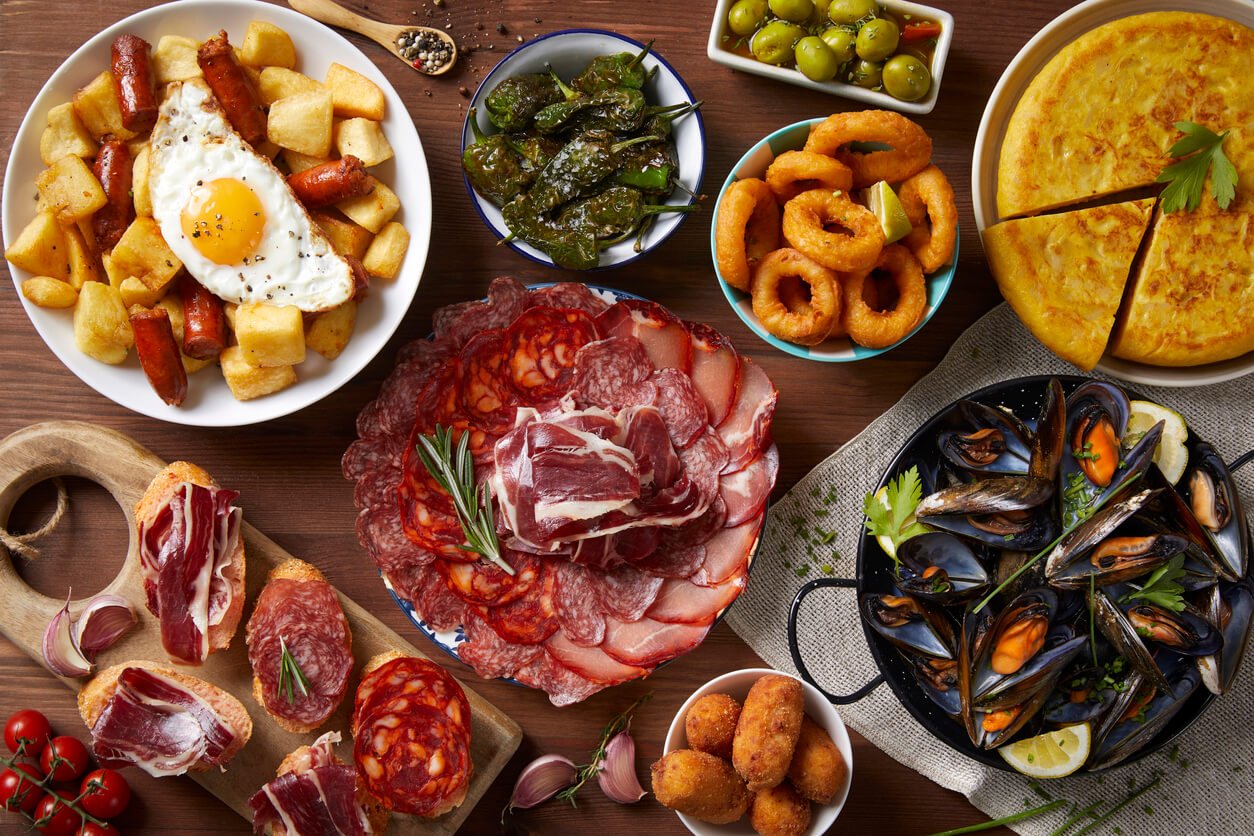
Barcelona’s food scene works because it has layers.
There’s a deep Catalan culinary tradition built on Mediterranean produce, fresh coastal seafood, and centuries of market culture.
On top of that sits a modern gastronomy movement that has made the city one of the most innovative dining destinations in the world.
These two things exist side by side, often a few streets apart.
The city also has the right pace for eating well.
Lunch is the main meal — long, multi-course, taken seriously.
Dinner starts late.
Markets are central to daily life.
And the vermut (vermouth) hour on weekend mornings is as much a social institution as a food one.
Understanding this rhythm makes the difference between eating in Barcelona and eating like Barcelona.
- Best Neighborhoods in Madrid: Where to Stay and Why
- 35 Best Things To Do In Madrid
- The Best Ways To Get Around In Madrid
- 9 Best Day Trips From Madrid in 2026: Trains, Tickets, and What’s Worth It
- The Ultimate Guide to Food in Madrid, Spain (2026 Edition)
- 10 Best Road Trips From Madrid in 2026: Distances, Routes, and What to See
What Makes Catalan Cuisine Unique
Catalan cuisine is distinct from Spanish cuisine, though it shares the Mediterranean pantry.
It uses sofregit (a slow-cooked base of onion, tomato, and garlic), picada (a paste of almonds, garlic, and herbs used to finish sauces), and romesco (a roasted pepper and almond sauce from Tarragona) in ways that give dishes a characteristic depth.
The best food in Barcelona reflects its geography: olive groves and vineyards inland, fishing boats in the harbour, and a market culture — La Boqueria, Santa Caterina, Sant Antoni — that connects chefs directly to seasonal produce.
This is food built on ingredients, not technique overriding them.
How Do Barcelona’s Restaurants Compare to the Rest of Spain?
Barcelona has more Michelin-starred restaurants than any Spanish city outside Madrid, and a significant concentration of the country’s most creative chefs.
But the day-to-day food culture is equally strong: the menú del día lunch tradition means even modest neighbourhood restaurants serve proper three-course meals at €12–€20.
The city rewards both the budget Barcelona traveller and the serious gastronome.
Top Neighbourhoods for Food in Barcelona
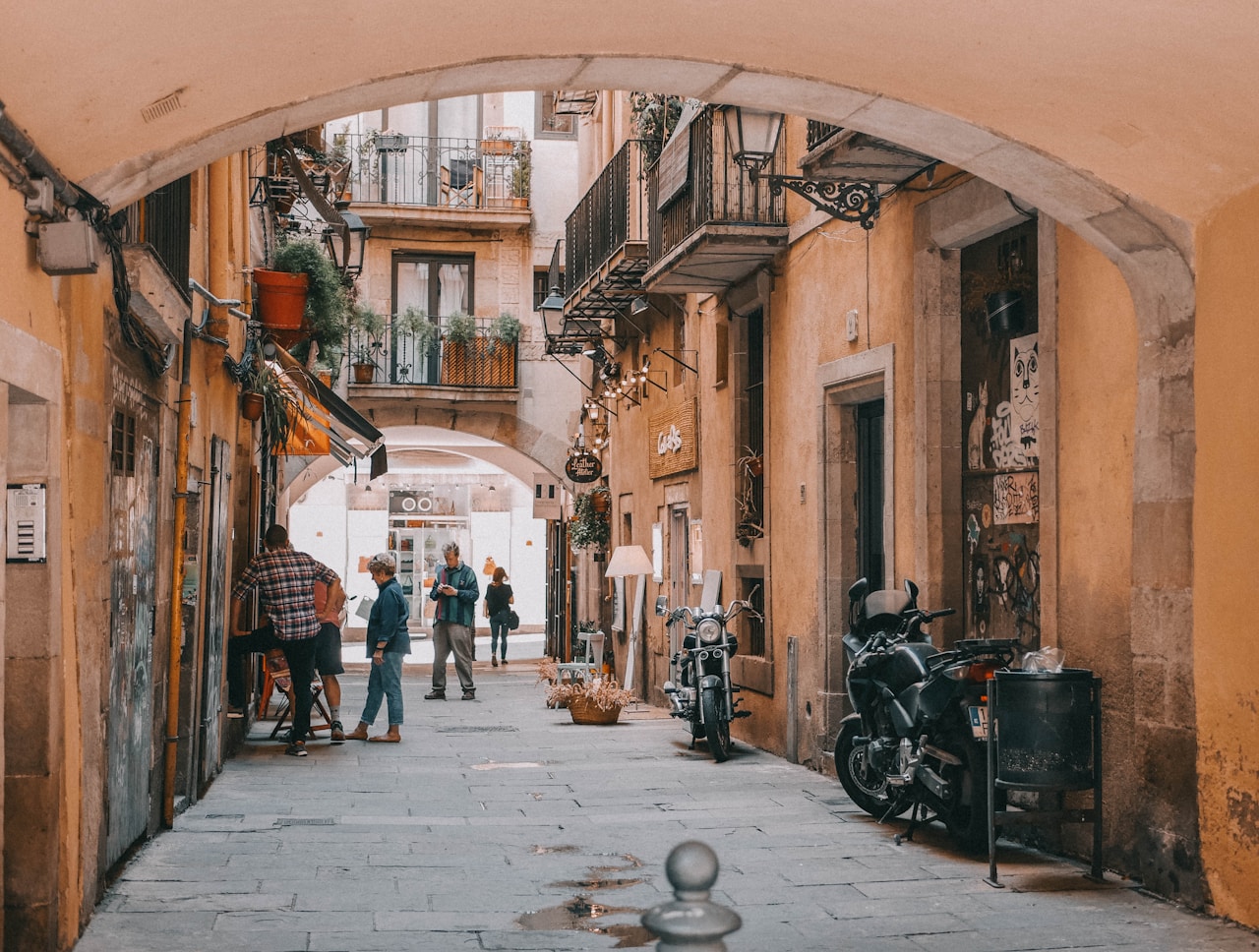
Barcelona’s food geography is as varied as its street life.
Each neighbourhood has a distinct eating personality, and knowing which area to head to for what kind of meal saves time and money.
Our guide to the best neighborhoods in Barcelona covers each area in detail beyond just food — useful for planning where to base yourself.
El Born: Tapas Bars and Natural Wine
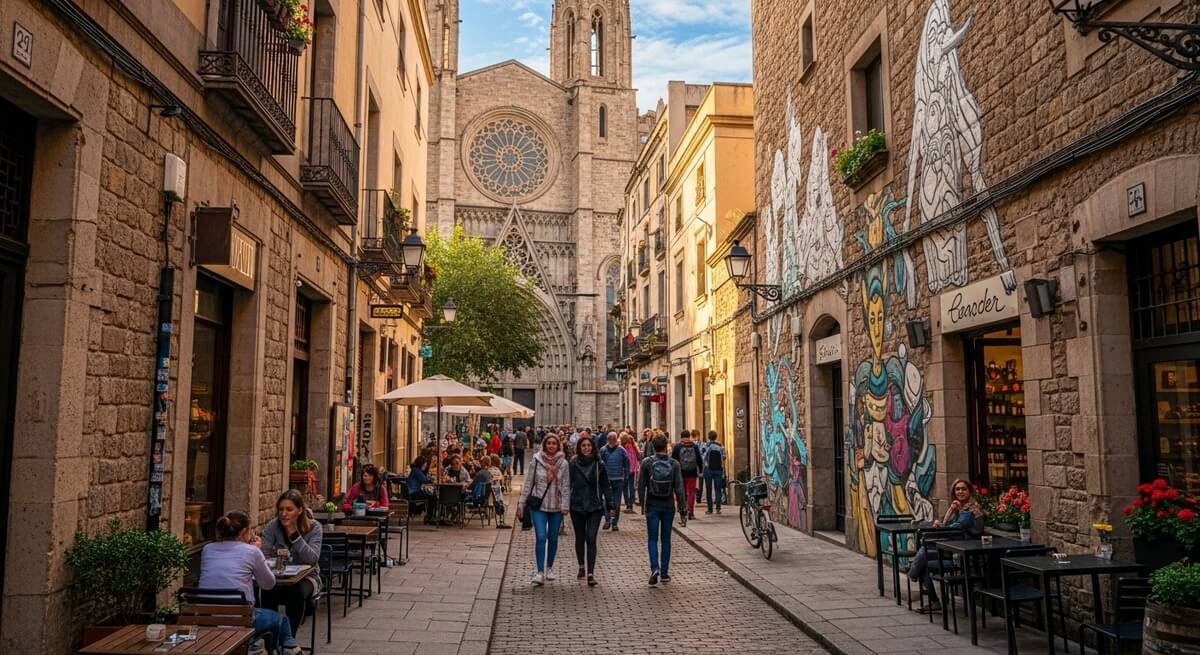
El Born is arguably the best neighbourhood for eating in Barcelona right now.
The streets around Santa Maria del Mar are dense with excellent tapas bars, natural wine shops, and casual restaurants that balance quality with atmosphere.
Key places to eat in El Born:
- Bar del Pla (Carrer de la Montcada, 2): consistently one of the best tapas bars in Barcelona — croquetes, musclos escabetxats (marinated mussels), excellent natural wine list. Busy at lunch and dinner
- Cal Pep (Plaça de les Olles, 8): legendary spot for fresh seafood tapas at the bar counter. Arrive at opening (1:15 PM for lunch, 7:30 PM for dinner) to avoid the queue
- El Xampanyet (Carrer de la Montcada, 22): neighbourhood institution serving house cava and tapas; the anchovies are exceptional. Closed Mondays
Barceloneta and the Waterfront: Seafood Territory
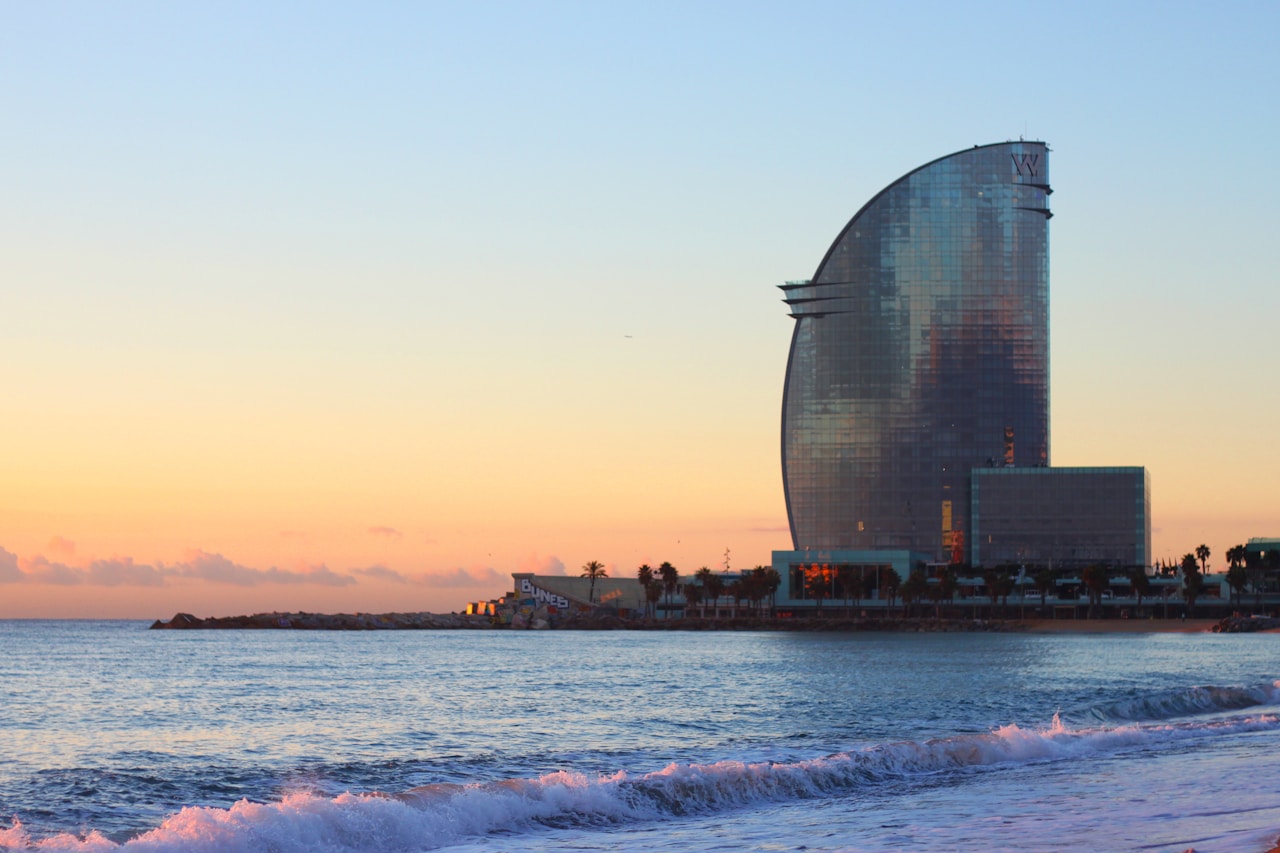
Barceloneta is where you go for seafood paella, grilled prawns, and the full coastal dining experience.
The quality varies significantly between tourist-facing restaurants near the beach and the genuinely excellent spots one or two streets back.
La Cova Fumada (Carrer del Baluard, 56) is the birthplace of the bomba — the fried potato croquette that has become a Barcelona icon.
It’s cash only, has no sign, and opens only for lunch (Monday–Friday 9 AM–3:30 PM, Saturday 9 AM–2:30 PM, closed Sundays).
Arrive by 11:30 AM to guarantee a table.
For the full beach and waterfront picture, our guide to the 10 best beaches in Barcelona includes recommendations for beachside eating and chiringuito culture.
Poble Sec: The Best Value Eating in Barcelona
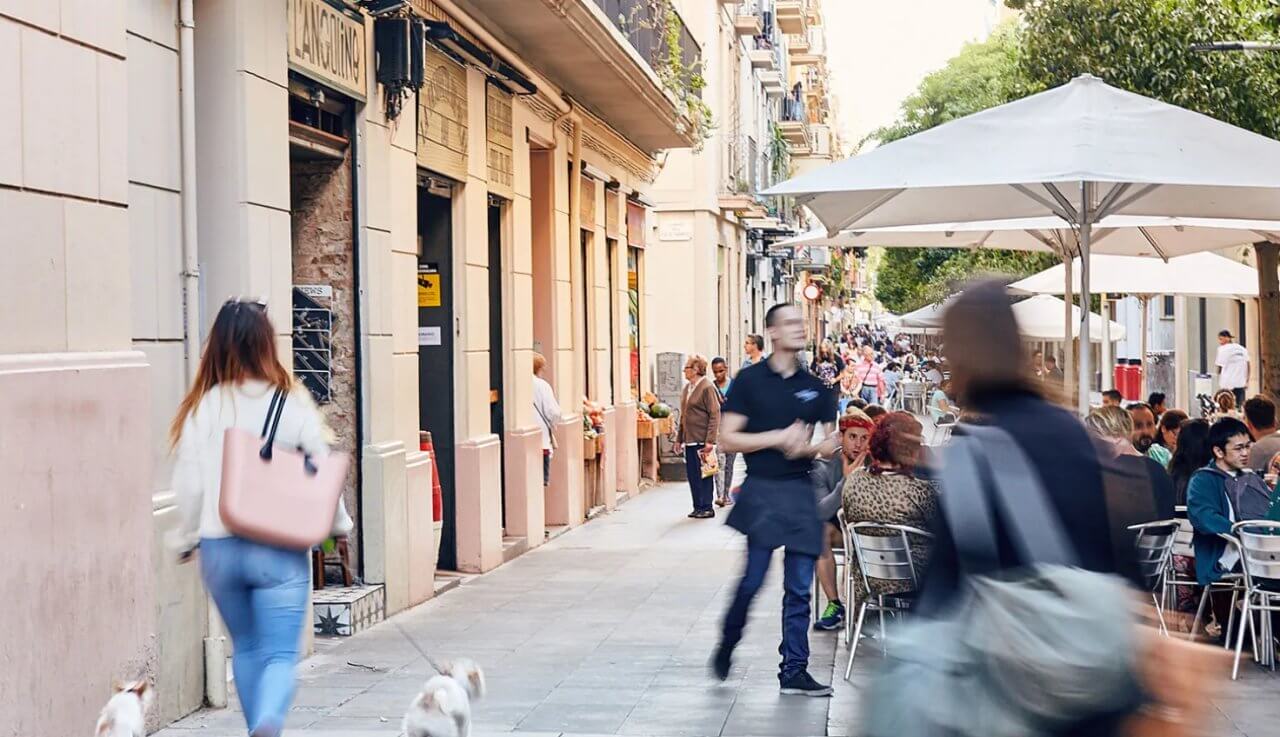
Poble Sec is Barcelona’s best neighbourhood for unpretentious, high-quality eating at low prices. Carrer Blai
is the city’s premier pintxos street — a row of bars serving toothpick-spiked bites for €1–2 each, best visited between 7 and 10 PM.
Quimet & Quimet (Carrer del Poeta Cabanyes, 25) is one of Barcelona’s most famous standing bars — tiny, no reservations, always packed.
They serve extraordinary montaditos (open-topped bread bites) loaded with tinned seafood, cheese, and cured meats, alongside a remarkable vermouth selection.
Open Monday–Friday 12 PM–4 PM and 6 PM–10:30 PM; closed weekends.
Gràcia: Local Barcelona Without the Tourists
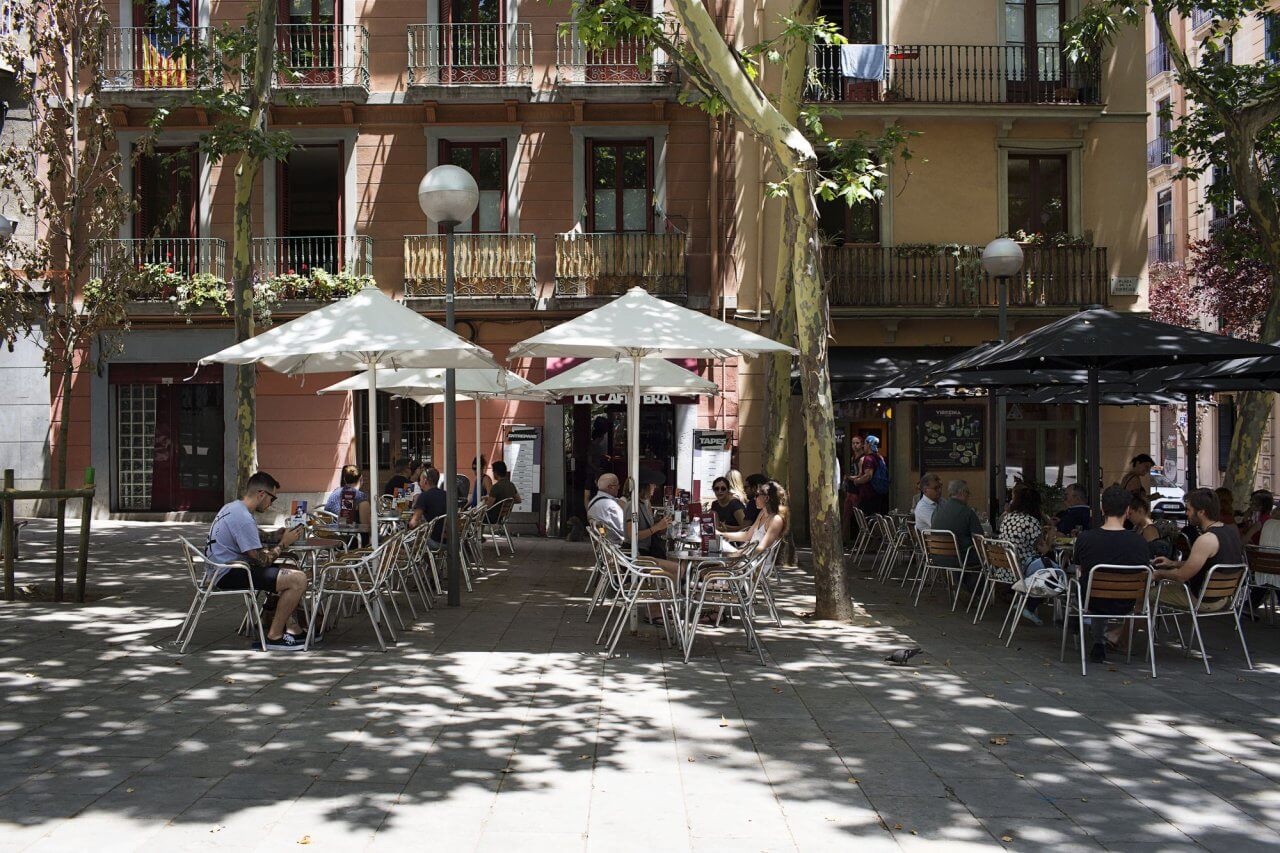
Gràcia feels like a village inside the city, and its food scene reflects that: small, independent, family-run.
The neighbourhood has an excellent concentration of neighbourhood bodegas serving vermouth and tapas, relaxed lunch restaurants, and some of the best brunch culture in Barcelona.
Bar Bodega Quimet (Carrer de Vic, 23) is not to be confused with Quimet & Quimet in Poble Sec.
This Gràcia bodega has been run by the same family since 1954 and serves homemade vermouth alongside excellent Catalan tapas.
Unpretentious, local, and worth the trip to the neighbourhood.
Eixample: Where to Find Fine Dining and Upscale Lunch
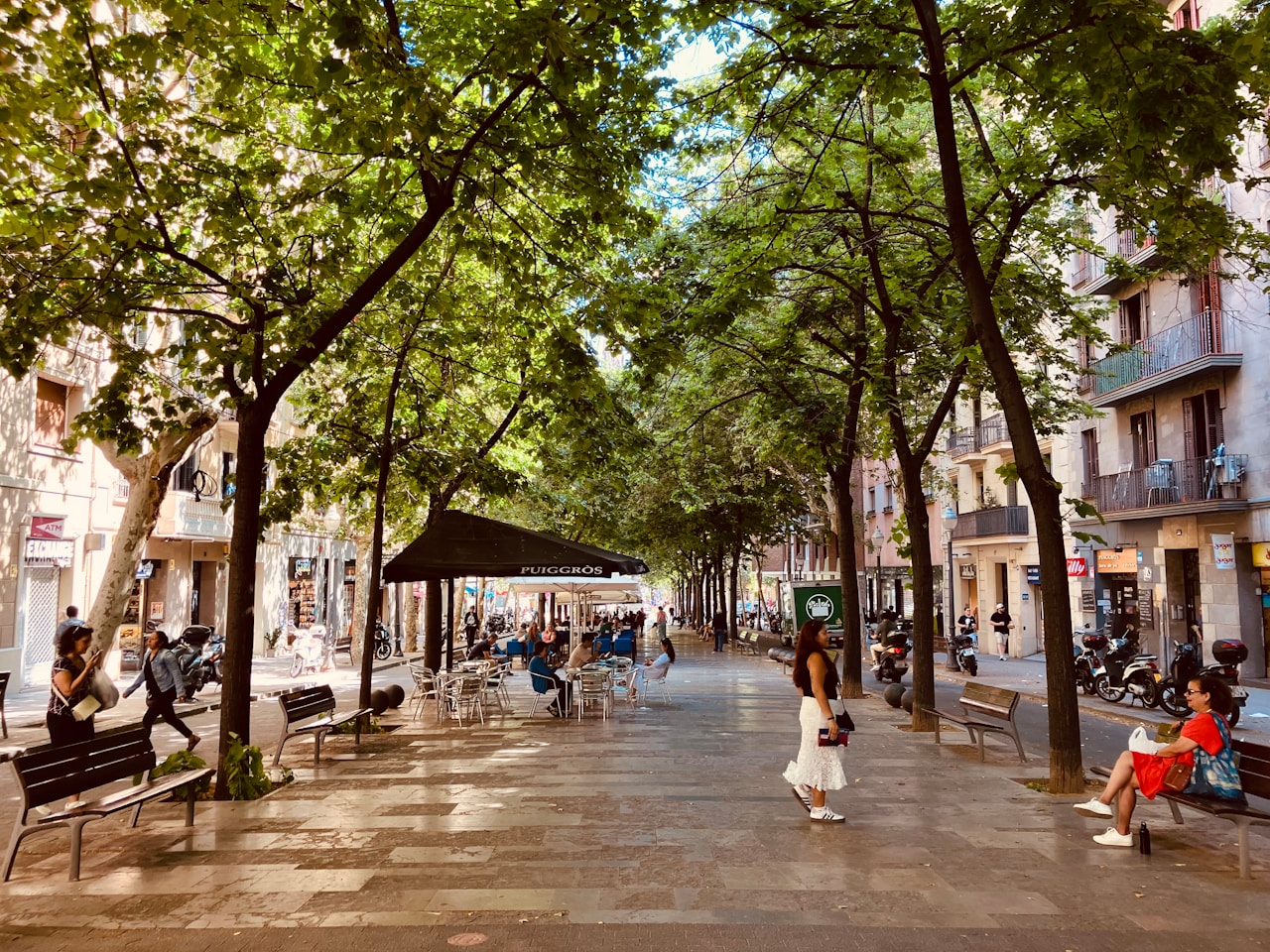
The Eixample district contains Barcelona’s highest concentration of upscale restaurants, rooftop bars, and innovative gastronomy.
It’s also where you’ll find many of the city’s best menú del día options hidden behind modernist facades.
For the best restaurants in Barcelona at the high end, Eixample is your base.
Most of the city’s Michelin-starred establishments are located here or in Poble Sec.
What to Eat in Barcelona: Essential Dishes
The food in Barcelona Spain has a canon of dishes that every visitor should try at least once.
These aren’t just tourist checkboxes — they’re genuinely excellent and tell you something real about Catalan culinary culture.
Pa Amb Tomàquet: The Foundation
Pa amb tomàquet (bread with tomato) is the starting point for almost every meal in Catalonia.
A thick slice of bread is rubbed with a ripe tomato half until the flesh soaks in, then drizzled with olive oil and a pinch of salt.
It accompanies everything from tapas to grilled meat to seafood.
You’ll find it everywhere, but the quality varies by tomato ripeness.
At a good neighbourhood restaurant, it’s made to order at the table.
At a tourist trap, it arrives pre-made from a bag.
The difference is immediately obvious.
Bombas: Born in Barceloneta
The bomba is a fried potato croquette with a meat filling, served with two sauces — a mild alioli and a spicier brava sauce.
La Cova Fumada in Barceloneta invented them sometime in the mid-20th century, and they remain one of the definitive things to eat in Barcelona.
€2–3 each at most tapas bars.
Patatas Bravas: An Argument Worth Having
Patatas bravas are everywhere in Barcelona — fried potato cubes with a spicy sauce — but quality varies enormously. Bar Tomàs
(Carrer de la Mare de Déu dels Desamparats, 95, in Sarrià) is widely considered to serve the definitive version: thick-cut, properly fried, with their proprietary double-sauce combination.
Worth the metro ride.
Calçots with Romesco
Calçots are long spring onions charred directly over fire, served wrapped in newspaper with romesco sauce — a thick paste of roasted red peppers, almonds, garlic, and olive oil.
They’re eaten by peeling back the charred outer layer, dipping in sauce, and lowering into your mouth with your head tilted back.
Bibs are provided.
Calçots are seasonal: late January through March.
During calçotada season, restaurants across the city run special menus.
The Fira de la Calçotada in Valls (90 minutes from Barcelona) takes place in late January and is one of the great Catalan food festivals.
Seafood Paella and Fideuà
Authentic seafood paella in Barcelona is made with short-grain rice (arrós) cooked in a wide, flat pan with fish stock, saffron, and fresh shellfish.
It requires time — usually 30–40 minutes minimum — and should never be ordered when a restaurant promises it in under 15 minutes.
Fideuà is the noodle version of paella, cooked in the same style with short pasta instead of rice.
It originated in Gandia but is deeply embedded in Barcelona’s coastal food culture.
Where to eat paella in Barcelona:
- Xiringuito Escribà (Ronda del Litoral, 42, Bogatell Beach): one of Barcelona’s best known beach paella restaurants; book ahead in summer
- La Mar Salada (Passeig de Joan de Borbó, 58, Barceloneta): consistent quality, good seafood selection, slightly tourist-facing but genuinely good
- Els Pescadors (Plaça de Prim, 1, Poblenou): neighbourhood fish restaurant away from the tourist waterfront; excellent daily catch menu
Crema Catalana
Crema catalana is Catalonia’s custard — richer and more citrus-forward than French crème brûlée, with a thinner caramelised sugar crust.
It’s the proper finish to a Catalan lunch. Granja La Pallaresa
(Carrer de Petritxol, 11, Gothic Quarter) serves a classic version alongside their famous thick chocolate.
Adventure Eating: Offal and Seasonal Specialties
For adventurous eaters, Catalan cuisine has a tradition of nose-to-tail cooking:
- Capipota — slow-cooked calf’s foot and head in a rich gelatinous sauce; found at traditional bodegas
- Bacallà amb samfaina — salt cod with a ratatouille-like Catalan vegetable sauce; a Friday standard in neighbourhood restaurants
- Fricandó — veal escalope slow-cooked with dried wild mushrooms (moixernons) in a picada-thickened sauce; warming and earthy
Best Restaurants in Barcelona: By Category
Here are best restaurants in Barcelona:
Best Fine Dining: Disfrutar
Disfrutar (Carrer de Villarroel, 163, Eixample) is the most decorated restaurant in Barcelona and one of the most celebrated in the world.
Three Michelin stars, ranked #1 in the World’s 50 Best Restaurants in 2024.
Run by three chefs who all trained at El Bulli — Oriol Castro, Eduard Xatruch, and Mateu Casañas — Disfrutar serves some of the most technically innovative cuisine on the planet.
Prices (current to 2026):
- Classic tasting menu: €315 per person (valid until August 2026 per the official website)
- Wine pairing: €170 per person (additional)
- The full experience including drinks runs 4–5 hours
Reservations open months in advance and sell out within minutes.
Check the official website at 9 AM Barcelona time on the reservation opening date.
This is not a casual booking; plan your trip around the availability.
Best Classic Catalan Restaurant: Can Culleretes
Can Culleretes (Carrer d’en Quintana, 5, Gothic Quarter) opened in 1786, making it Barcelona’s oldest restaurant and one of the oldest in Spain.
It’s listed in the Guinness Book of World Records.
The interior — tiled walls, murals, signed photographs of celebrity visitors, wooden furniture — has changed very little in decades.
The food is traditional Catalan: escudella i carn d’olla (meat and vegetable soup with pasta), botifarra amb mongetes (Catalan sausage with white beans), roasted meats, crema catalana.
The menú del día runs around €20 per person.
Hours: Tuesday–Sunday, lunch 1 PM–3:45 PM; dinner Thursday–Saturday 8 PM–10:30 PM.
Closed Mondays.
Best Standing Bar: Quimet & Quimet
Already covered under Poble Sec above, but worth reinforcing: Quimet & Quimet (Carrer del Poeta Cabanyes, 25) is the best montadito and vermouth experience in Barcelona.
No reservations.
No tables in the traditional sense.
Arrive at opening and eat standing at the bar.
Cash preferred.
Best for Groups: El Nacional
El Nacional (Passeig de Gràcia, 24) is a large food hall in a restored 1889 building containing four restaurants and four bars under one roof, each serving a different style of food — seafood, grilled meats, tapas, pintxos.
It’s expensive by Barcelona standards but excellent for groups with different tastes who want a single location.
Popular with locals and tourists alike; book ahead for dinner.
Best for Seafood: Cal Pep
Cal Pep (Plaça de les Olles, 8, El Born) is the classic Barcelona seafood tapas bar.
The menu changes with what’s fresh that day — tellinas (wedge clams), cloïsses (baby clams), gambetes (small prawns), calamars (squid).
Arrive at opening (1:15 PM lunch, 7:30 PM dinner) or be prepared to wait.
Cash and cards accepted.
Best Bomba: La Cova Fumada
See Barceloneta section above. No list of places to eat in Barcelona Spain is complete without it.
Cash only. Lunch only. No sign on the door. Worth every inconvenience.
The Menú del Día: Barcelona’s Best Kept Secret
The menú del día is a fixed-price set lunch served Monday through Friday at almost every neighbourhood restaurant in Barcelona.
It typically includes:
- First course (usually soup, salad, or a pasta/rice dish)
- Second course (fish or meat main)
- Dessert (usually crema catalana, ice cream, or fruit)
- Bread, water, and a drink (wine, beer, or soft drink)
Price range in 2026: €12–€20 at most neighbourhood restaurants; tourist-zone restaurants near Las Ramblas may charge more.
This is genuinely how local Barcelona workers eat lunch every weekday — it’s not a tourist concession.
Lunch runs from around 1:30 PM to 3:30–4 PM.
Arriving before 2 PM gives you the best selection.
The menú del día is the single best value proposition in Barcelona food.
For the price of one mediocre tourist restaurant main course, you get three courses, bread, and a drink at a restaurant where locals actually eat.
Lunch vs. Dinner in Barcelona: Timing and Culture
Understanding Barcelona’s meal timing is fundamental to eating well here.
The city operates on a schedule that surprises most visitors from outside Spain.
Lunch in Barcelona
Lunch is the main meal of the day in Barcelona.
It runs from 1:30 PM to 3:30–4 PM and is the time when most restaurants are at their best and busiest.
The menú del día tradition means that even mid-range restaurants operate a three-course lunch at fixed prices.
For a memorable best lunch in Barcelona experience:
- Arrive between 1:30 and 2 PM for best selection and peak atmosphere
- Choose restaurants away from Las Ramblas and the central tourist zone
- Look for a handwritten board or paper menu posted outside — that’s the menú del día
- Sunday lunch is a social event; families eat long and late, often until 4:30–5 PM
Dinner in Barcelona
Dinner in Barcelona rarely starts before 9 PM.
Restaurants that open at 8 PM for dinner will be largely empty until 9:30–10 PM.
Locals eat between 9:30 and 11 PM; going to a restaurant at 7 PM marks you immediately as a tourist.
For the best dinner in Barcelona:
- Book popular restaurants one to two weeks ahead in summer
- Tapas bars fill up fastest between 9:30 and 10:30 PM
- Budget for dinner to run two to three hours at a proper restaurant — that’s normal
- Many neighbourhood restaurants are closed Sunday evenings and all day Monday
For a structured itinerary that works around these timing realities, our weekend in Barcelona guide maps out a two-day food and sightseeing plan.
Barcelona’s Best Markets for Food Lovers
Markets are central to food culture in Barcelona.
They’re where chefs shop, where locals buy produce, and where visitors get the most honest snapshot of what the city actually eats.
La Boqueria (Mercat de Sant Josep)
La Boqueria (Las Ramblas, 91) is the most famous and most photographed market in Barcelona.
The visual spectacle — fruit pyramids, hanging jamón, seafood counters, spice stalls — is genuinely impressive.
Walking through it is free.
Honest notes for visitors:
- Stalls near the entrance are tourist-priced and often mediocre
- The best eating in La Boqueria is at the inner counters: El Quim de la Boqueria (counter stall with outstanding egg and seafood dishes) and the back-corner seafood stands
- For actual grocery shopping at local prices, Mercat de Sant Antoni or Santa Caterina are better
Mercat de Sant Antoni
Sant Antoni market (Carrer del Comte d’Urgell, 1) was recently restored and is now one of the most atmospheric food markets in the city.
It serves the neighbouring Eixample and Sant Antoni barrios with excellent produce, cheeses, and a strong prepared food section.
The Sunday book market operates outside the building — a mix of second-hand books, comics, and vintage prints that draws local crowds and makes the whole visit worth a detour.
Our guide to Barcelona neighborhoods covers Sant Antoni in detail as one of the city’s most liveable areas for food and bar culture.
Mercat de Santa Caterina
Santa Caterina market (Avinguda de Francesc Cambó, 16, El Born) is the architecturally striking alternative to La Boqueria — its distinctive wave-shaped mosaic roof by Enric Miralles makes it unmissable.
Less tourist-heavy, excellent seafood and cheese counters, and a strong prepared food section for a quick market lunch.
Mercat de la Llibertat
The Llibertat market (Plaça de la Llibertat, 27) is Gràcia’s neighbourhood market — relaxed, local, almost entirely visitor-free.
The produce quality is excellent.
The bar counters inside are good for a coffee or a quick lunch during a Gràcia neighbourhood walk.
Barcelona Street Food: What to Eat on the Go
The best Barcelona street food is found at specific locations rather than from general street vendors.
Essential street food and snacks:
- Churros con chocolate: The classic — fried dough sticks dipped in thick, almost solid hot chocolate. Granja Viader (Carrer dels Xuclà, 4, El Raval) has served them since 1870. Also excellent at Granja La Pallaresa (Carrer de Petritxol, 11, Gothic Quarter)
- Bocadillos: Crusty baguette sandwiches with jamón, cheese, or tortilla española — found at any bar for €3–6. The standard breakfast alongside a coffee
- Pintxos on Carrer Blai: The Poble Sec pintxos bars (especially around 7–9 PM) are the best casual grazing option in the city
- Empanadas and pastries: Found at South American bakeries concentrated in El Raval and Nou Barris
For festival street food, La Mercè (around September 24) brings food stalls and free outdoor events across the city.
The best time to visit Barcelona covers festival timing in detail.
Desserts and Sweet Treats Worth Finding
Desserts and sweet treats in Barcelona are also top choices for foodie lovers.
Crema Catalana and Mel i Mató
Crema catalana is the proper dessert ending to a Catalan meal. Mel i mató — fresh unsalted cheese (mató) drizzled with local honey — is lighter and harder to find in tourist-facing restaurants but excellent at neighbourhood spots.
Churros and Chocolate
Already covered in street food above. Granja Viader
(Carrer dels Xuclà, 4) is a Barcelona institution — a working dairy shop since 1870, famous for its cacaolat (chocolate milk drink) and thick drinking chocolate.
Artisan Bakeries and Patisseries Worth Visiting
- Pastisseria Hofmann (Carrer dels Flassaders, 44, El Born): their mascarpone-filled croissants are widely considered the best in the city; they sell out by mid-morning
- Baluard Barceloneta (Carrer del Baluard, 38): award-winning sourdough bakery steps from the beach
- La Colmena (Plaça de l’Àngel, 12, Gothic Quarter): traditional confectionery shop near the Cathedral, making handcrafted chocolates and sweets since 1849
- Caelum (Carrer de la Palla, 8, Gothic Quarter): pastries made in convents across Spain, served in a medieval cellar — unusual and excellent
Practical Dining Tips for Barcelona
Follow the following tips to have a wonderful dining experience in Barcelona:
How Much Does Food Cost in Barcelona?
Food in Barcelona Spain ranges from excellent value to expensive, depending entirely on where and when you eat.
| Eating Type | Cost per Person |
|---|---|
| Market snack or bocadillo | €3–7 |
| Café breakfast (coffee + toast) | €3–5 |
| Menú del día lunch (3 courses + drink) | €12–20 |
| Mid-range restaurant dinner (3 courses, no wine) | €30–50 |
| Pintxos bar (Carrer Blai) | €10–15 for a full graze |
| Fine dining / Michelin-starred tasting menu | €150–315+ |
Making Reservations
- Disfrutar and other top-tier restaurants: reserve weeks to months ahead; check official websites for opening dates
- Popular tapas bars (Cal Pep, El Xampanyet, Bar del Pla): arrive at opening time rather than reserving — most operate first-come-first-served
- La Cova Fumada: no reservations, cash only, arrive before 11:30 AM
- Quimet & Quimet: no reservations, standing only
Dining Etiquette Notes
- “La cuenta, si us plau” (in Catalan) or “la cuenta, por favor” (Spanish) requests the bill
- Service charge is not standard in Barcelona; tipping 5–10% at sit-down restaurants is appreciated but not obligatory
- Most restaurants accept cards; street food and traditional bodegas often prefer cash
- Don’t order sangria at a proper restaurant — locals drink wine, cava, beer, or vermouth
Planning your trip around food? Our best time to visit Barcelona guide includes the seasonal food calendar — when to catch calçots, which festivals have the best street food, and when restaurants are most/least crowded. Also check our guide to getting around Barcelona so you can reach every neighbourhood covered here without hassle.
Frequently Asked Questions (FAQs)
What are the must-eat foods in Barcelona?
The absolute must-eat foods in Barcelona are: pa amb tomàquet (tomato bread), bombas from La Cova Fumada, patatas bravas (ideally from Bar Tomàs in Sarrià), seafood paella (at a Barceloneta restaurant, not a tourist trap), calçots with romesco (January–March), and crema catalana as dessert.
These six dishes give you the essential range of Catalan food culture.
Where is the best place to eat in Barcelona on a budget?
The best places to eat in Barcelona on a budget are: the menú del día at any neighbourhood restaurant (€12–20 for three courses), the pintxos bars on Carrer Blai in Poble Sec (€1–2 per bite), market lunches at Santa Caterina or Sant Antoni, and the tapas bars of El Born where a drink and several shared plates runs €15–20 per person.
Are the restaurants in Barcelona expensive?
Barcelona is mid-range by European capital standards. You can eat extremely well for €15–20 at lunch (menú del día) and €30–40 at dinner at a decent restaurant.
Tourist restaurants near Las Ramblas charge significantly more for lower quality. Fine dining at the top tier starts at €150+ per person.
What neighbourhood has the best food in Barcelona?
El Born has the best concentration of quality tapas bars and casual restaurants. Poble Sec (particularly Carrer Blai and the area around Quimet & Quimet) offers the best value eating.
Barceloneta is the place for seafood. Gràcia is the most authentic neighbourhood experience. Eixample has the highest concentration of upscale dining.
Is Barcelona good for food tourists?
Barcelona is one of the best cities in Europe for food tourism. It has world-class fine dining, an extraordinary market culture, a deep tapas tradition, excellent seafood, a strong menú del día culture at every price point, and food festivals throughout the year.
The challenge is avoiding the tourist trap restaurants near main attractions — but this guide gives you enough alternatives to sidestep them entirely.