9 Day Trips From Barcelona: Complete 2026 Guide With Train Times & Prices



Best Day Trips From Barcelona: Top Destinations, Train Times & Tips for 2026 – Barcelona is one of Europe’s best base cities for day trips.
Within three hours by train, you can reach a UNESCO-listed Roman city, a Dalí museum inside a surrealist theatre, a medieval Jewish quarter untouched since the 14th century, and a mountain monastery surrounded by hiking trails.
This guide covers the best day trips from Barcelona in 2026 — with verified train times, ticket prices, journey distances, and what to actually do once you arrive.
Whether you’re planning a quick escape or building out a full week of excursions, our Barcelona travel tips guide covers the logistics and planning groundwork you’ll need before heading out.
Quick Reference: Day Trips From Barcelona by Train
Hide| Destination | Distance | Fastest Train | Train from | Approx Return Ticket |
|---|---|---|---|---|
| Sitges | 35 km | 31–37 min | Sants / Passeig de Gràcia | €9–12 |
| Montserrat | 60 km | ~60 min + rack railway | Plaça Espanya (FGC R5) | €26.30 return |
| Tarragona | 81 km | 32 min (AVE) | Barcelona Sants | €14–25 |
| Girona | 84 km | 38–40 min | Barcelona Sants | €20–30 |
| Figueres | 138 km | 55–65 min | Barcelona Sants | €25–50 |
| Lleida | 167 km | 60–70 min | Barcelona Sants | €20–40 |
| Segovia | 526 km | ~3h 51 min (1 change) | Barcelona Sants | €130+ |
| Toledo | 546 km | ~3h 34 min (1 change) | Barcelona Sants | €35–100 |
Why Day Trips From Barcelona Are Worth Planning

Barcelona’s day-trip geography is exceptional.
The high-speed AVE and regional Renfe networks connect the city to dozens of destinations across Catalonia and central Spain — most without a car.
Cities close to Barcelona by train include both easy coastal escapes like Sitges and significant historical centres like Girona and Tarragona, all reachable in under 90 minutes.
For day trips requiring more time — Toledo and Segovia particularly — the early departure discipline is everything.
Get that right and you have 6–8 hours on the ground before catching the return.
Get it wrong and you’ve spent most of the day on the train.
For planning driving-based excursions across the region, our Barcelona road trips guide maps out the best routes by car across Catalonia and beyond.
- What to Do in Madrid With Kids: Parks, Museums, and Local Tips
- 9 Best Day Trips From Madrid in 2026: Trains, Tickets, and What’s Worth It
- Madrid Travel Guide: Things to Know Before Traveling to Madrid, Spain
- Travel to Madrid on a Budget: Your Complete 2026 Travel Guide
- Best Neighborhoods in Madrid: Where to Stay and Why
- 35 Best Things To Do In Madrid
Train vs. Car vs. Guided Tour: How to Choose
Most of the best day trips from Barcelona by train don’t require a car.
The AVE and regional networks are fast, frequent, and reliable.
For destinations like Sitges, Girona, Tarragona, and Figueres, the train is unambiguously the best option.
For Montblanc and the Cistercian Route, a car gives you far more flexibility.
For Toledo and Segovia, the logistics are simpler on a guided tour if you don’t want to manage connections in Madrid on a tight timetable.
| Option | Best For | Drawbacks |
|---|---|---|
| Train | Sitges, Girona, Tarragona, Figueres, Montserrat | Less flexible for rural areas |
| Car | Cistercian Route, Montblanc, Costa Brava villages | Parking in historic centres is difficult |
| Guided tour | Toledo, Segovia, busy itineraries | Less independent, higher cost |
1. Montserrat
Montserrat is the most iconic day trip from Barcelona and usually the first one visitors consider.
The serrated limestone mountain rises 1,236 metres above sea level, 60km northwest of Barcelona, and contains a Benedictine monastery that has been a pilgrimage site since the 9th century.
The Black Madonna (La Moreneta), a 12th-century Romanesque sculpture, is housed in the basilica and is one of the most venerated religious icons in Spain.
Even without religious interest, Montserrat is worth the trip for the mountain scenery, the rack railway ride, and the hiking trails.
The views across Catalonia from the Sant Joan summit are among the best in the region.
Getting to Montserrat From Barcelona
Take the FGC R5 line from Plaça Espanya station.
Trains depart hourly from around 8:36 AM.
The journey to the base of the mountain (Monistrol de Montserrat) takes approximately 60 minutes.
From the base, take either:
- The Aeri de Montserrat cable car (runs every 15 minutes, takes 5 minutes)
- The Cremallera rack railway (runs every 20 minutes, takes 20 minutes)
Combined return ticket (2026): Train + cable car = €26.30 per adult.
The Tot Montserrat combo ticket includes the train, cable car, two funiculars, and a self-service restaurant meal for €55.50 per adult — excellent value if you want to explore thoroughly.
The Cremallera (rack railway) from Monistrol de Montserrat to the monastery runs several times per hour in peak season.
Check schedules at turistren.cat.
What to Do at Montserrat
- Basilica and Black Madonna: The main draw. The Santa Maria basilica is free to enter. Visiting La Moreneta (the statue) requires queuing at the dedicated entrance adjacent to the basilica, not through the main doors
- Sant Joan Funicular: Takes you to the upper mountain (1,000 metres). From the top station, trails lead to Sant Joan chapel (20 minutes) and the Sant Jeroni summit (90 minutes), the highest point at 1,236m — panoramic views across Catalonia
- Santa Cova Funicular: Descends to a 17th-century hermitage chapel on the slope where the Black Madonna was originally discovered
- Monastic museum: Permanent collection includes works by El Greco, Picasso, and Dalí alongside important Romanesque and Gothic art
Half day: Basilica + one funicular + Sant Joan trail
Full day: Both funiculars + Sant Jeroni summit hike + museum + lunch
Practical Tips
- Arrive early (before 11 AM) to beat coach tour groups that dominate midday
- The monastery town has cafeterias and a restaurant; food is adequate but overpriced — pack lunch if budget is a concern
- Montserrat is busy year-round but especially on weekends from April to October
- The mountain is cooler than Barcelona — bring a layer even in summer
2. Girona
Girona is 84km northeast of Barcelona and is consistently the most rewarding quick day trip from Barcelona by train.
The fast AVE service from Barcelona Sants reaches Girona in 38–40 minutes; regional trains take around 1h 20 minutes but are significantly cheaper.
The old town (Barri Vell) is one of the best-preserved medieval centres in Spain.
It’s compact, entirely walkable, and contains more architectural history per square metre than most cities ten times its size.
Why Girona Is a Top Day Trip Destination
The medieval city of Girona is effectively four overlapping historic cities: Roman foundations, a medieval Catalan centre, a remarkably intact Jewish quarter (El Call), and Arab baths.
You can walk the full Roman walls in 45 minutes for panoramic views over the Onyar River and the cathedral.
The Onyar River houses — brightly coloured buildings leaning over the river on the western bank — are one of the most photographed sights in Catalonia.
The iron footbridge (popularly attributed to Eiffel, though the attribution is contested) connects the old town to the newer centre.
Game of Thrones fans will recognise multiple locations around the old town — it doubled as Braavos and King’s Landing in seasons 5 and 6.
What to Do in Girona
- El Call (Jewish Quarter): A labyrinth of narrow stone lanes, sealed since the 14th-century expulsion of the Jewish community. The Museum of Jewish History (Museu d’Història dels Jueus) on Carrer de la Força is excellent — €4 adults
- Girona Cathedral: The widest Gothic nave in the world at 22.98 metres. Entrance fee for the interior and the treasury (which holds the Tapís de la Creació, a remarkable 11th-century embroidered tapestry) is €7
- City walls: Free to walk. Access points scattered around the old town perimeter
- Arab Baths (Banys Àrabs): Romanesque bathhouse built in the 12th century — €3 adults
- Onyar river walk: Free; best in the early morning or golden hour
Recommended time on the ground: 4–5 hours minimum.
Getting to Girona
Book AVE tickets at renfe.com.
Book in advance for the best prices — the cheapest fares can be as low as €10 one way but these sell out quickly.
Standard fares run €15–25 one way.
If budget is the priority, the regional Avant train (1h 20 min) costs considerably less.
Trains depart from Barcelona Sants.
3. Tarragona
Tarragona sits 81km south of Barcelona and is one of the most underrated day trips from Barcelona Spain.
It was Tarraco, the capital of Roman Hispania, and the collection of Roman monuments here is the most impressive on the Iberian Peninsula outside of Mérida.
The fastest AVE service from Barcelona Sants to Camp de Tarragona takes 32 minutes.
The older Tarragona city centre station (closer to the old town) takes 1h 5 min on average by regional train.
Most visitors use the AVE for speed and then take a free shuttle bus or taxi into the historic centre from Camp de Tarragona.
Roman History and Coastal Views
The Roman Amphitheater of Tarragona is the city’s standout monument — built on a slope above the Mediterranean in the 2nd century AD, it held up to 14,000 spectators.
Entry costs €3.50 (combined ticket for multiple sites recommended).
Key Tarragona sites:
- Roman Amphitheater: The Mediterranean views from inside are extraordinary — arrive early for the best light
- Roman Circus and Pretorium tower: The circus (a chariot-racing track) is the best-preserved in Spain; the Pretorium tower connects underground to the circus
- City walls (Passeig Arqueològic): UNESCO-listed; a 1km walk along Roman and medieval walls with sweeping views
- National Archaeological Museum of Tarragona (MNAT): Strong permanent collection of mosaics, sculpture, and everyday Roman objects — €4.50 adults
- Medieval cathedral: Built on top of the Roman temple of Augustus, with a beautiful Romanesque-Gothic cloister
Combination ticket covering the amphitheater, circus, Pretorium, and city walls: €11.05 adults.
Timing Your Visit
Arrive before 10 AM for the amphitheater in good light and without crowds.
The old town is quiet on weekday mornings — weekend afternoons bring Spanish day-trippers from Barcelona.
Most sites close for lunch (usually 1–3 PM) so plan around this.
4. Sitges
Sitges is Barcelona’s weekend beach escape — 35km southwest, direct train in 31–37 minutes from Sants or Passeig de Gràcia.
It’s a charming town with a lively history as an artists’ colony, 17 beaches, a well-preserved whitewashed old town built around a clifftop church, and a nightlife scene disproportionate to its size.
The main beach (Platja de la Ribera) and the Passeig Marítim boardwalk run directly below the old town.
The Carrer del Pecat (Sin Street) behind the seafront is the centre of Sitges’ famous nightlife.
What Makes Sitges Worth the Trip
- Beaches: Sitges has 17 distinct beaches ranging from the central town beach to quieter coves north and south. Less crowded than Barcelona’s Barceloneta from late May through September
- Old town: The clifftop Church of Sant Bartomeu i Santa Tecla and the streets below it are extremely photogenic. The Cau Ferrat museum (former studio of artist Santiago Rusiñol) contains important Modernista art alongside El Greco paintings
- Carnival: Sitges Carnival (February/March) is one of the best in Spain — a major event if your timing coincides
- Wine: The Penedès wine region begins just inland from Sitges — day trips combining Sitges with a winery visit are popular
Getting to Sitges
Regional Rodalies trains (R2 Sud line) depart from Barcelona Sants and Passeig de Gràcia stations, running every 15–30 minutes with services until midnight.
Return tickets cost approximately €9–12.
No advance booking needed — just show up and board.
For Sitges and beach coverage, our best beaches in Barcelona guide puts the coastal options in context with the city’s own beaches.
5. Figueres and the Dalí Museum
Figueres is 138km northeast of Barcelona — reachable in 55–65 minutes by AVE from Barcelona Sants — and its entire reason for visiting is the Teatre-Museu Dalí.
It’s the most-visited museum in Spain after the Prado and the Reina Sofía.
Salvador Dalí designed the museum himself and is buried in the basement.
The building — a former theatre wrapped in a geodesic dome, studded with giant eggs, and filled with Dalí’s own installation environments — is both the museum and the artwork.
No other art museum experience in Europe comes close to its strangeness.
The Dalí Theatre-Museum
Ticket prices (2026):
- Adults: €15 (online booking recommended)
- Reduced (seniors, students with ID): €11
- Children under 8: Free
- Night visits run in July and August: tickets are different; check the official website
Opening hours:
- March–June and October: Tuesday–Sunday 9:30 AM–6 PM (closed Mondays)
- July–September: Daily 9 AM–8 PM (night visits on selected evenings)
- November–February: Tuesday–Sunday 10:30 AM–6 PM (closed Mondays)
Highlights include the Mae West Room (furniture arranged as a face), the Cadillac with the rain installation, the ceiling painting of the Palau del Vent, and Dalí’s crypt below the stage.
Combining Figueres with Nearby Stops
Figueres pairs naturally with:
- Cadaqués (40 min by bus from Figueres): the whitewashed coastal village where Dalí lived, with the Casa Museu Salvador Dalí at Cap de Creus — remote, beautiful, and requires advance reservation
- Girona (20 min by AVE): combine both in a single day with an early start
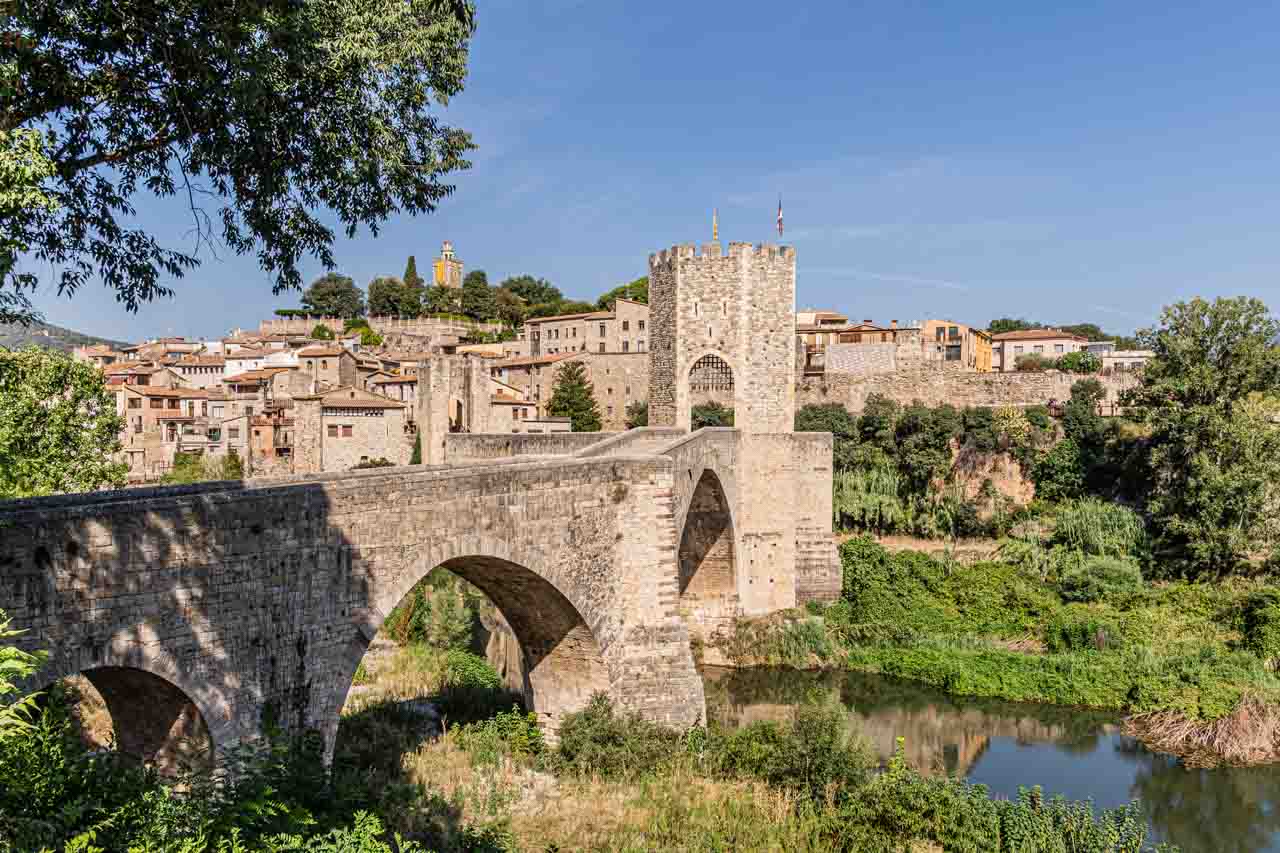
- Besalú (20 min by bus from Figueres): a perfectly preserved 12th-century fortified bridge village, one of the most striking medieval towns in Catalonia
6. Tarragona’s Cistercian Route and Montblanc
For travelers who want a day trip from Barcelona that avoids crowds entirely, the Cistercian Route (Ruta del Cister) runs through three extraordinary medieval monasteries and the walled town of Montblanc in the Conca de Barberà interior.
This requires either a car or a mix of regional train and local buses.
Montblanc: The Best Medieval Walled Town Near Barcelona
Montblanc (train from Barcelona Sants, ~1h 20 min regional, arriving at Montblanc station) is a medieval walled town with 1.5km of intact 14th-century walls, 30 towers, and a compact old town that sees a fraction of the tourists that visit Girona.
The Santa Maria la Major church and the Sant Jordi festival (April 23) are highlights.
The Three Cistercian Monasteries
| Monastery | Distance from Montblanc | Best Feature | Entry |
|---|---|---|---|
| Poblet | 13 km | UNESCO-listed; royal tombs of Aragonese kings | €10 |
| Santes Creus | 40 km | Intact Gothic cloister; royal mausoleum | €6 |
| Vallbona de les Monges | 55 km | Active female monastery; Gothic architecture | €4 |
Poblet is the standout — one of the largest and best-preserved Cistercian monasteries in the world, still inhabited by monks.
Access is by guided tour only (runs multiple times daily).
Book at poblet.cat.
7. Lleida
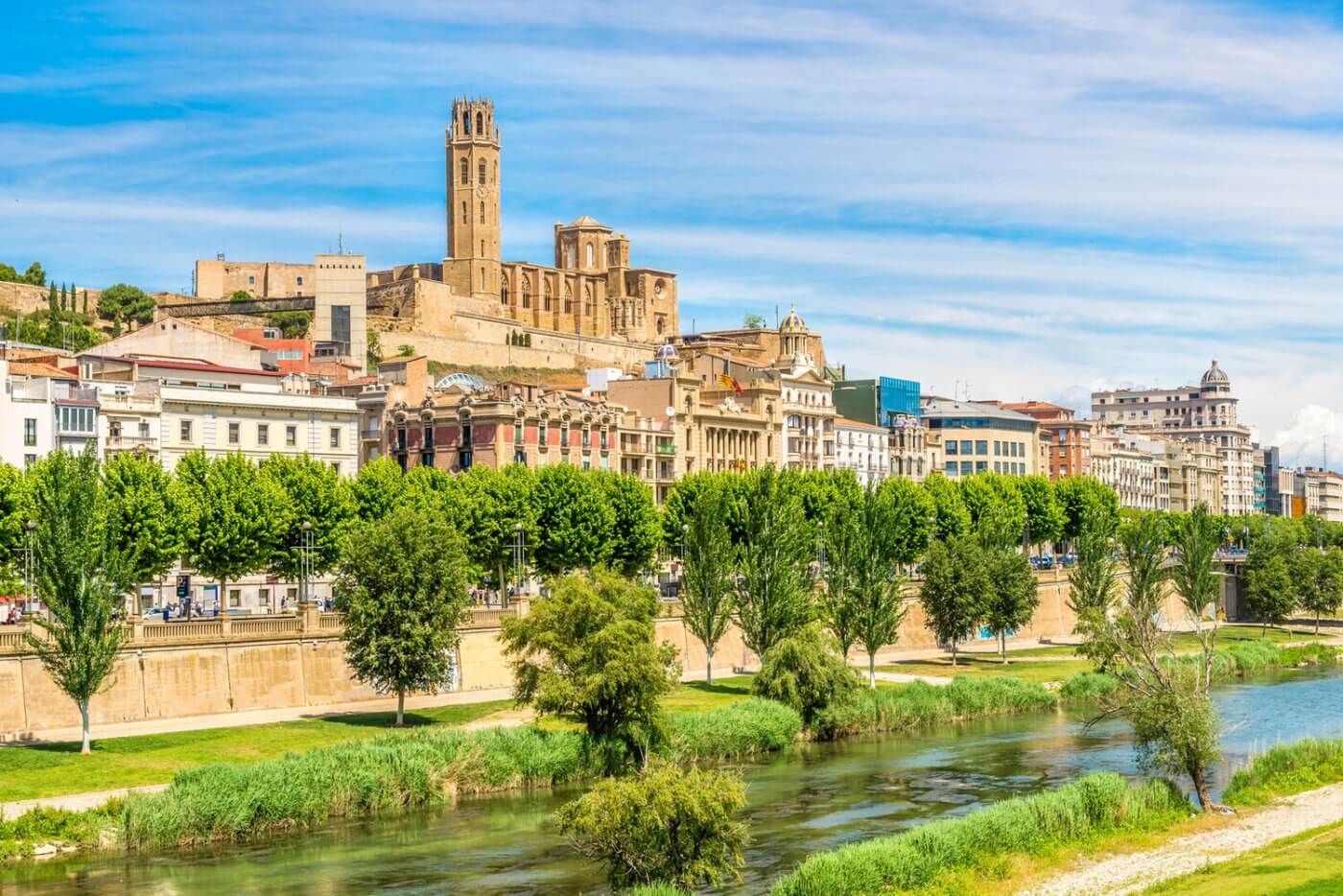
Lleida (also Lérida in Castilian) sits 167km west of Barcelona — reachable in 60–70 minutes by AVE from Barcelona Sants.
It’s one of the least-visited cities in Catalonia among international tourists but has a genuinely impressive old town built on a hill above the Segre river.
La Seu Vella — a Romanesque-Gothic cathedral fortress on the hilltop, never completed as a religious building because the Spanish military used it as a barracks for 200 years — is the main attraction.
The views from the ramparts across the western Catalan plains are extraordinary.
The city’s agricultural surrounding region is Catalonia’s largest fruita dolça (sweet fruit) producer — cherries, peaches, apples, and pears in spring and summer make the countryside drive through here particularly beautiful in blossom season (late March to April).
8. Toledo: Is It Worth the Journey From Barcelona?
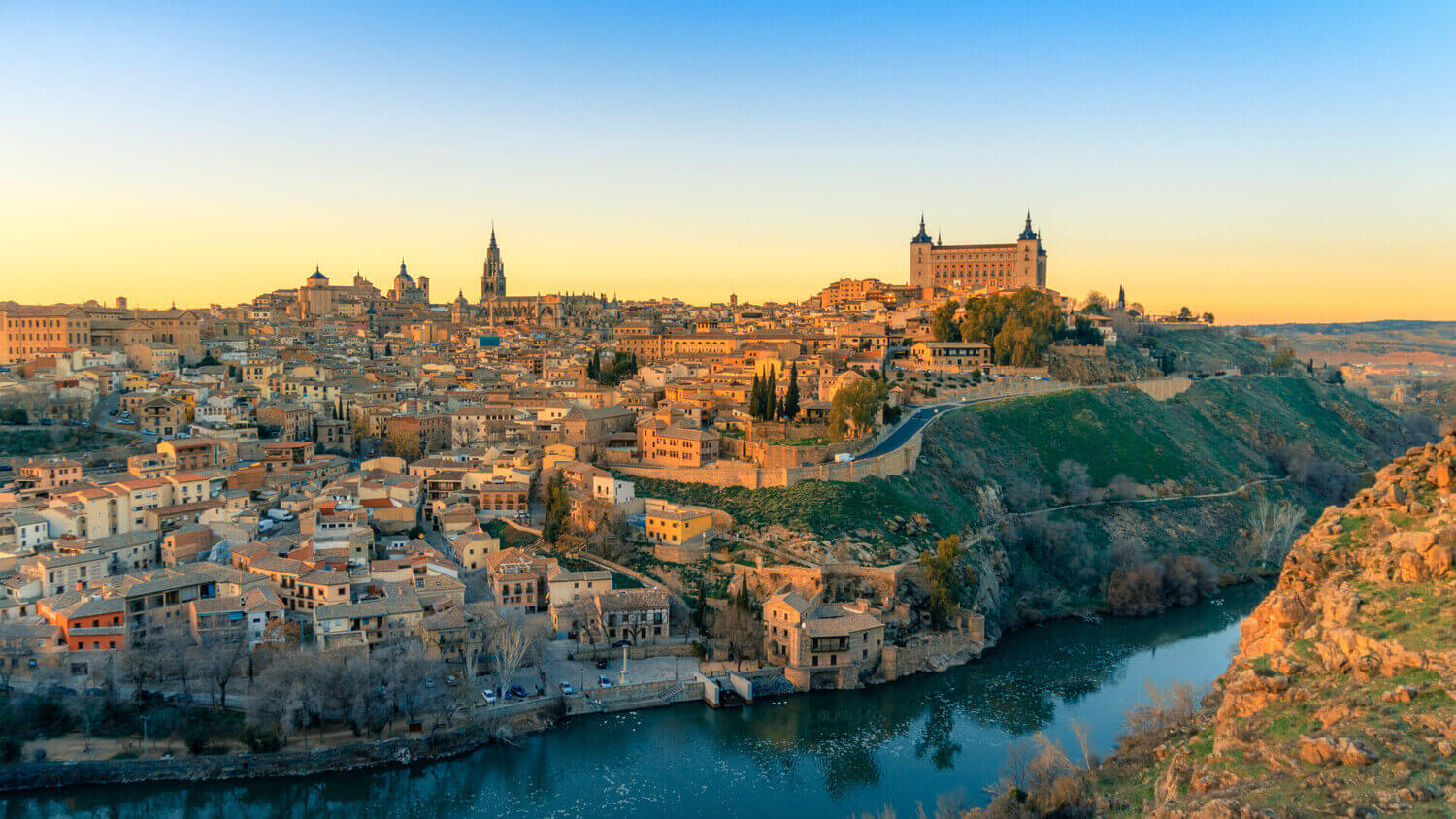
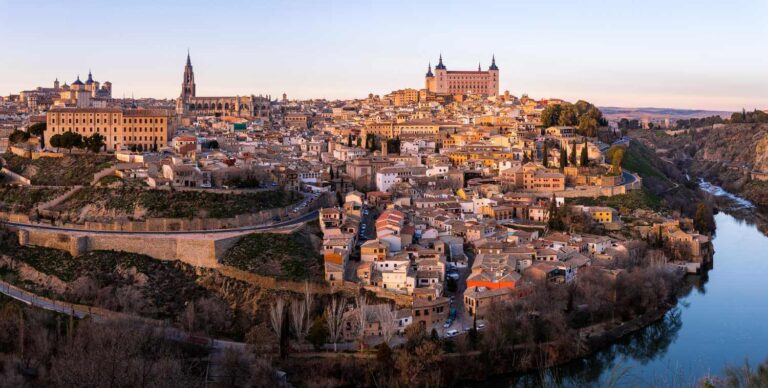
Toledo is Spain’s most important medieval city — UNESCO World Heritage site, former capital of the Visigoth kingdom, centre of Christian-Muslim-Jewish cultural synthesis from the 9th to 15th centuries.
It’s also 546km from Barcelona, and this is the key fact to understand before booking.
How to Get From Barcelona to Toledo
The fastest Barcelona to Toledo train takes around 3h 34 minutes with one connection (change in Madrid Puerta de Atocha or Atocha Cercanías to the separate Toledo line).
Average journey time is 3h 44 minutes to 4h 28 minutes.
The train from Barcelona to Toledo requires boarding at Barcelona Sants on an AVE, iryo, or OUIGO high-speed service to Madrid, then connecting to the short-hop regional train from Madrid Atocha to Toledo (30 minutes).
The connection at Madrid is the only complication — allow at least 30–45 minutes for the platform change.
Ticket prices: From €35–40 (basic advance booking) to €100+ for flexible fares.
Departure schedule: First trains from Barcelona leave from around 5:40–6:05 AM.
Last viable trains for a same-day return depart Toledo around 6–7 PM.
Is a Toledo Day Trip From Barcelona Feasible?
Honestly — it’s a long day.
You’re looking at roughly 7–8 hours of travel round-trip for 6–7 hours in Toledo.
For most people, an overnight stay in Toledo makes significantly more sense.
But as a dedicated day trip to Toledo from Barcelona it is doable: leave by 6:30 AM from Barcelona Sants and you’re in Toledo by 10:15 AM.
What makes Toledo worth it:
- Catedral Primada de Toledo: The primary cathedral of Spain, Gothic over a 250-year construction period; the El Transparente altarpiece and El Greco’s Espolio are world-class works. €13 adults
- Alcázar fortress: Military history museum and viewing platform over the city and surrounding plains; €5 adults
- Sinagoga del Tránsito and Museo Sefardí: 14th-century synagogue with extraordinary Mudéjar stucco work; €3 adults
- El Greco Museum: Small but excellent collection including The Apostolate series; €3 adults
Toledo’s old town is extremely compact — all four sites are within 15 minutes’ walk of each other.
9. Segovia
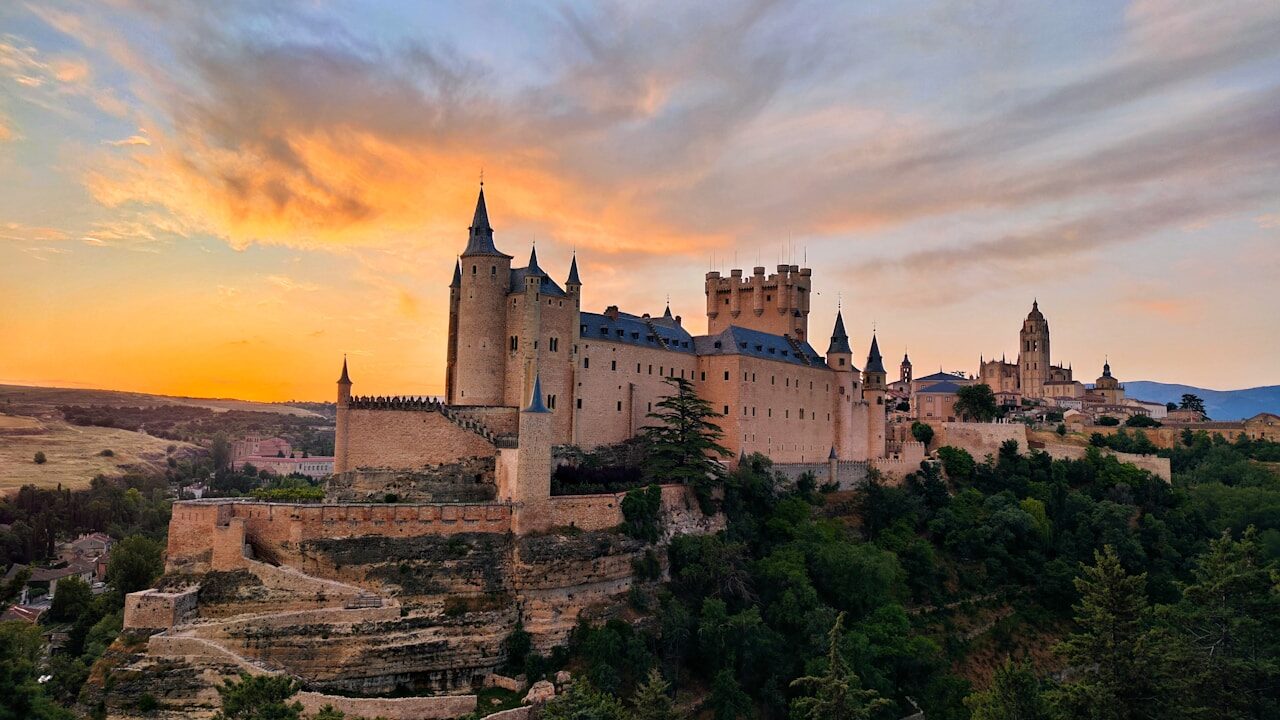
Segovia is 526km from Barcelona — roughly the same logistics challenge as Toledo.
The fastest Barcelona to Segovia train takes 3h 51 minutes with one change; average journey is 4 hours 35 minutes to 4h 43 minutes.
Approximately 16 trains per day run this route.
The journey from Barcelona to Segovia requires changing at Madrid Chamartín or Madrid Atocha.
The train from Barcelona to Segovia uses AVE, Avlo, or iryo high-speed services.
Ticket prices: From €130 return in advance; flexible fares significantly higher.
What Justifies the Barcelona to Segovia Day Trip
Segovia has two monuments that are among the most architecturally significant in Spain:
The Roman Aqueduct of Segovia — built in the 1st–2nd century AD without mortar, 167 arches, 28 metres at its highest point, still standing and structurally intact.
It’s the largest and best-preserved Roman aqueduct in Spain.
Completely free to walk around.
The Alcázar of Segovia — a fortress palace built on a rocky crag with views in every direction across the Castilian plateau.
This is one of the most-photographed castles in Europe and a direct inspiration for Walt Disney’s Cinderella Castle design.
Entry: €10 adults (tower access additional).
The Gothic Cathedral of Segovia — the last Gothic cathedral built in Spain (completed 1577).
Entry: €4 adults.
Segovia’s old town is UNESCO-listed and compact — the three major monuments are all walkable from each other.
Allow 5–6 hours minimum on the ground.
As a practical note: both Segovia and Toledo work better as overnight stops if you’re comfortable extending the trip into a weekend trip from Barcelona.
Planning Your Day Trips From Barcelona
Here’s a brief guide on how you cam plan your day trips from Barcelona:
Which Day Trip Is Right for You?
| Traveller Type | Best Day Trip | Why |
|---|---|---|
| First-time visitor | Montserrat or Girona | Short journey, high impact |
| Beach seeker | Sitges | 35 minutes, free beach, great old town |
| History and archaeology | Tarragona | Roman ruins, compact city, fast train |
| Art lover | Figueres (Dalí) | Unique, unmissable |
| Medieval architecture | Girona or Montblanc | Best preserved old towns |
| Ambitious itinerary | Toledo or Segovia | UNESCO world-class sites, longer travel |
| Off the beaten path | Lleida or Cistercian Route | Almost no tourists |
Booking Train Tickets
All Spanish national rail tickets can be booked at renfe.com.
For high-speed AVE routes (Tarragona, Girona, Figueres, Lleida, Toledo, Segovia), booking in advance is strongly recommended — prices increase significantly closer to departure dates.
For Sitges (Rodalies commuter trains), no advance booking is needed.
For Montserrat, buy the combo ticket at Plaça Espanya station or online via FGC.
Our guide to getting around Barcelona covers the city’s own transport network and how to get to the main departure stations from central Barcelona.
When Is the Best Time for Day Trips?
Spring (April–June) and autumn (September–October) are ideal for all day trips from Barcelona — good weather, smaller crowds than peak summer, longer daylight hours.
Summer is fine for beach trips to Sitges but coastal destinations get busy.
Winter works well for inland historical cities (Girona, Toledo, Segovia) when tourist volumes drop.
For the full seasonal calendar, our best time to visit Barcelona guide covers crowds, weather, and festivals month by month.
Heading out on a longer trip? Our Barcelona road trips guide covers the best driving routes across Catalonia, the Pyrenees, and the Costa Brava for travellers with more time.
Frequently Asked Questions (FAQs)
What is the best day trip from Barcelona?
The single best day trip from Barcelona is Montserrat for a nature and culture combination, or Girona for pure medieval architecture.
Montserrat is uniquely dramatic and accessible in 60 minutes; Girona has the most complete medieval old town in Catalonia and is 38 minutes by fast train.
Can you do a day trip from Barcelona to Toledo?
Yes, but it’s a long day. The fastest Barcelona to Toledo train takes around 3h 34 minutes each way with one change in Madrid.
Leaving Barcelona by 6:30 AM, you arrive in Toledo by around 10:15 AM and need to leave Toledo by 6–7 PM for a reasonable return. An overnight stay makes the trip significantly more rewarding.
How far is Segovia from Barcelona?
Segovia is approximately 526km from Barcelona. The fastest train from Barcelona to Segovia takes 3h 51 minutes with one change (usually in Madrid).
Average journey time is around 4 hours 35 minutes. Tickets start from around €130 return booked in advance.
What is the best day trip from Barcelona by train?
For pure train convenience, Girona (38 min), Tarragona (32 min AVE), and Sitges (31–37 min) are the best options — all direct or near-direct, frequent services, no need for advance booking on most services.
Are there day trips from Barcelona that don't require a car?
All the destinations in this guide are reachable by train except the Cistercian Route and some Costa Brava villages. Sitges, Montserrat, Girona, Tarragona, Figueres, Lleida, Toledo, and Segovia are all train-accessible from Barcelona Sants or Plaça Espanya.