Cancún Travel Guide: Essential Things to Know Before You Go



Things to Know Before Traveling to Cancún, Mexico – Cancún is one of Mexico’s most visited destinations, welcoming over 6 million international tourists each year to its Caribbean coastline.
- What Is Cancún? Geographic Overview and City Profile
- Is Cancún Safe for Tourists?
- Documentation and Entry Requirements
- Currency and Money: What to Know Before You Go
- When Is the Best Time to Visit Cancún?
- Getting Around Cancún
- Language and Communication in Cancun and Mexico
- Health and Medical Considerations
- Food and Dining in Cancún
- Activities and Attractions in Cancún
- Resort Life and All-Inclusive Packages
- Technology and Connectivity
- Shopping and Souvenirs
- Legal Awareness and Emergency Preparedness
- Budget Summary: Estimated Daily Costs in Cancún
- Conclusion
Before you travel, there are essential practicalities to understand: U.S. citizens need a valid passport and a Tourist Card (FMM form), the Mexican peso is the official currency, and the dry season runs from November to April.
This guide covers everything you need to plan a confident, well-prepared trip to Cancún.
Key Takeaways
Hide- Visit during the dry season, November to April, for the most reliable weather.
- U.S. tourists do not need a visa for stays under 180 days, but a valid passport and Tourist Card (FMM) are required.
- The Hotel Zone is well-patrolled and considered safe for tourists, with 24/7 surveillance.
- Credit cards are widely accepted; carry Mexican pesos for markets and street food vendors.
- Budget approximately $100 USD per day for food, transport, and activities outside an all-inclusive resort.
What Is Cancún? Geographic Overview and City Profile
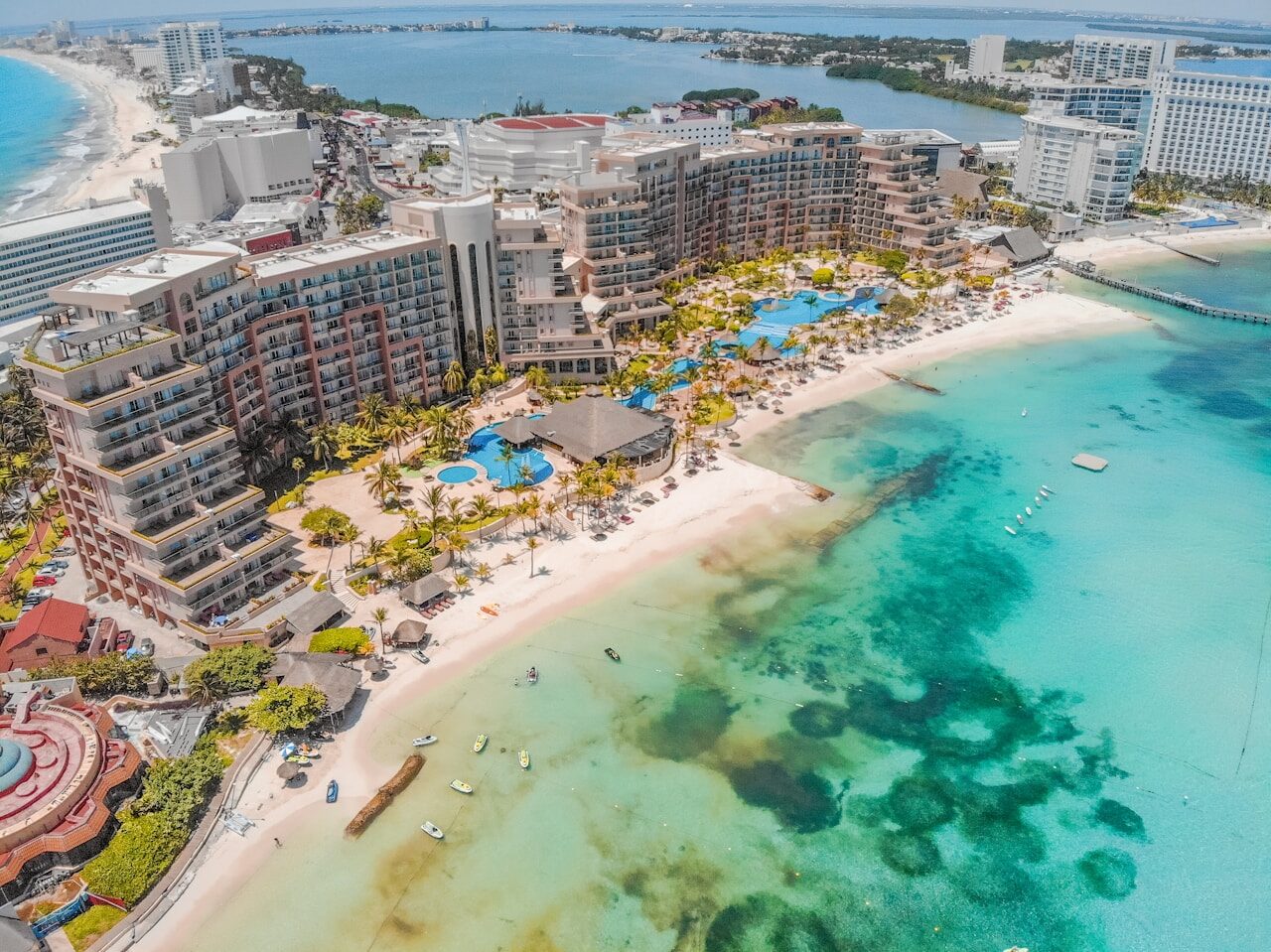
Cancún is a modern resort city located on the northeastern tip of the Yucatán Peninsula, bordering the Caribbean Sea.
The city has a population of approximately 900,000 residents and receives over 6 million visitors annually.
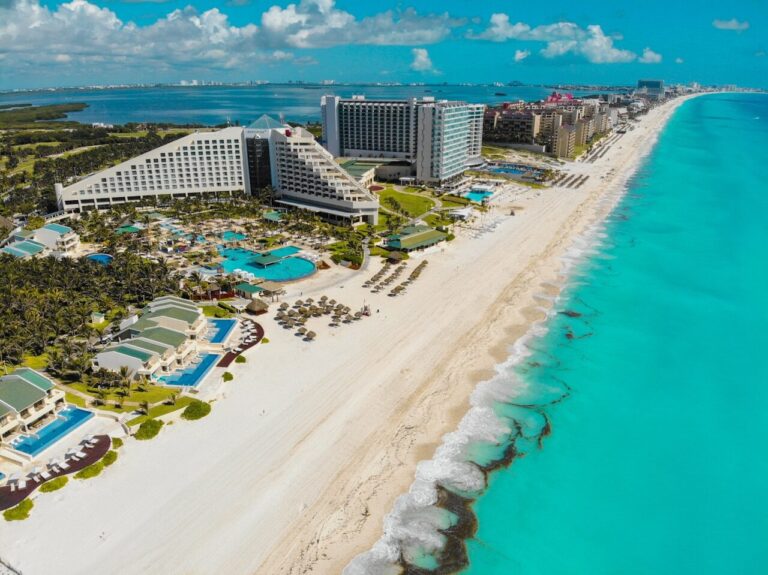
Its layout divides into two distinct zones: the Hotel Zone (Zona Hotelera), a 14-mile barrier island lined with resorts, and Downtown Cancún (Ciudad Cancún), the urban commercial and cultural centre.
The Hotel Zone contains over 150 hotels and more than 30,000 rooms. Downtown offers local markets, authentic restaurants, and a more residential atmosphere at lower price points.
Cancún also serves as a gateway to the broader Riviera Maya, with access to UNESCO World Heritage Sites, the Mesoamerican Barrier Reef — the second-largest coral reef system in the world — and dozens of cenotes (natural freshwater sinkholes).
Mayan Heritage and Nearby Archaeological Sites
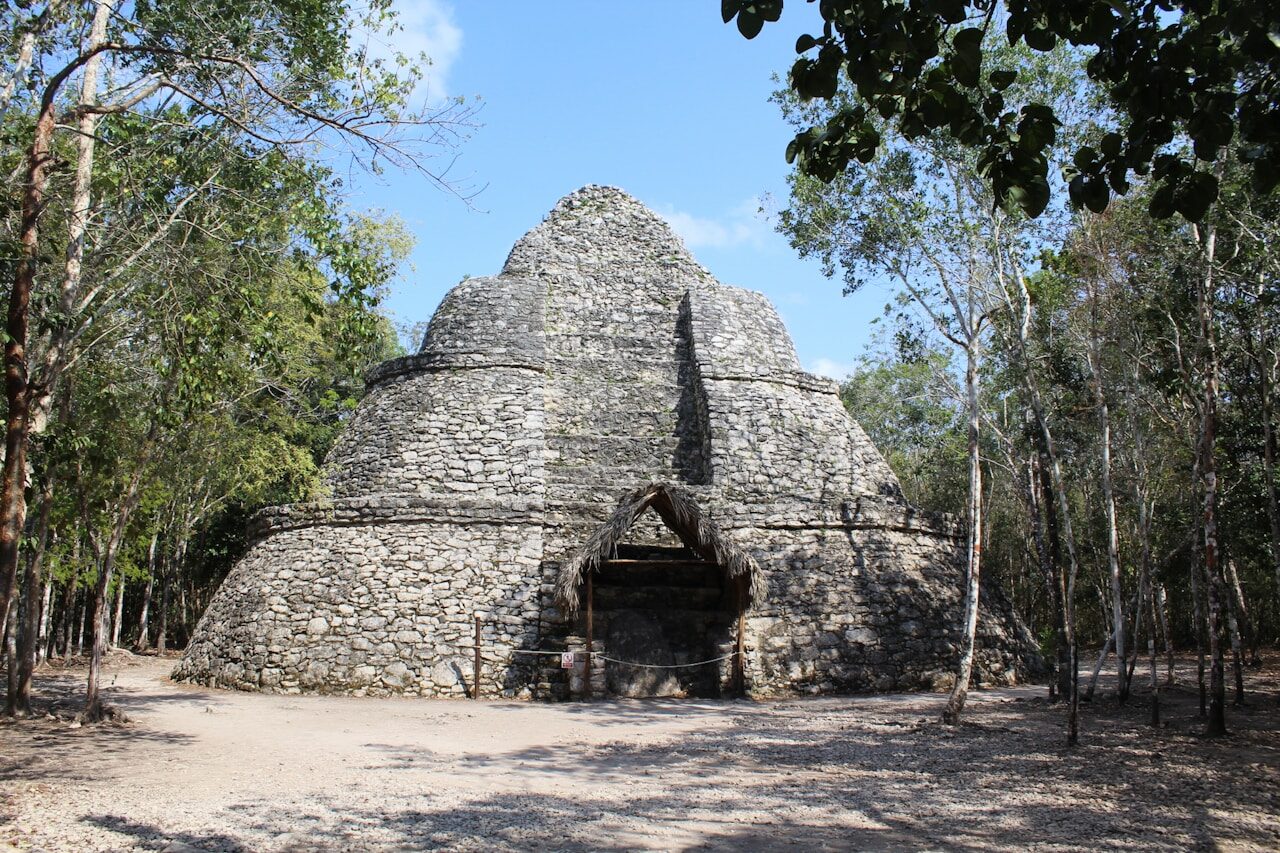
Cancún sits within one of the world’s richest concentrations of ancient Mayan archaeological sites.
El Rey Ruins are located directly within the Hotel Zone and feature over 40 structures.
Tulum, a clifftop walled city with Caribbean Sea views, is approximately 80 miles (130 km) south.
Chichén Itzá, a UNESCO World Heritage Site and one of the New Seven Wonders of the World, is roughly a 2.5-hour drive (approximately 120 miles / 195 km) inland.
Cobá, known for the Nohoch Mul pyramid, and Ek’ Balam, noted for its well-preserved stucco sculptures, are also within day-trip range.
For travellers interested in exploring Mexico beyond Cancún, our guide to the best places to visit in Mexico covers the country’s top destinations.
Is Cancún Safe for Tourists?
Cancún is generally safe for tourists, particularly within the Hotel Zone, which has lower crime rates than downtown and benefits from dedicated tourist police, 24/7 CCTV surveillance, and English-speaking security personnel.
The U.S. State Department advises increased caution in Quintana Roo state overall, but notes that tourist areas in Cancún maintain strong security infrastructure.
The Hotel Zone is patrolled continuously by both resort security and municipal tourist police. Most major resorts operate electronic keycard access, secure perimeters, and on-site first-aid trained staff.
Downtown Cancún requires standard urban awareness. Avoid displaying expensive jewellery or electronics, use official taxis or ride-sharing apps rather than unmarked vehicles, and verify restaurant prices before ordering.
Common Tourist Scams and How to Avoid Them
The most frequently reported scams in Cancún involve unofficial taxi overcharging, unsolicited “free” timeshare presentations, and inflated prices at tourist-facing shops.
Always agree on a taxi fare before entering the vehicle, or use metered cabs and Uber.
Decline unsolicited offers of free tours, gifts, or transport — these typically lead to high-pressure timeshare sales pitches.
At restaurants, confirm prices from the menu before ordering, and check your bill carefully before paying.
Emergency Contacts in Cancún
- Emergency services (police, fire, ambulance): 911
- Tourist assistance hotline: 078
- U.S. Consulate Cancún: (+52) 998-883-0272
- Hospital Galenia (private): (+52) 998-891-5200
Documentation and Entry Requirements
U.S. citizens must carry a valid passport to enter Mexico by air.
The passport must be valid for the duration of the stay; most airlines and immigration officers also expect at least six months of remaining validity beyond the travel dates.
No visa is required for U.S. citizens staying up to 180 days. All visitors must complete a Tourist Card (Forma Migratoria Múltiple, or FMM), available online before departure or distributed on international flights.
Keep the FMM card throughout your stay — you must surrender it upon departure.
Passport, FMM Tourist Card, and Border Process
At immigration in Cancún International Airport, present your passport and completed FMM form.
The officer will stamp your passport and retain one portion of the FMM; keep the other portion safely with your travel documents.
U.S. citizens under 16 may use a birth certificate for land or sea entry, but air travel requires a full passport.
If travelling with a minor who is not accompanied by both parents, carry a notarised parental consent letter from the absent parent to avoid delays at the border.
Travel Insurance and Customs Allowances
Travel insurance is strongly recommended for Cancún. Ensure your policy covers trip cancellation, medical expenses, emergency evacuation, and lost baggage.
Cancún’s private hospitals are excellent but expensive without coverage.
U.S. residents returning home may bring back up to $800 USD in goods duty-free. Duty-free allowances include 1 litre of alcohol and 200 cigarettes. Declare all goods over $800 at customs.
Do not attempt to import coral, certain animal products, or archaeological artefacts — these are prohibited under both Mexican and U.S. law.
Get Travel Insurance Now
Secure travel insurance before departure. Coverage for medical emergencies, trip interruptions, and unexpected events throughout your stay.
 Klook
Klook VisitorsCoverage
Currency and Money: What to Know Before You Go
The official currency of Mexico is the Mexican peso (MXN). While U.S. dollars are accepted at many tourist-facing businesses in Cancún, paying in pesos almost always yields a better effective exchange rate.
Carry a mix of pesos and a credit card for flexibility.
How Much Does It Cost to Visit Cancún?
A realistic daily budget for Cancún outside an all-inclusive resort is approximately $80–$120 USD per day, covering mid-range meals ($15–$30 per meal), local transport ($10–$20), and one paid activity ($30–$75).
Budget travellers spending on street food and public buses can manage on $50–$60 per day.
All-inclusive resort packages typically range from $150 to $400+ USD per person per night, covering accommodation, meals, drinks, and most on-site activities.
Luxury and peak-season properties can exceed $500+ per person per night.
Resort fees of $20–$50 per night may apply on top of the advertised rate — confirm inclusions before booking.
Tipping is standard: 10–15% at restaurants, approximately $1–$2 USD per bag for bellhops, and $2–$5 USD per day for housekeeping.
ATMs, Credit Cards, and Currency Exchange
Visa and Mastercard are accepted at most hotels, restaurants, and shops in the Hotel Zone. American Express is accepted at many larger establishments.
Carry cash in pesos for street food vendors, local markets, and smaller businesses.
ATMs (cajeros automáticos) are widely available in shopping malls, hotel lobbies, and along the Hotel Zone boulevard.
Use bank-affiliated ATMs (Bancomer, Banamex, HSBC) rather than standalone machines to minimise skimming risk and reduce fees.
Airport currency exchange counters typically offer less favourable rates than in-city banks or Casa de Cambio exchange booths.
When Is the Best Time to Visit Cancún?
The best time to visit Cancún is during the dry season, from November to April, when rainfall is minimal, humidity is lower, and temperatures range from 75°F to 85°F (24°C to 29°C).
December through February is peak season, bringing the largest crowds and highest hotel prices.
May and June offer a shoulder-season balance of good weather and lower prices before the rainy season intensifies.
Hurricane season runs from June to November, with August and September carrying the highest storm risk.
Travellers visiting during this period should monitor the National Hurricane Center and purchase comprehensive travel insurance.
Packing and Clothing Recommendations
Cancún’s tropical climate calls for lightweight, breathable fabrics year-round. Essential items include SPF 30+ broad-spectrum sunscreen, a wide-brimmed hat, UV-protective sunglasses, and a rash guard for water activities. The UV index in the Caribbean regularly reaches 11+ (extreme) between 10 a.m. and 4 p.m.
For the rainy season (June–October), pack a compact waterproof jacket and waterproof footwear.
Many resort restaurants and evening venues enforce a smart-casual dress code — pack at least one outfit beyond beachwear.
A 10-litre dry bag protects electronics and documents during water activities.
For mosquito protection, bring insect repellent containing DEET or picaridin. Wear light-coloured, long-sleeved clothing in the evenings, particularly near cenotes or jungle areas where mosquito activity is higher.
Getting Around Cancún
Cancún International Airport (CUN) is located approximately 9 miles (14 km) south of the Hotel Zone.
Transfer options include private transfers (pre-bookable, fixed price), shared shuttle services, official airport taxis (fixed-zone fares, payable at the taxi booth inside the terminal), and ADO bus services to the city centre, which depart regularly from outside the arrivals terminal at approximately $9–$12 USD per person.
For a full breakdown of transport options within the city, see our dedicated guide to getting around Cancún, Mexico.
 Trip.com
 12Go
12GoPublic Transport, Taxis, and Ride-Sharing
The R-1 and R-2 public buses run continuously along the Hotel Zone boulevard (Kukulcán Boulevard) and into downtown, operating approximately every 10 minutes.
The fare is 12 pesos (approximately $0.70 USD). Buses are air-conditioned and reliable for daytime travel.
Official taxis operate on fixed zone-based fares; always confirm the price before entering. Uber operates in Cancún and is generally cheaper than taxis for longer journeys.
Rental cars are available from the airport and major hotels — drivers must be at least 21 years old and carry a valid home-country licence; an International Driving Permit is recommended but not legally required.
Ferry Services to Nearby Islands
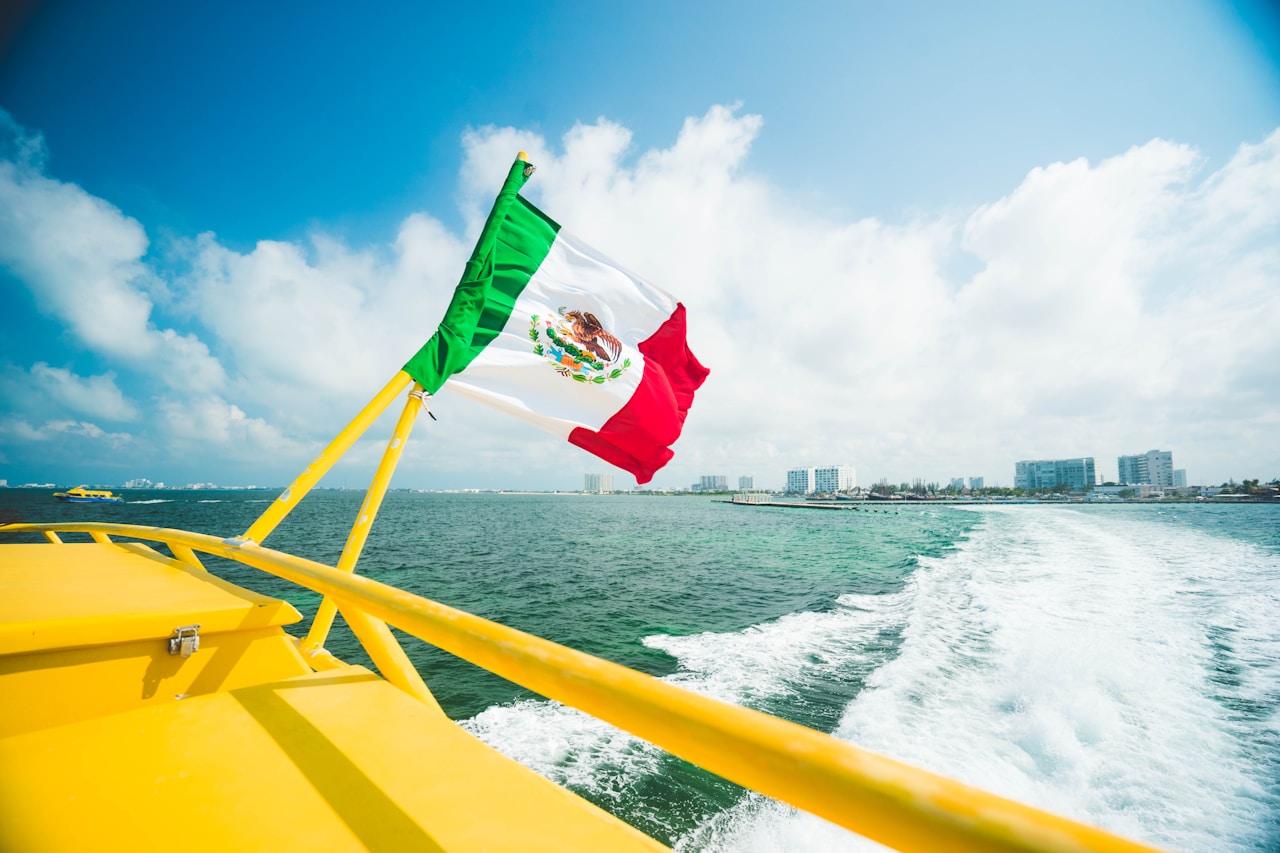
Ferry services to Isla Mujeres depart from Puerto Juárez (near downtown) and Gran Puerto terminal in the Hotel Zone.
The crossing takes approximately 15–20 minutes. Round-trip tickets cost approximately $28–$30 USD for adults (around 580 pesos).
Ultramar ferries operate from Puerto Juárez every 30 minutes starting at 5:30 AM, with service continuing until late evening.
Ferries to Cozumel depart from Playa del Carmen, approximately 40 miles (65 km) south of Cancún. The crossing takes around 45 minutes.
Language and Communication in Cancun and Mexico
Spanish is the official language of Mexico. In the Hotel Zone and major tourist areas, English is widely spoken by hotel staff, tour operators, and restaurant workers. Outside tourist zones, English proficiency decreases significantly.
Learning a few basic Spanish phrases meaningfully improves interactions with local vendors and residents.
Key phrases include: Hola (Hello), Por favor (Please), Gracias (Thank you), ¿Cuánto cuesta? (How much does it cost?), ¿Dónde está…? (Where is…?), and La cuenta, por favor (The bill, please).
Google Translate’s camera function is useful for decoding menus and signage.
Download the offline Spanish language pack before departure to use it without mobile data.
Health and Medical Considerations
Tap water in Cancún is not safe to drink. Use sealed bottled water for drinking and brushing teeth.
Be cautious with ice in drinks at non-hotel establishments — ask whether it is made from purified water.
Traveller’s diarrhoea is the most common health complaint; pack oral rehydration salts and consider probiotic supplements before travel.
Cancún has several high-quality private hospitals, including Hospital Galenia and Hospiten Cancún, both located in the Hotel Zone.
Public healthcare facilities exist but are primarily intended for residents. Travel insurance with medical coverage is essential.
Vaccinations and Mosquito-Borne Disease Risk
No vaccinations are legally required to enter Mexico from the U.S.
The CDC recommends being up to date on routine vaccines and considering Hepatitis A and Typhoid vaccinations, particularly for travellers eating outside resort environments.
Dengue fever, Zika virus, and chikungunya are present in the Yucatán Peninsula. Use DEET- or picaridin-based insect repellent, wear long sleeves and trousers in the evenings, and consider a mosquito net if staying in non-air-conditioned accommodation.
Food and Dining in Cancún
Cancún’s culinary scene ranges from internationally recognised resort restaurants to street-food stalls serving regional Yucatecan specialities.
Key local dishes include cochinita pibil (slow-roasted achiote-marinated pork), tacos al pastor, ceviche, and chilaquiles.
Seafood is exceptionally fresh given Cancún’s coastal location.
For food safety, choose busy restaurants with visible food turnover. At street stalls, look for vendors using gloves and keeping raw and cooked foods separate.
Avoid raw shellfish from vendors without refrigeration. Vegetarian and vegan options are increasingly available, particularly in the Hotel Zone and at health-focused restaurants downtown.
Dining Costs and Tipping Etiquette
A meal at a mid-range restaurant costs approximately $15–$30 USD per person. Street tacos typically cost $1–$3 USD each.
Fine dining at resort restaurants ranges from $40–$100+ USD per person.
A tip of 10–15% is standard at sit-down restaurants. Service charges (servicio) are sometimes added automatically to bills — check before adding an additional tip. Waitstaff at street stalls and market vendors do not typically expect tips, though rounding up is appreciated.
Activities and Attractions in Cancún
Cancún’s Hotel Zone offers direct access to beaches, water sports, shopping centres, and nightlife.
The broader region provides access to some of Mexico’s most significant archaeological and natural sites.
For families planning a trip, our guide to travelling to Cancún with kids and family covers child-friendly activities and resort recommendations in detail.
Reserve Your Tours & Activities
Popular attractions sell out fast—book ahead for guaranteed entry. Compare skip-the-line tickets, guided tours, and unique experiences.
 Booking.com
 Expedia
 Traveloka
 GetYourGuide
 WeGoTrip
 Go City
Water Sports and Marine Activities
The Hotel Zone’s calm lagoon side is ideal for paddleboarding and kayaking, while the Caribbean-facing beaches offer snorkelling and jet skiing. Jet ski rentals start at approximately $50–$80 USD for 30 minutes. Parasailing starts at around $80–$120 USD per person.
Snorkelling requires no certification and equipment is rentable on most Hotel Zone beaches.
Scuba diving requires a PADI Open Water Diver certification or equivalent; local dive shops offer beginner courses.
The Mesoamerican Reef offers visibility of up to 100 feet (30 metres) and diverse marine life including sea turtles, rays, and tropical fish.
Archaeological Day Trips from Cancún
Chichén Itzá is approximately 120 miles (195 km) from Cancún — roughly a 2.5-hour drive or bus journey.
ADO buses depart from the Cancún bus terminal daily at approximately 8:45 AM, with one-way tickets starting at around $29 USD.
Tulum Ruins are 80 miles (130 km) south, accessible by ADO bus or rental car in approximately 1.5 hours.
Cobá is 100 miles (160 km) southwest and features the 138-foot (42-metre) Nohoch Mul pyramid.
For travellers considering broader regional exploration, our roundup of the best things to do in Mexico highlights top experiences across the country.
Cenote Swimming and Cave Systems
Cenotes are natural freshwater sinkholes formed by collapsed limestone, unique to the Yucatán Peninsula. There are over 6,000 cenotes in the region.
Popular options near Cancún include Cenote Dos Ojos (near Tulum), Gran Cenote, and the cenotes within Xcaret and Xel-Há eco-parks.
Entry fees typically range from $12–$25 USD (approximately 250–450 pesos), with life vests now mandatory at most sites.
Free Things to Do in Cancún
Not every activity in Cancún requires a significant budget. Our dedicated guide to free things to do in Cancún covers no-cost beaches, public parks, and cultural experiences across the city.
Resort Life and All-Inclusive Packages
All-inclusive resorts in Cancún typically include accommodation, all meals and beverages (including alcohol), non-motorised water sports, entertainment, and access to pools and beaches. Some packages also include airport transfers and select excursions — confirm inclusions at booking.
Resort fees of $20–$50 per night are sometimes charged separately and may cover Wi-Fi, gym access, and beach chair reservations.
Read the fine print carefully. Taxes in Mexico are approximately 19% (16% IVA + 3% lodging tax) and may or may not be included in advertised rates.
Tipping at all-inclusive resorts is discretionary but appreciated: $2–$5 USD per day for housekeeping, $1–$2 USD per drink for bartenders, and $5–$10 USD for exceptional service from butlers or concierge staff.
Technology and Connectivity
Mexico uses Type A and Type B electrical outlets (the same as the U.S. and Canada) at 127V/60Hz. U.S. travellers do not need a power adapter.
Most modern electronics handle the slight voltage difference (127V vs. 120V) without issue, but check your device specifications.
Wi-Fi is available throughout Hotel Zone resorts, restaurants, and shopping centres.
Connection quality varies; download offline maps (Google Maps or Maps.me) before arrival for navigation without data.
For mobile connectivity, purchasing a local SIM card at the airport (Telcel and AT&T Mexico are the main providers) is significantly cheaper than international roaming. eSIM options are also available for compatible unlocked devices.
 Airalo
 Yesim
Yesim Saily
Saily NordVPN
Shopping and Souvenirs
Cancún’s main shopping areas include La Isla Shopping Village (162 stores, open-air canal setting), Plaza Las Américas (major international brands), Mercado 28 (downtown market, best for souvenirs and local crafts), and Ki Huic Market (handcrafted goods and local art).
Authentic Mayan crafts include hand-woven textiles, painted Talavera pottery, silver jewellery (look for the .925 sterling stamp), and carved wooden figures.
Prices at Mercado 28 are negotiable — bargaining is expected and part of the cultural experience. Resort shop prices are typically 30–50% higher than market prices for comparable items.
Duty-free shopping is available at Cancún International Airport and select Hotel Zone stores.
U.S. residents may bring back $800 USD in goods duty-free, plus 1 litre of alcohol and 200 cigarettes. Do not purchase coral, turtle products, or items made from protected species — these are illegal to export and will be confiscated at customs.
Legal Awareness and Emergency Preparedness
The legal drinking age in Mexico is 18. Public intoxication is illegal and can result in detention.
Mexico enforces strict drug laws — possession of any controlled substance, even in small quantities, carries severe penalties including imprisonment.
Carry a photocopy of your passport at all times; Mexican law requires visitors to be able to produce identification on request.
Speed limits are posted in kilometres per hour. Driving under the influence carries heavy penalties.
If involved in a traffic accident, do not move the vehicle until police arrive — this is a legal requirement in Mexico.
Embassy Contacts and Lost Passport Procedures
The U.S. Consulate in Cancún is located in the Hotel Zone and can be reached at (+52) 998-883-0272 during business hours.
For after-hours emergencies, the U.S. Embassy in Mexico City operates a 24-hour emergency line.
If your passport is lost or stolen, file a report with local police (obtain a written copy of the report), then visit the U.S. Consulate with any available photo ID.
Emergency passport replacement requires Form DS-11 and a fee of approximately $165 USD ($130 application fee + $35 acceptance fee). Processing typically takes 1–3 business days.
Hurricane Evacuation and Natural Disaster Response
If a hurricane warning is issued during your stay, follow instructions from local authorities and your hotel’s emergency team immediately.
Monitor the National Hurricane Center (nhc.noaa.gov) for real-time updates.
Know your hotel’s designated shelter area and evacuation routes on arrival.
Pack a small emergency kit including a torch, spare batteries, bottled water, a first-aid kit, and copies of key documents.
Travel insurance with natural disaster coverage is strongly recommended for travel between June and November.
Budget Summary: Estimated Daily Costs in Cancún
- Budget traveller (street food, public buses, free beaches): $50–$70 USD/day
- Mid-range traveller (restaurant meals, taxis, paid activities): $100–$150 USD/day
- All-inclusive resort (package rate, excluding flights): $150–$400+ USD/person/night
- Tipping budget: Add $10–$20 USD/day
- Emergency fund: Allocate $200–$300 USD as a contingency reserve
For travellers comparing Cancún against other budget-friendly destinations, our Los Angeles budget travel guide and Kyoto budget travel guide offer useful cost benchmarks for popular international cities.
Conclusion
Cancún rewards well-prepared travellers with world-class beaches, rich Mayan heritage, and a well-developed tourism infrastructure.
The essentials: carry a valid passport and FMM Tourist Card, travel during the dry season (November–April) for the best weather, budget approximately $100 USD per day outside an all-inclusive package, and stay within the Hotel Zone for the most secure and convenient base.
With the right preparation, Cancún delivers an exceptional Caribbean experience.
Frequently Asked Questions (FAQs)
Do I Need Any Vaccinations to Travel to Cancún, Mexico?
No vaccinations are legally required to enter Mexico from the United States.
However, the CDC recommends being current on routine vaccines and considering Hepatitis A and Typhoid shots for travellers eating outside resort environments.
Dengue fever and Zika virus are present in the region, so mosquito protection is essential regardless of vaccination status.
Can I Use My U.S. Cell Phone in Cancún?
U.S. phones work in Cancún, but international roaming charges can be significant.
The most cost-effective option is purchasing a local prepaid SIM card from Telcel or AT&T Mexico at the airport on arrival.
eSIM plans are also available for unlocked compatible devices. Download offline maps before departure to reduce data dependency.
What Is the Drinking Age in Cancún, and Is Alcohol Included at All-Inclusive Resorts?
The legal drinking age in Mexico is 18. Most all-inclusive resorts in Cancún include unlimited alcoholic beverages as part of the package, though premium spirits and certain branded drinks may incur additional charges.
Public intoxication is illegal in Mexico and can result in a fine or short-term detention.