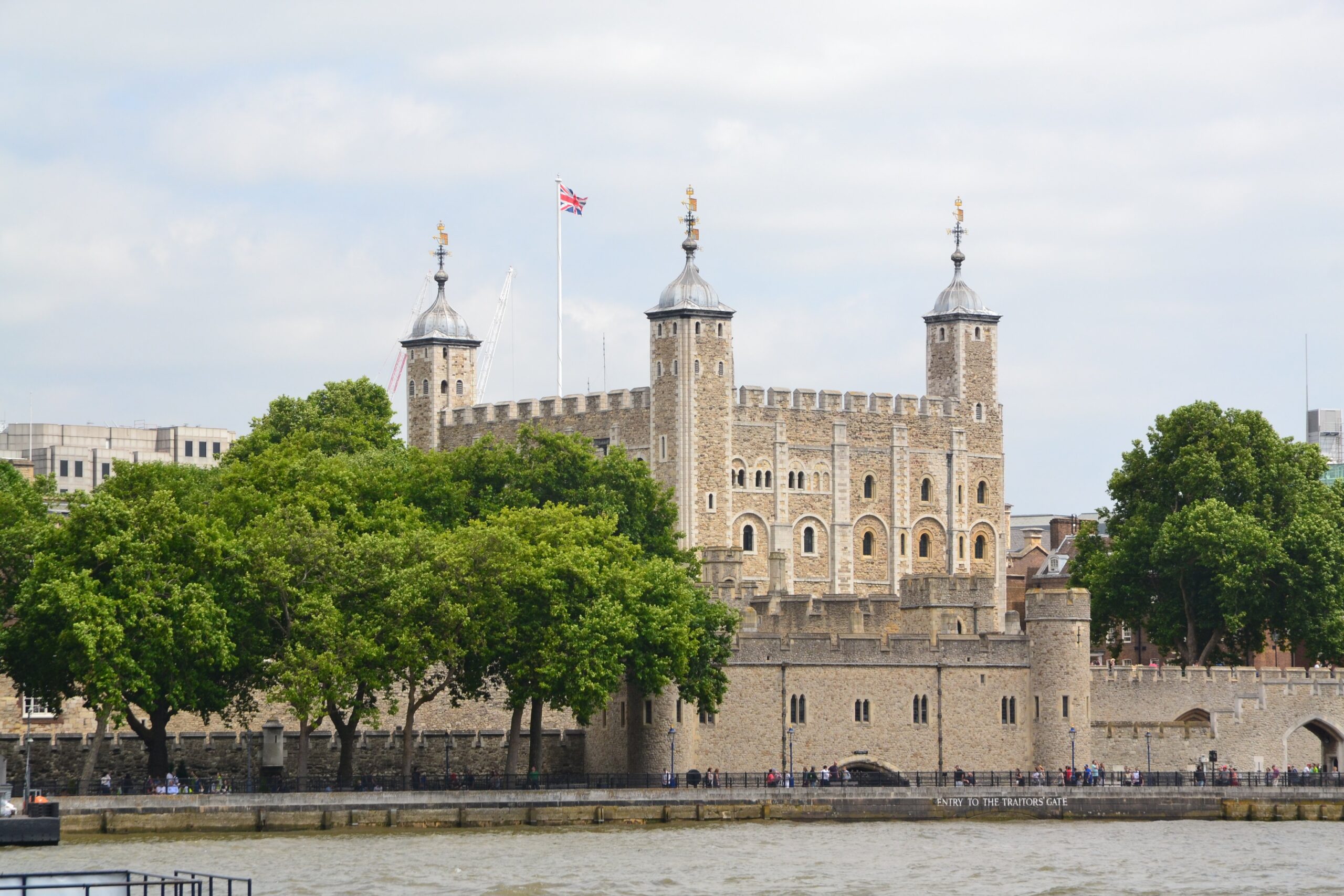







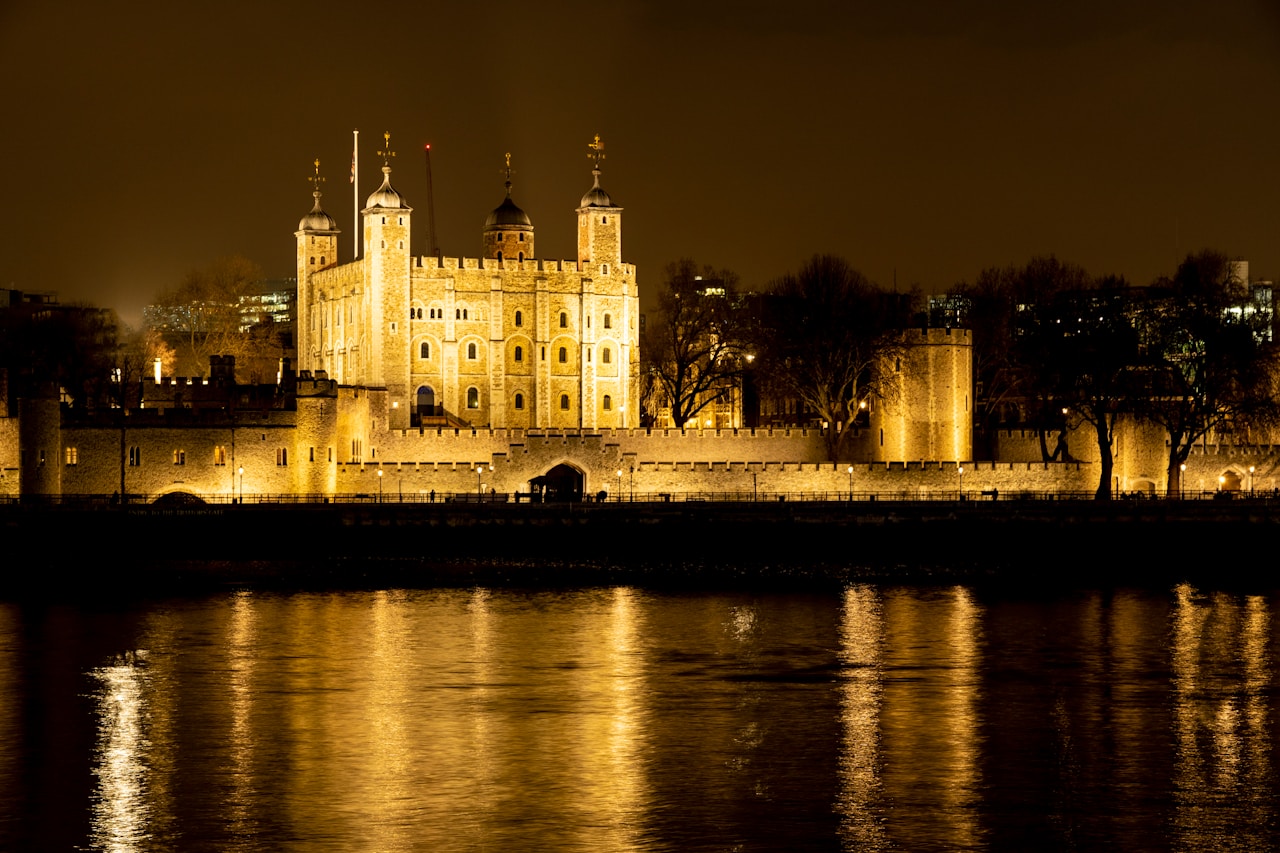
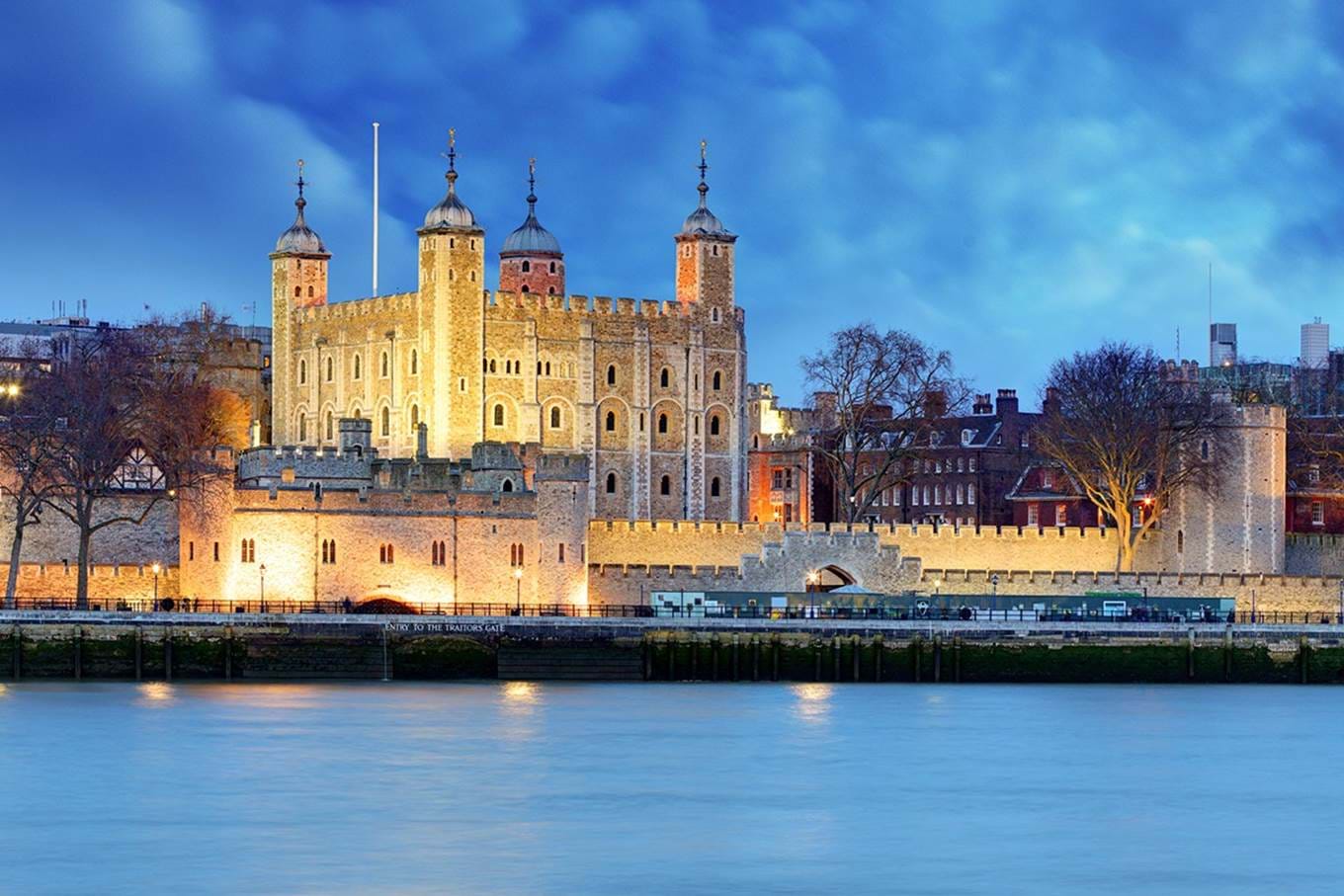
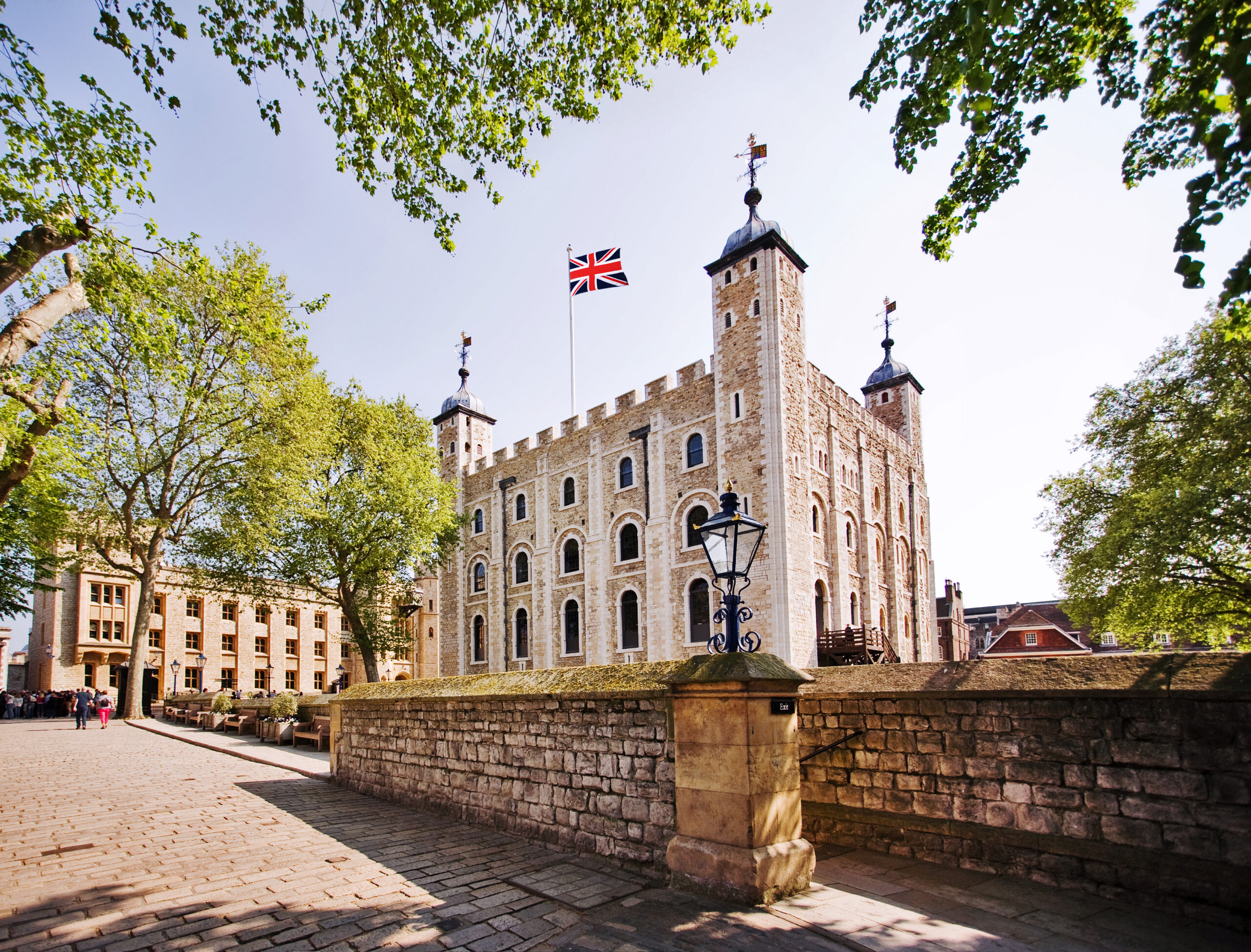
The Tower of London is one of Britain’s most famous historic sites, and it has earned that status the hard way.
Founded in the 11th century by William the Conqueror, it has served as a royal fortress, prison, armoury, treasury, and execution site, which is a tidy reminder that English history rarely did anything softly.
Today, you visit for the Crown Jewels, the White Tower, the medieval battlements, and the Yeoman Warder tours that give the place its sharpest personality.
The guided stories are dry, clever, and much more entertaining than the usual “old building, please respect it” routine, and they make the history feel vivid without sanding off the grim bits.
The best time to visit is early morning on Tuesday to Thursday, when queues are shorter and the Jewel House is less crowded.
Give yourself at least half a day, because rushing through the Tower is like skimming a centuries-old royal scandal and pretending you understood the plot.
Opening times vary slightly by season, but the Tower is generally open daily with earlier closing in winter.
It is well connected by Tower Hill, and the nearby bus stops make it easy to reach if you prefer not to start your day with an unnecessary walk along the Thames.
The Historic Tower of London: A Majestic Journey Through Britain’s Royal Past
Standing proudly on the banks of the River Thames for nearly a millennium, the Tower of London remains one of the most iconic landmarks in the United Kingdom.
This UNESCO World Heritage Site not only dominates the London skyline with its imposing architecture but also holds within its ancient walls stories of power, imprisonment, royal treasures, and centuries of British history.
A Fortress With a Storied Past
The Tower of London’s history begins with William the Conqueror, who commissioned this magnificent fortress in the 1070s following his victory at the Battle of Hastings.
Built to demonstrate Norman power and intimidate the conquered Anglo-Saxon population, the Tower has since evolved far beyond its initial purpose.
Throughout its 950-year history, this remarkable structure has served as a royal palace, an armory, a notorious prison, and even, surprisingly, as a zoo housing exotic animals gifted to monarchs.
Today, the Tower welcomes visitors from across the globe who come to marvel at its historical significance and architectural grandeur.
Located in the heart of London at EC3N 4AE, its strategic position on the Thames made it an ideal defensive structure centuries ago and now makes it easily accessible to modern-day explorers.
Crown Jewels: Britain’s Royal Treasures
Perhaps the most spectacular attraction within the Tower is the collection of Crown Jewels, comprising 142 ceremonial objects that form part of the royal regalia used during coronations of British monarchs.
This dazzling collection includes jewel-encrusted swords, orbs, scepters, rings, and amulets – all symbols of royal authority and power throughout the ages.
The centerpiece of this collection is St. Edward’s Crown, used at the moment of coronation. These priceless artifacts represent not just extraordinary craftsmanship and material wealth, but the continuity of the British monarchy itself.
Protected by state-of-the-art security, these treasures continue to captivate visitors with their historical significance and breathtaking beauty.
The Legendary Beefeaters
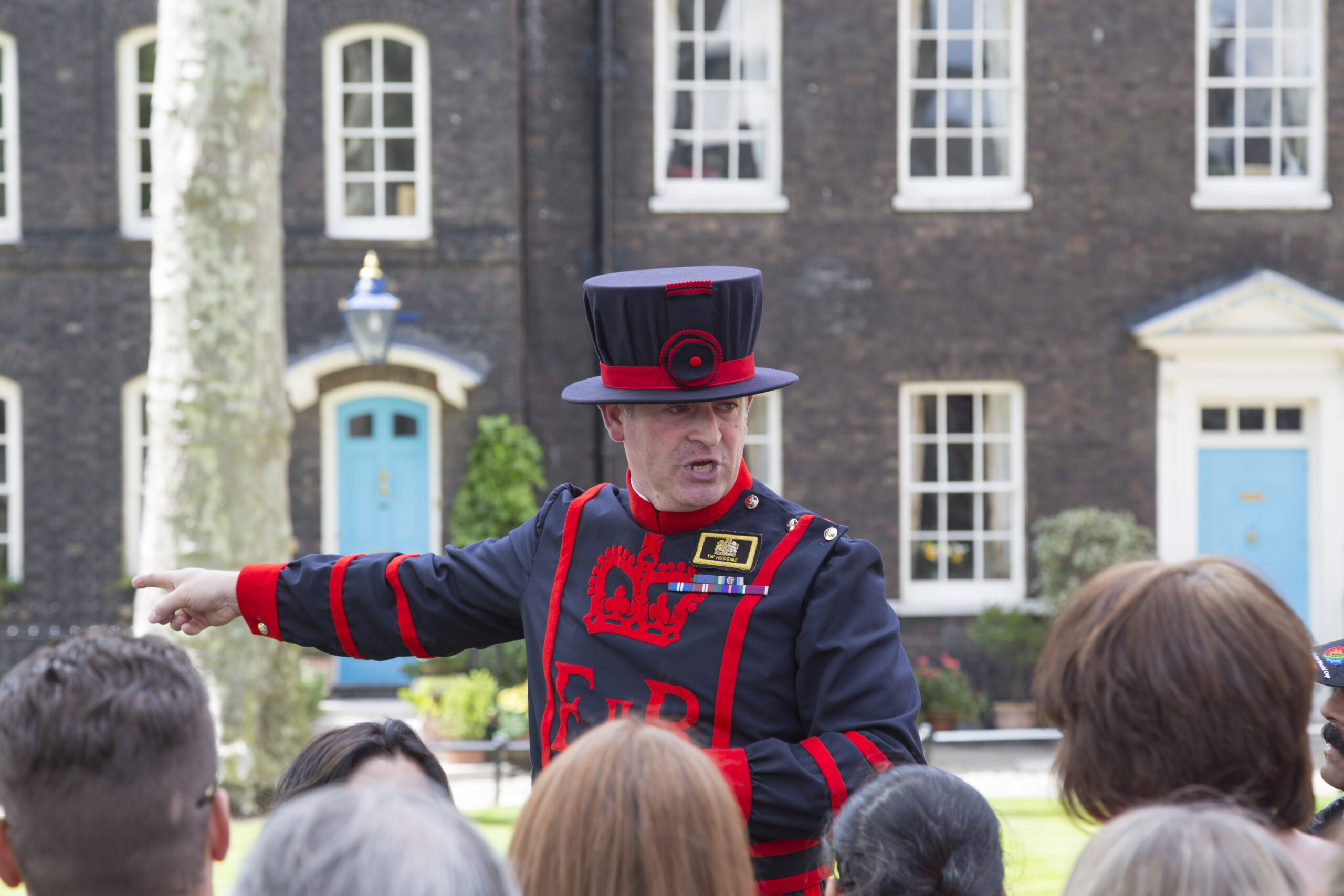
No visit to the Tower is complete without encountering the famous Yeoman Warders, affectionately known as “Beefeaters.”
These retired servicemen bear the official title of “Yeomen Warders of His Majesty’s Royal Palace and Fortress the Tower of London, and Members of the Sovereign’s Body Guard of the Yeoman Guard Extraordinary” – though the nickname is understandably preferred for everyday use.
The Beefeaters serve as both guardians of the Crown Jewels and as engaging tour guides, sharing tales of intrigue, imprisonment, and execution that have occurred within the Tower’s walls.
These tours, included with admission, depart every 30 minutes from the main entrance and last approximately one hour. The Yeoman Warders, in their distinctive scarlet and gold uniforms, bring history to life with their knowledge and storytelling prowess.
The Ravens: Guardians of the Kingdom
Among the Tower’s most intriguing residents are its ravens – large, intelligent birds that have become symbols of the fortress itself. According to legend, “the kingdom will fall if the ravens ever leave the Tower.”
This superstition is taken seriously enough that a designated Ravenmaster cares for these birds, ensuring at least six ravens remain on the grounds at all times.
These magnificent birds, with their glossy black feathers and impressive wingspans, have individual personalities and names known to the Tower staff.
Visitors often spot them strutting across the green or perched on ancient stonework, seemingly aware of their important role in British folklore.
Planning Your Visit
The Tower of London operates on a seasonal schedule to accommodate the varying daylight hours and visitor numbers throughout the year. From March 1 to October 26, the Tower is open Tuesday through Saturday from 9 AM to 5:30 PM, with last admissions recommended by 3:30 PM. On Sundays and Mondays, hours are slightly reduced, operating from 10 AM to 5:30 PM.
During the winter months, from October 27 to December 31, visiting hours shift to 9 AM to 4:30 PM Tuesday through Saturday, with last admissions at 3 PM. Sunday and Monday winter hours are 10 AM to 4:30 PM.
The Tower closes completely for the Christmas holidays on December 24, 25, and 26, as well as on January 1, 2026. Additionally, visitors should note that on Tuesday, May 6, the Tower will close early at 4 PM, with last admission at 3 PM.
For the most current information on operating hours, especially for Mondays and Sundays which are most subject to change, checking the attraction’s official website before your visit is recommended.
A Must-See London Experience
With regular admission prices at £35.80 for adults and £17.90 for children, the Tower of London represents a significant investment in your London itinerary. However, the two-hour average visit duration provides ample time to explore this remarkable site and its treasures.
Various booking services including Viator, GetYourGuide, Trip.com, Klook, and GoCity offer tickets and sometimes special packages that may provide better value.
The Tower’s status as both one of the “must-see” London attractions and a family-friendly destination in London makes it appropriate for visitors of all ages.
While young children might be most captivated by the ravens and the colorful Beefeaters, history enthusiasts will appreciate the depth of stories contained within these ancient walls, from the medieval architecture to the infamous prisoners who met their fate at the executioner’s block.
Exploring the Tower Grounds
As you wander through the Tower complex, you’ll discover a series of concentric defensive structures, with the central White Tower standing as the oldest and most recognizable building.
Within these various towers and buildings, exhibits detail the site’s military history, its role as a royal residence, and the famous prisoners who were held – and sometimes executed – within its walls.
The Tower Green, where private executions were conducted for prisoners of noble birth, stands as a solemn reminder of the site’s darker history.
Nearby, the medieval palace rooms offer a glimpse into the luxurious accommodations once enjoyed by royalty, complete with period furnishings and decorations that transport visitors back in time.
The various towers each hold their own exhibitions and stories, from the Bloody Tower, associated with the mysterious disappearance of the Princes in the Tower, to the Wakefield Tower, which houses a recreation of King Henry III’s medieval bedroom.
The Royal Armouries collection in the White Tower displays impressive armor and weapons spanning centuries of British military history.
The Tower in the Modern World
Today, the Tower of London stands as a living museum, balancing its role as a major tourist attraction with its continued ceremonial and historical importance. It remains a working castle with residents including the Yeoman Warders and their families who live within its walls, continuing centuries-old traditions.
While exploring this magnificent structure, visitors gain insight not only into Britain’s royal history but also into how the monarchy and its symbols have evolved over nearly a thousand years.
The Tower serves as a tangible link between the past and present, allowing modern visitors to walk in the footsteps of kings, queens, prisoners, and soldiers who shaped the nation’s history.
For those seeking to understand Britain’s complex past, the Tower of London offers an unparalleled window into the forces that forged a nation and continue to influence its identity today.
Highlights
Interesting Facts
Facilities
How to Get to London

| From | Train | Bus | Flight | Ferry | Book |
|---|---|---|---|---|---|
| Paris FR | $155.73 2h 17min | $25.16 7h 40min | $66.19 1h 10min | — | Check Fares → |
| Edinburgh GB | $39.71 4h | $29.16 8h 20min | $34.69 1h 15min | — | Check Fares → |
| Manchester GB | $35.21 2h 10min | $8.17 4h 10min | $84.38 1h | — | Check Fares → |
| Amsterdam NL | $141.68 4h 17min | $56.18 10h 5min | $108.77 1h | $69.33 6h 30min | Check Fares → |
| Brussels BE | $141.68 2h 1min | $36.85 6h 30min | $86.91 1h 10min | — | Check Fares → |
| Glasgow GB | $44.07 4h 36min | $32.08 8h 55min | $55.71 1h 10min | — | Check Fares → |
| Leeds GB | $42.18 2h 11min | $11.69 3h 45min | — | — | Check Fares → |
| Liverpool GB | $42.55 2h 20min | $11.10 5h 5min | — | — | Check Fares → |
| Birmingham GB | $16.63 1h 19min | $8.17 2h 20min | — | — | Check Fares → |
| Newcastle upon Tyne GB | $48.99 2h 44min | $22.21 5h 50min | $78.68 1h 10min | — | Check Fares → |
Prices shown are starting fares and may vary. Book via Omio to compare all available options.
The Tower of London is one of those rare attractions that absolutely earns the crowd it attracts.
The Crown Jewels are the obvious headline, but the real strength of the visit is how much the site still feels layered and alive, with Yeoman Warders, battlements, and centuries of politics all sitting uncomfortably close together.
It is not a quick stop, and it should not be.
Give it proper time, because the best moments are in the quieter corners, the White Tower, and the guided stories that make the history feel slightly mischievous rather than just solemn.
If you only rush in for the jewels, you will still get your money’s worth, but you will miss the better part of the place.
Frequently Asked Questions (FAQs)
Current adult admission is £37, and child tickets for ages 5 to 15 are £18.50. Prices are usually a little lower when booked online in advance, which is the kind of small mercy London occasionally offers.
Most visitors should allow around 3 to 4 hours. If you want to see the Crown Jewels, join a Yeoman Warder tour, and explore the White Tower without hurrying, a half-day visit is the sensible choice.
The Tower is generally open Tuesday to Saturday from 09:00 to 17:30 and Sunday to Monday from 10:00 to 17:30. Last entry is usually around 15:30, and the site closes on 24, 25, and 26 December and 1 January.
The Tower of London is at Tower Hill, London EC3N 4AB, United Kingdom. It sits beside the River Thames in the City of London, right by Tower Hill Underground Station.
Tower Hill Station on the District and Circle lines is the nearest Underground stop, about a 3-minute walk away. London Bridge and Bank are also useful alternatives if your route works better that way.
The Tower of London is partially wheelchair accessible, with accessible routes, lifts in some areas, and step-free access in the main visitor spaces. Some historic sections remain difficult because, well, the 11th century was not especially obsessed with accessibility.
Yes, the Crown Jewels are one of the main reasons people visit the Tower of London. They are displayed in the Jewel House, and the queue can get busy, so it is smart to see them earlier in the day.
Yes, Yeoman Warder tours are included with admission and are one of the best parts of the visit. The guides are knowledgeable, dryly funny, and very good at making centuries of royal drama feel oddly current.