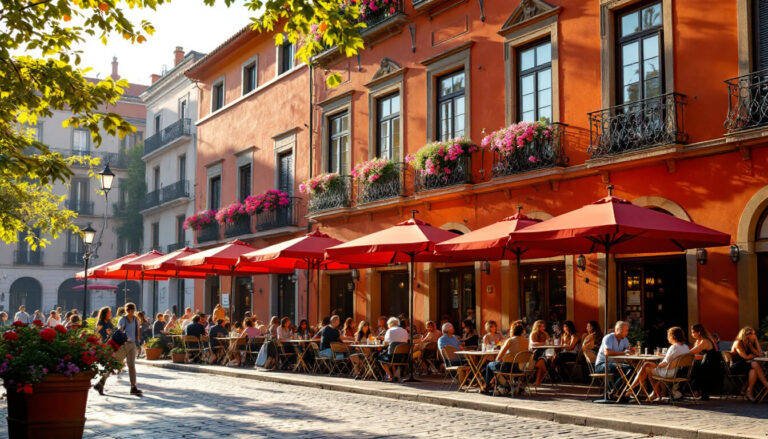
Best Things To Do In Venice: Complete 2026 Travel Guide
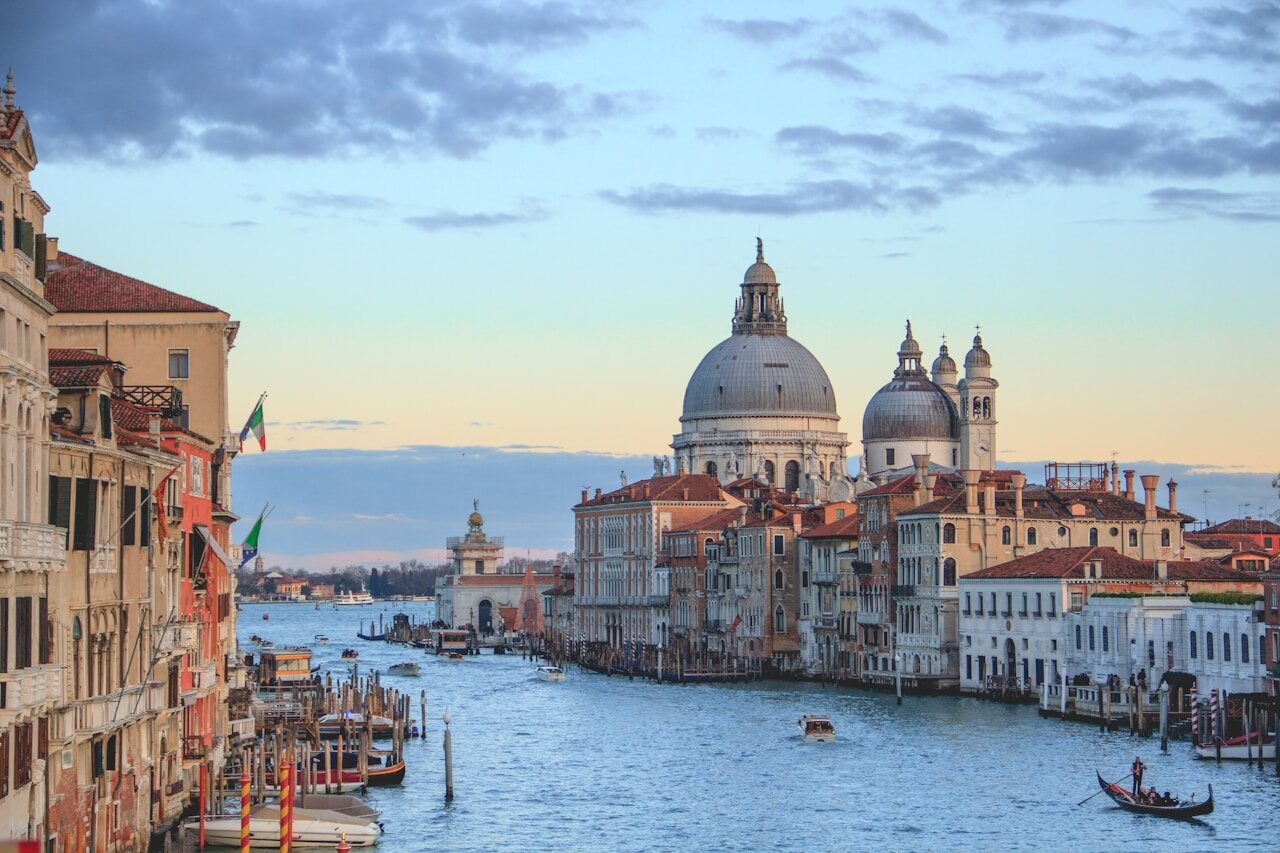



What To Do In Venice Italy: Top Attractions and Hidden Gems to Explore in 2026 – Discover the best things to do in Venice, from iconic St. Mark’s Basilica to hidden canals and authentic local experiences in Italy’s floating city.
- What Is Venice Famous For? Iconic Landmarks and Historic Architecture
- Grand Canal Experiences: Waterway Exploration and Transportation
- Art Museums and Cultural Institutions
- Island Hopping Adventures: Lagoon Exploration
- Venetian Cuisine and Dining Experiences
- Hidden Venice: Off-the-Beaten-Path Neighborhoods
- Seasonal Events and Cultural Festivals
- Romantic Venice Experiences for Couples
- When To Visit Venice: Seasonal Considerations
- Day Trips from Venice
Venice stands as one of the world’s most extraordinary cities, built entirely on water across 118 small islands in northeastern Italy’s Venetian Lagoon.
This floating masterpiece offers travelers an unparalleled blend of Byzantine architecture, Renaissance art, authentic Italian cuisine, and romantic canal experiences.
Whether you’re planning your first visit or returning to uncover hidden gems, this comprehensive guide covers the best things to do in Venice in 2026.
Key Takeaways
Hide- Explore St. Mark's Square, Basilica, and Doge's Palace for iconic Byzantine and Gothic architecture
- Experience the Grand Canal by gondola, vaporetto, or water taxi for authentic Venetian waterway views
- Visit Murano, Burano, and Torcello islands for glassblowing, colorful houses, and ancient history
- Discover world-class art at Peggy Guggenheim Collection, Accademia Gallery, and Venice Biennale
- Savor Venetian cuisine through cicchetti bar hopping, traditional osterias, and Rialto Market visits
- Uncover hidden Venice in Castello, Cannaregio, and Dorsoduro neighborhoods away from tourist crowds
- Attend seasonal festivals like Venice Carnival, Regata Storica, and Festa del Redentore
What Is Venice Famous For? Iconic Landmarks and Historic Architecture
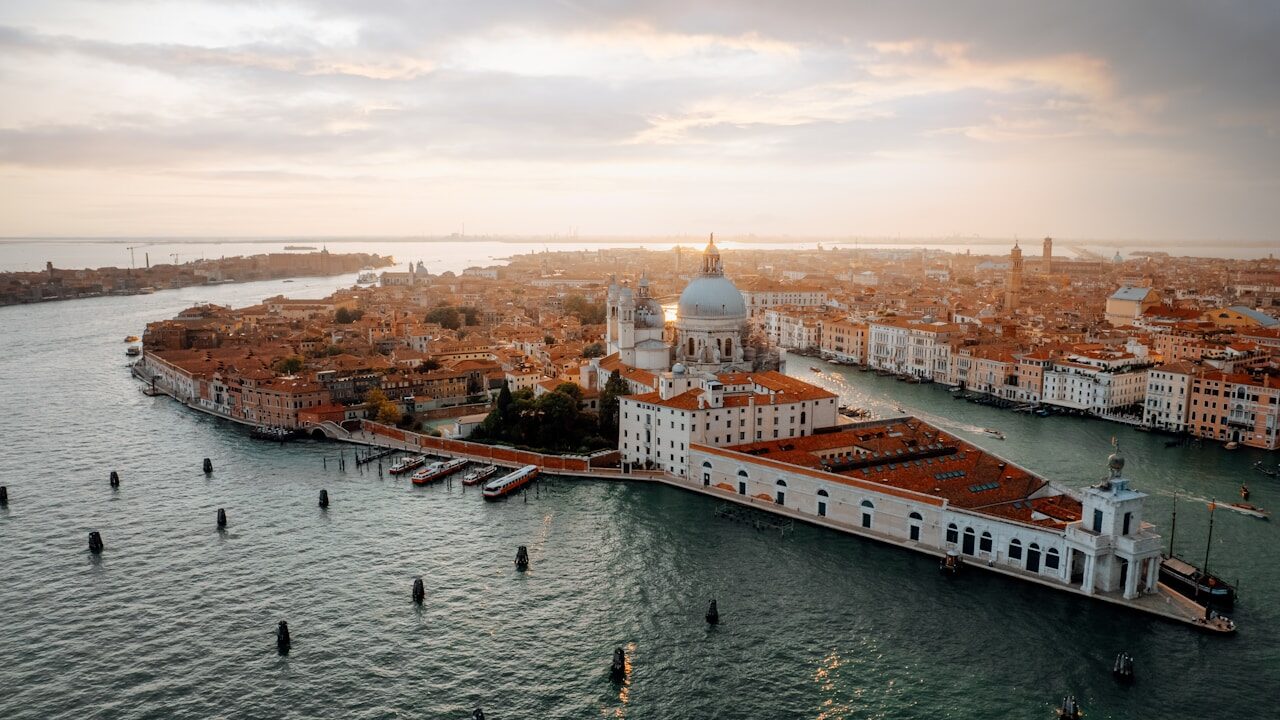
Venice’s architectural heritage spans over 1,000 years, with landmarks that define the city’s identity and draw millions of visitors annually.
The historic center showcases Byzantine, Gothic, and Renaissance styles that have survived centuries of floods and maritime challenges.
Reserve Your Venice Tours & Activities
Most popular Venice tours sold out quickly, so grab your tickets early to save your spot! Feel free to browse through our skip-the-line passes, guided tours, and special experiences to find the perfect fit for your Venice trip.
 Trip.com
 Booking.com
 Expedia
 Traveloka
 GetYourGuide
 Klook
Klook WeGoTrip
 Go City
St. Mark’s Square: Venice’s Cultural Heart and Central Piazza
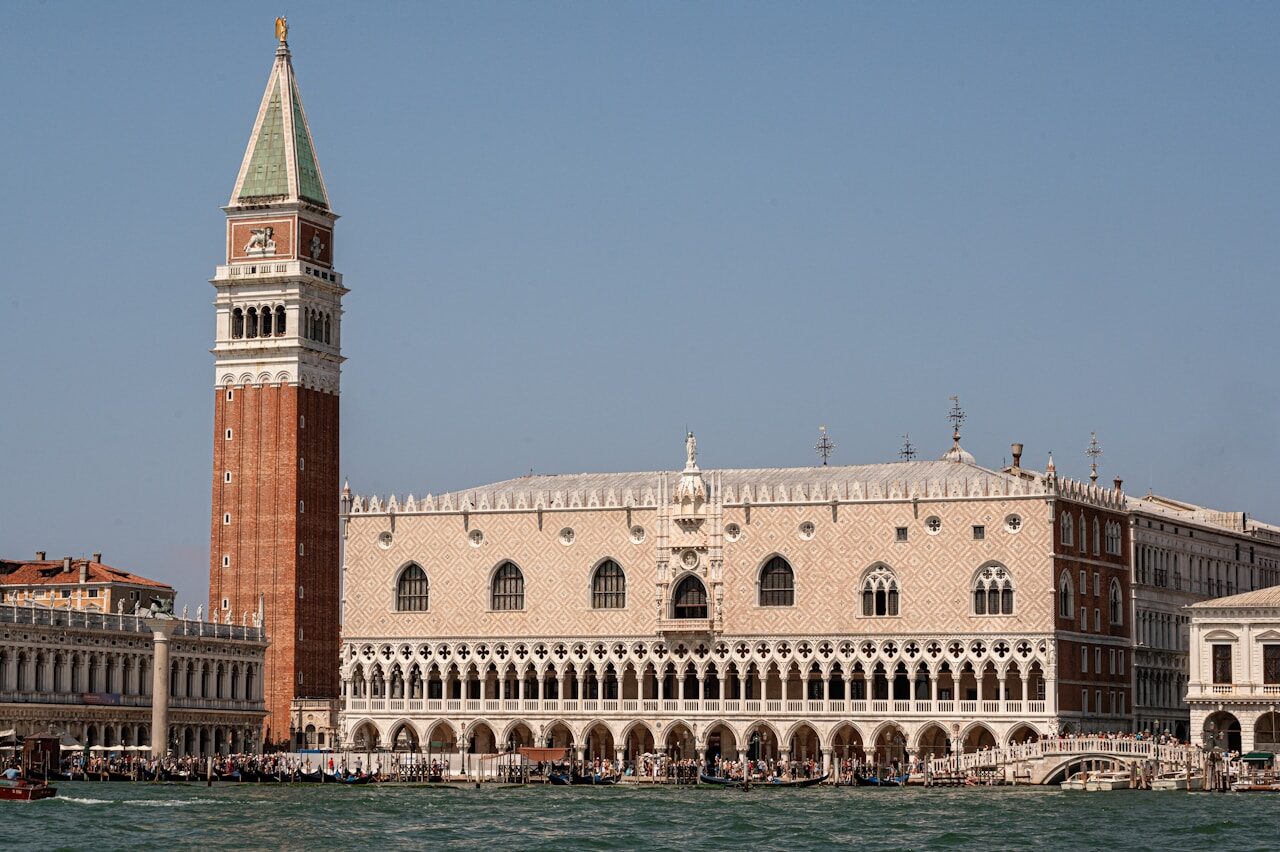
St. Mark’s Square (Piazza San Marco) serves as Venice’s main public square and the city’s social, religious, and political center since the 9th century.
This expansive piazza, often called “the drawing room of Europe” by Napoleon, measures 180 meters long and features some of Venice’s most important buildings.
The square hosts three major attractions worth exploring.
St. Mark’s Basilica dominates the eastern end with its golden Byzantine mosaics covering over 8,000 square meters.
The Campanile (bell tower) rises 98.6 meters high, offering 360-degree views across Venice and the lagoon.
The Clock Tower (Torre dell’Orologio), built in 1499, displays astronomical time with mechanical bronze Moors striking the hours.
Visit early morning before 9 AM or after 5 PM to avoid peak crowds.
The square floods during acqua alta (high water) events from October through January, creating surreal reflections of the surrounding architecture.
Doge’s Palace: Gothic Architecture and Venetian Political Power
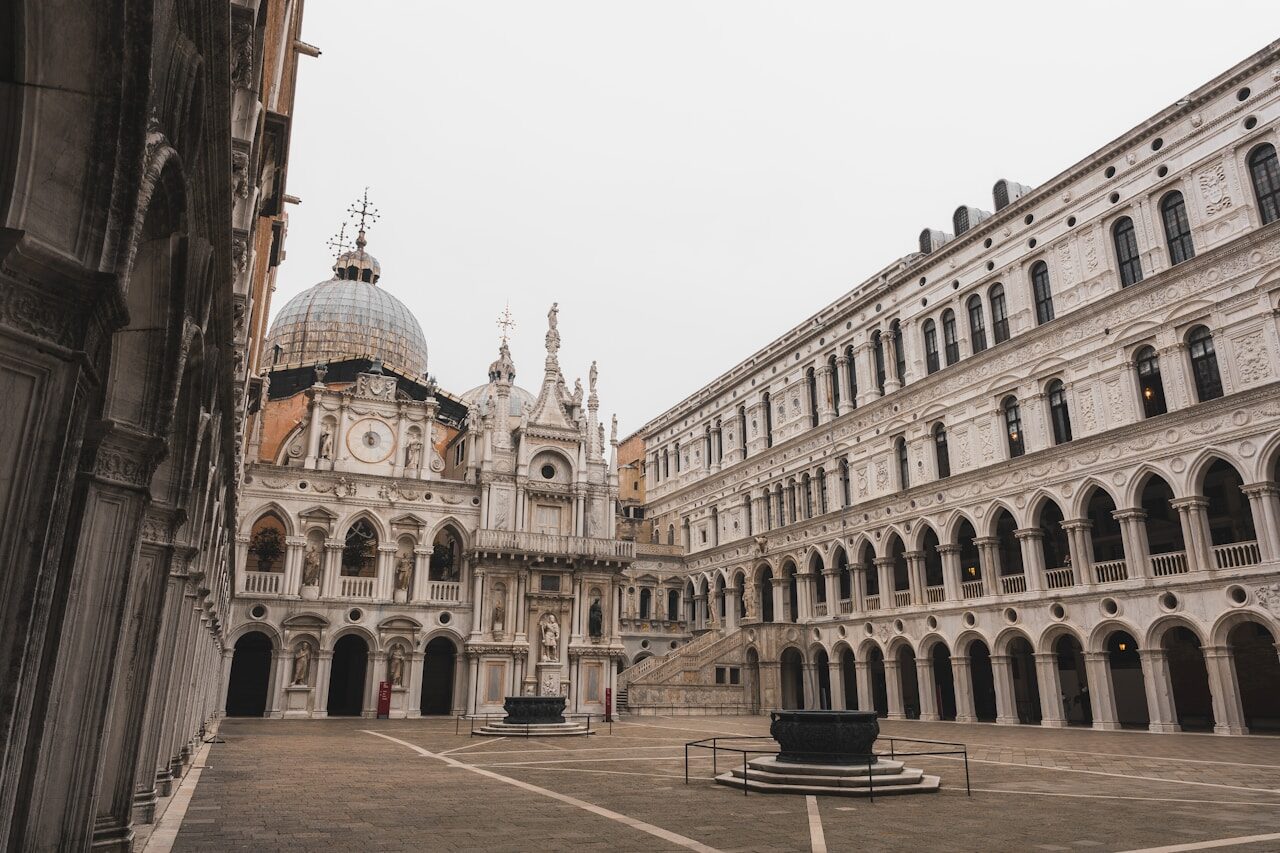
Doge’s Palace (Palazzo Ducale) stands as the former residence of the Doge of Venice and the seat of Venetian government for over 1,000 years.
This Gothic masterpiece, built between 1340 and 1424, features pink and white marble facades, ornate arches, and intricate stonework that exemplifies Venetian Gothic style.
The palace interior contains over 70 rooms decorated with works by Tintoretto, Veronese, and Titian.
The Grand Council Chamber measures 53 meters long and features Tintoretto’s “Paradise,” one of the world’s largest oil paintings at 7 meters by 22 meters.
The Doge’s Apartments showcase the luxury and power of Venice’s elected leaders.
Book the Secret Itineraries tour to access hidden chambers, torture rooms, and the prison cells where Casanova was once held.
The tour includes the palace’s administrative offices, the Chancellery, and the attic prison cells under the lead roof.
Cross the Bridge of Sighs, which connected the palace to the New Prison and earned its name from prisoners’ sighs as they glimpsed their last view of Venice.
The Secret Itineraries tour remains fully available in 2026, with guided groups running daily in Italian, English, and French.
Tickets are booked through CoopCulture: €32 for adults and €20 for reduced admission (children aged 6–14, students, and seniors 65+), plus a €1 booking fee.
Secure your spot well in advance—spaces fill fast, especially during Carnival and summer peak season.
St. Mark’s Basilica: Byzantine Splendor and Golden Mosaics
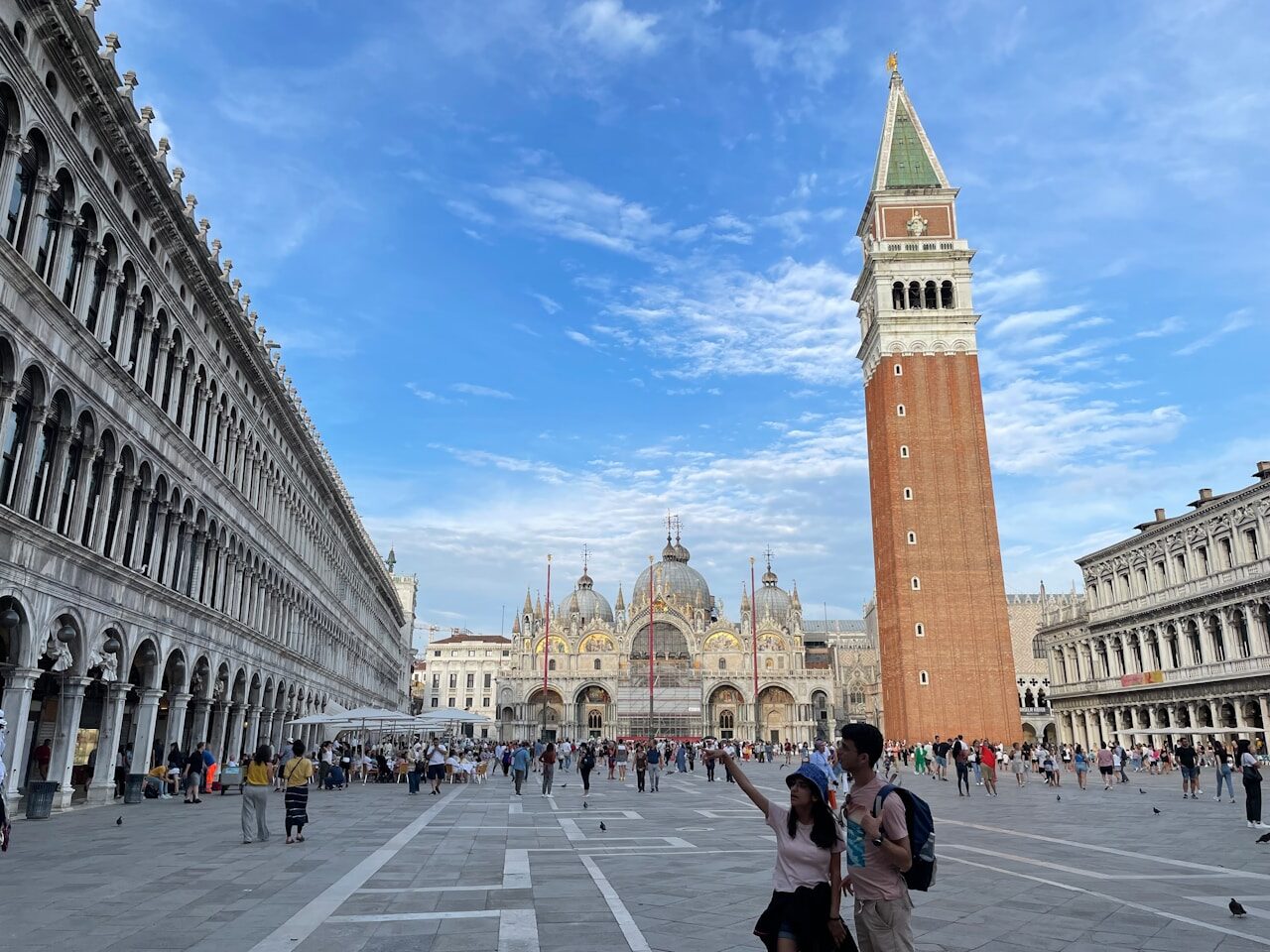
St. Mark’s Basilica (Basilica di San Marco) represents one of the finest examples of Italo-Byzantine architecture in the world.
Originally built in 828 AD to house the relics of St. Mark the Evangelist, the current structure dates from 1063 and features five domes, over 8,000 square meters of golden mosaics, and marble columns looted from Constantinople.
The basilica’s interior dazzles with biblical scenes depicted in gold-backed mosaics that shimmer in natural and candlelight.
The Pala d’Oro, a golden altarpiece behind the main altar, contains over 1,900 precious stones including pearls, garnets, sapphires, and emeralds set in Byzantine enamel panels.
The Treasury houses sacred relics and artifacts brought from Constantinople during the Fourth Crusade in 1204.
Entry to the basilica is free, but expect queues of 30-60 minutes during peak season.
Purchase skip-the-line tickets online or visit after 4 PM when crowds thin.
Modest dress is required—shoulders and knees must be covered.
Large bags are not permitted; use the free bag storage at Ateneo San Basso nearby.
Climb the Campanile (bell tower) for panoramic views across Venice’s rooftops, canals, and the lagoon.
The elevator ride costs €15 per person and takes you to the observation platform at 98 meters high.
Rialto Bridge: Historic Commerce Hub and Grand Canal Views
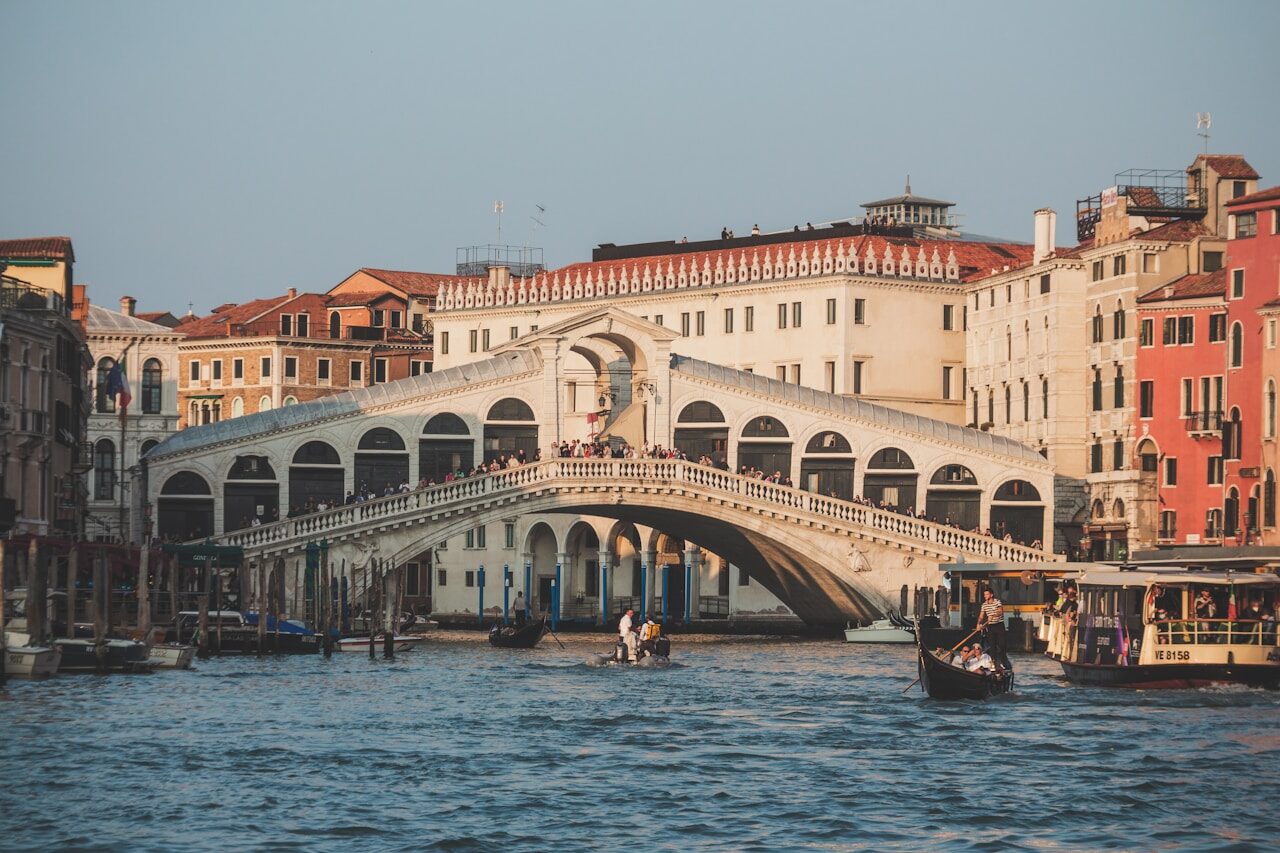
The Rialto Bridge (Ponte di Rialto) spans the Grand Canal at its narrowest point and stands as the oldest of the four bridges crossing Venice’s main waterway.
Completed in 1591 after three years of construction, this single-span stone arch bridge replaced earlier wooden structures that repeatedly collapsed or burned.
The bridge’s design by Antonio da Ponte features a central portico flanked by two rows of shops selling jewelry, leather goods, and Venetian souvenirs.
The bridge measures 48 meters long and 22 meters wide, with a central arch spanning 28.8 meters.
The structure rests on 12,000 wooden piles driven into the lagoon bed.
The Rialto area has served as Venice’s commercial heart since the 11th century.
The nearby Rialto Market operates Tuesday through Saturday mornings, offering fresh seafood, produce, and local specialties.
Arrive before 10 AM to see fishmongers displaying the morning’s catch from the lagoon.
For the best photo opportunities, position yourself on the Grand Canal waterfront near Campo San Bartolomeo at sunrise or sunset when golden light illuminates the bridge’s white Istrian stone.
Alternatively, take a vaporetto (water bus) along the Grand Canal for views of the bridge from the water.
If you’re interested in exploring Venice’s neighborhoods and finding the best area to stay near these landmarks, check out our detailed guide on where to stay in Venice.
Grand Canal Experiences: Waterway Exploration and Transportation
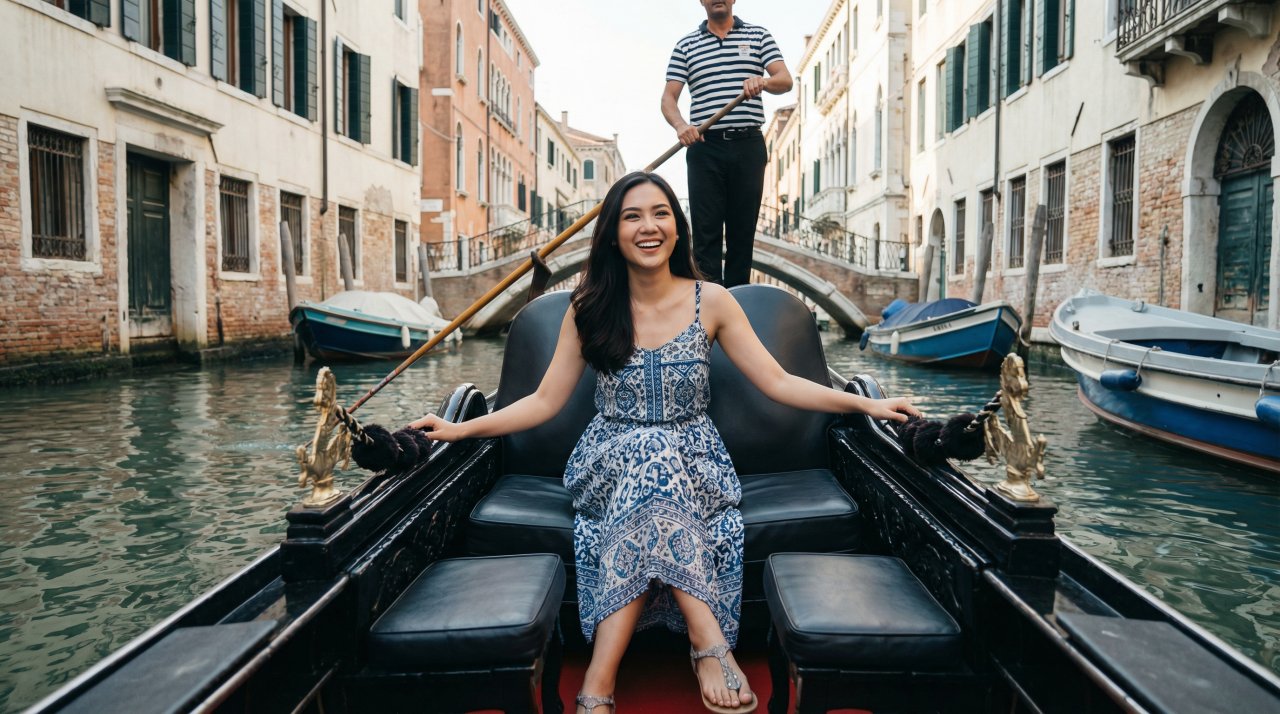
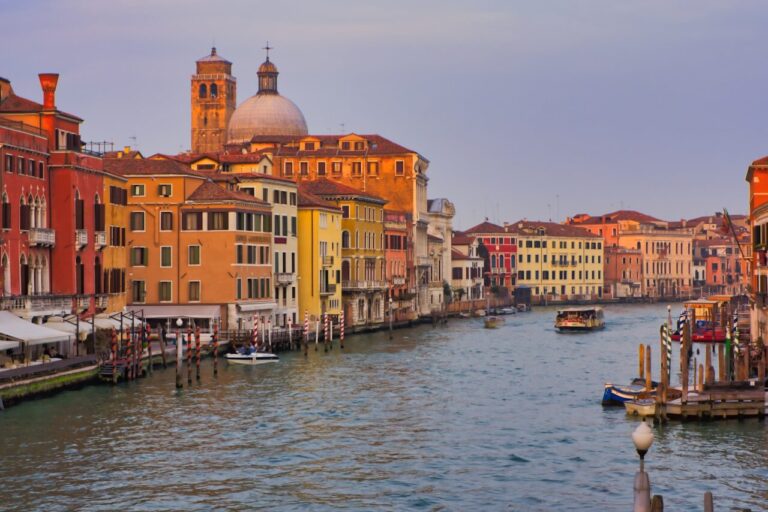
The Grand Canal (Canal Grande) forms Venice’s main waterway, snaking 3.8 kilometers through the city in a reverse S-shape from the lagoon near Santa Lucia railway station to the basin at San Marco.
This historic thoroughfare, lined with over 170 buildings dating from the 13th to 18th centuries, serves as Venice’s primary transportation route and architectural showcase.
Gondola Rides: Traditional Venetian Transportation and Romance
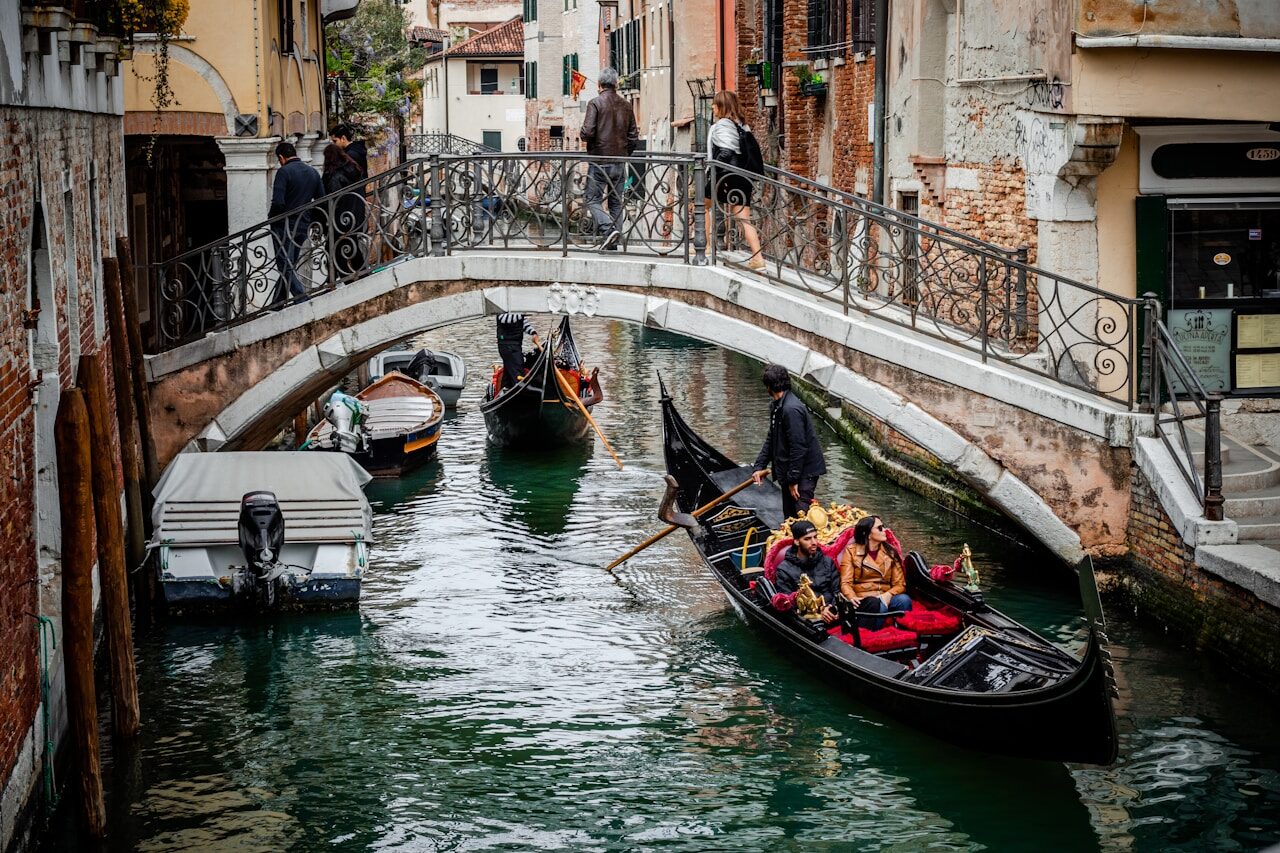
Gondola rides represent Venice’s most iconic experience, offering intimate views of narrow canals, hidden bridges, and historic palaces from the water.
These flat-bottomed boats, measuring 11 meters long and weighing 600 kilograms, have transported Venetians through the city’s waterways for over 1,000 years.
Official gondola rates are regulated by the Gondoliers’ Association.
Daytime rides (8 AM to 7 PM) cost €90 for 30 minutes for up to five passengers.
Evening rides (7 PM to 8 AM) cost €110 for 30 minutes.
Additional time costs €40 per 20 minutes during the day and €50 at night.
Singing gondoliers charge an extra €30–40 for serenades.
Book gondola rides at official stations (stazi) near major landmarks like Rialto Bridge, St. Mark’s Square, and Santa Maria del Giglio.
Alternatively, negotiate with gondoliers at smaller stations in quieter neighborhoods like Cannaregio or Dorsoduro for potentially lower prices and less crowded routes.
The best gondola routes avoid the crowded Grand Canal and instead explore smaller side canals (rii) where you’ll pass under low bridges, glimpse hidden gardens, and see authentic neighborhood life.
Request routes through the San Polo or Santa Croce districts for a mix of quiet canals and architectural highlights.
For a more budget-friendly gondola experience, take a traghetto—a gondola ferry that crosses the Grand Canal at seven points where bridges don’t exist.
These standing-room rides cost €2 per person and operate during daylight hours.
Vaporetto Water Bus: Public Transportation and Sightseeing
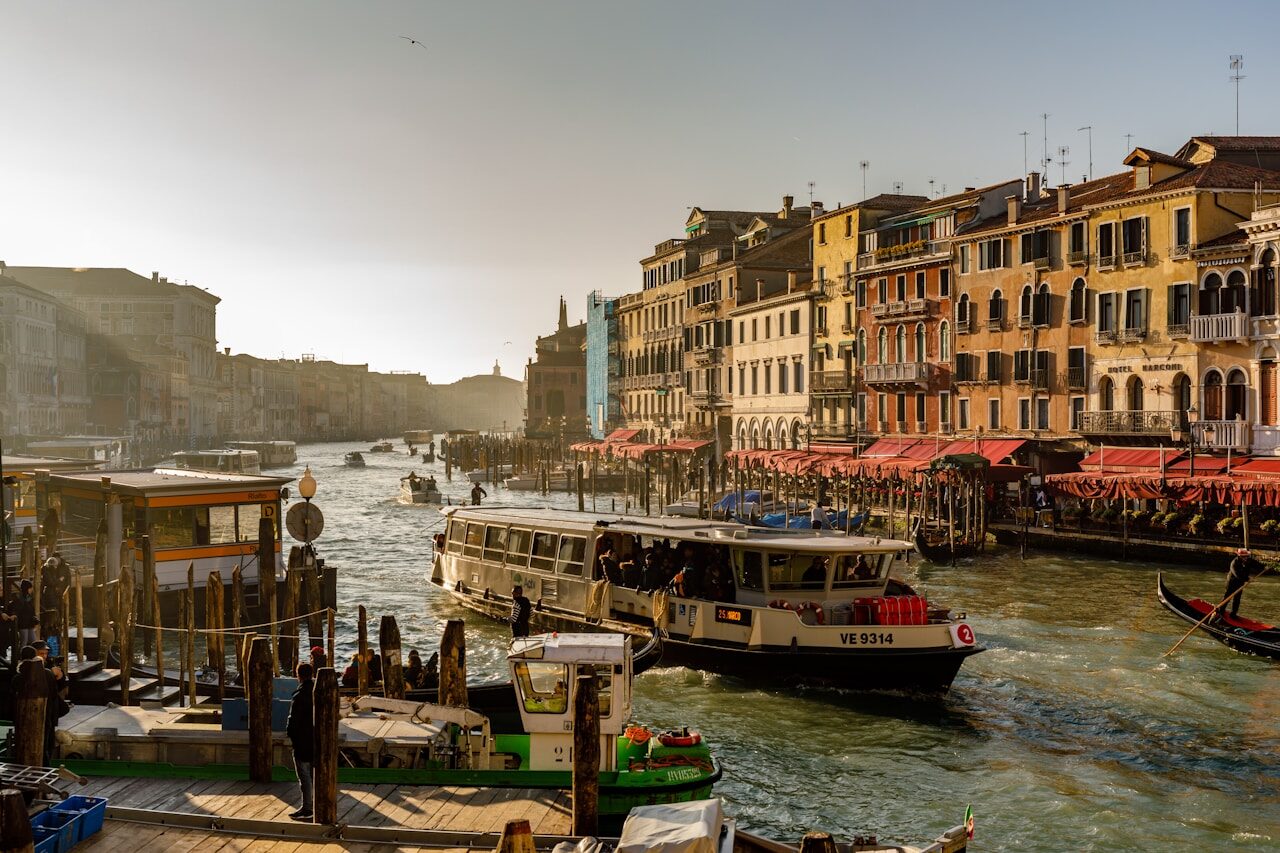
Vaporetto water buses serve as Venice’s public transportation system, operating 25 routes that connect the main islands, lagoon islands, and mainland.
These motorized watercraft provide an affordable way to travel the Grand Canal while enjoying views of palaces, churches, and bridges.
Single-ride tickets cost €9.50 and are valid for 75 minutes from validation, allowing transfers between lines.
Multi-day passes offer better value for tourists: 24-hour pass (€25), 48-hour pass (€35), 72-hour pass (€45), and 7-day pass (€65).
Purchase tickets at ACTV ticket offices, tobacco shops (tabacchi), or automated machines at major vaporetto stops.
Line 1 provides the classic Grand Canal experience, making 18 stops between Piazzale Roma and Lido, taking approximately 45 minutes for the full route.
This slow boat stops at major landmarks including Rialto, Ca’ d’Oro, Ca’ Rezzonico, Accademia, and San Marco.
Board at Piazzale Roma or Ferrovia (train station) and secure a seat on the outdoor deck for unobstructed views.
Line 2 follows a similar Grand Canal route but makes fewer stops, completing the journey in 30 minutes.
This express service is ideal when you need faster transportation rather than sightseeing.
For lagoon island exploration, take Line 12 to Murano, Burano, and Torcello.
The full circuit takes approximately 90 minutes from Fondamente Nove.
Line 5.1 and 5.2 circle the main islands, offering views of the city from the lagoon.
Validate your ticket at the electronic readers before boarding.
Inspectors frequently check tickets, and riding without a valid ticket incurs a €60 fine plus the ticket cost.
Water Taxi: Luxury Private Canal Transportation
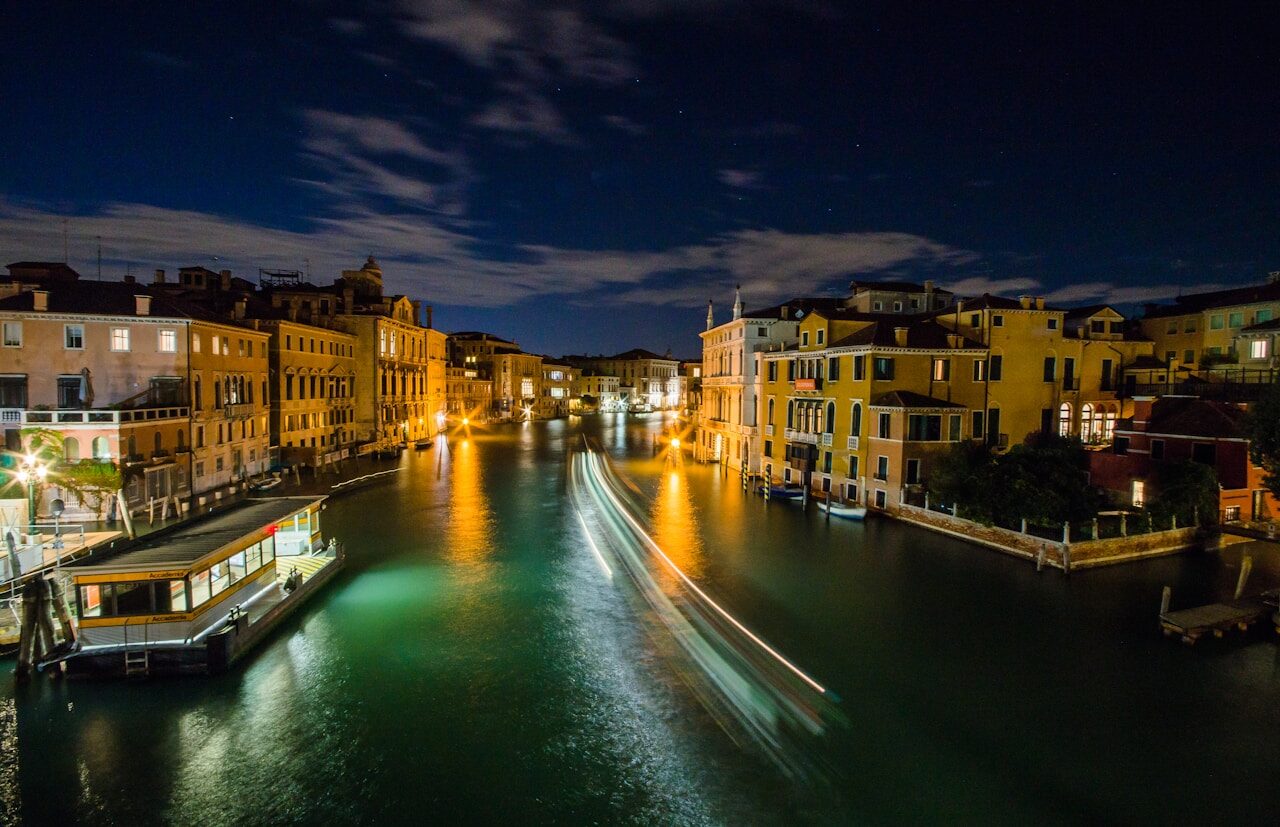
Water taxis offer the fastest and most comfortable way to navigate Venice’s waterways, providing door-to-door service to hotels, restaurants, and attractions with canal access.
These sleek motorboats accommodate 4-10 passengers with luggage and can access smaller canals that larger vaporetti cannot reach.
Official water taxi rates start at €15 for the initial flag-down fee, plus €2 per minute of travel time.
A typical 10-minute ride from the train station to St. Mark’s Square costs approximately €60–80.
Night surcharges (10 PM to 7 AM) add €10, and luggage fees add €3 per large bag.
Book water taxis through official companies like Consorzio Motoscafi Venezia or Venezia Taxi to ensure regulated pricing.
Pre-book airport transfers for fixed rates—Marco Polo Airport to central Venice typically costs €105–135 for up to four passengers.
Water taxis make sense for airport transfers with luggage, late-night transportation when vaporetti run infrequently, or when traveling in groups of 4-6 people where the per-person cost becomes comparable to multiple vaporetto tickets.
For more detailed information about navigating Venice’s unique transportation system, including tips for using vaporetti and water taxis efficiently, read our comprehensive guide on getting around Venice.
Art Museums and Cultural Institutions
Venice houses extraordinary art collections spanning Byzantine icons to contemporary installations, with museums occupying former palaces, churches, and historic buildings throughout the city.
The Venetian art scene has flourished for centuries, producing masters like Titian, Tintoretto, Veronese, and Canaletto.
Peggy Guggenheim Collection: Modern Art Museum
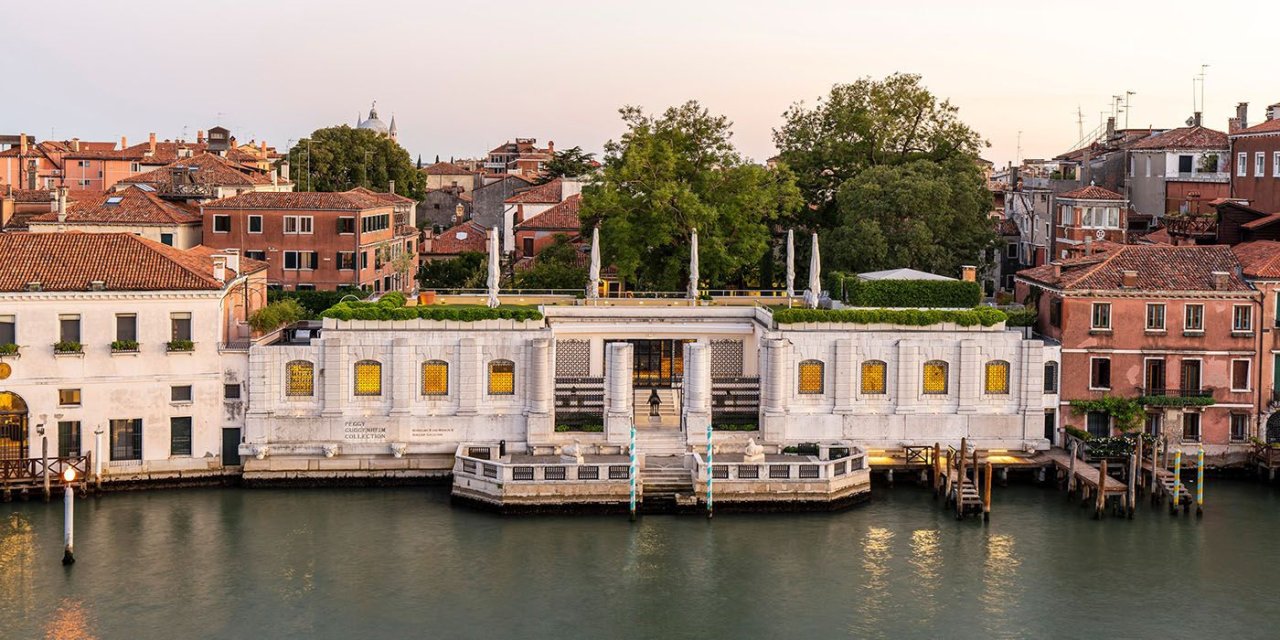
The Peggy Guggenheim Collection occupies Palazzo Venier dei Leoni on the Grand Canal in the Dorsoduro district, showcasing one of Europe’s finest collections of 20th-century art.
American heiress Peggy Guggenheim lived in this unfinished 18th-century palace from 1949 until her death in 1979, amassing works by Cubist, Surrealist, and Abstract Expressionist artists.
The permanent collection includes masterpieces by Picasso, Kandinsky, Mondrian, Dalí, Magritte, Pollock, and Rothko.
The sculpture garden features works by Giacometti, Moore, and Arp set against the backdrop of the Grand Canal.
Temporary exhibitions showcase contemporary artists and thematic shows exploring modern art movements.
The museum opens Wednesday through Monday from 10 AM to 6 PM, closed Tuesdays.
Entry costs €16 for adults (rising to €17 from May 1, 2026), €14 for seniors aged 70 and over, and €9 for students under 26 with a valid student ID.
Children under 10 enter free.
Audio guides cost €7 and provide detailed commentary on major works.
Visit on Wednesday evenings when the museum stays open until 8 PM with reduced crowds.
The museum café offers canal-view seating and light meals.
Allow 90-120 minutes to explore the collection thoroughly.
Accademia Gallery: Venetian Renaissance Masterpieces
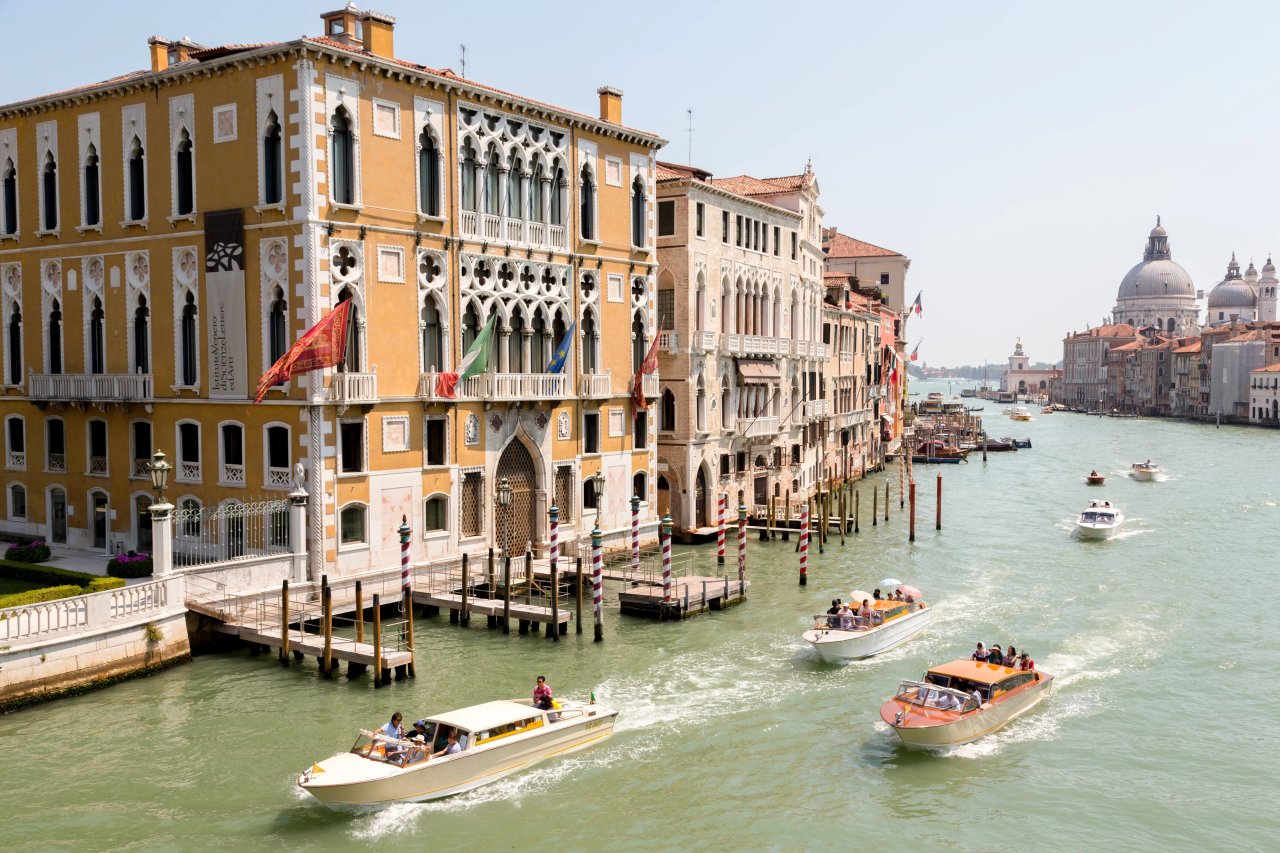
The Gallerie dell’Accademia houses the world’s finest collection of Venetian art from the 14th to 18th centuries, with works by Bellini, Carpaccio, Giorgione, Titian, Tintoretto, Veronese, and Canaletto.
The museum occupies the former Scuola della Carità complex on the Grand Canal’s south bank.
The collection spans 24 rooms arranged chronologically, tracing the development of Venetian painting from Byzantine-influenced Gothic works through the Renaissance to Baroque and Rococo periods.
Highlights include Giorgione’s mysterious “The Tempest,” Titian’s final work “Pietà,” Tintoretto’s dramatic “Miracle of the Slave,” and Veronese’s monumental “Feast in the House of Levi.”
The museum is closed on Mondays.
Tuesday through Sunday hours are 9:00 AM to 7:00 PM, with the ticket office closing at 6:00 PM.
Admission costs €15 for adults (rising to €20 from May 6, 2026), €2 for EU citizens aged 18–25, and free for visitors under 18.
Reserve timed-entry tickets online to avoid queues, especially during peak season.
Plan 2-3 hours to appreciate the collection properly.
The museum lacks a café, so visit nearby Campo Santo Stefano or Zattere waterfront for refreshments afterward.
Ca’ Rezzonico: 18th Century Venetian Life Museum
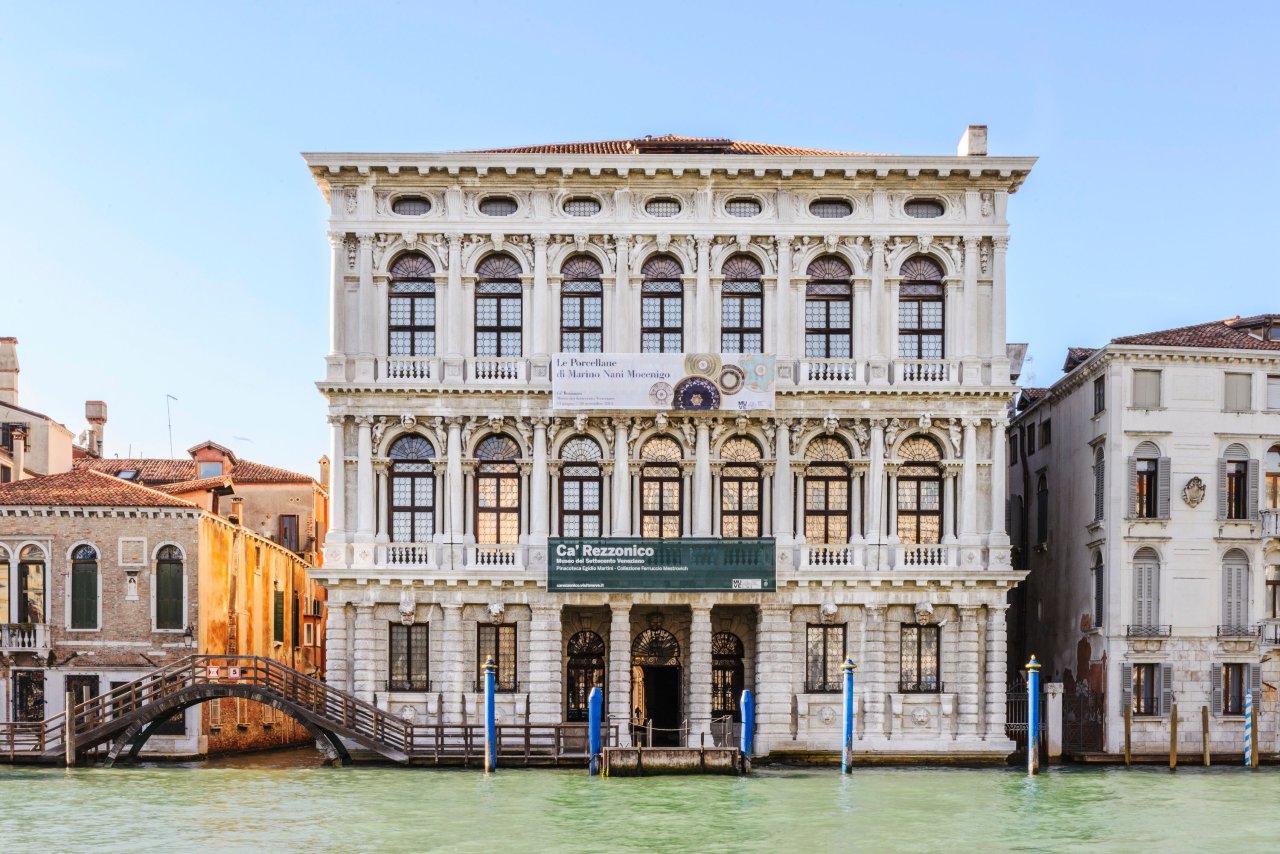
Ca’ Rezzonico, a grand Baroque palace on the Grand Canal, recreates the opulent lifestyle of 18th-century Venetian nobility through period rooms, furniture, paintings, and decorative arts.
The palace, designed by Baldassare Longhena and completed in 1750, now serves as the Museum of 18th Century Venice.
The museum’s three floors showcase frescoed ballrooms, gilded furniture, Murano glass chandeliers, and paintings by Tiepolo, Guardi, and Longhi.
The Throne Room features ceiling frescoes by Giovanni Battista Tiepolo depicting the marriage of Ludovico Rezzonico.
The Picture Gallery displays works showing daily life in 18th-century Venice, including Longhi’s genre scenes of Venetian society.
The third floor houses a reconstructed 18th-century pharmacy and a puppet theater.
The palace’s Grand Canal terrace offers stunning views across the water to Ca’ Foscari and Palazzo Balbi.
Ca’ Rezzonico opens Wednesday through Monday from 10 AM to 6 PM (last entry 5 PM), closed Tuesdays.
Admission costs €15 for adults and €7.50 for reduced admission (children aged 6–14, students aged 15–25, and seniors 65+).
The museum is included in the Venezia Unica Museum Pass, which bundles access to multiple civic museums; visit veneziaunica.it for current combined pass options.
Palazzo Grassi and Punta della Dogana: Contemporary Art Spaces
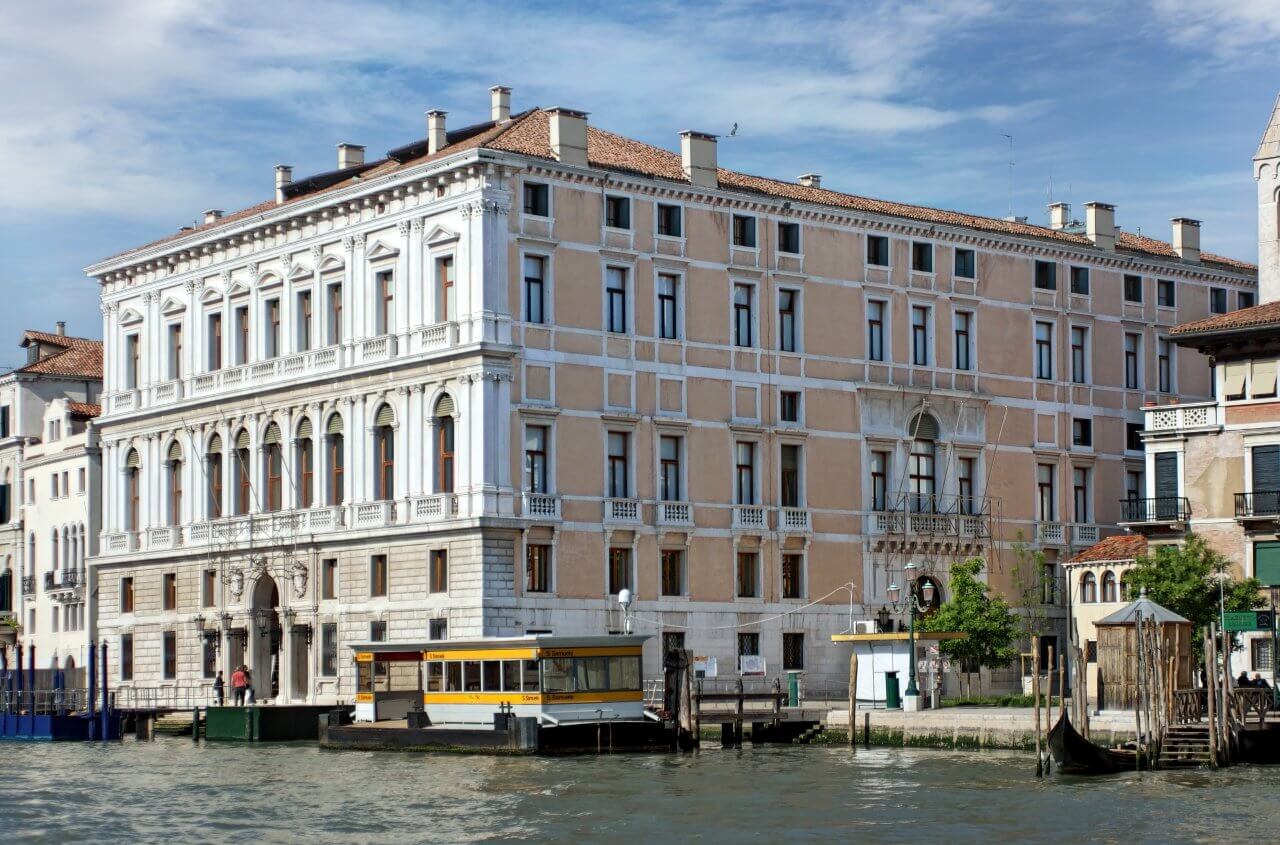
Palazzo Grassi and Punta della Dogana, both owned by French businessman François Pinault, present rotating exhibitions of contemporary art from Pinault’s extensive collection.
These venues, renovated by Japanese architect Tadao Ando, offer stark minimalist spaces that contrast with Venice’s historic architecture.
Palazzo Grassi, an 18th-century palace on the Grand Canal, hosts major thematic exhibitions featuring works by contemporary artists like Jeff Koons, Damien Hirst, and Marlene Dumas.
The building’s neoclassical facade conceals Ando’s modern concrete and steel interior.
Punta della Dogana occupies a 17th-century customs house at the tip of Dorsoduro where the Grand Canal meets the Giudecca Canal.
The triangular building’s renovation preserved the brick exterior while creating dramatic exhibition spaces lit by natural light.
Both venues open Wednesday through Monday from 10 AM to 7 PM, closed Tuesdays.
A single ticket grants access to both venues: €20 for adults, €15 for reduced admission, and €7 for visitors aged 20–26.
Admission is free for visitors under 20.
Exhibitions change annually, so check current shows at palazzograssi.it before visiting.
Island Hopping Adventures: Lagoon Exploration
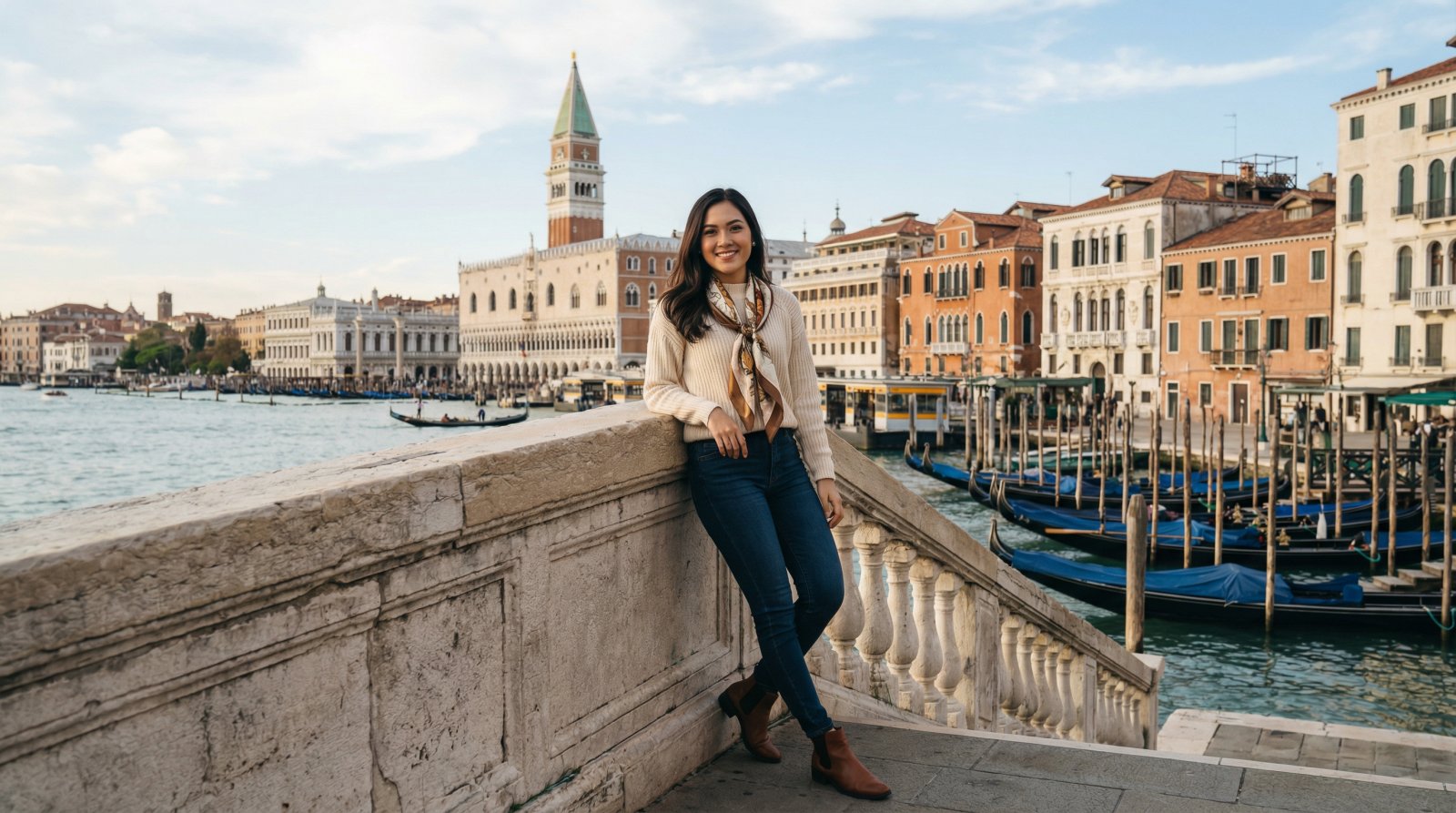
The Venetian Lagoon contains over 100 islands beyond Venice’s historic center, with several offering unique attractions, traditional crafts, and peaceful escapes from the city’s crowds.
Vaporetto lines connect the main islands, making day trips easy and affordable.
Murano: Glassblowing Workshops and Artisan Demonstrations
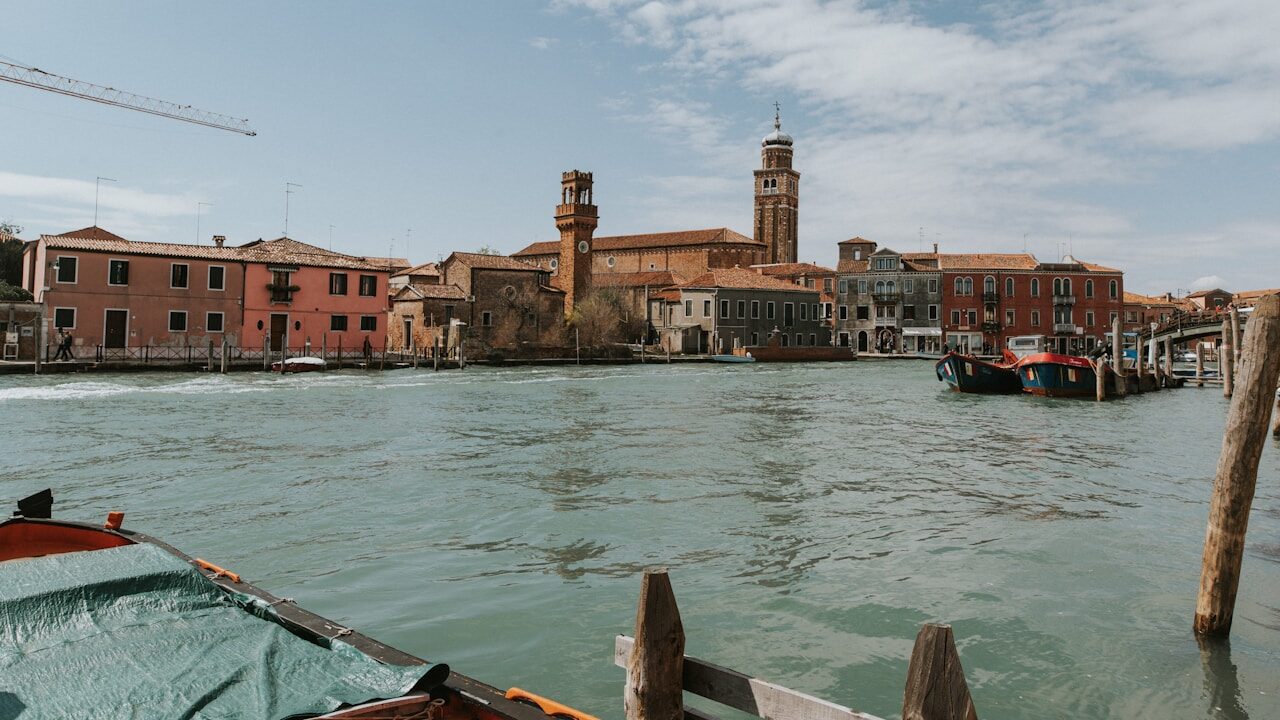
Murano, located 1.5 kilometers north of Venice, has produced world-renowned glass art since 1291 when the Venetian Republic moved all glassmakers to the island to prevent fires in the wooden city.
Today, Murano’s furnaces (fornaci) continue centuries-old techniques, creating everything from delicate goblets to massive chandeliers.
Visit working glass factories to watch master glassblowers (maestri vetrai) transform molten glass into intricate sculptures, vases, and jewelry.
The process involves heating glass to 1,400°C (2,550°F) in furnaces, then shaping it using blowpipes, molds, and hand tools.
Demonstrations last 15-20 minutes and are typically free, though factories hope you’ll browse their showrooms afterward.
Recommended glass factories offering demonstrations include Venini, Seguso, and Barovier & Toso—all historic names in Murano glass.
Smaller workshops along Fondamenta dei Vetrai provide more intimate experiences with artisans who create pieces on-site.
The Murano Glass Museum (Museo del Vetro) traces glassmaking history from Roman times through contemporary works.
The collection includes ancient Roman glass, Renaissance masterpieces, and modern art glass.
The museum opens daily from 10 AM to 6 PM (November–March: until 5 PM).
Admission costs €15 for adults and €7.50 for reduced admission.
An Island Museums combo ticket — covering the Glass Museum (Murano), Lace Museum (Burano), and Torcello Museum — costs €20 full / €10 reduced and is excellent value if visiting all three islands in a day.
Reach Murano via vaporetto lines 4.1, 4.2, 12, or 13 from Fondamente Nove.
The journey takes 10-15 minutes.
Allow 2-3 hours to visit a glass factory, explore the museum, and wander the island’s canals.
Beware of counterfeit “Murano glass” sold in Venice.
Authentic pieces carry the Vetro Artistico Murano trademark and come with certificates of authenticity.
Purchase directly from factories or authorized dealers to ensure genuine Murano craftsmanship.
Burano: Colorful Houses and Traditional Lace Making
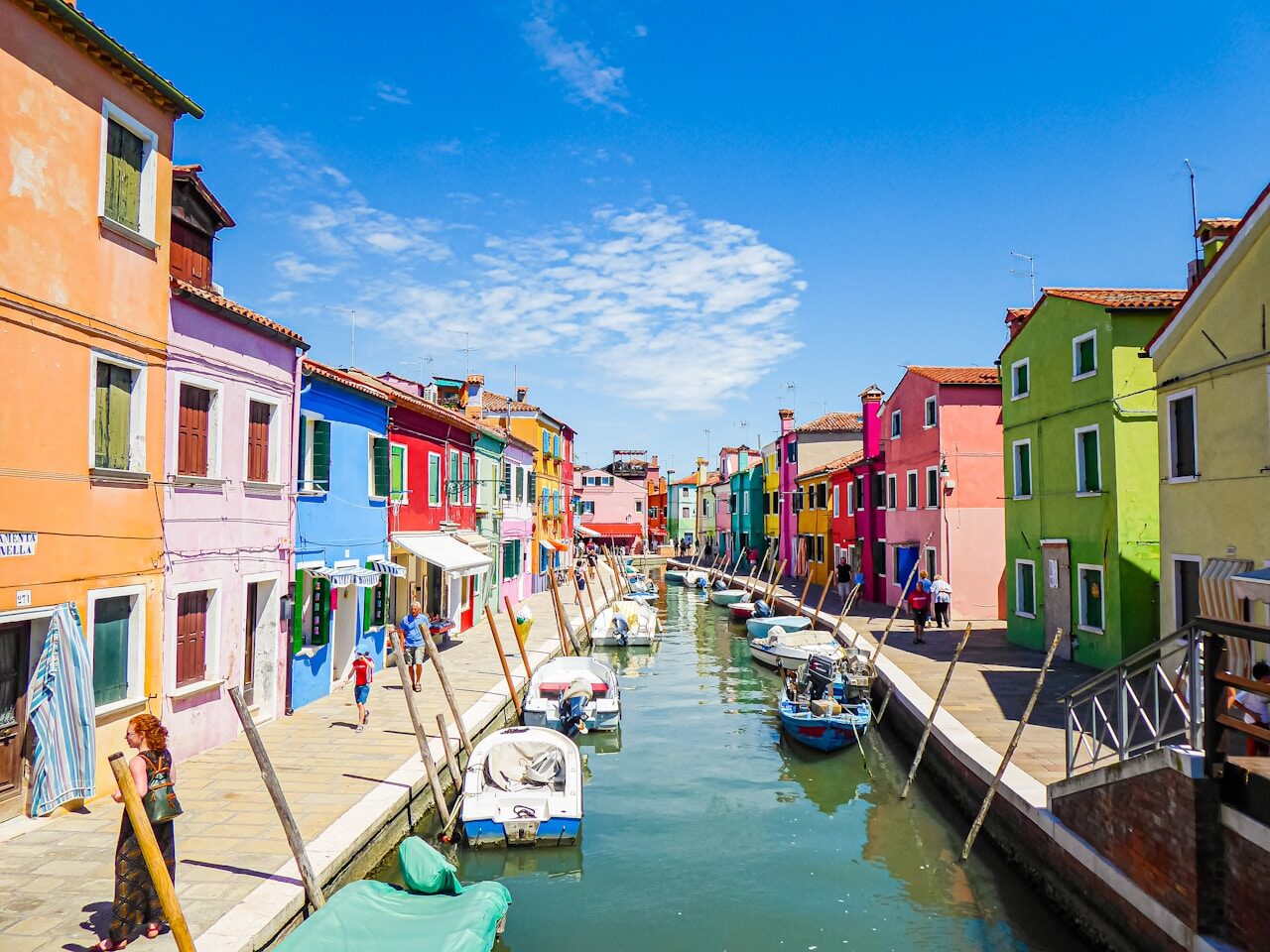
Burano, located 7 kilometers northeast of Venice, captivates visitors with its rainbow-colored houses lining narrow canals.
Legend says fishermen painted their homes in bright hues—electric blues, sunny yellows, vibrant reds, and lime greens—to identify them through fog when returning from sea.
The island’s photogenic streets make it a paradise for photographers and Instagram enthusiasts.
The most photographed spots include the canals near Piazza Galuppi and the leaning bell tower of San Martino Church, which tilts 1.83 meters from vertical due to unstable foundations.
Burano has produced exquisite needle lace (merletto) since the 16th century, when Venetian noblewomen prized Burano lace for its delicate patterns and fine craftsmanship.
The Lace Museum (Museo del Merletto) in Piazza Galuppi displays antique lace pieces and demonstrates traditional techniques.
The museum opens Tuesday through Sunday from 10 AM to 6 PM (November–March: until 5 PM).
Admission costs €7 for adults and €3.50 for reduced admission (children aged 6–14, students aged 15–25, and seniors 65+).
Watch lace makers at work in small shops along Via Baldassare Galuppi, the main street.
Authentic Burano lace is expensive—a small handkerchief can cost €100-200 due to the hours of skilled labor required.
Much of the “Burano lace” sold in tourist shops is machine-made or imported from Asia.
Burano offers excellent seafood restaurants specializing in risotto de gò (goby fish risotto) and fresh fish from the lagoon.
Try Trattoria al Gatto Nero or Riva Rosa for authentic island cuisine.
Reach Burano via vaporetto line 12 from Fondamente Nove, with a journey time of 40-45 minutes.
The same line continues to Torcello.
Plan 2-3 hours to explore Burano’s colorful streets, visit the lace museum, and enjoy lunch.
Torcello: Ancient Cathedral and Peaceful Escape
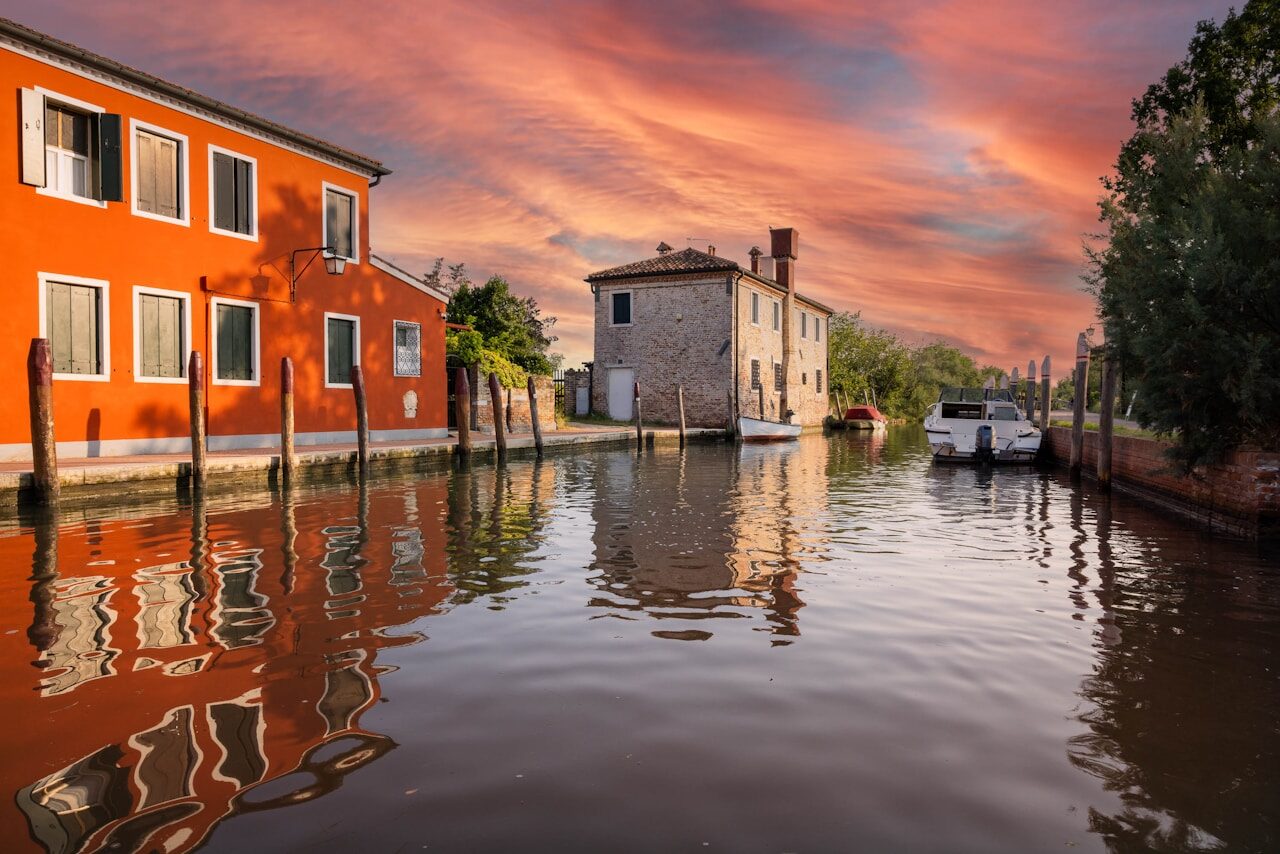
Torcello, the lagoon’s most historically significant island, was once more populous than Venice itself, with 20,000 residents in the 10th century.
Malaria and silting of its canals led to abandonment, leaving today’s population at approximately 10 permanent residents.
The island offers a peaceful retreat with important Byzantine art and architecture.
The Cathedral of Santa Maria Assunta, founded in 639 AD, ranks among Venice’s oldest buildings.
The interior features stunning 11th and 12th-century Byzantine mosaics, including a massive Last Judgment scene covering the west wall and a golden Madonna and Child in the apse.
The cathedral’s simple brick exterior contrasts with the glittering mosaics inside.
The adjacent Church of Santa Fosca, built in the 11th century, showcases Byzantine-Romanesque architecture with its Greek cross plan and elegant exterior portico.
Climb the cathedral’s bell tower for panoramic views across the lagoon to Venice and the surrounding islands.
The Cathedral of Santa Maria Assunta is open daily from 10:30 AM to 5:30 PM (November–February: 10:00 AM to 4:30 PM).
Cathedral admission costs €5 for adults, and the bell tower climb costs an additional €5.
The adjacent Torcello Museum is included in the Islands Museums combo ticket.
Attila’s Throne, a stone chair in the square between the churches, supposedly belonged to Attila the Hun, though it more likely served as the bishop’s seat or a magistrate’s chair.
The Torcello Museum displays archaeological finds from the island’s prosperous past.
Locanda Cipriani, a historic restaurant and inn, has hosted celebrities like Ernest Hemingway and the British Royal Family.
The restaurant serves traditional Venetian cuisine in a garden setting, though prices reflect its exclusive reputation.
Reach Torcello via vaporetto line 12 from Fondamente Nove or Burano.
The journey from Burano takes 5 minutes.
Torcello receives far fewer visitors than Murano or Burano, offering genuine tranquility.
Allow 1.5-2 hours to visit the cathedral, climb the bell tower, and explore the island’s paths.
Lido: Beach Resort and Film Festival Venue
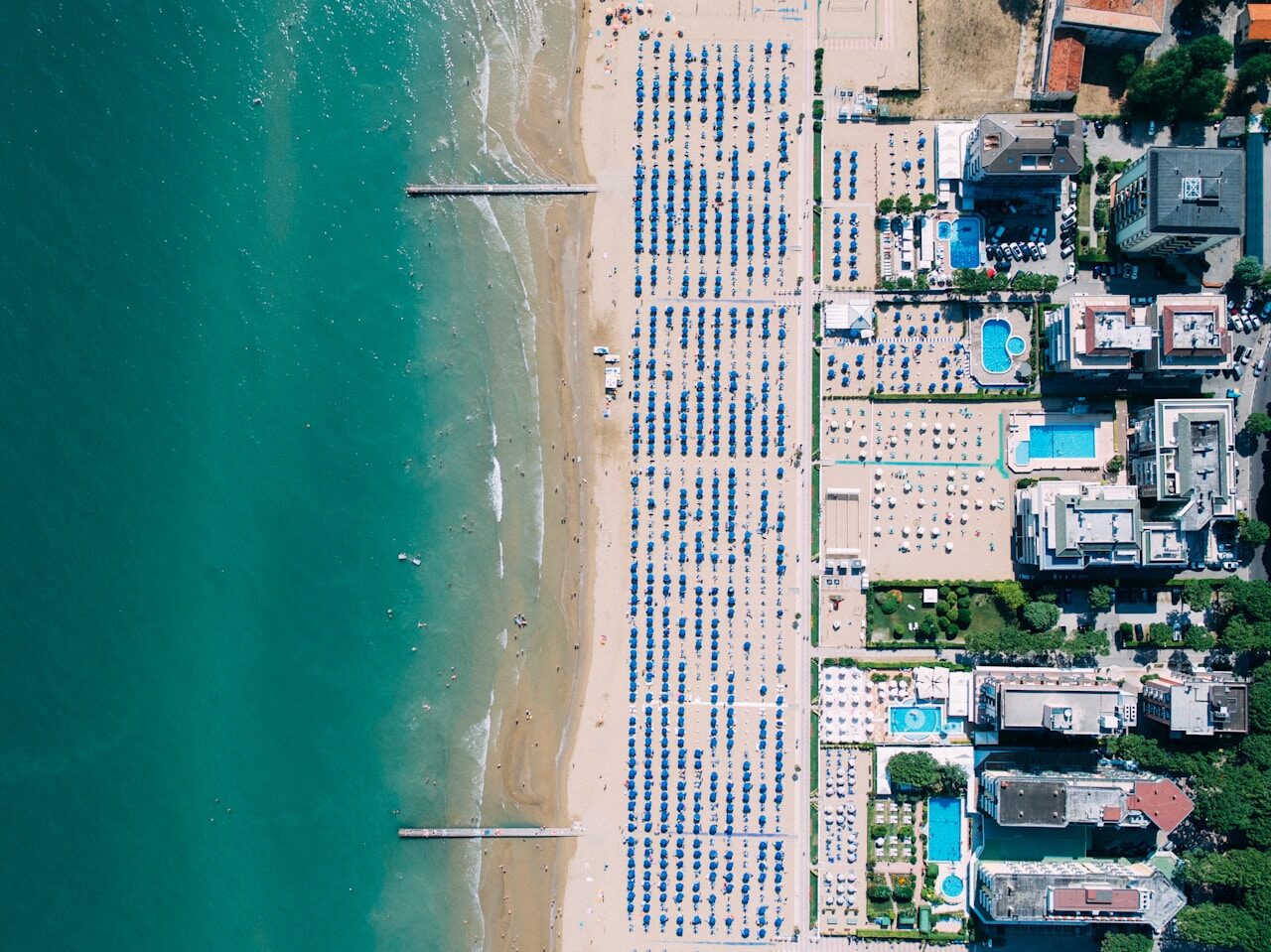
Lido di Venezia, an 11-kilometer barrier island separating the Venetian Lagoon from the Adriatic Sea, offers sandy beaches, Belle Époque architecture, and a more relaxed atmosphere than Venice’s historic center.
The island has cars and bicycles—a novelty after Venice’s pedestrian-only streets.
Lido’s beaches stretch along the Adriatic coast, with both public and private sections.
Private beach clubs (stabilimenti balneari) rent umbrellas, loungers, and changing cabins from May through September.
Public beaches at San Nicolò (north end) and Alberoni (south end) offer free access.
The island gained fame as the setting for Thomas Mann’s “Death in Venice” and hosts the Venice International Film Festival (Mostra Internazionale d’Arte Cinematografica) every August-September.
The festival, founded in 1932, is the world’s oldest film festival and attracts international celebrities and film industry professionals.
Lido’s Gran Viale Santa Maria Elisabetta, the main street connecting the lagoon-side vaporetto stop to the Adriatic beaches, features shops, cafés, and restaurants.
Rent bicycles near the vaporetto stop to explore the island’s length.
The Lido Casino (Casinò di Venezia), housed in a Moorish-style palazzo, operates from April through October before moving to its winter location at Ca’ Vendramin Calergi on the Grand Canal.
The casino offers table games, slot machines, and a restaurant.
Reach Lido via vaporetto lines 1, 2, 5.1, 5.2, or 6 from various points in Venice.
Lines 1 and 2 from San Marco take 15-20 minutes.
Lido makes an easy half-day trip, especially during summer when you can combine sightseeing with beach time.
For budget-conscious travelers looking to explore these islands and other Venice experiences without overspending, our guide on traveling to Venice on a budget offers practical money-saving tips.
Venetian Cuisine and Dining Experiences
Venetian cuisine reflects the city’s maritime heritage and historical trade connections, featuring fresh seafood from the lagoon and Adriatic, polenta, risotto, and unique dishes found nowhere else in Italy.
The city’s dining culture ranges from casual bacari (wine bars) serving cicchetti (small plates) to elegant restaurants offering refined interpretations of traditional recipes.
Cicchetti Bar Hopping: Venetian Tapas and Wine Culture
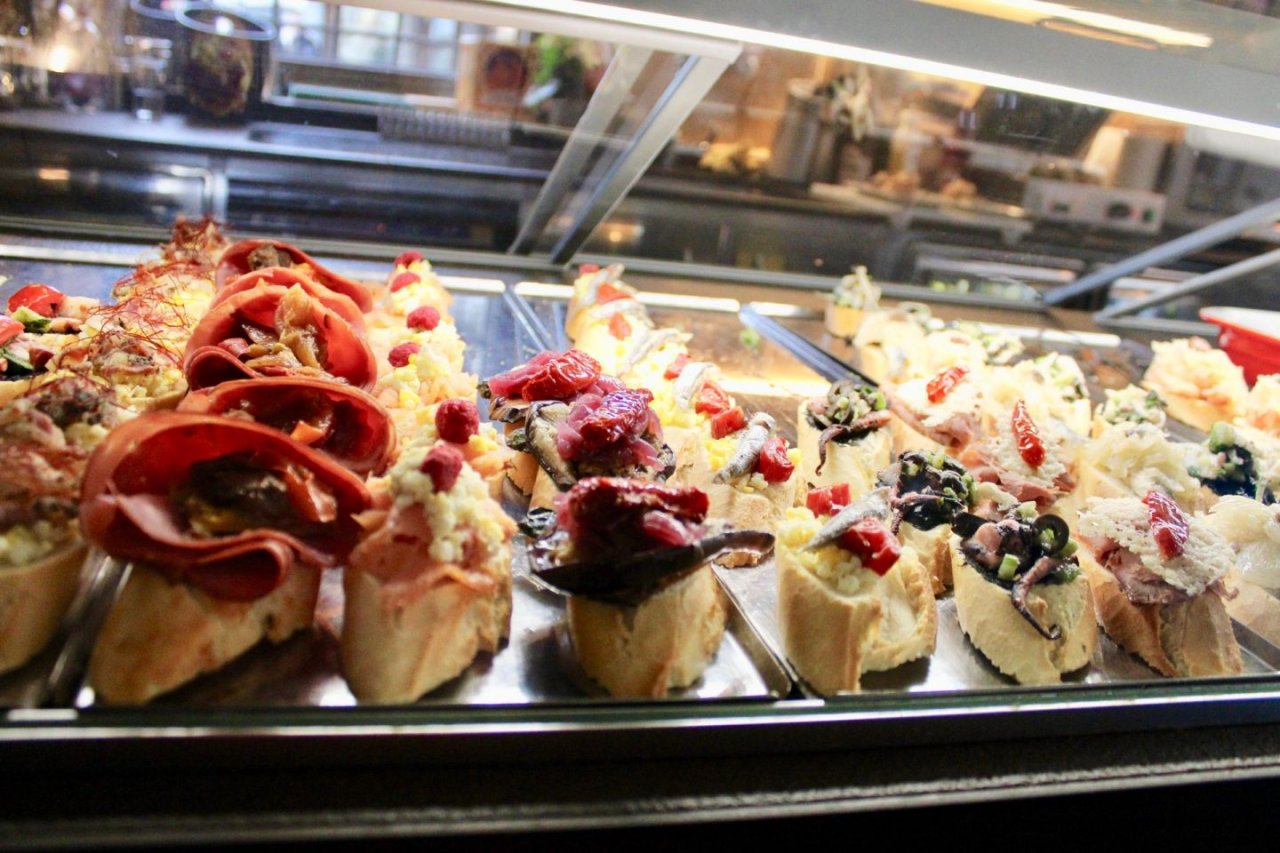
Cicchetti bar hopping (giro di ombre) represents Venice’s most authentic culinary tradition, where locals gather in bacari (traditional wine bars) to enjoy small plates paired with ombre (small glasses of wine).
This Venetian version of Spanish tapas offers an affordable way to sample diverse flavors while experiencing neighborhood social life.
Cicchetti range from simple crostini topped with baccalà mantecato (creamed salt cod) or sarde in saor (sweet and sour sardines) to more elaborate preparations like polpette (meatballs), nervetti (veal cartilage salad), and folpetti (baby octopus).
Prices in 2026 typically range from €2–5 per piece.
The best bacari cluster in the Rialto and San Polo areas.
Start at Cantina Do Mori, Venice’s oldest bacaro (established 1462), known for its crostini and francobolli (stamp-sized sandwiches).
Continue to All’Arco near Rialto Market for creative cicchetti using fresh market ingredients.
Cantina Do Spade offers a larger menu and seating in a historic setting.
In Cannaregio, visit Al Timon along Fondamenta Ormesini for canal-side seating and generous portions.
Osteria Al Squero near the Accademia offers views of a working gondola boatyard (squero) while you snack.
The traditional cicchetti crawl follows this pattern: arrive around 6-7 PM, order 2-3 cicchetti and an ombra at each bacaro, eat standing at the bar or outside, then move to the next spot.
Locals rarely sit at tables, which often carry higher prices and service charges.
Pair cicchetti with local wines like Prosecco from Valdobbiadene, Soave white wine, or a spritz (Aperol or Campari mixed with Prosecco and soda water).
A spritz costs €3-5 at bacari, compared to €8-12 at tourist-oriented cafés in St. Mark’s Square.
Traditional Osteria Dining: Authentic Venetian Dishes
Traditional osterias serve authentic Venetian cuisine in casual, often family-run establishments tucked away in residential neighborhoods.
These restaurants focus on seasonal ingredients, traditional recipes, and local wines, offering a genuine taste of Venetian culinary heritage.
Classic Venetian dishes include:
- Sarde in saor: Sweet and sour sardines marinated with onions, pine nuts, and raisins—a dish dating to the 14th century that preserved fish for long sea voyages
- Baccalà mantecato: Creamed salt cod whipped with olive oil until fluffy, served on grilled polenta
- Risotto al nero di seppia: Risotto cooked with cuttlefish ink, turning it dramatically black
- Fegato alla veneziana: Thinly sliced calf’s liver cooked with onions, traditionally served with polenta
- Bigoli in salsa: Thick whole-wheat pasta with an anchovy and onion sauce
- Moleche: Soft-shell crabs from the lagoon, fried whole (available only during molting season in spring and fall)
- Seppie al nero: Cuttlefish cooked in its own ink with polenta
Recommended osterias include Osteria alle Testiere in Castello (reservations essential for this tiny 22-seat restaurant), Osteria al Cicheto in Cannaregio for traditional dishes at fair prices, and Antiche Carampane in San Polo (hidden in a maze of alleys, no sign outside).
Expect to pay €40–60 per person for a full meal with wine at quality osterias in 2026.
Lunch menus (pranzo) often offer better value than dinner.
Many osterias close between lunch and dinner service (typically 3-7 PM) and may close one or two days per week.
Make reservations for popular osterias, especially for dinner.
Venetians eat late—dinner service starts around 7:30 PM, with peak times at 8:30-9 PM.
Rialto Market: Fresh Seafood and Local Produce
The Rialto Market (Mercato di Rialto) has supplied Venice with fresh food for over 1,000 years, operating from the same location near the Rialto Bridge since 1097.
The market divides into two sections: the fish market (Pescheria) and the produce market (Erberia).
The Pescheria, housed in a neo-Gothic building from 1907, displays the morning’s catch from the lagoon and Adriatic.
Expect to see local specialties like moeche (soft-shell crabs), schie (tiny gray shrimp), caparossoli (small clams), seppie (cuttlefish), and various fish species.
Fishmongers arrange their displays with artistic flair, creating colorful compositions of seafood on ice.
The Erberia offers seasonal fruits, vegetables, and herbs from the Veneto region.
Spring brings white asparagus from Bassano del Grappa, artichokes from Sant’Erasmo island, and radicchio from Treviso.
Summer features tomatoes, zucchini, and peaches.
Fall brings porcini mushrooms, pumpkins, and chestnuts.
The market operates Tuesday through Saturday from 7:30 AM to noon, with the best selection before 10 AM.
The fish market closes on Mondays.
Arrive early to see the full variety before vendors sell out.
The market closes for two weeks in August and between Christmas and New Year.
Browse the market even if you’re not cooking—the atmosphere, colors, and interactions between vendors and local shoppers provide authentic glimpses of Venetian daily life.
Several bacari surround the market, perfect for post-market cicchetti and wine.
Wine Tasting: Veneto Region Wines and Prosecco
The Veneto region produces more DOC (Denominazione di Origine Controllata) wine than any other Italian region, with varieties ranging from sparkling Prosecco to full-bodied Amarone.
Venice offers numerous opportunities to taste and learn about regional wines.
Prosecco, Italy’s most popular sparkling wine, comes from the hills between Conegliano and Valdobbiadene, 50 kilometers north of Venice.
The best Prosecco carries DOCG (Denominazione di Origine Controllata e Garantita) designation, indicating superior quality from specific vineyard areas.
Prosecco Superiore from Valdobbiadene and Prosecco di Conegliano represent the highest quality levels.
Other notable Veneto wines include:
- Soave: Crisp white wine from Garganega grapes grown east of Verona
- Valpolicella: Light to medium-bodied red wine from the Verona area
- Amarone della Valpolicella: Full-bodied, high-alcohol red wine made from dried grapes
- Bardolino: Light red wine from the shores of Lake Garda
Venice wine bars (enoteche) offer tasting flights and wine education.
Vino Vero in Cannaregio specializes in natural and organic wines with knowledgeable staff.
Enoteca Mascareta in Castello offers an extensive wine list in an intimate setting.
Cantinone Già Schiavi near the Accademia provides excellent wines and cicchetti with canal views.
For immersive wine experiences, join a day trip to Prosecco country.
Tours typically include visits to 2-3 wineries, tastings, lunch, and transportation from Venice.
The scenic drive through rolling hills covered with vineyards offers a refreshing contrast to Venice’s urban landscape.
Before planning your Venice culinary adventures, make sure you’re prepared with essential travel information by reading our guide on things to know before traveling to Venice.
Hidden Venice: Off-the-Beaten-Path Neighborhoods
Beyond the tourist corridors connecting St. Mark’s Square to the Rialto Bridge, Venice’s quieter neighborhoods offer authentic glimpses of local life, hidden churches, artisan workshops, and peaceful canals where you might walk for minutes without encountering another tourist.
Castello District: Local Life and Authentic Atmosphere
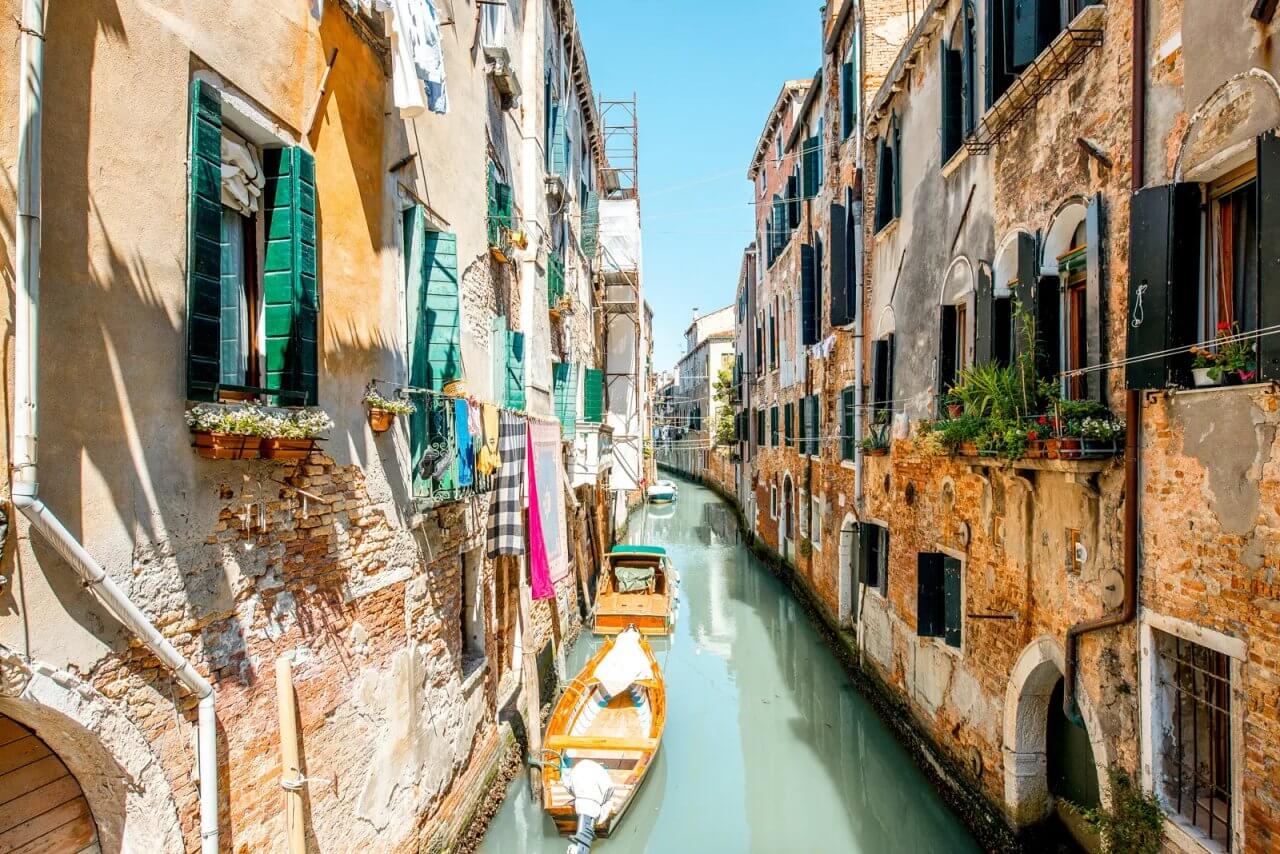
Castello, Venice’s largest sestiere (district), stretches from San Marco eastward to the island’s tip, encompassing both tourist-heavy areas near St. Mark’s and residential neighborhoods where Venetians actually live.
The eastern sections of Castello, particularly around Via Garibaldi and the Arsenale, offer authentic experiences away from crowds.
Via Garibaldi, one of Venice’s few straight, wide streets, bustles with local shops, produce stands, and neighborhood bars where residents gather for morning coffee and evening spritz.
The street was created by filling in a canal in 1808 during Napoleon’s occupation.
Browse the morning market stalls, grab a slice of pizza from a local bakery, and observe daily Venetian life.
The Arsenale, Venice’s historic shipyard, produced the warships and merchant vessels that made Venice a maritime superpower from the 12th to 18th centuries.
At its peak, the Arsenale employed 16,000 workers and could build a complete galley in a single day using assembly-line techniques that predated the Industrial Revolution by centuries.
Today, the Arsenale hosts Venice Biennale exhibitions and naval history museums.
The monumental Renaissance gateway (1460) features the first classical revival architecture in Venice and four Greek lions looted from Athens.
The Giardini della Biennale, public gardens created by Napoleon in 1810, provide rare green space in Venice.
The gardens host national pavilions for the Venice Biennale Art Exhibition, with permanent structures designed by notable architects.
Outside Biennale periods (typically May–November, alternating annually between Art and Architecture editions), the gardens offer peaceful walking paths and waterfront views.
Sant’Elena, at Castello’s eastern tip, feels more like a small Italian town than Venice, with tree-lined streets, a large park, and a neighborhood church.
Families play in the park while elderly residents chat on benches—scenes rarely found in tourist-heavy areas.
Cannaregio: Jewish Ghetto and Quiet Canals
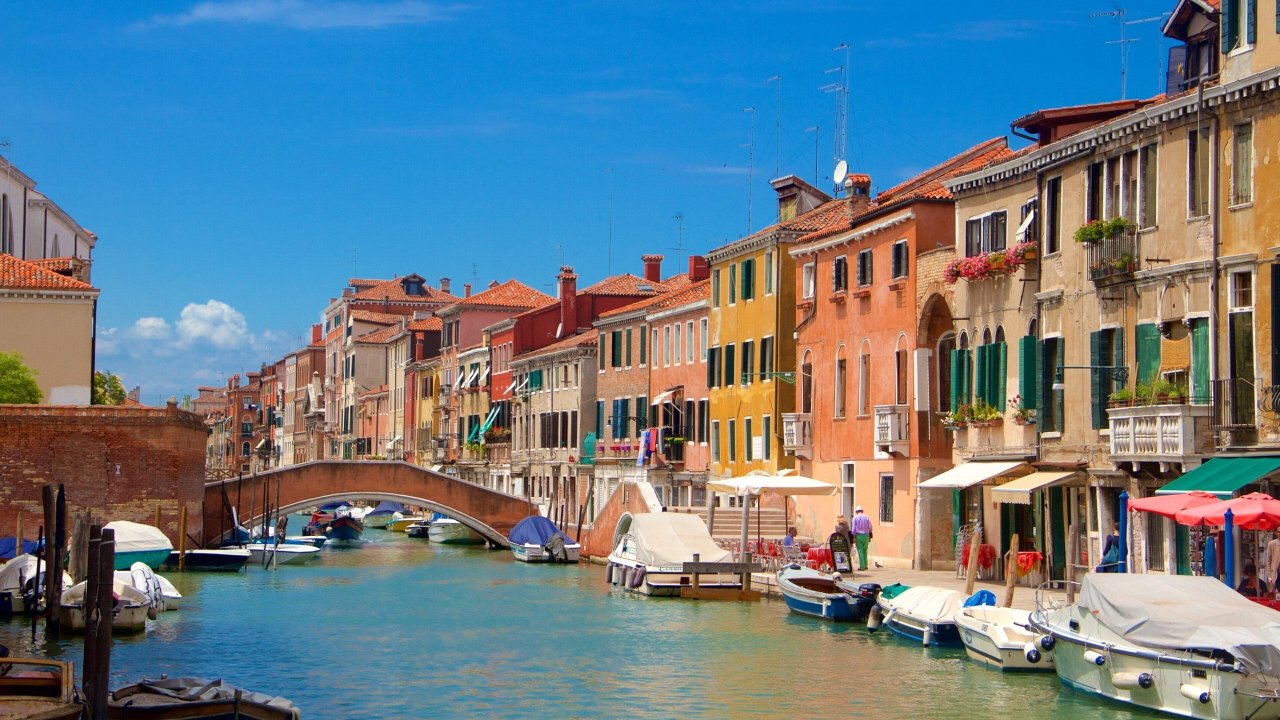
Cannaregio, the northernmost sestiere, contains both the heavily touristed route from the train station to Rialto and some of Venice’s most peaceful residential areas.
The district’s northern sections along Fondamenta della Misericordia and Fondamenta degli Ormesini offer authentic neighborhood atmosphere with local bars, restaurants, and shops.
The Venetian Ghetto, established in 1516, was the world’s first Jewish ghetto and gave the word “ghetto” to other languages.
The Venetian Republic confined its Jewish population to this area, locking the gates at night and restricting movement.
Despite these constraints, the Jewish community thrived, establishing synagogues, schools, and businesses.
The Ghetto’s buildings rise unusually high for Venice—up to seven or eight stories—because residents built upward when they couldn’t expand outward.
Five historic synagogues (scole) remain, representing different Jewish communities: Italian, German, Canton (French), Levantine (Eastern Mediterranean), and Spanish.
The Jewish Museum (Museo Ebraico) in Campo del Ghetto Nuovo offers guided tours of three synagogues and displays artifacts documenting Jewish life in Venice.
Campo del Ghetto Nuovo, the main square, features memorials to Venetian Jews deported to concentration camps during World War II.
The square’s quiet atmosphere and historic buildings create a contemplative space for reflection.
Fondamenta della Misericordia and Fondamenta degli Ormesini, parallel canals in northern Cannaregio, have become popular with younger Venetians and students.
The area offers affordable bars, restaurants, and nightlife without the tourist prices of San Marco.
Al Timon serves cicchetti and wine with canal-side seating.
Paradiso Perduto offers live music and a bohemian atmosphere.
Dorsoduro: Artistic Quarter and University Life
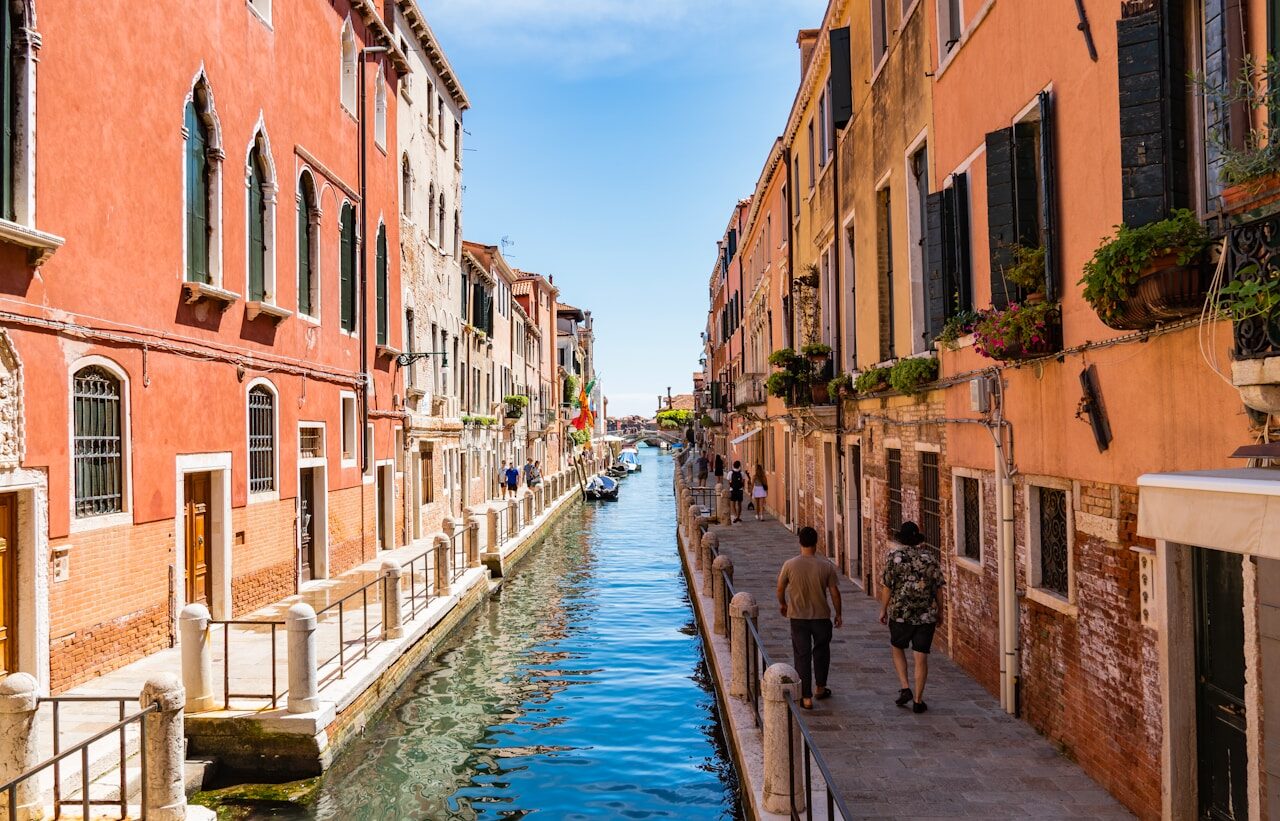
Dorsoduro, the sestiere south of the Grand Canal, balances major cultural attractions (Accademia Gallery, Peggy Guggenheim Collection) with residential neighborhoods, university buildings, and a lively local scene.
The district’s name means “hard back,” referring to its relatively stable ground compared to other areas of Venice.
Campo Santa Margherita, Dorsoduro’s largest square, serves as the social heart of Venice’s student population.
Ca’ Foscari University buildings surround the campo, and students fill the square’s bars and cafés from morning espresso through late-night drinks.
The square hosts a small morning market selling fish, produce, and flowers.
Bars like Caffè Rosso (Il Caffè) and Osteria alla Bifora offer affordable drinks and snacks with outdoor seating.
The Zattere, a long waterfront promenade facing the Giudecca Canal, provides expansive views across the water to Giudecca island.
Venetians jog, walk dogs, and push strollers along the Zattere, especially on sunny weekends.
Gelateria Nico serves Venice’s best gelato, including their famous gianduiotto (hazelnut ice cream topped with whipped cream and chocolate sauce) enjoyed while sitting on the waterfront steps.
San Trovaso, a quiet neighborhood in eastern Dorsoduro, contains one of Venice’s last working gondola boatyards (Squero di San Trovaso).
Watch craftsmen repair and build gondolas using traditional techniques passed down through generations.
The squero is private property, so view it from across the canal at Osteria Al Squero, which serves excellent cicchetti.
The Church of San Sebastiano contains Veronese’s most important fresco cycle, covering the ceiling, walls, and organ with biblical scenes.
Veronese is buried in the church he decorated.
Unlike more famous churches, San Sebastiano rarely has crowds, allowing quiet appreciation of Renaissance masterpieces.
Seasonal Events and Cultural Festivals
Venice’s festival calendar spans centuries-old traditions and contemporary cultural events, offering unique experiences depending on when you visit.
Major festivals transform the city, filling streets and canals with costumed participants, boats, and celebrations.
Venice Carnival: Historic Masquerade Festival
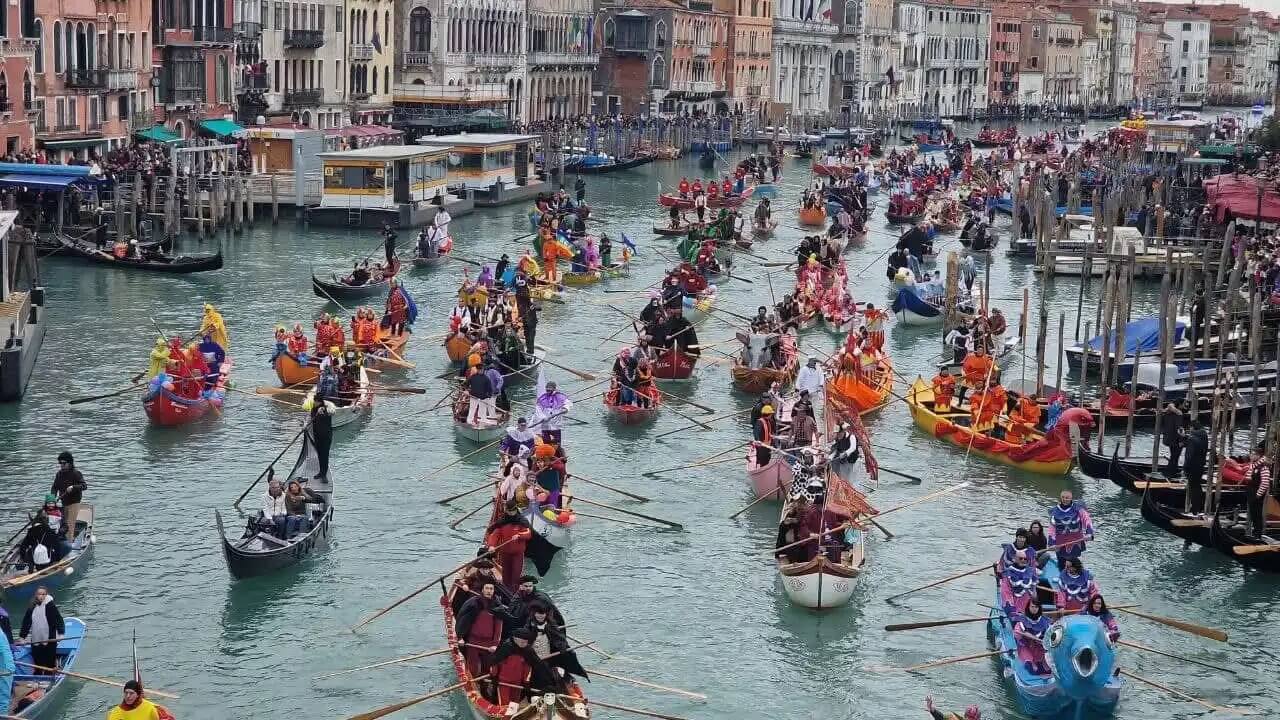
Venice Carnival (Carnevale di Venezia) ranks among the world’s most famous festivals, attracting hundreds of thousands of visitors for two weeks of masked balls, costume parades, and street performances.
The festival dates to the 11th century, when the Venetian Republic granted citizens a period of revelry before Lenten fasting.
Masks allowed people to temporarily escape social hierarchies and speak freely without fear of retribution.
Carnival typically runs for 10-14 days leading up to Shrove Tuesday (Martedì Grasso), the day before Ash Wednesday.
Dates change annually based on Easter—in 2026, Carnival runs from January 31 to February 17.
The festival centers on St. Mark’s Square, where official events include the Flight of the Angel (Volo dell’Angelo), when an acrobat descends from the Campanile to the square on a cable, and the Flight of the Eagle (Volo dell’Aquila).
Costume competitions judge elaborate historical costumes, with participants spending thousands of euros on authentic 18th-century reproductions.
Masked balls (balli in maschera) take place in historic palaces like Ca’ Vendramin Calergi and Palazzo Pisani Moretta.
These exclusive events feature period costumes, classical music, and formal dancing.
Tickets cost €300–500 per person and sell out months in advance.
For budget-conscious visitors, Carnival offers plenty of free entertainment.
Costumed participants pose for photos throughout the city, street performers entertain in squares, and impromptu parties erupt in campos.
Rent or buy a mask from shops near Rialto or San Marco to participate in the festivities.
Book accommodations 6-12 months in advance for Carnival, as hotels fill quickly and prices increase 50-100% above normal rates.
Crowds make navigation difficult, and popular restaurants require reservations weeks ahead.
Regata Storica: Historic Boat Race
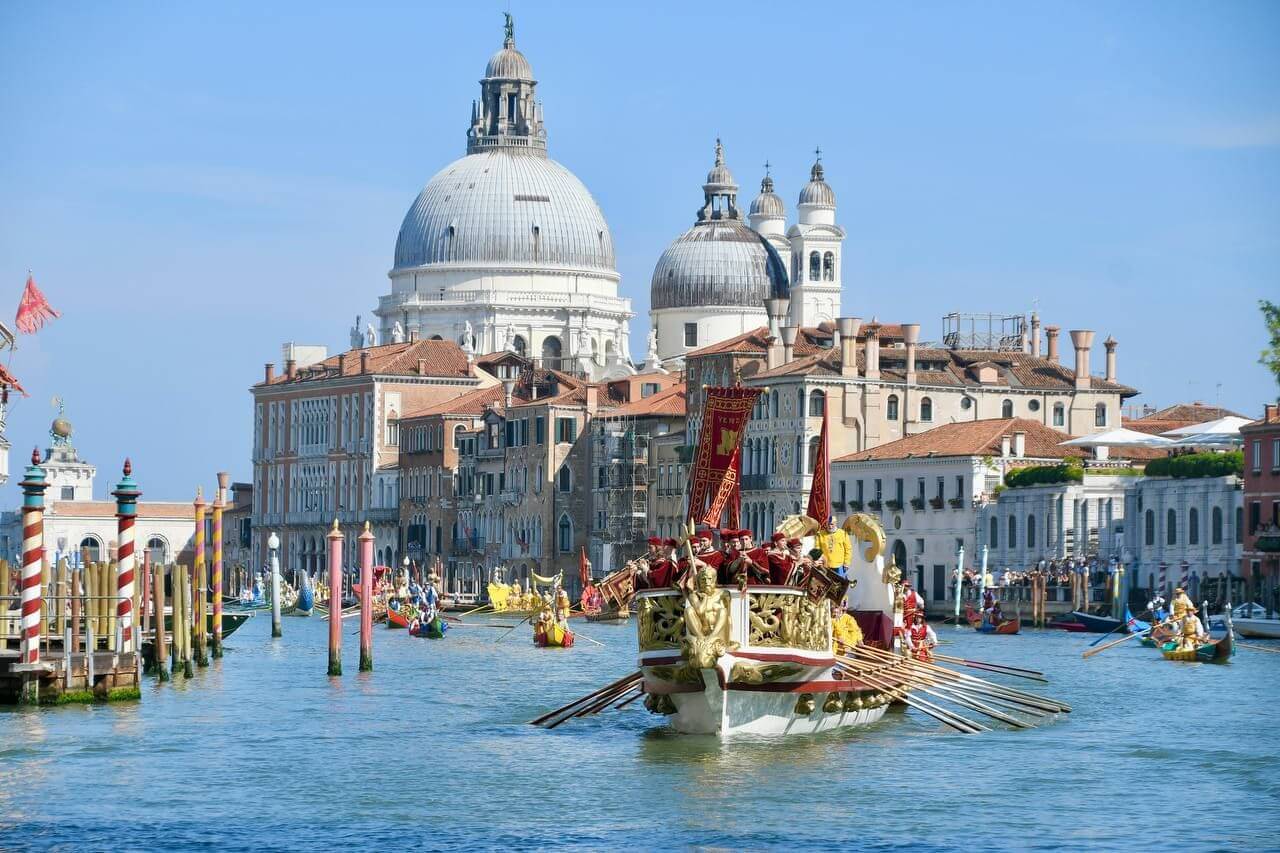
The Regata Storica, held annually on the first Sunday of September, celebrates Venice’s maritime heritage with a historical boat parade and competitive rowing races on the Grand Canal.
The event dates to the 13th century, making it one of Venice’s oldest continuous traditions.
The festival begins with a historical parade (Corteo Storico) of decorated boats carrying participants in 16th-century costumes representing the Doge, his wife (Dogaressa), and Venetian nobility.
The parade recreates the welcome given to Caterina Cornaro, Queen of Cyprus, when she abdicated in favor of Venice in 1489.
Following the parade, rowing races feature different boat types and age categories.
The main event, the Regata dei Campioni, pits Venice’s best rowers in gondolini (racing gondolas) against each other in a 7-kilometer course along the Grand Canal.
The competition is fierce, with winners receiving flags (bandiere) and substantial prize money.
Losers sometimes throw their oars in the canal in frustration.
The best viewing spots include the Rialto Bridge, Accademia Bridge, and anywhere along the Grand Canal’s fondamente (waterfront walkways).
Arrive early to secure a spot, as crowds gather hours before the races begin around 4 PM.
The event is free to watch from public areas.
Venice Biennale: International Art Exhibition
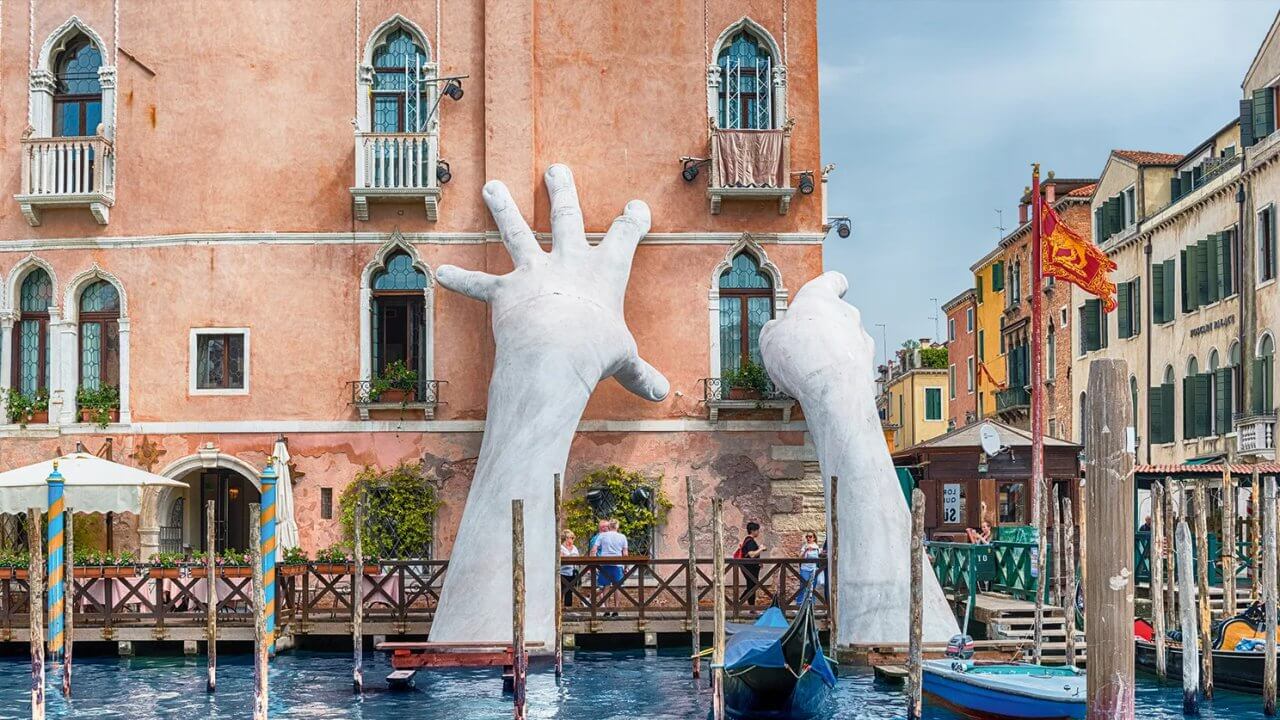
The Venice Biennale (La Biennale di Venezia) ranks as one of the world’s most prestigious contemporary art exhibitions, held every two years in odd-numbered years from May through November.
Founded in 1895, the Biennale showcases cutting-edge art from international artists and national pavilions representing over 80 countries.
The exhibition occupies two main venues: the Giardini, featuring permanent national pavilions built by various countries, and the Arsenale, the historic shipyard converted into vast exhibition spaces.
Additional exhibitions and installations appear throughout Venice in palaces, churches, and public spaces.
Each Biennale edition has a different curator who selects a theme and invites artists to create new works.
National pavilions independently curate their exhibitions, often featuring a single artist or small group.
The diversity of approaches, styles, and media creates a comprehensive survey of contemporary art practice.
The Biennale also includes separate exhibitions for architecture (even-numbered years), cinema (Venice Film Festival in August-September), dance, music, and theater.
The Art Biennale attracts over 600,000 visitors during its six-month run.
Biennale Arte 2026 tickets cost €30 for adults, €20 for seniors (65+), and €16 for students and visitors under 26.
Tickets grant access to both Giardini and Arsenale venues.
Allow a full day to see both venues thoroughly, or visit across multiple days.
The Biennale is closed Mondays.
Visit in May or June for smaller crowds, or in November for the final weeks when locals visit before closing.
The opening week in May attracts art world professionals, collectors, and celebrities, creating a festive atmosphere but also maximum crowds.
Festa del Redentore: Religious Celebration and Fireworks
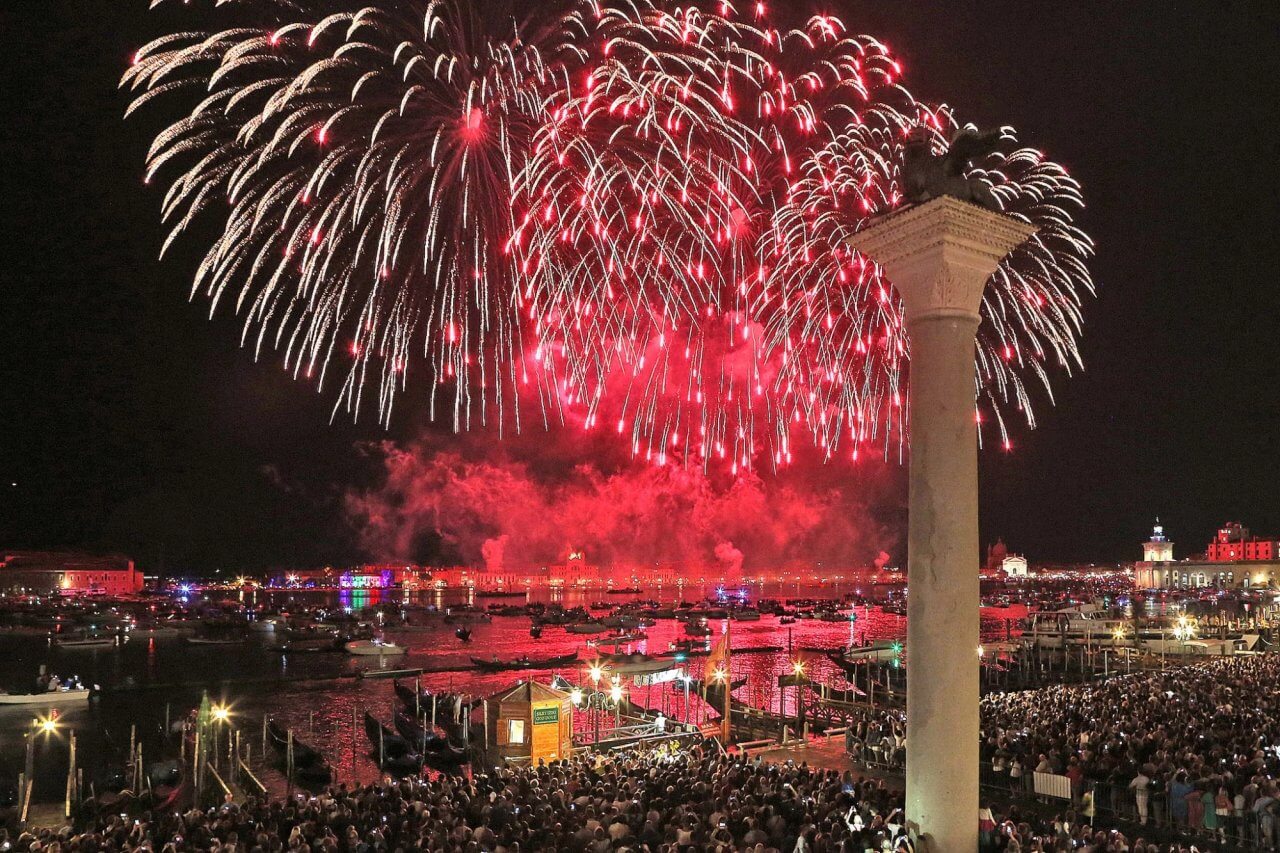
The Festa del Redentore, held the third weekend of July, commemorates the end of the 1576 plague that killed one-third of Venice’s population.
The Venetian Senate vowed to build a church dedicated to Christ the Redeemer (Il Redentore) if the plague ended, and architect Andrea Palladio designed the Church of the Redentore on Giudecca island.
The festival’s highlight is a temporary pontoon bridge built across the Giudecca Canal, allowing pilgrims to walk from Dorsoduro to the Redentore church.
The bridge, constructed from boats lashed together, remains in place from Friday evening through Sunday, recreating the original 1577 procession.
Saturday evening features a spectacular fireworks display over St. Mark’s Basin, visible from waterfront locations throughout Venice.
Venetians traditionally watch the fireworks from boats moored in the basin, enjoying picnic dinners of watermelon, roast duck, and wine.
Thousands of boats create a floating party that lasts until dawn.
The best viewing spots for fireworks include the Zattere waterfront in Dorsoduro, Riva degli Schiavoni near San Marco, and Giudecca island.
Arrive several hours early to secure a spot, as crowds gather from late afternoon.
Restaurants along the Zattere offer special Redentore menus with reserved seating, though prices are premium.
The festival creates a rare opportunity to see Venetians celebrating their city’s traditions, with locals far outnumbering tourists.
The atmosphere is festive and communal, with strangers sharing food and wine while waiting for the fireworks.
For families visiting Venice, we have a dedicated guide covering the best things to do in Venice with kids and family that includes child-friendly activities and attractions.
Romantic Venice Experiences for Couples
Venice’s reputation as one of the world’s most romantic cities is well-deserved, with countless opportunities for couples to create memorable moments amid stunning architecture, intimate restaurants, and scenic waterways.
Sunset Gondola Rides with Serenade
A sunset gondola ride represents the quintessential romantic Venice experience, combining the city’s iconic transportation with golden-hour light reflecting off canal waters.
Private gondola rides allow couples to explore quiet side canals away from crowds while a gondolier navigates the waterways.
Book sunset rides for the hour before sunset (check local sunset times, which vary from 4:30 PM in winter to 8:30 PM in summer).
The changing light creates magical atmospheres as shadows lengthen and building facades glow warm orange and pink.
Add a singing gondolier for traditional Venetian songs like “O Sole Mio” or “Santa Lucia.” The additional cost (€30-40) enhances the romantic atmosphere, though some find the singing touristy.
Discuss your preferences when booking.
Request routes through quieter canals in Dorsoduro, Cannaregio, or San Polo rather than the crowded Grand Canal.
Ask your gondolier to pass under the Bridge of Sighs, where legend says couples who kiss beneath the bridge at sunset will enjoy eternal love.
Bring a light blanket for cooler evenings and a bottle of Prosecco (ask your gondolier if this is permitted).
Some gondola services offer packages including wine and glasses.
Rooftop Dining with Panoramic Views
Several hotels and restaurants offer rooftop terraces with panoramic views across Venice’s rooftops, domes, and canals, creating romantic settings for special dinners or sunset drinks.
Terrazza Danieli, atop the Hotel Danieli near St. Mark’s Square, provides 360-degree views including the lagoon, San Giorgio Maggiore, and the Dolomite mountains on clear days.
The restaurant serves refined Venetian cuisine with impeccable service.
Expect to pay €150–200 per person for dinner with wine.
Reservations essential.
Skyline Rooftop Bar at Hilton Molino Stucky on Giudecca island offers spectacular views across the lagoon to Venice’s skyline.
The modern setting contrasts with historic Venice, and the bar serves cocktails and light meals at more accessible prices than luxury hotel restaurants.
Sunset aperitivo (6-8 PM) provides the best value and atmosphere.
Ristorante Terrazza at Hotel Metropole near St. Mark’s Square features a garden terrace with views toward San Giorgio Maggiore.
The intimate setting and excellent cuisine make it popular for proposals and anniversaries.
For budget-friendly options with views, visit the rooftop terrace at T Fondaco dei Tedeschi, a luxury shopping center near Rialto Bridge.
Free timed-entry passes (book online) grant access to the rooftop for 15-minute viewing sessions.
No food or drink is served, but the 360-degree views are spectacular.
Private Water Taxi Tours at Sunset
Private water taxi tours offer couples exclusive transportation and customized routes through Venice’s canals and lagoon.
Unlike shared vaporetti or gondolas with fixed routes, water taxis can access smaller canals and adjust itineraries based on your interests.
Book a one-hour sunset tour departing around golden hour.
Typical routes include the Grand Canal, quiet side canals in residential neighborhoods, and a loop around the lagoon for views of Venice’s skyline from the water.
Some tours include stops at Murano or San Giorgio Maggiore.
Water taxi sunset tours cost €200–300 for up to four passengers.
While expensive, the privacy and flexibility appeal to couples celebrating special occasions.
Some services provide Prosecco and snacks.
Combine a water taxi tour with dinner reservations at a restaurant accessible only by water, such as Venissa on Mazzorbo island or Locanda Cipriani on Torcello, for a complete romantic evening.
Secluded Bridges and Hidden Canals for Photography
Venice contains over 400 bridges crossing its 150 canals, with many tucked away in quiet neighborhoods perfect for romantic photos without tourist crowds.
Exploring these hidden spots creates intimate moments and unique photo opportunities.
Ponte de Chiodo in Cannaregio is one of Venice’s few remaining bridges without railings, offering an unusual perspective for photos.
The surrounding neighborhood sees little tourist traffic.
Ponte de la Cortesia in Dorsoduro, a small bridge near Campo San Barnaba, provides views of a quiet canal lined with colorful buildings.
The bridge appears in the opening scene of “Indiana Jones and the Last Crusade.”
Sotoportego del Casin dei Nobili in Dorsoduro, a covered passageway near the Accademia, creates a romantic tunnel effect with light filtering through at both ends.
The adjacent canal and bridge offer picturesque views.
For the best light and fewest crowds, explore these hidden spots early morning (before 9 AM) or late afternoon (after 5 PM).
Bring a camera or smartphone and take time to wander without a specific destination—getting lost in Venice’s maze of alleys and canals often leads to the most memorable discoveries.
If you’re looking for ways to experience Venice’s romance without breaking the bank, check out our guide to free things to do in Venice for budget-friendly romantic activities.
When To Visit Venice: Seasonal Considerations
Venice’s appeal varies significantly by season, with each period offering distinct advantages and challenges.
Understanding seasonal patterns helps you choose the best time for your interests and tolerance for crowds and weather.
The peak summer season (June-August) brings warm weather, long daylight hours, and maximum crowds.
Temperatures reach 28-30°C (82-86°F), with high humidity making it feel hotter.
Hotels charge premium rates, popular restaurants require advance reservations, and major attractions have long queues.
However, summer offers the most reliable weather for outdoor activities and the longest days for sightseeing.
Spring (April-May) and fall (September-October) provide ideal conditions for visiting Venice.
Temperatures range from 15-25°C (59-77°F), crowds are moderate, and hotel prices are reasonable.
Spring brings blooming gardens and fresh produce at markets.
Fall offers harvest season foods, wine festivals, and beautiful light for photography.
These shoulder seasons balance good weather with manageable tourist numbers.
Winter (November-March) sees the fewest tourists and lowest hotel prices, but also brings challenges.
Temperatures drop to 3-10°C (37-50°F), with frequent rain and occasional snow.
Acqua alta (high water) floods low-lying areas, particularly St. Mark’s Square, requiring raised walkways.
However, winter reveals authentic Venice with locals reclaiming their city, and Carnival in February provides spectacular festivities.
For detailed month-by-month weather information, crowd levels, and seasonal events to help plan your trip, read our comprehensive guide on the best time to visit Venice.
Day Trips from Venice
Venice’s location in northeastern Italy provides easy access to historic cities, scenic countryside, and coastal towns, all reachable within 1-3 hours by train or boat.
Day trips offer variety and contrast to Venice’s unique urban environment.
Verona, 120 kilometers west of Venice, can be reached in 70-90 minutes by train.
This UNESCO World Heritage city features Roman ruins (Arena di Verona amphitheater), medieval architecture, and Renaissance palaces.
Shakespeare set “Romeo and Juliet” in Verona, and tourists visit Juliet’s House with its famous balcony.
The city’s compact historic center can be explored in a day.
Padua (Padova), 40 kilometers west of Venice, is accessible in 25-30 minutes by train.
The city’s highlights include the Scrovegni Chapel with Giotto’s groundbreaking fresco cycle, one of Western art’s masterpieces, and the Basilica of Saint Anthony, an important pilgrimage site.
Padua’s university, founded in 1222, is one of Europe’s oldest, and Galileo taught here.
The Dolomites, a UNESCO World Heritage mountain range, lie 100-150 kilometers north of Venice.
Day trips to Cortina d’Ampezzo or the Tre Cime di Lavaredo offer dramatic alpine scenery, hiking trails, and mountain refuges serving hearty food.
Tours typically include transportation, as reaching the Dolomites by public transport requires multiple connections.
The Prosecco wine region between Conegliano and Valdobbiadene, 50-70 kilometers north of Venice, produces Italy’s most popular sparkling wine.
Day trips include visits to 2-3 wineries, tastings, lunch, and scenic drives through vineyard-covered hills.
The region received UNESCO World Heritage status in 2019.
For more ideas on exploring the region beyond Venice’s canals, including detailed information on these destinations and others, see our guide to the best day trips from Venice.
Frequently Asked Questions (FAQs)
How many days do you need to visit Venice?
Three to four days allows sufficient time to see Venice’s major attractions, explore different neighborhoods, visit at least one lagoon island, and experience the city’s dining culture without rushing.
Two days covers only the highlights, while five to seven days permits a more relaxed pace with day trips to nearby cities.
Is Venice expensive to visit?
Venice ranks among Italy’s most expensive cities for tourists. Accommodation, dining, and attractions cost 30-50% more than other Italian cities.
Budget €100-150 per person per day for mid-range travel including accommodation, meals, and attractions.
Luxury travelers should budget €250-400+ per day. Budget travelers can manage on €60-80 per day using hostels, self-catering, and free attractions.
What should I avoid in Venice?
Avoid eating at restaurants with photo menus near major tourist sites, as quality is poor and prices inflated. Don’t feed pigeons in St. Mark’s Square (it’s illegal and fined).
Avoid sitting on church steps or bridges (also fined). Don’t swim in canals (dangerous and illegal).
Skip overpriced gondola rides from St. Mark’s Square—walk to quieter areas for better rates. Avoid visiting only in peak summer when crowds and heat are overwhelming.
Can you drink tap water in Venice?
Yes, Venice’s tap water is safe to drink and comes from the same source as mainland Italy’s water supply.
The city has over 120 public drinking fountains (fontanelle) throughout the historic center where you can refill water bottles for free.
Drinking tap water instead of buying bottled water saves money and reduces plastic waste.
Do you need to book attractions in advance?
Yes, booking major attractions in advance is highly recommended, especially during peak season (April-October).
St. Mark’s Basilica, Doge’s Palace Secret Itineraries tours, and popular museums like the Accademia Gallery offer timed-entry tickets that let you skip long queues.
Book 1-2 weeks ahead for summer visits, or 2-3 days ahead in shoulder seasons. Some attractions sell out days in advance during peak periods.