Best Time To Visit Cancún: Month-by-Month Guide



When Is the Best Time To Go To Cancún? Seasonal Guide – The best time to visit Cancún is December through April, when dry weather, average highs of 82°F (28°C), and calm Caribbean seas create ideal conditions for beach holidays, water sports, and sightseeing.
- Cancún Climate Overview
- When Is the Best Time To Visit Cancún?
- Peak Season: December Through April
- When Is the Rainy Season in Cancún?
- When Is Hurricane Season in Cancún?
- What Is the Cheapest Time To Go To Cancún?
- Is November a Good Time To Go To Cancún?
- Sargassum Seaweed Season: Best Time To Visit Cancún Without Seaweed
- Seasonal Activities: Best Time of Year To Visit Cancún by Interest
- Special Events and Festival Calendar
- Family Travel Timing
- Crowd Levels and Shoulder Season Strategy
- Booking Strategy and Advance Planning
- Health and Comfort Planning
- Conclusion
Each season brings distinct trade-offs between weather quality, crowd levels, and travel costs.
Ready for an unforgettable escape to Cancún, Mexico? You’re in for a treat!
The best time to visit this tropical paradise is between December and April.
Imagine this: sunny skies, warm sands, and a gentle breeze that whispers adventure!
During these months, the weather is simply delightful, with average temperatures around 80°F. It’s the perfect time for beach lovers and thrill-seekers alike.
But, there’s more to uncover—think festivals, nightlife, and hidden gems…
Key Takeaways
Hide- Peak season: December–April (warm, dry, busiest, most expensive)
- Rainy season: May–October (humid, afternoon showers, lower prices)
- Hurricane season: June–November (peak risk: August–October)
- Cheapest months: September–October (up to 50% off hotels)
- Seaweed-free beaches: November–March (minimal sargassum)
- Caribbean Sea temperature: 78°F–84°F (25°C–29°C) year-round
Cancún Climate Overview
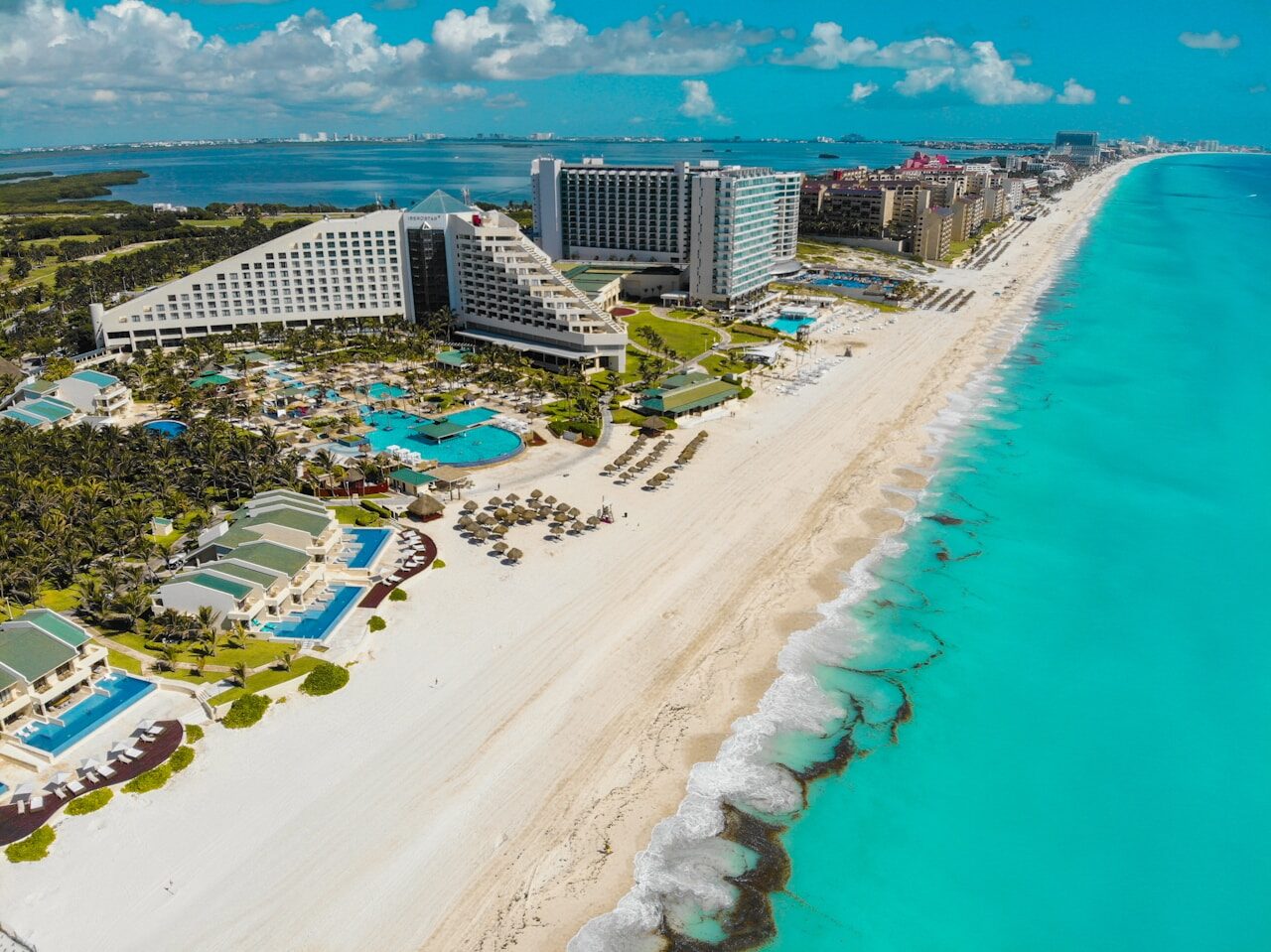
Cancún sits on Mexico’s Yucatán Peninsula and has a tropical climate with two distinct seasons: a dry season (December–April) and a wet season (May–October).
Average annual temperatures range from 75°F to 89°F (24°C–32°C), with humidity rising sharply during summer months.
The Caribbean Sea remains warm throughout the year, with water temperatures between 78°F and 84°F (25°C–29°C).
This makes swimming and snorkelling viable in every month, regardless of air temperature or rainfall.
Trade winds blow consistently from November through April, providing natural cooling even on the hottest days.
UV index levels are high year-round; SPF 30+ sunscreen is essential on every visit.
- Cancún Travel Guide: Essential Things to Know Before You Go
- 25 Best Things To Do In Cancún, Mexico ([year] Guide)
- 20 Best Day Trips From Cancún, Mexico ([year] Guide)
- Travel to Cancún on a Budget: The Complete Mexico Guide
- Travel to Cancun With Kids and Family, Mexico
- Cancún Transportations: Getting Around Cancún, Mexico
Monthly Temperature and Rainfall Reference Table
| Month | Avg High (°F) | Avg Low (°F) | Rainfall (inches) |
|---|---|---|---|
| January | 82 | 65 | 3.5 |
| February | 83 | 66 | 2.4 |
| March | 85 | 68 | 1.8 |
| April | 87 | 70 | 1.8 |
| May | 89 | 73 | 3.9 |
| June | 90 | 75 | 6.7 |
| July | 90 | 75 | 4.5 |
| August | 91 | 76 | 5.1 |
| September | 89 | 75 | 7.7 |
| October | 87 | 73 | 6.0 |
| November | 84 | 70 | 3.3 |
| December | 82 | 67 | 3.3 |
When Is the Best Time To Visit Cancún?
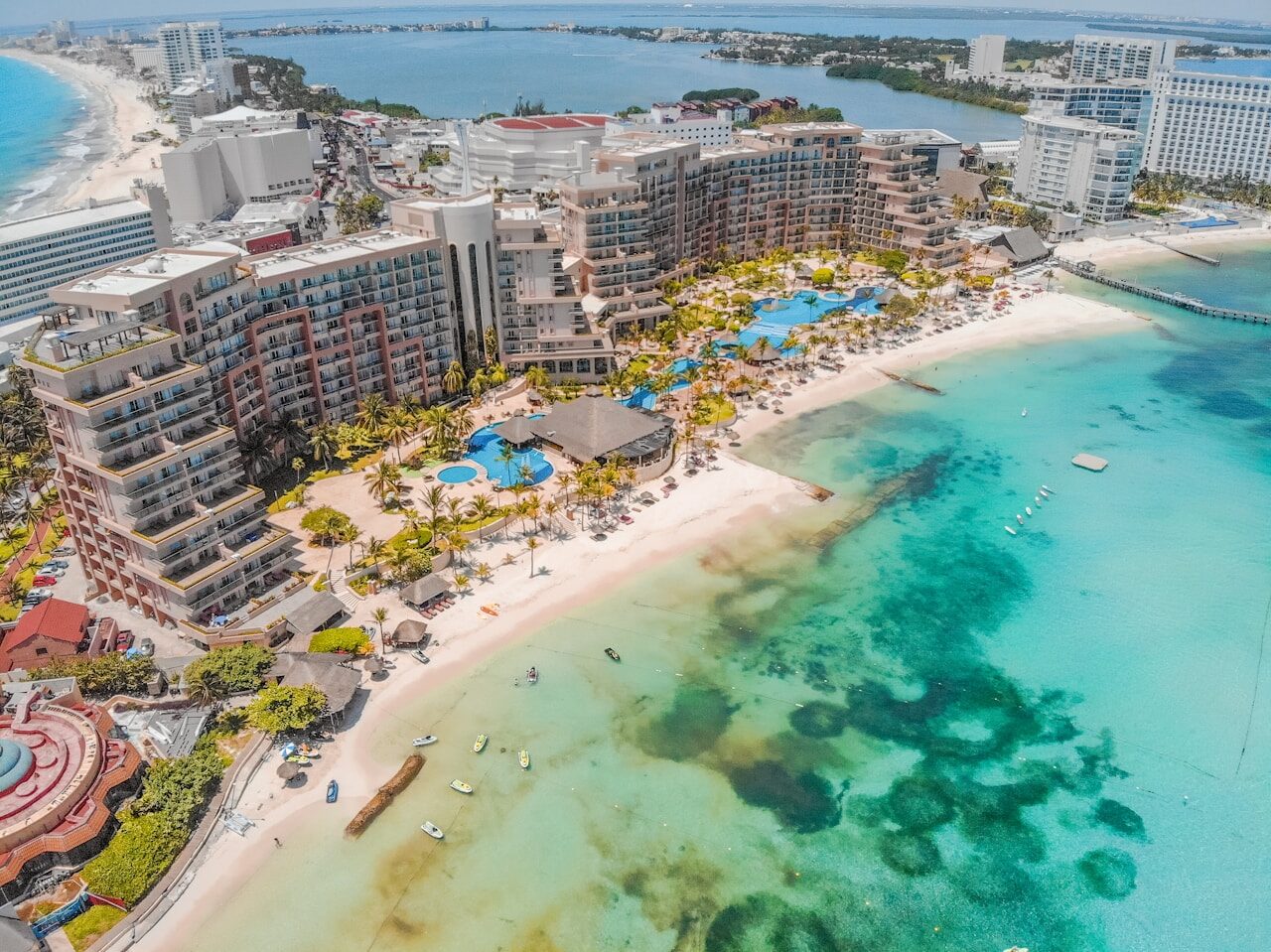
The best time to visit Cancún is December through April. Rainfall is minimal, temperatures average 80°F–87°F (27°C–31°C), and trade winds keep humidity comfortable.
This period suits beach holidays, archaeological site visits, water sports, and family travel.
Travellers prioritising budget over weather should target September and October, when hotel rates drop by up to 50% and flights are significantly cheaper.
Those seeking a middle ground — decent weather, lower prices, and manageable crowds — will find November and early May to be the strongest shoulder-season options.
For families planning around school schedules, our guide to travelling to Cancún with kids and family covers resort programming and child-friendly timing in detail.
Peak Season: December Through April
December through April is Cancún’s peak tourist season, delivering the most reliable weather of the year.
Expect sunny skies, average highs between 80°F and 87°F (27°C–31°C), minimal rainfall, and calm sea conditions ideal for water sports.
Hotel occupancy is highest during this window, particularly over Christmas, New Year, and the US spring break period (mid-March to mid-April).
Booking accommodation 3–6 months in advance is strongly recommended. Rates during peak weeks can be 40–80% higher than off-season equivalents.
December and January: Holiday Season and Winter Escape
December and January attract travellers escaping cold weather in North America and Europe. Average highs sit around 82°F (28°C), with low humidity and minimal rain.
Resorts operate at full capacity, offering premium amenities, holiday-themed events, and gourmet dining.
Christmas and New Year’s Eve bring street celebrations, fireworks, and live music across the Hotel Zone.
Booking well in advance is essential — popular resorts sell out months ahead for the last two weeks of December.
February: Romance Season and Valentine’s Travel
February is one of the most comfortable months in Cancún, with average highs of 83°F (28°C), low rainfall of around 2.4 inches, and consistent trade winds.
The Valentine’s Day period drives demand for couples’ packages at beachfront resorts.
Sea conditions in February are typically calm, making it an excellent month for snorkelling, sailing, and sunset cruises.
Crowds are slightly lower than December–January, offering a better balance of quality and availability.
March and April: Spring Break and Pre-Rainy Season
March is widely considered the single best month to visit Cancún for weather.
Average highs reach 85°F (29°C), rainfall averages just 1.8 inches, and sea visibility is excellent for diving and snorkelling.
The US college spring break period (typically mid-March to mid-April) brings a significant surge in younger travellers.
Nightlife is at its most energetic, but beaches and attractions become noticeably crowded.
Families and travellers seeking a quieter experience should target early March or consider April instead.
April shares March’s low rainfall but temperatures begin climbing toward 87°F (31°C). It marks the final comfortable month before humidity rises sharply in May.
When Is the Rainy Season in Cancún?

The rainy season in Cancún runs from May through October. Rainfall peaks in September, averaging 7.7 inches for the month.
Showers typically arrive as short, intense afternoon bursts lasting 30–60 minutes, leaving mornings largely clear for outdoor activities.
Despite the rain, temperatures remain warm — averaging 89°F–91°F (32°C–33°C) in peak summer — and the Caribbean Sea stays inviting.
Travellers who plan mornings outdoors and afternoons indoors can still enjoy a full itinerary during these months.
May and June: Shoulder Season Entry and Rising Humidity
May marks the transition from dry to wet season. Humidity rises noticeably, and afternoon showers become more frequent.
However, hotel rates begin to fall, crowds thin considerably, and the sea remains clear for diving.
June brings the official start of hurricane season alongside increasing rainfall.
Sargassum seaweed accumulation on beaches also begins to intensify from May onward, peaking between June and August.
July and August: Summer Heat and Storm Risk
July and August are the hottest months, with average highs reaching 90°F–91°F (32°C–33°C). Humidity is high, and afternoon thunderstorms are common.
Hurricane risk increases from August onward.
Despite the heat, these months attract families travelling during school summer holidays.
Resorts maintain full programming, and cenote swimming becomes particularly appealing as an alternative to seaweed-affected beaches.
Lightweight, breathable clothing and high-SPF sunscreen are essential.
September and October: Cheapest Months and Peak Storm Risk
September and October represent the cheapest time to visit Cancún, with hotel discounts of up to 50% and significantly reduced flight fares.
However, these months carry the highest hurricane risk of the year, and September averages 7.7 inches of rainfall.
Travellers visiting in September or October should purchase comprehensive travel insurance that covers hurricane-related cancellations and trip interruptions.
Monitoring forecasts through official sources such as the US National Hurricane Center is strongly advised.
When Is Hurricane Season in Cancún?

Hurricane season in Cancún runs officially from June 1 through November 30, with peak risk concentrated between August and October.
Category 3–5 storms capable of causing significant disruption occur on average once every few years in the broader Yucatán region.
Most years, Cancún experiences tropical storms or indirect hurricane effects rather than direct landfalls.
However, the risk is real and should factor into travel planning for any trip between August and October.
Hurricane Preparedness and Travel Insurance
All major resorts in Cancún maintain detailed emergency protocols, including designated shelter areas, emergency supply kits, and real-time guest communication via app notifications or SMS. Guests should familiarise themselves with their hotel’s evacuation procedures on arrival.
Travel insurance for hurricane-season visits should explicitly cover: weather-related trip cancellation, trip interruption, medical evacuation, and trip delay expenses.
Policies purchased after a named storm is announced typically exclude that storm, so buy coverage at the time of booking.
Real-time storm tracking is available through apps such as Weather Underground and the official National Hurricane Center website (nhc.noaa.gov). Alerts are typically issued 48–72 hours before a storm makes landfall, providing time to adjust plans.
What Is the Cheapest Time To Go To Cancún?

The cheapest time to visit Cancún is September and October, when hotel rates drop by up to 50% and flights are at their annual low.
These months fall within both the rainy season and the peak of hurricane season, which accounts for the reduced demand.
May and early June offer a secondary budget window: prices are lower than peak season, weather is still manageable, and hurricane risk remains relatively low compared to August–October.
Hotel and Flight Discount Breakdown
| Month | Typical Hotel Discount | Flight Cost Trend |
|---|---|---|
| May | 15–25% off peak rates | Moderate savings |
| June | 20–30% off peak rates | Moderate savings |
| September | Up to 50% off peak rates | Lowest of year |
| October | 40% off peak rates | Low |
| November | 20–30% off peak rates | Moderate savings |
For the cheapest flights to Cancún, booking 8–12 weeks in advance consistently yields better fares than last-minute purchases.
Midweek departures (Tuesday–Thursday) typically cost 10–20% less than Friday or Sunday flights.
Fare-tracking tools such as Google Flights price alerts help identify optimal booking windows.
Cancún Off-Season: What To Expect
The off-season (roughly June–October) brings genuine trade-offs alongside the savings. Some smaller restaurants and tour operators reduce hours or close temporarily.
Beach conditions are affected by sargassum seaweed from May through October. Hurricane risk requires flexible itinerary planning.
On the positive side, popular attractions such as Chichén Itzá and Tulum are significantly less crowded. Cenotes are quieter and more enjoyable.
Authentic local experiences — markets, neighbourhood restaurants, cultural events — are easier to access without tourist-season pressure.
For ideas on free and low-cost activities that work well in any season, see our guide to free things to do in Cancún.
Is November a Good Time To Go To Cancún?
Yes — November is one of the best-value months to visit Cancún. Hurricane season officially ends on November 30, but storm risk drops sharply after mid-October.
Temperatures average 82°F–84°F (28°C–29°C), rainfall decreases to around 3.3 inches, and hotel rates are 20–30% below peak-season prices.
November also brings the Día de los Muertos (Day of the Dead) celebrations on November 1–2, one of Mexico’s most visually striking cultural events.
Colourful altars, candlelit processions, traditional food, and street performances make this an exceptional time for culturally motivated travellers.
Beach conditions improve noticeably in November as sargassum levels decline. Water clarity increases, making snorkelling and diving more rewarding.
Daily sunshine averages around 8 hours, and trade winds return, keeping humidity comfortable.
Sargassum Seaweed Season: Best Time To Visit Cancún Without Seaweed
Sargassum seaweed accumulation is a significant factor in beach quality planning. Sargassum peaks along Cancún’s Hotel Zone beaches between May and August, with some accumulation possible through October. The cleanest beach conditions occur from November through March.
Sargassum originates in the Sargasso Sea and the central Atlantic, driven toward the Caribbean by ocean currents. Its arrival is influenced by water temperature and wind patterns, making exact timing variable year to year.
Sargassum Calendar and Beach Condition Guide
| Month | Sargassum Level | Beach Condition |
|---|---|---|
| January | Minimal | Excellent |
| February | None | Excellent |
| March | None | Excellent |
| April | Slight | Good |
| May | Moderate | Fair |
| June–August | Heavy | Poor to Fair |
| September–October | Moderate | Fair |
| November | Low | Good |
| December | Minimal | Excellent |
Real-time sargassum conditions are tracked by the University of South Florida’s Optical Oceanography Lab, which publishes weekly satellite-based sargassum forecasts.
Several Cancún-specific apps and local tourism boards also provide daily beach condition updates.
Seaweed-Free Alternatives and Backup Options
When sargassum affects Hotel Zone beaches, several alternatives offer cleaner conditions. Isla Mujeres, a short ferry ride from Cancún, frequently experiences lower sargassum accumulation due to its position and local currents.
The western-facing beaches of the island are particularly sheltered.
Cenotes provide an excellent freshwater alternative during heavy sargassum periods.
Popular options near Cancún include Cenote Dos Ojos, Gran Cenote, Cenote Azul, and Cenote Ik Kil — all offering crystal-clear water at a consistent temperature of approximately 77°F (25°C).
Most major resorts also maintain indoor pools and spa facilities as backup options during peak seaweed season.
For transport options to reach cenotes and alternative beaches, see our guide to getting around Cancún.
Seasonal Activities: Best Time of Year To Visit Cancún by Interest
The best time to visit Cancún depends significantly on which activities you are prioritising. Water sports, wildlife encounters, archaeological exploration, and nightlife each have distinct optimal windows.
Beach and Water Sports Season
December through April offers the best conditions for beach holidays and water sports.
Sea visibility reaches up to 100 feet (30 metres) during the dry season, ideal for scuba diving and snorkelling. Water temperatures of 78°F–82°F (25°C–28°C) are comfortable without a wetsuit.
Windsurfing, kitesurfing, parasailing, and jet-skiing operate year-round but are most reliable from November through April when trade winds are consistent and sea conditions are calmer.
Wave heights increase slightly during summer storm season, which can affect some water sport operations.
Archaeological Site Exploration
The most comfortable months for visiting Mayan ruins such as Chichén Itzá, Tulum, and Cobá are November through March, when temperatures average 75°F–82°F (24°C–28°C) and humidity is low.
Walking extensive archaeological sites in July or August, when temperatures exceed 90°F (32°C) with high humidity, is significantly more demanding.
The Spring Equinox at Chichén Itzá (March 20–21) draws large crowds to witness the shadow-serpent phenomenon on the El Castillo pyramid. Arriving before 8:00 AM is essential to secure a good viewing position and avoid the peak midday heat.
Wildlife and Marine Encounters
Whale shark swimming: June through September, with prime locations at Isla Holbox and Isla Mujeres.
Whale sharks are filter feeders and pose no danger to swimmers. Tours operate from licensed operators; group sizes are regulated to protect the animals.
Sea turtle nesting: June through November. Beaches near Cancún serve as nesting sites for loggerhead and green sea turtles.
Guided hatchling release programmes allow visitors to participate in conservation efforts.
Sportfishing: March through June is prime season for marlin, sailfish, and mahi-mahi.
The International Fishing Tournament typically takes place in this window, attracting competitive anglers from across the Americas.
Scuba diving visibility: Optimal from November through April, when rainfall is low and water clarity is at its peak. Visibility can reach 100 feet (30 metres) during these months.
Cenote Swimming
Cenotes are accessible and enjoyable year-round, but the most comfortable visiting conditions occur from November through April.
Water temperature inside cenotes remains a consistent 77°F (25°C) regardless of season.
Early morning visits (before 10:00 AM) offer the best light for photography and the fewest crowds.
Special Events and Festival Calendar
Cancún’s event calendar adds cultural depth to any visit. Timing a trip around a major festival can significantly enhance the experience.
Day of the Dead (Día de los Muertos)
Day of the Dead is celebrated on November 1–2 across Mexico, including Cancún.
Families construct elaborate altars (ofrendas) decorated with marigolds, candles, photographs, and traditional foods.
Street parades feature performers with calavera (skull) face paint, live music, and traditional dance.
Visitors can participate in cultural workshops including sugar skull decorating and pan de muerto (traditional sweet bread) tasting.
This celebration is one of the most authentic cultural experiences available to tourists in the Cancún region.
Carnival Season
Cancún’s Carnival typically takes place in February, in the days leading up to Ash Wednesday. Street parties, costumed parades, live music, and traditional food stalls animate the city centre and Hotel Zone. The event is family-friendly and free to attend.
Spring Equinox at Chichén Itzá
On March 20 or 21, the alignment of the El Castillo pyramid at Chichén Itzá creates a shadow effect resembling a serpent descending the staircase.
This astronomical phenomenon draws thousands of visitors. The site is located approximately 2.5 hours from Cancún by road. Advance ticket purchase is strongly recommended.
Food Festival Season
Cancún and the broader Riviera Maya host several culinary festivals throughout the year, typically in November and February.
Events showcase regional dishes including cochinita pibil (slow-roasted pork), fresh seafood, artisanal mezcal, and traditional Yucatecan cuisine.
Cooking workshops and chef demonstrations are common features.
Family Travel Timing
The best time to visit Cancún with children is December through April for weather reliability, or July through August for families constrained by school summer holidays.
Both windows offer full resort programming, kids’ clubs, and family-friendly beach conditions.
For families travelling in summer, planning beach time in the mornings (before noon) avoids the hottest part of the day and reduces sun exposure risk. Afternoon activities can shift to cenotes, indoor aquariums, or resort pools during peak heat.
Sargassum seaweed can be a significant issue for families with young children during May–August.
Checking real-time beach conditions before each beach day is advisable during this period.
Our detailed guide to travelling to Cancún with kids and family covers resort selection, child-safe activities, and practical planning tips.
Spring break (mid-March to mid-April) brings a party atmosphere to the Hotel Zone that some families prefer to avoid. Early March or late April offer similar weather with a calmer environment.
Crowd Levels and Shoulder Season Strategy
Cancún’s crowd levels follow a predictable pattern tied to school holidays, weather, and international travel demand. Understanding this pattern allows travellers to optimise their experience.
Peak crowds: Mid-December through early January, US spring break (mid-March to mid-April), and Mexican national holidays including Semana Santa (Easter Week).
Shoulder season: November, early December, and May offer the best balance of good weather, manageable crowds, and moderate pricing. Hotel rates are typically 20–30% below peak-season levels during these windows.
Low season: June through October brings the fewest tourists but also the highest weather risk.
Beaches are quieter, popular attractions are less crowded, and authentic local experiences are more accessible.
For Semana Santa (Easter Week), Cancún fills with both international tourists and Mexican domestic travellers.
Visiting Chichén Itzá or Tulum before 8:00 AM is the most effective strategy for avoiding peak crowds at archaeological sites during this period.
Booking Strategy and Advance Planning
Booking timelines vary significantly by season. For peak-season travel (December–April), securing flights and accommodation 4–6 months in advance is recommended, particularly for the Christmas–New Year period and spring break weeks.
For shoulder-season travel (November, May), 6–10 weeks in advance typically secures good availability and reasonable rates.
Off-season travel (June–October) allows more flexibility, though last-minute bookings carry weather risk and may find limited availability at preferred properties.
Flight Booking Strategy
Midweek flights (Tuesday–Thursday departures) consistently offer lower fares than weekend travel.
Setting price alerts on Google Flights or Hopper for your target travel dates allows passive monitoring of fare movements.
Fares to Cancún from major US gateways (Miami, Houston, New York, Los Angeles) typically bottom out 8–12 weeks before departure for off-peak travel.
All-inclusive packages that bundle flights, accommodation, and meals often represent better value than booking components separately, particularly for peak-season travel. Comparing package prices against individual component costs before booking is worthwhile.
Cancellation Policy and Travel Insurance
For any travel between June and November, travel insurance with explicit hurricane coverage is essential. Policies should cover: trip cancellation due to named storms, trip interruption, medical evacuation, and trip delay. Purchase insurance at the time of booking — coverage for a named storm is typically excluded if the storm has already been announced when the policy is purchased.
Hotel cancellation policies vary widely. Flexible-rate rooms allow cancellation up to 24–48 hours before arrival; advance-purchase rates offer lower prices but no refund. During hurricane season, booking flexible-rate rooms is worth the modest price premium.
For broader Mexico travel planning context, see our guide to the best places to visit in Mexico and best things to do in Mexico.
Health and Comfort Planning
Cancún’s tropical climate requires specific health and comfort preparations regardless of travel season.
Sun protection: UV index levels in Cancún are high to very high year-round. SPF 30+ broad-spectrum sunscreen, wide-brimmed hats, and UV-blocking sunglasses are essential. Reapply sunscreen every two hours and after swimming.
Hydration: Drink at least 2 litres of water daily. Heat exhaustion risk increases significantly during July–September when temperatures exceed 90°F (32°C) combined with high humidity. Warning signs include dizziness, headache, and nausea.
Mosquitoes: Mosquito activity peaks during the rainy season (June–October). DEET-based or picaridin-based repellents are most effective. Loose, long-sleeved clothing provides additional protection during evening hours.
Medical facilities: Cancún’s Hotel Zone has several private hospitals and clinics with English-speaking staff and 24-hour emergency services. Travel insurance with medical coverage is strongly recommended for all visitors.
Conclusion
The best time to visit Cancún is December through April for the most reliable weather, clearest seas, and widest range of activities.
November stands out as the top shoulder-season choice, combining post-hurricane stability, low sargassum levels, cultural events, and prices 20–30% below peak rates.
September and October offer the deepest discounts for budget-focused travellers willing to accept weather risk.
Whatever month you choose, Cancún’s warm Caribbean waters, archaeological heritage, and diverse activity options ensure a rewarding trip. Plan your timing around your priorities — weather, budget, crowds, or specific activities — and book accommodation and flights as early as your schedule allows.
For inspiration on what to do once you arrive, explore our guides to free things to do in Cancún and getting around Cancún.
Frequently Asked Questions (FAQs)
What Is the Time Zone in Cancún, Mexico?
Cancún operates on Eastern Standard Time (EST), UTC−5, year-round. Unlike most of Mexico, Cancún and the state of Quintana Roo do not observe Daylight Saving Time.
This means Cancún aligns with US Eastern Time in winter but is one hour behind US Eastern Daylight Time in summer.
Do I Need a Visa To Visit Cancún as a Tourist?
Citizens of the United States, Canada, the United Kingdom, the European Union, and Australia do not require a visa for tourist visits to Mexico of up to 180 days.
A valid passport is required for all air travelers.
As of 2025, the physical Forma Migratoria Múltiple (FMM) paper tourist card is no longer issued to travelers arriving by air in Cancún — entry is now recorded digitally when your passport is scanned at immigration.
Travelers entering by land or sea may still receive a physical FMM document.
Always confirm the latest entry requirements directly with the Mexican Embassy or consulate before departure, as requirements are subject to change.
How Much Does a Trip to Cancún Cost Per Day?
Daily travel costs in Cancún vary widely by travel style. Budget travellers staying in hostels or budget hotels and eating at local restaurants can expect to spend approximately $50–$80 USD per day.
Mid-range travellers at three-star hotels with some dining out typically spend $120–$200 USD per day.
All-inclusive resort packages at four- to five-star properties range from $200–$500+ USD per person per day, covering accommodation, meals, drinks, and most activities.
Off-season (September–October) rates can reduce these figures by 30–50%.