9 Best Day Trips From Madrid in 2026: Trains, Tickets, and What’s Worth It
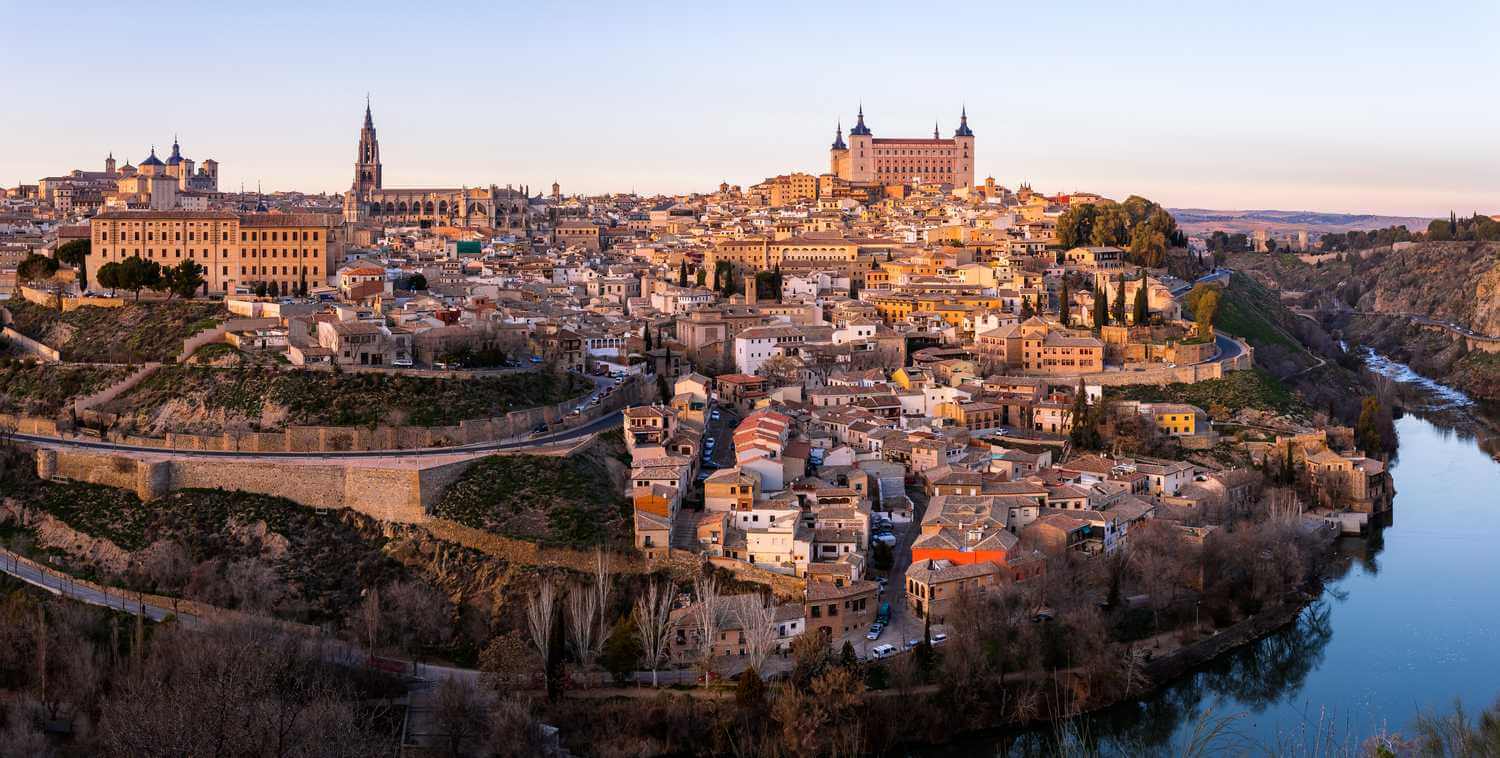



9 Best Day Trips From Madrid By Train (2026): History, Wine, and Medieval Magic – Madrid is one of those cities that spoils you rotten with world-class museums, legendary tapas bars, and a nightlife scene that runs on café con leche and stubbornness.
- Why Day Trips From Madrid Are Worth Every Step
- Historic Toledo: The Ultimate Classic Day Trip From Madrid
- Segovia: Roman Engineering and Fairytale Castles
- Ávila and Salamanca: Medieval Walls and Scholarly Splendor
- El Escorial and the Sierra de Guadarrama Mountains
- Wine, Windmills, and Small-Town Gems: Chinchón and Aranjuez
- Practical Tips for Planning Your Madrid Day Trips
But here’s the thing: step outside the capital for just an hour or two, and Spain gets even better.
The region surrounding Madrid is packed with UNESCO World Heritage Sites, fairytale castles, Roman engineering marvels, and medieval walled cities that feel frozen in amber.
Whether you’re hopping on a high-speed RENFE train or joining a guided tour, the best day trips from Madrid are all waiting just beyond the city’s edge.
Spain’s efficient rail network makes these escapes ridiculously easy, especially for travelers who want maximum culture with minimum hassle.
From Atocha and Chamartín stations, you can be standing beneath Toledo’s Gothic Cathedral or marveling at Segovia’s Roman aqueduct before most tourists have finished their hotel breakfast.
Pack good walking shoes, grab a train ticket, and let’s get into it.
Key Takeaways
Hide- Toledo offers a 30-minute train ride to experience a UNESCO site with Gothic Cathedral and rich Jewish, Muslim, and Christian heritage.
- Segovia features a first-century Roman aqueduct, fairy-tale Alcázar castle, and traditional cuisine like roast suckling pig.
- El Escorial Monastery-Palace provides royal history and hiking trails in Sierra de Guadarrama within one hour from Madrid.
- Ávila's impressive stone walls and Gothic churches make it perfect for medieval architecture enthusiasts and panoramic views.
- High-speed trains connect Madrid to most major attractions in under an hour, with round-trip tickets typically costing €20-€30.
Why Day Trips From Madrid Are Worth Every Step

Madrid sits at the geographic heart of Spain, which means it’s the perfect launchpad for exploring the country’s most impressive historic regions.
Within a 90-minute radius, travelers can reach cities that shaped the identity of an entire empire, countryside vineyards producing some of Spain’s finest wines, and mountain ranges offering serious hiking with zero city noise.
The beauty of day trips from Madrid lies in the contrast.
You wake up in a buzzing European capital, then spend the afternoon wandering cobblestone alleys through a medieval city that’s been standing since the Romans were still building roads.
By evening, you’re back in Madrid for dinner and a glass of Rioja.
Hard to complain about that itinerary.
Reserve Your Tours & Activities
Popular attractions sell out fast—book ahead for guaranteed entry. Compare skip-the-line tickets, guided tours, and unique experiences.
 Trip.com
 Booking.com
 Expedia
 Traveloka
 GetYourGuide
 Klook
KlookTrain vs. Guided Tour: Which Is Better?
Madrid’s rail network is genuinely excellent, and for most popular destinations, the high-speed AVE train is the fastest and most affordable way to travel.
Trains depart frequently from Atocha or Chamartín stations, seats are comfortable, and you arrive right in the heart of each city without worrying about parking or navigation.
That said, guided tours from Madrid shine in specific scenarios: when you want skip-the-line access at major monuments, when you’re combining two or three destinations in one day, or when reaching smaller towns like Chinchón that don’t have direct rail connections.
Platforms like GetYourGuide, Klook, and Viator offer competitive prices, and booking at least 48 hours ahead often unlocks early-bird discounts of 10 to 15%.
| Factor | Train (Self-Guided) | Guided Tour |
|---|---|---|
| Cost | Lower (from ~€11) | Higher (from ~€35) |
| Flexibility | High | Low |
| Historical context | Self-researched | Expert-provided |
| Ideal for | Independent travelers | First-timers, multi-stop days |
| Skip-the-line access | No | Often yes |
Historic Toledo: The Ultimate Classic Day Trip From Madrid
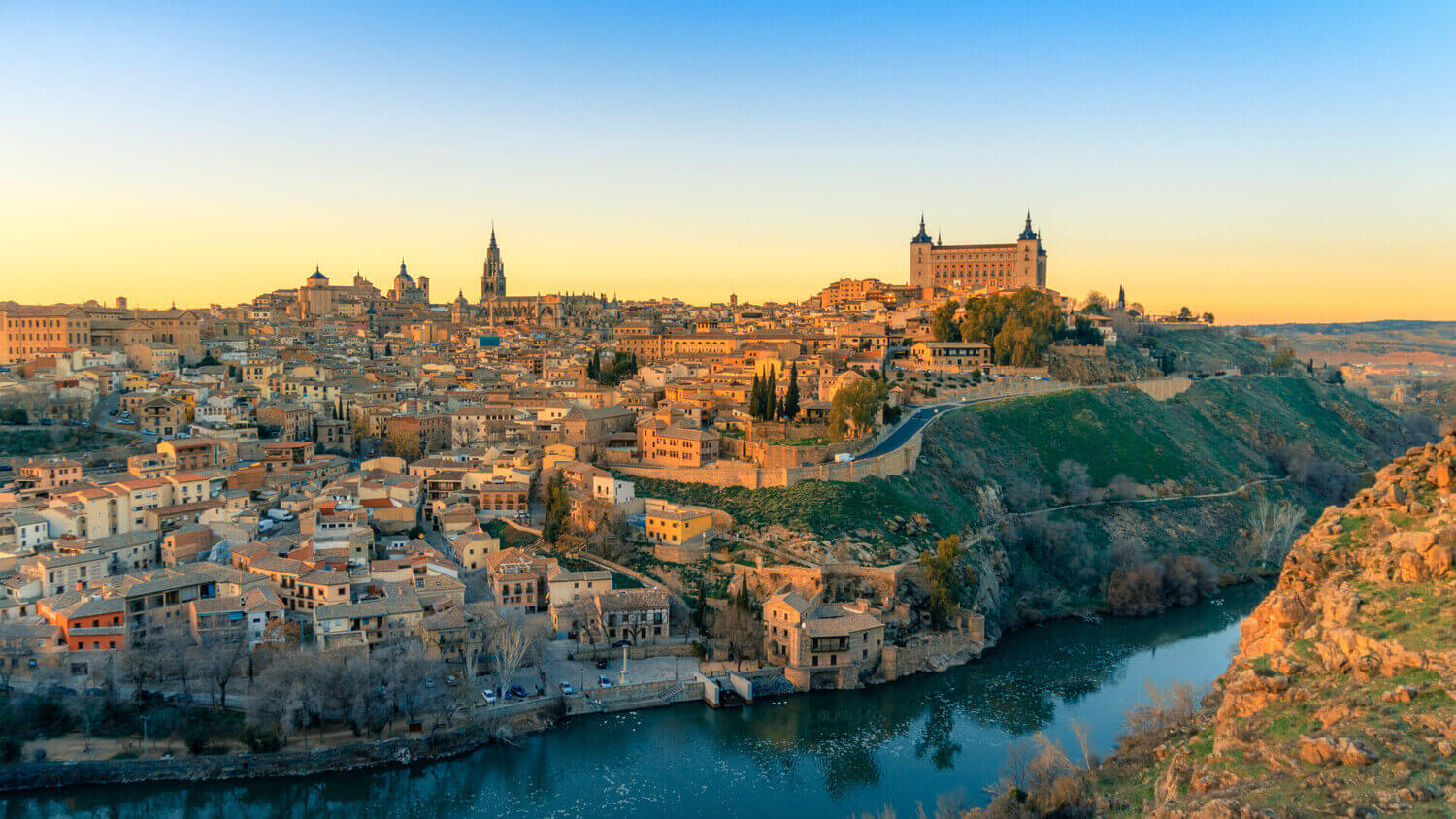
Toledo is the one destination that appears on virtually every “day trips from Madrid” list, and for genuinely good reason.
Perched dramatically on a hill above the winding Tagus River, this compact medieval city is a three-religion time capsule where Christian cathedrals, Jewish synagogues, and Moorish architecture stand within walking distance of each other.
The entire Old Town holds UNESCO World Heritage Site status, and spending a full day here still leaves you feeling like you only scratched the surface.
The city rewards slow walkers.
Wander into a side street off the tourist trail and you’ll stumble into damascene workshops where artisans still hammer gold and silver wire into intricate patterns, a craft Toledo has been famous for since the Middle Ages.
Plan to spend at least six hours here if you want to do it justice.
Historic Cities Tour From Madrid
Book a guided day trip from Madrid and explore the historic cities of Toledo, experience the wonders!
Getting From Madrid to Toledo By Train
The fastest and most popular way to reach Toledo is the RENFE AVE high-speed train from Madrid Atocha station, covering the journey in about 34 minutes.
Trains run approximately every hour from early morning until evening, giving you solid flexibility to plan your day.
Current Madrid to Toledo train prices (2026):
- One-way ticket: from €13.90 (advance booking)
- Average ticket price: around €16
- Round trip budget: approximately €28 to €32
Book via the RENFE website or apps like Trainline and Omio for the best prices, especially if you’re traveling on weekends or during school holidays when seats fill up fast.
Alternative Ways to Get From Madrid to Toledo
While the train is the obvious winner for speed, travelers on a tight budget or with flexible schedules have other solid options.
- AVE high-speed train: ~34 minutes from Atocha, from €13.90 one-way
- Intercity bus (ALSA): approximately 1 hour, often cheaper at €6-€8 one-way
- Rental car: about 45 minutes via A-42, useful if you want to explore surrounding villages
- Private transfer: door-to-door convenience, best for groups of 3 or more
- Guided day tour from Madrid: includes transport, guide, and sometimes cathedral entry
Must-See Highlights in Toledo’s Old Town
Toledo’s UNESCO-listed Old Town is compact enough to explore mostly on foot, though the hilly terrain will remind your legs of that fact.
Start at the Plaza de Zocodover, the city’s main square, and work outward from there.
The big ticket item is, predictably, the Toledo Cathedral (Catedral Primada), one of Spain’s finest Gothic churches and home to an astonishing collection of El Greco paintings. Admission in 2026 costs €12 for adults, with a reduced rate of €8 and €6 for children.
It’s worth every cent.
Book skip-the-line tickets online to avoid waiting in queues that stretch across the plaza on weekends.
Key Sights to Prioritize in Toledo
With a full day in Toledo, the following itinerary covers the essential highlights without feeling rushed.
- Toledo Cathedral (Catedral Primada): Gothic masterpiece with El Greco’s The Disrobing of Christ inside; open Mon-Sat 10:00-18:00, Sun 14:00-18:00
- Alcázar of Toledo: Fortress-turned-military museum with sweeping city views from the battlements
- Synagogue of Santa María la Blanca: The oldest surviving synagogue building in Europe, featuring stunning Mudéjar arches
- San Juan de los Reyes Monastery: Gorgeous Gothic-Isabelline cloisters with chains of freed Christian captives hanging from the walls (it’s more moving than it sounds)
- Puente de Alcántara: Ancient Roman bridge over the Tagus, ideal for golden hour photos
- Damascene workshops: Watch artisans craft Toledo’s famous gold-inlaid metalwork, a craft dating back over 1,000 years
Half-Day vs. Full Day in Toledo
How long you should spend in Toledo depends on your pace and interests.
A half-day (4 to 5 hours) comfortably covers the Cathedral and a walk through the Jewish Quarter.
A full day (7 to 8 hours) lets you explore the Alcázar, San Juan de los Reyes, and the lesser-known backstreets where the real Toledo lives.
History lovers and photographers should absolutely go for the full day.
Segovia: Roman Engineering and Fairytale Castles
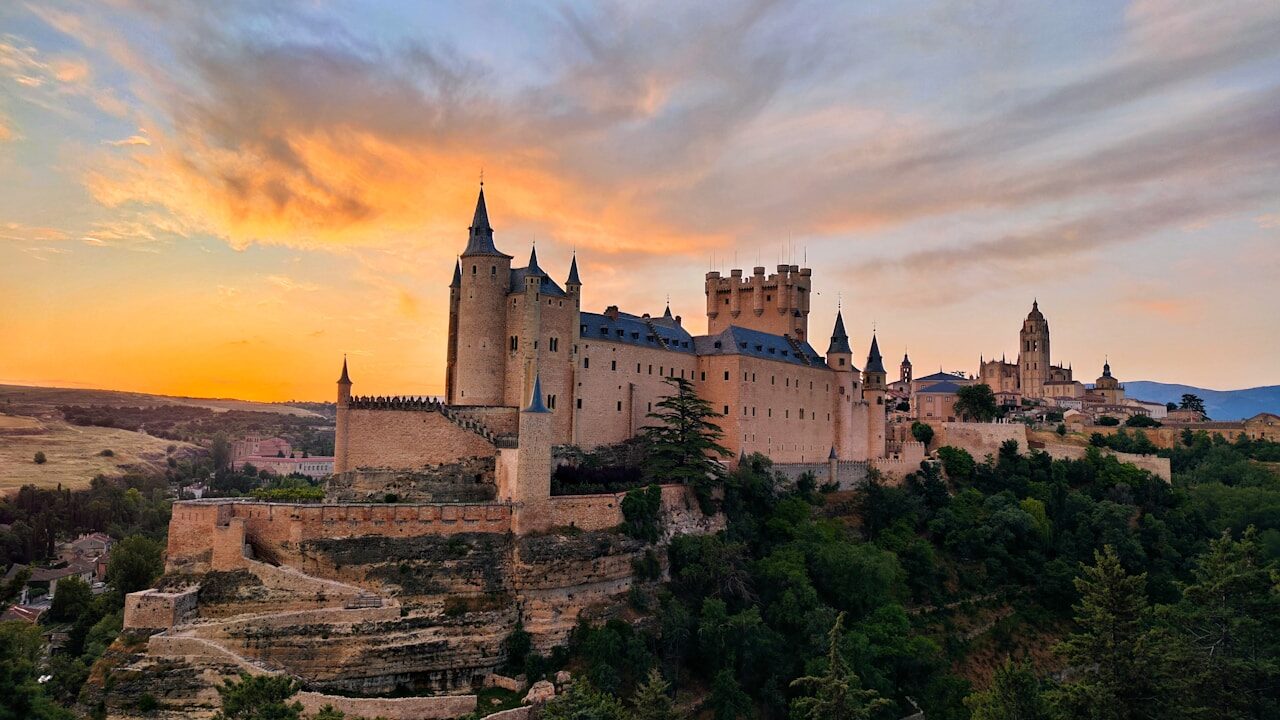
Segovia might be the single most visually striking day trip from Madrid.
The city delivers two iconic landmarks within walking distance of each other: a 2,000-year-old Roman aqueduct built without a single drop of mortar, and an Alcázar castle so photogenic it reportedly inspired Walt Disney when designing Sleeping Beauty’s castle.
Even if you’ve seen a hundred castles across Europe, Segovia’s Alcázar hits differently.
Located just 91 kilometers northwest of Madrid, Segovia is also one of the easiest day trips logistically.
The high-speed train is quick, the city center is walkable, and the food scene offers one of Spain’s most legendary dishes.
Madrid to Segovia Train: Fast and Easy
The high-speed AVE train from Madrid Chamartín station reaches Segovia in just 25 to 27 minutes, making it one of the quickest day trip routes in the country.
Trains run throughout the day, so there’s no need to rush for an early departure.
Current Madrid to Segovia train prices (2026):
- One-way ticket: from €10.59 to €13.49 (advance booking)
- Regional train alternative: ~2 hours but significantly cheaper
- Round trip budget: approximately €21 to €27
Note that Segovia’s high-speed train station sits about 5 kilometers outside the city center, so you’ll need to catch a connecting bus or taxi to reach the old town.
Budget an extra €1.50 for the bus or around €10 for a taxi.
Travel Options to Get From Madrid to Segovia
Whether you prefer speed or scenery, several options connect Madrid to Segovia without any complications.
- AVE high-speed train (Chamartín): 25-27 minutes, from ~€10.59 one-way
- Regional train: approximately 2 hours, cheaper fare
- Intercity bus (La Sepulvedana): about 90 minutes from Moncloa, budget-friendly
- Car: approximately 1 hour via A-6 motorway
- Guided day tour: often combines Segovia with Ávila or Toledo for a full-day double
The Aqueduct, the Alcázar, and Everything Between
Walking into Segovia’s old town through the Roman Aqueduct is one of those travel moments you’ll describe to people for years.
This 1st-century granite structure stretches 818 meters and rises to 28 meters at its highest point, and it carried water into the city for over 1,500 years.
There’s no entrance fee; it’s just standing there in the middle of town, casually being 2,000 years old.
The Alcázar of Segovia is a proper fortress-palace built on a rocky crag overlooking two river valleys, with towers that look like they were designed by someone who took fairy tales too literally (which is exactly why we love it). Entry in 2026 costs €9 for adults
and €7 for reduced (students, under-16s, over-65s).
Climbing the Tower of Juan II adds the extra cost of sore legs but rewards you with panoramic views of the Castilian plateau.
What to See in Segovia in One Day
A well-planned day in Segovia covers the city’s major landmarks without feeling like a race.
Here’s a solid itinerary.
- Roman Aqueduct: Free to view; arrive early for unobstructed photos before tour groups descend
- Alcázar of Segovia: €9 adult entry; allow 1.5 to 2 hours inside
- Segovia Cathedral: Spain’s last Gothic cathedral, sitting at the heart of the old town; entry around €4 for adults
- Calle Real: The city’s main pedestrian street connecting the aqueduct to the cathedral
- Cochinillo asado (roast suckling pig): Segovia’s culinary signature; try it at Mesón de Cándido or Restaurante José María for the full experience
Ávila and Salamanca: Medieval Walls and Scholarly Splendor
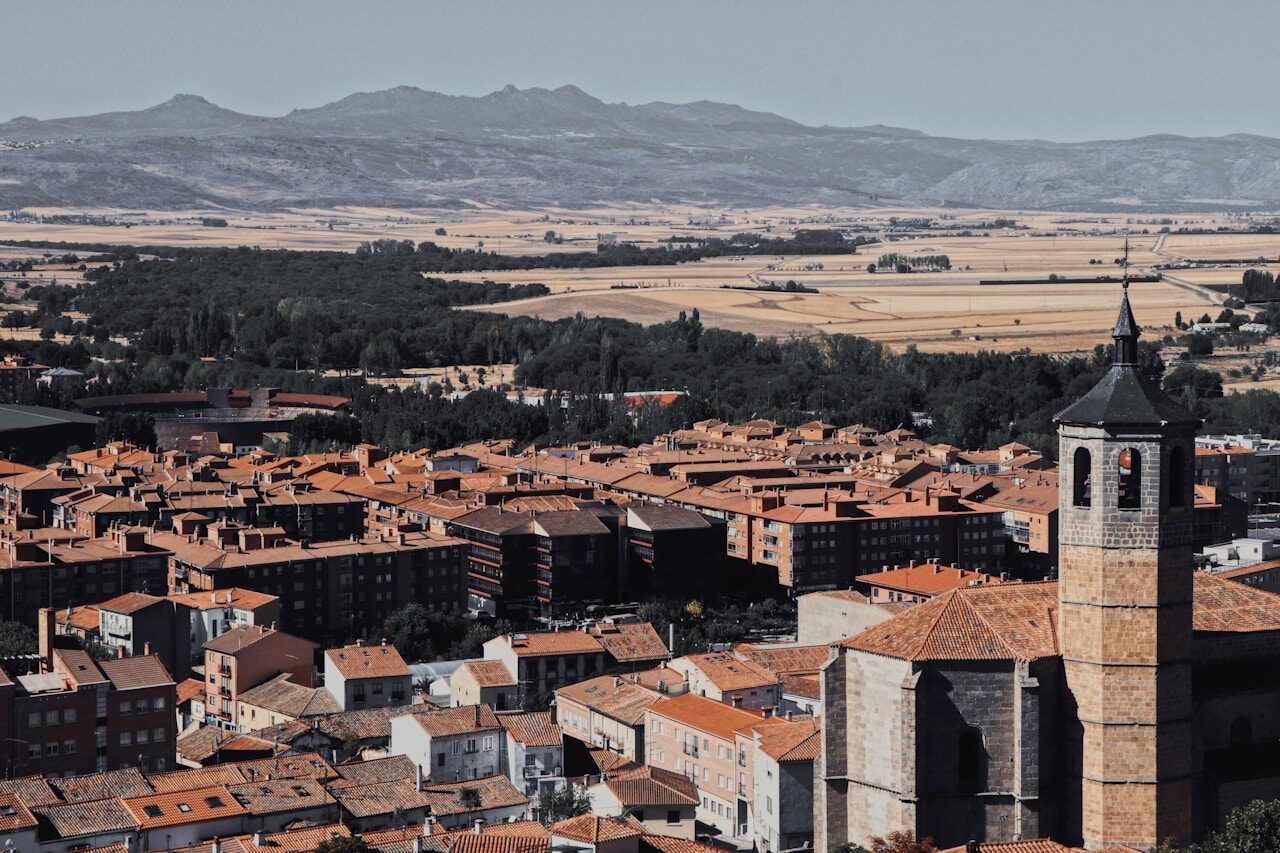
These two cities offer completely different experiences, but both punch well above their weight as day trips from Madrid. Ávila
is compact, medieval, and intensely atmospheric, its perfectly preserved 12th-century walls encircling a city that genuinely feels frozen in time. Salamanca
is a university town glowing in golden sandstone, alive with student energy and centuries of academic tradition.
Together, they make for one of Spain’s best double-header day trips.
Many tour operators from Madrid combine both cities into a single guided day tour, which makes logistical sense given that Ávila is roughly halfway between Madrid and Salamanca.
If you’re traveling independently by train, each destination is best visited separately on its own day.
Ávila: The Walled City Near Madrid
Ávila’s 12th-century city walls are the most complete medieval fortifications in Spain and among the best preserved in all of Europe.
Running for 2.5 kilometers with 88 semi-circular towers and 9 city gates, the walls aren’t just impressive from the outside: you can actually walk along sections of the ramparts and look out over the surrounding plains of Castile.
Ticket prices for the Walls of Ávila in 2026:
- General admission: €8
- Reduced rate (students, seniors, large families): €5
- Children under 8: Free
The city’s spiritual identity is shaped by Saint Teresa of Ávila, the 16th-century mystic and reformer who was born here.
Her convent and birthplace are both worth visiting for anyone interested in the history of Spanish Catholicism or just deeply atmospheric, centuries-old religious architecture.
What to Visit in Ávila in One Day
Ávila is compact, which works in your favor.
A well-paced day covers the essentials without exhausting yourself.
| Time | Activity | Notes |
|---|---|---|
| 09:30 AM | Arrive in Ávila | Train from Madrid takes ~1.5 hrs |
| 10:00 AM | Walk the city walls | Buy tickets at Puerta del Alcázar |
| 12:00 PM | Visit the Cathedral | Oldest Gothic cathedral in Spain |
| 13:30 PM | Lunch | Try yemas de Santa Teresa, the city’s famous egg-yolk sweets |
| 15:00 PM | Convento de Santa Teresa | Birthplace and museum of the saint |
| 17:00 PM | Return to Madrid | Direct trains run regularly |
Tips for Getting to Ávila From Madrid
Ávila sits about 108 kilometers northwest of Madrid and is reachable by train in approximately 1.5 hours from Chamartín station.
Regional RENFE trains run several times daily with tickets starting at around €8 to €12 one-way.
Alternatively, most guided tours from Madrid that include Ávila pair it with Segovia or Salamanca for a more efficient full day.
Salamanca: A City That Glows at Sunset
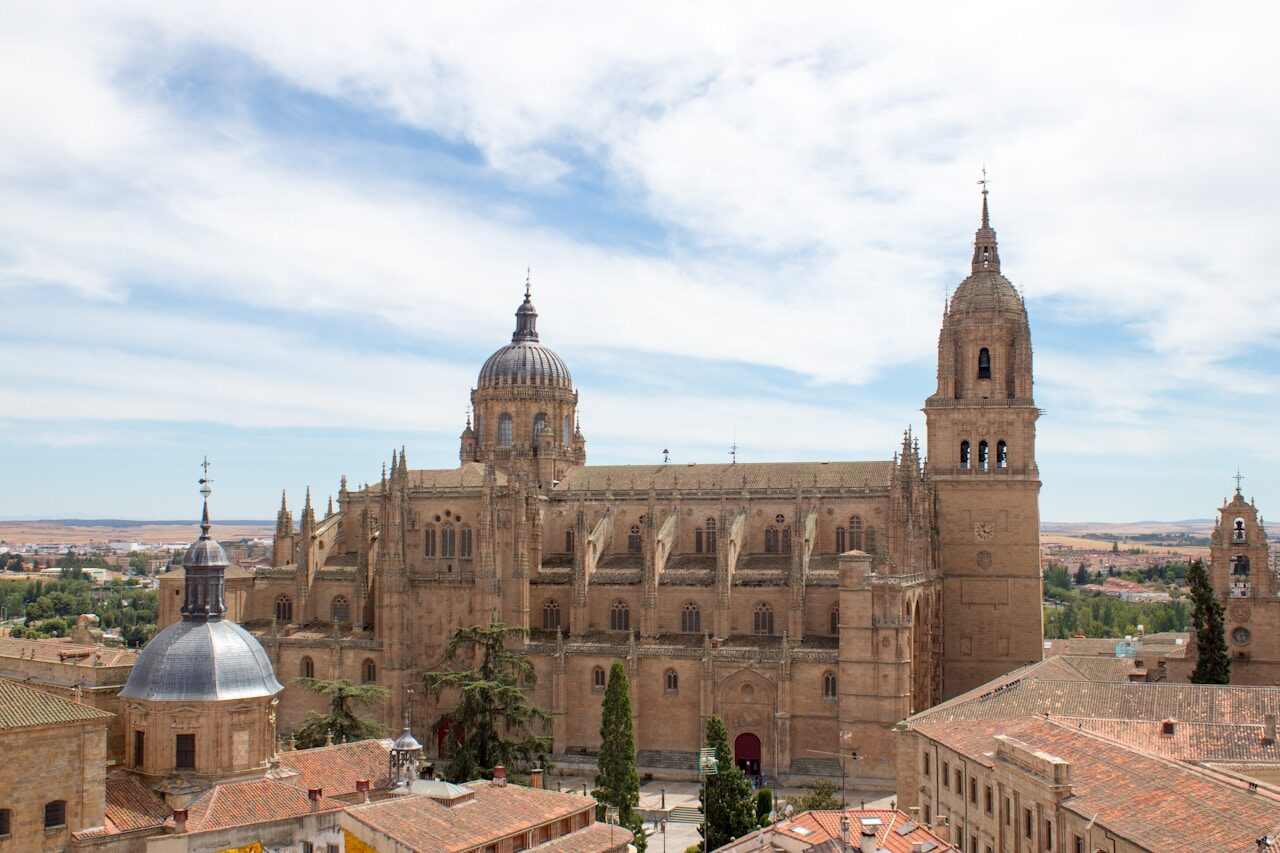
Salamanca earns its nickname La Dorada (The Golden One) honestly.
The city’s buildings are constructed from Villamayor sandstone that turns a warm, honeyed amber in afternoon light, making it one of the most photogenic cities in Spain.
It’s also home to the University of Salamanca, founded in 1218 and one of the oldest universities in the world, which gives the city an energy that most medieval towns completely lack.
The main challenge with Salamanca as a day trip from Madrid is the distance: roughly 200 kilometers northwest, meaning a train journey of about 1.5 to 2 hours.
But that travel time pays off.
Salamanca’s Plaza Mayor alone, widely considered the most beautiful baroque plaza in Spain, justifies the journey.
What to See in Salamanca on a Day Trip
Salamanca has enough to fill two or three days comfortably, but a focused day trip covers the highlights well if you’re strategic about your time.
- Plaza Mayor: The social heart of the city; baroque architecture at its finest, and free to enjoy
- University of Salamanca: The original facade features a famous carved frog that students must find before exams for good luck
- Old and New Cathedrals: Two cathedrals joined together, spanning Romanesque, Gothic, and Baroque styles across several centuries
- Casa de las Conchas: A 15th-century palace covered in carved scallop shells, now a public library
- Huerto de Calixto y Melibea: A quiet garden connected to the La Celestina literary tradition, with lovely city views
El Escorial and the Sierra de Guadarrama Mountains
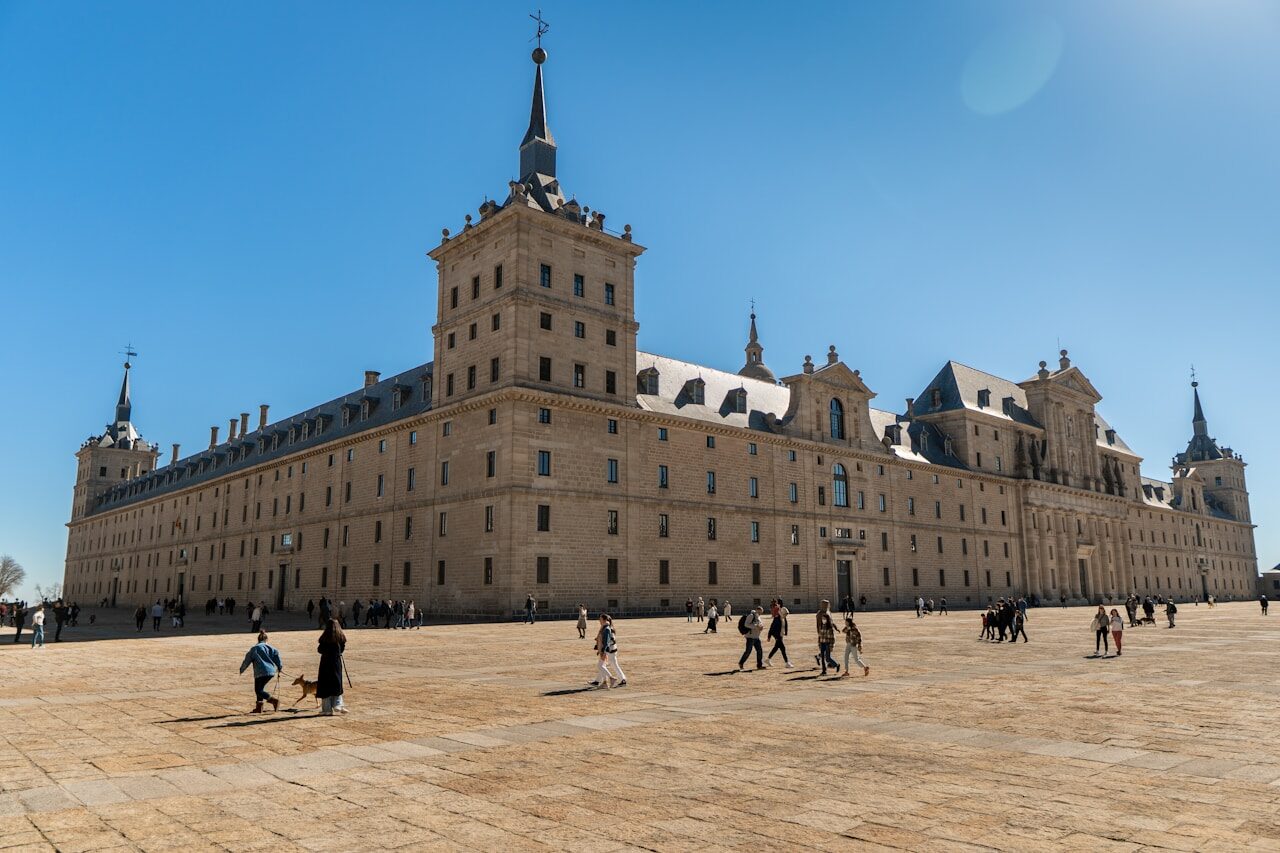
If you want to understand the full scope of Spain’s imperial history, the Monastery-Palace of El Escorial is non-negotiable.
Built by King Philip II between 1563 and 1584, this UNESCO World Heritage Site combines a royal palace, monastery, basilica, library, and royal pantheon in one colossal granite complex.
It’s austere, imposing, and somehow deeply moving, a monument to 16th-century power that still doesn’t feel entirely of this world.
The surrounding Sierra de Guadarrama mountain range adds an outdoor dimension to this day trip that most visitors overlook, making El Escorial one of the most versatile day trips from Madrid for travelers who want both history and fresh air.
Visiting El Escorial: Tickets and Getting There
El Escorial sits about 50 kilometers northwest of Madrid and is reachable in under an hour via the C-3 Cercanías commuter train from Atocha or Chamartín, or by taking the 664 bus from Moncloa interchange, which departs every 15 to 30 minutes.
El Escorial entrance fees in 2026:
- General admission: €12
- Reduced rate (children 5-16, students under 25, seniors over 65): €6
- Guided tour (additional to entry): €4 extra
- Free entry: Wednesdays and Thursdays, 15:00 to 18:00 for EU citizens
The complex is large.
Allow at least 3 hours to properly explore the Royal Library (housing over 40,000 rare manuscripts), the Pantheon of Kings (where 26 Spanish monarchs rest in matching marble sarcophagi), and the ornate Basilica with its Baroque frescoes.
Getting There and Key Tips for El Escorial
A few practical details make the difference between a smooth visit and a frustrating one.
- By train: C-3 Cercanías from Atocha or Chamartín, approximately 55 minutes; tickets under €5 round trip
- By bus: Line 664 from Moncloa interchange, around 1 hour, roughly €4.50 each way
- By car: About 50 minutes via A-6 motorway; free parking available near the monastery
- Best visiting days: Weekdays outside Spanish school holidays; Wednesday and Thursday afternoons are free for EU citizens
- Combine with: A short hike in Sierra de Guadarrama or a visit to the nearby Valle de los Caídos (Valley of the Fallen)
Sierra de Guadarrama: A Mountain Escape Near Madrid
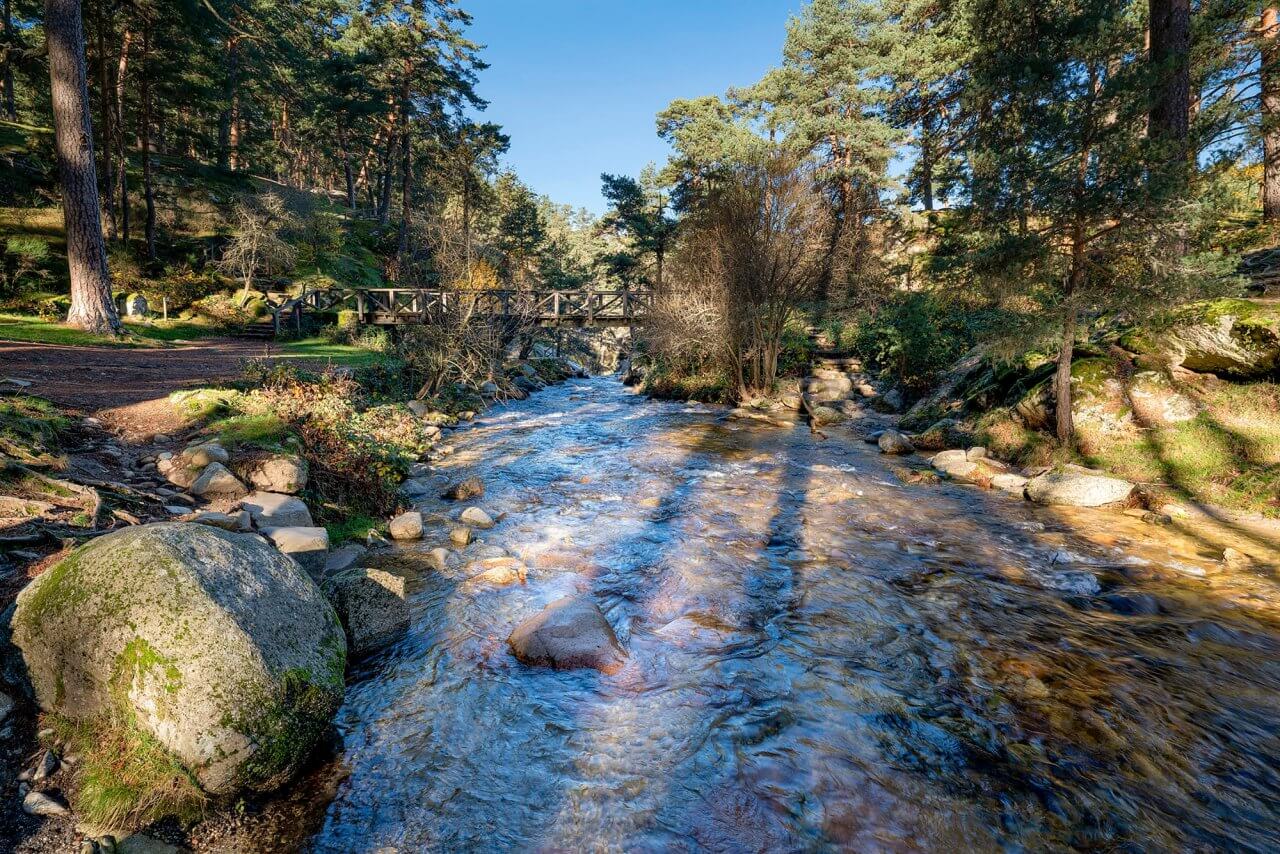
The Sierra de Guadarrama National Park stretches along the northwest side of Madrid province and offers some of the best accessible hiking in central Spain.
Peaks like Peñalara (2,428m) provide challenging trails with sweeping views, while lower-altitude routes through pine forests and mountain villages like Rascafría and Miraflores de la Sierra offer a gentler, more scenic escape.
The mountains complement an El Escorial visit perfectly.
Spend the morning inside the monastery, then drive or take a local bus to the mountains for an afternoon walk.
The contrast between Spain’s most powerful architectural monument and the raw wilderness that surrounds it is genuinely striking.
Best Hikes and Villages in Sierra de Guadarrama
For visitors looking to swap cobblestones for trails, the Sierra de Guadarrama delivers a range of options at different difficulty levels.
- Peñalara Peak trail: The highest point in the range at 2,428m; challenging but well-marked, with dramatic views across Castile
- Puerto de Navacerrada: A popular mountain pass with ski resort in winter and hiking trails in summer, accessible by Cercanías train
- Manzanares El Real: Charming medieval village with a beautifully preserved 15th-century castle, about 50km from Madrid
- Rascafría and El Paular Monastery: A peaceful valley with a Benedictine monastery surrounded by forest, ideal for easy walks
- La Pedriza: A granite rock formation popular with climbers and day hikers, with trails starting near Manzanares El Real
Wine, Windmills, and Small-Town Gems: Chinchón and Aranjuez
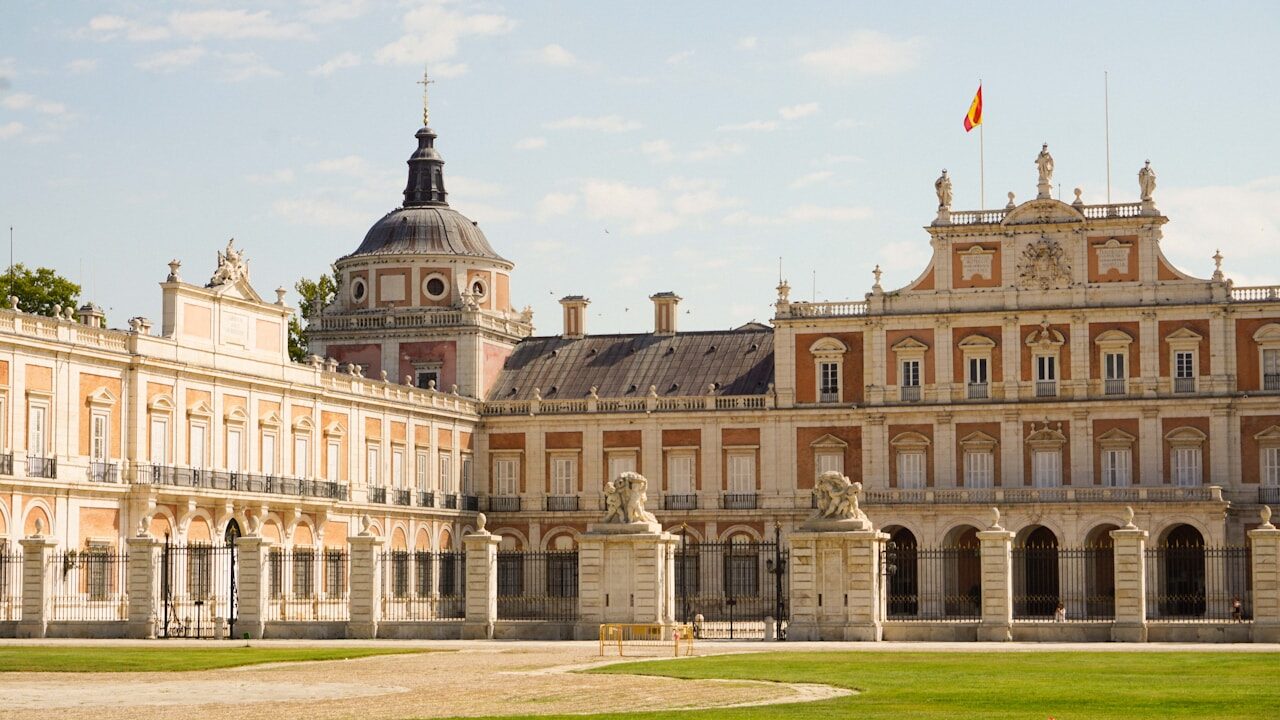
Not every great day trip from Madrid requires UNESCO status or ancient Roman infrastructure.
Sometimes the best escapes are the quietest ones. Chinchón
and Aranjuez sit within 50 kilometers of the capital and offer a slower, more intimate glimpse of Castilian life, complete with excellent food, local spirits, and far fewer crowds than Toledo or Segovia.
Both towns are particularly appealing for travelers who’ve already done the big UNESCO sites and want something a little more off the beaten path.
Combine them both in a single day by car, or dedicate a half-day to each for a more relaxed pace.
Chinchón: The Plaza Mayor and Local Anís
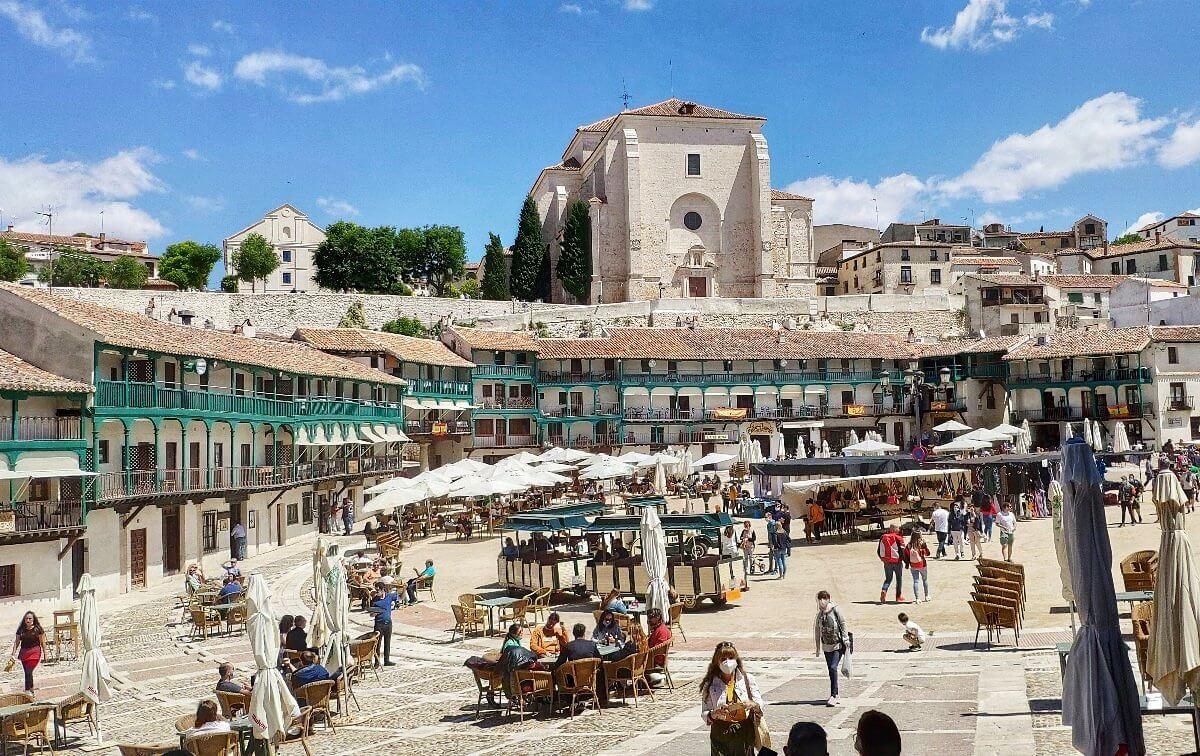
Chinchón’s star attraction is its extraordinary Plaza Mayor, a tilted, egg-shaped medieval square surrounded by three-story wooden balconied buildings.
It’s one of the most distinctive plazas in Spain, and unlike Toledo or Segovia’s main squares, it rarely feels overwhelmed by tour groups.
During summer festivals, the plaza transforms into a working bullring, with spectators watching from the surrounding balconies.
The town is equally famous for producing Anís de Chinchón, a traditional anise liqueur that’s been distilled here for centuries.
You can pick up a bottle at almost any shop in town, or better yet, sample it at a local bar with a coffee after lunch.
Getting to Chinchón From Madrid
Chinchón doesn’t have a direct train connection, making it one of the few day trips from Madrid where a car or bus is your best option.
- By bus (Line 337): Departs from Plaza del Conde de Casal in Madrid, approximately 1 hour, around €3.50 one-way
- By car: About 45 minutes via A-3 and M-311; easy parking in the town
- By guided tour: Several operators from Madrid include Chinchón in wine and gastronomy tours
Aranjuez: Royal Gardens and Strawberry Fields
Aranjuez punches surprisingly hard for a town of around 60,000 people.
The Royal Palace of Aranjuez and its gardens hold UNESCO World Heritage Site status, and the complex sits right on the banks of the Tagus River, making it one of the most scenically situated royal residences in Spain.
The formal French-style gardens and the more romantic Jardín del Príncipe are particularly beautiful in spring.
Aranjuez is also famous for two things that sound randomly specific but are deeply local: its strawberries (some of the finest in Spain, harvested in spring) and its asparagus, both sold at the weekly market.
Coming here in April or May catches both the gardens at their peak and the harvest season for the town’s most beloved produce.
How to Get From Madrid to Aranjuez
Aranjuez is one of the easiest day trips from Madrid by train, with regular commuter services making it accessible even on short notice.
- By Cercanías train (Line C-3): Direct from Atocha station in approximately 50 minutes, tickets under €5 round trip
- By car: About 45 minutes via A-4; easy parking near the palace
- Strawberry Train (Tren de la Fresa): A seasonal tourist train that runs from Madrid in spring with live entertainment onboard; a fun, novelty-filled experience worth considering if you’re traveling with kids
Practical Tips for Planning Your Madrid Day Trips
Good planning separates a great day trip from an exhausting one, and Madrid’s day trip circuit has a few quirks worth knowing before you go.
The most important rule is simple: book in advance.
Trains fill up on weekends, major monuments sell out skip-the-line slots days ahead, and guided tour groups reach capacity faster than you’d expect.
Spring (April to June) and autumn (September to October) are the ideal seasons for day trips from Madrid.
Summer is manageable but hot, especially in Toledo and Ávila where shade is scarce.
Winter is generally quiet and offers lower prices, though some mountain routes in Sierra de Guadarrama may be snow-covered.
Booking Trains and Tours: What You Need to Know
RENFE’s official website and the RENFE app are the most reliable places to book high-speed AVE tickets, especially for Toledo and Segovia routes.
Prices fluctuate based on demand and how far in advance you book, so earlier is almost always cheaper.
For guided tours, compare prices across GetYourGuide, Civitatis, and Viator before committing; the same tour can vary by €15 to €20 between platforms.
Online booking tips that actually save you money:
- Book RENFE tickets at least 2 weeks early for maximum discounts on AVE routes
- Check official monument websites for free entry days before buying third-party tickets
- Look for combo tickets that bundle two or more monuments at a discount (Toledo Cathedral plus Alcázar, for example, is around €20 combined)
- Midweek visits (Tuesday to Thursday) consistently offer shorter queues at major attractions
- Off-season travel (November to February) cuts guided tour prices by 20 to 30%
Crowd-Avoidance Strategies That Actually Work
The single most effective crowd-avoidance strategy for any day trip from Madrid is arriving early.
Toledo’s Cathedral, Segovia’s Alcázar, and El Escorial all see the bulk of their visitor traffic between 11:00 and 15:00.
Catching the first or second train of the day puts you inside major monuments before tour buses arrive.
- Aim to arrive at major monuments before 10:00 AM
- Schedule lunch between 14:00 and 16:00, when Spanish visitors take a proper siesta break and tourist sites breathe easier
- Visit Toledo and Segovia on Tuesday through Thursday rather than weekends
- Consider staying overnight in destinations like Toledo or Salamanca to experience the cities at night, when the tourist crowds have retreated to Madrid and the atmosphere becomes genuinely magical
Have you already done Toledo and Segovia, or are you starting fresh with your Madrid day trip planning? The right answer shapes the perfect itinerary.
Frequently Asked Questions (FAQs)
What's the Best Day Trip From Madrid?
Toledo wins this one, and it’s not even close. Just 34 minutes by AVE high-speed train from Atocha station, this UNESCO-listed medieval city sits dramatically on a hilltop above the Tagus River, packing centuries of Christian, Jewish, and Moorish history into a compact, walkable old town.
You get the jaw-dropping Gothic Cathedral (one of Spain’s finest, with El Greco originals inside), the ancient Jewish Quarter, the Alcázar fortress, and labyrinthine streets that feel genuinely frozen in another century.
Train tickets start at around €13.90 one-way, making it ridiculously good value for the experience you get.
What Is the Most Beautiful Town Near Madrid?
Honestly, Segovia makes a seriously strong case for the title. Picture this: you step off the train, round a corner, and suddenly you’re face-to-face with a 2,000-year-old Roman aqueduct standing 28 meters tall in the middle of the city, no glass case, no velvet rope, just ancient granite doing its thing.
Then you walk uphill and find the Alcázar, a fairytale castle perched on a rocky crag above two river valleys, so impossibly photogenic it allegedly inspired Disney’s Sleeping Beauty Castle.
The golden sandstone of Salamanca gives Segovia real competition at sunset, but for sheer visual drama at every turn, Segovia takes the crown.
What City Is 1 Hour Away From Madrid, Spain?
You’ve got options, and they’re all brilliant! El Escorial is the classic one-hour destination, a staggering 16th-century royal monastery-palace built by King Philip II, reachable by the C-3 Cercanías train for under €5. Ávila, home to the most complete medieval walls in Spain, sits about 1.5 hours away by regional train and is well worth the slightly longer ride.
If you’re driving, Aranjuez (the royal palace with UNESCO gardens), Chinchón (that gorgeous tilted medieval plaza), and the wine-country villages of Castilla-La Mancha all fall neatly within that one-hour radius.
Pick any direction out of Madrid, and history is basically waiting for you at the door.
What Cities Can You Visit From Madrid by Train?
Madrid’s rail network is a day-tripper’s dream. Here are the top cities you can reach directly by train, no car required:
- Toledo: 34 minutes by AVE from Atocha, from €13.90 one-way, the ultimate medieval city escape
- Segovia: 25-27 minutes by AVE from Chamartín, from €10.59 one-way, Roman aqueduct and fairytale castle included
- Ávila: ~1.5 hours by regional train from Chamartín, from ~€8-12, famous for its perfectly preserved medieval walls
- Salamanca: ~1.5-2 hours by train, Spain’s oldest university city glowing in golden sandstone
- Aranjuez: ~50 minutes by Cercanías C-3 from Atocha, under €5 round trip, royal gardens and strawberry fields
- El Escorial: ~55 minutes by Cercanías C-3 from Atocha or Chamartín, under €5 round trip, Philip II’s monumental palace-monastery
The beauty of it? You don’t need to rent a car, navigate Spanish motorways, or stress about parking. Just show up at Atocha or Chamartín with a RENFE ticket, and Spain’s greatest historical cities are essentially your backyard.