The Ultimate Guide to Food in Madrid, Spain (2026 Edition)
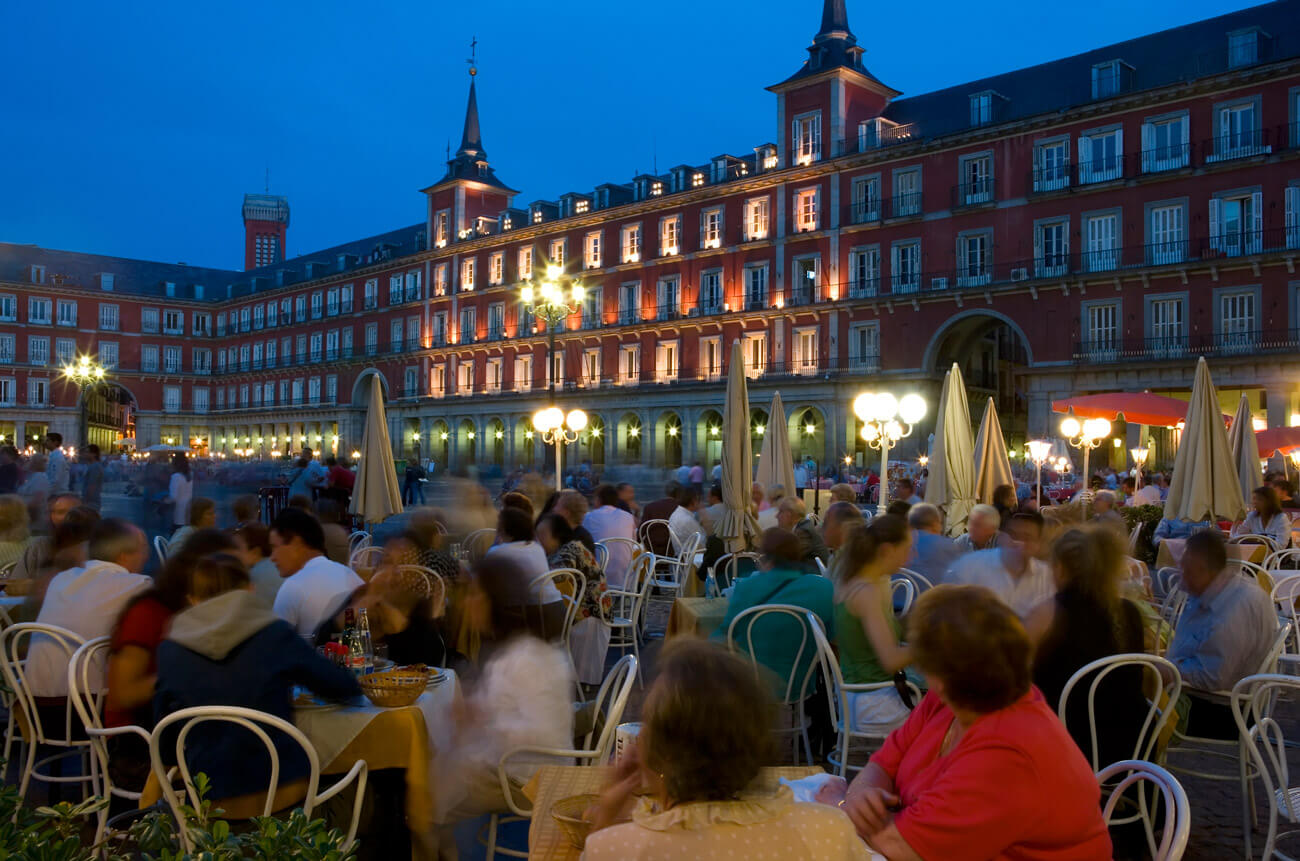



Food Lovers Guide to Madrid: Best Restaurants, Markets & Must-Try Dishes – Madrid is one of Europe’s most rewarding culinary destinations, where centuries-old tabernas sit alongside Michelin-starred dining rooms and bustling street-food markets.
- What Makes Madrid a Great Food Destination?
- Understanding Madrid's Dining Culture
- Famous Markets and Madrid Street Food
- What to Eat in Madrid: Essential Dishes
- Traditional Spanish Restaurants in Madrid
- Is DiverXO Worth Visiting?
- Contemporary and Innovative Dining in Madrid
- Best Restaurants in Madrid by Neighbourhood
- How Much Does It Cost to Eat in Madrid?
- Upscale Dining and Fine Wine in Madrid
- Food Festivals and Seasonal Culinary Events in Madrid
- Tips for Eating Well in Madrid on Any Budget
From paper-thin jamón ibérico sliced at marble-topped bars to avant-garde tasting menus redefining Spanish cuisine, the city’s food scene is as layered as its history.
This food lovers guide to Madrid covers the best restaurants in Madrid, must-try dishes, neighbourhood dining, and practical tips for every budget.
Key Highlights
Hide- Explore traditional tabernas like Casa Botín (est. 1725) for authentic dishes such as cochinillo asado and cocido madrileño.
- Visit Mercado de San Miguel for budget-friendly tapas starting at €2 and local specialty foods in a historic market setting.
- Experience Madrid's late dining culture with lunch around 2-3 PM and dinner after 9 PM for an authentic local experience.
- Try innovative cuisine at StreetXO or Michelin-starred DiverXO for modern interpretations of Spanish classics with international influences.
- Join a tapas crawl through La Latina neighborhood to sample small plates at multiple venues while enjoying Madrid's social dining culture.
What Makes Madrid a Great Food Destination?
Madrid ranks among Europe’s top cities for food because it combines deep culinary tradition with bold innovation.
The capital draws ingredients from every Spanish region — Galician seafood, Castilian roasts, Andalusian tapas — and serves them in a city that treats mealtimes as a cornerstone of daily life.
Restaurants range from 18th-century wood-fired roasting houses to contemporary kitchens earning global recognition.
That breadth, across every price point, is what sets food in Madrid apart from other European capitals.
If you are planning a broader trip around Spain, check out the Madrid Travel Guide: Things to Know Before Traveling to Madrid, Spain for essential pre-trip context.
- When Is The Best Time To Visit Madrid
- Best Barcelona Road Trips: Top Routes to Explore in 2026
- 7 Best Parks And Gardens In Barcelona
- Barcelona Travel Tips: Things to Know Before Traveling to Barcelona
- Travel to Madrid on a Budget: Your Complete 2026 Travel Guide
- What to Do in Madrid With Kids: Parks, Museums, and Local Tips
Understanding Madrid’s Dining Culture
Madrid operates on a dining schedule that surprises most international visitors.
Lunch is the main meal of the day, typically served between 2:00 PM and 4:00 PM.
Dinner rarely begins before 9:00 PM, and many restaurants accept last orders as late as 11:30 PM.
Mid-afternoon closures are common.
Many neighbourhood restaurants shut between 4:30 PM and 8:30 PM, reopening for evening service.
Arriving at 6:00 PM expecting dinner will often mean a locked door.
Embracing this rhythm is what separates good trips from great ones.
Locals treat lunch as a leisurely, multi-course affair and dinner as a social event that extends well into the night.
Adjusting your schedule unlocks the most authentic dining experiences the city offers.
Famous Markets and Madrid Street Food
Madrid’s covered markets are the fastest way to sample a wide range of Spanish food in a single visit.
They also offer genuine insight into how locals shop, eat, and socialise around food.
For a full picture of the city’s top experiences, including market visits, see 35 Best Things To Do In Madrid.
Mercado de San Miguel
Mercado de San Miguel, located steps from Plaza Mayor, is Madrid’s most celebrated food market.
Built in 1916, the iron-and-glass pavilion houses around 30 stalls selling jamón ibérico, fresh oysters, anchovies, vermouth, and regional cheeses.
Tapas at the market start at approximately €2–€4 per piece.
The market is open daily: Monday–Thursday and Sunday 10:00 AM to midnight; Friday and Saturday 10:00 AM to 1:00 AM, making it one of the few food destinations in the city that bridges the gap between lunch and dinner service.
Arrive before 1:00 PM or after 7:00 PM to avoid the heaviest crowds.
Grab a glass of house vermouth and work your way around the stalls — this is Madrid street food at its most concentrated.
Bocadillo de Calamares and Street Snacks Near Plaza Mayor
The bocadillo de calamares — a crusty bread roll filled with crispy fried squid rings — is Madrid’s defining street food.
It has no equivalent in any other Spanish city.
Prices range from €3 to €8 depending on the bar, with most casual stalls and traditional spots charging around €4.
Bar La Campana on Calle Botoneras, just off Plaza Mayor, charges around €4 and is widely regarded as the benchmark.
El Brillante, near Atocha station, charges €4–€6 and is another institution that locals and visitors return to repeatedly.
For the full street food experience, walk through La Latina on a Sunday evening.
Churros stands, roasted chestnut carts, and neighbourhood bars spill onto the pavement during the paseo, creating an informal open-air food crawl.
Other Markets Worth Visiting
Mercado de San Fernando in Lavapiés offers a more local, less tourist-facing alternative to San Miguel.
Prices are noticeably lower, reflecting the neighbourhood’s multicultural and working-class character — expect to spend under €10 for tapas and drinks.
Mercado de la Paz in Salamanca is a working neighbourhood market rather than a tourist destination.
Casa Dani, located inside, serves one of Madrid’s most respected tortillas españolas and a reliable menú del día.
Mercado de Motores takes place on the second weekend of each month (except August) at the Museo del Ferrocarril.
Hours are Saturday 11:00 AM to 9:00 PM and Sunday 11:00 AM to 8:00 PM.
It combines artisanal food stalls with craft beer and live music in a converted railway depot.
What to Eat in Madrid: Essential Dishes
Several dishes define Madrid’s culinary identity.
Understanding them before you arrive helps you order with confidence and seek out the best versions.
Cocido madrileño is a slow-cooked chickpea stew with pork, chorizo, morcilla, and vegetables, traditionally served in three courses — broth first, then chickpeas and vegetables, then meat.
It is Madrid’s definitive winter comfort dish.
Tortilla española is a potato and egg omelette that sparks genuine debate about whether the centre should be runny (jugosa) or fully set.
Both versions have passionate defenders.
Patatas bravas are fried potato cubes served with a spiced tomato sauce, aioli, or both.
Every bar has its own recipe, and comparing versions across the city is a legitimate pastime.
Callos a la madrileña is a tripe stew with chorizo and paprika — unapologetically bold and one of the most traditional things to eat in Madrid.
Huevos estrellados are fried eggs broken over crispy potatoes, often with jamón or chorizo.
Simple, satisfying, and found at some of the city’s most famous addresses.
Gambas al ajillo — prawns sizzled in olive oil, garlic, and chilli — arrive at the table still bubbling in a clay dish.
Eat them immediately with bread to absorb the oil.
Traditional Spanish Restaurants in Madrid
Madrid’s oldest restaurants are not museums — they are working kitchens that have survived centuries because the food remains genuinely good.
The city’s best neighbourhoods for traditional dining are covered in detail in Best Neighborhoods in Madrid: Where to Stay and Why.
Casa Botín
Casa Botín, founded in 1725, holds the Guinness World Record as the world’s oldest restaurant.
It operates continuously on Calle de los Cuchilleros, a short walk from Plaza Mayor, and still roasts cochinillo asado (suckling pig) and cordero asado (roast lamb) in its original wood-fired oven.
Hemingway ate here.
Goya reportedly worked as a waiter before his painting career took off.
A meal at Botín is a direct connection to Madrid’s culinary history.
Reservations are strongly recommended — book at least 48–72 hours ahead, and further in advance for weekend dinners.
Casa Lucio
Casa Lucio on Calle de la Cava Baja has been serving huevos estrellados since 1974.
The dish — fried eggs broken over wafer-thin fried potatoes — has made the restaurant famous across Spain.
The clientele has included Spanish royalty, international politicians, and generations of Madrileños.
The atmosphere is warm and unpretentious despite the restaurant’s reputation.
Book ahead for dinner, particularly on weekends.
Other Historically Significant Restaurants
- Casa Alberto (est. 1827): Located in a building where Cervantes once lived, serving traditional Madrid cuisine including callos and rabo de toro.
- Lhardy (est. 1839): A former imperial favourite on Carrera de San Jerónimo, famous for its cocido madrileño and ornate dining rooms.
- Malacatín: Serves a legendary seven-course cocido madrileño in a 19th-century setting in La Latina. Booking is essential.
Neighbourhood Tabernas for Authentic Flavours
The most authentic places to eat in Madrid are often the least prominent.
Neighbourhood tabernas in Chamberí, La Latina, and Lavapiés serve food that has changed little in decades.
| Restaurant | Signature Dish | Neighbourhood |
|---|---|---|
| Casa Lucio | Huevos Estrellados | La Latina |
| El Maño | Callos a la Madrileña | Chamberí |
| Bodega de la Ardosa | Tortilla de Patatas | Malasaña |
| La Casa del Abuelo | Gambas al Ajillo | Sol |
| Bar Cervantes | Patatas Bravas | Huertas |
Is DiverXO Worth Visiting?
DiverXO is worth visiting for serious food enthusiasts willing to invest in a once-in-a-career dining experience.
Chef Dabiz Muñoz holds three Michelin stars — the only restaurant in Madrid to do so — and as of 2026, the restaurant offers two parallel tasting menus (solid and liquid) at €450 per menu, meaning the full dual experience runs to approximately €900 per person, excluding any additional extras.
The experience is theatrical, unconventional, and deliberately provocative.
Dishes blend Asian, Spanish, and global influences in ways that challenge expectations of what a tasting menu can be.
The restaurant operates from a location in the NH Collection Eurobuilding hotel on Calle del Padre Damián, 23.
Booking opens several months in advance and tables sell out quickly.
If DiverXO is a priority, begin the reservation process three to four months before your travel dates.
Contemporary and Innovative Dining in Madrid
Beyond the traditional tabernas, Madrid has developed a contemporary dining scene that attracts international attention.
Several chefs have built global reputations while remaining based in the capital.
Top Modern Restaurants in Madrid
- StreetXO: Chef Dabiz Muñoz’s more accessible concept — a high-energy, Asian-Spanish fusion restaurant with theatrical presentation and a walk-in format. Located in El Corte Inglés on Serrano.
- DSTAgE: Chef Diego Guerrero’s two-Michelin-star restaurant applies Japanese precision to Spanish ingredients in an intimate, industrial-chic space.
- Fismuler: Nordic-influenced cooking with market-fresh seasonal ingredients, popular with Madrid’s food-literate crowd.
- Sala de Despiece: A standing-only concept in Chamberí where the menu changes daily based on market availability. One of the most talked-about spots in the city.
Hidden Gems in Malasaña and Lavapiés
Malasaña and Lavapiés are the neighbourhoods where Madrid’s most interesting contemporary cooking happens at accessible prices.
Both areas reward slow exploration.
In Malasaña, small restaurants on streets like Calle del Pez and Calle de la Palma serve creative small plates alongside natural wines.
In Lavapiés, the neighbourhood’s multicultural character produces an unusually diverse range of cuisines — Moroccan, Indian, Ethiopian, and Japanese kitchens sit alongside traditional Spanish bars.
For context on how Madrid’s neighbourhoods compare for visiting and staying, the Best Neighborhoods in Madrid: Where to Stay and Why guide covers the city’s districts in detail.
Best Restaurants in Madrid by Neighbourhood
Madrid’s culinary geography is one of its strengths.
Each neighbourhood has a distinct food personality, and knowing where to go for what saves time and improves the experience.
For practical navigation tips between these areas, see The Best Ways To Get Around In Madrid.
La Latina
La Latina is Madrid’s most celebrated neighbourhood for tapas.
The area around Calle de la Cava Baja and Calle del Almendro is lined with traditional bars and tabernas that fill up from midday on weekends.
The Sunday tapas crawl — moving between bars for a caña (small beer) and a tapa at each stop — is a local ritual.
Arrive by noon to get a table at the most popular spots before the crowds build.
Malasaña
Malasaña blends traditional neighbourhood bars with contemporary restaurants and international food concepts.
It is the best area for budget-friendly, creative eating in Madrid.
The neighbourhood is also home to some of the city’s best brunch spots and independent coffee shops, making it a reliable choice for late-morning meals.
Salamanca
Salamanca is Madrid’s upscale residential district, home to elegant restaurants, high-end tapas bars, and some of the city’s best traditional cooking at premium prices.
It is the neighbourhood to choose for a formal dinner or a special occasion meal.
Chueca
Chueca offers a diverse restaurant scene with strong representation from international cuisines alongside Spanish classics.
The neighbourhood’s brunch culture is well developed, and the evening dining scene is lively and social.
Lavapiés
Lavapiés is Madrid’s most multicultural neighbourhood and the best place in the city for international street food at low prices.
Moroccan, South Asian, and Latin American restaurants are concentrated here, alongside traditional Spanish bars.
| Neighbourhood | Best For | Price Point |
|---|---|---|
| La Latina | Traditional tapas crawls | €–€€ |
| Malasaña | Creative, budget-friendly dining | €–€€ |
| Salamanca | Upscale and traditional restaurants | €€€ |
| Chueca | International cuisines, brunch | €€ |
| Lavapiés | Global street food, multicultural | € |
How Much Does It Cost to Eat in Madrid?
Madrid is one of Western Europe’s more affordable capitals for eating out.
A single tapa costs between €2 and €4 at most neighbourhood bars in 2026.
A menú del día — a fixed three-course lunch with bread and a drink — typically costs €12–€16 at neighbourhood restaurants on weekdays.
A mid-range dinner for two with wine at a traditional restaurant costs approximately €50–€80.
At a Michelin-starred restaurant, expect to pay €100 to €900+ per person for a tasting menu depending on the establishment.
Street food — bocadillos, churros, market tapas — keeps costs well under €10 for a satisfying meal.
For a broader budget breakdown across the city, check the Travel to Madrid on a Budget: Your Complete 2026 Travel Guide.
Budget Eating Strategies
The menú del día is the single best value tool for budget travellers in Madrid.
Available at most neighbourhood restaurants between 1:30 PM and 4:00 PM on weekdays, it typically includes a starter, main course, dessert, bread, and a drink for €12–€16.
Reliable menú del día spots include:
- El Fogón de Trifón (Malasaña): Hearty Castilian classics.
- La Carmela (near Atocha): Seafood-focused menus.
- Casa Dani (Mercado de la Paz): Homestyle cooking with no pretension.
The app El Tenedor (TheFork) lists real-time availability and discount offers at hundreds of Madrid restaurants, with discounts often ranging from 30–50% at participating spots.
Groupon España lists occasional prix-fixe deals at upscale establishments.
Late-Night Budget Eats
Madrid’s late-night food scene is genuinely good at low prices. Chocolatería San Ginés
on Pasadizo de San Ginés, 5 is open daily (including late nights) and serves churros con chocolate for approximately €5–€6 for a plate of six churros with a cup of chocolate.
El Tigre, near Gran Vía on Calle Infantas, is famous for serving generous free tapas with every drink order.
A large beer or cider runs approximately €6–€8, and the tapas portions are substantial enough to count as a meal.
| Spot | Specialty | Approx. Price |
|---|---|---|
| Chocolatería San Ginés | Churros con chocolate | €5–€6 |
| El Tigre | Free tapas with drinks | €6–€8 per drink |
| Bar La Campana | Bocadillo de calamares | €4 |
Upscale Dining and Fine Wine in Madrid
Madrid’s fine dining scene has expanded significantly over the past two decades.
The city now holds multiple Michelin stars across several restaurants, with DiverXO at the top of the hierarchy.
For special occasion planning in the city, see 35 Best Things To Do In Madrid for a complete picture of how a fine dining evening fits into a broader itinerary.
Michelin-Starred Restaurants in Madrid
For special occasions, Madrid’s Michelin-recognised restaurants deliver experiences that justify the investment.
Booking well in advance is essential for all of them.
| Restaurant | Stars | Recommended Booking Window |
|---|---|---|
| DiverXO | ★★★ | 3–4 months ahead |
| DSTAgE | ★★ | 1–2 months ahead |
| Ramón Freixa Madrid | ★★ | 2–3 months ahead |
| El Club Allard | ★★ | 1 month ahead |
| Coque | ★★ | 2 months ahead |
Ramón Freixa Madrid brings a Catalan sensibility to the capital, with artistic plating and a sophisticated two-star tasting menu.
El Club Allard suits romantic occasions with its intimate setting and innovative menus.
Wine Bars and Spanish Regional Wines
Madrid’s wine bar scene gives visitors access to Spain’s full viticultural range in a single evening.
The country produces exceptional wines across more than 60 denominations of origin, and the capital’s best wine bars stock bottles that rarely appear outside Spain.
- Lavinia: One of Europe’s largest wine shops, with a second-floor tasting room showcasing limited-production Ribera del Duero reds.
- Angelita Madrid: Natural wines paired with inventive tapas in a minimalist setting.
- La Venencia: Serves exclusively sherry from the barrel in an atmosphere unchanged since 1929. Open daily, typically from around 1:00 PM and from 7:30 PM evening service (closed Sunday afternoons — confirm hours before visiting).
- Vinoteca Moratín: Guided tastings with knowledgeable sommeliers covering Spain’s major wine regions.
For wine pairing, match crisp Albariño with pulpo a la gallega, bold Rioja Reserva with cochinillo, and versatile Tempranillo with jamón ibérico or croquetas.
Food Festivals and Seasonal Culinary Events in Madrid
Madrid’s food calendar adds value to visits in January and October in particular.
Several annual events offer access to high-quality cooking at reduced prices.
Gastrofestival Madrid (typically late January to mid-February, running around 16 days): Participating restaurants offer special tasting menus at fixed prices, giving access to upscale kitchens at a fraction of normal costs.
Madrid Fusión (January 26–28, 2026, at IFEMA Madrid, Hall 14): An international gastronomy congress that brings the world’s leading chefs to the capital for demonstrations and debates.
The 2026 edition marked the 24th running of the summit.
Tapapiés (October, Lavapiés): A multicultural tapas festival in Lavapiés where participating bars offer a special tapa with a small beer for €3.50 (or just the tapa for €2.50).
The 2025 edition ran October 16–26, with around 92 participating establishments.
Mercado de Motores (second weekend of each month except August, at the Museo del Ferrocarril): Artisanal food market with craft beer, organic produce, and street food.
Open Saturday 11:00 AM to 9:00 PM and Sunday 11:00 AM to 8:00 PM.
Tips for Eating Well in Madrid on Any Budget
A few practical strategies make a significant difference to the quality and cost of eating in Madrid.
Whether you’re planning a day trip to a nearby town or a full week in the capital, the 9 Best Day Trips From Madrid in 2026 guide pairs well with this food guide if you want to explore regional Spanish cuisine beyond the city.
- Eat lunch, not dinner, at upscale restaurants. Many mid-range and upscale restaurants offer a menú del día at lunch that costs a fraction of the evening à la carte menu. This is the most effective way to eat well without overspending.
- Book ahead for popular traditional restaurants. Casa Botín, Casa Lucio, and Malacatín fill up quickly, especially on weekends. Reserving a table 48–72 hours in advance is standard practice.
- Explore residential neighbourhoods. Restaurants in Chamberí, Arganzuela, and Carabanchel serve locals rather than tourists, which typically means lower prices and more authentic cooking.
- Use El Tenedor (TheFork) for discounts. The app lists real-time availability and discount offers at hundreds of Madrid restaurants with savings of 30–50% at participating spots.
- Time your market visits carefully. Mercado de San Miguel is busiest between 1:00 PM and 3:00 PM on weekends. Arriving before noon or after 7:00 PM gives a calmer, more enjoyable experience.
Madrid’s dining culture rewards patience and curiosity.
The best meals in the city are rarely found on the first street you walk down — they are in the second courtyard, the unmarked door, the bar that has been there since your grandparents’ generation.
Eat slowly, order one more round, and let the city feed you properly.
Frequently Asked Questions (FAQs)
Is It Easy to Find Vegetarian Food in Madrid?
Vegetarian options in Madrid have expanded considerably in recent years, though the city’s traditional cuisine is heavily meat-focused.
Dedicated vegetarian and vegan restaurants are concentrated in Malasaña, Chueca, and Lavapiés.
Most traditional restaurants offer at least one vegetarian starter — patatas bravas, tortilla española, and pimientos de padrón are reliable choices.
Communicating dietary requirements clearly in Spanish (“soy vegetariano/a, sin carne ni pescado”) helps staff guide you to suitable dishes.
Do Madrid Restaurants Accept Credit Cards?
Most mid-range and upscale restaurants in Madrid accept major credit and debit cards.
However, some traditional tabernas, market stalls, and small neighbourhood bars operate on a cash-only basis.
Carrying €20–€30 in cash is advisable, particularly for street food, market visits, and late-night spots.
ATMs are widely available throughout the city centre.
How Much Should You Tip at Restaurants in Madrid?
Tipping is not obligatory in Madrid and is not expected the way it is in North America.
Locals typically leave small change or round up the bill at casual restaurants.
At mid-range restaurants, leaving €1–€2 per person is considered generous.
At Michelin-starred or upscale establishments, a tip of 5–10% is appreciated but not required.
Service charges are not automatically added to bills in most Madrid restaurants.
What Are Madrid Restaurants Like in Spanish Dining Culture?
Restaurantes in Madrid are social spaces as much as eating venues.
The Spanish word for restaurant is restaurante, though casual spots are often called taberna, mesón, or bar de tapas.
Staff rarely rush you — it is common and accepted to sit for two or three hours over a meal.
Asking for the bill (“la cuenta, por favor”) is always required, as staff will not bring it unprompted.
When Is the Best Time to Visit Madrid for Food?
Madrid’s food scene is excellent year-round, but January and October offer the highest value.
January brings Madrid Fusión and Gastrofestival, when top restaurants open special menus at reduced prices.
October brings Tapapiés in Lavapiés and cooler weather suited to heavier traditional dishes like cocido madrileño.
For a full seasonal breakdown of the city, see When Is The Best Time To Visit Madrid.