10 Best Road Trips From Madrid in 2026: Distances, Routes, and What to See
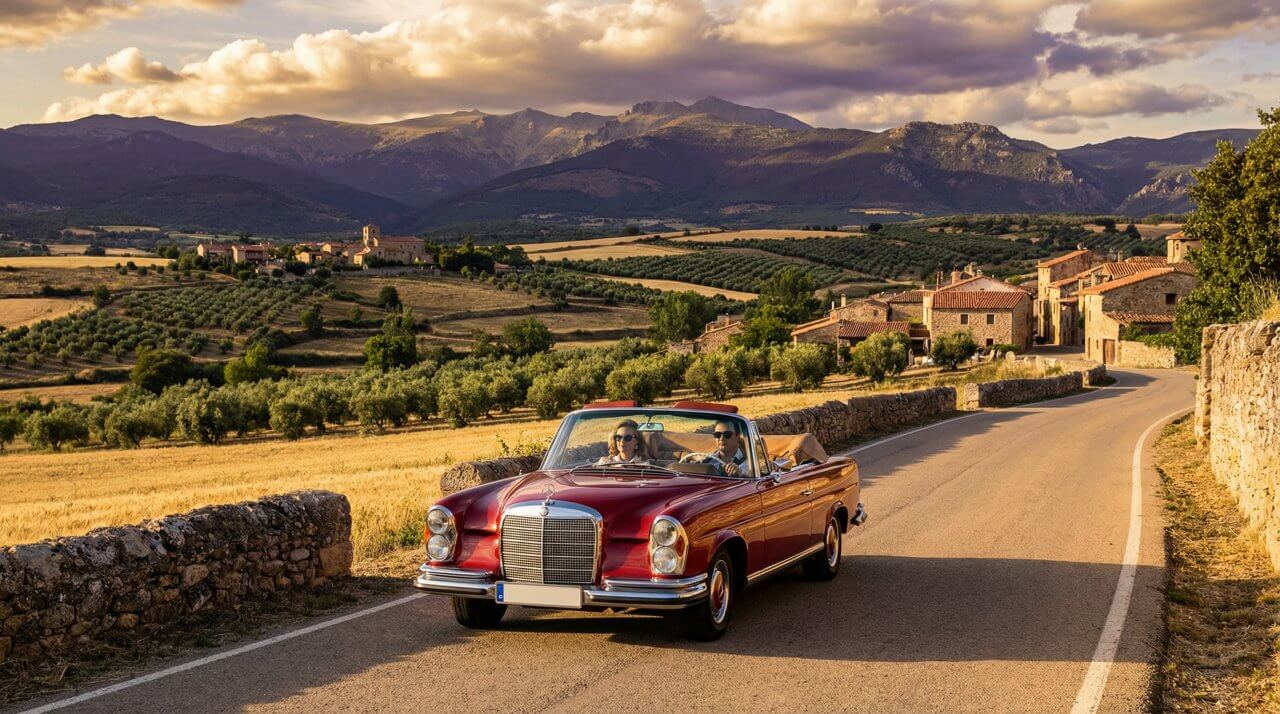



Best Madrid Road Trips in 2026: Routes, Distances, and What to See Along the Way – Planning a Madrid road trip puts you at the center of Spain’s best driving network.
- What Is the Best Road Trip From Madrid?
- Key Madrid Road Trip Routes at a Glance
- How to Drive in Spain: Essentials Before You Go
- 1. Madrid to Sierra de Guadarrama and El Escorial
- 2. Madrid to Ávila, Segovia, and La Granja de San Ildefonso
- 3. Madrid to Toledo and Cuenca
- 4. Road Trip From Madrid to Salamanca
- 5. Road Trip From Madrid to Córdoba
- 6. Madrid to Seville Road Trip
- 7. Road Trip Madrid to Barcelona
- 8. Madrid to Lisbon Drive
- 9. Madrid to Northern Spain: Burgos, La Rioja, and Basque Country
- 10. Quick Escapes: Patones de Arriba and Aranjuez
- Is There a Beach Near Madrid? Road Trip to the Coast
- Best Time to Go on a Madrid Road Trip
From the capital, you can reach medieval walled cities, Moorish palaces, mountain national parks, and two other European capitals without ever boarding a plane.
This guide covers 10 of the best road trips from Madrid, with real distances, driving times, must-see stops, and insider tips so you can plan a route that actually fits your schedule.
If you’re still figuring out your full Madrid itinerary before hitting the road, check our Madrid Travel Guide for essential things to know before you go.
Key Takeaways
Hide- Madrid to Seville showcases Andalusian charm with well-maintained autovías and distinctive cultural highlights along the route.
- Madrid to Sierra de Guadarrama National Park offers breathtaking mountain views and hiking opportunities just a short drive from the capital.
- The historical route to Ávila, Segovia, and La Granja combines medieval walls, Roman aqueducts, and royal gardens within 200 kilometers.
- Barcelona to Madrid presents contrasting urban experiences with diverse landscapes and charming towns along the A-2 highway.
- El Escorial excursion provides UNESCO heritage sites and a 40,000-volume Royal Library, best visited before 10:30 AM to avoid crowds.
What Is the Best Road Trip From Madrid?
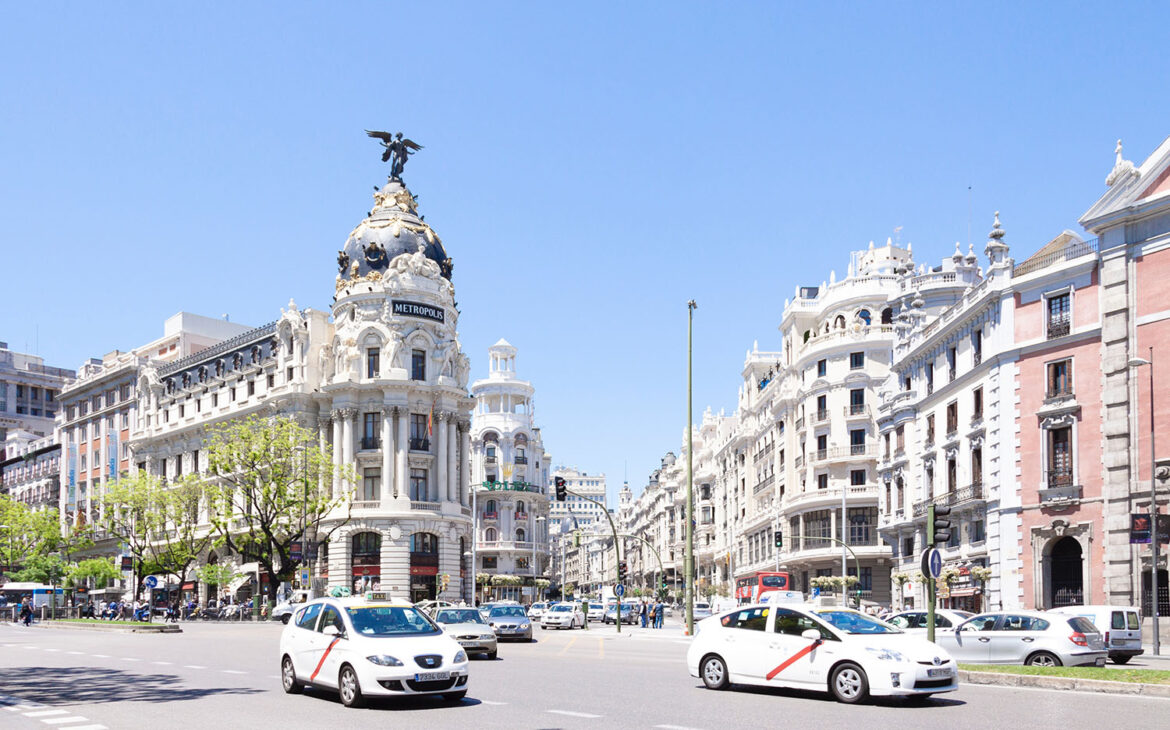
The best road trip from Madrid depends on how much time you have.
For a day trip, the Ávila–Segovia–La Granja loop (around 200 km round-trip) packs medieval walls, a Roman aqueduct, and royal gardens into one tight route.
For a multi-day adventure, the Madrid to Seville road trip along the A-4 is a classic, covering 534 km through La Mancha, Córdoba, and into Andalusia.
Madrid sits almost dead-center on the Iberian Peninsula, which is why its radial highway system works so well.
Six major highways (A-1 through A-6) fan outward in every direction, giving road-trippers easy access to wildly different landscapes within just a few hours.
Key Madrid Road Trip Routes at a Glance
Before picking your route, here’s a quick comparison of the most popular drives from Madrid:
| Route | Distance | Drive Time | Best For |
|---|---|---|---|
| Madrid to Segovia + Ávila | ~200 km round-trip | ~2.5 hrs total driving | Day trips, history lovers |
| Madrid to Toledo + Cuenca | ~300 km round-trip | ~3.5 hrs total driving | UNESCO sites, architecture |
| Madrid to Barcelona (A-2) | 620 km one-way | ~6 hrs direct | Long road trips, city-to-city |
| Madrid to Seville (A-4) | 534 km one-way | ~5.5 hrs direct | Andalusia, culture, food |
| Madrid to Lisbon (A-5) | 624 km one-way | ~5.5 hrs direct | Cross-border, two capitals |
| Madrid to Salamanca (A-6) | 212 km one-way | ~2 hrs direct | Architecture, university city |
| Madrid to Córdoba (A-4) | 396 km one-way | ~3.5 hrs direct | Mezquita, Moorish heritage |
| Madrid to León (A-6) | 335 km one-way | ~3 hrs direct | Mountains, nature, Camino |
How to Drive in Spain: Essentials Before You Go
Spain’s driving rules are straightforward, but a few specifics catch visitors off-guard.
Speed limits are 120 km/h on motorways (autopistas/autovías), 90 km/h on secondary roads, and 50 km/h in urban areas.
The legal blood alcohol limit is 0.05% — lower than many countries.
You’ll need:
- A valid driver’s license (EU licenses accepted; non-EU visitors should carry an International Driving Permit)
- Vehicle registration and proof of insurance
- Two reflective vests and a warning triangle in the car (required by law)
Toll Roads vs. Free Highways
Spain has two types of highways: autopistas (toll roads) and autovías (free highways).
Toll roads are faster and less congested.
On a route like Madrid to Barcelona, tolls add roughly €25–€35 for the full journey.
Most navigation apps let you toggle “avoid tolls” if you prefer the free alternative — the time difference is usually 20–40 minutes.
For parking in city centers, apps like ElParking or Parclick let you pre-book spots.
In historic towns like Toledo or Salamanca, park at the edge and walk in — driving through the old quarters is more stressful than it’s worth.
For a full breakdown of how to get around once you’re in the capital, see The Best Ways To Get Around In Madrid.
1. Madrid to Sierra de Guadarrama and El Escorial
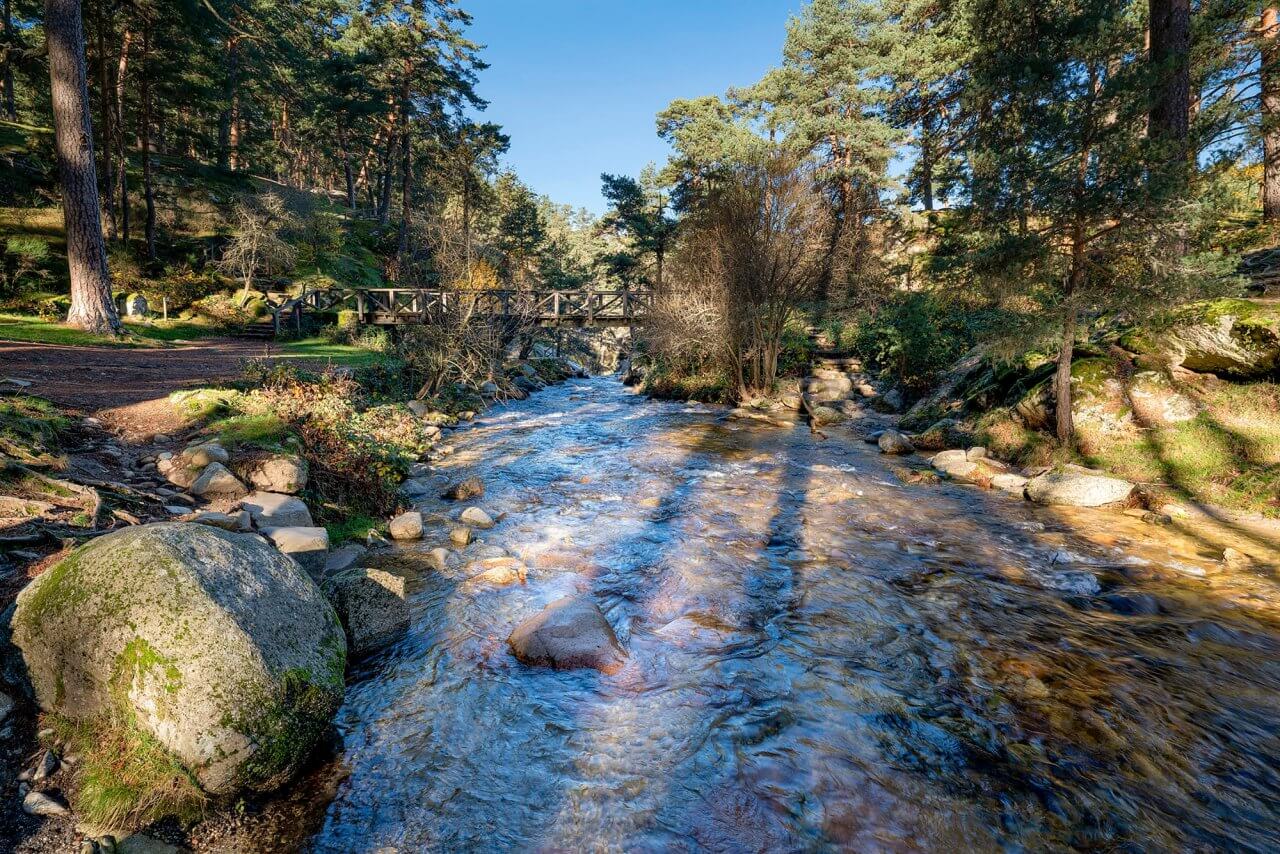
Distance from Madrid: 50–70 km | Drive time: 45–60 minutes via M-601 | Best for: Day trips, hikers, history buffs
The Sierra de Guadarrama National Park is the closest serious nature escape from Madrid.
Take the M-601 northwest out of the city and within an hour you’re breathing pine-scented mountain air at over 1,800 meters elevation.
Hiking Sierra de Guadarrama
The park’s granite formations are a playground for hikers and climbers.
Key trails include:
- La Pedriza — boulder labyrinth perfect for scrambling and photography, about 1.5 hrs from Madrid
- Siete Picos Trail — a ridge walk with sweeping views back toward the Castilian meseta
- Peñalara Peak (2,428 m) — the park’s highest summit; the trail up takes about 2.5 hours from the Cotos pass
- Lagunas de Peñalara — glacial lagoons near the top of Peñalara, genuinely stunning in late spring
Summer months get busy on weekends — aim for weekday mornings or arrive before 9 AM on Saturdays.
El Escorial: Spain’s Imperial Monastery
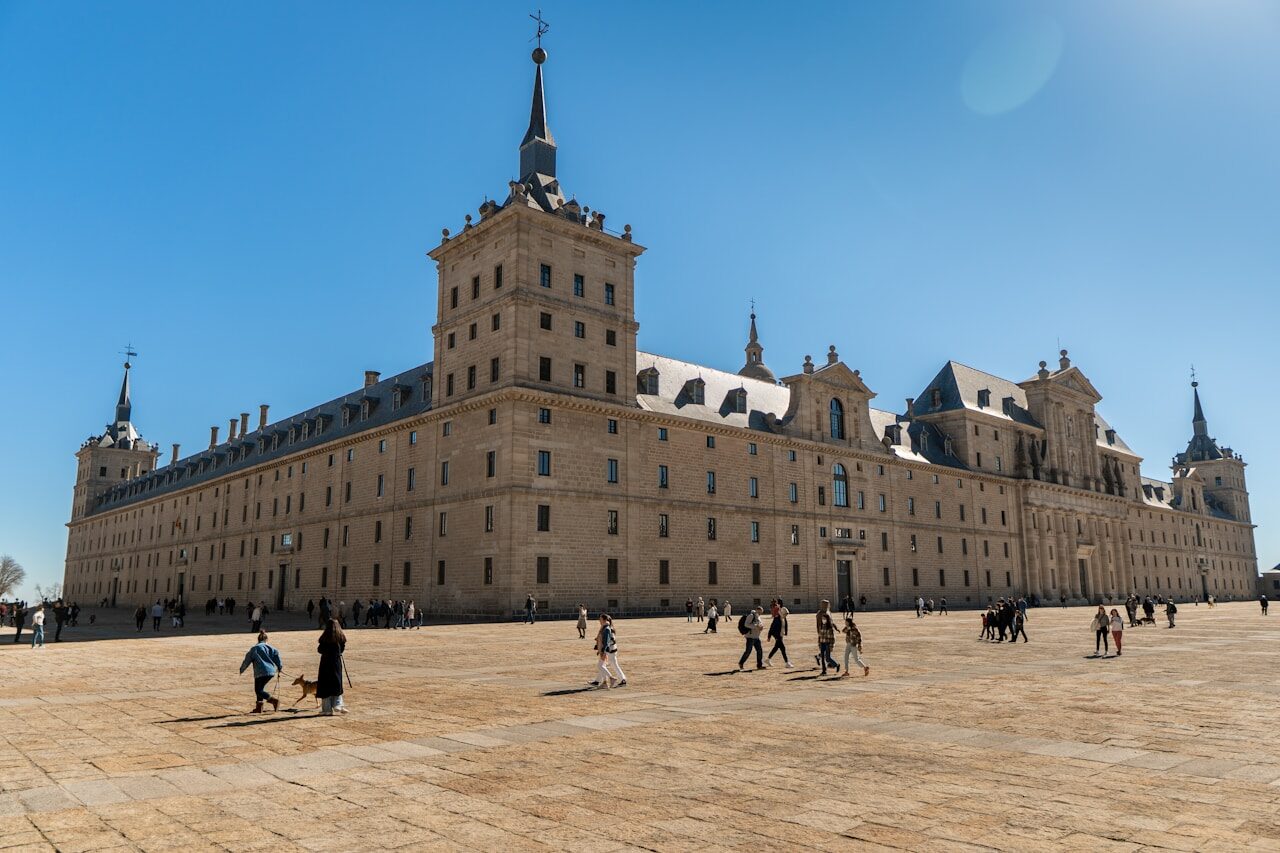
The Real Sitio de San Lorenzo de El Escorial sits about 50 km northwest of Madrid and deserves at least half a day.
Philip II built this UNESCO-listed monastery-palace complex in the 16th century as a royal mausoleum, library, and religious center rolled into one.
- Opening hours: Tuesday–Sunday, 10:00–18:00 (October–March closes at 17:00); free entry on Wednesdays and Sundays from 15:00–18:00
- Entry fee: €14 adults | €7 reduced (children 5–16, students under 25, seniors 65+) | Free for children under 5
- Royal Library: Houses over 40,000 rare manuscripts and books — one of the finest Renaissance libraries in Europe
- Royal Pantheon: Burial site of most Spanish monarchs since Charles I
Arrive before 10:30 AM on weekdays to beat tour groups.
The monastery’s scale is easy to underestimate — budget at least 2–3 hours inside.
Tickets must now be purchased in advance at patrimonionacional.es.
2. Madrid to Ávila, Segovia, and La Granja de San Ildefonso
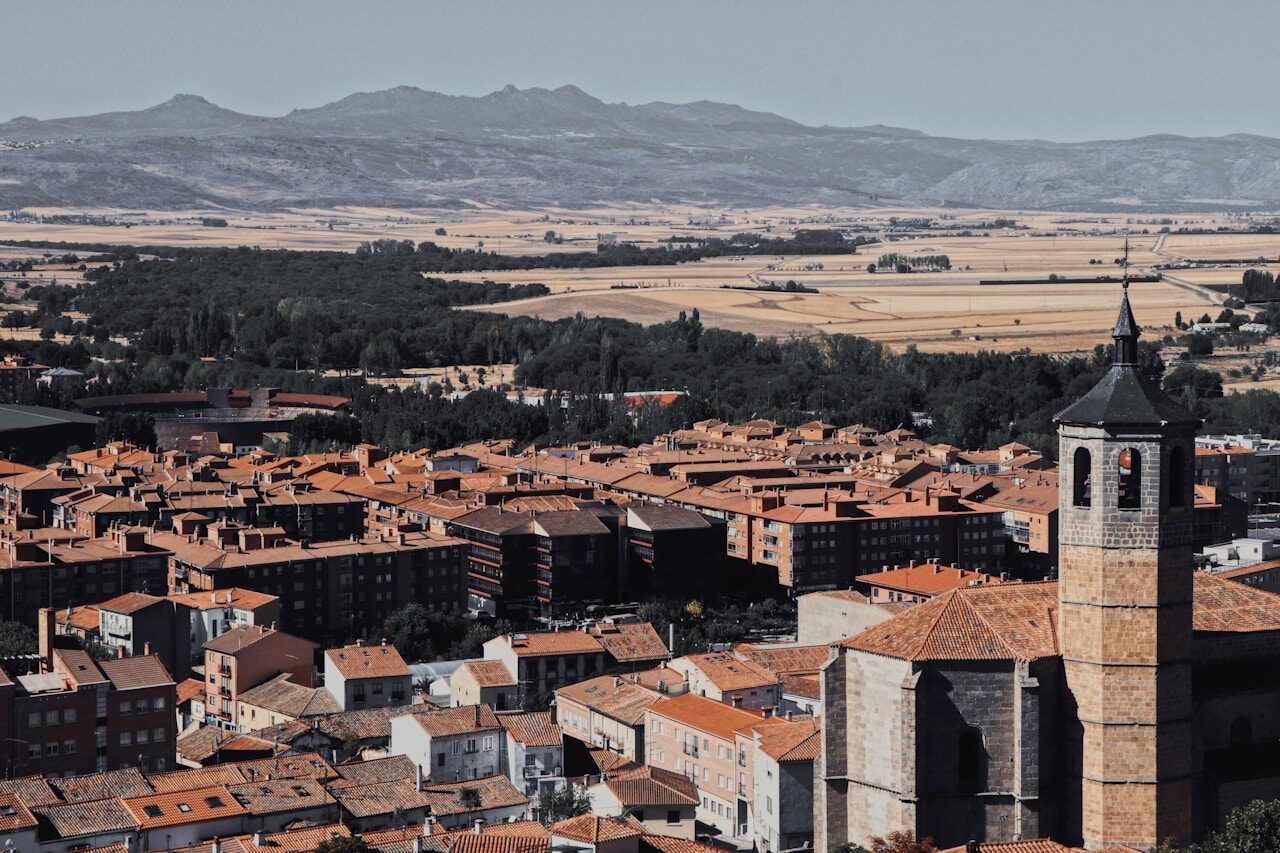
Total distance: ~200 km round-trip | Drive time: ~2.5 hrs driving total | Best for: Day trips, UNESCO sites, history
This is one of the most satisfying day trips you can do from Madrid.
Three remarkable stops, all within a couple of hours’ drive, each completely different from the last.
The Route
Start on the A-6 and AP-6 northwest toward Ávila (108 km, about 1 hour 15 minutes).
From Ávila, head east on the N-110 to Segovia (68 km, about 1 hour).
Then it’s a quick 11 km south to La Granja de San Ildefonso.
| Stop | Distance from Previous | Drive Time | Must-See | Local Food |
|---|---|---|---|---|
| Ávila | 108 km from Madrid | 1h 15m | Medieval walls | Yemas de Ávila (egg yolk sweets) |
| Segovia | 68 km from Ávila | 1h | Roman aqueduct, Alcázar | Cochinillo asado (roast suckling pig) |
| La Granja | 11 km from Segovia | 20 min | Royal Palace, gardens | Trout from the Sierra |
Note: The AP-6 toll section costs around €8–€10 each way for light vehicles.
Ávila: Europe’s Most Complete Medieval Walls
Ávila’s old city walls are the best-preserved medieval fortification system in Europe — 88 towers, 9 gates, and 2.5 km of walkable ramparts.
The city itself sits at 1,130 meters altitude, making it one of the highest provincial capitals in Spain.
Walk the walls for panoramic views of the Castilian plateau.
The Cathedral of Ávila, started in the 12th century, is embedded directly into the wall — the apse actually forms part of the city’s defense system.
- Ávila Cathedral entry: €7 adults | €5 youth (7–14) | Free for children under 7
Segovia: The Aqueduct and the Alcázar
Segovia’s Roman aqueduct was built around the 1st century AD and still stands without a drop of mortar — 166 arches stretching 813 meters through the heart of the city.
It’s genuinely one of the most impressive pieces of ancient engineering you’ll see anywhere in Europe.
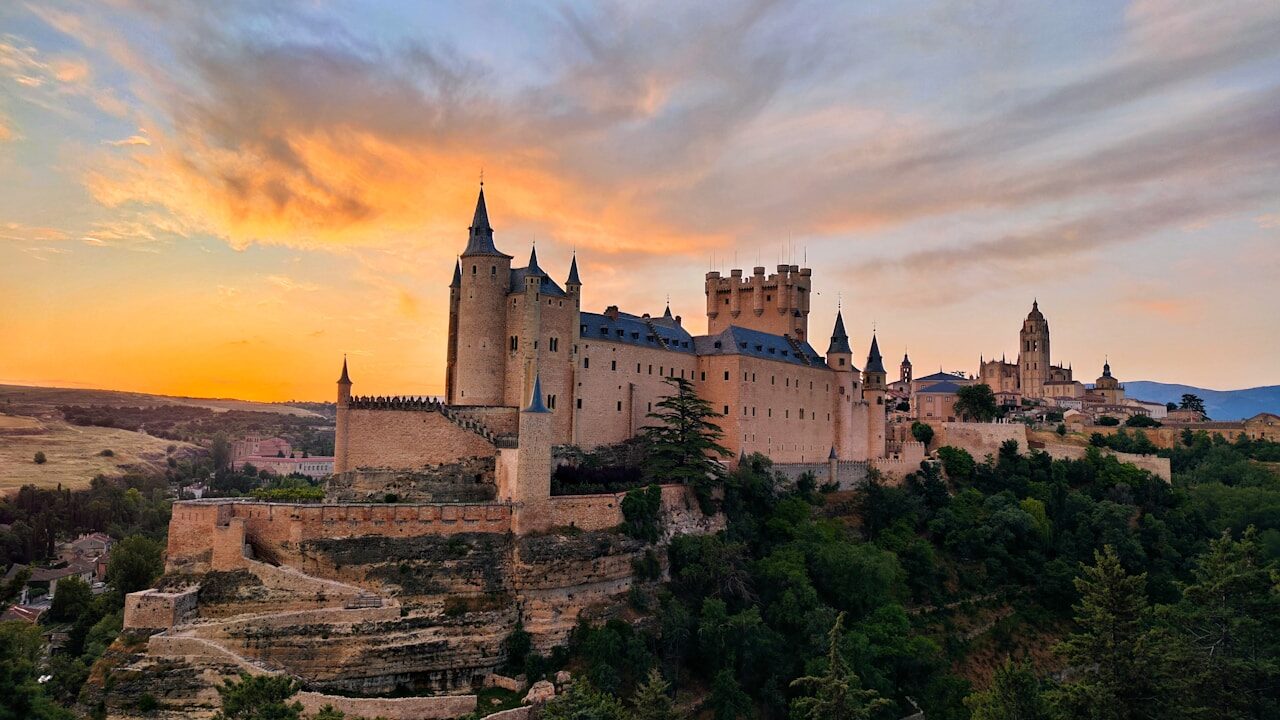
The Alcázar de Segovia is the fairy-tale fortress perched on a rocky crag above two rivers.
Its distinctive silhouette allegedly inspired Walt Disney when designing the Sleeping Beauty Castle.
Inside, there are royal apartments, armor collections, and a tower with panoramic views.
- Alcázar full entry (Palace + Museum + Tower): €9 adults | €7 reduced (students, seniors 65+, large families, people with disabilities) | Free for children under 5
- Palace + Museum only: €6 adults | €4 reduced
- Free for EU citizens: non-festive Tuesdays, 14:00–16:00
La Granja de San Ildefonso: Spain’s Versailles
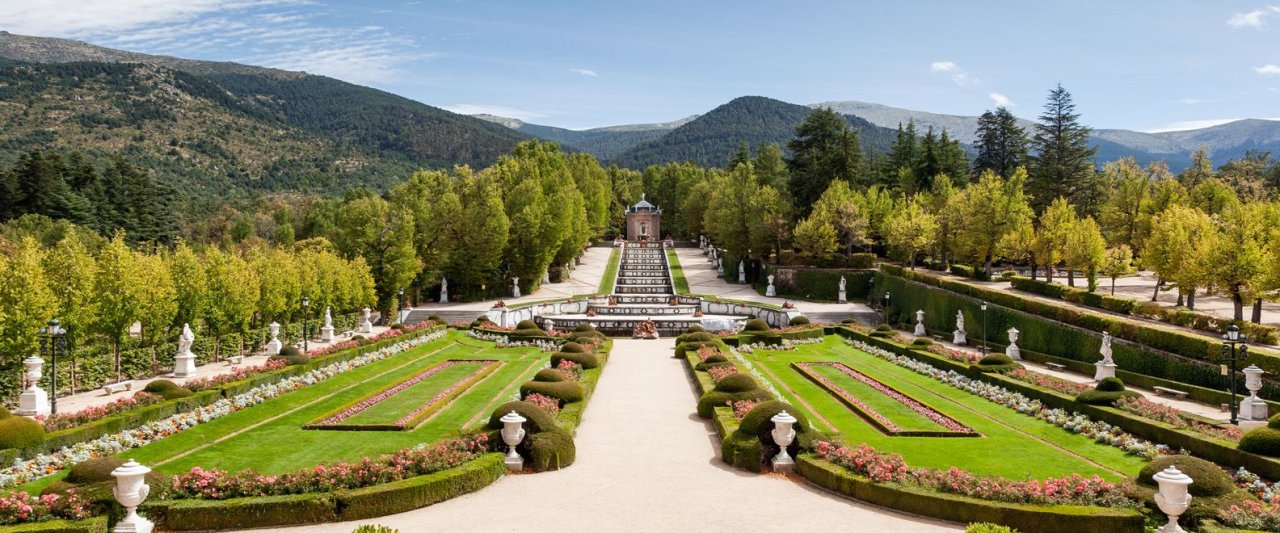
The Real Sitio de La Granja was built by Philip V in the early 18th century as a Spanish answer to Versailles.
The palace itself is impressive, but the real draw is the garden complex — 17 fountains, tree-lined walks, and manicured parterres spread across the slopes of the Sierra de Guadarrama.
The fountains run on specific days and at set times.
In 2026, the schedule runs April through August, with Fountain Groups 1 and 2 alternating on Wednesdays, Saturdays, Sundays, and select bank holidays, starting at 17:30 (midday on Sundays and some holidays).
Night shows for Diana’s Baths run on Friday nights in July and August at 22:00.
Check the full 2026 schedule at patrimonionacional.es before visiting.
3. Madrid to Toledo and Cuenca
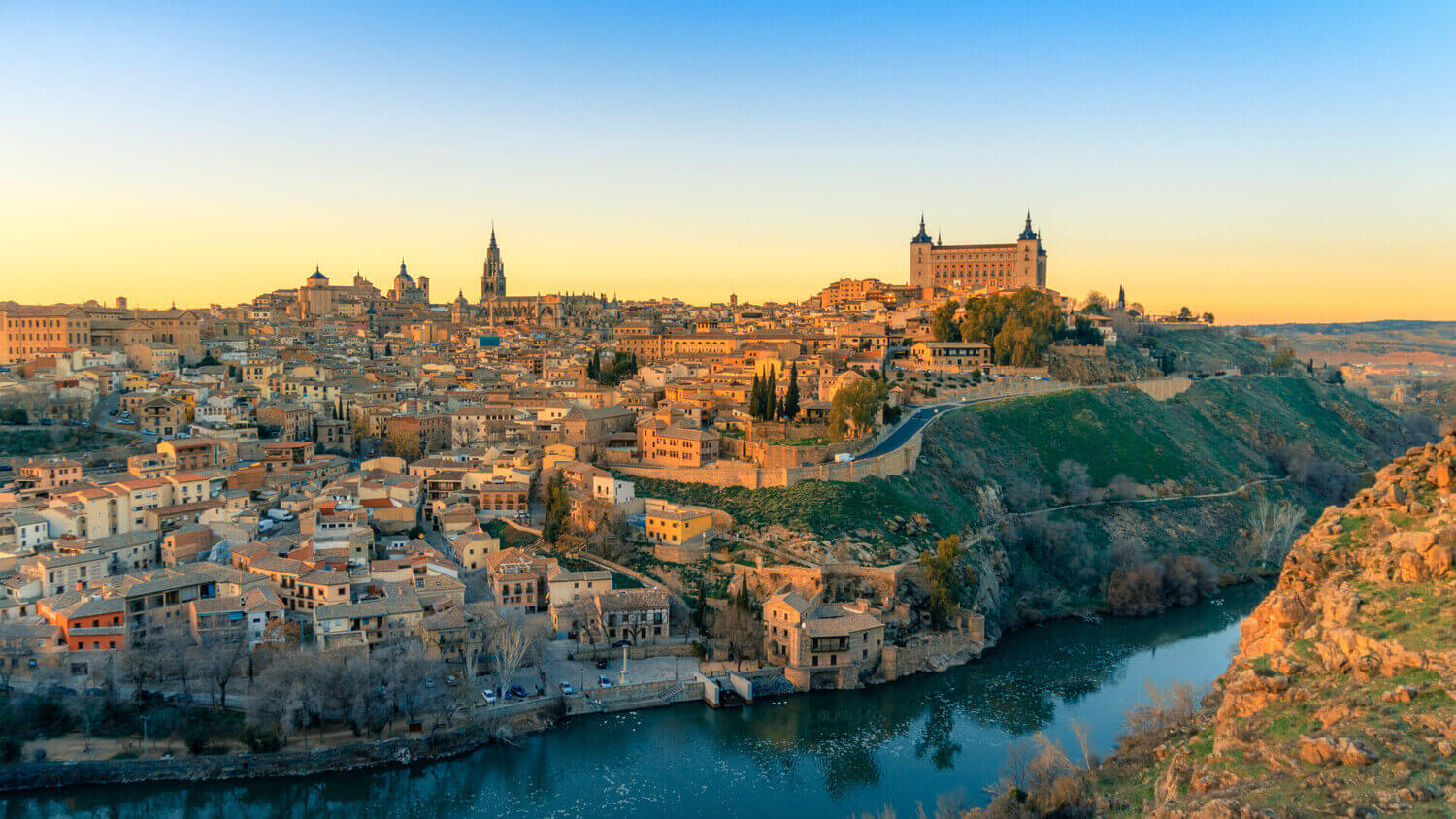
Toledo distance: 73 km | Drive time: ~1 hour via A-42 | Cuenca distance: 167 km | Drive time: ~2 hours via A-3
Toledo: The City of Three Cultures
Toledo was the medieval capital of Spain and one of the few cities in medieval Europe where Christians, Muslims, and Jews lived side by side for centuries.
That history shows up everywhere — in the Toledo Cathedral, the Mosque of Cristo de la Luz, and the old Jewish Quarter with its two surviving synagogues.
Tips for visiting:
- Leave Madrid by 8–9 AM to reach Toledo before the day-tripper crowds peak around 11 AM
- Toledo Cathedral entry: €10 adults; allow 1.5 hours minimum
- Climb the Alcázar for panoramic views across the Tagus River gorge
- Toledo is best explored on foot — park outside the old town and walk in
Cuenca: Hanging Houses Above a Gorge
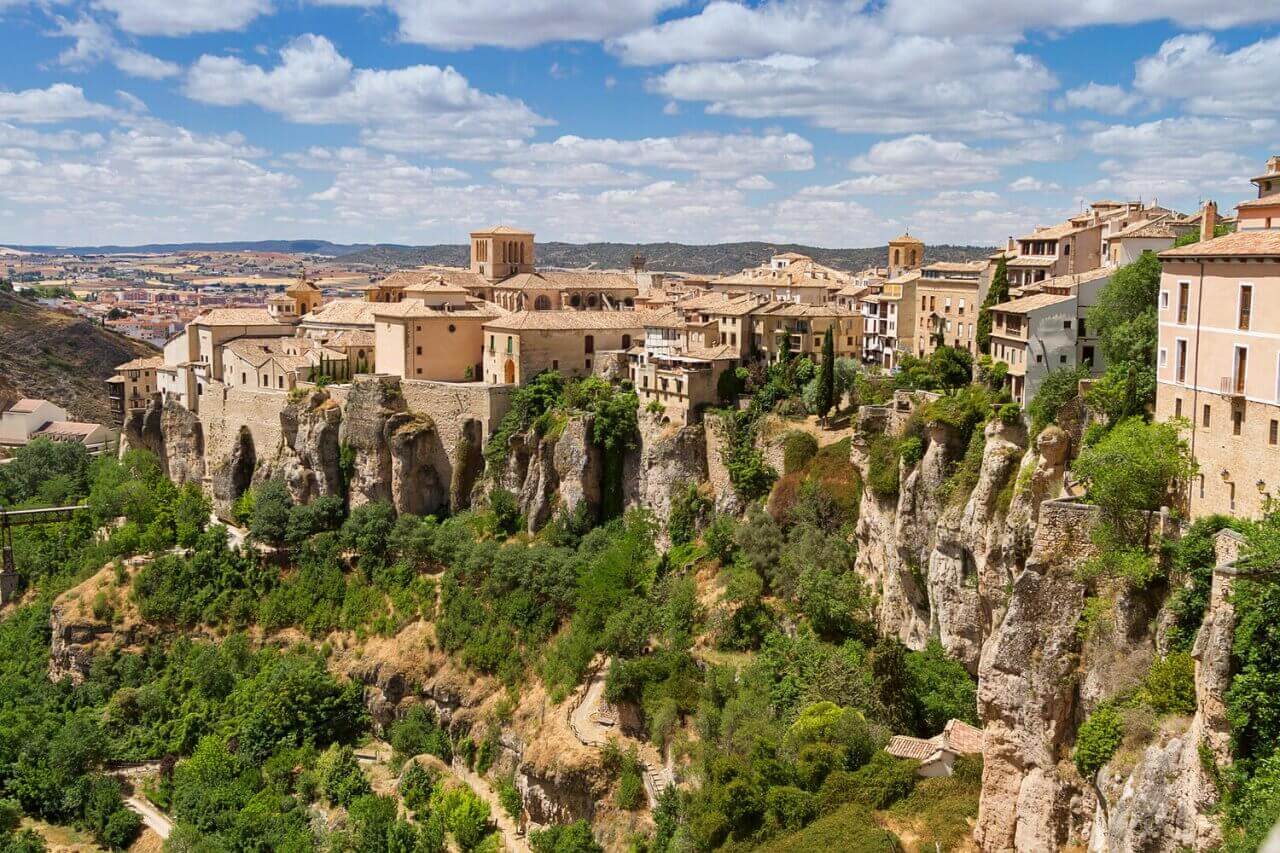
The Casas Colgadas (Hanging Houses) of Cuenca are exactly what they sound like: medieval structures built to the edge of a cliff, their wooden balconies dangling over a sheer drop into the Huécar River gorge.
Cuenca became a UNESCO World Heritage Site in 1996.
Route from Madrid: A-3 highway heading southeast, about 2 hours.
The approach to the city through the gorge is dramatic.
Don’t miss:
- San Pablo Bridge — the pedestrian bridge across the gorge, best at sunrise or just before sunset
- Museo de Arte Abstracto Español — housed inside the actual Hanging Houses; surprising and worthwhile
- The Huécar gorge hiking trail for ground-level perspectives
Alcalá de Henares: Cervantes’ Birthplace
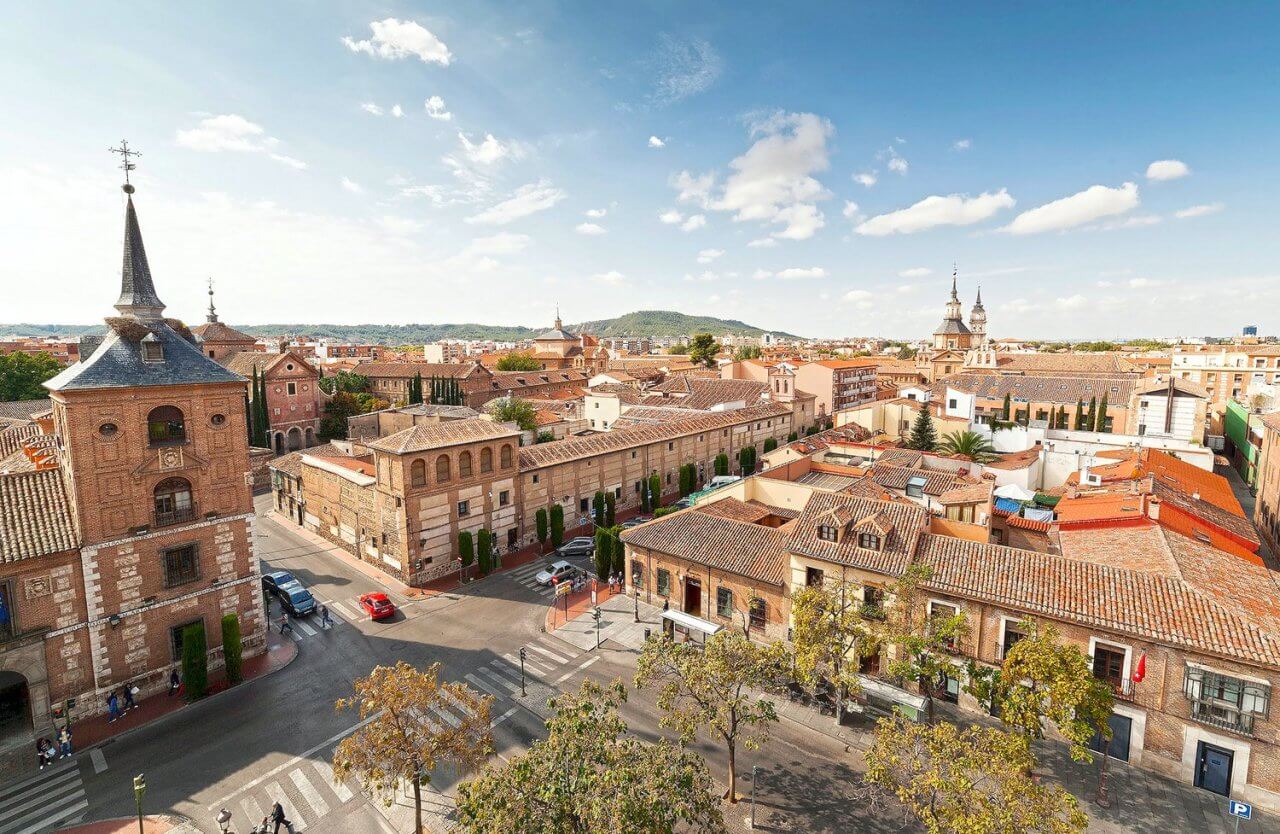
On the return to Madrid from Cuenca, a 30-minute detour to Alcalá de Henares is worth it.
This UNESCO-listed city is the birthplace of Miguel de Cervantes and home to one of Spain’s oldest universities, founded in 1499.
The historic university precinct is still actively used — you’ll find students mixed in with the tourists.
Visit Casa-Museo de Cervantes (entry around €3) and grab tapas on Plaza Cervantes before heading back to Madrid (35 km, about 30 minutes on the A-2).
4. Road Trip From Madrid to Salamanca
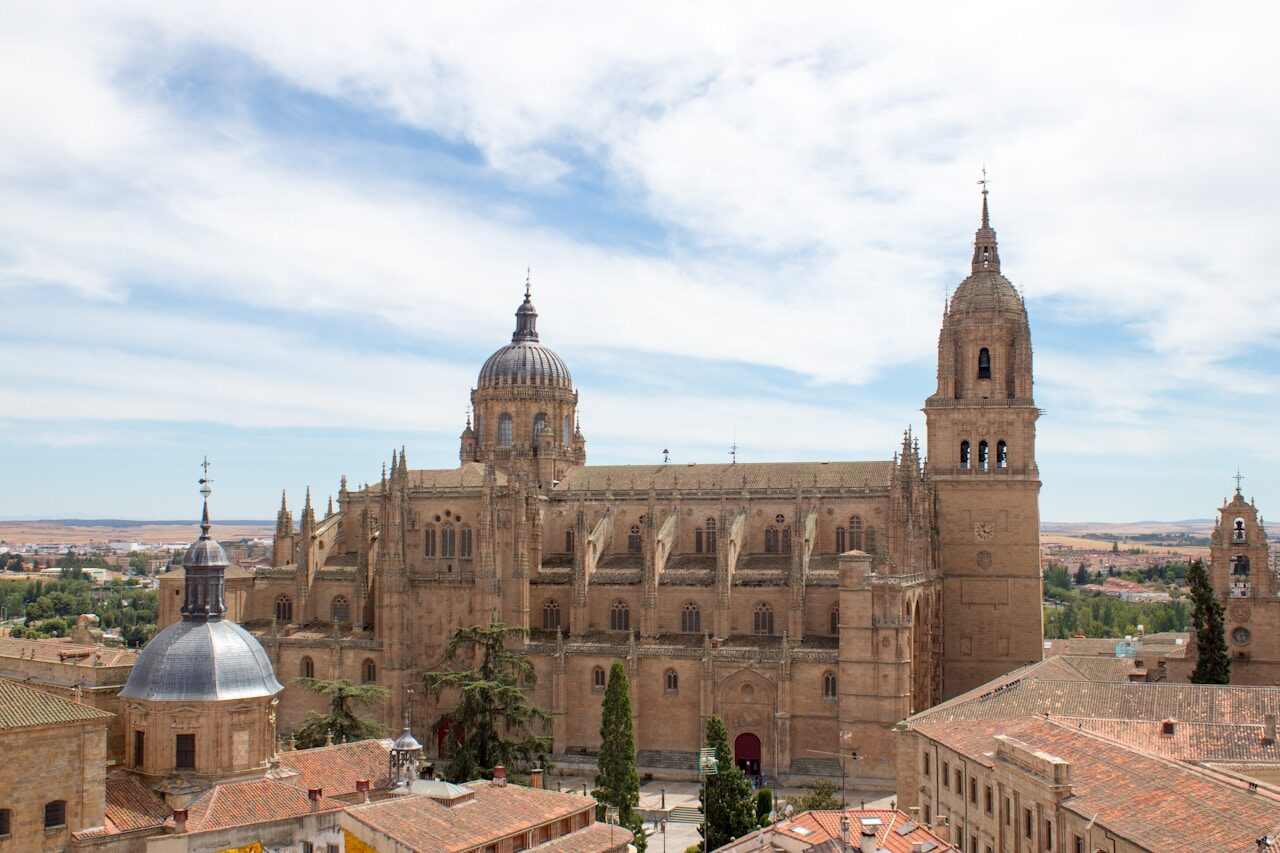
Distance: 212 km | Drive time: ~2 hours via A-6/A-62 | Best for: Architecture lovers, weekend trips
The road trip from Madrid to Salamanca is one of the most underrated drives in central Spain.
Two hours on the A-6 northwest, and you’re standing in front of one of the finest Plateresque facades in the world.
Why Salamanca Stands Out
Salamanca’s old city is built almost entirely from the local golden sandstone (piedra de Villamayor), which glows amber in the afternoon sun.
The city contains:
- Universidad de Salamanca — founded in 1218, one of Europe’s oldest universities; find the carved frog on the facade for good luck
- Plaza Mayor — often called Spain’s most beautiful town square, surrounded by baroque arcading
- Salamanca Cathedral (old and new cathedrals side by side) — €10 general entry | €9 reduced (seniors 65+, students under 25) | €7 youth (7–16) | Free for children under 7; includes the New Cathedral, Old Cathedral, Sacristy, Cloister, Chapter Rooms, Museum, and audio guide
- Casa de las Conchas — 15th-century palace covered in over 300 carved stone shells
Budget a full day in the city.
The walk from the Roman bridge along the riverbank back toward the old town at sunset is genuinely one of the best evening strolls in Spain.
From Salamanca, you can loop back via the A-66 to Ávila and then the AP-6 back to Madrid for a satisfying two-day circuit.
5. Road Trip From Madrid to Córdoba
Distance: 396 km | Drive time: ~3.5 hours via A-4 | Best for: Moorish architecture, culture, food
The road trip from Madrid to Córdoba follows the A-4 south through the flat plains of La Mancha — windmill territory.
It’s not Spain’s most dramatic drive, but Córdoba itself absolutely justifies the journey.
The Mezquita-Catedral
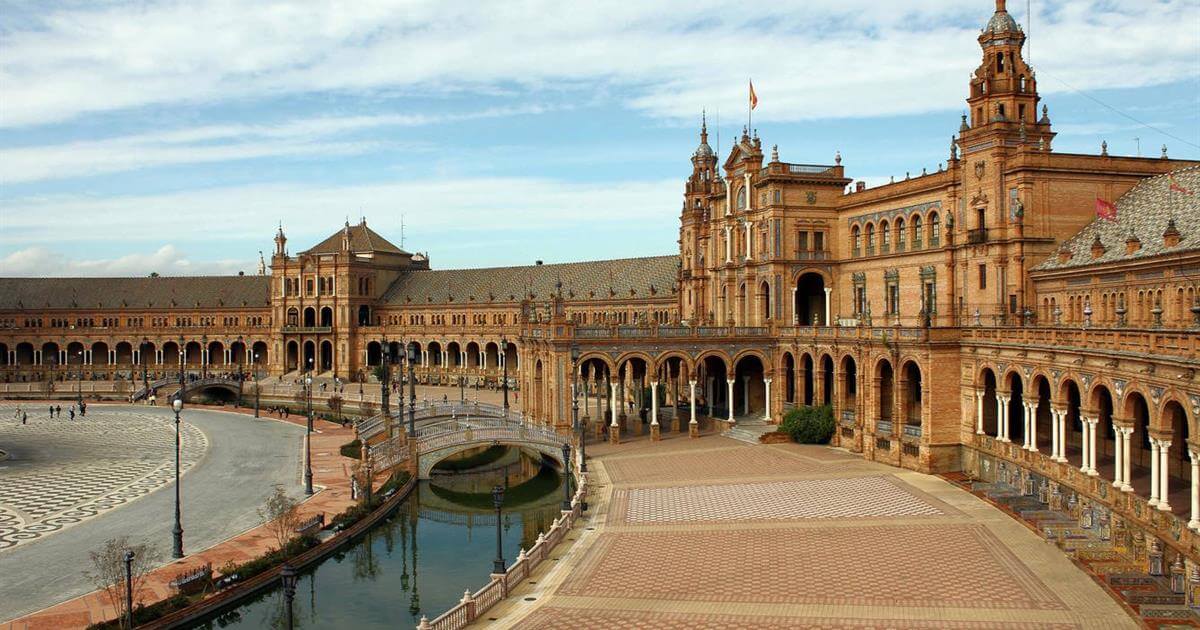
The Mezquita is one of the most extraordinary buildings in Europe.
Built as a mosque in the 8th century, expanded over 200 years into a forest of 856 columns with distinctive red-and-white striped arches, then converted to a cathedral after the Reconquista with a Renaissance nave inserted directly into the middle.
The result is architecturally bizarre and completely unforgettable.
- Opening hours: Monday–Saturday 10:00–19:00; Sunday from 08:30 (last entry one hour before closing)
- Entry fee: €13 adults | €10 reduced (seniors 65+, students 15–26, European Youth Card holders) | €7 children 10–14
- Book tickets in advance online at mezquita-catedraldecordoba.es — the Mezquita sells out during peak season
Córdoba Stops Worth Adding
- Jewish Quarter (Judería) — narrow whitewashed streets, flower-filled patios, and the oldest synagogue in western Europe
- Alcázar de los Reyes Cristianos — palace and gardens where Columbus met Ferdinand and Isabella
- Medina Azahara (10 km outside the city) — 10th-century Moorish palace ruins; genuinely impressive and often overlooked
From Córdoba, it’s another 143 km south to Seville if you’re continuing to Andalusia.
6. Madrid to Seville Road Trip
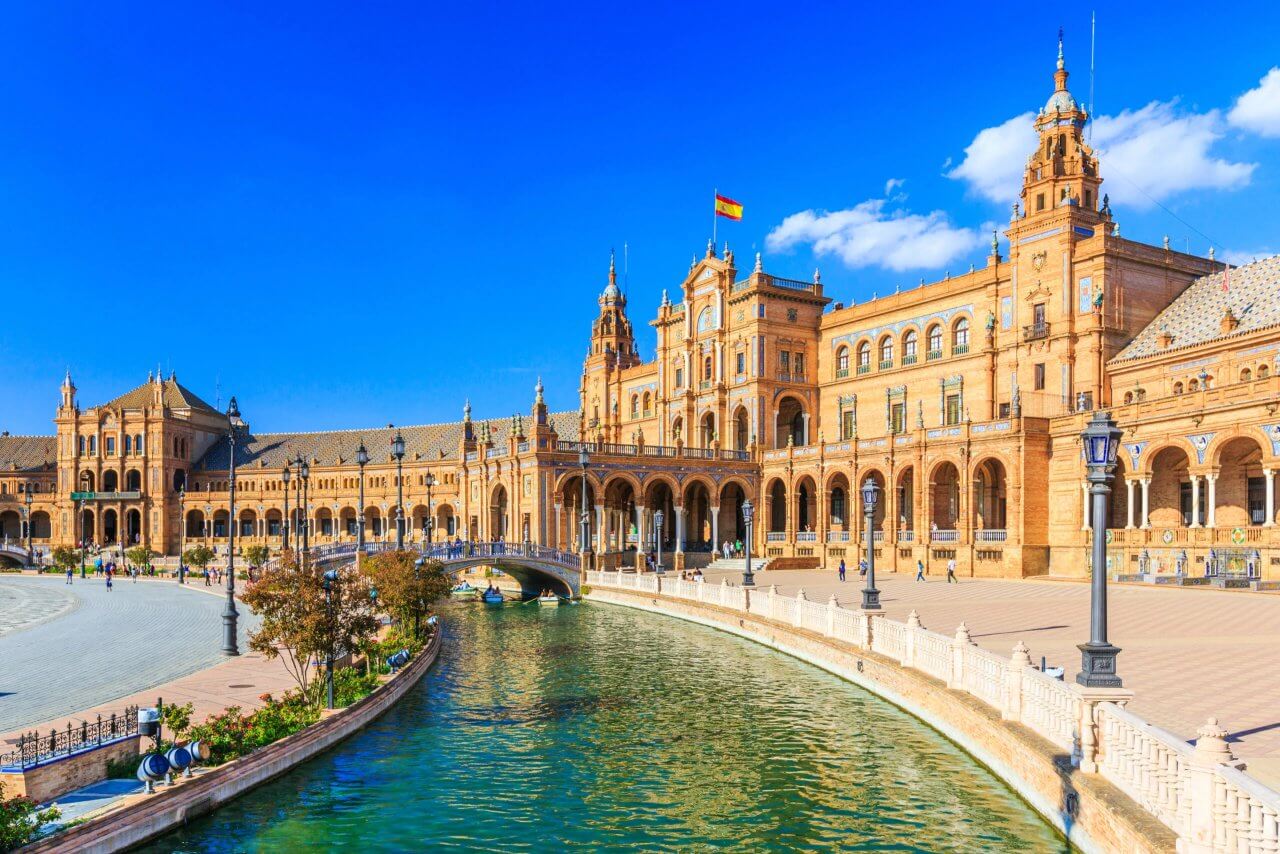
Distance: 534 km | Drive time: ~5.5 hours via A-4 | Best for: Multi-day trips, full Andalusia immersion
The Madrid to Seville road trip is Spain’s most iconic long-distance drive.
Follow the A-4 south from Madrid, through La Mancha, past Córdoba, and into the heart of Andalusia.
Recommended Two-Day Route
Day 1: Madrid → Consuegra windmills (160 km, 1.5 hrs) → Córdoba (235 km from Consuegra, 2 hrs) — stay overnight in Córdoba
Day 2: Córdoba → Seville (143 km, 1.5 hrs)
What to Do in Seville
Seville rewards slow exploration.
The three main monuments — Real Alcázar, Seville Cathedral + Giralda Tower, and Casa de Pilatos — can easily fill two full days.
- Real Alcázar: Still an active royal residence; general admission €20 adults | €12 EU students (14–30) and seniors 65+ | €1.70 children under 14; book timed entry in advance at alcazarsevilla.org — capacity is capped at 750 visitors and the queue without a ticket can be brutal
- Seville Cathedral: The largest Gothic cathedral in the world; online entry €13 general | €7 reduced (seniors 65+, students under 25, large families); buy online to save €1 vs. the ticket office window price; includes Giralda Tower and El Salvador church
- Barrio de Santa Cruz: The old Jewish quarter — best explored in the evening when the orange-blossom scent is strongest
- Flamenco: For authentic performances, check out Casa de la Memoria or Tablao Flamenco Los Gallos
Thinking about extending your Andalusian trip?
Add Granada’s Alhambra (2.5 hrs from Seville) for the complete southern Spain experience.
Is the Madrid to Seville Drive Worth It?
Yes, if you have at least two days.
The direct drive is manageable in one long day (~5.5 hours), but rushing misses the whole point.
Stopping in Córdoba breaks up the drive perfectly and adds one of Spain’s best single sights to your itinerary.
7. Road Trip Madrid to Barcelona
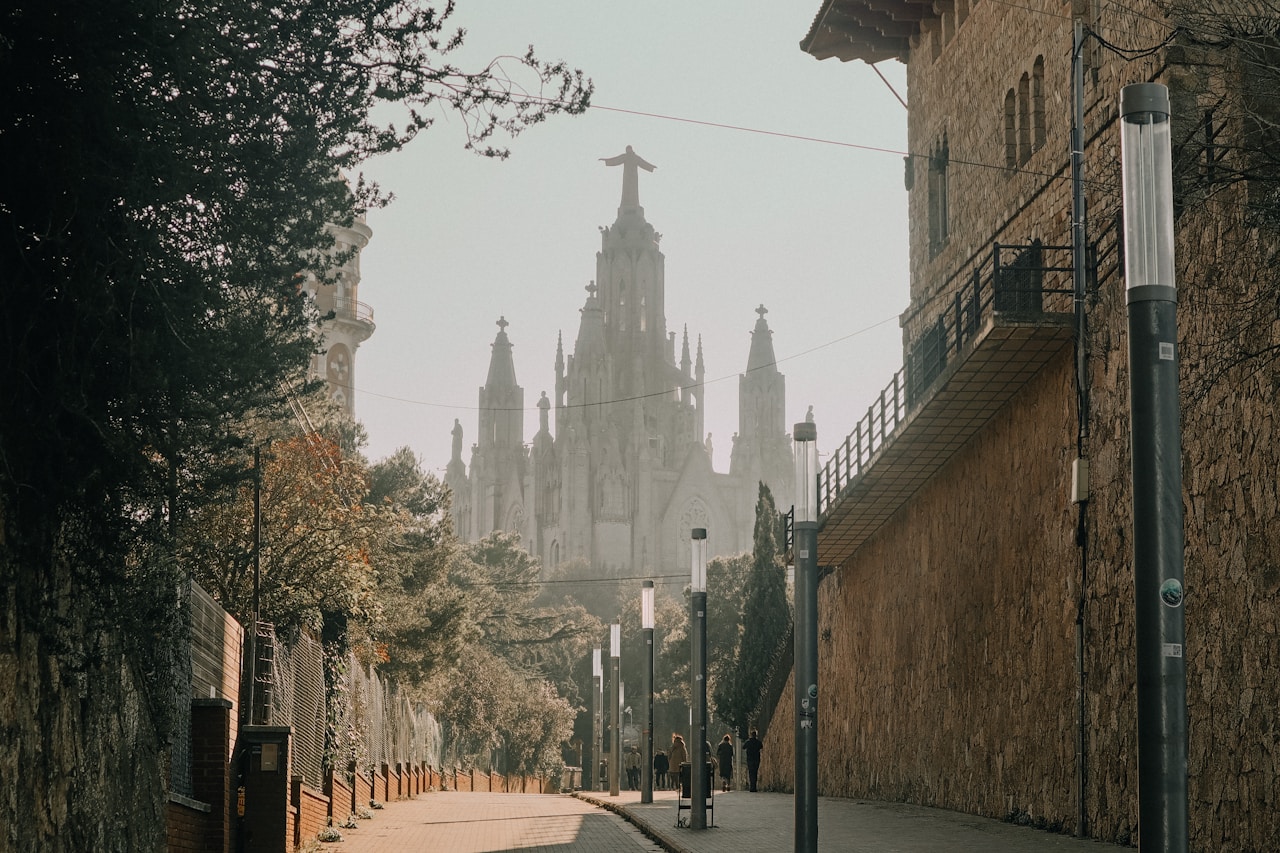
Distance: 620 km | Drive time: ~6 hours via A-2/AP-2 | Best for: Long road trips, seeing central Spain’s interior
The road trip from Madrid to Barcelona covers about 620 km on the A-2 highway and takes approximately 6 hours of direct driving — or about 8–10 hours if you include stops.
The Barcelona to Madrid drive runs the same route in reverse, and the driving time is essentially identical.
Best Stops on the Madrid to Barcelona Drive
This route crosses the Aragonese heartland, and Zaragoza at the midpoint is the obvious main stop:
- Zaragoza (300 km from Madrid, ~3 hrs): Midpoint city with the spectacular Basílica del Pilar and the Moorish Aljafería palace. Allow 2–3 hours minimum.
- Brihuega (short detour off A-2): Famous for lavender fields in July — the landscape turns completely purple. Worth timing your trip around.
- Medinacelli (150 km from Madrid): A quiet hilltop village with a Roman triumphal arch from the 1st century AD. Quick stop, surprisingly photogenic.
- Sigüenza (150 km from Madrid): Medieval town with a fortress-cathedral. The drive up to it is dramatic.
- Monasterio de Piedra (40-min detour from Zaragoza): A 12th-century monastery with a dramatic waterfall park — genuinely worth the detour if you have time.
Barcelona to Madrid Driving Time
The Barcelona to Madrid driving time is the same as the reverse: approximately 5 hours 45 minutes to 6 hours in normal traffic via the AP-2 and A-2 highway, covering around 616–620 km.
Add an hour or more if you’re stopping in Zaragoza.
Most drivers doing the Barcelona to Madrid drive or Madrid to Barcelona by car recommend allowing a full day and stopping at least once.
Doing the drive in one shot without breaks is doable but not enjoyable.
Driving from Madrid to Barcelona: Toll Costs
Spain’s motorway tolls increased by approximately 2% across most state-managed routes in January 2026.
Taking the toll route (AP-2 for most of the Madrid to Barcelona journey) costs around €25–€35 in total tolls for a standard car.
The free alternative on the N-2 adds significant time and winds through more towns.
Most travelers opt for the tolls.
8. Madrid to Lisbon Drive
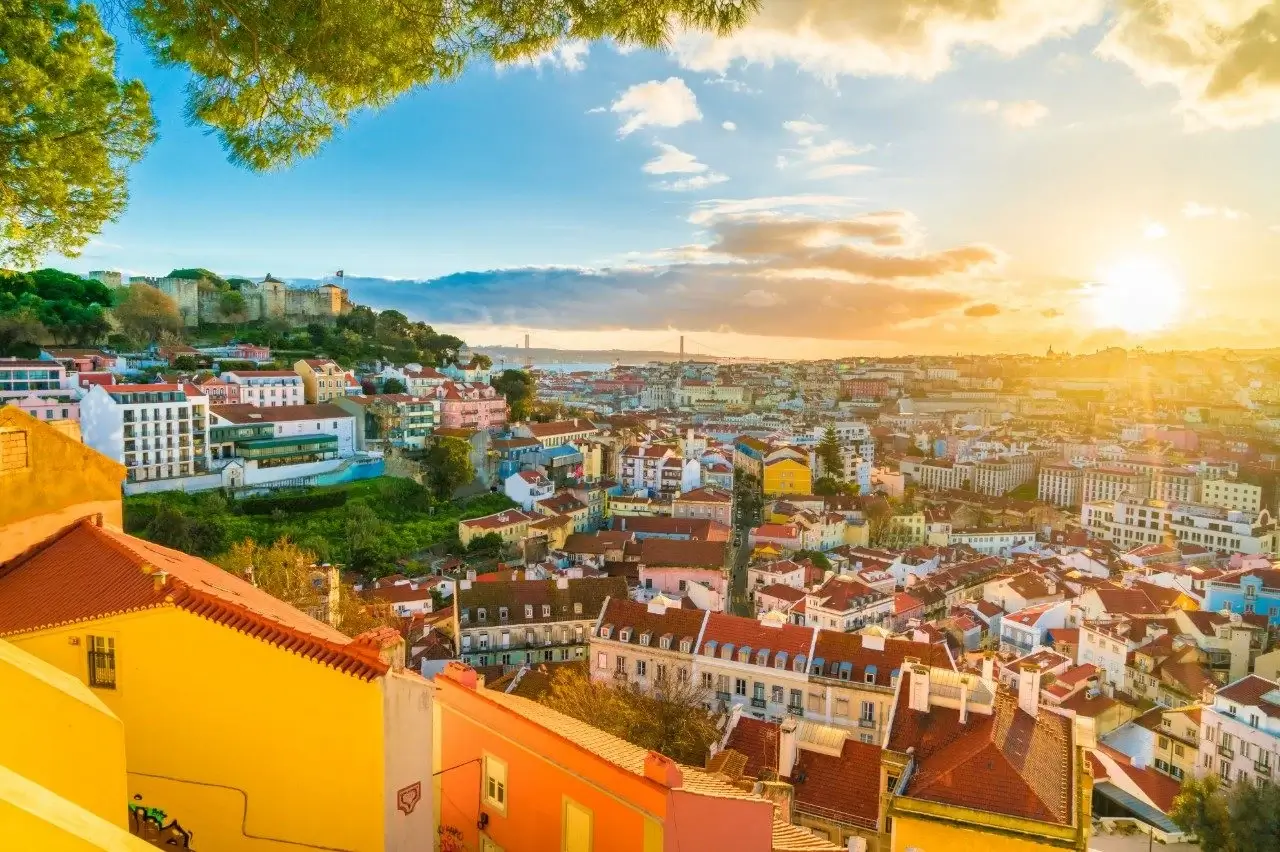
Distance: 624 km | Drive time: ~5.5 hours direct via A-5/IP-6 | Best for: Two-capital trips, 2–3 day journeys
The Madrid to Lisbon drive is one of Europe’s underrated road trips.
The A-5 heading west takes you through the dry plains of Extremadura — austere, wide-open, and genuinely beautiful — before crossing into Portugal.
Best Two-Day Madrid to Lisbon Route
Day 1: Madrid → Cáceres (299 km, ~3 hrs) — old town walk + lunch → Mérida (70 km more, 45 min) — Roman theater at sunset — stay overnight
Day 2: Mérida → Évora (across the border, 117 km, ~1.5 hrs) — Roman temple + cathedral → Lisbon (130 km, ~1.5 hrs)
Top Stops Between Madrid and Lisbon
- Cáceres (299 km): One of the best-preserved medieval old towns in Spain; the walled city is entirely UNESCO-listed. Exceptionally quiet — far fewer tourists than Toledo.
- Mérida (370 km): The former capital of Roman Hispania. The Teatro Romano (Roman Theater) still hosts performances. The archaeological ensemble here is UNESCO-listed and genuinely world-class.
- Évora, Portugal (487 km): A lovely Portuguese city with a Roman temple, a cathedral, and the slightly macabre Chapel of Bones (Casa dos Ossos). Allow half a day.
The cross-border drive from Badajoz into Portugal is smooth — no border stops, just the landscape gradually shifting from Spanish scrub to Portuguese cork oak forests.
Driving from Madrid to Lisbon: What to Know
- Fill up on fuel in Spain before crossing — petrol is generally cheaper on the Spanish side
- Portuguese motorway tolls increased by 2.29% in January 2026 based on the annual inflation rate. The Marateca/Caia section of the A2/A6 (relevant for the Lisbon approach) costs €15.40 for Class 1 vehicles. Hire cars often include a toll transponder (Via Verde), but confirm before you go
- The drive into Lisbon from the east comes over the 25 de Abril Bridge or the Vasco da Gama Bridge — both are spectacular introductions to the city
9. Madrid to Northern Spain: Burgos, La Rioja, and Basque Country
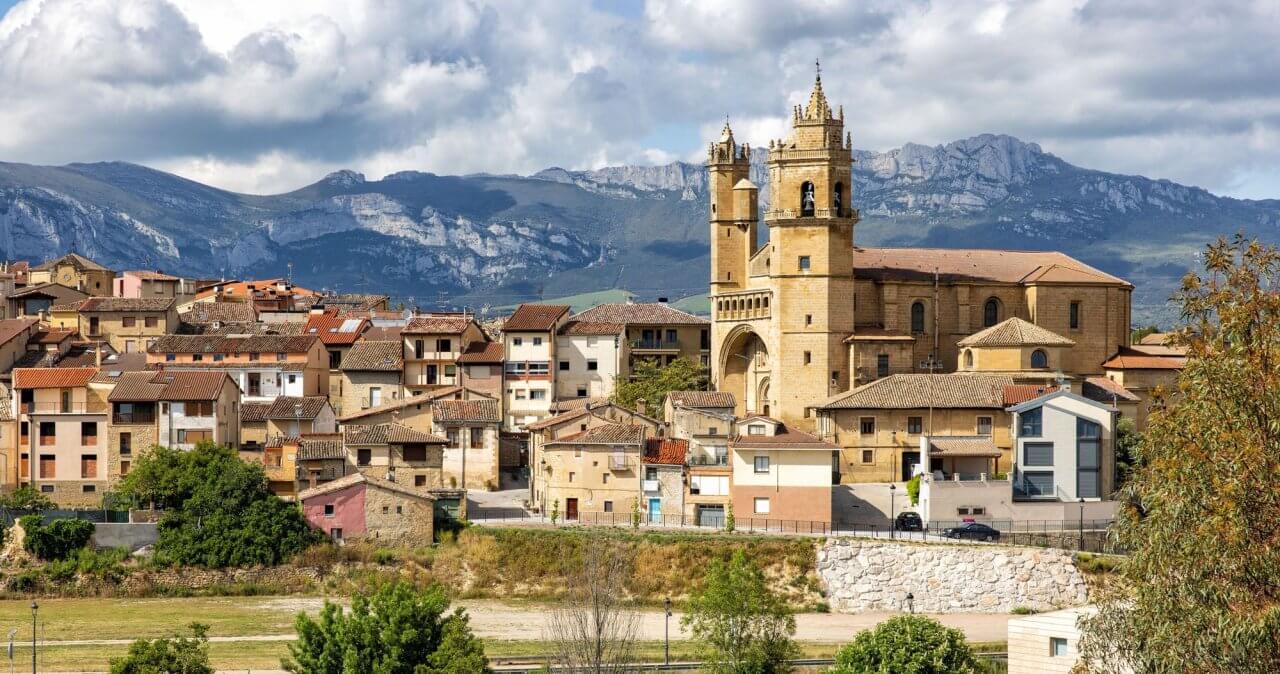
Distance to Burgos: 240 km | Drive time: ~2.5 hours via A-1 | Best for: Multi-day trips, wine lovers, food enthusiasts
Heading north from Madrid on the A-1, you enter an entirely different Spain.
The landscapes get greener, the architecture shifts from Castilian stone to Gothic spires and Basque timber, and the food gets better with every kilometer.
Key Stops Going North
- Burgos (240 km, ~2.5 hrs): The Gothic Cathedral of Burgos is UNESCO-listed and extraordinary — its golden stone spire and interior chapels rival any cathedral in Spain. Also the burial city of El Cid.
- La Rioja wine region (330 km, ~3 hrs): The town of Haro is the center of Rioja wine country. Bodega visits are easy to arrange — several large bodegas like CVNE and López de Heredia offer cellar tours and tastings.
- Bilbao (390 km, ~4 hrs): The Guggenheim Bilbao alone is worth the trip. Frank Gehry’s titanium-clad building is as impressive in person as in photographs. The old town’s pintxos bars are the best way to eat in the Basque Country.
- San Sebastián (460 km, ~4.5 hrs): Consistently ranked among Europe’s top food cities. The La Concha beach is spectacular. Budget extra time here.
This route works beautifully as a 3–4 day trip from Madrid: overnight in Burgos, a night in La Rioja, then two nights in San Sebastián.
10. Quick Escapes: Patones de Arriba and Aranjuez
Not every Madrid road trip needs to be an all-day affair.
These two are ideal for a half-day or slow afternoon.
Patones de Arriba: The Black Slate Village
Distance: 70 km north via A-1 | Drive time: ~55 minutes
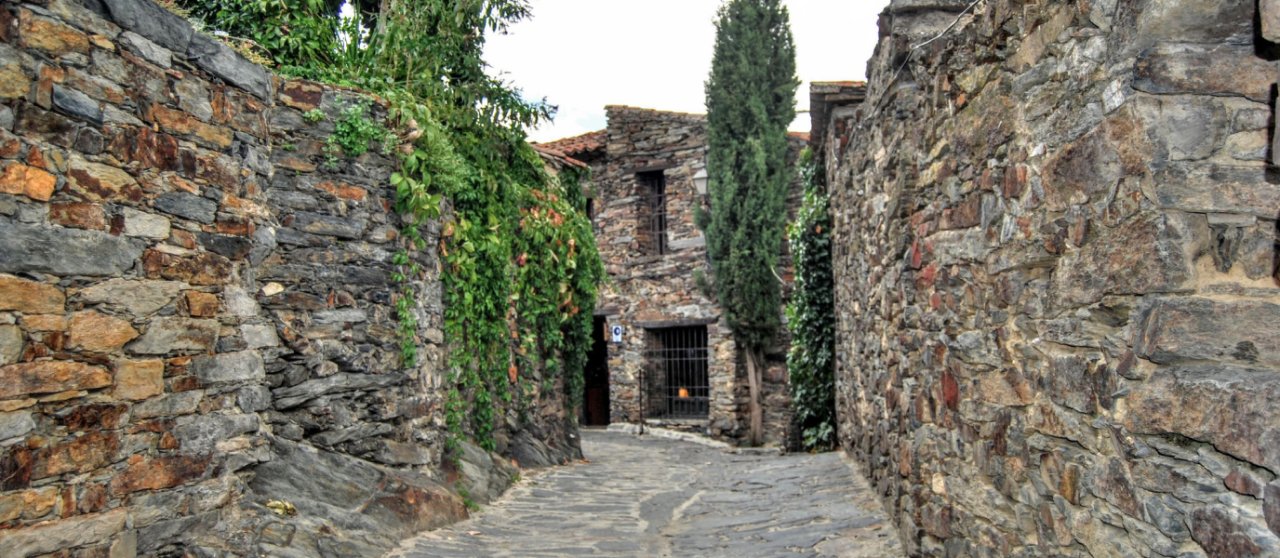
Patones de Arriba is a tiny village in the Sierra Norte with a genuinely distinctive look: every building is made from local black slate, giving the whole place a medieval, slightly otherworldly atmosphere.
It’s genuinely unlike anywhere else near Madrid.
The village has a handful of good restaurants serving Castilian mountain food, and several hiking trails into the surrounding hills.
No ticket prices, no UNESCO branding — just an unusually good place to spend a slow morning.
Aranjuez: Royal Gardens on the Tagus
Distance: 48 km south via A-4 | Drive time: ~50 minutes
Aranjuez was the Spanish royal family’s spring residence for centuries, and the Royal Palace and Gardens are still one of the finest examples of 18th-century garden design in Spain.
The formal gardens along the Tagus River are free to enter.
- Royal Palace entry: €9 adults | €4 reduced (children 5–16, students under 25, seniors 65+) | Free for children under 5; entry includes the Falúas Museum
- Best visited April–June when the gardens are in full bloom
- The famous Strawberry Train (Tren de la Fresa) runs seasonally from Madrid’s Atocha station — a nice option if you want a break from driving
- Avoid August afternoons — the gardens are largely exposed and get brutal in midsummer heat
Is There a Beach Near Madrid? Road Trip to the Coast
Madrid is landlocked, but the coast is reachable on a longer drive.
The nearest beaches are:
- Valencia coast (360 km, ~3.5 hrs via A-3): The closest Mediterranean beaches to Madrid. Valencia itself is well worth a full day or two.
- Costa del Sol (~570 km via A-4 through Seville): Málaga and the surrounding beaches are a natural extension of a Madrid-to-Seville road trip.
- Cádiz (~620 km via A-4): Some of Spain’s best Atlantic beaches; less crowded than the Costa del Sol.
None of these qualify as “a quick swim and back” — plan for at least one overnight if you want proper beach time.
Best Time to Go on a Madrid Road Trip
Spring (April–June) is the best overall season for road-tripping from Madrid.
Temperatures are warm but not extreme, the countryside is green after winter rains, and the lavender fields near Brihuega peak in late June to early July.
Autumn (September–October) is a close second — the crowds thin out after summer, and the light is excellent for photography.
Summer (July–August) gets very hot, especially heading south.
The Guadarrama mountains and northern Spain are the most comfortable options in peak summer.
If you’re driving to Seville or Andalusia in August, start early and take long midday breaks.
Winter works surprisingly well for Toledo, Salamanca, and the UNESCO cities — crowds are minimal and the stone architecture looks striking on clear cold days.
Just check road conditions if you’re heading into the Sierra de Guadarrama.
For a full breakdown of seasons and weather in the capital itself, see When Is The Best Time To Visit Madrid.
Want to make the most of your time in the city before or after your road trip? Check out 35 Best Things To Do In Madrid, our guide to Free Things To Do In Madrid, and Best Neighborhoods in Madrid: Where to Stay and Why to plan the perfect base for your Spanish road adventure.
FAQ: Madrid Road Trips
How long does it take to drive from Madrid to Barcelona?
The drive from Madrid to Barcelona covers approximately 620 km and takes around 5 hours 45 minutes to 6 hours in normal traffic via the AP-2 toll highway. Including a stop in Zaragoza and fuel breaks, most drivers allow a full 8–9 hours for the trip.
The Barcelona to Madrid driving time is effectively the same.
How long does it take to drive from Madrid to Seville?
Driving from Madrid to Seville takes approximately 5 hours 30 minutes on the A-4 highway, covering 534 km. Adding a stop in Córdoba (highly recommended) extends the total travel time by about 2–3 hours.
Is it worth driving from Madrid to Salamanca?
Yes. The road trip from Madrid to Salamanca is only 212 km (about 2 hours on the A-6) and Salamanca’s old city is one of the best in Spain.
The golden sandstone architecture, intact university atmosphere, and Plaza Mayor make it one of the most rewarding short road trips from Madrid.
How far is it from Madrid to Lisbon by car?
The drive from Madrid to Lisbon is approximately 624 km and takes about 5 hours 30 minutes of direct driving via the A-5 and Portuguese IP-6. With stops in Cáceres and Mérida, budget a comfortable two-day drive.
Can you do a road trip from Madrid to Córdoba in one day?
Yes. The drive from Madrid to Córdoba is 396 km (about 3.5 hours on the A-4), leaving plenty of time to visit the Mezquita, wander the Jewish Quarter, and have lunch before heading back or continuing to Seville. It’s a long day, but doable.
What is the best short road trip from Madrid?
For a half-day, Patones de Arriba (55 minutes north) or Aranjuez (50 minutes south) are the easiest escapes. For a full-day road trip with maximum payoff, the Ávila–Segovia–La Granja loop gives you three exceptional UNESCO stops within 200 km.