25+ Top Things to Do in Barcelona, Spain: The Complete 2026 Visitor Guide
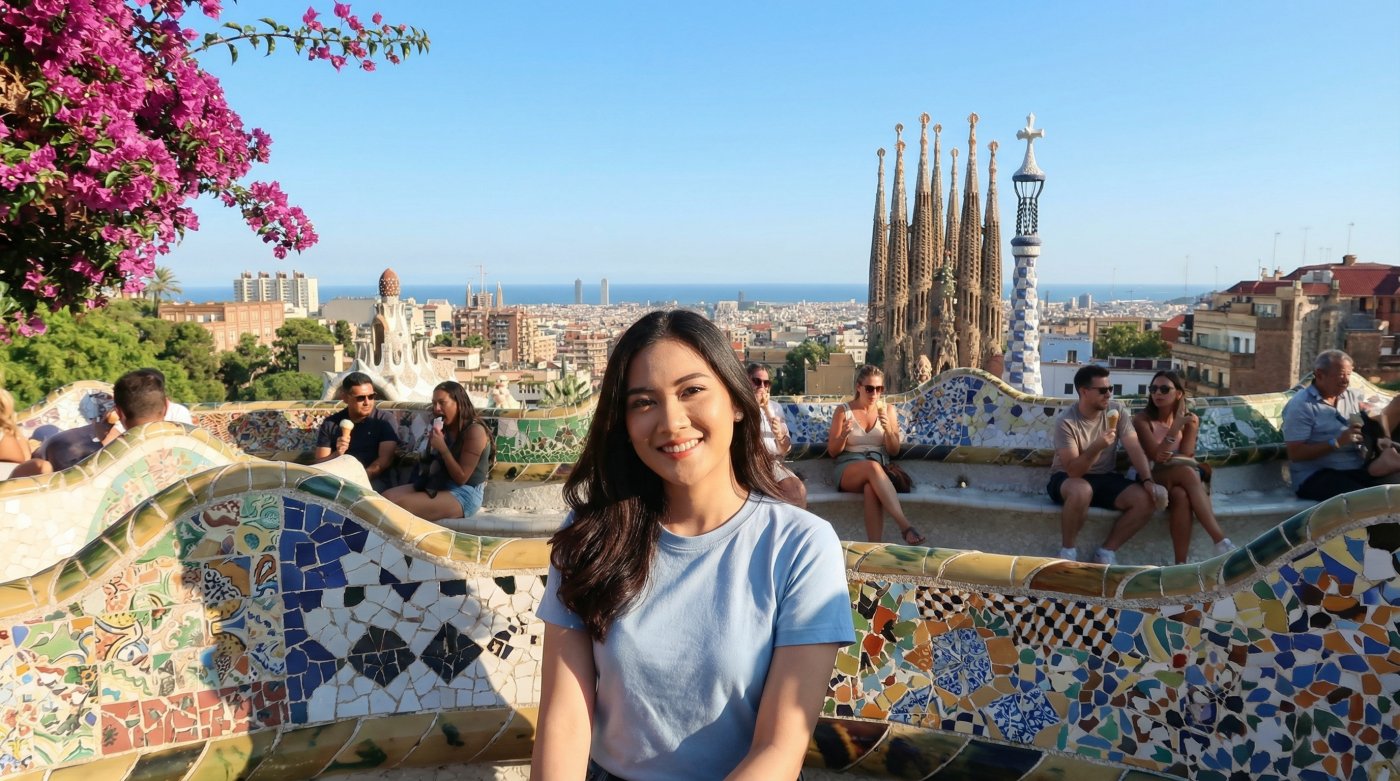



Best Things to Do in Barcelona: Top Attractions & Activities for 2026 – Barcelona is one of Europe’s most rewarding cities to visit, and the best things to do in Barcelona span architecture, beaches, food, nightlife, art, and history — often within walking distance of each other.
- Discover Iconic Gaudí Masterpieces in Barcelona
- Explore Barcelona's Historic Heart
- Best Beaches in Barcelona
- Experience Catalan Food and Market Culture
- Top Museums and Cultural Attractions in Barcelona
- Parks, Gardens, and Outdoor Activities in Barcelona
- Things to Do in Barcelona at Night
- Unique and Off-the-Beaten-Path Things to Do in Barcelona
- Day Trips from Barcelona
- Getting Around Between All These Attractions
Whether it’s your first visit or your fifth, the city consistently delivers.
This guide covers the top attractions and activities in Barcelona for 2026, with verified ticket prices, opening hours, and practical tips to help you plan efficiently.
Before you arrive, read our Barcelona travel tips guide for everything you need to know about visas, transport, and what to expect on the ground. Also we also have a comprehensive guide if you’re looking for free things to do in Barcelona instead for traveling to Barcelona on a budget.
At a Glance: Barcelona's Top Attractions
Hide| Attraction | Ticket Price (2026) | Opening Hours | Book in Advance? |
|---|---|---|---|
| Sagrada Família | From €26 (basic) | 9 AM–8 PM (Apr–Sep); 9 AM–7 PM (Mar, Oct); 9 AM–6 PM (Nov–Feb) | Yes — mandatory |
| Park Güell (Monumental Zone) | From €18 | 9:30 AM–7:30 PM (seasonal) | Yes — recommended |
| Casa Batlló | From €29 (Blue) / €34 (Silver w/ terrace) | 9 AM–9 PM | Yes — recommended |
| La Pedrera (Casa Milà) | From €25 (official) / €29 (skip-the-line) | 9 AM–6:30 PM | Yes — recommended |
| Picasso Museum | €12–€14 | Tue–Sun 10 AM–7 PM (Thu until 9 PM) | Recommended |
| Barcelona Cathedral | Free (mass) / €9 (tourist visit) | Mon–Fri 9:30 AM–6:30 PM; Sat 9:30 AM–5:15 PM; Sun 2–5 PM | No |
| Montjuïc Castle | €5 (free first Sunday) | Daily 10 AM–6 PM (varies seasonally) | No |
Discover Iconic Gaudí Masterpieces in Barcelona
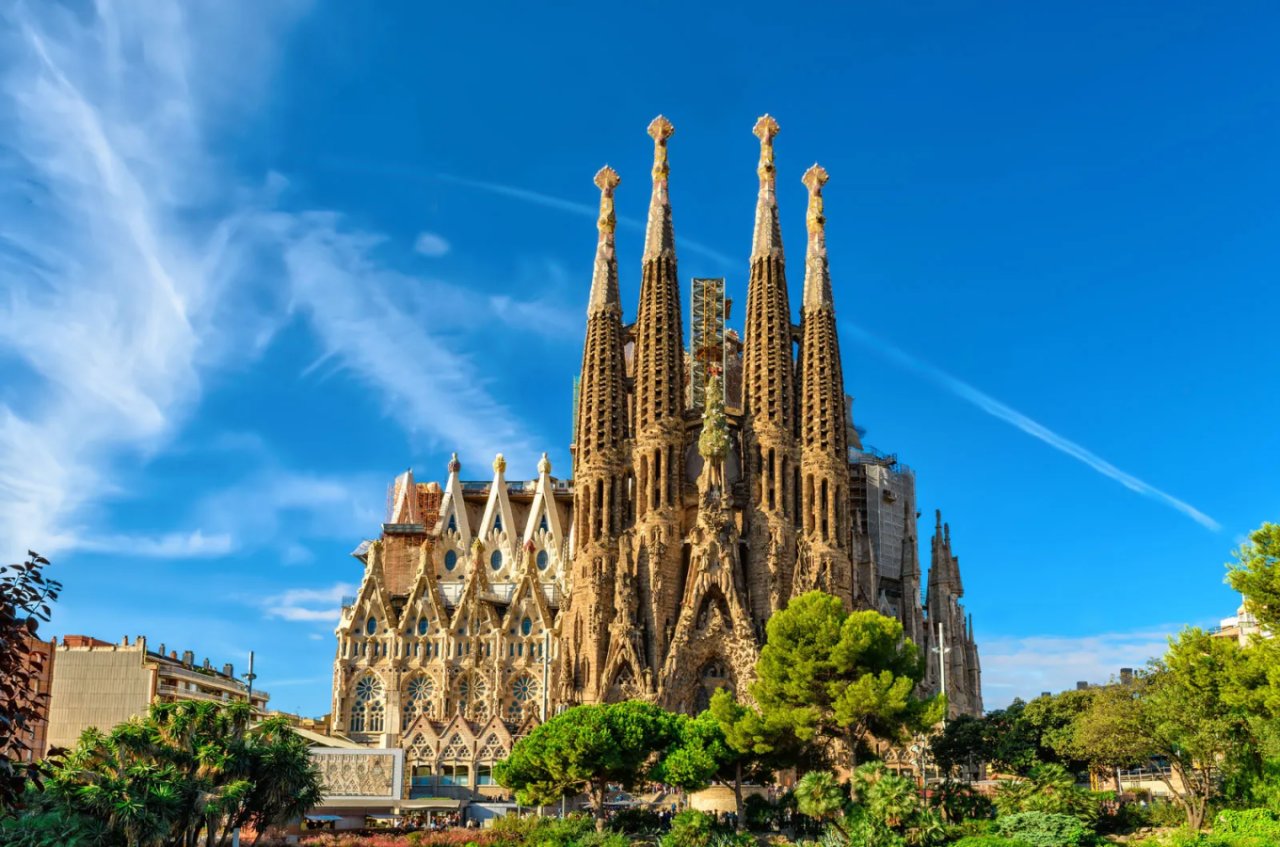
No list of things to do in Barcelona is complete without Gaudí.
Antoni Gaudí (1852–1926) left more of his work in Barcelona than anywhere else on earth, and several of his buildings are UNESCO World Heritage Sites.
The Sagrada Família, Park Güell, Casa Batlló, and La Pedrera are the four must-see Gaudí sites — and together they represent some of the most original architecture built anywhere in the 19th and 20th centuries.
Plan your Gaudí visits for early mornings on weekdays.
Summer queues at all four sites are substantial by 10 AM even with advance tickets.
Shoulder season (May or September–October) gives you more breathing room.
For the full seasonal picture, our guide on the best time to visit Barcelona breaks it down month by month.
- 10 Best Road Trips From Madrid in [year]: Distances, Routes, and What to See
- When Is The Best Time To Visit Madrid
- 35 Best Things To Do In Madrid
- 15+ Top Free Things To Do In Madrid
- 9 Best Day Trips From Madrid in [year]: Trains, Tickets, and What’s Worth It
- Best Neighborhoods in Madrid: Where to Stay and Why
1. Sagrada Família
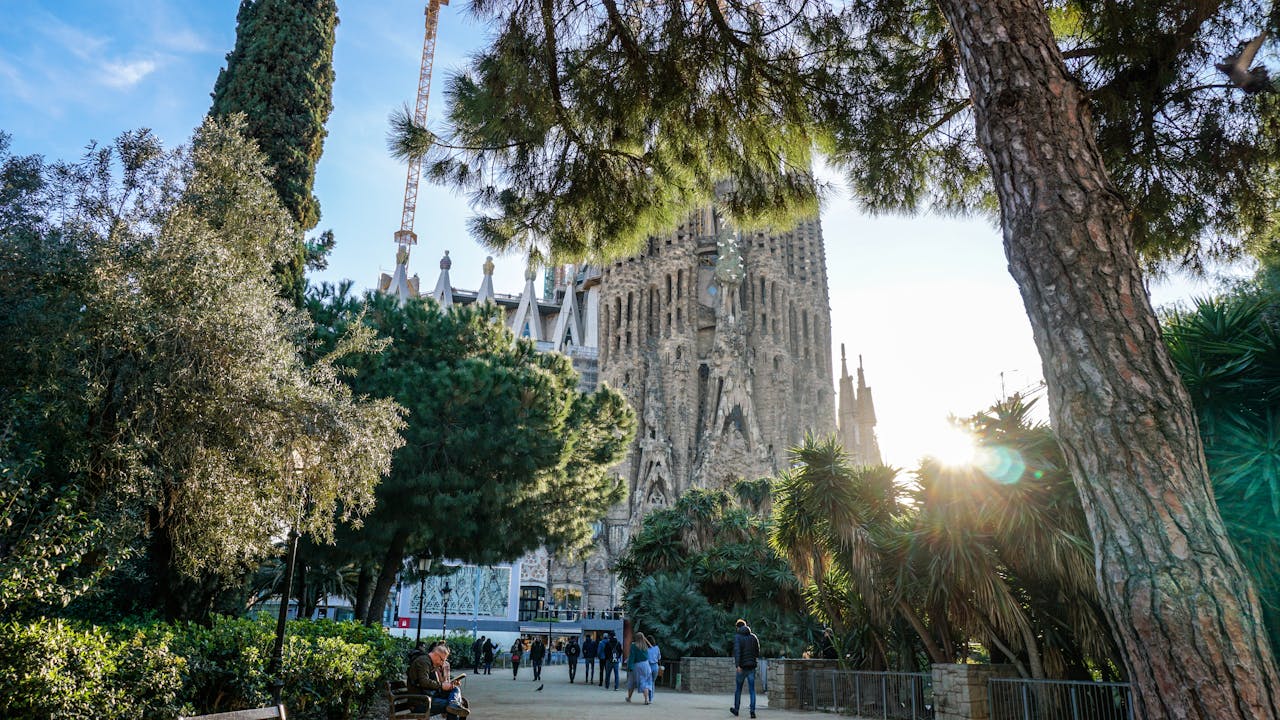
The Sagrada Família is the most visited monument in Spain, and for good reason.
Gaudí’s unfinished basilica — construction began in 1882 and is still ongoing — is unlike any other building in the world.
The Nativity façade and Passion façade tell different chapters of Christ’s story; the interior transforms sunlight into a forest of colour through kaleidoscopic stained glass.
Ticket prices (2026):
- Basic admission (basilica + audioguide app): €26
- Basilica + one tower: €36
- Children under 11: Free
- Students under 30 and seniors 65+: reduced rates with valid ID
Opening hours:
- April–September (Mon–Sat): 9 AM–8 PM; Sunday: 10:30 AM–8 PM
- March & October (Mon–Sat): 9 AM–7 PM; Sunday: 10:30 AM–7 PM
- November–February (Mon–Sat): 9 AM–6 PM; Sunday: 10:30 AM–6 PM
Walk-up tickets are no longer available. You must book online at the official Sagrada Família website.
Book at least one to two weeks ahead in summer.
Early morning weekday visits — especially November through February — give you the quietest experience.
The exterior on Plaça de Gaudí is free to admire at any time.
At night, the illuminated basilica is one of Barcelona’s best free sights.
Reserve Your Barcelona Tours & Activities
Popular Barcelona attractions sell out fast—book ahead for guaranteed entry. Compare skip-the-line tickets, guided tours, and unique experiences.
 Trip.com
 Booking.com
 Expedia
 Traveloka
 GetYourGuide
 Klook
Klook WeGoTrip
 Go City
2. Park Güell
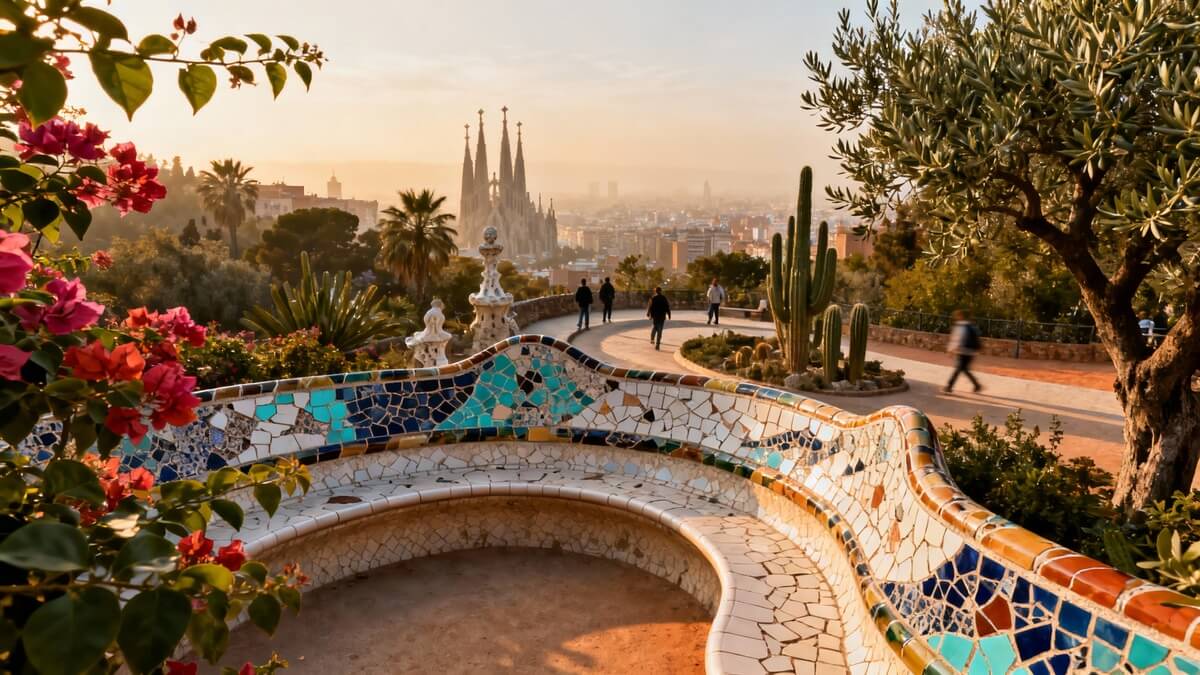
Park Güell was designed by Gaudí as a residential garden complex and is now one of Barcelona’s most photographed spots.
The colourful mosaic terrace, dragon staircase, and viaducts are all in the ticketed Monumental Zone.
The surrounding forested park — with its stone paths and hilltop views — is free to explore at any time.
Ticket prices (2026):
- General adult: €18 (online timed-entry)
- Children aged 7–12 and seniors 65+: €13.50
- Children under 7: Free
Book at the official Park Güell website.
The timed-entry system means you must arrive within your booked time window.
Early morning (9:30 AM) and late afternoon slots tend to have the best light and smaller crowds.
3. Casa Batlló
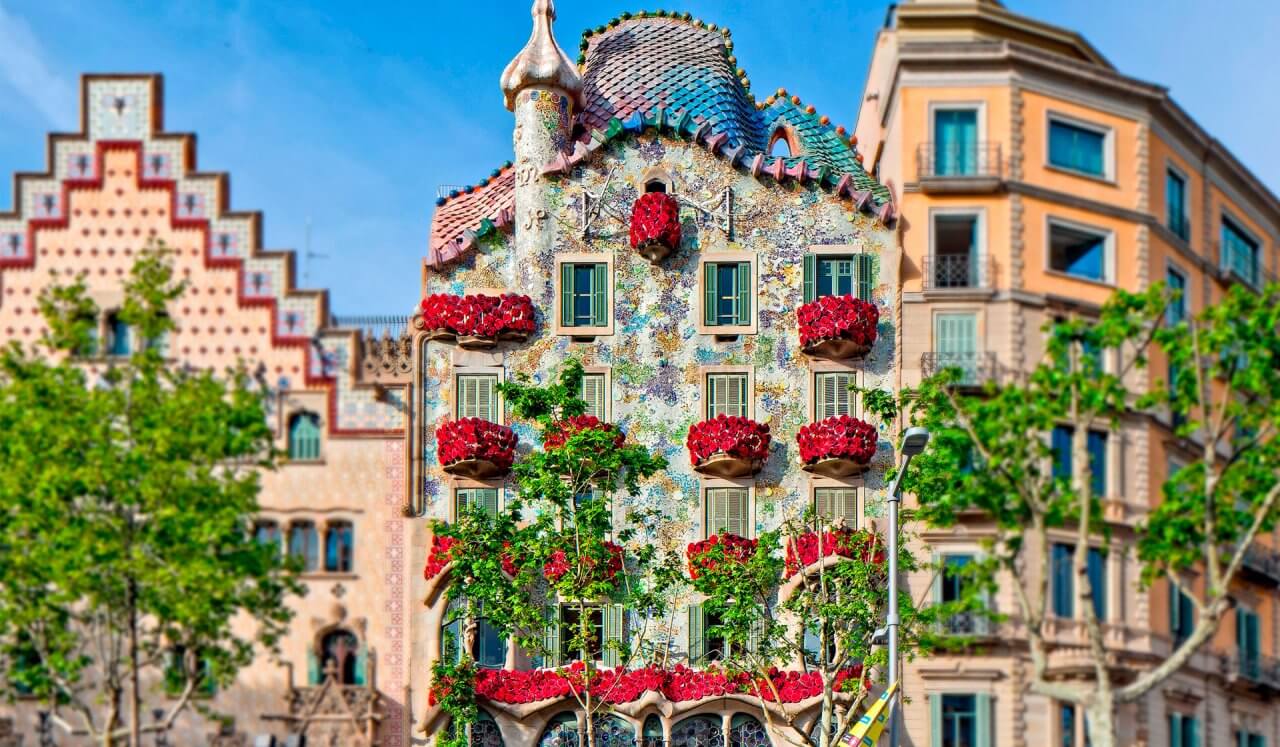
Casa Batlló on Passeig de Gràcia is Gaudí’s most theatrical residential building.
The façade — covered in broken ceramic tiles that shift colour like fish scales — is an extraordinary piece of visual storytelling.
Inside, the building curves and flows with no straight lines in sight.
Ticket prices (2026):
- Blue Ticket (admission + audioguide + Gaudí Cube, no terrace): from €29
- Silver Ticket (admission + audioguide + Gaudí Cube + terrace): from €34
- Golden Ticket (full access + private rooms + Gaudí Dome): from €39
- Children under 12: Free (official website)
- Students and seniors 65+: discounts available with ID
Book on the official Casa Batlló website for the lowest prices.
Third-party resellers charge significantly more.
4. La Pedrera (Casa Milà)
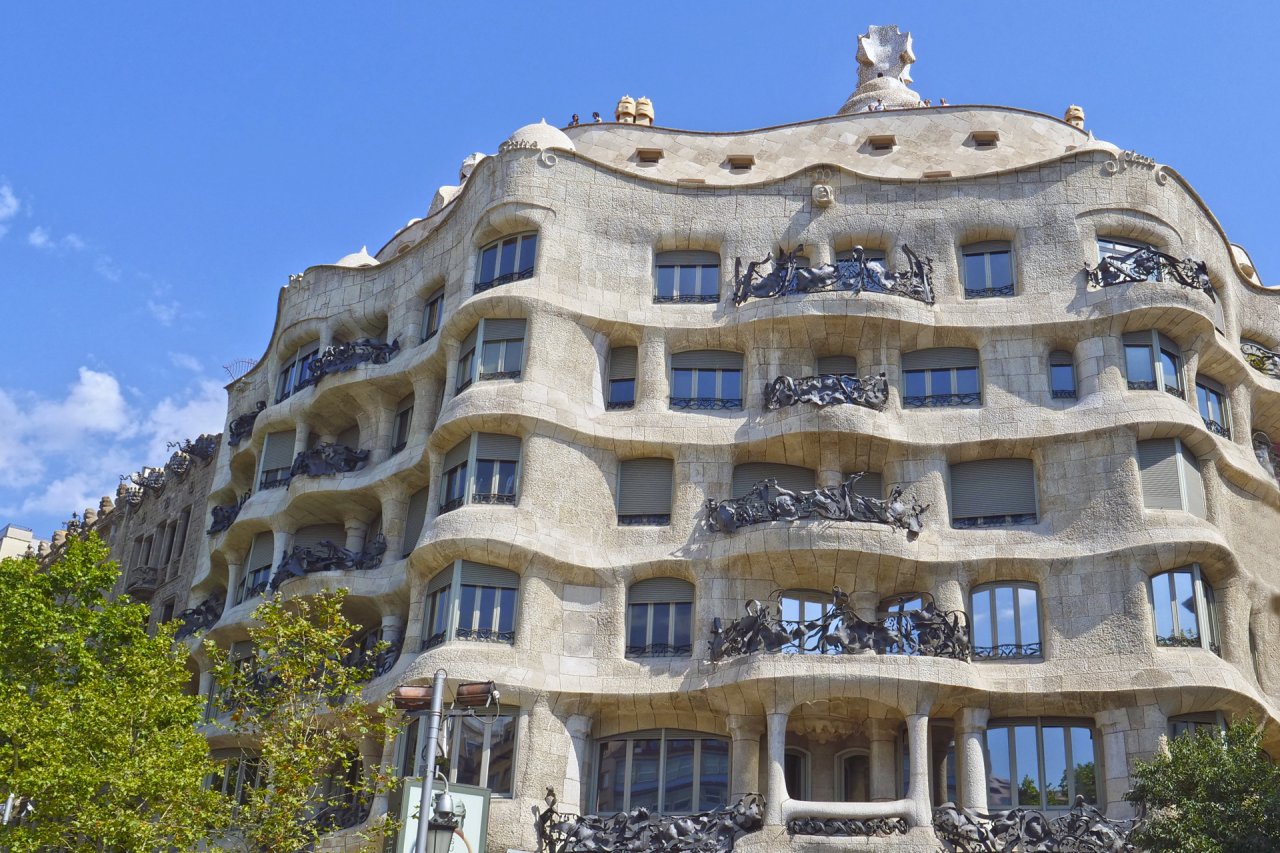
La Pedrera, also on Passeig de Gràcia, was Gaudí’s last private residential commission.
The undulating stone façade gives it the nickname “the stone quarry.” The rooftop — with its warrior-like chimneys — is the architectural highlight and one of the most surreal spaces in the city.
Ticket prices (2026):
- General admission (Essential La Pedrera): €25 (official website) / €29 (skip-the-line from third parties)
- Night Experience (rooftop light show + drink): €39.50
- Sunrise visit: €39
- Children under 11: Free
- Students and seniors 65+: reduced rates
The night experience is genuinely worth considering if your budget allows — the rooftop at night is spectacular.
Book at lapedrera.com.
Explore Barcelona’s Historic Heart
Barcelona’s historic centre covers the Gothic Quarter (Barri Gòtic), El Born, and La Barceloneta — all walkable, all free to explore on foot.
This is where Barcelona’s 2,000-year history is most visible, from Roman walls to medieval palaces to 19th-century market halls.
Understanding how these neighbourhoods connect to each other is key to making the most of your time.
Our guide to the best neighborhoods in Barcelona maps each area by character, atmosphere, and what to prioritise.
5. Gothic Quarter (Barri Gòtic)
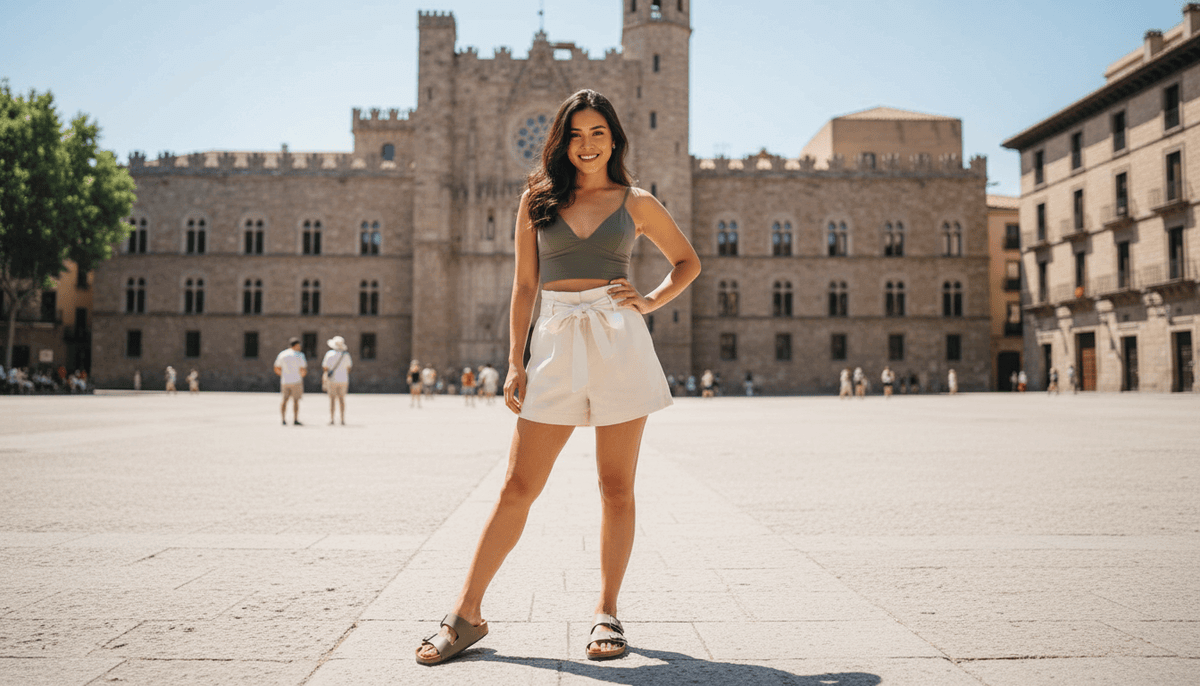
The Gothic Quarter is the most historically layered neighbourhood in Barcelona, with Roman ruins, medieval churches, and centuries of Catalan civic life compressed into a few square kilometres of narrow streets.
You don’t need a ticket or a guide to explore it — just time and comfortable shoes.
Key stops in the Gothic Quarter:
- Plaça de Sant Jaume: the civic heart of Barcelona, flanked by the Ajuntament (City Hall) and Palau de la Generalitat
- Temple d’August: Roman columns from the 1st-century BCE inside a medieval courtyard on Carrer del Paradís — free, open to the public
- Plaça de Sant Felip Neri: a small bullet-scarred square with a complicated Civil War history
- Pont del Bisbe: a neo-Gothic covered bridge over Carrer del Bisbe, best viewed at night
Allow at least two to three hours for a proper wander.
Getting slightly lost is the point.
6. Barcelona Cathedral
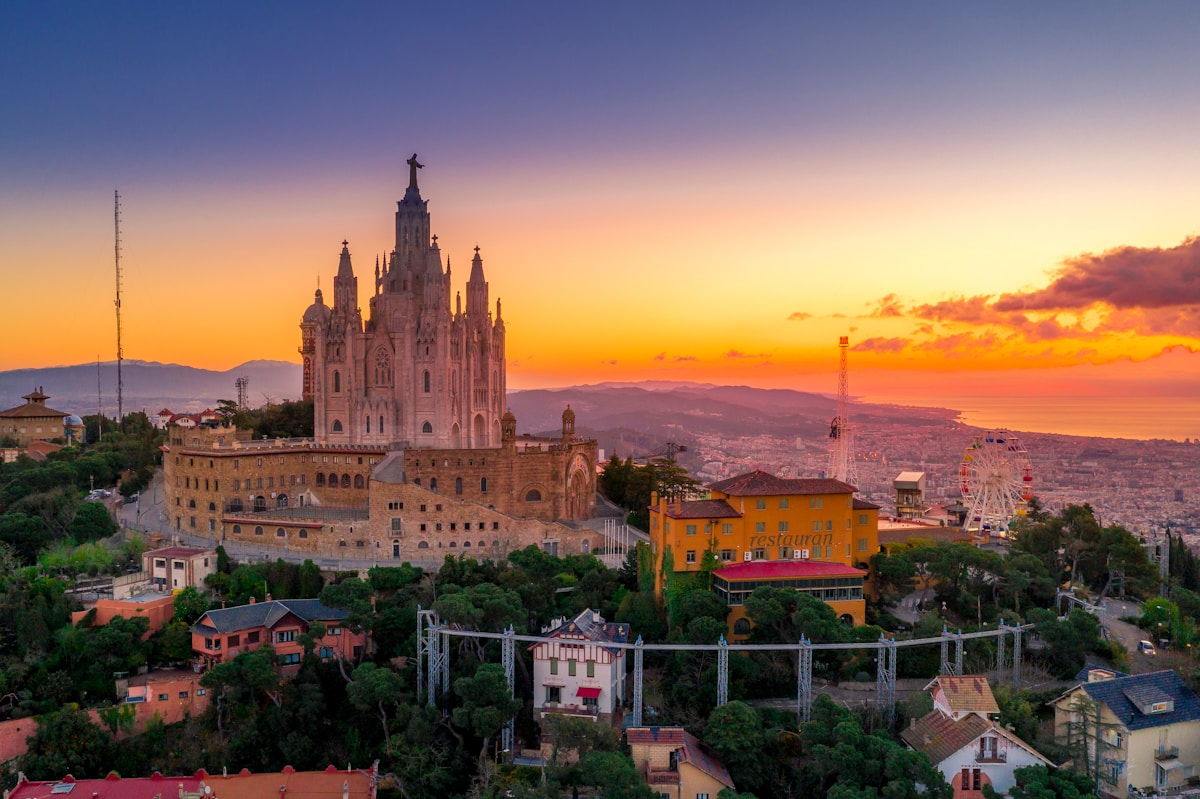
The Barcelona Cathedral (Catedral de la Santa Creu i Santa Eulàlia) is the Gothic Quarter’s centrepiece, built primarily between the 13th and 15th centuries.
The cloister — home to 13 white geese representing the age of Saint Eulàlia at her martyrdom — is one of the most tranquil spaces in the city.
Entry (2026):
- Free for religious visits (mass hours): Mon–Sat 8 AM–12:45 PM and 5:45 PM–7:30 PM; Sundays 8 AM–1:45 PM and 5:15 PM–7:30 PM
- Tourist visit fee: €9 for adults (Monday–Saturday 12:45 PM–5:30 PM; Sundays 2 PM–5 PM)
- Rooftop access included in the tourist visit fee
The smartest move: visit during free mass hours in the morning, which gives full access to the interior and cloister at no cost.
7. La Boqueria Market and Las Ramblas
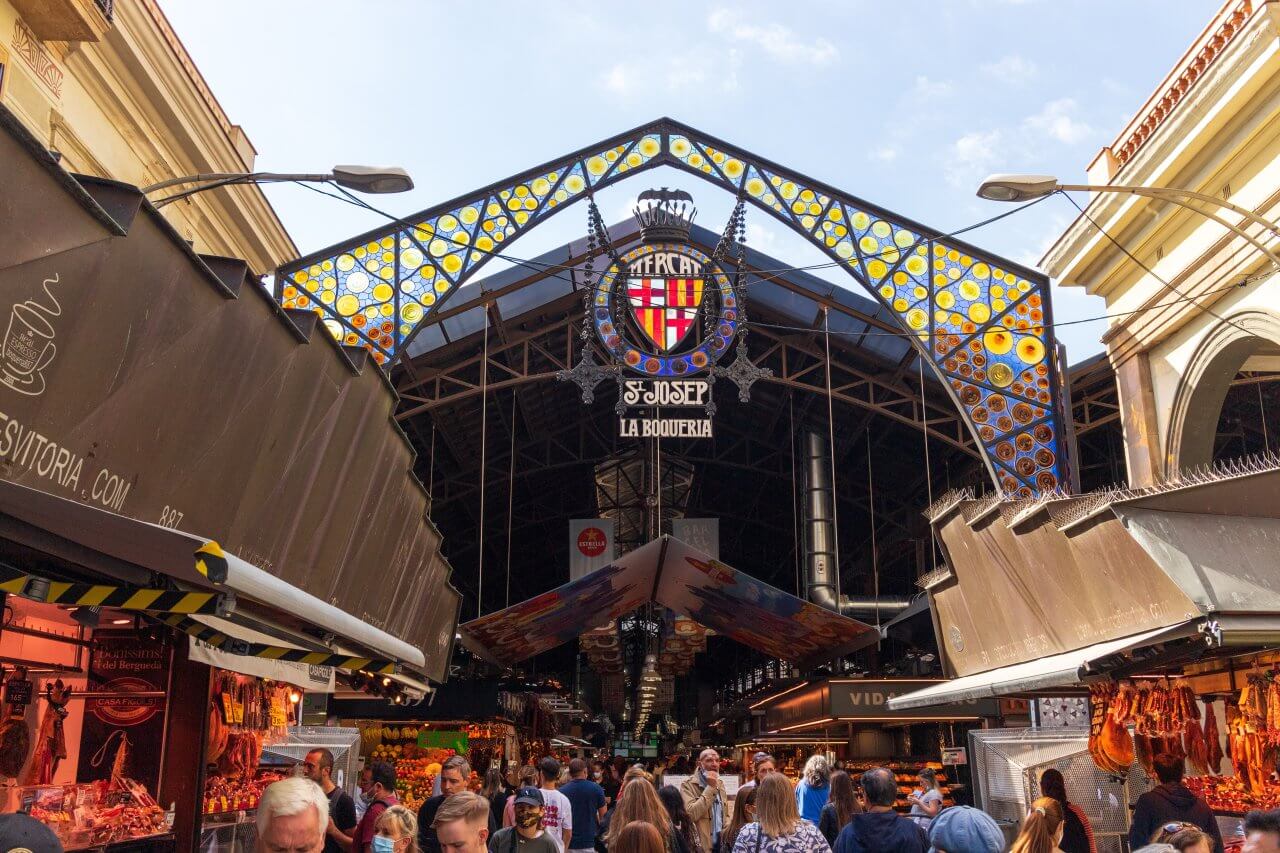
La Rambla is Barcelona’s most famous boulevard — a 1.2km pedestrian strip running from Plaça de Catalunya to the harbour.
It’s worth walking once for the atmosphere and architecture, but be aware of pickpockets and overpriced restaurants along the strip.
La Boqueria (Mercat de Sant Josep de la Boqueria, Las Ramblas 91) is the attached food market — one of Europe’s most photographed, and genuinely spectacular to browse.
Walking through is free.
For actual eating and shopping at local prices, the stalls near the entrance cater to tourists; head deeper into the market or visit Mercat de Sant Antoni instead.
8. El Born Neighbourhood
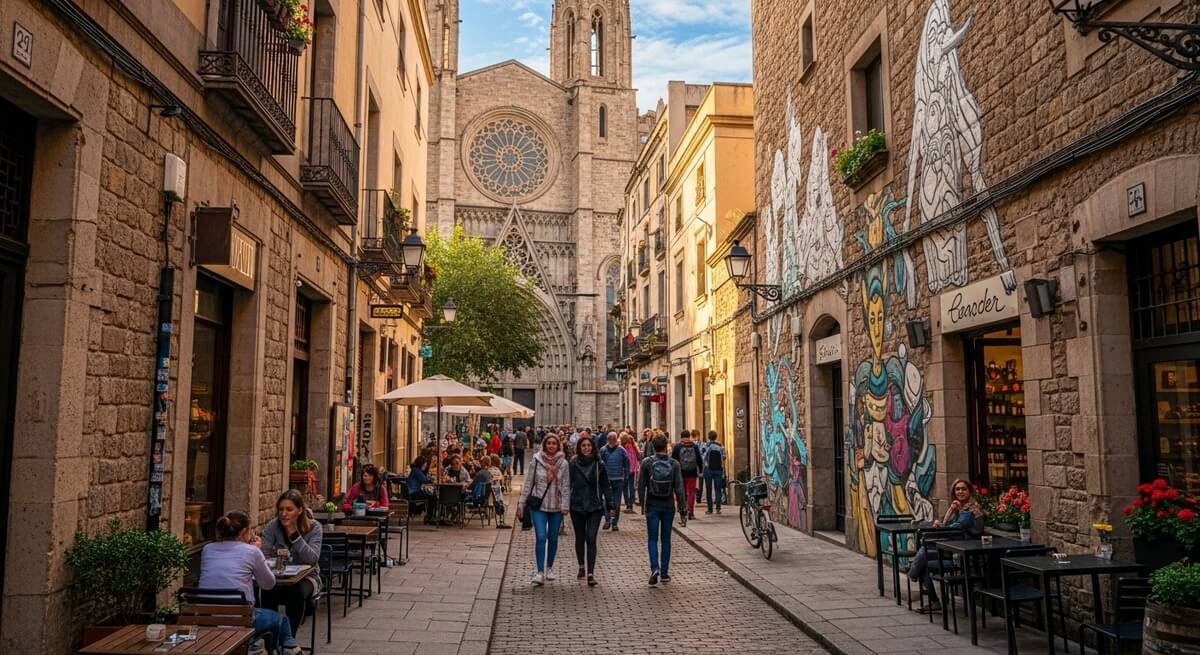
El Born sits east of the Gothic Quarter and has a more relaxed, creative atmosphere.
The narrow streets around the Basílica de Santa Maria del Mar — a 14th-century Gothic church built by the people of the Ribera neighbourhood — are some of the most beautiful in the city.
The El Born Centre de Cultura i Memòria (free on first Sundays and open-door days) contains the ruins of an 18th-century neighbourhood demolished by Bourbon forces in 1714 — a quietly remarkable piece of Catalan history visible through glass beneath the building floor.
El Born is also one of Barcelona’s best areas for tapas bars, independent bookshops, and wine bars.
Our weekend in Barcelona guide includes a walking itinerary through El Born that covers the neighbourhood’s highlights across an afternoon.
Best Beaches in Barcelona
Barcelona’s beaches are free, well-maintained, and genuinely good.
The full coastline covers 10 urban beaches across about 5km — from Sant Sebastià in the south to Llevant and Mar Bella in the north.
All have showers, toilets, and lifeguards from June to September.
See our full breakdown of the 10 best beaches in Barcelona for details on each stretch.
9. Barceloneta Beach
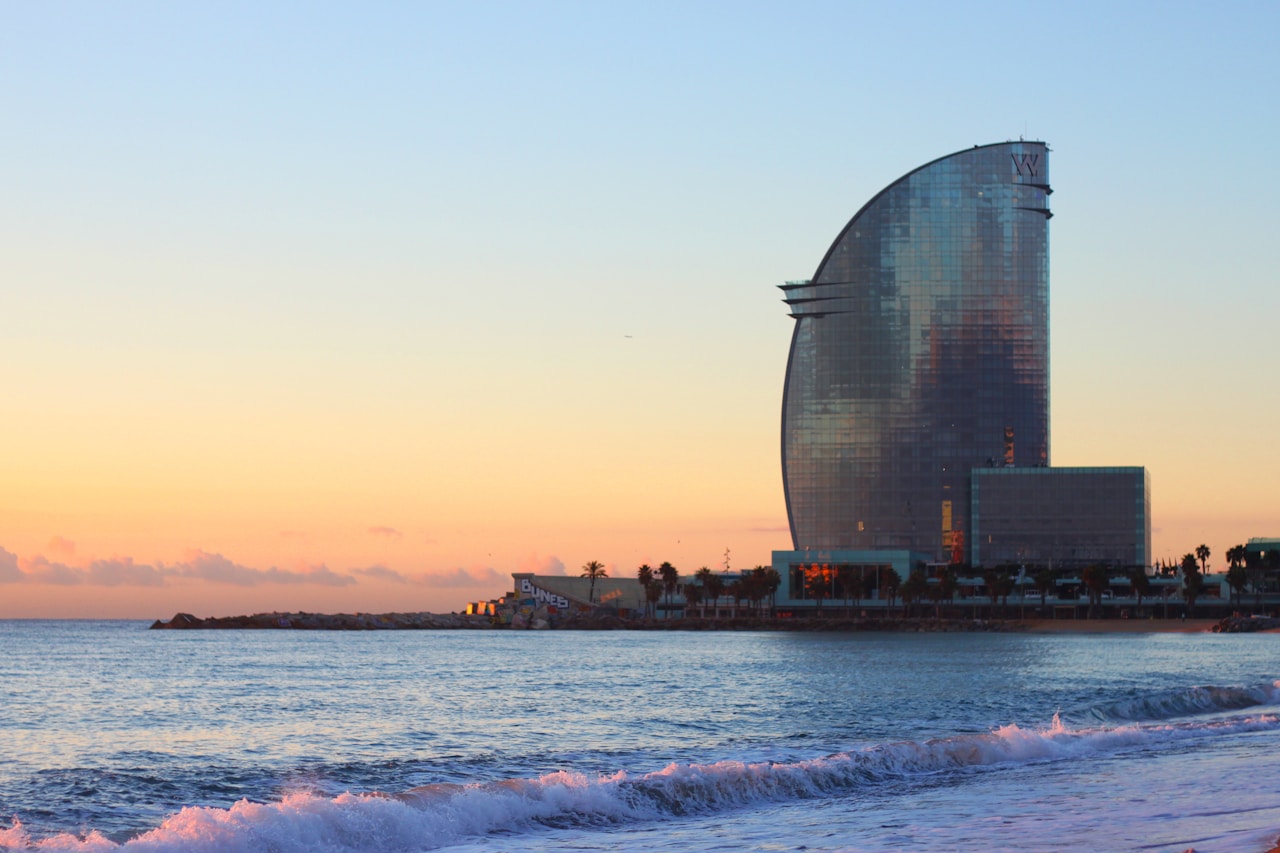
Barceloneta is the most central and most visited beach — lively, loud in summer, and very much a Barcelona institution.
The beach promenade (Passeig Marítim) runs behind it and is excellent for a morning walk or evening stroll.
Water sports rentals — paddleboarding, kayaking, jet skiing — are available along the beach in season.
Summer (July–August) is peak crowd season.
Mornings before 11 AM are the best time for a relatively peaceful swim.
For a livelier evening atmosphere, the chiringuito beach bars along Barceloneta serve until around midnight.
10. Bogatell and Nova Icària Beaches
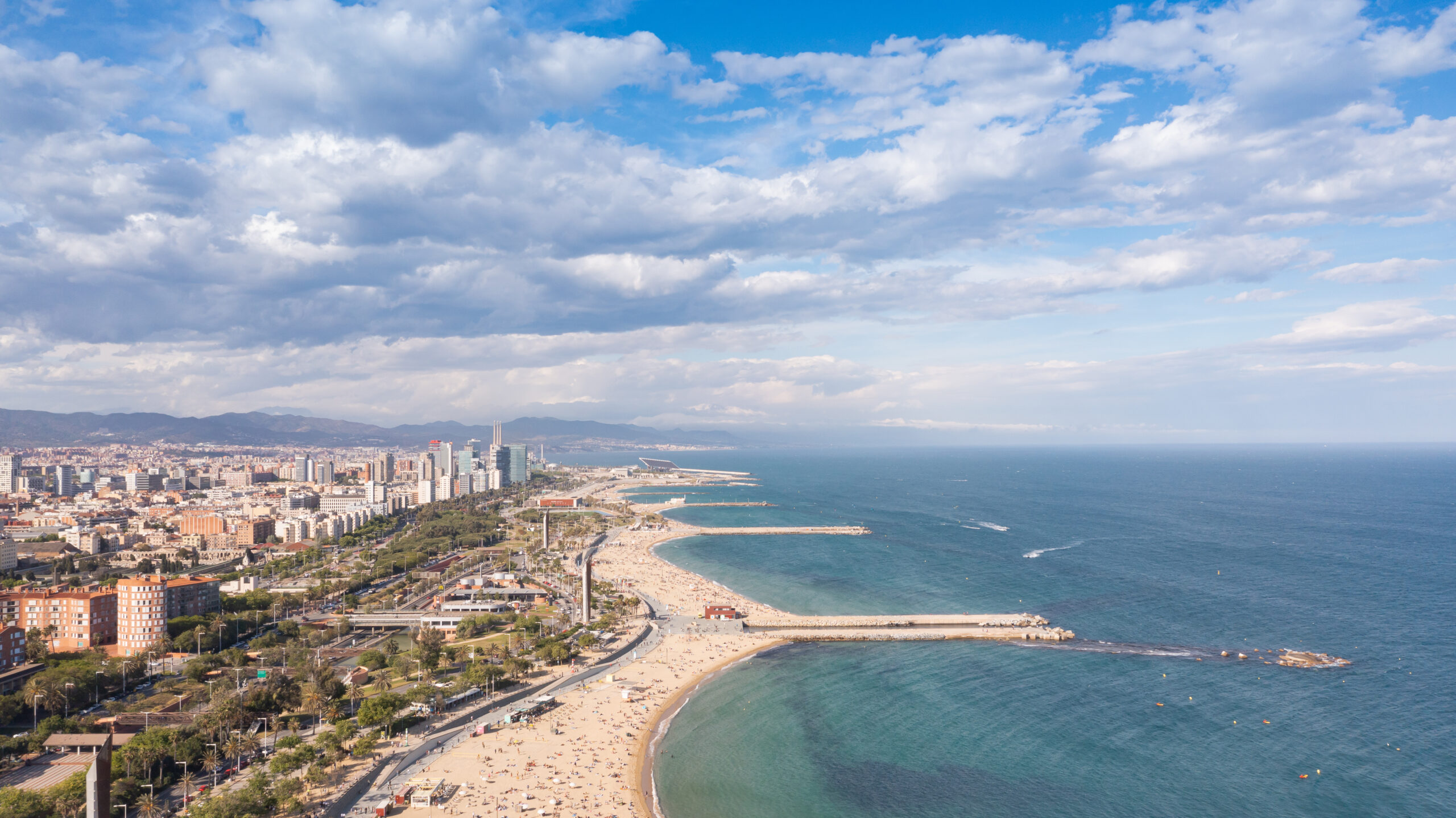
Bogatell and Nova Icària are 15–20 minutes east of Barceloneta by foot or a short metro ride (Ciutadella/Vila Olímpica station).
Both are significantly less crowded, better for families with children, and have the same facilities.
Bogatell has beach volleyball courts; Nova Icària has a slightly more social, mixed-age crowd.
If your priority is actually swimming and relaxing rather than the beach-bar scene, these two are consistently the better choice between June and August.
Experience Catalan Food and Market Culture
Eating well in Barcelona doesn’t require expensive restaurants.
The city’s food culture is built around markets, tapas bars, neighbourhood bodegas, and the midday menu del día — all of which deliver excellent value.
Food is one of the best activities to do in Barcelona that requires almost no planning beyond knowing where to look.
11. Tapas and the Menu del Día
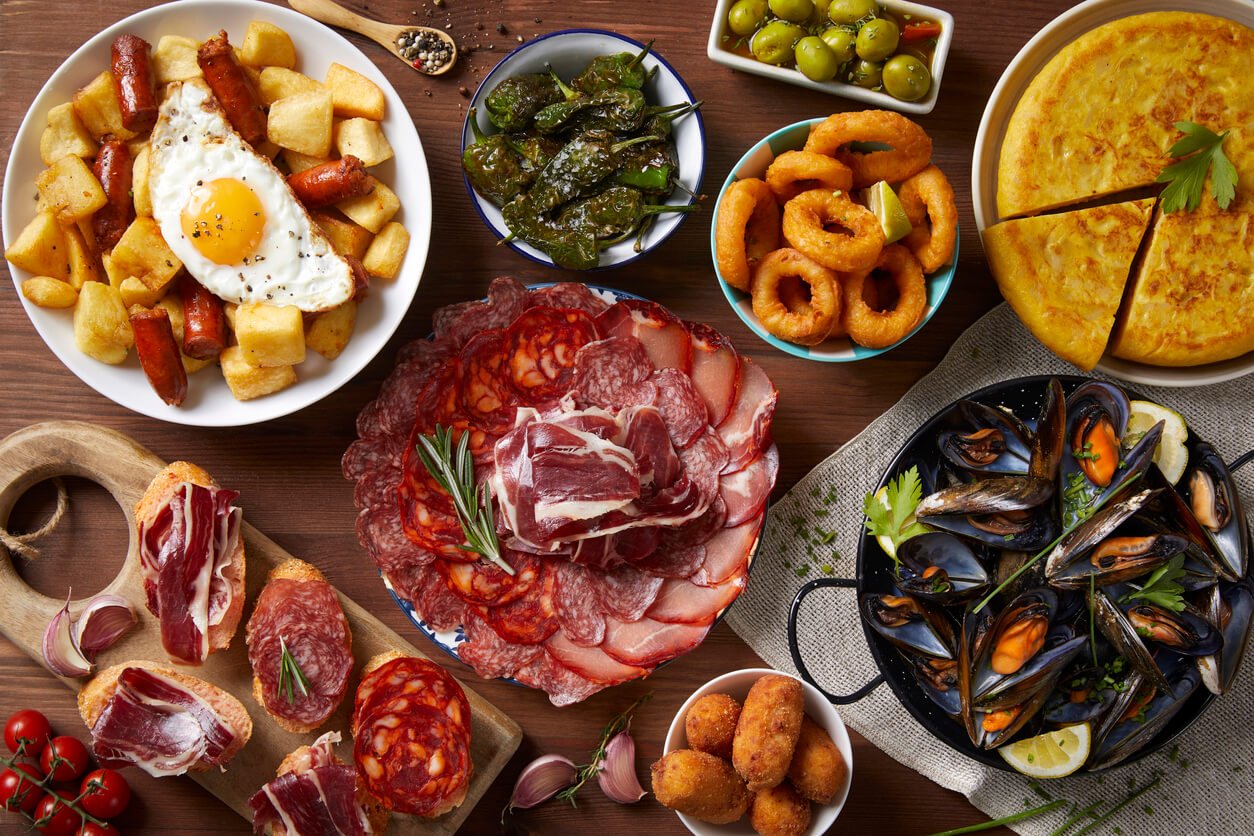
The menu del día is a three-course set lunch (starter, main, dessert, bread, and a drink) served Monday through Friday at most neighbourhood restaurants for €10–15.
It’s the best value eating in the city, full stop.
Essential Catalan dishes to try:
- Pa amb tomàquet — bread rubbed with fresh tomato and olive oil, the foundation of Catalan cuisine
- Bombas — potato croquettes stuffed with meat, invented at La Cova Fumada in Barceloneta
- Patatas bravas — fried potato cubes with spicy sauce (Bar Tomàs in Sarrià serves the definitive version)
- Croquetes — Bar del Pla in El Born makes excellent ones
- Jamón ibérico — try it at Quimet & Quimet in Poble Sec, a legendary standing bar
- Crema catalana — the original custard with caramelised sugar top, lighter than crème brûlée
The best tapas aren’t on Las Ramblas.
Find them in El Born, Sant Antoni, Gràcia, and Poble Sec.
12. La Boqueria and Neighbourhood Markets
Beyond La Boqueria’s photo opportunities, Barcelona’s neighbourhood markets offer a better food shopping and eating experience at lower prices:
- Mercat de Sant Antoni (Sant Antoni neighbourhood): recently renovated, extremely popular with locals, excellent pintxos and produce stalls; Sunday book market outside
- Mercat de Santa Caterina (El Born): distinctive wave-shaped roof by Enric Miralles, great cheese and seafood counters
- Mercat de la Llibertat (Gràcia): relaxed, local feel, good for fresh produce and a morning coffee
Top Museums and Cultural Attractions in Barcelona
Barcelona’s museum scene is one of the strongest in Spain.
Several world-class collections are here, covering everything from Picasso’s formative years to a thousand years of Catalan art.
13. Picasso Museum
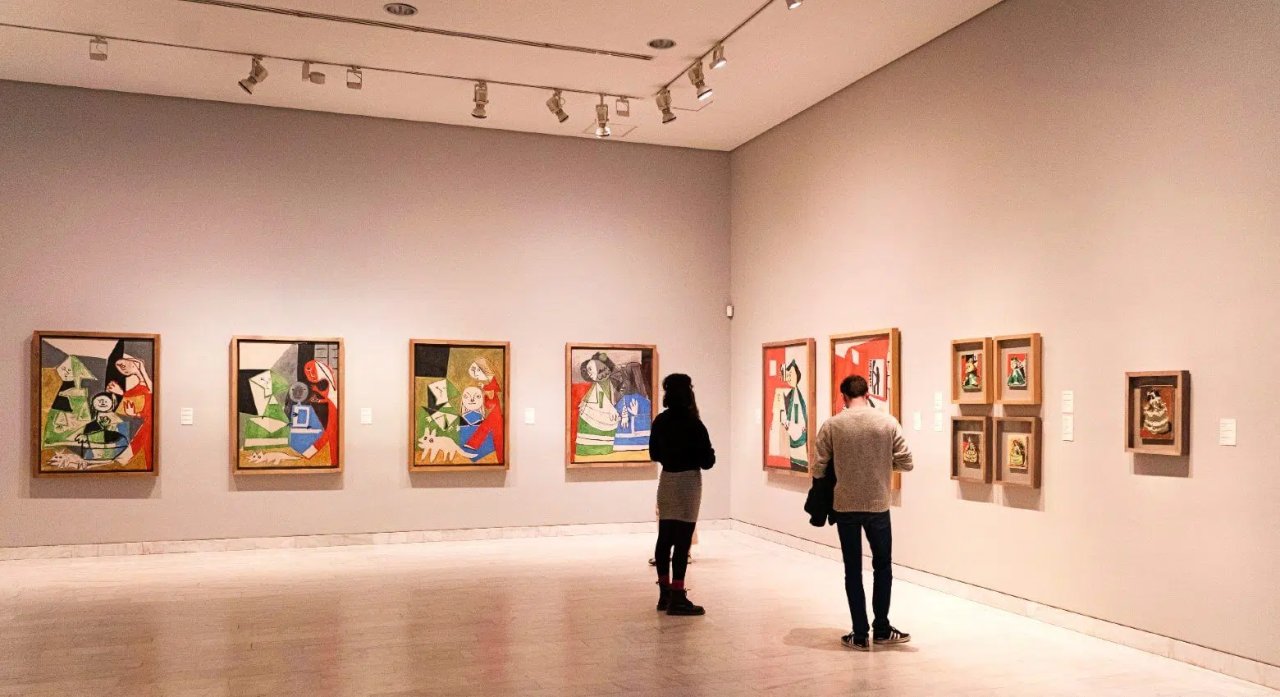
The Museu Picasso holds 4,251 works by Pablo Picasso, including his complete early Barcelona period and the full Las Meninas series.
It occupies five medieval palaces on Carrer de Montcada in El Born.
Ticket prices (2026):
- Permanent collection only: €12 (adults), free for under-18s
- Collection + current exhibition: €14 (adults)
- Students 18–25: €7.50
- Seniors 65+: €7.50
Free entry: Thursday evenings (seasonal window, check official site) and the first Sunday of every month — tickets must be booked online in advance and sell out within hours of opening.
The Articket (€35) covers 6 Barcelona museums including the Picasso Museum and is good value if you plan to visit multiple collections.
14. MNAC — National Art Museum of Catalonia
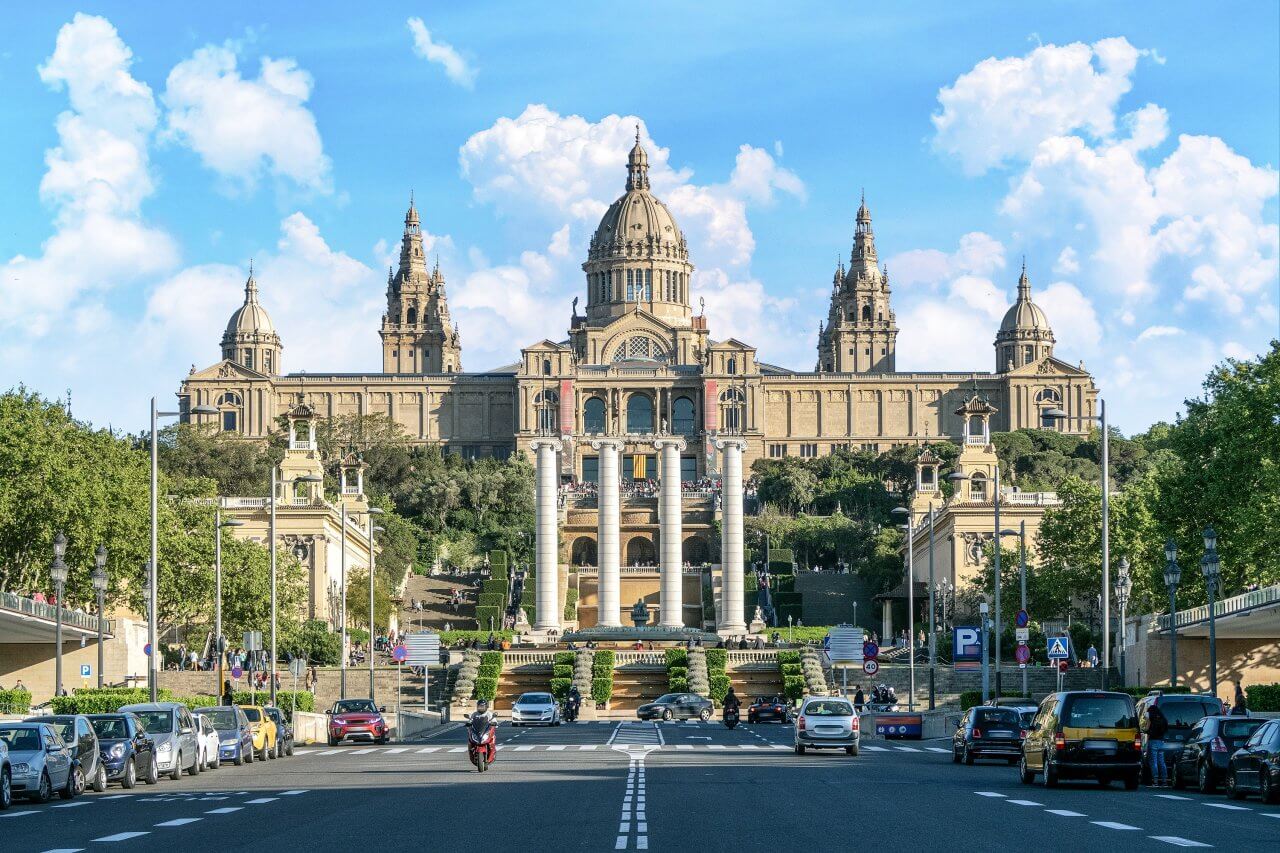
The MNAC occupies the grand Palau Nacional on Montjuïc hill and contains one of the world’s great Romanesque art collections, assembled from churches across Catalonia.
The modernist collection — including works by Gaudí, Fortuny, and Casas — is equally strong.
The building’s exterior terraces and the views down Avinguda de la Reina Maria Cristina toward Plaça Espanya are free at all times and worth a visit independent of the museum entry.
Free entry: Saturdays from 3 PM and the first Sunday of every month (10 AM–3 PM).
15. Fundació Joan Miró
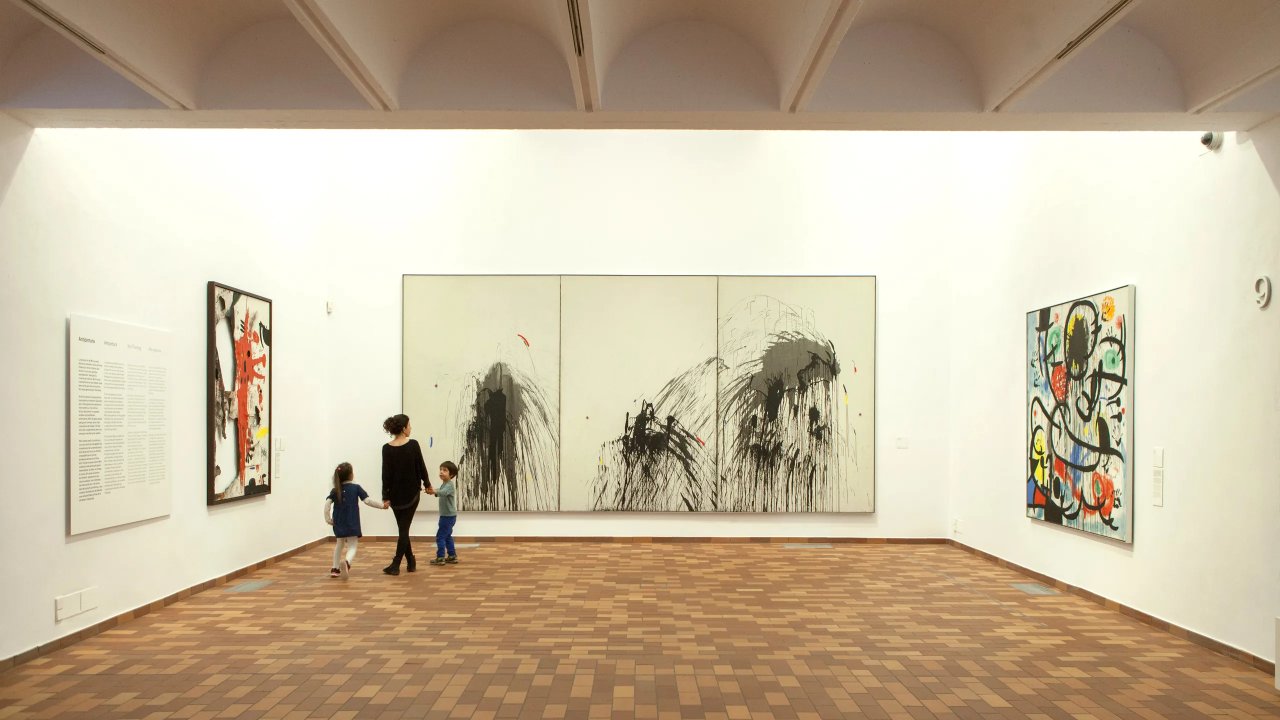
The Fundació Joan Miró on Montjuïc is one of the best-presented modern art museums in Europe, housed in a purpose-built building by Josep Lluís Sert.
It holds the most complete collection of Joan Miró’s work — paintings, sculptures, textiles, and graphics — alongside temporary exhibitions of contemporary art.
Combine it with a visit to the MNAC and a walk around Montjuïc’s gardens for a full day on the hill.
16. MACBA — Contemporary Art Museum
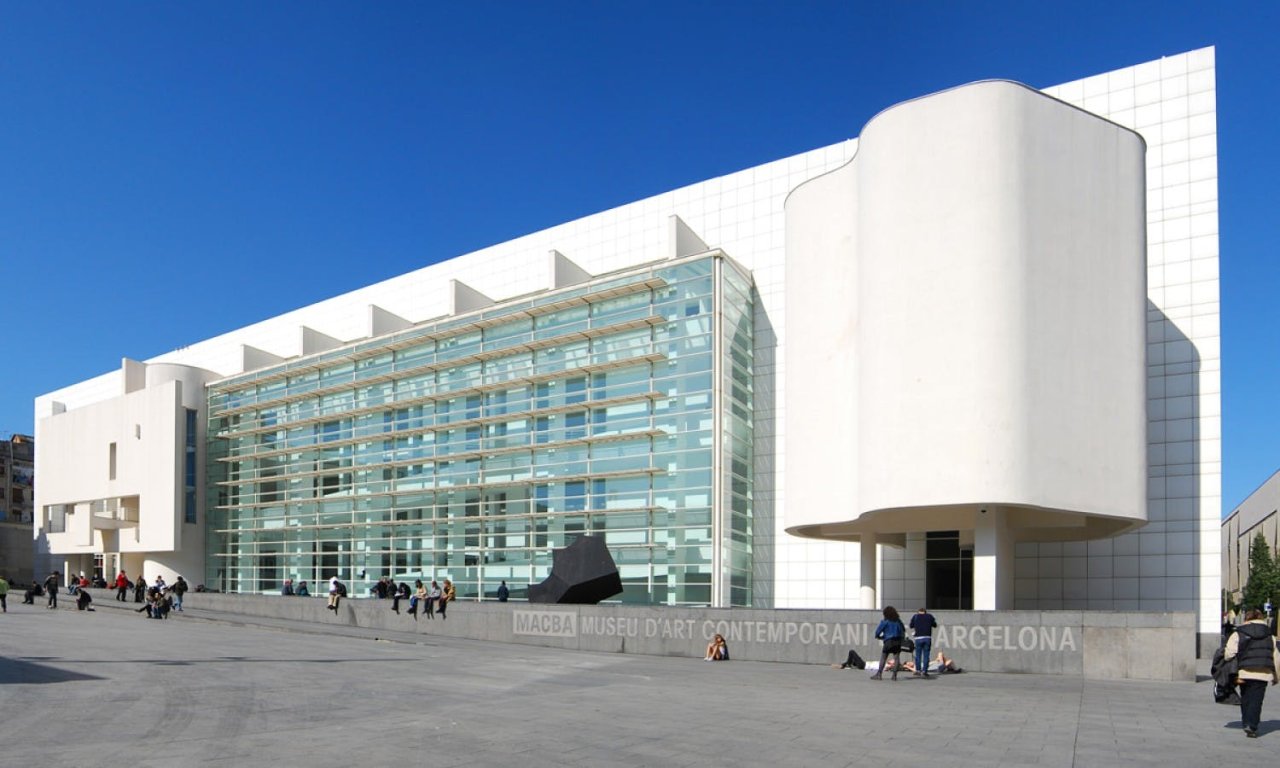
The MACBA (Museu d’Art Contemporani de Barcelona) sits in a striking white building on Plaça dels Àngels in El Raval, designed by Richard Meier.
Its permanent collection focuses on Catalan and Spanish art from the 1940s onwards, with strong temporary exhibitions.
Free entry: Saturdays from 4 PM and on major open-door days (Santa Eulàlia February 12, International Museum Day May 18, La Mercè September 24).
Parks, Gardens, and Outdoor Activities in Barcelona
Barcelona has more green space than its dense urban fabric suggests.
The best parks and gardens in Barcelona range from Montjuïc’s hilltop gardens to the flat, central Parc de la Ciutadella.
17. Parc de la Ciutadella
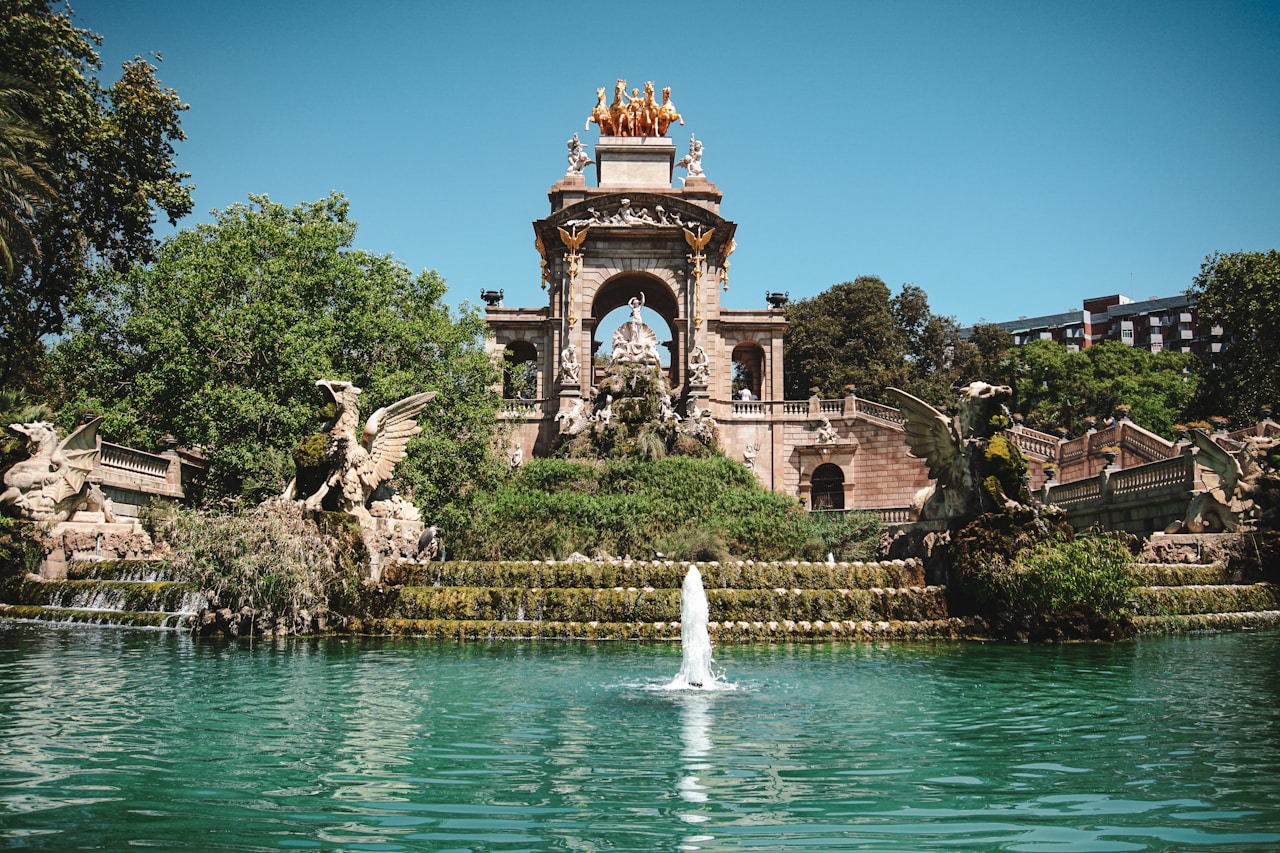
Parc de la Ciutadella is Barcelona’s main city park — 17 hectares of gardens, fountains, and open space a few minutes’ walk from El Born.
The Cascada fountain (partially designed by the young Gaudí) is the centrepiece; the boating lake offers rowboat rentals for around €6 for 30 minutes.
The park is completely free to enter, open daily, and one of the most genuinely local-feeling free spaces in central Barcelona.
On weekends it fills with families, groups with guitars, and people doing what Barcelonans do best: spending time outdoors.
18. Montjuïc Hill
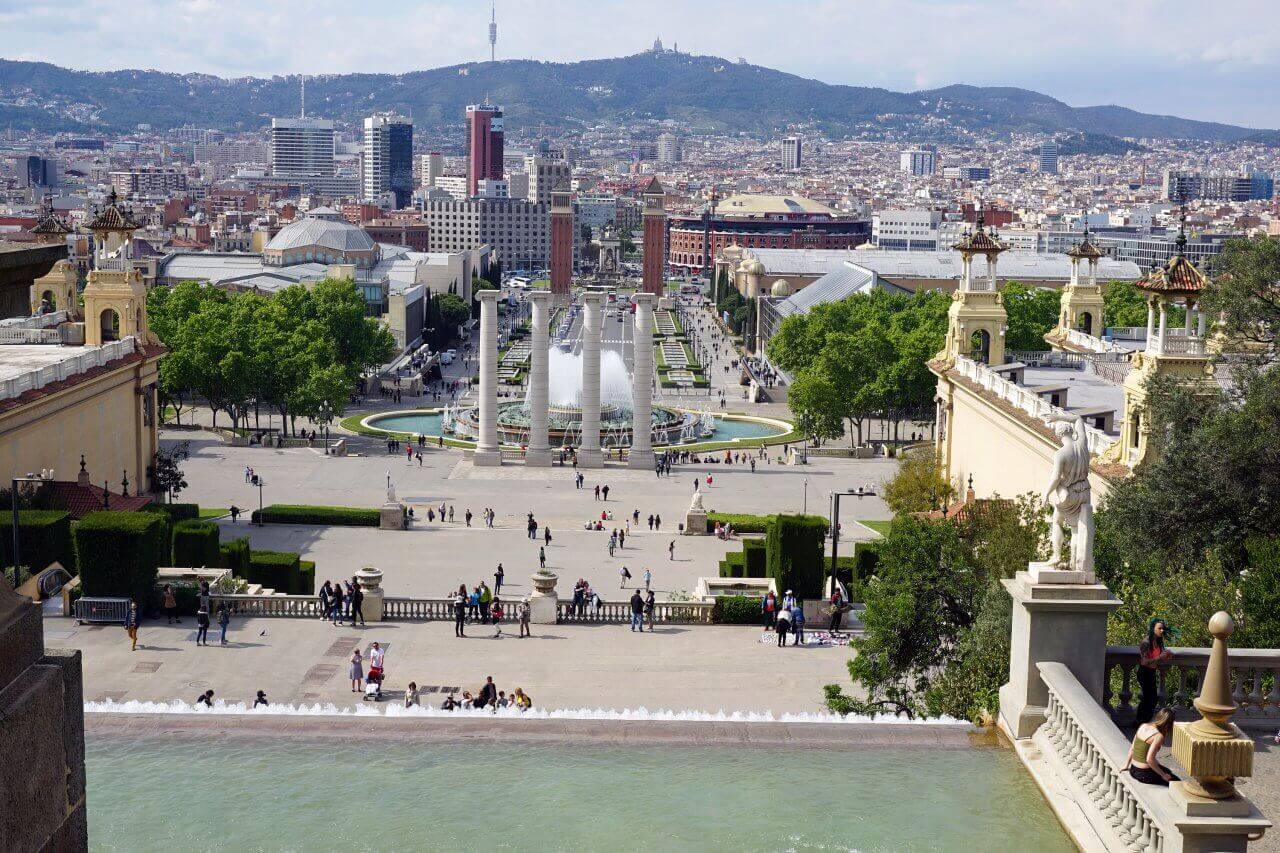
Montjuïc is a 173-metre hill southwest of the city centre containing an extraordinary concentration of Barcelona sightseeing in one location.
The Funicular de Montjuïc runs from Paral·lel metro station (included in the T-Casual transport card).
What to do on Montjuïc:
- Montjuïc Castle (€5; free first Sunday monthly): former military fortress with excellent views
- MNAC: the national art museum (see above)
- Fundació Joan Miró: modern art museum (see above)
- Olympic Stadium (Estadi Olímpic Lluís Companys): exterior is free; was used in the 1992 Barcelona Olympics
- Jardins de Laribal: free terraced gardens
- Font Màgica: free light and water shows Thursday–Sunday evenings (April–October)
19. Bunkers del Carmel
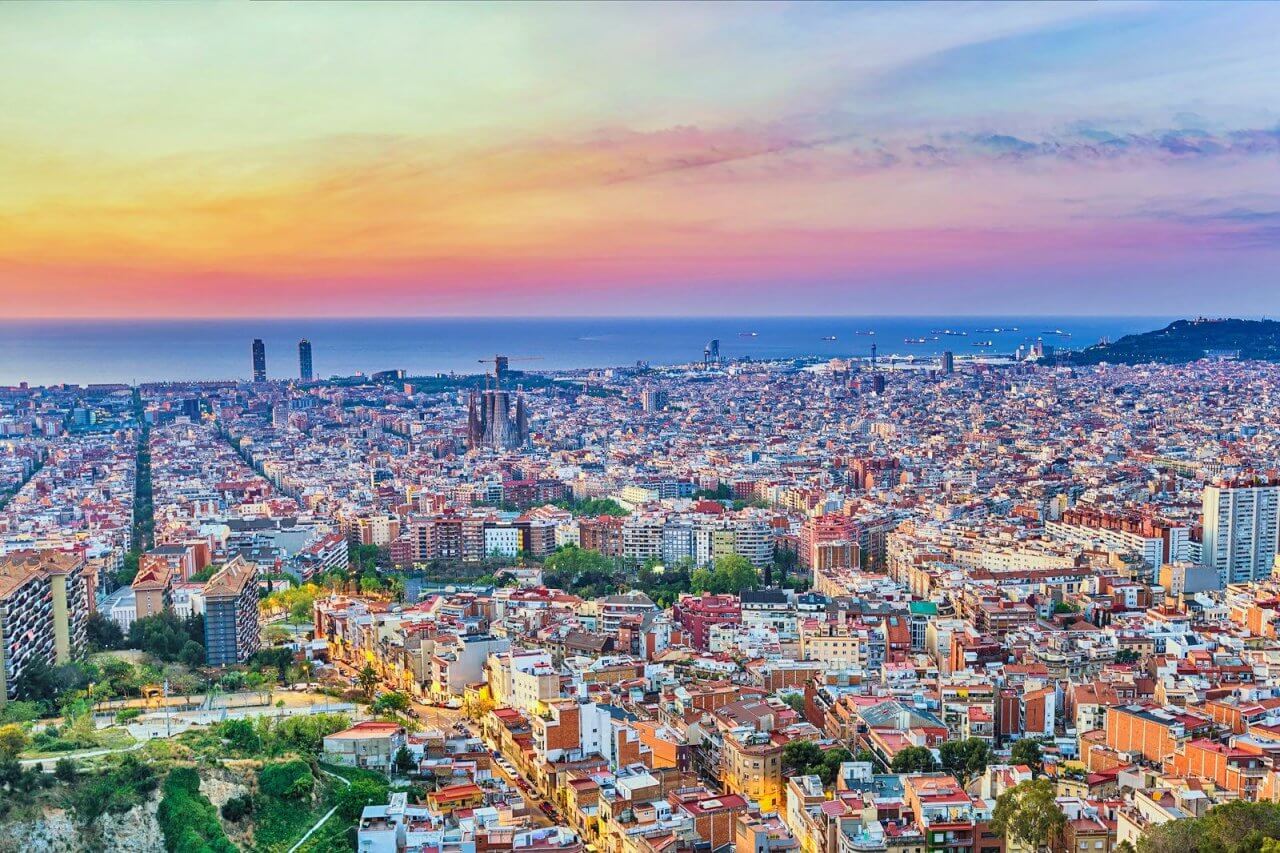
The Turó de la Rovira — abandoned Civil War anti-aircraft batteries on a hill above the Gràcia neighbourhood — offers the best 360-degree panoramic view in Barcelona.
It’s completely free.
No ticket, no facilities, no barrier.
Take the metro to Alfons X or Joanic and walk uphill for 20–25 minutes.
Late afternoon arrivals get golden-hour light over the city; sunset draws a regular crowd of locals and in-the-know visitors who come with food and wine.
It’s one of the best cool things to do in Barcelona that almost no organised tour covers.
Things to Do in Barcelona at Night
Barcelona’s nightlife is structured around late timing — dinner at 9:30 PM is normal, first drinks at midnight, clubs filling after 1–2 AM.
Budget appropriately: club entry typically runs €10–20 and drinks inside start at €8–12.
20. El Born and Gràcia Bar Scene
El Born and Gràcia are the two best neighbourhoods for nightlife that isn’t dominated by tourist clubs.
El Born’s medieval streets contain excellent cocktail bars and late-night wine bars; Gràcia’s small plazas — Plaça del Sol, Plaça de la Virreina, Plaça de la Vila de Gràcia — host outdoor bar life until late.
For a local start to the evening: order vermouth (vermut) before dinner.
Then cava or gin-tonic.
Locals typically eat around 9:30–10 PM and don’t head to clubs until after midnight.
21. Flamenco Shows and Live Music
Flamenco is not originally Catalan — it’s Andalusian — but Barcelona has several strong flamenco venues that attract professional performers:
- Tablao Cordobés (Las Ramblas 35): one of the oldest tablao venues in Barcelona, professional shows nightly
- Palacio del Flamenco (Carrer de Balmes 139): dinner + show format, high production quality
- Palau de la Música Catalana (Carrer del Palau de la Música 4-6): UNESCO World Heritage modernist concert hall — book for classical concerts, jazz, or choral performances; the building alone justifies attending
For free live music, check the Barcelona Cultura calendar (barcelona.cat/barcelonacultura) for outdoor concerts and neighbourhood festival events — these are particularly common in August.
22. Magic Fountain of Montjuïc
The Font Màgica free light-and-water shows run Thursday–Sunday evenings from March through January (closed January–February for maintenance).
Shows run at 9–9:30 PM in spring/autumn and 9:30–10 PM in summer.
See our free things guide for the full verified schedule.
Unique and Off-the-Beaten-Path Things to Do in Barcelona
23. Sant Antoni and Poble Sec
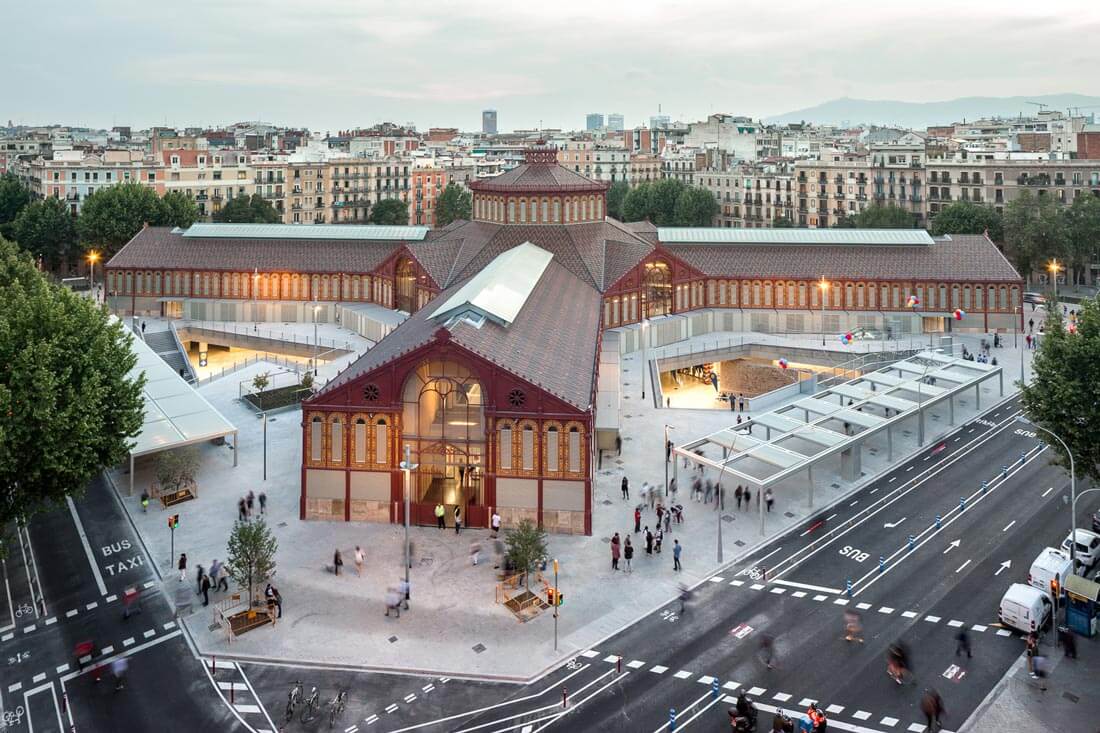
Sant Antoni and Poble Sec are two adjacent neighbourhoods south of the Eixample that remain largely off the main tourist circuit.
Sant Antoni’s Mercat de Sant Antoni and the surrounding streets on Carrer del Parlament are excellent for tapas and natural wine bars.
The Sunday book market outside the market building draws local regulars.
Carrer Blai in Poble Sec is Barcelona’s best pintxos street — a row of bars serving toothpick-spiked snacks for €1–2 each.
It’s casual, unpretentious, and genuinely local. Quimet & Quimet
on Carrer del Poeta Cabanyes is a legendary standing bar — tiny, always packed, serving exceptional montaditos (open bites) with canned seafood and vermouth.
24. El Raval
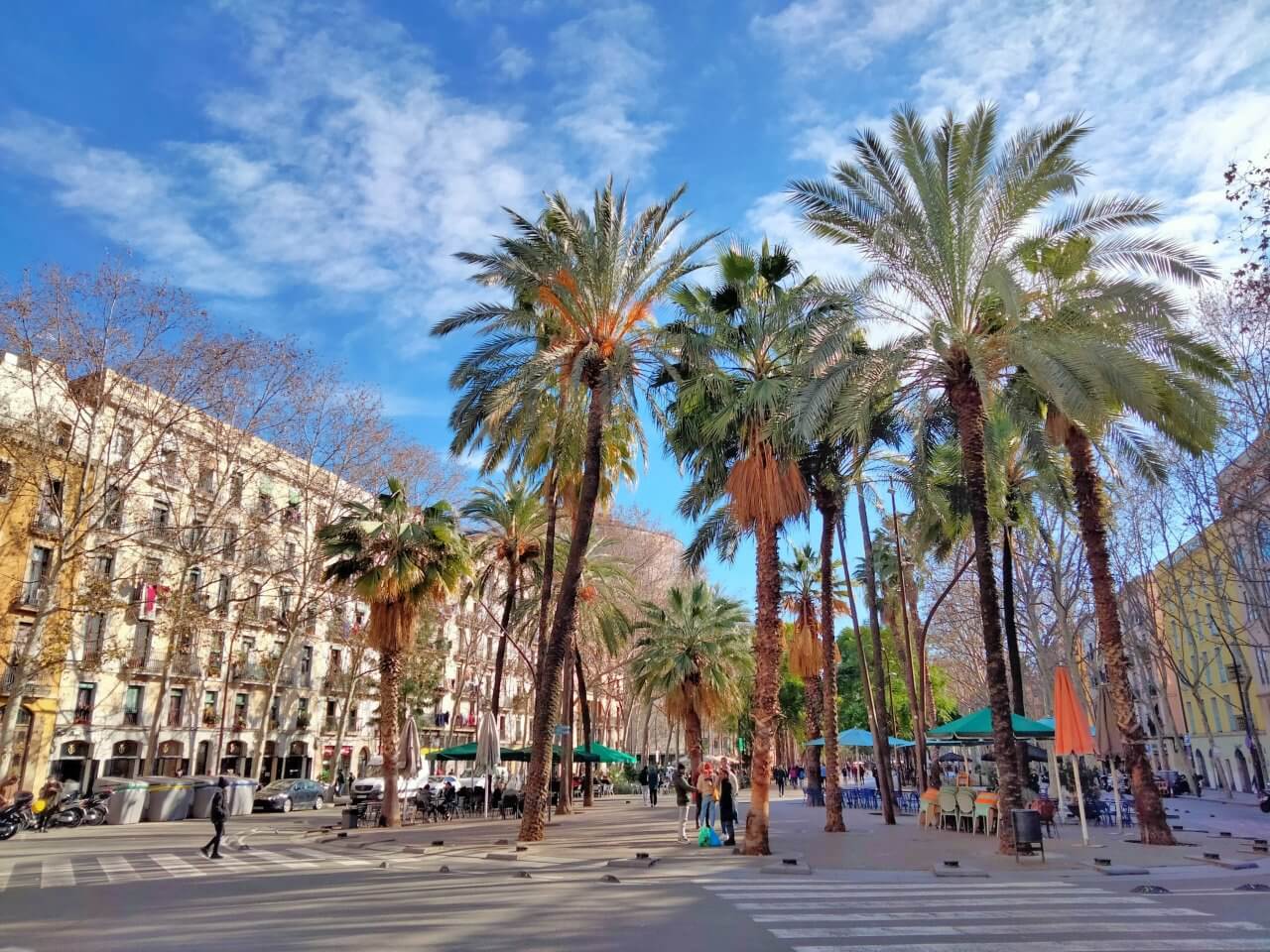
El Raval is Barcelona’s most multicultural neighbourhood — gritty, creative, and worth exploring beyond the MACBA plaza.
The Rambla del Raval is a quieter local version of Las Ramblas, with a Fernando Botero cat sculpture and a weekend market.
The neighbourhood has excellent affordable restaurants (Filipino, Moroccan, Pakistani, and Catalan all within a few streets), interesting street art, and some of the city’s most honest bar life.
For young adults looking for things to do in Barcelona that go beyond the tourist circuit, El Raval is the best starting point for a genuine local experience.
25. Poblenou
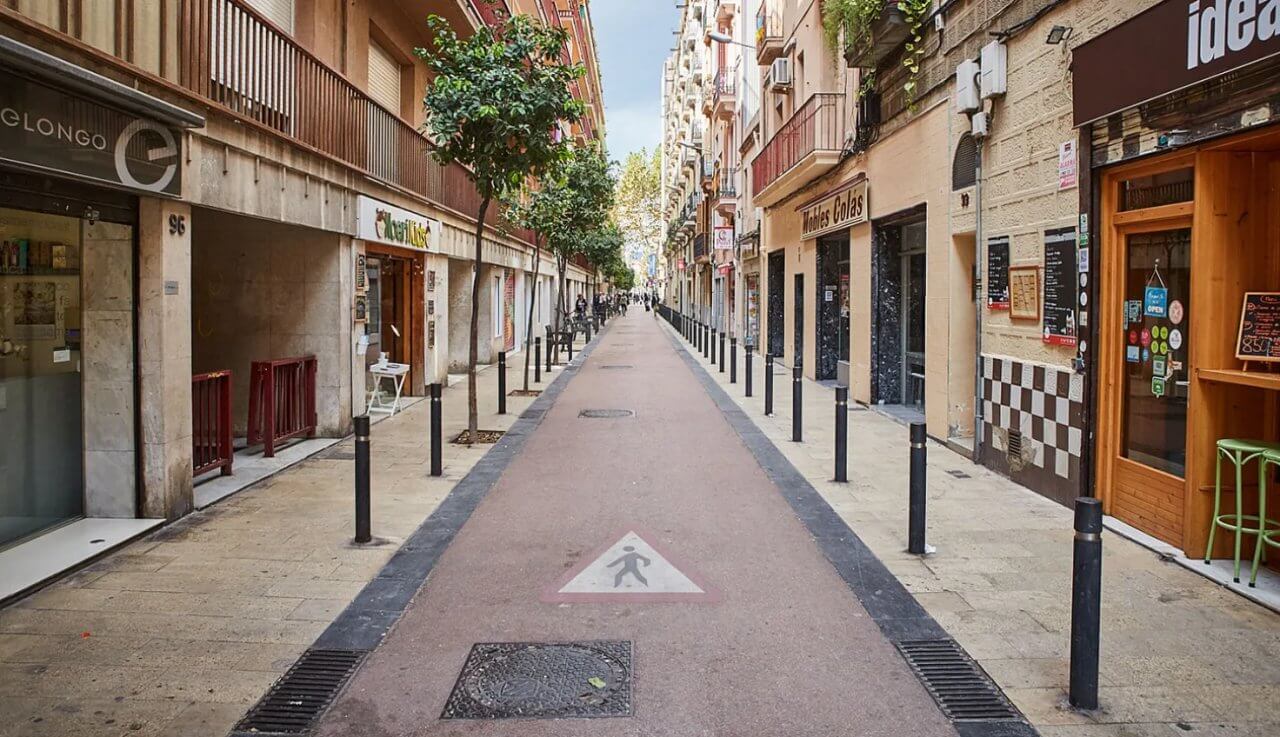
Poblenou was Barcelona’s industrial district and is now a hub for creative studios, startups, and some of the best street art in the city.
The Rambla del Poblenou is a peaceful, tree-lined pedestrian street.
The neighbourhood’s converted industrial buildings, beach access, and growing restaurant scene make it an excellent place to spend a morning or afternoon away from the central tourist zone.
Day Trips from Barcelona
Barcelona’s position in Catalonia makes it an excellent base for day trips.
All of the following are reachable by public transport.
Montserrat
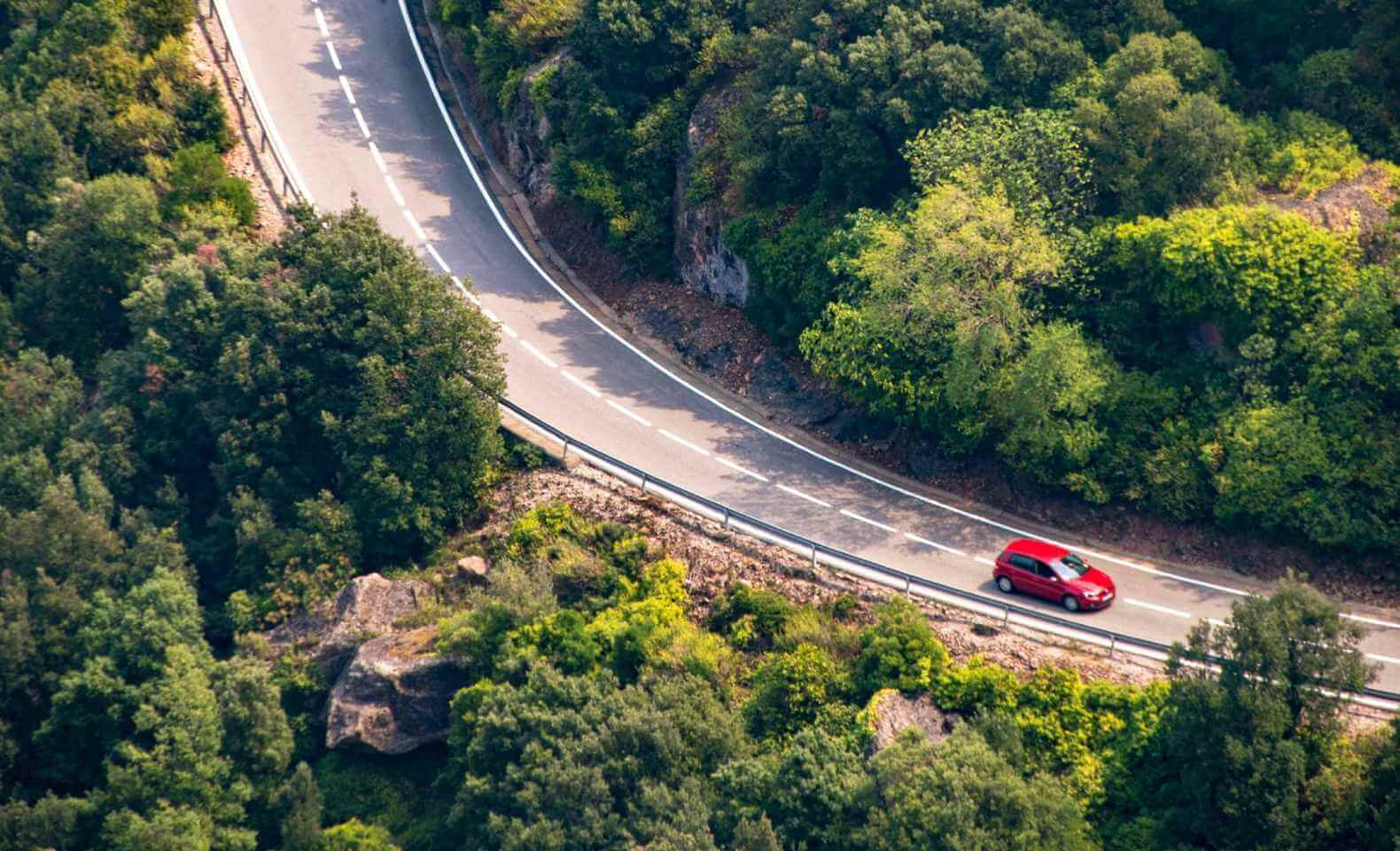
The Montserrat mountain monastery is 50km northwest of Barcelona — reachable by train from Plaça Espanya plus the rack railway, total journey around 75 minutes.
The monastery contains a revered 12th-century wooden statue of the Virgin Mary (La Moreneta) and a network of hiking trails with views across Catalonia.
The round trip on public transport costs around €25–30 including the rack railway.
Sitges

Sitges is a stylish beach town 35km south of Barcelona — 35–40 minutes by regional train from Passeig de Gràcia (under €5 return).
It has excellent beaches, a compact old town, some good seafood restaurants, and a famously inclusive atmosphere.
It’s one of the easiest and cheapest day trips from the city.
Girona
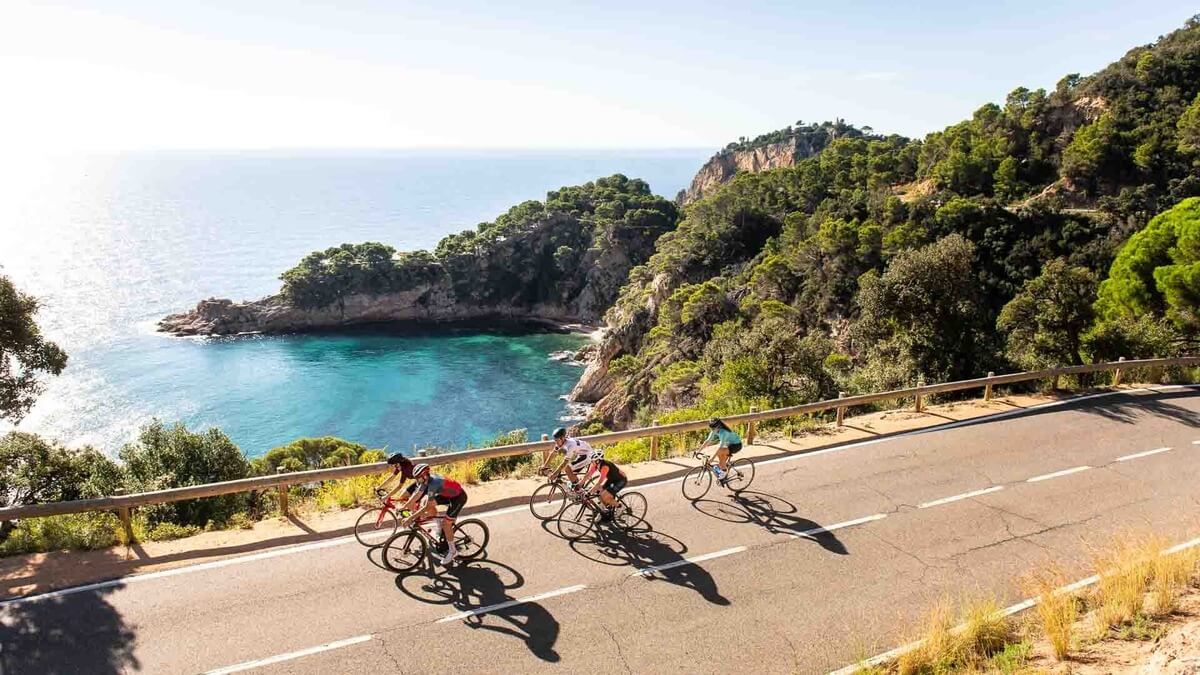
Girona is 100km north of Barcelona — about 38 minutes by high-speed AVE train (around €15–25 return).
Its medieval Jewish Quarter (El Call), Cathedral, and Eiffel-designed iron bridge make it one of the most atmospheric medieval towns in Spain.
It’s the most visually striking day trip from Barcelona for history and architecture enthusiasts.
For driving-based day trips across Catalonia, our Barcelona road trips guide covers the best routes and distances.
Getting Around Between All These Attractions
Barcelona’s attractions cluster across several walkable zones — Gothic Quarter/El Born, Eixample/Passeig de Gràcia, Barceloneta, and Montjuïc/Poble Sec — connected by a reliable metro and bus network.
A T-Casual card (€11.35 for 10 journeys) covers all public transport and is the most cost-effective option for most visitors.
Park Güell, Bunkers del Carmel, and Montserrat require a bit more planning but are all accessible without a car.
Our full guide to getting around Barcelona covers metro lines, night buses, airport connections, and the best transport passes for different trip lengths.
If you’re travelling with children, our guide to things to do in Barcelona with kids adapts many of these recommendations for families.
Planning the timing of your visit? Our guide on the best time to visit Barcelona covers weather, crowds, festivals, and pricing season by season.
Frequently Asked Questions (FAQs)
What are the must-see attractions in Barcelona?
The absolute must-see attractions in Barcelona are the Sagrada Família, Park Güell, the Gothic Quarter, Casa Batlló or La Pedrera (ideally both), Barceloneta Beach, and the Picasso Museum.
These six cover Barcelona’s core strengths — Gaudí architecture, medieval history, Mediterranean beach culture, and world-class art — and can be done across three to four days.
How many days do you need in Barcelona?
Three full days covers the main sightseeing highlights. Four to five days gives you time to slow down, explore neighbourhood markets, take a day trip to Montserrat or Sitges, and experience Barcelona’s nightlife properly.
Anything over five days starts to include outer neighbourhoods and day trips to Girona or the Costa Brava.
Is Barcelona safe for tourists?
Barcelona is generally safe. The main concern is pickpocketing, which is common in crowded tourist areas — Las Ramblas, the Gothic Quarter, Barceloneta, and busy metro lines.
Keep valuables in a front-facing bag, be aware on public transport, and avoid unlit streets in El Raval after midnight.
What is the best neighbourhood to stay in for sightseeing?
El Born and Sant Antoni are the best bases for first-time visitors — central, walkable to the Gothic Quarter and Eixample, good food and nightlife options, and not overrun by tourist infrastructure.
Eixample is good if you prefer a wider boulevard, more hotel options, and easy metro access.
Avoid staying directly on Las Ramblas unless you specifically want that location — the noise and tourist pricing extend to the surrounding streets.
What is Barcelona best known for?
Barcelona is best known for Antoni Gaudí’s architecture (Sagrada Família, Park Güell, Casa Batlló), its Gothic medieval quarter, its Mediterranean beaches, FC Barcelona and Camp Nou, and its food culture — tapas, seafood, Catalan cuisine, and one of the highest concentrations of Michelin-starred restaurants in Spain.