Getting Around Venice, Italy: How to Travel Around in Venice
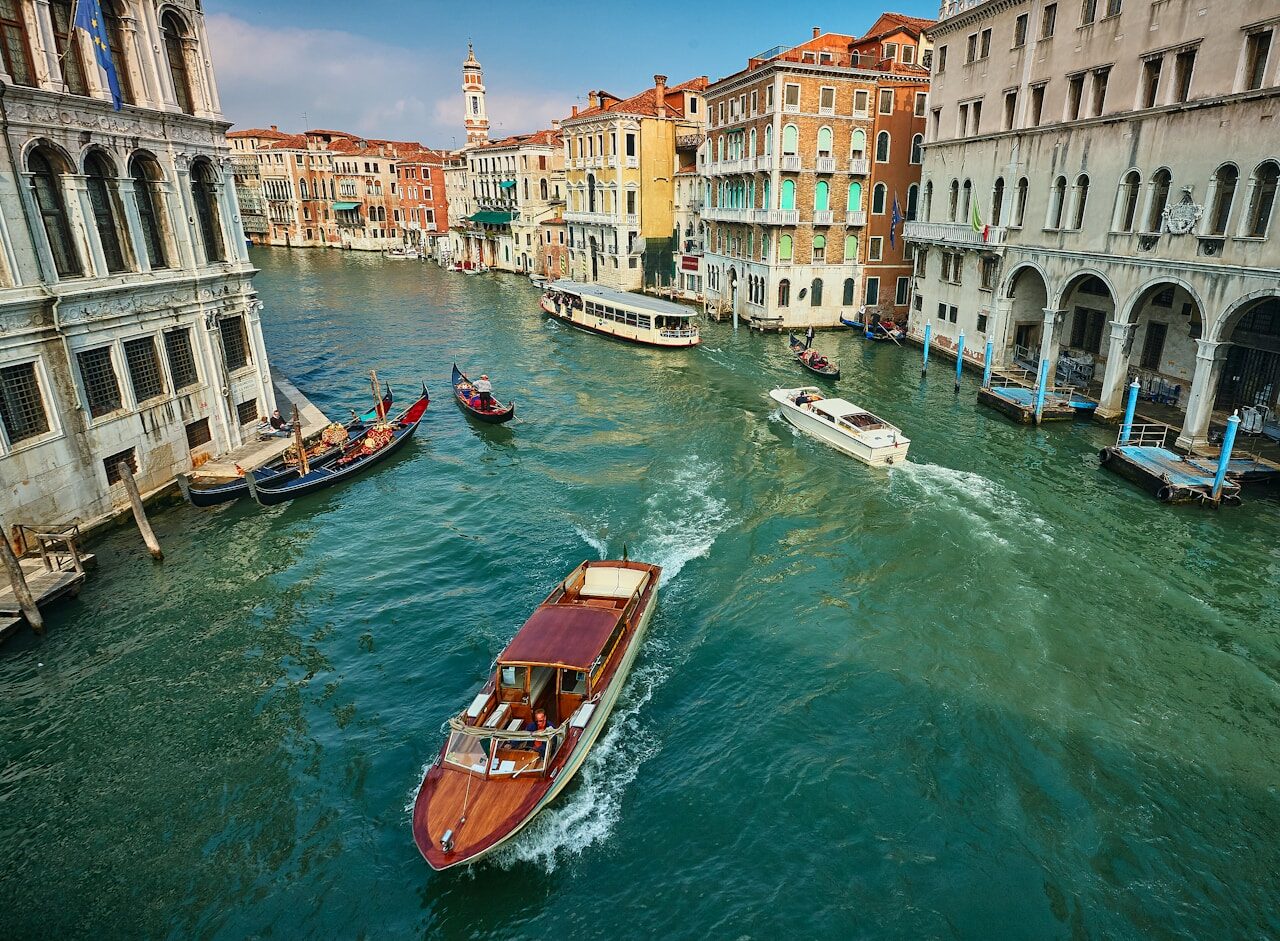



Getting Around Venice, Italy: Complete Transportation Guide 2026 – Complete guide to navigating Venice’s unique transportation system, including vaporetto water buses, walking routes, water taxis, and practical tips for getting around the car-free floating city.
- How to Travel Around Venice: Water Buses & Walking Guide
- Vaporetto Water Bus System
- Walking in Venice
- Water Taxis
- Gondolas and Traghetti
- Getting to Venice from Transportation Hubs
- Luggage Management and Transportation
- Venice Transportation Costs and Budget Planning
- Accessibility and Special Needs
- Final Thoughts
Venice stands alone among world cities with its complete absence of cars, motorcycles, and bicycles.
This extraordinary car-free environment creates a transportation system based entirely on boats and walking, requiring visitors to adapt their expectations and navigation strategies.
Understanding how to move efficiently through Venice’s network of canals, bridges, and narrow pedestrian streets transforms potential frustration into enjoyable exploration.
This comprehensive guide covers every aspect of getting around Venice, from public water buses to private water taxis, walking strategies to luggage management, ensuring visitors can navigate confidently from arrival to departure.
Key Highlights
Hide- Venice is completely car-free; all transportation occurs via water buses (vaporetti), water taxis, gondolas, or walking
- Vaporetto single rides cost €9.50 for 75 minutes; multi-day passes (€25-€65) offer better value for tourists making multiple trips
- Walking is free and often the fastest way to reach destinations; Venice's historic center is compact at just 1.7 square miles
- Yellow arrow signs throughout the city point toward major landmarks (San Marco, Rialto, Ferrovia) for easy navigation
- Water taxis cost €140 from the airport but provide direct, luggage-friendly service; Alilaguna water buses cost €25 as a budget alternative
- Venice has over 400 bridges with steps; wheeled luggage is impractical, so pack backpacks or shoulder bags instead
- Download offline maps before arriving; GPS works well in Venice despite the maze-like layout of narrow streets and canals
How to Travel Around Venice: Water Buses & Walking Guide
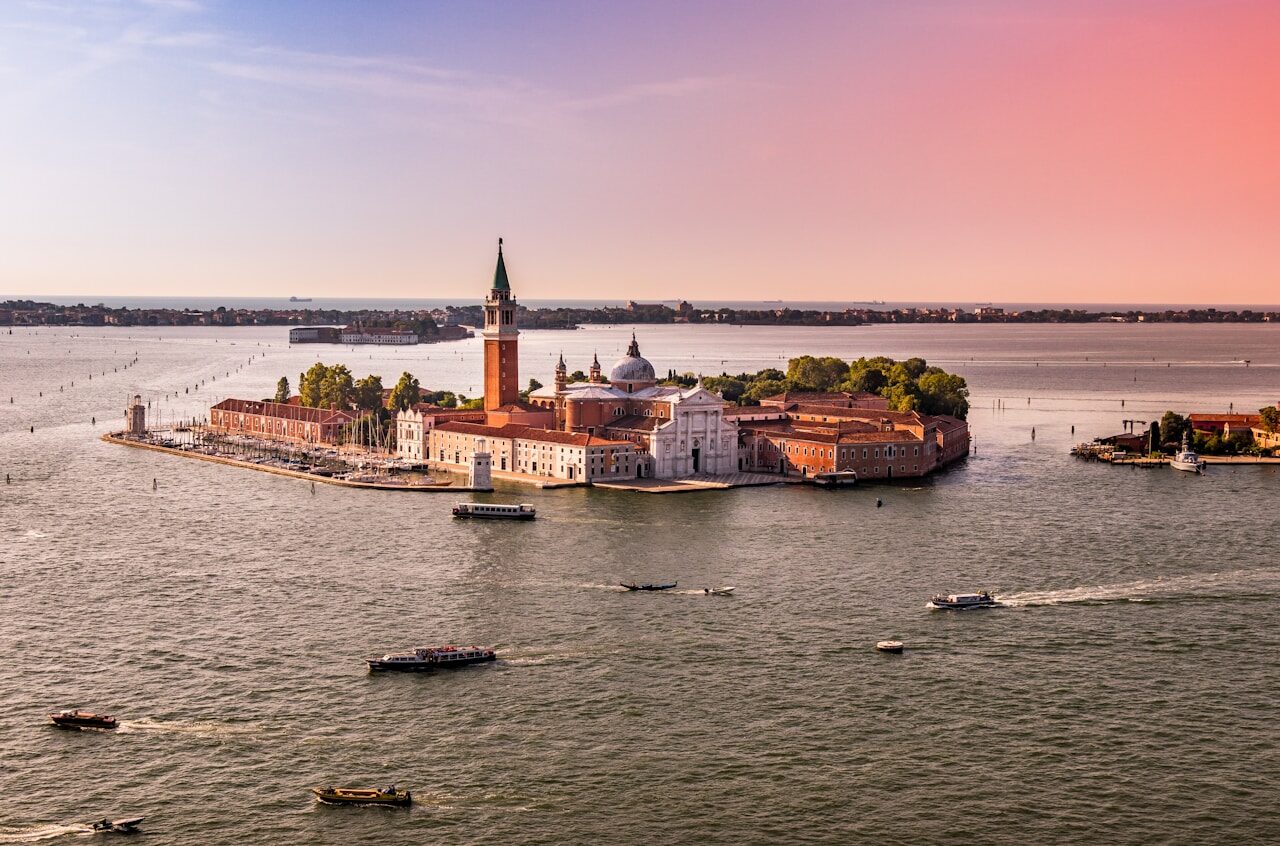
Venice’s unique geography and historical development created a city where traditional vehicular transportation is impossible.
The historic center occupies 118 small islands separated by 150 canals and connected by more than 400 bridges, with buildings constructed on wooden pilings driven into the lagoon bed.
This configuration eliminates space for roads wide enough for cars, creating a pedestrian and boat-based transportation system that has functioned for over 1,500 years.
Reserve Your Venice Tours & Activities
Most popular Venice tours sold out quickly, so grab your tickets early to save your spot! Feel free to browse through our skip-the-line passes, guided tours, and special experiences to find the perfect fit for your Venice trip.
 Trip.com
 Booking.com
 Expedia
 Traveloka
 GetYourGuide
 Klook
Klook WeGoTrip
 Go City
Why Venice Has No Cars
The physical impossibility of accommodating cars in Venice’s medieval street layout represents only part of the explanation for the city’s car-free status.
Italian law specifically prohibits motor vehicles in Venice’s historic center, with the exception of emergency vehicles and authorized service boats.
This restriction protects the city’s fragile infrastructure, reduces pollution that damages historic buildings, and preserves the unique character that makes Venice a UNESCO World Heritage Site.
The narrow streets (calli) that wind through Venice measure as little as 3-4 feet (1-1.2 meters) wide in some locations, barely accommodating two people walking side by side.
Even the widest pedestrian thoroughfares reach only 10-15 feet (3-4.5 meters) across.
These dimensions, combined with frequent bridges featuring steps, make wheeled vehicle access physically impossible throughout most of the historic center.
Piazzale Roma, located at the western edge of the historic center where the causeway from the mainland terminates, serves as the last point where cars, buses, and taxis can access.
Beyond this terminal, all transportation shifts to boats or feet.
This creates a distinct boundary between the modern world of motor vehicles and Venice’s timeless pedestrian realm.
The Canal Network as Streets
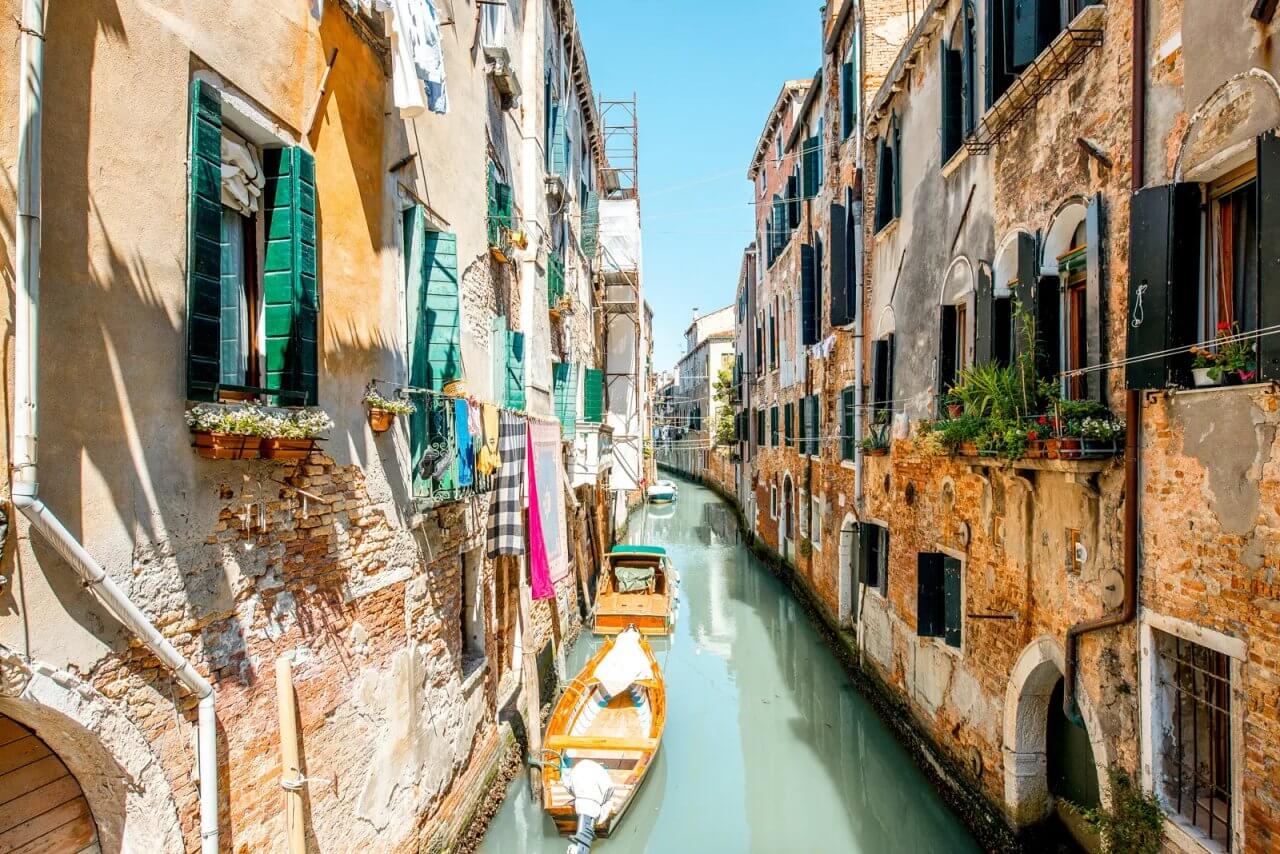
Venice’s 150 canals function as the city’s street system, with boats serving the role that cars play in conventional cities.
The Grand Canal, Venice’s main thoroughfare, snakes through the heart of the city in a reverse S-shape, measuring 2.4 miles (3.8 kilometers) long and 100-230 feet (30-70 meters) wide.
This grand waterway connects to smaller canals (rii) that branch throughout the six districts (sestieri), creating a comprehensive water-based transportation network.
Water depth in Venice’s canals varies from 10-16 feet (3-5 meters) in the Grand Canal to as shallow as 3-6 feet (1-2 meters) in smaller rii.
Tidal fluctuations cause water levels to rise and fall approximately 3 feet (1 meter) twice daily, affecting navigation in shallow canals during low tide.
Boat captains must possess intimate knowledge of canal depths, bridge clearances, and tidal patterns to navigate safely.
The canals serve multiple functions beyond transportation.
They provide access for goods delivery, garbage collection, emergency services, construction materials, and all other services that would use trucks in conventional cities.
Specialized boats exist for every purpose: garbage barges, delivery boats, ambulances, police boats, fire boats, and even funeral boats (carrying coffins to cemetery islands).
Bridge Navigation Requirements
Venice’s 400+ bridges create the city’s distinctive topography and present unique navigation challenges.
Most bridges feature steps, as the city contains very few flat bridges.
The Rialto Bridge, Venice’s most famous crossing, rises 24 feet (7.3 meters) above the Grand Canal with 42 steps on each side.
Smaller bridges throughout the city typically feature 10-20 steps, though some have as few as 3-5 steps.
Bridge steps vary in height, width, and condition.
Historic bridges feature worn stone steps that can be slippery when wet, with uneven surfaces from centuries of foot traffic.
Some bridges lack handrails, requiring careful navigation, particularly when carrying luggage or traveling with children.
The constant up-and-down movement over bridges throughout the day provides unexpected exercise for visitors accustomed to flat urban environments.
Wheelchair accessibility remains severely limited due to bridge steps, though the city has installed ramps at some major bridges and created accessible routes through specific areas.
The Ponte della Costituzione (Constitution Bridge) near Piazzale Roma, completed in 2008, features a gentle slope without steps, providing one of the few wheelchair-accessible Grand Canal crossings.
For detailed information about Venice’s top attractions and experiences accessible via this unique transportation system, see our guide on the best things to do in Venice.
Vaporetto Water Bus System
The vaporetto water bus network serves as Venice’s primary public transportation system, operated by ACTV (Azienda del Consorzio Trasporti Veneziano).
These motorized watercraft follow fixed routes with designated stops, functioning like city buses on water.
Understanding the vaporetto system is essential for efficient navigation, as it provides the most economical way to travel longer distances and reach outlying islands.
How Vaporetto Work in Venice
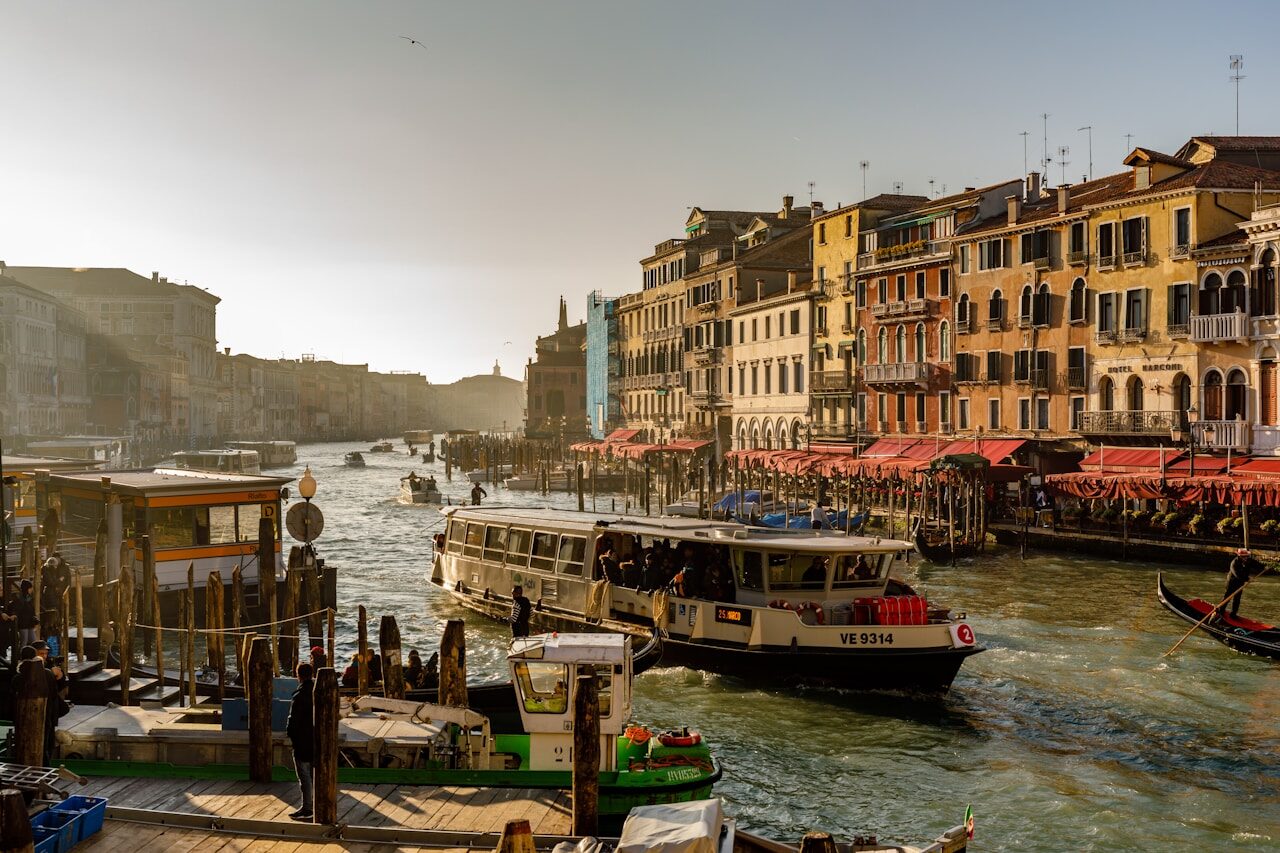
Vaporetti are large motorized boats accommodating 100-250 passengers, with both indoor seating areas and outdoor deck space.
Modern vaporetti feature low floors for easier boarding, though older vessels require stepping up from floating platforms.
Boats arrive at stops (fermata) marked by distinctive striped poles and floating platforms along canals.
The system operates 25 routes covering the historic center, lagoon islands, and mainland connections.
Routes are numbered (Line 1, Line 2, etc.) with some having directional variations (4.1, 4.2, 5.1, 5.2).
Electronic displays at major stops show real-time arrival information, though smaller stops may lack this technology.
Service frequency varies by route and time of day, with major routes running every 10-20 minutes during daytime hours.
Boarding procedures require purchasing and validating tickets before entering the boat.
Yellow electronic validators at each stop must be tapped with tickets or passes before boarding.
Inspectors frequently check tickets during journeys, imposing fines of €60 plus ticket cost for riding without valid tickets.
The validation system tracks usage and prevents ticket sharing.
Vaporetto Routes and Lines
Line 1 provides the classic Grand Canal experience, making 18 stops between Piazzale Roma and Lido.
This slow boat takes approximately 45 minutes for the complete route, stopping at major landmarks including Ferrovia (train station), Riva de Biasio, San Marcuola, Ca’ d’Oro, Rialto, Sant’Angelo, San Samuele, Accademia, Giglio, Salute, San Marco, and Arsenale.
Board early to secure outdoor deck seats for unobstructed Grand Canal views.
Line 2 follows a similar Grand Canal route but makes fewer stops, completing the journey in approximately 30 minutes.
This express service works better for transportation than sightseeing, though it still provides Grand Canal views.
Line 2 continues beyond San Marco to Giudecca island, offering views of the southern lagoon.
Lines 4.1 and 4.2 circle the historic center’s perimeter in opposite directions, providing views from the lagoon rather than through interior canals.
These circular routes take approximately 45 minutes for the complete loop and connect to Murano island.
Lines 5.1 and 5.2 follow similar circular routes with slightly different stops.
Line 12 connects Venice to the lagoon islands of Murano, Burano, and Torcello.
This route departs from Fondamente Nove on the northern edge of the historic center, taking approximately 40 minutes to Murano, 50 minutes to Burano, and 60 minutes to Torcello.
Service frequency decreases for these outer island routes, with boats running every 30-60 minutes depending on time of day.
Night service (routes marked with “N”) operates on limited routes after regular service ends around midnight.
Night vaporetti run less frequently, typically every 30-60 minutes, covering only major routes.
The last regular vaporetti depart around 11:30 PM-12:30 AM depending on the route, with night service continuing until approximately 4:30-5:00 AM when regular service resumes.
Vaporetto Tickets and Passes
Single-ride vaporetto tickets cost €9.50 and remain valid for 75 minutes from validation, allowing transfers between lines during this period.
This high single-ride price makes multiple trips expensive, encouraging purchase of multi-day passes for tourists making several journeys.
Multi-day passes offer significant savings for visitors using vaporetti multiple times:
- 24-hour pass: €25 (unlimited rides for 24 hours from first validation)
- 48-hour pass: €35 (unlimited rides for 48 hours)
- 72-hour pass: €45 (unlimited rides for 72 hours)
- 7-day pass: €65 (unlimited rides for 7 days)
The break-even point occurs at three single rides per day, making passes economical for most tourists.
A 24-hour pass pays for itself with just three trips (€28.50 in single tickets).
Passes activate upon first validation and run for the specified time period, not calendar days.
A 24-hour pass validated at 2:00 PM expires at 2:00 PM the following day.
Purchase tickets and passes at ACTV ticket offices located at major vaporetto stops including Piazzale Roma, Ferrovia (train station), Rialto, and San Marco.
Automated ticket machines accept credit cards and cash at these locations.
Tobacco shops (tabacchi) throughout Venice also sell tickets, identified by blue signs with white “T” symbols.
Some hotels sell tickets, though often at slight markups.
Children under 6 ride free when accompanied by paying adults.
Youth discounts and senior discounts are not available to tourists, only to residents with special passes.
Luggage does not require separate tickets, though ACTV regulations limit luggage to one piece per person with maximum dimensions of 150cm (length + width + height combined).
Oversized luggage may require additional fees at inspector discretion.
Tips for Using Vaporetti
Board vaporetti at the front or rear doors, never through the middle exit doors.
Wait for passengers to disembark before boarding.
During crowded periods, boarding can be competitive, with locals pushing to secure spots.
Stand firm but polite to board without being left behind.
Secure outdoor deck seats early for the best views, particularly on Line 1 through the Grand Canal.
The front and rear outdoor areas provide unobstructed views, while side decks offer good perspectives.
Indoor seating areas have windows but lack the open-air experience.
During peak season (June-August) and peak hours (8-9 AM, 5-7 PM), vaporetti become extremely crowded, with standing room only.
Watch for pickpockets on crowded vaporetti, particularly during boarding and disembarking when attention is divided.
Keep bags in front of you with openings facing your body.
Avoid using phones or cameras near doors, as thieves can grab devices and escape as doors close.
Announce stops are made in Italian only, so track your location using maps or GPS.
Major stops are obvious (Rialto, San Marco), but smaller stops can be confusing.
Count stops from your boarding point or watch for landmark buildings to identify your destination.
The ACTV app provides real-time location tracking for some routes.
Walking in Venice
Walking represents the primary way most visitors experience Venice, as the compact historic center measures only 1.7 square miles (4.4 square kilometers).
However, Venice’s maze-like layout of narrow alleys, dead-end streets, and frequent bridges creates navigation challenges that differ dramatically from typical grid-pattern cities.
Understanding walking strategies and navigation methods helps visitors move efficiently while enjoying the city’s pedestrian-only environment.
Is Venice Walkable?

Venice is entirely walkable in terms of distance, with most major attractions lying within 20-30 minutes’ walk of each other.
The walk from the train station (Ferrovia) to St. Mark’s Square takes approximately 30-40 minutes via the most direct route.
From Rialto Bridge to Accademia Bridge requires about 15 minutes.
These straight-line distances, however, don’t account for the indirect routes necessary to navigate canals and bridges.
The actual walking experience in Venice differs significantly from walking in conventional cities.
Narrow streets (calli) measuring 3-10 feet (1-3 meters) wide create single-file or two-person-wide passages.
Frequent bridges with steps interrupt flat walking, requiring constant climbing.
Uneven stone pavement, worn smooth by centuries of foot traffic, can be slippery when wet.
The absence of street lighting in some areas makes night walking challenging.
Physical fitness requirements for walking Venice exceed those of flat cities.
The constant bridge climbing, uneven surfaces, and extended walking periods require reasonable mobility and stamina.
Visitors with mobility limitations, knee problems, or cardiovascular issues should plan shorter walking segments with frequent rest stops.
Comfortable, broken-in walking shoes with good support are essential—new shoes cause blisters that can ruin trips.
Navigation and Wayfinding
Venice’s street layout defies logical navigation, with streets that appear to lead toward destinations suddenly ending at canals or turning in unexpected directions.
The city’s organic medieval development created a maze optimized for defense rather than navigation, with intentionally confusing layouts designed to disorient invaders.
This same layout now disorients tourists.
Yellow signs posted at major intersections indicate directions to key landmarks using Italian abbreviations:
- “Per Rialto” (to Rialto Bridge)
- “Per San Marco” or “Per P.za San Marco” (to St. Mark’s Square)
- “Per Ferrovia” (to train station)
- “Per Piazzale Roma” (to bus terminal/parking)
- “Per Accademia” (to Accademia Bridge/Museum)
Following these signs provides general direction toward major destinations, though they only point to the most famous landmarks.
Reaching specific hotels, restaurants, or minor attractions requires additional navigation beyond the yellow sign system.
Street names appear on buildings at intersections, typically on white plaques with black text.
However, Venice’s traditional address system uses district (sestiere) names followed by building numbers rather than street names and numbers.
An address like “Dorsoduro 1234” provides the district and building number but no street name, making it difficult to locate without detailed maps or GPS.
GPS and smartphone maps work well in Venice despite the dense urban environment.
Google Maps provides accurate walking directions, though it sometimes suggests routes that don’t account for bridge accessibility or temporary closures.
Download offline maps before arriving, as cellular data can be unreliable in some areas.
The Maps.me app offers detailed offline Venice maps with walking routes.
Getting lost in Venice is inevitable and part of the experience.
The city’s layout defies memorization, with similar-looking streets and canals creating confusion even for repeat visitors.
Embrace this aspect rather than fighting it—some of Venice’s most charming discoveries occur while “lost” in quiet neighborhoods away from tourist routes.
Allow extra time for navigation, particularly when trying to reach specific destinations like hotels or restaurants.
Main Walking Routes
Several main pedestrian routes connect major attractions, though “main” is relative in Venice’s narrow street network.
The Strada Nova in Cannaregio provides one of the widest and most direct routes from the train station toward Rialto, measuring 10-15 feet (3-4.5 meters) wide.
This commercial street features shops, restaurants, and constant foot traffic.
From Rialto Bridge to St. Mark’s Square, the most direct route follows Mercerie, a series of connected shopping streets that change names multiple times (Merceria San Salvador, Merceria San Zulian, Merceria dell’Orologio).
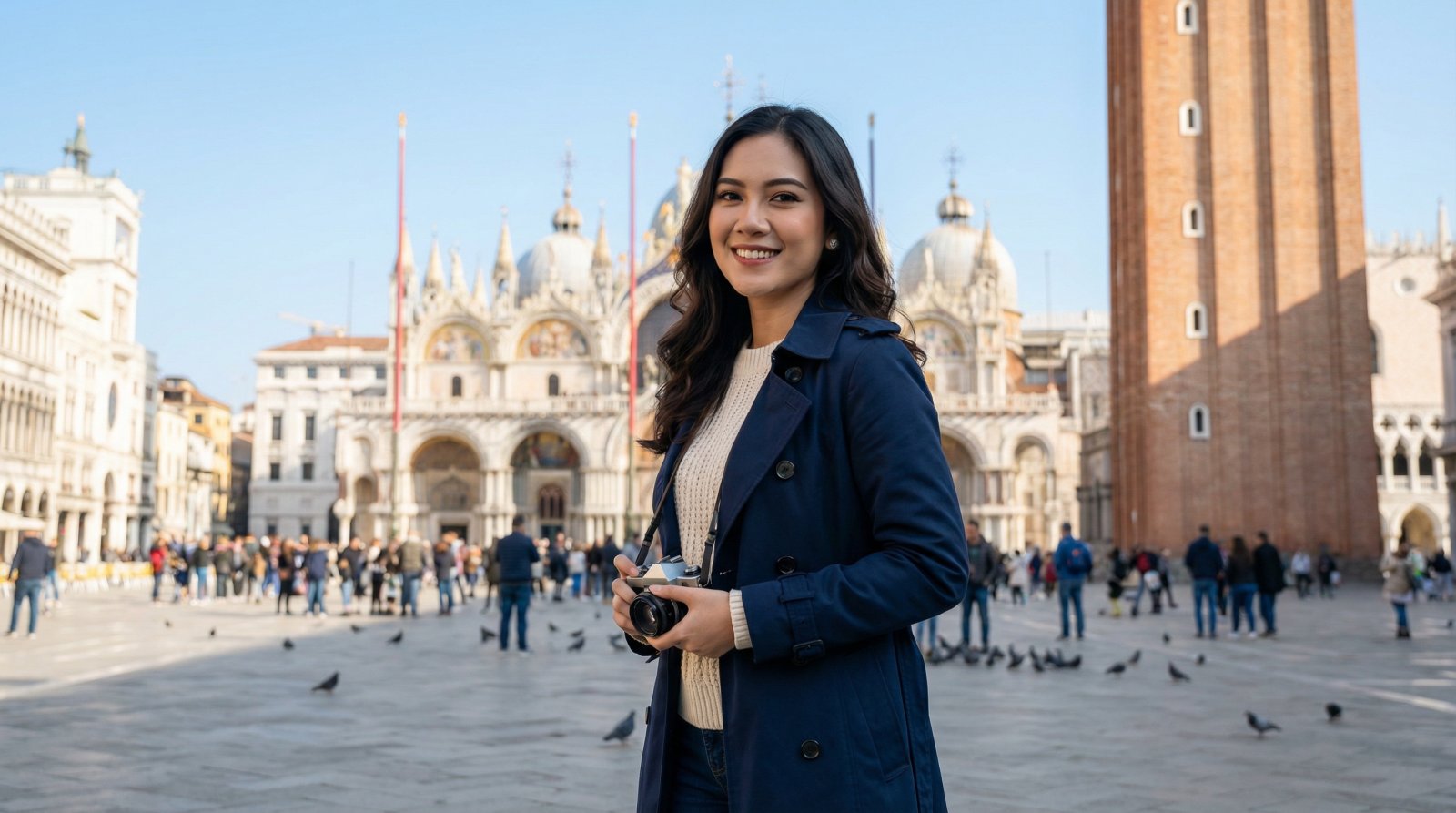
This route takes 10-15 minutes and passes through the commercial heart of Venice, with luxury shops, jewelry stores, and tourist-oriented businesses.
The waterfront promenade Riva degli Schiavoni runs along the southern edge of the historic center from St. Mark’s Square eastward toward Arsenale.
This wide, flat walkway provides relief from narrow streets and offers lagoon views, though it becomes extremely crowded during peak season.
The promenade continues as Zattere along Dorsoduro’s southern edge, providing a pleasant walking route with fewer crowds.
Calle Larga XXII Marzo connects St. Mark’s Square to Campo Santo Stefano and eventually to Accademia Bridge, providing a relatively wide shopping street.
“Larga” in Venetian dialect means “wide,” though these streets still measure only 10-15 feet (3-4.5 meters) across—wide by Venice standards.
Bridge Navigation Strategies

Venice’s 400+ bridges create the city’s distinctive rhythm of constant climbing and descending.
Most bridges feature 10-20 steps, though major bridges like Rialto have 40+ steps.
Bridge steps vary in height from 6-10 inches (15-25 centimeters), with worn stone creating uneven surfaces.
Some bridges lack handrails, requiring careful navigation.
Wheeled luggage performs poorly on bridge steps, requiring lifting rather than rolling.
Travelers with wheeled bags should expect to carry them frequently.
Backpacks or shoulder bags navigate Venice’s terrain more easily than rolling suitcases.
If wheeled luggage is necessary, choose bags with large, durable wheels and be prepared to lift them over bridges.
Some bridges feature ramps alongside steps, though these are relatively rare.
The Ponte della Costituzione near Piazzale Roma provides one of the few major wheelchair-accessible bridges.
The city has installed ramps at select bridges in recent years, though most remain step-only.
Maps showing accessible routes are available from tourist information offices.
Bridge traffic flows in both directions simultaneously, creating congestion on narrow bridges during peak periods.
Major bridges like Rialto and Accademia become bottlenecks with crowds moving in both directions.
Visit these bridges early morning or evening to avoid the worst congestion.
Alternative bridges nearby often provide less crowded crossings.
Water Taxis
Water taxis provide fast, direct transportation to specific destinations, particularly useful for airport transfers, hotel check-ins with luggage, or reaching locations without convenient vaporetto access.
These sleek motorboats accommodate 4-10 passengers with luggage and can access smaller canals that larger vaporetti cannot reach.
However, water taxis cost significantly more than public transportation, making them a premium option.
Water Taxi Rates and Booking
Official water taxi rates in 2026 start with a base fare of approximately €15-20, plus charges based on distance and time.
A typical 10-minute ride from the train station to St. Mark’s Square costs approximately €70-90.
Marco Polo Airport to central Venice costs approximately €140 for up to four passengers with luggage.
Night surcharges (10 PM to 7 AM) add €10-15, and luggage fees add €3-5 per large bag.
Pre-booking water taxis through official companies provides fixed rates and guaranteed availability.
Consorzio Motoscafi Venezia and Venezia Taxi operate official water taxi services with published rates.
Booking online or by phone before arrival ensures availability and eliminates potential disputes over metered fares.
Fixed-rate airport transfers typically cost €130-150 for up to four passengers.
Water taxis make economic sense for airport transfers with luggage, late-night transportation when vaporetti run infrequently, or when traveling in groups of 4-6 people where the per-person cost becomes comparable to multiple vaporetto tickets plus luggage hassles.
For solo travelers or couples making short trips, vaporetti provide much better value despite the convenience of water taxis.
Unlicensed water taxi operators sometimes approach tourists at the airport or train station offering “special deals.” These unlicensed operators charge inflated prices and may not have proper insurance.
Use only official water taxi stands marked with signs or pre-booked services from reputable companies.
When to Use Water Taxis
Water taxis excel for airport transfers, particularly when arriving with luggage after long flights.
The direct service from Marco Polo Airport to hotels eliminates the need to navigate vaporetto stops with bags, providing door-to-door convenience.
The €140 cost for up to four passengers becomes reasonable when split among travelers, particularly compared to the hassle of managing luggage on public transportation.
Late-night arrivals or departures benefit from water taxi service, as vaporetto frequency decreases significantly after midnight.
Night vaporetti run every 30-60 minutes on limited routes, making water taxis more practical for late-night transportation despite higher costs.
The night surcharge adds €10-15 to standard rates.
Hotels located on small canals without nearby vaporetto stops may be difficult to reach with luggage via public transportation.
Water taxis can navigate smaller canals and deliver passengers directly to hotel entrances, eliminating the need to walk with bags over bridges.
Confirm with hotels whether water taxi access is available, as some locations require walking from the nearest canal.
Groups of 4-6 travelers can split water taxi costs, making per-person prices comparable to vaporetto tickets while providing significantly more convenience.
A €90 water taxi ride split among six people costs €15 per person, only slightly more than a €9.50 vaporetto ticket but with direct service and luggage accommodation.
Gondolas and Traghetti
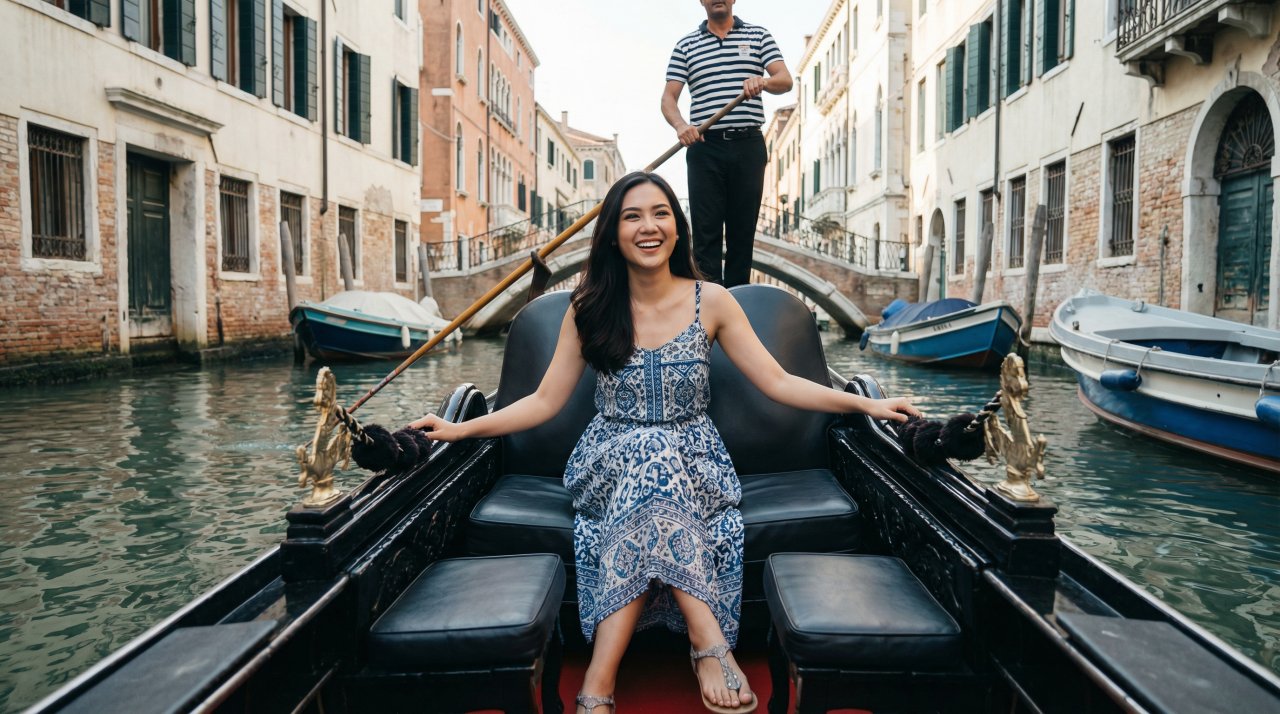
Gondolas represent Venice’s most iconic transportation method, though they function primarily as tourist attractions rather than practical transportation in modern Venice.
However, traghetto gondola ferries provide practical, inexpensive canal crossings that locals use daily.
Understanding both options helps visitors experience authentic Venetian boat culture while managing costs.
Gondola Rides
Official gondola rates are regulated by the city and posted at gondola stations (stazi).
Daytime rates (8 AM to 7 PM) cost €90 for 30 minutes for up to six passengers.
Evening rates (7 PM to 8 AM) cost €110 for 35 minutes.
These rates apply to the boat, not per person, making gondolas more economical for groups.
Singing gondoliers charge an additional €30-40 for serenades during rides.
Gondola stations operate at major tourist locations including St. Mark’s Square, Rialto Bridge, train station, and various points along the Grand Canal.
Booking at official stations ensures regulated prices and professional service.
Gondoliers who approach tourists on the street often charge inflated prices or provide shorter rides than agreed upon.
Always confirm the price, duration, and route before boarding.
Gondola routes vary by starting location, with most following smaller canals rather than the Grand Canal.
Rides typically include several canal turns, passing under bridges and alongside historic buildings.
Some routes venture onto the Grand Canal briefly before returning to smaller waterways.
Discuss desired routes with gondoliers before departure, though they ultimately control the path based on canal traffic and conditions.
Shared gondola rides offered by some companies reduce per-person costs by combining strangers in single boats.
These services typically cost €30-40 per person for standard routes.
While less romantic than private rides, shared gondolas provide the experience at lower cost.
Book shared rides through tour companies or hotel concierges rather than street vendors.
Traghetto Gondola Ferries
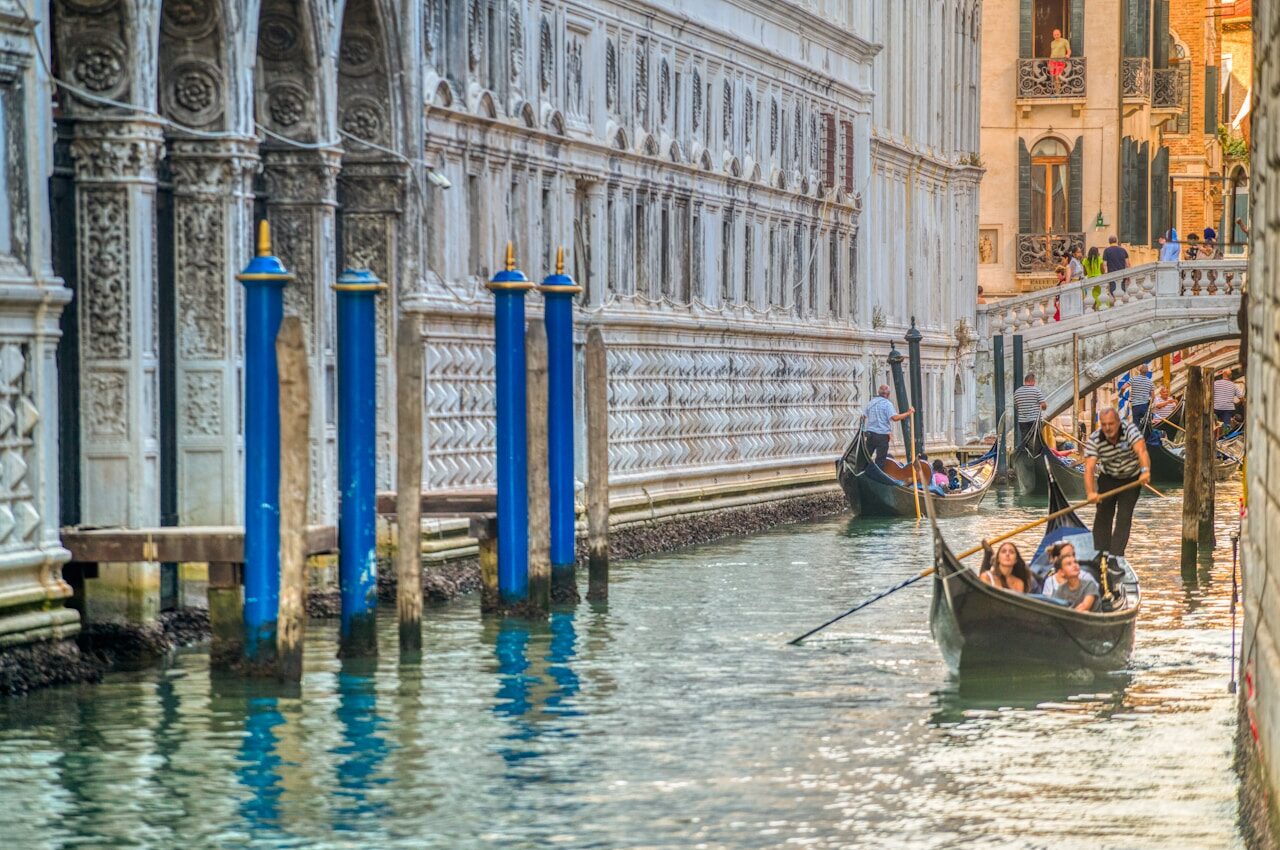
Traghetti are gondola ferries that cross the Grand Canal at seven designated points where bridges don’t exist.
These working gondolas transport standing passengers across the canal for €2 per crossing, providing practical transportation that locals use daily.
Traghetti operate during daytime hours only, typically 9 AM to 6 PM, with some locations closing during lunch hours.
Traghetto crossing points include:
- Santa Sofia (near Ca’ d’Oro)
- San Tomà
- San Samuele
- Santa Maria del Giglio
- San Barnaba (Dorsoduro)
- Dogana (near Salute)
Traghetti use traditional gondolas operated by two gondoliers, with passengers standing during the brief 2-3 minute crossing.
Locals stand confidently in the rocking boats, while tourists often sit on the side benches.
Either position is acceptable, though standing provides the authentic experience.
Hold onto the boat’s sides during crossing, as the rocking motion can be surprising for first-timers.
Traghetto service can be irregular, with some crossings closing during slow periods or bad weather.
Signs at crossing points indicate operating hours, though actual service may vary.
If a traghetto isn’t operating, the nearest bridge provides an alternative, though this may require 10-15 minutes of additional walking.
Getting to Venice from Transportation Hubs
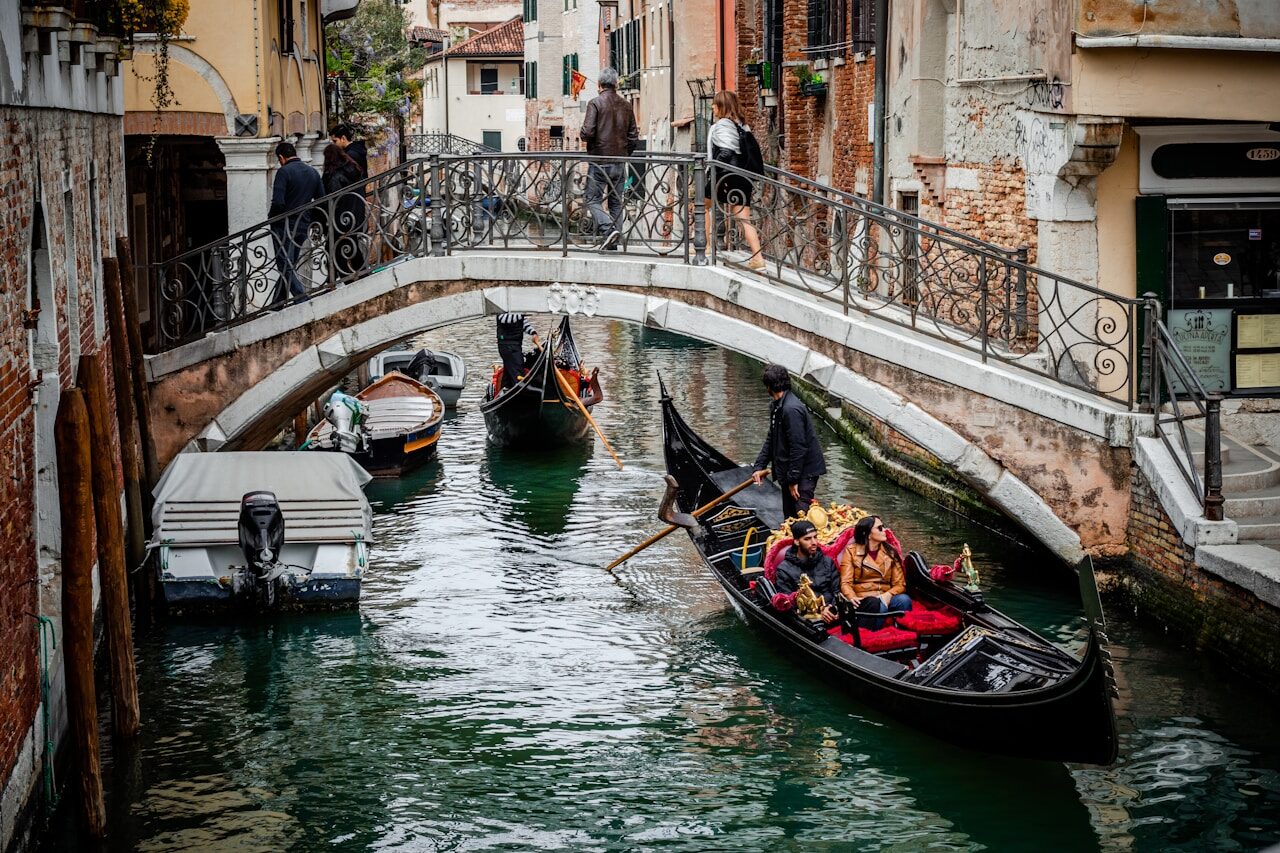
Venice connects to the outside world through several transportation hubs, each offering different options for reaching the historic center.
Understanding these connections helps visitors plan efficient arrivals and departures while managing luggage and costs.
Marco Polo Airport Connections
Marco Polo Airport (Aeroporto di Venezia Marco Polo) serves as Venice’s main airport, located approximately 8 miles (13 kilometers) north of the historic center on the mainland.
Four main transportation options connect the airport to Venice, each with different cost, time, and convenience trade-offs.
Alilaguna water buses provide direct boat service from the airport to various Venice locations via three color-coded routes (Blue, Orange, Red).
The Blue Line serves the most stops, including Murano, Fondamente Nove, Rialto, and San Marco, taking approximately 60-90 minutes depending on the destination.
Tickets cost €25 per person one-way.
Boats depart every 30-60 minutes depending on time of day, with reduced frequency early morning and late evening.
Alilaguna boats accommodate luggage and provide scenic lagoon approaches to Venice, though the journey takes significantly longer than land-based options.
The service works well for travelers not in a hurry who want to begin their Venice experience on the water.
Purchase tickets at the Alilaguna desk in the airport arrivals hall or online in advance for slight discounts.
ACTV bus Line 5 (Aerobus) connects the airport to Piazzale Roma in approximately 20-25 minutes, costing €10 per person one-way.
Buses depart every 15-30 minutes during daytime hours, with reduced frequency early morning and late evening.
This represents the fastest and most economical option for reaching Venice, though it requires transferring to vaporetti at Piazzale Roma to reach final destinations.
ATVO buses provide similar service to Piazzale Roma, taking approximately 20 minutes and costing €10 per person one-way.
ATVO buses are typically newer and more comfortable than ACTV buses, with dedicated luggage storage.
Buses depart every 30 minutes during peak hours.
Purchase tickets at the ATVO desk in arrivals or from automated machines.
Water taxis provide direct, door-to-door service from the airport to hotels, costing approximately €140 for up to four passengers with luggage.
The journey takes 30-40 minutes depending on the destination.
Water taxis make sense for groups of 3-4 travelers splitting costs, late-night arrivals when other services run infrequently, or travelers with significant luggage who want to avoid public transportation transfers.
Land taxis to Piazzale Roma cost approximately €40-50 and take 20-25 minutes.
This option works for travelers who want faster service than buses but don’t want to pay water taxi rates.
However, it still requires transferring to vaporetti at Piazzale Roma, making it less convenient than water taxis for reaching hotels.
Train Station (Venezia Santa Lucia)
Venezia Santa Lucia train station sits at the northwestern edge of the historic center, where the causeway from the mainland terminates.
This station serves as the terminus for all trains to Venice, with high-speed trains from major Italian cities and international connections throughout Europe.
The station name “Santa Lucia” distinguishes it from “Venezia Mestre” station on the mainland—ensure tickets specify Santa Lucia for the historic center.
Exiting the train station places visitors immediately in Venice’s pedestrian environment, with vaporetto stops directly in front of the station and walking routes beginning at the station steps.
The station area can be confusing for first-time visitors, with crowds, multiple vaporetto lines, and various walking route options.
Vaporetto Lines 1 and 2 depart from stops directly in front of the station, providing Grand Canal service to Rialto, San Marco, and beyond.
Line 1 offers the scenic slow boat experience, while Line 2 provides faster service with fewer stops.
Other lines including 4.1, 4.2, 5.1, and 5.2 also stop at the station, providing circular routes around the historic center.
Walking from the station to major destinations is feasible for travelers without heavy luggage.
St. Mark’s Square lies approximately 30-40 minutes away via the most direct route through Strada Nova and Mercerie.
Rialto Bridge is about 20 minutes away.
These times assume familiarity with routes—first-time visitors should add 10-15 minutes for navigation.
Luggage storage (deposito bagagli) operates at the train station for travelers who want to explore Venice before hotel check-in or after checkout.
The service costs approximately €6-8 per bag for the first 5 hours, with additional charges for longer storage.
The storage facility is located on the station’s left side (facing the tracks).
Piazzale Roma Bus Terminal
Piazzale Roma serves as the terminus for all buses and cars entering Venice, located adjacent to the train station at the western edge of the historic center.
This large terminal area includes bus stops, taxi stands, parking garages, and vaporetto stops, creating a busy transportation hub.
Buses from Treviso Airport, mainland cities, and long-distance coach services terminate at Piazzale Roma.
The terminal area can be confusing, with multiple bus companies operating from different locations within the piazza.
Follow signs for specific bus companies or ask information desks for guidance.
Vaporetto stops at Piazzale Roma provide the same lines as the train station, with Lines 1, 2, 4.1, 4.2, 5.1, and 5.2 serving the location.
The People Mover, an automated elevated tramway, connects Piazzale Roma to Tronchetto parking island and the cruise terminal in 3 minutes, costing €1.50 per ride.
Walking routes from Piazzale Roma follow similar paths as from the train station, as the two locations sit adjacent to each other.
The Ponte della Costituzione (Constitution Bridge) connects Piazzale Roma to the train station, providing a wheelchair-accessible crossing with gentle slopes instead of steps.
Treviso Airport Alternative
Treviso Airport (Aeroporto di Treviso Antonio Canova) serves as Venice’s secondary airport, located approximately 25 miles (40 kilometers) north of Venice.
Budget airlines including Ryanair use Treviso as their Venice airport, offering lower fares than Marco Polo Airport.
However, the greater distance and less frequent transportation connections require more travel time.
ATVO buses connect Treviso Airport directly to Piazzale Roma in Venice, taking approximately 70 minutes and costing €12 per person one-way.
Buses are timed to meet flight arrivals and departures, though frequency is lower than Marco Polo Airport connections.
Purchase tickets at the ATVO desk in arrivals or online in advance.
Barzi Bus Service provides alternative bus connections from Treviso Airport to Venice, with similar journey times and prices.
Local buses connect the airport to Treviso Centrale train station, where trains to Venice depart regularly, though this option requires more transfers and takes longer overall.
The lower airfares at Treviso Airport can offset the additional transportation costs and time, particularly for budget-conscious travelers.
However, factor in the extra 45-60 minutes of travel time compared to Marco Polo Airport when planning connections and hotel check-in times.
Luggage Management and Transportation
Managing luggage in Venice presents unique challenges due to the absence of wheeled vehicle transportation and the prevalence of bridge steps.
Understanding luggage strategies and available services helps visitors navigate these challenges without excessive frustration.
Why Wheeled Luggage Doesn’t Work
Wheeled luggage, while convenient in conventional cities, performs poorly in Venice’s environment.
Bridge steps require lifting wheeled bags rather than rolling them, eliminating the primary advantage of wheels.
Uneven stone pavement and narrow streets create additional rolling difficulties.
Vaporetto boarding involves stepping from floating platforms onto rocking boats, making wheeled luggage awkward and potentially dangerous.
Backpacks and shoulder bags navigate Venice’s terrain more effectively than wheeled luggage.
Distributing weight on shoulders and backs allows hands-free bridge climbing and easier vaporetto boarding.
If wheeled luggage is necessary, choose bags with large, durable wheels and reinforced handles designed for lifting.
Expect to carry bags frequently rather than rolling them.
Pack light for Venice visits, bringing only essential items.
Every pound of luggage weight matters when carrying bags over bridges and through narrow streets.
Consider laundry services for longer stays rather than packing excessive clothing.
Many hotels offer laundry services or have self-service machines available.
Luggage Storage Options
Luggage storage services throughout Venice allow travelers to explore without bags before hotel check-in or after checkout.
The train station (Santa Lucia) operates the largest luggage storage facility, charging approximately €6-8 per bag for the first 5 hours, with additional charges for longer periods.
The facility accepts bags of all sizes and provides secure storage.
Private luggage storage companies operate near major tourist areas, offering similar services at comparable prices.
Radical Storage and Stasher operate networks of storage locations in shops, hotels, and businesses throughout Venice, bookable online with fixed daily rates of €5-6 per bag.
These services provide flexibility for storing bags near specific attractions or neighborhoods.
Some hotels offer luggage storage for guests before check-in or after checkout, even if not staying that night.
This courtesy service typically costs nothing for hotel guests, though tips for porters are appreciated.
Confirm storage availability when booking hotels if this service is important.
Hotel Luggage Transfer Services
Professional luggage transfer services transport bags from arrival points (airport, train station) to hotels or between hotels, allowing travelers to explore Venice immediately upon arrival without carrying bags.
These services typically cost €25-35 per bag and guarantee delivery within 3-4 hours.
Book services online before arrival or through hotel concierges.
Water taxi luggage capacity accommodates multiple large bags, making them practical for airport transfers despite higher costs.
The €140 water taxi rate from Marco Polo Airport includes reasonable luggage allowances for up to four passengers.
Confirm luggage capacity when booking to ensure adequate space.
Porter services operate at major vaporetto stops and the train station, offering to carry luggage to nearby hotels for €10-20 per bag depending on distance.
These traditional services have declined in recent years but still exist at busy locations.
Negotiate prices before accepting porter services to avoid disputes.
For comprehensive information about planning your Venice visit, including when to travel for the best experience, see our guide on the best time to visit Venice.
Venice Transportation Costs and Budget Planning
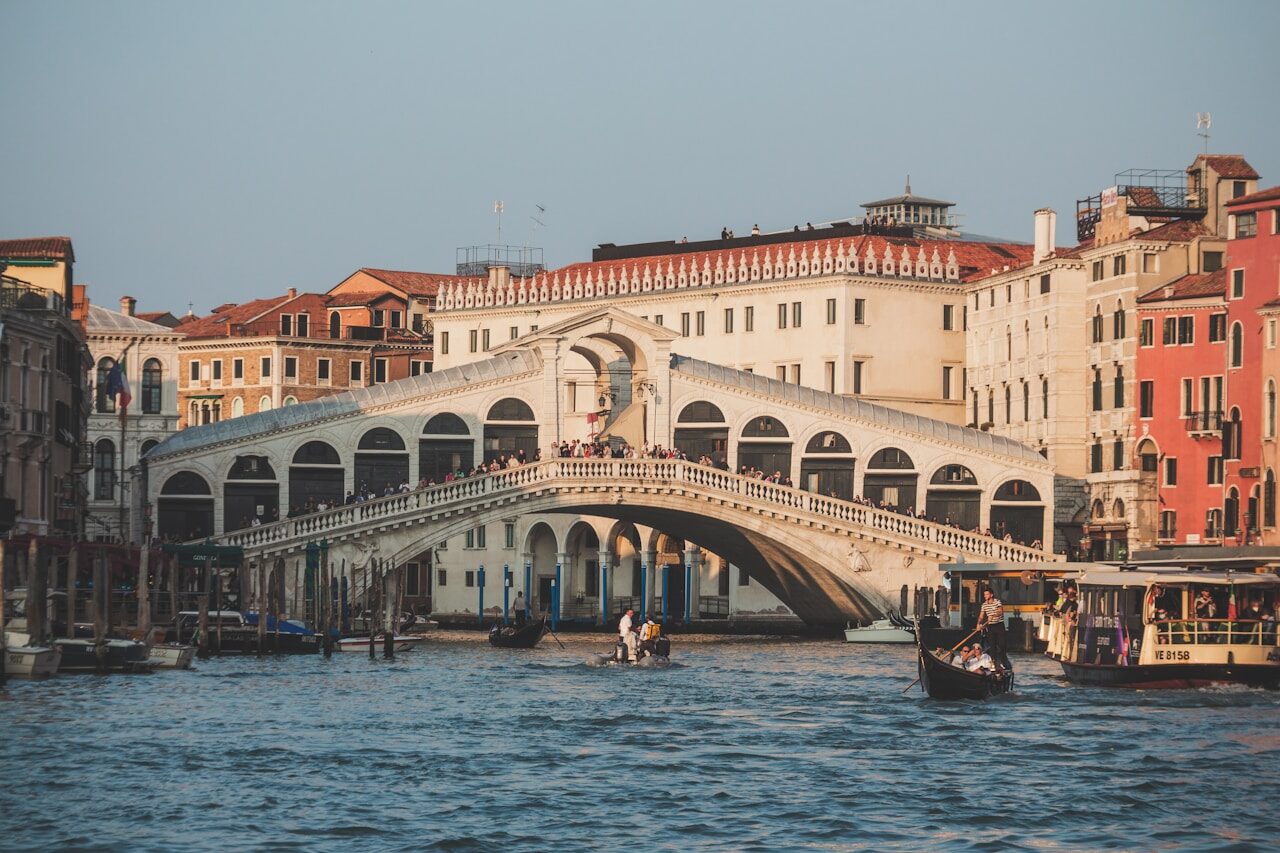
Understanding Venice transportation costs helps visitors budget appropriately and choose cost-effective options.
Transportation expenses can significantly impact overall trip costs, particularly for families or longer stays.
Daily Transportation Budget
Budget travelers using primarily walking and occasional vaporetti can expect daily transportation costs of €10-25.
This assumes purchasing single vaporetto tickets only when necessary and walking for most short-distance travel.
A 24-hour vaporetto pass at €25 provides unlimited rides, making it economical for anyone taking three or more vaporetto trips in a day.
Mid-range travelers using vaporetti regularly should budget €25-45 daily for transportation.
A 72-hour pass at €45 provides three days of unlimited vaporetto access, working out to €15 per day.
This budget level allows flexible vaporetto use without cost concerns, plus occasional water taxi rides for convenience.
Luxury travelers using water taxis regularly should budget €100-200+ daily for transportation.
Water taxi rides cost €70-140 depending on distance, with multiple daily trips quickly accumulating costs.
However, this budget level eliminates most transportation constraints and provides maximum convenience.
Cost-Saving Strategies
Walking whenever practical provides free transportation and often proves faster than vaporetti for short distances.
The walk from Rialto to St. Mark’s Square takes 10-15 minutes on foot versus 20-30 minutes by vaporetto (including waiting time).
Walking also provides opportunities to discover hidden corners and avoid crowds.
Purchase multi-day vaporetto passes rather than single tickets, saving significantly on per-ride costs.
The break-even point occurs at three rides per day, making passes economical for most tourists.
Calculate expected vaporetto usage before deciding between single tickets and passes.
Use traghetto gondola ferries (€2) instead of walking to distant bridges when crossing the Grand Canal.
These quick crossings save 10-15 minutes of walking while providing authentic gondola experiences at minimal cost.
Seven traghetto crossing points operate throughout the day.
Avoid water taxis except when genuinely necessary (airport transfers with luggage, late-night travel, groups of 4+ people).
The convenience rarely justifies the 10-15x cost premium over vaporetti for most journeys.
Pre-book water taxis for fixed rates rather than using metered service to avoid price disputes.
Time airport transfers strategically to use economical bus services (€10) rather than water taxis (€140).
The 20-minute bus ride to Piazzale Roma plus vaporetto to hotels costs €19.50 total versus €140 for water taxis.
The time difference is approximately 30-40 minutes, which may be worthwhile for budget-conscious travelers.
Accessibility and Special Needs
Venice’s historic infrastructure creates significant accessibility challenges for travelers with mobility limitations.
However, understanding available resources and planning appropriate routes helps visitors with special needs experience Venice despite these challenges.
Wheelchair Accessibility
Venice’s 400+ bridges with steps create severe wheelchair accessibility limitations.
Only a small percentage of bridges have ramps, and many areas of the city remain inaccessible to wheelchairs.
However, some accessible routes exist, allowing limited wheelchair exploration of specific areas.
The route from Piazzale Roma to St. Mark’s Square via the Grand Canal vaporetto (Line 1 or 2) provides wheelchair-accessible transportation.
Many vaporetto stops have ramps for wheelchair boarding, though some older stops lack this feature.
The ACTV website indicates which stops have wheelchair access, allowing route planning around accessible stops.
Ponte della Costituzione near Piazzale Roma provides wheelchair-accessible Grand Canal crossing with gentle slopes instead of steps.
This modern bridge, completed in 2008, represents one of the few major wheelchair-accessible bridges in Venice.
Some other bridges have had ramps installed in recent years, though these remain exceptions rather than the rule.
Accessible Venice maps showing wheelchair-friendly routes are available from tourist information offices and online.
These maps indicate accessible bridges, ramps, and routes that avoid steps.
However, even “accessible” routes may have challenges including narrow passages, uneven pavement, and crowded conditions.
Mobility-Impaired Transportation
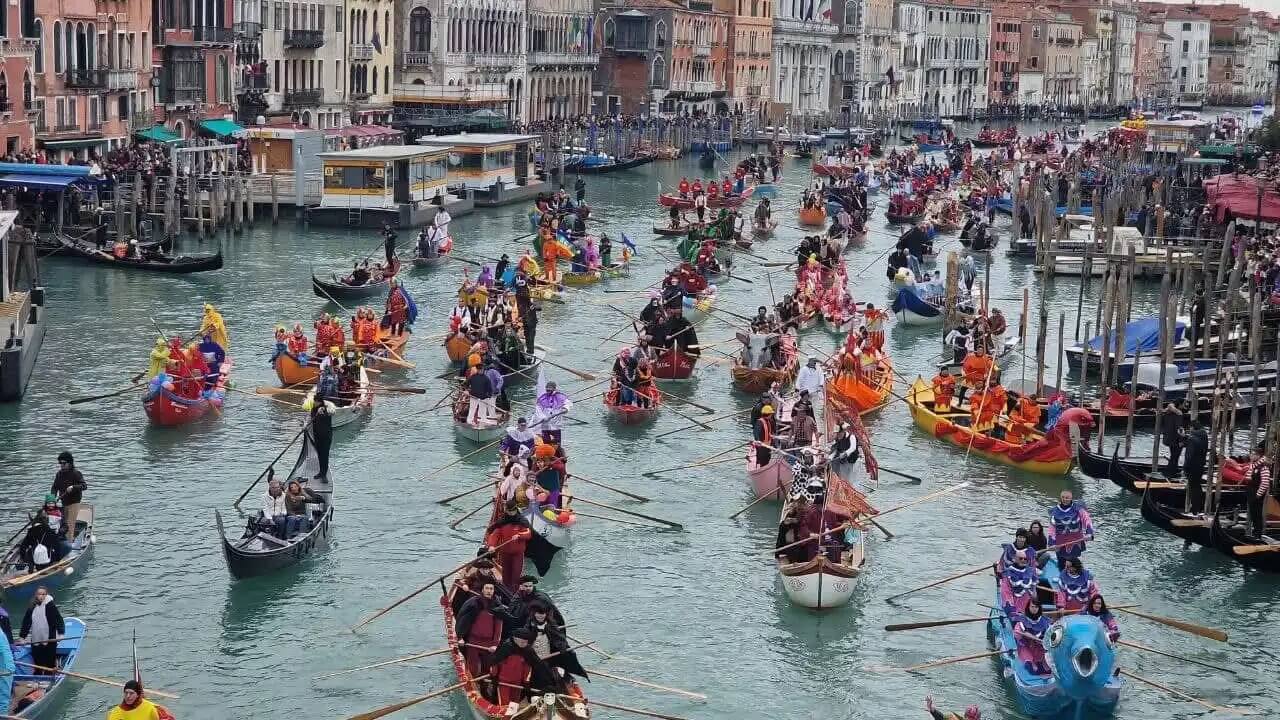
Travelers with mobility limitations who can manage some steps but have difficulty with extensive walking or climbing can use strategic vaporetto routes to minimize walking distances.
Planning routes that use vaporetto stops near destinations reduces walking requirements.
Water taxis provide door-to-door service that eliminates walking and bridge climbing, though at premium prices.
For travelers with significant mobility limitations, water taxi costs may be justified by the accessibility they provide.
Confirm wheelchair or mobility device accommodation when booking water taxis.
Portable folding stools or walking sticks help travelers with mobility limitations manage bridge steps and extended walking periods.
Rest frequently at benches in campos (squares) and along waterfronts.
Plan shorter daily itineraries with more rest time than able-bodied travelers would require.
Some hotels offer ground-floor rooms or rooms accessible via elevators, eliminating stair climbing within accommodations.
Confirm accessibility features when booking hotels, as many historic buildings lack elevators or have rooms accessible only via stairs.
Medical Emergency Transportation
Venice’s emergency medical services operate via water ambulances that navigate canals to reach patients.
Dial 118 for medical emergencies, connecting to ambulance services.
Water ambulances can reach most locations in the historic center within 10-15 minutes, providing rapid emergency response despite the absence of road vehicles.
The main hospital, Ospedale dell’Angelo, is located on the mainland in Mestre.
Emergency cases are transported via water ambulance to the mainland and then land ambulance to the hospital.
A smaller emergency facility operates in Venice near Campo Santi Giovanni e Paolo, handling urgent cases before transferring serious emergencies to the mainland hospital.
Pharmacies (farmacie) throughout Venice, marked by green cross signs, provide over-the-counter medications and basic medical advice.
At least one pharmacy in each district operates on a rotating schedule for night and weekend service, with locations posted at all pharmacies.
Final Thoughts
Mastering Venice’s unique transportation system transforms potential frustration into enjoyable exploration.
The car-free environment, while initially disorienting for visitors accustomed to vehicular transportation, creates a peaceful urban experience unlike any other major city.
Understanding how to use vaporetti efficiently, navigate on foot confidently, and manage luggage practically allows visitors to focus on Venice’s extraordinary beauty rather than transportation challenges.
The key to successful Venice navigation lies in adjusting expectations and embracing the city’s distinctive rhythm.
Walking takes longer than expected due to bridges and indirect routes.
Vaporetti move slower than buses or subways in conventional cities.
Getting lost happens frequently and should be accepted as part of the experience.
Visitors who approach Venice with flexibility and patience discover that the transportation “challenges” become memorable aspects of visiting this remarkable city.
Budget adequate time for transportation, particularly when trying to reach specific destinations like restaurants with reservations or departure points for tours.
The rule of thumb: double the time that maps suggest for walking routes, and add 15-20 minutes to vaporetto journey times to account for waiting and boarding.
This buffer prevents stress and allows for the inevitable navigation detours that occur in Venice’s maze-like environment.
Venice rewards visitors who take time to understand its transportation system before arriving.
Research vaporetto routes, download offline maps, plan luggage strategies, and budget appropriately for transportation costs.
This preparation pays dividends in reduced stress and increased enjoyment throughout your visit to one of the world’s most unique cities.
Frequently Asked Questions About Getting Around Venice
How long does it take to walk across Venice?
Walking from one end of Venice’s historic center to the other takes approximately 45-60 minutes via the most direct routes.
However, the actual time varies significantly based on the specific starting and ending points, route chosen, and navigation efficiency.
The walk from the train station to St. Mark’s Square takes 30-40 minutes via Strada Nova and Mercerie.
From Piazzale Roma to the eastern edge of Castello takes approximately 50-60 minutes.
These times assume familiarity with routes—first-time visitors should add 10-20 minutes for navigation and getting lost.
Can you use Google Maps in Venice?
Yes, Google Maps works well in Venice and provides accurate walking directions despite the maze-like street layout.
The app accounts for bridges, canals, and pedestrian-only streets when calculating routes.
However, GPS accuracy can be reduced in narrow streets surrounded by tall buildings. Download offline maps before arriving to ensure functionality without cellular data.
The Maps.me app provides an alternative with detailed offline Venice maps.
Both apps occasionally suggest routes that don’t account for temporary closures or optimal bridge crossings, so remain flexible when following digital directions.
Are Venice water buses crowded?
Vaporetti become extremely crowded during peak season (June-August) and peak hours (8-9 AM, 5-7 PM) when locals commute to work.
Line 1 through the Grand Canal experiences the heaviest tourist crowds throughout the day during summer months.
Expect standing-room-only conditions during these periods, with difficulty boarding at busy stops.
Travel early morning (before 9 AM) or evening (after 7 PM) to avoid the worst crowds. Lines serving outer islands (Line 12 to Murano/Burano) are generally less crowded than Grand Canal routes.
Off-season (November-March) sees significantly reduced crowding on all lines.
Do you need to book water taxis in advance?
Booking water taxis in advance is recommended but not required. Pre-booking guarantees availability, provides fixed rates, and eliminates potential price disputes.
This is particularly important for airport transfers, where pre-booked services offer fixed rates of €130-150 versus potentially higher metered rates.
Water taxis can be hailed at designated stands throughout Venice, though availability varies by time of day and season.
During peak season or late at night, pre-booking ensures transportation availability.
Official water taxi companies including Consorzio Motoscafi Venezia accept online bookings and phone reservations.
How do you get around Venice at night?
Night transportation in Venice relies primarily on night vaporetti (routes marked with “N”) that operate on limited routes after regular service ends around midnight.
Night vaporetti run every 30-60 minutes on major routes including the Grand Canal and connections to Lido. Service continues until approximately 4:30-5:00 AM when regular service resumes.
Water taxis operate 24/7 but charge night surcharges of €10-15 on top of standard rates.
Walking remains safe and practical at night, though some areas lack street lighting. Carry a flashlight or use smartphone lights in poorly lit areas.
Most restaurants and bars close by 11 PM-midnight, with limited late-night options available.