Travel to Madrid on a Budget: Your Complete 2026 Travel Guide
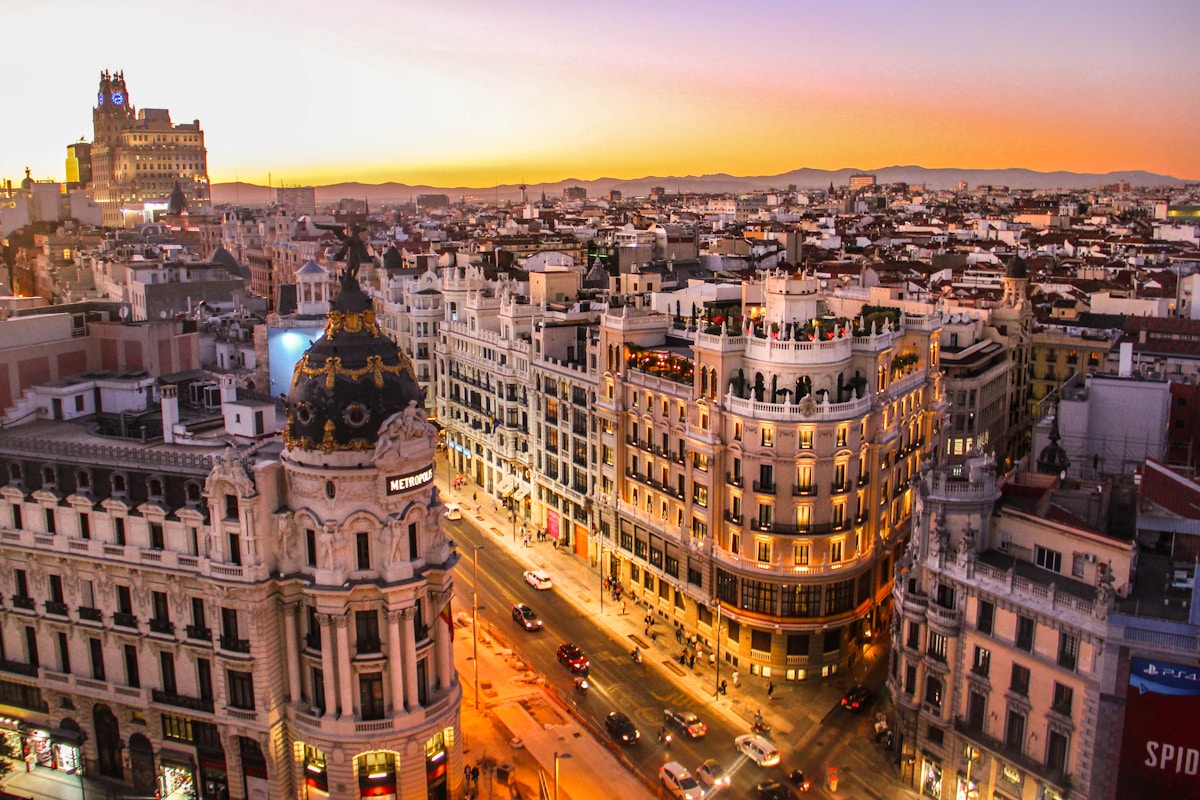



Madrid on a Budget: Your Complete 2026 Travel Guide – Madrid is one of the most affordable capital cities in Western Europe, where a well-planned trip costs as little as €60-85 per day and world-class museums open their doors for free every single evening.
- Quick Budget Facts: Madrid on a Budget 2026
- Is Madrid Expensive to Visit in 2026?
- Best Time for Cheap Madrid Holidays
- Budget Hotels in Madrid: Where to Stay
- Getting Around Madrid on a Budget
- Is Madrid Cheap for Food and Drink?
- Things to Do in Madrid on a Budget
- Smart Money-Saving Tips for Visiting Madrid
Spain’s capital punches well above its weight for budget travelers, delivering tapas culture, centuries of art, and electric street life without the steep price tags of Paris or London.
Whether you’re planning your first cheap Madrid holiday or trying to figure out if Madrid is expensive before booking your flights, this guide breaks down exactly what things cost in 2026, where to sleep for less, and how to fill every day with great experiences on a small budget.
Quick Budget Facts: Madrid on a Budget 2026
Before you start planning, here are the headline numbers, confirmed from official Madrid sources as of 2026:
- Daily budget (excluding accommodation): €60-85 for budget travelers
- Hostel dorm bed: €25-40 per night
- Budget hotel (private room): €70-110 per night
- 10-trip Metrobús pass (Metrobús): €7.30 (confirmed, esmadrid.com)
- Single metro ticket: €1.50-€2.00
- Menú del día (set lunch): €12-18, three courses including a drink
- Prado Museum free entry: Mon-Sat 6 PM-8 PM, Sun 5 PM-7 PM
- Reina Sofía free entry: Mon + Wed-Sat 7 PM-9 PM, Sun 1:30 PM-7 PM (closed Tuesdays)
- Currency: Euro (€)
For more detailed information, read our Madrid travel guide article.
Is Madrid Expensive to Visit in 2026?
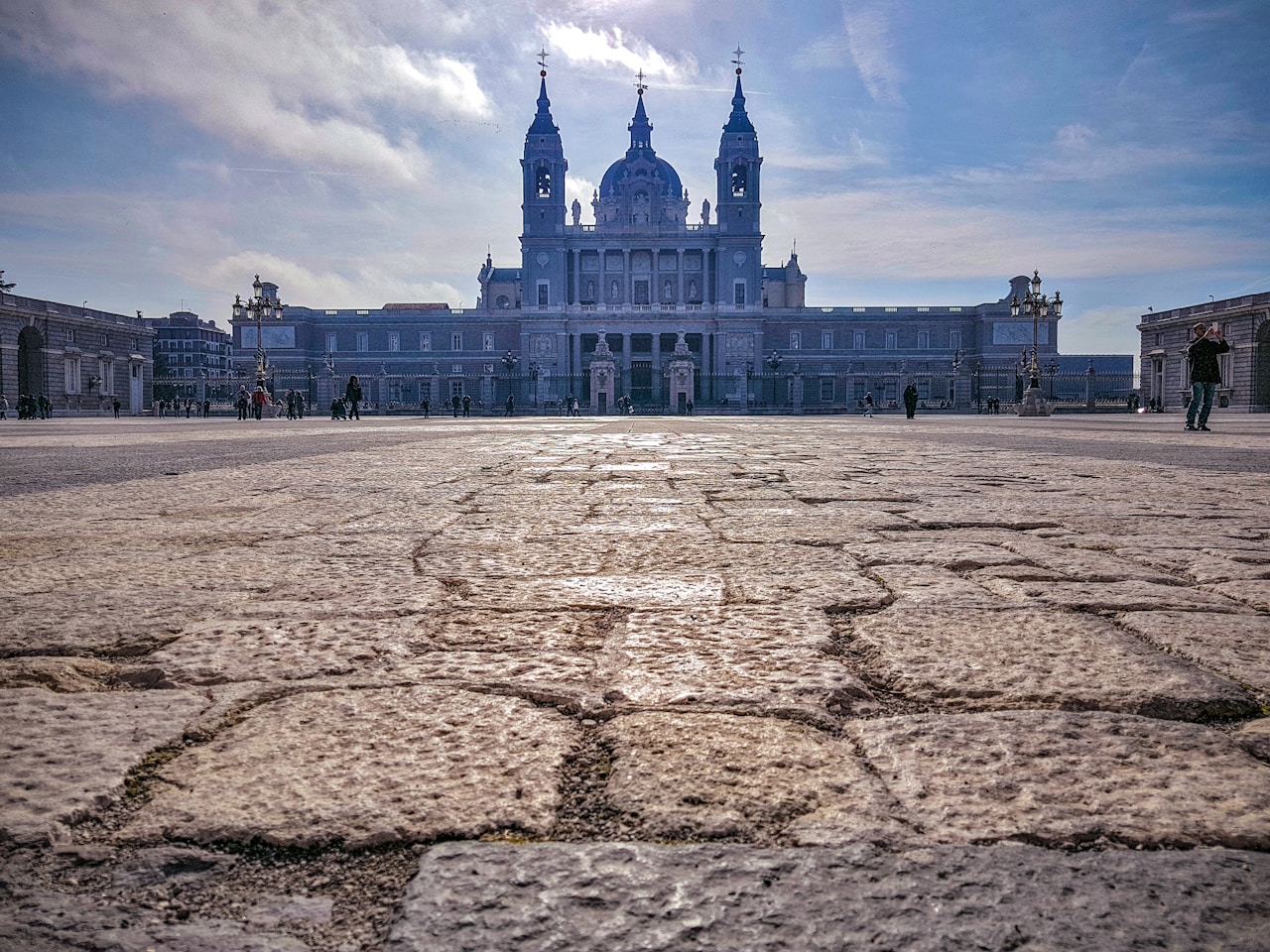
Madrid is not expensive to visit compared to other major Western European capitals.
Budget travelers can cover transport, meals, and a mix of free and paid activities for €60-85 per day, excluding accommodation costs.
That daily figure drops considerably if you lean on the city’s free culture circuit.
The Prado Museum, one of the world’s greatest art collections, charges nothing during evening hours.
Neighborhood bars hand out free tapas with every drink order.
Parks, plazas, and street performances cost absolutely nothing.
Compared to Paris, London, or Amsterdam, Madrid genuinely delivers more for your money.
Food, transport, and accommodation all sit at a lower price point.
A glass of house wine at a local bar costs around €2-3.
A three-course lunch with a drink runs €12-18.
These are prices that feel almost surreal if you’re arriving from northern Europe.
Daily Cost Breakdown for Budget Travel in Madrid
Here’s a realistic snapshot of what budget travelers actually spend per day in Madrid in 2026:
| Expense | Budget Option | Approx. Cost |
|---|---|---|
| Accommodation | Hostel dorm bed | €25-40 |
| Accommodation | Budget hotel, private room | €70-110 |
| Breakfast | Café con leche + tostada con tomate | €3-5 |
| Lunch | Menú del día, local restaurant | €12-18 |
| Dinner | Tapas bar, two rounds of drinks + food | €10-18 |
| Transport | Daily share of 10-trip Metrobús pass | ~€1.50-3.00 |
| Activities | Mix of free sights + one paid entry | €0-15 |
| Daily Total (excl. accommodation) | €30-60 |
A solo traveler staying in a hostel and prioritizing free museums can realistically get through a full day in Madrid for under €70 all-in.
Understanding the Euro and Managing Your Money
Spain uses the euro (€) as its official currency.
Most hotels, restaurants, and larger shops accept credit cards, but smaller tapas bars, flea market vendors, and local market stalls often prefer cash.
Use a no-foreign-fee debit card or an app like Wise or Revolut to get near-interbank exchange rates.
Avoid the currency exchange booths clustered around Puerta del Sol and Gran Vía, which charge heavy commission.
The best rates come from regular bank ATMs.
Best Time for Cheap Madrid Holidays
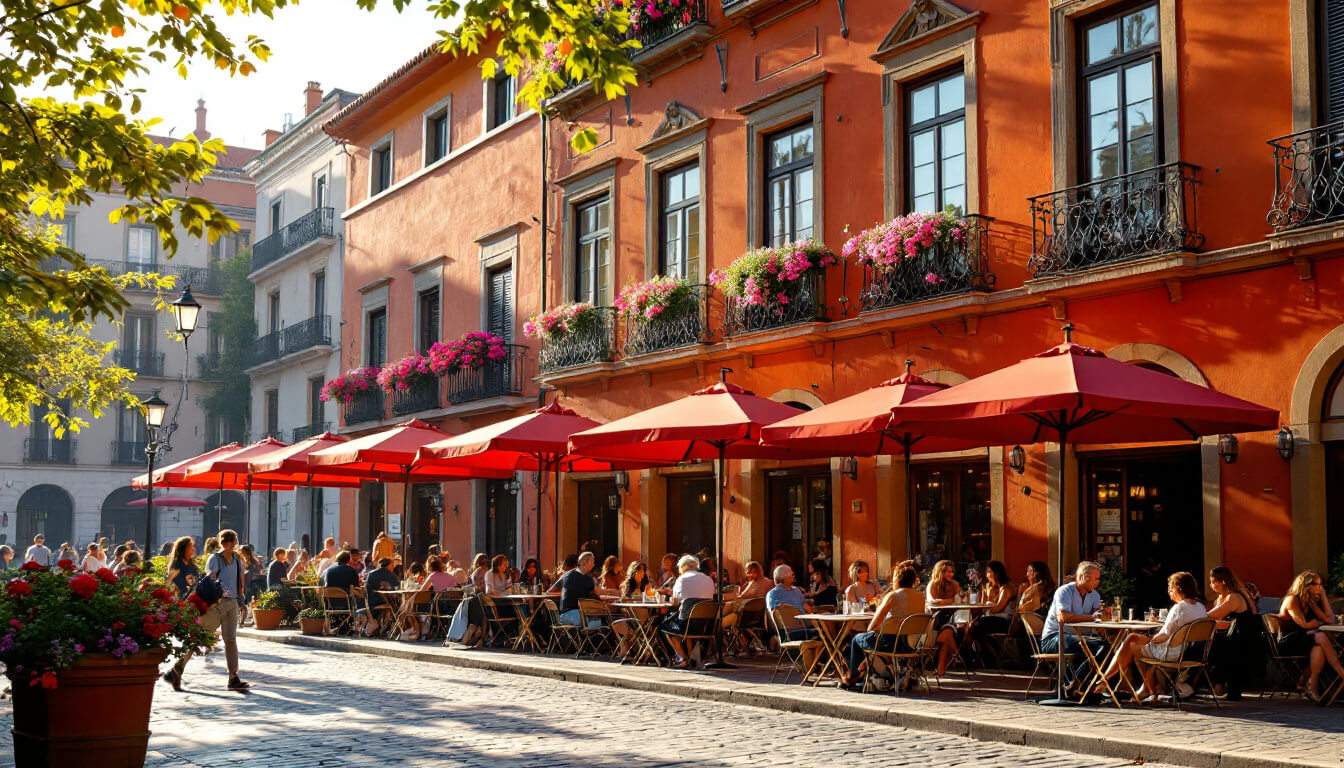
The cheapest time to visit Madrid is during the low season months of November, January, and February, when hotel prices drop by 25-40% and the city’s top attractions have shorter queues.
Madrid has a clear rhythm of expensive and affordable periods.
If you’re flexible with travel dates, timing your trip correctly is the single biggest lever you have on costs.
A budget hotel room that runs €110 in October might cost €65 in February, with identical quality and location. Read our best time to visit Madrid article to help you determine your next vacation schedule, budget-wise.
Peak Seasons to Avoid If You’re Watching Costs
- April and May: Spring is beautiful but prices spike, especially around Semana Santa (Holy Week), when accommodation rates can double overnight.
- September and October: Post-summer travel is popular with Europeans, pushing prices up across the board.
- Christmas and New Year (December 20-January 6): Hotels fill up and rates climb for the holiday stretch.
- August: A mixed bag. Locals leave the city, which means some restaurants close, but international tourist demand keeps hotel prices high.
The Budget Traveler’s Sweet Spots
November and February are genuinely the best months for budget-conscious visitors.
The weather is cool but mild enough to walk comfortably, major attractions are crowd-free, and accommodation rates hit their lowest.
You’ll also hit Madrid’s famous autumn restaurant week in November, where top-tier restaurants offer set menus at dramatically reduced prices.
Mid-January after the holiday period is another underrated window.
The city quiets down, prices fall, and you’ll have the Prado, the Retiro, and the Royal Palace almost to yourself.
Budget Hotels in Madrid: Where to Stay
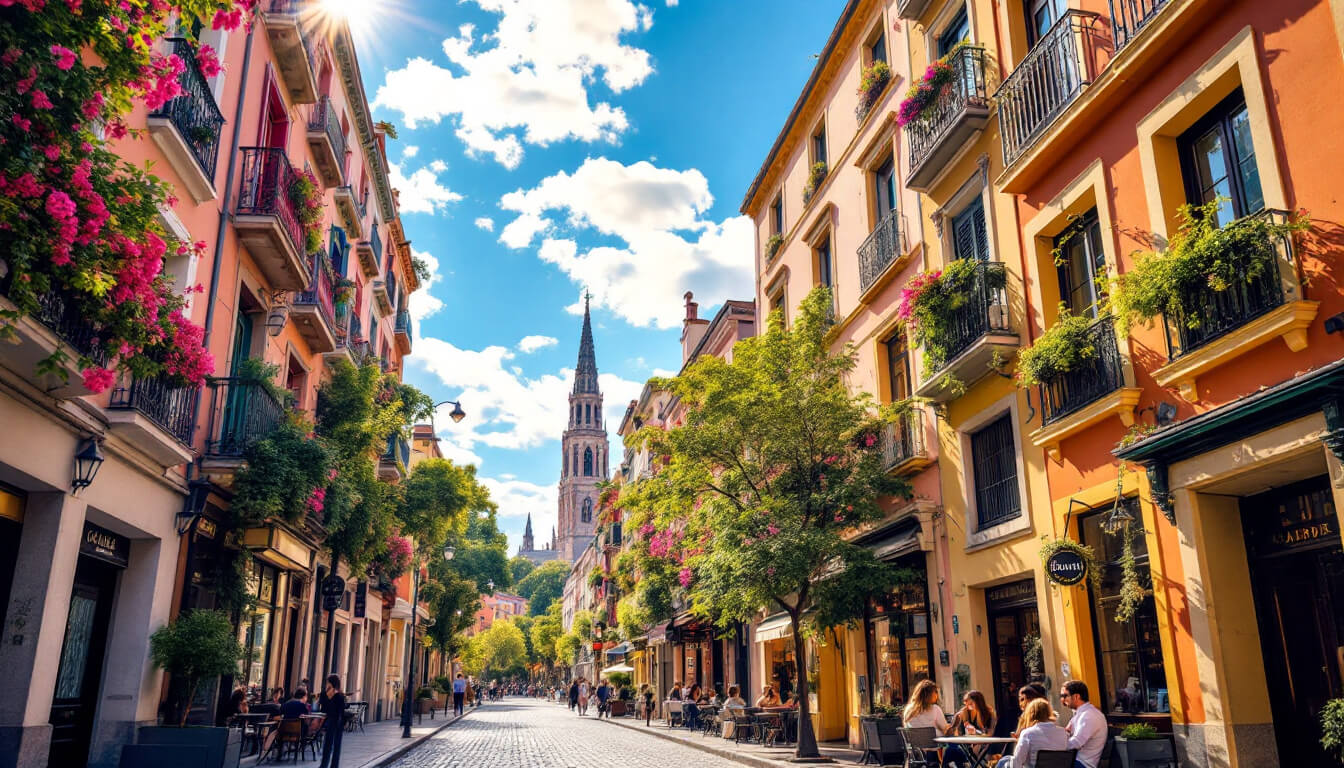
The best budget hotels in Madrid are concentrated in the neighborhoods of Malasaña, La Latina, Lavapiés, and around Sol, where you can find private rooms for €70-110 per night in high season (April-October) and as low as €55-80 per night in low season (November-February), all within walking distance of the main sights.
Finding affordable accommodation in Madrid is genuinely easy, especially if you book even a week in advance.
The city has a well-developed range of pensiones (family-run guesthouses), boutique hostels, and independent budget hotels that offer far better character than their price suggests.
Read our guide on best neighborhoods in Madrid to find the most suitable, budget-friendly locations to find budget hotels and other types of accommodations.
Best Neighborhoods for a Budget Hotel in Madrid
Location shapes both your daily costs and your overall experience.
These neighborhoods hit the sweet spot between affordability and access:
- Sol and Lavapiés: Central, lively, and well-connected. Lavapiés in particular offers some of the lowest hotel rates within walking distance of the Prado and Reina Sofía.
- La Latina: Known for its tapeo culture along Calle Cava Baja, this neighborhood has budget guesthouses tucked between centuries-old buildings.
- Malasaña: Bohemian, creative, and a little edgier. Strong hostel scene, good transport links, and excellent budget dining on every corner.
- Arganzuela: Less famous than the above, but immediately south of the center, with lower hotel prices and fast metro access to everywhere.
Hostels and Guesthouses: Even Cheaper Options
Madrid’s hostel scene has grown and improved steadily.
Dorm beds at well-reviewed hostels like Cat’s Hostel (in the historic center) and Sungate ONE typically run €25-40 per night, and many include free walking tours and social events in the price.
Pensiones are small, family-run guesthouses that sit a step below hotels in formality but often above them in warmth.
Private rooms at pensiones often start at €50-70 per night and include basics like Wi-Fi and clean bathrooms.
Look for them on Hostelworld and Booking.com, filtering specifically for guesthouses or B&Bs.
Booking Tips to Pay Less
- Book midweek arrivals (Tuesday, Wednesday) rather than Fridays or weekends for lower rates.
- Check Booking.com, Hotels.com, and Atrápalo.es (a local Spanish platform that often carries exclusive deals) for the same property.
- Stays of four nights or more frequently unlock weekly discount rates, sometimes 15-20% off.
- Avoid booking last-minute during Fiesta de San Isidro (May) and Madrid Pride (July), when the city fills up completely.
Getting Around Madrid on a Budget
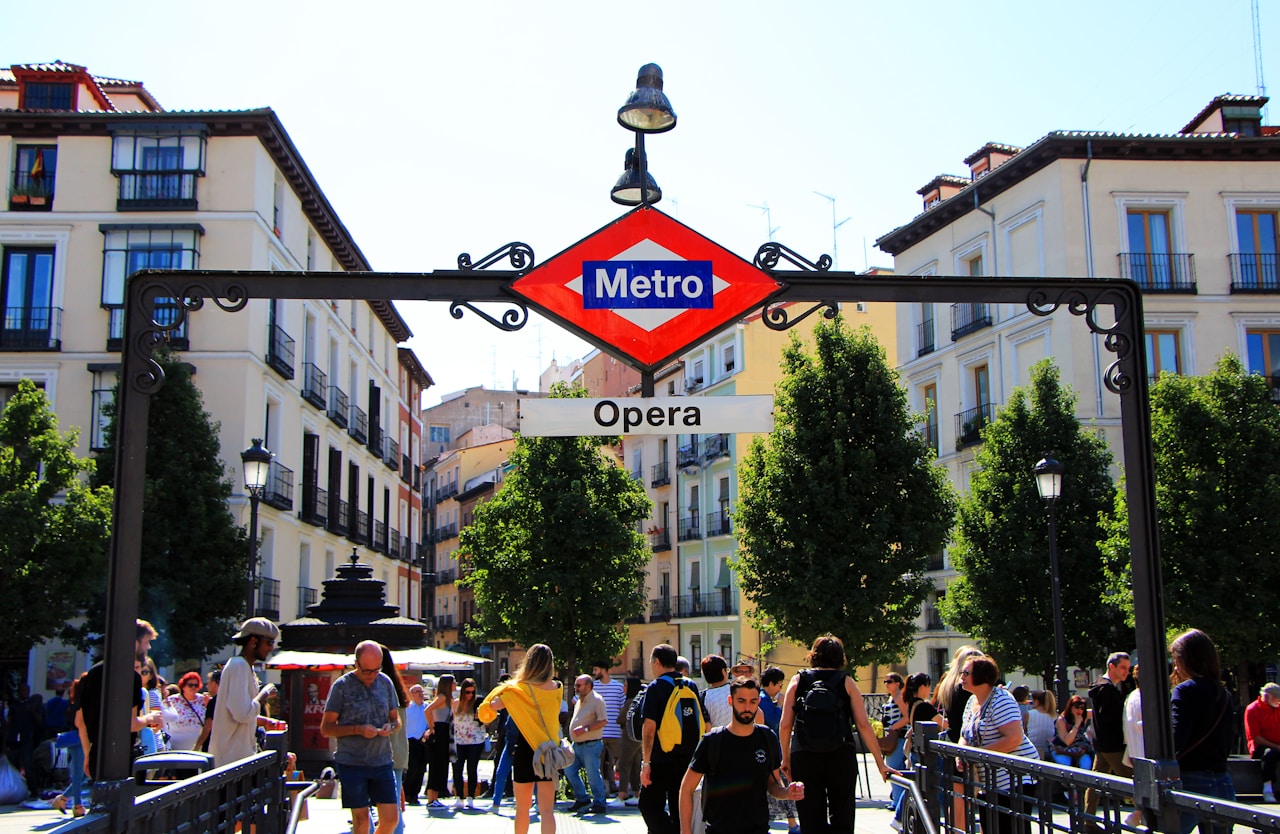
Madrid’s public transport network is one of the most efficient and affordable in Europe, built around a 12-line metro system, a citywide bus network, and highly walkable central neighborhoods.
The best starting investment for any budget traveler is the 10-trip Metrobús pass at €7.30, which works across the metro, EMT buses, and light rail within Zone A.
That breaks down to less than €0.75 per journey, a fraction of the single-ticket price.
Metro, Bus, and Walking: Your Core Transport Options
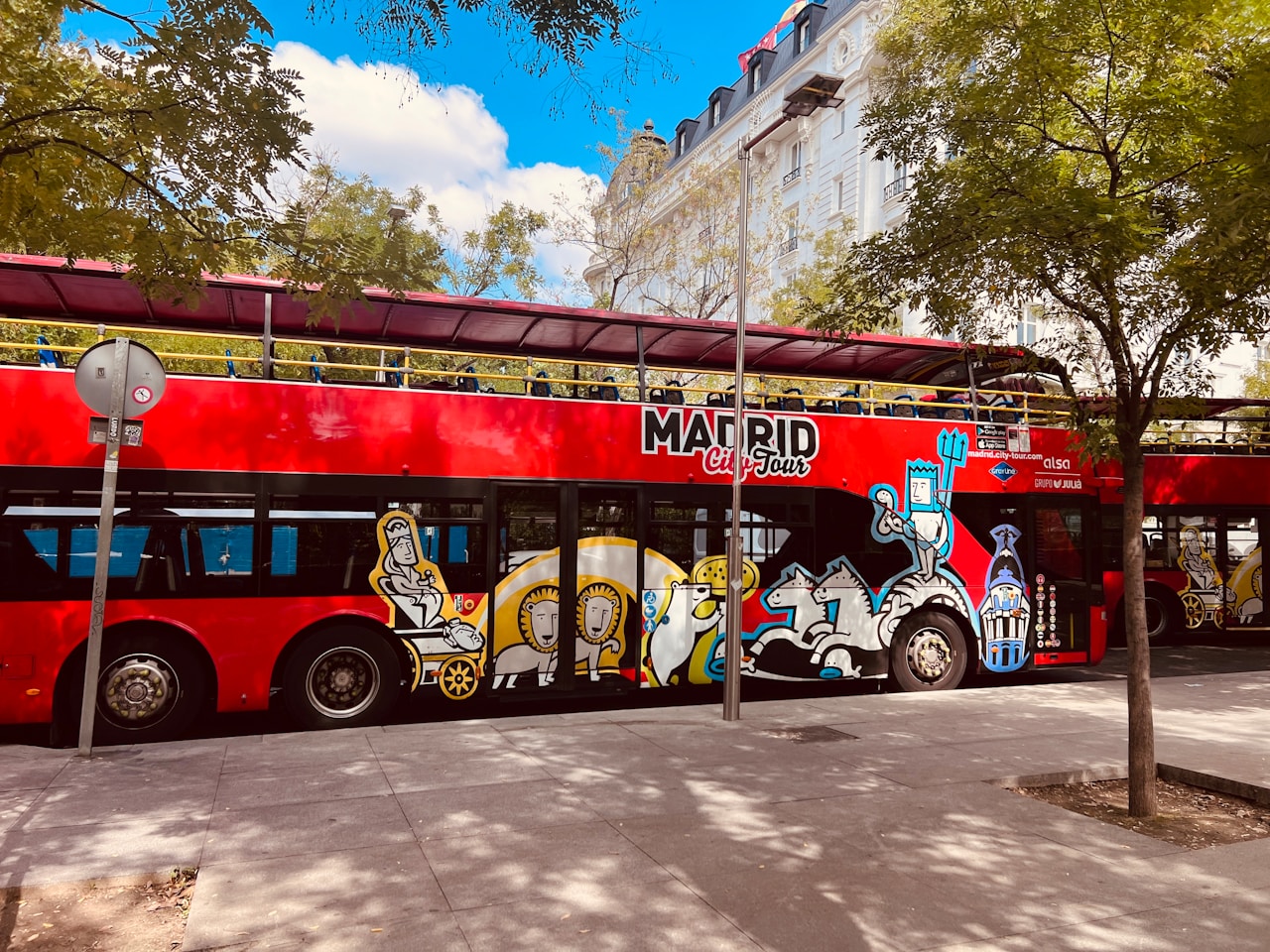
The Madrid Metro runs from 6 AM to 1:30 AM daily and connects every major neighborhood and tourist area in the city.
It’s clean, reliable, and rarely confusing even for first-time visitors.
Official 2026 fares from Metro de Madrid and EMT Madrid:
- Single metro ticket (Zone A): €1.50-€2.00 depending on distance
- 10-trip Metrobús pass: €7.30 (covers metro + EMT buses)
- Airport Express Bus (Exprés Aeropuerto): €5.00, runs between Atocha station and Adolfo Suárez Madrid-Barajas Airport
- Monthly Zone A pass (ages 26-64): €32.70 with 40% fare subsidy
Walking is underused by tourists and enthusiastically used by locals.
The stretch from Puerta del Sol to the Prado Museum is about 15 minutes on foot. La Latina
to Malasaña takes 20 minutes.
Once you learn the basic geography, you’ll find yourself skipping the metro entirely for most daytime trips.
When a Taxi or Rideshare Is Actually Worth It
Madrid’s taxis and rideshare apps (Uber, Cabify, FreeNow) are generally reliable and not outrageously priced by European standards, but they add up fast if used carelessly.
Save them for specific situations:
- Airport arrivals with heavy luggage, especially if arriving after 10 PM when the Airport Express runs less frequently
- Late nights out, since the metro stops at 1:30 AM and the night bus (búho) network is slower and less direct
- Trips to attractions outside the city center, like the Casa de Campo or Madrid Río, when you’re carrying gear or traveling with children
For daytime city exploration, the metro and your own feet will serve you well at a fraction of the cost.
Is Madrid Cheap for Food and Drink?
Yes, Madrid is genuinely affordable for eating and drinking, especially if you eat lunch at local restaurants rather than tourist-facing spots.
The menú del día, Madrid’s famous set lunch deal, delivers three full courses plus a drink for €12-18 at the vast majority of non-tourist restaurants.
That menú del día is the single best value in Spanish dining.
You typically get a starter, a main course, dessert or coffee, bread, and a glass of wine or beer, all included in the price.
It’s what locals eat for lunch from Monday to Friday, which means the quality is usually excellent.
Follow office workers at 2 PM and you’ll never go wrong.
Cheap Things to Buy in Madrid’s Markets
Madrid’s markets are a great place to eat affordably and pick up souvenirs without paying tourist-shop prices.
- Mercado de San Miguel (near Plaza Mayor): Technically aimed at tourists, but smaller pinchos and tapas portions start around €1.50-€3 each, making it workable for grazing and sampling.
- Mercado de Antón Martín (Lavapiés): A proper local market where Madrid residents buy fresh produce, cheese, and wine. Far cheaper than San Miguel and far more authentic.
- El Rastro (La Latina, Sunday mornings): Madrid’s legendary flea market. Great for vintage clothing, second-hand books, quirky souvenirs, and cheap street food. Free to browse, obviously.
- Mercado de Maravillas (Cuatro Caminos): One of the largest covered markets in the city. Buy fresh produce, cured meats, and local cheeses at genuinely local prices.
Cheap things to buy in Madrid at these markets include turrones (almond nougat, around €5-10 for a good bar), local olive oil, pimentón (smoked paprika), chorizo, and handmade ceramics at El Rastro.
Neighborhoods Where Locals Actually Eat
Skip the restaurants with laminated menus and photos of paella near Plaza Mayor and head to these instead:
- Lavapiés: Incredibly diverse, full of cheap international restaurants and traditional Spanish bars where the menú del día sometimes goes as low as €10.
- Malasaña: The local crowd keeps prices honest. Plenty of spots offering full lunches for €12-14.
- Arganzuela: Family-run restaurants serving generous traditional portions at unbeatable prices, largely untouched by the tourist circuit.
- Chueca: Trendy but with a competitive food scene. Many excellent value lunch menus between €13-16.
One Madrid insider tip: in La Latina and nearby bars, free tapas come with your drinks.
Order a caña (small beer) or a vino tinto (glass of red wine) at most traditional bars and a small plate of food arrives automatically. El Tigre
near Gran Vía is particularly famous for the generous free food it sends out with every round.
Things to Do in Madrid on a Budget

Madrid rewards budget travelers with an embarrassment of free and low-cost activities, from free evening access to the Prado to open-air concerts, free walking tours, ancient Egyptian temples, and some of Europe’s most entertaining street culture.
You could genuinely spend three days in Madrid without paying a single entry fee to any attraction and still come away feeling like you saw the city properly.
The key is knowing what’s free, when it’s free, and how to plan your days around those windows.
For more detailed guide, read our guide on the best things to do in Madrid. For budget travel, also read our guide on free things to do in Madrid.
Free Museums and Cultural Sites in 2026
Madrid’s Golden Triangle of art museums all offer free entry at specific times:
- Prado Museum (Paseo del Prado): Free entry Mon-Sat 6 PM-8 PM and Sundays 5 PM-7 PM. Home to Velázquez, Goya, and El Greco. Arrive 30 minutes before free hours open and expect a short queue.
- Reina Sofía Museum (Santa Isabel, 52): Free Mon-Sat 7 PM-9 PM and Sunday afternoons. This is where Picasso’s Guernica lives. Do not miss it.
- National Archaeological Museum: Free on Saturdays from 2 PM and all day Sundays.
- Museo de Historia de Madrid: Free entry at all times. Traces Madrid’s history from the 16th century onward with some genuinely fascinating objects.
- Real Jardín Botánico: Small admission fee (~€4) but worth mentioning as one of Madrid’s most peaceful green spaces right next to the Prado.
For paid museums, the Madrid City Card — Madrid’s official sightseeing pass — starts at €10.30 for 1 day, €17.50 for 2 days, €23.10 for 3 days, €27.80 for 4 days, and €33.40 for 5 days.
It bundles discounts and priority access to top attractions but does not include unlimited metro travel as a standalone — transport must be added separately.
It makes financial sense if you’re planning to hit multiple paid attractions in a short trip, but for 1-2 day visitors who focus on free entry times, it often doesn’t pay for itself.
Free Outdoor Spaces and Landmarks
Madrid’s streets and parks are genuinely world-class and cost nothing:
- El Retiro Park: Madrid’s answer to Central Park. Row a boat on the lake (€6 for 45 minutes, shared between up to 4 people), see the Palacio de Cristal (free), and catch free weekend concerts and performances in summer.
- Templo de Debod: An actual 2,200-year-old Egyptian temple gifted to Spain, sitting in Parque del Oeste with some of the best sunset views in the city. Free to enter.
- Plaza Mayor: The grand central square, unchanged for centuries. Sit with a coffee and watch Madrid life happen around you. Free.
- Puerta del Sol: The city’s geographic and social heart. Always something happening.
- Royal Palace Gardens (Jardines de Sabatini): The formal gardens beside the Palacio Real are free and beautifully maintained.
- Madrid Río: A 6km riverside park along the Manzanares River, with cycling paths, outdoor gyms, and picnic areas. Completely free, hugely popular with locals.
Budget-Friendly Nightlife
Madrid’s nightlife is legendary and does not have to be expensive.
The city doesn’t really start the evening until 9-10 PM, which means bars are quiet and drinks are cheaper in the early portion of the night.
- Free tapas bars: La Latina neighborhood, particularly around Calle Almendro and Plaza del Humilladero, has traditional bars where every drink comes with food.
- Sala El Sol and other smaller music venues often charge €5-8 entry and include a drink.
- El Botellón: The Spanish tradition of buying drinks from a supermarket and gathering in public squares like Plaza del Dos de Mayo in Malasaña. It sounds basic, but it’s genuinely how young Madrileños socialize, and it costs almost nothing.
- Free flamenco: Authentic tablao shows aimed at tourists start at around €40, but free flamenco performances occasionally appear at Plaza Mayor during summer festivals. Check the city’s official events calendar at esmadrid.com before your visit.
Smart Money-Saving Tips for Visiting Madrid
The single biggest money-saving move for visiting Madrid is to avoid restaurants within a 200-meter radius of Plaza Mayor and Puerta del Sol, where prices are inflated and quality rarely matches the cost.
Beyond that, Madrid rewards a little strategic thinking.
Here are the most effective money-saving tactics experienced travelers actually use:
Top Budget Hacks for Madrid
- Eat your big meal at lunch, not dinner. The menú del día is only served Monday-Friday at lunch. This is your best opportunity to eat a proper three-course meal at a fraction of evening restaurant prices.
- Buy a 10-trip Metrobús pass on day one. At €7.30 for 10 journeys, it’s far cheaper than buying single tickets and works on both metro and buses.
- Time your museum visits for free hours. Plan evenings around the Prado (6 PM-8 PM) and Reina Sofía (7 PM-9 PM) to see both collections without paying entry.
- Shop at Mercado de Antón Martín or Mercado de Maravillas for snacks, cheese, and wine at local prices rather than tourist-area shops.
- Join a free walking tour. Multiple operators run tip-based walking tours departing from Puerta del Sol daily, covering the historic center, La Latina, and other neighborhoods. The guides are typically excellent.
- Book accommodation in Lavapiés or Arganzuela rather than directly beside Sol. You’ll pay noticeably less for the same quality and still be 15-20 minutes walk from everything.
- Drink vermut (vermouth) on Sunday mornings. The Spanish tradition of Sunday vermut at local bars in La Latina means cheap drinks, free snacks, and an authentically local experience before the El Rastro flea market gets busy.
Are Madrid Tourist Passes Worth the Cost?
For trips of three or more days with multiple paid museum visits planned, the Madrid City Card can offer genuine savings.
Prices in 2026 run €10.30 for 1 day, €17.50 for 2 days, €23.10 for 3 days, €27.80 for 4 days, and €33.40 for 5 days.
The card covers entry discounts and priority access to major attractions.
For trips of one or two days, or for visitors who plan their evenings around free museum hours, the pass rarely breaks even.
In that case, buy a 10-trip metro pass and pick two or three paid attractions you genuinely want to see.
Tourist Traps and Hidden Fees to Watch Out For
- Restaurants near Plaza Mayor: Menus are inflated, service charges are added, and the food is rarely as good as what you’d find three streets away.
- “Free” Flamenco shows with a drink minimum: Some venues advertise free entry but require a drink purchase with a €25-30 minimum. Check the small print before sitting down.
- Airport currency exchange kiosks: Always use an ATM instead. The booths at Barajas Airport charge some of the worst rates in the city.
- Tourist souvenir shops near major attractions: The same fan or matador figurine costs two or three times more near the Prado than at El Rastro on a Sunday morning.
Ready to start planning? Madrid in 2026 rewards curious travelers willing to wander beyond the tourist hotspots. The real question is, which neighborhood will you explore first?
Frequently Asked Questions (FAQs)
How much money do I need per day in Madrid on a budget?
Budget travelers in Madrid need approximately €60-85 per day excluding accommodation, covering transport, meals at local restaurants, and a combination of free and low-cost activities. With a hostel bed at €25-40 per night, a realistic all-in daily cost is €85-120.
Is Madrid cheaper than Barcelona for a budget trip?
Madrid is generally slightly cheaper than Barcelona for accommodation and dining, particularly in the budget and mid-range categories.
Barcelona’s tourist-heavy neighborhoods tend to push prices up more consistently, while Madrid has more affordable residential areas that remain genuinely affordable even for visitors.
Can I visit the Prado Museum for free?
Yes, the Prado Museum offers free admission Monday-Saturday from 6 PM to 8 PM and Sundays from 5 PM to 7 PM in 2026.
Timed entry reservations are recommended even for free slots, as queues can build 20-30 minutes before opening.
Check the official website at museodelprado.es for any schedule updates before your visit.
What is the cheapest way to get from Madrid airport to the city center?
The cheapest option is the Airport Express Bus (Exprés Aeropuerto) at €5.00, which runs between Adolfo Suárez Madrid-Barajas Airport and Atocha railway station, passing through Cibeles and Neptuno.
It runs 24 hours a day, making it a reliable option even for very early or late arrivals.
The flat fare is €5.00, payable by cash or card directly to the driver — Tourist Cards and multi-trip passes are not valid on this line.
If you want to read more about exploring beyond Madrid, read our day trips from Madrid post.
Is it safe to drink tap water in Madrid?
Yes, Madrid’s tap water is perfectly safe to drink and is considered high quality by European standards.
Carrying a refillable water bottle will save you several euros a day versus buying bottled water, particularly during warmer months.