Things to Know Before Traveling to Venice, Italy: Complete 2026 Guide
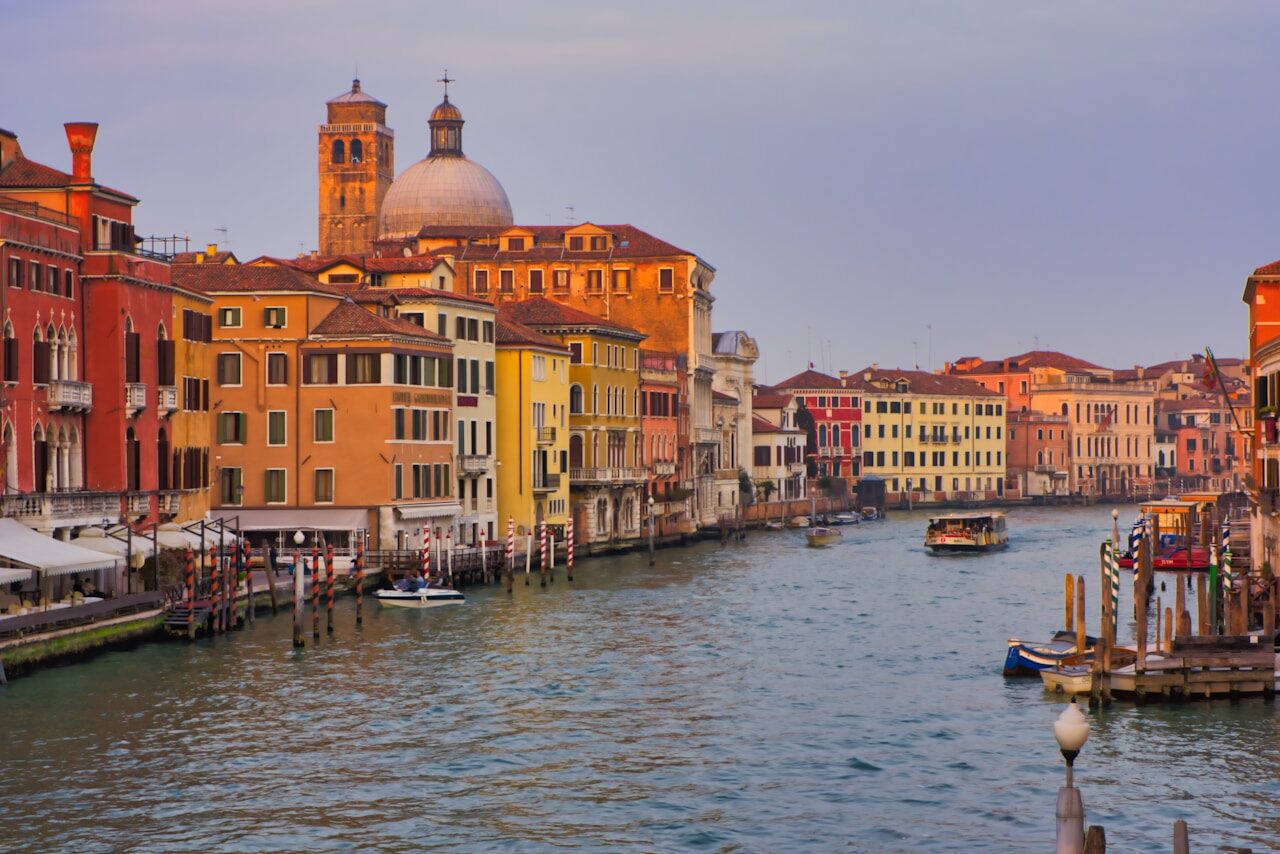



Venice Italy Travel Tips: What Every Visitor Should Know in 2026 – Essential travel tips and practical information for visiting Venice, Italy, covering transportation, safety, weather, customs, and everything you need to know before your trip.
Venice stands as one of the world’s most unique cities, built entirely on water across 118 small islands in the Venetian Lagoon.
This extraordinary geography creates both magical experiences and practical challenges that differ significantly from typical European city visits.
Understanding Venice’s unique characteristics, from its car-free streets and water-based transportation to seasonal flooding and distinct local customs, helps travelers prepare for a successful and enjoyable visit.
This comprehensive guide covers essential information every visitor should know before arriving in this remarkable floating city. To determine when to visit Venice, read our guide on the best time to visit Venice.
Key Highlights
Hide- Venice is a car-free city built on 118 islands connected by over 400 bridges; boats and walking are the only transportation options
- Acqua alta flooding occurs October-January; pack waterproof boots and download the "Hi! Tide Venice" app for flood alerts
- Petty theft is common in crowded tourist areas; secure valuables in front pockets or money belts, especially near St. Mark's Square
- Vaporetto water buses are the primary public transport; purchase multi-day passes for unlimited rides and significant savings
- Dress modestly when visiting churches (covered shoulders and knees required); many religious sites refuse entry for inappropriate attire
- Venice is generally safe for tourists; dial 112 for emergencies, and English-speaking help is available at major hospitals
- Budget €100-150 per person daily for mid-range travel including accommodation, meals, and attractions in [year]
Essential Venice Travel Tips: What To Know Before You Go in 2026
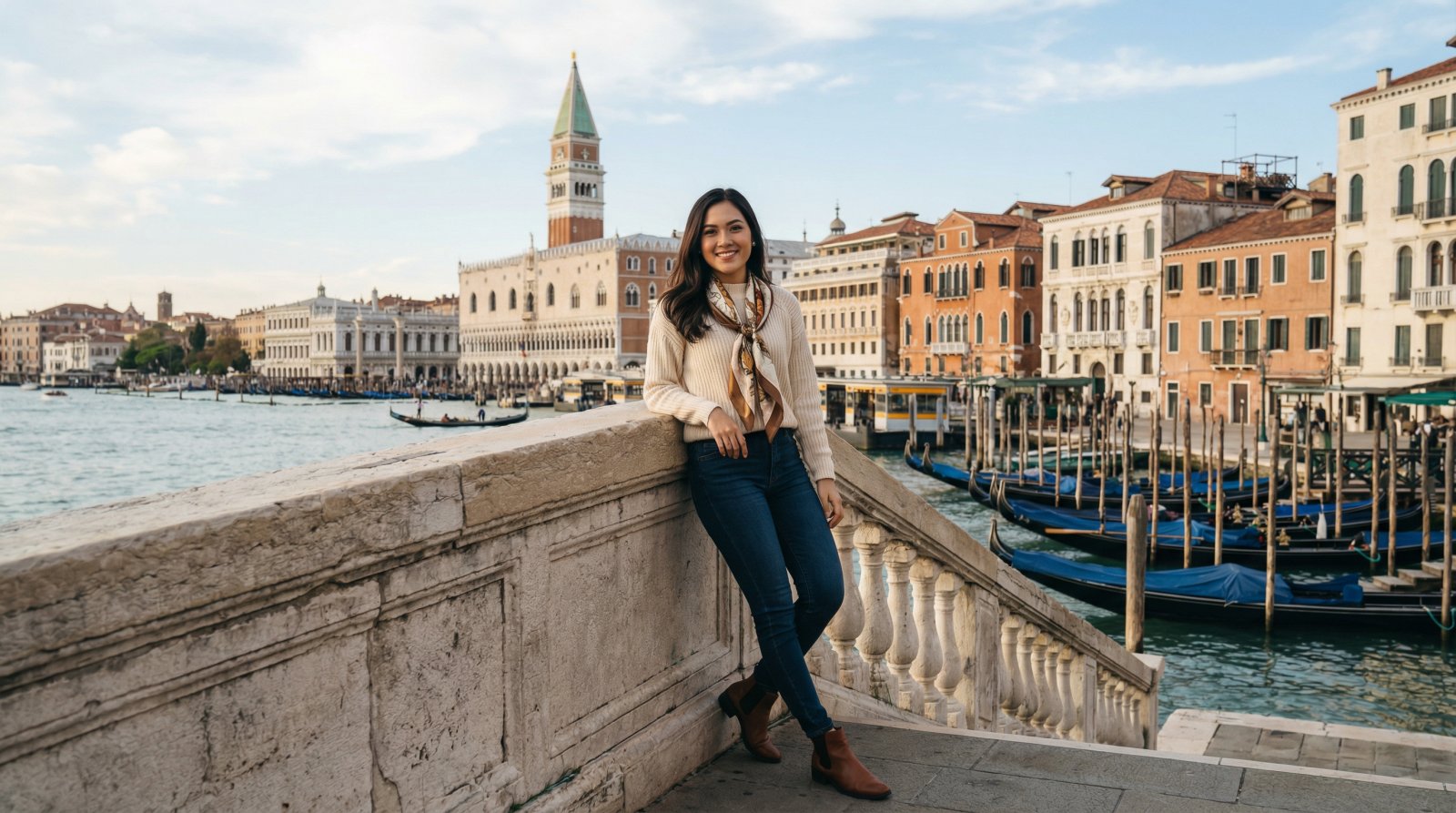
Venice’s extraordinary location and construction set it apart from every other city in the world.
The city’s geography creates both its distinctive charm and practical challenges that visitors must understand to navigate successfully.
What Is Venice and Where Is It Located?
Venice (Venezia in Italian) sits in the Veneto region of northeastern Italy, approximately 2.5 miles (4 kilometers) from the mainland in the Venetian Lagoon.
The city occupies 118 small islands separated by 150 canals and connected by more than 400 bridges.
The lagoon itself covers approximately 212 square miles (550 square kilometers) and is separated from the Adriatic Sea by long barrier islands including Lido and Pellestrina.
The historic center of Venice, where most tourists spend their time, covers approximately 1.7 square miles (4.4 square kilometers).
This compact area contains the city’s major attractions, hotels, restaurants, and residential neighborhoods.
The city divides into six districts called sestieri: San Marco, Castello, Cannaregio, Santa Croce, San Polo, and Dorsoduro.
Venice’s position in a shallow lagoon means the city sits at sea level, making it vulnerable to flooding during high tides.
The entire historic center rests on millions of wooden piles driven deep into the lagoon bed, with buildings constructed on top of these foundations.
This remarkable engineering feat, begun in the 5th century, has allowed Venice to survive for over 1,500 years despite its precarious location.
The city’s population has declined significantly in recent decades, from approximately 175,000 residents in 1951 to around 49,000 today in the historic center.
This population decline results from high living costs, flooding challenges, and the impact of mass tourism on daily life.
However, the greater Venice municipality, including mainland areas like Mestre, maintains a population of approximately 257,000.
Reserve Your Venice Tours & Activities
Most popular Venice tours sold out quickly, so grab your tickets early to save your spot! Feel free to browse through our skip-the-line passes, guided tours, and special experiences to find the perfect fit for your Venice trip.
 Trip.com
 Booking.com
 Expedia
 Traveloka
 GetYourGuide
 Klook
Klook WeGoTrip
 Go City
The Floating City: How Venice Works
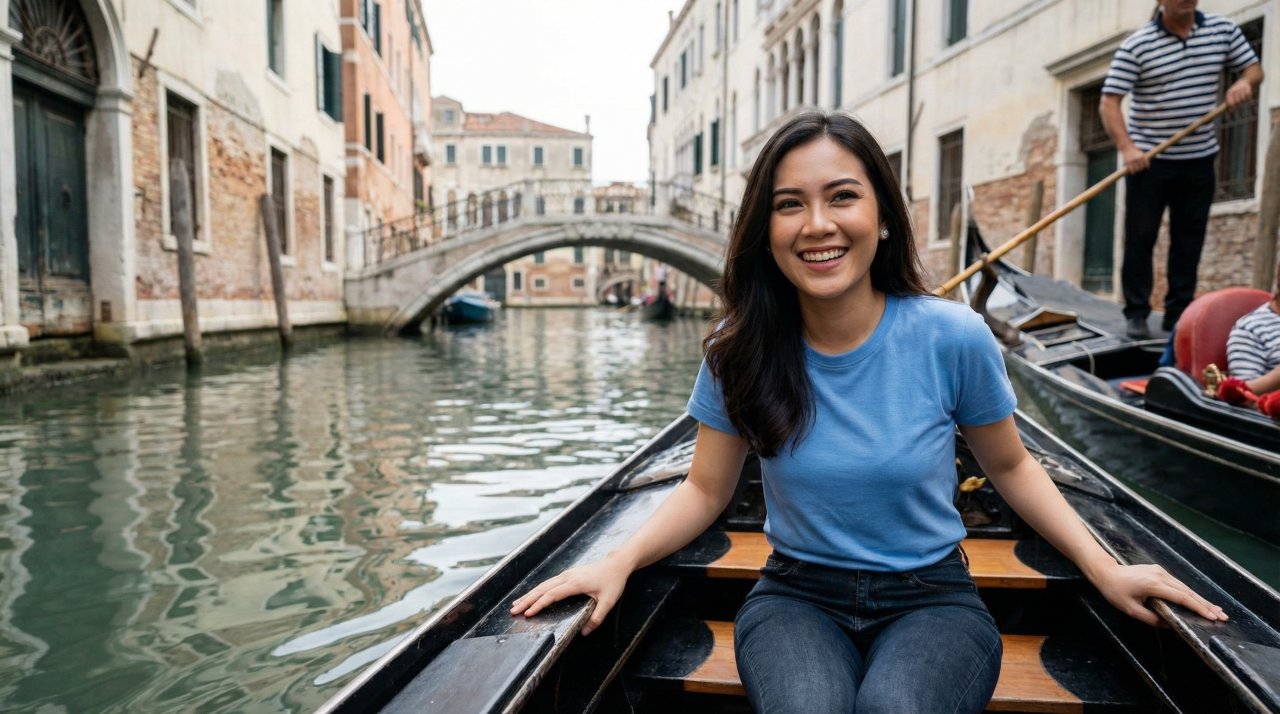
Venice’s nickname “The Floating City” describes its appearance but not its actual construction.
The city doesn’t float; instead, it rests on millions of wooden piles (pali) driven 15-20 feet (5-6 meters) into the lagoon’s clay and sand bed.
These piles, made from water-resistant wood like alder, oak, and larch, remain submerged in oxygen-poor water that prevents decay.
Builders placed wooden platforms on top of the piles, then constructed buildings using Istrian stone (a type of limestone) for foundations and brick for walls.
This construction method has proven remarkably durable, with many buildings standing for 500-800 years.
However, the weight of buildings causes gradual settling, and Venice has sunk approximately 9 inches (23 centimeters) over the past century.
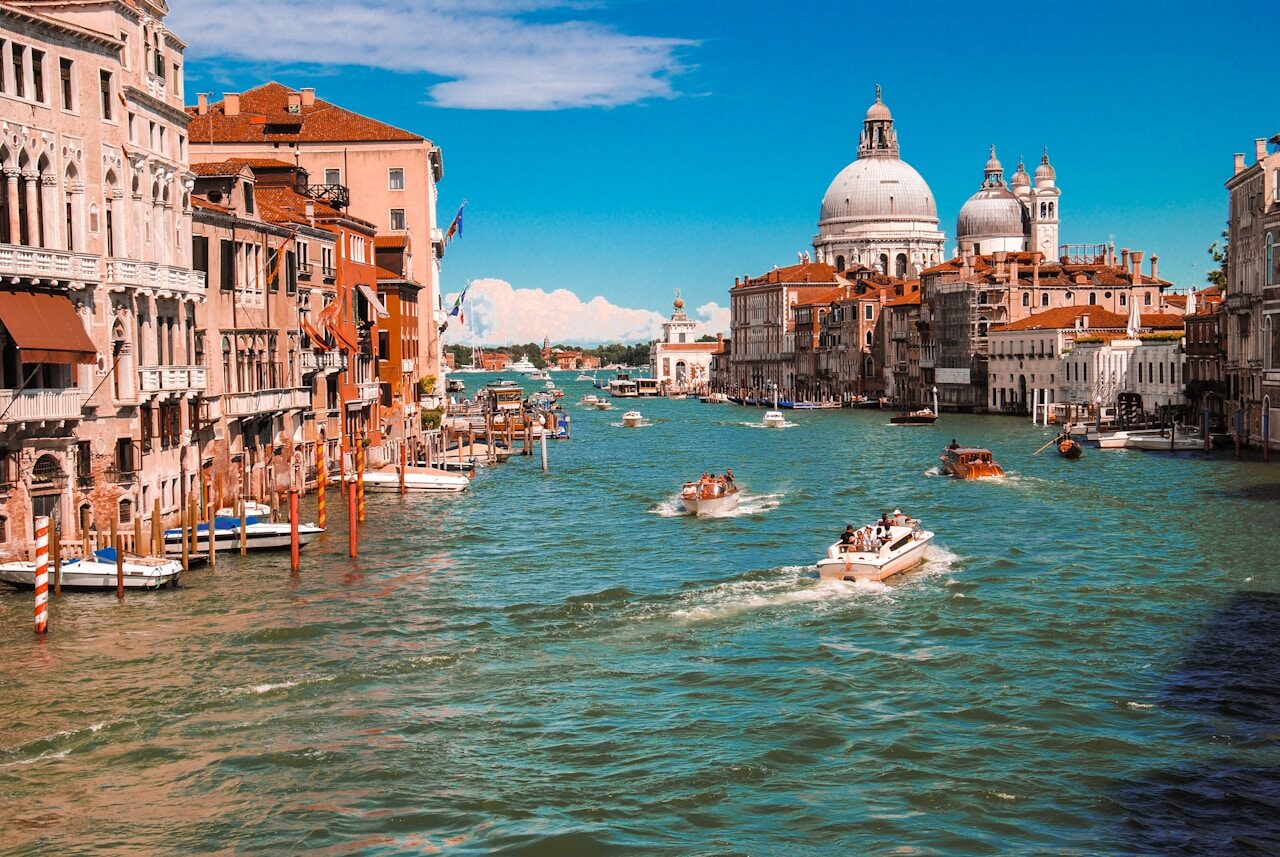
The city’s 150 canals serve as streets, with the Grand Canal functioning as the main thoroughfare.
These waterways range from narrow rii (small canals) barely wide enough for a single gondola to the Grand Canal, which measures 100-230 feet (30-70 meters) wide.
The canals connect to the lagoon, allowing tidal waters to flow in and out twice daily.
Venice has no cars, motorcycles, or bicycles in the historic center.
All transportation occurs via boats or on foot.
This creates a unique urban environment where the sounds of water, footsteps, and boat engines replace typical city traffic noise.
Goods delivery, garbage collection, ambulances, and even hearses operate via specialized boats designed for their specific purposes.
UNESCO World Heritage Status
UNESCO designated Venice and its Lagoon as a World Heritage Site in 1987, recognizing the city’s extraordinary universal value.
The designation covers not only the historic center but also the lagoon’s islands, including Murano, Burano, and Torcello, acknowledging the entire lagoon ecosystem’s cultural and natural significance.
The UNESCO listing cites Venice as “an extraordinary architectural masterpiece” where “even the smallest building contains works by some of the world’s greatest artists.” The designation recognizes Venice’s unique urban structure, its influence on art and architecture, and its role in cultural exchange between East and West during its centuries as a maritime republic.
However, UNESCO has repeatedly considered adding Venice to its List of World Heritage in Danger due to threats from mass tourism, population decline, flooding, and inadequate conservation efforts.
The organization has pressured Italian authorities to implement better management strategies, including limiting cruise ship access and controlling tourist numbers.
The World Heritage status brings both benefits and responsibilities.
It attracts tourists interested in cultural heritage, supporting Venice’s tourism-dependent economy.
However, it also requires Italy to protect and preserve the site for future generations, balancing tourism revenue with conservation needs and resident quality of life.
For a comprehensive overview of Venice’s top attractions and experiences that showcase its UNESCO heritage, see our guide on the best things to do in Venice.
Safety and Security in Venice
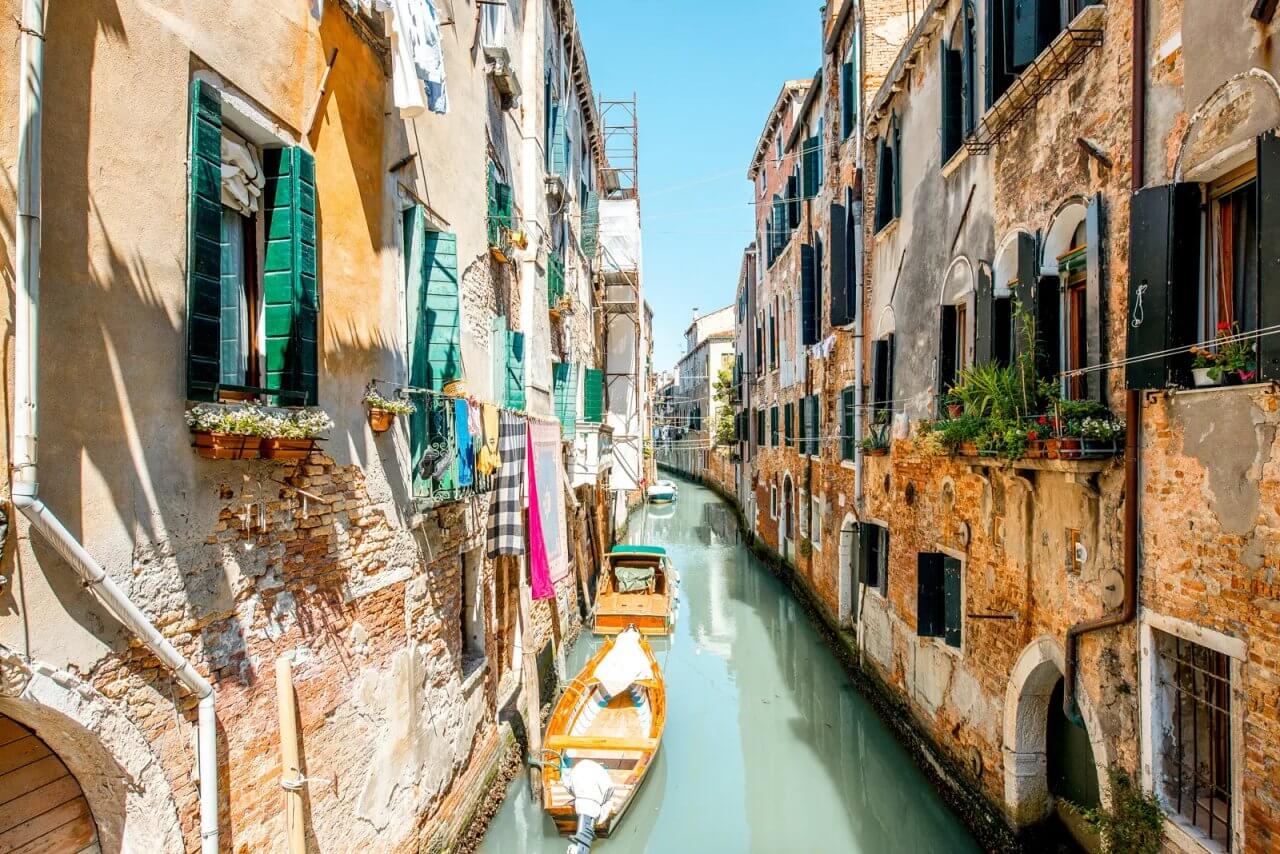
Venice ranks as one of Italy’s safest cities for tourists, with violent crime rates significantly lower than most European capitals.
However, visitors should understand specific safety considerations related to petty crime, emergency services, and the city’s unique environmental challenges. If you intend to bring your family or kids, read our guide on best things to do in Venice with family and kids.
Crime Statistics and Personal Safety
Venice experiences minimal violent crime, with tourists facing virtually no risk of assault, robbery, or serious criminal activity.
The city’s compact size, extensive CCTV coverage, and strong police presence contribute to this safety record.
However, petty theft, particularly pickpocketing and bag snatching, occurs regularly in crowded tourist areas.
Pickpockets target crowded locations including St. Mark’s Square, Rialto Bridge, vaporetto water buses, and narrow streets connecting major attractions.
Thieves often work in teams, with one person creating a distraction while another steals wallets, phones, or cameras.
Common distraction techniques include asking for directions, “accidentally” bumping into victims, or creating commotion nearby.
Protect valuables by keeping wallets in front pockets rather than back pockets, using money belts worn under clothing, and carrying bags across your body with the opening facing inward.
Avoid displaying expensive jewelry, watches, or electronics that attract thieves’ attention.
Keep cameras and phones secured when not actively using them.
Be particularly vigilant on crowded vaporetti, where thieves take advantage of packed conditions and passenger distraction during boarding and disembarking.
Keep bags in front of you and maintain awareness of your surroundings.
Avoid using phones or cameras near vaporetto doors, as thieves can grab devices and escape as doors close.
Scams targeting tourists include overpriced gondola rides (always confirm prices before boarding), restaurants with hidden charges (check menus for coperto/cover charges and service fees), and street vendors selling counterfeit goods.
Legitimate gondola rates are regulated and posted at official gondola stations.
Avoid unlicensed gondoliers who approach tourists with “special deals.”
Emergency Services and Medical Care
Italy’s universal emergency number is 112, connecting callers to police, medical, and fire services.
English-speaking operators are available, though response times may vary.
For non-emergency police matters, visit the Questura (police headquarters) near Piazzale Roma or local police stations (commissariati) in each sestiere.
Venice’s main hospital, Ospedale dell’Angelo, is located on the mainland in Mestre, accessible via ambulance boat and then land ambulance.
The historic center has a smaller emergency facility, Pronto Soccorso, near Campo Santi Giovanni e Paolo, handling urgent cases before transferring serious emergencies to the mainland hospital.
Pharmacies (farmacie) throughout Venice, marked by green cross signs, provide over-the-counter medications and basic medical advice.
Pharmacists in tourist areas typically speak some English.
At least one pharmacy in each sestiere operates on a rotating schedule for night and weekend service, with locations posted at all pharmacies.
European Health Insurance Card (EHIC) holders from EU countries receive emergency medical treatment at the same cost as Italian residents.
Non-EU visitors should carry comprehensive travel insurance covering medical emergencies, as healthcare costs for foreigners can be substantial.
Many travel insurance policies include emergency evacuation coverage, important given Venice’s unique geography.
For minor ailments, pharmacies can recommend appropriate treatments without requiring doctor visits.
However, prescription medications require prescriptions from Italian doctors or equivalent documentation from home countries.
Bring sufficient supplies of regular medications, as specific brands may not be available in Italy.
Acqua Alta Flooding Safety
Acqua alta (high water) flooding represents Venice’s most distinctive safety consideration.
These events occur when astronomical tides, strong Sirocco winds from the south, and low atmospheric pressure combine to push Adriatic seawater into the lagoon, raising water levels 3-5 feet (1-1.5 meters) above normal.
Flooding primarily affects the period from October through January, with November experiencing the highest frequency.
During severe events, approximately 12% of the city floods, including St. Mark’s Square (the lowest point), areas near the Grand Canal, and low-lying neighborhoods.
Most flooding lasts 2-4 hours before waters recede with the tide.
The city operates a warning system with sirens sounding 3-4 hours before expected flooding.
The number of siren tones indicates expected water levels: one tone for minor flooding (110cm above normal), two tones for moderate flooding (120cm), three tones for significant flooding (130cm), and four tones for exceptional flooding (140cm+).
Download the “Hi! Tide Venice” app for real-time flood forecasts and warnings.
During flooding, temporary elevated walkways (passerelle) are installed in major tourist areas, allowing pedestrians to navigate flooded zones.
Follow these walkways and avoid walking through floodwater when possible, as it contains sewage and can hide submerged obstacles.
Waterproof boots (stivali) are essential during flooding season; they can be purchased at shops throughout Venice for €15-30.
The MOSE flood barrier system, completed in 2020, can be raised to prevent severe flooding events when water levels are predicted to exceed 110cm.
However, it’s not activated for minor acqua alta occurrences, as these are considered part of Venice’s natural rhythm and don’t significantly disrupt daily life.
Flooding poses minimal safety risk to tourists who take basic precautions.
The main concerns are wet feet, slippery surfaces, and disrupted plans rather than danger.
Venetians adapt seamlessly to these events, with businesses and residents continuing normal activities using elevated walkways and waterproof footwear.
Transportation in Venice: Getting Around the Car-Free City
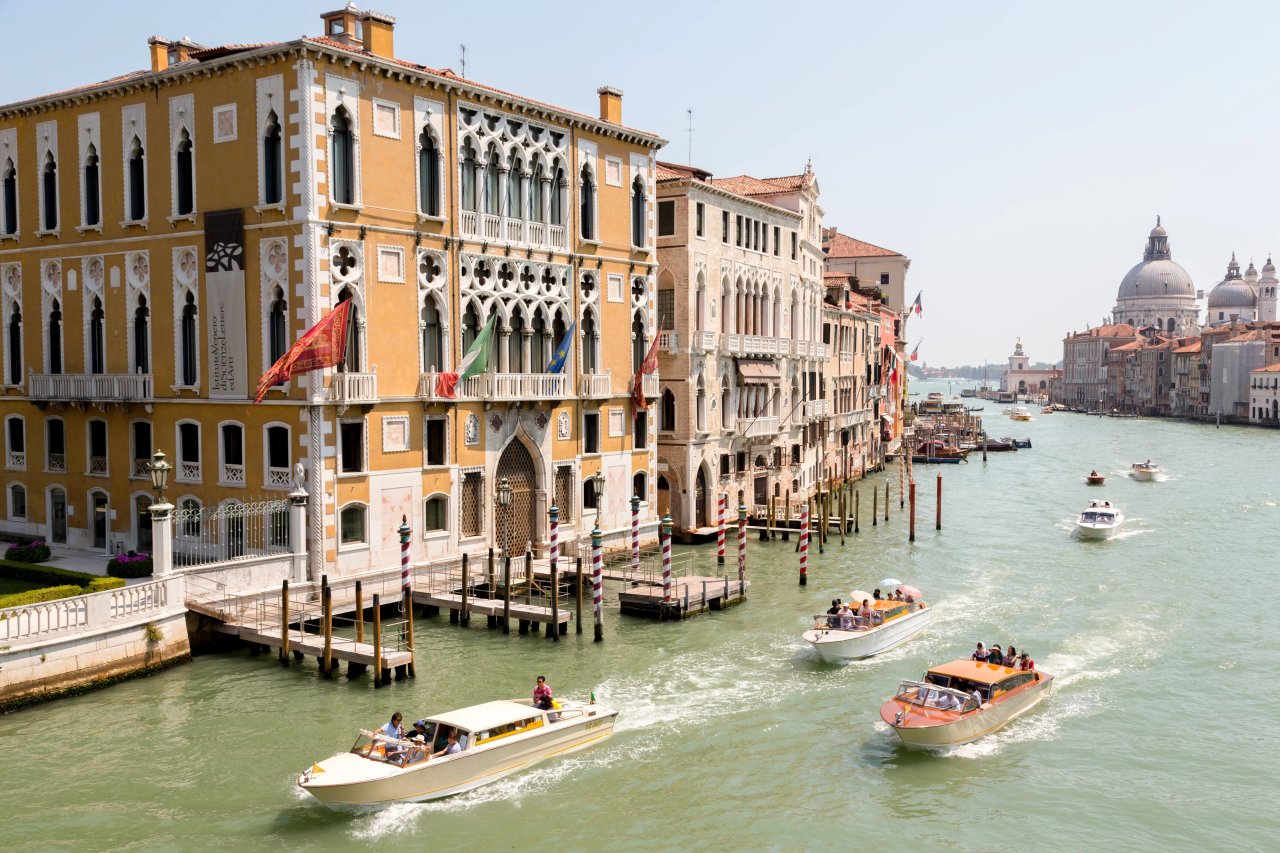
Venice’s unique geography eliminates cars, creating a transportation system based entirely on boats and walking.
Understanding how to navigate this unusual environment helps visitors move efficiently and avoid common frustrations.
Vaporetto Water Bus System
Vaporetti (water buses) serve as Venice’s primary public transportation, operating 25 routes connecting the historic center, lagoon islands, and mainland.
These motorized watercraft function like city buses, following fixed routes with designated stops (fermata) marked by floating platforms along canals.
ACTV, Venice’s public transport company, operates the vaporetto system with boats running approximately every 10-20 minutes on major routes during daytime hours.
Service frequency decreases in evening hours and on less-traveled routes.
Line 1 and Line 2 along the Grand Canal operate most frequently, while routes to outer islands run less often.
Single-ride tickets cost €9.50 and are valid for 75 minutes from validation, allowing transfers between lines.
However, single tickets provide poor value for tourists making multiple trips.
Multi-day passes offer significant savings: 24-hour pass (€25), 48-hour pass (€35), 72-hour pass (€45), and 7-day pass (€65).
Purchase tickets at ACTV ticket offices, tobacco shops (tabacchi), or automated machines at major vaporetto stops.
Tickets must be validated at electronic readers before boarding.
Inspectors frequently check tickets, imposing €60 fines plus ticket cost for riding without valid tickets.
Line 1 provides the classic Grand Canal experience, making 18 stops between Piazzale Roma and Lido, taking approximately 45 minutes for the full route.
This slow boat stops at major landmarks including Rialto, Ca’ d’Oro, Ca’ Rezzonico, Accademia, and San Marco.
Board early to secure outdoor deck seats for unobstructed views.
Line 2 follows a similar Grand Canal route but makes fewer stops, completing the journey in 30 minutes.
This express service works better for transportation than sightseeing.
Lines 4.1, 4.2, 5.1, and 5.2 circle the historic center’s perimeter, offering views from the lagoon.
Line 12 connects to Murano, Burano, and Torcello islands.
Vaporetti can become extremely crowded during peak hours (8-9 AM, 5-7 PM) and peak tourist season (June-August).
Boarding with large luggage during crowded periods creates difficulties.
Consider using water taxis for airport transfers or traveling during off-peak hours to avoid the worst congestion.
Walking and Bridge Navigation
Walking represents the primary way to explore Venice’s historic center, as most destinations lie within 20-30 minutes’ walk of each other.
However, Venice’s layout differs dramatically from typical grid-pattern cities, with narrow alleys (calli), dead-end streets, and frequent bridges creating a maze-like environment.
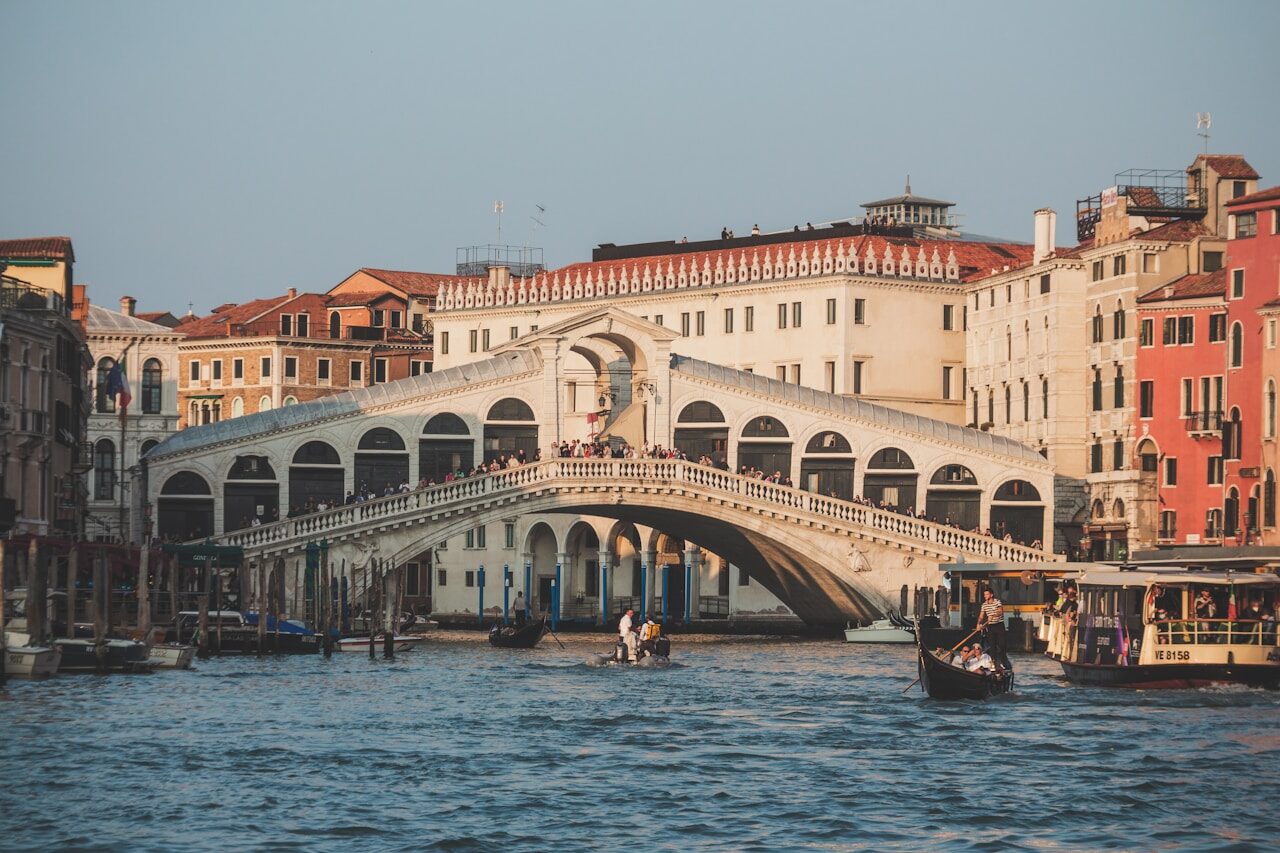
Venice contains over 400 bridges crossing its 150 canals, ranging from small, flat bridges over narrow rii to the iconic Rialto Bridge spanning the Grand Canal.
Most bridges feature steps, as the city has no flat bridges except the Constitution Bridge near Piazzale Roma.
This creates challenges for travelers with mobility limitations or heavy luggage.
The city’s compact historic center measures only 1.7 square miles (4.4 square kilometers), making it entirely walkable.
However, the indirect routes required to navigate canals and bridges mean actual walking distances exceed straight-line measurements.
A destination appearing 10 minutes away on a map might require 20 minutes of walking through winding streets and over multiple bridges.
Yellow signs posted at major intersections indicate directions to key landmarks: “Per Rialto” (to Rialto Bridge), “Per San Marco” (to St. Mark’s Square), “Per Ferrovia” (to train station), and “Per Piazzale Roma” (to bus terminal/parking).
Following these signs helps navigate without constantly consulting maps, though they only point toward major destinations.
Getting lost in Venice is inevitable and part of the experience.
The city’s layout defies logical navigation, with streets that appear to lead toward a destination suddenly ending at a canal or turning in unexpected directions.
Embrace this aspect rather than fighting it—some of Venice’s most charming discoveries occur while “lost” in quiet neighborhoods away from tourist routes.
Comfortable, broken-in walking shoes are essential, as Venice involves extensive walking on uneven stone pavement and bridge steps.
Avoid new shoes that might cause blisters.
Wheeled luggage works poorly on bridges and cobblestones; backpacks or shoulder bags prove more practical for navigating the city.
Water Taxis and Private Boats
Water taxis provide fast, direct transportation to specific destinations, particularly useful for airport transfers, hotel check-ins with luggage, or reaching locations without convenient vaporetto access.
These sleek motorboats accommodate 4-10 passengers with luggage and can access smaller canals that larger vaporetti cannot reach.
Official water taxi rates start at €15 for the initial flag-down fee, plus €2 per minute of travel time.
A typical 10-minute ride from the train station to St. Mark’s Square costs approximately €60-80.
Night surcharges (10 PM to 7 AM) add €10, and luggage fees add €3 per large bag.
Pre-book water taxis through official companies like Consorzio Motoscafi Venezia or Venezia Taxi for fixed rates.
Marco Polo Airport to central Venice typically costs €110-140 for up to four passengers.
Fixed-rate bookings avoid potential disputes over metered fares and ensure availability during busy periods.
Water taxis make sense for airport transfers with luggage, late-night transportation when vaporetti run infrequently, or when traveling in groups of 4-6 people where the per-person cost becomes comparable to multiple vaporetto tickets.
For solo travelers or couples making short trips, vaporetti provide much better value.
Gondolas, while iconic, serve primarily as tourist attractions rather than practical transportation.
Official rates are €90 for 30 minutes during daytime (8 AM to 7 PM) and €110 for 30 minutes during evening hours (7 PM to 8 AM).
These rates apply to the boat (up to 6 passengers), not per person.
Singing gondoliers charge an additional €30-40 for serenades.
For detailed information about Venice’s transportation options, including tips for using vaporetti efficiently and navigating the city on foot, see our comprehensive guide on getting around Venice.
Cultural Etiquette and Local Customs
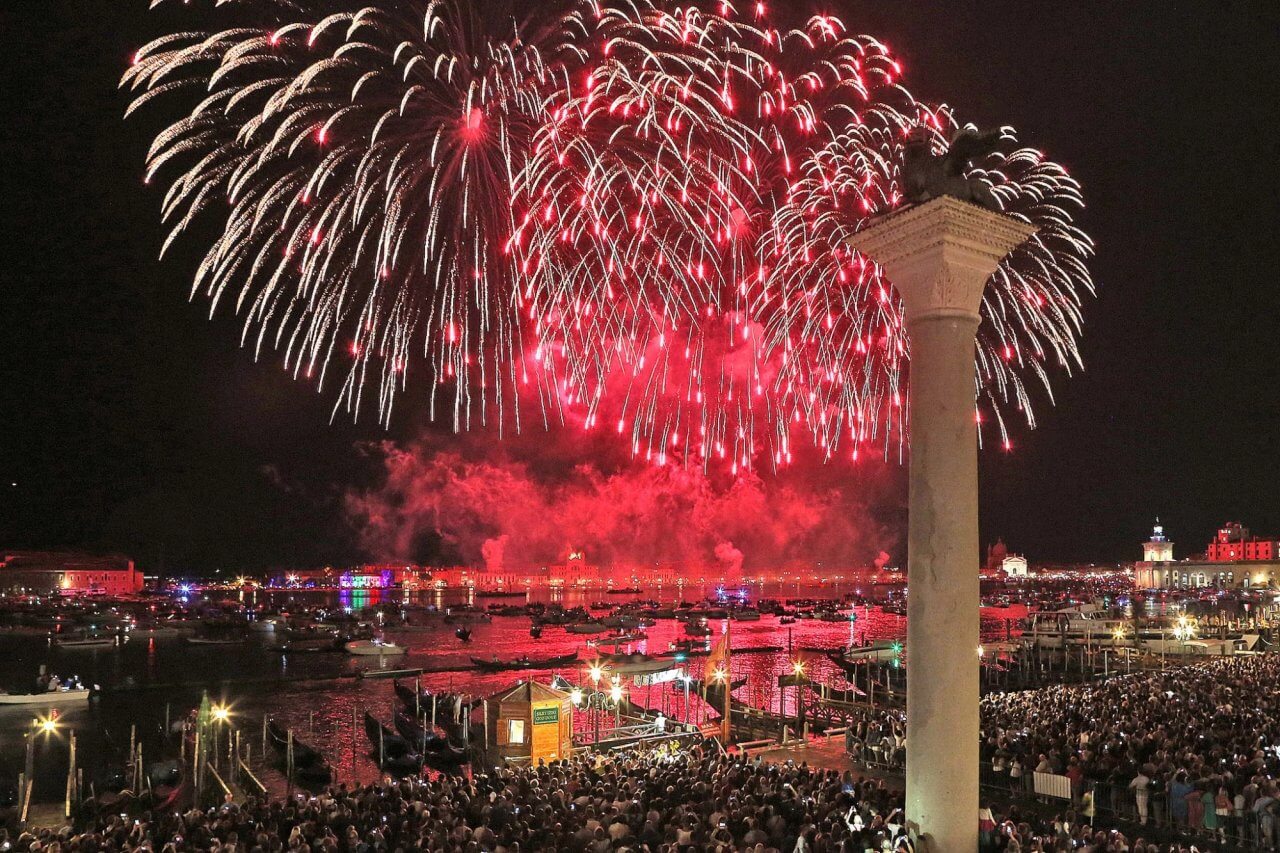
Understanding and respecting Venetian customs and etiquette helps visitors avoid offending locals and contributes to more positive interactions.
Venice’s residents face significant challenges from mass tourism, making respectful behavior particularly important.
Dress Codes for Religious Sites

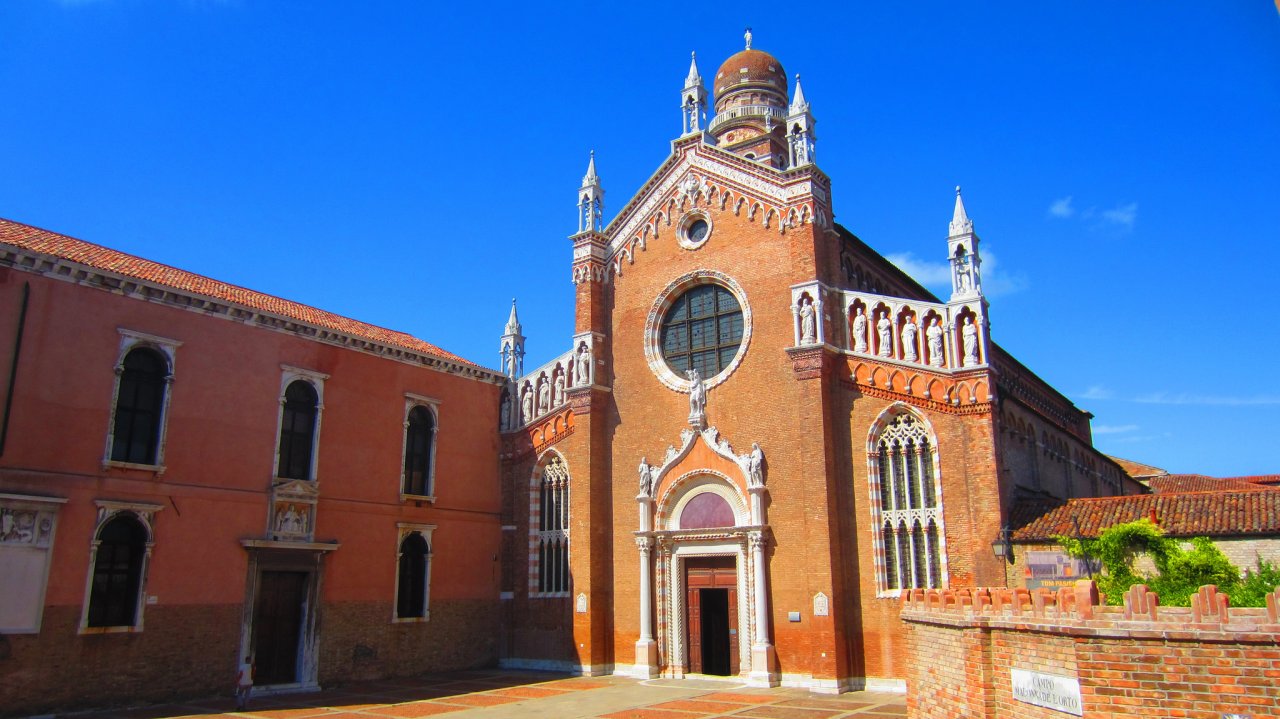
Venice’s churches, including major attractions like St. Mark’s Basilica, enforce strict dress codes requiring covered shoulders and knees.
Tank tops, shorts, short skirts, and revealing clothing result in denied entry.
Many churches post signs illustrating acceptable and unacceptable attire, and staff at entrances enforce these rules.
Carry a light scarf or shawl to cover shoulders when visiting churches, even during hot summer weather.
Lightweight pants or skirts reaching below the knee satisfy the modesty requirements.
Some churches provide disposable paper coverings for visitors in inappropriate attire, though relying on this option is discouraged.
The dress code applies to all visitors regardless of religious affiliation or tourist status.
Churches remain active places of worship, not merely tourist attractions, and visitors should respect their sacred nature.
Beyond dress requirements, maintain quiet voices, avoid eating or drinking, and refrain from using flash photography inside churches.
St. Mark’s Basilica, Venice’s most visited church, strictly enforces dress codes and prohibits large bags or backpacks.
Free bag storage (deposito bagagli) operates at Ateneo San Basso nearby.
The basilica also requires visitors to remove hats upon entering, following traditional church etiquette.
Social Behavior and Respect for Residents
Venice’s residents (Venetians) face daily challenges from mass tourism, including crowded streets, noise, rising living costs, and the transformation of their city into what some describe as a “theme park.” Respectful tourist behavior helps mitigate these impacts and improves local attitudes toward visitors.
Keep noise levels moderate, particularly in residential areas and during evening hours.
Loud conversations, music, and rowdy behavior disturb residents trying to live normal lives.
Remember that Venice is a living city, not an outdoor museum, with people working, raising families, and going about daily routines.
Avoid sitting on church steps, bridge railings, or monuments.
These behaviors are prohibited and can result in fines of €100-200.
Designated seating areas exist in campos (squares) and along waterfronts.
Eating while walking through streets is considered poor manners; find a bench or café table instead.
Don’t feed pigeons in St. Mark’s Square or elsewhere in Venice.
Feeding pigeons is illegal and carries fines ranging from €25 to €500, as the birds damage buildings and create sanitation problems.
The city has worked to reduce pigeon populations, and feeding them undermines these efforts.
Respect private property and residential areas.
Don’t peer into windows, enter private courtyards, or photograph residents without permission.
Many beautiful doorways and courtyards visible from streets are private homes, not public attractions.
Venetians value their privacy despite living in a tourist destination.
Basic Italian Phrases and Greetings
While many Venetians in tourist areas speak English, making an effort to use basic Italian phrases demonstrates respect and often results in warmer interactions.
Italians appreciate visitors who attempt their language, even if pronunciation is imperfect.
Essential phrases include:
- Buongiorno (bwon-JOR-no) – Good morning/Good day (used until mid-afternoon)
- Buonasera (bwon-ah-SEH-rah) – Good evening (used from mid-afternoon onward)
- Ciao (chow) – Hello/Goodbye (informal, use with peers, not in formal situations)
- Grazie (GRAHT-see-eh) – Thank you
- Prego (PREH-go) – You’re welcome/Please/After you
- Per favore (pehr fah-VOH-reh) – Please
- Scusi (SKOO-zee) – Excuse me (formal)
- Mi dispiace (mee dees-PYAH-cheh) – I’m sorry
- Parla inglese? (PAR-lah een-GLEH-zeh) – Do you speak English?
- Non capisco (non kah-PEES-ko) – I don’t understand
- Quanto costa? (KWAN-toh KOS-tah) – How much does it cost?
Greet shopkeepers, restaurant staff, and hotel employees with “buongiorno” or “buonasera” upon entering.
This courtesy is expected in Italian culture, and failing to greet people is considered rude.
Similarly, say “grazie” and “arrivederci” (goodbye) when leaving.
In restaurants, wait to be seated rather than choosing your own table.
Make eye contact and greet servers when they approach.
Italians consider it rude to begin eating immediately; wait until everyone at the table is served.
Tipping is not obligatory in Italy, as service charges are typically included, though rounding up the bill or leaving small change (5-10%) for good service is appreciated.
Restaurant and Dining Customs
Italian dining culture differs significantly from American or Northern European customs.
Meals are leisurely affairs, particularly dinner, with multiple courses consumed over 1-2 hours.
Rushing through meals or requesting the check immediately after finishing is considered odd behavior.
Restaurants typically open for lunch from 12:00-2:30 PM and dinner from 7:00-10:00 PM, with many closing between services.
Italians eat lunch around 1:00 PM and dinner around 8:00-9:00 PM, later than many tourists expect.
Arriving at 6:00 PM for dinner may find restaurants closed or empty.
Cover charges (coperto) of €2-4 per person appear on most restaurant bills, covering bread and table service.
This is standard practice, not a scam, though the charge should be listed on the menu.
Service charges (servizio) of 10-15% may also be included.
Check bills carefully to understand what you’re paying.
Avoid restaurants with photo menus, multilingual signs, or aggressive hosts soliciting customers on the street.
These establishments target tourists with mediocre food at inflated prices.
Seek restaurants where you see locals dining, with menus in Italian (or Italian and English), and prices that seem reasonable for the area.
Water in restaurants comes as bottled water (acqua minerale), either sparkling (frizzante/gassata) or still (naturale/liscia).
Tap water is safe to drink in Venice, but restaurants don’t typically serve it.
If you want tap water, request “acqua del rubinetto,” though some restaurants may refuse or charge anyway.
Coffee culture in Italy follows specific patterns.
Cappuccino and other milk-based coffees are breakfast drinks, consumed only before 11:00 AM.
Ordering cappuccino after meals marks you as a tourist. Espresso (caffè) is the standard after-meal coffee.
Coffee is consumed standing at the bar for the lowest price; sitting at tables incurs higher charges.
Budget Planning and Daily Expenses When Traveling to Venice, Italy
Understanding Venice’s costs helps travelers plan realistic budgets and avoid financial surprises.
The city ranks among Italy’s most expensive destinations, with prices significantly higher than mainland cities.
However, strategic planning and smart choices can make Venice accessible across various budget levels.
Daily Budget Expectations by Travel Style
Venice accommodates different budget levels, though all categories cost more than typical Italian cities.
Budget travelers can expect to spend €80-120 per person daily, mid-range travelers €150-250, and luxury travelers €300+ per day.
These estimates include accommodation, meals, local transportation, and attraction entry fees.
Budget travel (€80-120 daily) requires staying in hostels or budget hotels in Mestre, eating at bakeries and supermarkets for some meals, using vaporetti instead of water taxis, visiting free attractions, and limiting paid museum entries.
This approach allows experiencing Venice while minimizing costs, though it requires more planning and fewer spontaneous splurges.
Mid-range travel (€150-250 daily) includes staying in 3-star hotels in the historic center or quality hotels in Mestre, eating at local restaurants for most meals, purchasing multi-day vaporetto passes, visiting major paid attractions, and occasionally splurging on gondola rides or special experiences.
This budget level provides comfortable experiences without constant cost concerns.
Luxury travel (€300+ daily) encompasses staying in 4-5 star hotels or historic palazzos, dining at upscale restaurants, using water taxis for convenience, hiring private guides, and accessing exclusive experiences.
This budget eliminates most constraints, allowing spontaneous choices and premium services throughout the visit.
Accommodation typically consumes 40-50% of daily budgets, with historic center hotels costing €90-150 per night for mid-range options, with prices reaching €200-300+ during peak season.
Mestre hotels offer similar quality for €60-120 per night.
Hostels start around €25-40 per bed in dorms, while luxury hotels exceed €400 per night.
Food costs vary dramatically based on choices.
A cappuccino and cornetto (croissant) breakfast costs €3-5 at a bar, while hotel breakfasts add €10-20.
Lunch at a casual restaurant runs €15-25 per person, while dinner costs €25-50 at mid-range restaurants.
Cicchetti bar hopping for dinner can cost €20-30 per person including drinks.
Supermarket meals reduce costs to €5-10 per meal.
Seasonal Price Variations
Venice’s prices fluctuate significantly by season, with peak periods (June-August, Carnival in February, Easter week, Christmas/New Year) commanding premium rates.
Hotel prices can double or triple during peak periods compared to low season (November-March, excluding holidays).
Booking well in advance for peak periods secures better rates and availability.
Shoulder seasons (April-May, September-October) offer the best value-to-experience ratio, with moderate prices, pleasant weather, and manageable crowds.
Hotels charge 20-40% less than peak season while maintaining good availability.
Restaurants and attractions are less crowded, improving overall experience quality without significant cost reductions.
Low season (November-March, excluding holidays) provides the lowest prices but comes with trade-offs including cold, damp weather, shorter daylight hours, higher flooding risk, and some restaurants/hotels closing for winter.
However, travelers willing to accept these conditions can find excellent deals, with hotels offering rates 40-60% below peak season.
Money-Saving Strategies
Several strategies help reduce Venice costs without sacrificing experience quality.
Purchase vaporetto multi-day passes rather than single tickets, saving significantly on transportation.
A 72-hour pass costs €45 versus €28.50 for three single rides (three days of occasional travel would cost much more with single tickets at €9.50 each).
Eat breakfast at bars standing at the counter rather than sitting at tables, as Italian pricing charges more for table service.
A cappuccino costs €1.50 at the bar versus €4-5 at a table in tourist areas.
Similarly, avoid restaurants with outdoor seating in prime locations like St. Mark’s Square, where prices include substantial location premiums.
Shop at supermarkets like Coop or Despar for picnic supplies, bottled water, and snacks.
Bottled water costs €0.50-1 at supermarkets versus €3-5 at tourist area shops.
Venice has public drinking fountains throughout the city providing free, safe drinking water—bring a reusable bottle to refill.
Visit free attractions including churches (except St. Mark’s Basilica), public squares, Rialto Market, waterfront promenades, and residential neighborhoods.
Walking tours cost nothing and provide excellent orientation.
Many churches contain world-class art without entry fees, though modest donations are appreciated.
Time museum visits strategically, as some offer free entry on specific days or reduced evening rates.
Research current policies before visiting.
Consider whether museum passes provide value based on your planned visits—they save money only if visiting multiple included attractions.
For more comprehensive budget strategies and cost-saving tips, see our detailed guide on traveling to Venice on a budget.
What to Pack for Venice
Packing appropriately for Venice requires considering the city’s unique characteristics including extensive walking, variable weather, potential flooding, and cultural expectations.
Smart packing choices significantly impact comfort and enjoyment throughout your visit.
Essential Clothing and Footwear
Comfortable, broken-in walking shoes represent the single most important packing item for Venice.
The city requires extensive walking on uneven stone pavement, cobblestones, and bridge steps.
New shoes cause blisters that can ruin trips.
Pack shoes with good arch support, cushioning, and non-slip soles for wet surfaces.
Bring waterproof boots or shoes if visiting October through January, when acqua alta flooding occurs.
Rubber rain boots work well and can be purchased in Venice for €15-30 if you forget them.
Waterproof boots allow walking through flooded areas without wet feet, maintaining comfort during high water events.
Pack clothing in layers to accommodate Venice’s variable weather and temperature fluctuations between sun and shade, indoors and outdoors.
Lightweight, breathable fabrics work best for summer (June-August), when temperatures reach 80-90°F (27-32°C) with high humidity.
Avoid heavy fabrics that trap heat and moisture.
Bring modest clothing for church visits, including items that cover shoulders and knees.
Lightweight scarves or shawls serve multiple purposes: covering shoulders for churches, providing warmth in air-conditioned museums, and protecting from sun.
Convertible pants with zip-off legs don’t satisfy church dress codes, as shorts (even long shorts) are prohibited.
Pack a lightweight, waterproof jacket or raincoat regardless of season.
Venice experiences sudden rain showers year-round, and being caught without rain protection creates misery.
Compact, packable rain jackets take minimal luggage space while providing essential protection.
Practical Items and Accessories
Bring a comfortable day bag or backpack for carrying daily essentials, water bottles, purchases, and layers as weather changes.
Crossbody bags or backpacks with anti-theft features (slash-proof materials, locking zippers) provide security in crowded areas where pickpockets operate.
Pack a reusable water bottle to refill at public fountains throughout Venice, saving money and reducing plastic waste.
Venice’s tap water is safe to drink, and public fountains provide free access.
Insulated bottles keep water cold during hot summer days.
Bring a portable phone charger/power bank, as extensive use of maps, photos, and translation apps drains batteries quickly.
Venice’s winding streets and lack of clear navigation require frequent phone use for maps, making backup power essential.
Pack sunscreen, sunglasses, and a hat for sun protection, particularly in summer when sun reflects intensely off water and light-colored stone buildings.
The lagoon environment provides little shade in many areas, making sun protection crucial for comfort and health.
Bring any prescription medications in original containers with copies of prescriptions.
Pack a small first-aid kit with blister treatments, pain relievers, anti-diarrheal medication, and any personal medical necessities.
Pharmacies are available throughout Venice, but having basics prevents disruption when minor issues arise.
What to Leave at Home
Avoid bringing wheeled luggage if possible, as wheels perform poorly on bridges, cobblestones, and vaporetto boarding.
If wheeled luggage is necessary, choose bags with large, durable wheels and be prepared to carry them frequently.
Backpacks or duffel bags navigate Venice’s terrain more easily.
Don’t pack excessive clothing or “just in case” items.
Venice’s compact size and extensive walking make light packing essential.
Most hotels offer laundry services or have self-service machines for longer stays.
Packing light significantly improves mobility and reduces physical strain.
Leave valuable jewelry at home, as it attracts thieves and serves no purpose in Venice’s casual atmosphere.
Similarly, avoid bringing expensive watches or accessories that mark you as a wealthy tourist.
Blend in rather than standing out to reduce pickpocketing risk.
Don’t bring hair dryers, as hotels provide them.
Similarly, avoid packing bulky toiletries—purchase travel sizes or buy items in Venice if needed.
Every ounce of weight matters when carrying luggage over bridges and through narrow streets.
Final Thoughts
Venice rewards prepared travelers who understand its unique characteristics and challenges.
The city’s car-free environment, water-based transportation, potential flooding, and distinct cultural expectations differ significantly from typical tourist destinations.
Visitors who research these aspects, pack appropriately, respect local customs, and plan realistic budgets experience Venice at its best.
The city’s extraordinary beauty, rich history, and unique atmosphere justify its challenges and costs.
Few places on Earth offer Venice’s combination of art, architecture, culture, and romantic ambiance.
Understanding what to expect before arriving transforms potential frustrations into manageable aspects of visiting one of the world’s most remarkable cities.
Approach Venice with flexibility, patience, and respect for its residents and environment.
The city faces significant challenges from mass tourism, climate change, and population decline.
Thoughtful visitors who support local businesses, follow guidelines, and treat Venice as a living city rather than a theme park contribute to its preservation for future generations.
Frequently Asked Questions About Visiting Venice
Is Venice safe for solo travelers?
Yes, Venice is very safe for solo travelers, including solo women.
The city has low violent crime rates and strong police presence in tourist areas. The main concerns are petty theft (pickpocketing) in crowded areas and tourist scams.
Solo travelers should take standard precautions: secure valuables, stay aware in crowds, avoid isolated areas late at night, and trust instincts if situations feel uncomfortable.
Venice’s compact size and pedestrian-only streets create a generally safe environment for exploring alone.
How many days do you need in Venice?
Three to four days provides sufficient time to see major attractions, explore different neighborhoods, visit at least one lagoon island (Murano, Burano, or Torcello), and experience Venice’s atmosphere without rushing.
Two days covers only highlights, while five or more days allows deeper exploration, day trips to nearby cities, and a more relaxed pace.
First-time visitors should plan at least three full days to experience Venice properly.
Can you drink tap water in Venice?
Yes, Venice’s tap water is safe to drink and meets all European Union water quality standards.
The city has numerous public drinking fountains (nasoni) throughout the historic center providing free, fresh water.
Bring a reusable bottle to refill rather than purchasing bottled water.
The tap water comes from the same source as mainland Italy and undergoes regular testing. Some visitors notice a slight taste difference from home water, but it poses no health risks.
Do you need to book attractions in advance?
Booking major attractions in advance is highly recommended, particularly during peak season (June-August) and for popular sites like St. Mark’s Basilica, Doge’s Palace, and the Secret Itineraries tour.
Advance booking allows skipping long entry lines and guarantees access on your preferred date and time.
Some attractions sell out days or weeks in advance during busy periods.
Off-season visitors have more flexibility but still benefit from advance booking to optimize time and avoid disappointment.
What is the best way to get from the airport to Venice?
Several options connect Marco Polo Airport to Venice’s historic center.
Water buses (Alilaguna) cost €15-18 per person and take 60-90 minutes, offering scenic lagoon routes to various stops.
Land buses (ACTV or ATVO) cost €8-12 one-way and take 20-25 minutes to Piazzale Roma, where you transfer to vaporetti.
Water taxis cost €110-140 for up to four passengers and take 30 minutes directly to hotels. Choose based on budget, luggage amount, and arrival time.
For detailed transportation information, see our guide on getting around Venice.