



Osaka Neighborhoods: Best Areas to Stay and Explore – Osaka’s best neighborhoods for first-time visitors are Namba, Shinsaibashi, and Umeda — all offering easy metro access, vibrant nightlife, and world-class street food within walking distance of major attractions.
For a quieter, more local experience, Tennoji, Nakazakicho, and Fukushima deliver temples, indie cafés, and authentic izakayas without the tourist crowds.
Families and budget travelers find excellent value in Shin-Osaka and Tanimachi.
Choose accommodation near a major station, and Osaka becomes remarkably easy to navigate.
Key Highlights
- Namba is the top pick for first-time visitors, with Dotonbori, Kuromon Market, lively nightlife, and walkable access to Osaka's biggest attractions.
- Shinsaibashi suits shoppers and style-seekers, with a 600-metre covered arcade and a central location beside Namba.
- Umeda is ideal for city views, major transport links, and day trips, with direct JR and Hankyu rail connections.
- Tennoji, Nakazakicho, and Fukushima offer quieter, more local experiences — from ancient temples and parks to indie cafés and authentic izakayas.
- Shin-Osaka and Tanimachi are practical, budget-friendly bases with affordable hotels, strong transit access, and a relaxed neighbourhood atmosphere.
How Osaka’s Districts and Wards Are Laid Out
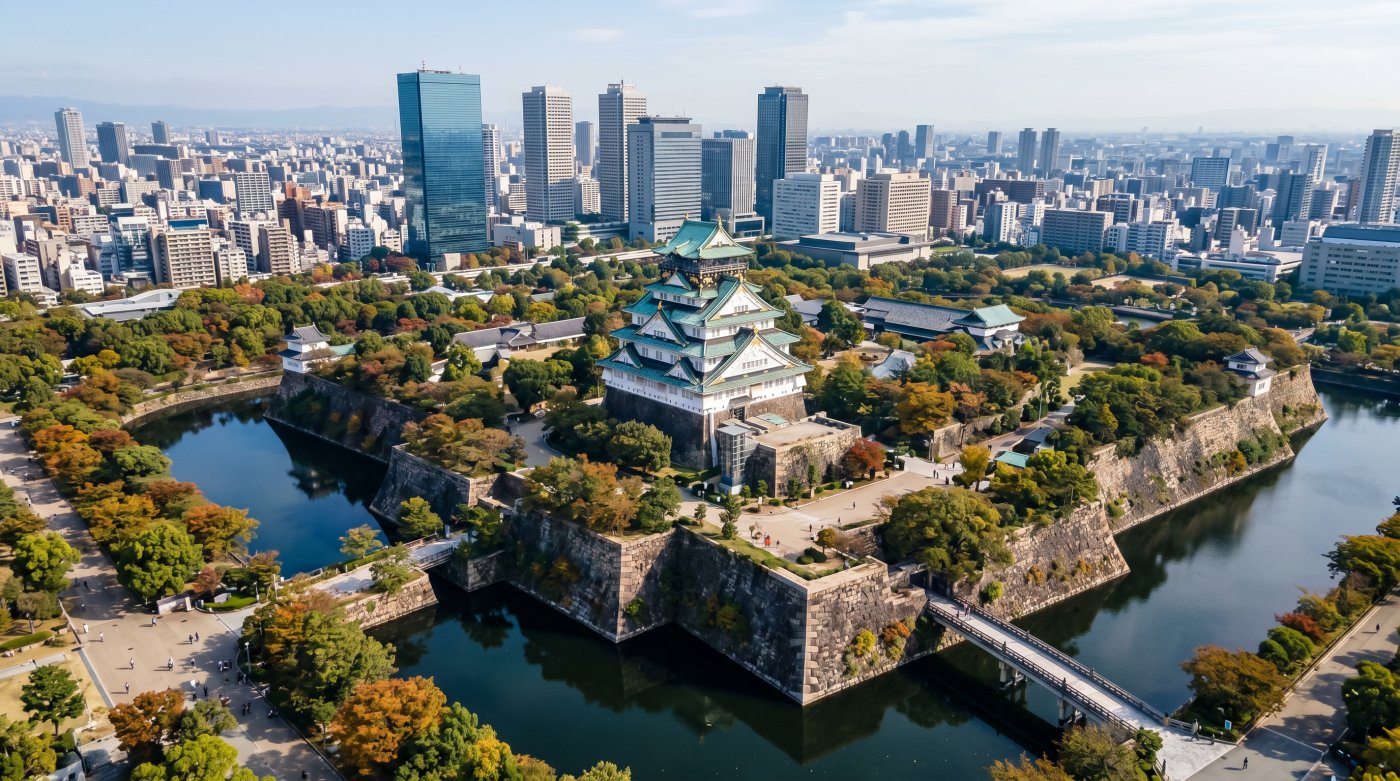
Osaka is divided into 24 official wards (ku), which serve as administrative boundaries, but the neighbourhoods visitors actually experience — Namba, Shinsaibashi, Umeda — are cultural zones that often span multiple ward boundaries.
Understanding this distinction before booking accommodation prevents the most common planning mistake first-time visitors make.
The city stretches roughly north to south along the Midosuji Line, from Kita’s polished business towers in the north down to Namba’s neon-lit streets in the south.
Tennoji anchors the southern end, while Shin-Osaka sits at the northern gateway for Shinkansen arrivals.
Osaka’s districts do not follow a strict compass grid, so orientation takes a short adjustment period.
Once the mental map clicks, moving between Tennoji’s temple calm and Fukushima’s bar-hopping energy becomes intuitive and fast.
Osaka Wards vs. Neighbourhoods: What’s the Difference?
Osaka’s 24 official wards (ku) are administrative zones used for government purposes — they are not the same as the cultural neighbourhoods visitors explore.
A single ward can contain several distinct areas with completely different atmospheres, price points, and traveller appeal.
Neighbourhoods like Namba, Nakazakicho, and Fukushima are defined by culture, food, and street character rather than bureaucratic lines.
Booking accommodation based on ward names alone can land a traveller somewhere that doesn’t match their expectations at all.
Think of wards as the city’s skeleton and neighbourhoods as its personality.
Knowing both layers makes choosing the right base significantly easier.
How to Read an Osaka Neighbourhoods Map
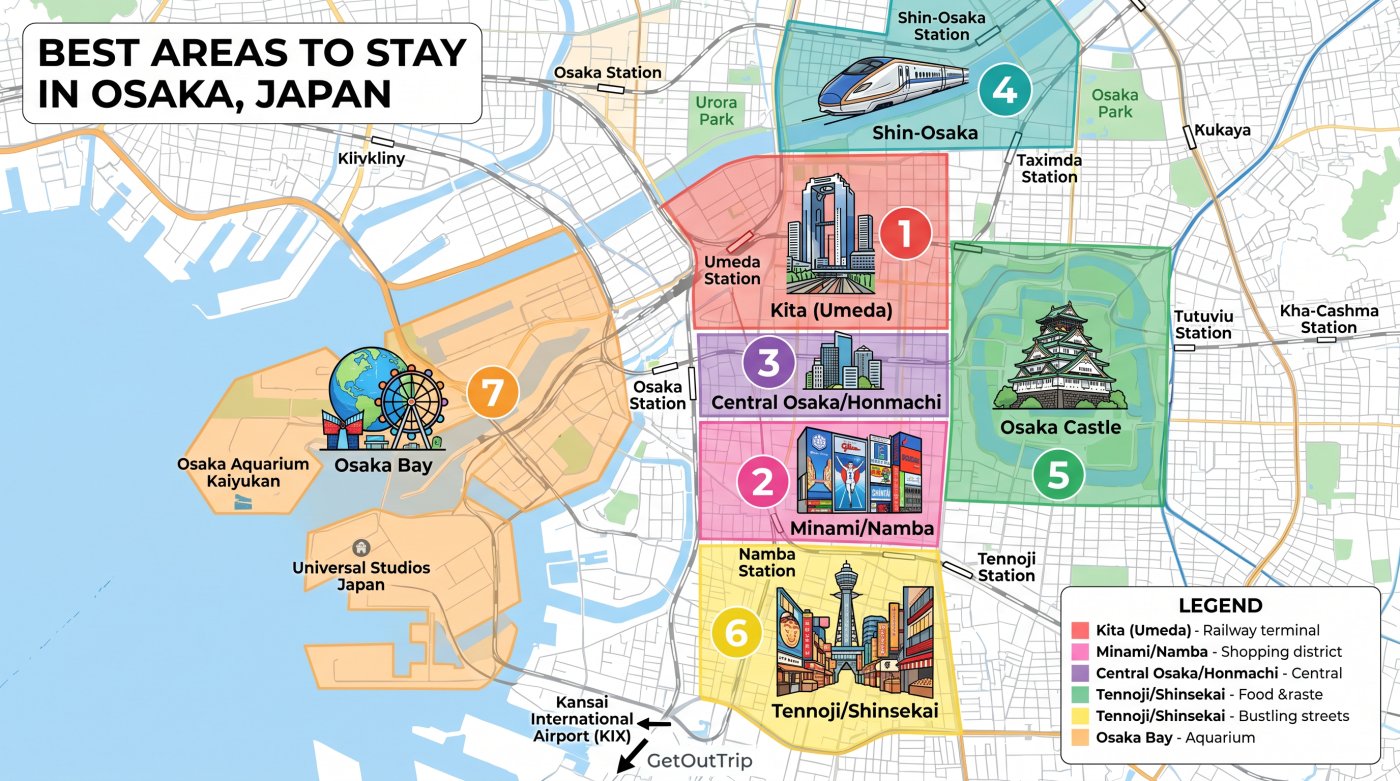
Most Osaka neighbourhood maps look complex at first — dense kanji, overlapping transit lines, and colour-coded zones.
Three reference points simplify the picture immediately.
First, trace the Midosuji Line (red line on the metro map): it connects Shin-Osaka, Umeda, Shinsaibashi, Namba, and Tennoji in a single north-to-south corridor.
Second, identify major interchange stations — Umeda/Osaka, Namba, and Tennoji — as anchor points for each area.
Third, note walking distances between stations: most central neighbourhoods sit five to fifteen minutes apart on foot.
With those three layers in place, identifying the best areas to stay in Osaka becomes straightforward rather than overwhelming.
Best Areas to Stay in Osaka for First-Time Visitors
First-time visitors to Osaka are best served by three neighbourhoods — Namba, Shinsaibashi, and Umeda — which together cover nearly every travel need.
All three sit on or near the Midosuji Line, offer dense dining and entertainment options, and provide fast connections to day-trip destinations across the Kansai region.
Namba delivers the highest concentration of iconic Osaka experiences within the smallest walkable area.
Shinsaibashi threads the needle between shopping and city cool.
Umeda adds big-city infrastructure, rooftop views, and the best rail connectivity in the city.
Namba: Osaka’s Most Central Neighbourhood for First-Time Visitors
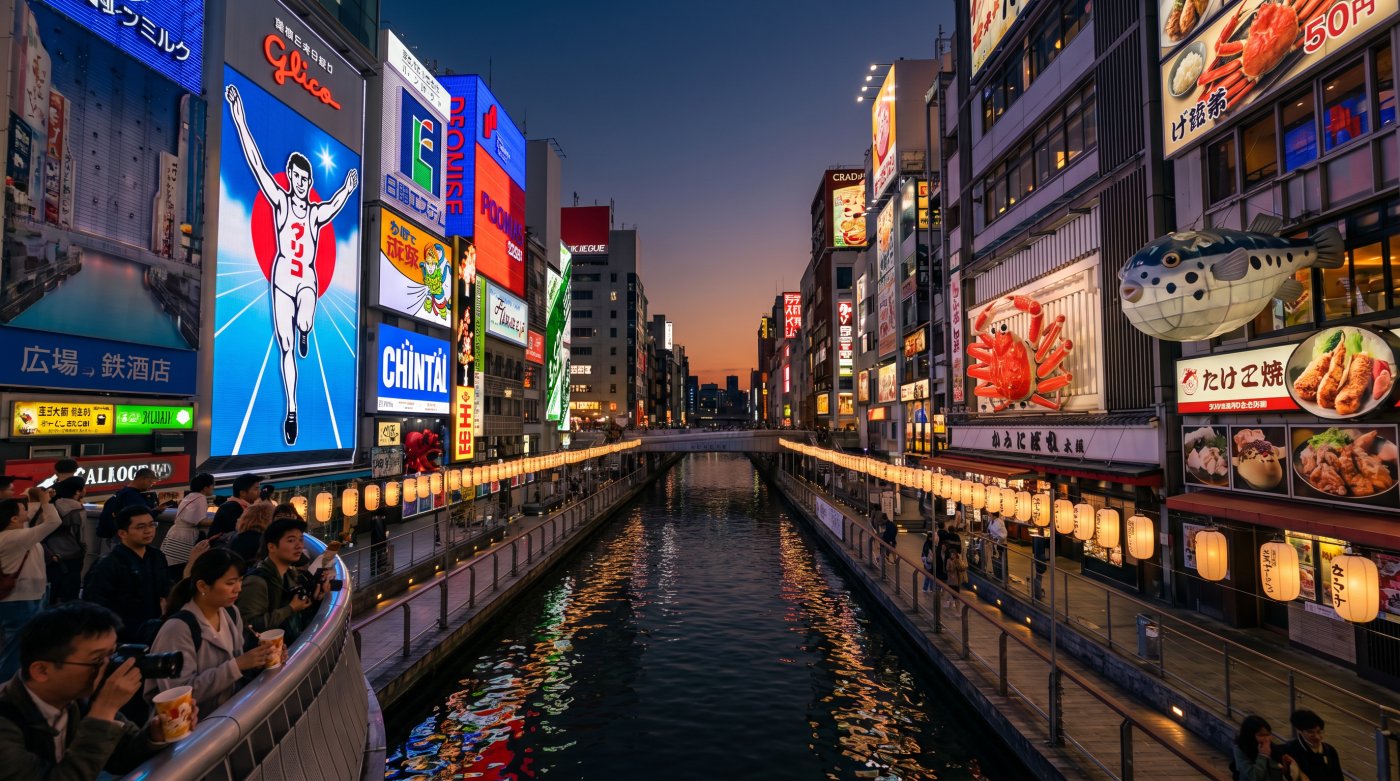
Namba is Osaka’s most visited neighbourhood, built around the iconic Dotonbori canal and the sprawling Kuromon Ichiba Market.
It sits at the intersection of the Midosuji, Sennichimae, and Yotsubashi metro lines, making it one of the most connected bases in the city.
The neighbourhood’s main draws include Dotonbori’s neon-lit canal strip, Shinsaibashi-suji Shopping Street, Hozenji Yokocho alley, and a dense concentration of street food stalls serving takoyaki, kushikatsu, and fresh seafood.
Nightlife runs until dawn across izakayas, rooftop bars, and live music venues.
Namba is the best area of Osaka to stay for travellers who want maximum walkability, zero downtime between meals and sights, and a genuine sense of the city’s electric energy from day one.
Who Should Stay in Namba
Namba suits first-time visitors, night owls, foodies, and solo travellers who want everything within arm’s reach.
It is the loudest and most stimulating base in the city — ideal for those who want to be in the middle of it all.
Key attractions within easy walking distance include:
- Dotonbori Canal — Osaka’s most photographed landmark
- Kuromon Ichiba Market — 150+ stalls of fresh seafood, produce, and street food
- Shinsaibashi-suji Shopping Arcade — 600 metres of covered retail
- Hozenji Yokocho — a narrow lantern-lit alley with traditional restaurants
Hotel rates in Namba range from approximately ¥5,000–¥10,000 per night for budget options (hostel dorms from ¥3,000–¥5,000 per bed) to ¥15,000–¥35,000+ for mid-range and upscale properties; rates spike significantly during cherry blossom season and Golden Week.
Namba’s Best Streets, Food, and Nightlife
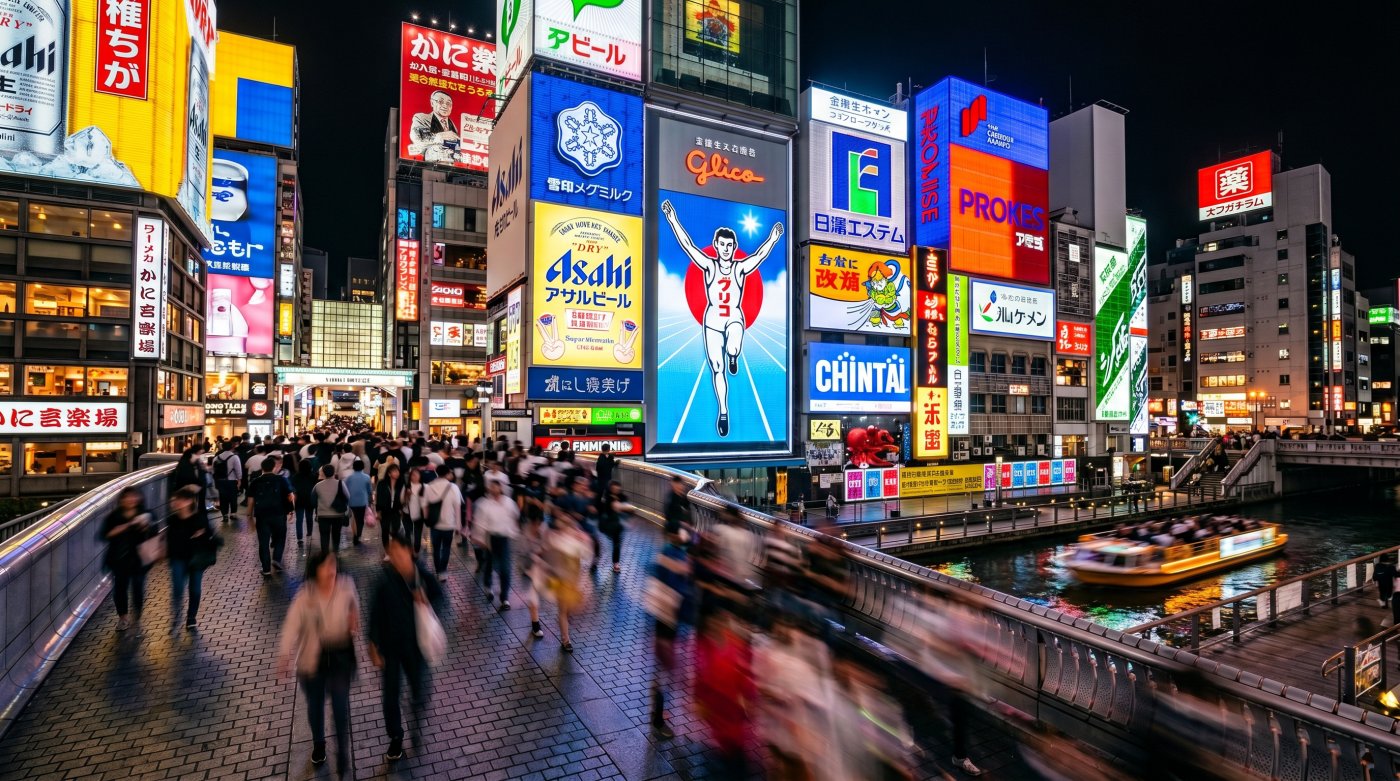
Dotonbori Canal is the neighbourhood’s centrepiece, lined with oversized illuminated signs — including the famous Glico Running Man — and dozens of restaurants competing for attention.
The strip is most dramatic after dark, when reflections double the neon across the water.
Kuromon Ichiba Market operates primarily in the mornings and early afternoons (most stalls open from around 8:00 AM to 6:00 PM, with peak activity between 9:00 AM and 4:00 PM), making it the ideal breakfast or lunch stop.
Shinsaibashi-suji delivers street food and retail from mid-morning until late evening.
After 9PM, the izakayas and standing bars take over, running well past midnight on weekends.
Shinsaibashi: Shopping, Style, and a Prime Osaka Location
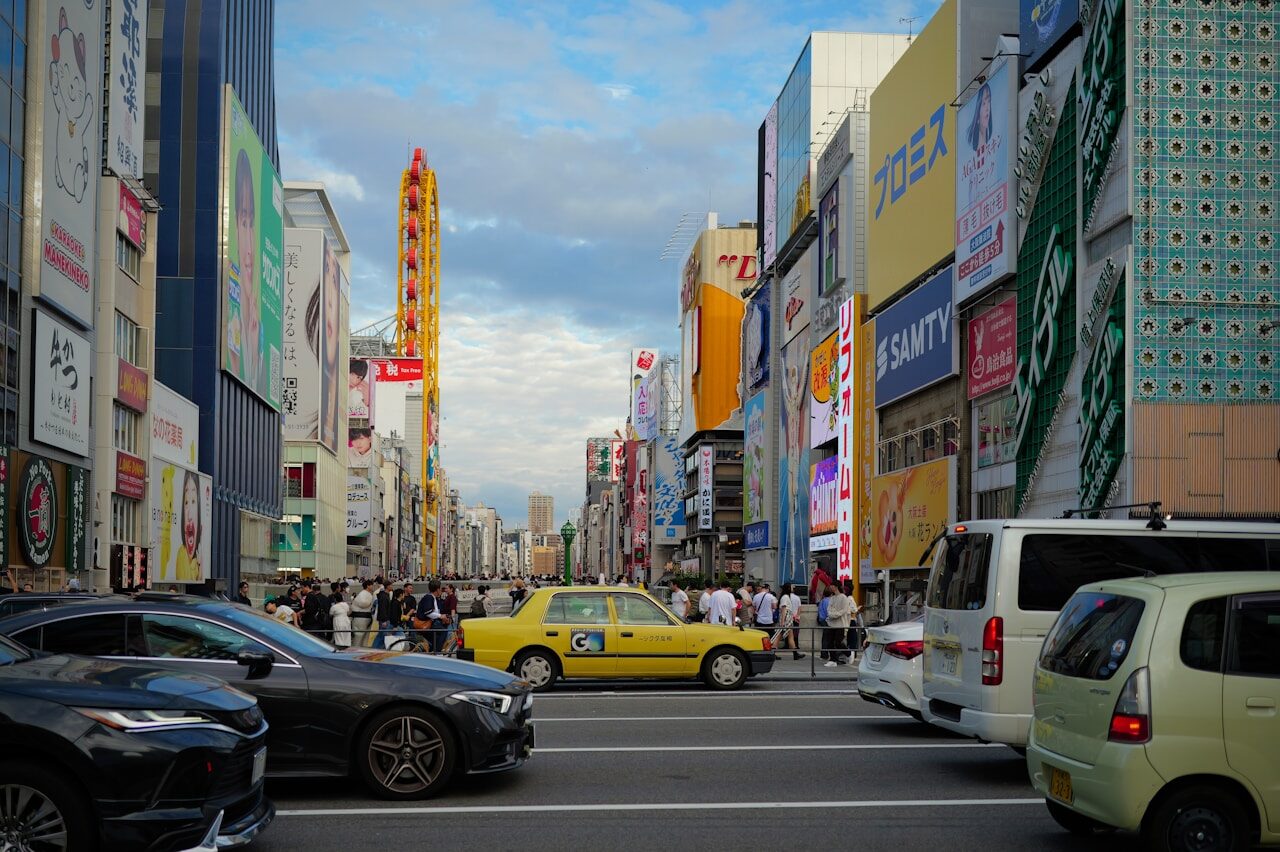
Shinsaibashi sits immediately north of Namba, connected by the famous covered arcade that gives the neighbourhood its identity.
The Shinsaibashi-suji Shopping Arcade stretches over 600 metres and houses everything from budget streetwear to international luxury brands including Louis Vuitton and Chanel.
The neighbourhood is served by Shinsaibashi Station on the Midosuji Line, placing it one stop from Namba and four stops from Umeda.
This central position makes it one of the most strategically located bases in Osaka for travellers who want shopping access without sacrificing sightseeing convenience.
Shinsaibashi also borders Amerika-Mura (American Village), a compact district of vintage clothing shops, independent boutiques, and street art that draws a younger, fashion-conscious crowd.
What Makes Shinsaibashi Worth Staying In
Shinsaibashi delivers three things exceptionally well: central location, world-class shopping, and a walkable connection to Namba’s food and nightlife scene.
Travellers who stay here effectively get two neighbourhoods for the price of one base.
Key features:
- Shinsaibashi-suji Arcade — approximately 600 metres of covered shopping with around 180 shops; the arcade itself is accessible 24/7, with individual shops typically open 10:00 AM to 9:00 PM (some food and convenience stores run until midnight or later)
- Amerika-Mura — vintage and independent fashion, street art, and café culture
- Direct Midosuji Line access — one stop to Namba, four stops to Umeda
- Dense dining options — from conveyor-belt sushi to refined kaiseki
Mid-range hotels in Shinsaibashi typically cost ¥12,000–¥25,000 per night for a private room; budget travellers can find options from ¥8,000–¥12,000, while upscale properties push ¥30,000 and above during peak season.
Umeda: The Business District That Delivers for Tourists
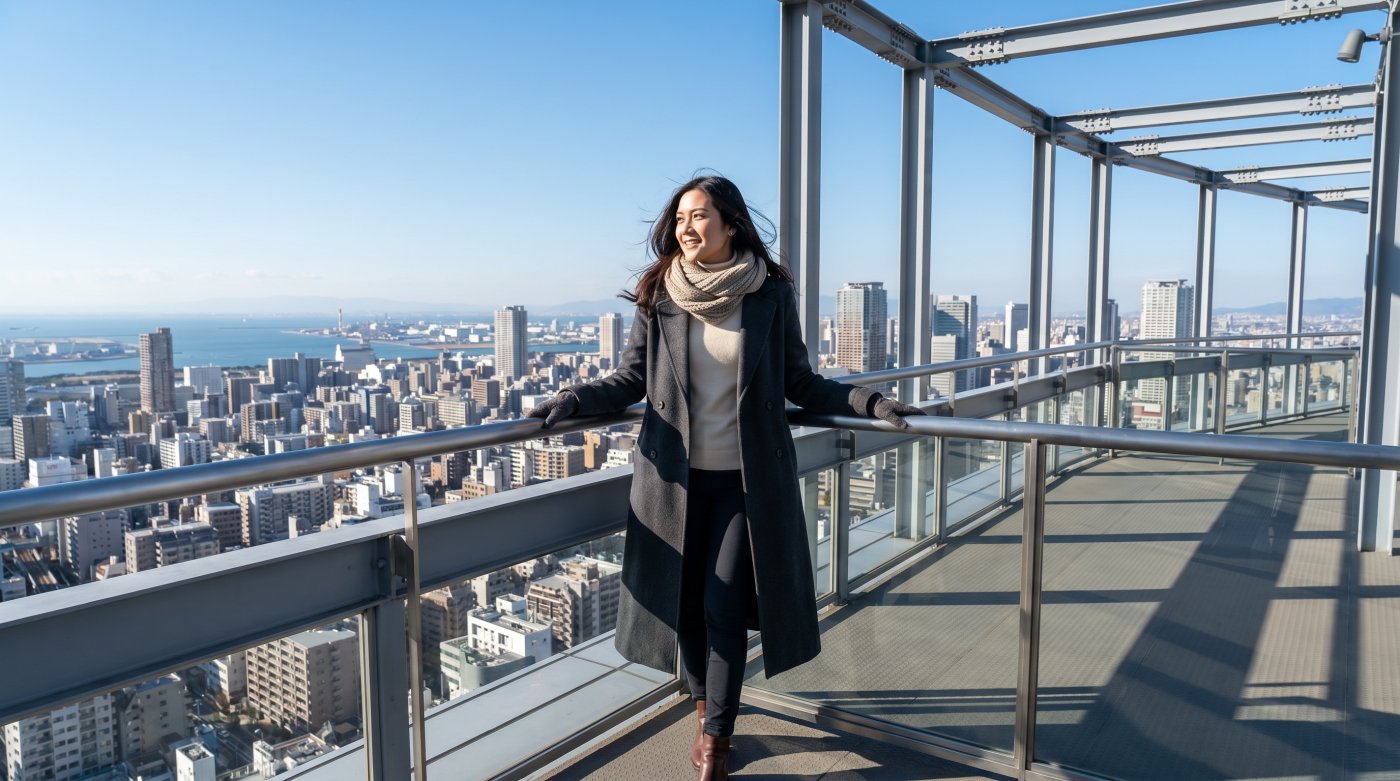
Umeda is Osaka’s primary commercial and transport hub, anchored by Osaka Station and the adjacent Umeda Station complex — one of the busiest rail interchanges in western Japan.
Despite its business-district reputation, Umeda offers substantial tourist appeal through its underground shopping network, rooftop observatory, and direct rail access to Kyoto, Kobe, and Nara.
The Umeda Sky Building’s Floating Garden Observatory sits 173 metres above street level and provides a 360-degree panoramic view of the city skyline.
Admission is ¥2,000 per adult (¥500 for children aged 4–12; free for children under 4); open 9:30 AM to 10:30 PM daily (last admission 10:00 PM).
Below ground, the Whity Umeda and Diamor Osaka underground malls connect major department stores including Hankyu, Hanshin, and Daimaru across several kilometres of retail corridors.
For travellers planning day trips across the Kansai region, Umeda’s rail connectivity is unmatched.
JR lines, Hankyu, Hanshin, and the Midosuji Line all converge here, making early-morning departures to Kyoto or Nara straightforward.
If you’re planning excursions, the top day trips from Kyoto, Japan guide pairs well with an Umeda base for regional exploration.
Umeda for Shoppers, Commuters, and Rooftop Views
Umeda rewards travellers who want polished infrastructure alongside genuine sightseeing.
The neighbourhood’s underground mall network alone can occupy a full afternoon, while the Umeda Sky Building provides one of Osaka’s most memorable viewpoints.
Key highlights:
- Umeda Sky Building — 360° rooftop observatory at 173 metres; admission ¥2,000 per adult (¥500 for children aged 4–12), open 9:30 AM to 10:30 PM daily
- Hankyu Grand Building — flagship department store with extensive food hall
- Whity Umeda — underground mall connecting major stations
- JR Osaka Station — direct express trains to Kyoto in approximately 29–30 minutes (JR Special Rapid); Shin-Osaka for Shinkansen connections is one stop away (approximately 5 minutes)
Mid-range hotels in Umeda typically range from ¥13,000–¥25,000 per night (e.g.
Hotel Granvia Osaka, Hotel Intergate Osaka Umeda), while upscale and luxury properties — including the Ritz-Carlton, Hilton Osaka, and the Waldorf Astoria Osaka — run ¥35,000–¥70,000+ per night.
Rates across all tiers increase significantly during cherry blossom season and Golden Week.
Is Osaka Worth Visiting Beyond the Tourist Centre?
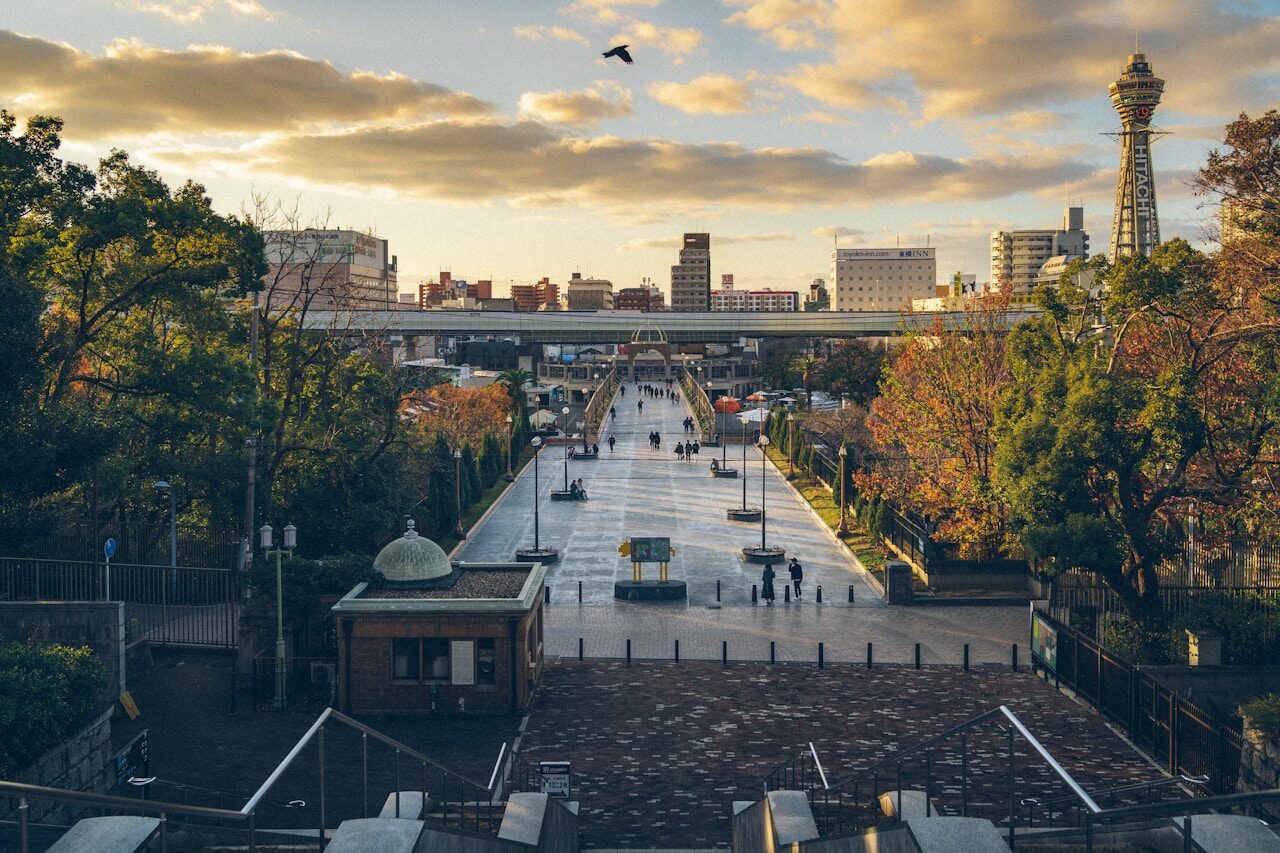
Yes — Osaka’s most rewarding neighbourhoods for authentic local experience sit just outside the main tourist corridor.
Tennoji, Nakazakicho, and Fukushima each offer a distinct atmosphere that differs sharply from Namba’s neon intensity, with lower accommodation costs and a noticeably more local crowd.
These areas are not remote or inconvenient.
All three connect directly to the Osaka Metro and sit within 10–20 minutes of central attractions.
They simply operate at a different pace — one that many repeat visitors and longer-stay travellers actively prefer.
Tennoji: Culture, Parks, and a Livable Osaka Area
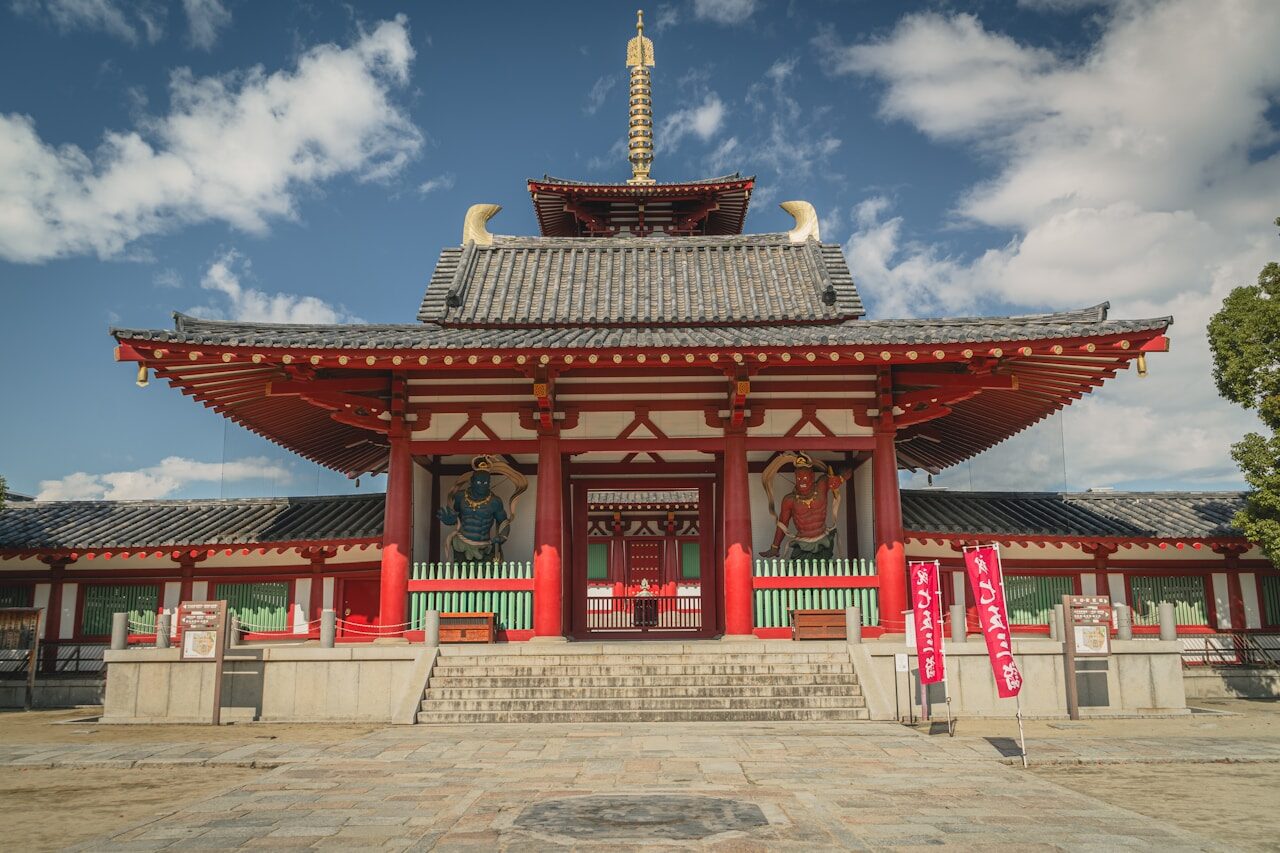
Tennoji is one of Osaka’s most historically significant neighbourhoods, anchored by Shitennoji Temple — one of Japan’s oldest Buddhist temples, founded in 593 AD.
The area also contains Tennoji Zoo, Tennoji Park, and the Abeno Harukas tower, which at 300 metres is the tallest skyscraper in Japan.
The contrast within a single afternoon walk is genuinely striking: incense at a 1,400-year-old temple courtyard, giraffes at the zoo, and a glass skyscraper observation deck — all within comfortable walking distance of each other.
Tennoji suits families, culture-focused travellers, and anyone who wants major sights without Namba’s noise level.
Accommodation here typically runs ¥3,000–¥5,000 cheaper per night than equivalent properties in Namba or Shinsaibashi, with solid mid-range options available from ¥10,000–¥18,000.
Tennoji’s Key Attractions at a Glance
- Shitennoji Temple — founded 593 AD, one of Japan’s oldest Buddhist temples; outer grounds free; inner precinct (Central Temple) admission ¥300 for adults (¥200 for high school and junior high school students; free for elementary school students and younger); open 8:30 AM to 4:30 PM (April to September) and 8:30 AM to 4:00 PM (October to March)
- Abeno Harukas (Harukas 300 Observatory) — 300-metre skyscraper with observation deck on floors 58–60; admission ¥2,000 per adult (¥1,200 for junior and senior high school students; ¥700 for elementary school students; ¥500 for preschool children aged 4 and over; free for children under 4); open 9:00 AM to 10:00 PM daily (last admission 9:30 PM)
- Tennoji Zoo — home to over 1,000 animals from 200 species; admission ¥500 for adults (¥200 for elementary and junior high school students; free for preschool children); open 9:30 AM to 5:00 PM (extended to 6:00 PM on weekends and public holidays in May and September); closed Mondays (or Tuesday if Monday is a public holiday) and December 29 to January 1; note: admission prices are scheduled to increase from July 1, 2026 — verify current rates before visiting
- Tennoji Park — free public green space connecting the zoo and temple district
Nakazakicho: Coffee Shops, Vintage Boutiques, and Local Atmosphere
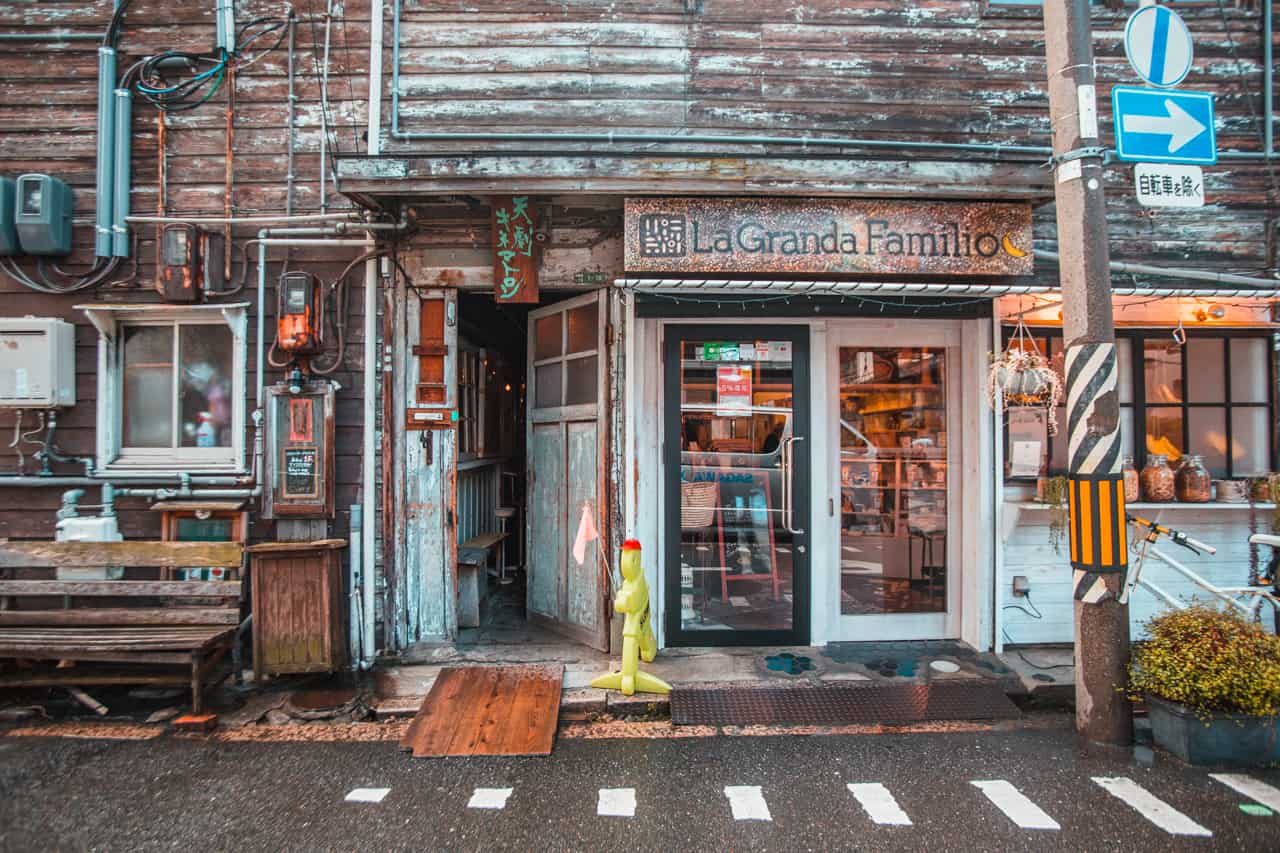
Nakazakicho sits just north of Umeda’s commercial core and operates on an entirely different frequency.
The neighbourhood is defined by narrow lanes, independent kissaten (traditional Japanese coffee shops), vintage clothing boutiques, and a resident population that actually outnumbers tourists on most days.
The area rewards slow exploration.
Independent coffee shops serve single-origin pourover alongside jazz records.
Vintage boutiques stock carefully curated Levi’s, Americana workwear, and Japanese streetwear from past decades.
Local bakeries perfume the streets on weekend mornings.
Nakazakicho is the best Osaka neighbourhood for travellers who want genuine local atmosphere without travelling far from the city centre.
It is served by Nakazakinishi Station on the Tanimachi Line, approximately 10 minutes from Umeda by metro.
Fukushima: Where Osaka Locals Eat and Drink
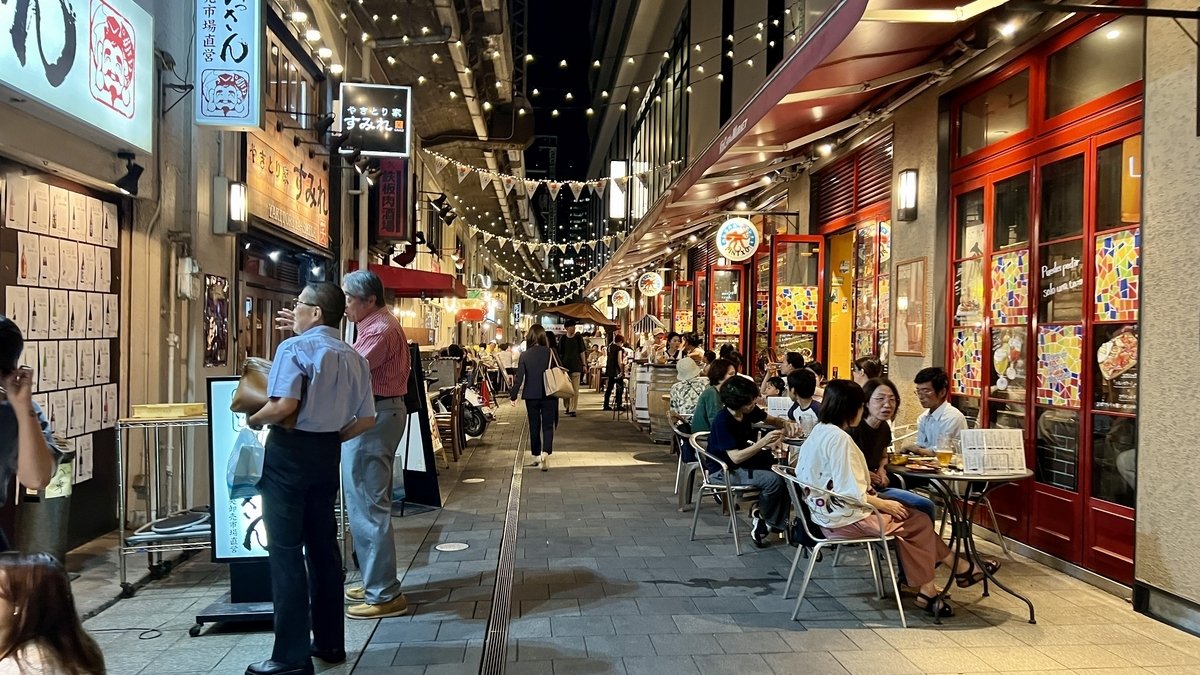
Fukushima sits one stop west of Osaka Station on the JR Osaka Loop Line and operates as one of the city’s most authentic dining and drinking districts.
The neighbourhood is a dense corridor of izakayas, natural wine bars, standing ramen counters, and small counter restaurants where locals outnumber tourists significantly.
The area comes alive after 7PM, when grilled skewer smoke fills the narrow alleys near Fukushima Station and salarimen fill the standing bars.
Several well-regarded natural wine bars cluster near the station’s north exit.
Small counter restaurants offering omakase-style meals are a particular strength of the neighbourhood.
Fukushima is not a sightseeing base — it has no major landmarks.
Its value is entirely experiential: an authentic Osaka dining scene that most short-stay visitors never find.
For travellers comparing Osaka’s local neighbourhoods with those of other Japanese cities, the best neighbourhoods in Tokyo guide offers a useful parallel.
Best Areas to Stay in Osaka for Families and Budget Travelers
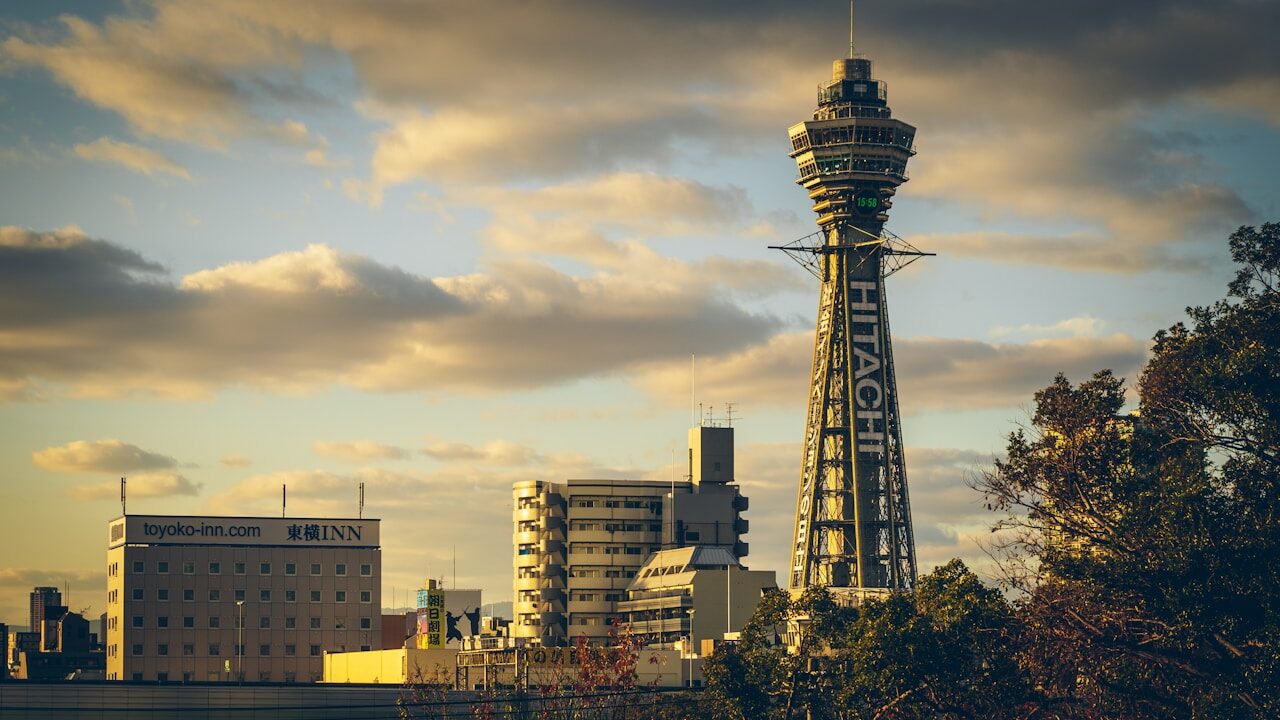
Families and budget travellers find their best value in Shin-Osaka and Tanimachi — two neighbourhoods that combine affordable accommodation with strong metro connectivity and a relaxed, livable atmosphere.
Neither area sacrifices convenience; both sit within 15–20 minutes of central Osaka by subway.
Shin-Osaka is the practical choice for Shinkansen arrivals and families juggling day trips.
Tanimachi adds historical depth and castle-adjacent sightseeing at prices well below the Namba average.
Shin-Osaka: Affordable and Right Off the Shinkansen
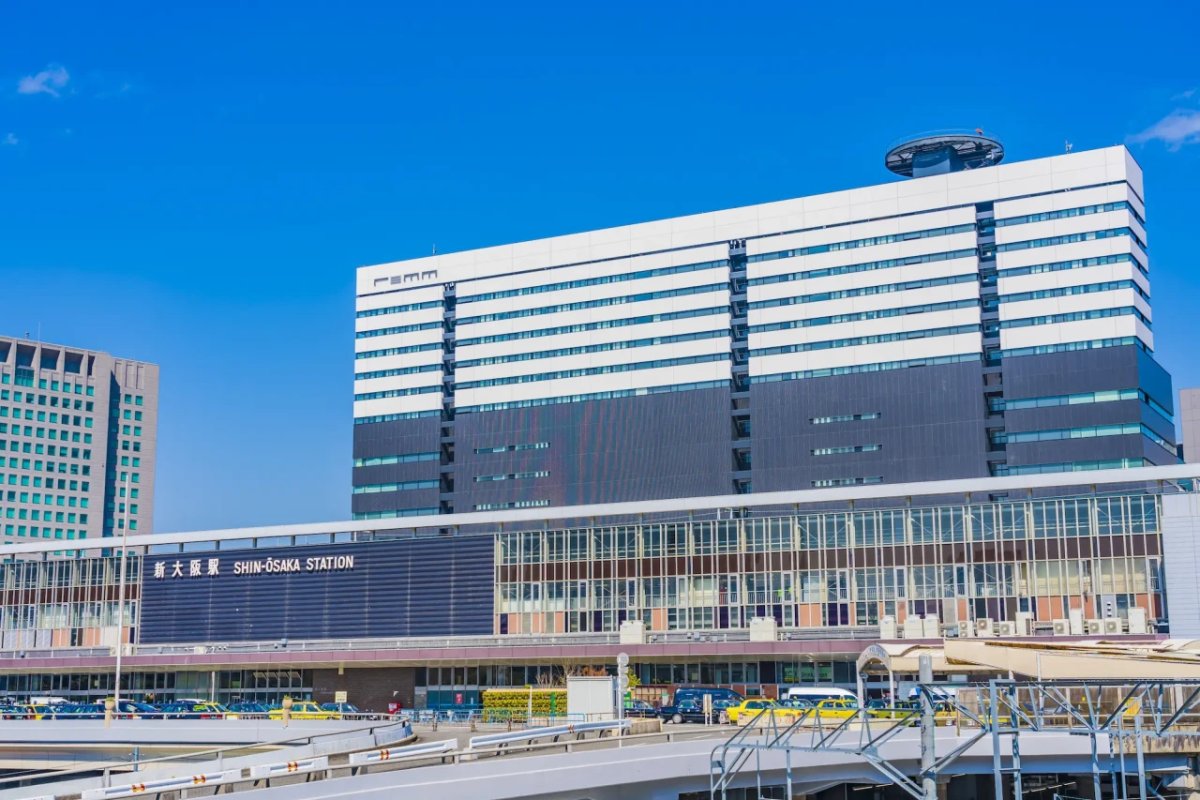
Shin-Osaka is the city’s Shinkansen terminal, making it the logical first stop for travellers arriving by bullet train from Tokyo, Kyoto, or Hiroshima.
The neighbourhood offers a high concentration of clean, affordable business hotels within a short walk of the station.
The Midosuji Line connects Shin-Osaka directly to Umeda (two stops), Shinsaibashi (four stops), and Namba (five stops), making central Osaka easily accessible without the central-area price premium.
Local ramen shops, convenience stores, and family restaurants create a practical, relaxed base.
Budget and mid-range hotels in Shin-Osaka typically range from ¥7,000–¥14,000 per night for a standard private room (business hotel style), with some budget options available from ¥5,500; prices are noticeably lower than equivalent rooms in Namba or Shinsaibashi, particularly outside peak seasons.
The neighbourhood is not atmospheric or scenic, but for families prioritising logistics and value, it is one of the smartest bases in the city.
Tanimachi: History and Value in Central Osaka
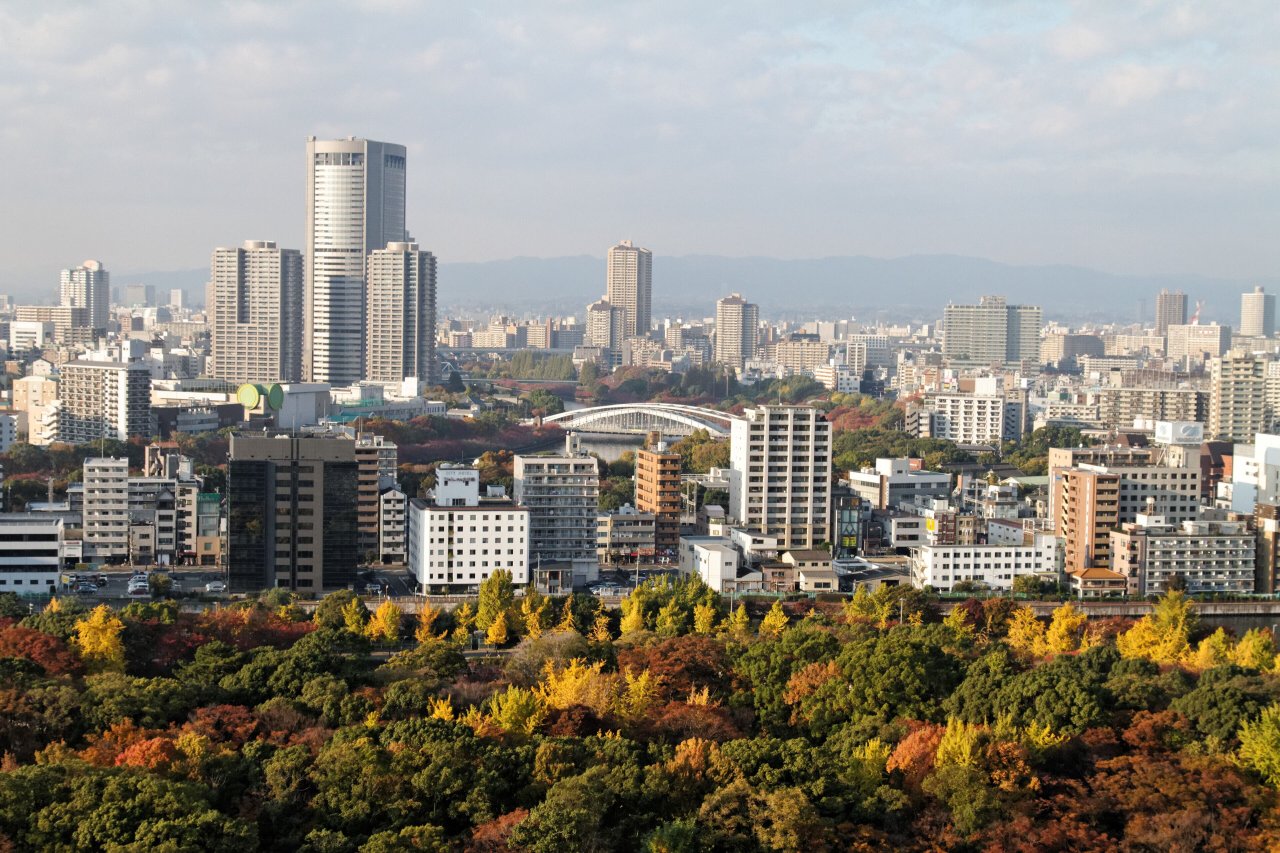
Tanimachi runs along a ridge in central Osaka dotted with ancient temples, narrow lanes, and views toward Osaka Castle.
The neighbourhood sits along the Tanimachi Line, with multiple stations providing easy access to the castle district, Tennoji, and central Namba.
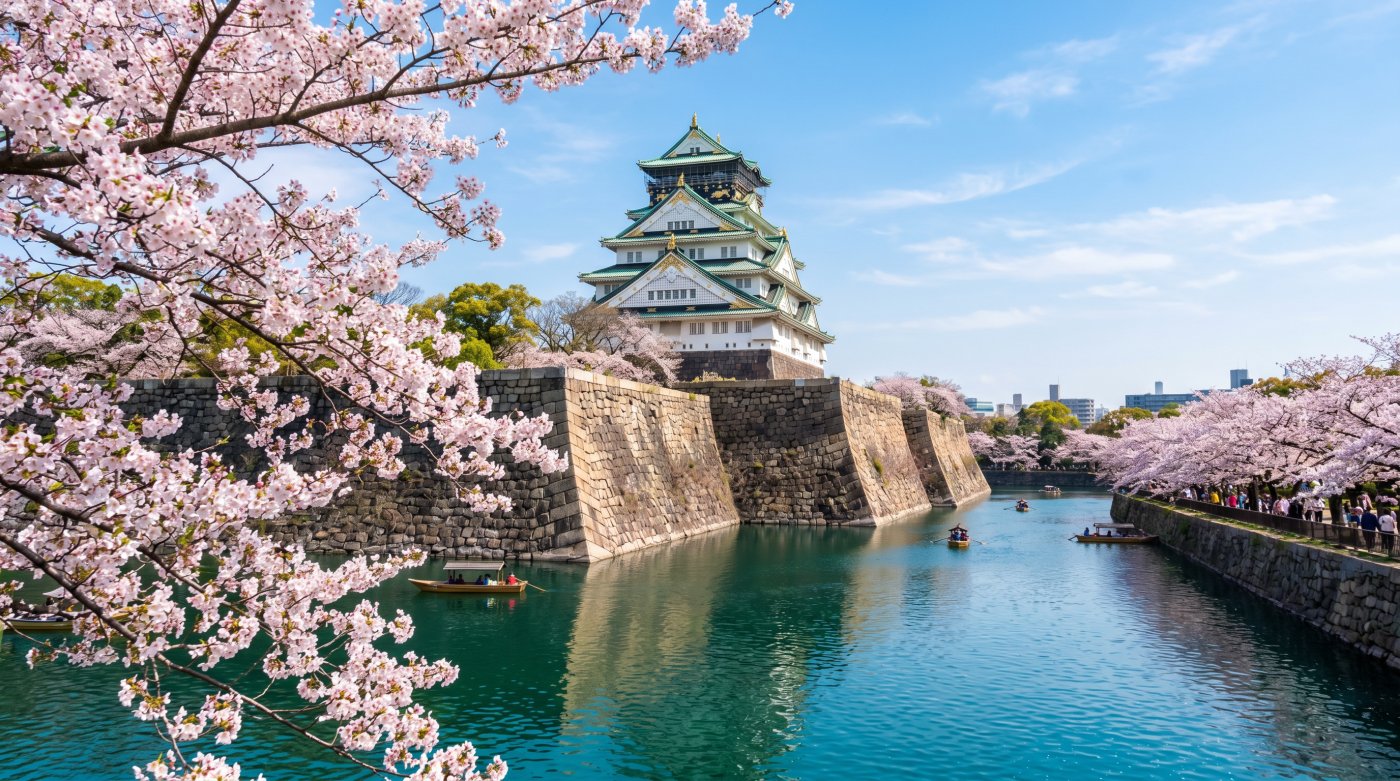
Osaka Castle is within easy reach, and the surrounding castle park offers free public green space ideal for families.
The Tanimachi Suji covered shopping street provides affordable lunches and everyday local shopping at prices well below the tourist-centre average.
Accommodation in Tanimachi runs noticeably cheaper than in Namba or Shinsaibashi, with mid-range options available from approximately ¥8,000–¥15,000 per night for a private room; budget travellers can find clean business hotels from around ¥6,000–¥8,000.
The neighbourhood’s slower pace and breathing room make it particularly well-suited to families with young children.
Osaka Suburbs Worth Knowing for Longer Stays
Osaka’s outer neighbourhoods and suburbs tell a different story from the tourist centre — one about what it actually means to live in this city.
Areas like Sakai, Toyonaka, and Minoh attract expats and long-term residents who want genuine Osaka life without the downtown price tag.
These communities offer quiet residential streets, tight-knit local culture centred on shotengai shopping streets, and efficient transit connections back to the city centre.
They are not compromise choices — they are deliberate ones.
Is Osaka a Good Place to Live?
Osaka consistently ranks among Japan’s most livable cities for both Japanese residents and foreign expats.
The city offers affordable housing relative to Tokyo, an efficient public transport network, a world-class food culture, and a strong sense of neighbourhood community built around local shopping streets and seasonal festivals.
Outer neighbourhoods like Tsuruhashi, Higashisumiyoshi, and Namba’s residential fringes offer spacious apartments at prices significantly below Tokyo equivalents.
A 1-bedroom (1LDK) apartment in central Osaka typically rents for ¥60,000–¥120,000 per month; a 2-bedroom (2LDK, ~60m²) runs ¥90,000–¥140,000 — compared to ¥130,000–¥280,000 for equivalent units in central Tokyo.
The Osaka Metro and JR network connect these areas to central districts within 20–30 minutes.
For travellers considering a longer stay or relocation, Osaka’s combination of urban convenience and neighbourhood warmth makes it one of the most compelling cities in Japan to call home.
Sakai, Toyonaka, and Minoh: Suburbs Expats Actually Choose
Sakai, stretching south of the city, offers affordable housing, quiet residential streets, and reliable train access into central Osaka via the Nankai and JR lines.
The city also contains some of Japan’s largest burial mounds (kofun), adding unexpected historical depth.
Toyonaka, sitting northwest of central Osaka, attracts international families through its proximity to Osaka International Airport (Itami) and access to reputable international schools.
The neighbourhood has a polished, suburban feel with strong local amenities.
Minoh, tucked against forested hills north of the city, offers a dramatically different pace — waterfalls, hiking trails, and crisp mountain air within approximately 26–31 minutes of Umeda by the Hankyu Mino Line (fare: ¥280; transfer required at Ishibashi Handai-mae).
It is a popular weekend escape for Osaka residents and an increasingly attractive base for remote workers.
Osaka Neighbourhoods by Traveller Type: Quick Recommendations
Osaka’s neighbourhoods are well-matched to different travel styles.
The table below summarises the best base for each type of visitor.
| Traveller Type | Best Neighbourhood | Key Reason |
|---|---|---|
| First-time visitor | Namba | Central, walkable, iconic |
| Shopper | Shinsaibashi | 600m arcade, luxury brands |
| Day-tripper | Umeda / Shin-Osaka | Best rail connections |
| Budget traveller | Shin-Osaka / Tanimachi | Lowest hotel rates |
| Family | Tennoji / Tanimachi | Parks, space, calmer pace |
| Local experience | Fukushima / Nakazakicho | Authentic dining and culture |
| Long-term stay | Toyonaka / Minoh | Space, schools, community |
Best Area of Osaka to Stay for Nightlife and Street Food
Namba and Dotonbori are the undisputed home base for nightlife and street food in Osaka.
The Dotonbori strip concentrates the city’s most iconic food experiences — takoyaki, kushikatsu, okonomiyaki, and fresh crab — within a single walkable stretch along the canal.
After dark, the neighbourhood shifts into full nightlife mode.
Izakayas, rooftop bars, underground clubs, and late-night ramen joints keep the area active well past midnight, particularly on weekends.
The Glico Running Man sign provides the unmistakable visual backdrop.
Neighbouring Shinsaibashi extends the entertainment district further north, adding cocktail bars and live music venues to the mix.
Both neighbourhoods are best explored on foot after 8PM.
Which Area to Stay in Osaka for Day Trips to Kyoto and Nara
Travellers planning day trips across the Kansai region should prioritise Shin-Osaka or Umeda as their base.
Both neighbourhoods provide fast, direct rail access to the region’s major destinations.
| Destination | Travel Time from Shin-Osaka/Umeda | Rail Option |
|---|---|---|
| Kyoto | 15 min (Shinkansen, Shin-Osaka) / 29–30 min (JR Special Rapid, Osaka) / 43–46 min (Hankyu, Umeda) | Shinkansen / JR / Hankyu |
| Nara | ~55 min (JR Yamatoji Rapid, Osaka) / ~36 min (Kintetsu, Namba) | JR / Kintetsu |
| Kobe | ~20 min (JR Special Rapid) / ~25 min (Hankyu) / ~30 min (Hanshin) | JR / Hankyu / Hanshin |
| Hiroshima | ~1h 20m–1h 30m | Nozomi/Sakura Shinkansen |
| Himeji | ~28–34 min | Shinkansen (Sakura/Hikari) |
Shin-Osaka houses the Tokaido-Sanyo Shinkansen terminal, making bullet train access effortless.
Umeda’s station complex connects to JR, Hankyu, and Hanshin lines, covering virtually every Kansai destination.
For travellers combining Osaka with Kyoto, the best neighbourhoods to visit in Kyoto guide is a useful companion resource.
Best Neighbourhoods in Osaka for Culture and Sightseeing
Travellers focused on temples, museums, castle grounds, and historical streetscapes have three strong options in Osaka.
Tennoji/Uehonmachi provides the densest concentration of cultural sights: Shitennoji Temple (593 AD), Tennoji Zoo, Abeno Harukas, and Tennoji Park within a compact, walkable area.
The neighbourhood’s calmer pace gives culture-focused travellers room to explore without feeling rushed.
Osaka Castle/Temmabashi suits travellers who want morning castle views, leafy moat paths, and quick access to the museum-rich central districts.
The castle park is free to enter; the castle tower charges ¥1,200 for adults (¥600 for university and high school students; free for junior high school students and younger), open 9:00 AM to 5:00 PM daily (last admission 4:30 PM), closed December 28 to January 1.
Namba remains a strong option for sightseers who also want nightlife flexibility — Dotonbori, Kuromon Market, and Hozenji Yokocho all carry genuine historical and cultural weight alongside their entertainment appeal.
Practical Tips for Choosing Where to Stay in Osaka
Two factors determine the quality of an Osaka base more than any other: proximity to the Osaka Metro and accommodation budget.
Get both right, and the city becomes remarkably easy to navigate.
Osaka’s metro network is efficient, affordable, and extensive — a standard 1-day pass (Enjoy Eco Card) costs ¥820 on weekdays and ¥620 on weekends and public holidays, covering unlimited rides across all metro lines; a digital 26-hour pass is also available for ¥1,000.
Staying within a 10-minute walk of a station eliminates most logistical friction.
How Close Your Neighbourhood Is to the Osaka Metro
Osaka’s metro system is the backbone of city navigation.
A neighbourhood’s walking distance to the nearest station directly affects how much of the city a traveller can realistically see in a day.
Staying within five to ten minutes’ walk of a station maximises spontaneity and minimises backtracking.
It also makes late-night returns from Dotonbori or Fukushima significantly less taxing.
- Under 10 minutes: best for travellers who want to move fast, change plans freely, and cover multiple neighbourhoods in a single day.
- 10–15 minutes: still practical for most Osaka itineraries, though heavy shopping bags and rainy evenings add friction.
- Over 15 minutes: quieter and often more affordable, but requires more planning and commitment to each outing.
Neighbourhoods near major interchange stations — Umeda, Namba, Tennoji — unlock the widest range of daily options.
Outer areas offer more space and lower prices in exchange for slightly longer commutes.
Areas to Stay in Osaka at Every Budget Level
Osaka offers accommodation across a wide price range, with the best value typically found one or two stops away from the most tourist-heavy areas.
| Budget Level | Best Area | Why It Works |
|---|---|---|
| Budget (¥5,000–¥10,000/night) | Shin-Osaka / Tanimachi | Lower rates, direct Midosuji Line access, practical business hotel options |
| Mid-range (¥12,000–¥25,000/night) | Namba / Shinsaibashi | Food, nightlife, strong transit connections |
| Higher-end (¥25,000–¥60,000+/night) | Umeda / Nakanoshima | Polished hotels, shopping, Shinkansen-adjacent access |
For leaner budgets, Tennoji and Fukushima offer smart alternatives with local flavour and fewer tourist crowds.
Families generally favour quieter blocks near Osaka Castle or Tennoji Park.
The principle is straightforward: sleep near the pace you want, not just the cheapest available pillow.
For travellers comparing costs across Japanese cities, the budget travel guide to Kyoto provides a useful benchmark for regional accommodation and daily expenses.
Conclusion
Osaka doesn’t reveal itself as a single postcard — it opens neighbourhood by neighbourhood, each area carrying its own rhythm and character.
Namba delivers the loudest, most immediate version of the city.
Tennoji and Nakazakicho offer depth and quiet.
Shin-Osaka and Tanimachi reward practical travellers who prioritise value and connectivity.
The smartest Osaka stay matches the neighbourhood to the trip’s actual pace — not just the most recognisable name on the map.
Pick the right area, and the city stops feeling large.
It starts feeling like somewhere worth returning to.
Frequently Asked Questions (FAQs)
Osaka is considered one of the safest major cities in the world for tourists.
Japan’s overall crime rate is extremely low, and Osaka’s tourist neighbourhoods — including Namba, Shinsaibashi, and Umeda — are well-lit, heavily trafficked, and generally safe at all hours.
Standard travel precautions apply: keep valuables secure and stay aware of surroundings in crowded areas.
The city’s late-night streets are notably safer than equivalents in most Western cities.
Most travellers find three to four days sufficient to cover Osaka’s main neighbourhoods and attractions comfortably.
Two days covers the essential Namba, Dotonbori, and Umeda highlights.
A third day allows for Tennoji, Osaka Castle, and a local neighbourhood like Nakazakicho or Fukushima.
A fourth day works well for a day trip to Kyoto (29–30 minutes by JR Special Rapid) or Nara (approximately 36–55 minutes depending on the line).
Travellers combining Osaka with broader Kansai exploration often use the city as a five- to seven-day regional base.
The best times to visit Osaka are spring (late March to early May) and autumn (October to November).
Spring brings cherry blossom season, with Osaka Castle Park and Kema Sakuranomiya Park among the most popular viewing spots.
Autumn delivers comfortable temperatures and vivid foliage across the city’s parks and temple grounds.
Summer (June to August) is hot and humid, with average daytime highs reaching 33–34°C in August and a heat index that regularly feels closer to 38–40°C due to high humidity; heatwave days above 35°C are common.
Winter (December to February) is mild by Japanese standards, with average temperatures of 5–12°C, though grey skies and occasional rain are typical.

A lifestyle and OOTD blogger, Kannaya Nareswari enjoys the small pleasures of cooking, traveling, and documenting ordinary events. She uses genuine storytelling to communicate her love of fashion, culinary explorations, and wanderlust. She is based between Bali and Bandung. She enjoys enjoying coffee at a secret café or experimenting with recipes in the kitchen when she's not traveling to new places or styling her most recent ensemble.