Travel to Cancún on a Budget: The Complete Mexico Guide



How to Travel to Cancún on a Budget (Mexico Guide) – Cancún is one of Mexico’s most visited destinations, and traveling there on a budget is entirely achievable with the right planning.
- How Much Does It Cost to Visit Cancún?
- Budget Accommodation in Cancún
- When Is the Best Time to Visit Cancún on a Budget?
- Getting Around Cancún on a Budget
- Free and Low-Cost Things to Do in Cancún
- Budget Dining in Cancún
- Money-Saving Tips for Cancún
- Shopping and Souvenirs on a Budget
- Technology and Connectivity in Cancún
- Emergency Budget Planning for Cancún
- Practical Daily Budget Management
- Long-Term and Extended Stay Budget Strategies
Hostels start at $15 per night, local buses cost around $0.60 per ride, and street tacos run as little as $1 each.
Visiting between May and November unlocks the lowest prices on flights and accommodation across the city.
Key Takeaways
Hide- Budget accommodation in Downtown Cancún starts at $15 per night for hostels and $35 for budget hotels.
- Street food meals average $2–$5, keeping daily food costs well under $15.
- The public R-1 and R-2 bus routes cost approximately 12 pesos (under $1) per ride.
- Off-season travel (May–November) cuts hotel rates by up to 50% and airfare by up to 40%.
- Public beaches, local markets, and several archaeological sites offer free or low-cost entry.
How Much Does It Cost to Visit Cancún?
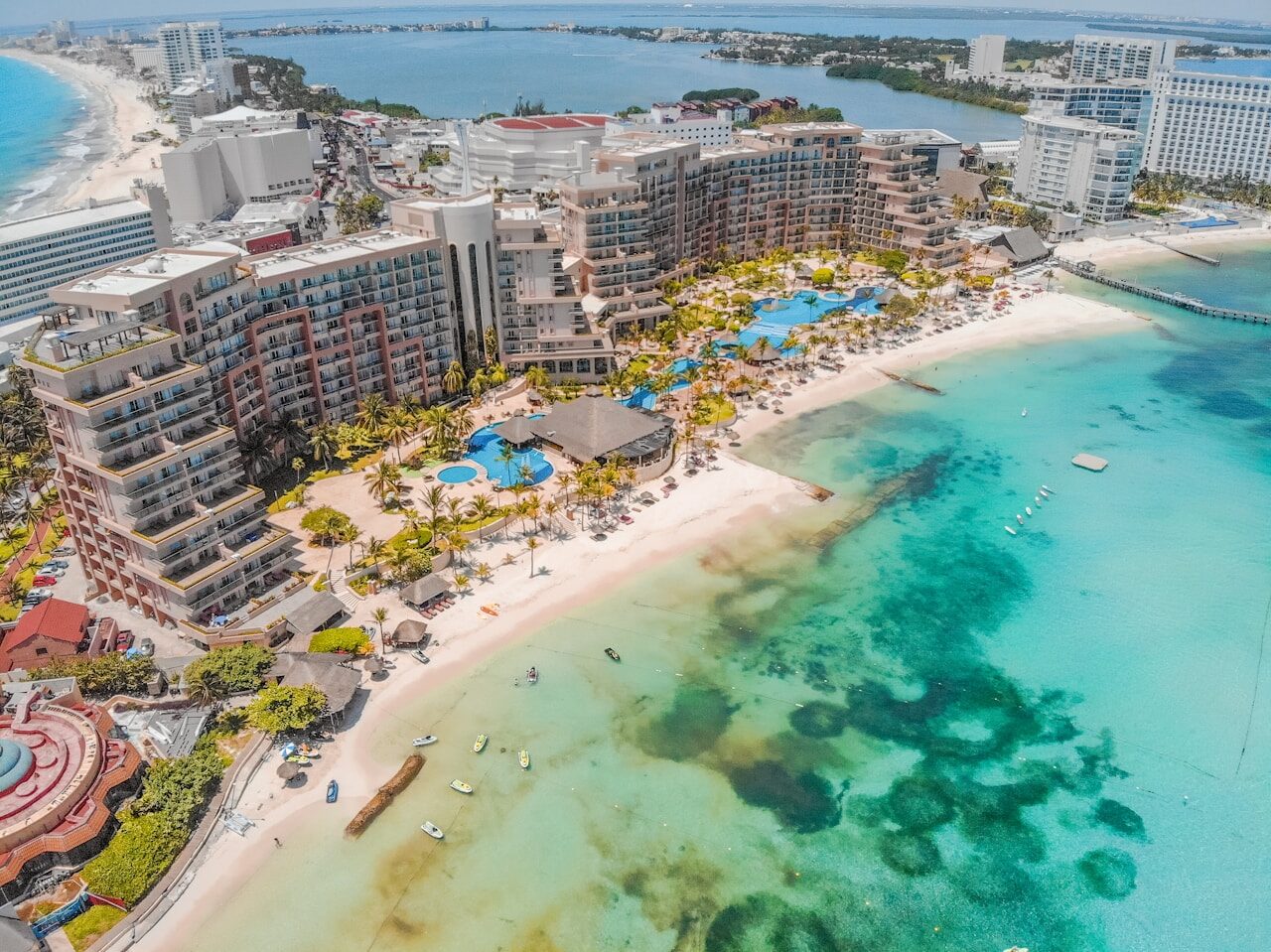
A budget traveller in Cancún can expect to spend approximately $40–$60 USD per day, covering a hostel bed, street food, local buses, and one paid activity.
Mid-range travellers typically spend $80–$120 USD per day including a budget hotel, sit-down meals, and guided excursions.
Here is a realistic daily cost breakdown for budget travellers:
- Accommodation: Hostel dorms from $15/night; budget hotels from $35/night
- Food: Street tacos $1–$2 each; sit-down local restaurants $5–$10 per meal
- Transport: Local bus 12 pesos (~$0.60) per ride; ADO airport bus ~$7 USD
- Activities: Snorkelling tours from $20; most public beaches free; El Rey Ruins ~$4 USD
Roundtrip flights to Cancún International Airport (CUN) from major US cities start at approximately $200–$250 during off-peak periods. Travellers from Europe should budget $450–$700 roundtrip.
Is Cancún Expensive Compared to Other Caribbean Destinations?
Cancún is significantly more affordable than most Caribbean island destinations. Daily costs in Cancún run 30–50% lower than comparable stays in Barbados, the Bahamas, or St. Lucia, largely due to Mexico’s lower cost of living and the peso’s exchange rate against the US dollar.
Food costs are the clearest indicator. A full street-food meal in Cancún costs $3–$5 USD, while a comparable casual meal in Jamaica or the Dominican Republic typically runs $8–$12 USD.
Accommodation offers similar savings, with Cancún hostel beds averaging $15–$20 versus $30–$50 in many Eastern Caribbean islands.
Transportation is another area where Cancún excels for budget travellers. The city’s public bus network charges a flat 12 pesos per ride, a fraction of what taxi-dependent Caribbean islands charge for equivalent distances.
Budget Accommodation in Cancún
Downtown Cancún (El Centro) offers the best value for budget accommodation, with options ranging from $15 hostel dorms to $40–$80 private rooms in budget hotels.
Staying downtown rather than in the Hotel Zone saves travellers $50–$150 per night on average.
 Booking.com
 Agoda
Agoda Trip.com
 Expedia
 Klook
Klook Traveloka
Downtown Budget Hotels and Hostels
The following properties consistently rank among the most affordable in central Cancún:
- Selina Cancún Downtown — Hostel with dorm beds from $15/night, free Wi-Fi, and a pool
- Hotel Margaritas — Budget hotel with private rooms from $35/night in a central location
- Nomads Hotel & Rooftop Pool — Rooftop pool access with dorm beds from $18/night
- Suites Gaby — Simple, clean private rooms close to Parque Las Palapas from $30/night
All four properties are within walking distance of local bus stops, making onward transport to the Hotel Zone and beaches straightforward.
Alternative Neighbourhoods and Cost-Effective Areas
Neighbourhoods beyond El Centro, such as Región 94 and areas near the Universidad Autónoma de Yucatán campus, offer private rooms from $20–$25 per night.
These areas provide a more authentic local atmosphere, proximity to budget restaurants, and easy access to the R-1 and R-2 bus routes.
For travellers arriving late or departing early, airport-area hotels including the Comfort Inn Cancún Aeropuerto and Ibis Cancún Centro offer rooms from $45–$60 per night with shuttle services included.
Hostel and Alternative Accommodation Options
Youth hostels in Cancún offer dorm beds from $15 per night and are concentrated in El Centro. Most include free Wi-Fi, communal kitchens, and social common areas — practical features that reduce daily spending on food and connectivity.
Airbnb shared apartments in downtown Cancún average $25–$40 per night for a private room, with self-catering facilities that allow travellers to prepare their own meals and reduce food costs significantly.
Work exchange programmes through platforms such as Worldpackers and Workaway list Cancún hostel placements where travellers work 4–5 hours per day in exchange for a free bed.
Couchsurfing (couchsurfing.com) connects travellers with local hosts offering free accommodation, with Cancún maintaining an active host community.
Off-season rate negotiation: Calling hotels directly during the May–November low season frequently yields discounts of 10–20% beyond published rates. Asking for free breakfast or late checkout adds further value without extra cost.
For more family-focused accommodation strategies, see our guide to travelling to Cancún with kids and family.
When Is the Best Time to Visit Cancún on a Budget?
The cheapest time to visit Cancún is September and October, when hotel rates drop by up to 50% and flights are at their lowest.
The broader off-season runs from May through November, offering consistent savings across accommodation, tours, and activities compared to the December–April peak period.
Off-Season Travel: May to November
The Cancún off-season delivers the lowest prices of the year. Hotels that charge $100–$150 per night in peak season regularly drop to $50–$75 during this window.
Airfare from the US follows a similar pattern, with savings of 25–40% compared to December–March prices.
The trade-off is weather risk. Hurricane season officially runs from June 1 to November 30, with peak activity in August and September.
Most storms affect Cancún with heavy rain rather than direct landfill, and many days remain sunny even during this period.
Travel insurance covering weather-related cancellations is strongly recommended for off-season visits.
Average savings by month during the off-season:
- June: ~25% savings vs. peak; moderate weather risk
- July: ~30% savings; higher rain frequency
- August: ~35% savings; elevated storm risk
- September: ~50% savings; peak hurricane risk
- October: ~40% savings; risk declining, weather improving
- November: ~30% savings; transitioning to shoulder season
Shoulder Season Value: April–May and November
April through early May and November represent the best balance of good weather and lower prices.
Temperatures average 27–30°C (80–86°F), rainfall is minimal, and hotel rates sit 20–30% below peak-season levels.
Mid-week travel (Tuesday–Thursday departures) consistently produces cheaper flights and hotel rates than weekend travel.
Booking 6–8 weeks in advance for shoulder-season trips typically yields the best combination of availability and price.
Getting Around Cancún on a Budget
Cancún’s public bus network is the most cost-effective way to move around the city. The R-1 and R-2 routes connect Downtown Cancún (El Centro) with the Hotel Zone (Zona Hotelera) along Boulevard Kukulcán, running frequently throughout the day and evening with service available 24 hours in the Hotel Zone.
For a comprehensive breakdown of all transport options across the city, the Cancún transportation guide covers routes, fares, and practical tips in detail.
Airport Transfer Options and Costs
Cancún International Airport (CUN) is located approximately 20 km south of Downtown Cancún. Budget transfer options from the airport include:
- ADO Bus: Departs from Terminal 2; fare approximately $7 USD to downtown or the Hotel Zone. Air-conditioned coaches with reclining seats run on a regular schedule throughout the day.
- Shared Shuttle: Approximately $15–$25 USD per person to Hotel Zone or downtown hotels. Book at official counters inside the arrivals hall.
- Ride-Share (Uber/DiDi): Available from the airport; fares typically $12–$18 USD to downtown. Confirm pick-up zone with the app before arriving at the kerb.
- Official Taxi: Fixed-rate taxis from the airport cost $25–$35 USD depending on destination zone. Avoid unlicensed drivers.
Airport car rental starts at approximately $20–$50 USD per day for a compact vehicle, a viable option for travellers planning day trips to Tulum, Chichén Itzá, or the Riviera Maya.
Local Bus System: R-1 and R-2 Routes
The R-1 and R-2 buses are the backbone of budget transport in Cancún. A single ride costs 12 pesos (approximately $0.60 USD), payable in cash to the driver.
The routes run the full length of Boulevard Kukulcán through the Hotel Zone, stopping at major beach access points, shopping centres, and the downtown bus terminal.
Buses in the Hotel Zone operate 24 hours a day, with high frequency during daytime hours with buses passing major stops every 5–10 minutes. No day passes are currently available; fares are paid per ride.
A one-way trip from Cancún to Tulum by ADO bus costs approximately 250–350 pesos ($14–$19 USD) from downtown and takes around 1.5–2 hours.
Cycling, Walking, and Shared Transport
Bicycle rental in Cancún costs approximately $10–$15 USD per day. The Hotel Zone features a dedicated cycling path running along much of the 27-kilometre boulevard, making cycling a practical and scenic option for beach-hopping.
Walking is free and effective within El Centro, where most budget hotels, markets, and local restaurants are within a 15–20 minute walk of each other. The Hotel Zone is too spread out for walking between distant points but is walkable within specific beach clusters.
Shared taxis (colectivos) operate on fixed routes for approximately 40–50 pesos per ride, offering a middle ground between the bus and private taxi in terms of cost and convenience.
 12Go
12GoFree and Low-Cost Things to Do in Cancún
Cancún offers a substantial range of free and low-cost activities beyond its resort beaches. Public beach access is free at all beaches in Mexico by law, and several archaeological sites, cultural centres, and markets charge nothing or minimal entry fees.
For a full list of no-cost options, our guide to free things to do in Cancún covers the best zero-budget experiences across the city.
Public Beaches with Free Access
All beaches in Mexico are federally owned and free to access. The following Cancún beaches offer the best facilities for budget travellers:
- Playa Delfines (Playa del Mirador): The most popular public beach in the Hotel Zone, with panoramic views, open-air palapas, public restrooms, changing rooms, and lifeguards on duty. No entrance fee; open all day.
- Playa Tortugas: Calm waters suitable for swimming, with nearby food vendors and bus access from the R-1/R-2 routes.
- Playa Langosta: Family-friendly beach with gentle surf and a small playground adjacent to the sand.
- Playa Chac Mool: A quieter stretch with fewer crowds, popular with locals.
El Rey Ruins and Archaeological Site Access
El Rey Ruins (Zona Arqueológica El Rey) is a pre-Columbian Mayan site located within the Hotel Zone, featuring over 47 structures including temples and platforms. Standard entry costs 75 pesos (approximately $4 USD) per adult, with children under 13 admitted free.
Mexican nationals and foreign residents with valid ID enjoy free admission on Sundays.
The site is open daily from 8:00 AM to 5:00 PM, with the last entry permitted at 4:30 PM. Iguanas are a common sight throughout the ruins, adding to the atmosphere without adding to the cost.
Downtown Cultural Attractions
El Centro offers several free cultural experiences:
- Casa de la Cultura Cancún: A municipal cultural centre hosting free art exhibitions, dance performances, and workshops. Check their Facebook page or visit in person for the current event schedule.
- Parque Las Palapas: A lively central plaza with free live music on weekend evenings, street food vendors, and a relaxed local atmosphere.
- Mercado 28: Cancún’s main artisan market, free to browse, with food stalls serving authentic Mexican dishes from approximately 50–80 pesos ($3–$5).
- Mercado Ki Huic: The city’s oldest market, offering local crafts, textiles, and souvenirs at prices significantly lower than Hotel Zone shops.
Low-Cost Activities Under $20
- Snorkelling tours from Playa Tortugas or Playa Langosta: from $20 USD per person
- Isla Mujeres day trip by ferry: approximately $12–$20 USD roundtrip (from Puerto Juárez: ~$12; from Hotel Zone piers: ~$18–$20)
- Cenote swimming at accessible cenotes near Cancún: $10–$20 USD entry
- Local cooking classes in El Centro: from $15 USD per person
Cancún also hosts several free annual events including Carnaval Cancún (pre-Lent), Día de los Muertos celebrations (late October–early November), and El Grito de Independencia (September 15–16), all of which offer authentic cultural experiences at no cost.
Budget Dining in Cancún
Cancún’s street food scene is the most cost-effective way to eat well in the city. A full street-food meal — tacos, agua fresca, and a dessert — costs $4–$7 USD in El Centro.
Dining in the Hotel Zone costs three to five times more for equivalent food quality.
Street Food and Local Vendor Options
Street food vendors in El Centro and around Parque Las Palapas serve the most affordable meals in Cancún. Key dishes and approximate costs:
- Tacos al Pastor: 15–25 pesos each (~$0.80–$1.30 USD)
- Quesadillas: 25–50 pesos each (~$1.25–$2.50)
- Elote (grilled corn):
30 pesos ($1.50) - Tamales: 12–18 pesos each
- Churros: 10–15 pesos
Vendors around the Mercado 28 food court serve full plates of Mexican staples — rice, beans, protein, and tortillas — for 50–80 pesos ($3–$4.50 USD).
Mercado 28 and Local Food Courts
Mercado 28 is the best single destination for affordable, authentic dining in Cancún. The market’s food court section serves fresh seafood, traditional stews, and regional specialities at prices aimed at local residents rather than tourists.
Expect to pay 50–100 pesos ($3–$6 USD) for a full meal including a drink. The market is open daily from approximately 9:00 AM to 8:00 PM.
Self-Catering and Grocery Shopping
Supermarkets in Cancún allow budget travellers to reduce food costs significantly. Key options include:
- Mega Soriana (multiple locations): Full-range supermarket with competitive prices on fresh produce, tortillas, and local staples.
- Chedraui: Strong selection of local fruits, vegetables, and prepared foods.
- OXXO convenience stores: Widespread across the city; useful for snacks, drinks, and mobile top-ups.
Travellers staying in Airbnb apartments or hostels with communal kitchens can prepare breakfast and lunch for under $5 USD per day using local supermarket ingredients.
Happy Hour and Budget Restaurant Districts
The university area near the Tecnológico de Cancún campus offers student-priced restaurants with set lunch menus (comida corrida) for 60–90 pesos ($3.50–$5 USD). These typically include soup, a main course, rice, beans, and a drink.
Happy hour promotions at bars and casual restaurants in El Centro typically run from 5:00 PM to 8:00 PM, offering two-for-one drinks and discounted appetisers.
Money-Saving Tips for Cancún
Managing currency and payments correctly can save budget travellers $10–$20 USD per day in unnecessary fees and poor exchange rates. The following strategies apply specifically to Cancún.
Currency Exchange and Peso Strategy
Paying in Mexican pesos is almost always cheaper than paying in US dollars in Cancún. Many Hotel Zone businesses accept dollars but apply unfavourable exchange rates, effectively adding a 10–15% surcharge to every transaction.
The best exchange rates are available at bank branches (Banamex, BBVA, Santander) and authorised exchange offices (casas de cambio) in El Centro.
Airport currency exchange counters offer the worst rates and should be avoided for large amounts.
Check live rates at XE.com before exchanging.
ATM Fee Avoidance
Local bank ATMs (HSBC, Banamex, Santander) charge lower withdrawal fees than standalone tourist-area ATMs, which can add $3–$8 USD per transaction.
Withdrawing larger amounts less frequently reduces the total fee burden.
Travel debit cards from providers such as Wise or Charles Schwab (US) reimburse ATM fees and offer interbank exchange rates, making them the most cost-effective payment tools for Cancún.
Market Bargaining and Negotiation
Bargaining is expected and accepted at Cancún’s artisan markets (Mercado 28, Mercado Ki Huic) and from street vendors selling souvenirs.
It is not appropriate at supermarkets, restaurants, or established shops with fixed price tags.
Effective bargaining etiquette:
- Greet vendors warmly in Spanish (“Buenos días/tardes”)
- Start at 50–60% of the asking price and negotiate toward a middle point
- Pay in cash — vendors frequently offer better prices for cash transactions
- Be polite and willing to walk away; this often prompts a better offer
- Ask “¿Hay descuento?” (Is there a discount?) as a simple opening
Group Travel Cost Reduction
Travelling in groups of three or more unlocks meaningful savings across multiple categories:
- Accommodation: Many hotels and vacation rentals offer group rates of 15–20% below standard pricing
- Tours and activities: Snorkelling, cenote visits, and archaeological tours typically offer per-person discounts for groups of 4+
- Transport: Chartering a van for day trips to Chichén Itzá or Tulum costs $80–$120 total, often cheaper per person than individual ADO bus tickets for groups of 5+
- Dining: Family-style restaurant meals reduce per-person costs by 20–30% compared to individual ordering
Shopping and Souvenirs on a Budget
The most affordable souvenirs in Cancún are found at Mercado 28 and Mercado Ki Huic, where prices run 40–60% lower than Hotel Zone shops for identical or comparable items. Buying directly from artisans at these markets also ensures a greater share of the purchase price reaches the maker.
Local Market vs. Tourist Shop Price Comparison
A representative comparison of souvenir prices at local markets versus Hotel Zone tourist shops:
- Hand-painted ceramics: $8–$15 at Mercado 28 vs. $25–$45 in Hotel Zone shops
- Silver jewellery: $10–$20 at local markets vs. $30–$60 in resort boutiques
- Tequila (750ml bottle): $12–$20 at OXXO or supermarkets vs. $25–$40 at airport duty-free
- Woven textiles/hammocks: $15–$30 at artisan markets vs. $50–$80 in Hotel Zone
Souvenir Budget Allocation
A practical souvenir budget for a one-week trip to Cancún:
- Handcrafted art or ceramics: $20–$50
- Mexican chocolate or spices: $10–$20
- Tequila or mezcal: $15–$25
- Clothing or textiles: $15–$30
- Total recommended budget: $60–$125 USD
Purchasing tequila at local supermarkets (Mega Soriana, Chedraui) rather than airport duty-free stores typically saves $10–$20 per bottle.
Technology and Connectivity in Cancún
Staying connected in Cancún without incurring high roaming charges requires one of two approaches: purchasing a local SIM card or relying on Wi-Fi combined with messaging apps.
Local SIM Card vs. International Roaming
A Telcel prepaid SIM card is the most cost-effective connectivity option for most international travellers.
Telcel is Mexico’s largest mobile network with strong coverage across Cancún, the Hotel Zone, and surrounding areas.
A Telcel SIM with 3–5 GB of data and unlimited domestic calls costs approximately $10–$15 USD and is available at OXXO stores, Telcel retail outlets, and the airport arrivals hall.
International roaming charges from major US and European carriers typically run $5–$15 USD per day for equivalent data, making a local SIM the clear budget choice for stays of three days or more.
Free Wi-Fi Locations in Cancún
Free Wi-Fi is widely available across Cancún at no cost:
- Most hostels and budget hotels include free Wi-Fi
- Mercado 28 and major shopping centres (La Isla, Plaza Las Américas)
- ADO bus terminal and many bus stops
- Public parks including Parque Las Palapas
- Hotel lobbies (accessible even to non-guests in many cases)
WhatsApp, Google Maps (with offline maps downloaded in advance), and Maps.me provide free communication and navigation without requiring mobile data.
Downloading offline maps for the Cancún and Riviera Maya region before departure eliminates the need for data-dependent navigation entirely.
Emergency Budget Planning for Cancún
Every budget traveller should set aside a contingency fund of at least $300 USD for unexpected expenses in Cancún.
Common unplanned costs include medical treatment, lost or stolen items, weather-related activity cancellations, and transport disruptions.
Travel Insurance and Medical Cost Planning
Travel insurance is strongly recommended for Cancún, particularly for off-season visits during hurricane season. Emergency medical evacuation from Mexico can cost $30,000–$50,000 USD without insurance coverage.
A comprehensive travel insurance policy covering medical emergencies, evacuation, trip cancellation, and lost luggage typically costs $40–$80 USD for a one-week trip.
Key coverage areas to verify before purchasing:
- Emergency medical treatment and hospitalisation
- Medical evacuation to home country
- Trip cancellation due to weather or illness
- Lost or stolen luggage and personal items
- Adventure activity coverage (snorkelling, zip-lining, cenote diving)
Lost Documents and Emergency Financial Access
In the event of a lost or stolen passport, the nearest embassy or consulate can issue an emergency travel document. US citizens should contact the US Consulate in Cancún or the Embassy in Mexico City.
Emergency passport replacement fees are approximately $130 USD.
For lost wallets or cards:
- Keep a backup prepaid travel card (Wise, Revolut) in a separate location from your main wallet
- Store emergency cash ($100–$200 USD) separately from your primary funds
- Save embassy contact numbers and your bank’s international helpline offline on your phone
- Photograph all important documents (passport, insurance policy, hotel booking) and store them in cloud storage
Practical Daily Budget Management
A structured daily budget prevents overspending and ensures funds last the full duration of the trip.
The following framework applies to a solo budget traveller in Cancún.
Daily Budget Framework by Travel Style
Shoestring budget ($35–$50/day):
- Accommodation: $15 (hostel dorm)
- Food: $10 (street food and self-catering)
- Transport: $2 (local buses)
- Activities: $5–$10 (beaches, markets, free sites)
- Contingency: $5
Mid-range budget ($70–$100/day):
- Accommodation: $40–$50 (budget hotel, private room)
- Food: $20–$25 (mix of street food and sit-down restaurants)
- Transport: $5–$8 (buses plus occasional taxi)
- Activities: $15–$20 (one paid tour or attraction)
- Contingency: $10
Cash vs. Card Strategy
A combined cash and card approach works best in Cancún. Use cash (pesos) for street food, local markets, buses, and small vendors.
Use a no-foreign-transaction-fee card for hotel payments, larger purchases, and online bookings.
Withdraw pesos from bank ATMs in El Centro rather than Hotel Zone machines to minimise fees. Avoid dynamic currency conversion (DCC) at ATMs and card terminals — always choose to be charged in pesos rather than your home currency.
Budget tracking apps such as Trail Wallet or Trabee Pocket allow travellers to set daily spending limits and log expenses in multiple currencies, making it straightforward to monitor spending against a daily target.
For travellers comparing Cancún’s budget approach with other Mexican destinations, our guide to the best places to visit in Mexico provides a useful regional overview. Those planning a similar budget trip to another popular destination can also find detailed strategies in our budget travel guide for Los Angeles.
Long-Term and Extended Stay Budget Strategies
Travellers staying in Cancún for two weeks or more can access significantly lower per-night accommodation rates and adopt local shopping habits that reduce daily costs by 30–40%.
Extended Stay Accommodation Discounts
Monthly apartment rentals in El Centro average $400–$600 USD per month, equivalent to $13–$20 per night — 40–60% cheaper than equivalent nightly hotel rates. Platforms including Airbnb, Facebook Marketplace Cancún groups, and local rental agencies list furnished apartments suitable for stays of two weeks to several months.
Weekly hotel rates at budget properties typically offer 20–30% savings compared to multiplying the nightly rate by seven. Always ask directly about weekly rates when booking by phone or email.
Local Shopping and Resident Pricing
Long-term residents in Cancún shop at Mega Soriana, Chedraui, and local tianguis (street markets) rather than Hotel Zone convenience stores, where prices run 30–50% higher for identical products.
Building familiarity with specific market vendors over repeated visits often results in informal discounts and better-quality produce selection.
Learning basic Spanish phrases for shopping — “¿Cuánto cuesta?” (How much does it cost?), “¿Hay descuento?” (Is there a discount?), “¿Me da uno más barato?” (Can you give me a cheaper one?) — meaningfully improves purchasing outcomes at markets and with street vendors.
Frequently Asked Questions (FAQs)
Is Cancún Safe for Budget Travellers?
Cancún is generally safe for tourists, particularly in the Hotel Zone and El Centro. The US State Department rates Quintana Roo (the state where Cancún is located) at Level 2 — Exercise Increased Caution, as confirmed in the most recent advisory issued August 2025.
Most safety incidents affecting tourists involve petty theft rather than violent crime.
Budget travellers should take standard precautions: avoid displaying expensive electronics or jewellery in crowded markets, use ATMs inside bank branches rather than on the street at night, and stick to well-lit areas after dark. The Hotel Zone and downtown tourist areas have a visible police presence.
Do You Need a Visa to Visit Cancún, Mexico?
Citizens of the United States, Canada, the United Kingdom, Australia, and most EU countries do not require a visa to visit Mexico as tourists.
A valid passport and a completed Forma Migratoria Múltiple (FMM) tourist card — now issued digitally and included in the cost of most international airline tickets to Mexico — are required for entry.
Tourist stays are permitted for up to 180 days.
All visitors must pay a tourism tax upon arrival, which is typically bundled into the price of international airline tickets to Cancún and does not require a separate payment at the airport.
What Currency Should You Use in Cancún?
The Mexican peso (MXN) is the official currency and the most cost-effective option for all transactions in Cancún.
While US dollars are widely accepted in the Hotel Zone, businesses apply their own exchange rates — typically 10–15% less favourable than the interbank rate — making peso payments consistently cheaper.
Withdraw pesos from bank ATMs using a no-foreign-transaction-fee card for the best effective exchange rate. Avoid exchanging currency at the airport or in Hotel Zone exchange booths, where rates and fees are least competitive.