
AI Accessible Travel Planner: Build a Trip Around Your Actual Mobility Needs – The AI Accessible Travel Planner is a free tool on GetOutTrip that generates day-by-day travel itineraries for travelers with mobility and accessibility needs.
You type in a destination, describe your specific situation in plain language, and the tool produces a plan that accounts for wheelchair access, transport limitations, rest requirements, accommodation type, and companion logistics.
It doesn’t add accessibility as an afterthought.
The whole itinerary is built around your needs from the first input.
Tool Highlights
- Tool category: Planning
- Cost: Always free
- Number of inputs: 7 fields (Destination, Mobility Needs, Trip Duration, Transport Preferences, Travel Style, Companion Support, Your Currency / Destination Currency)
- Output type: Day-by-day accessible itinerary with venue notes, transport options, rest scheduling, and accommodation guidance
- Best use case: Planning a trip where standard travel guides don't account for your specific mobility situation
- Currency support: Yes, both your home currency and destination currency
- Device compatibility: Works on any device with a browser
Why Standard Travel Resources Keep Failing Wheelchair Users and Travelers With Mobility Needs
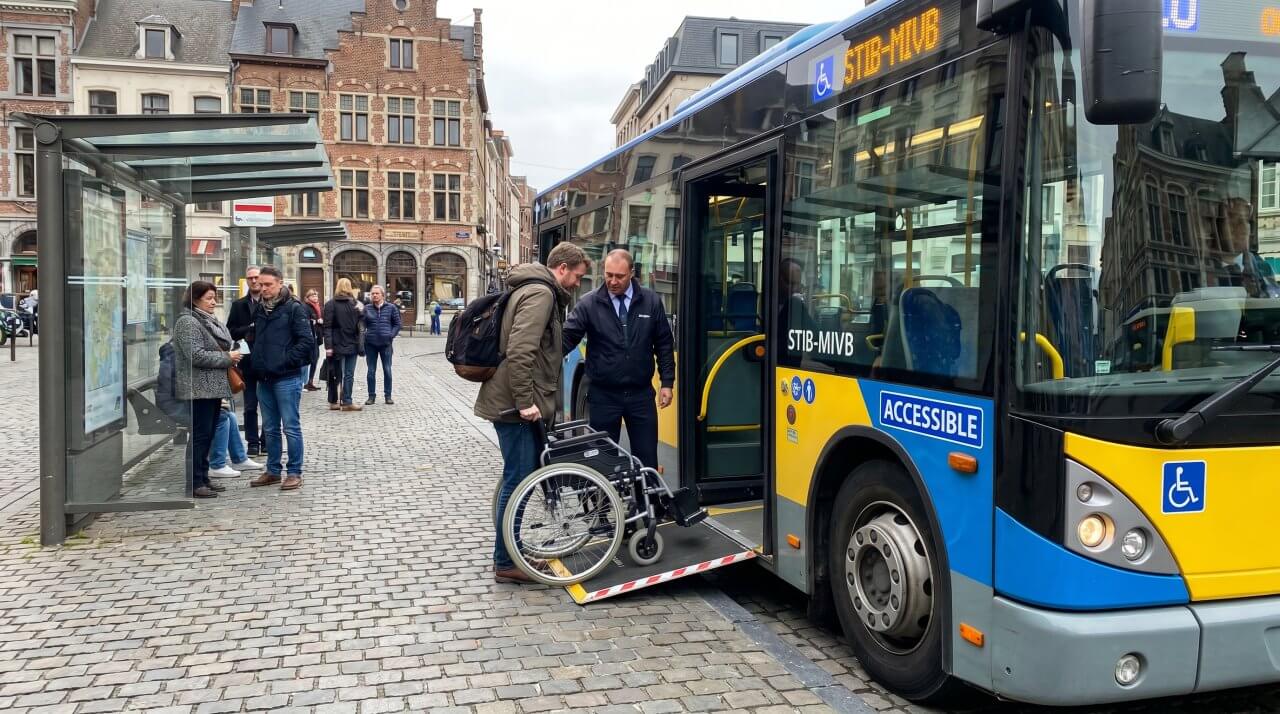
Most travel guides were not written with you in mind.
They were written for able-bodied travelers first, then tagged with an “accessibility” paragraph at the bottom, often inaccurate, often years out of date.
A review that says “the museum has good access” might mean there’s a ramp at the side entrance, or it might mean the writer saw an elevator they didn’t actually test.
That vagueness is useless when you’re planning three months in advance and need specifics.
The structural problem goes deeper than just incomplete information.
Standard travel content is built around the assumption of unrestricted movement: walk between neighborhoods, hop on a metro, take stairs to a viewpoint, browse a market on uneven cobblestones.
Accessibility gets layered on top of that framework, usually as a list of exceptions.
The result is that travelers with mobility needs have to do reverse engineering.
You start with a plan that wasn’t made for you, then spend hours filtering out the parts that won’t work, then search for alternatives.
That’s exhausting before you’ve even booked a flight.
Generic AI chatbots have the same problem in a different form.
Ask a major AI assistant for an accessible itinerary in Lisbon and it’ll give you one.
But it’ll also confidently recommend venues that may have had their accessibility features changed, misidentify metro stations as step-free when they’re not, or give you a tram route that sounds fine but involves a notorious gradient.
The output looks helpful.
The specificity is missing.
The AI Accessible Travel Planner on GetOutTrip is structured differently.
The Mobility Needs field is a free-text input, not a checkbox.
That one design choice changes everything about what the tool can do, because it lets you describe your actual situation rather than selecting from a category that probably doesn’t fit.
What You Put in the Mobility Needs Field Shapes the Entire Plan
This is the field that makes the biggest difference between a generic itinerary and one that’s actually built for you.
The Mobility Needs input is open text, and what you write there changes the output significantly.
A few examples of how different inputs produce different plans:
“Wheelchair user, power chair, cannot manage steps or steep gradients” produces an itinerary that routes you around gradient-heavy areas, prioritizes venues with level access rather than “accessible” venues that technically have a ramp, suggests step-free metro lines or accessible bus alternatives, and flags accommodation with roll-in showers rather than just “accessible room” categories.
“Limited walking distance, can walk approximately 200 meters before needing to sit, using a walking stick” produces a very different plan.
The tool will build in more rest stops, suggest venues with seating throughout, keep the daily geography compact, and avoid routing you through areas that require long stretches of walking between transport and entry points.
It won’t assume you need a wheelchair.
It’ll plan around your actual stated limit.
“Deaf traveler, no mobility issues” shifts the output away from physical accessibility entirely.
The itinerary notes venues with good captioning or visual displays, flags audio-heavy experiences (audio guides without text alternatives, narrated tours) and suggests alternatives, and highlights accommodations with visual fire alarm systems and front-desk text communication.
“Low vision, some light perception remaining, traveling with a sighted guide” produces yet another plan, one that considers tactile experiences, guided tour formats, audio description availability at attractions, and the logistics of navigating with a guide in crowded spaces.
The AI doesn’t have a fixed definition of “accessible.” It works from what you tell it.
If your situation is more complex, for example a combination of mobility limitation plus a chronic fatigue condition that limits what you can do in an afternoon, write both in.
The tool will factor them in.
More detail produces a more specific, more useful output.
Vague input like “I have some mobility issues” will produce a vague plan.
What an Accessible Itinerary Actually Looks Like vs. a Standard One
The structural difference between an accessible itinerary from this tool and a standard day-by-day plan isn’t subtle.
It’s not just the same plan with wheelchair symbols added.
The logic of the day is built differently.
Route Logic
A standard itinerary groups activities by neighborhood for efficiency.
An accessible itinerary from this tool does the same, but it also accounts for the specific route between each stop.
Two museums that are 400 meters apart might be routed differently if one of those 400 meters involves a steep street, a cobblestone section, or a crossing with no dropped kerb.
The plan will note these transitions, not just list the stops.
Transport Choices
The tool selects transport options based on your stated needs and preferences.
For a wheelchair user, this means identifying which metro lines or stations have step-free access, which bus routes have low-floor vehicles, and where taxis or accessible ride-share services are the more reliable option.
If you’ve noted Transport Preferences in the form, that gets factored in.
If you’ve left it blank, the tool will suggest the most commonly accessible options for the destination.
Venue Selection
The tool doesn’t just pick popular attractions and flag which ones are accessible.
It selects attractions based on what you’ve described.
If you’re a power-chair user in Tokyo, the plan will weight toward flat, wide-path options, specific parks rather than temple districts, and museums that explicitly report step-free floors, rather than places that make the top-ten lists but require you to call ahead and arrange special entry.
Rest Scheduling
This is often the detail that standard plans miss entirely.
An accessible itinerary from this tool builds in rest time.
Afternoon breaks are scheduled as part of the plan, not as an implicit assumption that you’ll figure it out.
The accommodation recommendations tend toward properties within easy reach of the day’s activities, specifically to reduce transit time at the end of a tiring day.
For a clear picture of what total trip costs look like once your accessible accommodation and transport choices are factored in, the AI Trip Cost Estimator can give you a personalized cost breakdown once you know the shape of your itinerary.
How Companion Support Changes the Logistics the Tool Generates
The Companion Support field is optional but genuinely useful if your travel situation involves another person.
What you enter here changes the structural logic of the plan in specific ways.
Traveling Solo With a Mobility Aid
If you leave Companion Support blank or note that you’re traveling solo, the tool treats self-sufficiency as the constraint.
Every activity selection, every transport option, every accommodation recommendation is filtered through whether you can manage it independently or with your own equipment.
The plan won’t suggest activities that require staff assistance if that assistance can’t be counted on.
It’ll prioritize venues with clear, predictable accessibility rather than ones that technically accommodate but require you to arrange help in advance.
Solo accessible travel has its own planning considerations that go beyond the itinerary itself.
The AI Travel Safety Advisor can give you destination-specific safety information relevant to your travel situation, including areas where solo travelers with visible mobility aids may face different risk profiles.
Traveling With a Carer or Personal Assistant
When you note “traveling with a carer” or “traveling with a PA,” the tool shifts its assumptions.
Activities that require a second person become viable.
Venues that require pre-arrangement of accessible entry are included with a note to arrange in advance.
The accommodation recommendations account for two people, including carer accommodation rates where these exist in certain countries.
The plan can also suggest activities that the carer can participate in alongside you, rather than treating the carer as purely functional.
The logistics of carer travel vary significantly by destination.
In some countries, a carers’ companion discount or free entry for carers is standard policy at national attractions.
The tool will note these where they apply, but confirm directly with each venue, because policies change.
Traveling With a Partner or Family Member Who Has No Mobility Needs
This is a common but sometimes under-planned scenario.
The partner can walk faster, access venues differently, and has different physical limits during the day.
The tool generates a plan that keeps the group together while routing for the person with mobility needs.
That means not building a day around an attraction that the accessible member can only partially experience, and not routing through areas where your partner would be waiting outside while you navigate an alternative entrance.
If you’re also planning for children in the group alongside accessibility needs, the AI Family Travel Planner can help you layer family-friendly considerations into the same trip.
Destinations Where This Tool Produces Especially Reliable Plans
Not all destinations are equal when it comes to the quality of accessible planning the tool can generate.
This isn’t a limitation of the tool itself; it’s a reflection of how well-documented accessible infrastructure is in different places.
Destinations with well-documented, publicly available accessibility data, such as Tokyo, Amsterdam, Berlin, Barcelona, Singapore, Sydney, and much of Scandinavia, tend to produce the most specific and actionable plans.
These cities have official accessibility maps, transport authority step-free guides, and enough traveler reporting that the AI can work with reliable, specific information.
Destinations with less structured accessibility documentation produce plans that are still useful but require more on-the-ground verification.
Many destinations in Southeast Asia, parts of Latin America, and some Mediterranean cities have significant variation in accessibility between individual neighborhoods, and the tool will flag this where it can.
A plan for Bangkok, for example, might work well for certain areas and transit lines while being far less reliable for others.
Destinations where you should treat the output as a starting point rather than a finished plan include anywhere with rapidly changing infrastructure (cities under significant construction), destinations where accessibility information is primarily in a language the AI has limited training data on, and any destination where you have specific medical requirements that interact with local healthcare access.
Before any trip, running a destination-specific pre-departure review through the AI Travel Checklist Before Departure is worth doing alongside the accessible itinerary, particularly for documentation, insurance, and medical equipment considerations.
Why You Should Always Verify AI-Generated Accessibility Information Before You Travel
This is the honest part.
The AI Accessible Travel Planner generates a strong starting framework.
It is not a substitute for direct verification, and for accessibility specifically, that distinction matters more than in almost any other area of travel planning.
Accessibility information goes out of date faster than most travel information.
A lift that was working in 2024 might be under maintenance for six months.
A venue that had a step-free entrance might have changed its layout during renovation.
A hotel that listed an accessible room might have sold that room to another property.
These changes don’t always get updated in the sources the AI draws from.
The gap between “listed as accessible” and “actually accessible for your specific needs” is real and significant.
A venue might be listed as wheelchair accessible because it has a ramp, but the ramp might be too steep for a power chair, or the accessible toilet might be in the basement via a separate lift that’s often out of service.
You won’t know that from a general accessibility listing.
What to Verify Before You Travel
- Contact each major venue directly and ask specific questions based on your needs, not general accessibility questions. “Do you have step-free access?” is a weaker question than “Is there step-free access from the main entrance to all public floors, and is the accessible toilet on the same floor as the main gallery?”
- Check transport operator websites for current step-free status maps. Most major city transit authorities publish these, and they reflect current operational status more accurately than any itinerary tool.
- For accommodation, call rather than rely on website descriptions. Ask specifically about roll-in showers vs. grab-bar tubs, door widths, and whether the accessible room is on a floor that a lift serves reliably.
- Check disability travel forums and communities, particularly Wheelie Good Travels, Accessible Travel Online, and destination-specific Facebook groups for wheelchair users. These communities have current, first-hand information that no AI system can match.
The AI Travel Visa Requirements Checker is worth running for any international trip, because some countries have specific entry requirements or documentation needs for travelers with medical equipment like power chairs, CPAP machines, or medication that crosses borders.
If you’re visiting a destination for the first time and want to understand local customs and communication norms, particularly useful when you need to communicate accessibility needs to locals, the AI Local Etiquette and Culture Guide can give you destination-specific context on how to approach those conversations.
The accessible itinerary the tool generates is a solid, specific starting point that would take you hours to compile manually.
The verification step is yours to own, and for accessibility planning, it’s not optional.
Use the plan as your research framework, then confirm the specifics that matter most to your situation before you commit to anything.
Accessible travel planning shouldn’t require you to spend twice as long planning as anyone else just to get the same quality of trip.
The AI Accessible Travel Planner on GetOutTrip is built to reduce that gap, giving you a complete, logistics-aware itinerary in minutes rather than days of research.
Use it to build your framework, then verify the specifics that matter most.
If you want to build on the plan with a full pre-trip logistics review, the pre-departure checklist tool will walk you through everything you need to confirm before departure day.
Frequently Asked Questions (FAQs)
Yes. The Mobility Needs field accepts free-text descriptions, so you can describe visual impairment, hearing loss, cognitive disabilities, chronic fatigue conditions, or any combination of needs.
The more specifically you describe your situation, the more relevant the output will be.
The tool draws on AI-synthesised knowledge, not live official accessibility databases.
Accessibility data changes frequently as venues renovate, transport infrastructure improves, or services are discontinued.
Always verify specific accessibility claims directly with venues, transport operators, and official disability travel resources before your trip.
Yes. Enter your destination, describe your wheelchair type and any specific mobility requirements in the Mobility Needs field, and select solo under Companion Support.
The output will prioritise fully independent routes, accommodation with self-sufficient access, and activities that do not require companion assistance.