
AI Luxury Travel Planner: What a Real High-End Itinerary Actually Looks Like – The AI Luxury Travel Planner on GetOutTrip generates complete high-end travel itineraries based on destination, trip duration, and a free-text budget you write yourself.
It produces specific accommodation tier recommendations, private versus group experience suggestions, dining by formality level, and a day structure that reflects how luxury travel actually flows.
This GetOutTrip guide covers what the output looks like in practice, how to write your budget for the most calibrated results, how the three Luxury Style options diverge, and where the AI scaffold ends and a human specialist begins.
Tool Highlights
- The output specifies accommodation by tier (e.g., overwater villa vs. beachfront suite), not just "luxury hotel"
- Free-text budget input lets you be as specific or as open-ended as you need, and the itinerary calibrates accordingly
- Three Luxury Styles produce structurally different trips: Beach resort, City luxury, and Wilderness lodge each follow a distinct daily rhythm
- The planner performs best on well-documented destinations; niche or emerging luxury markets may need manual supplementation
- For ultra-high-end bookings, the AI output works best as a briefing document handed to a travel specialist
What a Luxury Itinerary Output Actually Specifies (It’s Not Just Expensive Standard)
Most itinerary generators at the higher budget tier simply inflate the accommodation label to “luxury hotel” and call it done.
The AI Luxury Travel Planner works differently.
It specifies accommodation by type and positioning within that type: not “luxury hotel in Kyoto” but “a machiya-style ryokan in the Higashiyama district with kaiseki dinner included, or a contemporary design hotel on Karasuma with a private onsen suite.” That distinction matters because the experience of a traditional inn and a design hotel in the same city are not remotely the same trip.
The same specificity carries through to experiences.
Rather than “cultural tour,” the output distinguishes between a private geisha district walking tour with an English-speaking guide (group maximum: you), a semi-private sake brewing experience with a local master, and a public temple visit you can do independently.
It marks private versus group and notes when advance booking is genuinely required versus when showing up works.
This is the difference between a plan that feels high-end and one that reads high-end.
How Dining Is Described in the Output
Dining recommendations are categorized by formality tier and reservation lead time, not just price.
A dinner recommendation at the three-Michelin-star level will note that reservations open two months in advance and often require a local intermediary to book.
A high-end but more accessible restaurant gets flagged differently: “reserve two weeks out, dress code smart casual, counter seating available for solo diners.” The planner also separates breakfast, lunch, and dinner by pace, suggesting that a long kaiseki dinner is better placed mid-trip than on arrival night when jet lag will blunt the experience.
The Day Structure at the Luxury Level
A standard itinerary packs in activities from morning to night.
A luxury day structure builds in pacing.
The AI output typically opens a day with a slow morning at the property (in-room breakfast, spa access, or a private yoga session if interests include wellness), moves into one or two afternoon activities at most, and anchors the evening around a single high-quality dining reservation.
That rhythm reflects how guests at premium properties actually use their time.
When you’re paying for a villa with a personal butler, you don’t rush out at 8am to check off sights.
Why the Free-Text Budget Field Changes Everything
Most travel planning tools use a budget dropdown: Low, Medium, High, Luxury.
These categories tell the AI very little.
“Luxury” could mean $3,000 per person for a week or $30,000.
The AI Luxury Travel Planner uses a free-text Budget field instead, and the difference in output quality is real.
When you write “$8,000 per person for 7 days in Japan,” the tool allocates that budget across accommodation, experiences, and dining in a way that’s proportionally accurate for the destination.
Japan at that spend level supports a high-end ryokan in Kyoto, a premium city hotel in Tokyo, private day experiences, and one or two significant dining reservations per trip.
The output reflects that arithmetic.
It doesn’t recommend a three-Michelin-star dinner every night, because that would consume the food budget in two sittings and leave nothing for the rest.
Writing Your Budget for Maximum Precision
The specificity of your input shapes the calibration of the output.
Here’s how different phrasings perform:
- “$8,000 per person for 7 days”: Most calibrated output. The AI has a per-day number to work with and allocates accordingly across accommodation, experiences, and food.
- “€15,000 for two, 10 days, Morocco”: Also specific and useful. The tool handles the per-person math and currency context.
- “Splurge, no hard limit”: This produces a genuinely high-ceiling itinerary with top-tier options across the board, but without allocation trade-offs. Good for inspiration; less useful for actual budgeting.
- “Luxury budget”: Too vague. The output will be generic. Write a number.
- “Around $5,000”: Usable, but the word “around” introduces ambiguity. The AI will tend toward the middle. If $5,000 is your floor, say so.
If you’re not sure what a realistic luxury budget for a specific destination looks like before you enter it, the AI Trip Cost Estimator can give you a baseline breakdown by spending tier before you come back and build the full itinerary here.
Currency Input and What It Does
The Currency field (Your Currency / Destination Currency) affects how costs are presented in the output, not how they’re calculated.
If you input a budget in USD but set your currency to EUR, the tool will present cost references in euros.
For travelers from countries where USD pricing feels abstract, this is worth using.
It keeps the budget mentally real.
Beach Resort, City Luxury, and Wilderness Lodge: Three Different Trips, Not Three Different Price Points
The Luxury Style field has three options: Beach resort, City luxury, and Wilderness lodge.
These are not cosmetic variations on the same plan.
They produce fundamentally different itinerary architectures, accommodation categories, activity types, and daily rhythms.
The destination you enter interacts with the Luxury Style to determine what the output actually looks like.
Beach Resort Itineraries
A Beach resort luxury itinerary centers on the property itself.
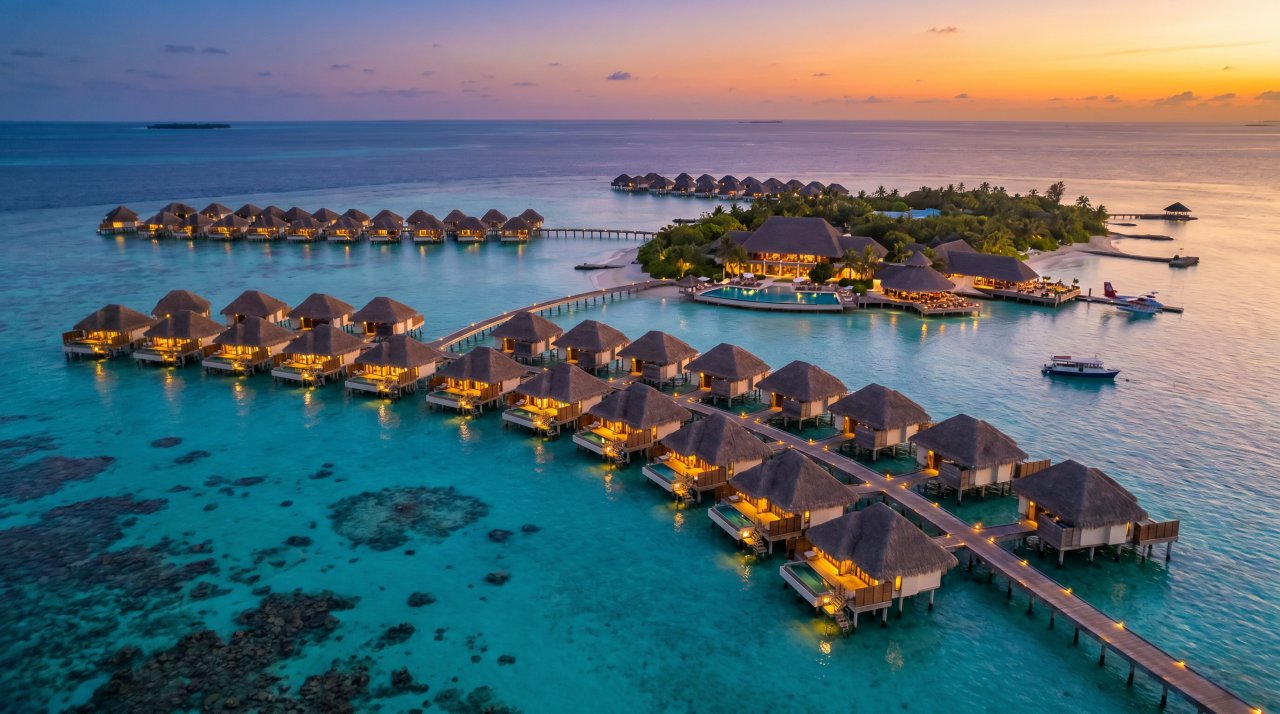
The accommodation is the experience: overwater villas in the Maldives, a beachfront pool suite at a Six Senses or Aman property, a private-pool bungalow in Phuket.
Days are structured around the water.
Morning snorkeling at the reef, afternoon on the villa terrace, sunset cocktails at the beach bar, dinner at the resort’s fine dining restaurant.
Excursions are deliberate and optional: a sunset fishing trip, a half-day island-hopping boat charter.
The pace is slow by design.
The tool recommends which meal occasions are best kept on-property versus when venturing out makes sense.
At a Maldives atoll resort, staying on-property for nearly all meals is normal because you’re on a private island.
In Bali’s Seminyak or Thailand’s Koh Samui, the output balances resort dining with specific off-property restaurants worth the short transfer.
City Luxury Itineraries
City luxury produces a completely different structure.
The accommodation here is a base for exploration, not a destination in itself: a heritage palace hotel in Jaipur, a design hotel in a Tokyo tower, a converted palazzo in Venice.
Days are full-program, with the property’s amenities used at the edges of the day.
Mornings might begin with an early private art tour before the crowds arrive.
Afternoons go to curated neighborhoods, private shopping appointments, or cultural experiences.
Evenings anchor to a significant restaurant reservation, often with a pre-dinner drink at a hotel bar known for its cocktail program.
The output specifically distinguishes private from group access for city experiences.
A private after-hours tour of the Vatican museums is a real product that exists.
A private guide to the Uffizi is different from the public entry experience.
The AI flags these distinctions because they’re the actual differentiators at this spend level.
Wilderness Lodge Itineraries
Wilderness lodge is the most structurally distinct of the three styles.
The accommodation is a tented camp or remote eco-lodge: a Singita property in the Serengeti, a small-footprint lodge in Bhutan, a fly-in camp in Botswana’s Okavango.
Days are activity-led by the property: morning and afternoon game drives, bush walks, sundowners in the field, communal dining with other guests.
This is a social format by nature, and the output reflects that.
The Wilderness lodge output also handles the logistics differently because remote luxury travel has a different logistical structure.
Charter flights between camps, seasonal access windows, and specialist booking requirements all appear in the output with appropriate notes.
The planner is honest that at this tier, you’re not booking directly through an online form: a specialist outfitter or dedicated safari operator is part of the picture.
That transparency is actually useful.
For timing, especially for Wilderness lodge destinations, checking the AI Best Time To Visit Planner before locking in a month is worth doing.
Peak season at a Botswana camp and green season at the same camp are not equivalent experiences or prices.
Which Destinations Does the AI Luxury Planner Handle Best?
The AI Luxury Travel Planner produces its most detailed and actionable output on destinations with a well-developed, well-documented luxury tourism sector.
The itineraries for these places are specific, realistic, and useful as planning documents.
- High-output destinations include Japan (Tokyo, Kyoto, Hakone), Italy (Amalfi Coast, Tuscany, Venice, Sicily), France (Paris, Provence, wine regions), the Maldives, the UAE (Dubai and Abu Dhabi), Kenya and Tanzania (established safari circuits), Bali, Thailand (Chiang Mai, Koh Samui, Phuket), Morocco (Marrakech, Fes, the Atlas Mountains), and the major luxury circuits of Southeast Asia. For these destinations, the output goes to the level of naming accommodation categories with precision, flagging which experiences require advance booking, noting cultural formalities around dress or behavior at specific venues, and structuring days in a way that reflects real-world travel between locations.
- Destinations where manual supplementation still helps include newer luxury markets, less-documented regional luxury properties, and highly specific niches where the AI’s training data is thinner. A luxury itinerary for a boutique circuit through Georgia (the Caucasus country, not the US state), a high-end trip through Bhutan during a specific festival, or a luxury fishing lodge expedition in Patagonia will be directionally useful but will benefit from cross-referencing with a specialist operator. Before any trip to a high-protocol destination, running your plan through the AI Local Etiquette and Culture Guide is a practical step. Luxury travel regularly involves high-formality settings where dress codes, tipping customs, and behavioral norms differ sharply from Western defaults. A private dinner at a Japanese ryokan and a formal dinner at a heritage hotel in Rajasthan each have protocols that matter.
What the Output Doesn’t Do on Its Own
The AI Luxury Travel Planner doesn’t book anything, and it doesn’t access live inventory.
It doesn’t know which specific overwater villas are available in November, which restaurants have a six-month waiting list, or what the current rate is at a specific property.
Treat the output as a structured brief: a document that tells you exactly what tier of property to look for, what type of experience to ask about, and what the logical sequence of a well-paced luxury trip looks like.
That’s a genuinely useful starting point for independent research or for handing to a specialist.
For trips where visa requirements are part of the logistics picture, especially for high-end destinations that have specific entry conditions, the AI Travel Visa Requirements Checker handles that separately.
Some luxury destinations (Bhutan, Saudi Arabia, Myanmar) have specific entry conditions that your itinerary planning should account for early.
How to Hand the AI Output to a Human Specialist and Get More From It
The most practical way to use the AI Luxury Travel Planner is as a first-draft briefing document, not a finished booking plan.
That framing changes how you approach the output.
Most travelers who work with a luxury travel specialist or hotel concierge walk in with either too little information (“we want something special in Japan for two weeks”) or too much of the wrong kind (“I’ve built a spreadsheet of 47 hotels”).
An AI-generated itinerary gives you something more useful: a structured, destination-aware plan that specifies accommodation category, experience type, dining tier, and daily pacing.
A specialist can read that in ten minutes and understand what you’re after.
What to Extract Before the Handoff
When you generate a luxury itinerary, pull out these specific elements before you brief a specialist:
- Accommodation category language: If the output recommends “a traditional ryokan with in-room kaiseki dinner and private onsen,” that’s the brief for your specialist. It’s more useful than saying “a nice hotel.”
- Experience prioritization: The output usually signals which activities are the anchors of the trip versus the filler. Pull the two or three key experiences per destination that the AI marks as central, and make clear those are non-negotiable to your specialist.
- Dining notes: Highlight any restaurants flagged as requiring significant advance booking. These are the ones your specialist or concierge can actually help with through their network, often getting reservations that aren’t available to the general public.
- Pacing preferences: If the itinerary’s structure (slow mornings, two activities max per day, evenings anchored by one dining reservation) reflects what you want, say so explicitly. Specialists default to full-program planning unless told otherwise.
- Budget anchors: The AI’s allocation across accommodation, experiences, and food gives you a working budget split. Present that to your specialist as a starting framework, not a fixed constraint.
The AI handles about 80% of the structural thinking.
The specialist adds the live inventory knowledge, the personal relationships with hotel GMs and restaurant managers, and the ability to handle bespoke requests (a private chef for an in-villa dinner, a helicopter transfer instead of a road transfer, a custom experience that doesn’t exist as a packaged product).
If you’re also planning a romantic component, whether a honeymoon, anniversary, or couples trip, the AI Honeymoon and Romantic Trip Planner produces a complementary itinerary with couple-specific pacing and experience recommendations that can be layered into the luxury plan.
A Practical Checklist Before You Generate
Getting the most out of the AI Luxury Travel Planner takes about two minutes of preparation before you fill in the form.
These aren’t rules, just the inputs that consistently produce better output:
- Destination: Be as specific as the trip requires. “Italy” will produce a broader plan than “Tuscany and the Amalfi Coast.” For a 7-day trip, a tighter destination produces a more usable result.
- Trip Duration: The tool handles 1 to 30 days. For luxury travel, 5 to 14 days tends to produce the most realistic pacing. A 3-day luxury itinerary exists but leaves little room for the slow morning rhythm that defines the category.
- Budget: Write a number with a per-person or total context. If you’re genuinely open-ended, write “no hard limit” rather than leaving it blank. A blank budget field will produce generic output.
- Month: If your travel dates are set, include this. The output will flag seasonal considerations, including peak-season booking requirements and whether certain experiences are available in that month.
- Luxury Style: Choose the one that matches your primary accommodation preference, even if the full trip mixes styles. If you’re spending 5 of 7 days at a beach resort and 2 in the city, select Beach resort and mention the city component in Interests.
- Interests: This field has real influence. “Wellness, private cooking classes, and wine” will produce a different itinerary than “art museums, architecture, and jazz bars” for the same destination and budget.
For the full pre-trip logistics beyond the itinerary itself, packing for a luxury trip differs from packing for a standard one.
The AI Travel Packing List Generator can generate a destination-specific list that accounts for dress code requirements, climate, and activity types, which at the luxury level sometimes means a more specific wardrobe brief than “pack light.”
Once you’ve generated an itinerary, try varying one input at a time to see how the output changes.
Switching from City luxury to Wilderness lodge for the same destination and budget often reveals a completely different version of the trip that you hadn’t considered.
The Interests field, in particular, has more influence than most users expect.
A single word like “wellness” or “architecture” can reorient the whole plan.
The AI gives you a clear, structured starting point.
What you do with it from there is the real planning.
Frequently Asked Questions (FAQs)
No. The tool generates a detailed itinerary with accommodation types, experience categories, and restaurant tiers, but does not connect to any booking system.
Use the plan as a brief for a luxury travel specialist or concierge, or research and book each element independently.
The tool responds to any budget described in the free-text field, but luxury-tier accommodation, private experiences, and fine dining recommendations become significantly more detailed once the stated budget exceeds roughly $500 per person per day.
Below that threshold, results start to resemble a high-end standard itinerary more than a true luxury plan.
Yes. Short luxury trips produce some of the most precise outputs because the tool concentrates premium recommendations into fewer days rather than distributing them across a longer itinerary.
A two-night city hotel stay or a three-night resort experience both generate strong, specific results.