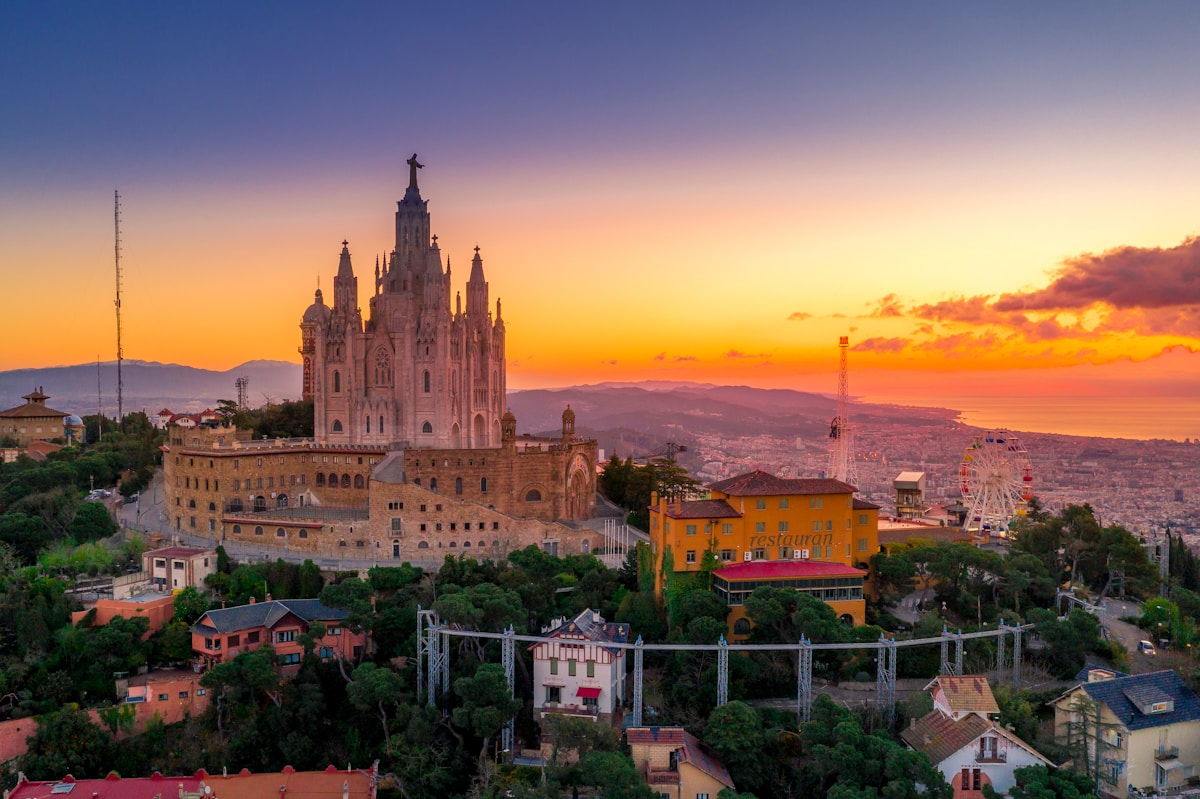
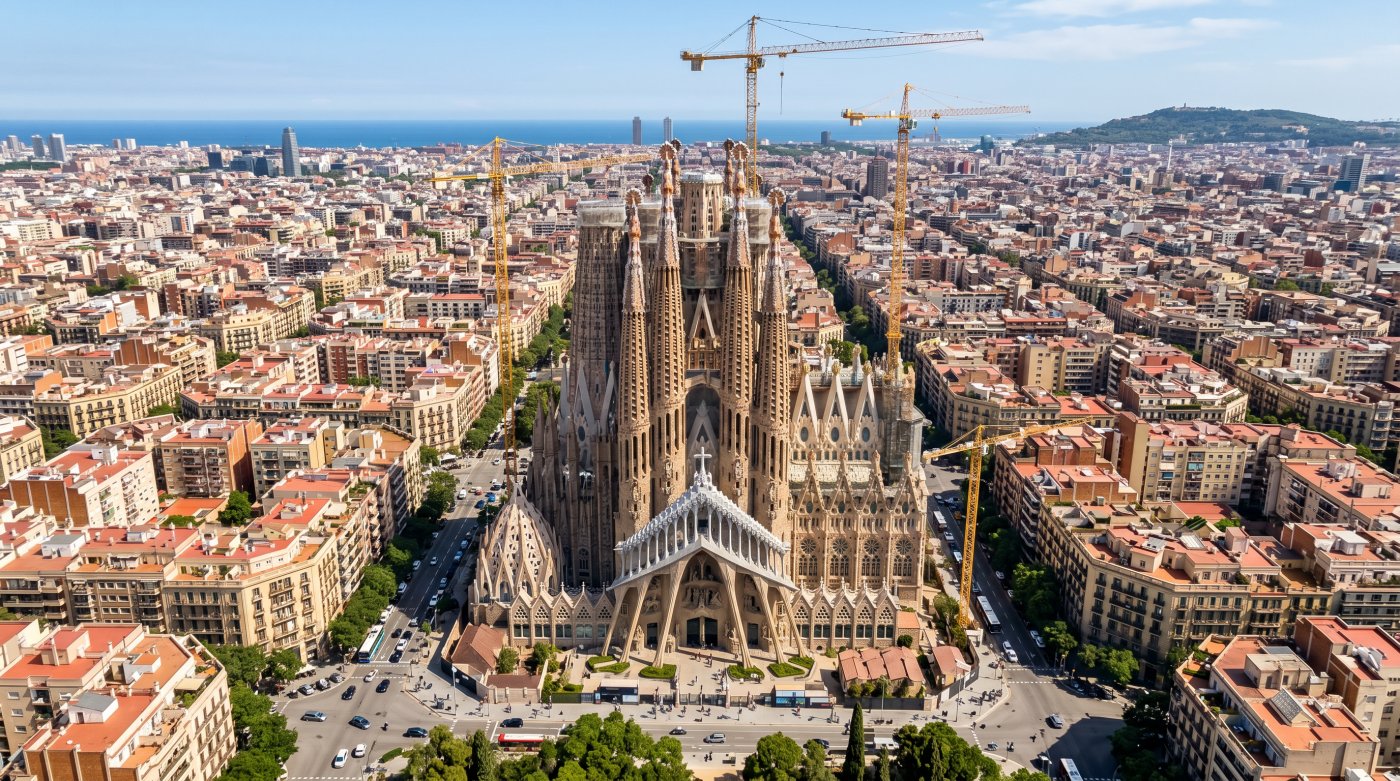





The Sagrada Família is one of the most extraordinary buildings on the planet — a Roman Catholic basilica in Barcelona’s Eixample district that architect Antoni Gaudí began designing in 1883 and never lived to see finished.
It’s simultaneously a functioning place of worship, a UNESCO World Heritage Site, and an architectural experiment so ambitious it still isn’t complete.
But that’s precisely part of the draw: you’re watching history being built in real time, one carved stone spire at a time.
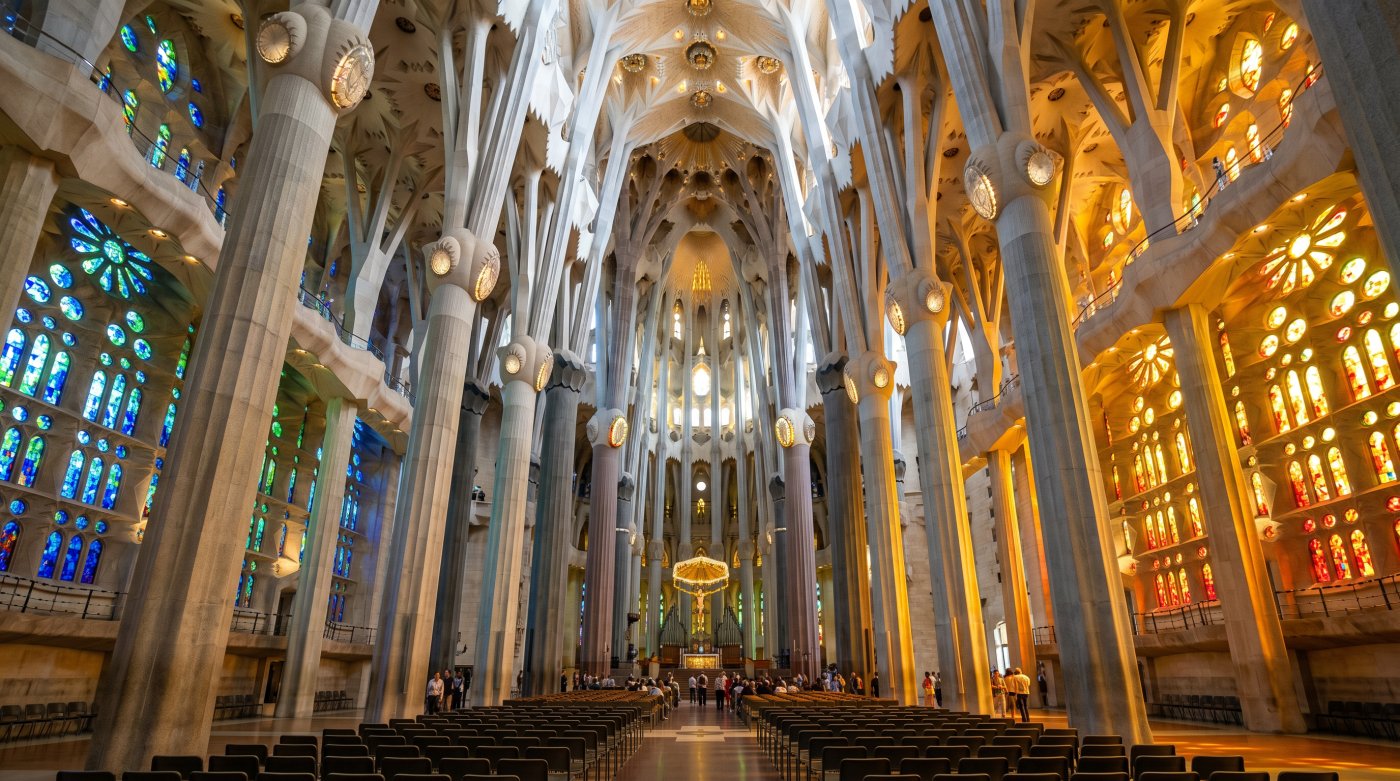
Walking inside feels like stepping into a stained-glass forest.
The nave’s tree-like columns branch into the ceiling, flooding the interior with filtered light in blues, greens, ambers, and reds that shift throughout the day.
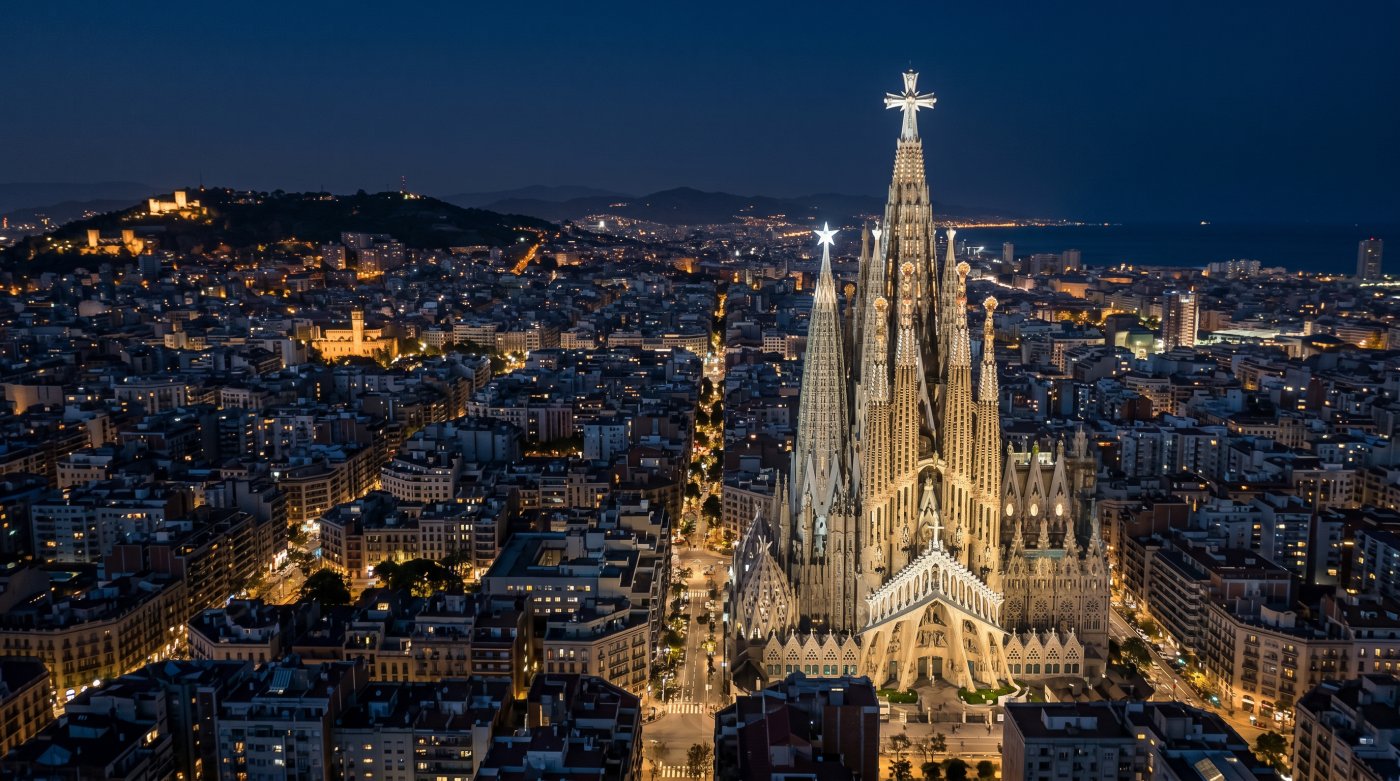
Each façade tells a different story — the Nativity Façade bursts with organic, nature-inspired detail on the east side, while the stark Passion Façade on the west confronts you with geometric angularity and raw emotion.
The Glory Façade, still under construction, will eventually become the main entrance.
Your best bet for a less crowded experience is arriving right at 9:00 AM on a weekday, especially Tuesday through Thursday.
Book your tickets well in advance on the official website — timed entry slots sell out weeks ahead during peak season (April through September).
If tower access is on your list, add that to your ticket from the start, as it’s sold separately and goes fast.
The Nativity Tower offers slightly better views of the city; the Passion Tower looks directly at the city skyline.
The centenary of Gaudí’s death falls in 2026, making this an especially significant year to visit.
Completion of the central Jesus Christ tower, the tallest of all at 172.5 metres, is expected to coincide with this milestone — so you may be witnessing the basilica in its most complete form yet.
Come with comfortable shoes, a fully charged phone, and a genuine curiosity about what obsessive, faith-driven architecture actually looks like up close.
The Sagrada Família fills its timed entry slots weeks ahead, and adding tower access after the fact is almost never possible.
Once you’re inside, plan for at least two hours in the basilica itself, plus 45 minutes extra if you’ve secured a tower slot.
This guide covers what’s genuinely worth your time, what the brochures leave out, and how to visit without losing half your morning to logistics.
Basilica of the Sagrada Familia: The Most Famous Monument in Barcelona
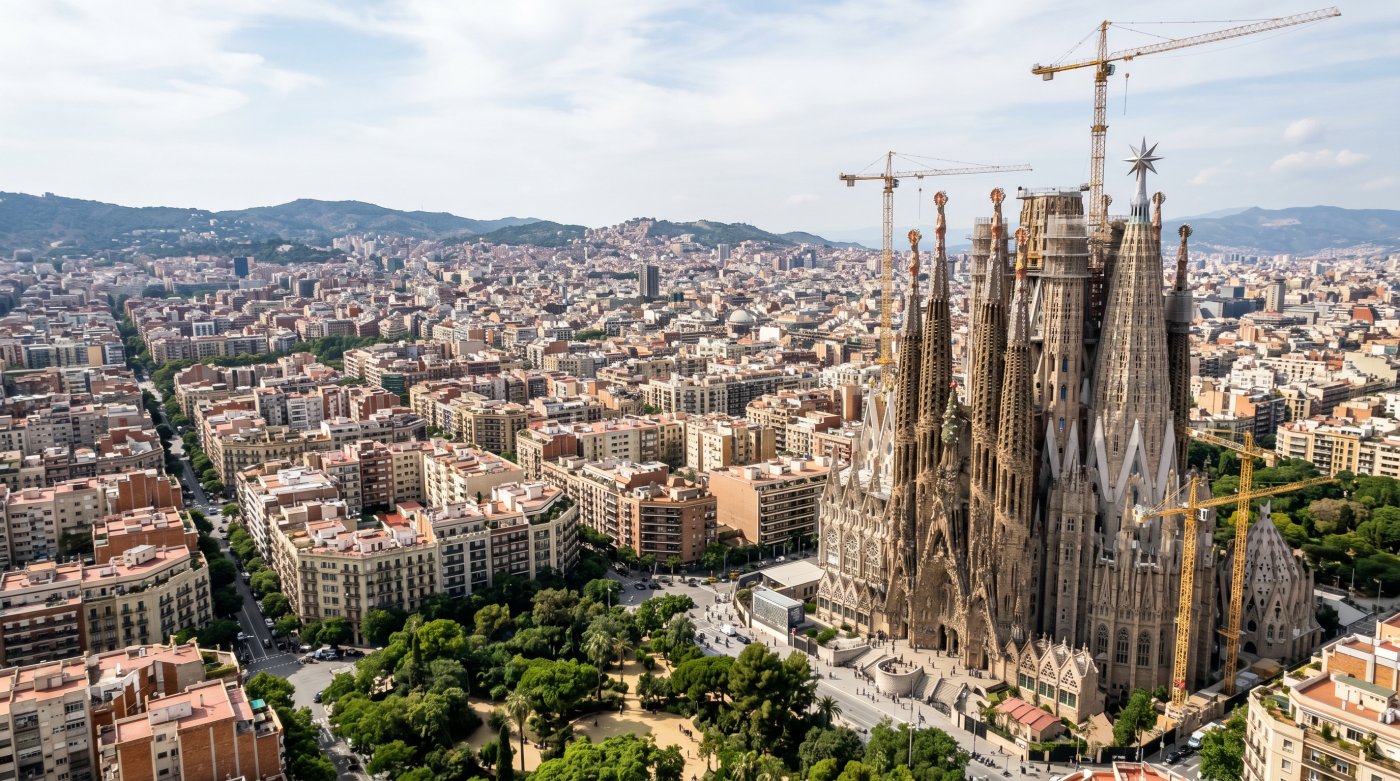
The Basilica of the Sagrada Familia is the most visited monument in Spain, and it genuinely earns that title.
Antoni Gaudí started work on it in 1883 and devoted the last 43 years of his life to a structure he knew he would never see finished.
More than 140 years later, it is finally nearing completion in 2026 in time for the centenary of Gaudí’s death, making this one of the most historically significant years in this GetOutTrip guide on the site’s history.
TL;DR
- Address: Carrer de Mallorca, 401, Eixample, 08013 Barcelona, Spain
- Opening Hours: Nov–Feb: Mon–Sat 9:00 AM–6:00 PM, Sun 10:30 AM–6:00 PM | Mar & Oct: Mon–Sat 9:00 AM–7:00 PM (Sat until 6:00 PM), Sun 10:30 AM–7:00 PM | Apr–Sep: Mon–Sat 9:00 AM–8:00 PM (Sat until 6:00 PM), Sun 10:30 AM–8:00 PM
- Admission: Adults €26, Children under 11 free (reservation required), Tower access sold separately
- Nearest Metro: Sagrada Família Station (L2 Purple / L5 Blue Line) — 2-minute walk
- Nearest Bus Stop: Sagrada Família (Lines 19, 33, 34, D50, H10, B24) — 1-minute walk
- Recommended Visit Time: 1.5 to 2 hours without towers; 2.5 to 3 hours with tower access
- Best Time to Visit: Weekday mornings from 9:00–11:00 AM, especially Tuesday through Thursday
- Official Website: sagradafamilia.org
Why 2026 Is the Year to Finally See This Building
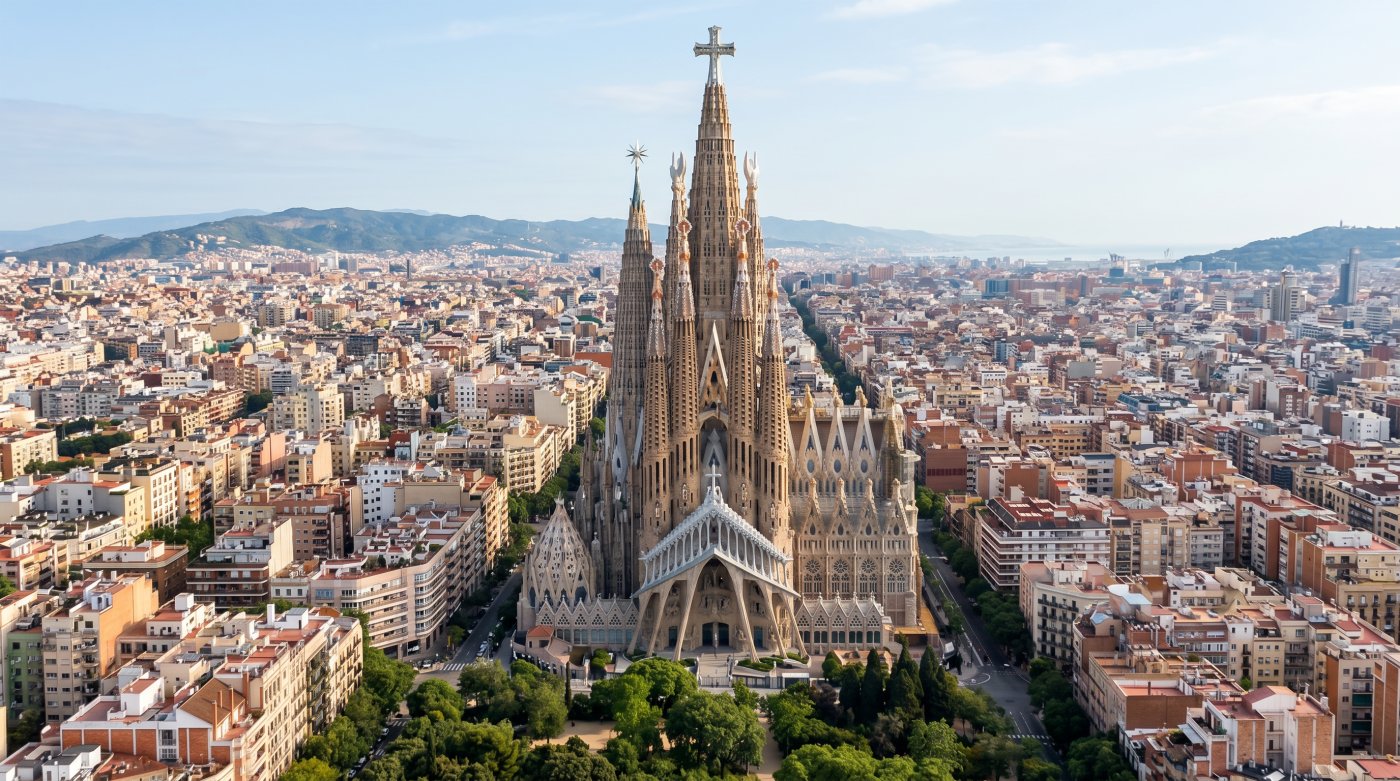
This is not a normal year for the Sagrada Família.
Antoni Gaudí was killed by a tram in Barcelona in 1926, and his death has long framed the target for the project’s completion: the centenary of 1926, which falls in 2026.
The central tower of Jesus Christ, reaching 172.5 metres and the tallest of all 18 towers, was completed in the run-up to this milestone, giving the basilica a skyline presence it has never had before.
The structure now has a visual completeness it simply lacked even five years ago.
If you’ve been telling yourself you’ll visit “when it’s done,” the window is now.
And the building funds itself entirely through visitor ticket sales and donations, receiving no government or church subsidies, which means every ticket you buy directly contributes to what will eventually be finished.
If you’re still weighing whether Barcelona is the right destination for your next trip, the AI Destination Comparison Tool lets you run a side-by-side breakdown of climate, cost, and crowd levels against other options before you commit.
What You’re Actually Walking Into: Interior, Façades, and Towers
The outside of the Sagrada Família is spectacular, but the interior is where the visit becomes something else entirely.
The nave is built around tree-like columns that branch upward into the ceiling, filtering natural light through a canopy of stained glass in deep blues, greens, ambers, and warm reds.
At midday the light shifts continuously as the sun moves across the rose windows, casting colored pools across the stone floor that move while you watch.
The Three Façades: Different in Every Way
Each of the three main façades tells a completely different story, in a completely different artistic language.
The Nativity Façade on the east side is the one Gaudí worked on most directly, and it shows: the stone is dense with organic forms, plant life, animals, and angelic figures celebrating the birth of Christ.
It’s chaotic in the best way, more like a coral reef than a building.
The Passion Façade on the west is the deliberate opposite.
Sculptor Josep Maria Subirachs completed it in the 1980s and 1990s using angular, geometric abstraction to depict the suffering and crucifixion of Christ.
Some visitors find it jarring after the warmth of the Nativity side, but that contrast is intentional.
The Glory Façade, still under construction on the south side, will eventually serve as the main entrance and is expected to be the most visually complex of all.
Tower Access: Nativity or Passion?
Tower access is sold separately from general admission and goes fast, often selling out before general entry slots do.
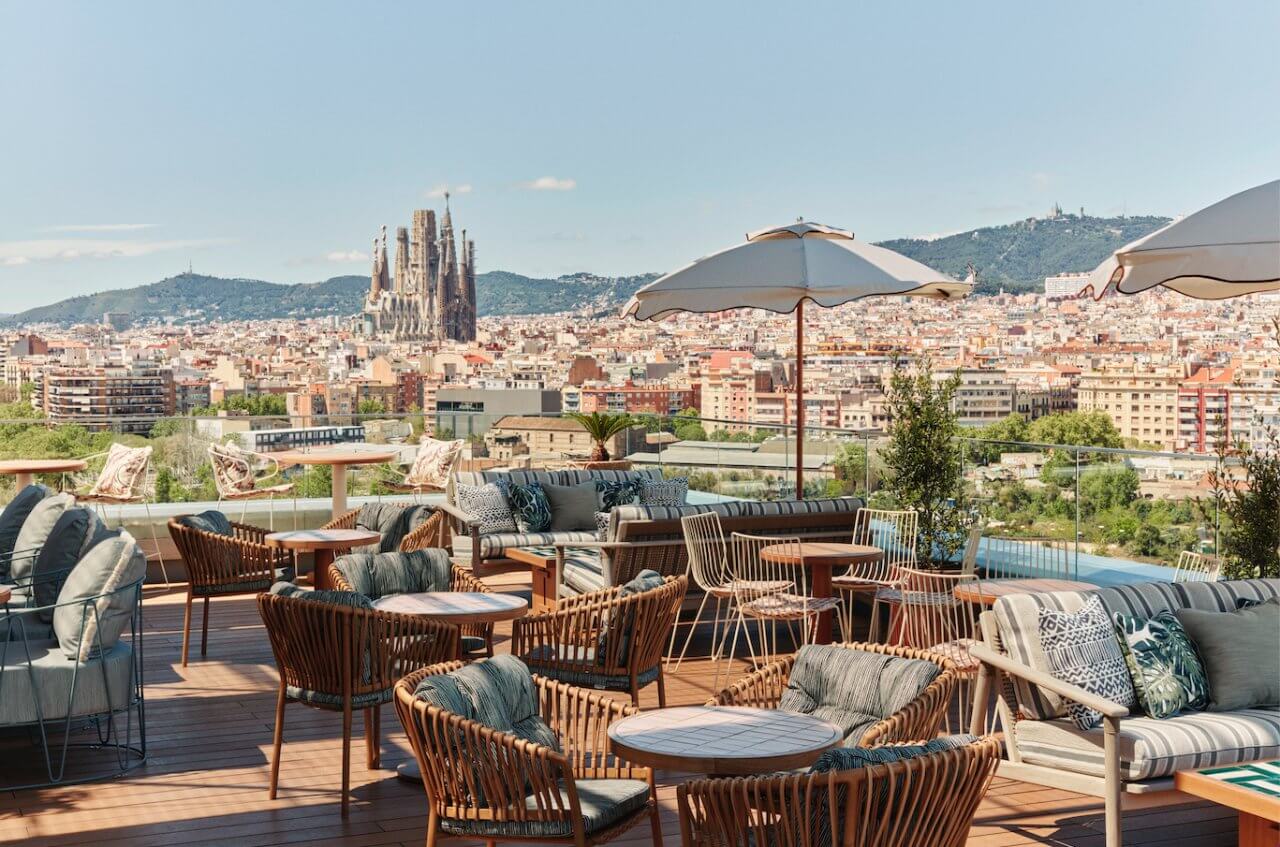
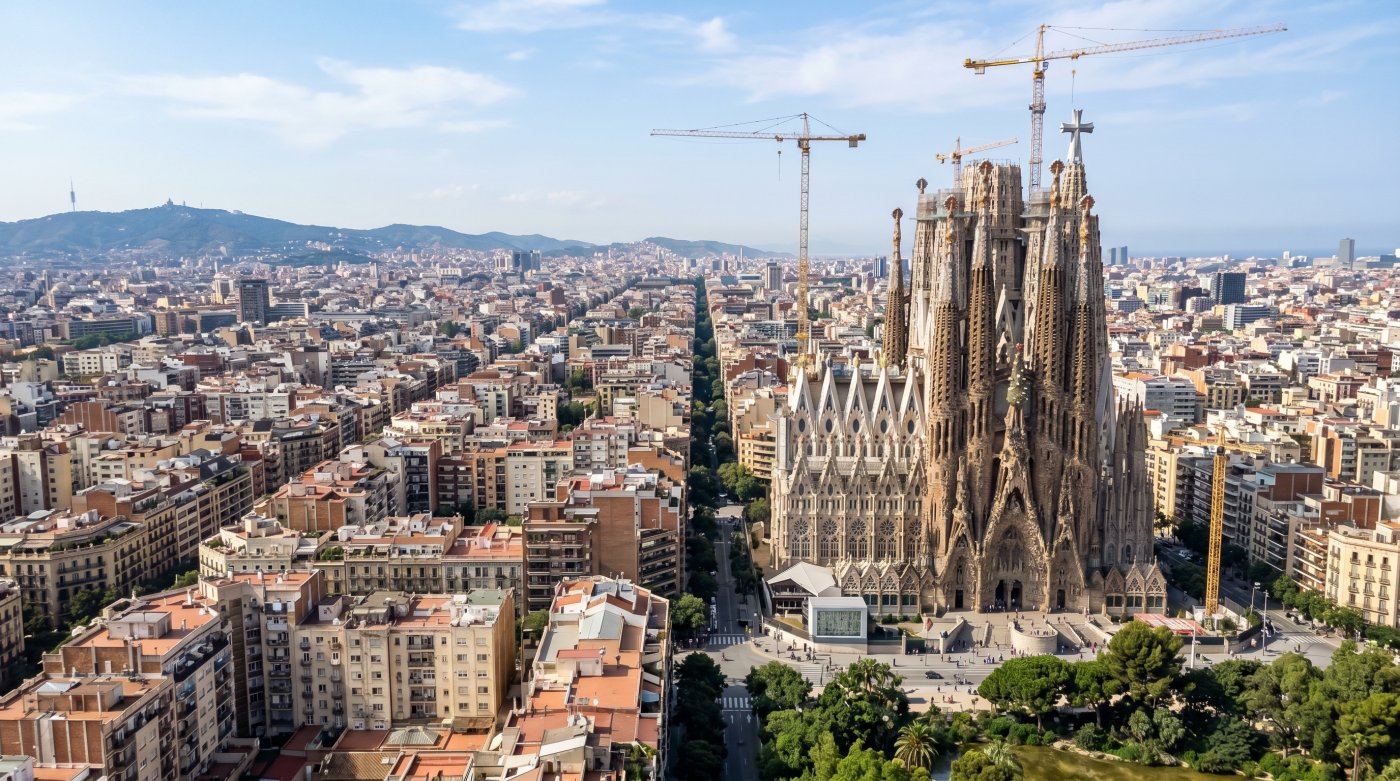
The Nativity Tower lift takes you up the east side of the building, offering panoramic views over the Eixample district’s famous octagonal city grid stretching toward the sea.
The Passion Tower looks directly at the Barcelona skyline and toward Montjuïc.
Most visitors recommend the Nativity Tower for the city grid view, but either one works.
One important detail: the descent from the towers is via narrow spiral stairs, not the lift.
If you have mobility concerns, plan carefully before booking tower access.
For tailored advice on navigating the site with accessibility needs, the AI Accessible Travel Planner can help you map out a visit that works for your situation.
The Gaudí Crypt Museum
Underneath the basilica, in the crypt, the Gaudí Museum houses original drawings, plaster scale models, and construction documents spanning over a century of building.
It’s worth 20 to 30 minutes of your time, especially if you’re curious about how Gaudí used inverted chain models to calculate the weight distribution of arches.
Gaudí himself is buried here, in the Chapel of Our Lady of Carmen, which is part of the same crypt space and accessible during your visit.
- Best Food in Barcelona: A Neighbourhood-by-Neighbourhood Eating Guide
- 9 Day Trips From Barcelona: Complete 2026 Guide With Train Times & Prices
- 25+ Top Things to Do in Barcelona, Spain: The Complete 2026 Visitor Guide
- Free Things to Do in Barcelona: 2026 Guide with Exact Schedules
- Travel to Barcelona on a Budget: How to Visit Without Overspending in 2026
- 13 Best Things To Do In Barcelona With Kids
Getting to Sagrada Família Without Overthinking It
The metro is the obvious choice, and it’s genuinely easy.
Two lines serve the Sagrada Família station directly: the L2 (purple line) and the L5 (blue line).
From the city centre, you’re looking at 10 to 15 minutes on the metro, and the station exits put you within 2 minutes’ walk of the entrance.
The station is fully wheelchair accessible, with lifts on both lines.
If you’re coming from the Gothic Quarter or El Raval, the L3 green line to Diagonal and a transfer to L5 is a reliable route.
Coming from Barcelona Sants, the main rail station, take the L3 to Diagonal and transfer there.
Taxis and ride-shares work fine but traffic around Eixample on weekend mornings can add 15 to 20 minutes you don’t need to lose.
For a full rundown of how to move around the city without paying more than necessary, the guide on getting around Barcelona covers metro zones, T-Casual cards, and when the bus is actually faster.
Booking Tickets, Beating Crowds, and Not Making the Common Mistakes
Book on the official website at sagradafamilia.org.
That is the only place to guarantee standard admission prices — third-party resellers charge anywhere from 20% to 50% more for exactly the same ticket.
Timed entry slots sell out weeks in advance from April through September, and even in November and December slots at 9:00 and 10:00 AM are gone well before you arrive at the airport.
Book before your flights, not after.
The 9:00 AM Quiet Hour
Every morning from 9:00 to 10:00 AM, the basilica operates a quiet hour for prayer and reflection.
Visitors can enter, but the audioguide must be used with earphones, voices should be kept low, and the atmosphere is noticeably more contemplative.
If you’re not there for the spiritual experience this creates, arriving at 10:15 AM on a Tuesday or Wednesday still puts you ahead of the tour groups that typically arrive from 11:00 AM onward.
What Tower Access Costs and Why You Should Decide Now
General adult admission is €26.
Tower access is an add-on sold separately, with the Nativity Tower typically running €16 to €22 depending on the combined ticket option.
Children under 11 enter free but must still have a reserved ticket.
Visitors with disabilities and one companion also receive free entry, with proof of disability required at the entrance.
A common mistake is arriving and trying to buy tower tickets at the desk.
They’re almost always sold out.
Decide during your booking session whether towers are on your agenda, and add them then.
You won’t regret it if you’re going up; you will regret skipping it if the day is clear.
If you’re planning the broader budget for your Barcelona trip, the AI Trip Cost Estimator can help you calculate total spend across accommodation, tickets, and food before you commit.
Clothing and What to Bring
The Sagrada Família is an active Roman Catholic basilica.
There’s no strict dress code enforced at the entrance, but as a gesture of respect for its function as a place of worship, sleeveless tops and very short shorts are better avoided.
The interior is noticeably cooler than the street even in summer, so a light layer helps.
Wear comfortable shoes: there’s a lot of standing, slow walking, and staircase descending from the towers.
Bring a fully charged phone.
The official app includes an audioguide in 19 languages and is genuinely well-produced, covering the architectural logic in a way that makes the building legible rather than overwhelming.
Download it before you arrive.
If you want to prepare a full kit for the trip, the AI Travel Packing List Generator can build you a Barcelona-specific list based on the season you’re visiting.
What to Do After the Basilica: The Eixample Block Has More Than You’d Expect
The Sagrada Família sits in the Eixample district, and the surrounding blocks reward a slow walk after your visit.
Casa Milà (also called La Pedrera), Gaudí’s residential apartment building on Passeig de Gràcia, is about 1.5 kilometres away.
It’s a 20-minute walk through the Eixample grid or a one-stop metro ride.
The rooftop terrace is arguably the best outdoor space in the whole city.
You’ll need a separate ticket, but it’s cheaper than the basilica and considerably less crowded.
Park Güell, another Gaudí project, sits about 2 kilometres to the north and is worth a half-day if you haven’t already been.
The upper colonnaded terrace and mosaic terraces are ticketed and timed, with the lower park free to enter.
For a neighbourhood-by-neighbourhood breakdown of what else Barcelona’s various districts offer, the best things to do in Barcelona guide covers the city’s main draws across all areas.
If you’re traveling with children, the Sagrada Família is one of the more family-friendly major attractions in Barcelona.
The audioguide has a children’s version, the open floor plan makes managing small kids easier than it sounds, and the stained glass alone holds attention for longer than you’d think.
For a broader plan that keeps kids engaged across a full Barcelona trip, the guide on traveling to Barcelona with kids has the specifics.
Planning the Rest of Your Barcelona Visit
Barcelona is compact enough that the Sagrada Família fits naturally into a longer city itinerary without dominating the whole day.
A morning here, lunch in the Eixample, and an afternoon at Casa Milà or Park Güell is a clean, manageable sequence that won’t leave you exhausted.
If you’re working out how many days the city actually needs, the AI Trip Length Guide is worth running before you book your return flight.
The city rewards people who plan around one or two anchor experiences per day rather than trying to cover everything.
The Sagrada Família is the logical anchor for day one of most Barcelona visits.
Let the building do its job, take your time inside it, and build the rest of the day outward from there.
Highlights
Interesting Facts
Facilities
How to Get to Barcelona

| From | Train | Bus | Flight | Ferry | Book |
|---|---|---|---|---|---|
| Madrid ES | $28.70 2h 37min | $24.47 7h 35min | $63.08 1h 15min | — | Check Fares → |
| Valencia ES | $3.47 3h 9min | $41.19 3h 45min | $59.95 1h 5min | — | Check Fares → |
| Paris FR | $92.50 6h 47min | $35.13 12h 10min | $78.45 1h 40min | — | Check Fares → |
| Málaga ES | $53.98 5h 36min | $76.99 14h 45min | $52.27 1h 35min | — | Check Fares → |
| Zaragoza ES | $3.47 1h 30min | $10.30 3h 30min | — | — | Check Fares → |
| Seville ES | $64.05 5h 48min | $124.96 16h | $72.18 1h 40min | — | Check Fares → |
| Rome IT | $252.92 32h 13min | $115.90 20h 50min | $35.64 1h 50min | $55.62 18h 30min | Check Fares → |
| Lloret de Mar ES | $7.14 1h 21min | $14.58 55min | — | — | Check Fares → |
| Alicante ES | $39.93 5h 27min | $47.42 6h 15min | $40.58 1h 5min | — | Check Fares → |
| Marseille FR | $75.53 4h 34min | $16.74 6h 45min | $50.92 1h 10min | — | Check Fares → |
Prices shown are starting fares and may vary. Book via Omio to compare all available options.
Honestly, the Sagrada Família defies easy categorisation.
It isn’t just a church — it’s a century-long act of collective faith in stone, glass, and mathematical precision.
The interior alone is worth the price of admission: standing under those branching columns while kaleidoscopic light pours through the stained glass is one of those genuinely rare travel moments that lives up to its reputation.
If you only do one thing in Barcelona, let it be this.
And yes, the queues and tourist crowds are real, but a 9 AM weekday slot with a pre-booked timed ticket makes the experience far more manageable than the horror stories online suggest.
The tower access tickets are absolutely worth adding if you want a rooftop view of Eixample’s famous octagonal grid stretching to the sea.
Just note the towers are not suitable for anyone with mobility limitations, as the descent is via narrow spiral stairs.
Bring the official app — the audioguide is genuinely well-produced and worth using rather than rushing through on your own.
In 2026, with the central tower now complete, this is arguably the best time in living memory to visit.
Don’t overthink it — just go.
Frequently Asked Questions (FAQs)
Yes — and this is one travel tip you really don’t want to ignore.
Timed entry slots at the Sagrada Família sell out weeks in advance during peak season (April through September), and even in the quieter months, popular morning slots disappear fast.
The only place to buy official tickets is the Sagrada Família’s own website at sagradafamilia.org — third-party resellers charge significantly more for the same ticket.
If you want tower access, add it during booking, as tower tickets sell out even faster than general admission.
Show up without a reservation on a summer weekend and you’ll be spending your afternoon in a very long queue, staring at a façade you can’t enter.
Plan for at least 1.5 to 2 hours for a thorough visit to the basilica itself, including the interior, both façades, and the museum in the crypt.
If you’ve added tower access to your ticket, factor in an extra 30–45 minutes — there’s a queue for the elevator even after entry, and most people spend a good while taking in the views before descending.
Audioguide users tend to linger longer than those without, which is a good thing: the building genuinely rewards attention to detail.
A rushed 45-minute dash through the nave misses most of what makes it extraordinary.
The ground floor of the Sagrada Família is fully wheelchair accessible, with a dedicated accessible entrance at the rear of the building near the gift shop — and entry is free for wheelchair users and one companion (proof of disability required).
An elevator gets you into the basilica itself.
However, the towers are not accessible to wheelchair users: while lifts go up, the only way down is via narrow spiral stairs, so tower access is not offered to visitors with mobility limitations.
Wheelchair-accessible toilets are available inside, though the approach ramp is quite steep, so extra care is needed.
The Sagrada Família metro station on both L2 and L5 lines is also fully wheelchair accessible.