



Where To Go In France: Best Destinations Region by Region – France is one of the world’s most visited countries, and with good reason — it packs more regional variety into one nation than almost anywhere else in Europe.
Mediterranean coastline, Alpine glaciers, Atlantic surf beaches, Loire Valley châteaux, Alsatian wine villages, and the cultural weight of Paris all sit within a country roughly the size of Texas.
This guide covers France’s most rewarding destinations region by region, with practical details on what to see, when to go, and how to get there.
For practical planning once you decide where to go, the guide to best things to do in France covers activities across every region.
Key Takeaways
- France's most visited destinations are Paris, the Loire Valley, the French Riviera, Provence, Normandy, and Mont-Saint-Michel.
- Each region has a distinct optimal season: Provence in June–July (lavender), Alsace in November–December (Christmas markets), Alps in winter (skiing) or summer (hiking), Brittany in July–August (coast), Burgundy in September–October (harvest).
- Most of France's iconic destinations are accessible from Paris by TGV in under 3 hours.
- Paris is the natural starting point for most France itineraries, but regional cities (Lyon, Bordeaux, Strasbourg) are more affordable and less crowded for extended stays.
Paris and the Île-de-France Region
Paris needs little introduction.
It is the world’s most visited city and the default starting point for most France trips.
What often gets overlooked is the region around Paris — the Île-de-France — which contains some of France’s most important monuments outside the capital.
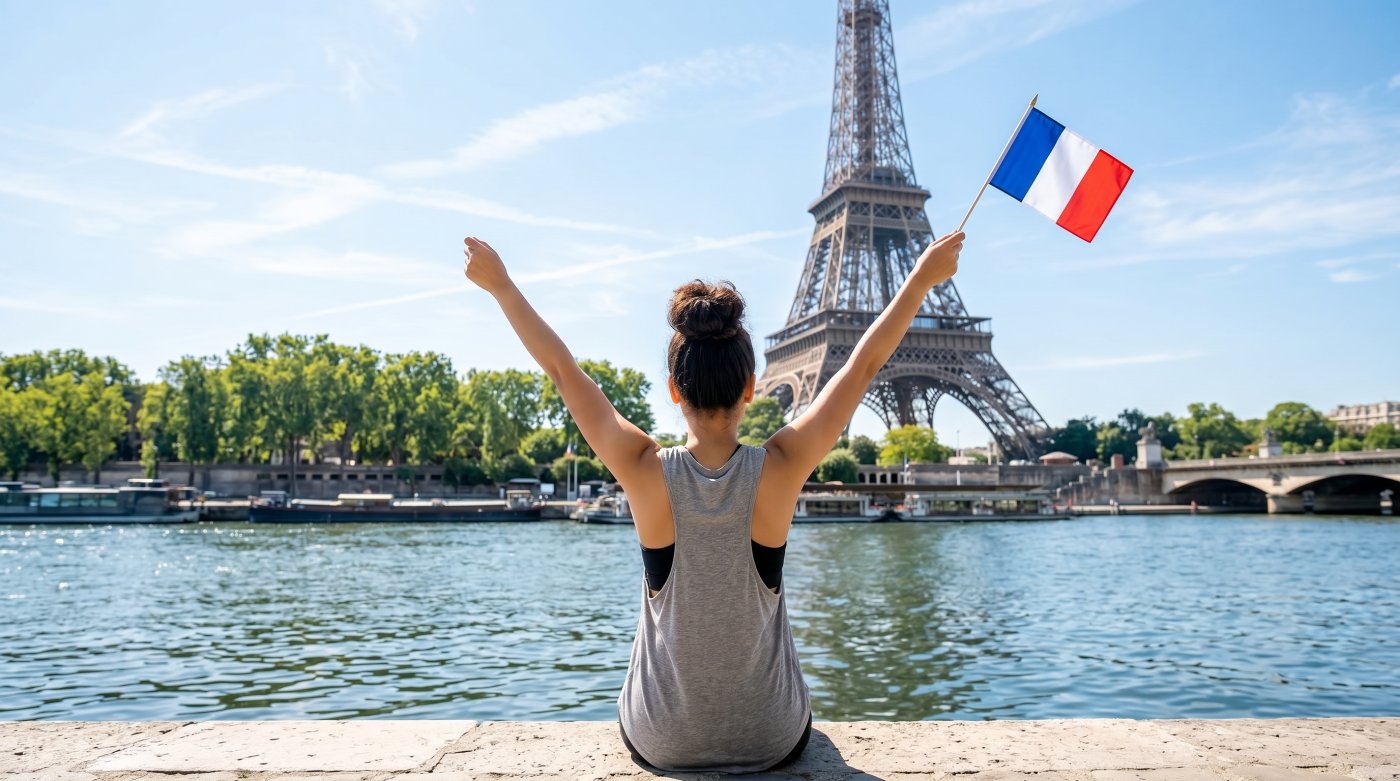
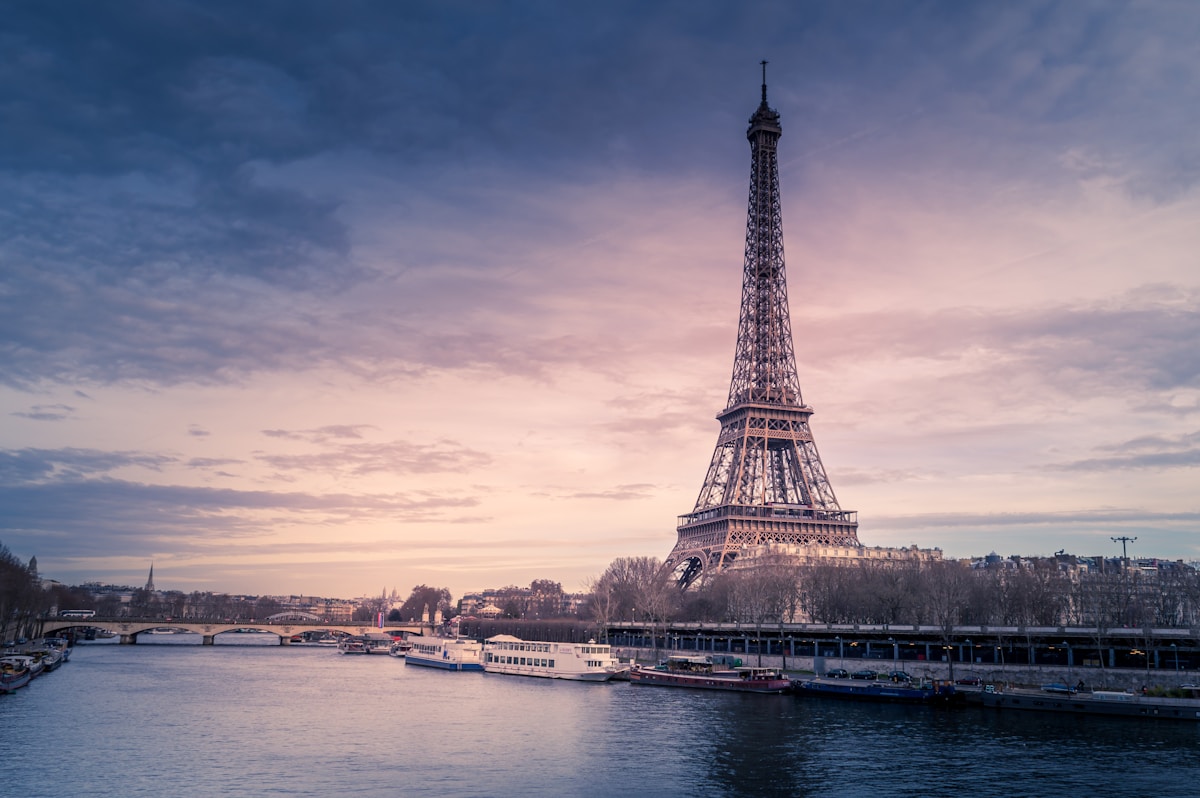
The Eiffel Tower, at 330 meters, remains the most recognizable structure in France.
The surrounding Champ-de-Mars is a public park and the best free viewpoint for tower photography.
Timed elevator tickets for the tower summit go on sale 60 days in advance and sell out quickly, especially in peak season (late June through August) — the official Eiffel Tower website strongly recommends booking 60 days ahead, and for summer visits, booking the moment tickets become available is advised.
The Louvre Museum houses over 380,000 works and is one of the world’s largest art museums.
The Winged Victory of Samothrace, Venus de Milo, and Mona Lisa are the most visited works.
Thursday evenings (open until 9:45pm) have shorter queues than daytime visits.
Beyond Paris, the region’s key day trips include:
- Versailles — 45 minutes from Paris by RER C. The palace has over 2,300 rooms and 700 acres of formal gardens. The Hall of Mirrors is the most famous interior space. The gardens host the Grandes Eaux Musicales fountain show every weekend and on public holidays from April 3 to November 1, 2026, with additional Musical Gardens sessions on Tuesdays (April 1 to October 30). Gardens open 9am to 7pm on show days. Admission starts at €9.50 for the Grandes Eaux Musicales (non-EEA full rate: €16; EEA reduced rate: €13); the Musical Gardens (Tuesdays) starts at €8.50. Free for children under 6.
- Giverny — Monet’s house and garden, with the famous water lily pond. Open April 1 to November 1, 2026, daily from 10am to 6pm (last entry 5:30pm). Spring (late April–May) is the peak period for wisteria and tulips. The water lilies are visible from June through September. Take a train to Vernon (from Paris Saint-Lazare), then a 5km bike rental or shuttle bus.
- Fontainebleau — A royal château and surrounding forest. Less visited than Versailles but significant — it was a primary royal residence for centuries and Napoleon signed his abdication here. The forest is a popular rock-climbing and hiking destination accessible from Paris in 40 minutes by train.
For a comprehensive introduction to planning a Paris visit, the Paris travel guide covers everything from neighborhoods to transport to seasonal events.
- 20+ Best Hotels in Paris With Eiffel Tower View
- Paris on a Budget: Tips and Tricks for Affordable Travel
- Paris Neighborhoods: A Comprehensive Guide to Exploring Paris Arrondissements
- What Is the Most Popular Food in Paris?
- Exploring 25+ Most Iconic and Historical Landmarks in Paris
- How to Spend 3 Days in Paris
Loire Valley: France’s Garden and Château Country
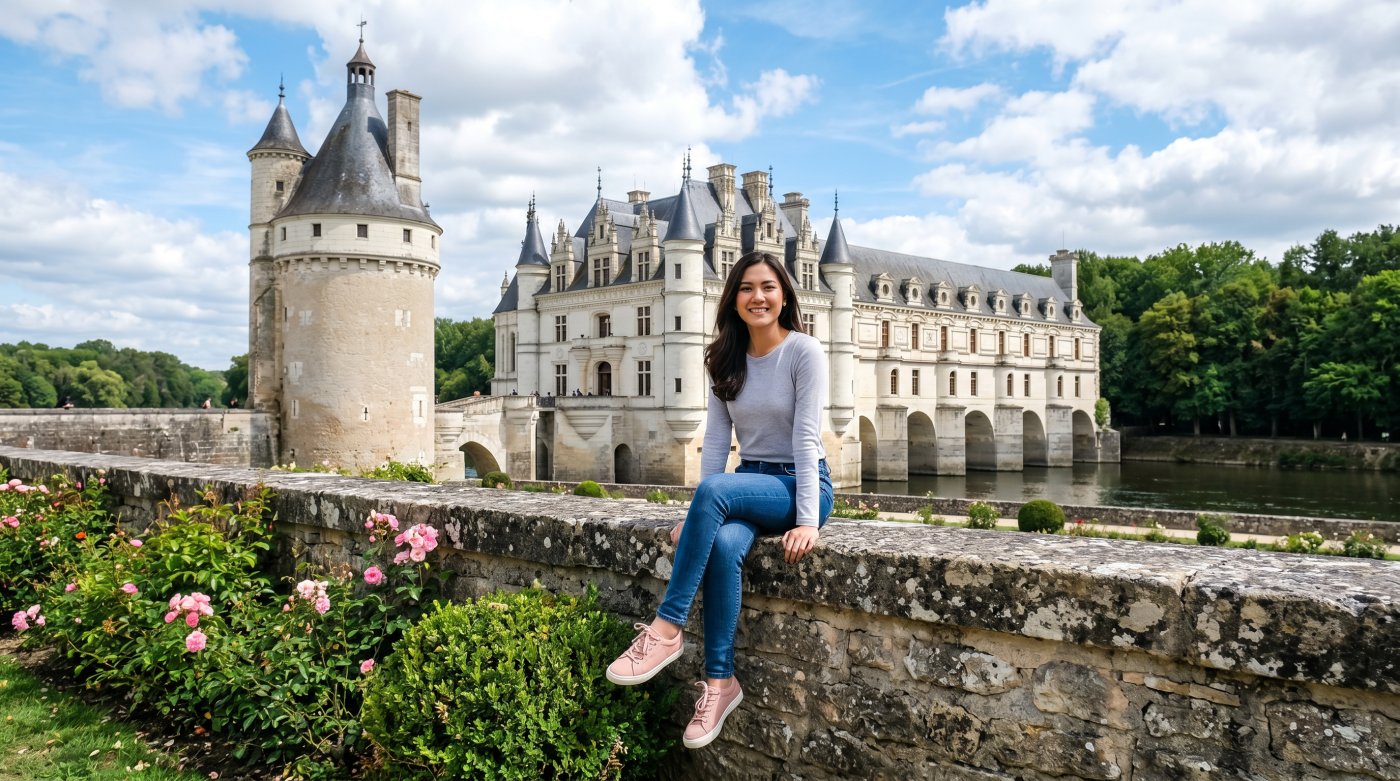
The Loire Valley stretches for roughly 200 km along the Loire River between Orléans and Angers.
It holds the highest concentration of Renaissance châteaux in the world and is a UNESCO World Heritage Site for its entire valley landscape.
The region rewards slow travel — a week here barely scratches the surface of its châteaux, vineyards, and riverbank villages.
- Château de Chambord is the most architecturally striking château in the valley. Its double-helix staircase — attributed by some historians to Leonardo da Vinci’s influence — allows two people to ascend simultaneously without meeting. The château has 440 rooms, 365 chimneys, and is surrounded by the largest walled hunting ground in Europe (54 km of wall). As of 2026, the official full-price entry (castle + gardens) is €21 for EEA nationals/residents and €31 for non-EEA visitors; a reduced rate of €18.50 / €28.50 is available with valid proof. EU citizens under 26 enter free. Open daily 9am–6pm (high season, March 28–October 25); 9am–5pm in low season. Closed January 1 and December 25.
- Château d’Amboise sits above the town on a promontory over the Loire. Leonardo da Vinci spent his last three years at the nearby Château du Clos Lucé (500 meters from Amboise), invited by François I. The Clos Lucé is now a museum displaying scale models of Leonardo’s inventions, with adult admission at €20 (concessions/students/children 7–18: €15; under 7 free). Open daily except December 25 and January 1, from 9am–7pm (February–June and September–October), 9am–8pm (July–August). Both are worth visiting together.
- Chinon holds a medieval fortress where Joan of Arc met Charles VII in 1429 — a turning point in the Hundred Years’ War. The Forteresse Royale de Chinon dominates the town from a ridge and offers some of the valley’s best Loire panoramas.
- Cycling the Loire: The Loire à Vélo route runs 900 km from Cuffy to Saint-Brevin-les-Pins at the Atlantic. You can cycle between châteaux on well-marked paths. The section from Tours to Saumur (60–80 km) is one of the most popular segments — flat, well-serviced, and linking multiple major châteaux.
- Getting there: TGV from Paris to Tours takes approximately 1 hour. Tours is the main regional hub for exploring the valley. Car rental in Tours allows access to châteaux off the train network.
- Best time: April–October. May and June for spring gardens; September–October for wine harvest and fewer crowds.
French Riviera: Nice, Cannes, Monaco, and Saint-Tropez
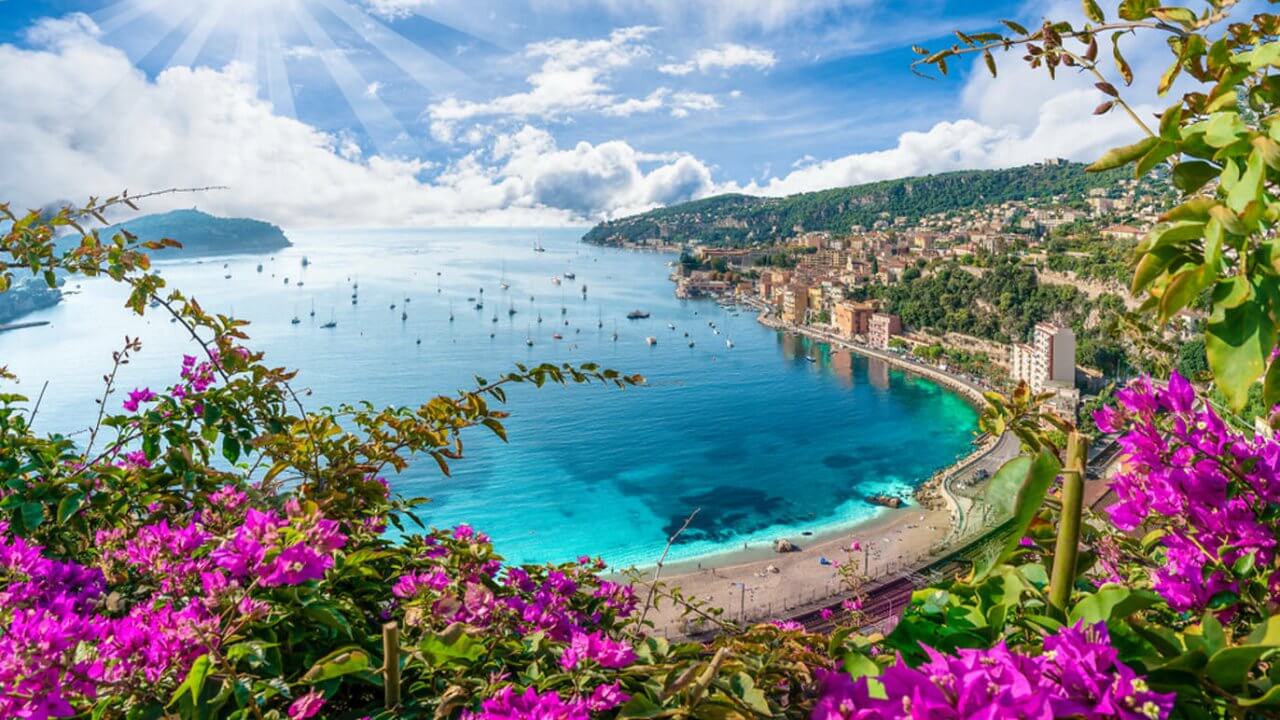
The Côte d’Azur runs approximately 115 km from Menton (near the Italian border) west to Cassis.
It is synonymous with wealth, sun, and celebrity but has substantial cultural and historical substance beneath the glamorous surface.
The Riviera’s real trick is that you can find everything from world-class art museums to hidden fishing coves within a short train ride of each other.
- Nice is the largest city on the Riviera (population ~340,000) and the most practical base. It has excellent transport connections, a genuine old town (Vieux-Nice) worth several hours of exploration, and a 7 km public pebble beach along the Promenade des Anglais. The Matisse Museum and Chagall Museum are both genuine world-class art collections. Nice’s Cours Saleya market runs Tuesday through Sunday in Vieux-Nice: the flower market (Marché aux Fleurs) operates Tuesday–Saturday from 6am–5pm and Sunday 6am–1:30pm; the food/produce market runs Tuesday–Sunday from 6am–1:30pm; and every Monday, the same square becomes an antiques and flea market (7am–6pm). It’s one of France’s best outdoor markets for flowers, produce, and Socca (chickpea flatbread).
- Cannes hosts the world’s most prominent film festival in May but is worth visiting outside the festival period for its long sandy beach (La Croisette) and the old quarter (Le Suquet). Day trips to the Lérins Islands (15 minutes by boat) offer Mediterranean island beaches accessible from the ferry dock near the Palais des Festivals.
- Monaco is technically a separate city-state but functions as part of the Riviera experience. The Casino de Monte-Carlo requires smart dress and passport for casino entry; the casino exterior and surrounding gardens are free. The Prince’s Palace (Palais Princier) is open to visitors from March 30 to October 15, 2026, daily 10am–5pm (June–August until 6pm, last entry one hour before closing). Admission is €15 for adults, €13 for students, €10 for children aged 6–17, and free for children under 6. Monaco’s Oceanographic Museum is a genuinely significant marine science collection.
- Saint-Tropez is primarily a summer destination. Outside July–August, it is a charming Provençal fishing town. The Citadelle (fortress museum) offers good views; the Annonciade art museum has an impressive collection of post-Impressionist work. Arrive by boat from Saint-Raphaël or Sainte-Maxime rather than by car — summer parking is both expensive and nearly impossible.
- Getting there: Nice is served by Nice Côte d’Azur Airport with direct flights from most European cities. By train, Paris to Nice takes approximately 5.5 hours by TGV. The coastal TER train line from Nice runs to Monaco (20 minutes), Menton (40 minutes), Antibes (25 minutes), and Cannes (35 minutes).
- Best time: May–June and September–October for good weather, reasonable prices, and manageable crowds. July–August is peak season — hot, crowded, expensive.
Provence: Lavender, Châteaux, and Roman Heritage
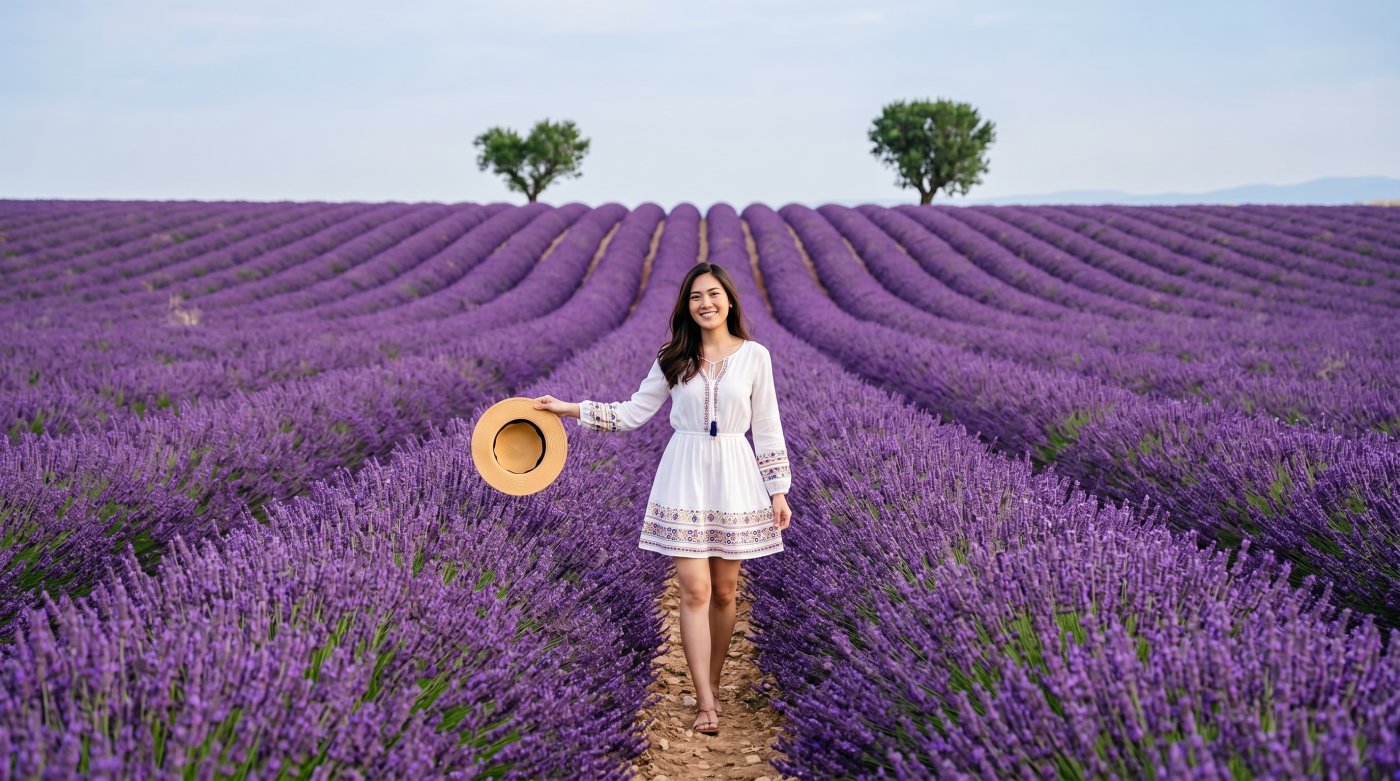
Provence covers a large area of southeastern France between the Rhône Valley and the Italian border.
It is most famous for lavender fields, but has substantial Roman ruins, medieval villages, and one of France’s strongest regional food traditions.
Few regions in France reward slow, unplanned travel quite as generously as this one.
- Avignon was the seat of the Catholic papacy from 1309 to 1377, and its Palais des Papes (Palace of the Popes) is the largest Gothic building in the world. The 2026 full adult entry price is €14.50 (Palais only, with Histopad tablet included); a combined Palais + Pont d’Avignon ticket costs €17. Children aged 8–17 pay €9.50 (Palais only) or €8 for the Pont d’Avignon alone; under 8s enter free. Open daily 9am–7pm (March 1 to November 1) and 10am–5pm (November 2 to December 18); last entry 1 hour before closing. The nearby Pont d’Avignon (Pont Saint-Bénézet) is only half its original length — the other half collapsed — which somehow makes it more interesting. Avignon hosts the world’s largest theatre festival in July (Festival d’Avignon), filling the city with performances in every available space.
- Arles has the best concentration of intact Roman monuments in France outside of Nîmes. The Arles Amphitheatre still hosts bullfighting events and concerts. Van Gogh painted over 300 works in and around Arles in 1888–1889; the Van Gogh Trail connects the locations of his most famous paintings.
- Aix-en-Provence is where Paul Cézanne was born and worked. His studio (Atelier Cézanne) is preserved and open as a museum. The Cours Mirabeau — a tree-lined boulevard with fountains — is the city’s social center. Aix has a lively market scene and a notably large student population that keeps the food and café culture active year-round.
- Lavender: The Plateau de Valensole near Manosque is the most photographed lavender field in France. For 2026, bloom at Valensole (lower altitude) typically begins in mid-to-late June, reaching peak bloom in the first two weeks of July — the safest window for classic purple-field photography. Higher-altitude areas like Sault and the Luberon extend the season into late July. Harvesting at Valensole generally starts from late July onward. Check local Provence tourism sites and lavender farm social media for real-time conditions closer to your visit, as timing shifts by a week or more depending on the year’s temperatures.
- Pont du Gard: A UNESCO-listed Roman aqueduct crossing the Gard River, built in the first century. Access to the site is free on foot; parking is charged at €9 per vehicle per day (a flat rate regardless of group size). Museum access costs €15 for adults and €13 reduced rate; children aged 4–17 pay €6. Swimming is permitted in the river below the aqueduct.
- Getting there: TGV from Paris to Avignon takes approximately 2h40. From Avignon, car rental gives full access to Provence. Buses and limited trains connect to Arles and Aix.
- Best time: April–June and September–October. July is peak season with crowds and heat; August temperatures regularly exceed 35°C. The Mistral wind sweeps the Rhône Valley from November–March, which is cold but delivers exceptional sky clarity.
For a breakdown of which month works best for different types of France travel, the best time to visit France guide covers regional timing in detail.
Normandy: D-Day Heritage and Medieval Wonders
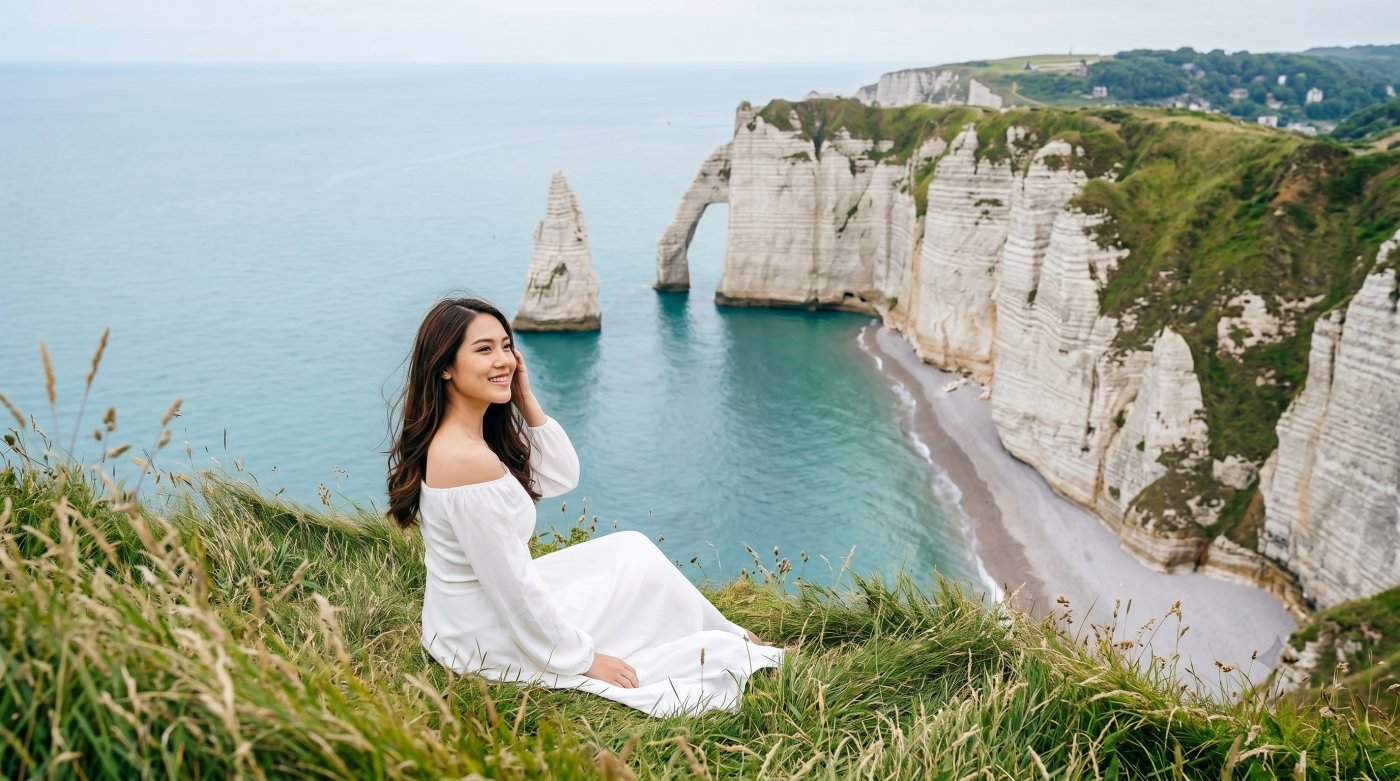
Normandy occupies France’s northwestern corner, facing the English Channel.
Its coastline is one of the most historically charged landscapes in the world — a combination of medieval pilgrimage sites, impressionist painting locations, and the D-Day landing beaches of 1944.
The sheer variety here is hard to match: you can stand in front of an 11th-century embroidered masterpiece in the morning and walk a WWII beach cemetery by afternoon.
- Mont-Saint-Michel is the most visited site in France after Paris (around 2.5 million visitors per year). The island abbey rises dramatically from tidal flats, connected to the mainland by a causeway. During spring tides, water surrounds the island — the tidal range here is one of Europe’s largest, up to 14 meters. The village and island are free to visit year-round; an entrance ticket is required only for the abbey at the summit. Abbey admission in 2026 is €16 per adult (May 1–September 30) and €13 per adult (October 1–April 30); free for visitors under 18 and for EU residents aged 18–25 (May 29–August 31, 2026). Opening hours are 9am–7pm (May 1–August 31) and 9:30am–6pm (September 1–April 30); closed January 1, May 1, and December 25. A village of shops and restaurants sits below the abbey. Visit before 9am or after 5pm to avoid the worst crowds.
- D-Day Beaches: The American sector is the most visited — Omaha Beach has the main American cemetery (Normandy American Cemetery, free entry), which is among the most moving sites in France. Utah Beach, Pointe du Hoc (where American Rangers scaled cliffs under fire), and the British and Canadian sectors at Gold, Juno, and Sword Beaches are all within a 50-km stretch of coastline. The Caen Memorial Museum (Mémorial de Caen) is the most comprehensive D-Day museum in France. A rental car is the most practical way to visit multiple beach sites.
- Bayeux normally hosts the Bayeux Tapestry — a 70-meter embroidered narrative depicting the Norman Conquest of England in 1066, the oldest surviving narrative artwork of this type in Europe. Important note for 2026 visitors: the Bayeux Tapestry Museum is currently closed for renovation works and will not reopen until October 2027. The tapestry itself is set to go on display at the British Museum in London from September 2026 to July 2027 — a once-in-a-generation opportunity to see it outside Normandy. Bayeux itself was the first French town liberated after D-Day and retains a largely intact medieval core.
- Honfleur is a small harbor town at the mouth of the Seine estuary. Its picturesque Old Port (Vieux Bassin), with its tall narrow houses reflected in the water, was a major inspiration for the Impressionist movement — Eugène Boudin, an early Impressionist, was born here. The Boudin Museum holds a significant collection of his work.
- Getting there: Trains from Paris Saint-Lazare reach Caen in approximately 2 hours. Mont-Saint-Michel requires a bus connection from Pontorson or Rennes (there is no direct train). Rent a car in Caen for D-Day sites.
- Best time: June–September for good weather. June combines D-Day commemoration events (around June 6, if that’s meaningful to your visit) with manageable crowds before French school holidays.
Alsace: Half-Timbered Villages and Wine Country
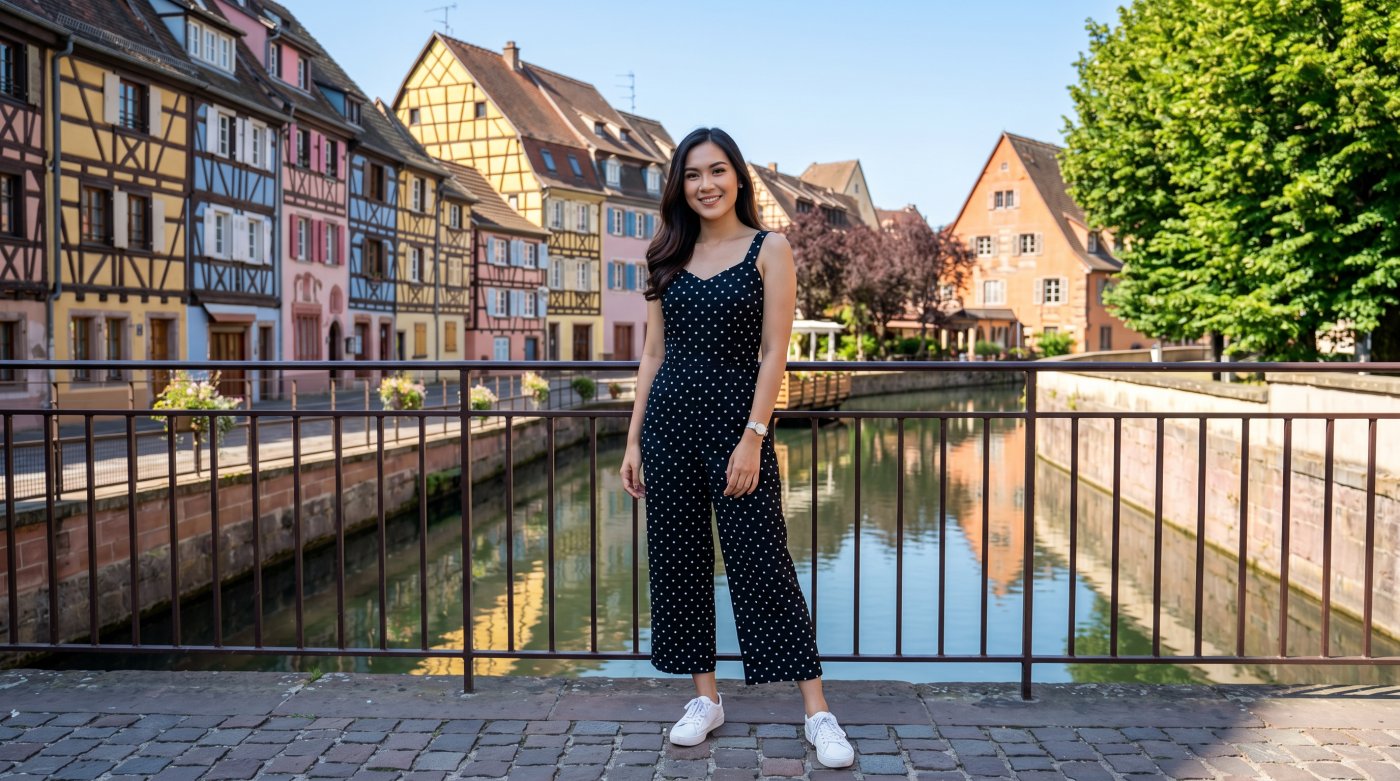
Alsace occupies a narrow strip along the Rhine in northeastern France, historically disputed between France and Germany.
The result is a region with an architecture, cuisine, and culture that blends French and German characteristics in a way found nowhere else.
From the smell of tarte flambée drifting out of a half-timbered winstub to wine cellar tastings in medieval courtyards, Alsace is the kind of place that catches people off guard with how much it delivers.
- Strasbourg is the capital and the seat of the European Parliament. The Strasbourg Cathedral (Cathédrale Notre-Dame de Strasbourg) took over 400 years to build and its spire reaches 142 meters. The Petite France quarter — half-timbered houses along canal branches — is the most photogenic part of the city and a UNESCO World Heritage site. The Christmas market (Christkindelsmärik), running since 1570, is one of Europe’s oldest and most atmospheric, operating from late November through Christmas Eve.
- Colmar is sometimes called “Little Venice” for its canal-side buildings. The Quartier de la Petite Venise is genuinely striking, though the nickname oversells the similarity. The Unterlinden Museum contains the Isenheim Altarpiece, a 16th-century polyptych widely considered one of the masterpieces of Western art. Admission in 2026 is €14 for adults (full price, fewer than 15 people); €9 for youth aged 12–17 and students under 30; free for children under 12. A group rate of €12 per person applies for groups of 15 or more. Open Wednesday–Monday, 9am–6pm (last entry 5:30pm); closed Tuesdays and on January 1, May 1, November 1, and December 25.
- Route des Vins d’Alsace: The 170 km Alsace Wine Route runs south from Marlenheim to Thann through a string of wine villages. Riesling, Gewurztraminer, Pinot Gris, and Pinot Blanc are the main varieties. The most picturesque villages include Riquewihr (largely unchanged since the 16th century), Obernai, Ribeauvillé, and Eguisheim. Most villages have caves (wine cellars) open for tasting, typically free or with a small charge.
- Getting there: TGV from Paris to Strasbourg takes 1 hour 47 minutes — one of the fastest regional connections in France. Car rental in Strasbourg for the wine route.
- Best time: October–November for harvest and foliage; November–December for Christmas markets; June–August for outdoor activities and wine route cycling.
Burgundy: Wine, History, and Mustard
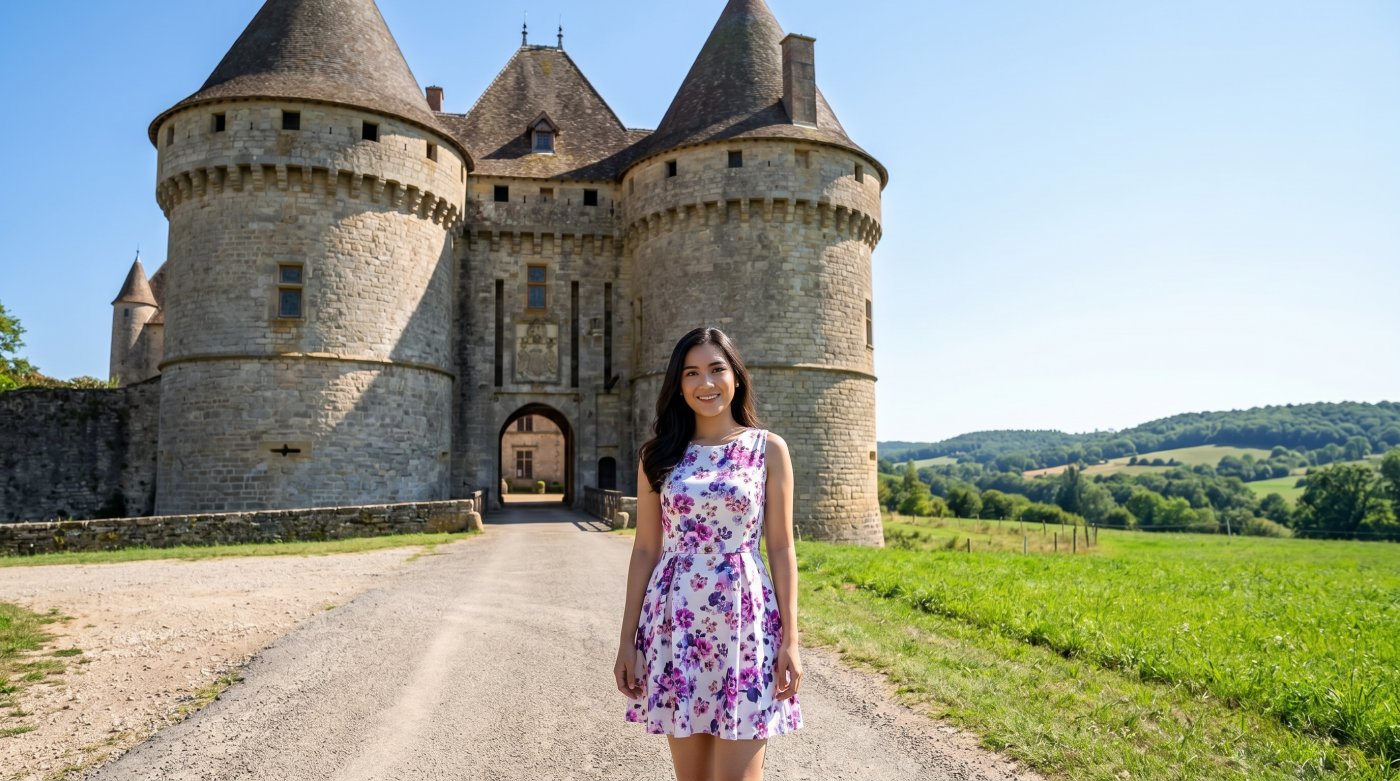
Burgundy (Bourgogne) is France’s most prestigious wine region and one of its richest historical areas.
The Côte d’Or — a 60 km limestone escarpment running north from Beaune — produces some of the world’s most sought-after Pinot Noir and Chardonnay.
This is a region where the landscape, the food, and the wine are genuinely inseparable — you don’t just visit Burgundy, you eat and drink your way through it.
- Dijon is the regional capital and worth at least a day. The Palais des Ducs de Bourgogne (Dukes’ Palace) anchors the city center; the Musée des Beaux-Arts inside is one of the largest fine art museums in France after the Louvre. Permanent collection entry is free for all visitors; a ticket is still required at the desk. Temporary exhibitions carry a separate charge. The museum is open Tuesday–Sunday, 9:30am–6pm; closed Mondays and public holidays. The mustard tradition is genuine — Dijon mustard originated here, and the covered market (Les Halles de Dijon, designed by Gustave Eiffel) is excellent for local food shopping.
- Beaune is the commercial heart of the wine trade. The Hospices de Beaune (Hôtel-Dieu), a 15th-century charity hospital with a polychrome tile roof, is the town’s main landmark. 2026 admission for the self-guided (parcours libre) visit is €12.50 for adults (18+) and €6.25 for children aged 6–17 (under 6 free); a reduced rate of €9.50 applies to students, job seekers, and Culture Pass holders. Open daily 9am–7:30pm (April 1–November 15) and 9am–12:30pm & 2pm–6:30pm (November 16–March 31); open every day of the year including public holidays. The annual Vente des Hospices de Beaune wine auction in November (held on the third Sunday of the month) is the world’s most famous charity wine auction and attracts international buyers and press.
- The Côte d’Or wine villages between Gevrey-Chambertin (north) and Santenay (south) reward slow exploration. Domaine tastings require advance booking at top producers; cooperative caves in villages like Pommard and Volnay offer accessible walk-in tastings.
- Vézelay deserves mention for travelers interested in Romanesque architecture. The Basilica of Sainte-Marie-Madeleine sits on a hilltop and is one of the finest Romanesque churches in France — a starting point for the Santiago de Compostela pilgrimage.
- Canal du Nivernais and Canal de Bourgogne: Canal boat rental is a particularly appropriate way to experience Burgundy’s landscape — slow pace, vine views, lockkeeper encounters.
- Getting there: TGV from Paris to Dijon takes approximately 1h35. Beaune is 20 minutes south by regional train. Car rental or cycling for the Côte d’Or wine route.
- Best time: September–October for harvest, with colors and activity across all the wine villages. June–August for cycling and outdoor activity.
French Alps: Chamonix, Annecy, and Mountain Culture
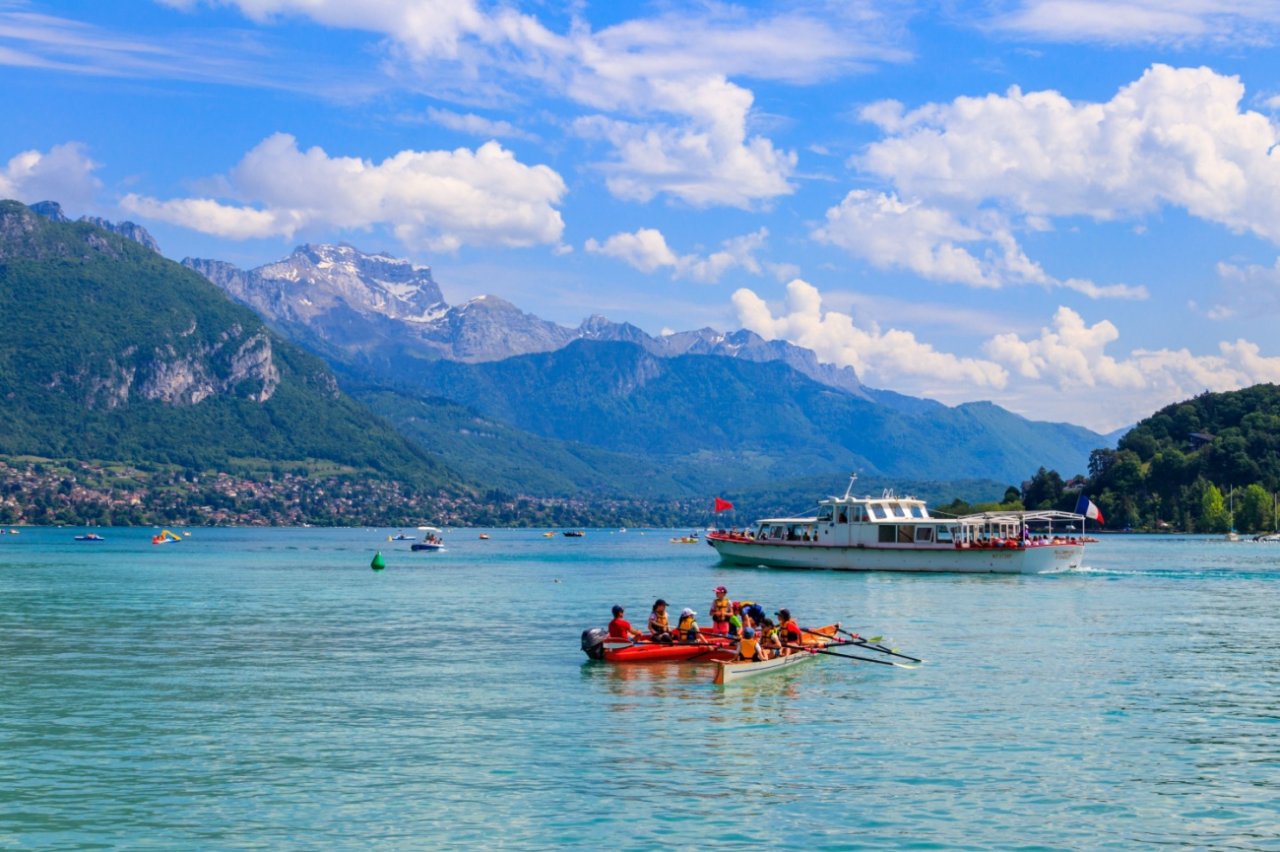
The French Alps are the largest mountain range in Western Europe, straddling the French-Italian-Swiss border.
They offer both world-class winter skiing and exceptional summer hiking.
The range covers enough ground and altitude variation that two visitors with entirely different interests — one on skis, one with a lake kayak — can both come away saying it was the best trip of their lives.
- Chamonix sits at the foot of Mont Blanc (4,808 meters, Western Europe’s highest peak). The Aiguille du Midi cable car reaches 3,842 meters — the views across the Mont Blanc massif and into Italy and Switzerland are extraordinary. 2026 pricing (June 1–November 30): round-trip adult €83; one-way adult €61; round-trip child (5–14) €70.60; one-way child €51.90; family pass (2 adults + 2 children) €257.40. Children under 5 ride free. Note that in July and August, a €2 per person advance reservation fee applies and timeslot booking is strongly recommended. In winter, Chamonix is one of the world’s most respected ski areas, known for challenging off-piste terrain and the famous Vallée Blanche glacier run (20 km off-piste descent requiring a guide). In summer, the Tour du Mont Blanc (170 km, 11 days typical) starts here; shorter sections of the route can be walked as day hikes.
- Annecy is regularly called one of France’s most beautiful cities. Lake Annecy (Lac d’Annecy) is one of the cleanest lakes in Europe. The medieval old town with its canals, the 16th-century Palais de l’Isle (former prison in the middle of the canal), and the Château d’Annecy (castle museum) are the main sights. A 42 km cycling path circles the lake. Summer water sports — kayaking, paddleboarding, swimming — are excellent.
- Grenoble is less of a tourist city and more of a genuine urban center with surrounding Alpine access. The Bastille fortress above the city is reached by bubble gondola (téléphérique), one of the world’s first urban cable cars (built 1934). 2026 pricing: round-trip adult €9.80; one-way adult €6.60; round-trip child (5–15) €5.10; one-way child €3.70. The cable car operates year-round except January. The city has an excellent contemporary art museum (Musée de Grenoble) with significant Matisse and Picasso holdings.
- Getting there: TGV from Paris to Grenoble takes approximately 3 hours; to Annecy, approximately 2h20. Chamonix requires a connection in Geneva (approximately 2 hours by train) or via Saint-Gervais-les-Bains. Car is practical for ski resort access.
- Best time: December–March for skiing; late June–September for hiking and mountain activities. May–June at altitude can still have snow on high trails.
Atlantic Coast: Bordeaux, Biarritz, and La Rochelle
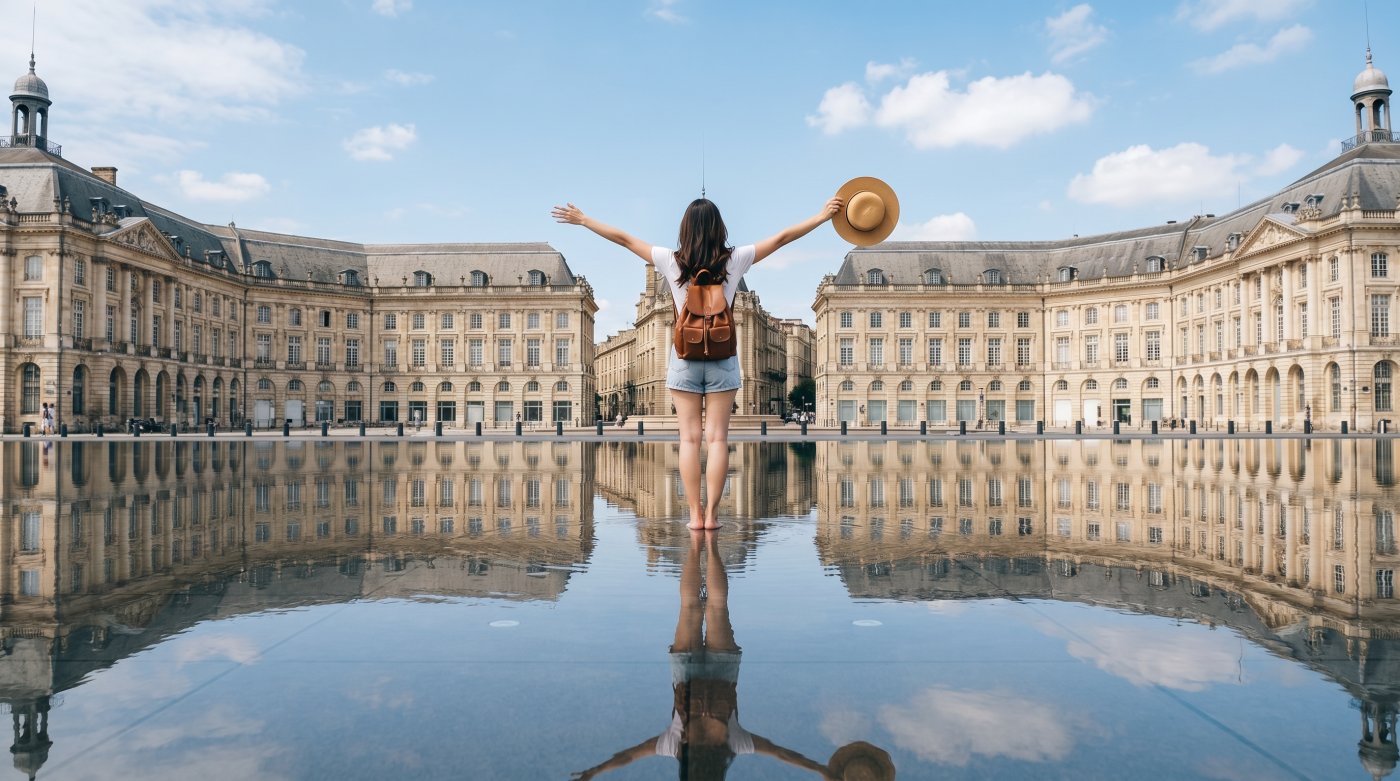
France’s Atlantic coast stretches from the Spanish border north through the wine estates of the Gironde to the white salt marshes of the Vendée.
It is less famous internationally than the Mediterranean coast but offers excellent beaches, world-class wine, and some of France’s most distinctive regional cultures.
The Atlantic side tends to attract visitors who have already done Paris and the Riviera and are now discovering that France has an entirely different personality west of the Massif Central.
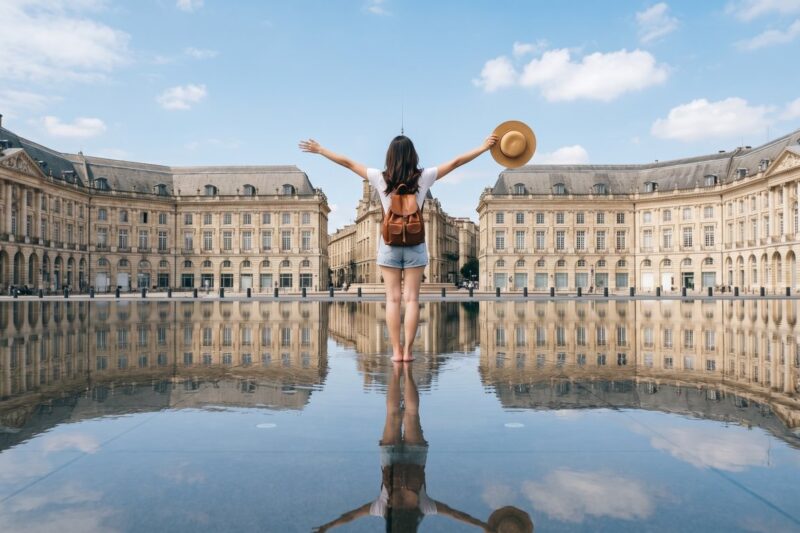
- Bordeaux is one of France’s great cities — significantly revitalized since the TGV connection to Paris opened in 2017 (2 hours from Paris). The historic city center is a UNESCO World Heritage Site for its 18th-century Place de la Bourse, limestone mansions, and riverside quays. The Cité du Vin is an architecturally striking wine museum and educational center. Wine tourism is the main draw: Saint-Émilion (45 minutes east, accessible by train) is a medieval hilltop town surrounded by classified wine estates with walk-in tastings.
- Biarritz is where surfing arrived in continental Europe in the 1950s. The town has Basque cultural roots — the region straddles the French-Spanish border — and a distinct identity separate from mainstream France. The Grande Plage is the town center beach; the Rocher de la Vierge sea stack connected to the promenade by a bridge is the town’s most photogenic landmark. September and October offer some of the best Atlantic surf conditions with far fewer tourists.
- La Rochelle has one of France’s best-preserved medieval ports. The three historic entrance towers (Tour de la Chaîne, Tour Saint-Nicolas, Tour de la Lanterne) guarded the harbor entrance for centuries. Important 2026 note: the Tour Saint-Nicolas is currently closed for structural consolidation works; the Tour de la Chaîne and Tour de la Lanterne remain open. Individual ticket admission is €9.50 per adult; teenagers (12–17) and children under 12 enter free; EU residents under 26 enter free. A combined ticket with one of La Rochelle’s other museums (Natural History, Maritime, or New World) costs €15. Opening hours: July–August daily 10am–6:30pm; April–June and September 10am–12:45pm and 2pm–6:30pm; October–March 10am–12:45pm and 2pm–5:30pm. Closed January 1, May 1, and December 25. The Aquarium La Rochelle holds 3 million liters of water and 12,000 marine animals. The nearby Île de Ré (connected by bridge) offers 50 km of cycling paths, salt marsh landscapes, and several small villages worth exploring.
- Getting there: TGV from Paris to Bordeaux takes approximately 2 hours; to La Rochelle, approximately 2h20; to Biarritz, approximately 4h30. Car recommended for full exploration of the wine estates and coast.
- Best time: June–September. July–August is peak for beaches but crowded. September offers good Atlantic surf and empty beaches.
Brittany: Celtic Heritage and Dramatic Coastline
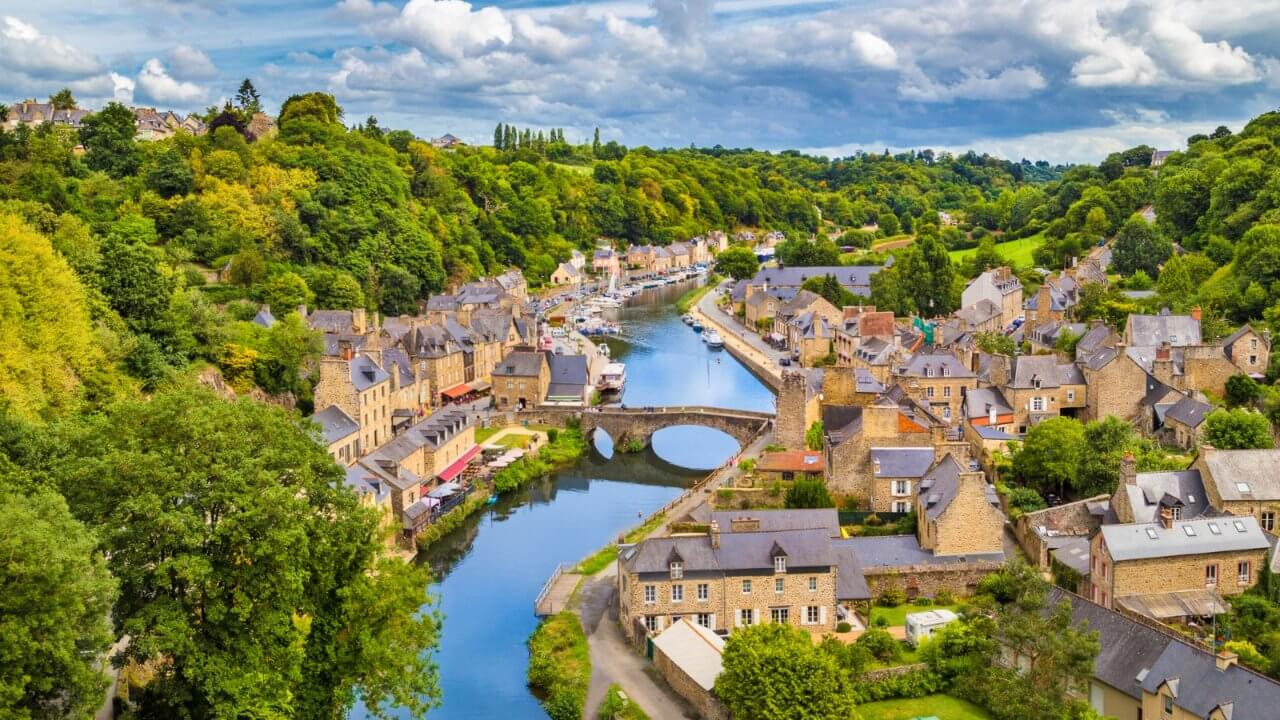
Brittany (Bretagne) occupies France’s northwestern peninsula.
It has a distinct Celtic identity, its own language (Breton, related to Welsh), a strongly maritime culture, and some of France’s most dramatic coastal scenery.
The coastline here is the kind that makes you understand why the ancient Celts built their mythology around the sea — raw, elemental, and genuinely beautiful on a cloudy day.
- Saint-Malo is a walled port city largely rebuilt after WWII bombing (which destroyed 80% of the old town) but authentically restored. The ramparts offer a 2 km circuit walk with Atlantic views. Saint-Malo was historically a corsair (privateer) city; its maritime history is explored in the Musée d’Histoire de la Ville et du Pays Malouin. Swimming beaches extend east and west of the walled city.
- Mont-Saint-Michel is technically on the Normandy border but is often approached from Brittany. See the Normandy section.
- Carnac contains the world’s largest collection of megalithic monuments. Over 3,000 standing stones (menhirs) in multiple alignments stretch across 4 km, dating to approximately 3300 BCE. Access rules for 2026: From April to September, entry inside the alignments is only permitted via paid guided tours (book in advance, especially in summer) — this policy exists to prevent erosion of the fragile stones. From October to March, access is free and self-guided. Year-round, a free footpath trail runs around the perimeter of the alignments, allowing visitors to view the stones without entering the fenced zone. The stones’ purpose remains genuinely unknown, which makes the site more compelling, not less.
- Quimper is the cultural capital of Cornouaille and the strongest center of Breton culture in France. The Gothic Cathédrale Saint-Corentin dominates the old town. The city is known for faïence pottery (Quimper-painted earthenware) and Breton music festivals. Crêperies serving both galettes (buckwheat, savory) and sweet crêpes are found on every corner — Brittany is the origin of the crêpe tradition in France.
- The Crozon Peninsula (between Brest and Quimper) is Brittany’s most scenically dramatic coastal section — cliffs, sea stacks, empty beaches, and walking paths along the GR34 coastal trail.
- Getting there: TGV from Paris to Rennes takes approximately 1h30; to Brest, approximately 3h45; to Quimper, approximately 3h30. Car rental from Rennes for full coastal exploration.
- Best time: July–August for beaches and coast. May–June for lower prices and fewer crowds with reasonable weather.
Languedoc: Carcassonne, Nîmes, and Montpellier
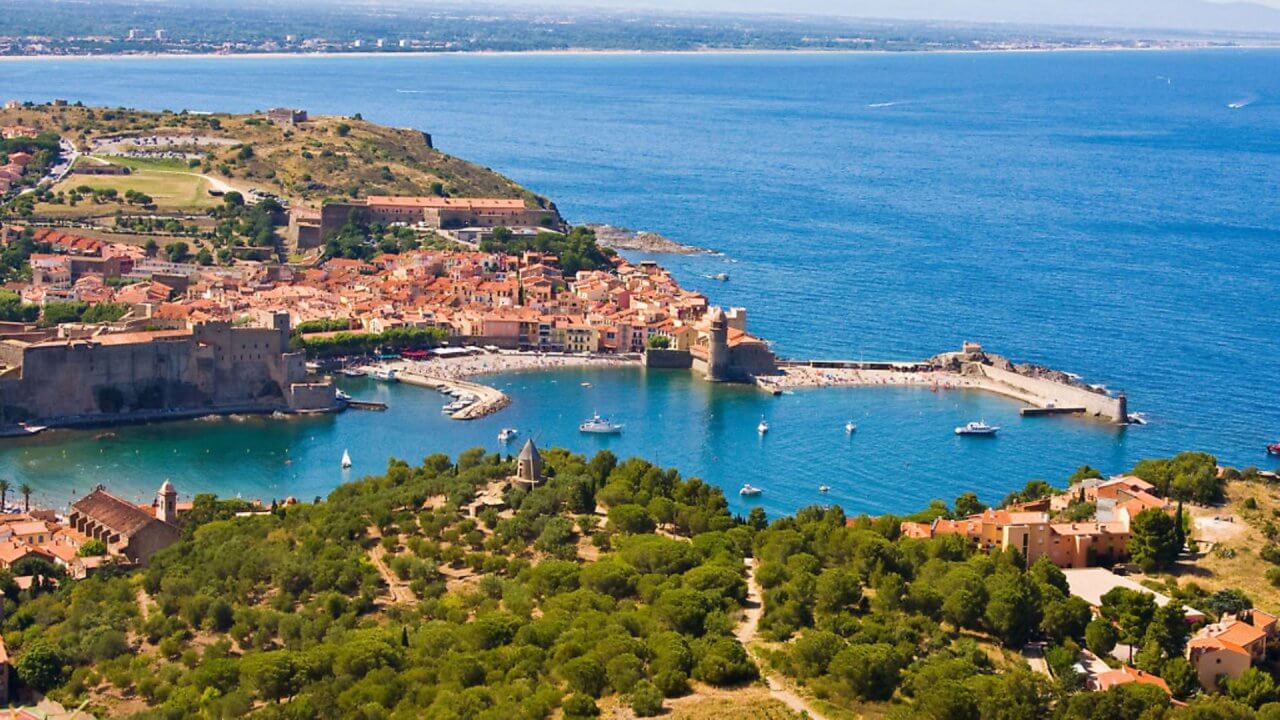
The Languedoc region stretches along France’s southern Mediterranean coast west of the Rhône, between Provence and the Pyrenees.
It is less touristically saturated than Provence and significantly cheaper — offering Mediterranean climate, Roman ruins, medieval fortresses, and beaches at lower prices.
For travelers who feel the Provence tourist trail has become a bit too well-worn, the Languedoc delivers a comparable quality of experience at noticeably lower cost.
- Carcassonne is the most dramatic medieval fortress in France. The Cité — the walled medieval city — is ringed by double walls stretching 3 km with 52 towers. It is a UNESCO World Heritage Site and the most visited monument in the Languedoc. Walking the Cité streets and outer areas is free; entry to the Château Comtal and inner ramparts requires a ticket. 2026 pricing: €21 per adult (April 1–September 30) and €13 per adult (October 1–March 31); visitors aged 7–17 pay €6 year-round; under 7s and EU residents under 26 enter free. Free admission applies on the first Sunday of each month from January–March and November–December. Timeslot pre-booking is required and strongly recommended in summer. Stay overnight in the Cité if budget allows — evenings after day-trip coaches depart transform the atmosphere.
- Nîmes has the best-preserved Roman arena still in regular use in the world — the Arènes de Nîmes (built circa 70 CE) seats 24,000 for concerts and bullfights. In 2026, the arena hosts the Festival de Nîmes from June 11 to July 26, featuring major concerts (past and upcoming acts include Vanessa Paradis, Sabaton, and others). The Maison Carrée nearby is one of the most intact Roman temples anywhere, and inspired Thomas Jefferson’s design for the Virginia State Capitol. 2026 Maison Carrée admission: €6.50 adult full price, €5.50 reduced rate, €3.50 for ages 7–17. A 3-monument pass (Arènes + Maison Carrée + Tour Magne) costs €14.50 full / €12 reduced / €6.50 for ages 7–17; a family pass (2 adults + 2 children) for all 3 monuments is €29.50, valid 3 days.
- Montpellier is a major university city (30% student population) with a medieval center, excellent tram network, and the Place de la Comédie as its focal point. The Faculty of Medicine of Montpellier is the oldest medical school in the world still operating. The Promenade du Peyrou offers elevated views to the Alps on clear winter days.
- Canal du Midi: A UNESCO-listed canal running 240 km from Toulouse to Sète, completed in 1681. Towpath cycling between Carcassonne, Béziers, and the Mediterranean coast is one of France’s best multi-day cycling routes.
- Getting there: TGV from Paris to Montpellier takes approximately 3h20; to Nîmes, approximately 3h10. Carcassonne is served by TGV from Paris in approximately 4h30 (some services require a change). Car useful for Canal du Midi access.
Lyon: Food Capital and Renaissance Heritage
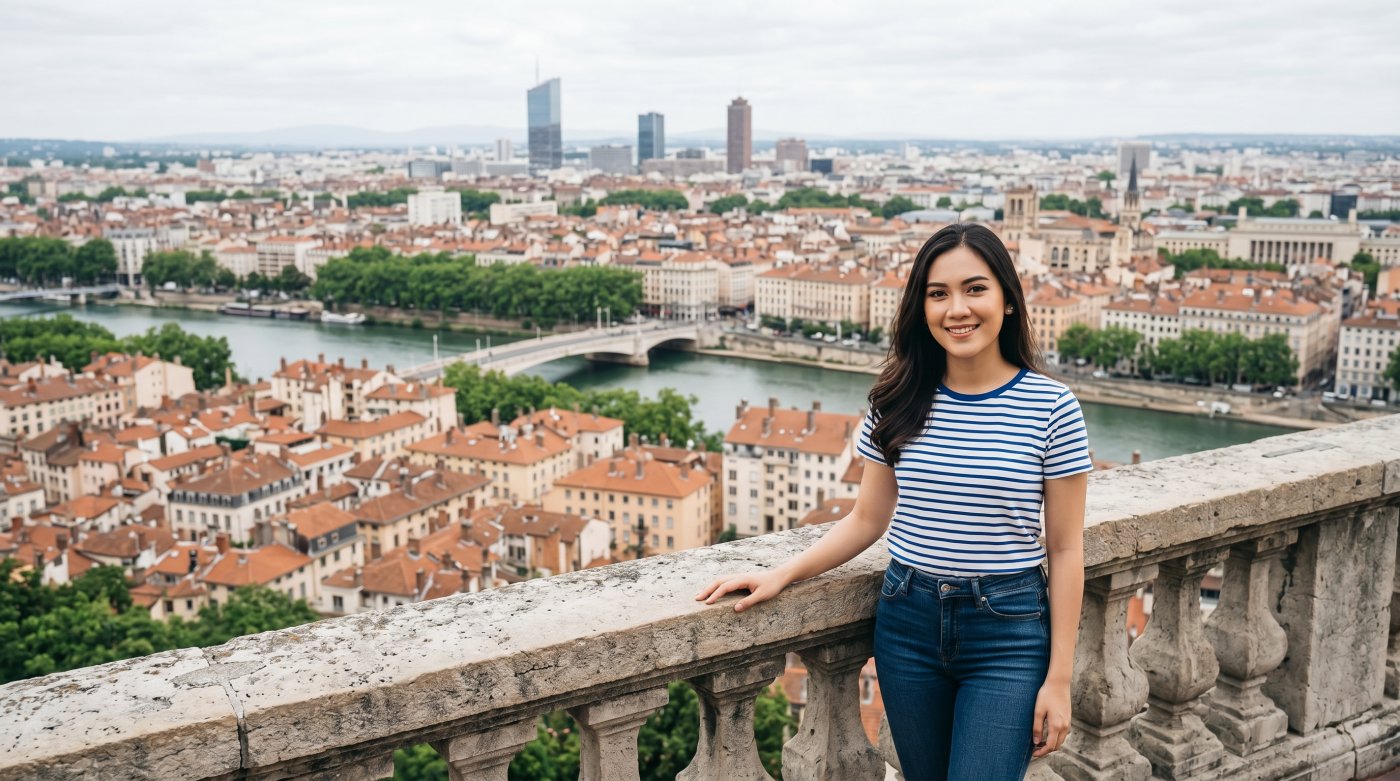
Lyon occupies a unique position in France: it has genuine rivals to Paris in both culture (as France’s second city for arts and institutions) and food (widely considered Europe’s gastronomic capital).
The city rewards visitors who show up without a fixed itinerary and simply follow the smell of something delicious down a cobblestone alley.
The city sits at the confluence of the Rhône and Saône rivers.
The old town (Vieux Lyon) on the west bank is the largest Renaissance district in France and a UNESCO World Heritage Site.
The Traboules — a network of 500+ covered passageways running through building courtyards, used historically by silk workers to transport fabric — are free to explore and the city’s most distinctive architectural feature.
The Silk District (La Croix-Rousse) above Vieux Lyon was the center of France’s silk-weaving industry from the 15th century.
The Maison des Canuts (silk worker museum) demonstrates traditional Jacquard loom weaving.
The neighbourhood’s steep streets and bohemian character make it the most interesting area to explore on foot.
Lyon’s bouchons — traditional Lyonnaise bistros — serve the city’s distinctive cuisine: quenelles (poached fish dumplings), salade Lyonnaise (frisée with bacon and poached egg), andouillette (offal sausage), and tarte aux pralines.
A two-course lunch in a genuine bouchon costs €14–18.
The Fête des Lumières (Festival of Lights) in December transforms Lyon’s buildings, bridges, and squares into illuminated art installations.
The event runs from Saturday December 5 to Tuesday December 8, 2026, over four evenings from 6pm to midnight (10pm on Sunday), and is entirely free to attend.
It draws around 2 million visitors annually — the largest light festival in the world.
Book restaurants well in advance; the city fills up completely across all four nights.
Getting there: TGV from Paris to Lyon takes approximately 2 hours. Lyon Part-Dieu is the main station and a major TGV hub for onward connections to the south.
Natural Parks: Vanoise, Pyrenees, and Camargue
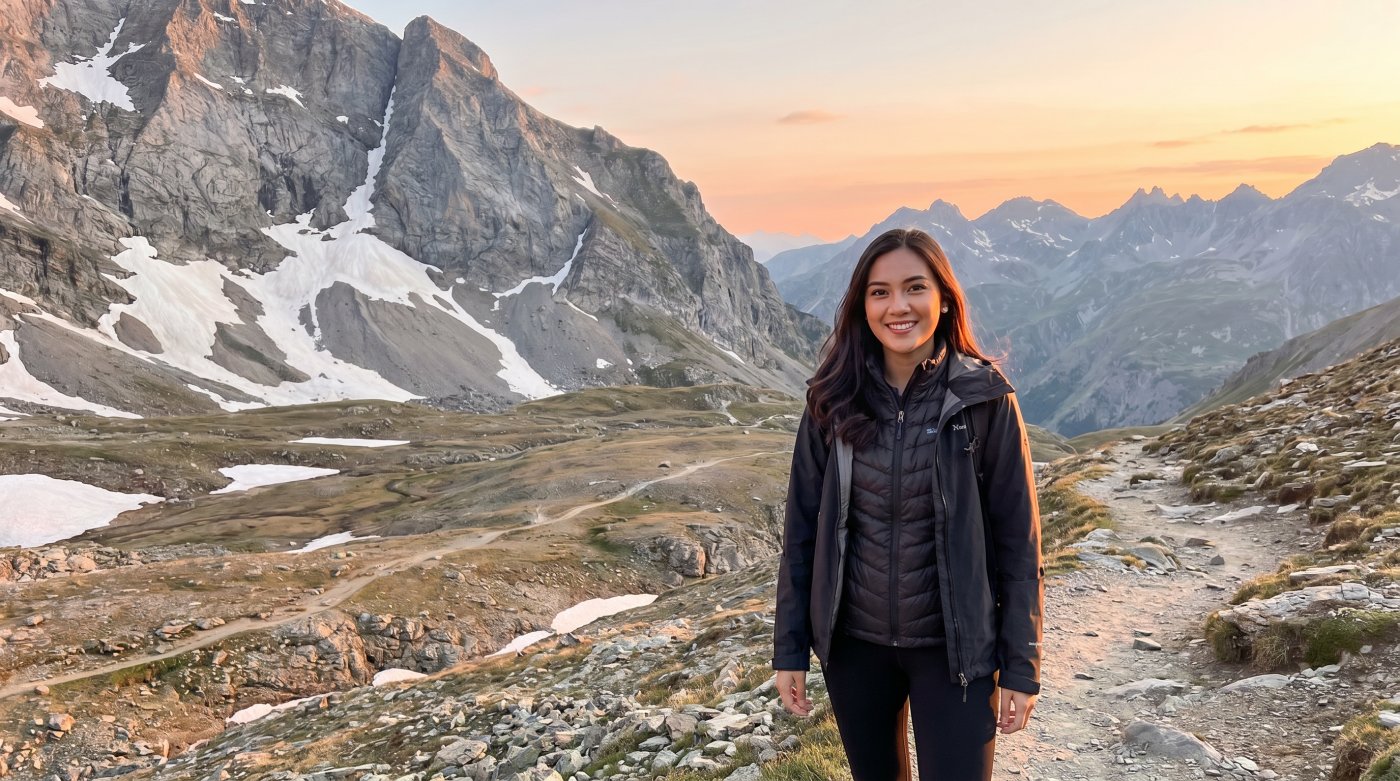
France’s national and regional parks cover over 14% of the country and encompass three distinct landscape types worth specific mention.
- Vanoise National Park (Alps): France’s first national park, established 1963. Shares a border with Italy’s Gran Paradiso National Park — together they form the largest protected Alpine area in Western Europe. Known for ibex (Alpine wild goat), chamois, marmots, and golden eagles. The park has 700 km of marked trails accessible from villages along the Tarentaise and Maurienne valleys.
- Pyrenees National Park: Running along the Spanish border, this park protects a landscape of high peaks (Vignemale at 3,298 meters), glacial valleys, and traditional pastoral culture. The Cirque de Gavarnie — a natural amphitheatre of rock with a 422-meter waterfall — is one of France’s most spectacular landscapes and a UNESCO World Heritage Site.
- Camargue Regional Nature Park: The Camargue is the Rhône River delta — a flat landscape of salt marshes, lagoons, and farmland between Arles and the Mediterranean. It is famous for white horses (chevaux camarguais), black bulls, and flamingos, all of which can be seen on horseback rides or walking trails from the village of Saintes-Maries-de-la-Mer. The best birdwatching is in April–May and August–October.
Planning Your France Itinerary
The diversity of France’s regions is both its greatest asset and its main logistical challenge.
A 10-day France trip that tries to cover Paris, Loire Valley, Provence, Riviera, and Alsace will feel rushed.
Better to choose two or three regions and explore them properly.
- For first-time visitors: Paris (3–4 days) + Loire Valley (2 days) + Provence or Riviera (3–4 days) is a classic and satisfying 10-day route.
- For return visitors: Skip Paris entirely and focus on a single region — Alsace wine route, Burgundy harvest, Brittany coastal walk, or a slow Loire cycling trip.
The getting around France guide covers TGV journey times and which regions are most efficiently connected by rail vs. car.
For families with children considering specific regions, the France family travel guide covers kid-friendly aspects of each destination — from Loire Valley castle visits to Riviera beach logistics.
For day trips that extend any of these regions (particularly from Paris), the day trips from Paris guide covers Versailles, Giverny, Champagne, and beyond.
The AI Nearby Trip Ideas tool generates suggestions for side trips from any of France’s regional bases based on your interests.
Frequently Asked Questions (FAQs)
No objective answer exists, but Provence consistently tops surveys.
Its combination of lavender fields, medieval villages, Roman monuments, and Mediterranean coastline creates a concentrated visual experience.
Alsace (wine villages + Christmas markets), the Loire Valley (château country + river cycling), and the French Riviera (mountain backdrop + azure sea) are the primary alternatives depending on interest.
Three weeks is realistic for a thorough country overview covering Paris plus 4–5 distinct regions.
Ten days lets you cover Paris plus one or two regions well.
For a single-city or single-region trip, 7 days is enough to experience a place properly.
Most first-time visitors try to cover too much geography and end up spending significant time on trains and buses.
The Limousin, Creuse, and Corrèze departments in central France are among the least visited in the country.
The Jura mountains between Burgundy and Switzerland, the Basque interior around Bayonne and Pau, and the high Auvergne plateau around Clermont-Ferrand offer genuine off-the-beaten-path France with good food, dramatic landscapes, and minimal tourist infrastructure.

A lifestyle and OOTD blogger, Kannaya Nareswari enjoys the small pleasures of cooking, traveling, and documenting ordinary events. She uses genuine storytelling to communicate her love of fashion, culinary explorations, and wanderlust. She is based between Bali and Bandung. She enjoys enjoying coffee at a secret café or experimenting with recipes in the kitchen when she's not traveling to new places or styling her most recent ensemble.