





Getting Around France: Trains, Cars, Buses, and More – France has one of Europe’s best transport networks.
The TGV high-speed train connects Paris to most major cities in under three hours.
Regional SNCF trains reach smaller towns.
Driving gives you access to the countryside and villages that trains miss entirely.
Budget options — BlaBlaCar ridesharing and FlixBus coaches — cut intercity costs significantly.
This guide covers every realistic way to move around France, from the TGV down to renting a bicycle in a Loire Valley village.
Getting around France efficiently is the foundation for seeing the best things to do in France without wasting time on logistics.
Key Highlights
- The TGV reaches speeds of 320 km/h and connects Paris to Lyon in 2 hours, Marseille in 3 hours, Bordeaux in 2 hours, and Nice in 5.5 hours.
- SNCF regional TER trains cover destinations the TGV doesn't reach, including wine regions, market towns, and coastal areas.
- Driving is the best option for rural France: the Dordogne, Brittany coast, Alsace wine route, and Normandy countryside are all more accessible by car.
- BlaBlaCar ridesharing and FlixBus coaches can reduce intercity travel costs by 50–70% compared to standard TGV fares.
- The Paris Metro has 16 lines and over 300 stations — a weekly Navigo pass covers unlimited travel across all zones for a flat fee.
Getting to France: International Arrivals
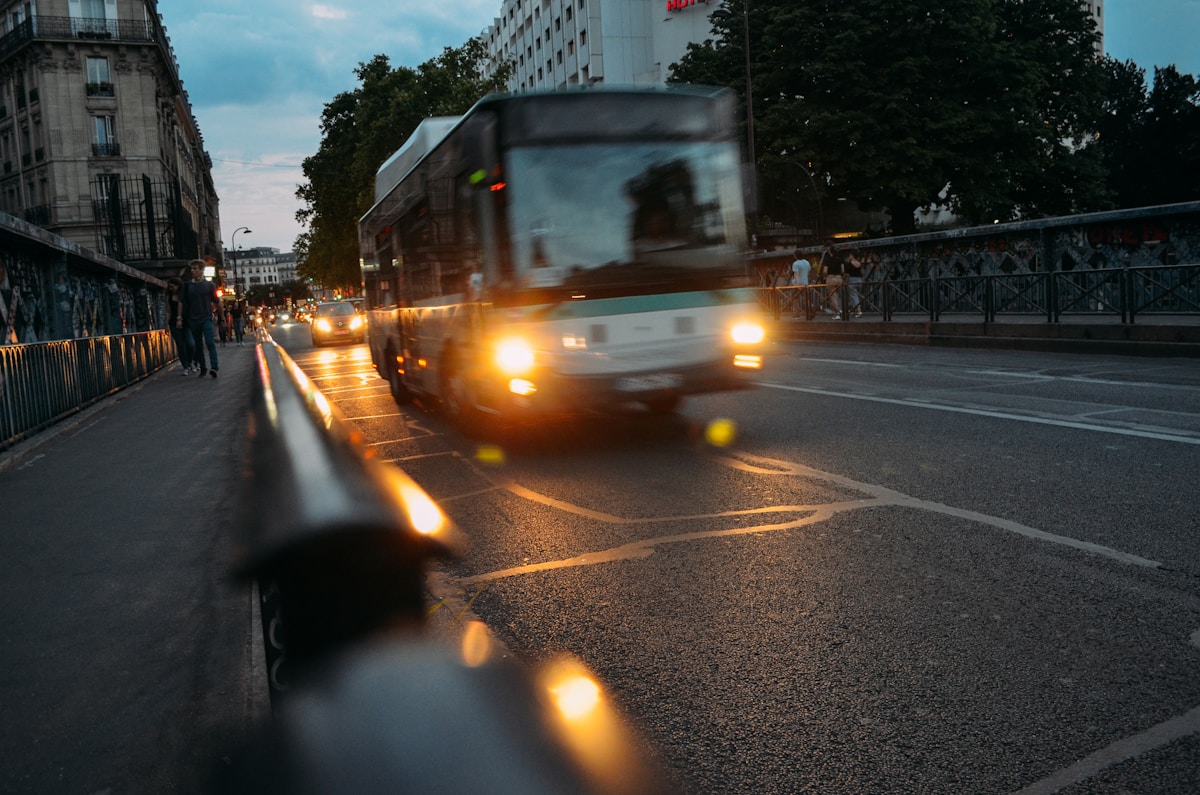
Before navigating France internally, you need to get there.
Three main entry options serve most travelers.
By Air: Charles de Gaulle and Other Airports
Paris-Charles de Gaulle (CDG) is France’s main international hub.
It serves over 300 direct destinations and handled around 72 million passengers in 2025, making it the third busiest airport in Europe.
CDG has three terminals spread across a large campus — confirm your terminal before booking transfers, as walking between terminals can take 30–45 minutes.
Paris-Orly (ORY) serves mostly European routes and domestic French destinations.
It is closer to central Paris (15–20 km vs. CDG’s 25 km) but has fewer intercontinental connections.
Other international airports with relevant France connections:
- Nice Côte d’Azur (NCE): Major gateway for the Riviera, with direct flights from many European cities and some transatlantic routes
- Lyon Saint-Exupéry (LYS): Serves central and southern France
- Marseille Provence (MRS): Gateway to Provence and the south
- Strasbourg (SXB): Entry point for Alsace and the Rhine
By Train: Eurostar from London
The Eurostar runs from London St Pancras to Paris Gare du Nord in approximately 2 hours 16 minutes at its fastest, with an average journey time of around 2 hours 28 minutes.
Direct services also run from London to Lille, Brussels, and Amsterdam.
Eurostar is more convenient than flying for central London to central Paris journeys — no airport check-in, no baggage fees on standard tickets, and you arrive in the heart of the city at Gare du Nord rather than 45 minutes outside it.
Book in advance: Eurostar Standard fares from London to Paris start from around £44 one way for early bookings, but rise sharply for peak departures and last-minute purchases — prices can exceed £300 closer to the travel date.
By Ferry: Cross-Channel Options
Ferries serve travelers coming from the UK or Ireland.
The main routes:
- Dover–Calais (P&O, DFDS, Irish Ferries): 90–100 minute crossing; up to 35 sailings daily operated around the clock, 364 days a year; essential if bringing a vehicle
- Portsmouth–Caen / Cherbourg / Le Havre (Brittany Ferries): 6–10 hours overnight or day crossings; useful for road trips in Brittany and Normandy
- Newhaven–Dieppe (DFDS): 4-hour crossing; less frequent
The LeShuttle (formerly Eurotunnel Le Shuttle) is not a ferry but a drive-on train through the Channel Tunnel, running between Folkestone and Coquelles (near Calais) — not Dover.
The tunnel crossing itself takes 35 minutes. At peak times, LeShuttle runs up to four departures per hour, 24 hours a day, 365 days a year, making it one of the most flexible options for drivers.
Book in advance at leshuttle.com, especially during summer and school holidays when demand spikes.
Getting Around France by Train: The National Rail System
France runs one of the most comprehensive rail networks in Europe — whether you’re crossing the country at 300 km/h or pottering between market towns in Provence, the train is almost always a serious option worth pricing before you default to flying or driving.
The TGV High-Speed Network
The TGV (Train à Grande Vitesse) is the fastest and most practical way to connect major French cities.
It runs at up to 320 km/h on dedicated high-speed lines.
Key TGV journey times from Paris:
| Destination | Journey Time | Typical Frequency |
|---|---|---|
| Lyon | 2h | Every 30–60 min |
| Bordeaux | 2h | Every 1–2h |
| Marseille | 3h | Every 30–60 min |
| Montpellier | 3h20 | Every 1–2h |
| Nice | 5h30 | Several daily |
| Strasbourg | 1h47 | Hourly |
| Rennes | 1h30 | Several daily |
| Nantes | 2h | Hourly |
| Lille | 1h | Every 30 min |
TGV trains have two classes.
Second class (seconde) is comfortable, with reasonable seat pitch and power sockets on most trains.
First class (première) adds wider seats, more legroom, and complimentary drinks on some routes.
The price gap between classes is meaningful — check if the extra cost is worth it for your journey length.
Booking TGV tickets: The SNCF Connect app and website (sncf-connect.com) handle all bookings.
Early booking — 2–3 months ahead for peak summer and holiday dates — delivers the lowest fares.
Last-minute TGV tickets can be expensive.
Ouigo, SNCF’s low-cost TGV brand, runs select high-speed routes at significantly lower prices but with more restrictions on baggage.
SNCF Regional Trains: TER Network
The TER (Transport Express Régional) network covers routes the TGV doesn’t.
This is your connection to smaller cities, wine towns, coastal villages, and inland destinations.
TER trains are slower than TGV but cover a much wider geographic footprint.
Many regional services run hourly or better between medium-sized cities.
On less-used rural lines, frequency can drop to 3–4 trains per day — always check the schedule in advance.
Practical note: Regional TER passes (Pass TER) are sold per region and offer day-of-travel discounts for flexible itineraries.
These are separate from the national Eurail pass.
Intercity Trains: Intercités
Between TGV and TER sits a middle category — Intercités trains serving medium-distance routes not covered by high-speed infrastructure.
These include routes like Paris–Toulouse, Paris–Clermont-Ferrand, and the overnight trains (see below).
Night Trains: Intercités de Nuit
France restarted and expanded its overnight train network from 2023 onward, with all routes operated by SNCF under the Intercités de Nuit brand.
Night trains currently serve Paris Austerlitz to:
- Briançon / Gap (Alps)
- Latour-de-Carol / Cerbère (Pyrenees, with onward connection to Barcelona via Catalan regional trains) — note: the Paris–Latour-de-Carol service remains suspended as of mid-2026 due to a landslide between Foix and Ax-les-Thermes on 18 February 2026; repair work is ongoing
- Aurillac / Rodez / Albi (Massif Central)
- Toulouse / Lourdes / Tarbes (southwest)
- Nice / Cannes / Antibes / Toulon / Marseille (Côte d’Azur)
Sleeper options include reclining seats (from €19), 2nd class 6-berth couchettes (from €29), and 1st class 4-berth couchettes (from €59).
You can also privatize an entire couchette compartment for groups, starting from €150 for a 6-berth or €180 for a 4-berth.
Night trains let you save a night’s accommodation while covering ground — practical for budget travelers or those with limited time.
Rail Passes: Are They Worth It?
The Eurail France Pass gives a set number of travel days within a fixed period (e.g., 3 days within 1 month).
Useful if you plan to take several long TGV journeys that you’d otherwise book at full price.
The math: a Eurail pass makes sense if you’re taking 4+ long-distance TGV journeys and couldn’t book in advance (when early booking would have been cheaper).
For most structured itineraries with planned routes, advance individual tickets are cheaper.
Rail passes are most valuable for spontaneous or open-ended travel.
Note: Eurail pass holders still pay a compulsory seat reservation fee on TGV trains — either €10 or €20 per journey depending on availability.
The cheaper €10 allocation is limited to around 50 seats per TGV, so in peak season those sell out weeks in advance, leaving only the €20 option.
Book reservations as early as possible through SNCF directly or the Eurail self-service system (which adds a €2 fee per traveler per train).
Getting Around Paris

Paris has one of the world’s most comprehensive urban transport systems.
You can reach virtually any part of the city and its suburbs without a car.
The Paris Metro
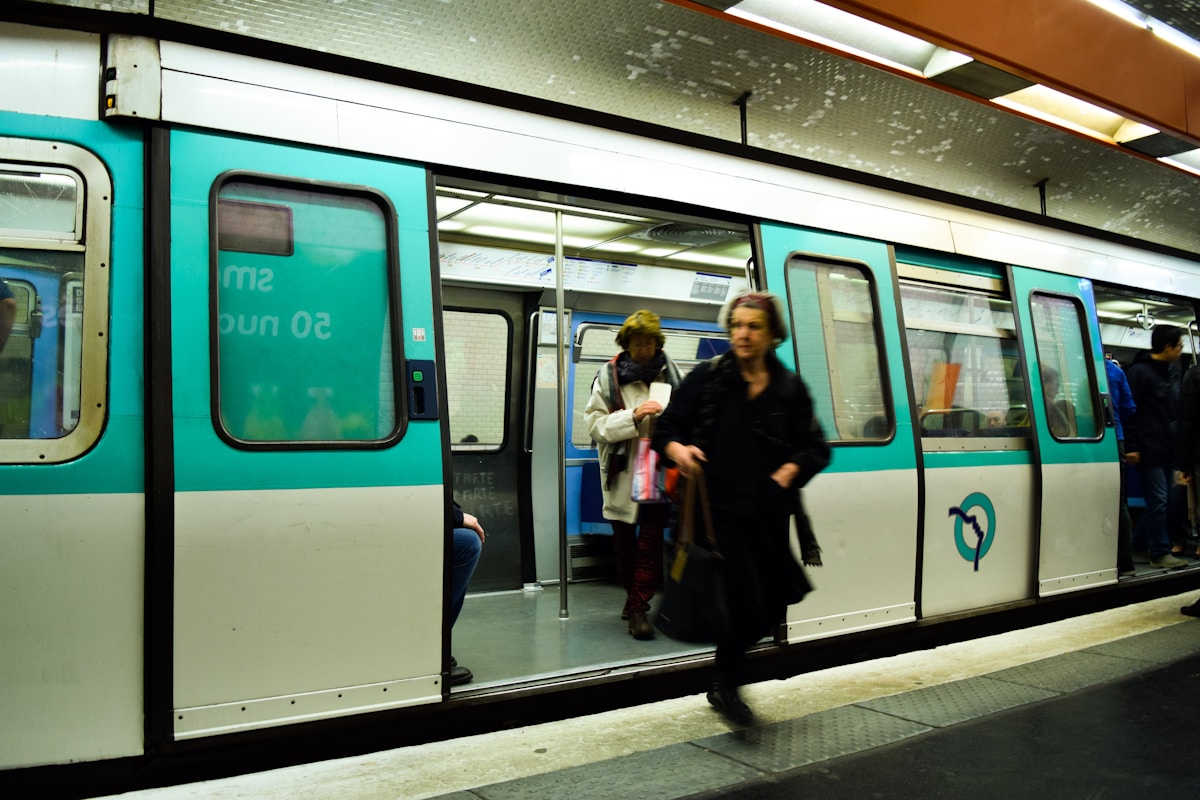
The Metro has 16 lines, runs from approximately 5:15am to 1:15am (2:15am on Friday and Saturday nights), and serves over 300 stations.
Line density in central Paris is high enough that you’re rarely more than 10 minutes’ walk from a station.
Lines run every 2–8 minutes during peak hours.
Standard daytime frequency is every 4–6 minutes.
For detailed navigation, Metro maps, Navigo pass information, and airport transfer options, the getting around Paris guide covers all logistics for navigating the capital.
The RER Regional Express
The RER is a separate, faster network of 5 lines running through and far beyond Paris.
Key uses:
- RER B: CDG Airport to central Paris (35–45 minutes, €14 for the dedicated Paris Region ↔ Airports ticket — note that standard tickets t+ are not valid for airport journeys)
- RER C: Versailles (40–50 minutes from central Paris)
- RER A: Disneyland Paris (eastern suburbs)
- RER D/E: Less used by tourists, but serve southeastern and northeastern suburbs
RER trains in the central zones are covered by the Navigo pass and regular Metro tickets.
Travel beyond the central zones requires a separate ticket.
The Navigo Pass
The Navigo is the rechargeable travel card for Paris and Île-de-France.
The weekly Navigo (Navigo Semaine) covers unlimited travel on Metro, RER, bus, tram, and Transilien suburban trains across all zones (1–5) from Monday to Sunday for a flat weekly fee of €32.40 as of 2026 — and this now includes airport access to both CDG (via RER B) and Orly (via Metro Line 14), making the math even simpler.
This is the best option for stays of 4+ days.
Single-journey tickets (tickets t+) are available at €2.55 each but cost significantly more per journey than the weekly pass for longer stays.
One important caveat: passes always run Monday to Sunday regardless of when you buy them, so if you arrive mid-week, calculate whether the weekly pass or day passes make more sense for your specific dates.
Bus and Tram
Paris has an extensive bus network covering neighborhoods that the Metro doesn’t reach — useful for above-ground sightseeing routes and the outer arrondissements.
Tram lines run primarily in outer Paris and the petite couronne suburbs.
Night buses (Noctilien) replace Metro service between 1:30am and 5am, running main axes across Paris every 15–30 minutes.
Getting Around Other French Cities
France’s regional cities each have their own transport personality — and knowing which network does what saves you real time on the ground.
Lyon
Lyon uses the TCL network: 4 Metro lines, 5 tramway lines, and over 130 bus lines.
The Metro is fast and covers the main areas of interest — Part-Dieu (main station), Vieux Lyon, Bellecour, and Presqu’île.
A single ticket covers all TCL modes for 1 hour.
Day passes are available at all Metro stations.
Lyon Part-Dieu station is a major TGV hub and the most efficient connection point for onward travel to the south.
Marseille
Marseille’s Metro has 2 lines and covers key areas including the Vieux-Port and Saint-Charles station.
Tramways serve the main corridors through the city center.
Ferry services from Quai de la Fraternité (Old Port) connect to the Frioul islands and Château d’If.
Two main operators run the route year-round: Frioul If Express (frioul-if-express.com) and Calanques If (February to November).
The crossing to Château d’If takes approximately 20 minutes, and to the Frioul archipelago around 30 minutes.
Ferries run 7 days a week (Château d’If is closed Mondays outside April–September), with roughly 5–6 daily departures depending on season — book online during peak summer to avoid queues.
Château d’If admission is €7 for adults (free for EU residents under 26) and is paid separately from the ferry ticket.
For Provence and the surrounding Bouches-du-Rhône department, TER trains from Saint-Charles connect to Aix-en-Provence (30 minutes), Arles (1 hour), and Avignon (35 minutes by TGV, 60 minutes by TER).
Nice and the French Riviera
Nice has an efficient tramway network with 3 fully operational lines as of 2026.
Line 1 runs east-west across the city, Line 2 connects Nice-Côte d’Azur Airport directly to the city center (Vieux-Nice/Port area) in about 25 minutes, and Line 3 completes the north-south corridor — making the network genuinely useful for tourists rather than just commuters.
The coastal rail line (Nice–Monaco–Menton, and westward to Cannes and Antibes) is one of France’s most scenic routes.
Trains run frequently and are the best way to move between Riviera towns — parking in places like Eze, Villefranche, and Menton is difficult and expensive.
For complete guidance on where to go in the south and how the transport options map to specific destinations, the best places to visit in France guide covers regional options with practical detail.
Driving in France: Car Rental and Road Rules
Driving is the best option for seeing rural France — the Dordogne, Alsace wine route, Normandy coast, Loire Valley châteaux country, and the back roads of Provence are all served poorly by public transport.
A car gives you flexibility that no rail pass can match.
What You Need to Drive in France
- Valid driving license: EU/EEA licenses are accepted without extra documentation. UK photocard licenses are legally accepted in France without an IDP for tourists and short-term visitors — no additional paperwork is required post-Brexit, though if you hold an old paper-only UK license you will need to get a photocard or carry an IDP. US, Canadian, and Australian licenses are technically valid for short stays, but most rental agencies — including major chains like Europcar — will accept them directly in France without requiring an IDP, though carrying one is still strongly recommended to smooth over any police check or agency policy variation. Note: some agencies may require both your domestic license and an IDP depending on their specific policy, so confirm at booking.
- Minimum age: 18 to drive in France legally, but most rental agencies set their own minimum at 21 (and at least 1 year of license-holding). At Europcar, for example, drivers under 26 are subject to a young driver surcharge. Expect to pay €25–50/day in young driver fees for under-25 drivers, though the exact amount varies by agency, car category, and location.
- Insurance: Third-party liability is mandatory. Check whether your existing car insurance or credit card covers rental car damage in France before paying for the rental agency’s Collision Damage Waiver (CDW).
French Roads: Types and Speed Limits
France has an excellent road network at every level:
| Road Type | French Name | Speed Limit (dry) | Speed Limit (rain) |
|---|---|---|---|
| Motorway | Autoroute (A) | 130 km/h | 110 km/h |
| Dual carriageway | Route nationale (N) | 110 km/h | 100 km/h |
| Single carriageway | Route départementale (D) | 80 km/h | 80 km/h |
| Urban (towns) | En agglomération | 50 km/h | 50 km/h |
Note: some sections of autoroute near urban areas are signed at lower limits.
Speed cameras are common.
The 80 km/h limit on single carriageways was introduced in 2018 and is enforced.
Autoroute Tolls
France’s motorway network is privately operated and charges tolls.
They are not avoidable on many direct routes.
Payment options: cash, credit/debit card at staffed or automatic booths, or a Télépéage transponder (liber-t tag) for hands-free payment.
Contactless card payment is now widely available at French toll booths — Visa and Mastercard contactless are accepted at the vast majority of staffed and unmanned lanes, though American Express is not accepted at most booths, and older Maestro/Electron debit cards are also not supported.
Note that some sections of the network have switched to free-flow tolling (no booth, no barrier) — cameras read your plate and you settle online within 72 hours via the operator’s website.
The A13 (Paris to Normandy) is now fully free-flow, with more routes expected to follow.
Typical toll costs for a standard passenger car in 2026 (Class 1):
- Paris to Lyon (A6): approximately €40–43
- Paris to Marseille (A6/A7): approximately €65–70
- Paris to Bordeaux (A10): approximately €55–61
Budget for tolls when comparing train vs. car costs — toll costs are real and significant on long drives.
Breathalyzer Kit Requirement
France technically has a law requiring drivers to carry a breathalyzer kit (éthylotest) in their vehicle, but the fine for non-compliance has been suspended indefinitely — as of 2026, authorities are not issuing penalties for drivers who don’t carry one.
In practice, you will not be fined for the absence of a kit, though carrying one still does no harm.
Kits are sold at gas stations and supermarkets for around €1–2.
Car Train: Auto-Train France
SNCF’s Auto Train service (operated under French Auto-Train) allows you to transport your vehicle on certain overnight routes while you travel in the passenger carriage.
The service continues to operate in 2026 but route availability is limited and subject to change — confirmed active routes include Paris Bercy to Avignon, Marseille, Toulouse, Brive-la-Gaillarde, and Nantes, with seasonal adjustments.
Booking must be done directly through SNCF or French Auto-Train rather than third-party rail booking sites, which generally do not handle car-transport reservations.
This is genuinely useful for repositioning a car to the south when motorway toll costs (€65–70 Paris–Marseille) plus fuel would rival or exceed the combined train-and-car-transport ticket.
For planning a self-drive route through France’s regions, the AI Road Trip Planner can generate a day-by-day driving itinerary based on your starting point, destinations, and available days.
Budget Transport Options in France
France’s budget transport scene has matured significantly — there are now several solid alternatives to full-price TGV tickets, from coach services to ridesharing, each with its own trade-off between price, time, and comfort.
FlixBus: Long-Distance Coaches
FlixBus runs routes across France at a fraction of standard TGV prices.
Advance booking lowest fares in 2026: Paris to Lyon from around €9–10, Paris to Bordeaux from around €10–12, and Paris to Marseille from around €14–16.
Prices fluctuate with demand and booking window, so the advertised floor fares require booking well ahead.
The trade-off: journey times are significantly longer — Paris to Lyon takes around 5.5 hours by FlixBus vs. 2 hours by TGV, and Paris to Marseille is around 10 hours vs. 3.5 by TGV.
FlixBus coaches are comfortable for journeys under 3–4 hours.
For anything longer, the time cost usually outweighs the financial savings unless budget is genuinely the constraint.
BlaBlaCar: Ridesharing
BlaBlaCar is a French-founded rideshare platform where private drivers sell spare seats on their planned journeys.
It is widely used in France and has a well-developed review and trust system.
Typical savings: 40–70% compared to TGV.
Paris to Lyon for €25–30 vs. a standard TGV fare of €60–90 without advance booking.
For budget travel between cities, BlaBlaCar is the strongest cost-reduction option after booking TGV tickets early.
BlaBlaCar also operates BlaBlaCar Bus (formerly Ouibus), a separate coach service with fixed routes and schedules, which competes directly with FlixBus on major intercity corridors.
For a complete budget travel strategy across France — including accommodation, food, and which regions are cheapest to visit — the budget travel in France guide covers the full picture.
Youth and Student Discounts
SNCF’s discount card range is genuinely worth the cost for anyone making more than a couple of long-distance rail journeys — the cards pay for themselves fast.
- Carte Avantage Jeune: For ages 12–27 (valid until the day before your 28th birthday). Annual fee of €49. Gives 30% discount on TGV INOUI and INTERCITÉS journeys year-round, plus regional TER discounts of 25–50% depending on the region. Includes price caps on TGV tickets (e.g., no more than €49 for journeys under 1.5 hours, €69 for 1.5–3 hours, €89 for over 3 hours in 2nd class). Does not apply to OUIGO budget trains. Also gives 60% off for up to 3 accompanying children aged 4–11.
- Carte Avantage Senior: For age 60+. Same €49 annual fee and similar 30% discount structure on TGV and INTERCITÉS routes.
- Group discounts: Groups of 2–9 traveling together qualify for a group fare discount on TER trains.
Cycling and Alternative Transport in France
France has invested heavily in soft mobility over the past decade, and for many city trips and countryside segments, two wheels — pedal-powered or electric — genuinely beat sitting on a train.
Cycling in French Cities
Most French cities have developed cycling infrastructure significantly since 2015.
Paris’s Vélib’ bike-share system has over 1,400 stations and more than 20,000 bicycles including electric bikes (vélos à assistance électrique).
As of 2026, pricing has been updated: for occasional users, a day pass (V-Libre) costs €6, with classic bike rides free for the first 45 minutes, then €1 per additional 30 minutes.
Electric bikes require the dedicated Pass 24h Électrique at €10, which includes 30-minute free rides on e-bikes.
For frequent short-term visitors, the V-Plus subscription (classic bikes only) costs €4.30/month, while the V-Max subscription (classic + electric access) is €9.30/month, with electric rides priced at €0.50 for the first two daily journeys and €2 each thereafter.
Lyon, Bordeaux, Toulouse, and Marseille all have comparable bike-share systems.
The Loire à Vélo cycle route (from Cuffy near Nevers to the Atlantic coast) covers 900 km of marked cycling paths along the Loire.
You can complete segments between towns with train connections at each end.
This is one of France’s best multi-day cycling experiences.
E-Scooters
The Paris rental e-scooter ban introduced in September 2023 remains fully in effect as of 2026 — following the public referendum in which 89% of Parisians voted to remove app-based rental scooters from the streets, operators Lime, Tier, and Dott permanently removed their entire Paris fleets.
There is no indication this will be reversed. Privately owned e-scooters are still permitted under Paris rules: maximum speed 25 km/h, mandatory use of cycle lanes where available, no riding on pavements, and parking only in designated zones.
Other French cities — Lyon, Bordeaux, Marseille, Toulouse — still operate scooter rentals through various providers.
For Paris visitors expecting to hop on a rental scooter, the option simply does not exist; Vélib’ electric bikes are the closest equivalent.
Canal Boats
France has over 8,500 km of navigable waterways.
Canal boat rental is a distinct mode of travel for slow itineraries — no license required for boats under 15 meters.
Popular areas: Canal du Midi (UNESCO World Heritage, Languedoc), Canal de Bourgogne (Burgundy), and the Canal de la Marne au Rhin (Alsace).
Rental boats typically travel at walking pace (6–8 km/h); a week allows you to cover 100–150 km comfortably.
Traveling Around France With Children
France’s transport infrastructure is generally family-friendly, but with specific considerations worth knowing before you book.
Children under 4 travel free on SNCF trains.
Children aged 4–11 receive a 50% discount on most fares.
TGV and Intercités trains have designated family areas in some carriages, with face-to-face seating for groups — book these spaces in advance through SNCF Connect, as they fill quickly during school holidays.
For car travel, standard car rental agencies provide child seats at additional cost.
In France, infant and child seat rental typically runs €8–15/day depending on the agency and seat type, with most suppliers capping the total fee at around €70–90 for a week-long rental regardless of how many days you’re driving.
Europcar and Hertz tend to sit toward the lower end (€7–10/day for infant seats), while international chains like Avis and Budget often charge toward the higher end.
Always request child seats at the time of booking, not on arrival — availability is genuinely limited during July and August, and agencies are not obligated to provide one if you didn’t reserve it.
Booking in advance is strongly recommended during peak summer.
The France family travel guide covers transport specifics in more detail, including which routes work best with young children and how to navigate Paris’s Metro with a pram.
Airport Transfers: Getting from Airports to City Centers
Getting from the airport to your hotel is the first real test of any trip — and in France, the options range from dirt-cheap public transit to flat-rate taxis that are actually reasonable if you’re splitting the cost with travel companions.
Paris Charles de Gaulle (CDG)
Getting from CDG into Paris has several options — each with its own trade-off between cost, speed, and convenience.
RER B works best if you’re traveling light; taxis or Uber are worth it for groups with luggage.
| Option | Destination | Journey Time | Approximate Fare |
|---|---|---|---|
| RER B | Central Paris (Châtelet, Gare du Nord) | 35–45 min | €14 |
| Le Bus Direct | Opéra / Montparnasse / Eiffel Tower | 60–90 min (traffic) | €16.20 |
| Roissybus | Opéra Garnier | 60–75 min | €16.20 |
| Taxi | Central Paris | 35–60 min | €56 (Right Bank) / €65 (Left Bank) flat rate |
| Uber | Central Paris | Same as taxi | Variable |
Note: CDG taxis to central Paris operate on fixed flat rates set by the Paris Police Prefecture — €56 to Right Bank destinations, €65 to Left Bank.
These rates apply in both directions and include luggage at no extra charge.
No tips are expected but rounding up is customary.
Paris Orly (ORY)
Orly has two main public transport options into central Paris, both now unified under the simplified “Paris Region ↔ Airports” ticket priced at €13, which covers all Île-de-France public transport between any point in the region and either CDG or Orly — regardless of whether you use Orlyval, Metro Line 14 (which now serves Orly directly), or RER B.
- Metro Line 14: The most direct option since its extension to Orly; direct to central Paris (Saint-Lazare, Châtelet) in around 25–30 minutes, no transfer required. Fare: €13 (Paris Region ↔ Airports ticket)
- Orlyval + RER B: Automated shuttle to Antony, then RER B into central Paris. Total 35–45 minutes. Same €13 combined fare
- Orlybus: Direct bus to Denfert-Rochereau (14th arrondissement). 30 minutes off-peak, up to 50 minutes in peak traffic. €13 single ticket (loaded on an Easy pass card; card purchase costs €2 separately)
- Tram T7 + Metro: Cheaper if covered by an all-zones Navigo pass, but requires a transfer and takes longer
Nice Côte d’Azur (NCE)
Tram Line 2 connects the airport to Nice Ville station and central Nice in approximately 25 minutes.
A single tram ticket costs €1.70 — buy it from any tram network ticket machine or the Lignes d’Azur app (requires “La Carte” smart card at some machines, which carries a refundable €2 deposit).
Avoid the dedicated “airport ticket” machines at the terminal itself, which sell a round-trip paper ticket for €10 — there is nothing special about it; it’s the same tram, same journey, for a marked-up price aimed at uninformed travelers.
Day Trips from Paris by Train
The Paris rail network makes several iconic French destinations accessible as day trips from the capital.
Versailles (RER C), Chartres (Transilien from Montparnasse), Giverny (train to Vernon, then bike or bus), Reims Champagne (TGV, 45 minutes), and the Loire Valley (TGV to Tours, 1 hour).
The day trips from Paris guide covers each destination with transport logistics, how long to spend, and what to see.
If you’re still building your itinerary and want to generate a route that connects multiple regions efficiently, the AI Itinerary Planner can map out a logical sequence based on your available days and preferred transport mode.
Accessibility and Transport in France
France has made significant progress on accessible transport, though it remains uneven by city.
The national rail network is generally well-equipped at the booking and station assistance level, while urban metro systems are more hit-and-miss depending on when they were built.
- TGV trains: All TGV trains have designated wheelchair spaces (typically 2 per train in 1st class, which wheelchair users access at the standard 2nd class fare) and accessible toilets. Station assistance is now handled through the Assist’enGare service — the single point of contact for all rail carriers. Book at least 24 hours before departure via the online booking form at sncf-connect.com, or by phone at 3212 (France, free service + cost of call) or +33 (0)9 72 72 00 92 (international), available daily 8am–8pm. If you run into a problem on the day of travel, an Accessibility Emergency Line is available 24/7 at +33 9 72 72 00 65. Arrive at the station’s assistance meeting point at least 30 minutes before departure (60 minutes for Eurostar to London).
- Paris Metro: Not fully accessible. Most stations in central Paris were built before modern accessibility standards and do not have lifts. Metro Line 14 is the main exception — fully accessible along its full length, including its extension to CDG and Orly airports. RER lines B, A, and E have a higher proportion of accessible stations. For a wheelchair-accessible Paris visit, plan routes around Line 14 and specific accessible RER stations.
- Paris buses: All Paris buses are accessible — ramps or low floors at all stops.
- Lyon, Bordeaux, Toulouse Metro: More recently built systems with better lift coverage.
Useful Apps for Getting Around France
- SNCF Connect (iOS and Android): Train booking, real-time schedules, ticket storage. The main app for all SNCF journeys.
- Citymapper: Excellent for Paris and the main French cities. Shows Metro, bus, tram, Vélib’, e-scooter, and walking options with real-time updates.
- Google Maps: Good for France overall; useful for driving directions and TER schedule lookups.
- BlaBlaCar: Rideshare and BlaBlaBus coach booking.
- RATP (iOS and Android): Official app for Paris Metro, RER, bus, and tram.
- Via Michelin or Tom Tom: Detailed French road navigation with toll cost calculation.
Frequently Asked Questions (FAQs)
Train is better for city-to-city travel between Paris and major destinations — faster, cheaper than driving with tolls, and no parking logistics.
Car is better for rural areas, coastal drives, wine regions, and any itinerary that involves multiple small villages per day.
Many France trips use both: train between major cities, car rental for specific regional legs.
Costs vary widely based on booking timing and route.
TGV advance fares (booked 2–3 months out) typically range from €20–55 for most journeys under 3 hours.
Last-minute fares can be €80–150 for the same journey.
Ouigo low-cost TGV fares start from €9.99 on select routes.
Regional TER trains cost €5–30 depending on distance.
Yes, for most rural itineraries.
The Dordogne, Alsace wine villages, Brittany coast, Provence countryside, and most of Normandy require a car or organized tour.
Train and bus connections to rural areas exist but are infrequent.
If you want to move freely between villages, rent a car.

A lifestyle and OOTD blogger, Kannaya Nareswari enjoys the small pleasures of cooking, traveling, and documenting ordinary events. She uses genuine storytelling to communicate her love of fashion, culinary explorations, and wanderlust. She is based between Bali and Bandung. She enjoys enjoying coffee at a secret café or experimenting with recipes in the kitchen when she's not traveling to new places or styling her most recent ensemble.