


Best Museums in Milan, Italy: A Complete Guide – Milan has more first-rank museums than most first-time visitors expect.
The common image of the city — fashion, finance, the Duomo — undersells what’s here.
Two of the most important works in Western art history are within 15 minutes of each other: Leonardo da Vinci’s Last Supper and Michelangelo’s Rondanini Pietà.
The painting collections in Brera and the Pinacoteca Ambrosiana rank among Italy’s top galleries by quality if not by fame.
This guide covers 10 museums worth your time, starting with the unmissable and moving toward the less obvious.
Not all of them cost money — for a breakdown of which museums offer free entry days, the free museum entry in Milan guide has the current first-Sunday policies and permanent free institutions.
Key Takeaways
- Book the Last Supper in advance — this is not optional. Tickets sell out weeks or months ahead; walk-up access is rarely possible
- Pinacoteca di Brera and Pinacoteca Ambrosiana are both full-day destinations for anyone interested in Renaissance and Baroque painting; don't compress them
- Museo del Novecento has the best views in the city — floor-to-ceiling windows over the Duomo while you look at 20th-century Italian art
- Castello Sforzesco contains 12 separate museum collections under one roof — don't try to see everything; choose 2-3 sections
- First Sunday of the month: state museums (Brera, others) are free — a good day to visit if dates align with your trip
What Are Milan’s Most Important Museums?
The three unmissable museums in Milan are the Basilica di Santa Maria delle Grazie (Last Supper), Pinacoteca di Brera, and Castello Sforzesco.
Between them, they cover the city’s artistic peak — the late 15th and early 16th century — plus one of the finest public painting collections in northern Italy.
For a first-time visitor with three days, the standard recommendation is: Last Supper on arrival day (requires pre-booking), Brera on day two, Castello Sforzesco on day three.
The Pinacoteca Ambrosiana can replace Brera for those more interested in Leonardo’s drawings than in Renaissance painting generally.
For context on planning the rest of your itinerary alongside museum visits, best things to do in Milan covers the full picture including non-museum priorities.

How to Get to Milan

| From | Train | Bus | Flight | Ferry | Book |
|---|---|---|---|---|---|
| Rome IT | $27.99 3h 10min | $6.99 7h 45min | $59.41 1h 10min | — | Check Fares → |
| Paris FR | $92.50 6h 49min | $56.18 12h | $45.40 1h 25min | — | Check Fares → |
| Florence IT | $25.64 1h 44min | $9.33 3h 15min | $183.33 5h 45min | — | Check Fares → |
| Venice IT | $24.12 3h 3min | $8.16 3h 30min | $192.48 5h 55min | — | Check Fares → |
| Zurich CH | $85.48 3h 17min | $17.56 3h 35min | $151.21 55min | — | Check Fares → |
| Napoli IT | $35.01 5h | $10.50 9h | $35.90 1h 20min | — | Check Fares → |
| Nice FR | $20.96 3h 45min | $25.75 4h 20min | $104.80 1h 5min | — | Check Fares → |
| Barcelona ES | $284.54 13h 42min | $56.56 13h 20min | $35.64 1h 35min | $78.10 22h | Check Fares → |
| Geneva CH | $106.56 4h 23min | $25.75 4h 35min | $144.61 1h 5min | — | Check Fares → |
| Genova IT | $15.34 1h 33min | $5.82 1h 45min | — | — | Check Fares → |
Prices shown are starting fares and may vary. Book via Omio to compare all available options.
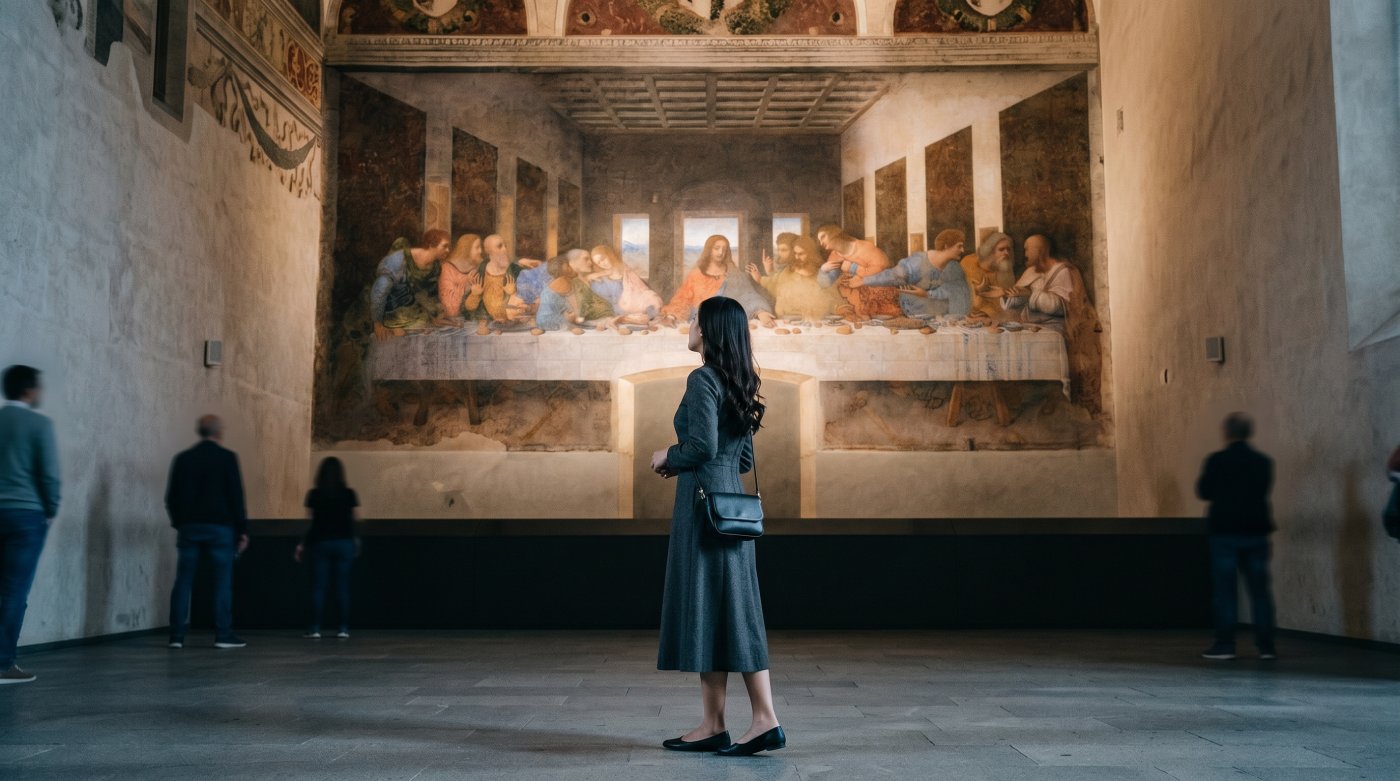
Basilica di Santa Maria delle Grazie: The Last Supper
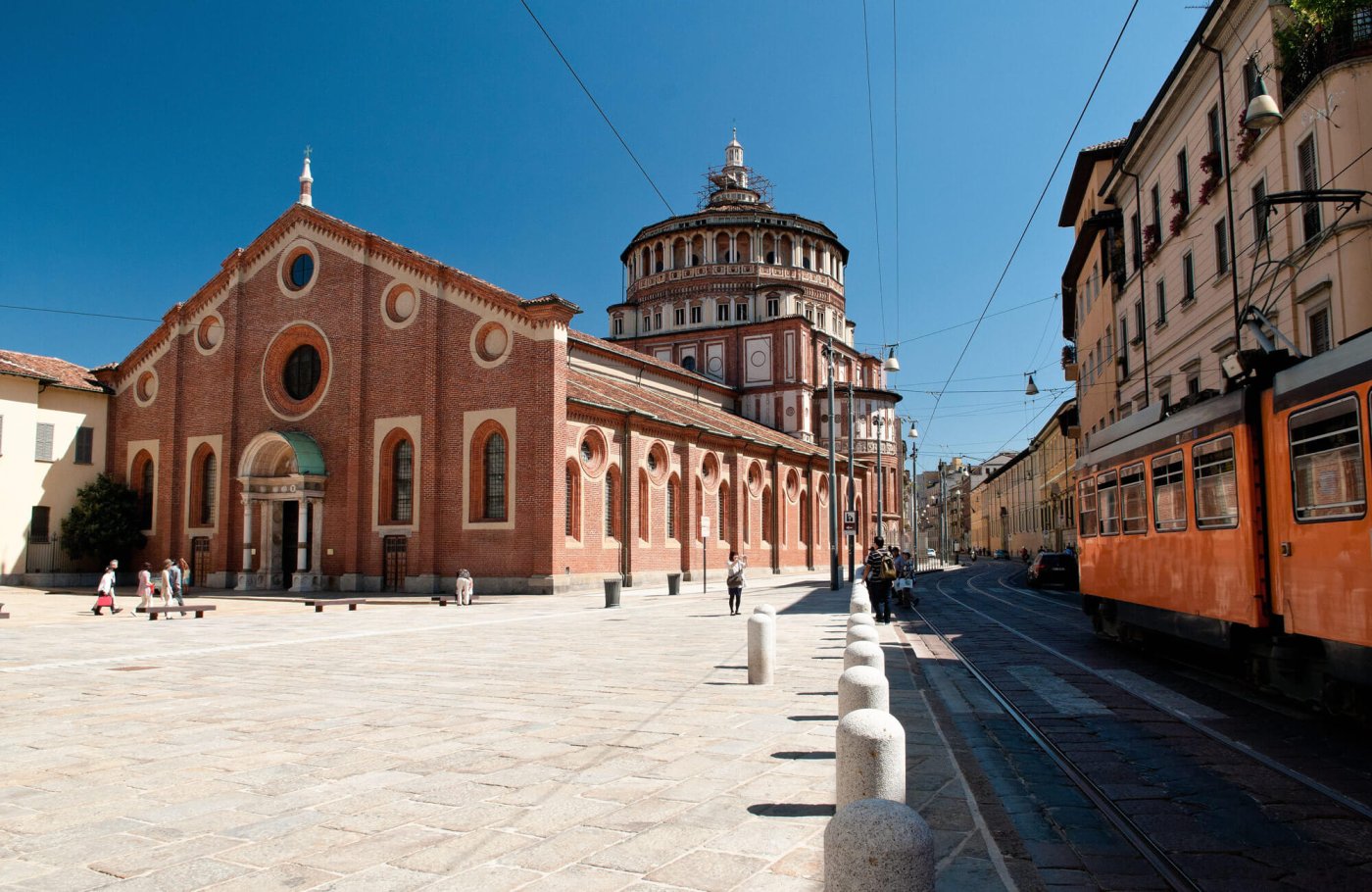
This is the reason people give for visiting Milan more than any other single attraction.
Leonardo da Vinci’s Last Supper — painted between approximately 1495 and 1498 — is on the north wall of the refectory (the old dining hall) adjacent to the basilica, not inside the church itself.
What You’re Actually Seeing
The Last Supper is a wall painting approximately 4.6 meters high and 8.8 meters wide.
It depicts the moment described in the Gospel of John when Jesus announces that one of the apostles present will betray him.
Leonardo’s contribution — the innovation that made it extraordinary — was organizing the twelve apostles into groups of three, each group reacting differently to the announcement.
The figures show emotional range and movement that had no precedent in 15th-century painting.
The work is technically a tempera painting on a prepared stone wall rather than true fresco — Leonardo’s decision to use a different technique allowed him more control but also made the work vulnerable to deterioration almost from the moment it was completed.
By the 18th century, it was described as nearly ruined.
The current viewing experience, following a 21-year restoration completed in 1999, preserves what survived.
The scale, once you’re in the room, is larger than most people expect.
As of 2026, the room holds up to 40 visitors at a time for 15 minutes — an increase from the previous limit of 25, following an ongoing experimentation to gradually expand visitor capacity.
Entry is through an airlock system designed to stabilize humidity and temperature.
Booking
Book as far in advance as possible. During peak season (April–September), tickets are typically sold out 2–3 months ahead.
The official booking platform is lastsupper.shop (operated via Vivaticket), where individuals can purchase up to 5 tickets online; alternatively, you can book by phone at +39 02 92800360 (up to 9 tickets) or by email at [email protected] (groups of 10 or more).
Tickets are released on a quarterly basis, so check the official site at cenacolovinciano.org for the next release date.
There are no reliable same-day options; if you didn’t book ahead, additional tickets are released every Wednesday at 12:00 pm for the following week on the online platform (individual visitors only, max 5 tickets).
Third-party guided tours — such as those offered through The Roman Guy or Musement — sometimes include Last Supper access as part of a combined booking, typically priced from around $168 to $200+ per person, which can be a practical workaround when direct tickets are sold out.
Admission is €15 for a full-fare ticket (reduced fare is €2 for eligible visitors, e.g., EU citizens aged 18–25).
The visit itself is 15 minutes plus airlock waiting time.
Arrive at the ticket office at least 30 minutes before your time slot and at the museum entrance at least 15 minutes before, with a valid ID for ticket validation.
Getting There
Metro M1 or M2 to Cadorna, then 15-minute walk, or tram #16 from Duomo.
The address is Piazza Santa Maria delle Grazie.
Pinacoteca di Brera: Italy’s Great Northern Gallery
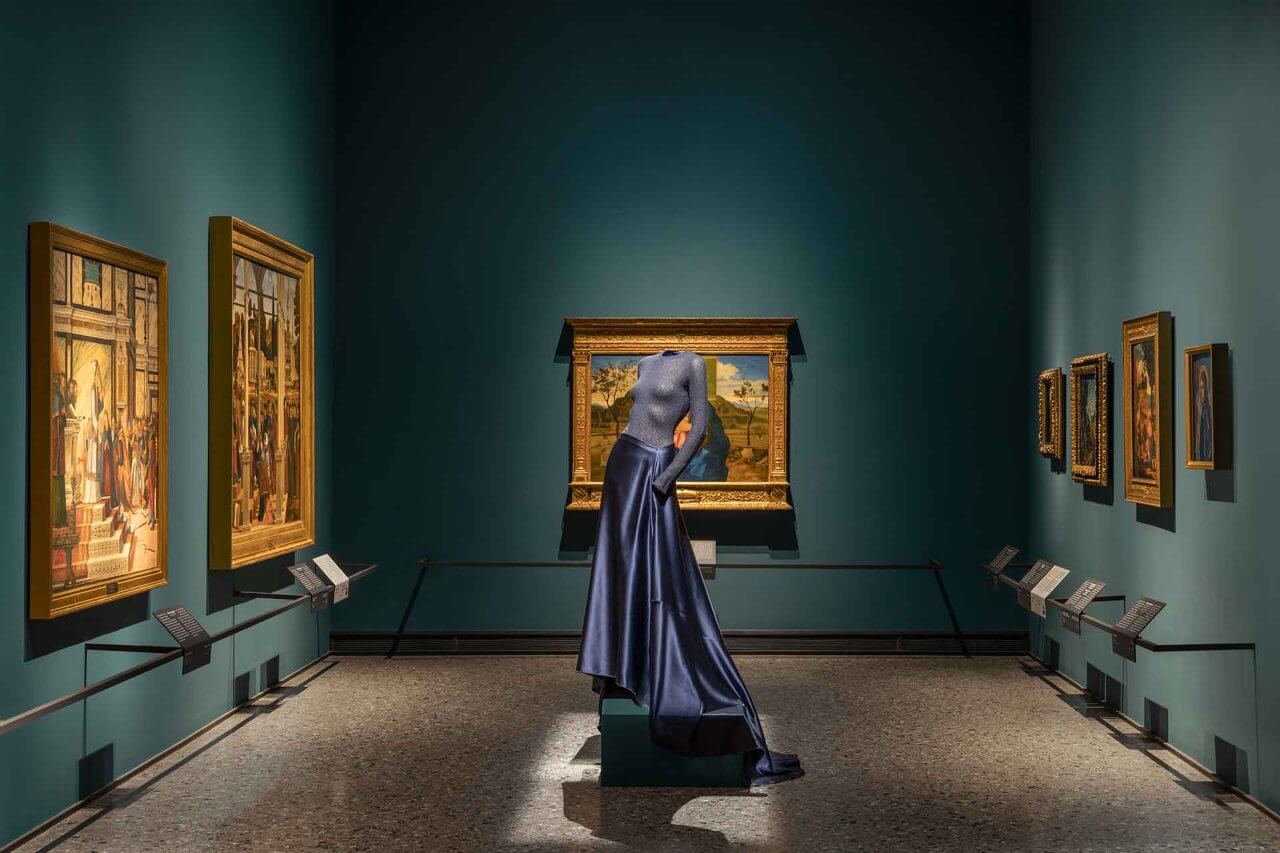
The Pinacoteca di Brera is Italy’s most important painting gallery outside Rome and Florence, and for several specific works, it’s more important than anything in those cities.
It occupies the upper floors of the Palazzo di Brera — an 18th-century Jesuit college that now houses the library, art school, and botanical garden as well — in the Brera neighborhood.
The Collection
The collection spans approximately 400 works across 40 rooms, covering Italian painting from the 14th through the 20th century, with particular depth in the Renaissance and Baroque periods.
The central works:
- Raphael’s Marriage of the Virgin (Sposalizio della Vergine, 1504): Widely considered among the finest early Raphael paintings and a key work in the development of High Renaissance composition. The architectural background, the geometric precision of the perspectival space, and the grouping of figures were enormously influential.
- Caravaggio’s Supper at Emmaus (1606): One of Caravaggio’s later versions of this subject — rougher, more atmospheric, and less virtuosic than the earlier London version, but arguably more honest about spiritual recognition happening to ordinary people.
- Piero della Francesca’s Pala di Montefeltro (c. 1474): One of the most analyzed paintings in Italian art — a sacra conversazione (holy conversation) including the Duke of Urbino in armor, a hanging ostrich egg of uncertain iconographic meaning, and a compositional clarity that influenced Italian painting for a century.
- Andrea Mantegna’s Lamentation of Christ (c. 1480): The foreshortened view of Christ’s body from the feet — a compositional choice of extreme difficulty and emotional power that has never been fully replicated.
Other major artists represented: Tintoretto, Veronese, Giovanni Bellini, Bernardino Luini (a Leonardo follower with work specific to the Milan area), and a significant collection of Lombard and Venetian painting.
Practical Notes
Allow a minimum of two hours; three is more realistic.
The rooms are arranged roughly chronologically.
There is a café on site — Caffè Fernanda, a restaurant and bistrot located within the museum itself, open during gallery hours and well-regarded for both coffee and light meals.
- Admission: The standard Grande Brera full ticket is €20, with a reduced rate of €4 for EU citizens aged 18–25, and free entry for visitors under 18. Reservations are required and can be made at brerabooking.org or by calling +39 02 72105141 (Mon–Sun, 9 a.m.–6 p.m.). First Sunday of the month: free admission, as part of the Italian Ministry of Culture’s #domenicaalmuseo initiative — but a reservation is still mandatory via brerabooking.org, and groups are not eligible. The gallery is open Tuesday through Sunday, 8:30 a.m. to 7:15 p.m. (last entry at 6:00 p.m.) and closed on Mondays, January 1, May 1, and December 25.
- Getting there: Metro M2 to Lanza (5-minute walk). The entrance is at Via Brera 28. The Brera neighborhood around the gallery has excellent cafés for pre- or post-visit time — it’s one of Milan’s best areas for a half-day.
Pinacoteca Ambrosiana: Leonardo, Raphael, and One Extraordinary Room
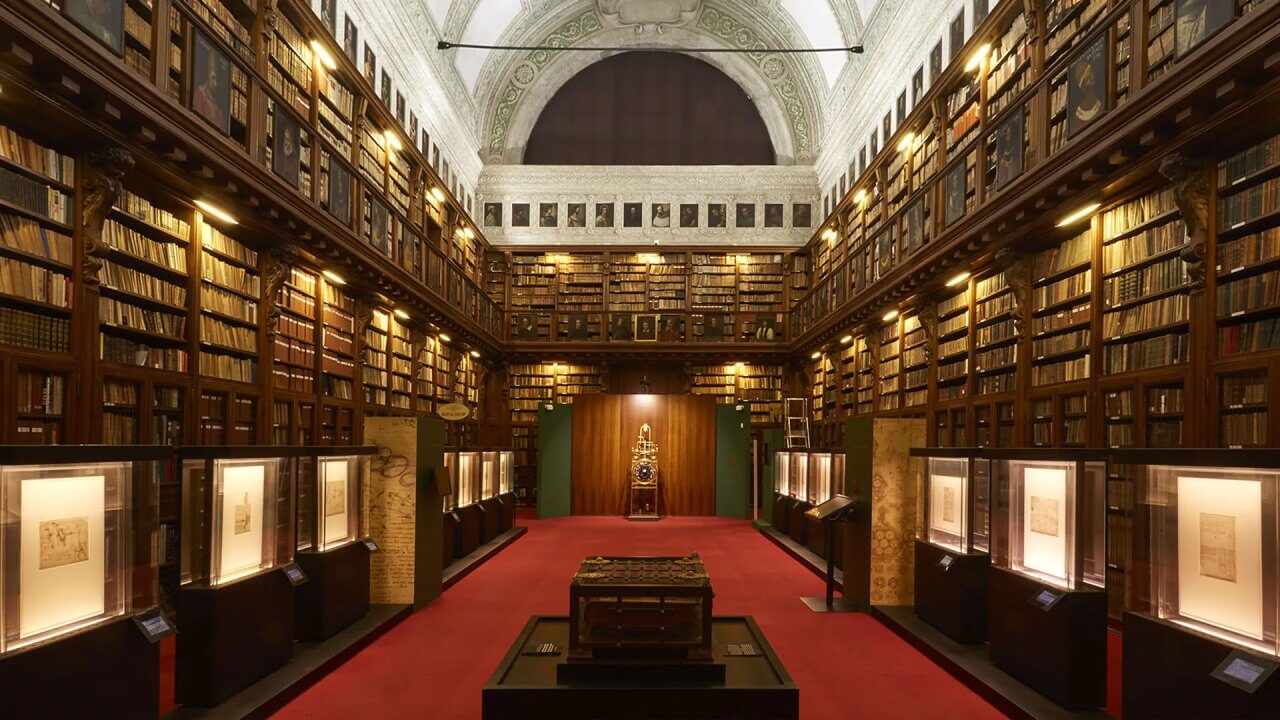
The Ambrosiana was founded in 1618 by Cardinal Federico Borromeo, making it one of the oldest public art galleries in Europe.
Its collection is more compact than Brera (24 rooms) and more eccentric — assembled by a single collector at a specific historical moment — but for certain interests, particularly Leonardo da Vinci, it’s more important.
The Collection
- Raphael’s Cartoon for the School of Athens (1509–1511): The full-scale preparatory drawing for the famous fresco in the Vatican’s Stanza della Segnatura — displayed in its own room and approximately 7 meters wide. Seeing it gives a different understanding of how the finished fresco was made; the drawing is rougher, more immediate, and arguably more interesting as evidence of Raphael’s working process than the polished final result.
- Leonardo da Vinci’s Codex Atlanticus: The largest collection of Leonardo’s drawings outside of Windsor Castle — 1,119 drawings covering mechanics, cartography, anatomy, architecture, and natural science. Not all are on display simultaneously (they rotate); even a partial showing is extraordinary for anyone interested in Leonardo’s thinking across disciplines.
- Caravaggio’s Basket of Fruit (c. 1599): One of the first autonomous still-life paintings in Italian art — an apparent simplicity that was actually a radical choice for a painter who could have depicted religious subjects. Single object against a blank background; extremely influential on Dutch still-life tradition.
- Portrait of a Musician (attributed to Leonardo, c. 1490): Attribution remains actively debated among scholars. The current consensus leans toward Leonardo as the primary author — particularly for the face, which is universally regarded as his work — though contributions from studio associates such as Ambrogio de Predis have been proposed for other parts of the panel. If the attribution holds fully, it is one of only a handful of surviving portraits by Leonardo’s hand, and the only panel painting by him remaining in Milan.
Practical Notes
The Ambrosiana also contains a significant library — one of the oldest public libraries in the world, founded at the same time as the gallery.
Library access is restricted (scholars only, by reservation via [email protected]), but it’s worth knowing that the gallery and library are part of the same institution, which explains the collection’s range.
Admission (2026): Pinacoteca only — €17 full price, €13 for over-65s, €15 for under-18s and university students, €5 for children aged 6–14, and free for children under 6.
A combined Pinacoteca + San Sepolcro Crypt ticket is available at €20 full price (reduced rates apply).
A booking fee of €1.50 per ticket applies when reserving in advance.
The Ambrosiana is a private foundation under the Veneranda Biblioteca Ambrosiana and does not participate in the Italian state museum first-Sunday free-entry (#domenicaalmuseo) program.
Free-admission days are offered on specific occasions only (such as Father’s Day), so check the official website at ambrosiana.it for any scheduled free days before your visit.
The museum is open Monday to Sunday, 10:00 a.m. to 6:00 p.m. (last ticket at 5:30 p.m.), and is closed on Wednesdays.
A complete self-guided visit of the Pinacoteca takes approximately 90 minutes.
Getting there: Metro M1 to Cordusio or Duomo, or Metro M3 to Duomo — all within a 5–10 minute walk.
Address: Piazza Pio XI, 2.
Museo del Novecento: 20th-Century Italian Art with the City’s Best Views
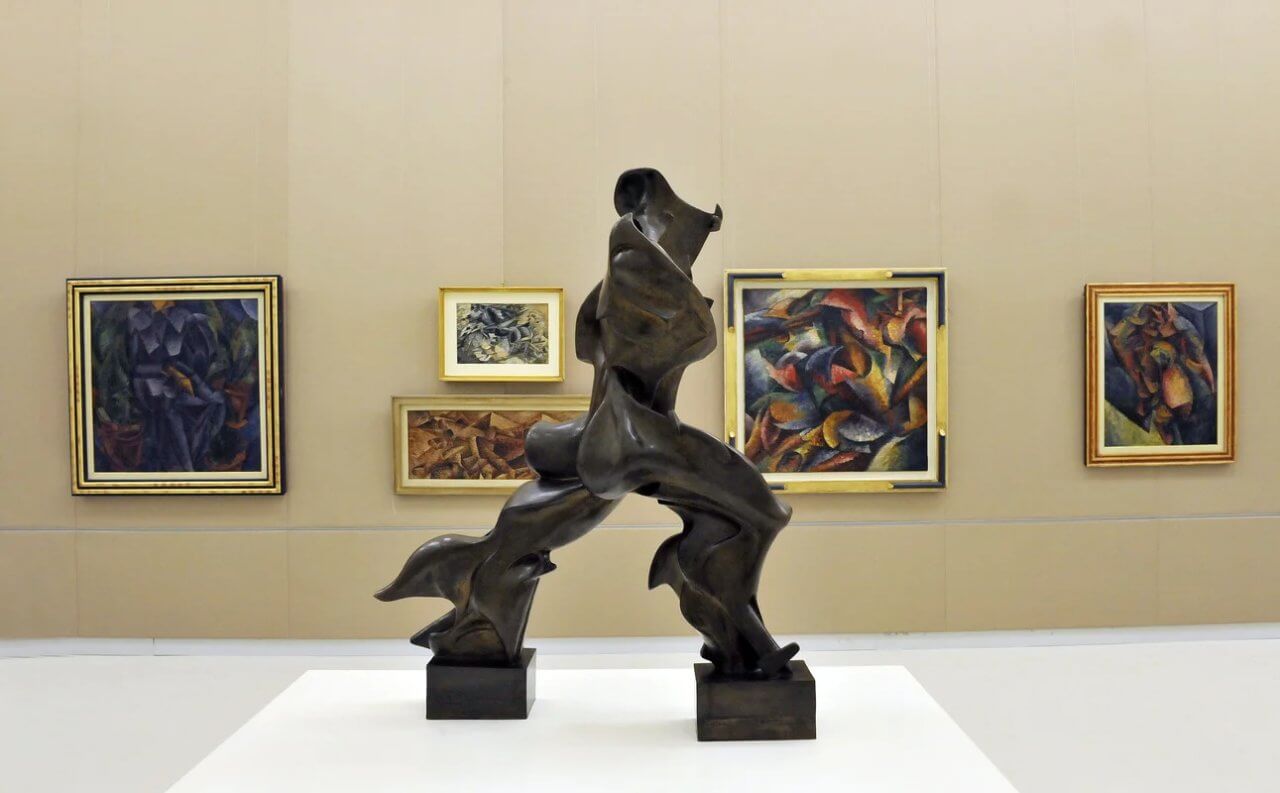
The Museo del Novecento (Museum of the Twentieth Century) occupies the upper floors of the Palazzo dell’Arengario — a Fascist-era public building on Piazza del Duomo, connected by a glass bridge to the Palazzo Reale.
Its position gives it the single best indoor view in Milan: floor-to-ceiling windows looking directly onto the Duomo’s facade from approximately 40 meters away.
The Collection
The museum holds approximately 400 works from the first decades of the 20th century through the postwar period, with particular strength in Futurism, Arte Povera, and the abstract tradition in Italian art.
Key works:
- Umberto Boccioni’s The City Rises (1910): One of the canonical Futurist paintings — a large-scale composition of horses and workers expressing the energy and violence of industrialization. Boccioni, who died in World War I at 33, was among the most technically accomplished Futurists; this work shows why.
- Lucio Fontana: The museum has one of the best concentrations of Fontana’s Spatial Concepts anywhere — canvases punctured or slashed through the surface to create literal three-dimensional space in painting. The gestures look simple; they weren’t.
- Giuseppe Pellizza da Volpedo’s The Fourth Estate (Il Quarto Stato, 1901): A monumental (4.9 × 2.85 meters) painting of marching workers — a canonical image of the Italian labor movement and one of the most reproduced images in Italian political history.
The museum also covers the transition from mid-century Italian art toward Arte Povera and conceptual art through the 1960s and 1970s.
Practical Notes
The café on the top floor has the same Duomo views as the gallery itself — worth knowing if you want the view without the admission price.
The museum is adjacent to the Duomo and Galleria Vittorio Emanuele II; it fits naturally into a morning that includes both.
- Admission (2026): €10 full price, €5 reduced (for ages 18–25 and university students), and free for visitors aged 0–17, disabled visitors with one companion, school teachers with valid documentation, and ICOM members. An Open ticket (no fixed time slot) is available at €11 full / €6 reduced. Additionally, every second Tuesday of the month, free entry is offered to all visitors up to age 25. The museum is open Tuesday to Sunday, 10:00 a.m. to 7:30 p.m., with extended hours on Thursday until 10:30 p.m.; closed on Mondays. Last admission is one hour before closing. First Sunday of the month: free entry for all visitors as part of the Italian state #domenicaalmuseo initiative — no online purchase available for free-Sunday tickets, so head directly to the ticket office. Reservations are recommended on free Sundays as the museum draws large crowds given its Piazza del Duomo location.
- Getting there: Metro M1 or M3 to Duomo. The museum entrance is at Piazza del Duomo, 8.
Castello Sforzesco: Twelve Museums in One Fortress
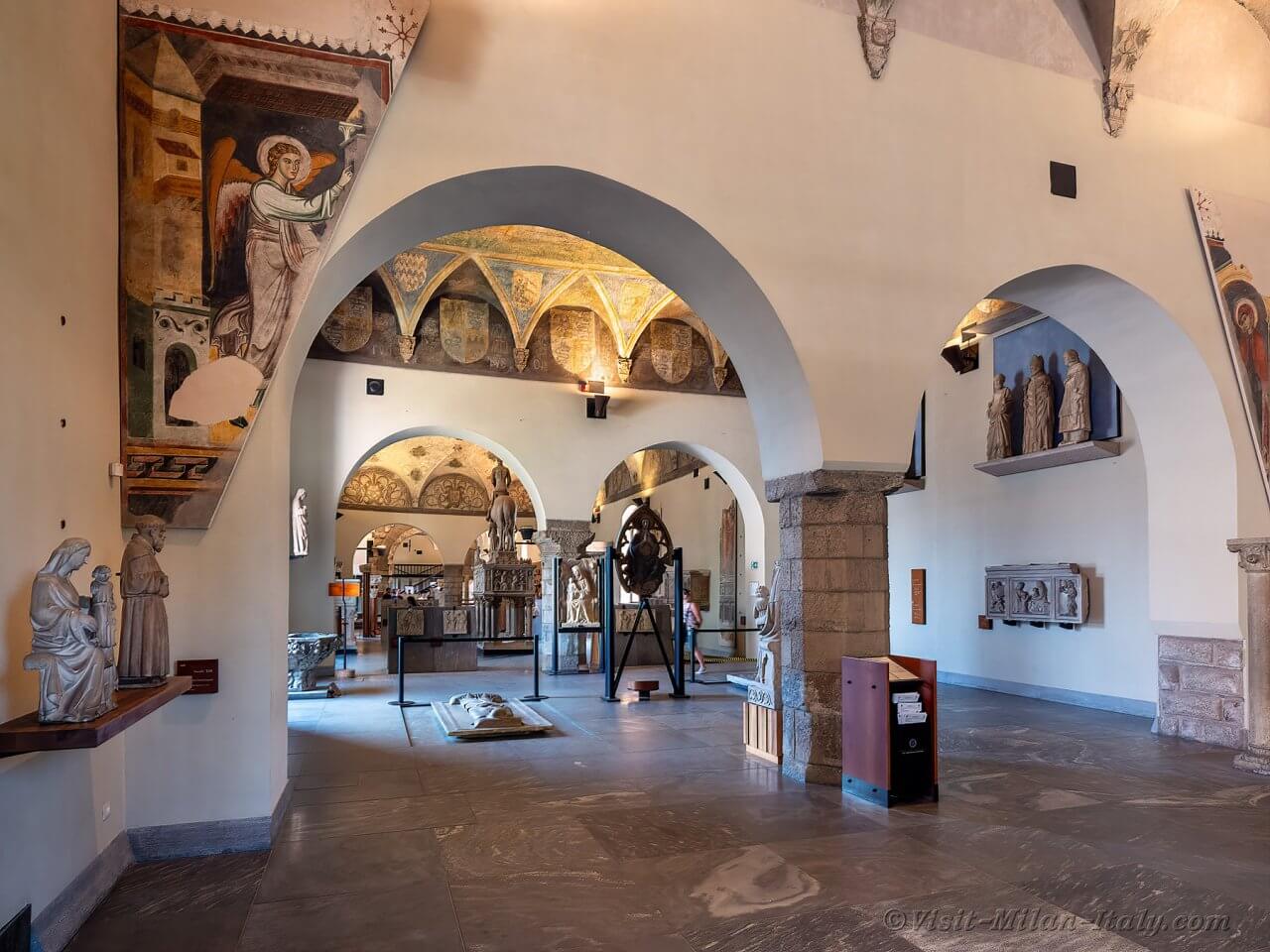
The Castello Sforzesco is Milan’s most visible historic monument — a 15th-century Visconti and Sforza ducal fortress occupying a site at the western edge of the historic center.
The castle is free to enter (the outer courtyard and grounds); the museum complex inside requires admission.
The Collections
Twelve separate museum collections are spread across the castle’s towers and pavilions.
Most visitors can realistically see 2–3 sections in a half-day.
The unmissable one:
Michelangelo’s Rondanini Pietà (1552–1564): Michelangelo’s last work — he was still working on it in the days before his death in 1564 at age 88.
Unlike his finished sculptures, the Rondanini Pietà was never completed and shows the process of revision literally carved into the stone.
Christ’s face, arms, and the original compositional structure survive as fragments alongside the radically simplified final version Michelangelo was developing.
If you know his earlier Pietà in St.
Peter’s (1499), the contrast is extreme: the youthful technical perfection of the Vatican work versus the raw, pared-back late style of the Rondanini.
The work is housed in its own dedicated space — the Museo Pietà Rondanini, installed in the Antico Ospedale Spagnolo (the old Spanish Hospital) within the castle complex, a room specifically redesigned for the sculpture to be viewed in isolation from other collections.
Other notable collections:
- Egyptian Collection: Mummies and ancient Egyptian artifacts — one of the more significant Egyptian collections in northern Italy
- Pinacoteca del Castello: Painting collection including works by Giovanni Bellini and other Northern Italian masters
- Museum of Ancient Art: Architectural elements, sculpture, and decorative arts from Milan’s history
- Applied Arts Museum: Furniture, tapestries, and decorative objects from the medieval to modern period
- Museum of Musical Instruments: One of Italy’s most comprehensive musical instrument collections
Practical Notes
The outer courtyard is free and used daily by Milanese residents.
The museum complex requires a separate admission ticket — a single combined ticket (€5 full price, €3 for students, EU citizens aged 18–25, and visitors over 65) covers all civic museums inside the castle.
Visitors under 18 and disabled visitors with one companion enter free.
There is no option to purchase tickets for individual collections separately; one ticket grants access to all.
Battlements access is ticketed separately at €10 full / €5 reduced.
Museums are open Tuesday to Sunday, 10:00 a.m. to 5:30 p.m. (last entry 5:00 p.m.); closed Mondays.
First Sunday of the month: all civic museums inside the castle are free for all visitors as part of the Italian state #domenicaalmuseo initiative — note that the individual museum collections have separate entrances inside the complex, so expect different queues per section on free Sundays.
The castle grounds connect directly to Parco Sempione — the combination of castle, grounds, and park makes a natural full-morning itinerary.
Getting there: Metro M1 Cairoli (2-minute walk) or M1/M2 Cadorna (10-minute walk).
Main entrance at Piazza Castello.
Triennale di Milano: Design as Cultural History
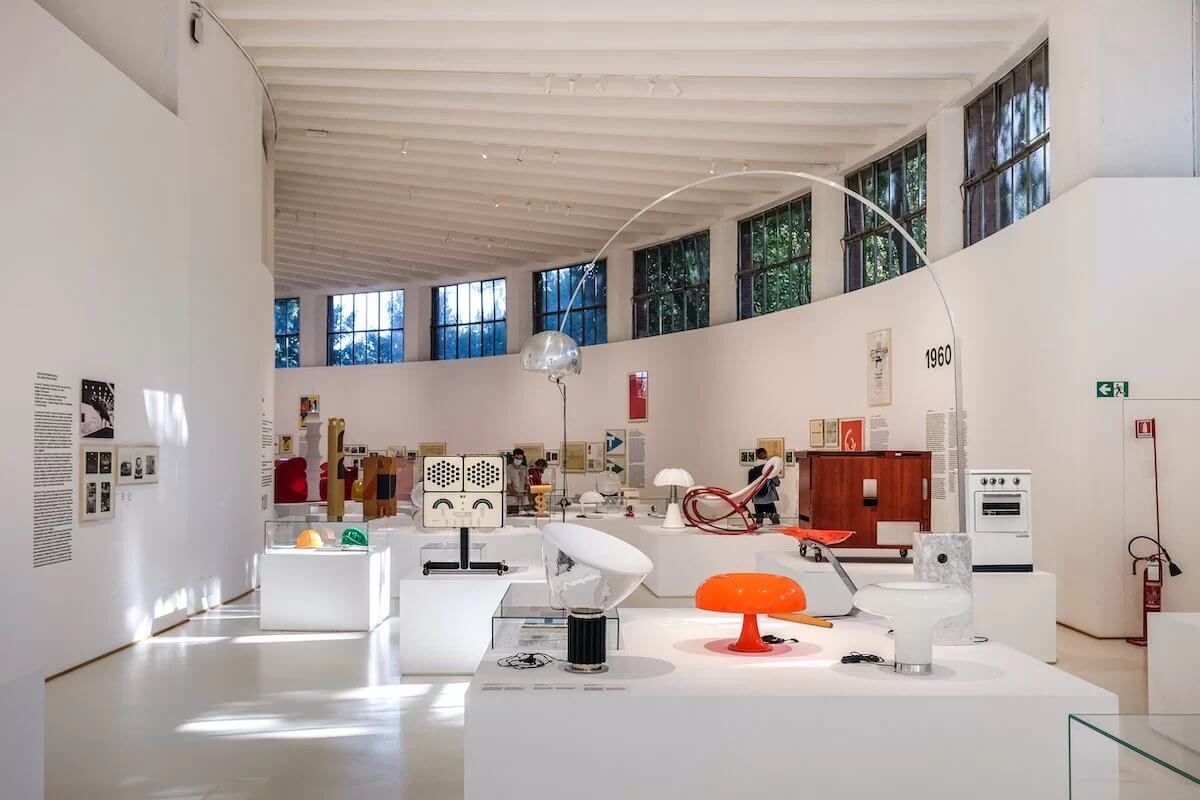
Italy’s only museum dedicated entirely to design, the Triennale occupies a historic pavilion building at the edge of Parco Sempione, built for the 1933 International Exhibition of Decorative Arts.
The building is itself a piece of design history — a 1930s rationalist structure that influenced Italian architecture.
The Collection
The permanent Museo del Design Italiano holds approximately 1,600 objects from the history of Italian design — furniture, objects, graphic works, and prototypes from the 1930s through the present.
The selection covers the canonical objects of 20th-century Italian design: Castiglioni’s Arco lamp, Sottsass’s Valentine typewriter, Zanuso’s Lady chair, and many others.
Alongside the permanent collection, the Triennale presents major temporary exhibitions across design, architecture, and visual arts.
As of mid-2026, the current program includes “Ettore Sottsass: Design Metaphors” (on view through December 31, 2026), “Lella and Massimo Vignelli: A Language of Clarity” (through September 6, 2026), “Andrea Branzi by Toyo Ito: Continuous Present” (through October 4, 2026), and “Francesco Clemente: In Between” (through September 6, 2026), alongside a major Fondation Cartier monographic exhibition running March 19 through October 4, 2026.
During Milano Design Week (held annually in April, coinciding with Salone del Mobile), Triennale becomes the central hub of the city’s design programming — typically presenting a mix of ticketed and free exhibitions with extended hours.
The rooftop café has views over Parco Sempione and is good for breaks before or after the park.
- Admission: General entry to the building is free; individual exhibitions require separate tickets, purchased online (with a €2 discount versus at the door) or at the ticket office on site. A day ticket bundling all current exhibitions is available at a discounted combined rate — check triennale.org for current pricing, as it varies by active exhibition configuration. Opening hours are Tuesday to Sunday, 10:20 a.m. to 8:00 p.m.; closed Mondays.
- Getting there: Metro M1/M2 to Cadorna–Triennale (a direct stop, essentially at the front door), or enter through Parco Sempione from the castle side. Main entrance at Viale Alemagna 6.
Museo delle Culture (MUDEC): Global Ethnographic Collections
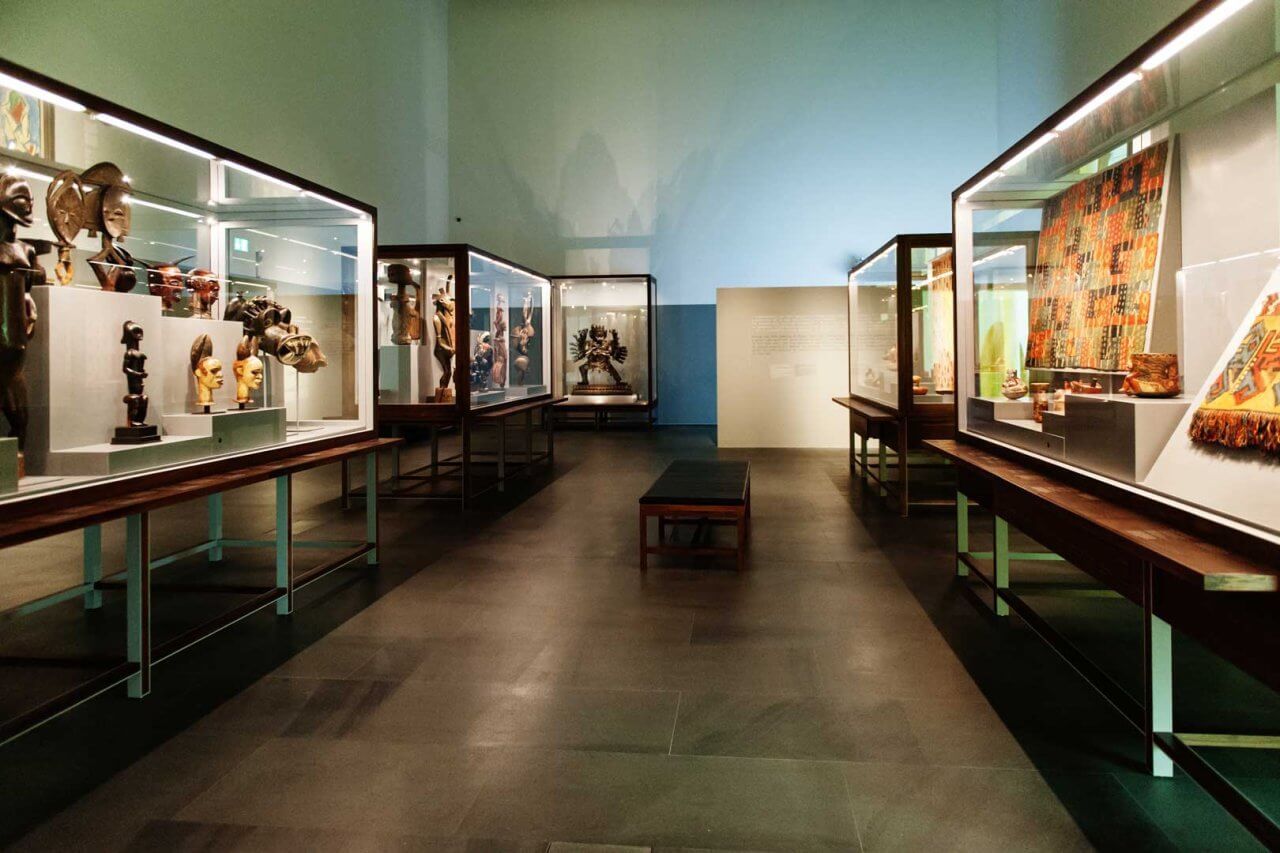
MUDEC occupies a former industrial space in the Tortona design district — a converted 19th-century Ansaldo factory building with a contemporary intervention by David Chipperfield.
The combination of industrial architecture and modern redesign is one of the more interesting built spaces in Milan.
The Collection
The permanent collection — titled Milano Globale (Global Milan) — focuses on the cultures of Africa, Asia, and the Americas, organized around objects acquired through Milan’s history as a trading and colonial-era collecting center.
The permanent galleries are organized thematically (body, ritual, time, space) rather than geographically, which can make specific regional interests harder to follow but creates interesting cross-cultural comparisons. Entry to the permanent collection is free.
The museum’s stronger programming tends to be in temporary exhibitions.
As of mid-2026, current shows include “The Moment the Snow Melts” by Japanese artist Chiharu Shiota — a major site-specific installation (November 19, 2025 through June 28, 2026); “The Sense of Snow: Peoples, Ancient Art, and Contemporary Perspectives” (February 12 through June 28, 2026, free admission); and “100 Photographs to Inherit the World” (March 7 through June 28, 2026).
Check mudec.it for incoming programming after June 28, 2026, when all three current temporary exhibitions close simultaneously.
- Practical Notes: The museum is slightly off the typical tourist circuit, which makes it less crowded than Brera or the Castello. On-site dining is handled by Enrico Bartolini MUDEC — both a bistrot (ground floor, open Tuesday through Sunday) and a full restaurant (third floor, Tuesday through Saturday, reservation required). The surrounding Tortona district has good independent cafés and design showrooms for a combined half-day. The museum is closed on Mondays, open Tuesday through Sunday, 9:30 a.m. to 7:30 p.m., with extended hours on Thursday until 10:30 p.m.
- Admission: The permanent collection is free. For temporary exhibitions, the full single ticket is €15, with a reduced rate of €13 for visitors aged 14–26, over 65, people with disabilities, teachers, and military personnel. Children aged 6–13 pay €7; children under 6 enter free. A family ticket is available (1–2 adults at €13 each, children 6–13 at €7). Note: on the first Sunday of the month, only the permanent collection is free — temporary exhibitions require a regular paid ticket. Booking is recommended via vivaticket.com or the infoline at +39 02 54917.
- Getting there: Metro M2 to Sant’Agostino (slightly closer than Porta Genova, especially with the green bridge temporarily closed) or Metro M4 to California or Coni Zugna. Address: Via Tortona 56.
Museo Nazionale della Scienza e della Tecnologia Leonardo da Vinci: Europe’s Largest Science Museum
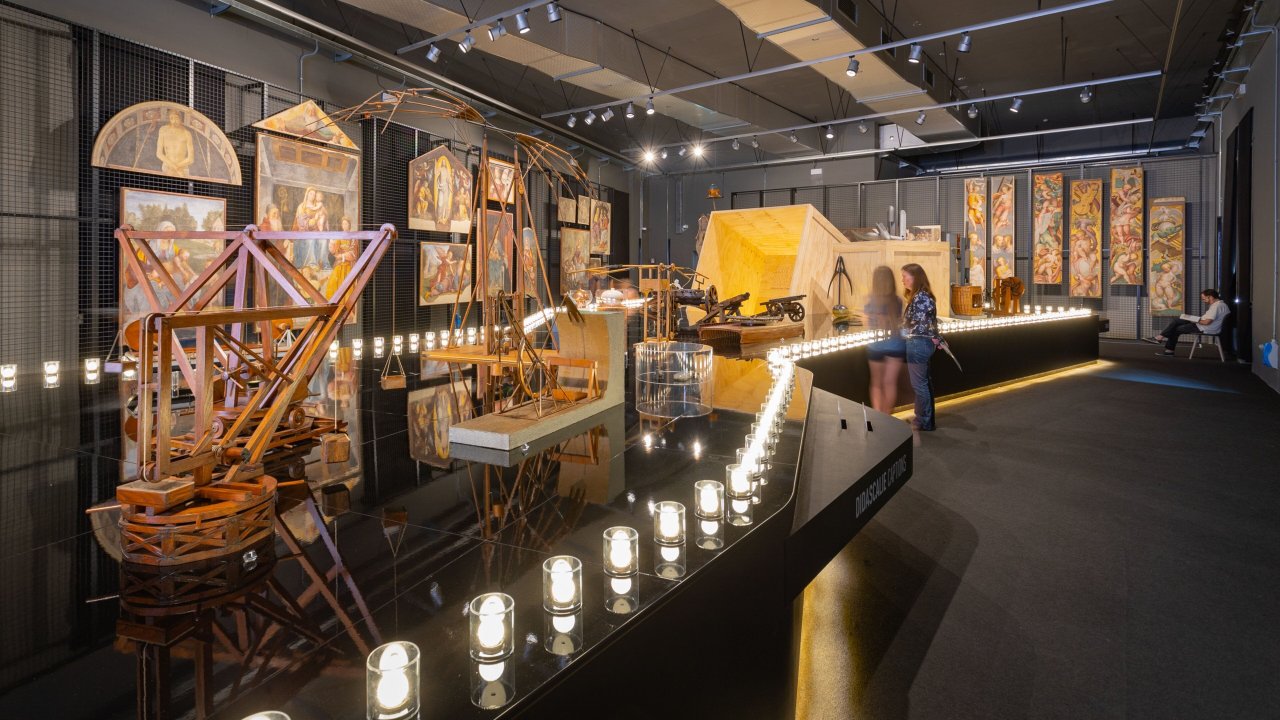
The National Museum of Science and Technology covers approximately 50,000 square meters across a complex of historic buildings in the Sant’Ambrogio neighborhood — formerly a 16th-century Olivetan monastery at Via San Vittore 21, within easy walking distance of both Santa Maria delle Grazie and the Basilica of Sant’Ambrogio.
What’s Inside
The museum covers transport, energy, communication, materials science, and — its most distinctive section — a comprehensive presentation of Leonardo da Vinci’s technical drawings and working models built to his specifications.
- Leonardo Gallery: The museum holds the world’s largest collection of working models built from Leonardo’s drawings — mechanical devices, hydraulic systems, flight machines, and engineering concepts reconstructed at full scale. The models are educational rather than historical originals, but they demonstrate Leonardo’s technical imagination more accessibly than drawings alone.
- Real Submarine: The museum has an actual Cold War-era Italian Navy submarine — the S 506 Enrico Toti — docked adjacent to the main building at the Via Olona entrance. This is one of the most unusual museum exhibits in Italy. Guided visits through the interior are available as a separately ticketed add-on (approximately €10 extra, above general admission). A separate ticketed experience — Toti Submarine Escape — has been running on Friday, Saturday, and Sunday evenings (from around 6:00–6:30 p.m.) through summer 2026 for visitors who want a more theatrical walkthrough; check museoscienza.org for current scheduling, as this is a time-limited program.
- Air, Water, and Rail Galleries: The museum holds full-scale railway engines, historic aircraft, and a large collection of vessels — spread across the historic cloisters and a purpose-built pavilion. These galleries are permanent and have not undergone significant recent reconfiguration, though check the official site for any gallery closures during ongoing restoration work in parts of the monastery complex.
- Practical Notes: A full visit takes 3–4 hours; the museum is genuinely too large to see completely in a single visit. Prioritize the Leonardo Gallery and submarine; the thematic galleries can be approached selectively. BistrOfficina, the on-site restaurant and café, is located in a restored section of the monastery cloister and is open to both museum visitors and the public during museum hours — a solid option for a lunch break mid-visit.
The museum is popular with school groups — weekday mornings can be busy with organized visits; weekday afternoons and weekends tend to be calmer.
- Admission (2026): €13 full price (adults); €8 reduced (ages 3–26 and seniors 65+); free for children under 3. A family ticket is available (check museoscienza.org for current bundle pricing). The guided submarine visit costs an additional €10. Online booking is recommended and available at museoscienza.org. The museum is open Tuesday through Friday, 10:00 a.m. to 6:00 p.m., and Saturday, Sunday, and holidays, 10:00 a.m. to 7:00 p.m.; closed Mondays, December 24–25, and January 1.
- Getting there: Metro M2 or M4 to Sant’Ambrogio (1-minute walk to Via Olona entrance; 5-minute walk to main Via San Vittore entrance). Address: Via San Vittore 21 (main entrance) / Via Olona 6/a (submarine entrance).
Fondazione Prada: Contemporary Art Seriously Done
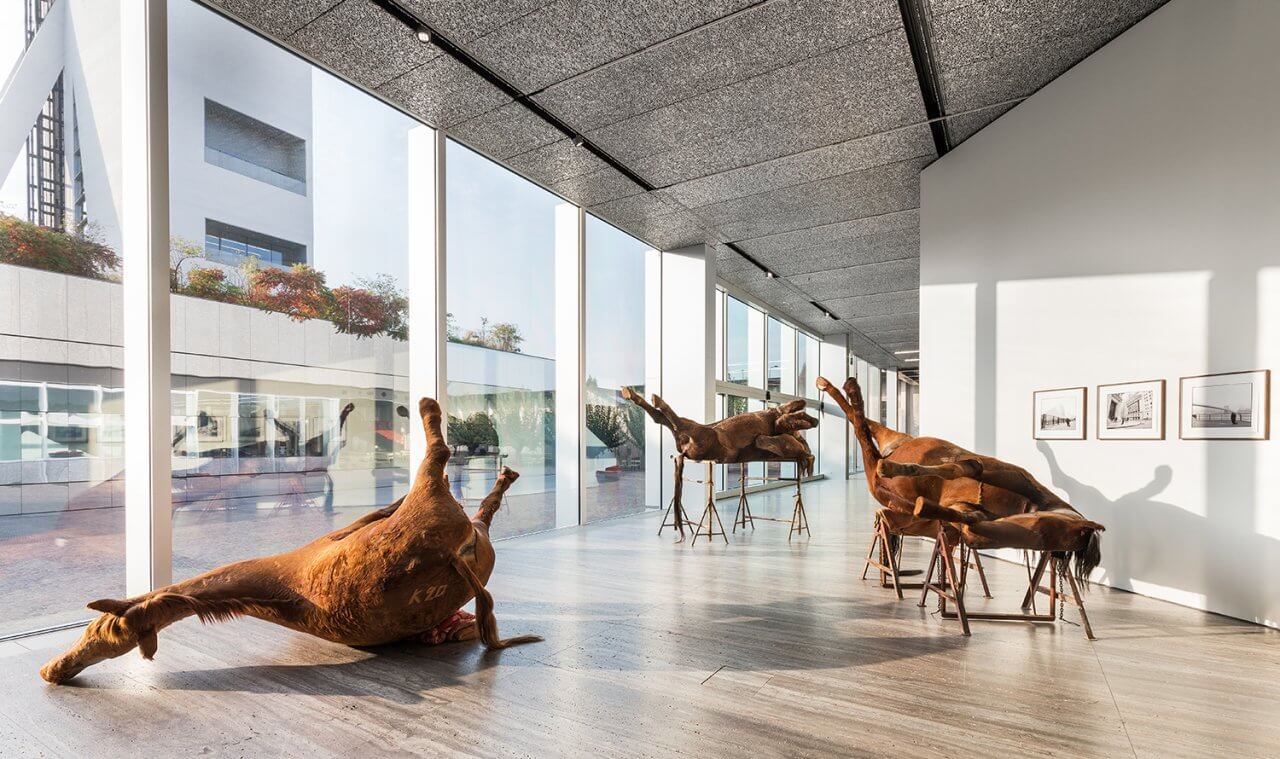
The Fondazione Prada is Milan’s most ambitious contemporary art institution — a private foundation funded by the fashion house but operating at the level of a major public museum.
The building complex, designed by Rem Koolhaas’s OMA, opened in 2015 in the Porta Romana area on the site of a former gin distillery at Largo Isarco 2.
Why It’s Worth Adding to the List
The foundation has three buildings (a new construction, a preserved industrial complex, and a gold-leaf-coated structure called La Torre) connected by walkways and public spaces.
The combination of preserved industrial architecture and contemporary additions makes it one of the most interesting museum environments in Italy.
The collection focuses on post-1960s art with particular strength in American minimalism (Flavin, Judd, Serra) and Italian Arte Povera alongside major international contemporary works.
The temporary exhibitions are at the same level as comparable institutions in London, Paris, and New York.
Note that the foundation also operates Osservatorio Fondazione Prada — a separate exhibition space in the Galleria Vittorio Emanuele II in central Milan — which focuses on photography and visual research.
- Practical Notes: The Bar Luce, designed by Wes Anderson, is as famous as some of the art — a pastel-colored recreation of a 1950s Milanese café, entirely in earnest. Crucially, Bar Luce is accessible without a museum ticket — it has its own entrance from Via Orobia and is open to walk-ins (Monday and Wednesday–Thursday 8:30 a.m.–8:00 p.m., Friday 8:30 a.m.–8:30 p.m., Saturday–Sunday 9:00 a.m.–8:30 p.m.). The Tower Restaurant on the 6th floor of La Torre is also freely accessible without a gallery ticket (open Wednesday–Sunday, 6:00 p.m.–midnight; closed in August). Free parking is available at Largo Isarco 1 (75 spaces).
- Admission (2026): The combined ticket (main Milan venue + Osservatorio in the Galleria, valid for 30 days) is €15 full price and €12 reduced (under 26, over 65, FAI members, companions of disabled visitors). A Milan residency/local student rate is available at €7.50 (under-26 Milan residents and over-65 Milan residents). Free admission for visitors under 18, disabled persons, and all visitors on Thursdays for over-65s. Online booking adds a €1 presale fee per ticket. The museum is open Monday and Wednesday–Sunday, 10:00 a.m. to 7:00 p.m.; closed Tuesdays.
- Getting there: Metro M3 to Lodi T.I.B.B. (exit Piazzale Lodi / Viale Isonzo, approximately 10-minute walk). By tram: line 24 to the Via Ripamonti / Via Lorenzini stop. By bus: line 65 stops directly at Largo Isarco. Address: Largo Isarco 2.
Which Milan Museum Should You Visit If You Have One Day?
- If you only have one day and one museum: Pinacoteca di Brera. It’s Milan’s most important painting collection, open without pre-booking for most of the year (unlike the Last Supper), and large enough to fully occupy a half-day.
- If you have one day and can pre-book: the Last Supper + Castello Sforzesco forms the best single-day combination — the Last Supper in the morning (when your pre-booked slot falls), then the Castello and Parco Sempione in the afternoon.
- For art history specialists: Pinacoteca Ambrosiana (Leonardo drawings) alongside Brera makes the strongest two-museum combination.
- For design and contemporary art: Triennale di Milano + Fondazione Prada covers both Italian design history and international contemporary art.
For specific guidance on which museums align with your interests and travel dates, best time to visit Milan museums covers museum-specific seasonal advice — including which institutions close for August and when free-entry days fall across your trip dates.
For reaching any museum by public transit, how to get to Milan’s museums has metro lines, tram routes, and walking distances from central areas.
Museum Visitor Tips: Practical Notes
- On booking: Only the Last Supper requires advance booking as standard practice.Other museums — including Brera — accept walk-up visitors, though queues on first-Sunday free days and high-season Saturdays can be significant.
For Pinacoteca di Brera on a free Sunday specifically, a reservation is still mandatory via brerabooking.org even if the ticket itself is free.
- On timing: Museum opening days vary — plan around this carefully before building your itinerary:
- Closed Mondays: Pinacoteca di Brera, Castello Sforzesco (civic museums), Museo del Novecento, Museo Nazionale della Scienza e della Tecnologia, Fondazione Prada, Museo Pietà Rondanini, Cenacolo Vinciano (Last Supper)
- Closed Tuesdays: none among the museums covered in this guide
- Closed Wednesdays: Pinacoteca Ambrosiana, MUDEC
- Open Monday, closed Wednesday: Triennale di Milano
- Tuesday–Friday tends to be the least crowded for all. On first-Sunday free days, crowds at civic museums (Brera, Castello, Museo del Novecento) increase significantly — arrive early or accept a queue.
- On combination tickets: As of 2026, no single Milan city pass covers all the major art museums in this guide under one inclusive ticket.The YesMilano City Pass (from €39, including unlimited public transport) offers free or discounted entry to selected attractions and a 20% discount at participating museums — best value if you plan to use public transport heavily.
The Milan Pass Light provides a 10% discount at participating attractions including La Scala and selected museums.
Neither pass includes the Last Supper (which must always be booked directly), Fondazione Prada, or the Pinacoteca Ambrosiana (a private foundation).
The Abbonamento Musei annual subscription (€52 full price, less for seniors and under-26) covers the Pinacoteca di Brera, Castello Sforzesco, Museo del Novecento, Museo del Novecento, MUDEC permanent collection, and the Museo della Scienza e della Tecnologia — worth it only if you plan 4+ visits during a longer stay.
For most short-trip visitors, buying individual tickets is straightforward and often cheaper.
- After your museum visit: Several of Milan’s parks are within easy reach of major museum clusters — Parco Sempione adjacent to the Castello and Triennale, the grounds of Villa Belgiojoso near Brera. Parks to visit after Milan museumscovers the green space options near each museum cluster.
- On museum neighborhoods: The Brera neighborhood (near the Pinacoteca di Brera) is one of Milan’s most walkable and café-rich areas for combining a museum morning with an afternoon on foot.See Milan neighborhoods near the best museums for guidance on where to stay if proximity to specific museum clusters matters to your planning.
Frequently Asked Questions (FAQs)
For most Milan museums, walk-up tickets are available at the door — advance booking is not required.
The single non-negotiable exception is Leonardo’s Last Supper at the Cenacolo Vinciano, where all entries are timed and slots sell out 2–3 months ahead during peak season (April–September); book as early as possible via lastsupper.shop.
For Pinacoteca di Brera, walk-ins are accepted on regular days, but a reservation is mandatory even for free-Sunday visits (book via brerabooking.org).
For Fondazione Prada and MUDEC, online booking is recommended in high season to avoid queues, but rarely essential.
The only other situation requiring real advance planning is the first Sunday of the month, when civic museums attract large crowds — arrive early.
Several major Milan museums offer free entry on the first Sunday of every month as part of the Italian state #domenicaalmuseo initiative.
In 2026, this includes: Pinacoteca di Brera (reservation mandatory via brerabooking.org), Castello Sforzesco civic museums, Museo del Novecento, Gallerie d’Italia, and the Museo della Scienza e della Tecnologia.
Note that Pinacoteca Ambrosiana and Fondazione Prada are private foundations and do not participate in this program — they charge admission year-round, with limited exceptions for specific events. MUDEC’s permanent collection
is free every day, regardless of the day.
Children under 18 enter free at most civic and state museums even outside free-Sunday dates.
Realistically, three to four focused days are needed to cover the major museums in this guide without rushing.
A practical split: Day 1 — Last Supper (timed entry, morning) + Pinacoteca Ambrosiana (afternoon, 10 minutes’ walk from each other); Day 2 — Pinacoteca di Brera (morning, allow three hours) + Triennale di Milano or Castello Sforzesco (afternoon, both reachable by foot or Metro M2); Day 3 — Museo del Novecento (morning, on Piazza del Duomo) + MUDEC (afternoon, Tortona district); Day 4 — Museo della Scienza e della Tecnologia (half-day minimum) + Fondazione Prada (afternoon, south of center).
If you have only one or two days, prioritize the Last Supper, Pinacoteca di Brera, and the Rondanini Pietà at Castello Sforzesco — those three cover the city’s non-replicable highlights.
A lifestyle and OOTD blogger, Kannaya Nareswari enjoys the small pleasures of cooking, traveling, and documenting ordinary events. She uses genuine storytelling to communicate her love of fashion, culinary explorations, and wanderlust. She is based between Bali and Bandung. She enjoys enjoying coffee at a secret café or experimenting with recipes in the kitchen when she's not traveling to new places or styling her most recent ensemble.