



Getting Around Milan: Metro, Bus, Bike, and More – Milan’s public transport system is one of the most comprehensive in Italy.
Four metro lines, 80+ bus routes, a network of historic trams, and a well-maintained cycling infrastructure cover virtually every neighborhood.
For most visitors, a combination of the metro and walking handles 90% of daily movement.
This guide covers every transport mode in practical detail — what it costs, when to use it, and how to avoid the common mistakes that catch first-time visitors out.
Once you’ve got transport sorted, best things to do in Milan has the full breakdown of what’s worth reaching.
Key Highlights
- Milan's metro system has four main lines connecting key attractions, ensuring efficient travel throughout the city.
- The extensive bus network covers urban and suburban areas with express routes for quick navigation.
- Tickets are available at stations, with contactless options and travel cards for unlimited rides.
- Night bus services offer frequent, safe travel options to tourist spots and suburbs.
- Numerous pedestrian zones allow easy exploration of major attractions and historic districts on foot.
What Is the Best Way to Get Around Milan?
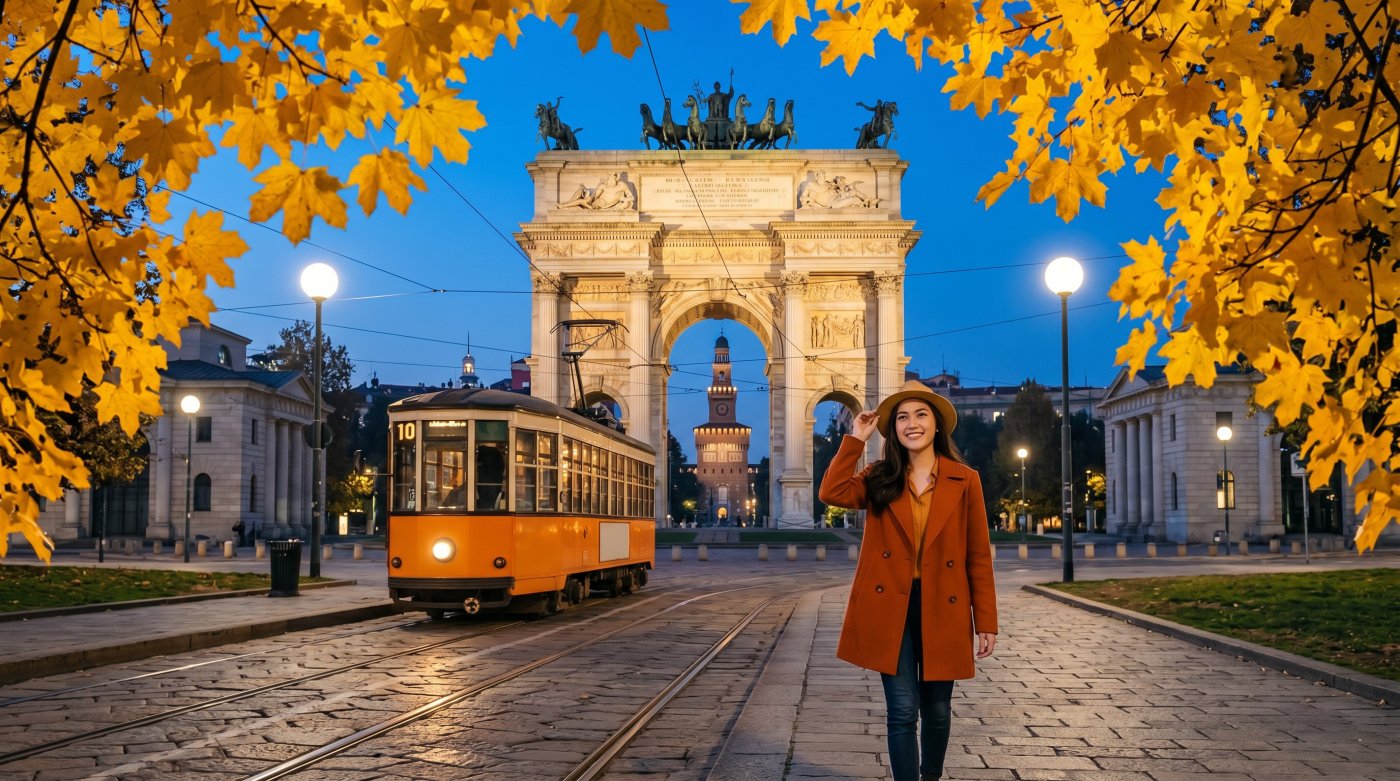
The metro is the fastest and most reliable way to cover ground quickly. Walking handles most distances between central attractions. A single-ticket or daily pass covers the vast majority of visitor needs.
You do not need a car, and driving in Milan is actively counterproductive: the historic center has restricted traffic zones (ZTL) where unauthorized vehicles are automatically fined, and parking near major attractions is expensive and scarce.
A practical hierarchy for visitors:
- Metro — best for longer cross-city journeys, airport connections, and avoiding traffic
- Walking — best for most central sightseeing (Duomo to Brera is 12 minutes on foot)
- Tram — best for shorter journeys through the center with scenic character
- Bus — best for neighborhoods not covered by metro lines
- BikeMi — best for leisure cycling through Parco Sempione and canal routes
- Taxi/Uber — best for late nights, airport transfers with luggage, or groups
The worst options: renting a car (unless you’re leaving the city), using ride-hail for every journey (expensive quickly), or ignoring the metro for short trips when walking is faster.
How to Get to Milan

| From | Train | Bus | Flight | Ferry | Book |
|---|---|---|---|---|---|
| Rome IT | $27.99 3h 10min | $6.99 7h 45min | $59.41 1h 10min | — | Check Fares → |
| Paris FR | $92.50 6h 49min | $56.18 12h | $45.40 1h 25min | — | Check Fares → |
| Florence IT | $25.64 1h 44min | $9.33 3h 15min | $183.33 5h 45min | — | Check Fares → |
| Venice IT | $24.12 3h 3min | $8.16 3h 30min | $192.48 5h 55min | — | Check Fares → |
| Zurich CH | $85.48 3h 17min | $17.56 3h 35min | $151.21 55min | — | Check Fares → |
| Napoli IT | $35.01 5h | $10.50 9h | $35.90 1h 20min | — | Check Fares → |
| Nice FR | $20.96 3h 45min | $25.75 4h 20min | $104.80 1h 5min | — | Check Fares → |
| Barcelona ES | $284.54 13h 42min | $56.56 13h 20min | $35.64 1h 35min | $78.10 22h | Check Fares → |
| Geneva CH | $106.56 4h 23min | $25.75 4h 35min | $144.61 1h 5min | — | Check Fares → |
| Genova IT | $15.34 1h 33min | $5.82 1h 45min | — | — | Check Fares → |
Prices shown are starting fares and may vary. Book via Omio to compare all available options.
Milan Metro: Lines, Stops, and How to Use It
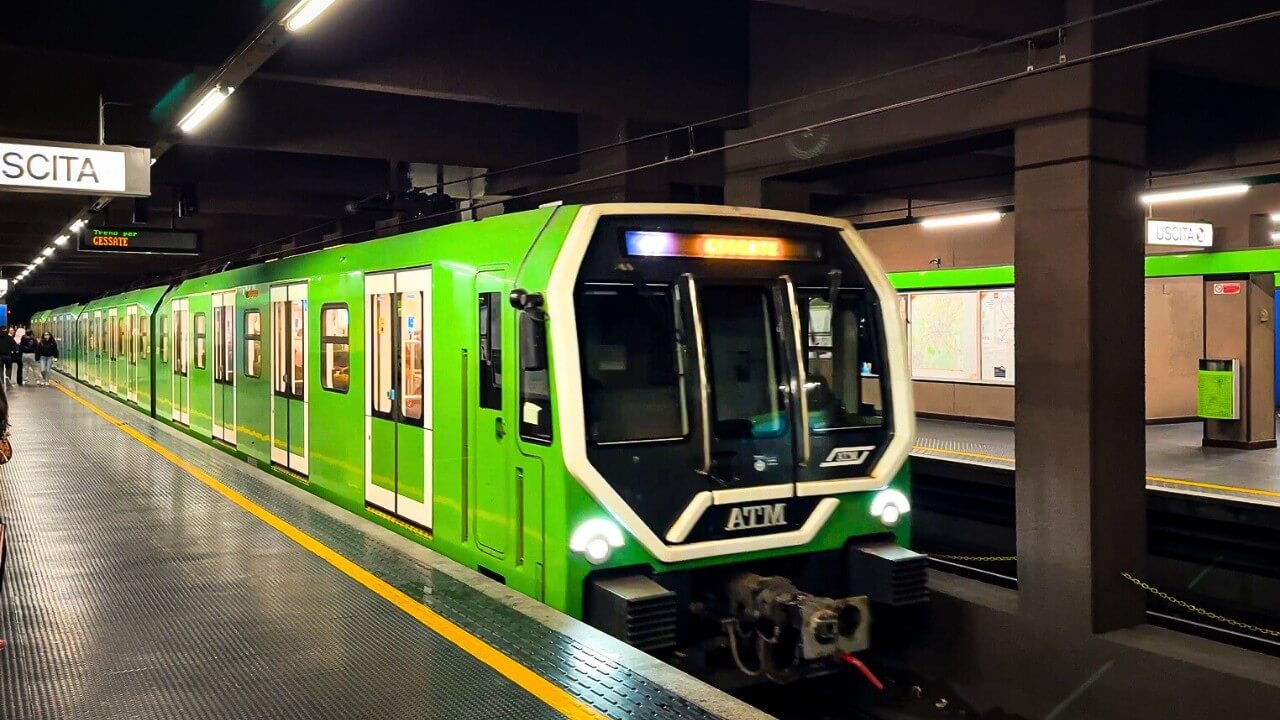
Milan’s metro (operated by ATM) has five lines covering over 100 km of track.
The system is clean, well-signed in both Italian and English, and runs frequently enough that timetable-checking is rarely necessary outside of late-night travel.
Metro Lines Overview
| Line | Color | Key Stops | Notes |
|---|---|---|---|
| M1 | Red | Duomo, Cadorna, San Babila, Loreto | East-west through the center |
| M2 | Green | Centrale, Garibaldi, Lotto, Cadorna | Crosses center; Malpensa bus connection at Centrale |
| M3 | Yellow | Duomo, Centrale, Missori, Porta Romana | North-south spine |
| M4 | Blue | Linate Airport, San Babila, Foro Bonaparte, San Cristoforo | Fully operational since October 2024; 21 stops across 15.2 km connecting Linate Airport to the western district of San Cristoforo via city center in about 30 minutes; Linate to center in 12 minutes |
| M5 | Purple | Garibaldi, Porta Garibaldi, San Siro, Bignami | Modern driverless line; useful for northern districts |
The most useful lines for visitors are M1 (Fashion District, Duomo, Cadorna), M3 (Centrale station, Duomo, Porta Romana), and M4 (Linate Airport).
M2 is essential for reaching Malpensa Airport bus connections and Garibaldi/Isola neighborhoods.
Operating Hours and Frequency
The metro runs from approximately 6:00 AM to 12:30 AM daily across M1, M2, M3, and M4.
M5 closes slightly earlier, around midnight.
On Friday and Saturday nights, several lines extend service, with last departures from terminal stations around 12:30 AM.
On public holidays like December 25 and May 1, the metro runs a reduced schedule from roughly 7:00 AM to 7:30 PM.
During standard hours, trains run every 2–4 minutes on the main lines during the day.
Rush hour (7:30–9:30 AM and 5:30–7:30 PM) is crowded on M1 and M3 in the center.
If you’re carrying luggage, plan around peak hours where possible — platforms at Duomo and Centrale get genuinely congested.
Finding Stations and Navigation
Metro stations are marked with a large white “M” on a green or colored background.
Major interchange stations (Duomo, Centrale, Cadorna, Loreto, Zara) are signed from street level and have multiple entrances.
At ticket barriers, tap your contactless bank card, smartphone, or smartwatch — as of January 1, 2026, paper tickets are no longer sold or accepted on the ATM network.
Single urban tickets cost €2.20 and are valid for 90 minutes with unlimited transfers.
Tickets can also be purchased through the ATM Milano official app or loaded onto a RicaricaMi card at ATM Points and top-up machines.
Tabaccherie (tobacco shops marked with a “T” sign) may still sell top-up credit for compatible cards.
Tap in before boarding — inspectors check tickets regularly.
If caught without a valid ticket, fines paid on the spot to an inspector start at €39.30 plus the ticket price; if paid later within 60 days, the amount is higher.
After 60 days, the fine escalates to 100 times the minimum single ticket cost under regional law.
Rush Hour and Crowding
The M1 segment between Duomo and Loreto and the M3 segment between Centrale and Duomo are the most crowded during rush hours.
Trains run every 2–3 minutes during these periods, but carriages fill quickly.
Practical tips for rush hour:
- Board from carriages at the far ends of the platform — the middle carriages attract the most traffic
- Carry bags in front rather than on your back to avoid issues in tight carriages
- Central metro stations like Duomo and Centrale become very congested around 5:30–7 PM on weekdays
Milan Buses and Trams
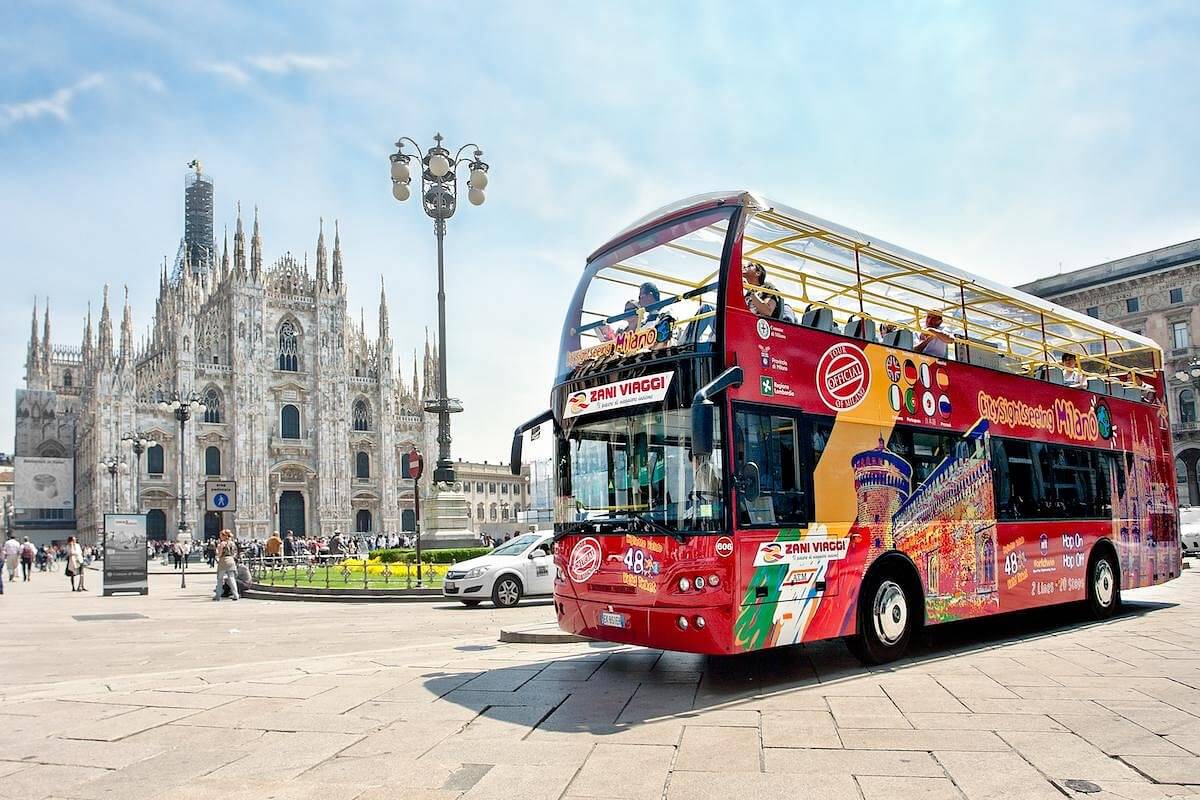
Buses and trams use the same ticketing system as the metro — your single ticket or travel pass covers all three modes.
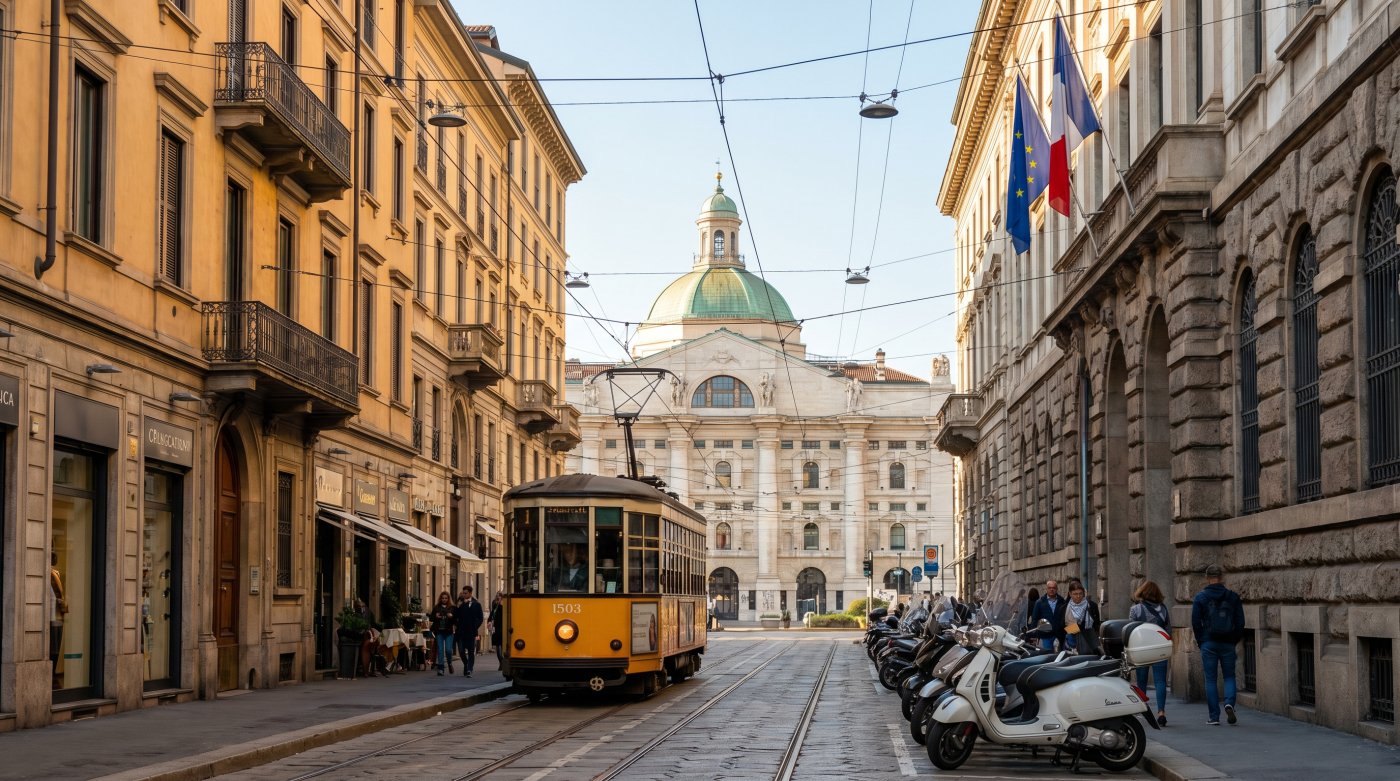
The ATM network operates a large fleet of bus and trolleybus lines across the city, supplemented by dozens of tram lines, including vintage 1920s-era cars still running on certain routes.
When to Use the Bus
Buses cover neighborhoods not on metro lines, particularly in the outer districts.
For the central areas most visitors use, buses are generally slower than the metro or walking due to traffic.
The most useful bus lines for visitors:
| Route | Useful For |
|---|---|
| 54 | Lambrate to Duomo area |
| 73 / X73 | Still operates between Linate Airport and San Babila — useful as a backup or when travelling after M4 hours; runs every 10 minutes (73) and every 20 minutes Mon–Fri (X73); note that M4 is now the faster and more comfortable primary option for the airport |
| 94 | Cadorna to Porta Genova (Navigli area) |
| 90/91 | Outer ring route connecting peripheral neighborhoods |
Bus stops show route numbers, destinations, and timetables.
Many stops have digital displays showing real-time arrival estimates.
You can also track buses in real time through the ATM official app or Moovit.
Tap your contactless bank card, smartphone, or smartwatch on the yellow readers near the doors when boarding — as of January 1, 2026, paper tickets are no longer accepted on the ATM network.
Inspectors board randomly and check.
Fines for invalid or missing tickets start at €39.30 plus the cost of the ticket fare.
Milan’s Historic Trams
Milan has one of the last remaining networks of early-20th-century trams in Western Europe.
The orange articulated trams — many dating from the 1920s through 1950s — are functional public transport, not tourist attractions, though they’re useful for both.
Tram Line 1 is the most scenic for visitors, running through the historic center past the Duomo and La Scala.
Trams run at moderate speed, affected by traffic, so they’re better for shorter distances or when you’re not in a hurry.
The system is gradually adding modern low-floor trams alongside the historic fleet, improving accessibility.
Historic trams don’t have low-floor access — note this if traveling with a wheelchair or large luggage.
Night Bus Service
When the metro stops (around 12:30 AM on most nights), Milan’s night bus network takes over.
Night buses — marked with “N” route numbers — run on major routes throughout the city.
On Friday and Saturday nights (and nights before mid-week public holidays), a fuller set of N lines operates; on all other nights, a more limited set of replacement lines for each metro line plus the 90/91 trolleybus ring runs through to morning.
Useful night bus routes for visitors:
| Route | Key Stops | Notes |
|---|---|---|
| N6 | Cadorna, Centrale FS | Runs Fri/Sat nights and pre-holiday nights |
| N15 | Gratosoglio – Duomo | Runs Fri/Sat nights and pre-holiday nights |
| N24 | Vigentino – Duomo | Runs Fri/Sat nights and pre-holiday nights |
| N50 | Lorenteggio – Cairoli | Runs Fri/Sat nights and pre-holiday nights |
| N94 | Porta Volta – Cadorna | Runs Fri/Sat nights and pre-holiday nights |
| NM1/NM2/NM3/NM4 | Metro line replacements | Run every night |
| 90/91 | Outer ring | Runs every night |
A standard €2.20 urban ticket validated after midnight is valid until 6:00 AM — so one tap covers your entire night out.
Tickets validated after 4:30 AM revert to the standard 90-minute validity.
How Much Does Milan Public Transport Cost?
A single metro/bus/tram ticket costs €2.20 and is valid for 90 minutes of unlimited transport — you can transfer between the metro, bus, and tram within that window.
For a stay of 2+ days with multiple daily journeys, a pass is almost always better value.
Milan Transport Ticket Prices
| Ticket Type | Price | Best For |
|---|---|---|
| Single ticket (90 min) | €2.20 | 1–2 journeys per day |
| Daily pass (24 hours) | €7.60 | 4+ journeys in a day |
| 3-day pass | €15.50 | Short stays |
| 10-trip carnet | €19.50 | Occasional users |
| Weekly pass (7 days) | €18.50 | Stays of 5–7 days |
| Monthly pass | €39 | Long stays or residents |
The daily pass breaks even at 4 single journeys.
If you’re doing a full day of sightseeing — hotel to metro, metro to museum, museum to lunch, back across town, evening in Navigli — you’ll almost certainly use 5–6 journeys.
The weekly pass is exceptionally good value for stays of 5+ days.
At €18.50 for unlimited travel on all ATM services for a week, it’s cheaper than 9 single tickets.
Note that the weekly pass runs Monday to Sunday of the same calendar week, not 7 rolling days from validation — time your purchase accordingly.
Student and Senior Discounts
ATM discount subscriptions are tied to Italian residency and income documentation, making them largely inaccessible to short-term international visitors.
Here’s what actually applies:
- Under 14: Children under 14 travel free on all ATM lines in the Milan urban zone — no ticket required
- Youth under 26 (residents): A 25% discount on monthly and annual subscriptions, dropping to €22/month for the urban zone (requires Italian codice fiscale and residency registration)
- Seniors 65+ (residents): A 25% discount on monthly and annual subscriptions — standard single and day tickets are sold at full price regardless of age
- International visitors: No reduced single ticket or day pass pricing is available based on age or student status; standard fares apply across the board
If you’re an international student enrolled at a Milan university (e.g., Bocconi, Politecnico), you may qualify for the student electronic card through your institution — check directly with your university’s administrative office and ATM Points.
How to Buy and Where
Tickets are available at:
- ATM ticket machines at every metro station (accept cash, cards, and contactless; English interface; also dispense and top up RicaricaMi cards)
- ATM newsstands (edicole) inside metro stations — buy or top up a RicaricaMi card directly at the counter
- ATM Milano app (iOS and Android) — buy single, daily, or carnet tickets; validate via QR code at metro gates
- SMS: Text ATM to 4880488 to receive a single journey ticket (€2.20); validity starts on confirmation
Contactless payment (bank cards, Apple Pay, Google Pay) works across the entire ATM network — all metro lines M1–M5, and all buses, trams, and trolleybuses.
Simply tap in at the barrier or validator; no registration or pre-purchase needed.
The system accepts Mastercard, Visa, American Express, Maestro, and V Pay circuits with no additional commission.
Note that paper tickets are no longer sold or accepted as of January 1, 2026 — contactless, app, or RicaricaMi card are your three options.
For a personalized transport budget based on your itinerary, the AI Trip Cost Estimator generates a breakdown including transport passes alongside accommodation and activity costs.
Is Milan Walkable? Key Distances and Pedestrian Areas
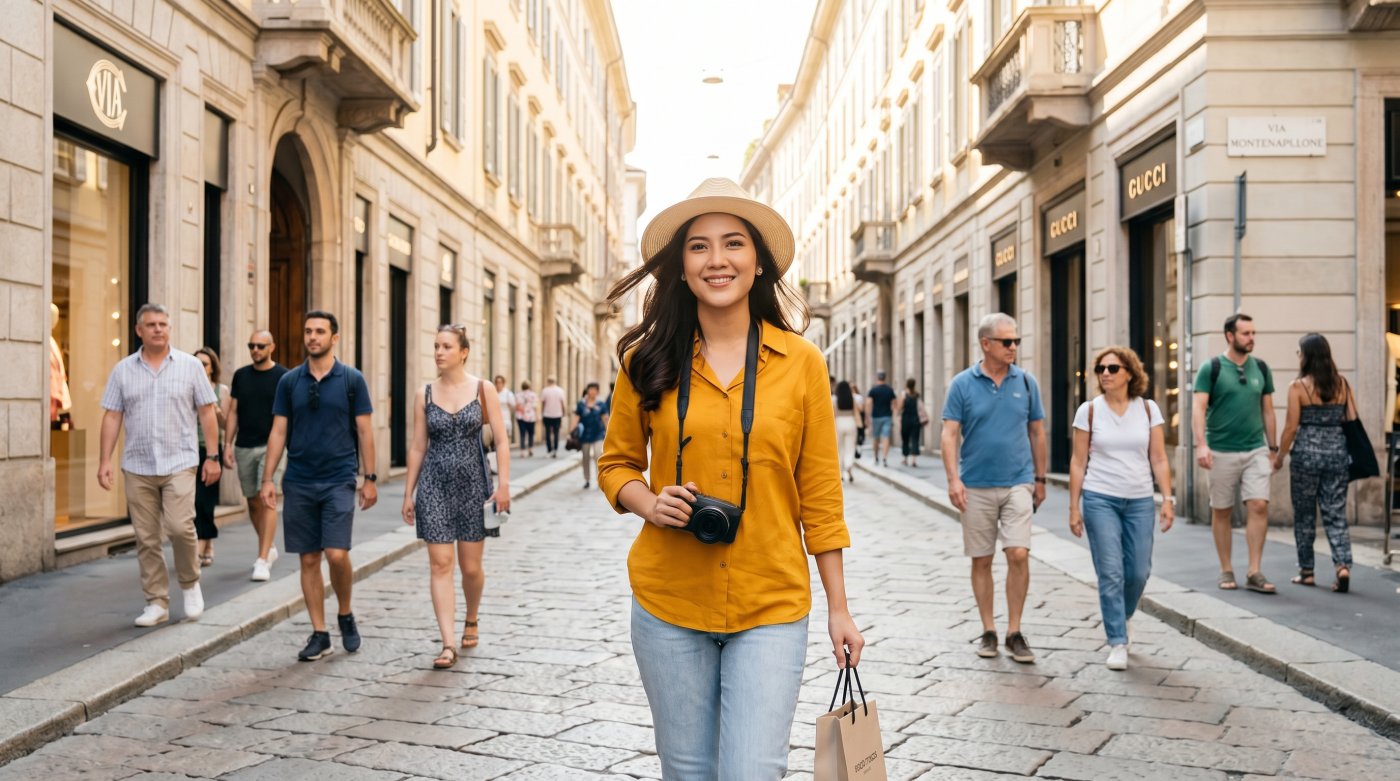
Milan’s historic center is highly walkable. The distance from the Duomo to Parco Sempione is about 1.5 km — a 20-minute walk. Most central attractions are within a 30-minute walk of each other.
You genuinely don’t need transport for much of central sightseeing if you’re happy to walk at a relaxed pace.
Distances Between Major Attractions
| Journey | Distance | Walking Time |
|---|---|---|
| Duomo to Galleria Vittorio Emanuele II | 0.2 km | 3 min |
| Duomo to La Scala | 0.3 km | 4 min |
| La Scala to Pinacoteca di Brera | 0.7 km | 9 min |
| Duomo to Sforza Castle | 1.3 km | 17 min |
| Sforza Castle to Parco Sempione | Adjacent | 2 min |
| Duomo to Navigli (Porta Genova) | 2.5 km | 32 min |
| Duomo to Santa Maria delle Grazie (Last Supper) | 2.0 km | 25 min |
The Duomo–Brera–Sforza Castle triangle is the core sightseeing area and covers about 2 km total.
A day combining these three areas involves minimal transport.
Pedestrian Zones and Car-Free Areas
The area immediately surrounding the Duomo (Piazza del Duomo and the surrounding streets) is pedestrianized.
Via Dante, the main walking street connecting the Duomo area to Sforza Castle, is fully car-free.
The Brera district has limited traffic with many narrow streets that function as pedestrian-priority areas in practice.
Via Tortona (design district) is broader but relatively quiet.
The Navigli canals are best appreciated on foot along the canal towpaths — Via Naviglio Grande and Via Alzaia Naviglio Grande are the main pedestrian-friendly canal streets.
The Quadrilatero della Moda (fashion district around Via Montenapoleone and Via della Spiga) is walkable but has normal traffic — the streets are narrow enough that walking is more comfortable than driving.
Tips for Walking in Milan
- Cobblestones: Many historic streets use sampietrini (basalt cubes) or traditional paving that is uneven and slippery when wet. Flat shoes with grip are practical.
- Traffic behavior: Italians jay-walk; traffic yields to pedestrians at crossing points but not always on open roads. Make eye contact with drivers before stepping out.
- ZTL zones: If you’re walking in the historic center near the Duomo, you may pass through ZTL (restricted traffic zone) boundaries. This affects drivers, not pedestrians.
- Heat in summer: Shade is scarce in the Duomo piazza. Carry water and plan museum visits for midday if visiting in July.
Cycling in Milan: BikeMi and the Bike Lane Network
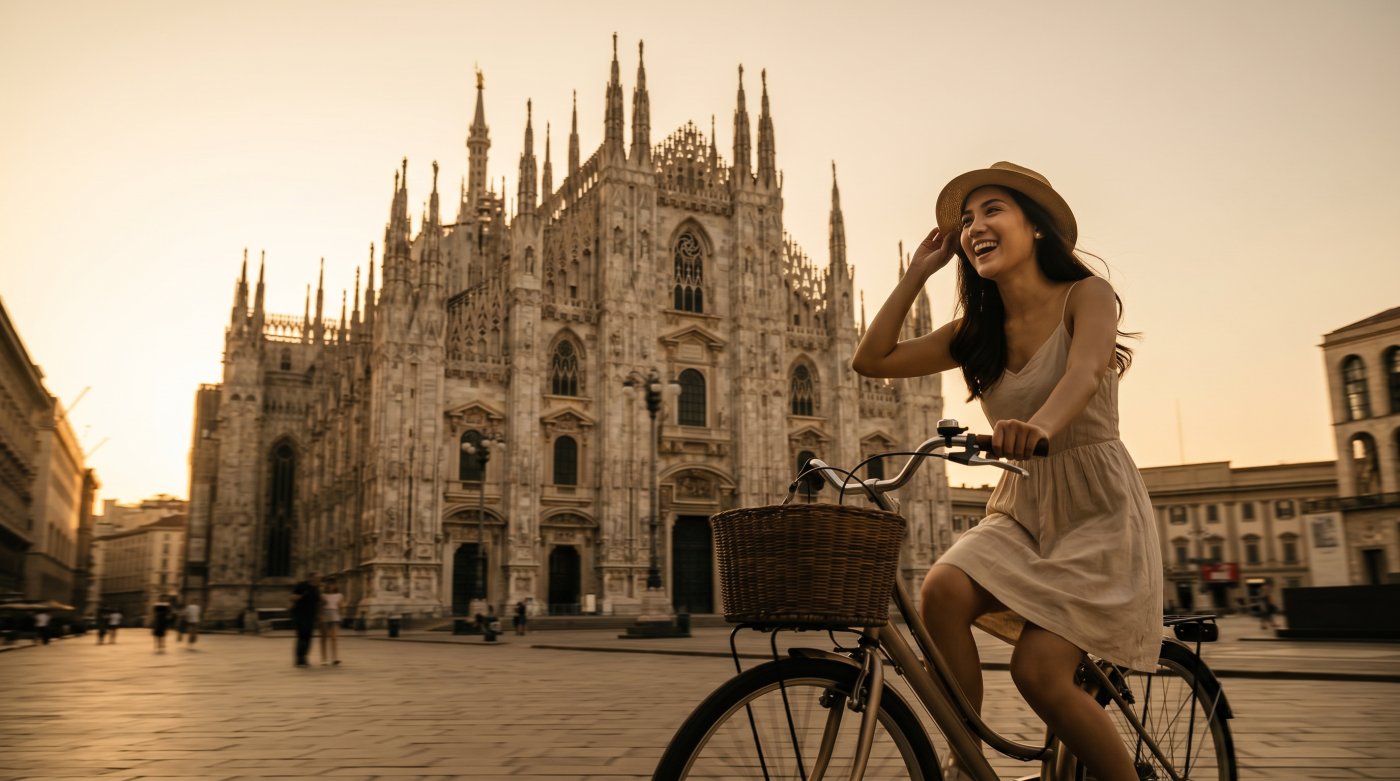
Milan has invested significantly in cycling infrastructure over the past decade.
The city’s bike lane network reached 332 km by 2024 — a 47% expansion since 2020 — and is actively growing under the ambitious Cambio biciplan, which targets 750 km of protected lanes by 2035.
New additions like the 10+ km Beats corridor (connecting Loreto to Naviglio Pavese) are already rolling out from 2026, making cycling a genuine option for getting between neighborhoods.
BikeMi Bike-Share
BikeMi operates 325 docking stations across the city with a fleet of 5,430 bicycles, including traditional pedal bikes, electric-assist bikes, and bikes with child seats.
The system runs daily from 6:00 AM to 2:00 AM, year-round.
Pricing for BikeMi:
- Daily pass: €4.50 — valid 24 hours from first pick-up; includes unlimited trips on traditional bikes up to 30 min each
- Weekly pass: €9.00 — valid 7 days from first pick-up; same conditions as daily
- Annual subscription: €36 — includes unlimited trips on traditional bikes up to 30 min each; reduced to €24 for existing ATM monthly/annual public transport subscribers; €12 for Under 27
- Electric bike surcharge: electric bikes are free for the first 3 minutes, then €0.25 per 30-minute period; the rate doubles each additional 30 minutes up to 2 hours, after which a €4/hour flat fee applies
- Traditional bike overtime: free for the first 30 minutes, then €0.50 per 30-minute period up to 2 hours; €2/hour beyond that — max trip time is 2 hours
Stations are located near metro stops, major attractions, and throughout residential neighborhoods.
The BikeMi app (separate from the ATM Milano app) shows real-time bike availability and lets you register and purchase subscriptions directly.
Where to Cycle in Milan
The best cycling routes for visitors are:
- Parco Sempione: Paved paths through the park make a car-free loop around the castle grounds practical and pleasant
- Navigli canal towpaths: Flat, scenic, and relatively traffic-free; good for an hour of leisurely cycling
- Bike lanes on Via Washington and Via Corsica: Quieter city streets with dedicated lanes connecting neighborhoods
- Biblioteca degli Alberi to Garibaldi: The Porta Nuova area has new cycling infrastructure linking the park to the Garibaldi/Isola neighborhood
For reaching the best parks in Milan by public transit, Metro M1 for Parco Sempione (Cadorna stop) or Metro M1/M2 for Giardini Pubblici (Porta Venezia stop) are the most direct options.
Cycling Safety in Milan
Milan is not Amsterdam — the cycling culture coexists with heavy car traffic and requires attention.
Key rules:
- Ride in designated bike lanes (marked with green paint or road markings) where available; they provide genuine protection
- Helmet use is strongly recommended; legally required for under-14s
- Lock bikes securely at BikeMi stations or designated racks — bicycle theft is common in central Milan
- Use hand signals for turns; Italian drivers are accustomed to cyclists but not necessarily cautious around them
- Avoid cycling on cobblestone streets — the surface is unpredictable and puncture-prone
Getting from Milan’s Airports to the City
Milan is served by three airports: Malpensa (MXP), Linate (LIN), and Bergamo Orio al Serio (BGY).
Each has distinct transport options and cost profiles.
Malpensa Airport (MXP)
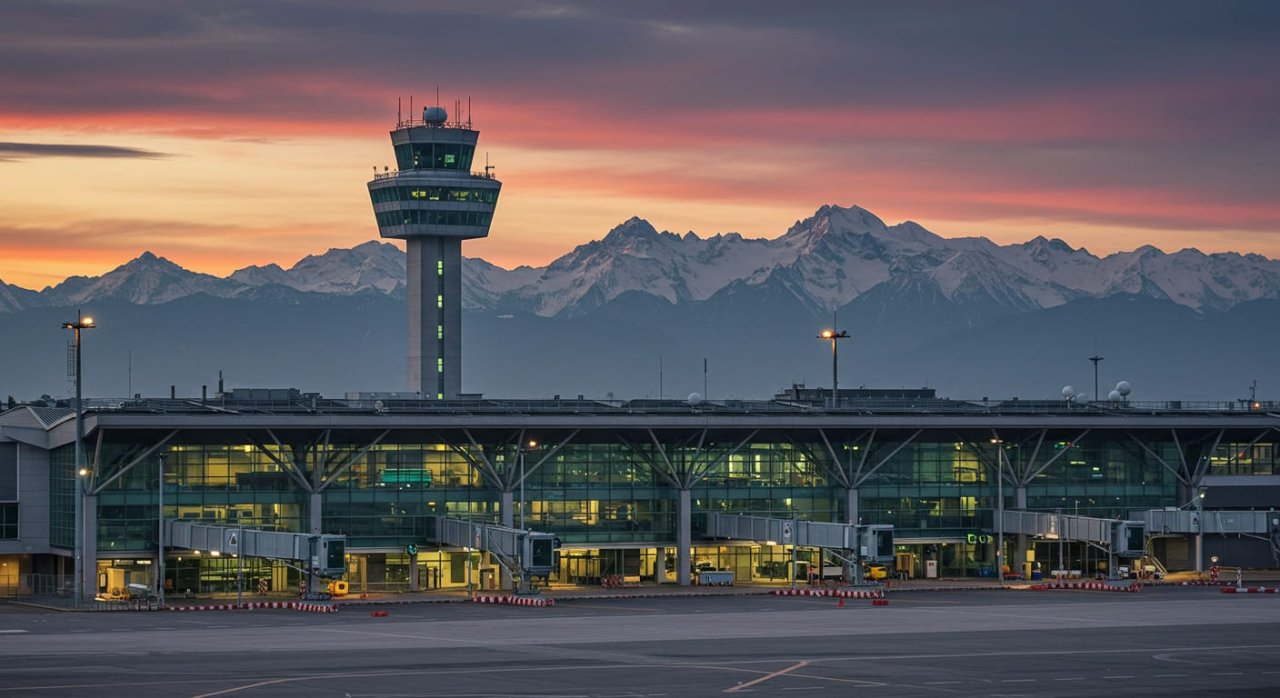
Malpensa is 49 km northwest of the city center — the farthest of the three airports.
It handles the majority of long-haul international flights.
Malpensa Express Train — the best option for most travelers:
- Runs to Milano Centrale and Milano Cadorna (two separate routes, running simultaneously)
- Journey time: approximately 51 minutes to Centrale, slightly less to Cadorna
- Frequency: every 30 minutes from each terminus — with both routes combined, trains leave from the airport roughly every 15 minutes
- Ticket price: €15 for adults; €7.50 for children aged 4–13; children under 3 travel free
- First train from Terminal 1: 5:43 AM; last train from Terminal 1: 22:43; from Milano Centrale, first departure is 5:25 AM and last is 11:25 PM
Airport buses (Malpensa Shuttle, FlixBus, Flibco, and others): Multiple operators run coaches to Centrale and the city center roughly every 20 minutes in combined frequency.
Slower than the train (60–90 min depending on traffic) but cheaper — starting from approximately €8–10 depending on operator and booking time.
FlixBus fares to Milan start from around €8.60 when booked in advance.
Buy in advance online for the best prices; tickets at the airport cost more.
Taxi: The official fixed fare from Malpensa to any street in Milan is €114 — this is an all-inclusive rate set by the Municipality of Milan (effective from July 2024), covering both Terminal 1 and Terminal 2 to any destination within the city, with no additional surcharges for luggage, night travel, or traffic.
Always use the official taxi queue outside arrivals and confirm the fixed-rate fare before departure.
Ride-hailing via Uber is also available from Malpensa.
Linate Airport (LIN)
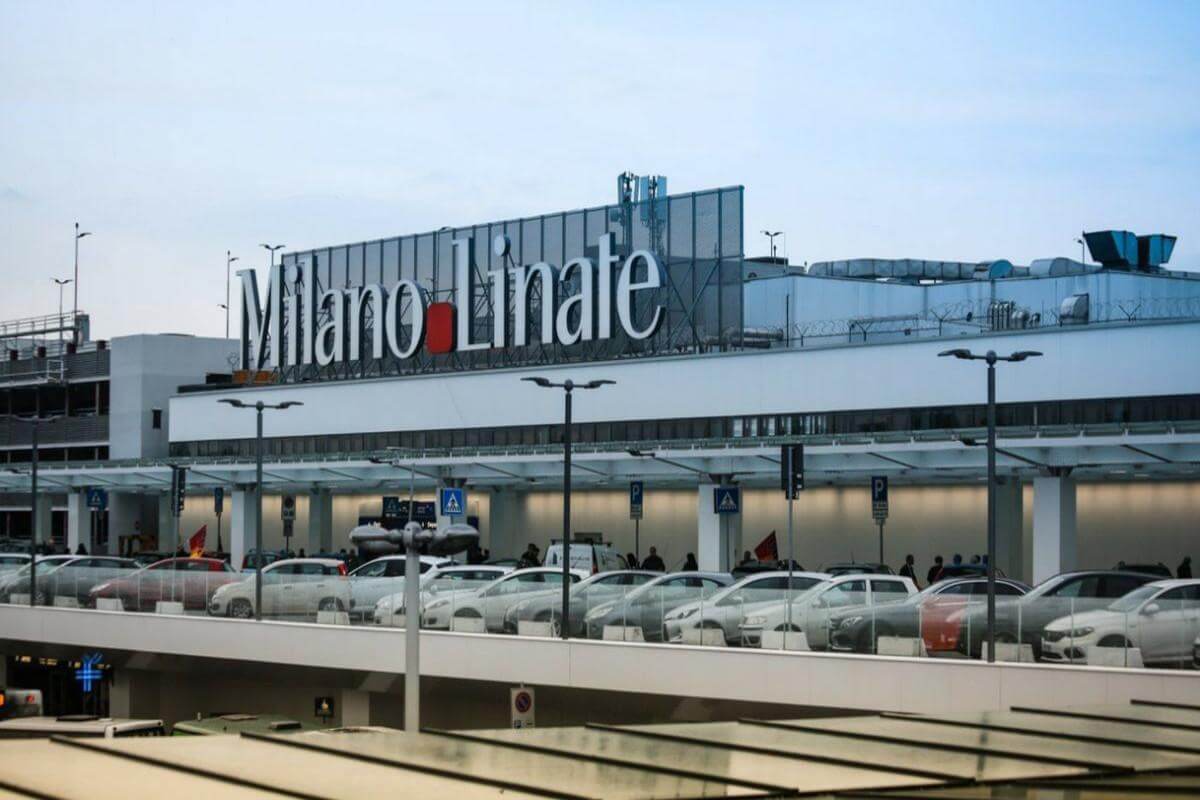
Linate is 8 km east of the city center, and since the M4 Blue Line opened, it has become significantly easier to reach.
M4 Metro — the fastest and cheapest option:
- Direct connection from Linate Airport station to the city center (San Babila, Duomo, Foro Bonaparte, and onward to San Cristoforo)
- Journey time: approximately 12 minutes to central stops like San Babila; about 30 minutes end-to-end to San Cristoforo
- Price: standard ATM contactless fare of €2.20 — the same as any urban journey; tap your bank card, phone, or smartwatch at the barrier
- M4 operates daily from 5:40 AM to 12:30 AM
Bus Line 73: Still operates between Linate and San Babila every 10 minutes as a backup, useful when M4 is closed or disrupted.
Taxi from Linate: The official fixed fare from Linate Airport to central Milan (within the Cerchia dei Bastioni) is €25 on weekdays between 7:00 AM and 9:00 PM.
Night, Sunday, and public holiday surcharges apply, bringing the fare to approximately €28–35.
A luggage supplement of around €1 per bag may apply.
The M4 makes the taxi a hard sell unless you have a lot of luggage or a very specific destination.
Bergamo Orio al Serio Airport (BGY)
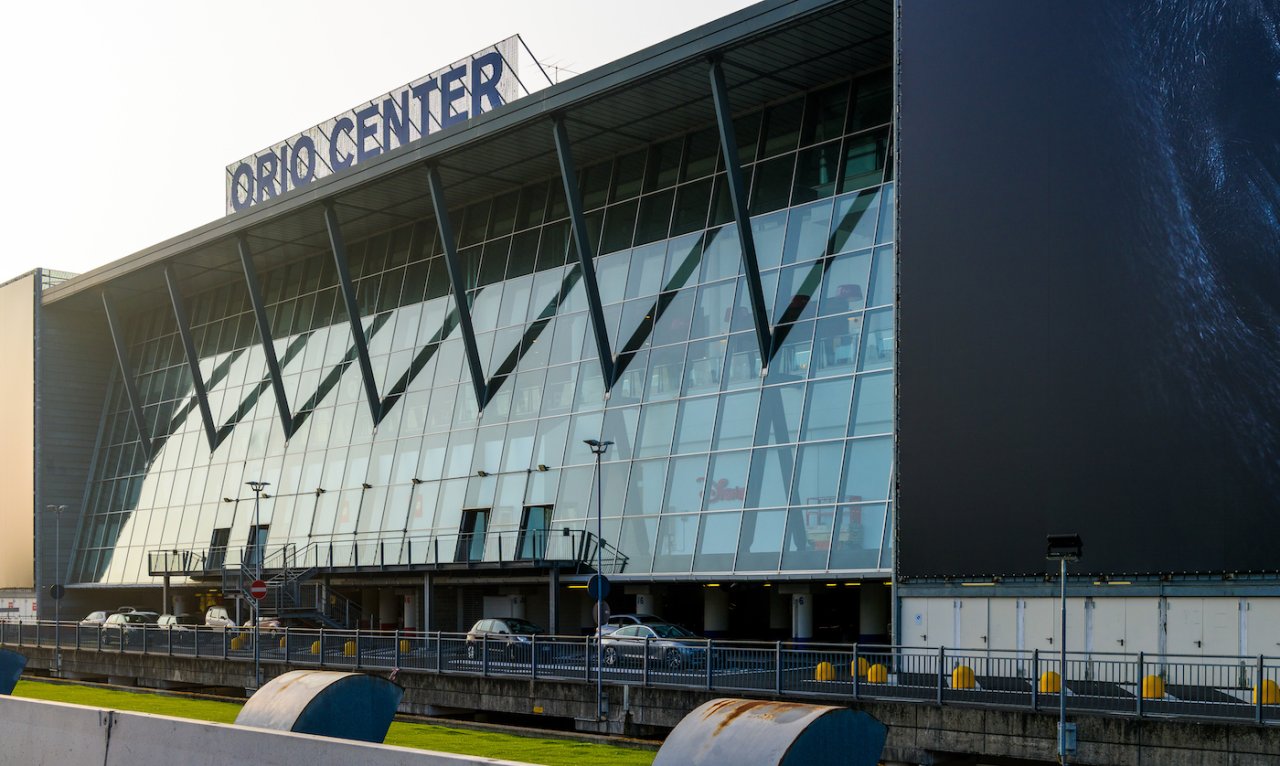
Bergamo is technically a separate city 45 km northeast of Milan, but its airport serves many budget airlines (Ryanair in particular) as a de facto Milan gateway.
- Orio Shuttle buses: Several companies run direct coaches to Milano Centrale, departing from directly in front of the arrivals terminal. Main operators include Terravision, Flibco, Autostradale, and Itabus. Journey time: approximately 50–60 minutes in normal traffic, up to 70 minutes during morning rush hour. Buses run from approximately 03:15 AM to 11:20 PM, with departures every 20–30 minutes. Prices: €8–€12 one-way when booked in advance online; buying on the bus may cost slightly more. Round-trip tickets typically start from €14.40.
- Regional train: Bergamo has a regular train connection to Milano Centrale (~55 minutes), but requires a local bus from the airport to Bergamo city station first (approximately 15–20 minutes, €4) — adding meaningful time and a transfer. The direct coach to Centrale is simpler for most airport arrivals.
- Taxi from Bergamo airport to Milan: The official fixed fare from Bergamo Orio al Serio Airport to Milan is €128 — significantly more expensive than the bus and not recommended unless you’re traveling in a group with heavy luggage or at an hour when coaches aren’t running.
Arriving in Milan: Milano Centrale and Regional Connections
Whether you’re coming from Rome on a Frecciarossa, rolling in from Zurich on an EuroCity, or catching a regional connection from Bergamo, Milano Centrale is where almost every intercity journey begins and ends.
Understanding the station layout saves you real time — it’s big, busy, and genuinely easy to get turned around in with luggage.
Milano Centrale
Milano Centrale is Italy’s second-busiest railway station and the main arrival point for high-speed trains.
The Art Deco building — monumental, deliberately grand — is worth a look in its own right.
High-speed connections from Centrale:
- Rome: approximately 2 hours 50 minutes to 3 hours 10 minutes (Frecciarossa/Italo, fastest services from 2h 50m; average around 3h 10m)
- Florence: approximately 1 hour 43–54 minutes (Frecciarossa/Italo; fastest services ~1h 43m)
- Venice: approximately 2 hours 15–27 minutes (Frecciarossa/Italo; fastest ~2h 15m)
- Turin: approximately 36 minutes to 1 hour depending on service (fastest Italo ~36 minutes; Frecciarossa ~44–60 minutes)
- Zurich: approximately 3 hours 17–25 minutes (EuroCity/direct IC; no reservation required for Swiss section)
- Paris: approximately 7 hours (TGV/Frecciarossa via Turin; journey involves a change at the border or runs through to Paris Gare de Lyon)
The station has 24 platforms, luggage storage (deposito bagagli), a large food hall, and direct metro access (M2 green line and M3 yellow line).
To reach the metro from the main hall, follow signs to the underground level — the metro entrance is beneath the building.
Regional Trains and Day Trips
Regional trains from Milano Centrale and Milano Porta Garibaldi cover the broader Lombardy area.
These services are operated by Trenord (a Trenitalia-Lombardy joint venture) on most regional routes.
For day trips, the most commonly used routes:
- Como (Lake Como): ~40 minutes from Milano Centrale to Como San Giovanni; €5.20 one-way (2nd class, Trenord regional); approximately 17 trains per day with departures roughly every hour
- Bergamo: ~50 minutes from Milano Centrale; fares from approximately €5–6 one-way
- Pavia: ~27–30 minutes; fares from approximately €5–6 one-way; up to 30 trains per day
- Franciacorta wine region (via Brescia): approximately 55 minutes to Brescia; regional fares from approximately €8–9 one-way; Franciacorta itself requires a local bus or taxi from Brescia
- Varenna (Lake Como): ~1 hour from Milano Centrale to Varenna-Esino; €7.40 one-way (2nd class, Trenord); approximately 16 trains per day
For full day trip planning including transport timings and what to do once you’re there, day trips from Milan by transit covers each destination in detail.
Regional trains are operated by Trenord on Lombardy routes.
Tickets can be purchased at Centrale via the Trenord ticket machines (distinct from Trenitalia intercity machines — look for the green Trenord branding), on the Trenord app, online at trenord.it, or at authorized retailers.
Always validate your ticket by stamping it at the yellow machines on the platform before boarding — fines for unvalidated regional tickets start at €39.30.
How to Get Around Milan at Night
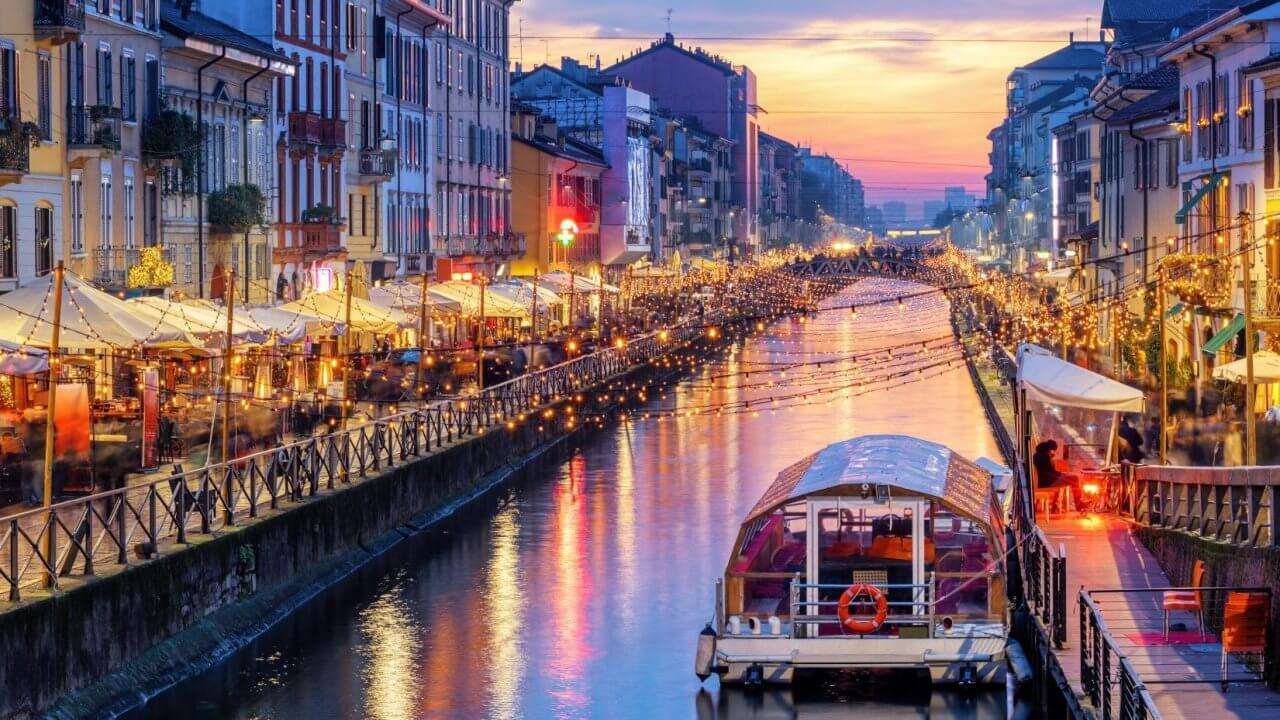
After midnight, Milan’s transport options change.
The metro stops at approximately 12:30 AM on most nights (M5 slightly earlier, around midnight), but night buses continue through to the early morning hours.
- Night buses: ATM operates N-routes (prefixed with N) that cover the main arterials every 30 minutes. Coverage is sufficient for getting from entertainment districts back to most accommodation areas, but journey times are longer than daytime metro. Your standard €2.20 contactless tap is valid after midnight until 6:00 AM on a single boarding.
- Taxis: Most reliable for late-night travel, particularly with luggage or in bad weather. Taxi stands are at Duomo, Centrale, Garibaldi, and Loreto. Main radio taxi numbers in Milan: 02 4040 (Taxiblu, the city’s largest fleet) and 02 6969 (Radiotaxi 6969) — both operate 24/7. You can also book through FreeNow, ItTaxi, or appTaxi apps directly from your phone without a phone call.
- Uber: Available in Milan with standard UberX and premium options. Surge pricing applies on weekend nights. Generally comparable to or slightly above official taxi rates in central areas.
- On foot: Central Milan is well-lit and generally safe in the main districts. Navigli, Brera, and Garibaldi areas have street-level activity until well past midnight. Exercise normal urban awareness — keep bags secure and stick to populated streets late at night.
Safety, Accessibility, and Transport Etiquette
Milan’s public transport system is generally safe and well-managed, but a few practical habits go a long way toward a smooth experience — whether you’re navigating a crowded rush-hour carriage or planning an accessible route across the city.
Pickpocket Prevention
Milan’s metro and trams, like those in most major European cities, attract pickpockets particularly during rush hours on crowded lines.
The Duomo metro station and crowded central-area trams are the highest-risk locations.
Practical measures:
- Carry bags in front, particularly in crowded carriages
- Don’t carry a wallet in a back pocket
- Be alert when surrounded by groups in tight spaces — distraction followed by theft is the typical pattern
- Keep phones and cameras in secure pockets or bags, not in external jacket pockets
Emergency contacts: general emergency 112; ATM customer service and accessibility assistance +39 02 48 607 607 (daily 7:30 AM–7:30 PM, extended to midnight for passengers with disabilities; English available; press 1 for an operator); Radio Taxi 02 4040 (Taxiblu) or 02 6969 (Radiotaxi).
Accessibility
As of February 2026, Milan’s entire metro network reached full accessibility — a milestone upgrade that included 43 new lifts and 28 stairlifts installed across M1 and M2 stations, which previously had the most coverage gaps.
Line M1 is now fully accessible, while M2 has been substantially upgraded and is considered functionally accessible across its network.
Lines M3, M4, and M5 had more modern accessibility infrastructure already in place.
That said, real-world reliability of lifts varies — always check status before travel.
For real-time elevator and stairlift status across all stations, use:
- ATM ISB website: isb.atm.it/accessibile — live updates on elevator status across the full network
- ATM Milano app (iOS and Android) — real-time accessibility status, journey planning, and step-free routing
- ATM Infoline: +39 02 48 607 607 (press 1 for accessibility assistance; extended hours until midnight)
Newer trams have low floors and wheelchair access.
Historic trams do not — if you’re a wheelchair user, stick to the metro or ATM buses, which are predominantly low-floor with kneeling capability.
Be cautious of tram tracks throughout central Milan, particularly at intersections where tracks split.
Accessible taxis can be pre-booked through Radio Taxi 02 4040 or 02 6969.
Transport Etiquette
Milan’s metro culture follows standard European norms:
- Let passengers off before boarding — stand to the side of doors on the platform
- Priority seats (marked, usually at carriage ends) are reserved for elderly, pregnant, and disabled passengers; vacate them when needed
- Validate your ticket before passing through barriers — inspectors check randomly and fines are immediate
- Keep volume low on calls and music — Milanese commuters value quiet on public transport
- Stand right on escalators — the left side is for walking
The one notable departure from these norms: tram boarding in Milan does not always have an orderly queue.
Especially at busy stops, boarding can be a first-come basis.
Mobile Apps for Getting Around Milan
Two apps cover nearly everything:
- ATM Milano (official): Real-time departure times for all metro, bus, and tram routes. Mobile ticket purchasing. Live service alerts. Available in English. Download before arriving — it works well offline for timetables.
- Moovit / Google Maps: Both give journey planning with public transport integration. Moovit has more granular real-time data for Milan’s surface transport. Google Maps is useful for the broader picture but less precise on Milan bus timing.
- BikeMi app: Required for bike-share usage. Shows real-time dock availability and bike types at each station.
- Offline maps: Download Milan to a maps app (Maps.me or Google Maps offline download) before arriving. Data roaming costs in the EU are capped, but having offline maps avoids any dependency on connectivity in the metro underground.
Car-Free Travel and the Restricted Traffic Zone
Milan has a well-established ZTL (Zona a Traffico Limitato) — the restricted traffic zone covering the historic center.
Vehicles without prior authorization are automatically photographed and fined if they enter ZTL areas.
As a visitor, this affects you primarily if you’ve rented a car: check carefully which areas are restricted before driving anywhere near the city center.
Milan actually operates two overlapping ZTL zones: Area B, a wider environmental zone covering most of the city (active Mon–Fri, 7:30 AM–7:30 PM) that restricts older, higher-emission vehicles, and Area C, the inner congestion charge zone covering the historic center within the Cerchia dei Bastioni.
Area C costs €7.50 per day (payable online at areac.atm-mi.it, via SMS, or at authorized tobacconists; electric and hybrid vehicles and disability-permit holders enter free).
The charge is active Monday–Friday, 7:30 AM–7:30 PM — weekends, public holidays, and August are free.
Entry and exit are logged automatically by cameras; no booths exist.
If you drive through without paying, expect a fine of around €65 plus a rental car admin surcharge of around €45 from your rental company.
The practical implication: driving to the Duomo, Brera, or the fashion district is a mistake.
Drive to your hotel (if it has parking), park, and don’t use the car again until you leave the city.
The broader argument for car-free travel in Milan: parking in central areas typically costs €2.50–€5 per hour at on-street blue-zone meters, rising to €3–€6 per hour in underground car parks near the Duomo and central districts.
Traffic is heavy, and nearly every visitor attraction is faster to reach by metro or on foot.
The free things to do in Milan guide covers free outdoor activities — most of which are in walkable central areas.

Navigating Between Neighborhoods
Milan’s neighborhoods each have distinct characters and distinct transit connections.
Getting between them is generally straightforward:
- Duomo to Navigli: Metro M3 to Porta Romana, then 10-min walk; or bus 94 from Cadorna; or 25-min walk
- Duomo to Brera: 10-min walk north along Via Brera
- Duomo to Isola (Garibaldi): Metro M2 to Garibaldi (2 stops)
- Duomo to Porta Nuova: Metro M2 to Garibaldi; or Metro M5 to Garibaldi
- Centrale to Duomo: Metro M2 or M3 (2–3 stops)
- Sforza Castle to Parco Sempione: 2-min walk from the castle’s northwest entrance
For a detailed look at what’s in each neighborhood and how they differ, best neighborhoods in Milan covers transport access, character, and what to do in each district.
For the best museums in Milan and their nearest transport connections, most are within a few minutes’ walk of M1, M2, or M3 stops.
For a custom day-by-day transport plan based on your specific itinerary, the AI Itinerary Planner generates route-optimized plans that minimize backtracking.
Frequently Asked Questions (FAQs)
You validate once per journey entry.
A single ticket is valid for 90 minutes of continuous travel — you can transfer between metro, bus, and tram within that window without revalidating.
When you start a new journey after the 90-minute window expires, you need a new ticket.
Yes. Uber operates in Milan with standard and premium service.
It’s generally slightly more expensive than official taxis for short central journeys, and less hassle than finding a taxi stand at odd hours.
Surge pricing applies during peak demand.
Yes — and as of mid-2026, contactless card payment is available across all five Milan metro lines (M1–M5) at all 113 stations.
ATM began rolling out card readers on metro turnstiles in May 2026, with full activation across the network expected by end of June 2026.
Initially, one turnstile per station is equipped with a contactless reader alongside a QR code scanner and pass reader; more gates will follow as the rollout expands.
On buses and trams, contactless tap-on readers are already installed at boarding points on all routes — simply tap your card or device on the orange readers when you board.
Any contactless bank card works at the standard €2.20 fare per journey — Mastercard, Visa, American Express, Maestro, and V Pay are all accepted.
No registration, no account setup, and no extra commission.
Better still, the system applies automatic daily fare capping: after 4 taps in a single day, the system stops charging until 24 hours after your first tap — effectively capping your daily spend at the €7.60 day pass price.
This makes contactless tap-on a genuinely smart option for casual use.
The one situation where pre-buying a pass still makes more sense: multi-day stays.
Contactless capping resets daily, so over 3 days you’d pay up to 3 × €7.60 = €22.80, compared to €15.50 for the 3-day pass.
For 5+ day stays, the €18.50 weekly pass loaded onto a RicaricaMi card or the ATM app will save you money over daily capping.
Note also that contactless is only valid on ATM services — it won’t cover you on Trenord regional trains.
Yes, but coverage is uneven.
Via Washington, Corso Buenos Aires, and the Porta Nuova area have good dedicated infrastructure.
Many central streets have no dedicated cycling provision.
The safest cycling routes are within Parco Sempione, along the Navigli canals, and in the Biblioteca degli Alberi park area.

A lifestyle and OOTD blogger, Kannaya Nareswari enjoys the small pleasures of cooking, traveling, and documenting ordinary events. She uses genuine storytelling to communicate her love of fashion, culinary explorations, and wanderlust. She is based between Bali and Bandung. She enjoys enjoying coffee at a secret café or experimenting with recipes in the kitchen when she's not traveling to new places or styling her most recent ensemble.