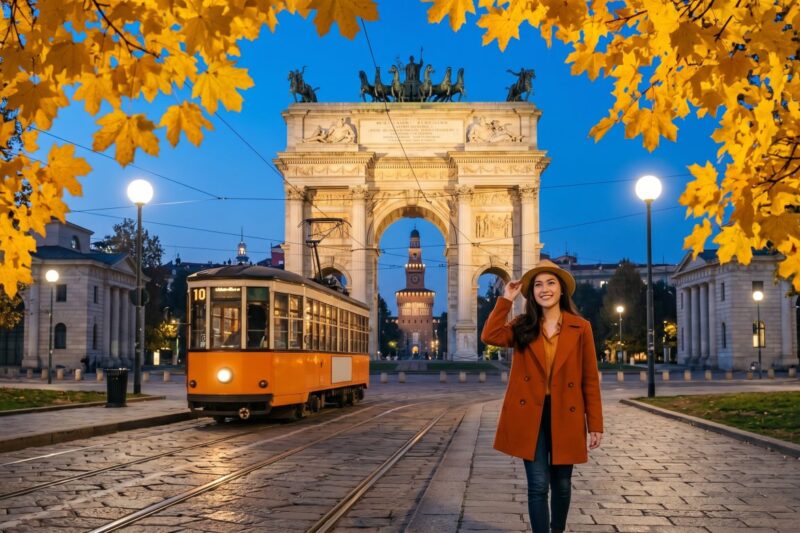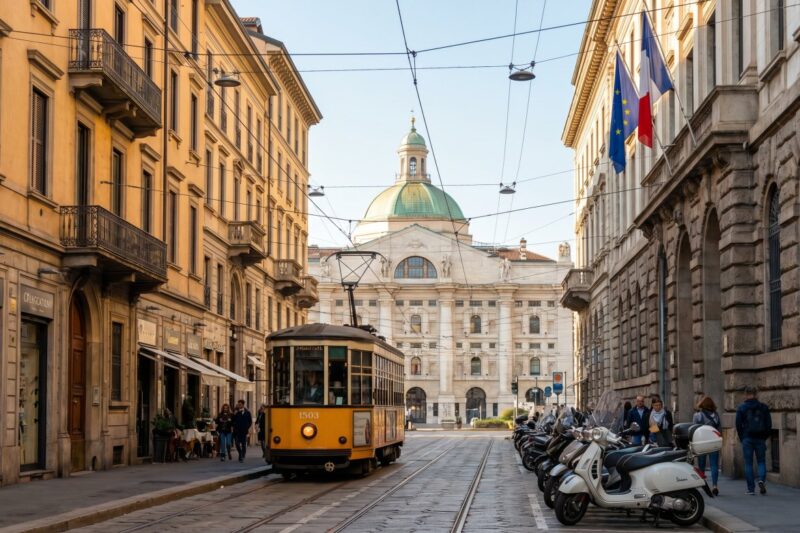




Milan Complete Travel Guide: Best Things to do in Milan, See, and Eat – Milan earns its reputation — a city where Gothic cathedrals stand beside glass towers, Renaissance art fills neighborhood galleries, and a mid-evening drink comes with a full table of free snacks.
Milan offers more than fashion runways and luxury boutiques.
The city holds world-class art museums, a medieval castle, historic canals, design districts, and some of northern Italy’s finest food.
Before you finalize your plans, it helps to know the best time to visit Milan — the city wears each season differently, and timing affects everything from museum queues to aperitivo culture along the canals.
This guide covers the full picture: iconic landmarks, art institutions, shopping districts, food culture, parks, nightlife, spiritual sites, and practical tips for getting around on a budget.
Key Takeaways
- The Duomo di Milano has 135 spires, over 3,300 statues, and rooftop views across the entire city skyline.
- La Scala is one of the world's most storied opera houses, with 13 opera titles in its 2026–2027 season.
- Sforza Castle houses Michelangelo's final sculpture, the Pietà Rondanini, left unfinished at his death in 1564.
- Milan's aperitivo hour — typically 6 PM to 9 PM in Navigli and Brera — includes free snacks with any drink order.
- Free museum entry is available at many of Milan's top museums — including Castello Sforzesco, Pinacoteca di Brera, and Museo del Novecento — on the first Sunday of every month.
Iconic Architecture and Historic Landmarks in Milan
Milan’s most celebrated buildings are not merely backdrops — they are the main event.
The Duomo, La Scala, Sforza Castle, and Brera Palace each represent a different chapter of the city’s history, and all four are within walking distance of each other in the center.
Milan Cathedral Duomo: Gothic Architecture at Its Most Ambitious
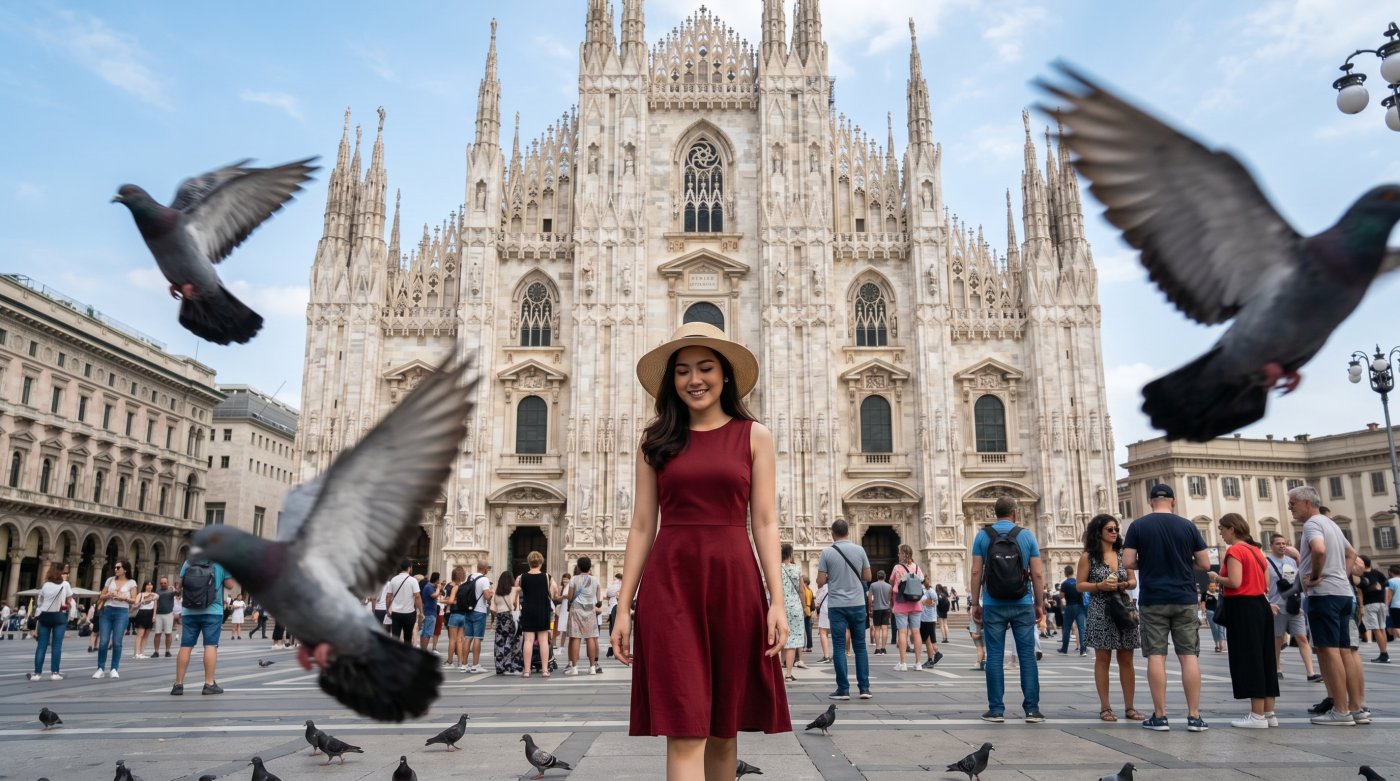
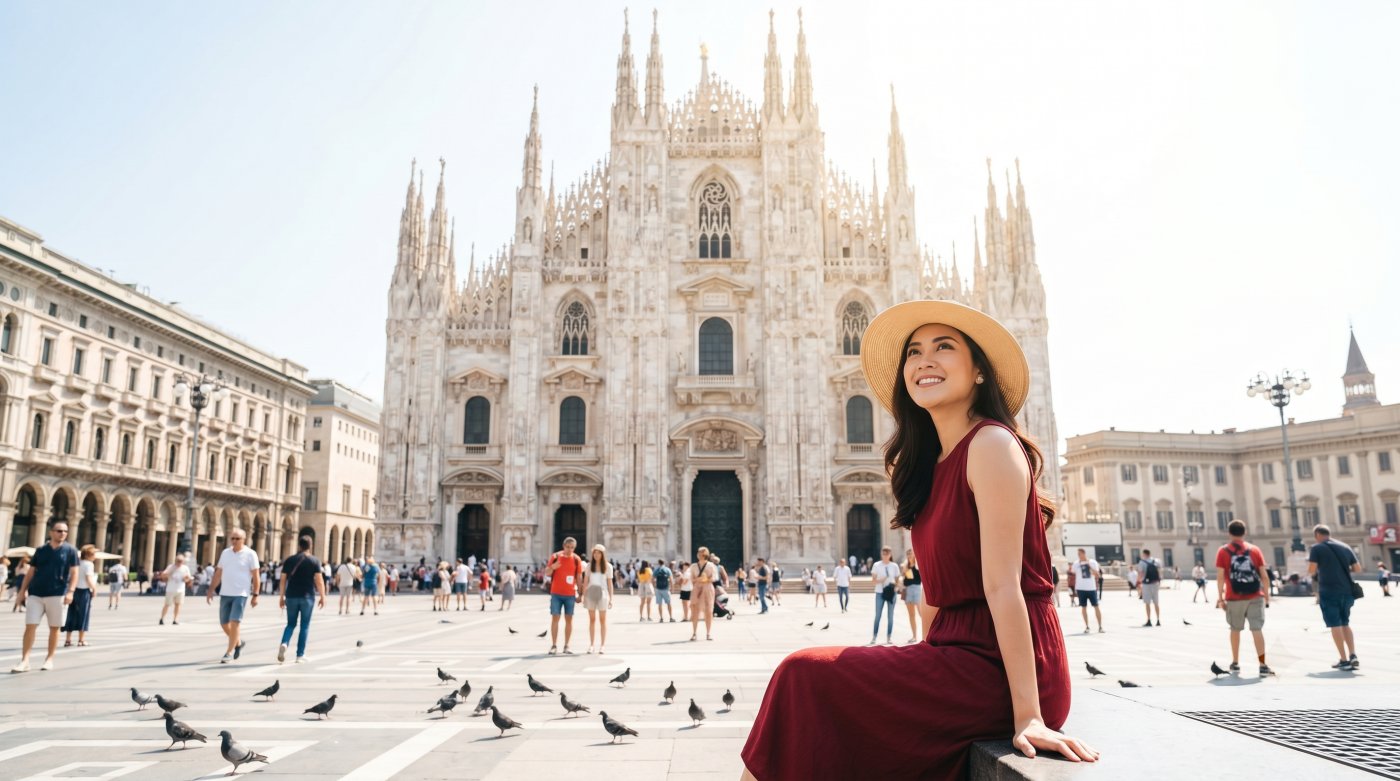
The Duomo di Milano is the third-largest church in the world by interior volume, and the scale is disorienting even after photos.
The facade alone has 135 spires and over 3,300 statues carved in white Candoglia marble over nearly six centuries of construction.
The interior holds the world’s largest collection of stained glass windows.
On a clear afternoon, the light through the nave shifts the entire space from grey to amber and blue.
The rooftop terrace is a separate ticket.
You walk among the spires at close range, with the Alps visible on clear winter days and the Galleria Vittorio Emanuele II spread below.
Rooftop access costs €16 adult / €8 reduced by stairs, or €18 adult / €9 reduced by lift — book online to skip the longest queues, which peak between 10 AM and 2 PM.
Duomo Spires Walking Tour and Cathedral Rooftop Panoramic Views
The rooftop is accessible by stairs or lift.
The stair route costs slightly less and lets you move at your own pace.
Allow at least 45 minutes up here — the view changes significantly as you walk the perimeter.
La Scala Museum and Theater Guided Tours: Behind-the-Scenes Experience
The Teatro alla Scala museum runs guided tours of the theater interior, including the historic stage and a collection of costumes, instruments, and scores.
Beethoven’s baton is among the exhibits.
The museum is open daily from 9:30 AM to 5:30 PM (last admission 5:00 PM), closed on December 7th, 25th, 26th, January 1st, Easter, May 1st, and August 15th.
Admission is €12 full price / €8 reduced (students, seniors 65+, and young people aged 6–18).
Sforza Castle Courtyard and Michelangelo’s Pietà Rondanini Viewing
The castle’s main courtyard is free to enter.
The museums inside — including the room containing Michelangelo’s Pietà Rondanini — require a separate admission ticket of €10 full price / €5 reduced, with museum hours running Tuesday through Sunday, 9:00 AM to 5:30 PM (last entry 5:00 PM).
Brera District Artistic Quarter and Historic Palace Architecture
The Palazzo di Brera houses the Pinacoteca di Brera on its upper floors.
The courtyard holds a bronze statue of Napoleon by Canova.
The surrounding streets — cobblestoned and narrow, lined with galleries and trattorias — form one of Milan’s most atmospheric districts.
La Scala Opera House: World-Renowned Performance Venue
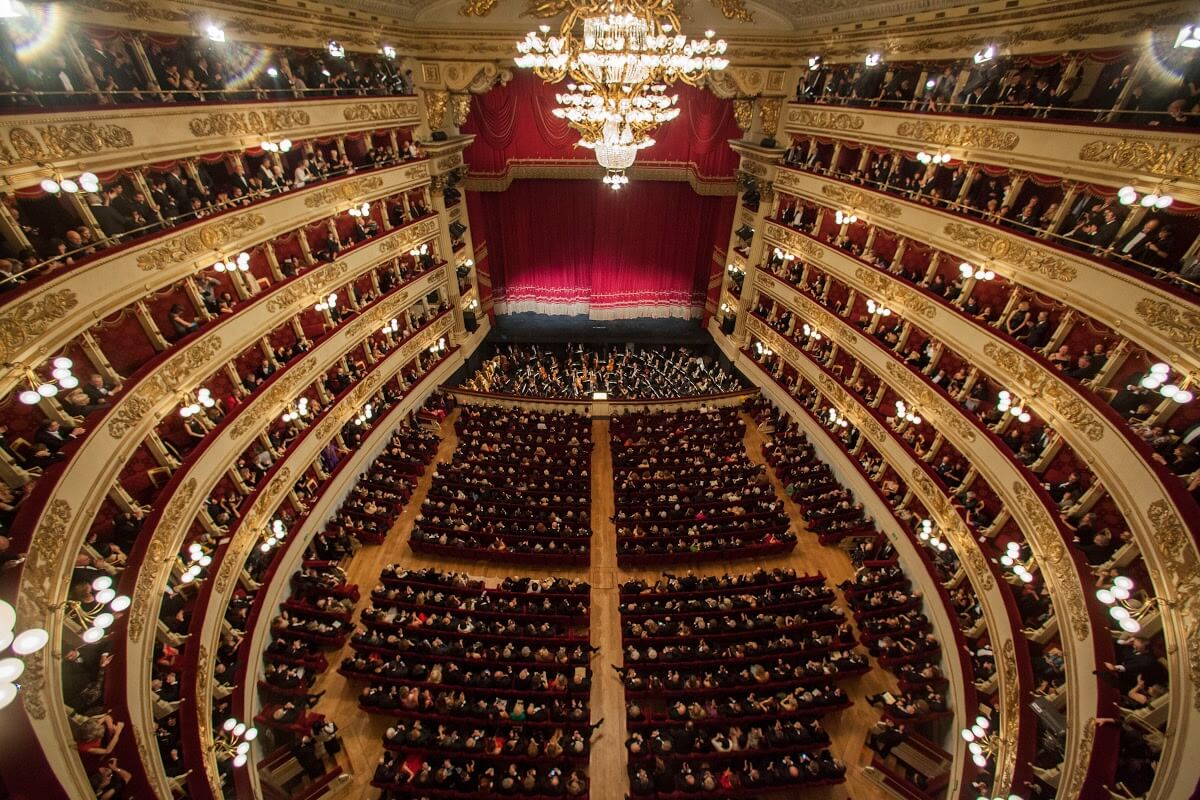
Teatro alla Scala, opened in 1778, seats approximately 2,030 in its famous horseshoe auditorium with gilded balconies.
The season opens on December 7 — Sant’Ambrogio Day, Milan’s patron saint’s feast — and runs through November.
Getting a ticket requires planning.
Performances sell out months in advance.
Prices range from standing slots in the upper gallery to premium stalls seats, with opera tickets typically running from €15 (gallery) to €250+ for front stalls, depending on the production and date.
Check the official booking site at teatroallascala.org directly for current schedules and availability.
If you can’t attend a performance, the attached museum is a compelling alternative.
Sforza Castle: Medieval Fortress and Museum Complex
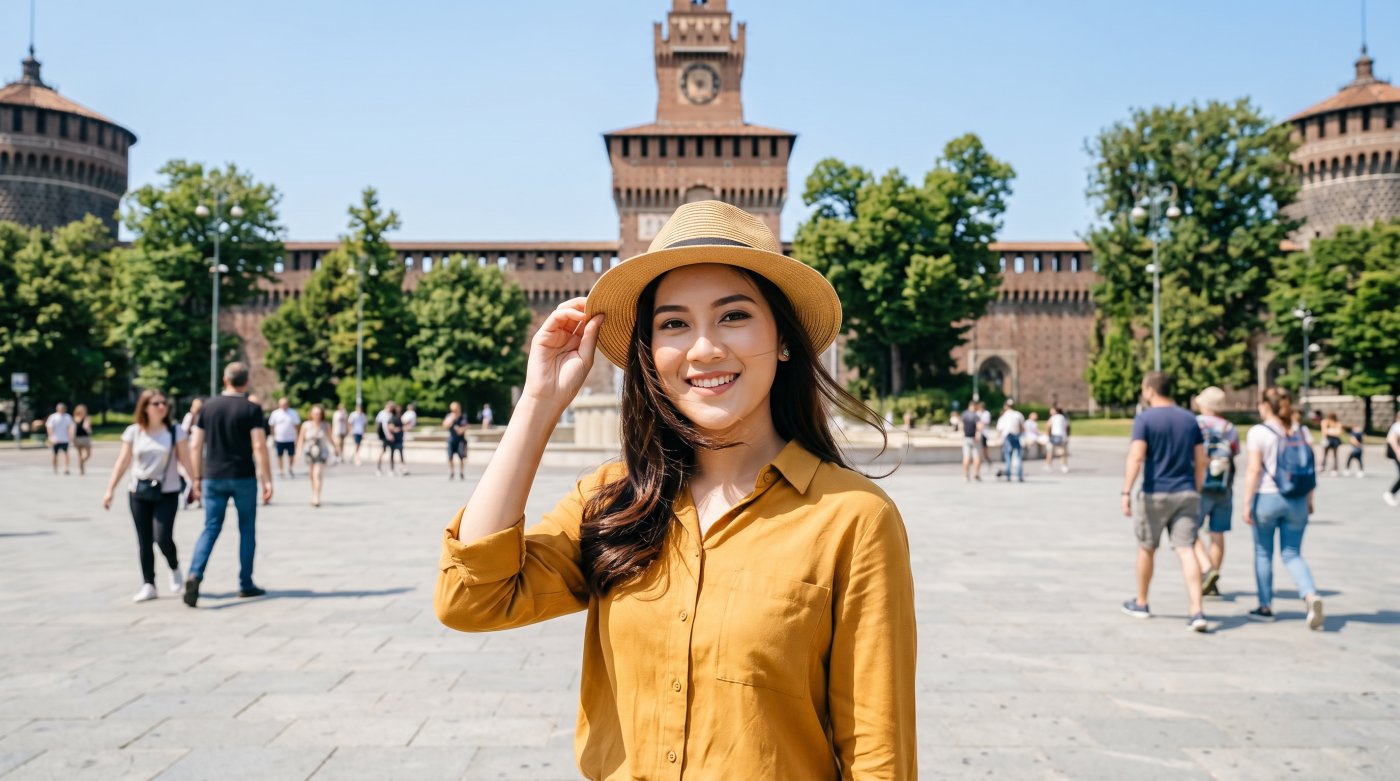
Built in the 15th century by Francesco Sforza, the Castello Sforzesco is one of northern Italy’s largest Renaissance fortresses.
It once served as the ducal residence, and Leonardo da Vinci worked in the court here for nearly two decades.
Today the castle complex houses twelve civic museums across two courtyards.
The most visited room contains Michelangelo’s Pietà Rondanini.
The collections also cover medieval armory, ancient musical instruments, and Egyptian artifacts.
Parco Sempione borders the castle to the north.
Brera Palace: Renaissance Architecture and Art Collections
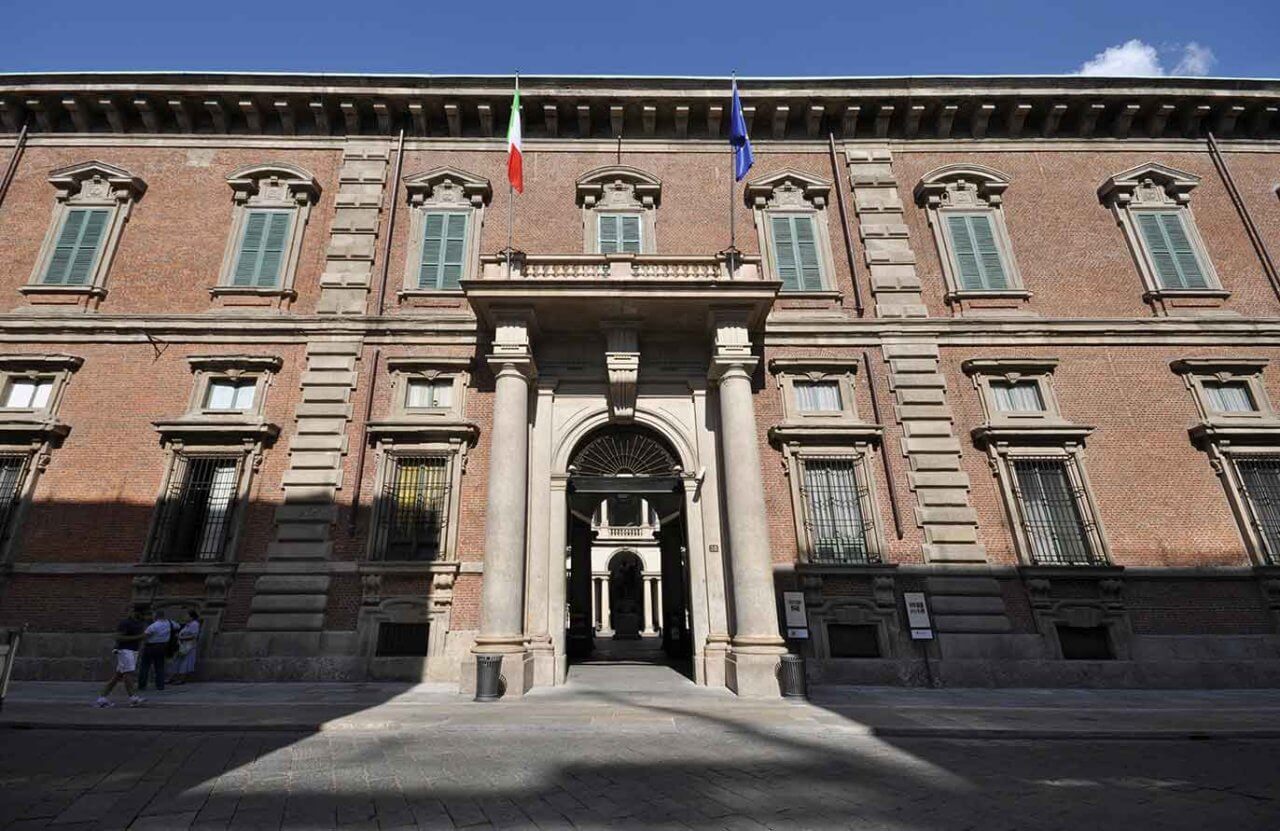
The Palazzo di Brera was originally a Jesuit college before Napoleon converted it into an art academy and gallery in the early 19th century.
The Pinacoteca di Brera on the upper floors holds one of Italy’s finest collections of Italian Renaissance painting — Raphael, Caravaggio, Mantegna, and Bellini among them.
The Brera district surrounding the palace has become Milan’s arts quarter.
Street-level boutiques, antique dealers, and galleries cluster around Piazza Brera.
On the third Sunday of each month, an antique market takes over the surrounding streets.
Fashion and Shopping Districts in Milan
Milan is Italy’s undisputed fashion capital and one of only four cities worldwide hosting an official Fashion Week.
The city’s shopping divides clearly by budget: the Quadrilatero della Moda serves the luxury tier, while Corso Buenos Aires, Navigli boutiques, and Porta Ticinese offer independent and more affordable alternatives.
Quadrilatero della Moda: Luxury Shopping Quarter
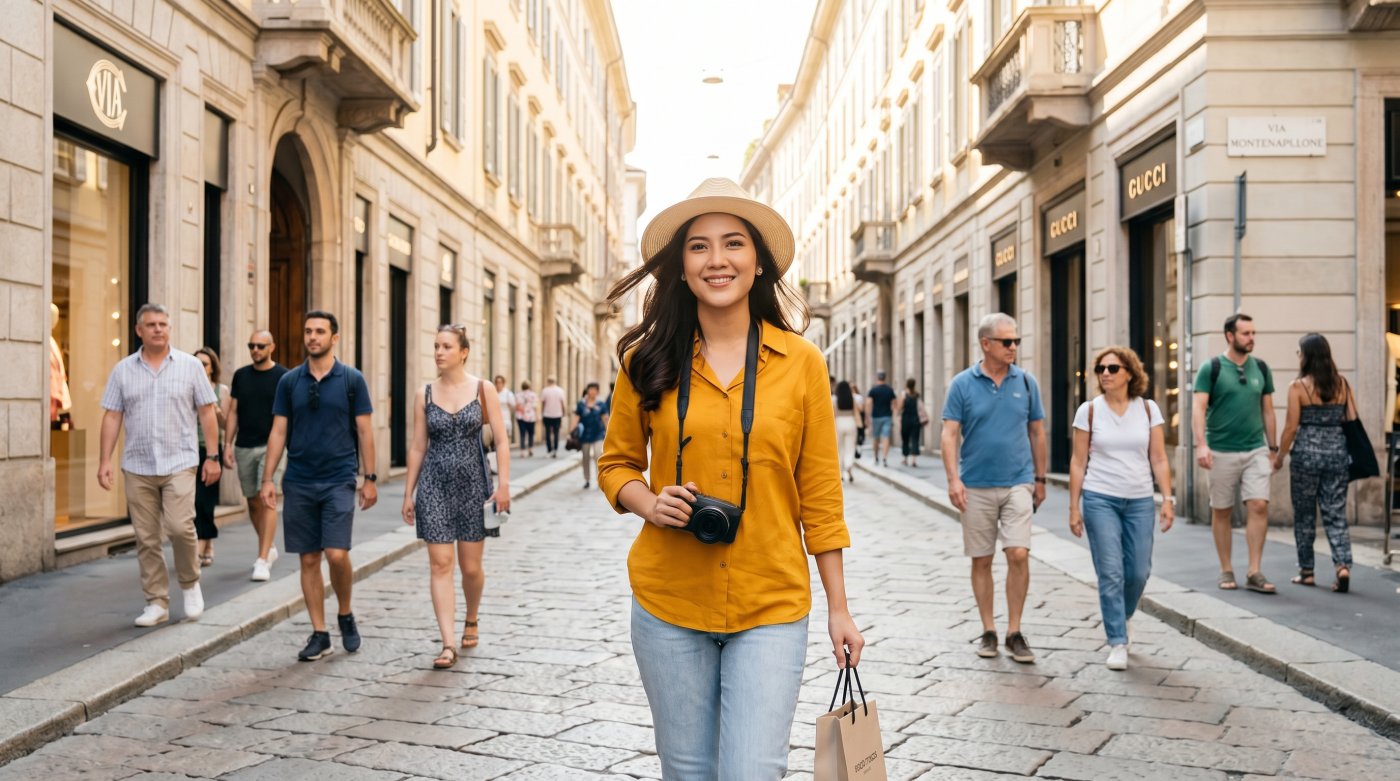
The Fashion Quadrilateral occupies the grid between Via Montenapoleone, Via della Spiga, Corso Venezia, and Via Manzoni.
This is where Gucci, Prada, Valentino, Versace, and Hermès maintain flagship stores inside historic palazzos.
Via Montenapoleone is the central artery.
The window displays here are styled like gallery installations — worth seeing even if you have no intention of buying.
Via della Spiga runs parallel with a quieter, more intimate character.
Via Montenapoleone Designer Boutique and High-End Fashion House Tours
Several fashion houses offer behind-the-scenes experiences and showroom visits during Milan Fashion Week (March and September) and by private appointment throughout the year.
These are primarily targeted at trade buyers, but some brands have curated tours for interested visitors — worth contacting individual houses directly.
Galleria Architecture and Historic Shopping Experience Under Glass Domes
Galleria Vittorio Emanuele II sits at the junction of the Duomo and La Scala.
Built in 1877, it was among the world’s first enclosed shopping arcades and remains one of the most architecturally significant.
The octagonal iron-and-glass dome spans 47 meters above the central crossing.
Look for the bull mosaic in the floor — spinning on its heel is a long-standing Milanese tradition said to bring good luck.
Local Fashion Outlet and Vintage Shop Discovery in Porta Ticinese
Porta Ticinese is lined with independent designers, vintage stores, and streetwear boutiques.
It connects directly to Navigli, making the two areas natural companions for an afternoon of browsing.
Antique Market and Artisan Craft Shopping in Brera Neighborhood
The Brera antique market (third Sunday of the month) draws dealers in vintage jewelry, furniture, clothing, and collectibles.
Various artisan boutiques nearby offer handmade pieces that represent genuine craft rather than tourist-facing souvenirs.
Galleria Vittorio Emanuele II: Historic Shopping Gallery
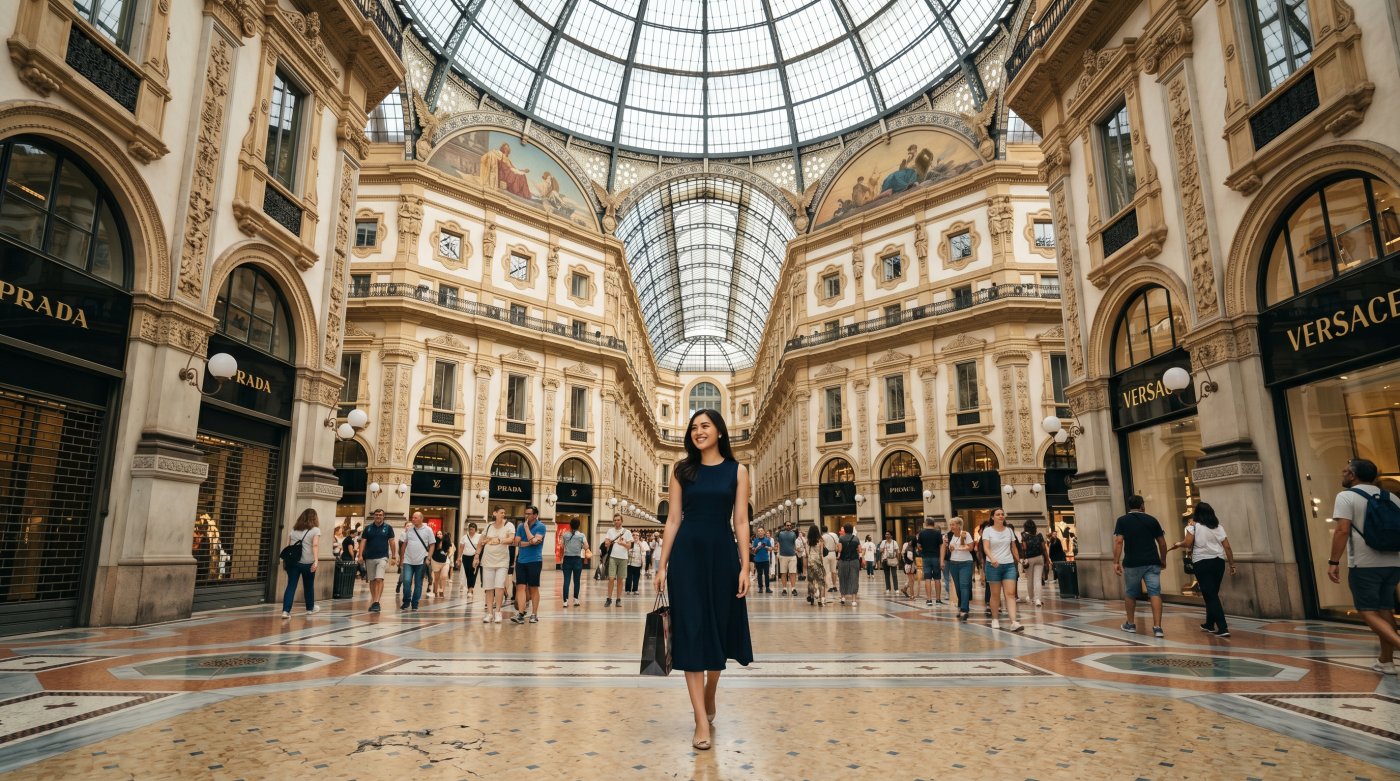
The Galleria has housed Prada’s flagship since 1913, alongside bookshops, historic cafés, and restaurants.
Sitting for a coffee inside adds to the price, but the marble floors, mosaics, and 19th-century ironwork earn the surcharge at least once.
Walking through is free at any hour.
Corso Buenos Aires: Affordable Fashion Street
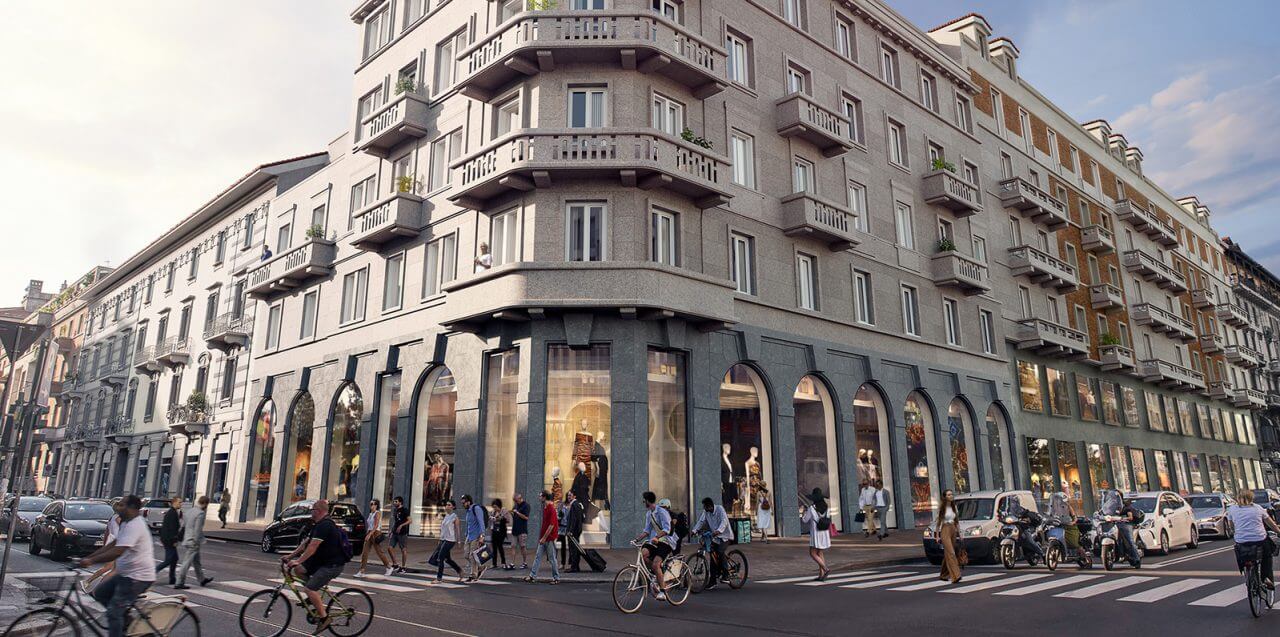
Stretching 1.2 miles northeast of the city center, Corso Buenos Aires has over 350 shops and is one of Europe’s densest retail strips by store count.
Italian mid-range brands, fast fashion, sportswear, and cosmetics are all represented.
Less curated than the Quadrilatero, but useful for practical purchases at accessible prices.
Navigli District: Alternative Shopping and Nightlife
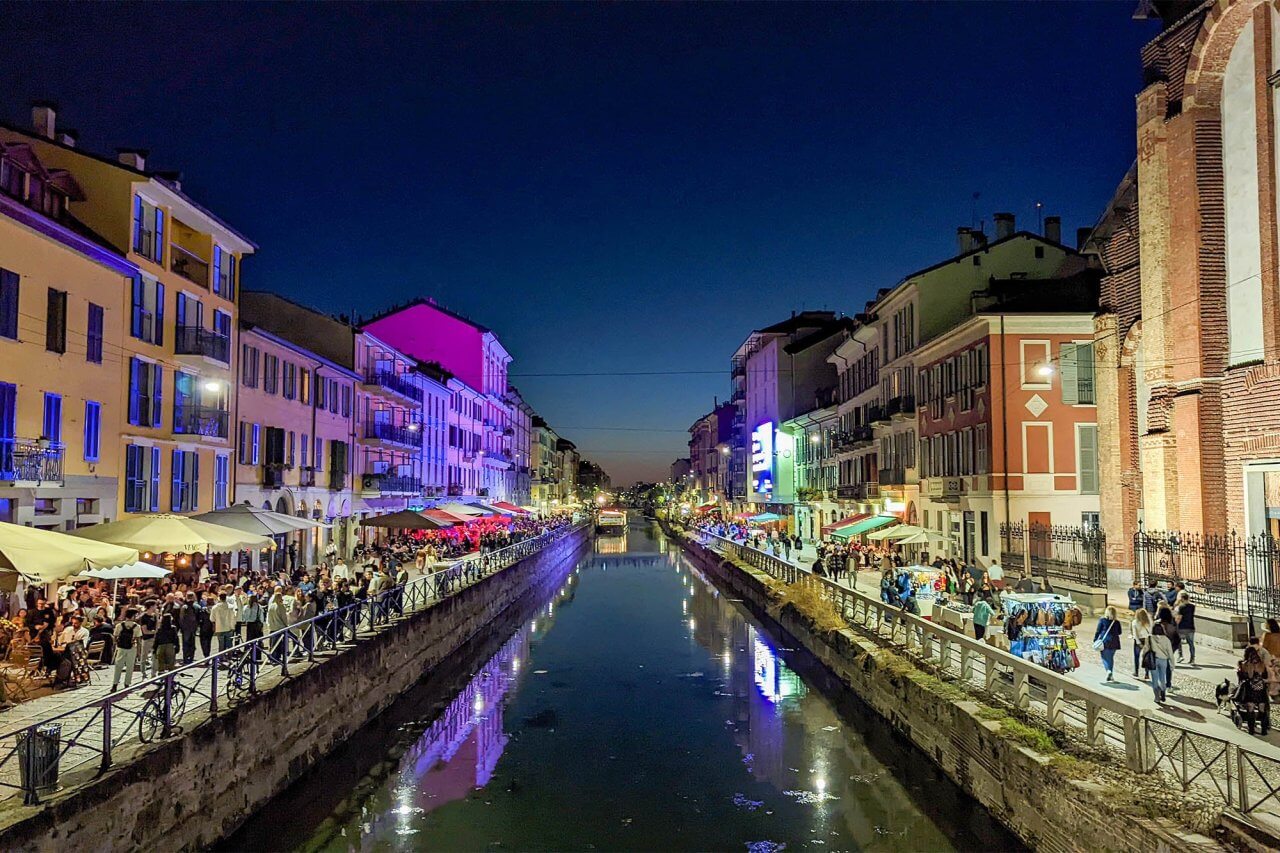
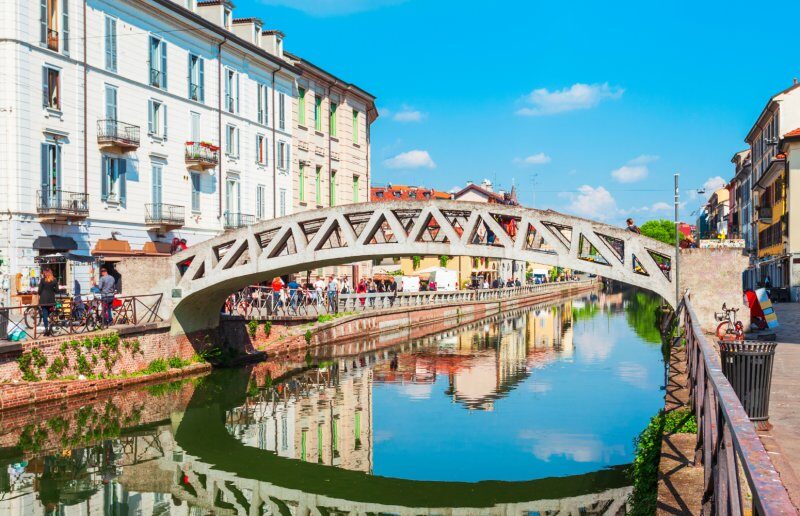
The Navigli canals, part of a system originally designed for irrigation and transport — with Leonardo da Vinci contributing to modifications in the late 15th century — now form the city’s most atmospheric evening corridor.
Independent fashion designers, local artist studios, and small galleries sit alongside aperitivo bars along the canal banks.
Art Museums and Cultural Institutions in Milan
Milan’s art collections range from Leonardo-era Renaissance through 20th-century Italian modernism.
The civic museum system offers genuine depth at reasonable cost, and the first-Sunday-free policy makes several of the best accessible without spending anything.
For a dedicated overview of what’s inside each museum, the best museums in Milan guide covers the full landscape with practical visit details.
Pinacoteca di Brera: Renaissance Art Collection
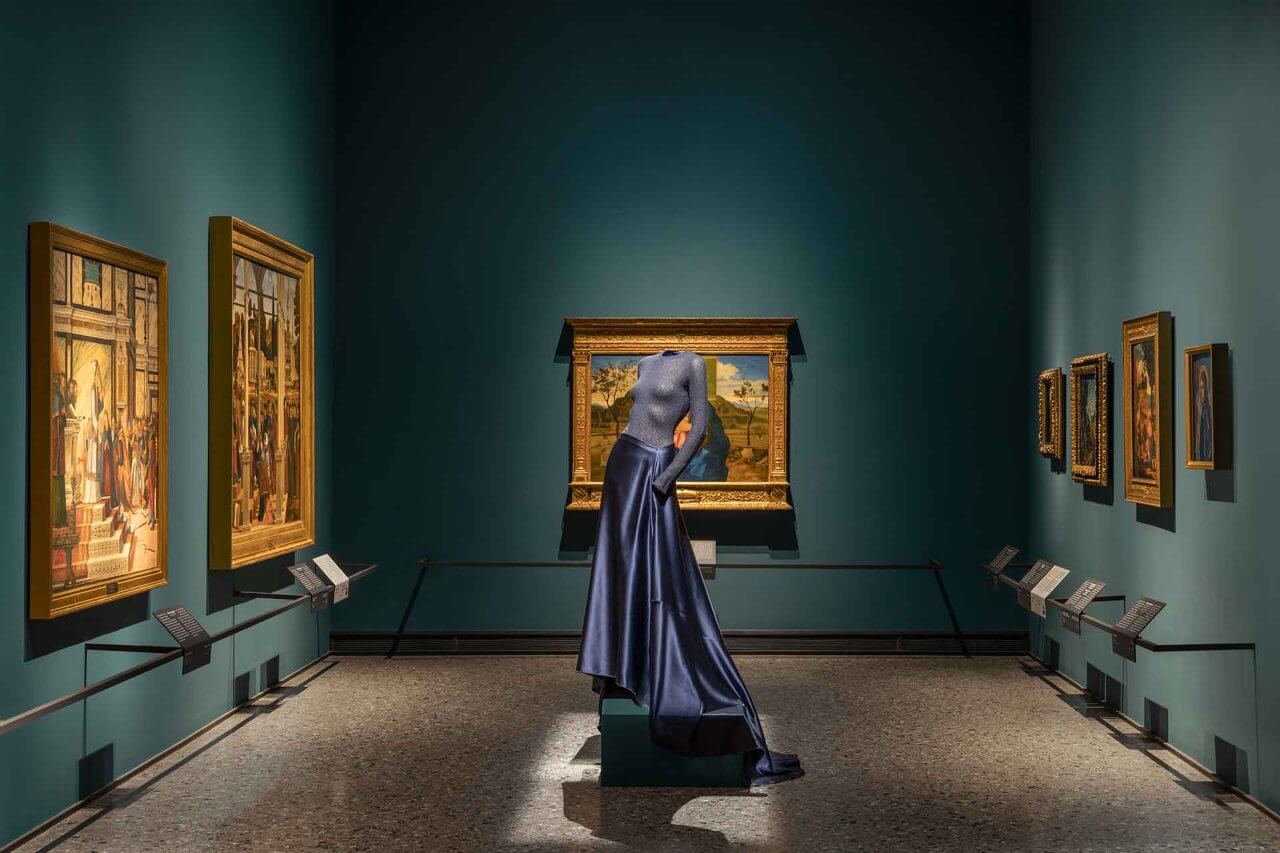
The Brera gallery holds the most important collection of Italian painting outside Florence and Rome.
The core works include:
- Raphael’s The Marriage of the Virgin (1504)
- Caravaggio’s Supper at Emmaus (1606)
- Hayez’s The Kiss (1859) — the painting that became a defining image of Risorgimento-era Italy
- Mantegna’s Dead Christ — a technical demonstration of extreme foreshortening that still surprises
Admission is €20 full price / €4 reduced (ages 18–25 with valid ID); under-18s enter free.
The museum is open Tuesday through Sunday, 8:30 AM to 7:15 PM (last admission 6:00 PM), and is closed every Monday, January 1st, and December 25th.
Free admission with reservation is available on the first Sunday of every month.
Advance booking is required via brerabooking.org.
Arriving at opening time, or on a weekday afternoon, gives you a calmer experience than midday visits.
Castello Sforzesco Museums: Medieval and Renaissance Art
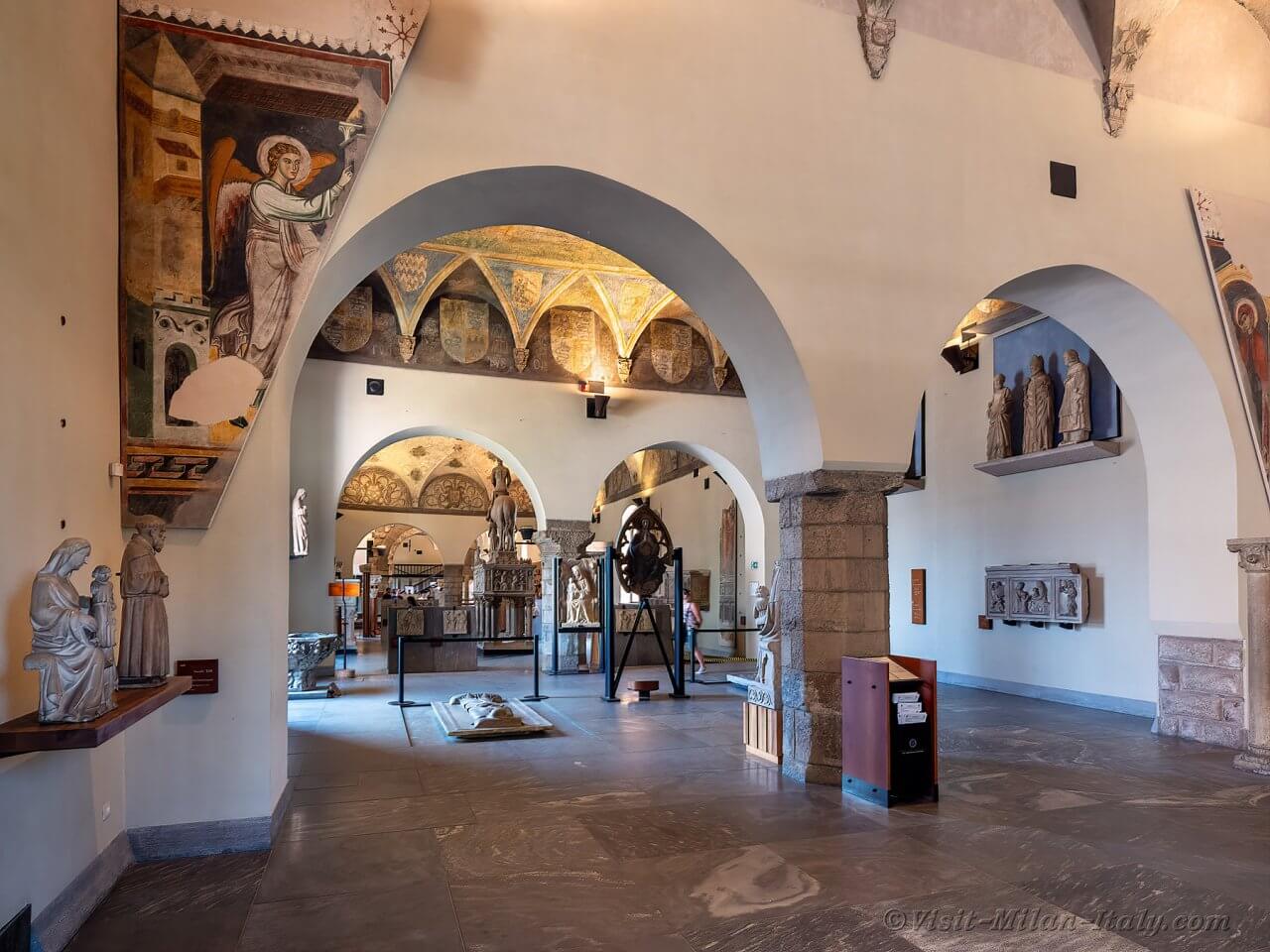
The twelve museums inside Sforza Castle include collections that most visitors overlook: the applied arts collection, the ancient musical instrument section, and a room dedicated to Leonardo da Vinci’s drawings and technical studies.
The Michelangelo room, containing the Pietà Rondanini, tends to affect people more than they expect — the work’s unfinished state reveals something the finished sculptures don’t.
Modern Art Gallery: Contemporary Cultural Experience
The Galleria d’Arte Moderna (GAM), housed in Villa Reale near Porta Venezia, holds over 4,000 works spanning the late 18th century to the mid-20th.
Admission is €5 full price / €3 reduced (students, EU citizens aged 18–25, and seniors over 65); under-18s enter free.
The museum is open Tuesday through Sunday, 10:00 AM to 5:30 PM, closed Mondays, January 1st, May 1st, and December 25th.
Free admission is available on the first Sunday and the third Tuesday of each month after 2:00 PM — no booking required.
The villa’s neoclassical exterior and English-style garden are worth visiting separately, particularly for a break from the city’s busier sightseeing zones.
Leonardo da Vinci Science Museum: Innovation and Discovery
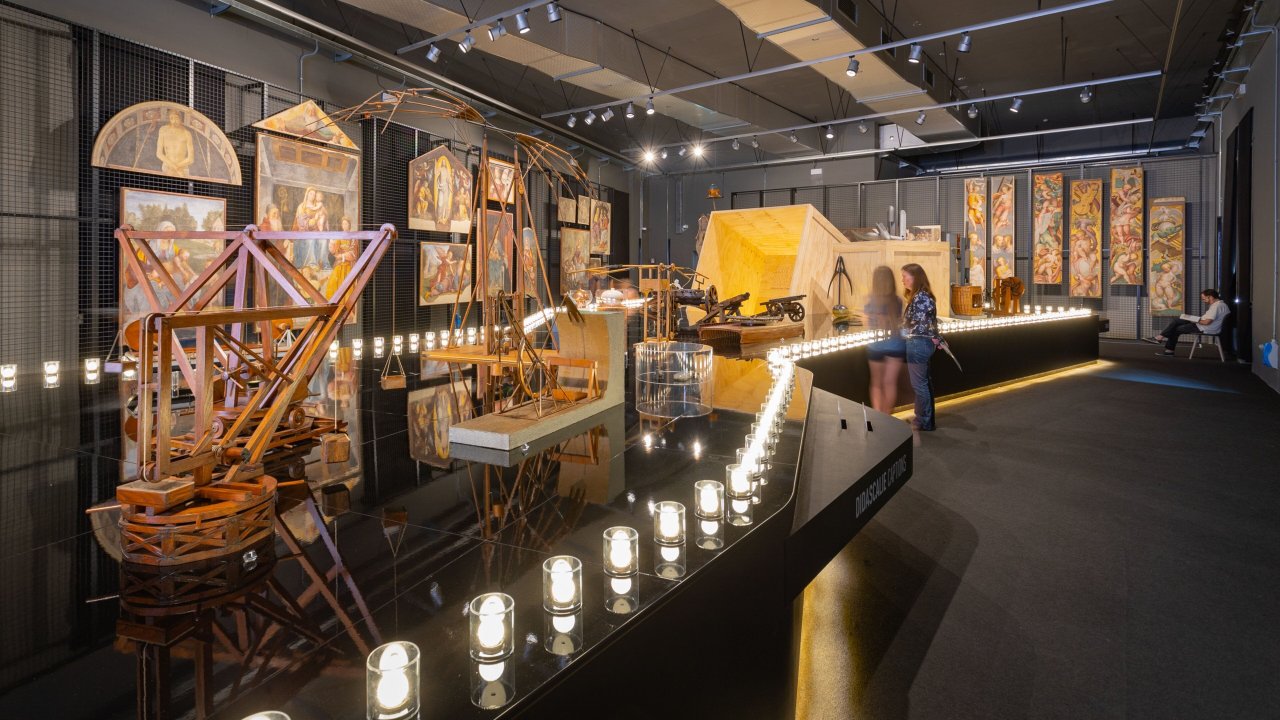
The Museo Nazionale della Scienza e della Tecnologia Leonardo da Vinci is Europe’s largest science museum by floor space — over 50,000 square meters.
The Leonardo Gallery displays full-scale models of his machines built from the Codex Atlanticus drawings.
A real submarine, historic aircraft, and hands-on interactive labs fill the rest of the complex.
Caravaggio and Renaissance Master Painting Collection Viewing
The Pinacoteca di Brera and the Pinacoteca Ambrosiana both hold significant Caravaggio works.
The Ambrosiana also holds Leonardo’s Portrait of a Musician — the only portrait he painted of a male subject — and an original full-scale cartoon by Raphael.
Ancient Egyptian and Archaeological Artifact Collection Exploration
The Castello Sforzesco’s Egyptian section is smaller but well-curated, with papyrus scrolls and funerary artifacts from multiple dynasties.
The Civico Museo Archeologico near Parco Sempione covers Roman-era Milan, including sections of the original city walls.
Contemporary Italian Art and Rotating Exhibition Access
Fondazione Prada (Largo Isarco) and Pirelli HangarBicocca (Viale Sarca) are Milan’s two principal contemporary art institutions.
Both host rotating international exhibitions and permanent installations.
Pirelli HangarBicocca houses Anselm Kiefer’s Seven Heavenly Palaces — a permanent installation of seven concrete towers reaching 14–18 meters high.
Leonardo da Vinci Invention Workshop and Interactive Science Learning
The science museum runs themed workshops, some requiring advance booking.
The interactive labs are particularly well-suited to younger visitors.
General admission is €13 full price / €8 reduced (ages 3–26 and seniors 65+); children under 3 enter free.
The museum is open Tuesday through Friday, 9:30 AM to 5:00 PM, and Saturday through Sunday, 9:30 AM to 6:30 PM, closed Mondays.
On weekends and public holidays, the museum runs a lively program of guided tours, interactive workshops, a Tinkering Zone, virtual reality experiences, and a Mars Base live-action roleplay session — most included with standard admission.
The guided tour of the Enrico Toti S-506 submarine, docked in the museum grounds, costs an additional €10 and requires a timed-entry reservation, which can be made via museoscienza.org or on-site at the ticket counter.
Food and Culinary Experiences in Milan
Milanese cuisine is richer and more meat-forward than the food of southern Italy.
The city’s signature dishes are built around saffron, veal, and slow cooking — and they appear on menus from modest trattorias to Michelin-starred kitchens alike.
For a deeper guide to the local food scene, the AI Food Travel Guide covers market recommendations, specific dish breakdowns, and where to eat by neighborhood.
Traditional Milanese Cuisine: Authentic Local Dining Experience
Three dishes define the canon:
- Risotto alla Milanese — Carnaroli or Arborio rice cooked slowly with saffron and finished with bone marrow and Parmesan. The texture should be all’onda (flowing, loose) — not thick or stiff.
- Ossobuco — Braised veal shank, slow-cooked in white wine and broth until the meat separates easily from the bone. Traditionally served with gremolata (lemon zest, garlic, parsley) and risotto alla Milanese.
- Cotoletta alla Milanese — Bone-in veal cutlet, breaded and pan-fried in butter. Thicker than the Viennese schnitzel it inspired, served without sauce.
Aperitivo Culture: Evening Social Dining Tradition
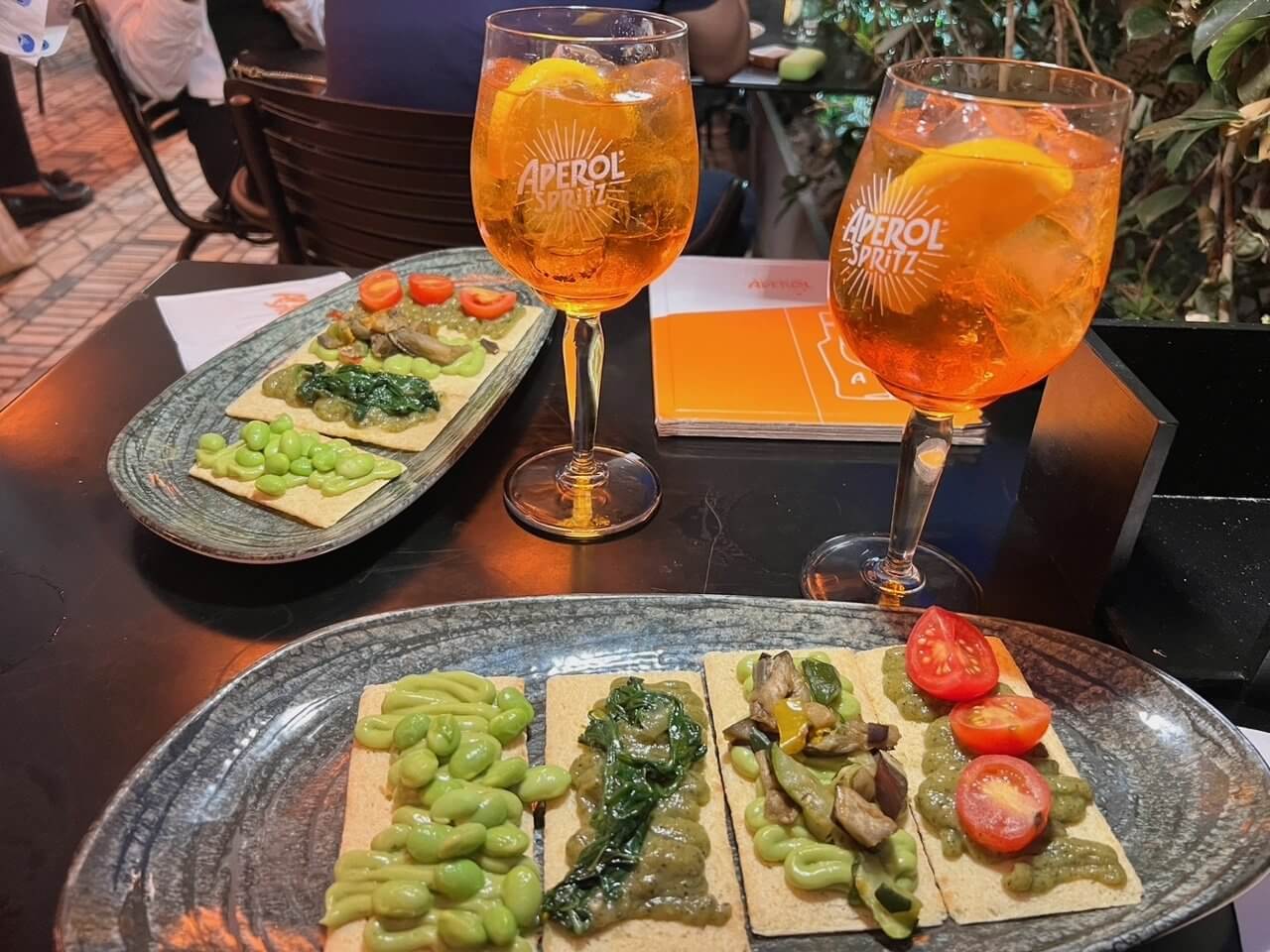
Milan’s aperitivo hour runs roughly from 6 PM to 9 PM.
The custom is simple: order a drink and receive a buffet of snacks at no extra charge.
The spread ranges from olives and bruschetta in simpler bars to full antipasto tables in more elaborate venues.
The Navigli district and Brera quarter concentrate the best aperitivo bars.
A drink with aperitivo costs approximately €10–12 at classic or informal bars, and €15–20 at more design-driven or upscale venues — in the latter, you’re largely paying for the setting and cocktail quality rather than a more generous food spread.
Campari and Aperol spritz are the default orders; most bars also pour Prosecco and local wines.
Milan is, after all, the city where Campari was invented — so ordering anything else feels mildly rebellious.
Local Market Tours: Fresh Ingredient and Food Culture
Three markets worth knowing in Milan:
- Mercato di Via Fauché (Piazza Lega Lombarda) — A traditional neighborhood market operating several mornings per week. Fresh produce, cheese, and local charcuterie at honest prices.
- Mercato Centrale (near Milano Centrale station) — A covered food hall with artisanal producers, street food counters, and sit-down dining across multiple floors.
- East Market (periodic, near Lambrate) — A hybrid vintage-meets-food market with a younger crowd and diverse street food options.
Cooking Classes: Hands-On Italian Culinary Learning
Hands-on cooking classes in Milan typically cover risotto, fresh pasta, or both.
Prices range from €75 to €170 per person for a half-day session including the meal, with most well-reviewed small-group classes landing between €90 and €150 depending on the menu, venue, and whether a morning market visit is included.
Classes that incorporate a trip to a local market — where you’ll pick ingredients with the chef before heading back to cook — tend to sit at the upper end of the range but offer significantly more context and immersion.
Look for small group sizes — under 8 participants gives you meaningful hands-on time rather than a demonstration.
Risotto alla Milanese Traditional Recipe and Local Restaurant Discovery
Reliable spots for authentic risotto alla Milanese include Trattoria Masuelli San Marco (Naviglio neighborhood, family-run since 1921) and Ratanà (near Moscova Metro).
Both serve the dish properly: loose, golden, and finished tableside.
Navigli Aperitivo Hour and Traditional Italian Social Drinking Culture
The canal-side bars around Naviglio Grande and Naviglio Pavese are the classic aperitivo addresses.
The atmosphere peaks around 7 PM when workers join tourists along the canalside.
The best spots are often one or two streets back from the main canal frontage — smaller, less crowded, and noticeably cheaper.
Mercato di Via Fauché Local Market and Fresh Produce Shopping
The Via Fauché market is best on weekday mornings when stock is freshest.
It operates in the Porta Nuova neighborhood, making it easy to combine with a visit to Bosco Verticale or Biblioteca degli Alberi.
Traditional Pasta Making and Lombard Regional Cuisine Workshop
Look for classes that include tortelli di zucca (pumpkin-filled pasta with amaretti and mustard — a distinctly Lombard combination) alongside the more commonly taught tagliatelle and ravioli.
The regional context makes the cooking lesson more interesting than a generic pasta class.
Parks and Outdoor Spaces in Milan
Milan’s parks are smaller per capita than most major European cities, which makes the ones that exist more intensely used and more appreciated.
For a dedicated guide covering each park, see best parks and gardens in Milan.
Sempione Park: Urban Green Space and Recreation
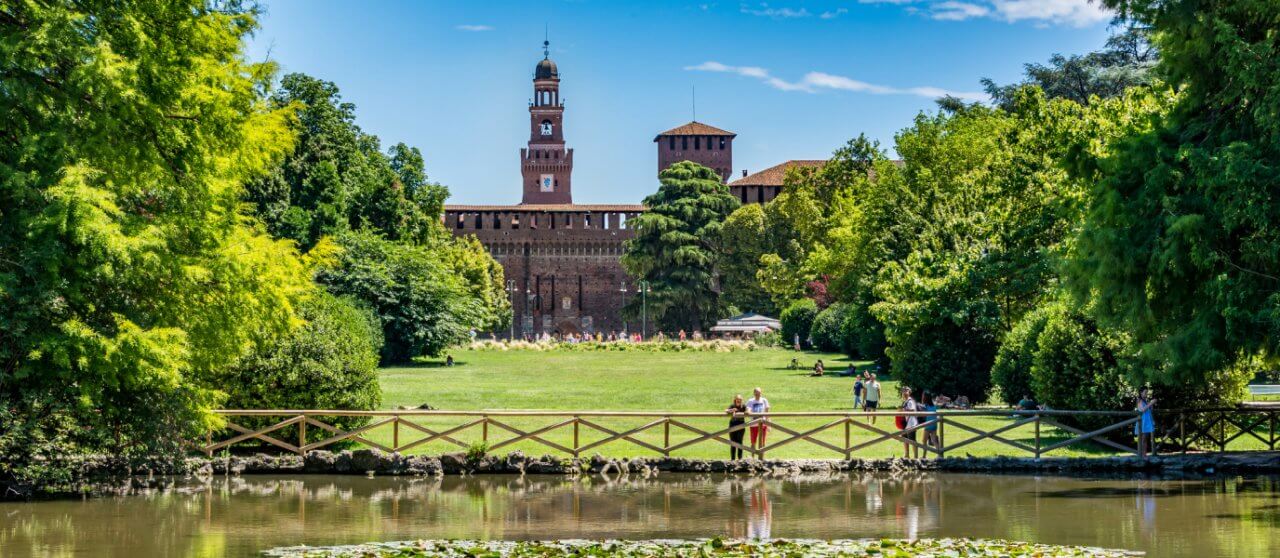
Parco Sempione covers 95 acres directly behind Sforza Castle.
It’s Milan’s principal park: winding paths through mature trees, a central lake, and the Torre Branca — a 108.6-meter steel observation tower with a lift and panoramic views of the city and Alps.
The park is free to enter and open daily from 6:30 AM to 9:30 PM.
The lake area offers a pleasant place to linger, though rowboat availability is seasonal — check with park staff on-site as rental arrangements can change by season.
The Torre Branca ticket costs €9 and operates on a limited schedule:
| Day | Opening Hours |
|---|---|
| Wednesday | 10:30 AM – 12:30 PM |
| Friday | 10:30 AM – 12:30 PM, 3:00 PM – 7:00 PM |
| Saturday | 10:30 AM – 2:00 PM, 2:30 PM – 7:30 PM, 8:30 PM – 12:00 AM |
| Sunday | 10:30 AM – 2:00 PM, 2:30 PM – 7:30 PM |
| Mon, Tue, Thu | Closed |
Closed in high winds or bad weather, and the lift holds only five people at a time — so queues can form on sunny weekends.
On Wednesdays, seniors and school groups ride free.
The park connects through the castle’s northern gate.
A full circuit of the paths takes about 45 minutes at a relaxed walking pace.
Lawns fill with picnickers and informal football from spring through autumn.
Porta Nuova Vertical Forest: Modern Architecture and Urban Nature
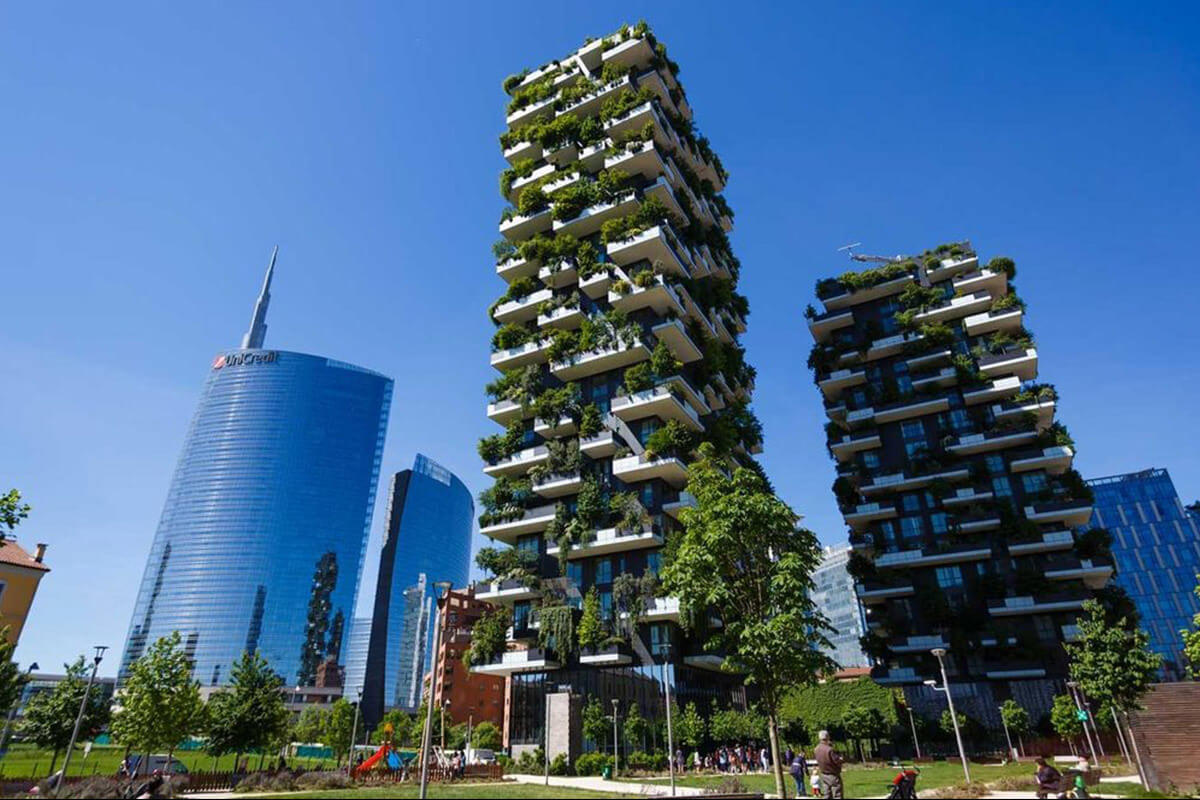
The Bosco Verticale (Vertical Forest), designed by Stefano Boeri Architetti and completed in 2014, consists of two residential towers at 80 and 112 meters.
Together they support approximately 800 trees, 4,500 shrubs, and 15,000 plants — irrigated by a treated grey water system.
The towers are private residences, so access is exterior only.
They’re best seen from Piazza Gae Aulenti or from the adjacent Biblioteca degli Alberi park.
The stated environmental contribution: each tower generates oxygen equivalent to 30,000 square meters of forest.
Navigli Canals: Historic Waterway and Evening Entertainment
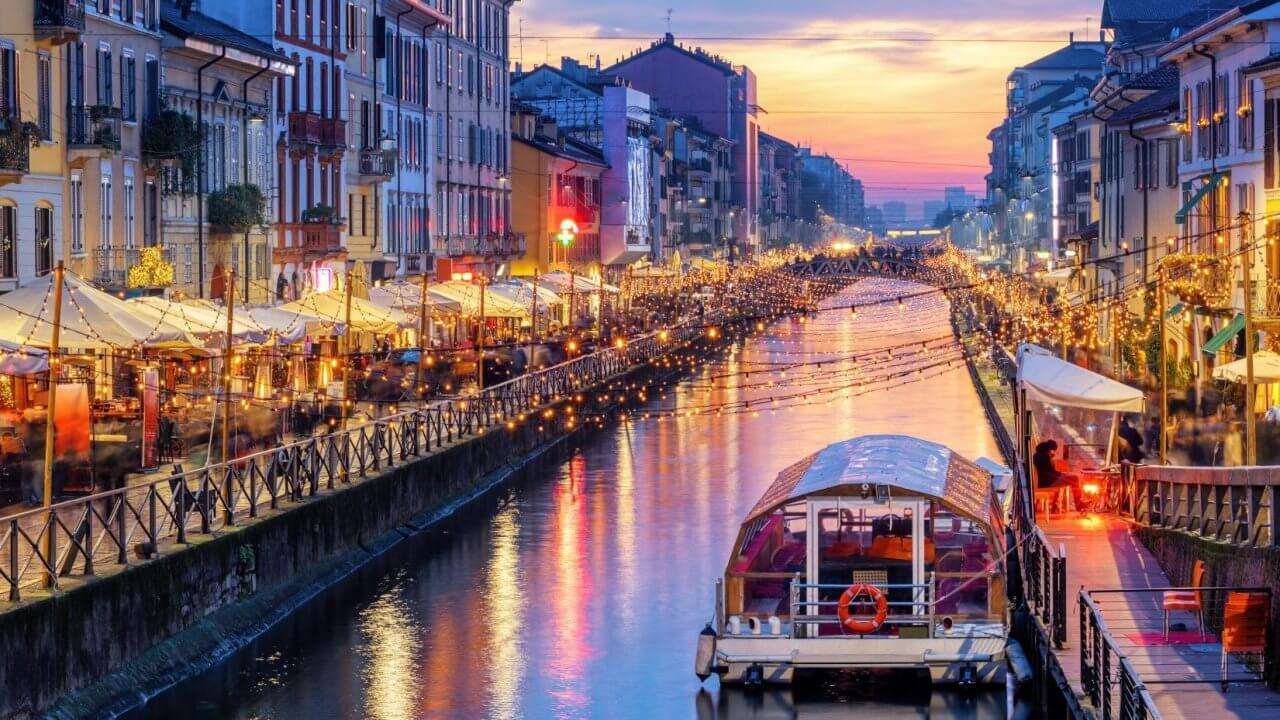
The Navigli canal system was commissioned in the 14th century and expanded over the following centuries, with Leonardo da Vinci contributing technical modifications in the late 1400s.
The canals once allowed cargo boats to transport marble from Alpine quarries directly to construction sites in Milan.
Today the two remaining canals — Naviglio Grande and Naviglio Pavese — form the city’s most atmospheric evening district.
Canal-side walking is easy at any pace.
Cyclists use the paths throughout the day.
The evening transformation begins around 6 PM when aperitivo bars open their canal terraces.
Villa San Martino: Historic Villa and Garden Exploration
Here’s what you can see and experience at Villa San Martino:
Sempione Park Picnic Areas and Outdoor Concert Venue Access
Parco Sempione’s central lawn is the main picnic area.
The Arena Civica adjacent to the park hosts outdoor events during summer, including concerts and community festivals.
Bosco Verticale Sustainable Architecture and Green Building Innovation
The Bosco Verticale has won multiple international architecture awards and inspired similar projects globally.
Its residents include rare urban flora species — some plants grow on upper floors that would only otherwise exist in mountain environments.
Canal-Side Walking and Cycling Path Recreation Activities
Beyond Naviglio Grande, the Martesana Canal to the east is a quieter cycling alternative: a flat, shaded path running northeast toward the city limits.
It’s largely free of tourist traffic and used mainly by commuters.
Historic Villa Garden Tours and Seasonal Flower Display
Several historic villas near Milan have formal gardens open to visitors seasonally. Note:
Specific details for Villa San Martino could not be independently verified — the name matches multiple properties in the Lombardy and wider northern Italy region (including one on Elba and another in Arcore), making it difficult to confirm a single correct seasonal schedule and admission price.
Before publishing, confirm which specific Villa San Martino is intended, then verify its current opening schedule, seasonal dates, and ticket price directly via the official property website or the Grandi Giardini Italiani network (grandigiardini.it), which lists verified opening details for most historic villa gardens in northern Italy.
Religious and Spiritual Sites in Milan
Milan’s churches range from the Gothic scale of the Duomo to intimate Renaissance chapels that many visitors walk past without realizing what’s inside.
The city’s patron is Sant’Ambrogio — his feast day, December 7, is a regional public holiday and the traditional opening night of La Scala’s season.
San Maurizio Church: Byzantine Art and Religious Architecture
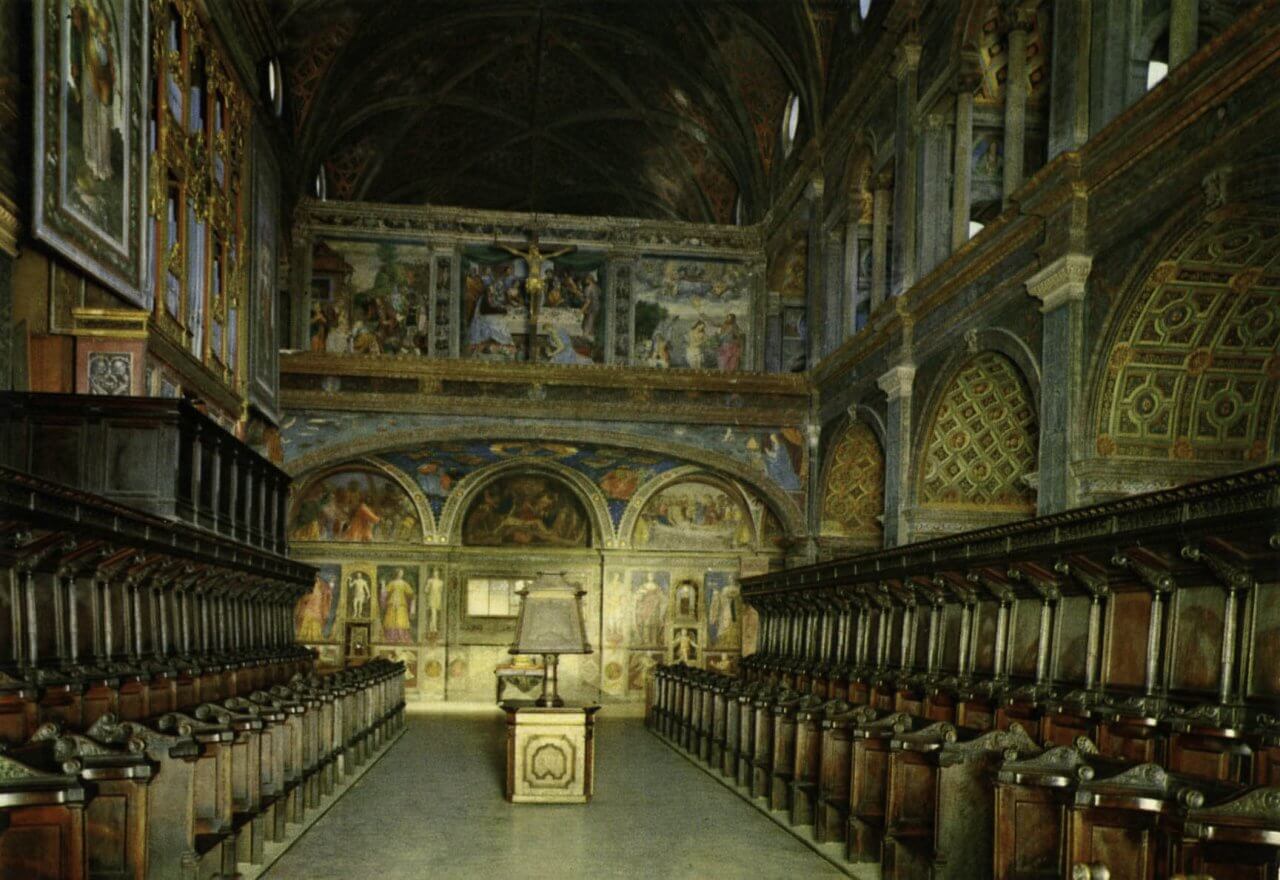
Often called the “Sistine Chapel of Milan,” San Maurizio al Monastero Maggiore on Corso Magenta is one of the city’s most underappreciated sites.
Every surface — walls, ceiling, columns — is covered in 16th-century frescoes by Bernardino Luini and his workshop.
The church divides into two halves: a public nave for lay worshippers and a private section (once reserved for the nuns of the Benedictine convent) visible through a central wall.
Entry is free.
The church is open Tuesday through Sunday, 10:00 AM to 5:30 PM (last entry at 5:00 PM), and closed on Mondays.
Monthly guided tours are available through the Archaeological Museum’s events page.
Santa Maria delle Grazie and Last Supper Mural Viewing
Leonardo da Vinci’s The Last Supper (1495–1498) fills the north wall of the refectory of Santa Maria delle Grazie.
The painting is not a fresco — Leonardo experimented with a dry plaster technique that began deteriorating within decades of completion.
The museum is open Tuesday through Sunday, 8:15 AM to 7:00 PM (last entry at 6:45 PM).
Viewing requires advance booking — reservation is mandatory for all ticket types, including free admissions.
Tickets cost €15 full price / €2 reduced (ages 18–25 and seniors 65+); under-18s enter free.
Up to 40 people are admitted per 15-minute time slot.
Tickets are released quarterly via lastsupper.shop, with additional slots released every Wednesday at 12:00 PM for the following week (maximum 5 tickets per purchase online).
Book as early as possible — slots for popular dates often sell out on the day of release.
Traditional Church Architecture and Religious Art Heritage Tours
Sant’Ambrogio Basilica, west of the Castello, is one of Italy’s oldest surviving churches — built in the 4th century on the site where Saint Ambrose buried Christian martyrs.
The mosaic in the apse dates to the 9th century.
Free entry; modest dress required, including covered shoulders.
Monastery and Convent Historic Site and Cultural Education
The convent complex attached to San Maurizio is now part of the Civic Archaeological Museum, which can be visited separately for an overview of pre-Roman and Roman-era Milan.
Religious Festival and Traditional Ceremony Cultural Participation
Sant’Ambrogio Day (December 7) is marked by the Oh Bej Oh Bej street market around Sforza Castle — one of Milan’s oldest traditional fairs, with stalls selling handcrafted goods and seasonal foods dating the festival back to the 15th century.
Modern Milan and Innovation
Milan has a lot of innovations happening until now. Here are some modern architectures and contemporary cultures you can enjoy in Milan:
Porta Nuova Business District: Modern Architecture and Contemporary Culture
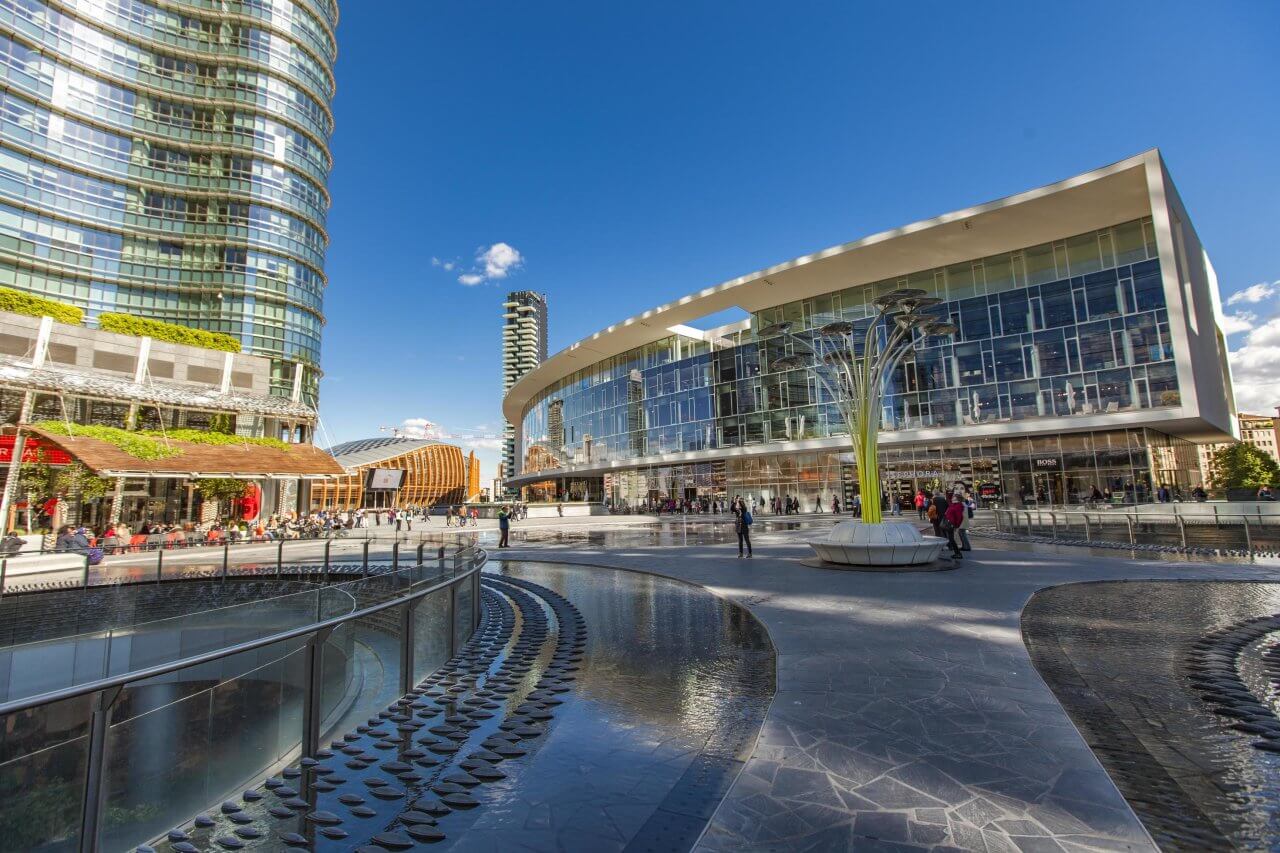
Porta Nuova, developed largely between 2004 and 2014, transformed a former rail yard north of the city center into Milan’s most ambitious contemporary urban project.
The area centers on two piazzas: Piazza Gae Aulenti (a raised platform with cafés, a fountain, and views toward the skyline) and the Biblioteca degli Alberi park below.
The Unicredit Tower, at 231 meters, is Italy’s tallest building.
The district functions as the city’s main financial center, with headquarters of major Italian banks and multinationals occupying the towers.
Contemporary Art Installation and Public Art Collection Access
Parco Biblioteca degli Alberi (BOM) — the Library of Trees — is a 90,000-square-meter public park adjoining the Bosco Verticale.
It contains 135,000 plants arranged in circular groupings of individual species.
Free to enter at all times.
Innovation Hub and Technology Center Cultural Learning
The Fondazione Feltrinelli, in a Herzog & de Meuron building on Viale Pasubio, hosts lectures, exhibitions, and events on design, literature, and social innovation.
Programming is largely in Italian, but major international events are sometimes in English — worth checking the current calendar.
Modern Italian Design Museum and Contemporary Cultural Expression
The Triennale di Milano, in a 1933 rationalist building on the edge of Parco Sempione, holds Italy’s design museum and runs rotating exhibitions on architecture, design, fashion, and visual culture.
Entry to the building and garden is free; ticketed exhibitions cost €10 full price / €7 reduced, with a €2 discount for tickets purchased online in advance.
The museum is open Tuesday through Sunday, 10:30 AM to 8:00 PM (last entry to exhibitions at 7:00 PM), and closed on Mondays and December 24th, 25th, and 31st.
The on-site ticket office opens at 10:30 AM and closes at 7:00 PM.
A secondary entrance from Parco Sempione is also open during exhibition hours, making it easy to combine with a walk through the park.
Urban Planning and Sustainable City Development Educational Tours
The city offers periodic tours of Porta Nuova’s sustainable design features.
Guided architecture walking tours of the district run approximately 2–3 hours and can be booked through several licensed operators.
Nightlife and Entertainment in Milan
Milan’s nightlife divides into distinct zones.
Navigli is the most accessible and least expensive.
Brera is quieter and more refined.
Isola and Tortona attract a younger, design-forward crowd.
Most bars stay open until 2–3 AM on weekends; clubs can go later.
Navigli District Nightlife: Evening Canal-Side Entertainment
The aperitivo bars lining Naviglio Grande shift naturally into bars and clubs after 9 PM.
The crowd is mixed: locals and visitors, with the balance depending on the season.
Summer evenings draw the largest numbers; Tuesday through Thursday are noticeably calmer.
A classic Navigli evening: aperitivo at a canal-side bar around 7 PM, then dinner at one of the neighborhood trattorias (booking ahead on weekends is necessary), followed by drinks on a terrace.
Craft beer bars, cocktail spots, and wine bars are all available within a short walk of each other.
Aperitivo Time: Evening Social Dining Tradition
The best Navigli aperitivo bars are often a block or two inland from the main canal frontage — smaller, less crowded, and cheaper.
Wandering off the obvious path usually pays off here.
Live Music Venues: Entertainment District Access
Blue Note Milan (Via Pietro Borsieri 37, near Isola) is the city’s primary jazz club, hosting international acts most nights from Tuesday to Sunday, with shows starting at 8:30 PM.
Ticket prices vary by artist: budget Nice Price nights start at €15, standard shows run €25–€40, and high-profile international headliners can reach €51.
Book directly via bluenotemilano.com — popular acts sell out well in advance.
The Piccolo Teatro Strehler on Largo Greppi books contemporary theater and is considered one of Italy’s most important stages for prose, with an annual program of approximately 30 productions.
Performances are primarily in Italian, though the venue occasionally hosts international guest productions and festival runs — check the current season schedule at piccoloteatro.org for any English-language or surtitled performances during your visit.
Independent Fashion Designer and Local Artist Studio Access
Navigli and Isola both have artist studios and independent designer ateliers accessible to visitors, particularly during Fuorisalone — the city-wide off-calendar events during Salone del Mobile in April, when creative spaces throughout both neighborhoods activate with exhibitions and installations.
Leonardo da Vinci Canal Engineering and Historic Waterway Heritage
The Navigli’s role in Milan’s economic history is easy to overlook.
At its peak, the system moved marble for the Duomo from the Candoglia quarry, transported grain from the Po Valley, and connected Milan to the wider Po river network, making the city commercially central to northern Italy.
Brera Quarter Evening Scene: Artistic Nightlife
Brera’s evening scene is quieter than Navigli but richer in atmosphere.
Gallery openings occur regularly throughout the neighborhood.
Hotel rooftops accessible to non-guests offer views over the Pinacoteca and the Duomo beyond — the price of one drink for the view is a reasonable trade.
Traditional Jazz Club and Live Music Venue Access
Several small clubs within walking distance of Piazza Brera host regular jazz and acoustic sets.
The neighborhood’s artistic character has created a market for live music that feels more embedded in the local culture than at purpose-built tourist venues.
Rooftop Bar Panoramic City Views and Cocktail Culture
A handful of hotel rooftops in Brera and the Quadrilatero area are accessible to non-guests.
Most have the Duomo spires in view.
Prices are predictably elevated — consider one drink for the vantage point, then move to a cheaper bar at street level for the rest of the evening.
Theater and Performance Art Evening Cultural Programming
La Scala books full opera and ballet seasons from December through November.
The Teatro degli Arcimboldi, north of the city center and accessible by Metro, is Milan’s second major venue for large-scale productions, including touring shows and contemporary dance.
Late-Night Dining and Traditional Italian Evening Social Culture
Milanese restaurants serve dinner from around 7:30 PM.
Most trattorias stop taking orders at 10:30 PM; restaurants in Navigli often continue later on weekends.
For food after midnight, the areas around Largo Augusto and Isola have options that stay open, though choices narrow considerably after 11 PM.
Shopping and Fashion Culture in Milan
Milan’s fashion culture extends well beyond the Quadrilatero.
The city hosts multiple Fashion Weeks per year — women’s and men’s collections separately — along with the Salone del Mobile design fair in April and a network of vintage and artisan markets spread across the neighborhoods.
Fashion Week Events: International Design Calendar
Milan Fashion Week for women’s collections runs twice per year: February 24 – March 2, 2026 for autumn-winter collections (Fall/Winter 2026–27), and September 22–28, 2026 for spring-summer (SS2027).
Men’s Fashion Week runs January 16–20, 2026 and June 19–23, 2026.
The runway shows themselves are trade events requiring invitations.
During Fashion Week, however, the city opens significantly: pop-up stores appear, showrooms host brand events, and satellite presentations are open to the public with free or low-cost registration.
The street-style scene around the Quadrilatero is its own spectacle during this period.
Milan Fashion Museum and Costume History Exhibition
The Museo del Costume e della Moda, within Palazzo Morando on Via Sant’Andrea (in the heart of the Quadrilatero della Moda), displays over 6,000 pieces of Milanese costume history from the 18th century to the present.
Entry is free.
The museum is open Tuesday through Sunday, 10:00 AM to 5:30 PM (last entry at 5:00 PM), and closed on Mondays, January 1st, May 1st, and December 25th.
Free entry is also available on the first Sunday of every month without online ticket purchase.
This is one of the city’s most consistently undervisited museums.
Designer Showroom Tours and Behind-the-Scenes Fashion Industry Access
Fashion schools and industry organizations offer periodic public workshops on Italian tailoring and textile design, primarily during Fashion Week and through short-term programs year-round.
Worth checking current listings from Istituto Marangoni and Domus Academy for visitor-accessible events.
Vintage Fashion District and Secondhand Designer Shopping
Porta Ticinese, particularly the stretch between Largo Carrobbio and the Navigli, has the city’s best concentration of vintage and secondhand stores.
Several shops specialize in Italian designer resale — labels that rarely surface outside Italy appear here at prices below what you’d pay elsewhere.
Traditional Tailoring Workshop and Custom Clothing Cultural Experience
Milan’s artisan tailors are concentrated around the Quadrilatero and the older residential districts north of the center.
A bespoke commission takes multiple appointments and months.
For a shorter experience, guided fabric-selection workshops are available as cultural programs — a realistic entry point for those interested in the craft.
Day Trips From Milan and Nearby Attractions
Milan is one of northern Italy’s best-positioned base cities.
Lake Como, Bergamo, Lake Maggiore, and Verona are all within 90 minutes by train.
For a full overview of options, logistics, and seasonal timing, see best day trips from Milan.
Lake Como Day Trip: Natural Beauty and Villa Tours
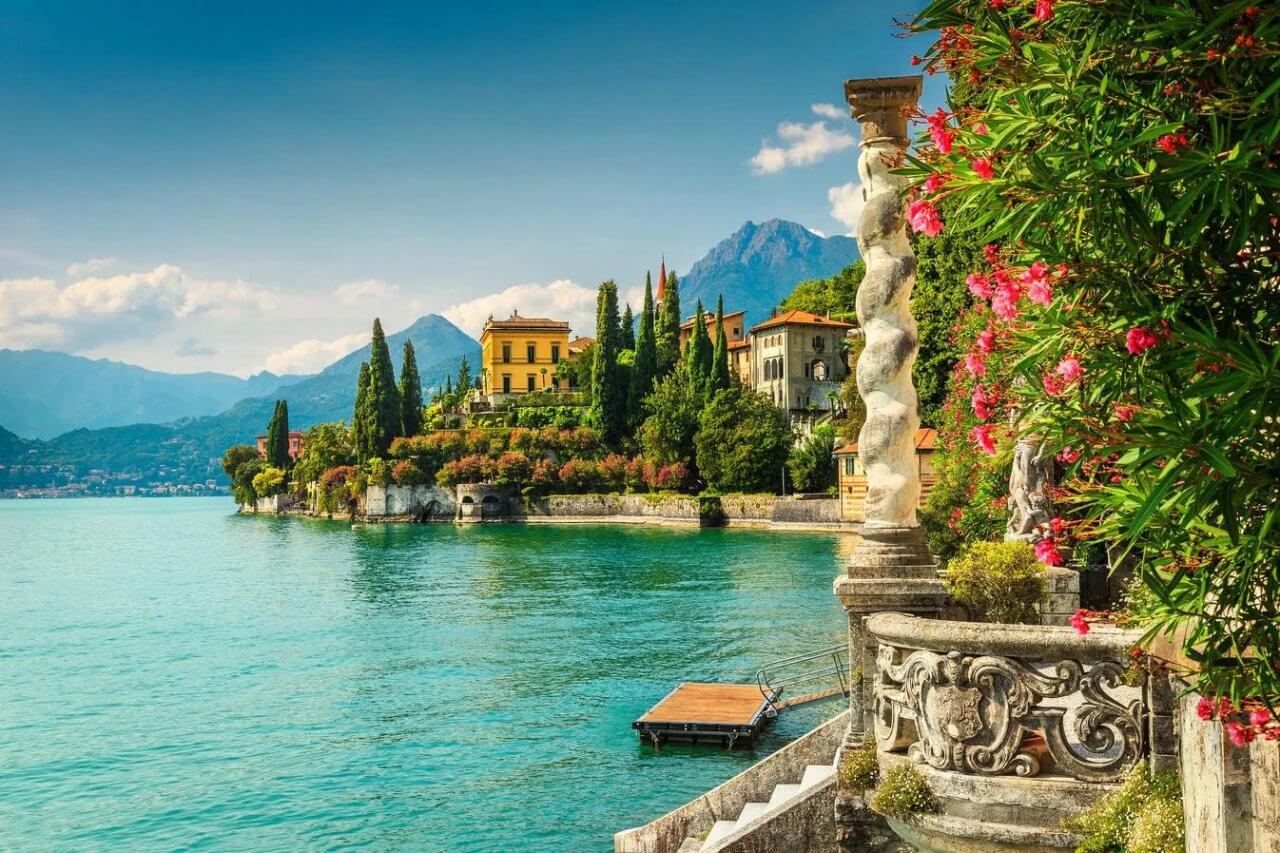
Lake Como is 48 km north of Milan.
From Milano Centrale station, trains reach Como San Giovanni in approximately 40 minutes, with 17 services per day (first train at 6:43 AM, last at 9:43 PM); tickets cost just €5.20 with no advance booking required.
From Cadorna station, trains on the suburban line reach Como Nord Lago in a similar timeframe.
Services run throughout the day without advance booking.
A practical one-day itinerary: arrive in Como, take the ferry to Bellagio (around 1 hour on the scheduled service), walk the promenade and have lunch, then ferry back.
Villa del Balbianello — used as a film location in Casino Royale and Star Wars: Episode II — requires a separate ferry stop at Lenno, followed by a 25-minute walk or a short taxi-boat ride from the Lenno promenade.
The villa is open Tuesday and Thursday through Sunday, 10:00 AM to 6:00 PM (closed Mondays and Wednesdays).
A park-only ticket costs €15 adult / €11 reduced (ages 6–18 and students up to 25); the villa and park guided tour (approximately 50 minutes, conducted in Italian and English) costs €25 adult / €17 reduced.
Advance booking is mandatory for all visit types via villadelbalbianello.it or by email at [email protected] — villa interior tours sell out weeks in advance during peak season, so book as early as possible.
Bergamo Historic City: Medieval Architecture Near Milan
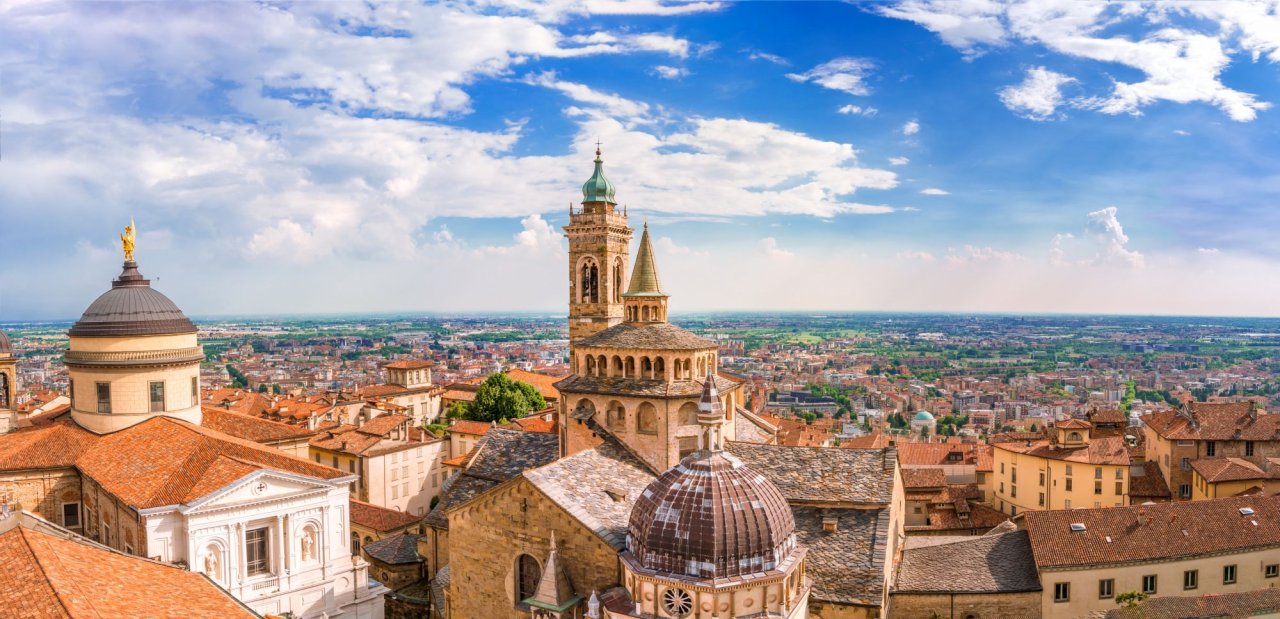
Bergamo’s Città Alta (Upper Town) is one of Italy’s best-preserved medieval hilltop cities, encircled by Venetian walls recognized as a UNESCO World Heritage Site.
The funicular from the lower town takes about 4 minutes.
The Piazza Vecchia, the basilica, and the medieval walls themselves are the main draws — walk the walls for panoramic views over the Lombardy plain.
Bergamo is accessible by direct train from Milano Centrale in approximately 50 minutes, with services departing roughly every hour throughout the day (first train at 5:35 AM, last at 11:40 PM).
A single second-class ticket costs €6.00 with no advance booking required — just buy at the station or via the Trenord app.
Lake Como Villa Tours and Alpine Scenery Photography
The clearest photography conditions at Lake Como occur from October through March and briefly in early June before summer haze.
Elevated positions — hillside gardens or boat decks — give better composition than the lakefront itself.
Bergamo Upper City Cable Car and Medieval Wall Walking
The funicular connects Bergamo Bassa (lower city) to Città Alta, covering an 85-meter elevation difference along a 240-meter route in about 4 minutes, running every 7 minutes from 7:00 AM to 1:20 AM.
A single ticket costs €1.50 one way (standard ATB urban transit fare); a return is €3.00.
The walls encircle the entire upper town — a full perimeter walk takes about 1.5 hours.
Wine Country Tours and Lombard Regional Vineyard Experience
Franciacorta, about 80 km east of Milan, produces metodo classico sparkling wines that are a genuine alternative to Champagne.
Small-group day tours from Milan combine winery visits, guided tastings, and lunch, typically priced between €100 and €130 per person including transport, sommelier-led tastings, and snacks.
Lunch is sometimes included, sometimes an extra — confirm at booking.
Look for tours capped at 8–12 participants for the best cellar access and tasting experience.
Alps Mountain Access and Day Trip Adventure Opportunities
The Bernina Express train from Tirano — reachable by train from Milan — offers one of the most scenic mountain rail journeys in Europe.
Winter day trips to ski resorts in the Valtellina are possible by car in 2–3 hours.
These are best planned in advance given weather variability.
Local Neighborhoods and Authentic Culture in Milan
Milan’s character changes sharply by neighborhood.
The tourist zones around the Duomo and Quadrilatero give a partial picture.
For a full breakdown of where to stay and what each area feels like day-to-day, the best neighborhoods in Milan guide covers each district individually.
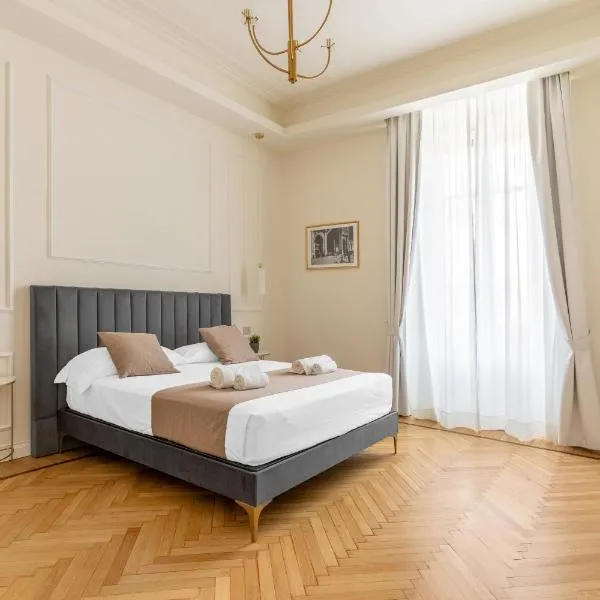

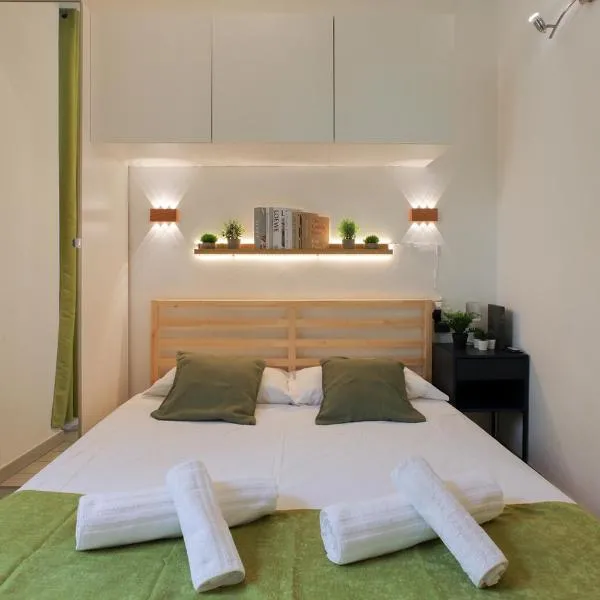
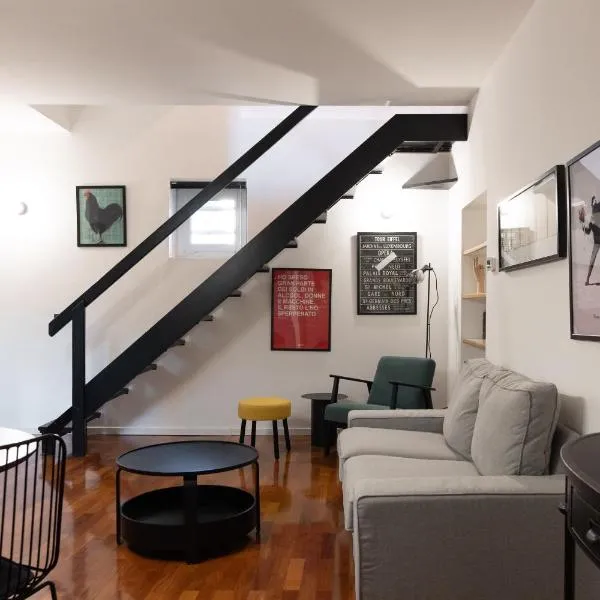
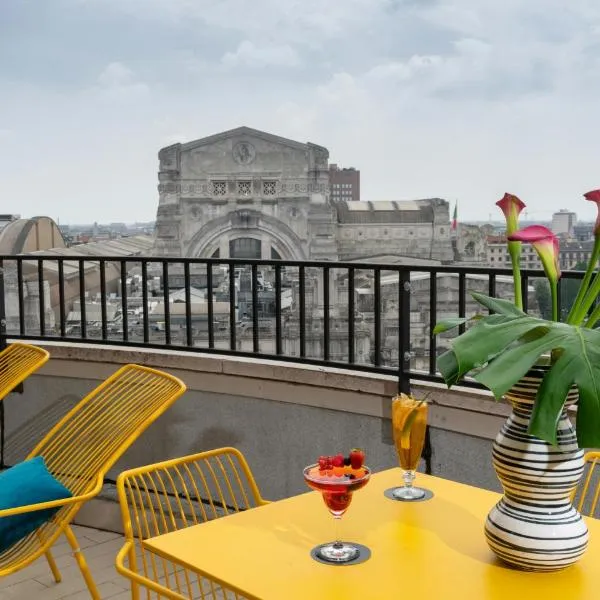

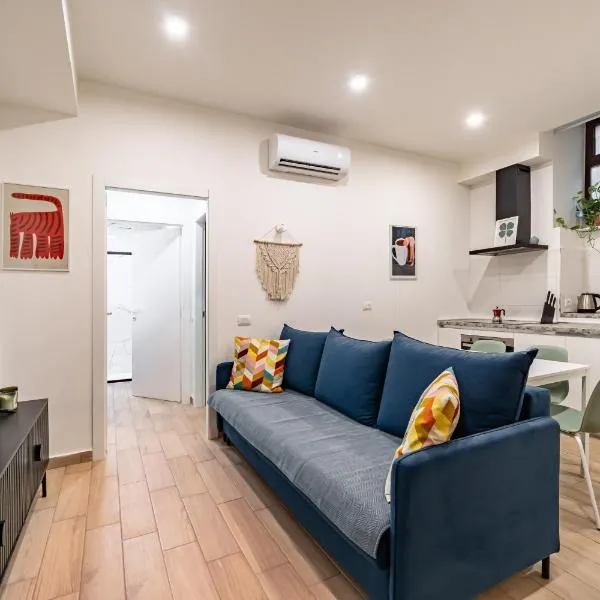
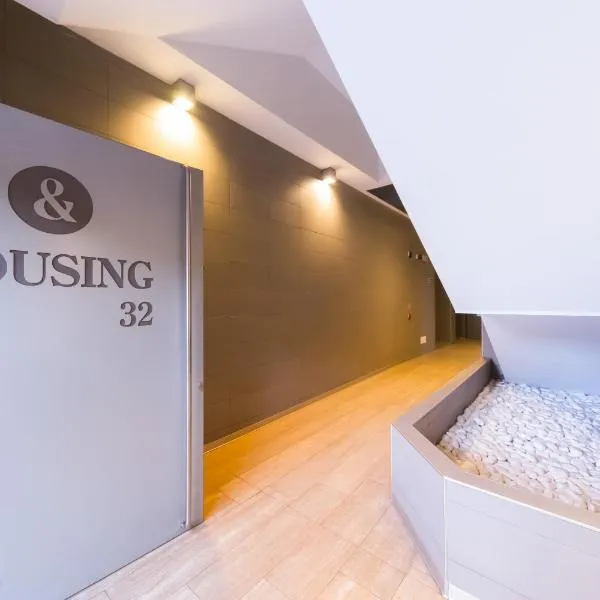
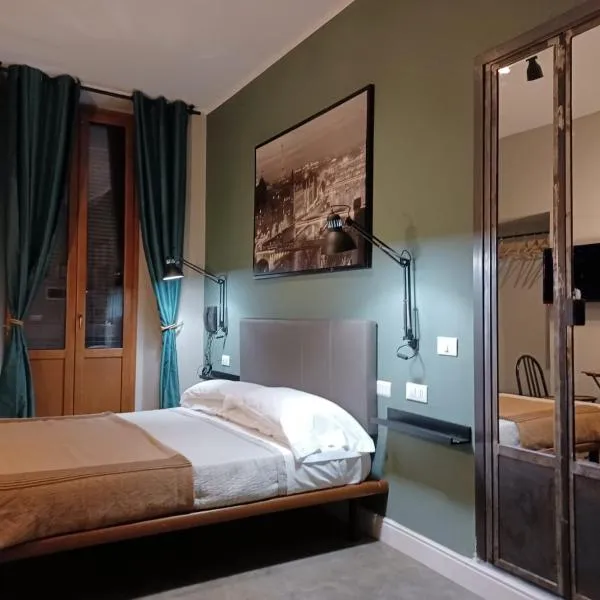
Isola District Local Life: Authentic Neighborhood Experience
Isola sits north of Corso Como, bordered by railway lines that separate it from Porta Nuova.
The neighborhood resisted development pressure for years and retains a working-class residential texture despite becoming one of Milan’s more sought-after areas over the past decade.
The Isola market at Piazza Lagosta runs several mornings per week.
Blue Note is on Via Borsieri.
The Bosco Verticale is a 10-minute walk south.
Isola works as a base if you want easy access to both the city center and a genuinely local atmosphere.
Local Market Shopping and Community Cultural Immersion
Mercato Comunale Isola at Piazza Lagosta is primarily a neighborhood market — oriented toward local shoppers rather than tourists.
Weekday mornings are the best time to visit, when the market is at its fullest.
Traditional Neighborhood Restaurant and Local Dining Culture
The restaurants on side streets around Via Carmagnola and Via Borsieri serve straightforward Milanese and northern Italian cooking at prices considerably lower than those near the Duomo.
Booking is advisable on weekend evenings; lunch is usually walk-in.
Residential Area Walking and Authentic Milan Living Experience
Street art in Isola is unusually well-curated — several pieces commissioned by the city and local organizations rather than unsanctioned work.
The neighborhood is walkable end-to-end in about 30 minutes and largely free of the crowds that define central Milan.
Community Event and Local Festival Cultural Participation
Fuorisalone (the Salone del Mobile satellite events in April) activates Isola more intensely than almost any other neighborhood in the city.
Design studios, galleries, and private courtyards host events throughout the week, and most are open to the public without pre-registration.
Budget-Friendly Activities in Milan You Can Do as a Budget Traveler
Milan’s reputation for expense is partly accurate and partly overstated.
The city has free museum days, accessible parks, architectural landmarks that cost nothing to approach, and an efficient transit system that keeps movement affordable.
For a comprehensive list of cost-free options, see free things to do in Milan.
Is There a Free Museum Day in Milan?
Most civic museums in Milan offer free admission on the first Sunday of each month.
In practice this includes the Castello Sforzesco museums, Museo del Novecento, Galleria d’Arte Moderna (Villa Reale), and the Civico Museo Archeologico.
Arriving at opening time — usually 9 or 10 AM — gives you meaningful time before the midday crowds arrive.
Public Park and Green Space Free Recreation Activities
Parco Sempione, Giardini Pubblici Indro Montanelli, and the Biblioteca degli Alberi in Porta Nuova are all free to enter.
Combined, they cover most of the city’s accessible green space and can easily fill an afternoon without spending anything.
Free Walking Tour and Self-Guided Historic District Exploration
A self-guided route covering the Duomo exterior, Galleria Vittorio Emanuele II (free to walk through), Piazza della Scala, Brera streets, and Navigli canals takes 3–4 hours at a comfortable pace and costs nothing.
The exteriors of San Maurizio and Sant’Ambrogio are free; interiors require checking current opening hours.
Market Browsing and Cultural Commerce Observation
The Navigli antique market (last Sunday of the month) and the Brera antique market (third Sunday) are both free to browse.
These represent some of Milan’s most interesting ground-level culture — dealers, collectors, and curious locals in one place.
Getting Around Milan: Available Transportations for Easier Mobility
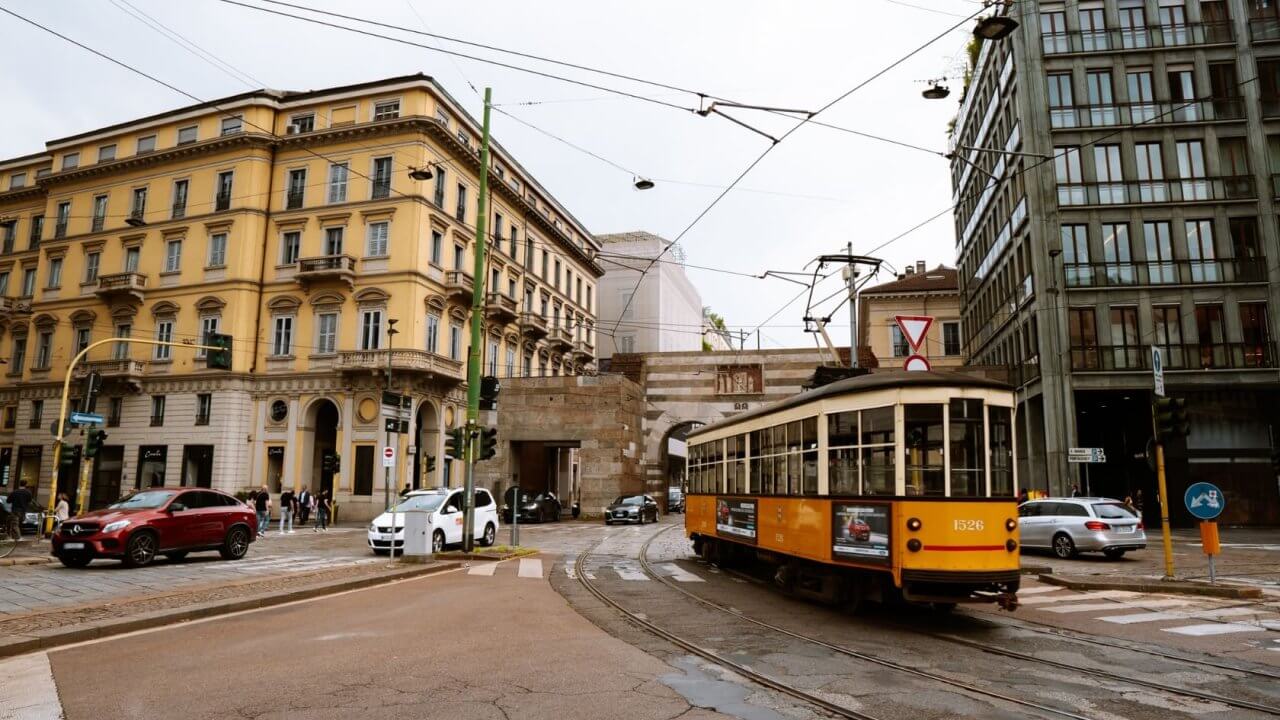
Milan’s transit network is managed by ATM (Azienda Trasporti Milanesi) and covers five Metro lines (M1 Red, M2 Green, M3 Yellow, M4 Blue, M5 Purple), trams, and buses.
A single ticket costs €2.20 and is valid for 90 minutes across any combination of Metro, tram, and bus — with unlimited transfers within that window.
How to Get to Milan

| From | Train | Bus | Flight | Ferry | Book |
|---|---|---|---|---|---|
| Rome IT | $27.99 3h 10min | $6.99 7h 45min | $59.41 1h 10min | — | Check Fares → |
| Paris FR | $92.50 6h 49min | $56.18 12h | $45.40 1h 25min | — | Check Fares → |
| Florence IT | $25.64 1h 44min | $9.33 3h 15min | $183.33 5h 45min | — | Check Fares → |
| Venice IT | $24.12 3h 3min | $8.16 3h 30min | $192.48 5h 55min | — | Check Fares → |
| Zurich CH | $85.48 3h 17min | $17.56 3h 35min | $151.21 55min | — | Check Fares → |
| Napoli IT | $35.01 5h | $10.50 9h | $35.90 1h 20min | — | Check Fares → |
| Nice FR | $20.96 3h 45min | $25.75 4h 20min | $104.80 1h 5min | — | Check Fares → |
| Barcelona ES | $284.54 13h 42min | $56.56 13h 20min | $35.64 1h 35min | $78.10 22h | Check Fares → |
| Geneva CH | $106.56 4h 23min | $25.75 4h 35min | $144.61 1h 5min | — | Check Fares → |
| Genova IT | $15.34 1h 33min | $5.82 1h 45min | — | — | Check Fares → |
Prices shown are starting fares and may vary. Book via Omio to compare all available options.
A 24-hour pass costs €7.60; a 3-day pass costs €15.50; a 10-trip carnet costs €19.50.
Children under 14 travel free on all ATM services with a valid ID.
Tickets can be purchased at metro station machines, authorized retailers, or via the ATM Milano app, and must be validated before boarding.
Key lines for sightseeing: M3 (Yellow) serves the Duomo directly; M1 (Red) reaches Cadorna near Sforza Castle; M2 (Green) connects Garibaldi to Porta Genova for Navigli access; M4 (Blue) connects the city center directly to Linate Airport.
For a full transportation guide — airport connections, cycling options, day trip train logistics — see how to get around Milan.
If you want help structuring your full itinerary day-by-day based on your specific dates and interests, the AI Itinerary Planner can generate a schedule tailored to how many days you have.
Frequently Asked Questions (FAQs)
Leonardo da Vinci’s Last Supper is one of the most visited paintings in the world, and the strict ticketing is real — admission is €15 full price / €2 reduced, with only 40 visitors admitted every 15 minutes and slots selling out far in advance.
Tickets are released quarterly via lastsupper.shop (the current May–August 2026 window opened on March 24); additional slots are released every Wednesday at 12:00 PM for the following week (max 5 tickets per online purchase).
Viewing time inside is approximately 15 minutes.
For serious art history enthusiasts, standing before the original is irreplaceable.
Casual visitors may find the combination of booking complexity and short viewing time harder to justify compared to the Pinacoteca di Brera or Castello Sforzesco, which are easier to access and can be visited for longer.
A mid-range three-day trip — accommodation, two or three restaurant meals per day, public transit, and selected museum entry — typically runs €390–600 per person (approximately €130–200 per day), excluding international flights.
Budget travelers who cook occasionally, use aperitivo bars for their evening meal, and time museum visits around free-entry days and first-Sunday openings can manage on €180–270 for three days (around €60–90 per day).
The AI Trip Cost Estimator can generate a personalized estimate based on your travel dates, accommodation preferences, and spending habits.
EU and Schengen passport holders travel freely within Italy.
Most other nationalities — including US, UK, Canada, and Australia — can stay for up to 90 days within any 180-day period without a visa under Schengen rules.
The EU’s ETIAS travel authorization system is expected to launch in Q4 2026 (likely October), affecting visa-exempt travelers from approximately 60 countries including the US, UK, Canada, and Australia.
The application will cost €20 and be valid for three years or until passport expiry, whichever comes first.
A six-month transitional period after launch means travelers may still enter without ETIAS authorization initially — but check the official ETIAS website for the confirmed rollout date before you travel.
For a complete check based on your specific passport, use the AI Travel Visa Requirements Checker.

A lifestyle and OOTD blogger, Kannaya Nareswari enjoys the small pleasures of cooking, traveling, and documenting ordinary events. She uses genuine storytelling to communicate her love of fashion, culinary explorations, and wanderlust. She is based between Bali and Bandung. She enjoys enjoying coffee at a secret café or experimenting with recipes in the kitchen when she's not traveling to new places or styling her most recent ensemble.