



Free Things To Do in Milan: What Costs Nothing and What Doesn’t – Milan has a reputation as an expensive city — and it is, for hotels, fine dining, and fashion.
But the city’s cultural offering is more free-accessible than most visitors realize.
The exterior architecture is among Europe’s best, several world-class galleries charge nothing, and the neighborhood culture in Brera, Naviglio, and Isola rewards time spent walking rather than paying.
This guide covers every genuinely free option: historic sites, museums with free entry, parks, open-air galleries, and the events calendar.
It also clarifies which “free” things have paid premium tiers so you don’t arrive at the door with the wrong expectations.
For a complete picture of what to do in the city, best things to do in Milan covers both free and paid options together.
Key Highlights
- Entry to the Duomo's interior, Castello Sforzesco's courtyards, and several museums (Palazzo Morando, Casa Museo Boschi-di Stefano, Pirelli Hangar Bicocca) is free
- First Sunday of the month offers free entry at several civic museums including Museo Civico di Storia Naturale
- The Galleria Vittorio Emanuele II, Quadrilatero della Moda, Bosco Verticale, and all canal districts cost nothing to explore
- Fuorisalone (April Design Week) and Estate Sforzesca (summer) bring free cultural events across the city
- The best free experience in Milan is simply walking — Brera to Navigli takes about 40 minutes and passes dozens of things worth stopping for
Is Milan Really Free? What You Actually Get at No Cost
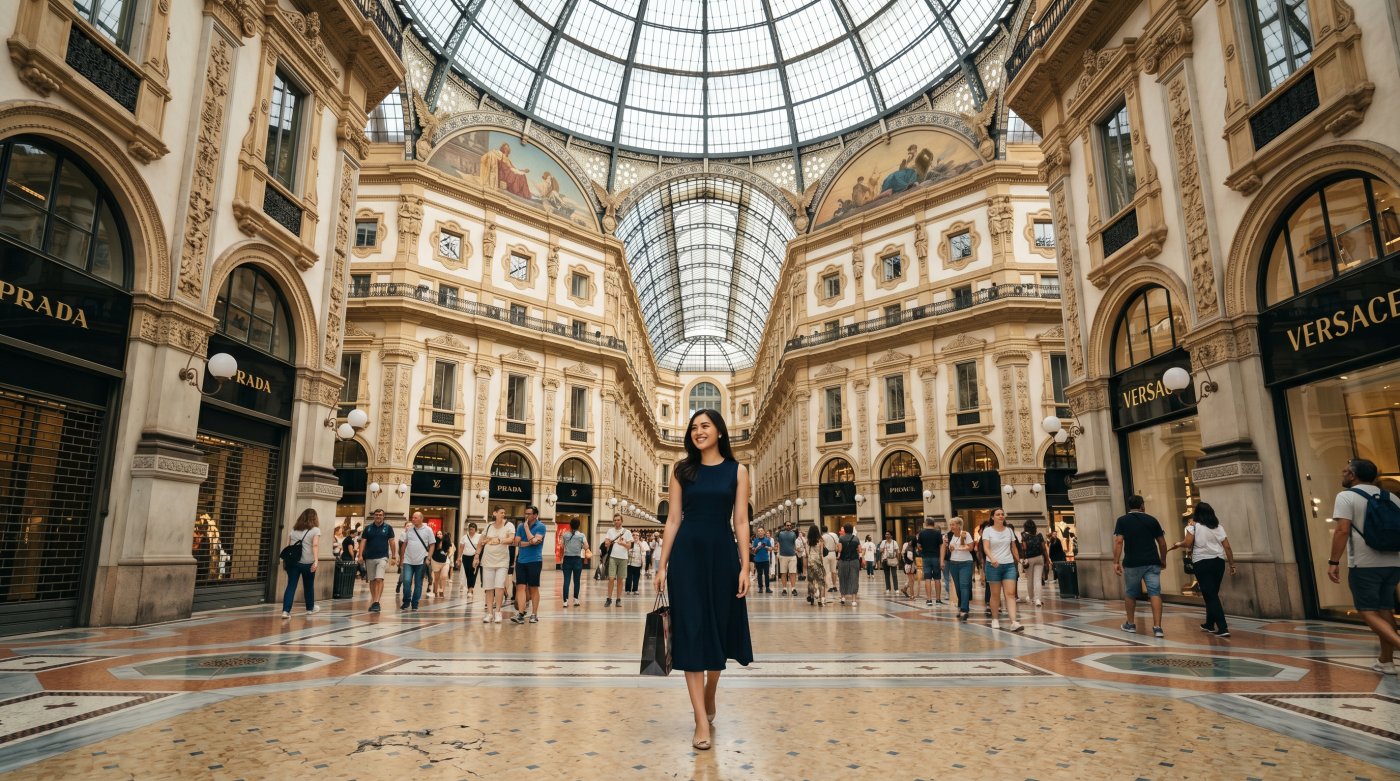
Several of Milan’s top experiences are genuinely free: the Duomo interior, Castello Sforzesco’s grounds, Palazzo Morando, Casa Museo Boschi-di Stefano, Pirelli Hangar Bicocca, and all outdoor public spaces.
However, some attractions commonly listed as “free” have paid tiers — the Duomo’s rooftop access requires a ticket, and many civic museums offer free-Sunday visits but charge admission on other days.
The distinction matters for planning.
This guide marks each entry clearly: free always, free on specific days, or free with a paid premium option.
How to Get to Milan

| From | Train | Bus | Flight | Ferry | Book |
|---|---|---|---|---|---|
| Rome IT | $27.99 3h 10min | $6.99 7h 45min | $59.41 1h 10min | — | Check Fares → |
| Paris FR | $92.50 6h 49min | $56.18 12h | $45.40 1h 25min | — | Check Fares → |
| Florence IT | $25.64 1h 44min | $9.33 3h 15min | $183.33 5h 45min | — | Check Fares → |
| Venice IT | $24.12 3h 3min | $8.16 3h 30min | $192.48 5h 55min | — | Check Fares → |
| Zurich CH | $85.48 3h 17min | $17.56 3h 35min | $151.21 55min | — | Check Fares → |
| Napoli IT | $35.01 5h | $10.50 9h | $35.90 1h 20min | — | Check Fares → |
| Nice FR | $20.96 3h 45min | $25.75 4h 20min | $104.80 1h 5min | — | Check Fares → |
| Barcelona ES | $284.54 13h 42min | $56.56 13h 20min | $35.64 1h 35min | $78.10 22h | Check Fares → |
| Geneva CH | $106.56 4h 23min | $25.75 4h 35min | $144.61 1h 5min | — | Check Fares → |
| Genova IT | $15.34 1h 33min | $5.82 1h 45min | — | — | Check Fares → |
Prices shown are starting fares and may vary. Book via Omio to compare all available options.
Free Historical Landmarks to Explore in Milan
Milan’s most celebrated historical landmarks are spectacular precisely because their grandeur exists at street level, where anyone can simply walk up and experience them without spending a cent.
The city’s architectural ambition spans centuries, and the most awe-inspiring moments often happen before you even reach a ticket window.
Duomo di Milano
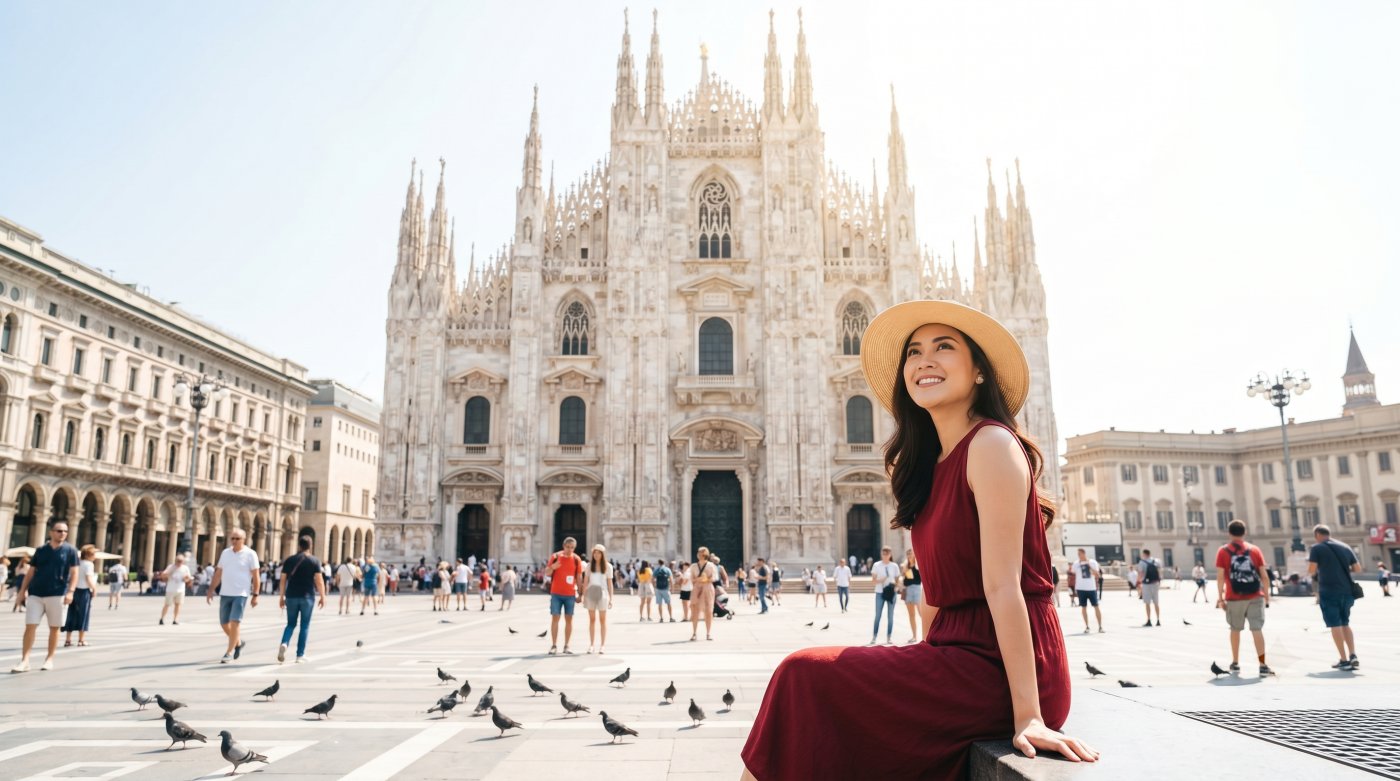
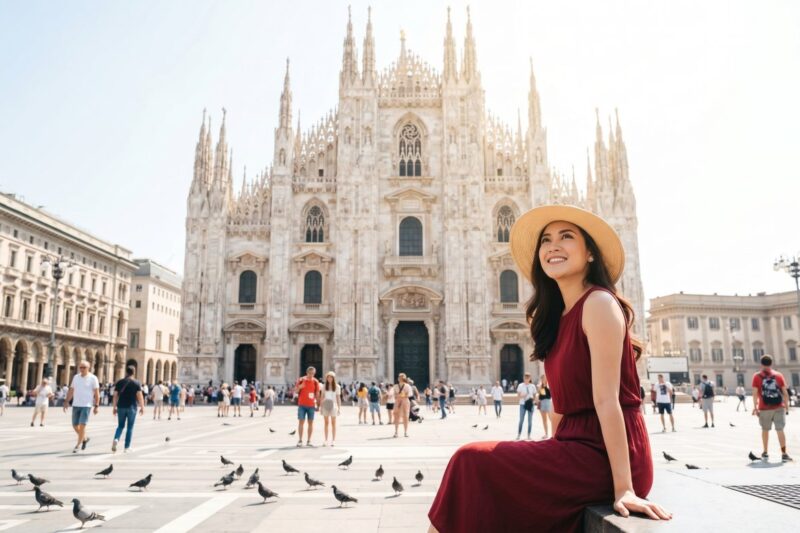
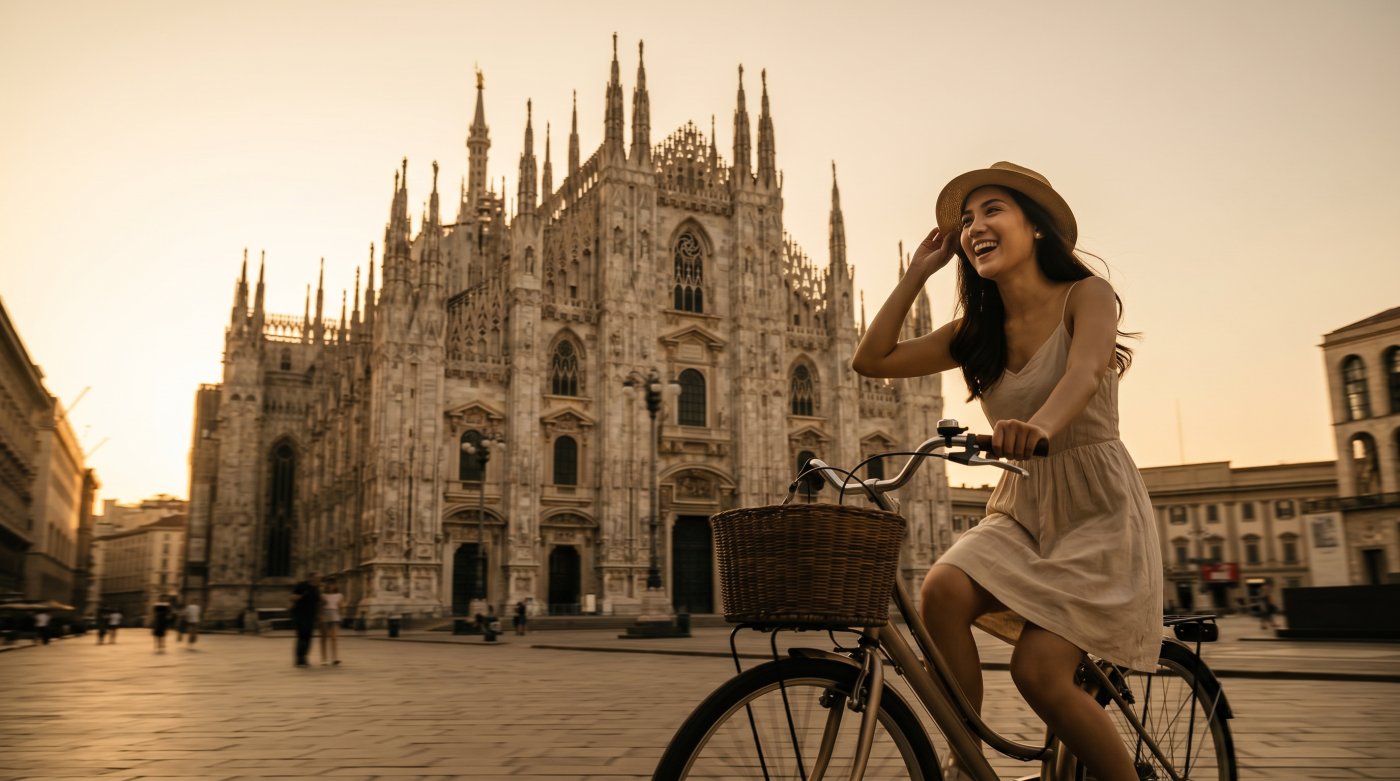
The exterior of the Duomo is free and deserves more time than most visitors give it.
The façade has 135 spires, over 3,400 statues, and five centuries of incremental construction — walking around it slowly and looking up reveals detail that’s easy to miss when walking through the square at pace.
- Interior access: As of 2025–2026, the cathedral nave requires a paid ticket for tourist visits — the standard entry to Milan Duomo and the Duomo Museum is €10.00 full price / €8.00 on Wednesdays (when the museum is closed). The only free interior access is reserved for those entering for prayer, liturgical celebrations, or the Sacraments, available daily from 7:00 am to 8:30 am via the side doors, and from 8:00 am to 7:00 pm via the northernmost main door. Photography inside is permitted. The stained-glass windows — among the oldest in the world — are best appreciated in morning light when sunlight comes through the east-facing windows.
- What requires a ticket: The rooftop terrace (€18.00 by lift / €16.00 on foot), the Archaeological Area (€5.00, requires cathedral ticket), the Museo del Duomo, and combination entry packages (from €22.00) all require purchase. If your visit is purely for prayer, the interior is free — otherwise, budget accordingly.
The square (Piazza del Duomo) is itself worth time: it functions as a public living room for the city.
Sit on the steps, watch the trams cross the square, and observe the Galleria entrance across from you.
Castello Sforzesco
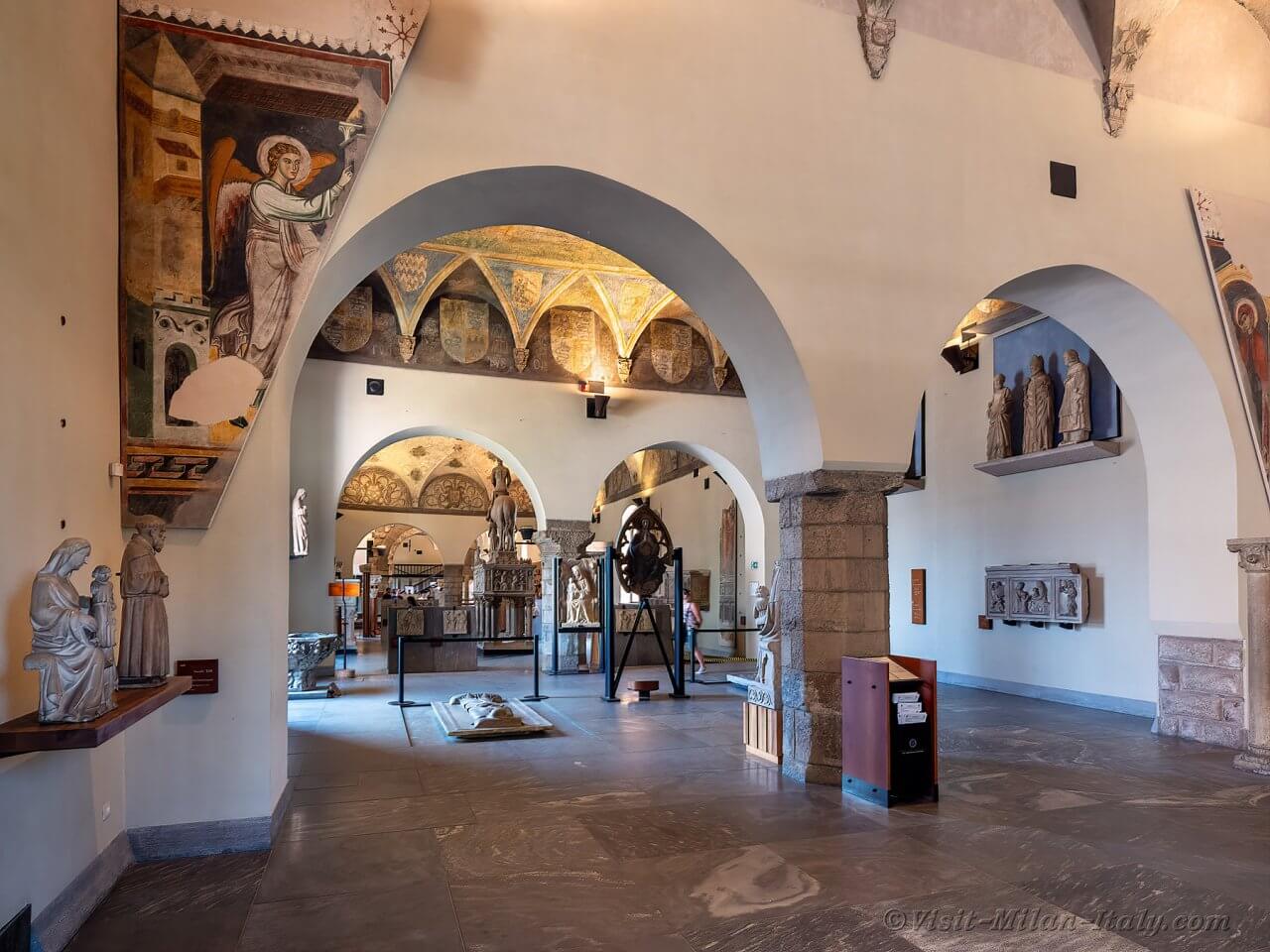
Castello Sforzesco’s outer courtyards and surrounding grounds are free to enter and free to spend as long as you want.
The castle was originally built in the 14th century, heavily rebuilt in the 15th by Francesco Sforza, and again reconstructed after near-demolition at the end of the 19th century.
It’s more historically layered and architecturally complex than its exterior suggests.
Walking through the main gate into the Piazza d’Armi (the main courtyard) and through to the smaller inner courtyard is free.
The castle’s immediate park — the beginning of Parco Sempione — starts directly behind the rear of the castle.
What requires a ticket: The museums inside the castle — including the dedicated gallery housing Michelangelo’s unfinished Rondanini Pietà — charge €5.00 full price (reduced €3.00 for EU citizens aged 18–25 and visitors over 65; free for children under 17).
Museums are open Tuesday to Sunday, 10:00 am – 5:30 pm (last admission 5:00 pm); closed Mondays.
Note that the first Sunday of each month offers free museum admission for all visitors.
The Pietà in particular is worth paying for (it’s Michelangelo’s final work, left incomplete at his death); the exterior courtyard visit is a separate, free experience.
San Lorenzo Columns
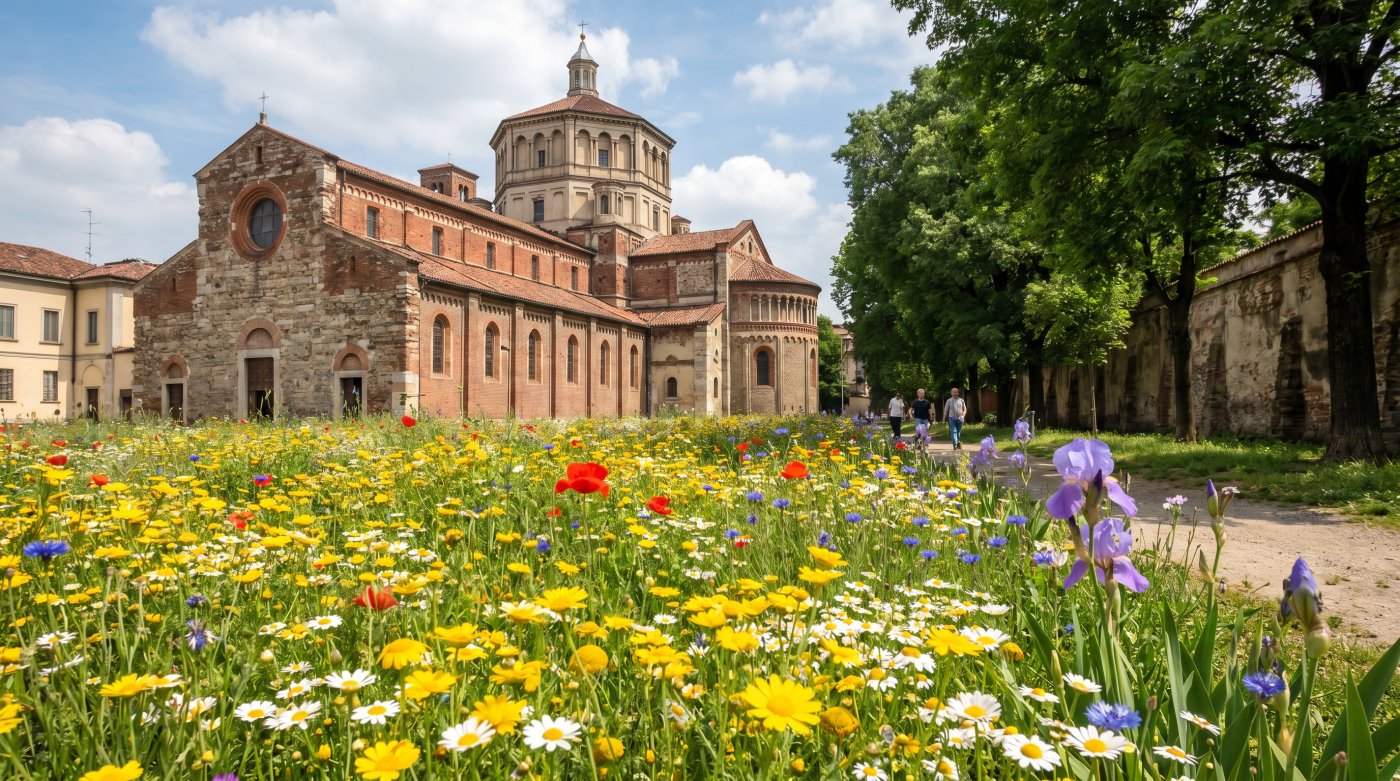
The Colonne di San Lorenzo — sixteen Roman columns standing in a row in front of the Basilica di San Lorenzo — are one of Milan’s most undervisited landmarks.
These are the only surviving remnants of a 4th-century Roman portico, moved to their current location in the early Christian period.
Each column is about 8 meters tall; they were carved in the 2nd or 3rd century AD.
The small square in front of the columns is a meeting point for Milanese locals in the evenings, particularly on warm nights.
There’s no entry cost, no rope barrier, and no separation — you can stand directly between the columns.
The basilica behind them is worth entering (free) for the early Christian mosaics in the small chapel of Sant’Aquilino.
Basilica di Santa Maria delle Grazie
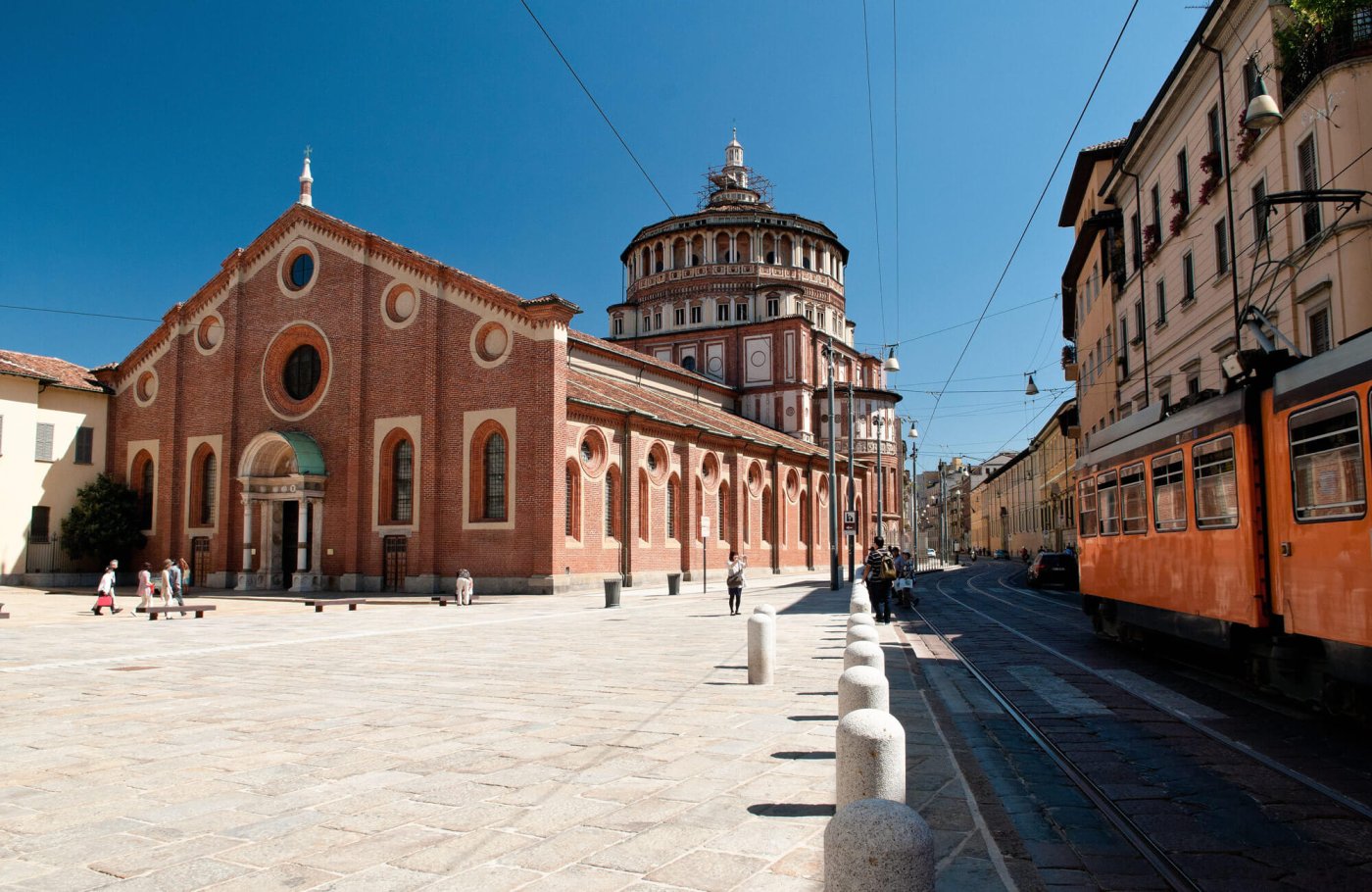
The church itself is free to enter — entry to the Basilica di Santa Maria delle Grazie is free for all visitors, entirely separate from Last Supper access.
It’s a 15th-century Dominican church with a Renaissance exterior and decorated interior chapels.
The church is open Monday to Saturday: 7:00 am – 12:00 pm and 3:00 pm – 7:30 pm; Sunday: 7:30 am – 12:30 pm and 3:00 pm – 9:00 pm.
The north transept leads to the doorway of the refectory where Leonardo da Vinci’s Last Supper is preserved — but that room requires a separate, timed ticket (€15.00 for adults over 25, €2.00 for EU citizens aged 18–25, free for under 18s with a reservation) booked well in advance, often weeks or months ahead.
The church visit without the Last Supper is genuinely worthwhile: the architectural interplay between the Gothic nave and Bramante’s Renaissance apse is more interesting than most visitors realize.
Cimitero Monumentale
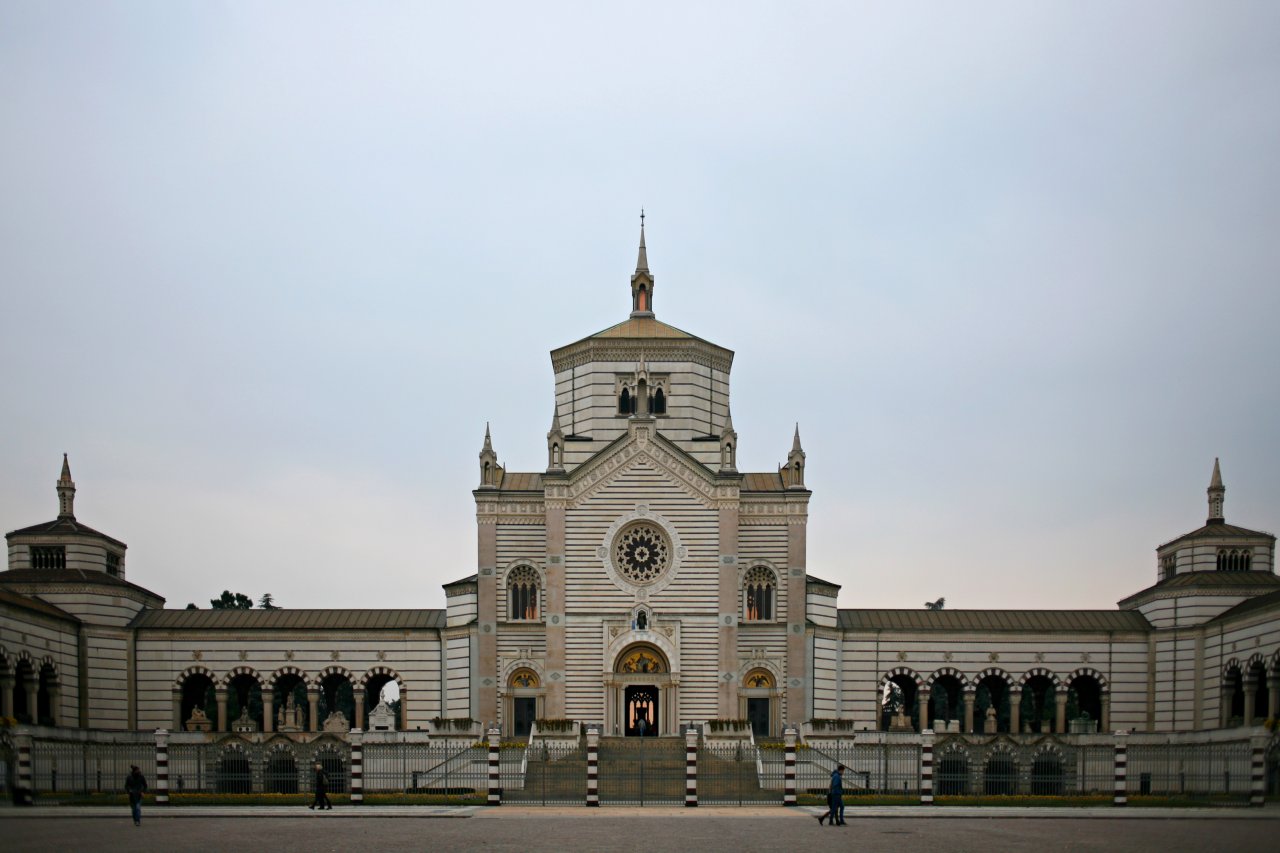
The Cimitero Monumentale (Monumental Cemetery) is one of Milan’s finest open-air sculpture parks, even if that’s not how it’s marketed.
Opened in 1866, it contains over a century of funerary art — marble sculptures, mosaic-inlaid chapels, Liberty-style mausoleums, and family tombs designed by leading Italian architects and sculptors of each era.
The entrance is through the Famedio, a neo-Gothic hall containing memorials to notable Milanese figures including Alessandro Manzoni.
Entry is free.
The grounds are open Tuesday through Sunday, 8:00 am – 6:00 pm (last entry at 5:30 pm); closed Mondays except on public holidays.
Note that on certain public holidays — including New Year’s Day, Easter Sunday and Monday, 1 May, 2 June, 15 August, and 25–26 December — the cemetery operates on a reduced schedule, closing at 1:00 pm.
It’s genuinely peaceful — far enough from the center to be uncrowded, and large enough that you can walk for 45 minutes and see only a fraction of it.


Free Museums and Galleries to Visit in Milan
Milan punches well above its weight when it comes to free cultural institutions — and unlike many cities, these aren’t just token collections thrown into a side room.
Several of Milan’s civic museums offer genuinely significant permanent collections at no cost, and a few are so under-the-radar that you’ll often have entire rooms to yourself.
Palazzo Morando — Museum of Costume, Fashion, and Image
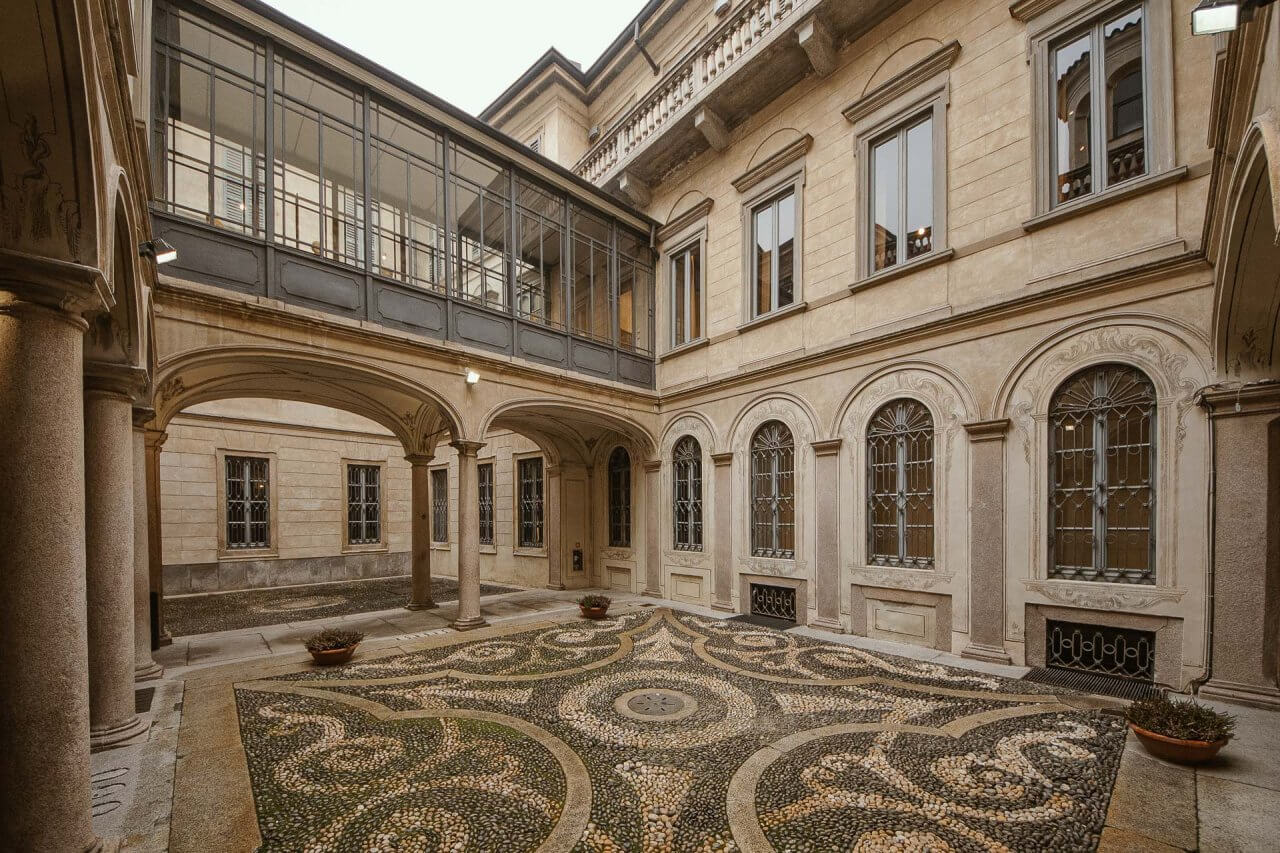
Palazzo Morando houses Milan’s permanent collection of clothing, fashion history, and portraiture from the 18th century through the 20th.
The building is a 17th-century palazzo in the Brera area; entry to the permanent collection is always free — confirmed as of 2026 by Milan’s civic museums.
The museum is open Tuesday to Sunday, 9:00 am – 5:30 pm; closed Mondays.
The collection covers Milanese aristocratic dress, 19th-century bourgeois fashion, early 20th-century couture, and a documentation of how fashion journalism and image-making shaped the city’s identity as a fashion capital.
The rooms themselves — frescoed ceilings, period furniture — are part of the experience.
Temporary exhibitions typically carry a charge.
The permanent collection is a 45-minute visit at a comfortable pace.
Casa Museo Boschi-Di Stefano
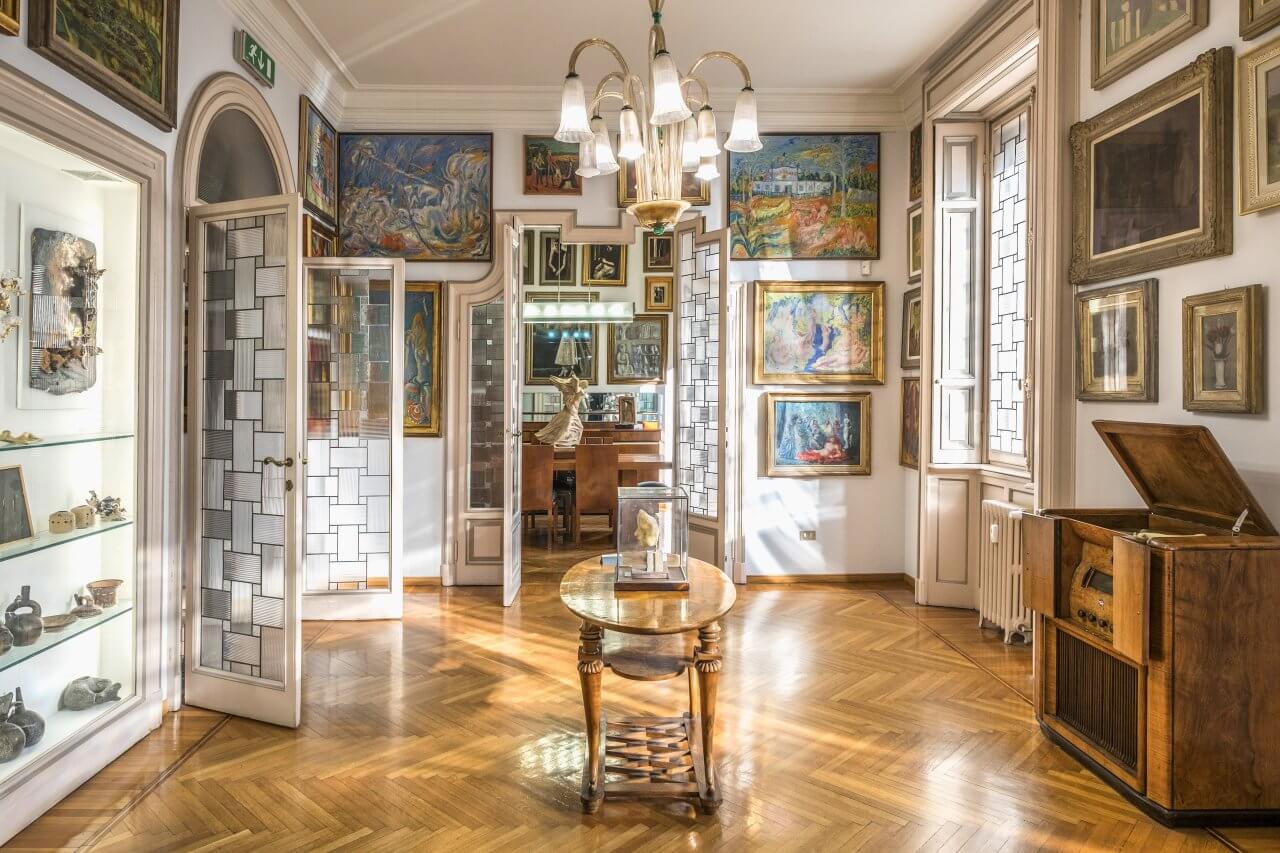
This is one of the most worthwhile free museums in Italy and one of the least visited.
Antonio Boschi and Marieda Di Stefano collected 20th-century Italian art from the 1920s onward — Fontana, Morandi, de Chirico, Sironi, Manzù — and the collection remains displayed in their original apartment exactly as they arranged it.
The result is something between a private gallery and a time capsule: the art hangs on walls between period furniture, alongside family objects and books.
There’s no dramatic gallery lighting or white cube staging.
The collection has around 300 works.
Entry is free.
The apartment is in the Porta Venezia area, a 15-minute walk from the Giardini Pubblici.
The museum is open Tuesday through Sunday, 10:00 am – 5:30 pm (last entry at 5:00 pm); closed Mondays and on 1 January, 1 May, and 25 December.
Booking is recommended but not mandatory — groups over 20 will need to book via Vivaticket.
Pirelli HangarBicocca
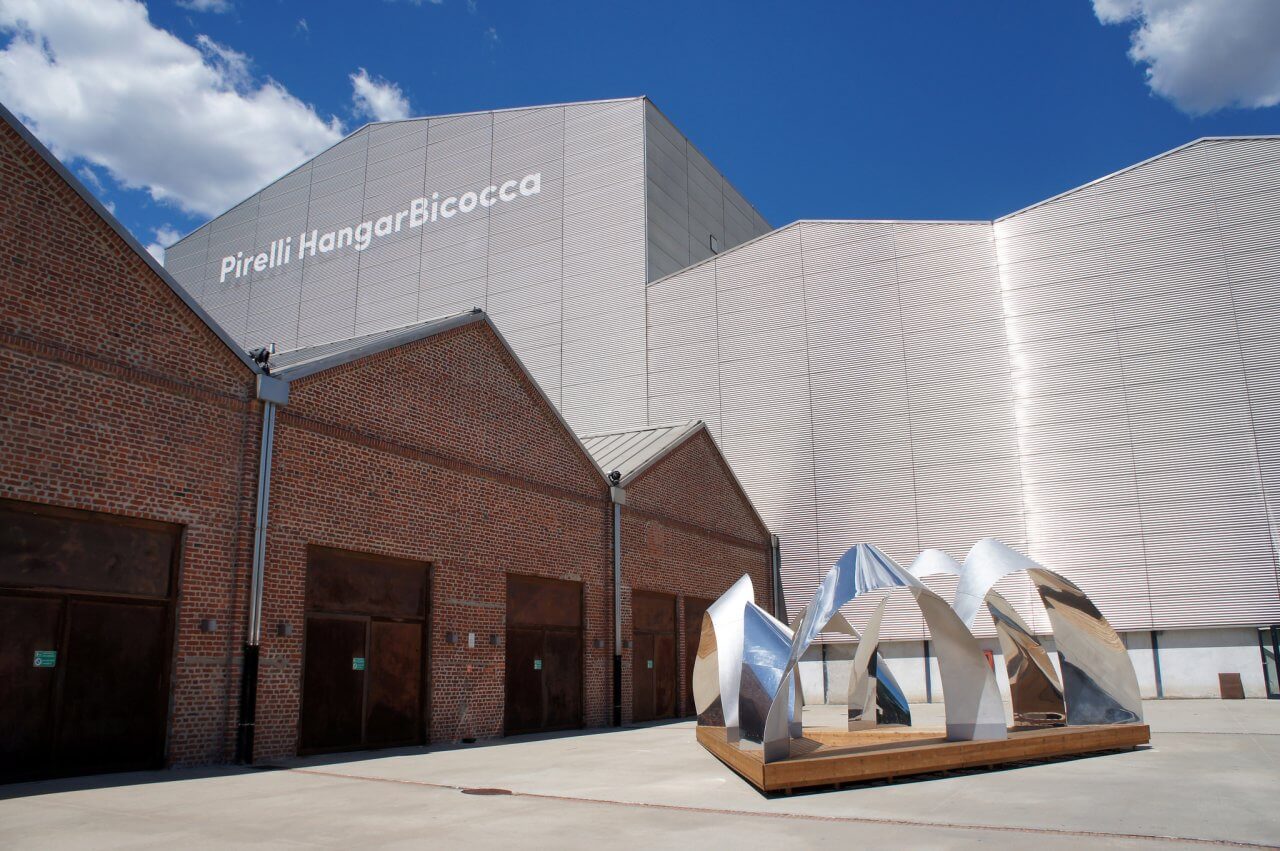
Pirelli HangarBicocca occupies a former factory building in the Bicocca district — 15,000 square meters of converted industrial space used for large-scale contemporary art installations.
The resident permanent work is Anselm Kiefer’s The Seven Heavenly Palaces (2004–2015), a group of seven monumental lead towers, each 14–18 meters tall, that fill one end of the space.
Beyond the permanent installation, the gallery hosts temporary exhibitions and sound/video works throughout the year.
Admission is always free, confirmed as of 2026 — though online reservation is recommended as it guarantees priority access to exhibition spaces.
Walk-in booking on-site is allowed subject to availability.
It’s roughly a 20-minute journey from the city center.
The closest metro stop is Bicocca on the M5 (Lilac Line); from there, take bus Line 51 to the stop Via Chiese – HangarBicocca.
Alternatively, bus Line 87 also serves Via Chiese from the M1 Sesto Marelli stop.
The gallery is open Thursday through Sunday, 10:30 am – 8:30 pm (last admission at 7:30 pm); closed Monday through Wednesday.
Museo Civico di Storia Naturale
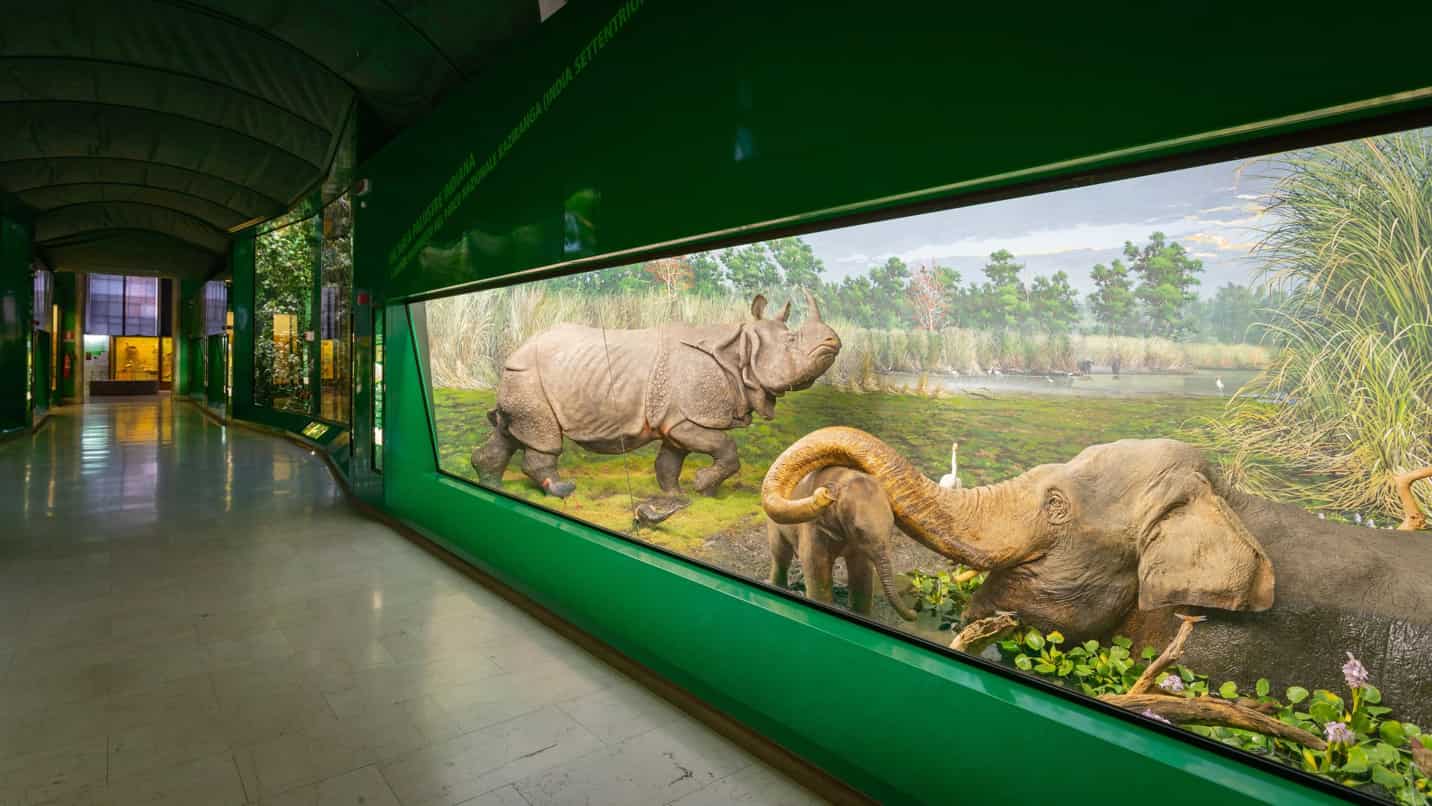
Milan’s natural history museum has 23,000 square meters of exhibits covering geology, paleontology, zoology, and ecology.
The dinosaur skeleton collection and mineralogy displays are the main draws.
Regular admission is €5.00 full price / €3.00 reduced (over 65s, university students, EU citizens aged 18–25); free for visitors under 18 and high school students.
The first Sunday of every month and the 1st and 3rd Tuesday of the month from 2:00 pm onward all offer free admission to the museum for all visitors (walk-in only on free days — no online booking).
Opening hours are Tuesday to Sunday, 10:00 am – 5:30 pm (last admission 4:30 pm); closed Mondays.
The museum is in the Porta Venezia district, immediately adjacent to the Giardini Pubblici.
Acquario Civico
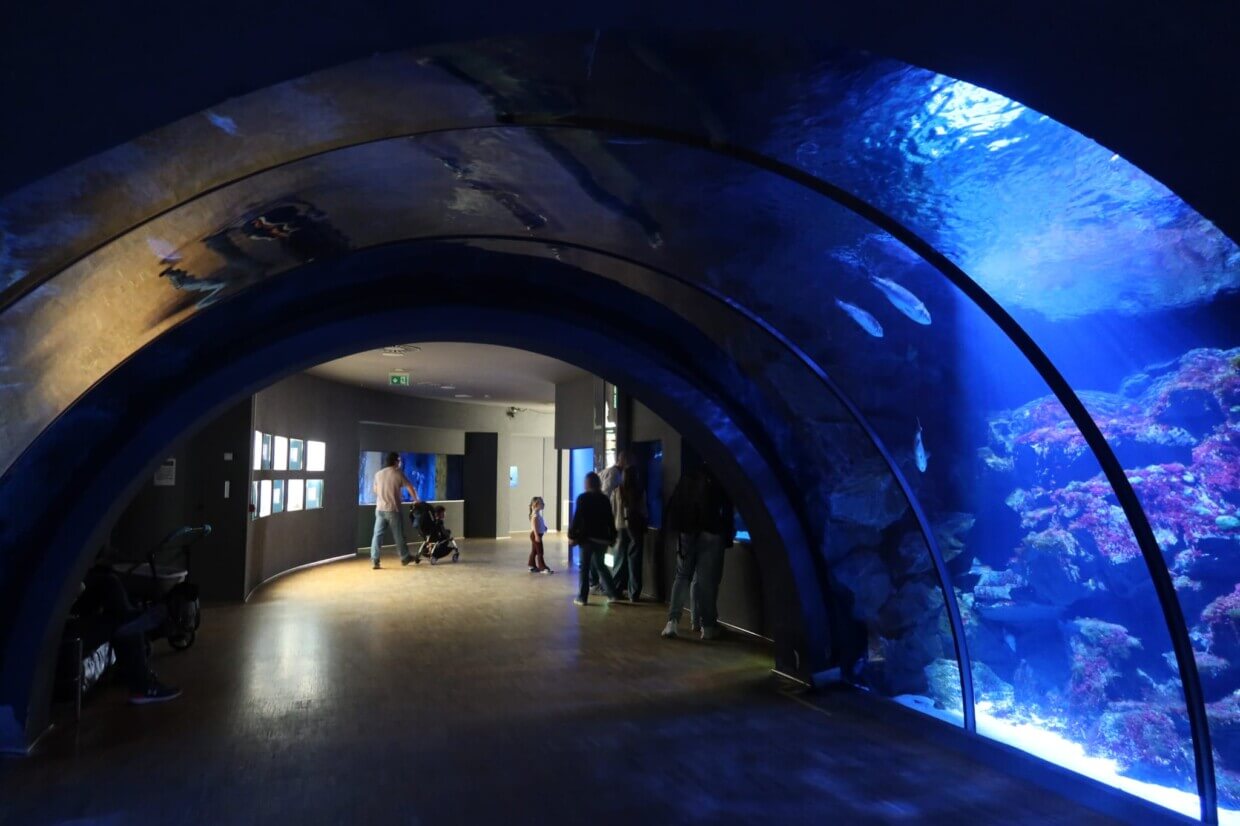
The Civic Aquarium occupies an Art Nouveau building in Parco Sempione — one of the most attractive aquarium buildings in Europe.
The exhibits cover Italian freshwater and Mediterranean marine environments.
Regular admission is €5.00 full price / €3.00 reduced (over 65s, university students, EU citizens aged 18–25); free for children under 18 and high school students.
Free entry is available on the first and third Tuesday of each month from 2:00 pm, and on the first Sunday of every month for all visitors (walk-in only for free days).
The aquarium is open Tuesday to Sunday, 10:00 am – 5:30 pm; closed Mondays.
The building itself is worth a look from outside even if you don’t enter.
Free Churches to Visit in Milan Worth a Detour
Milan’s free churches are some of the most underappreciated sights in the city.
Unlike the major paid attractions, these spaces rarely feel crowded, and that sense of stepping into a quiet room full of extraordinary art — with no ticket queue, no timed entry, no gift shop gauntlet — is part of what makes them worth prioritizing.
Chiesa di San Maurizio al Monastero Maggiore
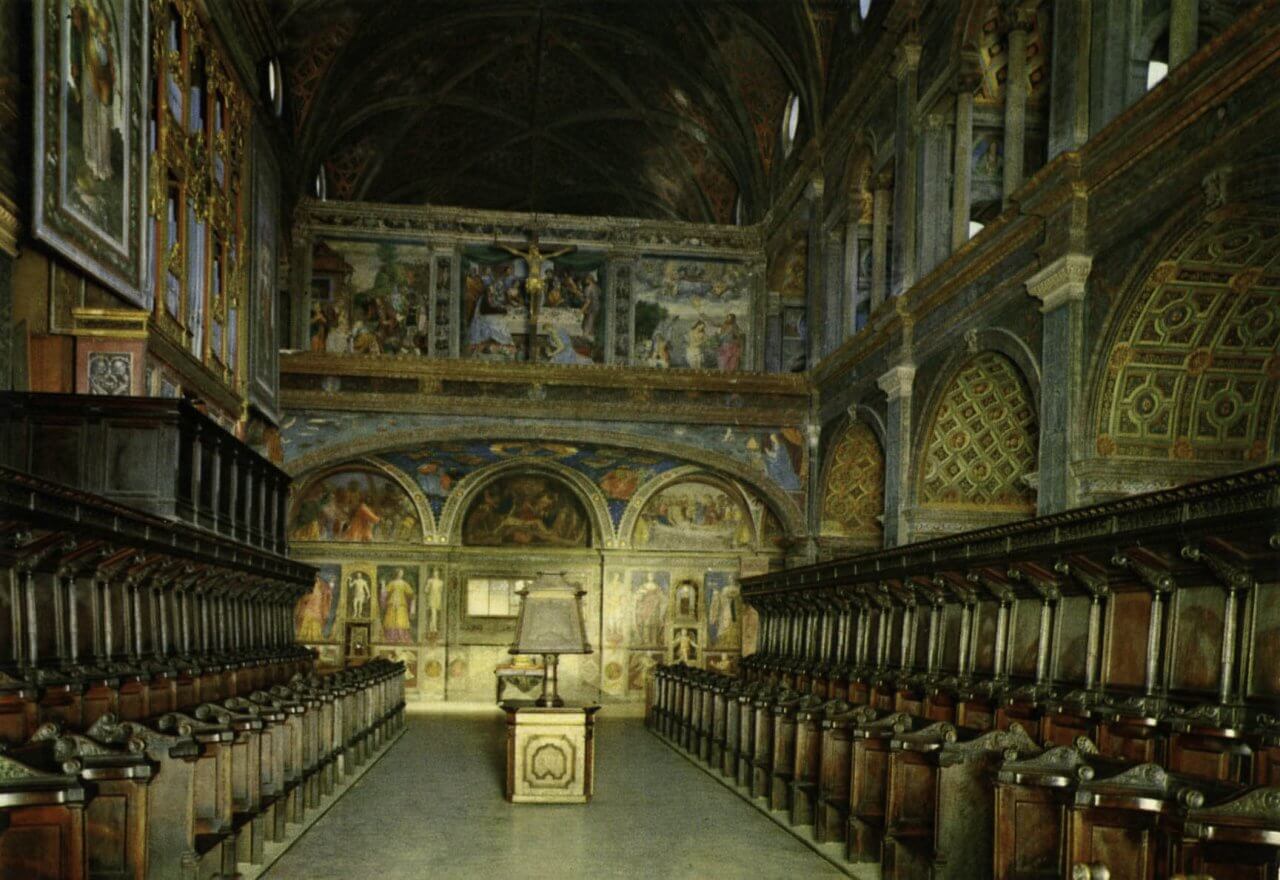
Often called “the Sistine Chapel of Milan,” though the comparison flatters neither chapel.
What it accurately conveys is that the interior is entirely covered in Renaissance frescoes — walls, vaulted ceiling, and the partition screen separating the public nave from the former convent area.
The frescoes were painted primarily by Bernardino Luini in the early 16th century.
Entry is free and no reservation is required for individual visitors; groups of 8 or more should book in advance at [email protected].
It’s located at Corso Magenta 15, close to Santa Maria delle Grazie.
The church is open Tuesday through Sunday, 10:00 am – 5:30 pm (last entry at 5:00 pm); closed Mondays, and on 1 January, 1 May, and 25 December.
Occasional volunteer-related closures can happen, so it’s worth checking same-day notices before making the trip along Corso Magenta.
The church is small; 15–20 minutes is sufficient unless you’re examining the frescoes in detail.
Chiesa di San Bernardino alle Ossa
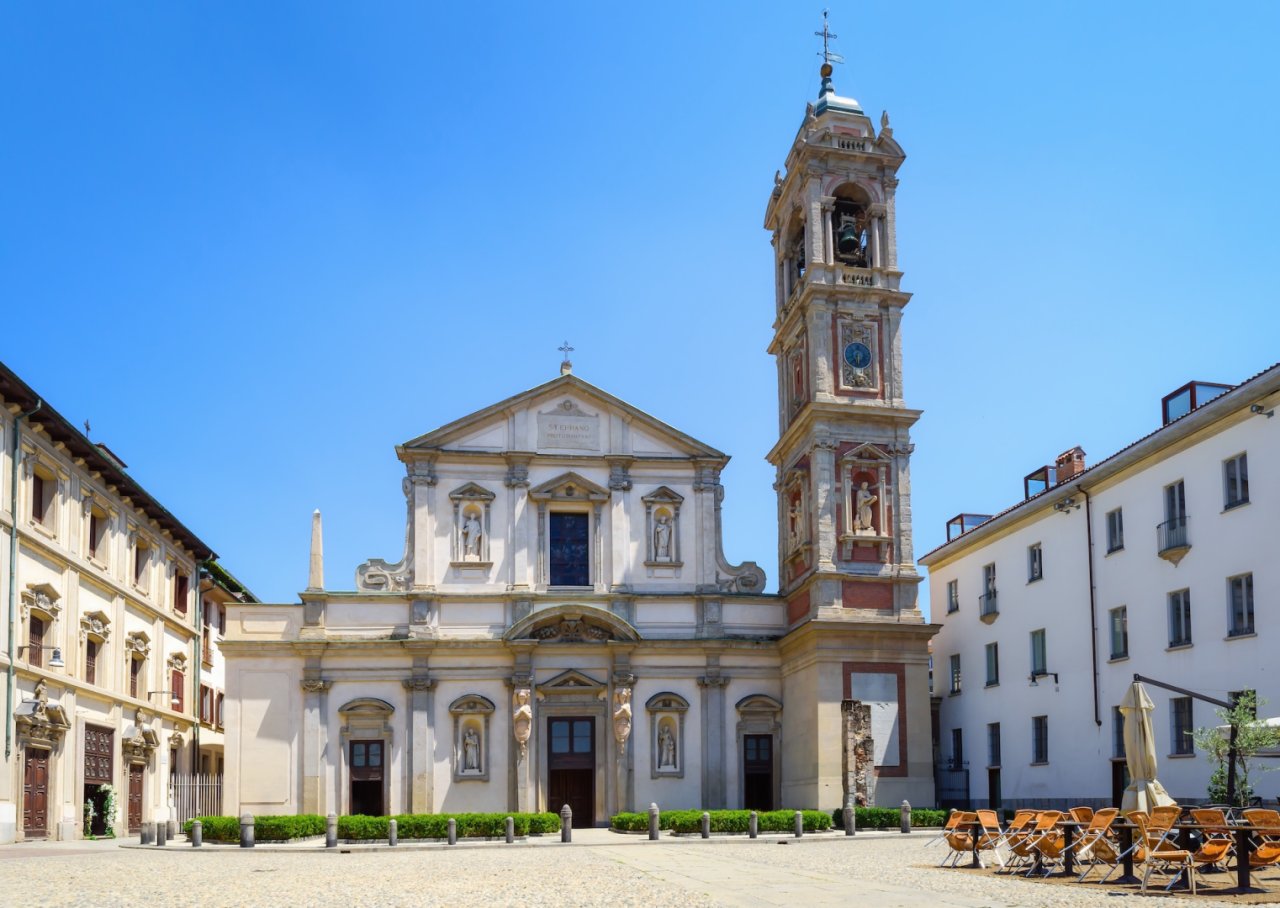
Near Piazza Santo Stefano in the center of Milan, this small 13th-century church has a side chapel — the Ossario — whose walls are entirely decorated with human skulls and bones, assembled in the 17th century when the adjacent hospital’s burial ground was cleared.
The effect is more medieval than macabre.
Entry is free (a small donation is welcomed).
Current opening hours are Monday to Friday: 8:00 am – 12:00 pm and 1:30 pm – 6:00 pm; Saturday: 9:30 am – 6:00 pm; the church is also open on Sunday mornings though the Ossario chapel may have more restricted access on weekends — morning visits on weekdays are the most reliable.
It’s a 5-minute walk from the Duomo.
Which Neighborhoods Are Best to Explore for Free?
The Brera and Naviglio Grande areas offer the most rewarding free walking in Milan.
Brera has the highest density of galleries, aperitivo bars, and architectural detail; the Navigli canal district has the most interesting street activity in the evenings and on weekend mornings when the antique market runs.
Brera District
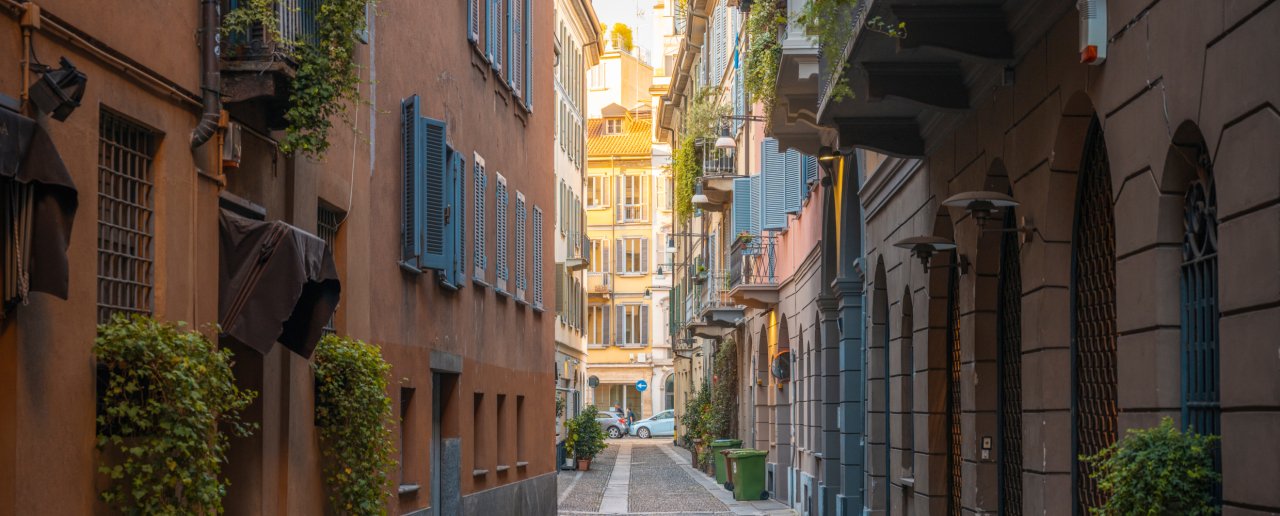
Brera is Milan’s historic artists’ and intellectuals’ quarter, centered on Via Brera and the courtyards radiating from the Pinacoteca.
Walking through it is free; the Pinacoteca di Brera art gallery normally charges admission (€15.00 full price / €2.00 for EU citizens aged 18–25 / free for under 18s), but offers free entry on the first Sunday of every month (reservation required via brerabooking.org, released the Wednesday before).
The gallery runs occasional special evening openings — typically a handful of dates per season, priced at €3.00 full / €2.00 reduced, with free admission applying to the usual exempt categories — so check the Pinacoteca’s events calendar before your visit if you’re planning around a specific date.
What’s free in Brera:
- The Brera Botanical Garden (Orto Botanico di Brera) — a quiet garden behind the Pinacoteca, free entry during opening hours
- The Brera Astronomical Observatory (Osservatorio Astronomico di Brera) at Via Brera 28 — public programs include the Cieli di Brera lecture series (free, held in-person at 6:00 pm in the Aldo Bassetti Room of the Pinacoteca) and the Universo in Fiore astronomy courses; evening stargazing sessions with telescopes are organized from the Merate satellite location (not central Milan) and carry a ticket fee — check the program schedule at poefactory.brera.inaf.it
- Street performances and live music, particularly on weekends, in the small squares around Via Fiori Chiari and Via Madonnina
- The neighborhood streets themselves, with their mix of galleries, antique dealers, and independent cafés
The Brera antique market runs on the third Sunday of every month — free to browse, with dealers selling antiques, prints, jewelry, and collectibles along Via Fiori Chiari and Via Madonnina.
Naviglio Grande
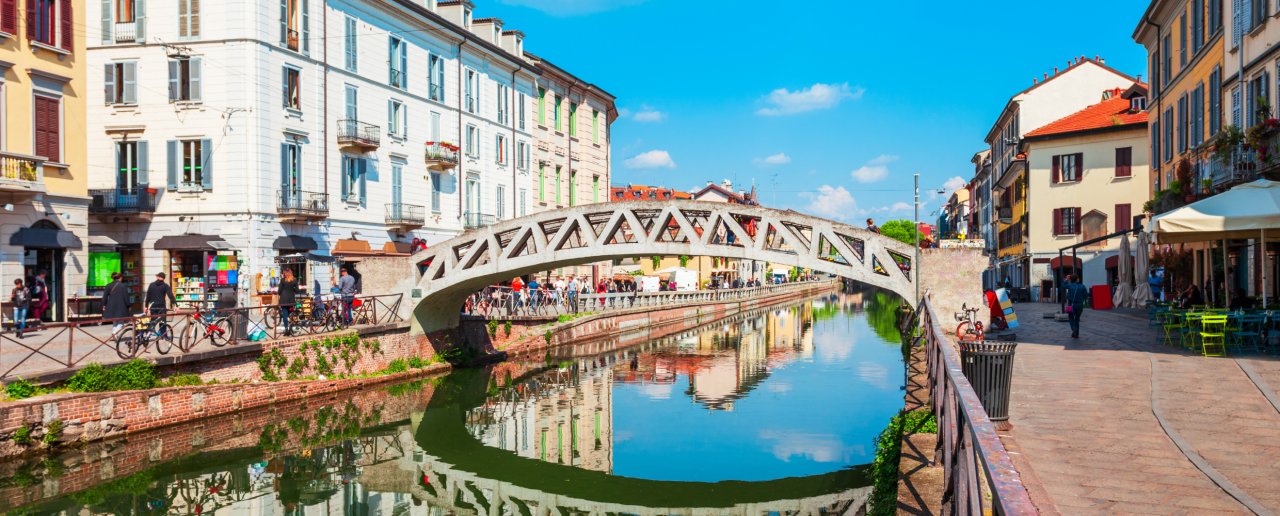
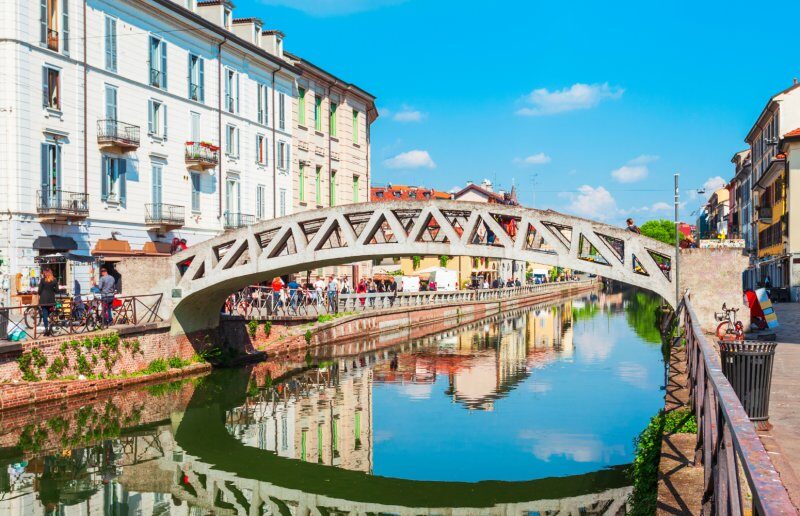
The Naviglio Grande is the main canal of Milan’s historic navigli network, originally built in the 12th century and later extended under designs attributed to Leonardo da Vinci.
The canal itself stretches 50 km into the Po Valley, though the visitor-relevant section is the 2 km along the city’s southern edge.
The canal towpath (Via Alzaia Naviglio Grande) is lined with bars, restaurants, artisan workshops, and galleries.
Walking it in the evening — particularly from around 6 PM when the aperitivo hour begins — is free and one of the most characterful experiences in Milan.
The last Sunday of every month, the canal hosts a large antique market along Via Naviglio Grande and nearby streets.
It’s one of the largest in northern Italy and free to browse.
Via Lincoln and the Isola Area
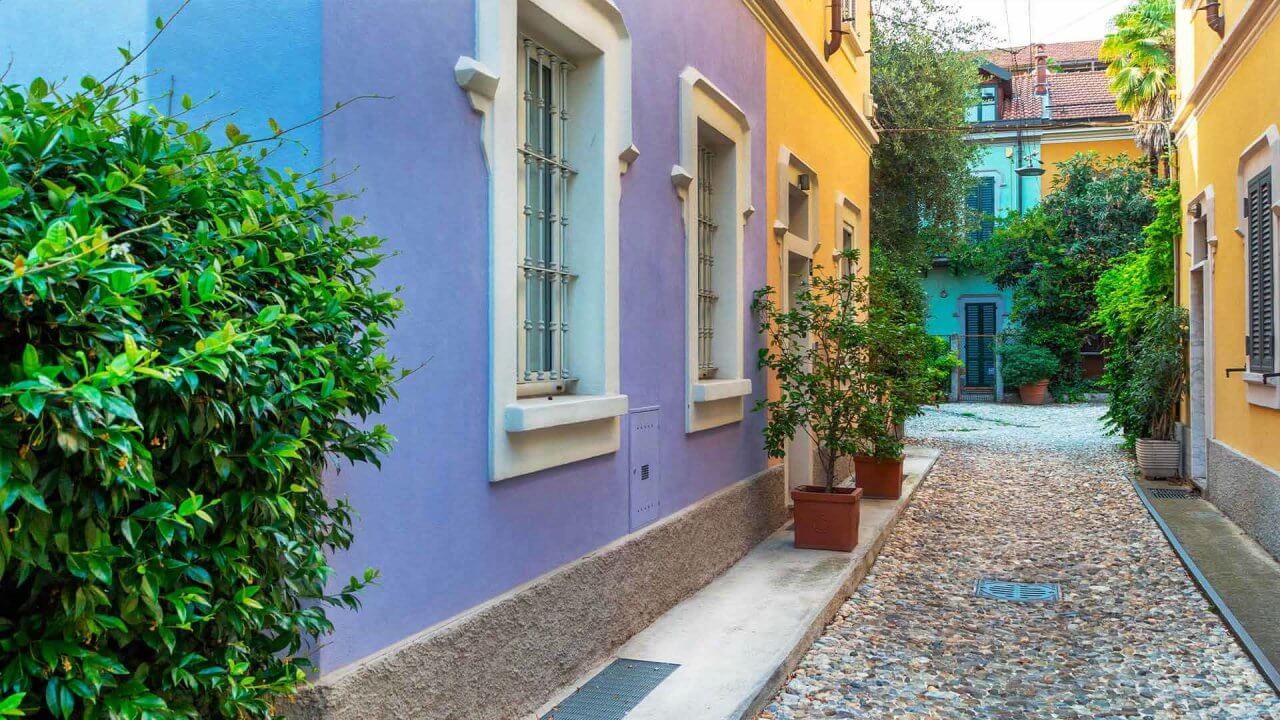
Via Lincoln is a short street in the Isola neighborhood whose houses are painted in Mediterranean colors — pinks, yellows, terracotta, and blues.
It’s a genuine neighborhood street rather than a tourist installation; the colors come from individual homeowners’ decisions rather than a coordinated design.
The broader Isola neighborhood, accessible via Metro M2 or M5 to Garibaldi, has become one of Milan’s most interesting walking areas — independent bookshops, studios, concept restaurants, and a local market at the Piazza del Mercato on Saturday mornings.
10 Corso Como
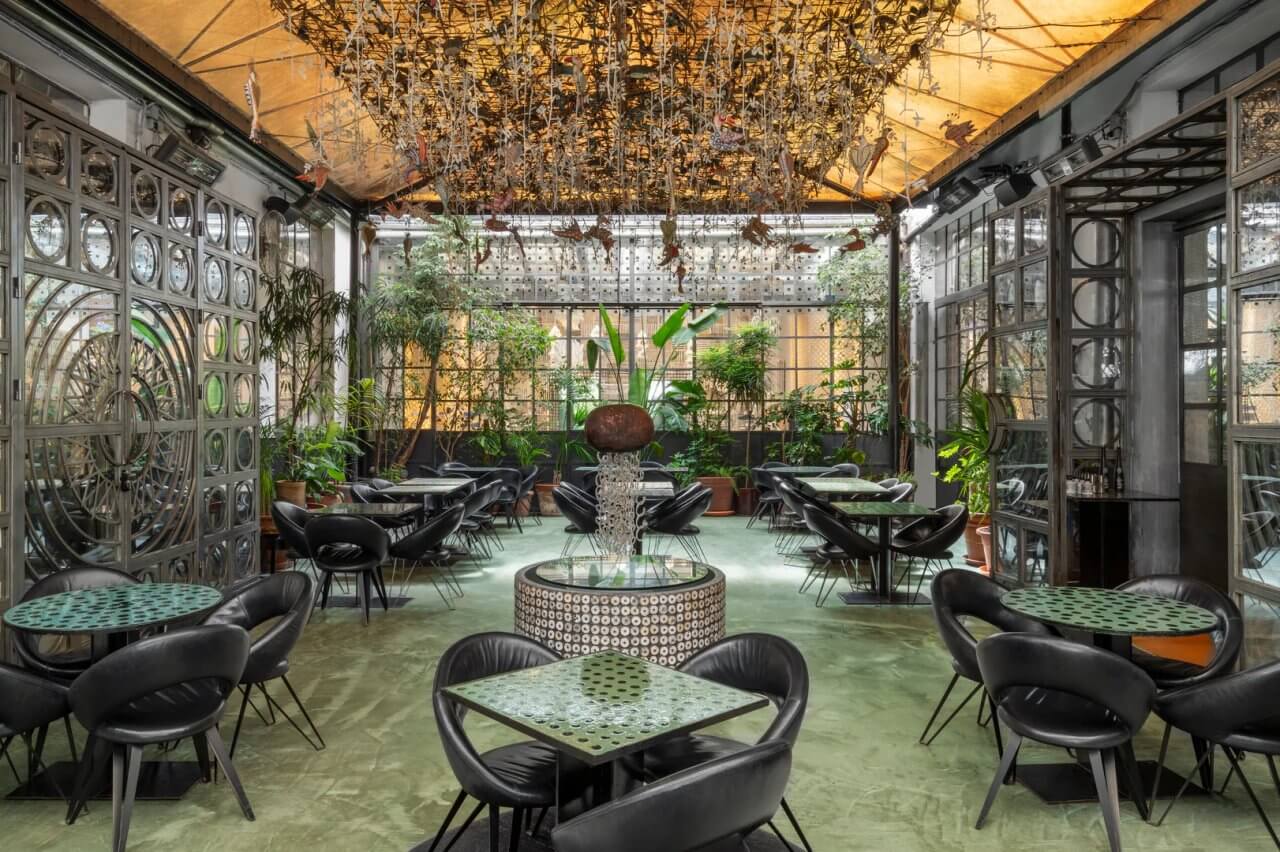
The 10 Corso Como complex (a gallery, bookshop, concept store, and courtyard café) charges for the gallery exhibitions but the courtyard and outdoor areas are free to enter and sit in.
The surrounding Via Corso Como area, between Porta Garibaldi and the Isola neighborhood, is worth exploring for street art, independent shops, and the transition between the commercial Garibaldi area and residential Isola.
Quadrilatero della Moda
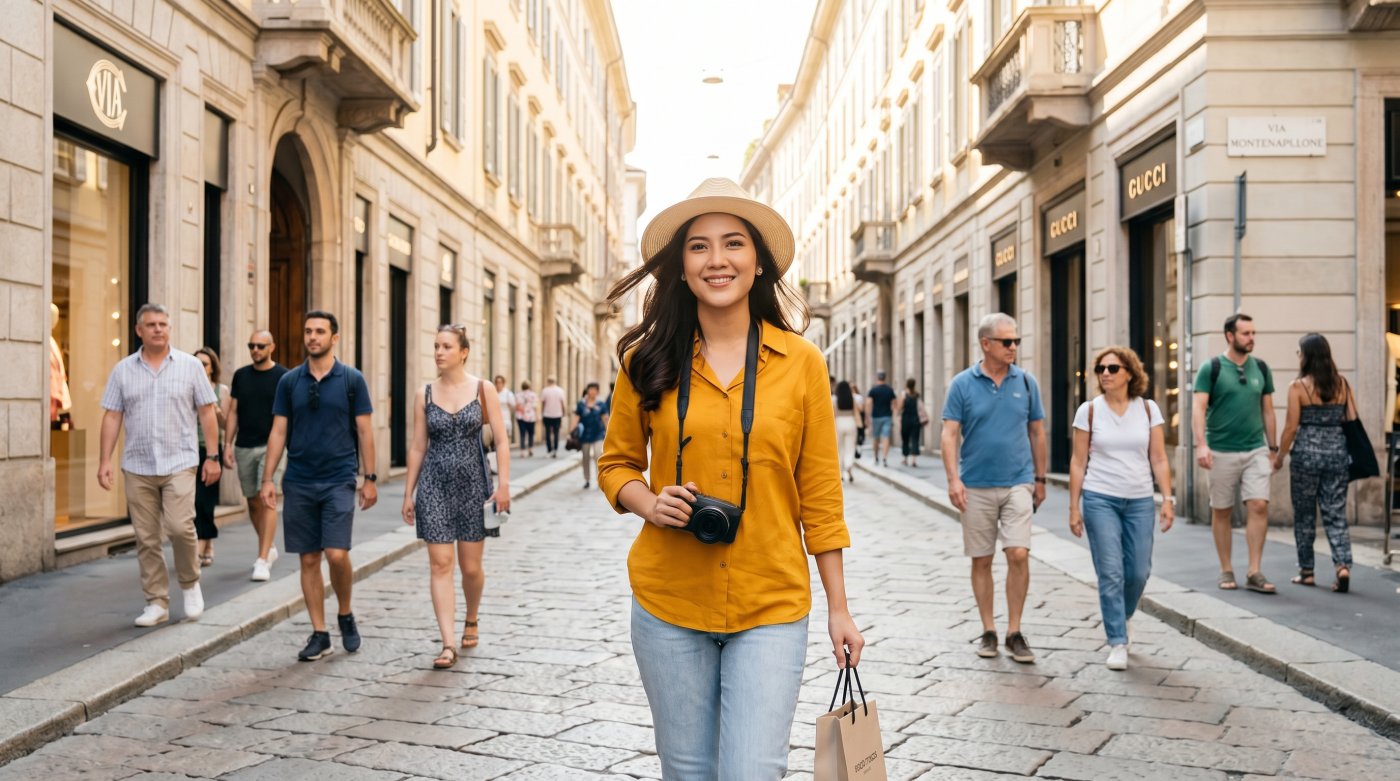
The fashion district — bounded by Via Montenapoleone, Via della Spiga, Via Sant’Andrea, and Via Borgospesso — is one of the world’s most expensive shopping streets to buy things and one of the cheapest to walk through.
Window-shopping the boutiques of Prada, Hermès, Versace, and Valentino is free, and the architecture of the district (19th-century palazzi converted into retail spaces) is genuinely interesting.
The street-level window displays are treated as seasonal art installations by the major houses.
Free Public Spaces, Architecture, and Gardens in Milan
Milan’s public architecture is, in many ways, its most accessible museum.
The streets, arcades, and squares are open continuously, and several of the city’s most impressive spaces happen to have no door to close and no ticket to sell.
Galleria Vittorio Emanuele II
Italy’s oldest active shopping mall, built 1865–1877, is technically a covered public arcade — you can walk through it at any time without entering any shop.
The main dome, 47 meters high, covers the central octagon where four arms of the galleria meet.
The floor mosaics in the central octagon represent the coats of arms of the four cities of the Kingdom of Italy: Turin (a rampant bull on blue — the one locals traditionally spin a heel on for luck), Florence (a lily), Rome (the she-wolf with Romulus and Remus), and Milan (a red cross on white).
The Turin bull mosaic was most recently restored in May 2026 after years of wear from the heel-spinning custom.
The galleria is free to pass through 24 hours a day.
Prices in the shops and cafés beneath the dome are not free — buying a coffee at the central bar here is a luxury experience that commands a corresponding price.
Simply walking through costs nothing.
Piazza Gae Aulenti and Porta Nuova
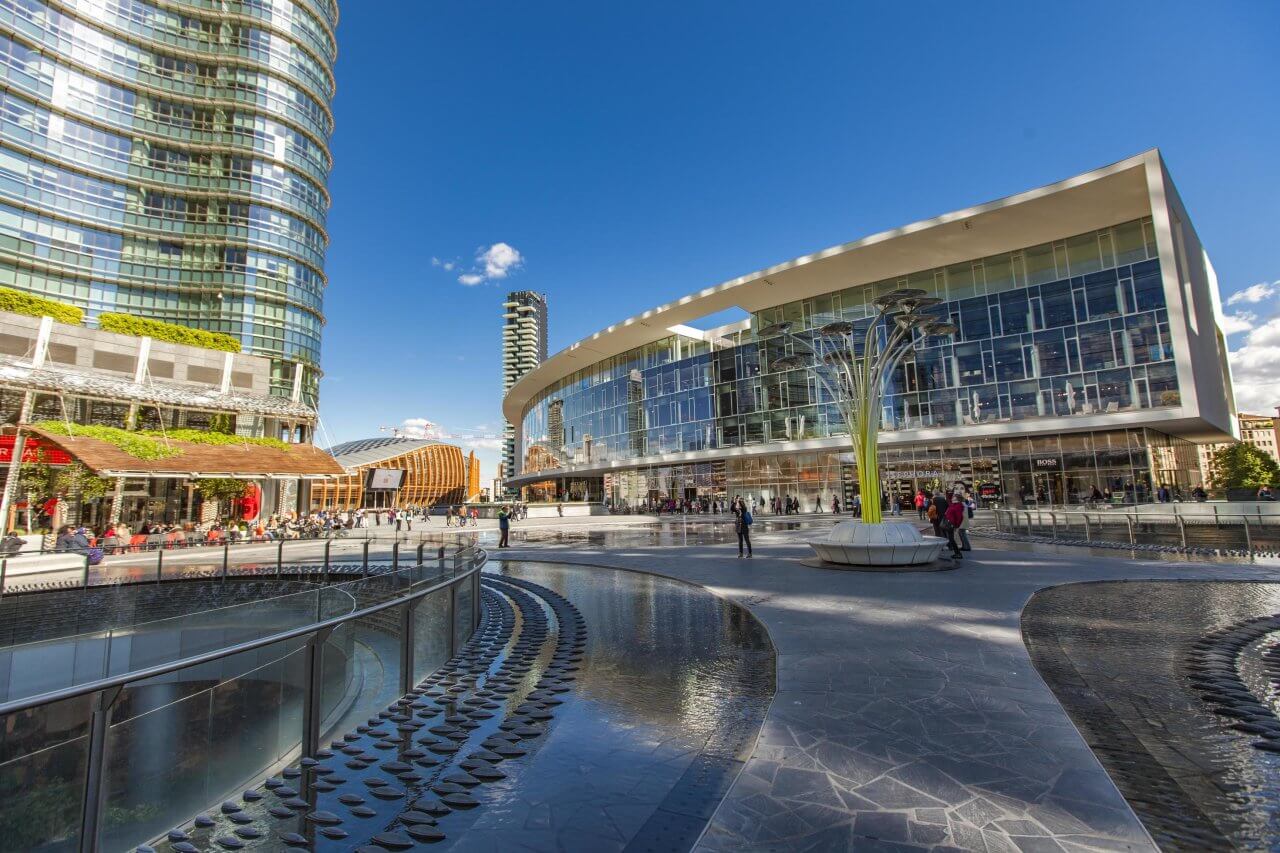
Piazza Gae Aulenti is the central square of the Porta Nuova development, the most significant modern architecture project in recent Milan history.
The circular raised piazza (100 meters in diameter) is surrounded by glass office towers, the UniCredit skyscraper, and views across to the Bosco Verticale.
It’s a genuinely interesting piece of urban design — the piazza floats above street level over an underground retail floor.
The whole Porta Nuova area, including Biblioteca degli Alberi (Library of Trees) park directly behind, is free public space.
On weekday mornings, it functions as a business district; on weekends, it fills with people using the park and piazza.
Bosco Verticale (Vertical Forest)
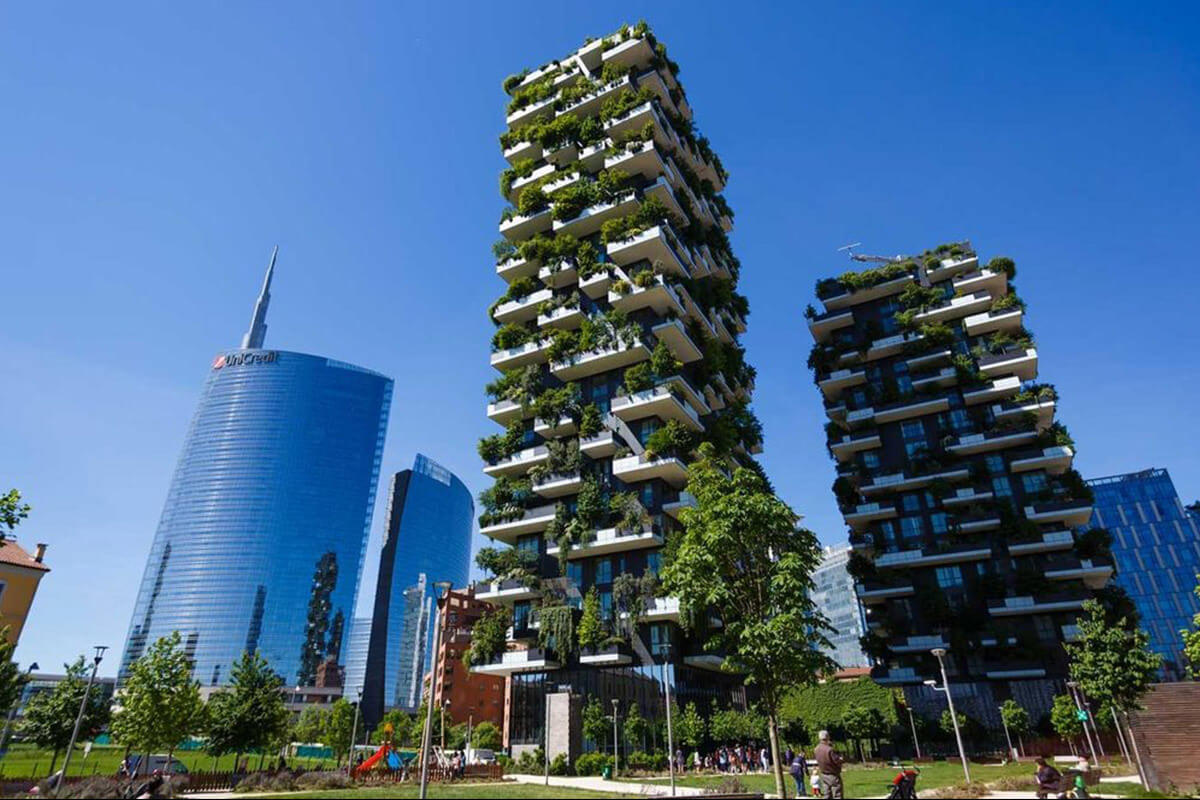
Stefano Boeri’s two residential towers — 80 and 112 meters, covered with over 20,000 plants including 900 trees — are best viewed from Viale Crespi or the surrounding Porta Nuova streets.
The towers are private residences, not accessible to the public, but the exterior is the spectacle.
They won the 2014 International Highrise Award and are among the most photographed buildings in Italy.
Biblioteca degli Alberi
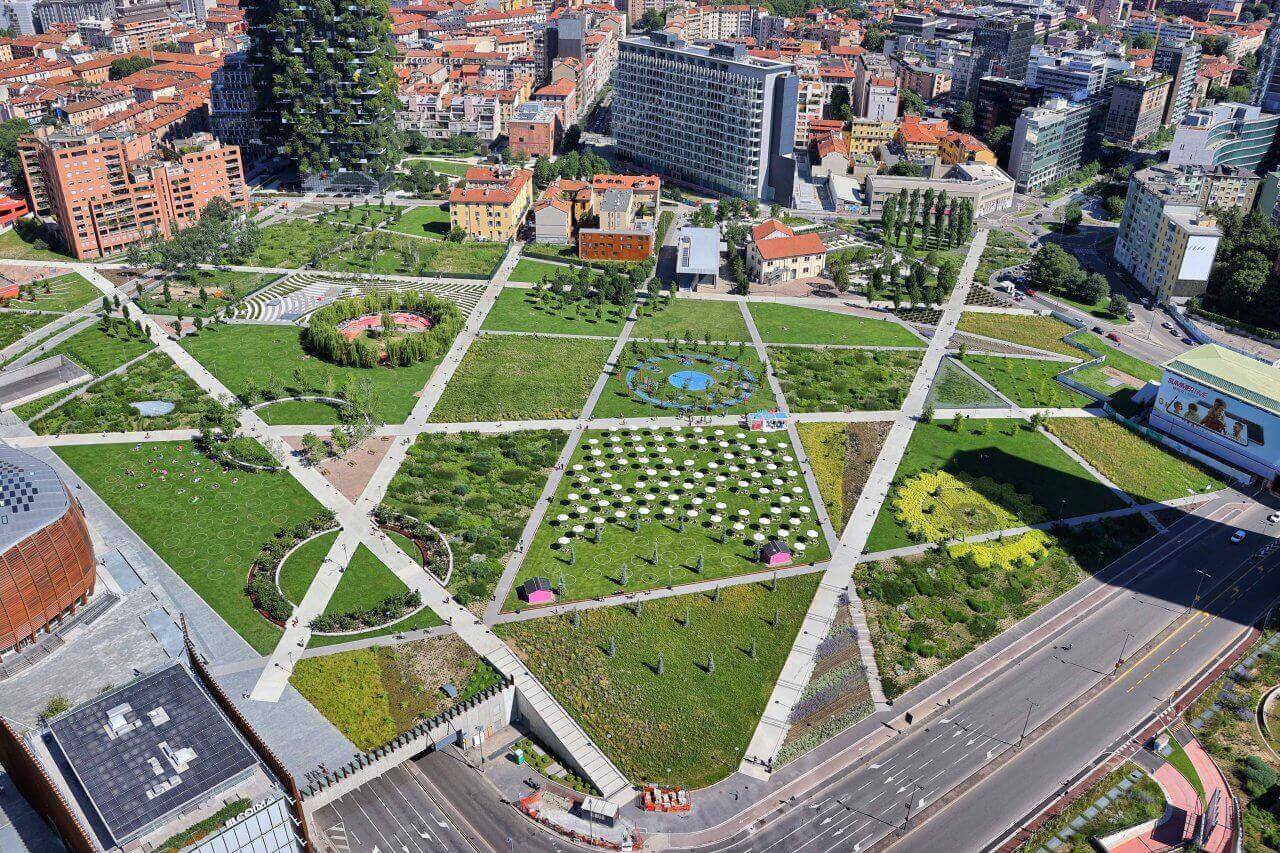
The Library of Trees park (BAM) between the Bosco Verticale and the Palazzo della Regione is one of Milan’s newer public parks — opened 2018, landscape-designed, and free to enter.
It hosts free public programming including outdoor yoga, film screenings, and community events, particularly in spring and summer.
The park’s planting scheme includes 135 species organized around a circular geometry visible from above.
Free Parks and Green Spaces in Milan
Milan’s parks are genuine breathing rooms — not manicured showpieces but lived-in green spaces where the city slows down.
Most are entirely free, and several are interesting enough architecturally or historically to deserve a visit in their own right.
Parco Sempione
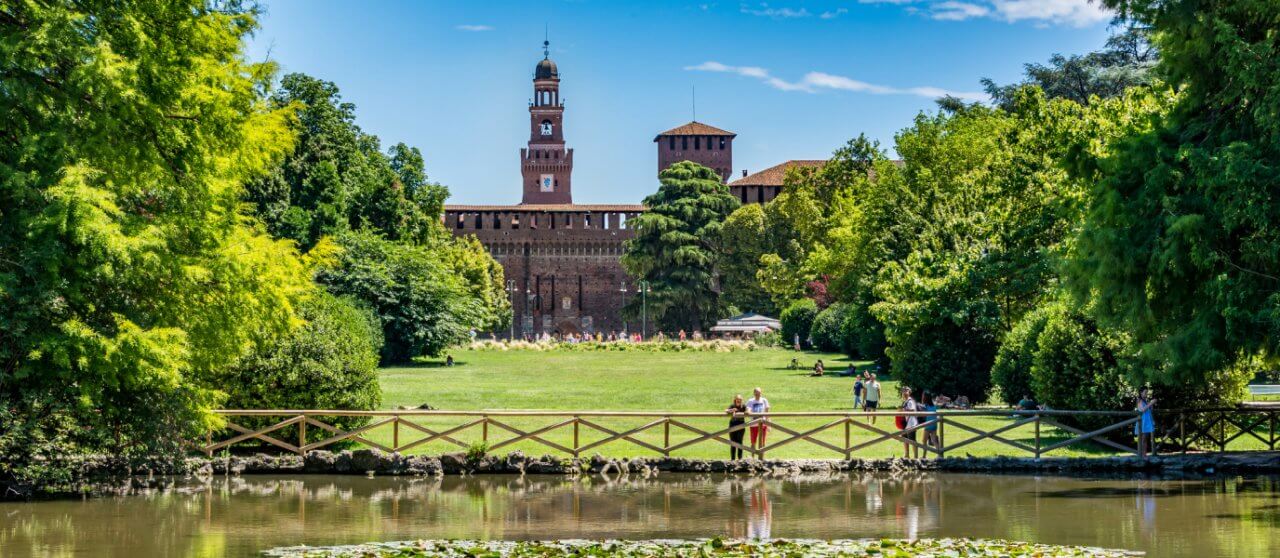
The 95-acre park adjoining Castello Sforzesco is Milan’s central green space.
Admission is always free.
The park has an ornamental lake, the Arena Civica (a 19th-century amphitheater still used for events), and the Torre Branca — a 108.6-meter steel viewing tower designed by Gio Ponti from which you can see the Alps on clear days.
The tower is not free: as of January 2026, admission is €9.00 per person (max 5 per elevator ride; each visit lasts around 6–7 minutes).
Free admission on Wednesdays applies only to school groups and retirees (over 65).
| Day | Opening Hours |
|---|---|
| Wednesday | 10:30 am – 12:30 pm and 3:00 pm – 7:00 pm |
| Friday | 10:30 am – 12:30 pm and 3:00 pm – 7:00 pm |
| Saturday | 10:30 am – 2:00 pm, 2:30 pm – 7:30 pm, 8:30 pm – midnight |
| Sunday | 10:30 am – 2:00 pm and 2:30 pm – 7:30 pm |
The tower is closed on Mondays, Tuesdays, and Thursdays, and whenever there is strong wind or heavy rain.
Call ahead at +39 02 3314120 to confirm on the day.
On spring and summer weekends, Parco Sempione fills with families, people playing on the lawns, and informal football games.
The Acquario Civico is located at the park’s southern edge.
The broader collection of free parks and green spaces across the city is covered in free parks and green spaces in Milan, including Giardini Pubblici Indro Montanelli, Giardini della Guastalla, and the newer parks in the Porta Nuova area.
When Are Best Free Events in Milan?
The richest periods for free cultural events are April (Fuorisalone during Design Week), July–August (Estate Sforzesca), and the first Sunday of each month (free museum days).
Beyond these anchors, free street events, markets, and gallery openings are spread throughout the year.
For a full seasonal breakdown of when events happen and how weather affects outdoor programming, best time for free Milan events covers the full calendar.
Fuorisalone — April Design Week
The Fuorisalone runs parallel to the Salone del Mobile (International Furniture Fair, held at Rho-Fiera in mid-April) but takes place throughout the city.
Hundreds of design brands, studios, and institutions open their spaces for installations, exhibitions, and events — most of which are free and open to the public without registration.
The Brera, Tortona, Isola, 5VIE, and Porta Venezia districts are the most concentrated zones.
Navigating Fuorisalone during Design Week requires stamina — there can be 200+ events running simultaneously across a 5-day period — but the best installations are among the most interesting temporary art and design experiences in Europe.
Signage and maps are widely available during the week.
The official Fuorisalone website (fuorisalone.it) serves as the primary event guide, searchable and filterable by district and day.
For 2026, Fuorisalone launched Fuorisalone Passport — a web app (browser-based, no download required) that lets you register once with a personal QR code and use it to access multiple participating Brera Design District events without filling out individual forms at each venue.
The platform was in beta for the 2026 edition, limited to Brera District events, and is expected to expand for 2027.
A dedicated native app is not currently available; the web app at fuorisalone.it is the official tool.
Free Museum Days and First Sundays
The first Sunday of every month, the Italian Ministry of Culture’s #DomenicalMuseo (Domenica al Museo) initiative makes state-owned museums free throughout the country.
This doesn’t apply to all Milan museums — many are municipally rather than state-owned — but the following institutions participate in 2026:
State museums (reservation required at brerabooking.org):
- Pinacoteca di Brera
- Palazzo Citterio
- The Last Supper Museum (Cenacolo Vinciano)
Civic/municipal museums (no reservation needed):
- Museo del Novecento
- Castello Sforzesco Museums
- Civic Archaeological Museum (Museo Archeologico)
- GAM — Gallery of Modern Art
- Museo Civico di Storia Naturale
- Acquario Civico
Other participating institutions:
- Armani Silos
- Fondazione Luigi Rovati
- Gallerie d’Italia
Additionally, some institutions offer free access outside of First Sundays:
- Palazzo Morando: permanent collection always free
- Casa Museo Boschi-Di Stefano: always free (Tuesday–Sunday)
- Pirelli HangarBicocca: always free (Thursday–Sunday)
- Museo Civico di Storia Naturale and Acquario Civico: also free on the 1st and 3rd Tuesday of each month from 2:00 pm
For the full picture of museum admission costs and which days offer free entry, free museum days in Milan has the current schedule for all major institutions.
Estate Sforzesca and Summer Outdoor Events
Estate Sforzesca (Estate al Castello) is Milan’s annual summer cultural festival running from June through September 2026 in the grounds and courtyards of Castello Sforzesco.
The program includes outdoor cinema (cinema sotto le stelle), theatre productions, live music and jazz concerts, dance performances, and family-friendly activities — all set against the castle’s Renaissance architecture.
Most events are free or low-cost, though individual ticketed performances (theatre, concerts) carry a charge; check the official program at the Comune di Milano’s website (comune.milano.it) for specific event pricing, as the lineup changes each season.
The Brera summer open-air cinema (usually in the Botanical Garden courtyard) and the Navigli outdoor markets also provide free programming throughout summer.
Practical Tips for a Free Day in Milan
Planning a genuinely free day in Milan is less about hunting for loopholes and more about knowing where the city has simply decided not to charge admission.
The free experiences here are not consolation prizes — they’re the ones locals actually use.
Building a Free Itinerary
A practical full-day free route from the center:
- Morning: Duomo exterior and interior (free for prayer access; tourist visit €10) → Galleria Vittorio Emanuele II (10 min) → Piazza della Scala and La Scala exterior (5 min walk)
- Mid-morning: Walk north through Brera (20 min) → Botanical Garden → Brera streets and art galleries
- Lunch: Aperitivo bar near Navigli (the food component of aperitivo is effectively free with a drink purchase — €8–12 for a drink buys access to a spread of food that constitutes a full meal)
- Afternoon: San Lorenzo Columns → Basilica di San Lorenzo interior → walk to Naviglio Grande (20 min)
- Late afternoon/evening: Canal walk along Naviglio Grande → evening aperitivo
Aperitivo Culture
Milan’s aperitivo tradition — drinks served with free food roughly from 5:00–9:00 pm — is one of the best budget strategies in the city.
Many bars in the Navigli, Isola, and Porta Ticinese areas serve generous buffets of food alongside each drink purchase.
Prices vary by neighborhood: €8–12 in the Navigli and Isola areas for a solid drink-plus-buffet; €10–15 in Brera and Corso Como where you’re partly paying for atmosphere; €15–20 in Porta Nuova and the more design-forward bars.
The food component is not charged separately.
In practical terms: a €10 aperitivo at a good Naviglio bar gets you a drink and access to pasta, rice dishes, antipasti, and sometimes pizza — what Milanese increasingly call apericena (aperitivo + cena, i.e. dinner).
Two people spending €20 total on drinks eat a reasonable dinner.
Getting Around Milan for Free or Cheaply
Walking handles most of central Milan’s sightseeing without any transport cost.
For journeys beyond walking distance, getting around Milan cheaply covers the most economical transit options, including when a daily pass makes more sense than individual tickets.
For exploring on foot by neighborhood — which areas reward walking and which are better skipped — best neighborhoods to explore on foot in Milan has a district-by-district breakdown with walking route suggestions.
If you want to build a custom free-day itinerary that accounts for opening hours, distances, and seasonal event calendars, the AI Itinerary Planner can generate a route-optimized plan based on your specific interests.
Frequently Asked Questions (FAQs)
The exterior and piazza are always free.
For the interior, all tourist visits require a paid ticket — as of 2026, the standard single ticket for the Duomo and Duomo Museum is €10.00 full price / €8.00 on Wednesdays (when the museum is closed).
The only genuinely free interior access is reserved for prayer and liturgical participation: worshippers may enter daily from 7:00–8:30 am via the cathedral’s side doors, and from 8:00 am – 7:00 pm via the northernmost main door (Galleria Vittorio Emanuele II side).
This prayer entrance gives access to a reserved worship area — not free rein to walk through the full tourist circuit.
The rooftop, the crypt, the museum, and the archaeological area are all paid separately or as part of combined ticket packages starting from €20.00.
For a free visit, the exterior alone provides most of the visual experience — the statuary and façade detail visible from ground level is extraordinary.
Palazzo Morando (permanent collection), Casa Museo Boschi-Di Stefano, and Pirelli HangarBicocca are all confirmed free in 2026 — no tickets, no first-Sunday conditions, no gimmicks.
The first two are civic museums managed by the Comune di Milano; HangarBicocca is a private foundation that has maintained a free-admission policy since its founding.
Several others offer free entry on the first Sunday of the month.
The Castello Sforzesco courtyard is free; its internal museums are paid.
No. Leonardo da Vinci’s Last Supper (housed in the refectory of Santa Maria delle Grazie) requires a timed entry ticket booked well in advance.
Tickets are released quarterly — every March, June, September, and December — for the following three-month period, typically going on sale on a Tuesday or Wednesday at noon Milan time via the official site (cenacolovinciano.org).
During peak season (April–August), slots sell out within hours or days of going on sale, so booking 2–3 months ahead is strongly advisable; some popular dates go in minutes.
Current ticket pricing is €15.00 full price / €2.00 for EU citizens aged 18–25 / free for under 18s (reservation fee applies in all cases).
The church adjacent is free to enter; the refectory is not.

A lifestyle and OOTD blogger, Kannaya Nareswari enjoys the small pleasures of cooking, traveling, and documenting ordinary events. She uses genuine storytelling to communicate her love of fashion, culinary explorations, and wanderlust. She is based between Bali and Bandung. She enjoys enjoying coffee at a secret café or experimenting with recipes in the kitchen when she's not traveling to new places or styling her most recent ensemble.