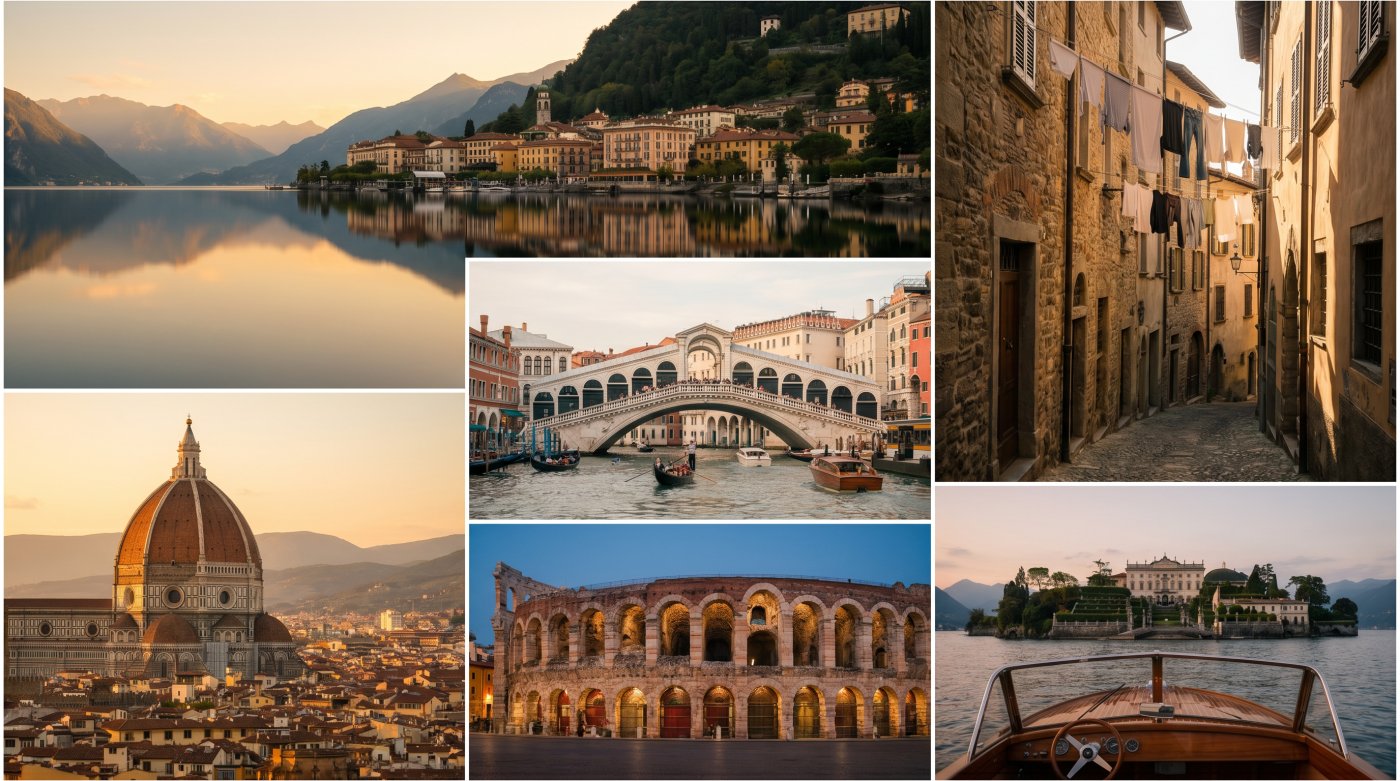



Best Day Trips From Milan: Lakes, Cities, and Wine Country – Milan’s position in northern Italy makes it an unusually good base for day trips.
Within two hours by train you can reach Lake Como, Venice, Verona, Florence, Bergamo, Lake Maggiore, and the Swiss border.
Within 30–90 minutes by regional train, Pavia, Franciacorta, Mantua, and Cremona are all accessible without heavy logistics.
This guide covers each destination with actual journey times, what to see, and honest assessments of what works as a day trip versus what deserves an overnight stay.
For what to do in Milan itself before or after your day trips, best things to do in Milan has the full guide.
Key Highlights
- Lake Como and Bergamo are the two best half-day or full-day trips — close, well-connected, and high-reward
- Venice, Florence, and Verona are feasible day trips but are better enjoyed as overnight stays if your schedule allows
- Franciacorta wine region and Pavia are underrated day trips — less crowded, shorter journey, and genuinely interesting
- High-speed trains cover Venice and Florence in under 3 hours; all destinations listed are accessible without a car
- Book Florence and Venice trains at least 1–2 weeks in advance in peak season for the best fares
What Are the Best Day Trips from Milan?
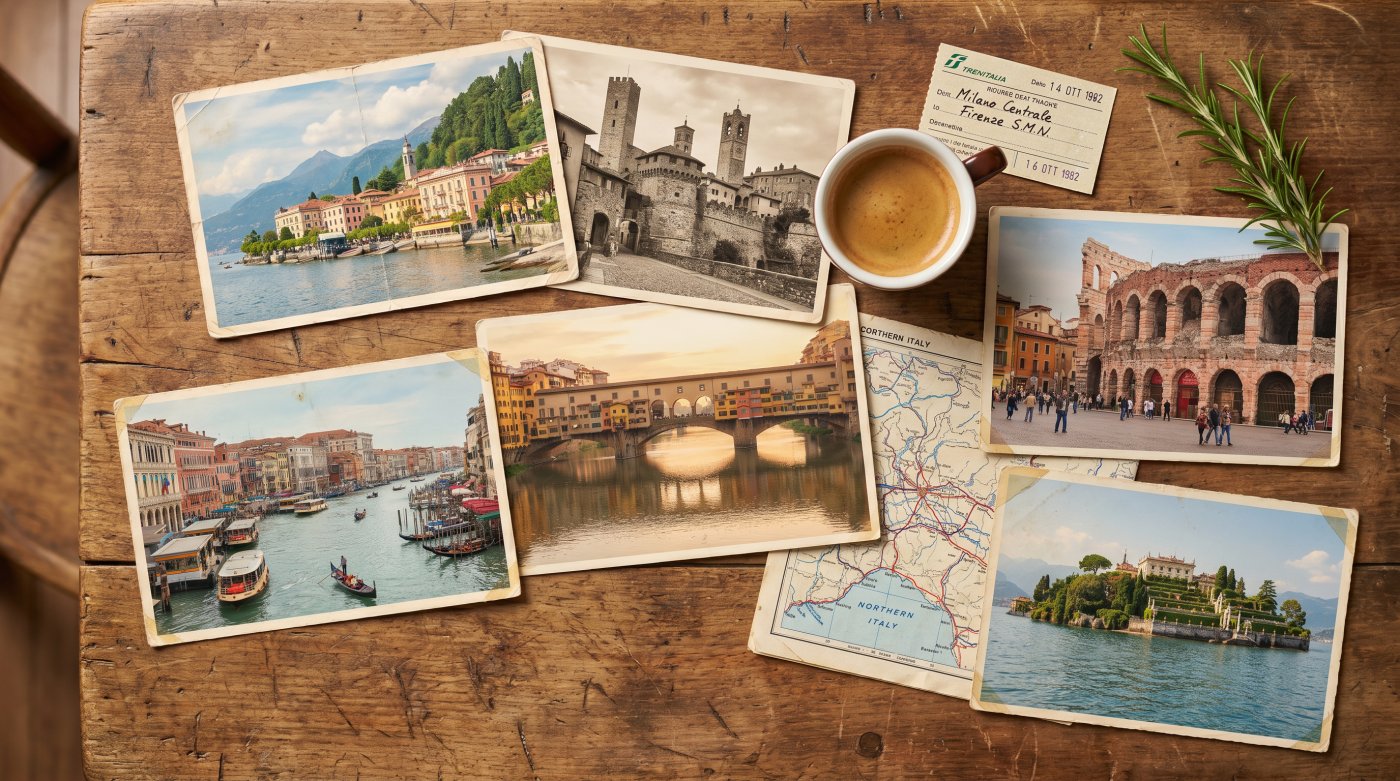
The best day trips from Milan for most visitors are Lake Como (around 40 min by direct train) and Bergamo (around 48–50 min by direct train).
Both offer high visual reward, manageable journey times, and enough to fill a full day without rushing.
Venice and Florence are possible in a day but genuinely long ones — 5+ hours of train travel combined.
For a practical comparison:
| Destination | Train Time | Best For | Day Trip Viability |
|---|---|---|---|
| Bergamo | ~48–50 min (direct, ~hourly) | Medieval city, easy walking | Excellent half or full day |
| Lake Como (Como S. Giovanni) | ~40 min (direct, ~17 trains/day) | Lakeside scenery, villas | Excellent full day |
| Verona | ~1 hr 13 min–1 hr 29 min (direct, ~21 trains/day) | Roman arena, architecture | Good; more relaxed than Venice |
| Lake Maggiore (Stresa) | ~1 hr–1 hr 11 min (direct, every ~2 hrs) | Islands, gardens, scenery | Very good full day |
| Venice | ~2 hr 24–27 min (direct, ~19–25 trains/day) | Canals, art, gondolas | Possible but tiring |
| Florence | ~1 hr 43–54 min (high-speed, ~44 trains/day) | Renaissance art, walking | Possible but long |
| Bologna | ~1 hr 4–12 min (direct, ~45 trains/day) | Food, medieval architecture | Excellent day trip |
| Pavia | ~32 min (direct, ~26 trains/day) | Certosa monastery, quiet | Excellent half day |
| Franciacorta | (1 hr total) | Wine tasting, vineyard visits | Good half or full day |
| Mantua | ~2 hrs (direct Trenord, ~10 trains/day) | Renaissance palaces, UNESCO | Very good full day |
| Cremona | ~55 min–1 hr 8 min (direct, ~24 trains/day) | Violin making heritage, quiet | Relaxed half day |
| Lake Lugano (Switzerland) | ~75 min (direct, ~16 trains/day) | Cross-border, Swiss-Italian | Good full day |
How Do I Get to Day Trip Destinations from Milan?
All destinations in this guide are accessible by train from Milano Centrale station, no car required.
High-speed trains (Frecciarossa, Italo) cover Venice, Florence, and Bologna.
Regional trains (Trenitalia Regionale, Trenord) cover Lake Como, Bergamo, Lake Maggiore, Pavia, Mantua, Cremona, and Franciacorta.
Booking and Ticketing
- High-speed trains (Venice, Florence, Bologna): Book in advance through Trenitalia or Italo — fares use airline-style dynamic pricing and increase significantly closer to departure. The day-of Base fare for Milan-Florence runs around €55, while advance Super-Economy fares start from around €19.90; Milan-Venice Base fare runs around €99 day-of versus Super-Economy advance fares from around €29.90. Booking even a few weeks out can cut your cost by 40–60% or more.
- Regional trains (Lake Como, Bergamo, Pavia, and other Trenord destinations): Tickets are fixed-price and can be bought on the day — there is zero cost advantage to booking ahead. You can buy through the Trenord app (available on iOS and Android), the Trenitalia app (which also sells Trenord tickets), at self-service machines at Centrale, or at ticket office windows.
- Milano Centrale platform navigation: The station has 24 platforms. High-speed trains depart from the upper levels; regional trains from a mix of upper and lower levels. Allow 15 minutes from your arrival at the station to boarding.
For transport planning across multiple days and trips, getting to day trip destinations from Milan has the full guide including metro connections from your accommodation to the station.
Day Trip Timing Advice
Most day trips work best leaving Milan between 8–9 AM and returning between 6–8 PM.
For Venice and Florence, the earliest possible departure (usually 7:00–7:30 AM) maximizes time at the destination.
For nearby destinations like Bergamo and Pavia, flexibility is greater.
Lake Como: The Classic Day Trip
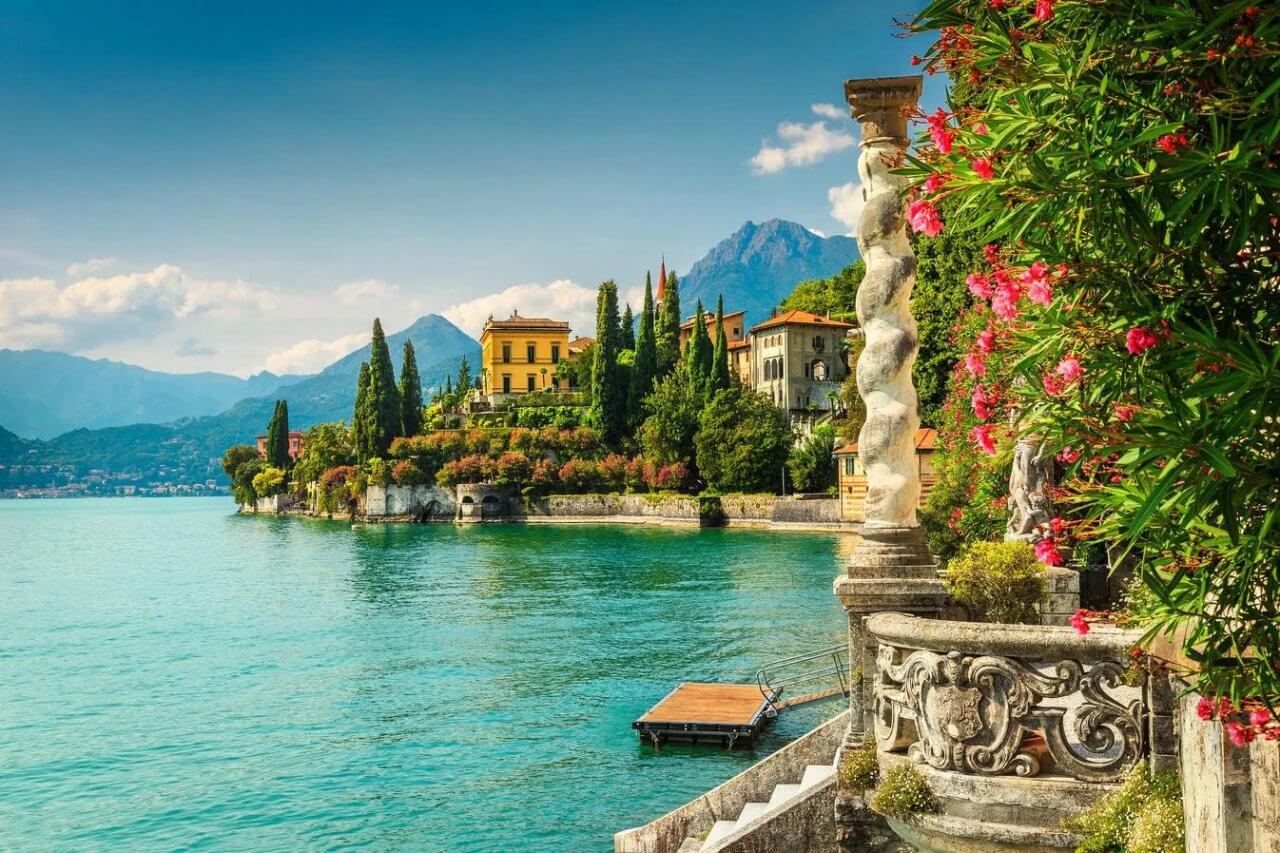
Lake Como is the most frequently recommended day trip from Milan, and for good reason: it’s close, visually spectacular, and has enough variety within the lake to fill a full day.
Getting There
- Train from Milano Centrale to Como San Giovanni: approximately 40 minutes (direct, no changes required)
- Trenord regional trains run approximately every hour, with about 17 daily departures (first at 06:43, last at 21:43)
- Ticket cost: from €5.20 for a second-class single ticket; fixed fare, no advance booking needed

There are two Como stations: Como San Giovanni (closer to the center) and Como Lago (lakefront, less frequent service).
Como San Giovanni is the more practical arrival point.
For Bellagio and Varenna — the most picturesque villages on the lake — you’ll need to continue by ferry from Como town.
Ferries are operated by Navigazione Laghi from the Como lakefront.
The regular stopping service to Bellagio takes approximately 2 to 2.5 hours; the fast hydrofoil (servizio rapido) takes about 45 minutes.
In high season (early June to early November), regular ferries depart roughly every hour.
Tickets are priced by distance; a one-way fare from Como to Bellagio runs approximately €8–10.
A Centro Lago day pass covering unlimited mid-lake travel costs €15 and can only be purchased at dock ticket offices (not online).
What to Do in Como and Around the Lake
- Como town (about 20 minutes’ walk from San Giovanni station) has the Como Cathedral (Duomo di Como), a Gothic–Renaissance building begun in the 14th century and completed in the 18th, with an exceptionally carved facade. The lakefront promenade is worth an hour; the small Tempio Voltiano museum — dedicated to Alessandro Volta, inventor of the battery and Como’s most famous native — is interesting and uncrowded. It is open Tuesday to Sunday, 10:00–18:00 (extended to 19:00 in July and August), closed Mondays. Admission: €6 adults, €4 reduced (under 12 free); no advance booking needed.
- Bellagio — the most photographed village on the lake — sits on the promontory where the two southern arms of the lake meet. The narrow stepped streets (salite) are genuinely attractive; the gardens of Villa Melzi and Villa Serbelloni are accessible for a fee. Villa Melzi gardens are open daily from late March to end of October, 10:00–19:00 (last entry 18:30); admission is €10 per person (groups of 15+ pay €8).
- Varenna is slightly less visited than Bellagio, with colorful lakefront houses and the monastery gardens of Villa Monastero (open daily in summer 09:30–20:00; garden-only or combined tickets with Villa Cipressi available, combined ticket €15 adults) and Villa Cipressi. The pedestrian lakefront walkway (passeggiata) is free and among the most scenic in the lake district.
- Villa del Balbianello (Lenno/Tremezzina, accessible by water taxi or a 25-minute walk from Lenno ferry port) was used as a filming location for Casino Royale and Star Wars: Episode II. The terraced gardens and loggia overlooking the lake are its main appeal. Open Tuesday and Thursday–Sunday, 10:00–18:00; closed Mondays and Wednesdays. Gardens-only admission: €15 adults, €11 children (6–18); garden + guided villa interior tour: €24 full price (tours last ~45 minutes and sell out quickly — book at least a month ahead via fondoambiente.it). A private water taxi (taxi boat) from Lenno runs €6 one-way, €9 return, first-come first-served, departing every 20–30 minutes from 10:00.

Bergamo: An Underrated City Close to Milan
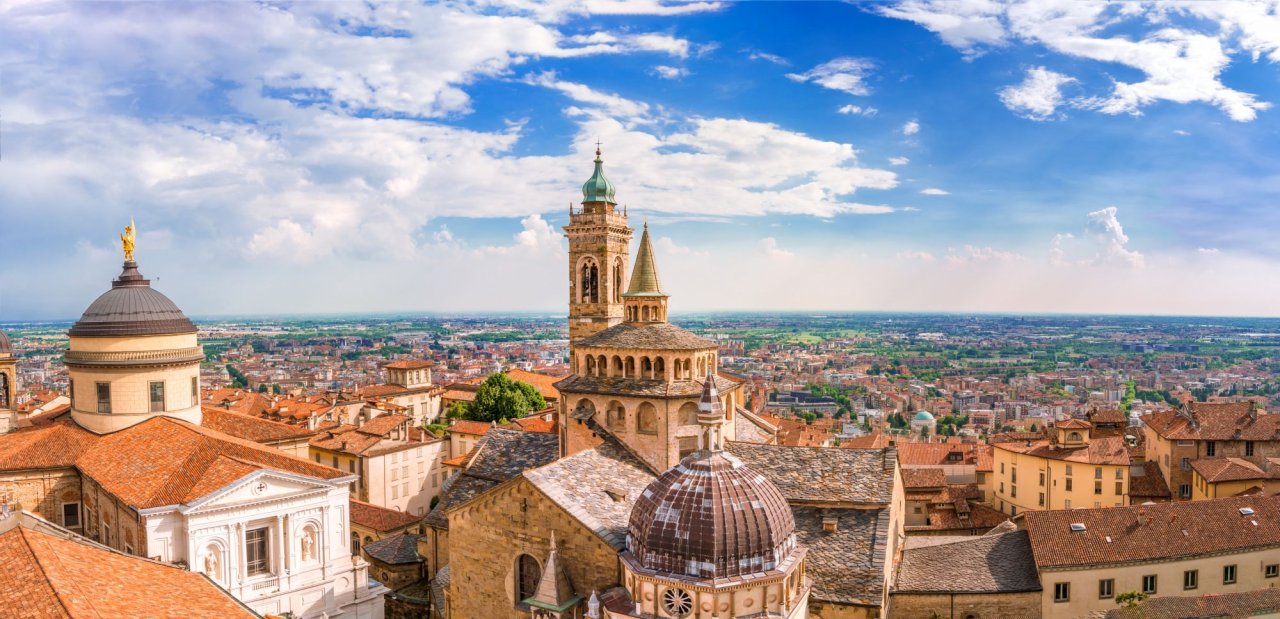
Bergamo is the most underrated day trip from Milan.
The Città Alta (Upper City) — a walled hilltop medieval town connected to the modern Lower City by funicular — is one of the best-preserved medieval centers in northern Italy and far less crowded than comparable Tuscan destinations.
Getting There
- Train from Milano Centrale to Bergamo: approximately 48–50 minutes (direct, no changes)
- Trenord regional trains run approximately every hour, with about 15 daily departures (first at 05:35, last at 23:40)
- Ticket: €6.00 fixed fare (second class); no advance booking needed, buy at station machines or via the Trenord app
From Bergamo train station, take bus no. 1 or 1A (marked Città Alta) to the lower funicular station — the bus stop is directly outside the station exit.
The bus and funicular together take about 20 minutes.
What to Do in Bergamo
The funicular connecting the lower and upper city is operated by ATB Bergamo and runs every 7 minutes from 7:00 to 01:20.
It is covered by a standard ATB single-zone ticket (€1.70, valid 75 minutes) — the same ticket used for the bus from the train station, so one ticket covers both the bus ride and the funicular if used within 75 minutes.
A return-only funicular ticket costs €3.40.
The ascent covers 240 meters in about 2 minutes and arrives at Piazza Mercato delle Scarpe, at the entrance to the medieval center.
The Piazza Vecchia is the main square of Città Alta — flanked by the Palazzo della Ragione (12th century) and the Torre del Campanone (tower, climbable for views).
The tower is open Tuesday to Friday, 10:00–18:00; Saturday and Sunday, 10:00–19:00; closed Mondays.
Admission (includes Palazzo del Podestà): €5 full price, €3 reduced.
The tower rings its famous hundred chimes every night at 10 pm, a tradition dating to the Venetian era.
The adjoining Piazza del Duomo has the Cappella Colleoni, with its multicolored marble facade, and the Romanesque Basilica di Santa Maria Maggiore — both free to enter.
The Venetian walls (Mura Veneziane, UNESCO World Heritage Site) are free to walk.
A circuit of the walls takes about 45–60 minutes and provides good views across the Po Valley toward Milan.
Bergamo is also known for polenta e osei (a local sweet pastry shaped to resemble birds, a specialty found in bakeries throughout the city) and for its brightly flavored local bergamot products.
Time needed: Città Alta can be covered in 3–4 hours; a full day allows time for the Città Bassa (lower city) neighborhoods and the Accademia Carrara art gallery — one of northern Italy’s finest picture galleries, housing works by Raphael, Botticelli, and Mantegna.
It is open Monday, Wednesday, Thursday 10:00–19:00; Friday–Sunday and public holidays 10:00–20:00; Tuesday 10:00–13:00 only (special night openings until 23:00 on the 2nd and 4th Friday of the month).
Admission: €15 full price (permanent collection + temporary exhibitions); €10 permanent collection only; reduced rates available.
Is Venice Worth a Day Trip from Milan?
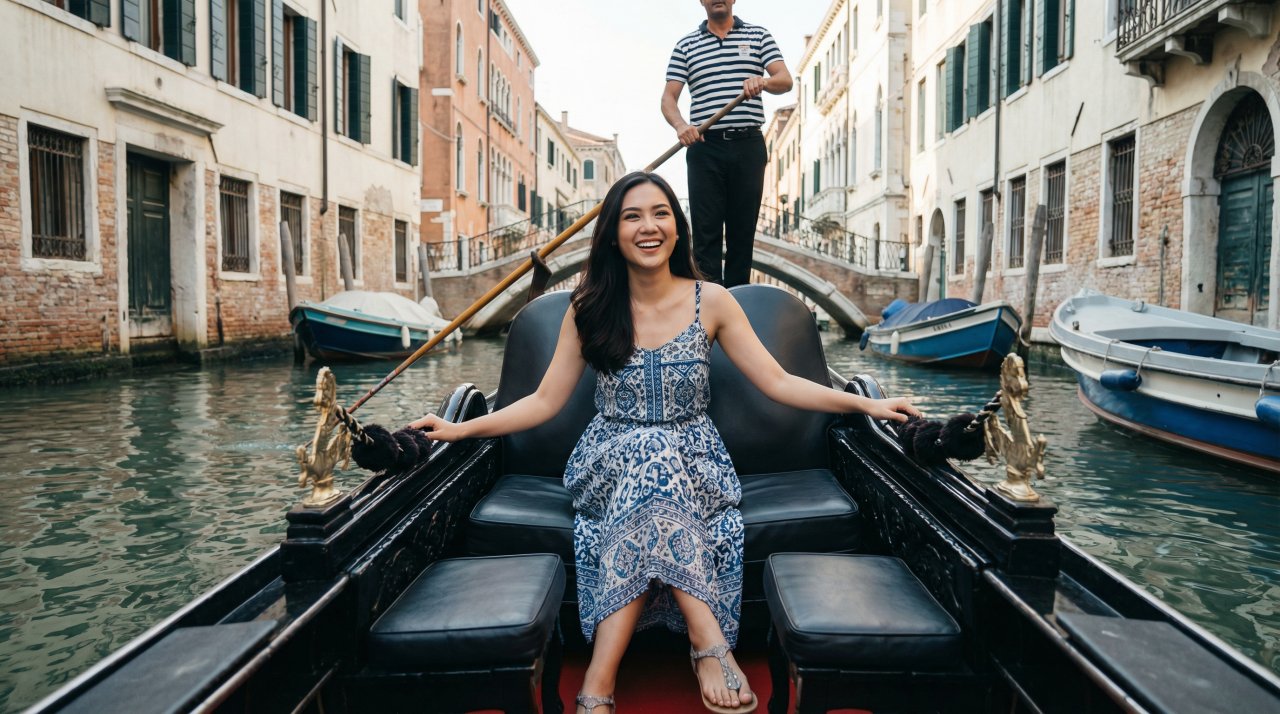
Venice is possible as a day trip from Milan, but the journey is long relative to the time at the destination, and Venice rewards slower exploration. If your itinerary only allows one day, it’s worth doing.
If you can extend to a one-night stay, the difference in experience quality is significant.
Journey and Logistics
- High-speed train (Frecciarossa or Italo): as fast as 2 hours 15 minutes (Italo); typically 2 hours 20–30 minutes (Frecciarossa); around 36 trains per day, roughly every 20 minutes from Milano Centrale
- Fares: advance Super-Economy tickets start from around €14.90 (Italo) or €19.90 (Trenitalia); day-of Base fares run €55–99 depending on service and time — book at least 2–4 weeks ahead for significant savings
A realistic day trip: depart 7:00–7:30 AM, arrive Venice ~9:15–10:00 AM; depart Venice 5:00–6:00 PM, arrive Milan ~7:30–8:00 PM.
That’s approximately 7–8 hours in Venice.

What to Prioritize for One Day
Seven hours is enough to cover the core experience but not leisurely:
- St. Mark’s Square (Piazza San Marco) and St. Mark’s Basilica: The exterior is free to view at any time. Entering the basilica itself requires an online booking (around €10 for timed entry); the Pala d’Oro (the golden Byzantine altarpiece) costs an additional €5 if purchased onsite, or you can buy a combo ticket for basilica + Pala d’Oro online for €20. Walk-in tickets, if available, cost around €3 for the basilica and €5 extra for the Pala d’Oro — but queues can be 45–90 minutes in peak season. Book timed entry online at least several days in advance.
- Doge’s Palace (Palazzo Ducale): Official adult admission is around €30, which also includes the Correr Museum, the National Archaeological Museum, and the Monumental Rooms of the Marciana Library. Open April–October 09:00–19:00 (last entry 18:00); November–March 09:00–18:00 (last entry 17:00). Book online in advance — peak-season slots sell out. The Bridge of Sighs is visible from the bridge on Riva degli Schiavoni, free of charge.
- A gondola ride: The 2026 official rate is €90 total (not per person) for up to 5 passengers for 30 minutes, between 8:00 AM and 7:00 PM; the rate rises to €110 after 7:00 PM. A 45-minute ride costs €135 (day) or €165 (evening). Gondoliers are not permitted to charge more than the official tariff, though they may try to add on extras.
- Walk from San Marco through the Rialto neighborhood to the Rialto Bridge and market area
- Cicchetti (Venetian tapas) at a bacaro (wine bar) — the Rialto market area has the best concentration
Book the Doge’s Palace and St. Mark’s Basilica online in advance to avoid queues.
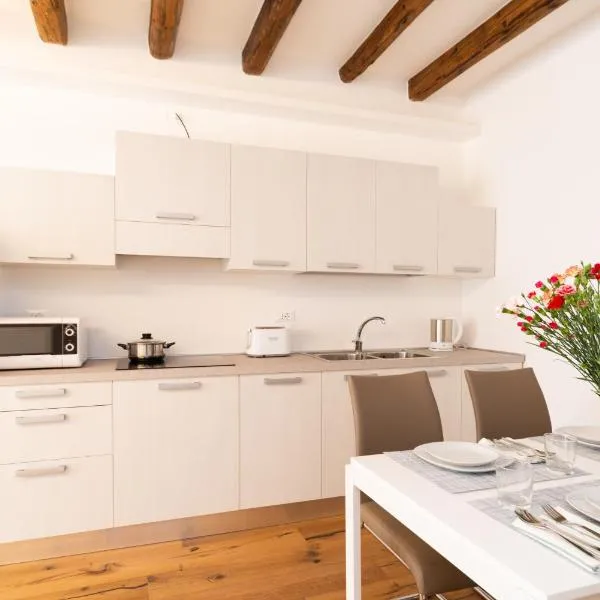
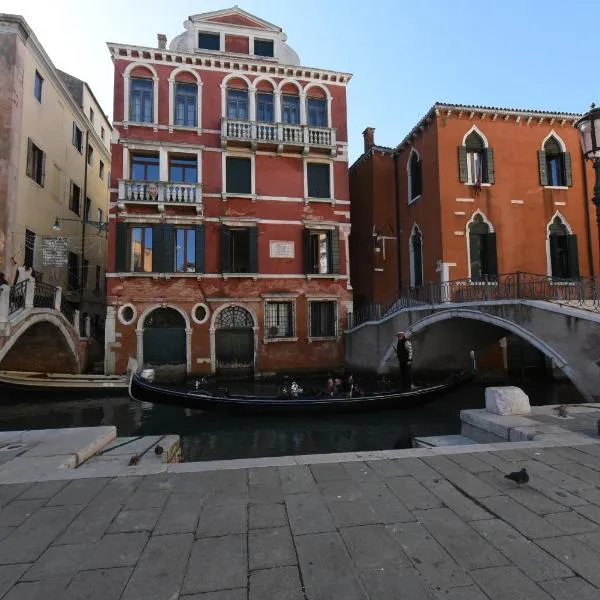
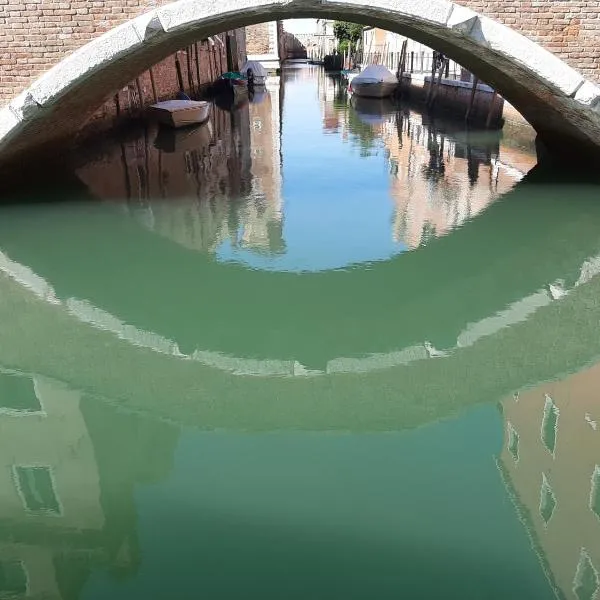
- Best Things To Do In Venice: Complete 2026 Travel Guide
- Best Time to Visit Venice, Italy: Complete 2026 Weather Guide
- Best Free Things to Do in Venice, Italy: Complete 2026 Guide
- Where to Stay in Venice: Complete Neighborhood Guide 2026
- Best Day Trips From Venice, Italy: Complete 2026 Guide to Nearby Destinations
- Travel to Venice on a Budget: Complete 2026 Money-Saving Guide
- Best Things To Do In Venice With Kids and Family: Complete 2026 Guide
- Getting Around Venice, Italy: How to Travel Around in Venice
- Things to Know Before Traveling to Venice, Italy: Complete 2026 Guide
Verona: Romance and the Roman Arena
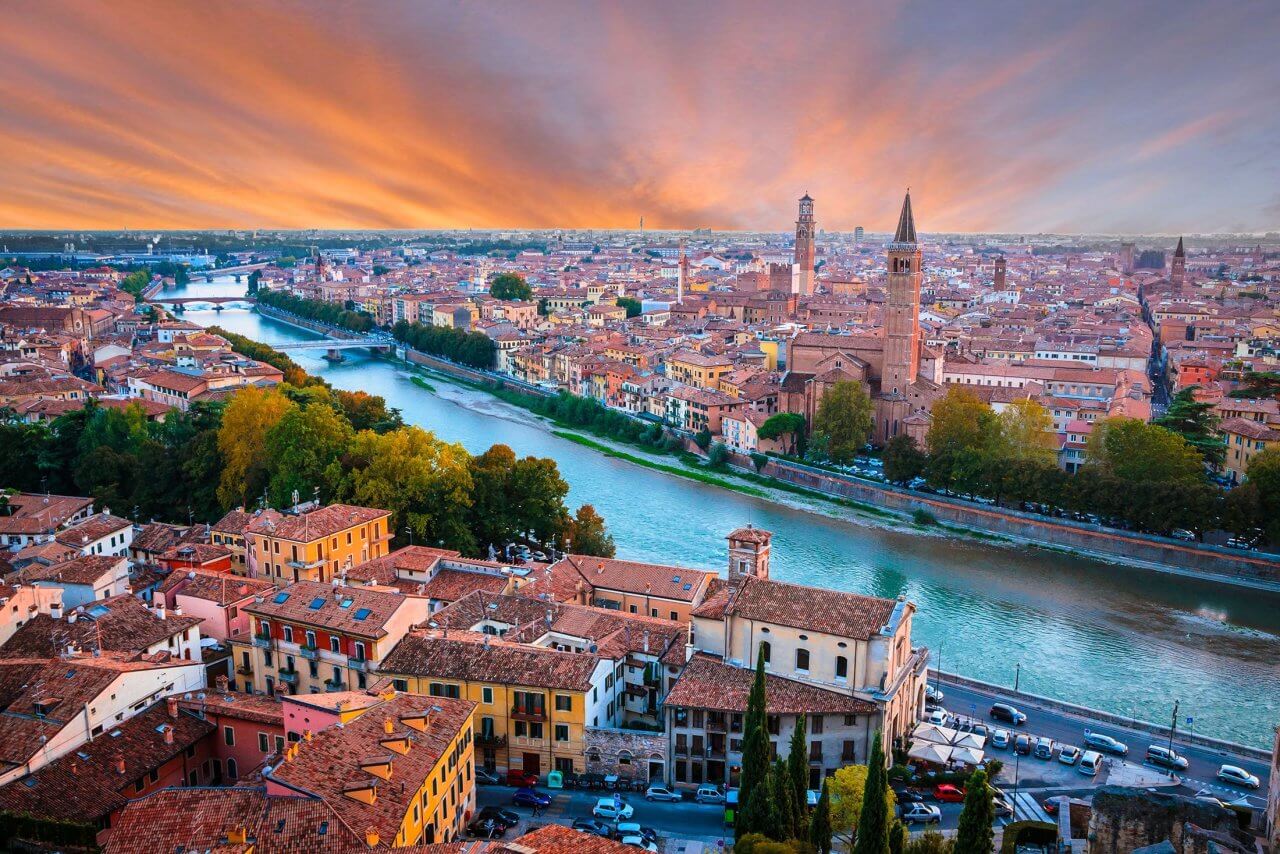
Verona is a manageable and relaxed day trip — close enough that even a half-day works, interesting enough that a full day is well spent.
Getting There From Milan
- High-speed train from Milano Centrale: as fast as 1 hour 10 minutes (Frecciarossa or Italo); average journey 1 hour 19–26 minutes; around 31 direct trains per day, running roughly every 30 minutes
- Fares: advance Super-Economy tickets from around €8.90 (Italo); day-of Base fares typically €35–55; no price advantage to booking regional trains on this route as high-speed is the standard option

Verona’s main attractions are within 15–20 minutes’ walk of the train station (Verona Porta Nuova).
What to Do in Verona
- The Arena di Verona is a 1st-century Roman amphitheater in near-perfect condition — the third-largest surviving Roman arena after the Colosseum and Capua. For the 2026 Arena Opera Festival (June 12 to September 12, 2026), performances run most evenings with tickets ranging from around €28–30 for unreserved numbered steps up to €265 for platinum front-stall seats; under-30 tickets for select shows are available at €30. Outside opera season — and during daytime on non-performance days — daytime entry to the arena interior costs €12 full price, €9 reduced (65+), €3 for EU citizens aged 18–24, and is free for under-8s.
- Juliet’s House (Casa di Giulietta) is a 13th-century palazzo used as the setting for Shakespeare’s fictional Juliet. From April 1, 2026, entry is exclusively via the Teatro Nuovo in Piazzetta Navona (not through the original via Cappello entrance). The courtyard and balcony access (Teatro Nuovo + Courtyard): €5; full ticket including the Casa di Giulietta house museum: €12. Free for children under 5 and VeronaCard holders. Open Monday 14:00–19:00, Tuesday–Sunday 09:00–19:00 (last entry 18:30). The wall outside the entrance is covered in love notes — a tradition that continues despite periodic official cleaning.
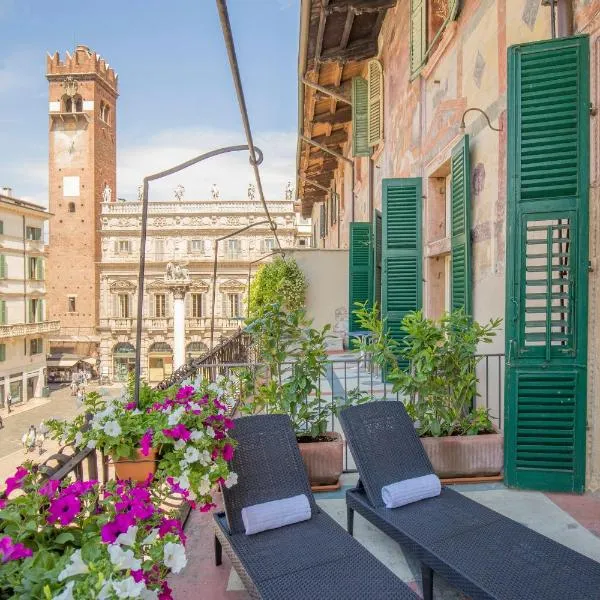
- Piazza delle Erbe — Verona’s main market square, bounded by medieval tower houses and with a Roman column at its center — is free and among the finest public squares in northern Italy.
- Castel Vecchio is a 14th-century castle on the river Adige, converted into an art museum with an important collection of medieval and Renaissance paintings, including significant works by Pisanello, Mantegna, and Bellini. Open Tuesday–Sunday, 10:00–18:00 (last entry 17:15); closed Mondays (except June 1 and December 7, 2026). Admission: €9 full price, €6 reduced (65+), €2 for EU citizens aged 18–24, free for children under 8. Note: the castle walkways (bridges and elevated corridors) are currently closed for maintenance but the museum rooms remain open.

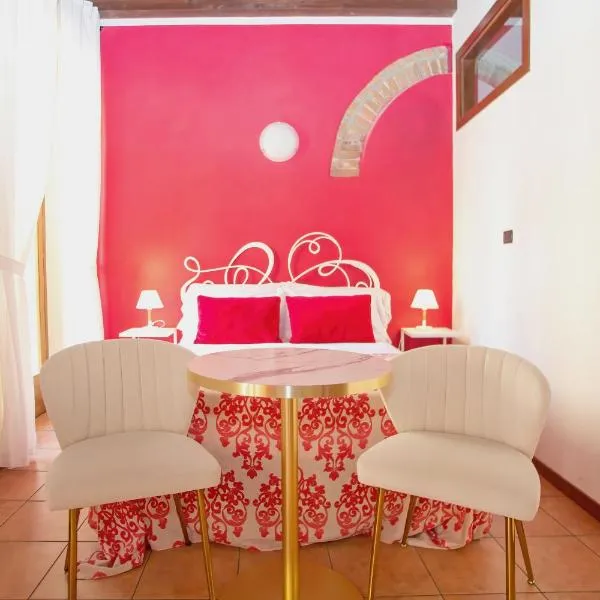
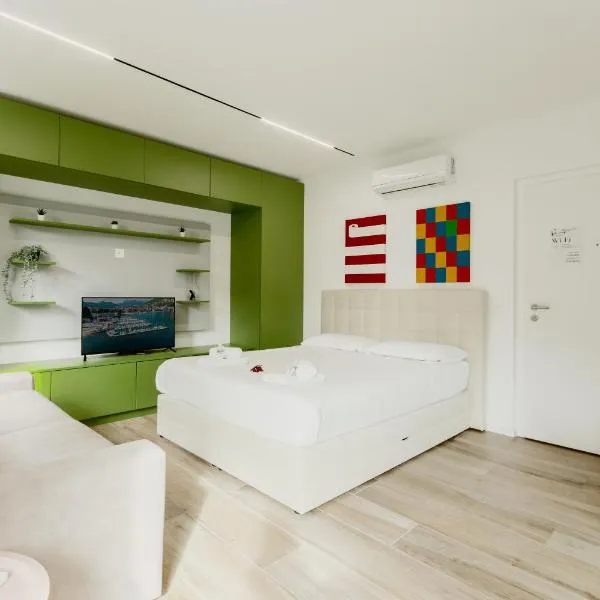
![[Freshly renovated] 10 minutes from Arena](https://cf.bstatic.com/xdata/images/hotel/square600/534856181.webp?k=f47abfc569190695adaf31b52643f6aa4ecdfd276853f6c610c6a6ef6fb08176&o=)
Florence: The Definitive Art Day Trip
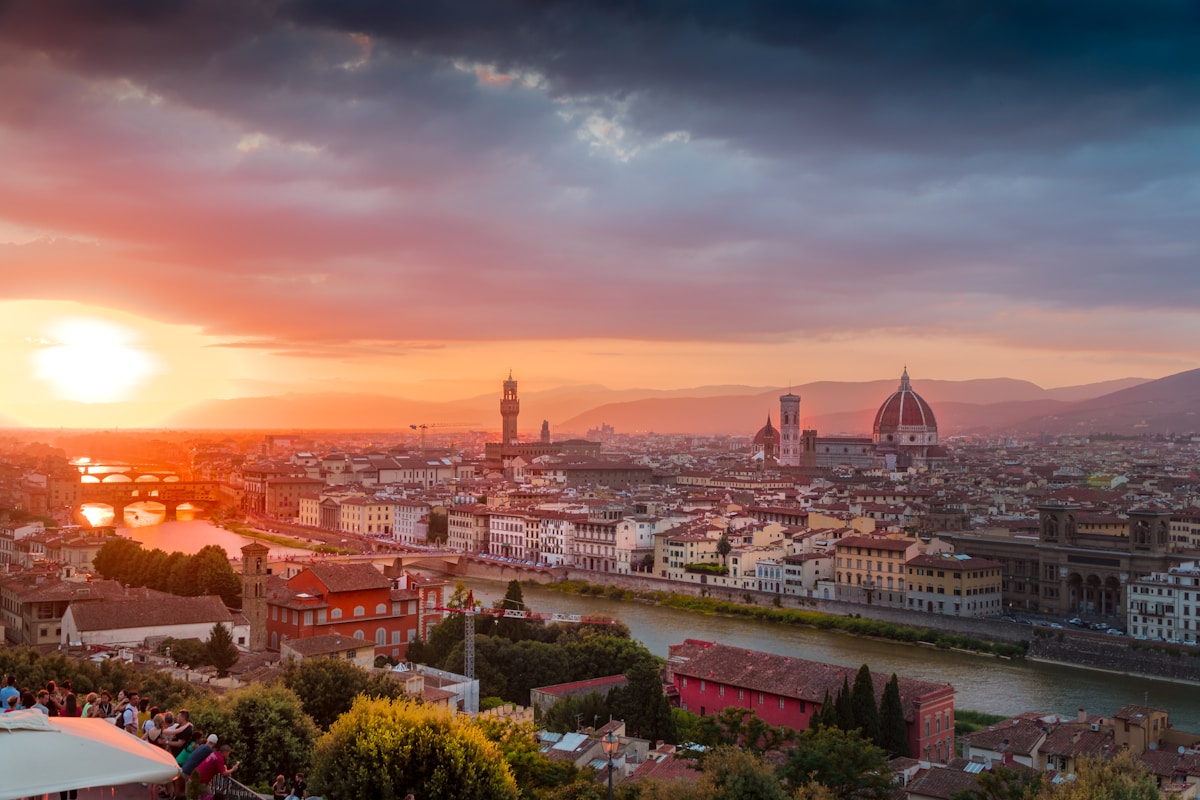
Florence is worth a day trip if it fits your itinerary, but it should come with clear expectations: the Uffizi alone deserves a half-day, and you’re spending nearly 3.5 hours on trains.
A focused visit works; a scattered one doesn’t.
Getting to Florence
- High-speed train from Milano Centrale: as fast as 1 hour 43 minutes (Italo); typically 1 hour 48–54 minutes (Frecciarossa); around 44 direct trains per day
- Advance Super-Economy fares from €17.90 (Italo) or €19.90 (Trenitalia); day-of Base fares around €55; book at least 1–2 weeks ahead in peak season, or as early as 3 months out for the cheapest seats

What to Prioritize in Florence
Book the Uffizi Gallery online well in advance — same-day or walk-up entry can mean a 2+ hour queue.
The Uffizi’s collection includes Botticelli’s Birth of Venus and Primavera, Leonardo’s Annunciation, and works by Michelangelo, Raphael, and Caravaggio.
Current pricing (2026): standard advance ticket €25 + €4 booking fee (€29 total); an afternoon ticket (entry after 4:00 PM) costs €16 + €4 fee (€20 total) — a useful option for day-trippers arriving mid-afternoon.
Open Tuesday to Sunday, 8:15–18:30 (last entry 17:30); closed Mondays.
Entry is free on the first Sunday of each month (no booking possible on free days — just queue at the door).
Michelangelo’s David is in the Galleria dell’Accademia, about 15 minutes’ walk from the Uffizi.
Book online in advance through the official b-ticket platform (galleriaaccademiafirenze.it).
Advance ticket: €20 total (€16 admission + €4 booking fee); walk-up admission if available: €16.
EU citizens aged 18–25 pay €2; under 18 free.
Open Tuesday to Sunday, 8:15–18:50 (last entry 18:20); closed Mondays.
During summer (late June–early August), the museum opens until 22:00 on Tuesdays — an excellent quieter slot for day-trippers on a late departure.
Walking the Ponte Vecchio (free) and crossing to the Oltrarno neighborhood provides a different perspective from the main tourist thoroughfares.
Climbing the Florence Cathedral’s dome (Cupola del Brunelleschi) requires a ticket and advance booking.
Entry to the cathedral itself is free (no reservation).
For the dome climb, the Brunelleschi Pass (€30) is the standard option — it includes the dome, Giotto’s bell tower, the Baptistery, the Opera del Duomo Museum, and the Santa Reparata crypt, and is valid for 3 days.
A timed entry slot for the dome must be reserved when purchasing; in peak summer, book at least one month in advance via operaduomo.firenze.it.
There is no elevator — the climb involves 463 steps.
Time allocation for a day trip: Uffizi (3 hours) + David at the Accademia (1 hour) + Cathedral exterior and dome (1.5 hours including climb) + Ponte Vecchio and lunch (1.5 hours) fills a full day efficiently, but only works if all tickets are pre-booked.
Bologna: Food, Architecture, and a Day Trip Worth Making
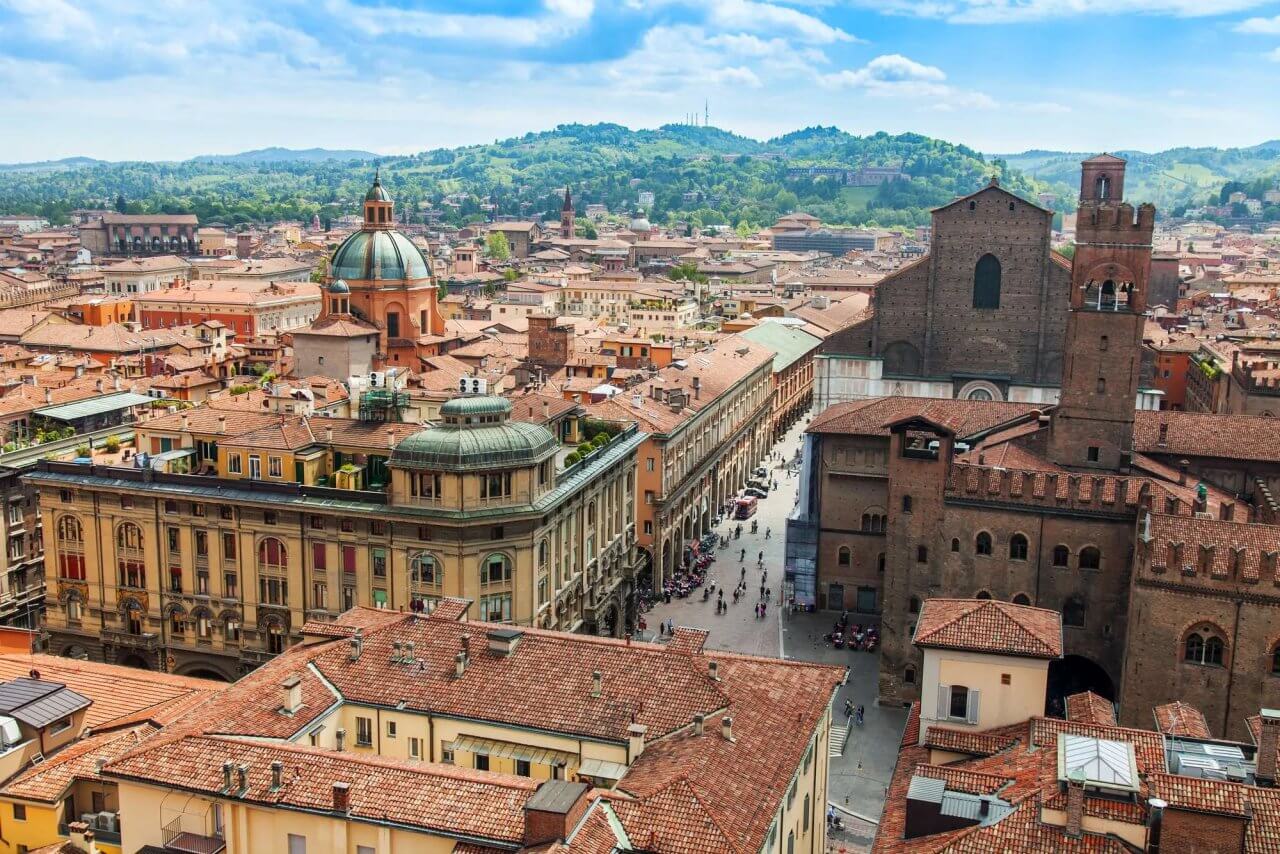
Bologna is one of the best and least obvious day trips from Milan.
It’s close, less crowded than Venice or Florence, and genuinely interesting for both its medieval architecture and its food culture.
Getting to Bologna
- High-speed train: as fast as 54 minutes (Frecciarossa) or 1 hour 2 minutes (Italo) from Milano Centrale; average journey around 1 hour 5 minutes; trains run approximately every 15–20 minutes, with around 45 departures per day
- Advance Super-Economy fares from €12.90 (Italo) or €14.90 (Trenitalia); day-of Base fares typically €40–55
- Regional trains also run but are significantly slower (2+ hours); stick to the high-speed option

What to Do in Bologna
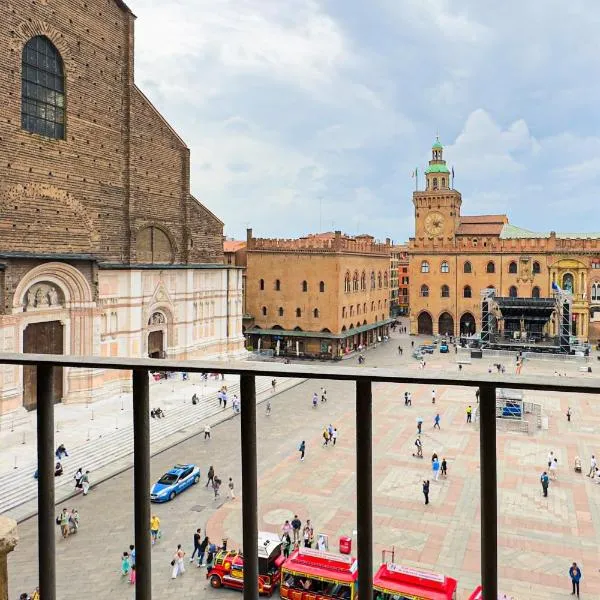
- The Piazza Maggiore is one of the finest medieval squares in Italy — dominated by the unfinished facade of the Basilica di San Petronio (intended to be larger than St. Peter’s in Rome before papal intervention stopped construction). Entry to the basilica is free.
- The Two Towers (Due Torri) — the Asinelli and Garisenda towers, medieval defensive towers built by rival noble families in the 12th century — are visible from across the city. The Asinelli Tower can be climbed via timed-entry ticket: €5 full price, €3 reduced (children 4–11, over 65, university students, school groups). Open April 1–October 1: daily 10:00–19:00 (Thursday–Sunday extended to 20:15 in summer); shorter hours in winter. Book in advance at the Bologna Welcome point in Piazza Maggiore or online — summer weekend slots sell out. Note: the shorter Garisenda Tower is currently closed to entry and under structural monitoring.
- The Archiginnasio — the original home of the University of Bologna, the oldest university in the Western world, founded 1088 — is worth visiting for its Anatomical Theatre (Teatro Anatomico), where medical dissections were performed in the 17th century. The palace itself (including the courtyard, library portico, and Stabat Mater hall) is free to enter. Visiting the Anatomical Theatre requires a ticket: €3.50 per person (audio guide included); English guided tours run Monday–Saturday at 10:20, 14:20, 16:00, and 17:10. Open Monday–Saturday, 10:00–17:30 (admissions every 10 minutes); closed Sundays. Booking ahead on weekends is strongly recommended, as slots sell out on the day.
- Food in Bologna: The city is the origin of tagliatelle al ragù (which bears no official resemblance to the “Bolognese sauce” exported abroad), tortellini, mortadella, and deeply serious salumi culture. The covered market at Mercato di Mezzo (Via Clavature 12, just off Piazza Maggiore) is the best place for lunch — open daily 10:00–midnight, with stalls selling fresh pasta, cured meats, and local cheese across three floors. A proper lunch with a glass of local wine runs approximately €15–25 per person, depending on how enthusiastically you lean into the mortadella.
Lake Maggiore and the Borromean Islands
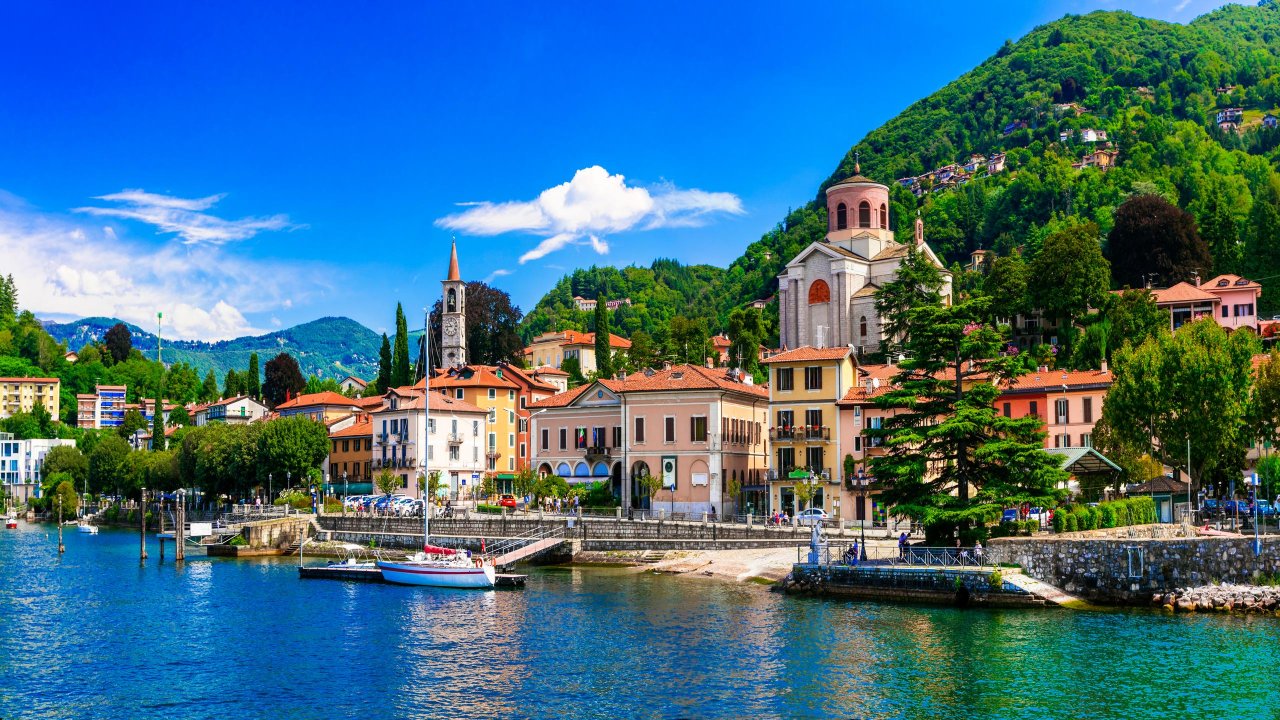
Lake Maggiore is less visited than Lake Como but offers some of the most spectacular formal gardens in Italy on the Borromean Islands.
Getting There
- Train from Milano Centrale to Stresa: approximately 1 hour 11 minutes on a direct regional Trenord service; the faster non-stop EuroCity international train (operated by Trenitalia in partnership with Swiss Federal Railways) covers the route in around 59 minutes but runs only twice daily and requires a seat reservation
- Around 8–10 direct services per day; tickets from €6–8 for the regional train (fixed fare, no advance booking needed); the EuroCity option costs around €20 on the day
- From Stresa train station, the ferry pier at Piazza Marconi is a 10-minute walk along the lakefront
What to See
- Isola Bella is the most elaborate of the three main Borromean Islands, dominated by the 17th-century Palazzo Borromeo and its ten-tiered terraced gardens descending to the lake. The formal Baroque gardens, with topiary pyramids and statuary, are among the finest of their period. Open March 12 to October 25, 10:00–17:00 (last admission; palace closes 17:30, gardens close 18:00). Admission: €27 adults, €18 children (6–15); a combined Isola Bella + Isola Madre ticket costs €40 adults.
- Isola dei Pescatori (Fishermen’s Island) is a working village with a genuinely small-town character — no formal attractions, just narrow streets, fishing boats, and restaurants. Ferry landing is free; no admission charged.
- Isola Madre has a more informal English-style garden with an exceptional collection of camellias, white peacocks, and rare exotic trees. Same opening season and hours as Isola Bella; admission included in the combined €40 ticket; individual entry approximately €15–18 adults.
Ferries between Stresa and the islands are run by Navigazione Lago Maggiore from Piazza Marconi, departing approximately every 30 minutes from 08:00 to 18:00 in season (March–November).
The crossing to Isola Bella takes about 10 minutes; to Isola Madre about 20 minutes.
A Free Circulation day ticket for unlimited island-hopping costs €16.90 per adult and is the most cost-effective option if you plan to visit multiple islands.
Single-leg tickets (e.g., Stresa to Isola Bella one-way) cost around €4–7 per person.
Note: a €0.50 landing tax per person per island is collected in cash at the dock.
Stresa itself has a pleasant lakefront promenade worth a stroll.
The Mottarone cable car that once ascended to 1,491 meters above the town has been permanently closed since May 23, 2021, when a catastrophic cable failure killed 14 passengers.
As of mid-2026 the cable car infrastructure has not been rebuilt or reopened, and no confirmed reopening date has been announced.
Mottarone summit can still be reached by car via a winding mountain road.
Wine Country: Franciacorta and Valtellina
Milan sits within easy range of two of Lombardy’s most distinctive wine regions — one producing Italy’s finest sparkling wines, the other some of its most underrated reds.
Neither requires a rental car if you plan the logistics carefully, though both reward visitors willing to book ahead.
Franciacorta
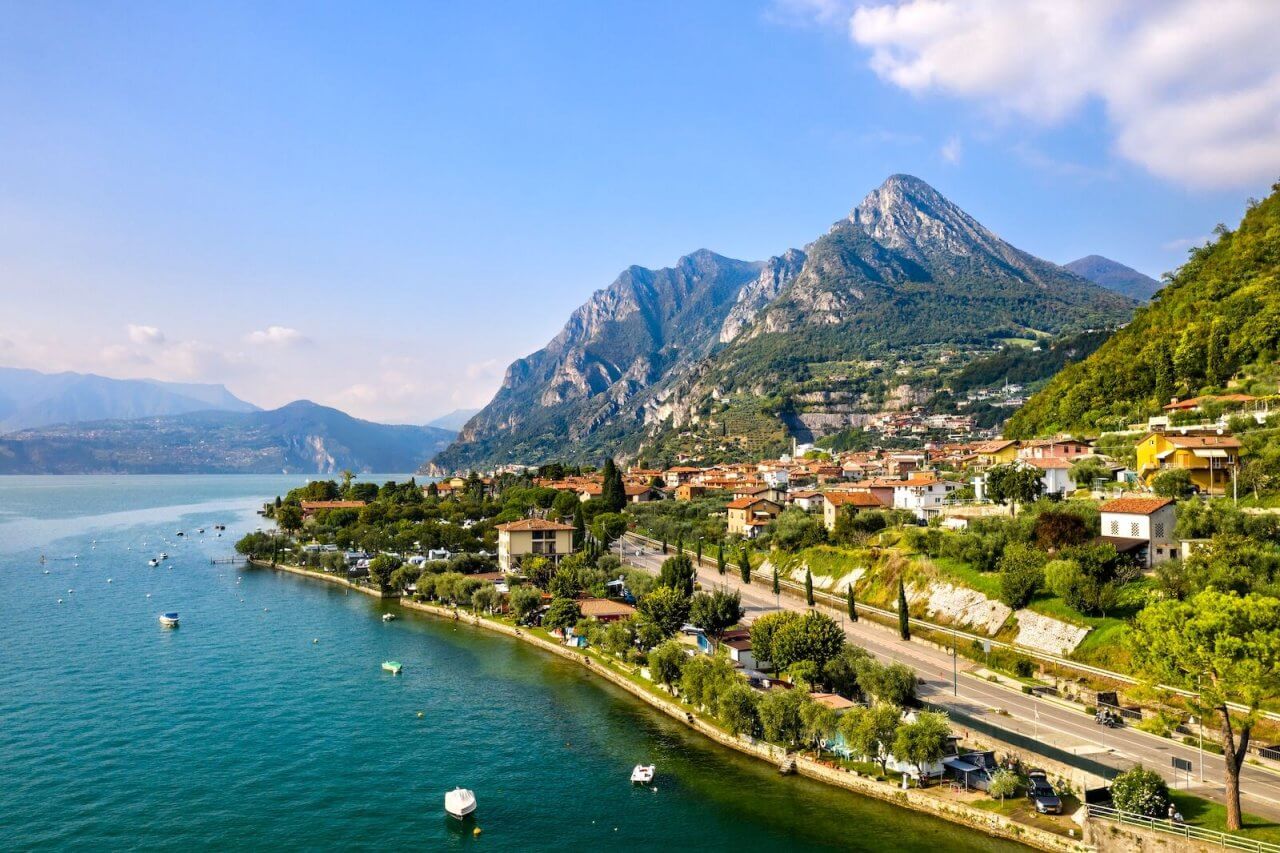
Franciacorta, southeast of Lake Iseo (approximately 90 minutes from Milan by train and bus), is Italy’s most prestigious sparkling wine region — producing metodo classico wines by the same secondary fermentation method used in Champagne.
The wines are significantly less well-known internationally than Champagne or Prosecco despite comparable quality.
Direct winery visits require booking in advance through individual estates.
The most practical approach from Milan is the Frecciarossa to Brescia (1 hr 10 min, around €6–7) drops you within cycling or taxi distance of several estates.
Well-known estates offering visitor programs include Ca’ del Bosco, Bellavista, Guido Berlucchi, and Mosnel.
A standard cellar tour with tasting averages around €47 per person; basic tastings-only start from around €10, while premium experiences including a guided vineyard tour and lunch run up to €110 per person.
All visits require advance booking via individual estate websites.
The harvest season in Franciacorta typically begins in mid-August for early-ripening sparkling base varieties (Chardonnay and Pinot Bianco) and continues through late September to October for later-ripening red varieties.
In recent years, harvest has been running earlier due to warmer summers — in 2025, the first grapes were picked on August 10.
Some estates offer participation in grape picking alongside tastings during harvest periods; availability is limited and must be arranged directly with producers weeks in advance.
Valtellina
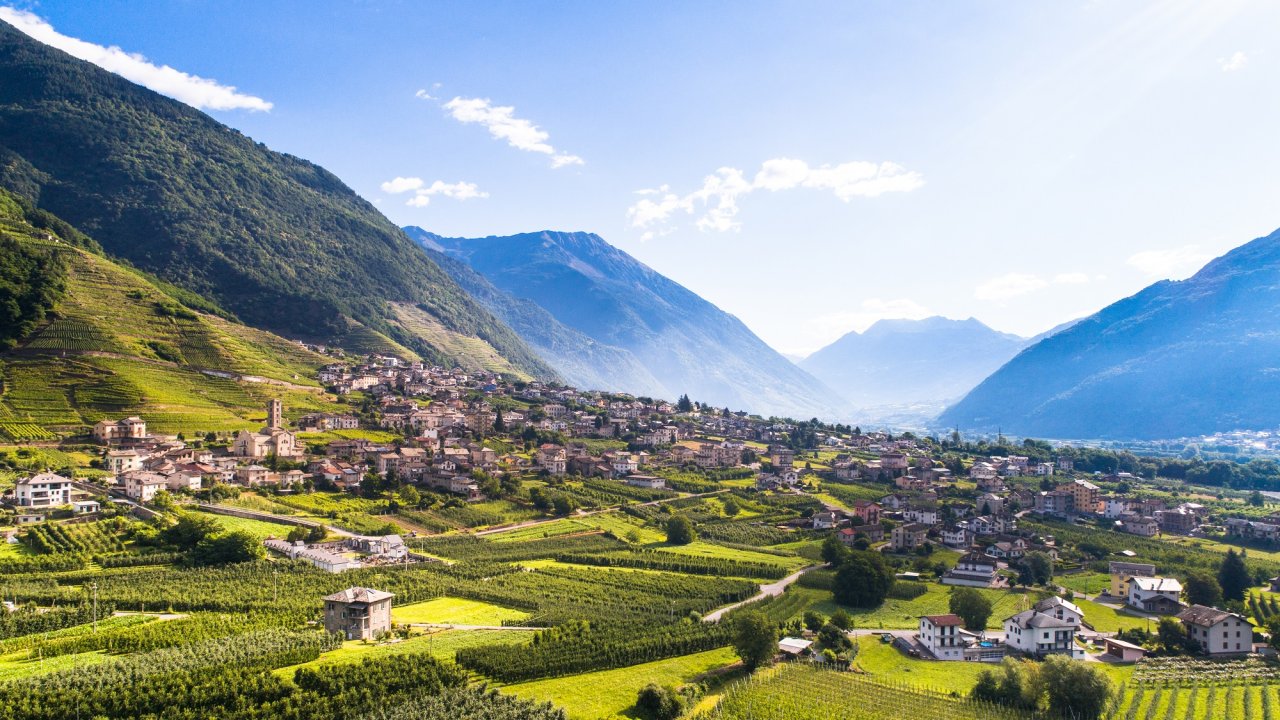
The Valtellina is a mountain valley running east from Lake Como, with steep terraced vineyards producing wines from Nebbiolo grape under the names Sassella, Grumello, and Inferno.
The scenery — narrow terraces carved into Alpine slopes above the Adda River — is worth visiting for the landscape alone, even without a winery agenda.
The valley is most easily accessed from Sondrio by direct Trenord regional train from Milano Centrale (the Valtellina/Tirano line).
The fastest direct journey takes approximately 1 hour 59 minutes; the average is around 2 hours 10 minutes depending on service.
Around 9 direct trains run per day; fares are a fixed regional price of approximately €10–11 one-way.
Winery visits require advance booking; the towns of Teglio, Chiuro, and Castione Andevenno have several producers open to visitors. Sforzato di Valtellina
(a partially dried Nebbiolo wine, similar in concept to Amarone) is the premium denomination — worth seeking out specifically if you want a wine unavailable almost anywhere else.
Pavia, Mantua, and Cremona: Medieval Towns
These three cities represent some of the most rewarding and least crowded day trips from Milan — each with a distinct identity, manageable size, and enough to fill a half or full day without the queues and crowds you’ll encounter in Venice or Florence.
Pavia
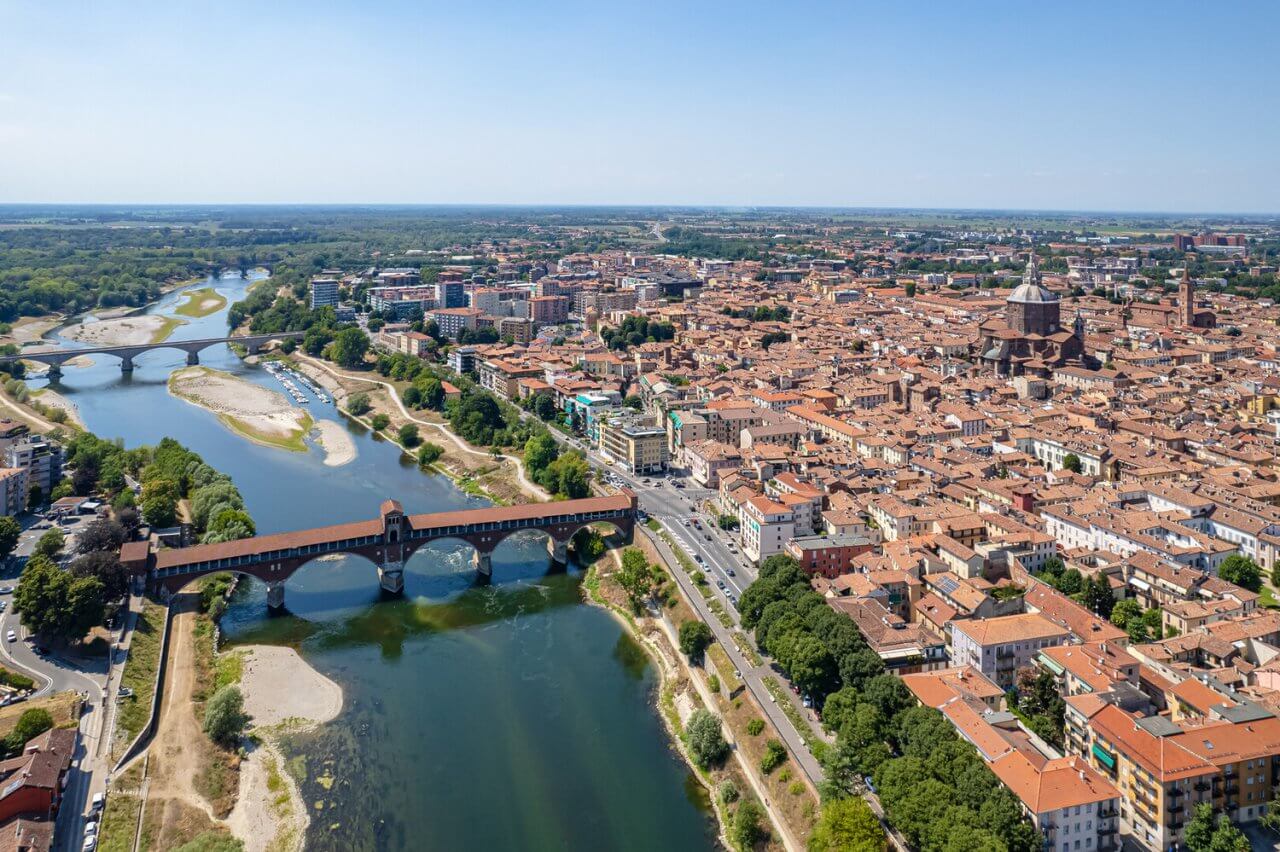
Pavia is only 30–32 minutes from Milano Centrale by direct Trenord regional train (the official Trenord timetable); some faster Intercity services cover the route in as little as 17–24 minutes.
Trains depart approximately every 14–30 minutes throughout the day, with around 26 direct services on the Trenord line.
Ticket fare: €3–5 (fixed regional price).
The Certosa di Pavia — a Carthusian monastery begun by the Visconti family in 1396 — has one of the most ornate Renaissance facades in northern Italy.
It is accessible from Pavia station by bus (roughly 3 buses per day, journey ~40 minutes, fare ~€2), by local Trenord train to Certosa di Pavia station (7 minutes, same regional fare), or by taxi (about €12–15 one-way).
Entry to the Certosa is no longer free: a mandatory admission ticket of €10 (concessions available) must be purchased online via the Museitaliani app/website or on-site.
Open Tuesday to Sunday, 10:00–16:00 (last admission 15:30); closed Mondays.
The Università di Pavia (founded 1361) occupies a significant part of the historic center; the city’s medieval tower houses and Roman-era street grid give it a different character from Milan.
The university’s historic anatomical theater (Teatro Anatomico Scarpa) and the courtyard of the original Palazzo Centrale are worth seeking out for the architecture alone.
Mantua (Mantova)
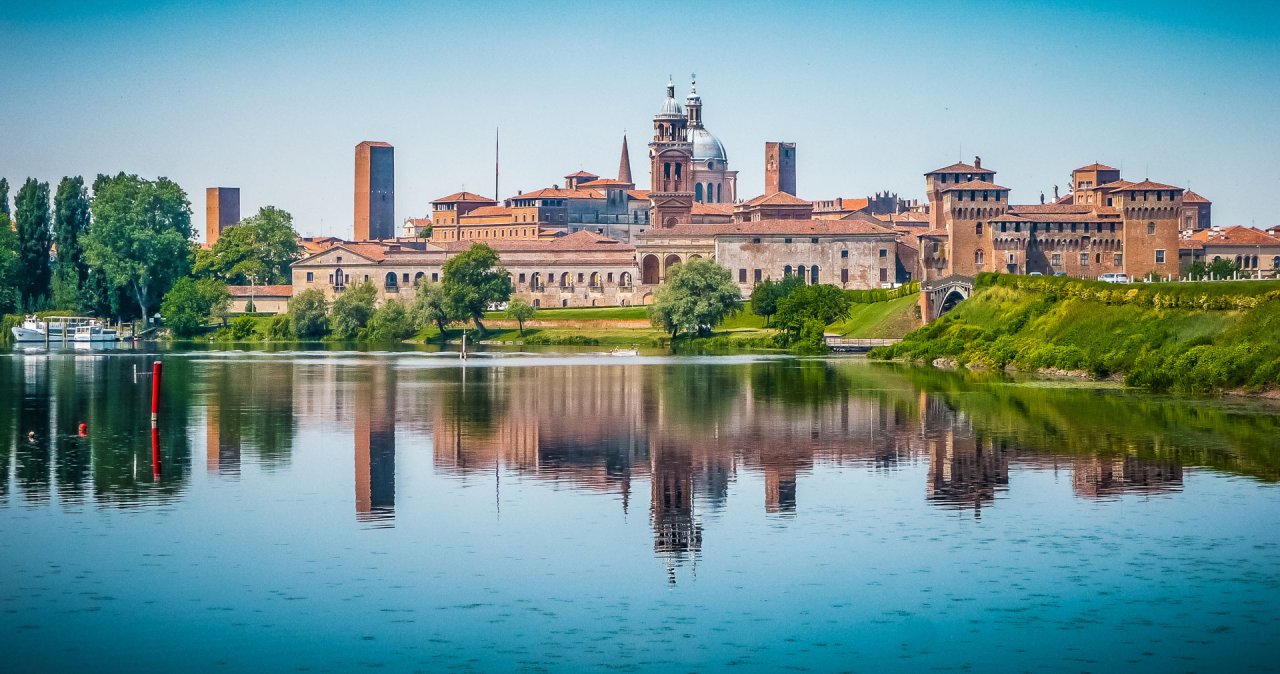
Mantua takes approximately 2 hours–2 hours 13 minutes by train from Milano Centrale, typically requiring one change (usually at Cremona or Verona); Trenord runs around 10 direct services per day on its own line with a journey time of approximately 2 hours.
Train fares start from around €10–13 for regional services.
A UNESCO World Heritage city, its historic center is surrounded on three sides by lakes formed by the Mincio River — an unusual geography that gives it a moat-like character.
The Palazzo Ducale — the Gonzaga family’s residence, one of the largest palace complexes in the world at approximately 34,000 square meters — contains Mantegna’s celebrated frescoes in the Camera degli Sposi, among the finest Renaissance decorative painting in existence.
Current admission: €15 full price, €2 reduced (includes palace and Camera degli Sposi); open Tuesday to Sunday, 8:45–19:15 (last admission 18:45); closed Mondays.
Entry to the Camera degli Sposi is included in the general ticket but requires a specific timed slot; visitors are allowed only 5 minutes inside to protect the frescoes — book your slot well in advance via Vivaticket (ducalemantova.vivaticket.it).
Palazzo Te, a Renaissance pleasure villa on the city’s outskirts (about 20 minutes’ walk from the Palazzo Ducale), has Giulio Romano’s extraordinary Sala dei Giganti (Room of the Giants), where the entire room depicts a crumbling ceiling falling on the viewer in an early feat of total-environment painting.
Admission: €15 full, €11 reduced, €7 for ages 12–18 and university students; family ticket €40; children under 12 free.
Open Monday 9:00–19:00, Tuesday 13:00–19:00, Wednesday–Sunday 9:00–19:00 (last entry one hour before closing); closed December 25.
Cremona
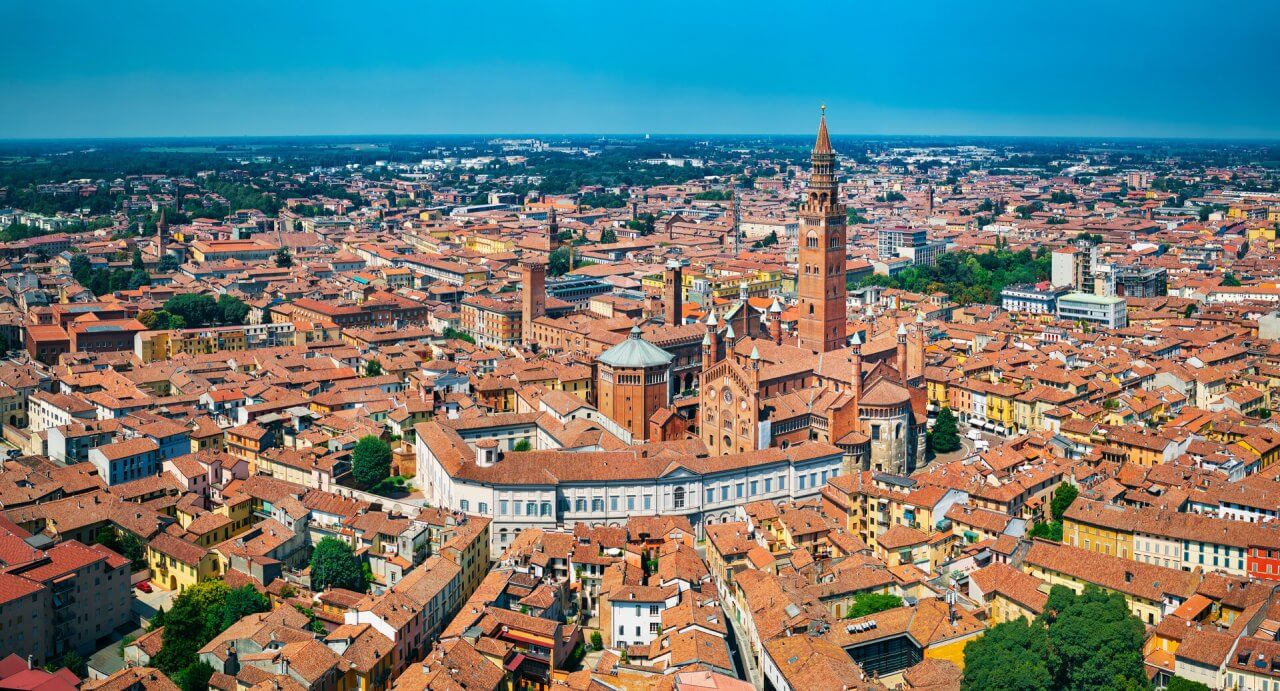
Cremona is approximately 55 minutes–1 hour 8 minutes from Milano Centrale by direct regional train (fastest service ~55 min from Milano Rogoredo; ~1 hr 8 min from Centrale directly).
Around 24 direct trains run per day; fixed regional fare approximately €8.
Cremona is the birthplace of the modern violin — Stradivari, Guarneri, and Amati all worked here.
The Museo del Violino holds 17 instruments by Antonio Stradivari (including 2 in playing condition, used in live concerts at the museum’s auditorium), alongside a comprehensive exhibition on the instrument’s history and craft.
Admission: €12 full, €8 reduced; family ticket available (free for children under 14 accompanied by two adults).
Open Tuesday to Sunday, 10:00–18:00; closed Mondays (except public holidays).
The main square (Piazza del Comune) has the Torrazzo (112 meters) — the tallest medieval brick bell tower in the world, now operating as a “Vertical Museum” with interpretive exhibits on each landing as you climb.
A combined ticket covering the Torrazzo climb, Baptistery, and Diocesan Museum costs €10 full price; a Monday-only Torrazzo-only ticket is €5; children under 14 free.
Open Tuesday–Sunday and select Mondays 10:00–13:00, 14:30–18:00 (last climb 30 minutes before closure).
The Duomo next to it is richly frescoed inside and worth the time — free to enter.
Cremona’s torrone (nougat) is produced in several traditional artisan shops in the city center — the most concentrated sweet-food tradition outside of Sicily.
Swiss Day Trips: Lake Lugano and Ticino
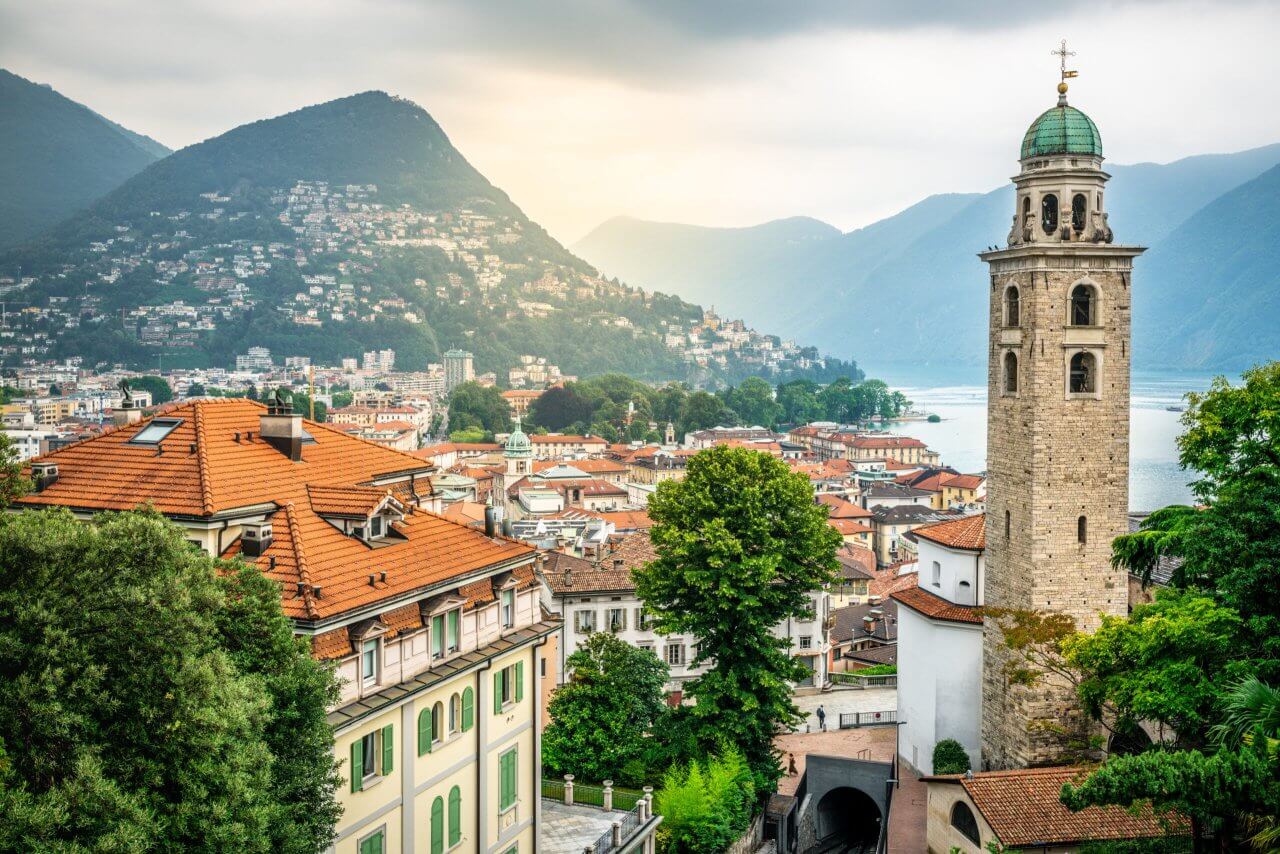
The border with Switzerland’s Italian-speaking canton of Ticino is approximately 1.5 hours from Milan.
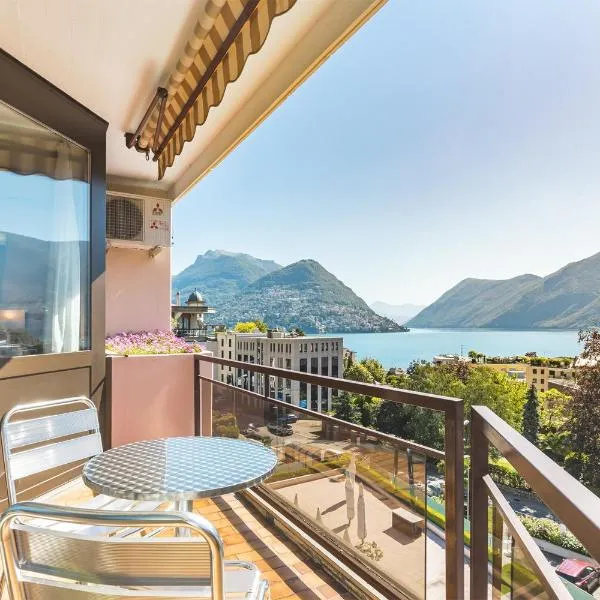
The most accessible destination is Lugano, a Swiss city on a lake that shares its Italian architectural and culinary character with Lombardy while offering Swiss efficiency, cleanliness, and specific mountain experiences.
Getting to Lugano
- Train from Milano Centrale to Lugano: 75 minutes direct on Trenord regional services; the faster EuroCity option (co-operated by Trenitalia and SBB) completes the journey in around 1 hour 13 minutes, though it is less frequent and requires a reserved seat. Around 16–17 trains run per day, approximately every hour.
- Trenord second-class regional ticket: €14 (fixed fare; no advance booking required). EuroCity fares are higher and dynamic.
- Border crossing: Switzerland is a member of the Schengen Area. EU and Schengen citizens pass through without passport control. Non-Schengen travellers (including US, UK, Australian, and most other citizens) may be subject to a brief document check at the Italian-Swiss border, but are generally waved through for short tourist visits. A valid passport is required regardless of nationality. Note: ETIAS — a new Schengen pre-travel authorization requirement for visa-exempt non-EU citizens — is expected to be introduced; check current requirements before travel via the official EU or Swiss government websites.
Lugano has a pleasant historic center with a lakeside promenade, and a small city funicular connecting the lakefront with the old town center (fare: CHF 1.30 per ride, runs 5:00 AM to 00:15 daily).
The Monte San Salvatore cable car (funicular, departing from Lugano-Paradiso, a short train or bus ride south of the center) ascends 912 meters in 10 minutes with panoramic views over Lake Lugano, Lake Maggiore on clear days, and the Lombard plain toward Milan.
Departures every 30 minutes.
Operating season: mid-March to early November, open daily 9:00–17:00 in standard season; extended to 9:00–22:30 daily from July 3 to August 29, 2026.
Return fare: CHF 32 adults (approx. €33–35); Swiss Half Fare card holders pay CHF 16; children under 6 free.
MASI Lugano (Museo d’arte della Svizzera italiana) operates across two venues — the LAC building on the lakefront and Palazzo Reali in the old town — and holds regular temporary exhibitions of contemporary and historical Swiss and Italian art.
Ticket prices vary by exhibition; check masilugano.ch for current pricing before visiting.
Open Tuesday, Wednesday, Friday 11:00–18:00; Thursday 11:00–20:00; Saturday, Sunday, and public holidays 10:00–18:00; closed Mondays. Free admission on the first Thursday of each month, 18:00–20:00
.
The nearby town of Bellinzona (approximately 30 minutes north of Lugano by train) has three UNESCO-listed medieval castles — Castelgrande, Montebello, and Sasso Corbaro — set on dramatic rocky promontories above the town.
The Fortezza Pass combined ticket for all three castles costs CHF 28 adults, CHF 18 reduced (students, groups, seniors 65+), with children under 6 free; available March 28–November 8, 2026.
Individual castles can also be visited separately: Castelgrande CHF 15, Montebello CHF 10, Sasso Corbaro CHF 15 adult entry.
A mini tourist train (Trenino Artù) runs from the Bellinzona historic center to Montebello and Sasso Corbaro — useful for the uphill sections (ticket: CHF 13 adults, CHF 5 children, separate from castle entry).

When Is the Best Season for Day Trips from Milan?
Spring (April–May) and early autumn (September–October) offer the best conditions for most day trips. Lake destinations are accessible and scenic; the Alpine approaches are clear of snow; and crowds at Venice and Florence, while present, are below peak summer levels.
Seasonal notes by destination:
- Lake Como: Year-round, but July–August is most crowded; March–May flower season for villa gardens
- Bergamo: Year-round; summer heat less intense than the Po Valley due to altitude
- Venice: April–June and September–October are the best windows; July–August is extremely crowded and very hot
- Florence: Same as Venice — avoid July and August if possible
- Alpine and mountain destinations (Valtellina, Lugano, Mottarone): May–October; winter accessible but with fewer services
- Franciacorta: September–October for harvest; April–October for winery visits
For how Milan’s seasonal calendar affects the timing of your base and your day trips, best time for Milan day trips covers the full seasonal guide.
For a custom day-by-day itinerary combining Milan with specific day trips, the AI Itinerary Planner builds route-optimized plans based on your travel dates and interests.
The AI Trip Cost Estimator calculates combined transport, admission, and meal costs for multi-day itineraries including day trips.
For basing decisions — which neighborhood puts you closest to Centrale for early departures — best neighborhoods to base yourself in Milan covers proximity to transport.
For free experiences near Milan (beyond the city center) — including public spaces at Lake Como, free entry to Bergamo’s medieval walls, and Pavia’s Certosa (free admission) — free things to experience near Milan covers the broader free-access picture.
Frequently Asked Questions (FAQs)
Yes — Como town alone (without ferrying to Bellagio or Varenna) can be done in a half-day.
The Como Cathedral, lakefront promenade, and Tempio Voltiano fill 3–4 hours comfortably.
Add a return journey of 80–90 minutes total and you’re back in Milan by early afternoon.
For a full-day trip including Bellagio or Varenna, the ferry adds approximately 2 hours of travel each way on the lake.
Not necessary for any of the destinations in this guide — all are well-served by rail.
A car is useful specifically for Franciacorta (wineries are spread across the countryside) and for exploring the minor towns around Lake Como’s eastern arm (Lecco branch).
For everything else, train is faster, cheaper, and avoids parking logistics.
Most visitors benefit from 2–3 days in Milan proper before day-tripping.
The major attractions — Duomo, Castello Sforzesco, Pinacoteca di Brera, Navigli, and a day in the fashion district — fill that time without rushing.
Starting day trips from day 3 or 4 is a typical structure for a 5–7 day northern Italy itinerary.
A lifestyle and OOTD blogger, Kannaya Nareswari enjoys the small pleasures of cooking, traveling, and documenting ordinary events. She uses genuine storytelling to communicate her love of fashion, culinary explorations, and wanderlust. She is based between Bali and Bandung. She enjoys enjoying coffee at a secret café or experimenting with recipes in the kitchen when she's not traveling to new places or styling her most recent ensemble.