



Traveling to Bangkok on a Budget: From Street Food to Transport Costs 2026 – Want to explore Bangkok without breaking the bank but worried about hidden costs that could derail your entire trip?
Bangkok is genuinely inexpensive if you use it correctly — which mostly means eating street food, using the BTS Skytrain, and staying one or two neighborhoods away from the main tourist concentration.
The city also has a parallel economy aimed squarely at international visitors, with prices two to five times higher for the same meal or taxi ride depending on where you are.
Knowing the difference is what separates a $30-a-day trip from an accidental $100-a-day trip.
Bangkok Travel Budget at a Glance
- Daily costs range from $25–40 for backpackers (dorm beds, street food, public transport) to $50–120 for mid-range travel (private rooms, occasional restaurants, minimal taxis).
- Street food meals cost ฿40–80; local restaurant dinners ฿150–300. Tourist-area versions of the same dishes run ฿200–500.
- The BTS Skytrain and MRT subway cover most tourist areas; fares run ฿16–59 per trip. Using them instead of taxis saves ฿100–300 per day.
- Rainy season (May–October) offers hotel rates 30–50% lower than peak season with the trade-off of afternoon rain.
- The biggest budget mistake: choosing accommodation based on price without checking BTS/MRT proximity, then spending the savings and more on daily taxis.
How Much Does Bangkok Actually Cost Per Day?
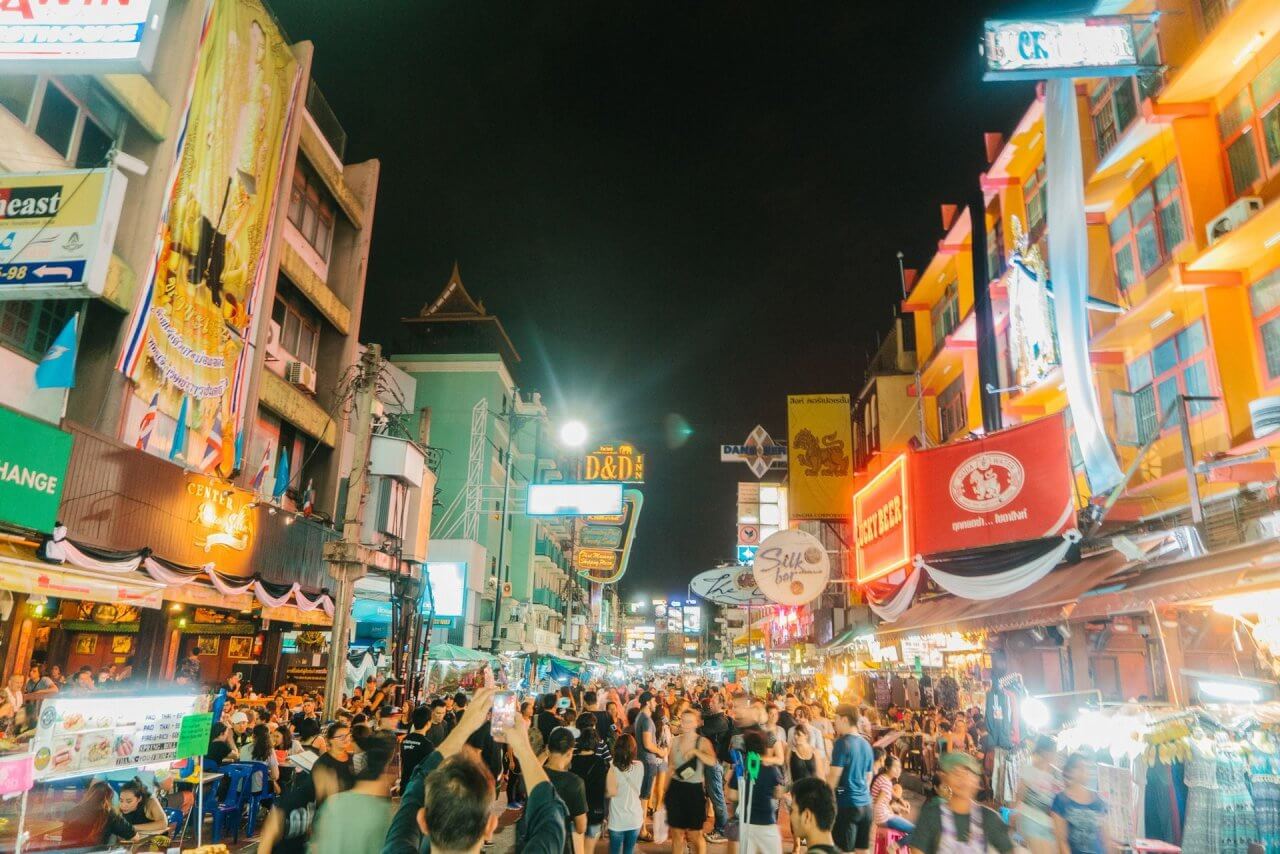
Budget travelers spend $25–40 per day covering dorm accommodation, street food, and public transport.
Mid-range travel runs $50–120; above $150 covers boutique hotels, taxis, and restaurant meals. All figures depend on neighborhood choice and season.
Bangkok’s range of best things to do in Bangkok spans every budget tier — the Grand Palace and major temples charge ฿100–500 entry; night markets and canal walks cost nothing.
The wide cost range is driven more by how you choose to move around and eat than by what you do.
| Travel style | Accommodation / night | Daily food | Transport | Total per day |
|---|---|---|---|---|
| Backpacker | $5–12 (dorm) | $6–10 (street food) | $2–4 (BTS/MRT) | $20–30 |
| Mid-range | $25–60 (private room/budget hotel) | $15–25 (mix of local and restaurant) | $5–8 | $50–100 |
| Comfortable | $60–120 (boutique hotel) | $30–50 (restaurants + occasional fine dining) | $10–20 (mix of Grab and BTS) | $100–190 |
These are realistic ranges, not minimums.
First-time visitors without local knowledge tend to spend the higher end until they understand which streets have local pricing.
Is Bangkok Cheap Compared to Other Asian Capitals?
Yes. Bangkok’s food, accommodation, and transport cost 40–70% less than Singapore or Tokyo, and around 40–60% less than Hong Kong.
The gap is largest for food — street meals in Bangkok cost $1–2 versus $3.30–$7.50 at comparable Singapore hawker centers, and even more if you step into a mall food court.
The city’s affordability comes from three factors: Thailand’s lower cost of living relative to regional financial centers, genuine competition in the budget accommodation sector, and the survival of street food culture as the primary way Bangkok residents eat.
The comparison breaks down at the luxury end — five-star hotels in Bangkok are priced similarly to Singapore or Hong Kong, and Michelin-starred restaurants charge comparable prices globally.
Budget travel is where Bangkok genuinely differs.
Currency Exchange Rates and Money Handling
The Thai Baht fluctuates against major currencies; checking rates a few days before your trip gives you a useful benchmark.
Practical tips:
- Airport exchange counters: Rates are typically 3–8% worse than licensed exchange booths in the city. Change only what you need to get from the airport to your accommodation.
- Licensed exchange booths: Banks and authorized exchange booths (SuperRich, Vasu Exchange) offer the best rates in the city. Check rate boards before exchanging.
- ATMs: Most major Thai bank ATMs (Bangkok Bank, Kasikorn, Krungthai, TTB) charge a flat ฿250 per transaction for foreign cards, with SCB slightly lower at ฿220. AEON Bank ATMs are the budget-friendly exception at ฿150 per transaction. These fees are on top of whatever your home bank charges — withdraw larger amounts less frequently to minimize the hit.
- Cards: Accepted at malls, hotels, and many restaurants. Not accepted at most street food stalls, market vendors, or small guesthouses. Always carry cash.
Keep small bills — ฿20 and ฿50 notes — for street food and tuk-tuks.
Vendors rarely have change for ฿1,000 notes.
Daily Budget Breakdown by Travel Style
Understanding how costs actually stack up day-to-day helps you plan realistically — and avoid the common trap of budgeting on averages without accounting for temple entry fees, the occasional taxi, or that extra Chang at a night market.
Budget Backpacker Costs
Daily expenses at the backpacker end typically break down:
- Dorm bed: ฿400–700 in tourist areas like Khao San Road, Silom, and Sukhumvit; budget pod-style hostels with privacy curtains run toward the higher end
- Three street food meals: ฿150–250
- BTS/MRT transport (4–6 trips): ฿64–354 (฿16–59 per BTS trip; ฿16–42 per MRT trip; registered users on the Tangrat app pay a flat ฿20 per ride across all lines since October 2025)
- Water, snacks, incidentals: ฿50–100
- Total: roughly ฿660–1,300 ($19–38)
At this level, temple entry fees (฿100–500 per major site) are the biggest single daily variable.
Mid-Range Traveler Costs
- Private room, budget hotel: ฿800–2,200 (budget guesthouses ฿800–1,200; three-star hotels ฿1,200–2,200)
- Meals (mix of street food and sit-down restaurants): ฿400–700
- Transport (BTS/MRT plus occasional taxi or Grab): ฿200–400
- Activities (museum entry, cooking class, etc.): variable, ฿200–1,000
- Total: roughly ฿1,600–4,300 ($47–126)
Comfortable Travel
Above 3,000 baht per day, Bangkok becomes a strong value proposition relative to comparable cities — boutique hotels with pools, spa treatments, and quality restaurants are all within reach at prices significantly below what they cost in Singapore, Hong Kong, or Western capitals.
Finding Affordable Accommodation
Bangkok has hundreds of budget accommodation options; the decision that matters most is neighborhood.
Accommodation near the Grand Palace or Khao San Road can be less expensive per night but costs more overall if you’re taking taxis to everything else.
Accommodation on or near the BTS Skytrain line typically saves more money across the trip despite slightly higher nightly rates.
For a full comparison of affordable neighborhoods in Bangkok by price tier and transit access, the neighborhoods guide covers each area in detail.
Hostels and Budget Hotels
Bangkok’s accommodation scene is dense enough that location matters almost as much as price — a cheap room 20 minutes from the nearest BTS stop will cost you more in daily transport than the few hundred baht you saved on the bed.
Prime locations for budget accommodation:
- Khao San Road / Banglamphu: Bangkok’s longest-established backpacker hub. Dorm beds from ฿280–600; private rooms from ฿900–1,600 depending on season and how close you are to the main strip. No BTS access — factor in boat or taxi costs for travel to Sukhumvit or Silom.
- Silom / Sala Daeng BTS: Budget hotels within 5–10 minutes’ walk of Sala Daeng BTS. Older properties offer private rooms with air conditioning from ฿700–1,200. Direct BTS access to Sukhumvit in 15 minutes.
- Sukhumvit (Asok / Nana area): Higher baseline prices than Silom but maximum transport flexibility. Dorm beds from ฿400–700; budget hotels from ฿1,000–1,800.
Booking several weeks in advance reduces prices by 15–30% on most platforms during peak season.
Rates during Songkran (April) and Chinese New Year spike significantly — book months ahead for those dates or avoid them on a tight budget.
Family-Run Guesthouses
Smaller guesthouses in the sois behind Khao San Road and in the Banglamphu neighborhood offer private rooms with air conditioning and private bathroom for ฿700–1,400 per night.
These are generally quiet, well-located for the historic temple area, and staffed by people who can provide practical local advice.
Soi Rambuttri and the sois east of Wat Bowonniwet offer better value than Khao San Road proper — slightly removed from the noise, similar pricing or cheaper.
Serviced Apartments for Extended Stays
Serviced apartments reward longer stays with dramatically better per-night value than hotels — and the ability to cook even a few meals a week can cut your food budget by a third.
- Budget serviced apartments (Sukhumvit outer sois, On Nut, Phra Khanong, Lat Phrao, Chatuchak area): ฿8,000–15,000 per month; includes kitchen, air conditioning, Wi-Fi. Electricity is billed separately at roughly ฿8 per unit — factor in ฿1,000–2,500/month extra.
- Mid-range serviced apartments (Silom, central Sukhumvit from Asok to Phrom Phong): ฿18,000–35,000 per month; typically includes pool and gym access, weekly housekeeping, and a more central location.
For stays over two weeks, negotiating directly with the property manager (rather than through booking platforms) typically produces better rates.
Neighborhood Comparison for Accommodation Value
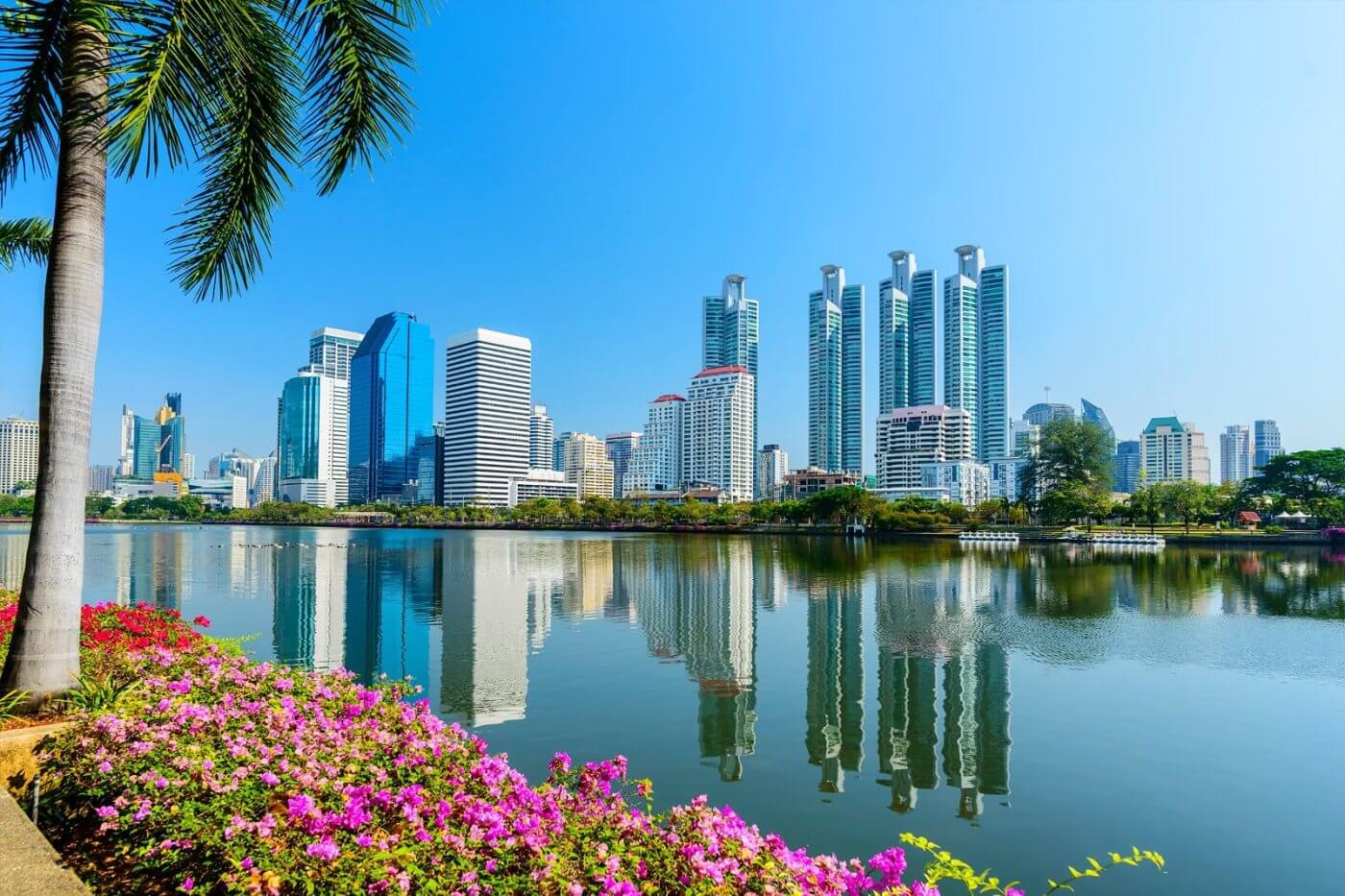
Bangkok’s budget is as much about where you sleep as what you spend — neighborhoods differ not just in price but in what transport costs you’ll quietly add on top.
| Neighborhood | Budget nightly rate | BTS/MRT access | Notes |
|---|---|---|---|
| Khao San / Banglamphu | ฿280–900 | No rail; river boat | Cheapest sticker price; factor in daily taxi or boat costs |
| Silom / Sala Daeng | ฿700–1,400 | Sala Daeng BTS | Good central value with direct rail access |
| Chinatown | ฿700–1,300 | MRT Hua Lamphong / Sam Yan | Authentic atmosphere; budget options exist but tourist infrastructure thinner |
| Sukhumvit (Lower) | ฿900–1,800 | Multiple BTS stops | Best transit links; highest budget baseline |
| Chatuchak / Mo Chit | ฿500–1,000 | Mo Chit BTS / MRT | Quieter; noticeably lower tourist pricing |
Smart Booking Tactics
Prices on Booking.com, Agoda, and similar platforms reflect supply and demand closely.
Checking the same property directly sometimes yields lower rates.
For stays of a week or longer, calling the property directly and asking for a long-stay rate is standard practice and usually produces a 10–25% discount versus online prices.
Alternative Lodging
House-sitting through platforms like TrustedHousesitters offers free accommodation in exchange for pet care; Bangkok listings exist but competition is higher than in other cities.
Couchsurfing connections work well in Bangkok’s large expat and digital nomad community.
Both require more lead time than booking a hostel.
Safety in Budget Accommodation
Practical checks before checking in: working locks on doors and windows, 24-hour reception or security presence, clearly marked emergency exits, and an independent review of the specific property (not just the brand).
Most Bangkok budget accommodation is safe; isolated incidents tend to occur at the very lowest price points in unlicensed guesthouses.
Street Food: Eating Well for Less
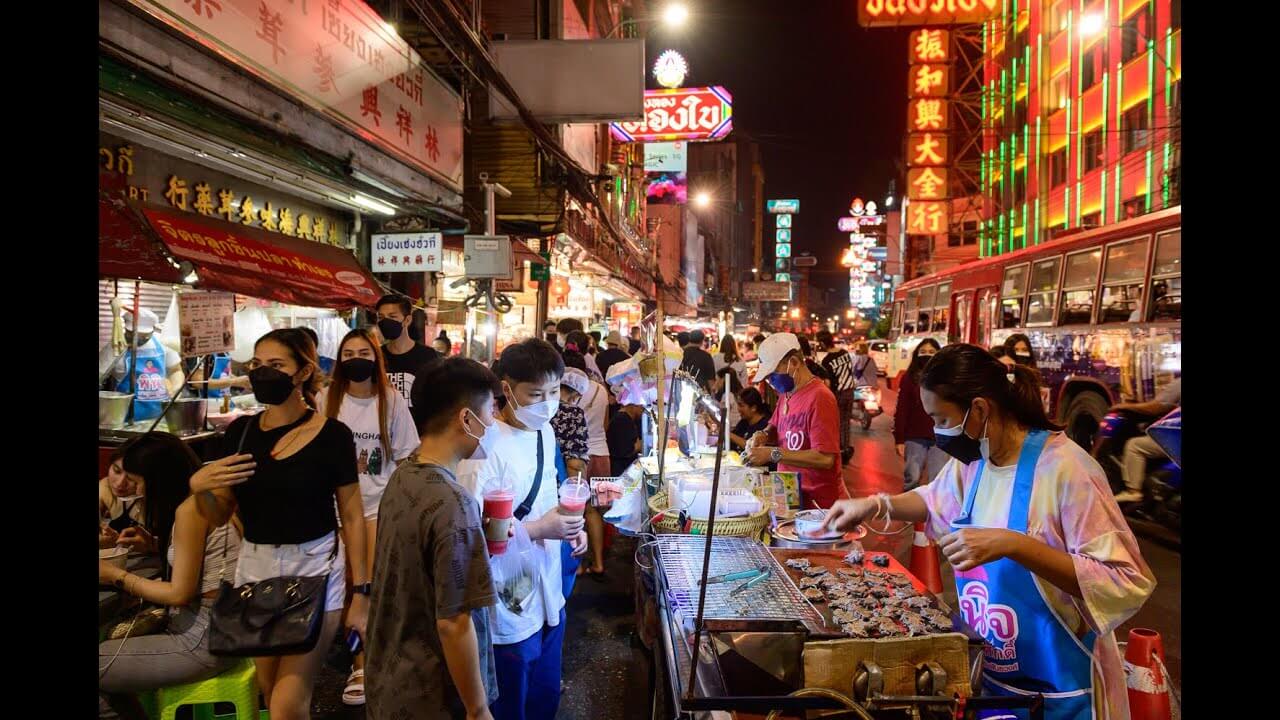
Bangkok’s street food culture provides access to the same quality and ingredients as sit-down restaurants for one-quarter to one-third of the price.
The cost advantage is structural — street vendors pay lower overheads and serve high volume to a local customer base.
Quality follows fresh ingredients and high turnover, not the size of the kitchen.
Local Markets and Food Stalls
The single most effective way to cut your Bangkok food budget is not finding a cheaper restaurant — it’s eating where Thai people actually eat.
Markets, morning carts, and office-district lunch stalls operate on an entirely different price logic than anything near a hotel strip.
Highest concentration of authentic, low-priced food:
- Chatuchak Weekend Market (Mo Chit BTS): Dozens of food vendors inside and around the market; serves locals at local prices. Satay skewers, grilled meats, pad see ew, fruit shakes. ฿40–80 per dish for most items; coconut-based snacks and drinks from ฿30–50.
- Chinatown (Yaowarat Road): Street food corridor after 5 PM. Oyster omelette, roasted duck, boat noodles. ฿60–120 per dish for most items; grilled seafood (squid skewers, giant prawns) runs ฿80–300 depending on size — order by the piece, not the platter, to stay on budget.
- Khlong Toei Market: Bangkok’s largest wet market; food stalls around the perimeter serve the people who work here — as close to no-tourist-markup as the city gets.
- Any office district at lunch (Silom, Sukhumvit sois): 11:30 AM–1 PM, vendor carts appear on the sois and pavements. Food priced for office workers, not tourists. ฿45–80 per dish — pad thai, khao man gai, som tam, and fried rice all sit comfortably in this range.
The general rule: eating where you see Thai workers eating during lunch hours gives you both quality and non-tourist pricing.
Night Markets and Weekend Food Courts
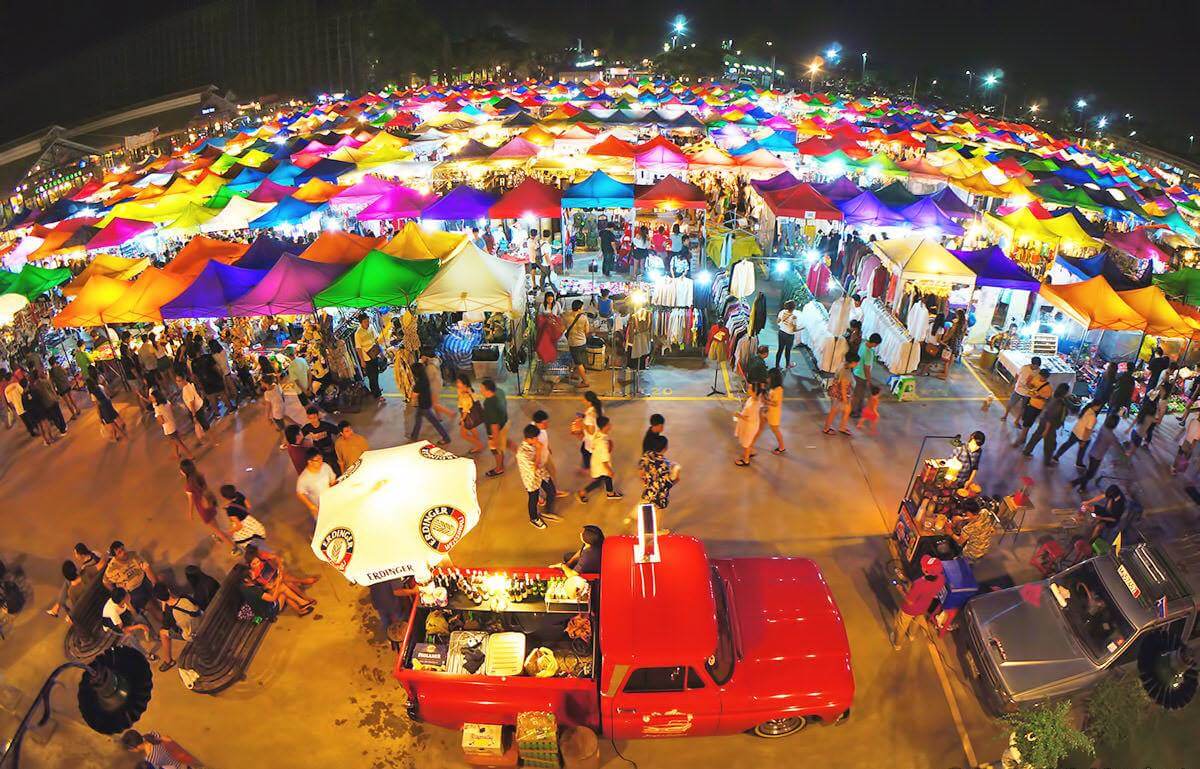
Night markets concentrate street food vendors in one place with more predictable hours:
| Market | Hours | What to eat |
|---|---|---|
| Talad Rot Fai Ratchada | 6 PM–midnight Thurs–Sun | Wide variety; slightly tourist-facing but decent prices |
| Saphan Phut (Memorial Bridge area) | 9 PM–2 AM weekends | Grilled seafood; local crowd |
| Huai Khwang Night Market | 5 PM–11 PM daily | Dense local foot traffic; very low pricing |
| Or Tor Kor (Chatuchak) | Daily from morning | Premium quality produce and prepared food; pricier but worth it for fruit |
Regional Thai Specialties at Street Prices
One of Bangkok’s quiet advantages is that it functions as the country’s food capital — specialist vendors from every region set up permanently here, meaning you can eat your way across Thailand without leaving the city.
Street vendors in Bangkok serve food from every Thai region:
- Khao soi (northern coconut curry noodle soup): ฿70–120 at specialist street vendors and shopfront restaurants in Bangkok; the ฿60 bowl exists but is increasingly rare outside residential neighborhoods
- Boat noodles: ฿20–40 per bowl (traditionally small; typically order 2–3); the famous ฿10–15 bowls still exist at a handful of old-school stalls near Victory Monument but are not the norm city-wide
- Isaan sausage and sticky rice: ฿40–60 per skewer set — grilled pork or fermented sai krok Isaan with sticky rice and fresh chilli
- Som tam (green papaya salad): ฿40–60, adjust spice level when ordering; Isaan vendors typically serve it spicier by default than tourist-area versions
Office district sois on weekday lunchtimes have the broadest regional variety — vendors position themselves near office buildings and serve high volume with minimal overhead.
Food Safety Practices
Practical guidelines for eating street food without problems:
- High turnover is the indicator: Stalls with queues of local customers turn over food continuously, meaning nothing sits. Empty tourist-facing stalls may display food for hours.
- Freshly cooked to order: Watch food go from raw ingredients to finished dish in front of you. Pre-cooked food sitting under heat lamps is higher risk.
- Ice from bags: Ice blocks made in factories marked with a hole through the center are clean. Large blocks scraped from an unlabeled source are higher risk.
- Avoid seafood in the morning heat: At market stalls without refrigeration, shellfish and raw fish are higher risk in the late morning and afternoon. Early morning or evening is safer.
Food Costs for Different Budgets
Realistic daily food costs:
- Eating entirely from street vendors and local markets: ฿200–400 — three meals plus drinks, assuming you stay in local neighborhoods and off the tourist strips
- Mix of street food and sit-down local restaurants: ฿400–700
- Eating primarily in tourist-facing restaurants: ฿800–2,000 — the lower end is a casual tourist-area restaurant, the upper end is three sit-down meals with drinks at Sukhumvit-strip pricing
Vegetarian and Dietary Options
Gin jeh (กินเจ) means vegetarian/vegan in Thai.
Saying “mai sai naam pla” (no fish sauce) helps but isn’t foolproof — many dishes are cooked in the same wok that uses fish sauce or shrimp paste.
Dedicated vegetarian restaurants (marked with a yellow flag with red text) serve reliably plant-based food, often Buddhist-style.
These are common in Chinatown and near temples.
Most dishes at these restaurants cost ฿40–70.
Cooking Classes
Hands-on cooking classes cost ฿1,200–1,800 for a half-day session including market visit and 4–5 dishes.
The best ones take you to a local market before cooking.
Look for classes operating out of residential homes or small local schools rather than hotel operations for a more practical learning experience — and a noticeably lower price tag.
Transportation: Cutting Costs While Getting Around
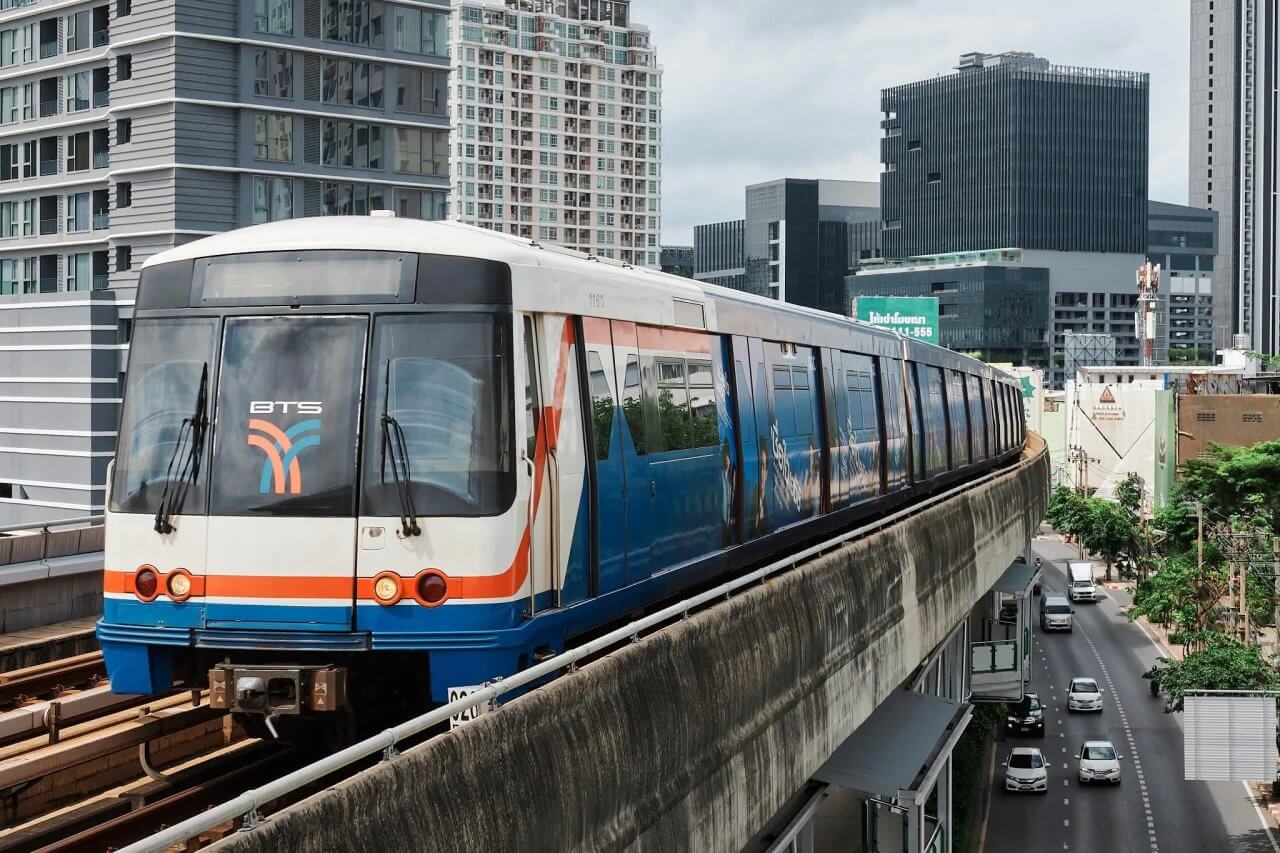
Bangkok’s public transport network covers the areas most travelers need.
Using it consistently instead of taxis is the single biggest day-to-day budget decision in the city.
For cheap ways to get around Bangkok — including BTS passes, river ferries, Grab pricing, and how to use each mode depending on where you’re going — the full transport guide covers all options.
Public Transport Pricing
| Mode | Fare range | Coverage |
|---|---|---|
| BTS Skytrain | ฿17–65 per trip (updated Nov 2025) | Sukhumvit, Silom, Chatuchak, On Nut, extended Green Line |
| MRT Blue Line | ฿17–44 per trip (effective July 3, 2026) | Chinatown, Bang Sue, interchange with BTS at Asok/Sukhumvit |
| Chao Phraya Express Boat | ฿16 flat (orange flag, all-day local service); ฿21–30 for express flag services | Riverside temples, Rattanakosin, Banglamphu |
| Public bus (air-conditioned) | ฿15–25 | Citywide; slower than rail but very cheap |
| Public bus (non-air-conditioned) | ฿8 flat | Same routes; not recommended in peak heat |
| Airport Rail Link | ฿15–45 per trip | Suvarnabhumi Airport to Phaya Thai (city center); full end-to-end fare is ฿45 |
BTS Skytrain and MRT Day Passes
The BTS One Day Pass costs ฿150 for unlimited rides within the calendar day of activation (valid until midnight, not 24 hours from first use).
It pays for itself if you take more than 3 trips in a day at mid-distance fares.
BTS also offers stored-value trip packages — 15, 25, and 35-trip cards valid for 30 days — available at BTS ticket offices and through the Rabbit card system.
The MRT Blue Line offers stored-value options via the MRT card with no single-day unlimited pass equivalent; per-trip fares at ฿17–44 remain low enough that a day pass rarely makes financial sense for most visitors.
For stays of two weeks or more, investigating monthly transit options versus daily or per-trip pricing is worthwhile.
The math changes based on your specific travel pattern.
Local Buses and the River
Public buses are the cheapest ground transport and cover routes not served by BTS or MRT.
The downside is that English-language route information is limited and the network is complex.
The ViaBus app is available on iOS and Android, provides real-time bus tracking in English across Bangkok, and is the most reliable tool for navigating the public bus network — basic route tracking is free, though real-time arrival times require a paid ViaBus Fan subscription.
The Chao Phraya Express Boat is reliable and scenic for riverside destinations — Maharaj Pier (Grand Palace/Wat Pho area), Phra Arthit Pier (Khao San Road), and Sathorn Pier (central BTS/MRT interchange).
Orange flag boats run Monday–Sunday on a flat fare of ฿19 per trip (updated May 2026), operating from approximately 6 AM to 7 PM.
Yellow flag boats (฿24 flat, weekdays only) run faster with fewer stops between Nonthaburi and Sathorn.
Tourist boats (blue flag) charge ฿60 one-way or ฿200 for an all-day pass and cover fewer stops than the orange line — they’re more comfortable but rarely better value for getting around.
Tuk-Tuks and Motorbike Taxis
Tuk-tuks are for short distances in areas without BTS access (Rattanakosin, Banglamphu).
Negotiate before getting in — a fair price for a short trip of 1–2 km is ฿80–150, not ฿300–500.
Use the Grab app to check a comparable car fare as your baseline before negotiating.
If a tuk-tuk driver offers to take you somewhere for ฿10–20, he’s planning to stop at a shop where he earns a commission.
Motorbike taxis (orange vests) are faster than tuk-tuks for soi shortcuts and short hops.
Fares start at ฿10–15 for a minimal soi run and typically run ฿20–80 for trips up to a few kilometres — most fixed-point stations near BTS exits post a price board for common destinations.
They don’t use meters; agree on the fare before you get on.
Grab (ride-hailing app) uses fixed prices quoted before you book — significantly more transparent than metered taxis for knowing your cost in advance. GrabBike
is also available for motorbike trips if you prefer a quoted price over negotiation.
Airport Connections
From Suvarnabhumi Airport:
- Airport Rail Link (City Line) to Phaya Thai BTS: ฿45, approximately 26 minutes — trains run every 10 minutes during peak hours (06:00–09:00 and 16:00–20:00) and every 12–15 minutes off-peak, from 05:30 to midnight daily
- To Makkasan Station (MRT interchange): ฿35, approximately 22 minutes
- Taxi by meter plus expressway toll fees: typically ฿350–500 total to central Bangkok depending on destination and traffic
From Don Mueang Airport (budget airline terminal):
- Bus A1 to Mo Chit BTS: ฿30 flat fare — pay the conductor on board; cash only (card payments now accepted at some stops)
- Bus A2 to Victory Monument BTS: ฿30 flat fare
- Taxi by meter: similar to Suvarnabhumi, roughly ฿300–450 to central Bangkok
- No rail connection currently — the high-speed rail project linking Don Mueang, Suvarnabhumi, and U-Tapao has a new target launch of 2032 at the earliest, with a contract signing expected in July 2026
Monthly Passes for Extended Stays
There is no monthly unlimited BTS pass available to the general public.
The BTS system uses distance-based per-trip fares loaded onto a Rabbit card.
For frequent riders, BTS offers stored-value trip bundles — ฿1,200 for 30 trips, valid for 30 days from first use.
Note that trips on extension stations beyond On Nut or Mo Chit incur an additional ฿15 per trip surcharge on top of the bundle.
The MRT similarly uses a stored-value card with no unlimited monthly pass option — per-trip fares at ฿17–44 remain low enough that topping up as you go is the practical approach for most visitors.
Walking in Bangkok
Several Bangkok neighborhoods are genuinely walkable: the Rattanakosin historic area (Grand Palace to Wat Pho to Wat Arun by boat), Chinatown along Yaowarat Road, Silom Road to Lumpini Park, and Bang Krachao (across the river by ferry).
Other areas are challenging on foot due to heat, distance, and incomplete footpath coverage.
Comfortable footwear and early morning or evening timing make a significant difference.
Free and Low-Cost Attractions
Bangkok has a substantial range of genuinely free and low-cost cultural experiences.
The full list of free things to do in Bangkok covers 20+ zero or near-zero cost activities in detail, including temples with free entry, free festivals, and no-cost viewpoints.
Temple Visits
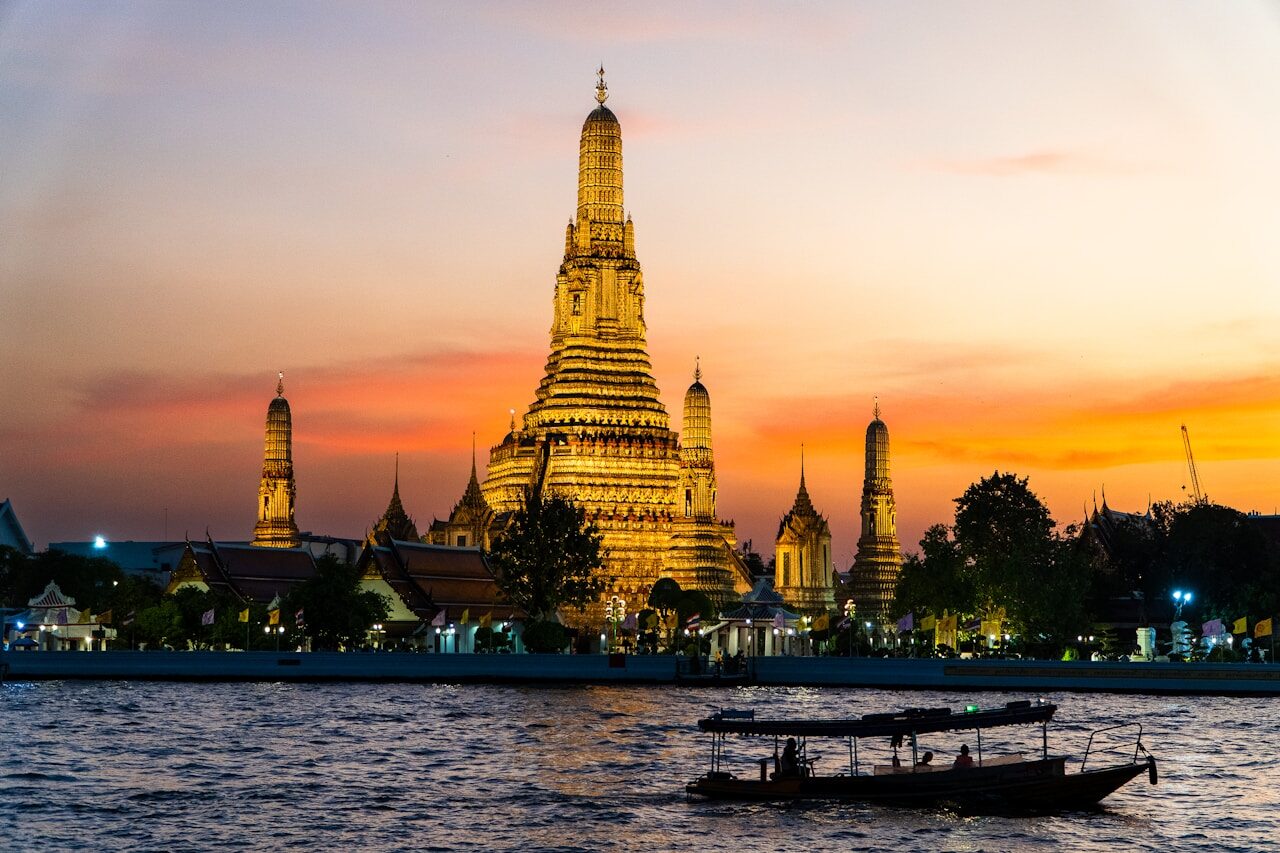
Most of Bangkok’s major temples charge entry fees — and almost across the board, prices have increased in recent years:
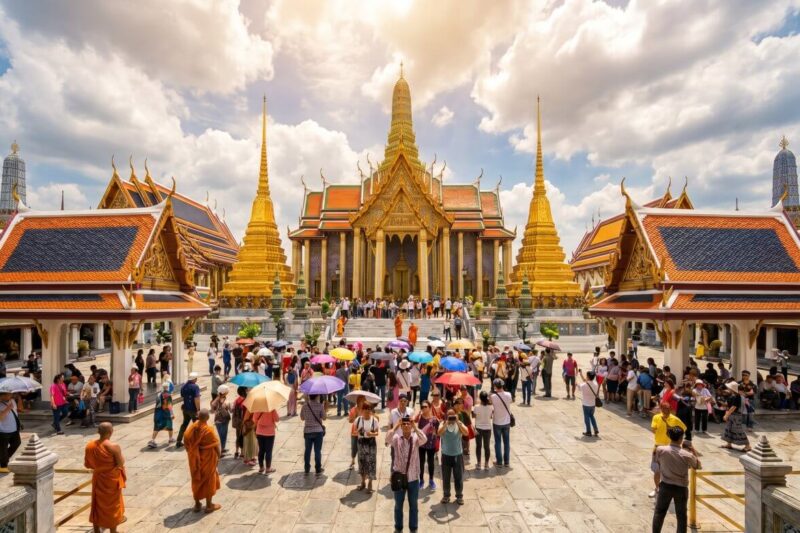
- Grand Palace + Wat Phra Kaew: ฿500 (includes Queen Sirikit Museum of Textiles; open 08:30–15:30 daily; strict dress code enforced at entry)
- Wat Pho: ฿300 (open 08:00–19:30 daily; children under 120 cm free)
- Wat Arun: ฿200 (open daily)
Free or low-cost temple options:
- Wat Benchamabophit (Marble Temple): ฿100
- Wat Saket (Golden Mount): ฿100 (open 07:30–17:30; 344 steps to the summit)
- Wat Suthat: ฿100 (open daily 08:30–16:00; near MRT Sam Yot)
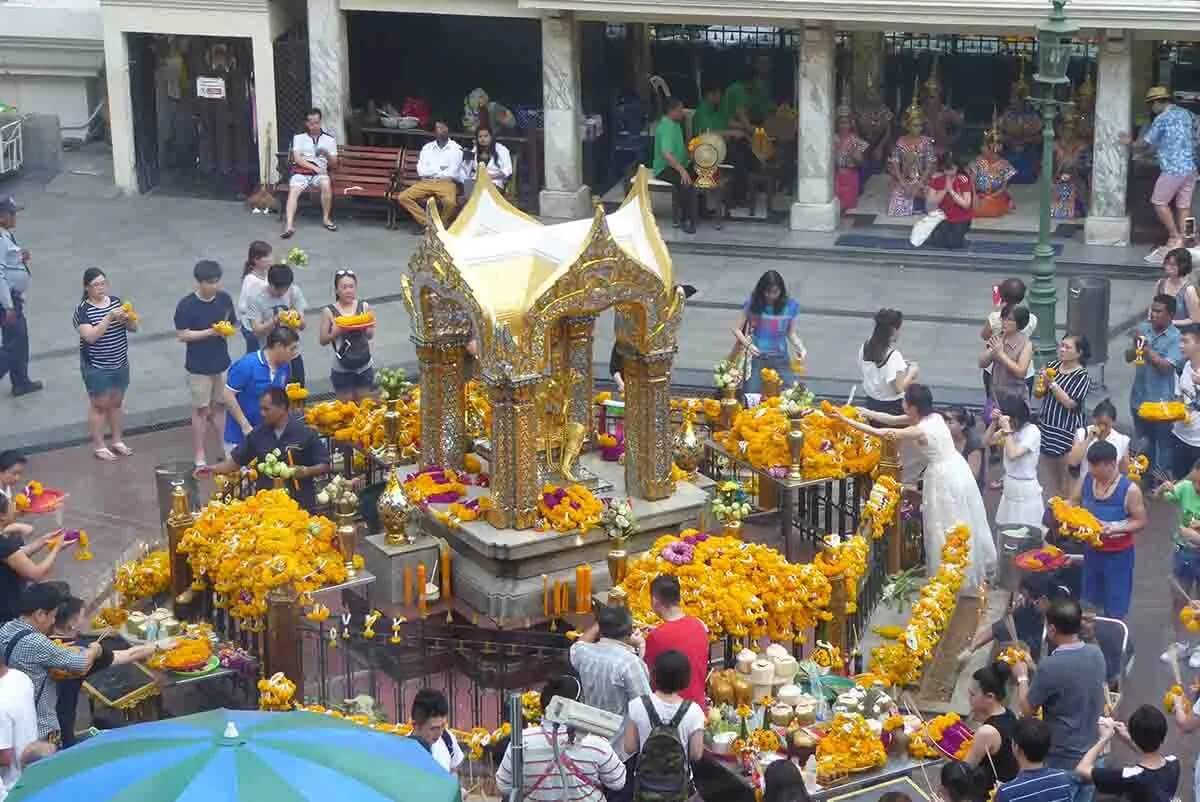
- Erawan Shrine: Free (private Hindu shrine, not a wat)
- Neighborhood temples throughout Bangkok: Free; no tourist infrastructure but genuine religious practice
Temple dress code applies everywhere: shoulders and knees covered.
Lightweight sarongs for hire or purchase are available at every major temple entrance.
Public Parks
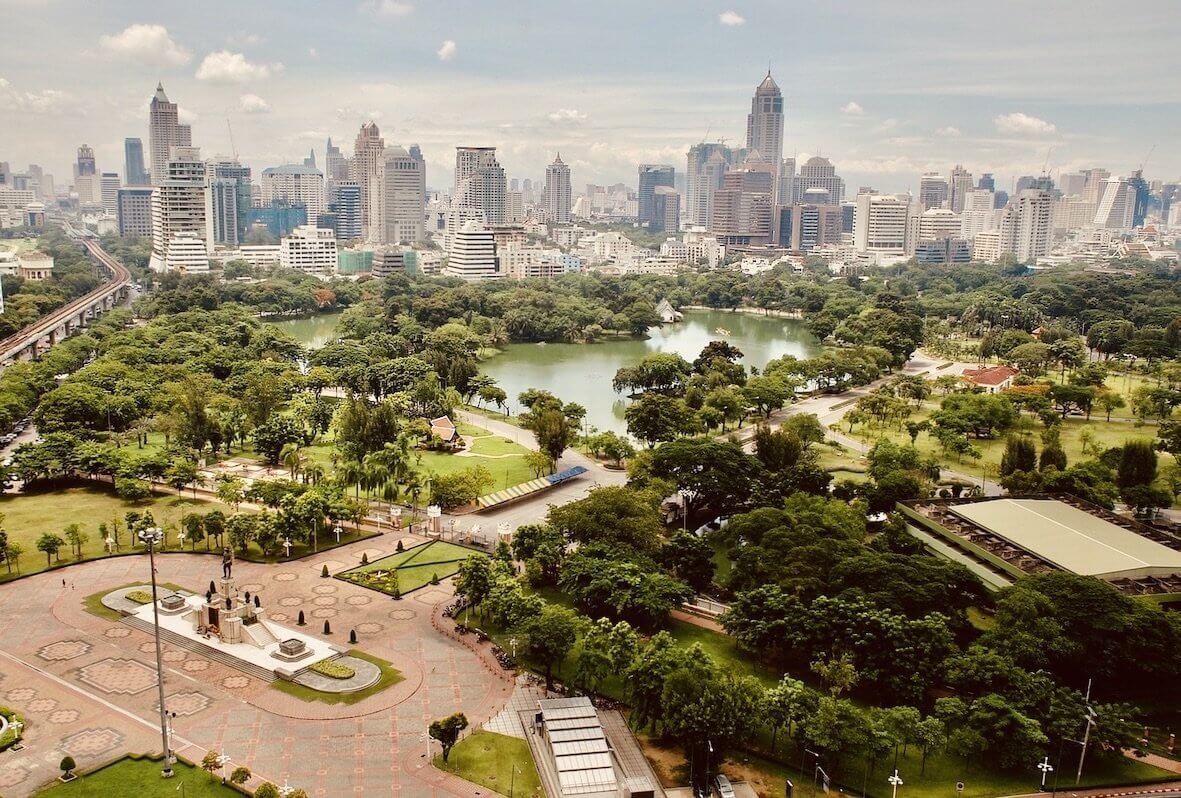
- Lumpini Park: Free; open 4:30 AM–9 PM; jogging tracks, lake, monitor lizard sightings in the afternoon; outdoor exercise equipment used by locals from early morning
- Chatuchak Park: Free; adjacent to the weekend market; shaded walking areas; weekend food vendors
- Benjakiti Park: Free; lake views, cycle hire available, evening crowds; near Sukhumvit
- Bang Krachao: Free to enter; 20-minute ferry from Klong Toei; cycling paths through mangrove preserve; closest thing to nature inside the Bangkok metro area
Street Art and Neighborhood Walks
- Charoenkrung / Warehouse 30 area: Entry to Warehouse 30 (52–60 Soi Charoen Krung 30) is free; the 4,000 sqm complex of restored WWII-era warehouses houses galleries, vintage shops, and cafes open daily roughly 09:00–20:00. Individual tenants keep their own hours — check ahead if you have a specific gallery in mind.
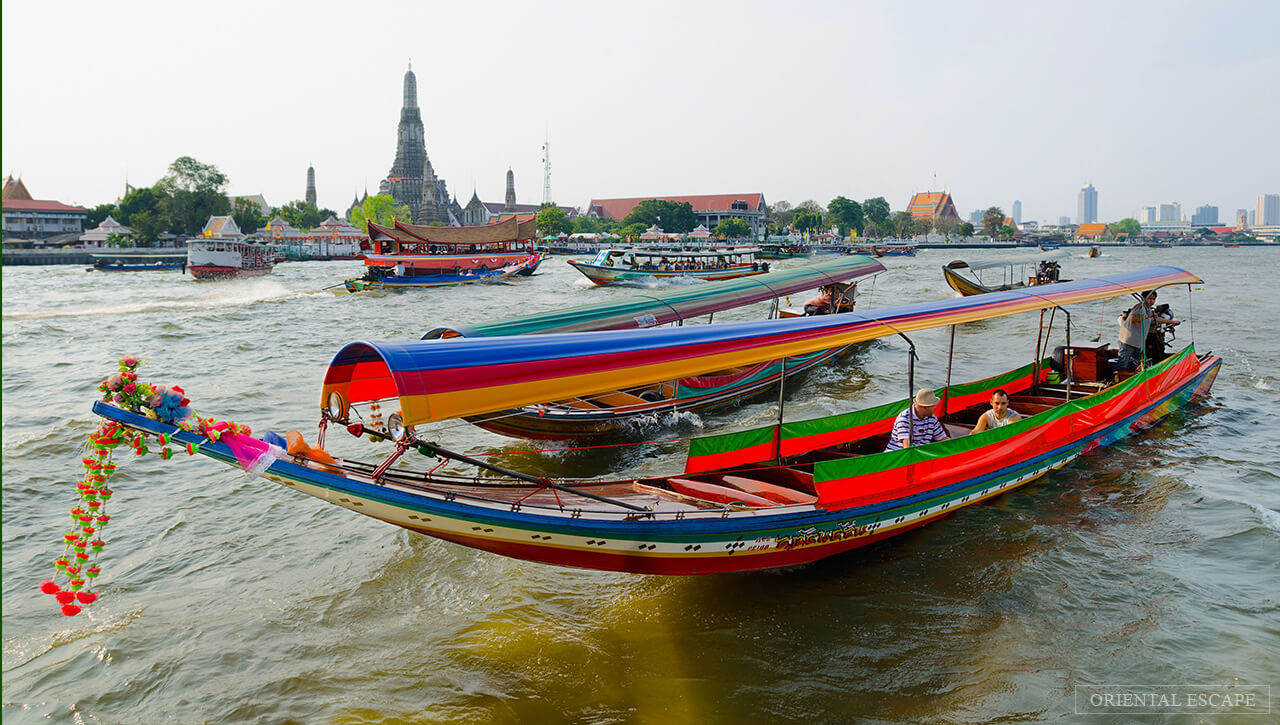
- Thonburi canal walks: Free; takes you through residential areas with traditional wooden houses
- Talad Noi: Small alley neighborhood near Chinatown with murals and old Chinese shophouses; free
- Chinatown evening walk along Yaowarat Road: Free; the street food and architecture together constitute the attraction
Museums with Free or Low-Cost Entry
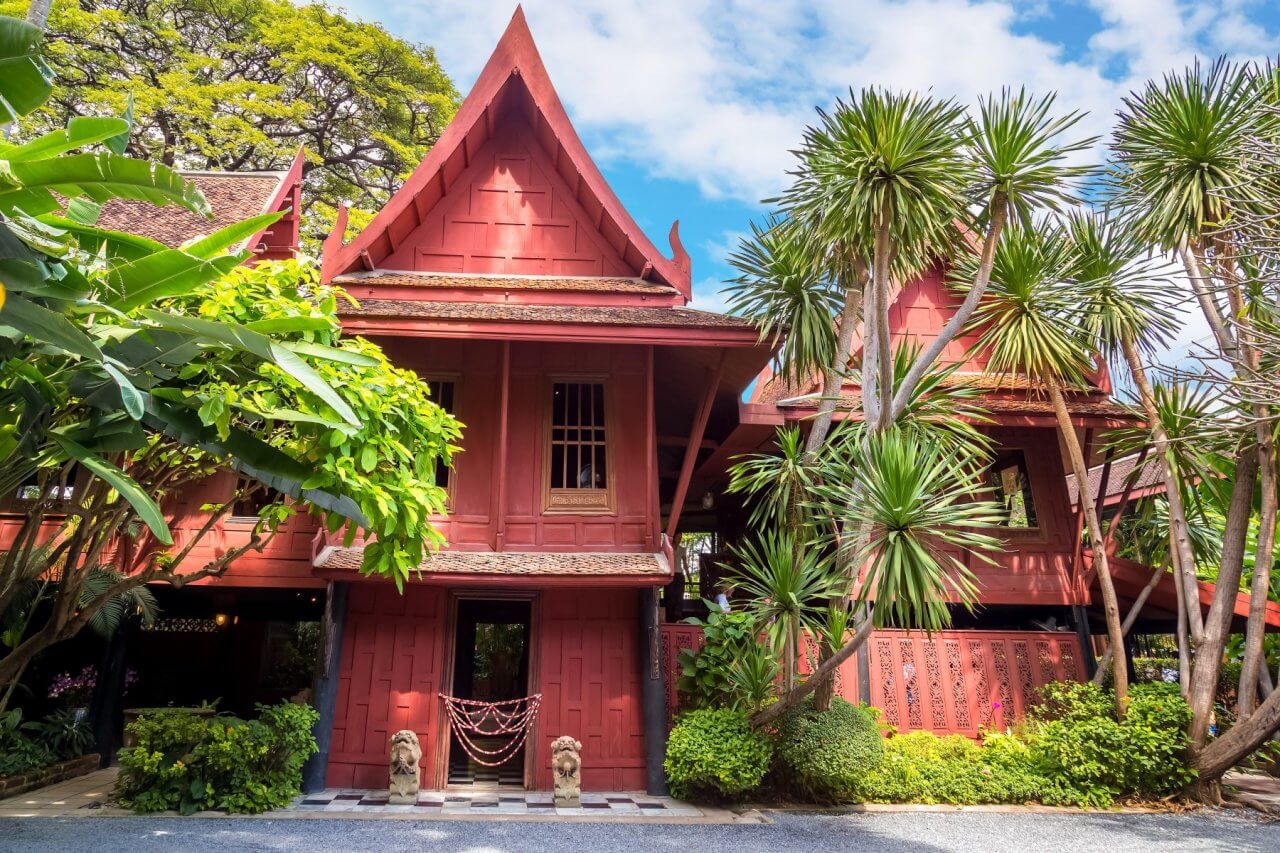
Bangkok’s public museums charge modest entry by international standards — and several offer free guided tours that add significant value.
A few with free admission or low-cost access:
- National Museum Bangkok: ฿200 (open Wednesday–Sunday and public holidays, 09:00–16:00; closed Monday and Tuesday). Free volunteer-guided tours in English, French, German, and Japanese run Wednesday and Thursday at 09:30, and Sunday at 10:00 and 13:30 — no additional booking required.
- Jim Thompson House: ฿250 adults; ฿150 for ages 10–21 (ID required); children under 10 free. Open daily 10:00–17:00; entry by guided tour only, last tour at 17:00.
- Bangkok Art and Culture Centre (BACC): Free admission to all permanent and rotating galleries (special events may be ticketed separately). Open Tuesday–Sunday, 10:00–20:00; closed Mondays. Connected directly to National Stadium BTS station.
Budget Activities in Bangkok’s Historic Areas
Walking the Rattanakosin area between Wat Pho and the Democracy Monument covers free or minimal-cost sights: the Giant Swing, City Hall facade, Wat Suthat, and old shophouse streets.
Budget 3–4 hours and 20–50 baht for temple entry if you enter any.
Cultural Events and Festivals
Free annual events worth timing a visit around:
- Songkran (Thai New Year, mid-April): Water festival; street celebrations citywide; free participation
- Loy Krathong (full moon in November): Floating lantern festival; Lumpini Park and riverside; free to watch; small cost to buy a krathong
- Chinese New Year (January/February): Chinatown dragon parades and temple ceremonies; free
- Vegetarian Festival (October, 9 days): Chinatown; free
These events create genuine city-wide atmosphere.
Songkran in particular transforms Bangkok completely — the streets become a water fight from Khao San Road to Silom.
Photography Without Entry Fees
Temple exteriors and grounds are generally free to photograph from outside.
The best free photography in Bangkok: Wat Arun’s prang from the opposite riverbank at sunset (free from public waterfront), Chinatown at night (street level, free), Chatuchak Market on a Saturday morning (free to enter), and Bang Krachao with cycling from the ferry landing (free aside from ferry fare).
Shopping: Finding Real Value
Bangkok’s reputation for cheap shopping is genuine in the markets and wholesale districts; it’s less true in tourist-facing malls and souvenir shops near major temples, where prices are comparable to or above Western equivalents for the same items.
Chatuchak Weekend Market
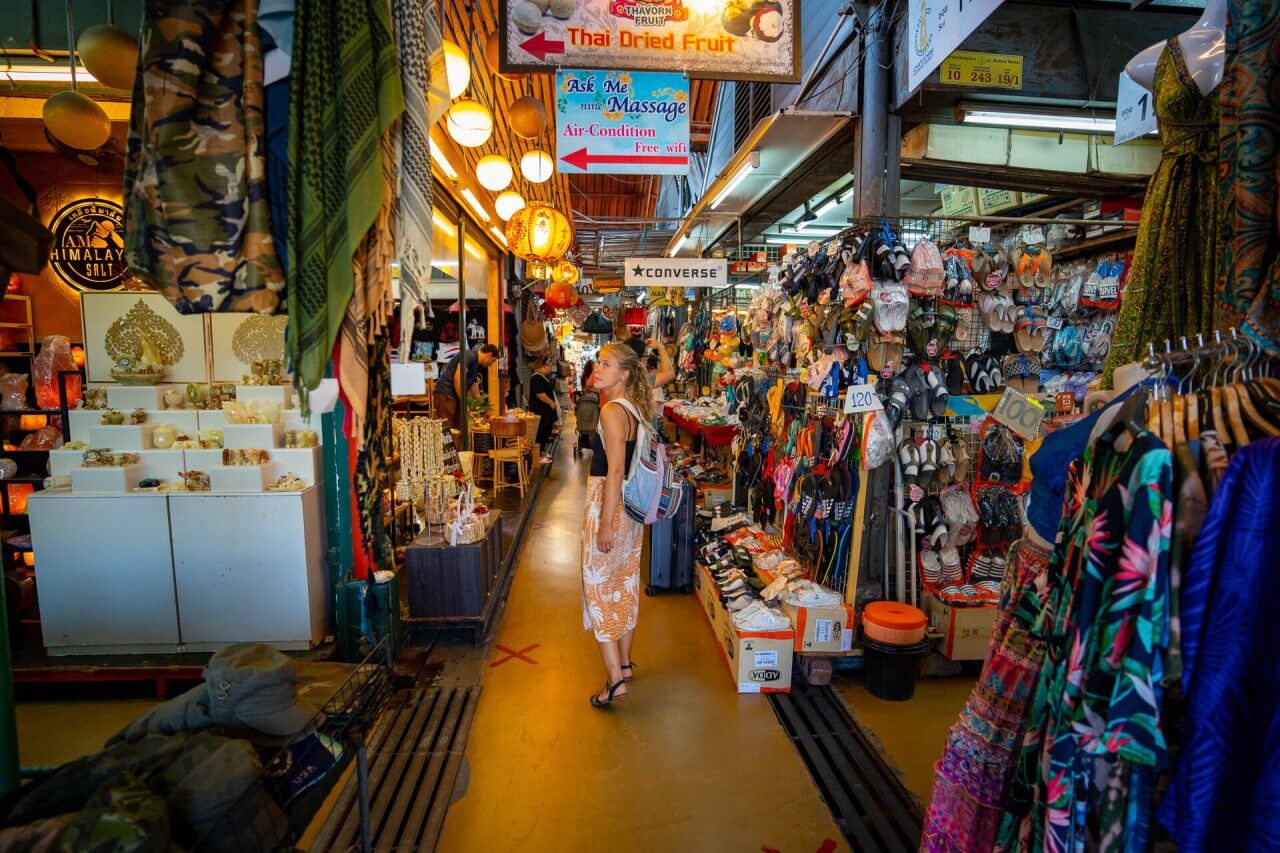
Chatuchak operates Saturday and Sunday 09:00–18:00; roughly 15,000 stalls across 35 acres and 26 sections.
The market also opens Friday evenings (18:00–midnight) for wholesale trade, and the plant section operates Wednesday and Thursday (07:00–18:00).
Categories: clothing, vintage items, plants, ceramics, antiques, food, pets, and home goods.
Prices are negotiated; sellers expect offers.
Effective bargaining approach: Browse similar items at 2–3 stalls before offering on anything; opening at 50–60% of the quoted price is standard; walking away slowly often results in a revised offer.
Bundling multiple items gives leverage.
The comparison technique (“I saw the same style at section 8 for ฿200”) works only if it’s true.
Early arrival (before 10:30 AM) avoids the worst heat and gets first access to fresh merchandise.
Late afternoon from 16:00 onward is also worth considering — temperatures drop and some vendors become more flexible on price as the day winds down.
Local Markets Outside Tourist Areas
- Or Tor Kor Market (adjacent to Chatuchak, Kamphaeng Phet MRT): Bangkok’s premium fresh produce market; no tourist markup; excellent for fruit; more expensive than wet markets but cleaner
- Khlong San Market: Local wet market near Khlong San pier; fresh produce priced for residents
- Bobae Market (Rong Mueang, near Hua Lamphong MRT): Bangkok’s largest wholesale clothing and textile market; open daily approximately 04:00–17:00 with wholesale activity concentrated in the early morning hours. Retail is available throughout the day at below-mall prices; bulk buyers should arrive before 09:00.
- Pratunam Market: Wholesale fashion; primarily women’s clothing and accessories; minimum quantities apply for wholesale rates
Wholesale Districts
Bangkok’s wholesale districts sell to Thai retail buyers as well as individual visitors.
Prices drop when you buy in multiples — always ask the vendor directly how many pieces trigger the wholesale price before committing:
- Pratunam and Platinum Fashion Mall: 5 retail floors plus food court; over 2,000 stalls. Wholesale pricing typically triggers at 3 pieces from the same stall (some require 6 or 12); single-piece retail is available at a higher per-unit price. Open daily 09:00–20:00; accessible from Phaya Thai BTS (10–15 minutes’ walk) or Pratunam pier.
- Bobae Tower: Accessories, bags, and fashion; multi-floor wholesale mall
- Saphan Phut area: Garment and accessories; very local crowd; prices lowest but least curated
These markets are best for clothing, accessories, and household goods.
For electronics, counterfeit risk is high in informal markets — buying from authorized dealers or major malls is safer.
Souvenir Shopping Without Tourist Markup
Authentic Thai crafts at honest prices:
- Chatuchak Weekend Market: Best range of authentic craft items — hand-carved wood, ceramics, silk accessories, traditional silverwork
- OTOP shops (One Tambon One Product): Government-sponsored cooperative retail for community-made Thai crafts; priced fairly; product quality varies by province and producer. Bangkok has three permanent OTOP locations: OTOP Heritage at Central Embassy (4th floor, Ploenchit BTS), OTOP The Walking Street in Silom, and OTOP The Avenue in Ramintra. OTOP also hosts large bi-annual expo events at IMPACT Muang Thong Thani where over 2,000 SMEs sell at close to factory prices — worth timing your visit around if the dates align. The next OTOP Midyear event runs June 20–28, 2026.
- Jim Thompson House shop: Premium Thai silk products; not cheap, but genuinely high-quality authenticated silk
- Temple gift shops: Lower-quality tourist goods; generally overpriced
Shopping Strategies
Best times to shop for price: weekdays at wholesale markets (fewer Bangkok retail buyers competing), and late afternoon at outdoor markets (vendors discounting end-of-day perishables and surplus stock).
Night markets after 9 PM sometimes offer discounts on food to avoid waste.
Counterfeit Goods
Counterfeit luxury goods (bags, watches, clothing, electronics) are sold openly in several areas — Patpong Night Market, Pratunam Market, and MBK Center’s upper floors.
Importing counterfeits home carries legal risk in most countries; customs agencies in the US, EU, and UK seize and sometimes fine for possession of counterfeit goods.
Authentic local crafts are both legal and more interesting as souvenirs.
Traditional Crafts and Where to Find Them
- Thai silk: Jim Thompson House shop; certified products marked with the Thai Silk label
- Nielloware: Traditional black-silver metalwork; specialist shops in Chinatown and weekend markets
- Celadon ceramics: Chatuchak and dedicated craft shops
- Benjarong porcelain: Museum shops and upper-end craft retailers
- Thai cotton: Cheaper than silk; genuine regional weaving in Chatuchak
Entertainment and Nightlife
Bangkok has entertainment options across every price point.
The main money drain in nightlife is ordering at tourist-facing bars and sky bars near major hotels, where a cocktail costs ฿500–800 — three to four times what the same drink costs at a local bar.
Mid-tier rooftop bars run ฿350–500 per cocktail and are often better value for the same views with less formality.
Happy Hour and Drink Pricing
Most bars in entertainment areas offer happy hour pricing between 5–7 PM, typically 50% off selected drinks or buy-one-get-one offers.
Khao San Road bars are structured entirely around international visitor budgets; drink prices are low by Western standards but high by local Thai standards — expect ฿120–180 for a 330 ml local beer and ฿160–220 for a large bottle in 2026.
Local Thai bars and beer gardens serve standard drinks at ฿70–120 per beer; these are less likely to be on tourist maps but are common in residential neighborhoods and near BTS stations on the outer line.
Live Music Venues
| Venue | Cover charge | Genre |
|---|---|---|
| Saxophone Pub (Victory Monument / Phaya Thai BTS) | No cover charge; drink minimum applies | Jazz, blues; has operated since 1987 |
| Brick Bar (Khao San Road) | Free most nights; special events ฿200–300 including one drink | Reggae, ska, live bands nightly 19:00–01:30 |
| Studio Lam (Thong Lo) | Permanently closed (final night: February 28, 2026) | Thai folk, experimental, world music |
| Fat Gut’s Bar | Variable | Blues, rock |
Saxophone Pub is the most consistently recommended for jazz quality and has no cover charge — you pay per drink.
Studio Lam, long Bangkok’s go-to for Thai folk and regional Asian music, permanently closed in February 2026; check local listings for venues that have taken up its programming niche.
Cultural Performances
Free and low-cost cultural performance access:
- Lak Mueang Shrine (City Pillar): Traditional Thai dance offered to the shrine spirit; free to watch; no set schedule — best chance on weekdays
- Temple fairs at local wats: Free; music, food, traditional games; check festival calendar for dates
- Erawan Shrine: Traditional dance offerings are performed when devotees commission them; free to observe
For polished traditional Thai classical dance with a guaranteed performance schedule, tourist-oriented dinner shows range from ฿800 for a seat-only ticket to ฿1,500–2,200 for dinner-and-show packages at mid-tier venues; high-end cultural dining experiences (Mandarin Oriental’s Sala Rim Naam) run ฿2,200–3,000+ and are professionally staged.
Rooftop Bars and Free Views
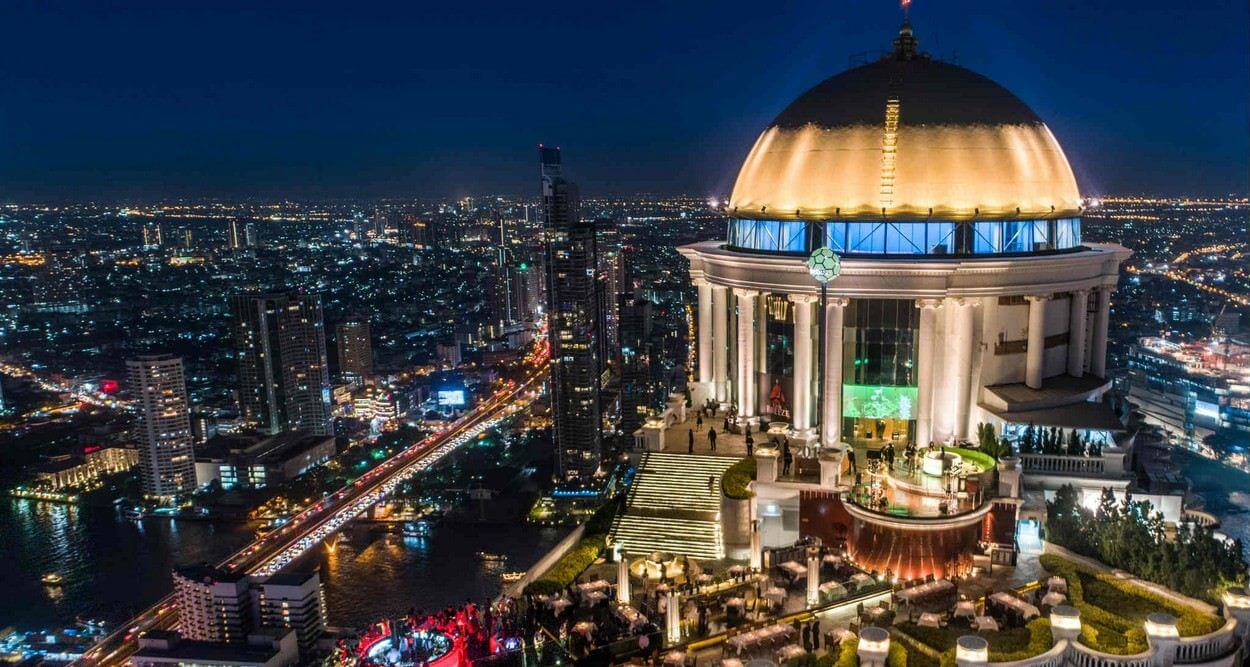
Claims about rooftop bars offering “free access” should be treated carefully — most operate a minimum spend policy or require drink orders.
Vertigo and Moon Bar (Banyan Tree Hotel), Sky Bar at Lebua, and similar venues are premium commercial operations.
Free city views are available from: Wat Saket’s Golden Mount (฿100 entry; 344 steps to the top), Wat Benchamabophit (฿100 entry; quieter and less-visited than Wat Saket), and the upper gallery floors of BACC (Bangkok Art and Culture Centre; free entry; open Tuesday–Sunday 10:00–20:00; connected to National Stadium BTS by skywalk).
The Siam Paragon sky-level walkway remains free.
Night Markets for Evening Entertainment
Night markets function as both food and entertainment destinations.
Talad Rot Fai Ratchada is explicitly entertainment-focused — food, drinks, live music at some stalls, and a generally young crowd.
Asiatique the Riverfront is more polished and slightly more expensive but free to enter.
Local Cinemas
Major cineplex chains (SF Cinema, Major Cineplex, Central World Cineplex) charge ฿120–220 per ticket for standard screenings; matinee pricing before 16:00 is typically ฿20–40 cheaper.
IMAX, 4DX, and premium formats run ฿300–500+.
English-language films screen with English audio and Thai subtitles as standard.
A relatively cheap way to spend 2–3 hours out of the heat.
Budget-Friendly Day Trips From Bangkok
Bangkok’s surrounding provinces offer some of Asia’s best-value day trips.
The Ayutthaya train is routinely cited as one of the cheapest ways to visit a UNESCO World Heritage site anywhere in Southeast Asia — ฿15 each way for a third-class seat on the 90-minute journey to 400-year-old temple ruins.
For a full breakdown of transport options, costs, and what each destination delivers, see budget day trips from Bangkok.
Independent Day Trips by Public Transport
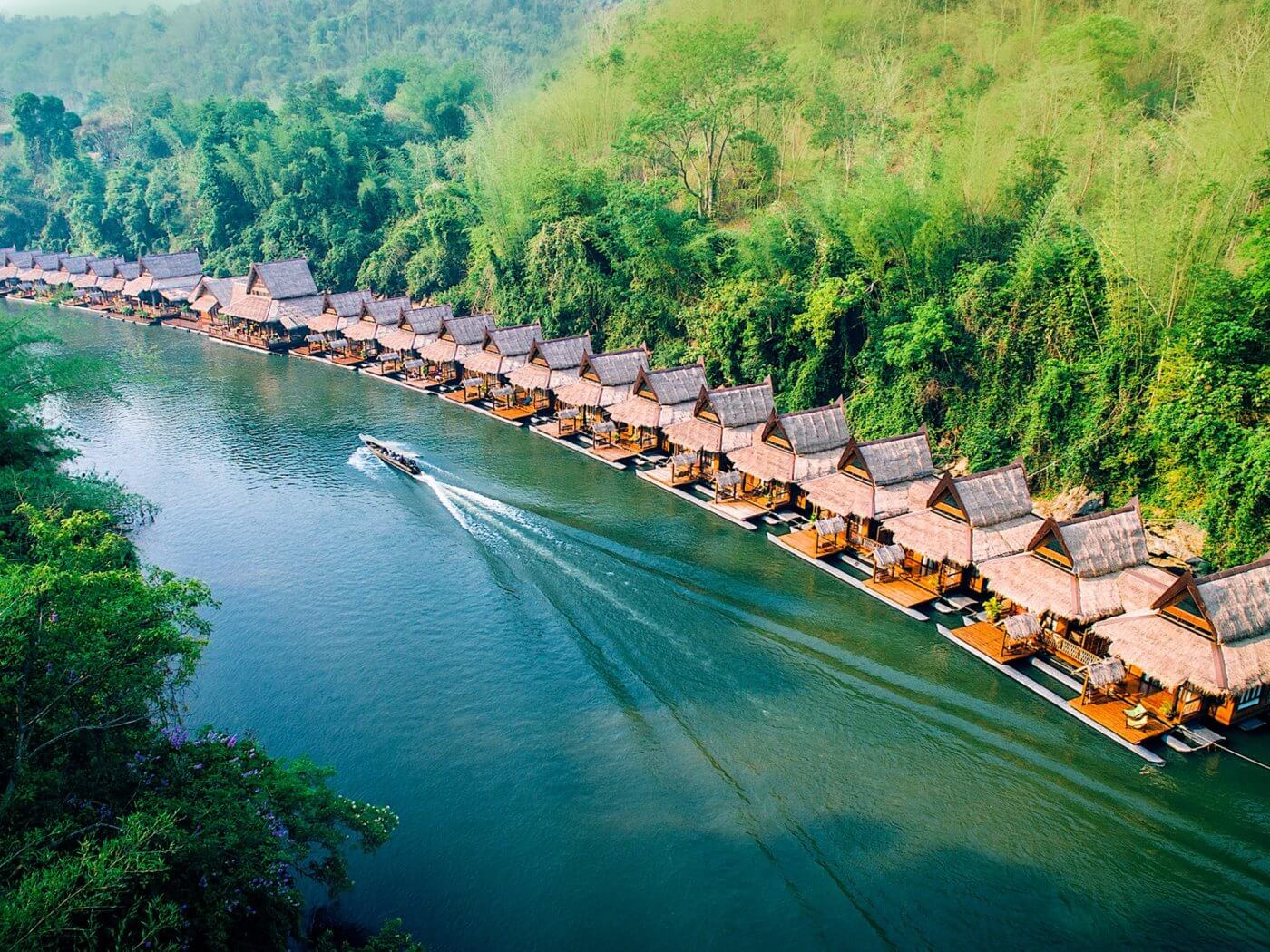
Cheapest day trip options:
- Ayutthaya: Train from Krung Thep Aphiwat Central Terminal (Bang Sue) or Hua Lamphong; ฿15 third-class / ฿60–240 second-class each way; approximately 90 minutes. Total day cost including entry fees, food, and bike hire: ฿400–700
- Kanchanaburi: Bus from Southern Bus Terminal (Sai Tai Mai) departing every 15 minutes from 04:00–20:30; ฿120–160 each way; approximately 2.5 hours to Kanchanaburi. War cemetery free; museums ฿40–100 each; Erawan Falls ฿300 for foreigners (฿60 Thais); local bus from Kanchanaburi town to Erawan ฿40, 1.5 hours
- Bang Krachao: Ferry from Klong Toei pier; ฿10–20 each way; bicycle hire on the island ฿80 per day (half-day available at ฿40/hour); half-day, near-zero cost
These three cover the value spectrum from UNESCO history to WWII history to nature, all reachable without a tour or private car.
Organized Tours vs. DIY
Organized day tours to floating markets (Damnoen Saduak + Maeklong) cost ฿1,000–1,500 per person and handle all logistics.
The public transport alternative — a bus or shared minivan from Southern Bus Terminal — costs roughly ฿50–120 roundtrip but requires navigation and patience with limited English signage.
The tour price buys convenience and an English-speaking guide; the DIY option saves roughly ฿800–1,000 per person and is feasible for travellers comfortable with Thai-language bus stops.
Note that intercity bus and van fares increased in April 2026, so check current rates when purchasing tickets.
For Ayutthaya and Kanchanaburi, the DIY train/bus approach is straightforward enough that tour pricing is hard to justify unless you specifically want a guide’s historical commentary.
Beach Day Trips on a Budget
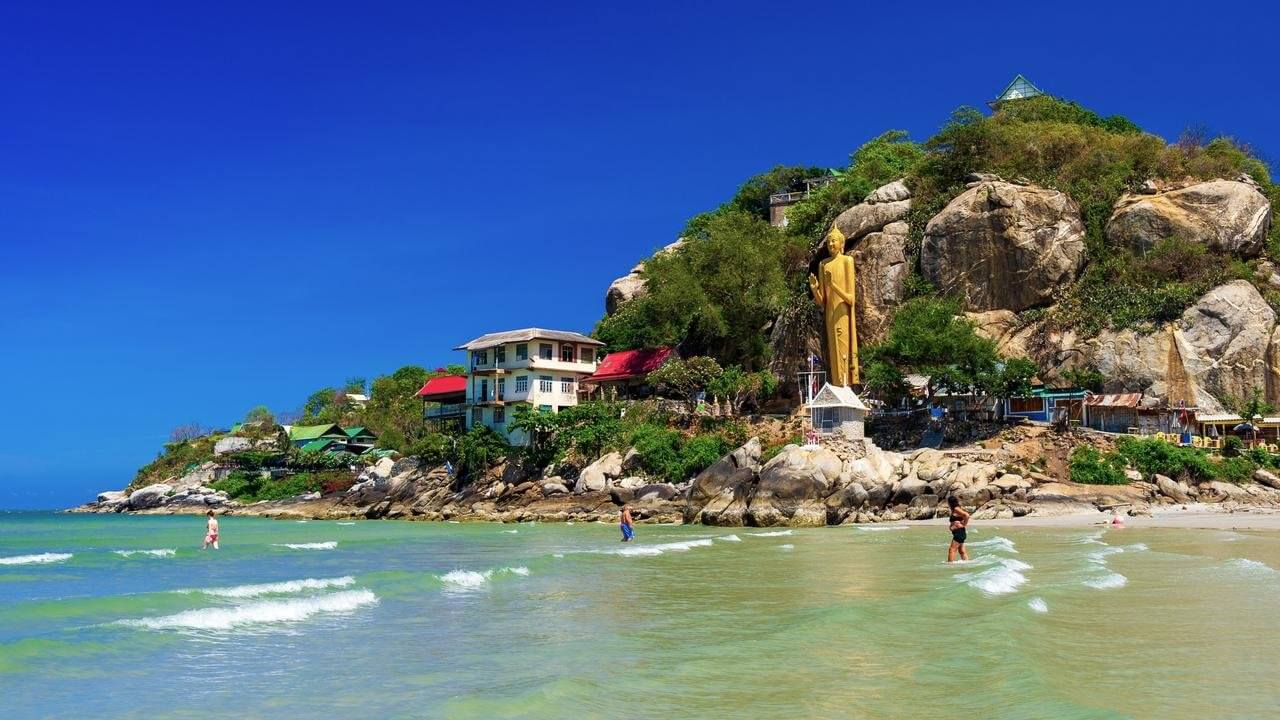
- Hua Hin: Bus from Southern Bus Terminal (Sai Tai Mai) or Eastern Bus Terminal; ฿180–270 each way; approximately 2.5–3 hours. Budget accommodation available for overnight stays.
- Bang Saen: Bus from Eastern Bus Terminal (Ekkamai BTS) or minivan from Victory Monument; ฿110–120 each way; approximately 1.5–2 hours. Cheapest beach accessible from Bangkok.
- Pattaya: Bus from Eastern Bus Terminal (Ekkamai BTS); ฿131–149 each way (Roong Reuang Coach, departures every 20 minutes 05:00–22:00); approximately 2 hours. Koh Larn ferry from Bali Hai Pier, Pattaya: ฿30–50 each way for the standard boat service.
Day Trip Budget Calculation
| Destination | Return transport | Entry fees | Food | Total |
|---|---|---|---|---|
| Ayutthaya | ฿30–80 (train ฿15–40 x2; tuk-tuk ฿100 roundtrip on site) | ฿100–200 (2–3 temples at ฿50 each; a few are free) | ฿200–300 | ~฿430–680 |
| Kanchanaburi | ฿240–320 (bus ฿120–160 x2) | ฿340–400 (WWII museum ฿40–100 + Erawan Falls ฿300 + local bus ฿40–80) | ฿200–300 | ~฿780–1,020 |
| Pattaya + Koh Larn | ฿322–348 (bus ฿131–149 x2 + ferry ฿30–50 x2) | ฿0–200 | ฿300–500 | ~฿620–1,050 |
| Bang Saen | ฿220–240 (bus/minivan ฿110–120 x2) | ฿0 | ฿200–400 | ~฿420–640 |
Group Tour Cost Comparison
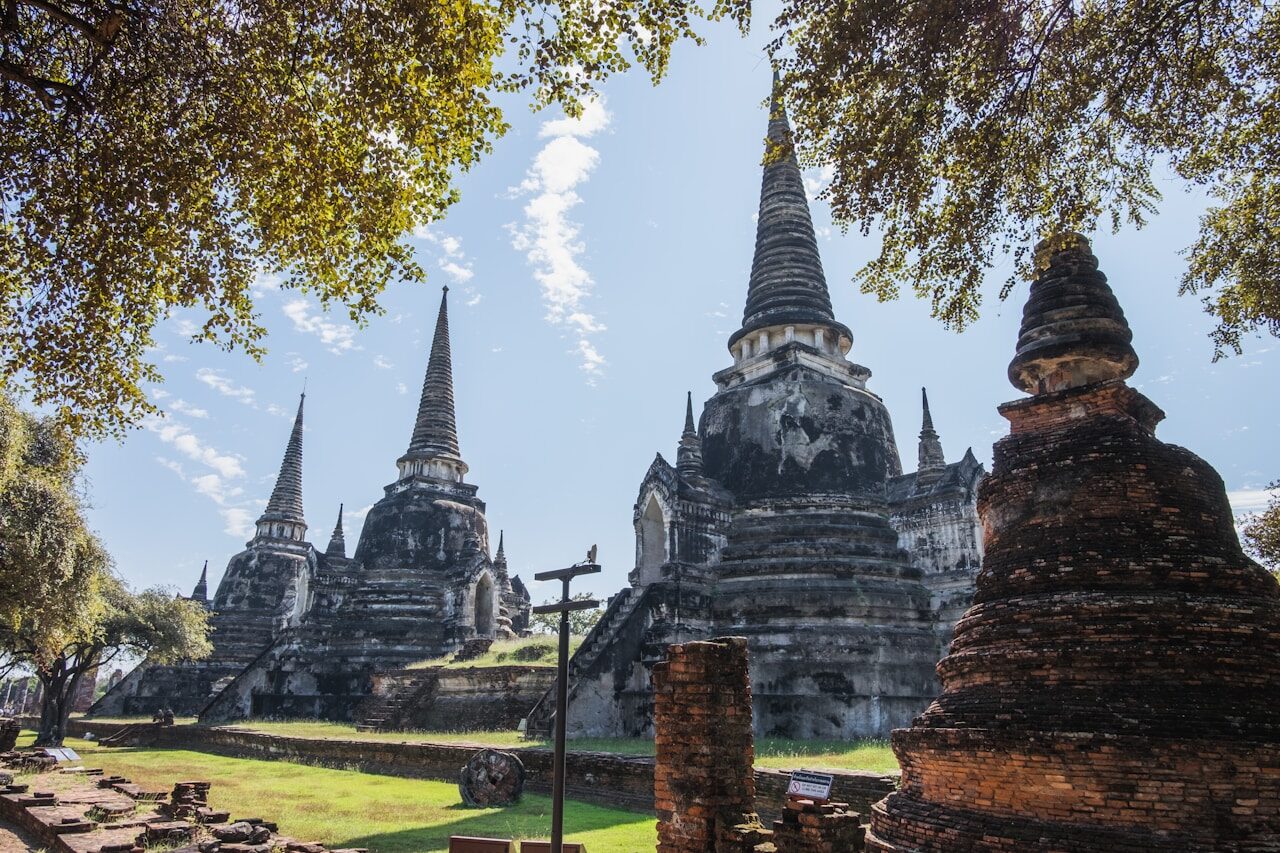
Standard tour agency rates for Bangkok area day trips:
- Ayutthaya: ฿1,000–1,900 per person (transport + lunch + boat + entry + guide); budget group tours start around ฿1,000; private tours from ฿1,800+
- Floating markets (Damnoen Saduak + Maeklong): ฿700–1,500 per person; budget half-day group tours start around ฿700 from Bangkok; full-day combos with Maeklong market run ฿1,000–1,500
- Khao Yai National Park: ฿2,500–3,500 for a full-day group tour including transport, park entry (฿400), guide, and water; private tours start at ฿5,000+
Independent travel consistently costs 50–70% less than organized tours for the same destinations where public transport is feasible.
Khao Yai is the clearest exception where a tour adds genuine value — no public transport reaches the park, and wildlife spotting requires a guide with local knowledge.
Local Transport for Day Trips
All buses and trains used for day trips depart from Bangkok’s main transport hubs: Hua Lamphong Station (train, central Bangkok), Thonburi Station (trains west including Kanchanaburi), Southern Bus Terminal (buses south — Hua Hin, Cha-Am), Eastern Bus Terminal at Ekkamai BTS (buses east — Pattaya, Bang Saen), and Northern Bus Terminal at Mo Chit (buses north and east).
Knowing which terminal serves which direction is the main planning requirement.
Money-Saving Tips for Long-Term Stays
Bangkok’s value proposition improves significantly for stays beyond two weeks.
Monthly accommodation rates, local SIM data plans, and market-rate food eliminate most of the premium that daily tourist pricing adds.
Monthly Accommodation
Hotels negotiated to monthly rates typically cost 40–60% less than the same room booked nightly — always ask the front desk directly rather than booking through a platform for stays of 2+ weeks.
Serviced apartments are the most functional option for stays over a month: kitchen access eliminates restaurant dependence, and laundry facilities reduce service costs.
Common areas for monthly rentals:
- On Nut / Bearing (Sukhumvit outer, E9–E12 BTS): ฿9,000–19,000 per month for a studio (23–35 sqm); best-value range is ฿10,000–15,000 in older buildings within 10 minutes’ walk of BTS
- Chatuchak / Lat Phrao: ฿8,000–16,000 per month for a studio; slightly cheaper than outer Sukhumvit; MRT access via Chatuchak Park and Phahon Yothin stations
- Silom / Sathorn: ฿15,000–35,000 per month for a studio or compact one-bedroom; central; BTS Sala Daeng and MRT Lumphini within walking distance of most buildings
SIM Cards and Communication
Thai SIM cards from AIS and True (which merged with DTAC in 2022 and now operates as True Move H) are available at every 7-Eleven, airport counter, and dedicated phone shop.
Passport is required for registration — staff will register it on the spot.
Prepaid tourist SIM plans in 2026:
- AIS tourist SIM: ฿299 for 15 GB + calls, 8-day validity; longer plans up to ฿599 for 30 days
- True Move H tourist SIM: ฿449–599 for unlimited data (fair-use throttling applies after daily cap), 15–30 day validity
- eSIM (Airalo and similar providers): from ฿175 ($5) for data-only plans, activated instantly via QR code — useful for eSIM-compatible phones
Buying at the airport is convenient and staffed 24/7 at Suvarnabhumi and Don Mueang.
Buying in the city at a dedicated mobile shop usually produces better plan advice.
Topping up is straightforward at any 7-Eleven.
Healthcare and Medical Tourism
Bangkok’s private hospitals (Bumrungrad, Bangkok Hospital, Samitivej) serve international patients at prices 50–70% below equivalent care in the US, UK, or Australia — and up to 80% cheaper for dental work specifically.
Specialist consultations at top-tier hospitals run ฿2,000–4,000 and GP visits ฿1,500–2,000, versus $150–300 and $100–200+ respectively in Western equivalents.
English-language communication and internationally accredited equipment are standard at all three major hospitals.
Many long-term visitors time non-urgent medical or dental work to coincide with Bangkok stays.
Bumrungrad International in particular functions as a medical hub with transparent, pre-treatment all-inclusive package pricing listed on its website — covering surgery, hospital stay, medications, and sometimes local transfers.
Travel insurance with medical coverage remains essential regardless of Thailand’s lower costs.
Private hospitals require upfront deposits before treatment regardless of insurance: ฿50,000–100,000 for uninsured walk-ins and planned procedures; up to ฿200,000–800,000 for major surgery.
Emergency care bills for serious incidents (motorbike accidents, for example) can reach ฿200,000–2,000,000 depending on severity.
Insurance coverage of at least ฿3,000,000 ($85,000 USD) is the recommended minimum.
Banking and ATM Costs
For stays over a week, ATM fees (฿250 per withdrawal at most Thai bank ATMs; ฿150 at AEON Bank) add up meaningfully.
Strategies:
- Withdraw larger amounts less frequently to reduce transaction count
- Charles Schwab (US), Starling (UK), and similar bank accounts refund foreign ATM fees — worth setting up before travel
- Wise (formerly TransferWise) prepaid card offers competitive exchange rates and low ATM fees
- Avoid airport and hotel ATMs which sometimes offer dynamic currency conversion (letting the ATM choose the exchange rate for you) — always decline and let your home bank do the conversion
Long-Stay Budget Calculation
Monthly living costs for a working visitor or digital nomad:
| Category | Budget | Mid-range |
|---|---|---|
| Accommodation | ฿9,000–15,000 | ฿15,000–30,000 |
| Food (eating local primarily) | ฿8,000–12,000 | ฿12,000–22,000 |
| Transport | ฿1,500–2,500 | ฿3,000–6,000 |
| SIM / internet | ฿400–600 | ฿400–600 |
| Incidentals | ฿2,000–4,000 | ฿4,000–8,000 |
| Total | ~฿21,000–34,000 | ~฿34,000–67,000 |
These figures don’t include flights, visa fees, travel insurance, or activities.
Visa Options for Extended Stays
Important update as of May 2026: Thailand’s Cabinet reverted the visa-free entry policy from 60 days back to 30 days for nationals of 54 eligible countries (down from 57).
A limit of two visa-free entries per calendar year now applies for the standard 30-day tier.
A single 30-day extension is available for ฿1,900 cash at an immigration office (Bangkok’s main office: Government Complex Building B, Chaeng Watthana Road, Lak Si; MRT Purple Line to Chaeng Watthana station; open Monday–Friday 08:30–16:30, closed 12:00–13:00).
This gives a maximum of 60 days per entry under the visa-free scheme.
For longer stays, Thailand offers the Destination Thailand Visa (DTV) — designed for remote workers, digital nomads, and participants in activities like Muay Thai or cooking courses.
The DTV costs ฿10,000, requires proof of funds of ฿500,000, and grants 5-year multiple-entry with cumulative stays of up to 180 days per entry (extendable once for another 180 days).
The Thailand Elite visa and Long-Term Resident (LTR) visa are additional options for higher-income long-stay visitors.
Teaching English or freelance remote work are common income strategies; tax and legal requirements depend on nationality and work type.
Expat Community Resources
Bangkok has active Facebook groups for expats covering accommodation, visa advice, job opportunities, and recommended services.
Relevant groups include “Expats in Bangkok,” “Bangkok Expats,” and neighborhood-specific groups.
These are useful for finding monthly apartment deals posted directly by landlords and for advice on specific services (hospitals, dentists, immigration agents).
What Are the Most Common Budget Mistakes Travelers Make in Bangkok?
Three mistakes drain most budgets: overpaying for taxis instead of using the BTS, eating only in tourist-facing restaurants, and staying in overpriced areas near major attractions when equivalent accommodation exists two BTS stops away for half the price.
Overpriced Tourist Areas and Alternatives
| Tourist default | Local alternative | Approximate saving |
|---|---|---|
| Khao San Road restaurant meal | Same dish at Phra Athit Road | 50–100 baht per meal |
| Riverside hotel restaurant | Local pier eateries | 200–400 baht per meal |
| Tuk-tuk from Grand Palace to Khao San | Walk (15 minutes) or river boat | 80–150 baht |
| Souvenir from Grand Palace stalls | Chatuchak Weekend Market | 40–60% less |
| Taxi from Suvarnabhumi to city | Airport Rail Link + BTS | 200–350 baht |
Scam Awareness
The scams that cost Bangkok visitors money most consistently:
The gem scam: A friendly stranger guides you to a “special sale” on rubies or sapphires at a shop that happens to be closed today for a “government special.” The gems are low-quality or synthetic.
The scam has operated since the 1980s and is well-documented.
No Thai government official or friend-of-a-friend ever creates a personal gem-buying opportunity for a tourist.
The closed temple
: A tuk-tuk driver or bystander informs you that your intended temple is closed today for a special ceremony and helpfully offers to take you somewhere else (the “somewhere else” involves a shop where the driver earns commission).
Check temple opening hours independently before leaving accommodation.
Taxi without meter
: Always confirm the meter is on before the journey starts.
If a driver refuses to use the meter, get out.
Metered taxis within central Bangkok rarely cost more than 100–150 baht for typical tourist journeys.
Tuk-tuk “city tours”
: Offers of city tours for 20–50 baht include mandatory stops at shops.
The ride is subsidized by the shops.
Budget extra time and resistance.
Hidden Fees and Service Charges
Practical checks:
- Restaurant bills: Service charge (10%) and VAT (7%) are added by many mid-range and above restaurants. These appear as separate line items. Check the bill before paying.
- ATM dynamic currency conversion: ATMs operated by Thai banks (not your card’s network) will offer to charge you in your home currency. Always decline and let your card’s bank do the conversion — the ATM’s rate is consistently worse.
- Hotel “resort fees”: Less common in Bangkok than in US or Caribbean hotels, but present at some international chains. Verify what’s included in the quoted rate.
- Taxis with additional charges: Expressway tolls (฿25–75 per toll gate for passenger cars) are paid by the passenger, not the driver. Drivers should ask before taking the expressway, but the charge itself is legitimate and standard, not a scam. A trip from Suvarnabhumi Airport to central Bangkok typically passes 1–2 toll gates.
Currency Exchange Best Practices
Ranked by exchange rate quality (best to worst) for most visitors — card type affects the relative ranking of ATMs:
- Licensed exchange booths (SuperRich, OH! RiCH, Vasu Exchange, Happy Rich) — consistently 2–3% better than bank branches; SuperRich has 30+ Bangkok locations
- ATMs with a no-foreign-fee card (Wise, Charles Schwab, Starling) — Visa/Mastercard network rates often match or beat SuperRich; the ฿250 ATM fee is the only cost
- Bank branches — same Visa/Mastercard rate as ATMs, but bypasses the ฿250 ATM fee if you request a cash advance at the counter; bring passport and expect variable teller familiarity with the process
- Hotel exchange desks
- Airport exchange counters (worst rates and service charges; change only what you need to reach city accommodation)
How Expensive Bangkok Really Is
The frequent tourist experience of Bangkok feeling expensive is almost always a result of eating primarily in tourist-facing restaurants and using taxis instead of BTS.
A simple test: buy the same meal (pad thai, khao man gai, or similar) at a vendor near a BTS station serving local workers versus at a restaurant on Khao San Road or near the Grand Palace.
The price difference is typically 60–150% — the same dish, the same quality, wildly different pricing based purely on which customer is expected to order it.
Tipping Guidelines
| Situation | Tipping practice |
|---|---|
| Street food stalls | No tip expected; rounding up small change is fine if you want |
| Local restaurants with no service charge | Round up or leave ฿20–50 for sit-down service |
| Restaurants with service charge on bill | No additional tip needed — service charge goes to staff |
| Taxi (metered) | Round up to nearest ฿5 or ฿10 |
| Grab/Bolt app rides | No tip expected; optional small tip via app |
| Traditional massage | ฿50–100 per hour — hand directly to your therapist |
| Spa treatments / longer sessions | ฿100–200 depending on total cost and quality |
| Hotel housekeeping | ฿20–50 per day, left visibly on the bed or nightstand |
Tipping is not embedded in Thai service culture the way it is in the US.
Thai locals themselves rarely tip.
Tips are genuinely appreciated — especially at massage shops and smaller restaurants where wages are low — but never expected, and declining to tip at a local street stall is completely normal, not rude.
Emergency Fund and Backup Planning
Keep some cash in a separate location from your main wallet — a hotel safe or inner bag pocket.
ATMs occasionally run out of cash or have technical problems (this happens more on weekends and Thai public holidays).
Having 2,000–3,000 baht accessible outside your main wallet covers taxis, food, and accommodation for 24–48 hours without ATM access.
Backup payment cards from different bank networks improve reliability — if Visa ATMs are problematic, a Mastercard card accesses a different network.
When Is the Cheapest Time to Visit Bangkok?
The rainy season (May–October) offers the lowest prices — hotel rates drop 40–50% compared to peak season (December–March), and attractions are significantly less crowded. The trade-off is afternoon rain and high humidity, though the experience varies considerably within the season.
For a full seasonal breakdown covering weather, events, and how each period affects costs across activities and accommodation, see best time to visit Bangkok on a budget.
Monsoon Season (May–October): Lower Costs
Rain in Bangkok during the wet season is not uniform across the five months. June–August
is the sweet spot: hotel discounts of 40–50% apply, rain arrives predominantly as heavy afternoon thunderstorms of one to two hours, and mornings are generally dry. September and early October
are the genuinely difficult months — rain can persist for hours or days, and flash flooding occasionally affects lower-lying streets and underpasses.
Budget travellers with flexibility should target June, July, or early October rather than September.
Practical wet-season budgeting:
- Hotel rates: 40–50% below peak season for mid-range properties; luxury hotels in 2026 are discounting even more aggressively due to softer international demand, with some five-star properties offering up to 70% off standard rates
- Street food: same pricing year-round
- Attractions: no pricing change, but significantly fewer queues — the Grand Palace at 09:00 in July is a fundamentally different experience from the same visit in January
- Outdoor day trips: manageable in the morning; Erawan Falls and Khao Yai are greener; September hiking trails can be slippery and some national park sections close temporarily
The Vegetarian Festival (September–October, date varies) and Loy Krathong (usually November, occasionally late October) fall in or near wet season and are worth planning around if you’re interested in either.
Peak Season (November–February): Higher Prices but Best Weather
November through February is cool season — 20–32°C rather than 35–40°C in May.
The combination of tolerable heat and dry weather makes this the most pleasant time to visit, which is reflected in prices.
Accommodation rates peak during:
- Christmas and New Year (December 25–January 1)
- Chinese New Year (January or February — date varies)
- Songkran (mid-April: not technically cool season but very busy)
Booking 2–3 months ahead for these periods is necessary to get reasonable rates.
Last-minute availability exists but at significantly higher prices.
Shoulder Months (March–May): Warm but Affordable
March through May is hot (35–40°C peak heat) but prices start returning to mid-range levels as the peak season winds down.
Songkran in April drives a price spike around the holiday itself but the preceding weeks offer decent value with good weather.
If visiting in March–May, plan to be at outdoor sites before 11 AM and indoors or in the shade during midday.
Festival Calendar for Budget Planning
| Period | Event | Impact on prices |
|---|---|---|
| Mid-April | Songkran (Thai New Year) | High demand; book early |
| October (varies) | Vegetarian Festival (Chinatown) | Minimal impact on general prices |
| November (full moon) | Loy Krathong | Some areas busier; minimal price impact |
| January/February (varies) | Chinese New Year | Chinatown area busy; minor price increase |
| Late December | Christmas/New Year | Significant price increase across all accommodation |
Packing for the Climate
- Cool season (November–February): Light layers; one light cardigan for air-conditioned interiors (BTS, malls, restaurants) and very light clothing outside
- Hot season (March–May): Lightest possible fabrics; sun protection essential; a personal fan or cooling towel makes midday touring considerably more bearable
- Wet season (June–October): Compact umbrella or rain jacket; quick-dry clothing; waterproof bag or liner for electronics
A quality compact umbrella — available at any 7-Eleven in Bangkok for ฿89–200 (small foldable to full-size) or from pharmacies and convenience stores for up to ฿300 — is the single most useful weather accessory across all seasons.
The air conditioning inside every BTS station, mall, and restaurant means you’ll also want a light layer regardless of the outdoor temperature.
Health Planning
Standard vaccinations for Southeast Asia: Hepatitis A, Typhoid, and up-to-date routine vaccines.
Malaria risk in Bangkok is essentially zero; it’s relevant only in rural border areas.
Dengue fever exists in Bangkok; mosquito repellent is the practical precaution.
Travel insurance with medical coverage is the most important financial precaution — a hospital admission at Bumrungrad or any Bangkok private hospital without insurance requires upfront deposits of ฿50,000–100,000 before treatment begins for planned procedures; emergency admissions can require more.
Thai private hospitals do not negotiate on deposits, and insurance reimbursement comes after the fact.
Creating a Realistic Bangkok Budget Plan
Bangkok’s cost landscape rewards research and flexibility in equal measure.
The difference between a visitor who spends ฿3,000 a day and one who spends ฿1,200 on identical activities often comes down entirely to advance preparation — knowing which transport to take, where to eat, and which costs are fixed versus negotiable before arrival rather than figuring it out on the ground.
Before You Leave
Pre-trip budgeting: research actual current costs (not blog posts more than 2 years old — prices have shifted meaningfully since 2023), set separate budget categories for accommodation, food, transport, activities, and a buffer for unplanned costs.
The buffer should be 15–20% of total planned spend.
Expense tracking apps (Trail Wallet, Trabee Pocket, or any simple note-taking approach) take 30 seconds per entry and prevent the “where did my money go?” problem at the end of the trip.
Daily Spending Limits
Based on verified 2026] Bangkok pricing:
| Category | Budget tier | Mid-range tier |
|---|---|---|
| Accommodation | ฿350–600/night (hostel dorm ฿250–400; budget private room ฿500–900) | ฿1,000–2,500/night (3-star hotel, en-suite, air-con, BTS-adjacent) |
| Food | ฿200–350/day (3 street food meals + drinks, eating where locals eat) | ฿500–900/day (mix of street food, sit-down Thai restaurants, one coffee shop) |
| Transport | ฿100–250/day (BTS/MRT + 1–2 short Grab rides) | ฿250–500/day (BTS/MRT + more frequent Grab, occasional taxi) |
| Activities | ฿0–300/day (free temples, markets, parks; one paid entry) | ฿300–700/day (2–3 paid attractions at current entry fees) |
| Buffer | ฿200–400/day | ฿400–700/day |
| Daily total | ฿850–1,300/day | ฿2,450–5,300/day |
A few calibration notes worth reading alongside this table:
- The ฿300 accommodation floor in the original draft is no longer realistic for a private room with air-conditioning; that price now gets you a dorm bed or a fan room in a very basic guesthouse. Add ฿200–300 to access a clean, air-conditioned private room.
- Food costs are highly location-dependent — the same pad kra pao (basil stir-fry) costs ฿45–60 at a residential neighbourhood stall and ฿120–180 on Khao San Road or near the Grand Palace. The budget tier assumes you eat where the BTS station workers eat, not where the hotels point you.
- Transport at ฿100–250/day is genuinely achievable if your accommodation is within 10 minutes’ walk of a BTS or MRT station. Add ฿100–150 if you need Grab bikes or songthaews to reach your accommodation from the nearest station.
Emergency Funds and Backup Plans
Carry emergency cash equivalent to 2,000–3,000 baht in a separate location.
Have backup payment cards from two different networks.
Know the international number for your bank before leaving home.
Keep a photo or scan of your passport and travel insurance documents accessible offline on your phone.
Adjusting Mid-Trip
If accommodation is absorbing too much budget: check what’s available at the next lower tier, or look one BTS stop further from the tourist center.
If food is unexpectedly expensive: the fix is always the same — move from tourist-facing restaurants to office district lunch vendors and market stalls.
If transport costs are high: confirm you’re using BTS/MRT for the routes they cover and only using taxis for the gaps.
Budget Templates and Tracking Tools
Simple tools that work:
- A spreadsheet with columns for date, category, amount, and running total
- Any notes app used consistently
- Trail Wallet (iOS/Android) for baht-denominated tracking with visual budgets
The tool matters less than the habit of recording immediately after each transaction.
Technology for Bangkok Navigation and Cost Saving
- Google Maps: The single most reliable tool for BTS/MRT routing, bus routes, river taxi services, and walking navigation — with live fare estimates and real-time departure times. Download an offline Bangkok map before arriving; connectivity in BTS stations and tunnels varies.
- Grab: Fixed-price ride booking before you get in the car; eliminates metered taxi uncertainty. Set pickup and destination in advance and the price is locked.
- Bolt: Grab’s main competitor in Bangkok; often 10–20% cheaper for short rides; worth having both apps installed and comparing prices before booking.
- Bangkok City Metro (third-party app, iOS and Android): Covers all Bangkok rail lines in one interface — BTS Skytrain, MRT Blue/Purple/Yellow/Pink, Airport Rail Link, SRT commuter rail, and BRT. More reliable for multi-line routing than either the official BTS or MRTA apps.
- Moovit: Best app for bus routing in Bangkok; shows live arrivals and route guidance for the city’s notoriously un-signposted bus network.
- Google Translate camera mode (Google Lens): Point at Thai-script menus, signs, or packaging for instant translation; works offline if the Thai language pack is downloaded in advance.
- LINE: Thailand’s dominant messaging app; used by most local businesses, restaurants, and guesthouses for reservations and communication. More useful than WhatsApp or email for contacting Thai businesses directly.
Reviewing and Learning
Tracking daily expenses through even one Bangkok trip produces a realistic baseline for the next visit or for informing others about what Bangkok actually costs.
The most useful thing to record beyond totals: which spending categories produced the most value and which were routine overpricing that could be cut.
Frequently Asked Questions (FAQs)
For a comfortable experience without luxury: ฿1,500–2,500 per day ($24–36 USD) — though staying under ฿1,000/day requires consistently choosing the cheapest accommodation, eating every meal at street stalls, and limiting paid attractions to one or two per week.
Yes, with reasonable judgment: eat where there’s a local queue, watch food cooked from raw to finished, and avoid shellfish at lunchtime when it’s been sitting in heat. Millions of Bangkok residents eat street food daily.
The risk of digestive problems comes far more from tourist-area restaurants with lower volume and less consistent freshness than from high-turnover street vendors.
Taxis. Bangkok’s metered taxis are not expensive per ride — 80–150 baht for typical journeys — but four to six taxi rides per day adds up to 400–900 baht, nearly the cost of a budget hotel room. The BTS/MRT handles 90% of typical tourist journeys for a fraction of that cost.
Checking whether a destination is within 10 minutes’ walk of a BTS or MRT station before booking accommodation is the single decision that affects daily costs most.
For Songkran (mid-April), Chinese New Year, and Christmas/New Year week: at least 6–8 weeks ahead. For peak season (November–February) generally: 2–4 weeks ahead. For wet season (May–October): last-minute booking works and often yields lower prices than advance booking.
For digital nomads considering monthly rates: contacting properties directly 2–4 weeks ahead of your target arrival is the practical lead time. More information on pre-trip preparation is in things to know before visiting Bangkok.

A lifestyle and OOTD blogger, Kannaya Nareswari enjoys the small pleasures of cooking, traveling, and documenting ordinary events. She uses genuine storytelling to communicate her love of fashion, culinary explorations, and wanderlust. She is based between Bali and Bandung. She enjoys enjoying coffee at a secret café or experimenting with recipes in the kitchen when she's not traveling to new places or styling her most recent ensemble.