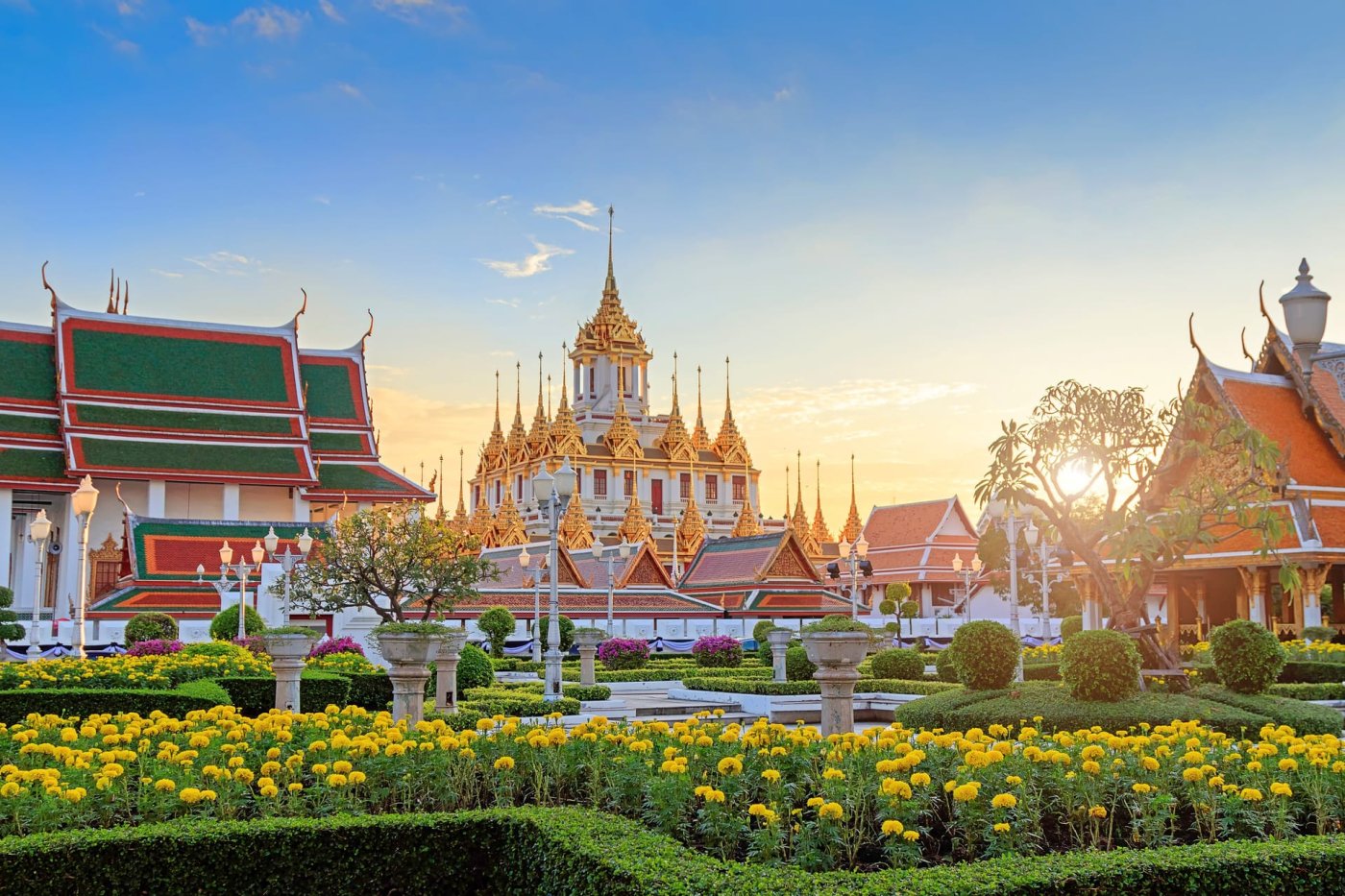



Things To Do In Bangkok For Free: Complete 2026 Guide – Bangkok has more genuinely no-cost experiences than most Asian capitals — temples, parks, markets, river walks, festivals, and neighborhoods you can spend full days exploring without paying entry anywhere.
Bangkok’s free attractions divide neatly into two categories: things that are free because they’ve always been public (parks, canals, street markets, festivals), and things that are free because the city is dense enough that interesting stuff simply happens on the streets.
Both categories are substantial.
You can fill a week without paying a single entrance fee, though a few popular temples that the draft overstates as free actually charge for entry — that distinction matters when you’re planning on a tight budget.
The best things to do in Bangkok guide covers the full range of Bangkok experiences across all budgets and will help you decide which paid attractions are worth adding to your free-heavy itinerary.
Bangkok Free Attractions at a Glance
- Dozens of Bangkok's community temples have no entrance fee; the major landmarks (Grand Palace, Wat Pho, Wat Arun) charge admission but have free exterior viewing areas nearby.
- Chatuchak Weekend Market, Chinatown, Or Tor Kor Market, and most street markets are free to browse; you only spend if you buy.
- Lumphini Park, Benjakitti Park, Chatuchak Park, and Saranrom Park all have free entry; King Rama IX Park offers 200 acres (80 hectares) of botanical gardens with a nominal ฿10 admission fee.
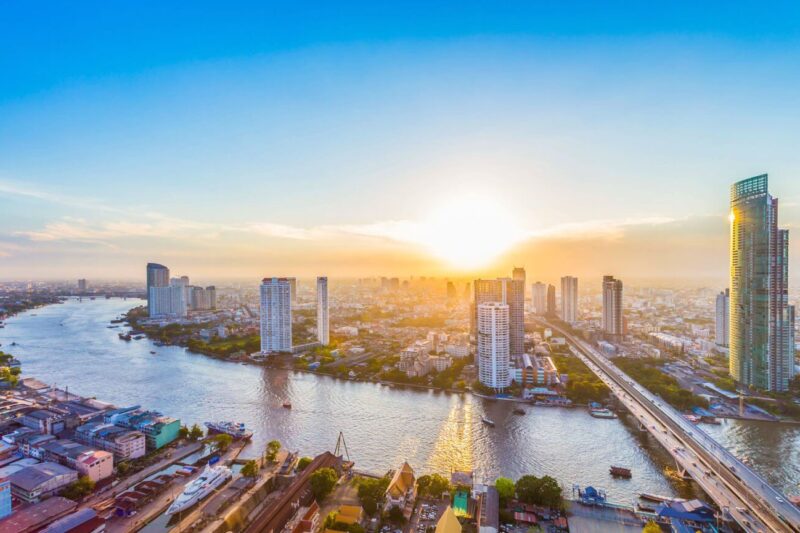
- The Chao Phraya River's public walkways, piers, and bridges offer free views and boat-watching throughout the day.
- Songkran (April), Loy Krathong (November), and Chinese New Year celebrations in Chinatown are all free to participate in or watch.
- The Bangkok Art and Culture Centre (BACC) has free entry (some special exhibitions charge ฿20–฿100); several contemporary galleries in Thonglor and Ari districts charge nothing.
Are Bangkok’s Famous Temples Free to Visit?
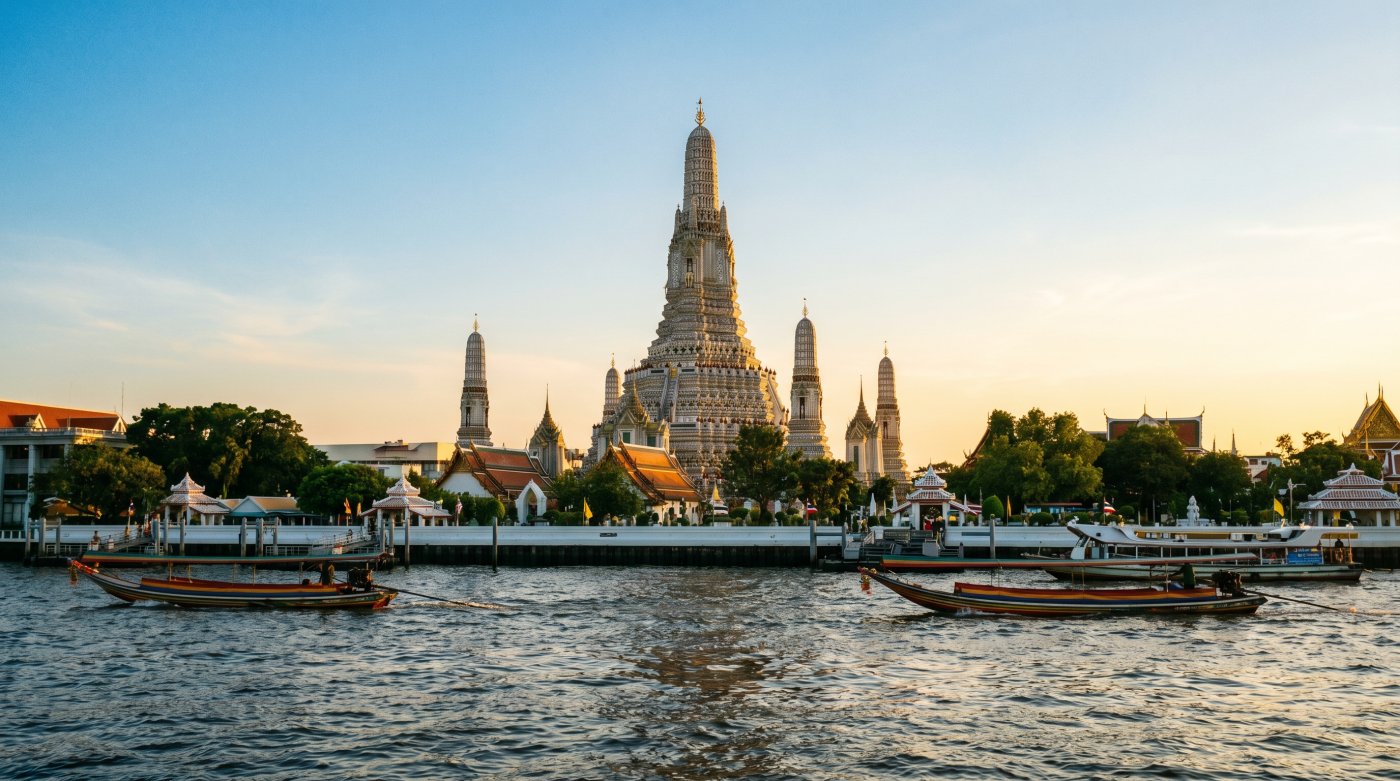
The honest answer: it depends on the temple.
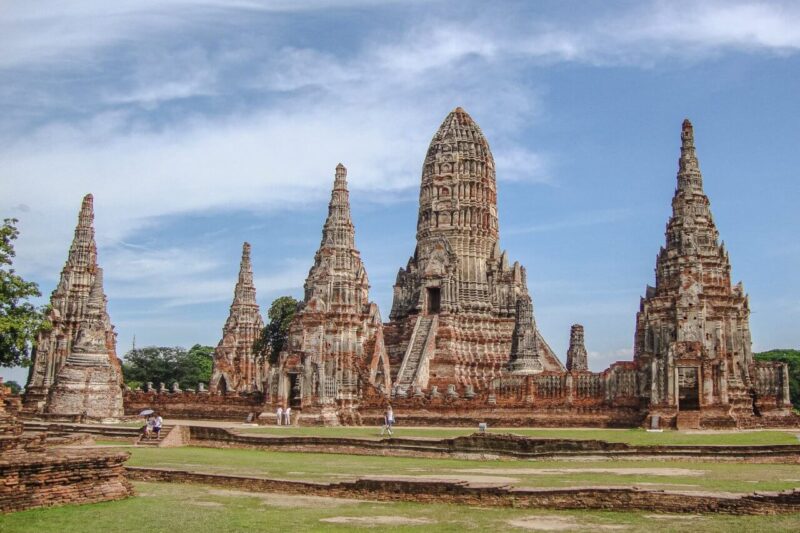
Bangkok has hundreds of temples, and the vast majority — the neighborhood wats in every district — are free to enter.
The city’s most famous landmarks charge admission.
Knowing the difference saves you from planning a “free temple day” and arriving at the Grand Palace without 500 baht.
Major temples that charge entry (as of 2026):
- Grand Palace (includes Wat Phra Kaew + Queen Sirikit Museum of Textiles): ฿500
- Wat Pho (Reclining Buddha): ฿300
- Wat Arun: ฿200
- Wat Saket Golden Mount (to climb): ฿100 (temple grounds are free)
- Wat Benchamabophit (Marble Temple): ฿100
Free alternatives and genuinely free experiences:
- Free exterior views of Wat Arun from the riverbank opposite, or from the public walkways near Tha Tien pier — excellent photography without paying entry
- Free walking around the Grand Palace exterior walls and Sanam Luang ceremonial ground
- Erawan Shrine: completely free, no entry fee, open 24 hours
- Dozens of community temples throughout every Bangkok neighborhood — free entry, active places of worship, and far less crowded than the tourist landmarks
Genuinely Free Temples Worth Visiting
- Erawan Shrine sits in the middle of the Ratchaprasong intersection, surrounded by shopping malls and hotel towers. It honors the four-faced Brahma (Phra Phrom) and is one of the most active religious sites in the city. Businesspeople, students, taxi drivers, and tourists all stop here. Classical Thai dancers perform when worshippers make offerings in fulfillment of prayers — you’ll see performances throughout the day without paying anything. Incense and flower garlands are available to purchase (a few baht) if you want to make an offering, but observing is entirely free.
- Wat Traimit in Chinatown houses the largest solid-gold Buddha image in the world. The ground-level courtyard and exterior of the building are free; the upper floors charge ฿40 to view the Golden Buddha and an additional ฿100 for the Chinatown Heritage Museum on the third floor. The free sections are still worth visiting.
- Wat Ratchanatdaram near the Golden Mount is free to enter and has an unusual multi-spired design unlike most Bangkok temples. Far fewer tourists than Wat Pho or Wat Arun.
- Wat Suthat on Bamrung Mueang Road is one of Bangkok’s most important temples and charges ฿100 for foreign visitors to enter the main temple area, but the surrounding courtyard with its 28 Buddha images can be seen from the entrance.
The best approach: pick any Bangkok neighborhood and walk.
You’ll encounter 3-4 working temples within a few blocks of each other, virtually all with free entry.
Free Exterior Views of Paid Temples
Wat Arun is arguably more photogenic from across the river than from inside.
The public riverside walkway near Tha Tien pier gives an unobstructed view of the full spire complex.
The cross-river ferry costs approximately ฿3–5 one way — not technically free but close enough that it belongs here.
Wat Pho’s exterior boundary walls run along several streets around the temple.
You can walk the perimeter, photograph the decorative gates and rooflines, and see parts of the chedis (towers) from street level without paying entry.
Free Markets and Street Food Districts
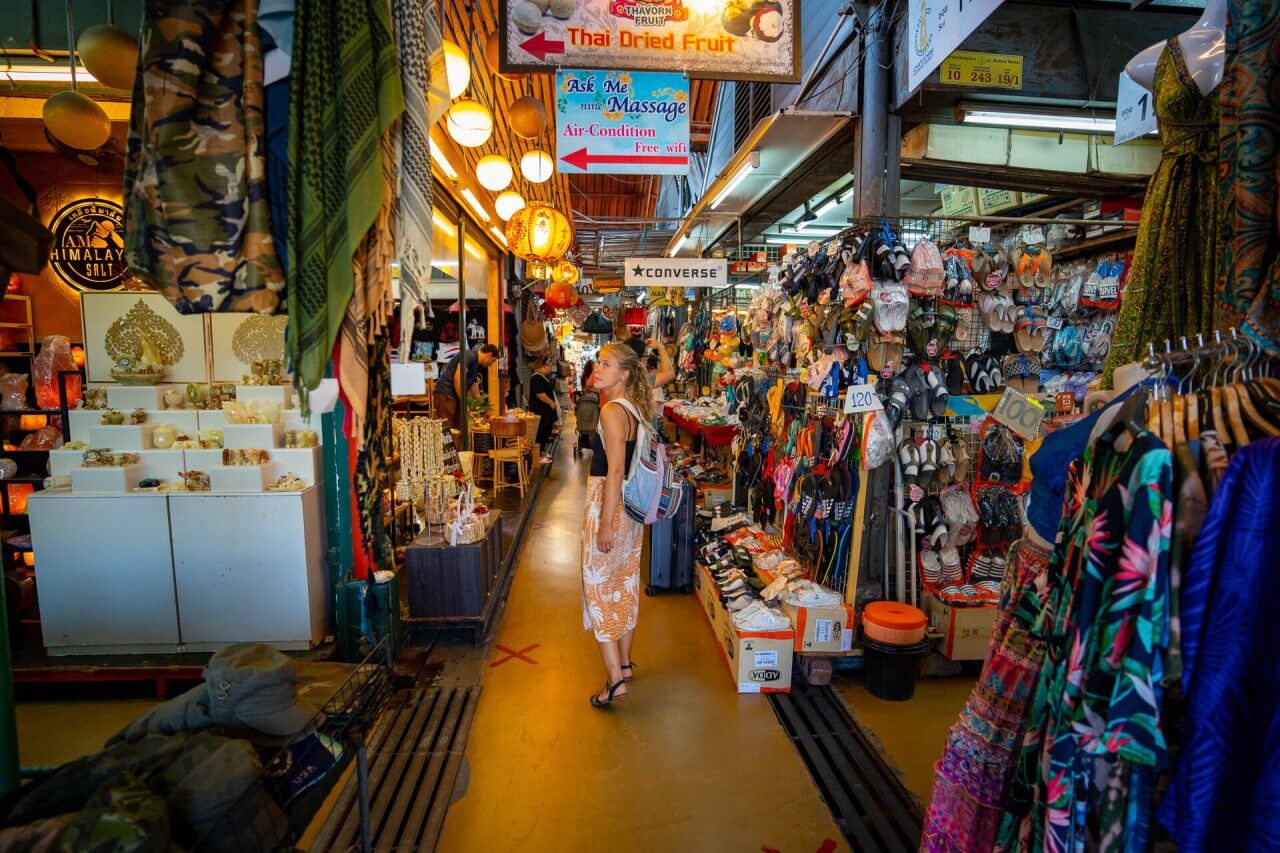
Bangkok’s markets are free to enter — the only cost is what you choose to buy.
They’re also among the city’s most genuinely interesting spaces, operating as working commercial and social hubs rather than tourist showcases.
Chatuchak Weekend Market
Chatuchak is one of the largest weekend markets in Asia, covering roughly 35 acres with over 15,000 stalls across 26 sections.
No entrance fee.
It opens Saturday and Sunday only, typically 9 AM to 6 PM, and serves a mix of local shoppers and tourists.
The market is divided into numbered sections by category: vintage clothing, houseplants, ceramics, antiques, food, live animals, and much more.
The food section (Section 26 and surrounding areas) has eating options if you want to spend, but browsing the whole market costs nothing.
Getting there: BTS Mo Chit or MRT Chatuchak Park/Kamphaeng Phet stations all have exits walking distance from the market.
Arrive before noon — heat builds through the afternoon in the covered sections.
Chinatown (Yaowarat District)
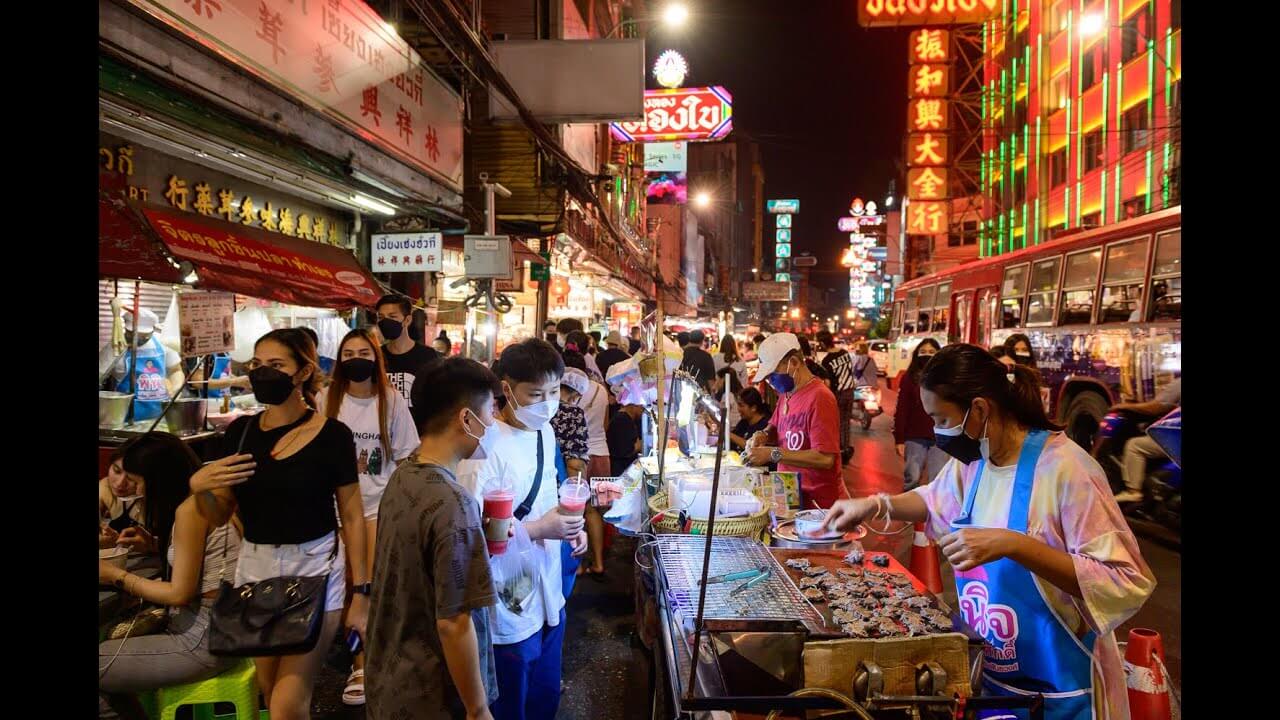
Bangkok’s Chinatown is genuinely one of the best free places to spend an afternoon or evening in the city.
The main drag is Yaowarat Road, running east from the Hua Lamphong MRT station area.
Gold shops, dried goods merchants, and Chinese herbal medicine stores occupy century-old shophouses alongside modern restaurants and noodle stalls.
Walking costs nothing.
Yaowarat Road and the surrounding sois (Sampeng Lane, the wholesale textile market district) are dense with activity.
Evenings are busier and more atmospheric as street food vendors set up along the road.
Chinese New Year turns this area into one of Bangkok’s most spectacular free events.
Or Tor Kor Market
Located directly across from Chatuchak Market, Or Tor Kor is a premium fresh produce market selling high-quality fruits, vegetables, packaged Thai foods, and prepared dishes.
It caters primarily to upscale local shoppers.
Vendors selling tropical fruits — mangosteen, rambutan, dragon fruit, durian — often give samples as you browse, particularly for fruits you might not recognize.
This is not a formal tasting experience; it’s normal market practice.
Entry is free; the market operates daily, roughly 6 AM to 6 PM.
Khao San Road and Banglamphu
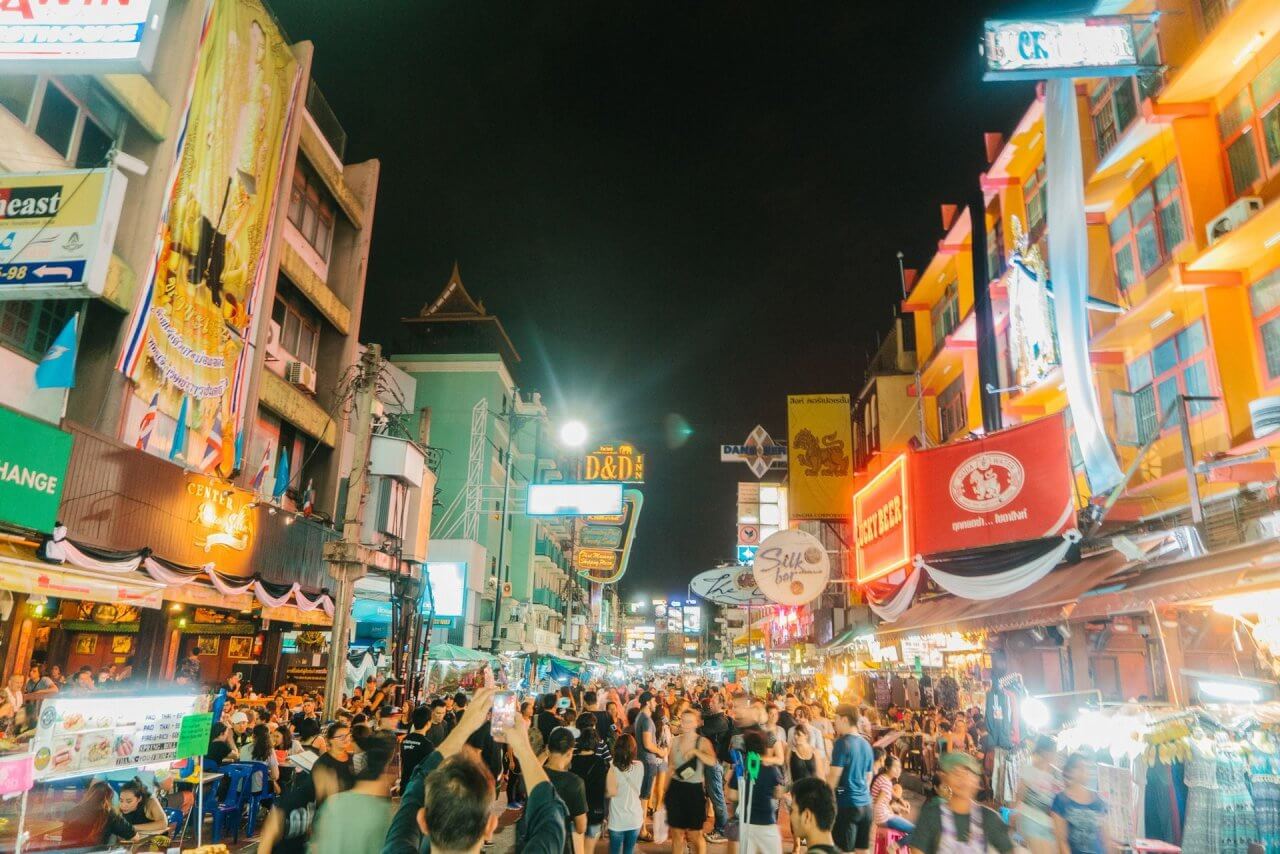
Khao San Road’s appeal is the street itself rather than anything you buy.
It’s the center of Bangkok’s backpacker district and has a particular character — a mix of guesthouses, street food, souvenir vendors, travel agencies, and a diverse crowd from across the world.
Evenings bring street musicians, occasional fire performers, and dense foot traffic.
The nearby Soi Rambuttri is quieter with a more relaxed atmosphere.
The Phra Sumen Fort at the end of the canal walkway near Khao San Road is a genuine historic structure surrounded by a small park and good street art installations on the adjacent walls.
No money required to walk any of this.
Parks and Green Spaces
Bangkok’s parks are well-maintained, free to enter, and genuinely useful as breaks from the city’s heat and noise.
Most have outdoor exercise equipment, running tracks, and shaded areas.
If you’re planning a full day with children, Lumphini and Chatuchak parks are practical anchors — large enough to spend hours in, with shade and running room.
For a more comprehensive guide to family-specific free activities including temple visits and market browsing, the visiting Bangkok with kids guide covers what works best across different age groups.
Lumphini Park
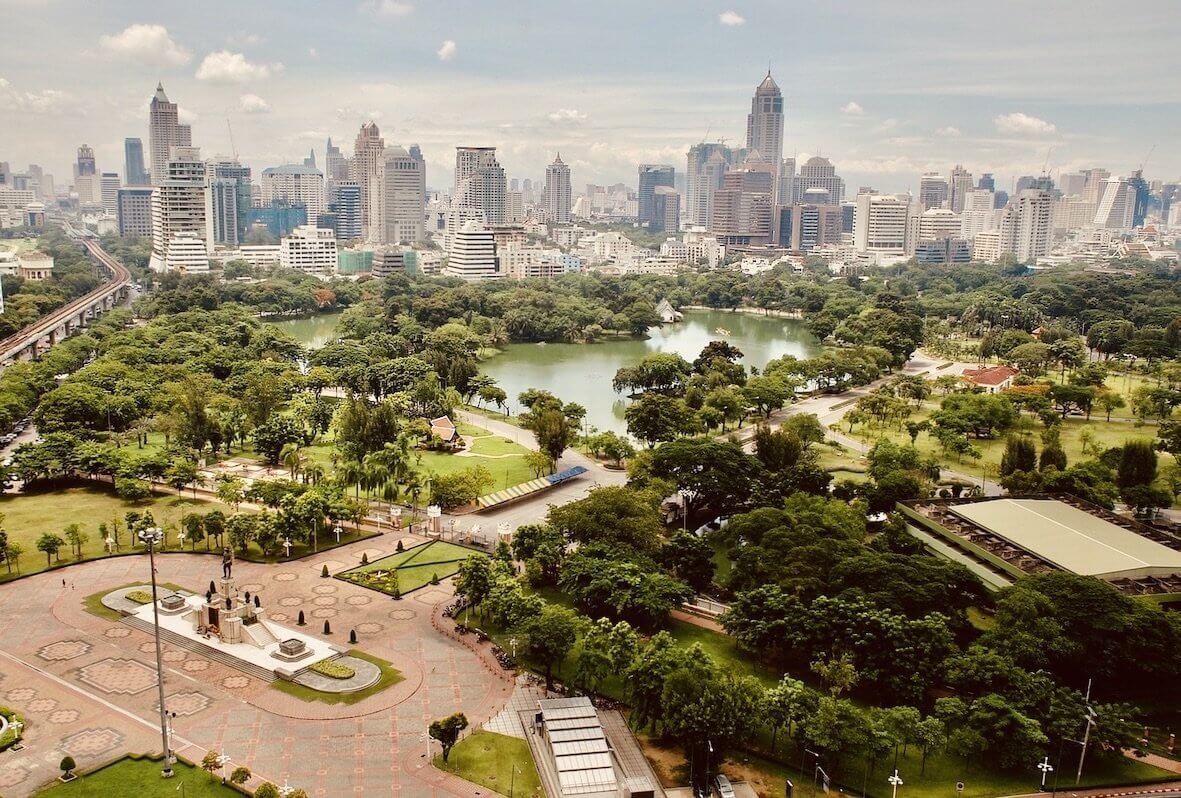
Lumphini is Bangkok’s most central park — 142 acres (57.6 hectares) in the middle of the Silom/Sathorn business district.
Entry is free; the park runs 4:30 AM to 9 PM daily.
Early mornings (5–8 AM) are the most interesting time to visit.
Groups of local residents do tai chi, aerobics, and jogging sessions.
Monitor lizards — large, prehistoric-looking water monitors — sunbathe along the lake edges throughout the day and are completely habituated to people.
Paddle boats are available to hire on the lake at low rates, though this isn’t free.
The park has outdoor exercise equipment stations, a large artificial lake with walking paths around it, and a seasonal free concert series on the main stage: the Concert in the Park by the Royal Bangkok Symphony Orchestra (RBSO) runs every Sunday from January through early March, starting at 5:30 PM.
Admission is completely free.
Benjakitti Park
Benjakitti sits adjacent to the QSNCC (Queen Sirikit Convention Centre) and wraps around a large lake.
Entry is free.
The jogging track circles the lake; sunrise and sunset on the water with the surrounding office towers as a backdrop are photogenic.
The park has been expanded significantly and the transformation is now complete.
The expanded Benjakitti Forest Park — built on the site of a former tobacco factory — opened in phases between 2022 and 2023, bringing the total area to roughly 72 hectares (180 acres).
The expansion added wetlands, four new ponds, a 1.6 km elevated skywalk (the Green Mile) connecting to Lumphini Park, cycling and walking paths, repurposed factory buildings converted into a sports center and museum, and over 8,000 new trees.
It now stands as the largest public recreational space in downtown Bangkok, and remains completely free to enter.
Chatuchak Park
Immediately adjacent to Chatuchak Weekend Market, Chatuchak Park is the quieter counterpart — large shade trees, lawns, and paved paths.
Accessible by BTS Mo Chit or MRT Chatuchak Park; both exits lead into the park area.
Useful as a recovery break from the market’s heat and density.
Has public restrooms.
Saranrom Park
Saranrom sits just southeast of the Grand Palace in the Old City.
It’s compact — about 7 acres — and was formerly a royal garden.
Entry is free.
The shaded lawns, ornamental ponds, and old trees make it a pleasant rest stop between Old City temple visits.
It’s not well-signposted for tourists but is easy to find on Google Maps.
King Rama IX Park
In Bangkok’s eastern suburbs, King Rama IX Park covers approximately 200 acres (80 hectares) and contains themed botanical gardens, cycling paths, paddle boat areas (rental fee), and ornamental lakes.
Entry costs a nominal ฿10.
Less convenient from the city center — requires a taxi or Grab to reach — but significant in scale if you want a full-day park experience.
Bangkok Neighborhoods Worth Exploring on Foot
Several Bangkok neighborhoods are genuinely interesting to walk through at no cost — not just as transit but as destinations in themselves.
For a detailed comparison of which neighborhoods suit different travel styles and accommodation budgets, the best neighborhoods in Bangkok guide maps out each area’s character and access.
Rattanakosin (Old City)
The historic district centered on the Grand Palace contains Bangkok’s densest concentration of temples, historic buildings, and old commercial streets.
You’ll pay to enter the major sites, but the streets themselves are open — the narrow lanes around Mahakan Fort, the shophouses on the approach to Wat Pho, the ceremonial Ratchadamnoen Avenue, and the flower and amulet markets near Sanam Luang are all free.
Sanam Luang (the Royal Field in front of the Grand Palace) is a large open ground used for ceremonies, kite-flying in season, and general public use.
No entry fee.
Thonburi District
Crossing the Chao Phraya River to Thonburi — via ferry from Tha Chang pier, about ฿3–5 — puts you in a part of Bangkok that sees a fraction of the tourist traffic of the Old City.
Traditional wooden shophouses, community temples, and quieter canal-side streets run parallel to the river.
Wat Arun is here, and the small streets immediately around it have a different character from the Old City — more residential, less organized for tourists.
Walking the lanes near the temple and the river takes 30–60 minutes and costs nothing (Wat Arun entry is separate).
Banglamphu and the Canal Walkway
Bangkok has a well-maintained walking path running along the Banglamphu canal (Khlong Banglamphu), connecting the Democracy Monument area toward the Old City.
The path passes Phra Sumen Fort — a restored 18th-century defensive fort in good condition — and runs along the canal banks through a stretch of green space.
The street art on the walls around Phra Sumen Fort is substantial and regularly updated by local artists.
The Banglamphu area around Khao San Road contains several murals and painted facades worth finding with a short walk.
Charoenkrung (Bang Rak)
Bangkok’s oldest paved road runs south from the Old City through what was historically the city’s Western trading district.
The area now has art galleries, craft studios, and independent restaurants occupying old shophouses alongside working garment merchants and river transport businesses.
Walking Charoenkrung between the Bang Rak BTS area and the Asiatique entrance gives a varied stretch of old and new Bangkok — free, though some of the galleries inside have admission fees for specific exhibitions.
Free Cultural Experiences and Entertainment
Bangkok punches well above its weight for free cultural programming.
Between major art centers, independent galleries, and neighborhood cultural spaces, you can fill several days without spending a baht on admission.
Bangkok Art and Culture Centre (BACC)
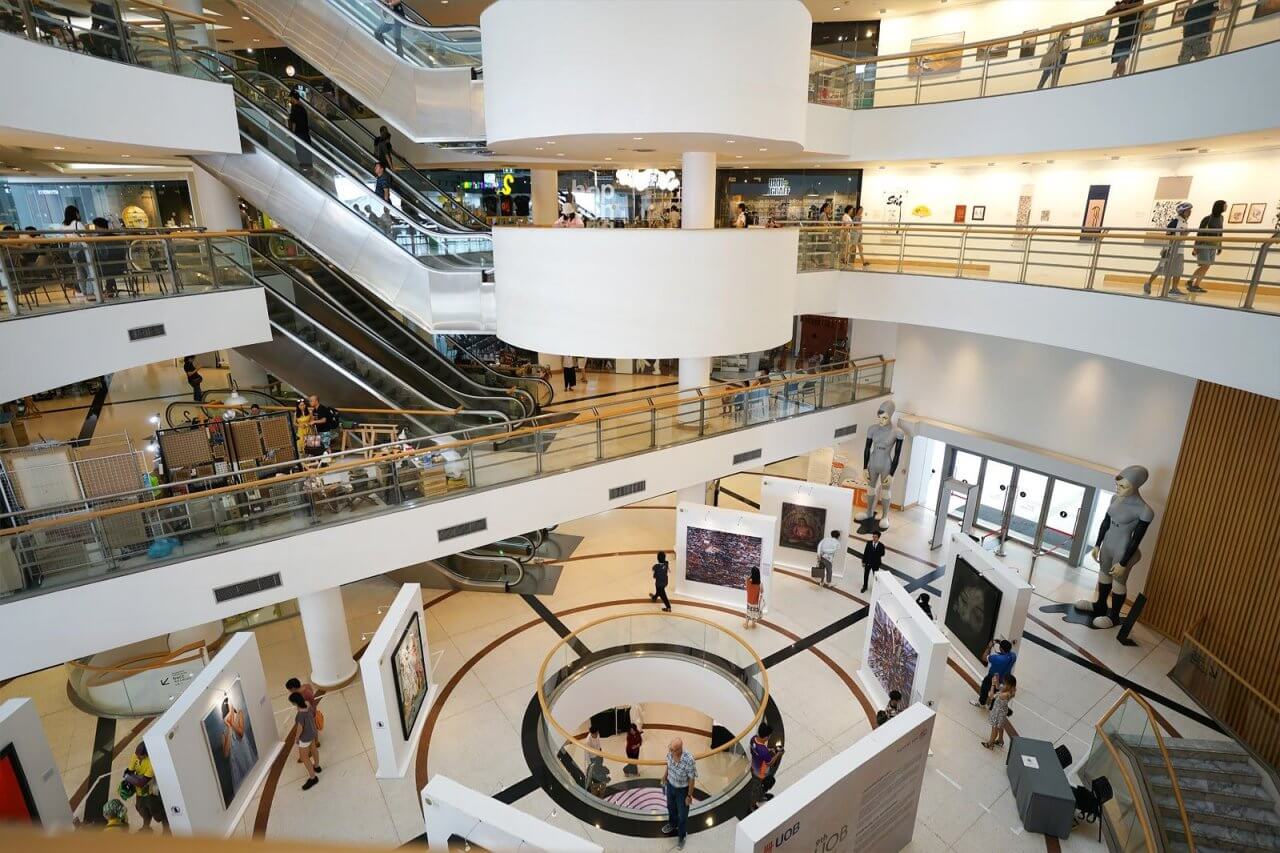
The BACC is located near BTS National Stadium station (not Siam — a common mix-up) and has free entry, with some special exhibitions charging ฿20–฿100.
It occupies nine floors of gallery space with rotating exhibitions covering contemporary Thai and international art, plus occasional music, theatre, and film events.
The building is air-conditioned and open Tuesday–Sunday, 10 AM–8 PM (closed Mondays).
Makes a good midday stop.
Contemporary Galleries with Free Entry
Several Bangkok galleries outside the BACC have permanent free-entry policies:
- Tang Contemporary Art (Rama IV Road, near BTS Nana): rotating contemporary Asian art, free entry, open Tuesday–Sunday
- Bangkok CityCity Gallery (Sathorn, near MRT Lumphini): one of Bangkok’s leading contemporary art spaces with bold rotating exhibitions, free entry, open Wednesday–Saturday, 1–6 PM
- Number 1 Gallery (Silom Road and River City Bangkok): contemporary art across two locations, no admission fee
Gallery admission policies change — check current hours and entry requirements directly before visiting.
Weekend Cultural Shows at Shopping Malls
Siam Paragon, CentralWorld, and Terminal 21 host cultural performances on select weekends, including traditional Thai dance, classical music, and festival-related programming.
These are promotional events tied to shopping center calendars and are free to watch.
Check the individual mall’s website or information desk for current schedules — there’s no reliable published calendar that covers all of them consistently.
Street Performances and Buskers
Chatuchak Weekend Market, Siam Square, and the BTS station areas attract buskers and street performers, particularly on weekends and evenings.
The quality varies considerably; some are genuinely skilled.
Leaving a small tip is not required but is appreciated.
Erawan Shrine Dance Performances
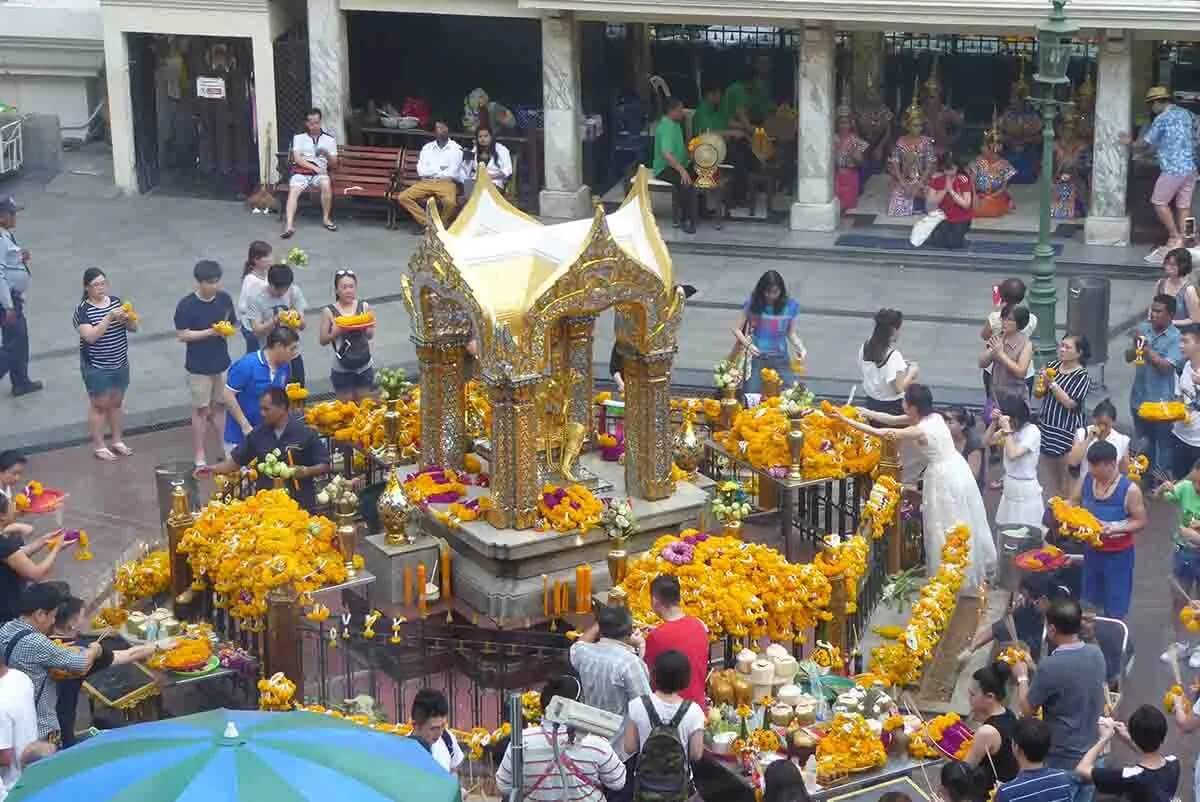
As mentioned in the temples section, classical Thai dancers perform at Erawan Shrine throughout the day.
These are active religious ceremonies rather than tourist shows — which makes them more interesting, not less.
The timing is unpredictable since performances are tied to worshippers fulfilling vows, but late morning through late afternoon typically sees regular activity.
River and Canal Activities at No Cost
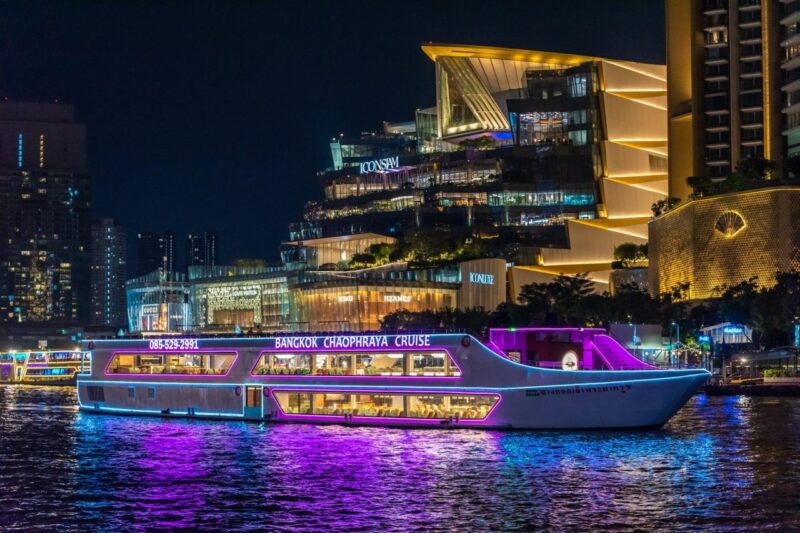
Bangkok’s waterways are free to observe, walk alongside, and photograph from public infrastructure.
The river itself — the Chao Phraya — is one of the city’s most atmospheric spaces, with continuous boat traffic and temple views.
If you want to use river ferries as cheap transport between free attractions (not just for sightseeing), the getting around Bangkok guide explains the Orange Flag express boat system and how to use river and canal boats as part of your daily transport.
Chao Phraya Riverside Walks and Viewing Points
- Asiatique Riverfront: A riverside shopping and entertainment development with free access to the waterfront boardwalk, pier areas, and views across the river. No entry fee to walk the grounds; individual restaurants and attractions inside charge normally.
- The Tha Tien and Tha Chang pier area: The public riverside near these Old City piers is the best viewpoint for Wat Arun across the river. Standing at the ferry pier during morning or afternoon light gives clear photography of the full temple front without any entry cost.
- Saphan Phut (Memorial Bridge) area: One of Bangkok’s oldest river bridges; the walkways along the riverbank here see less tourist traffic than the temple piers and give good perspectives on working river life — cargo boats, commuter ferries, and traditional wooden vessels.
- Ratchawong Pier area in Chinatown: Less visited by tourists; the pier and surrounding area have an active working river character, particularly in the mornings when fresh goods arrive by boat.
Canal Boat Watching
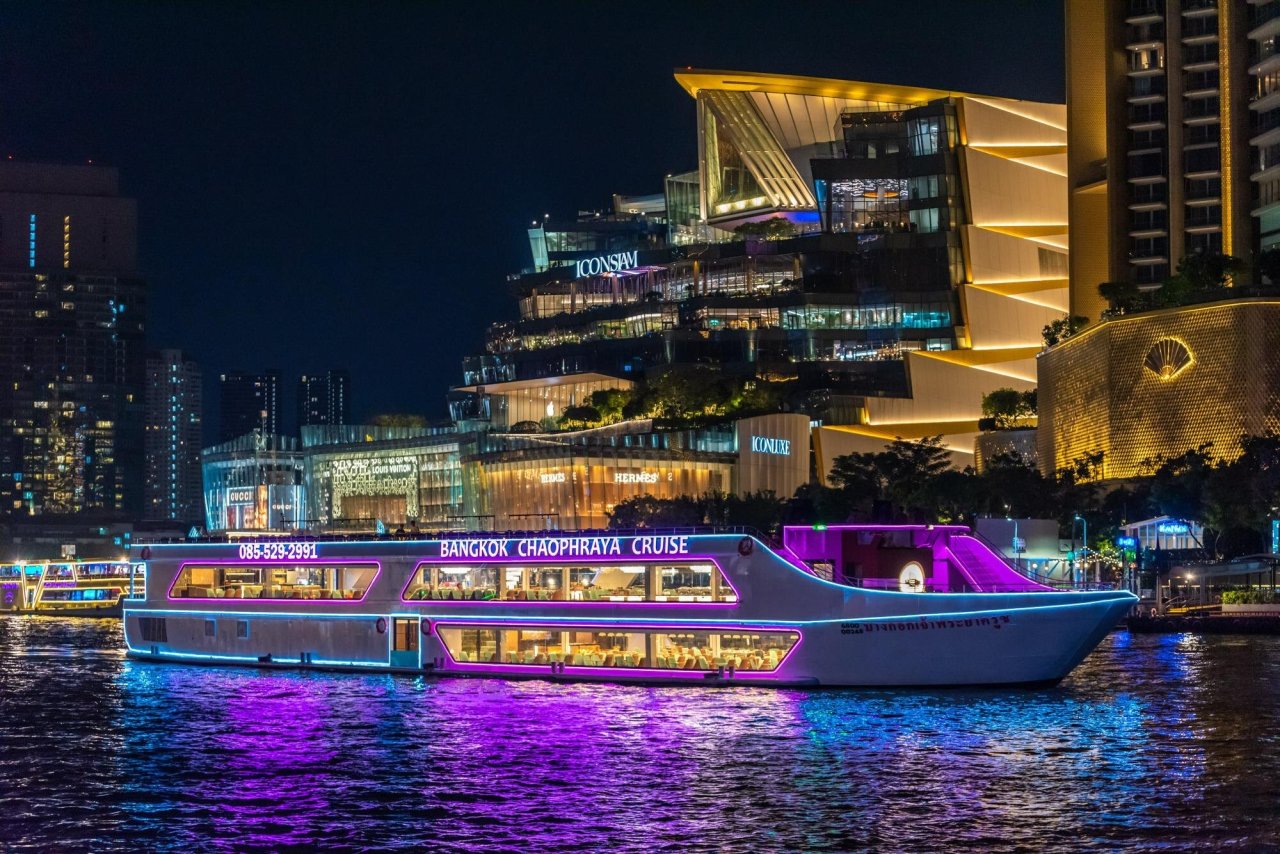
Bangkok’s network of canals (khlongs) still carries commuter traffic via express boat on Khlong Saen Saep — the main east-west canal.
Public pedestrian bridges cross the canal at multiple points along its length, giving good viewing positions for the boat traffic below.
The boats move fast, travel in quick succession during rush hours (7-9 AM, 5-7 PM), and are genuinely interesting to watch from the bridges.
The scene is one of the few things in Bangkok that has changed relatively little in decades — wooden boats, passengers ducking under the spray shields, vendors waiting at piers.
Riverside Parks and Sunset Spots
- Lumphini Park lake edge: The western side of Lumphini Park faces toward the Silom skyline. During late afternoon, the city-park contrast here is photogenic.
- Benjakitti Park: The lake reflection of surrounding office towers during early morning and late afternoon is good photography, and the general sunset viewing from the east side of the park is worth timing.
- Chulalongkorn University’s open grounds: The university campus (free to walk through during operating hours) has a large reflecting pond and grounds that provide a quieter version of the park experience.
Where to Get Free Views of Bangkok’s Skyline
Bangkok’s best genuinely free elevated viewpoints are in its parks and on public infrastructure — the Wat Saket area, elevated BTS platforms, river bridges, and public park vantage points.
Some hotel and mall spaces are also publicly accessible but are not guaranteed free access points.
Parks and Public Infrastructure
- Lumphini Park: From the park’s eastern edge at evening, the Silom and Sathorn office tower cluster is visible. A well-known photography spot for the “city meets nature” composition.
- Benjakitti Park: The office towers and QSNCC complex form a skyline behind the lake; sunrise reflections here are photographed extensively.
- Wat Saket (Golden Mount) base area: The park and garden at the base of the Golden Mount hill is free to walk. Climbing to the top costs ฿100, and the 318 steps reward you with panoramic views across the Old City — from the top, you can see Wat Pho, Wat Suthat, the Grand Palace rooflines, and the modern skyline to the south. If the fee rules it out, the gardens below are pleasant in their own right.
- BTS Skytrain elevated platforms: Not a viewpoint in the conventional sense, but traveling above Bangkok’s streets on the BTS provides real aerial perspectives of the commercial districts. No photography platform — just the normal passenger view from above the traffic.
- Memorial Bridge (Saphan Phut) and Pinklao Bridge: Both are public pedestrian bridges across the Chao Phraya with views of the river corridor, adjacent temples, and city. Free to cross on foot.
Hotel and Mall Public Areas
Several Bangkok hotels have publicly accessible ground-floor and lobby-level dining and bar venues — The Standard Bangkok, Hotel Muse Bangkok, and COMO Metropolitan Bangkok among them.
These are commercial spaces operating on the social understanding that visitors may purchase something, but no formal entry fee applies at lobby level.
Access policies at individual properties can change; it’s worth confirming before making a special trip.
King Power MahaNakhon has a paid observation deck, the Mahanakhon SkyWalk, on the 74th and 78th floors at 314 meters — currently ฿880 per person (10 AM–3:30 PM) or ฿1,080 per person (4 PM onward); the after-7 PM cover charge includes one complimentary drink.
The lobby, ground floor retail, and Mahanakhon Cube food hall are publicly accessible without any fee.
The honest version of “rooftop bar with one drink” isn’t a free activity and doesn’t belong in this guide.
Photography Spots Worth Knowing About
Bangkok rewards photographers willing to wander off the obvious circuit.
Beyond the temples and river views, entire neighborhoods double as open-air galleries — and most of the best spots cost nothing to reach or walk through.
Street Art Districts
- Khlong Ong Ang (Ong Ang Walking Street): The canal walkway stretching between Damrong Sathit Bridge and Saphan Han Bridge near Sam Yot MRT is Bangkok’s most concentrated street art corridor, with large-scale murals by prominent Thai artists lining the canal walls. Most active Friday–Sunday, 4–10 PM, but accessible 24 hours.
- Charoenkrung Road, Soi 32 and surrounding alleys: The area around Charoen Krung Soi 32 (Bang Rak district) has become an established open-air gallery with large rotating murals; additional pieces run along Soi 34, 36, and the Talat Noi lanes nearby. The TCDC (Thailand Creative and Design Center) sits along the same stretch.
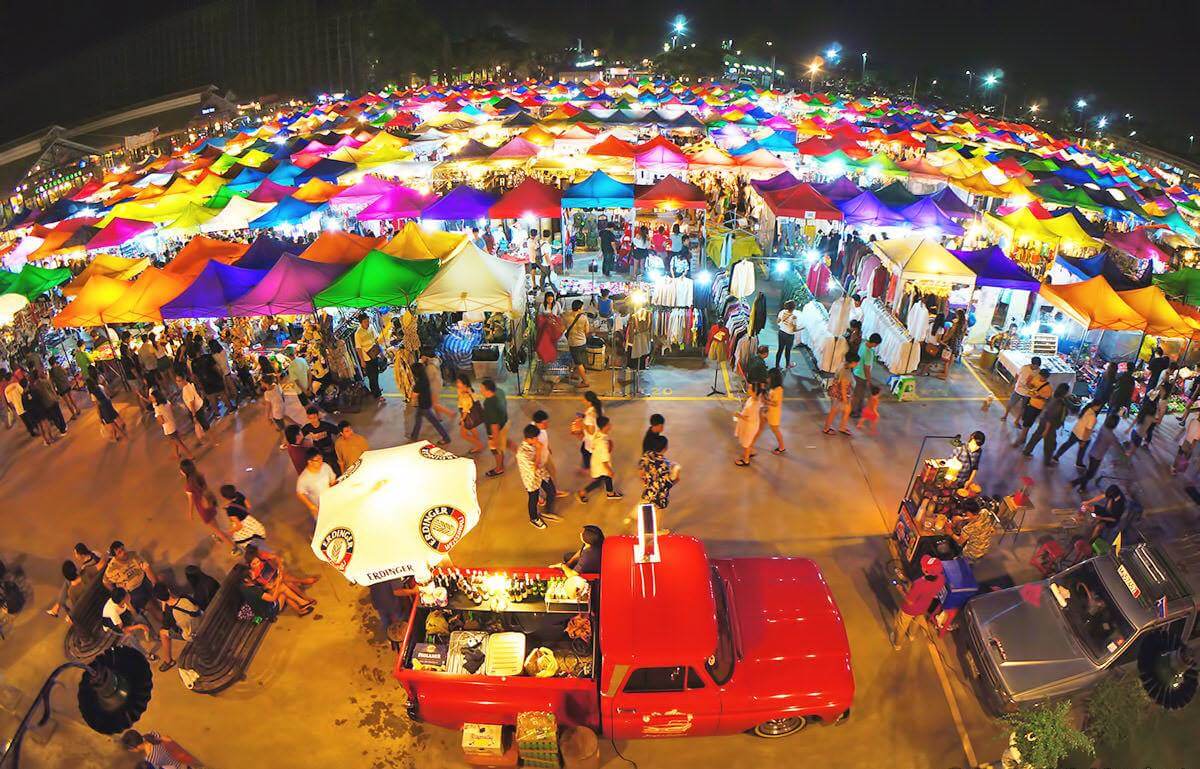
- Talad Rot Fai (Train Night Market) at Srinakarin: The market itself is free to enter; the surrounding walls and vendor areas have substantial street art. Open Thursday–Sunday, 5 PM–1 AM. Now reachable by MRT Yellow Line (Suan Luang Rama IX station) as well as Grab or taxi from the city center.
- Thonburi canal-side streets: Smaller, locally made murals on the residential side streets near Wat Arun, less documented and less crowded than the above options.
Temple Architecture Photography
The outer courtyards of most major temples are free to photograph from outside or from public street-level views:
- Wat Arun’s full front from the Tha Tien riverbank
- Wat Saket’s golden chedi visible from the surrounding park
- Wat Suthat’s gable and bot from Bamrung Mueang Road
- The chedi clusters of the Grand Palace visible above the exterior walls from Maharat Road
The conditions for genuinely good photographs of Bangkok’s temples: early morning (before 8 AM) for cool, clear light without crowd shadows; late afternoon for warm color; overcast days for even shadow-free light on surfaces covered with ceramic tile work.
Chatuchak and Market Photography
Chatuchak Weekend Market is legitimately one of Bangkok’s best photography environments — dense, colorful, varied.
The produce section, antique section, and food courts all have strong visual material.
Early morning before 10 AM sees better light through the skylights and less body-heat haze in the covered sections.
Chinatown’s Yaowarat Road between 5 PM and 9 PM — the evening street food setup, the gold shop window displays, the neon signs against darkening sky — is one of Bangkok’s classic photography periods.
What Are Bangkok’s Best Free Festivals and Events?
Most of Bangkok’s major annual festivals are free public events — no tickets, no barriers, open street participation.
The timing of your visit around these events can provide some of the city’s most memorable experiences at zero additional cost.
For full seasonal context and which months work best for each type of trip, the best time to visit Bangkok guide covers the full festival calendar.
Songkran (April 13-15)
Thailand’s traditional New Year is celebrated with city-wide water fights over three days.
In Bangkok, Silom Road and Khao San Road are the main activity zones — bucket-filling stations, water guns, and high-volume sound systems run continuously through the afternoon.
Anyone on the street is fair game.
No ticket, no registration.
Show up with clothes you don’t mind soaking.
Bring nothing electronic that isn’t fully waterproofed.
The festival is genuinely participatory — locals, expats, and tourists are all equally targeted.
The peak activity is typically 12 PM to 6 PM.
Evening winds down but doesn’t stop completely.
Loy Krathong (November Full Moon)
Loy Krathong involves releasing small decorated floats (krathong) onto rivers and ponds to honor the water spirits.
In Bangkok, the main viewing areas are the Chao Phraya River banks — the Tha Tien area near Wat Pho, Asiatique Riverfront, and Saphan Phut Bridge.
In 2026, the festival falls on the evening of November 25.
Watching is entirely free.
Participating — purchasing a ready-made krathong from street vendors for around ฿50–150 and releasing it on the river — costs a small amount but is optional.
The ceremony happens after dark on the full moon evening.
The Chao Phraya after sunset with thousands of floating candles and incense on the water is one of Bangkok’s most photogenic nights.
Chinese New Year in Chinatown (January-February)
Bangkok’s Chinatown celebrates Chinese New Year with dragon dances, lion dances, fireworks, traditional performances, and street food.
The Yaowarat Road area becomes extremely dense with people; the performances run throughout the day and evening.
No entry fee.
The entire celebration is street-level and public.
The days leading up to the main New Year date are calmer; New Year’s Eve and the following day are the peak.
Many Chinatown shops close for several days around New Year — arriving a few days before the main date gives you the decorations and increasing activity without the full crowds.
Royal and National Ceremonies
Several annual ceremonies involve public processions and open access near the Grand Palace and Ratchadamnoen Avenue — the Royal Ploughing Ceremony, Coronation Day, and other calendar events.
These involve decorated floats, traditional dress, and ceremonial music.
Arrival time matters significantly; the best viewing positions along Ratchadamnoen Avenue fill up hours in advance for major events.
Tips for Getting the Most Out of Bangkok’s Free Attractions
Bangkok’s free scene rewards early risers and anyone willing to show up before the tour groups do.
Timing your visits around the heat, the crowds, and the light makes an enormous difference — the same spot can feel completely different at 7 AM versus 2 PM.
Best Visiting Times
- Early morning (before 8 AM): Parks, temple exteriors, and river piers are at their best before the heat builds. Lumphini Park at 6 AM has tai chi groups, morning joggers, and monitor lizards in full activity. Chinatown’s wholesale food markets operate through the early morning and wind down by 9 AM.
- Weekday mornings: For outdoor free sites that see tourist traffic (Sanam Luang, the Wat Arun riverbank, Chatuchak’s adjacent park), weekday mornings are noticeably less crowded than weekend afternoons.
- Golden hour for photography (one hour before sunset): The low-angle light on the Chao Phraya riverside, on temple exterior tile work, and across the city’s skyline is best used at this window. Benjakitti Park, the Tha Tien riverbank opposite Wat Arun, and the park at the base of Wat Saket are the most consistently useful sunset photography positions.
- Evenings in Chinatown and street food areas: From roughly 5 PM, Bangkok’s street food and market areas come to life. Yaowarat Road, Khao San Road, and the Banglamphu area around Phra Sumen Fort are most active on Friday and Saturday evenings.
Getting Between Free Attractions Without Spending Much
The Orange Flag express boats on the Chao Phraya River connect most Old City free sites cheaply — board at Saphan Taksin BTS station pier heading north to reach Tha Chang (Grand Palace exterior), Tha Tien (Wat Pho side, Wat Arun view), and further north.
This avoids road traffic entirely for the riverside cluster.
The BTS day pass and Rabbit Card math for free-activity itineraries is covered in detail in the traveling to Bangkok on a budget guide, which also covers canal boat routes as cheap connectors between free market areas.
For neighborhoods like Chinatown and the Old City that sit outside main BTS coverage, the MRT Blue Line (Hua Lamphong station for Chinatown) or river ferry from Saphan Taksin are the most efficient low-cost options.
Temple Etiquette
Covered shoulders and covered knees are required at most temples — this applies even at small neighborhood temples where nobody is enforcing it actively.
Bring a light shawl or long trousers in your bag.
Many visited temples provide sarong wraps at the entrance.
Remove footwear before entering any building where shoes-off signs are posted.
Don’t point feet toward Buddha images when sitting.
Keep voices low in the main sanctuary areas of active temples.
Practical Notes for Free Attractions
- Or Tor Kor Market and most covered markets don’t have free water; bring a bottle or buy at 7-Eleven before entering.
- Chatuchak Market sections aren’t all air-conditioned — visit the indoor sections first when the day is hottest; the outdoor sections in the morning and late afternoon.
- Street art areas are best walked with a downloaded offline map — many of the murals are on secondary streets that aren’t well-marked.
- Festival events like Songkran and Loy Krathong cause significant transport disruption — roads close, BTS crowds peak, and Grab wait times increase. Plan for longer transit times on these days.
Frequently Asked Questions (FAQs)
Yes — Chatuchak Weekend Market has no entrance fee.
Entry is free at all gates.
The market is open Saturdays and Sundays, 9 AM–6 PM.
Buying anything is of course optional; plenty of visitors walk through the entire market without spending a baht.
The main cost is getting there (BTS Mo Chit or MRT Chatuchak Park/Kamphaeng Phet) and anything you choose to eat or buy.
Not the main ones.
The Grand Palace costs ฿500, Wat Pho costs ฿300, and Wat Arun costs ฿200 to enter.
These are worth paying for on a first visit.
What is genuinely free: walking past and photographing the exteriors, the Sanam Luang ceremonial ground in front of the Grand Palace, the riverside view of Wat Arun from the Tha Tien pier area, and the hundreds of smaller neighborhood temples throughout the city that charge nothing.
A practical free day: start at Lumphini Park for the 6-7 AM morning activity (tai chi, monitor lizards, runners), then MRT to Hua Lamphong for a walk through Chinatown’s morning wholesale market area, followed by the Erawan Shrine via BTS.
In the afternoon, take the BTS to Saphan Taksin and an Orange Flag river boat to the Tha Tien pier for the free riverside view of Wat Arun.
End the day at Chatuchak Park or the weekend market if it’s a Saturday or Sunday.
Total spending: BTS/MRT fares and a river boat ticket — roughly 50-100 baht for the day in transport.
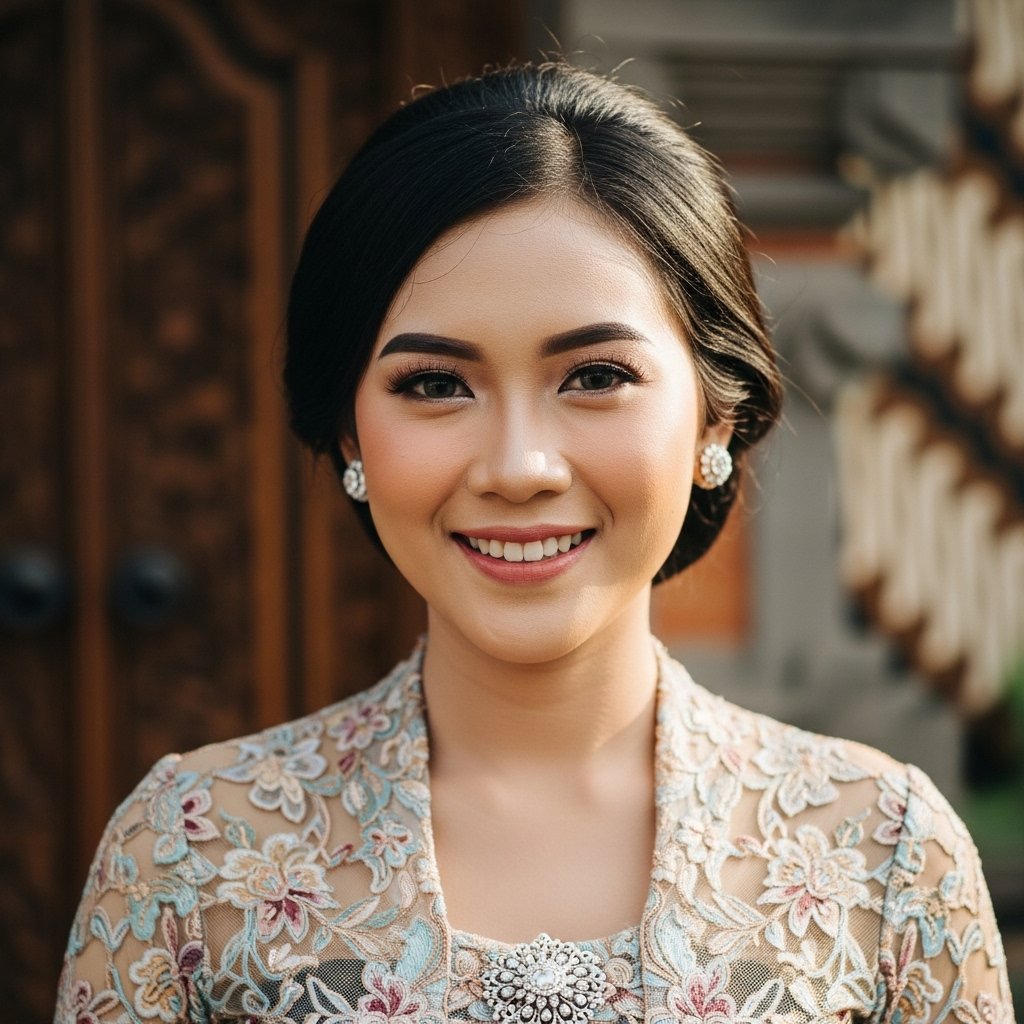
A lifestyle and OOTD blogger, Kannaya Nareswari enjoys the small pleasures of cooking, traveling, and documenting ordinary events. She uses genuine storytelling to communicate her love of fashion, culinary explorations, and wanderlust. She is based between Bali and Bandung. She enjoys enjoying coffee at a secret café or experimenting with recipes in the kitchen when she's not traveling to new places or styling her most recent ensemble.