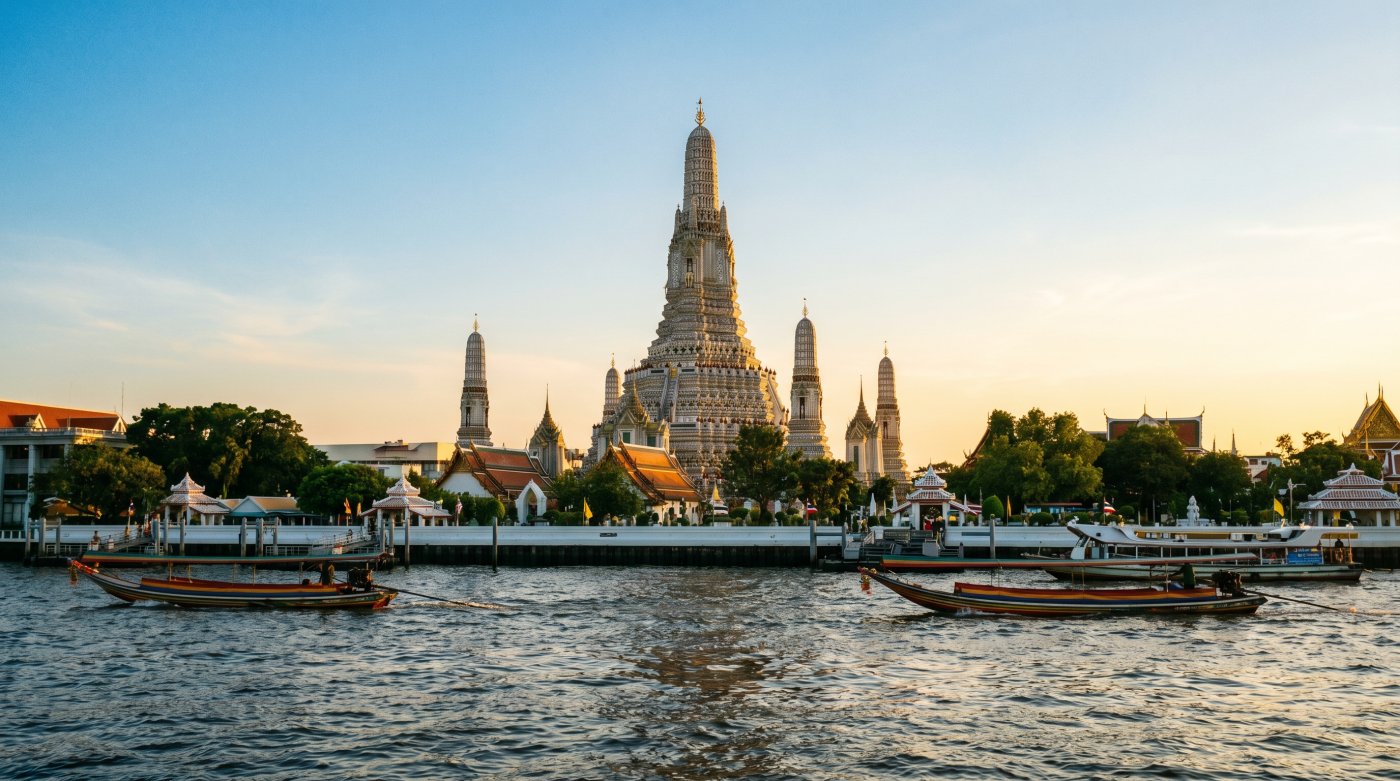



Best Things To Do In Bangkok: Top Attractions & Activities – Temple hopping, street food adventures, and rooftop bars await in one of Asia’s most dynamic capitals.
Bangkok sits at the intersection of the ancient and the relentlessly modern.
The city places ancient temples next to gleaming skyscrapers, floating markets beside rooftop bars, and street food that genuinely changes how you think about Thai cooking.
The best things to do in Bangkok are as varied as the city itself — whether you are visiting for the temples, the nightlife, the markets, or simply the food.
Before you start planning, knowing when to go makes a real difference.
Bangkok’s peak season (November to February) offers cooler temperatures and clear skies, while the shoulder months bring fewer crowds and lower hotel rates.
The best time to visit Bangkok guide gives a full seasonal breakdown by weather, festivals, and budget.
Bangkok Highlights at a Glance
- Visit the Grand Palace and Wat Phra Kaew to see Thailand's most sacred site and the revered Emerald Buddha statue.
- Explore Thonburi canals by longtail boat and shop at Damnoen Saduak Floating Market for a genuine canal experience.
- Browse Chatuchak Weekend Market's over 15,000 stalls spread across 35 acres and 26 sections, and experience Bangkok's nightlife on Khao San Road and in Chinatown.
- Discover the Jim Thompson House Museum and the Bangkok Art and Culture Centre for Thai culture and contemporary art.
- Take a Chao Phraya River dinner cruise and join Thai cooking classes to learn traditional culinary techniques.
What Makes Bangkok Worth Visiting
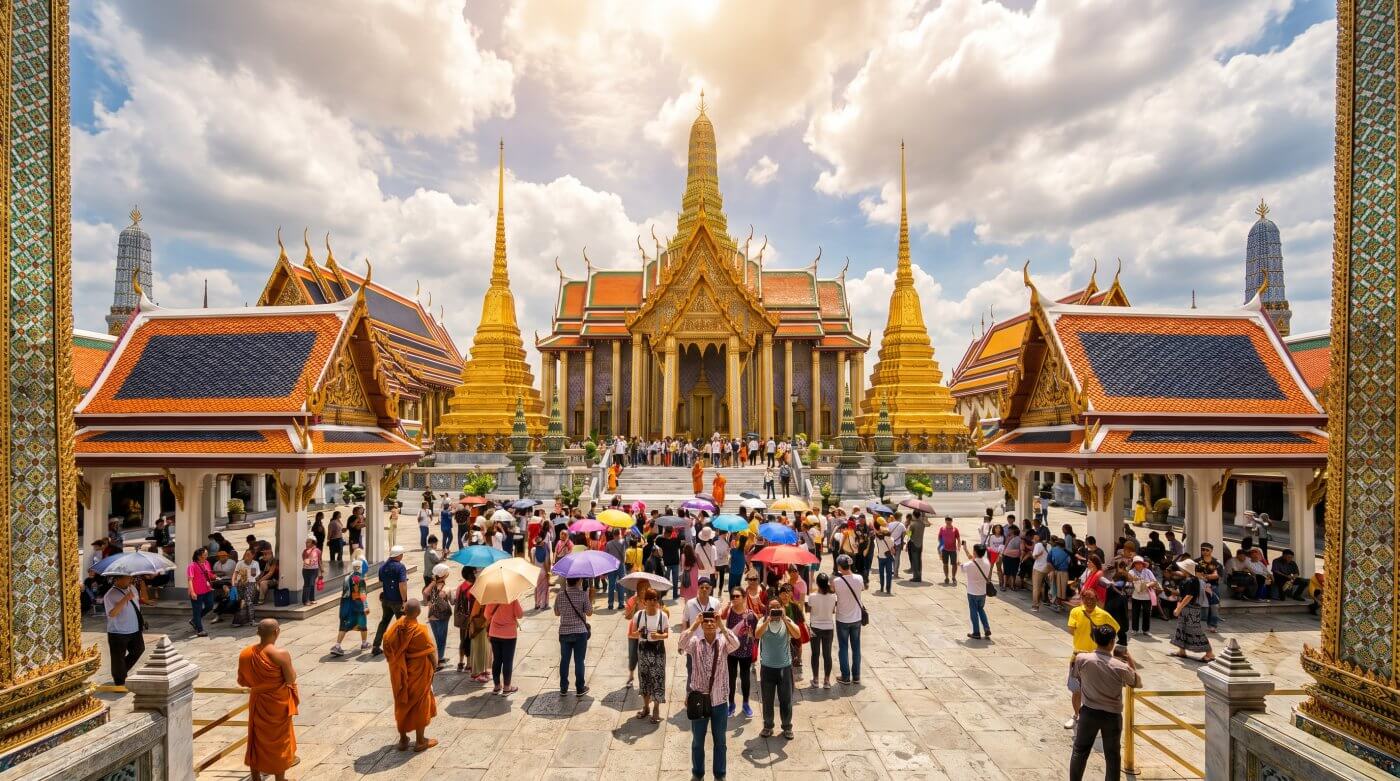
Bangkok rewards curious visitors more than almost any city in Southeast Asia.
The standard tourist circuit — Grand Palace, floating markets, street food — is genuinely excellent.
Beyond that, narrow alleyways hide quality street art, small rooftop bars offer strong sunset views, and family-run restaurants serve dishes that bear no resemblance to the Thai food most travelers grew up with.
The city spans many distinct neighborhoods, each with its own character.
Staying in the right area changes the entire experience.
For a breakdown of where to base yourself, from the backpacker scene around Khao San Road to the polished calm of Riverside, the best neighborhoods in Bangkok guide covers accommodation areas in detail.
Bangkok’s scale means you cannot see everything in a short trip.
Use this guide to prioritize the experiences that match your interests, and plan at least five days to scratch the surface.
The Grand Palace and Wat Phra Kaew
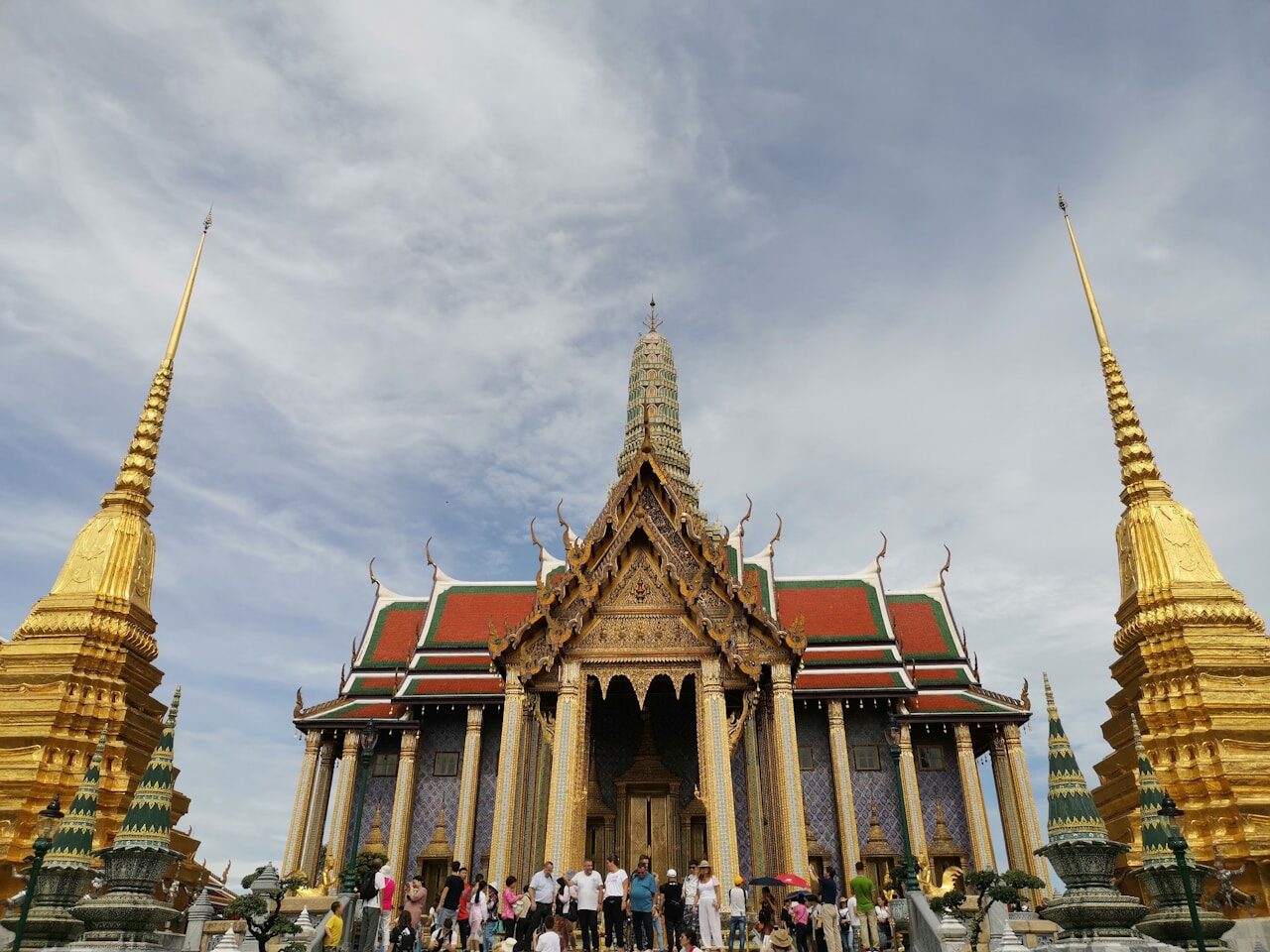
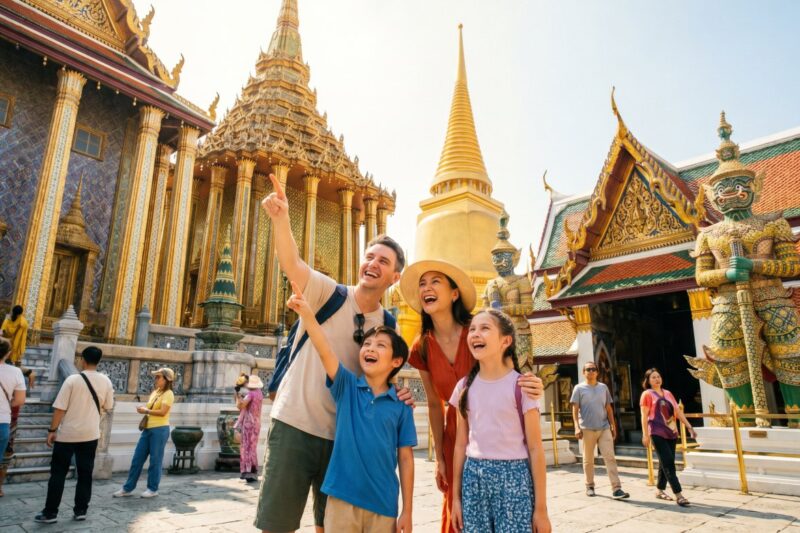
The Grand Palace is Bangkok’s most visited and most sacred site — a sprawling complex of gilded rooftops, ceremonial halls, and temple buildings that served as the official residence of the Thai Kings from 1782 until the early twentieth century.
At the heart of the complex sits Wat Phra Kaew, home to the Emerald Buddha.
Despite the name, this 26-inch statue is carved from green jade, not emerald, and is considered the most sacred Buddhist image in Thailand.
It sits on an elevated golden altar inside an ornate chapel decorated with floor-to-ceiling murals.
Discover Bangkok’s Spiritual Center
The Grand Palace and Wat Phra Kaew are located in the Rattanakosin old city district, accessible by Chao Phraya Express Boat to the Maharaj Pier.
Admission is 500 baht per adult, which also covers entry to Wat Phra Kaew and the Queen Sirikit Museum of Textiles.
The site is open daily from 8:30 AM to 3:30 PM (the complex itself stays open until 4:30 PM, but tickets are only sold until 3:30 PM).
Dress code is strictly enforced.
Shorts, sleeveless tops, and open-toed shoes are not permitted.
Sarongs and shirts are available for hire near the entrance.
For a full rundown of what to expect at Bangkok’s temples — including common mistakes to avoid — read things to know before visiting Bangkok before your trip.
Admire the Emerald Buddha in Its Ornate Chapel
The Emerald Buddha’s chapel (ubosot) is the most visually intense space in the complex.
Every surface is covered in mirrored mosaics, gold leaf, and painted scenes from the Ramayana.
The statue itself is relatively small, but the multi-tiered golden throne and surrounding decoration make a powerful impression.
The king personally changes the statue’s seasonal golden robes three times per year, in a ceremony tied to Thailand’s three seasons.
Photography inside the chapel is not permitted.
Wat Arun on the Chao Phraya River
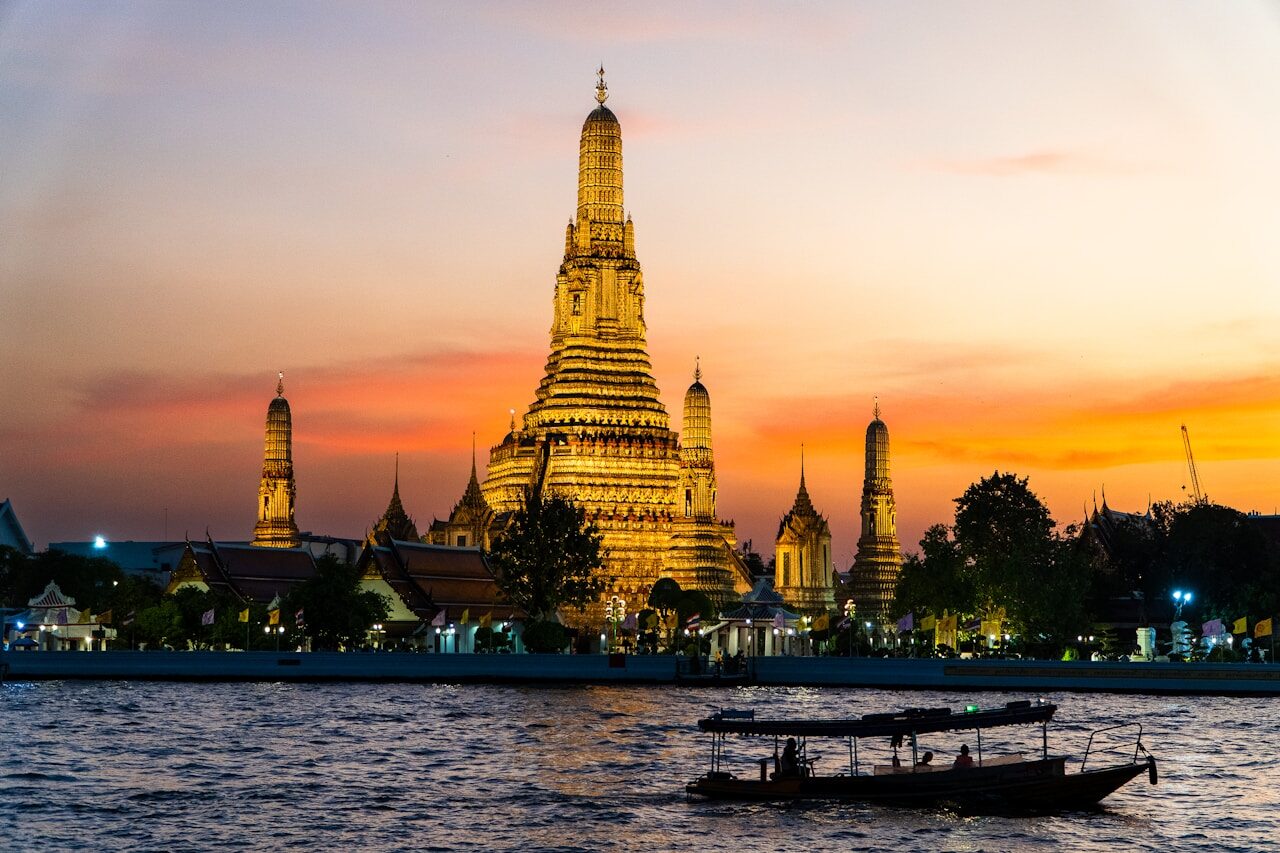
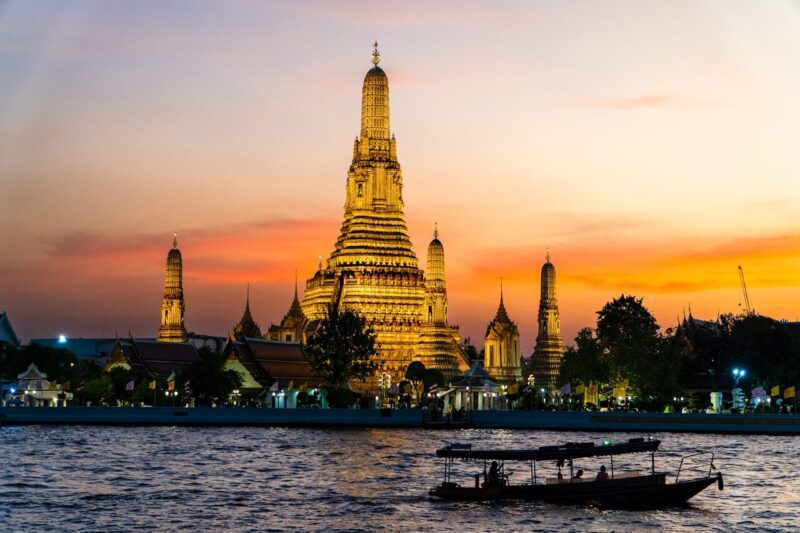
Wat Arun, the Temple of Dawn, stands on the west bank of the Chao Phraya River directly across from the Grand Palace area.
Its 70-meter central prang (tower) is covered entirely in fragments of Chinese porcelain and colored glass — a mosaic technique that gives the structure a distinctly different texture from Bangkok’s gold-tiled temples.
Despite its name, Wat Arun is most photogenic at sunset, when low light catches the porcelain mosaics and the spire is reflected in the river.
Top Bangkok Landmark at Sunset
Admission to Wat Arun is 200 baht per adult.
The temple is open daily from 8:00 AM to 6:00 PM (last entry at 5:30 PM).
You can reach it by taking the small cross-river ferry from Tha Tien Pier — just a few baht per crossing — or by chartered longtail boat.
To move efficiently between the Grand Palace area, Wat Arun, and other riverside attractions, the Chao Phraya Express Boat covers the length of the river at low cost.
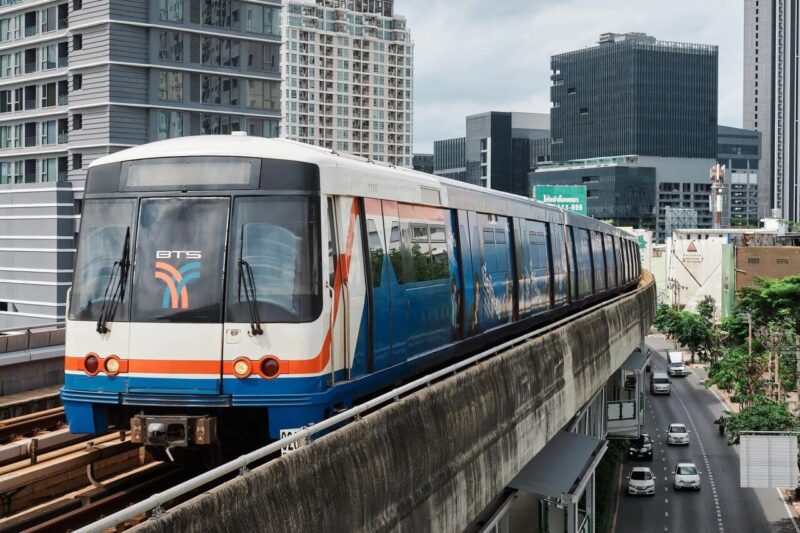
A full breakdown of the river ferry network, the BTS Skytrain, and the MRT is in the getting around Bangkok guide.
Climb the Central Prang for Panoramic City Views
The steep stairways up the central prang are genuinely narrow and require care on the descent.
The climb gives an elevated view of the Chao Phraya River and the Grand Palace rooftops across the water.
Smaller prangs ring the central tower, each decorated with figures from Hindu and Buddhist mythology.
Arrive in the late afternoon if you want sunset light.
The temple crowds thin out significantly after the main tour groups depart around 4 PM.
Take a Longtail Boat Through Thonburi Canals
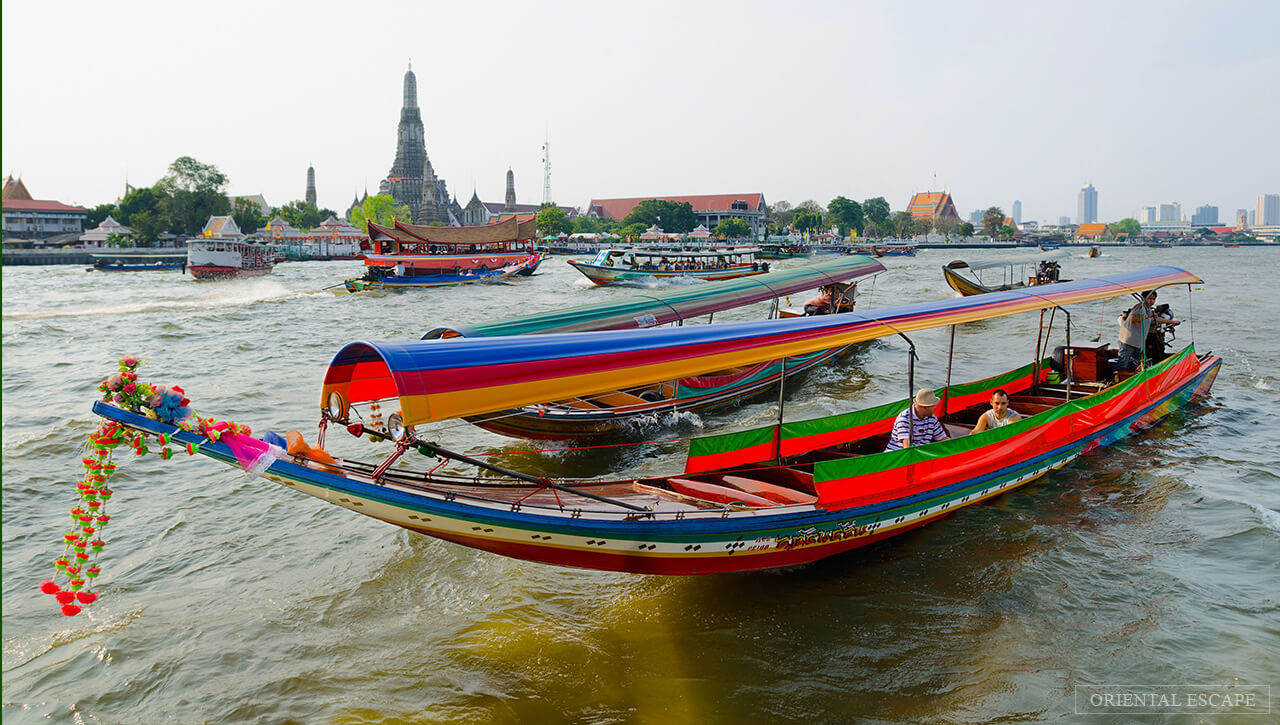
The Thonburi district, on the west bank of the Chao Phraya, is a network of canals (klongs) that once served as Bangkok’s main transport arteries.
Most visitors never cross the river, which means the canal villages of Thonburi see far fewer tourists than the main temple circuit.
A longtail boat tour through the narrow canals takes you past wooden stilt houses, small Buddhist shrines, orchid farms, and families going about daily life at the water’s edge.
Unique Things to Do in Bangkok Off the Beaten Path
Longtail boat tours through Thonburi’s canals can be arranged from Maharaj Pier or Tha Chang Pier, typically for a privately negotiated rate of around 1,500 to 2,000 baht per hour for a private boat (up to 6–8 passengers).
A one-hour tour covers the main canal highlights.
Two hours allows for a stop at a community orchid farm.
The canals are quieter in the mornings.
By midday, more tour groups arrive and water traffic picks up noticeably.
Glide Past Traditional Stilt Houses and Hidden Shrines
Bangkok’s canal system was once compared to Venice for its density of waterways.
Most of the larger canals have since been filled in to make roads, but the Thonburi side retains a working network where you can genuinely lose the sense of being in a major city.
Small spirit houses are dotted along the banks at regular intervals.
Children playing on wooden docks are a common sight in the quieter sections, well away from the tourist circuit.
Chatuchak Weekend Market
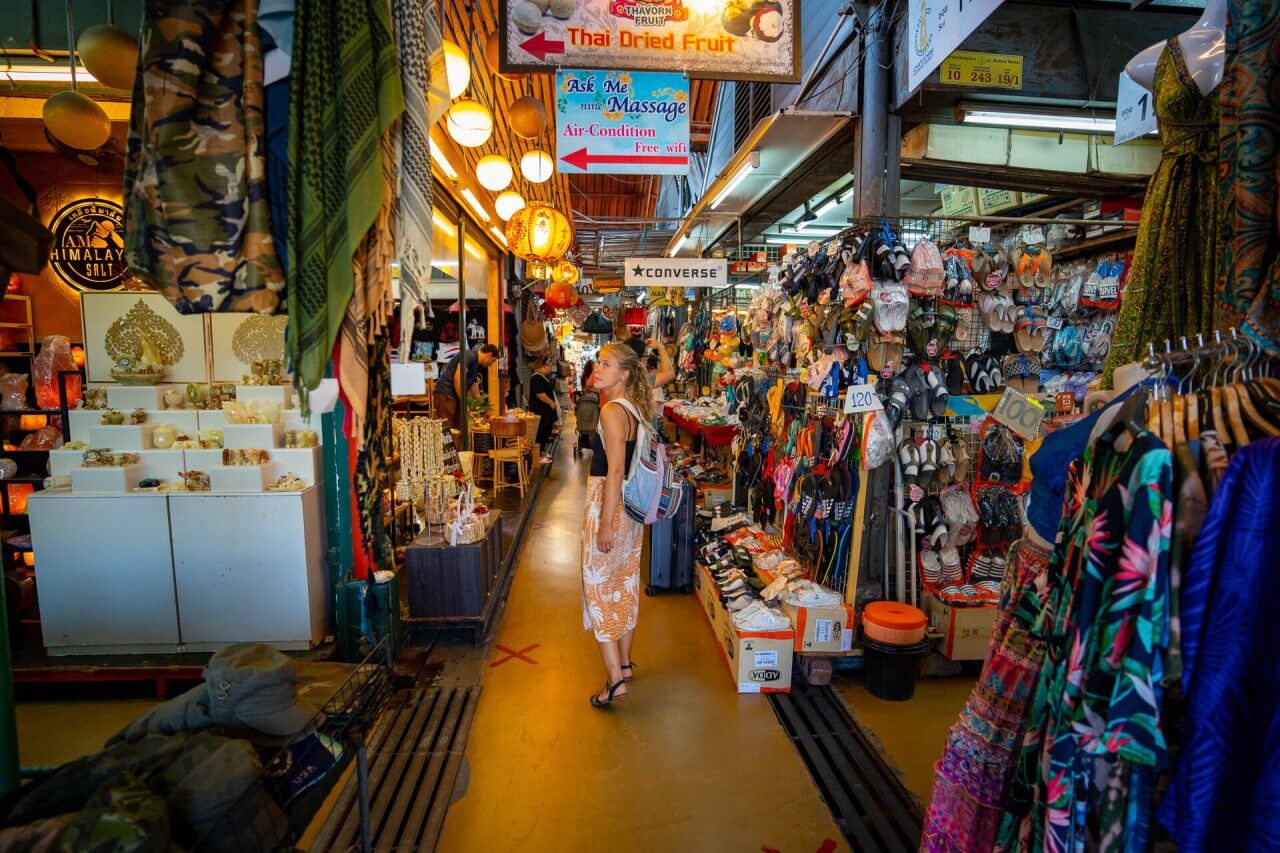
Chatuchak Weekend Market, located at the northern end of Bangkok near Mo Chit BTS station, is one of the world’s largest weekend markets.
The site covers 35 acres and holds approximately over 15,000 stalls organized into numbered sections by product type.
It operates on Saturdays and Sundays from 9:00 AM to 6:00 PM.
Worth noting for readers: parts of the market also open on weekdays — the plant section runs Wednesday and Thursday from 7:00 AM to 6:00 PM, and a wholesale-only section opens Friday evenings from 6:00 PM to midnight.
Bangkok’s Best Shopping Experience
Chatuchak is large enough that first-time visitors frequently get lost, which is part of the appeal.
Sections 2 and 3 cover plants and ceramics.
Sections 10-26 focus on clothing, accessories, and vintage fashion.
Sections 8 and 26 have the highest concentration of antiques and collectibles.
The market gets hot and crowded by 11 AM.
Arriving before 9 AM gives you calmer aisles and more room to negotiate.
Browse Stalls Selling Crafts, Clothing, and Snacks
- Handcrafted goods: Unique artwork, jewelry, and home décor sourced directly from makers throughout Thailand
- Street food lanes: Grilled meats, pad thai, and fresh coconut water available throughout the market
- Vintage and secondhand clothing: One of Bangkok’s best spots for retro fashion finds and one-off pieces
A bag-drop service and ATM are available near the main entrance.
Most vendors accept cash only, so bring Thai baht before you arrive.
Savor Street Food in Yaowarat (Chinatown)
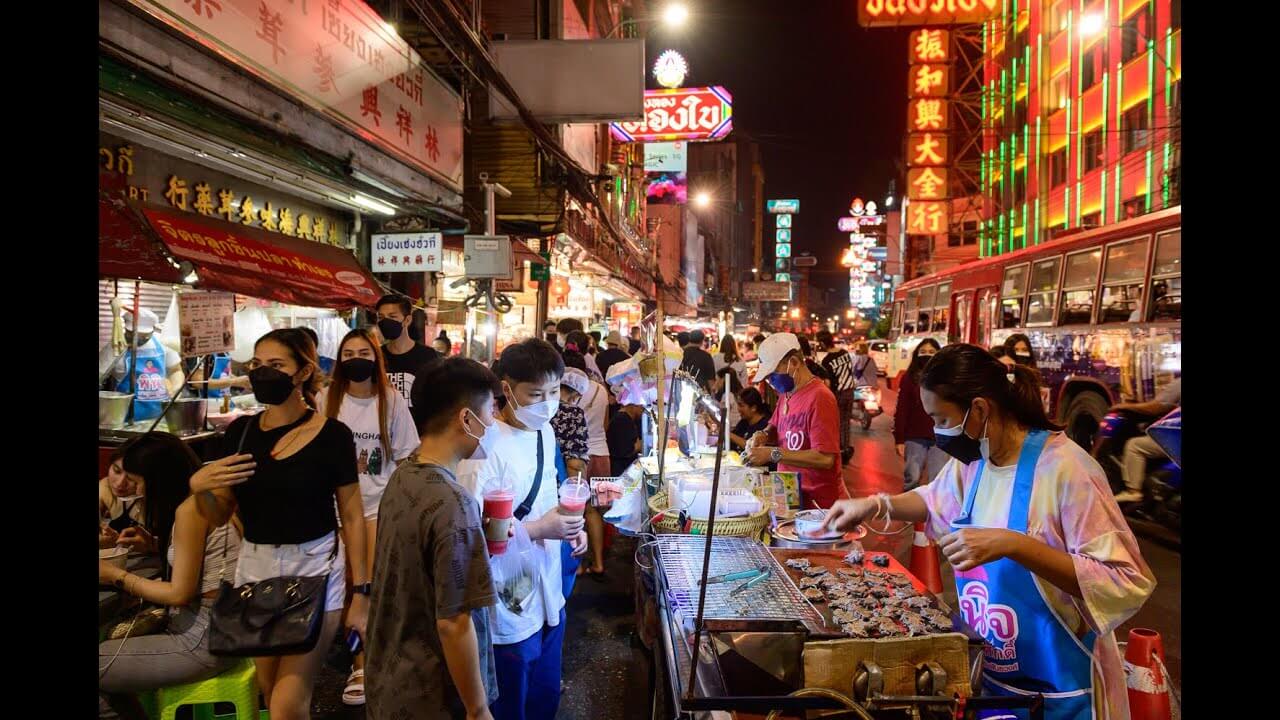
Bangkok’s Chinatown, known as Yaowarat, runs along Yaowarat Road in the Samphanthawong district.
It has operated as a Chinese trading community for over two centuries and today functions as Bangkok’s most concentrated street food destination.
The best time to visit is after 6 PM, when the day vendors pack up and the night stalls unfold.
Smoke from charcoal grills fills the alleys, and plastic stools line every available inch of pavement.
Must-Do Eats in Bangkok
The Yaowarat street food scene centers on Thai-Chinese cooking: dim sum, roasted duck, char siu pork, and stir-fried crab with yellow curry powder.
Alongside these sit classic Thai dishes — grilled prawns, pad thai, and what many visitors consider the best mango sticky rice in the city.
For travelers working with a limited daily budget, Yaowarat is one of Bangkok’s best concentrations of genuinely cheap, high-quality food.
A full dinner at a street stall costs a fraction of a tourist restaurant meal.
For more on eating well without overspending, the traveling to Bangkok on a budget guide covers the full food budget strategy.
Sample Dim Sum, Grilled Seafood, and Mango Sticky Rice
- Steaming dim sum baskets: Shrimp, pork, and vegetable parcels from Thai-Chinese establishments along Soi Texas
- Sizzling seafood grills: Fresh catches charred over charcoal, sold by weight at roadside stalls
- Mango sticky rice: Thailand’s most beloved dessert, at its best when mango season peaks in April-June
The Yaowarat MRT station provides direct access from central Bangkok.
Is a Traditional Thai Massage Worth Getting in Bangkok?
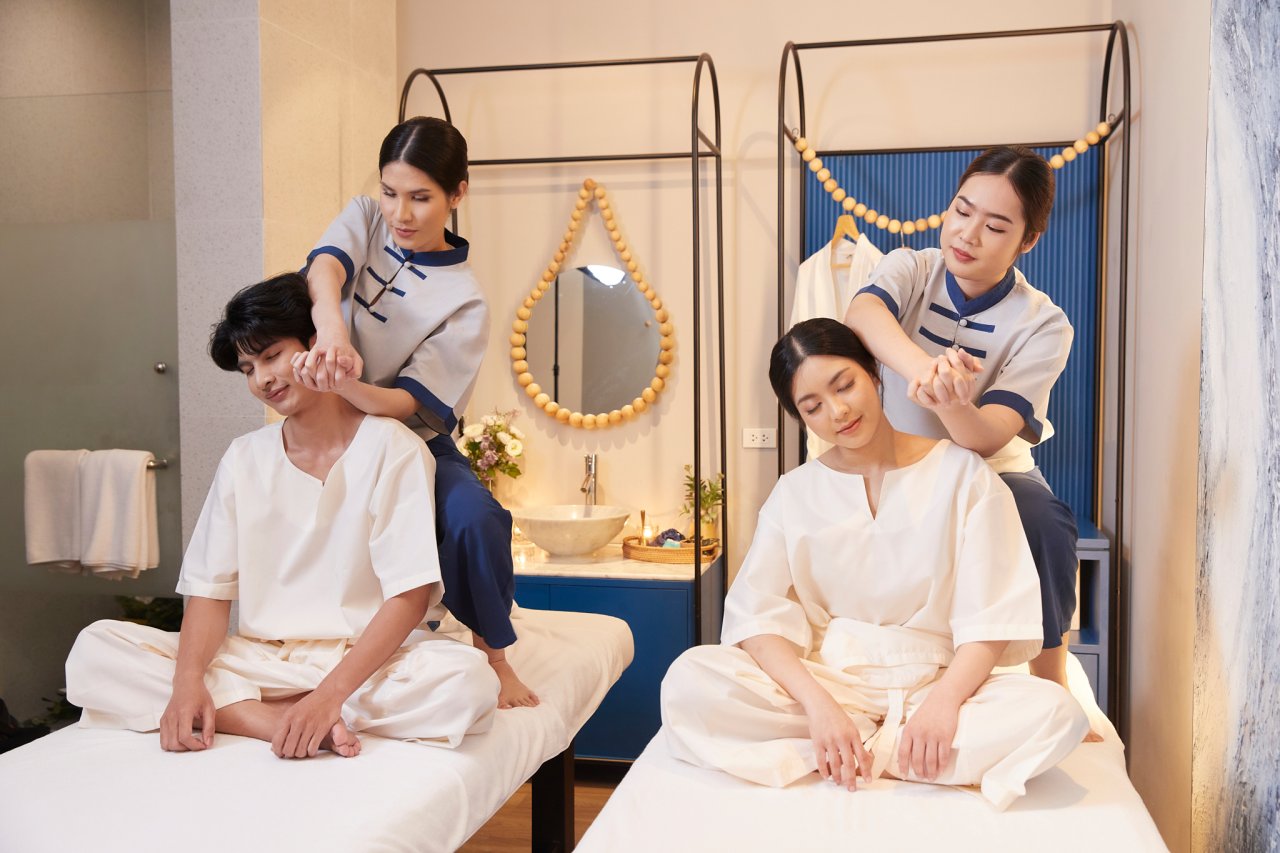
A traditional Thai massage in Bangkok is worth getting — it is one of the most accessible and genuinely therapeutic experiences in the city, widely available at a fraction of what you would pay for an equivalent treatment elsewhere in the world.
Traditional Thai massage combines stretching, pressure-point work, and yoga-like positioning to release muscle tension.
Sessions typically run 60 or 90 minutes.
A standard 60-minute massage at a reputable parlor costs approximately 250 to 500 baht.
Authentic Wellness in Bangkok
The most well-regarded traditional massage training and practice in Bangkok operates through Wat Pho, which runs a certified massage school on the temple grounds.
A session here is priced at 420 baht per hour and performed by trained practitioners who hold formal certification.
Cheaper options exist in tourist areas — often starting from 200–300 baht — but quality varies significantly.
For a premium experience, spa districts around Sukhumvit offer 1,000 to 3,500 baht per hour, with top-end hotel spas sitting at the higher end of that range.
Unwind with Herbal Compress and Deep-Tissue Techniques
Beyond the standard Thai massage, herbal compress treatments (luk pra kob) add medicinal herbs wrapped in cloth, steamed, and pressed into the muscles.
These are particularly effective for joint stiffness from long flights or extended temple-hopping.
- Herbal compresses: Lemongrass, ginger, and camphor bundles that deliver heat and aromatics into stiff muscles
- Deep-tissue Thai massage: Heavier pressure applied along the body’s sen (energy) lines
- Traditional healing: Rooted in Ayurvedic principles and Thai medical theory with centuries of practice
Is a Chao Phraya River Dinner Cruise Worth It?
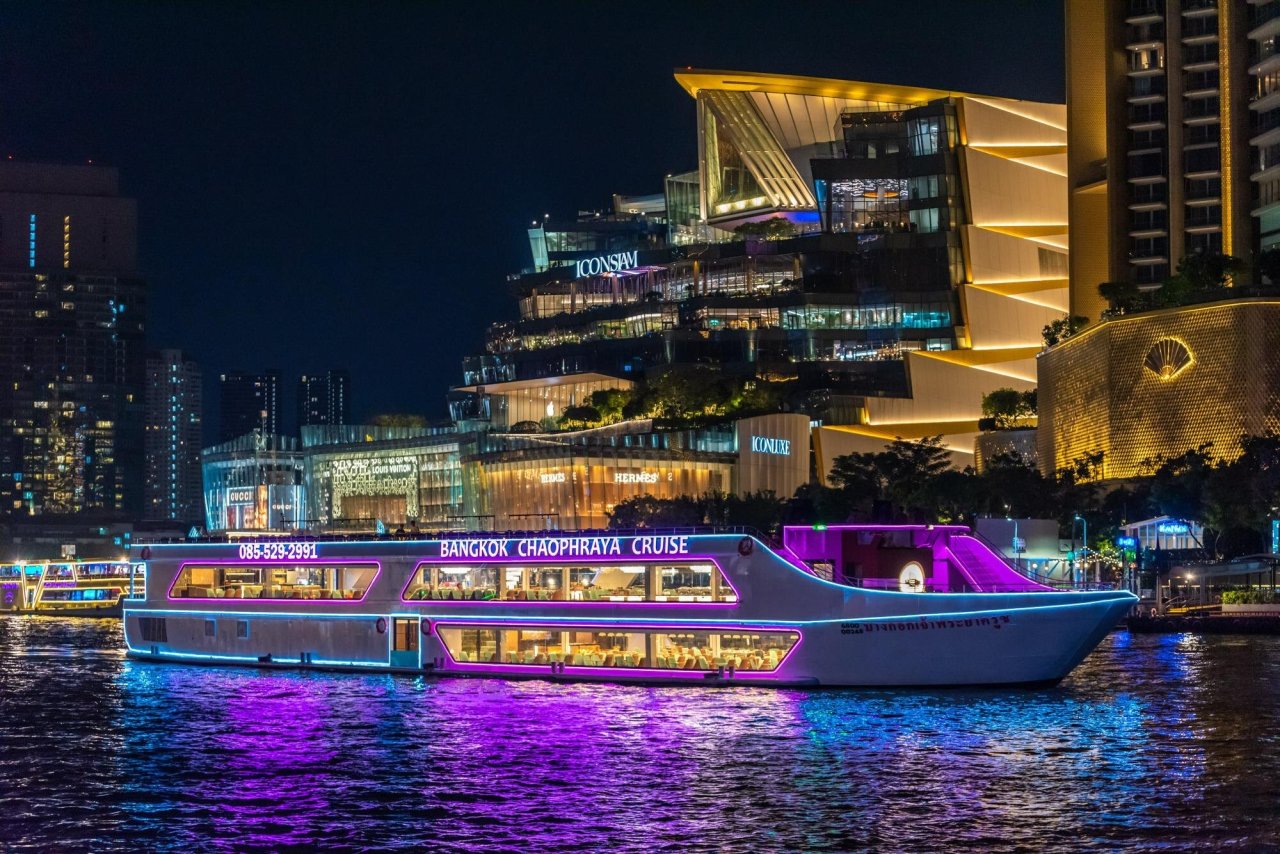
A Chao Phraya River dinner cruise is worth it for first-time visitors, particularly on a clear evening when illuminated temples like Wat Arun are visible from the water.
The experience gives Bangkok’s tourist circuit a genuinely scenic perspective that land-based sightseeing cannot replicate.
Dinner cruises typically last 2-3 hours and depart from multiple piers along the river, including Sathorn (Central) Pier.
Romantic Evening in Bangkok
Most operators offer multi-course Thai and international menus.
Pricing generally starts at around 1,200 to 1,550 baht per person for a standard cruise, rising significantly for luxury vessels with live entertainment.
Booking in advance is recommended during peak tourist season (November–February).
The best views are of Wat Arun from the opposite bank and the lit-up Grand Palace compound, both visible around 30–45 minutes into most routes.
Dine on Thai Cuisine Beneath Illuminated Temples
- Standard cruises: Basic Thai buffet or set menu, outdoor deck seating on the Chao Phraya
- Traditional long-tail boat dinners: Smaller, more intimate, lower cost, often running shorter routes
- Luxury vessels: Live music, international menu, full open bar on longer routes
For couples, the dinner cruise pairs well with cocktails at Sky Bar at Lebua before or after.
Should You Take a Thai Cooking Class in Bangkok?
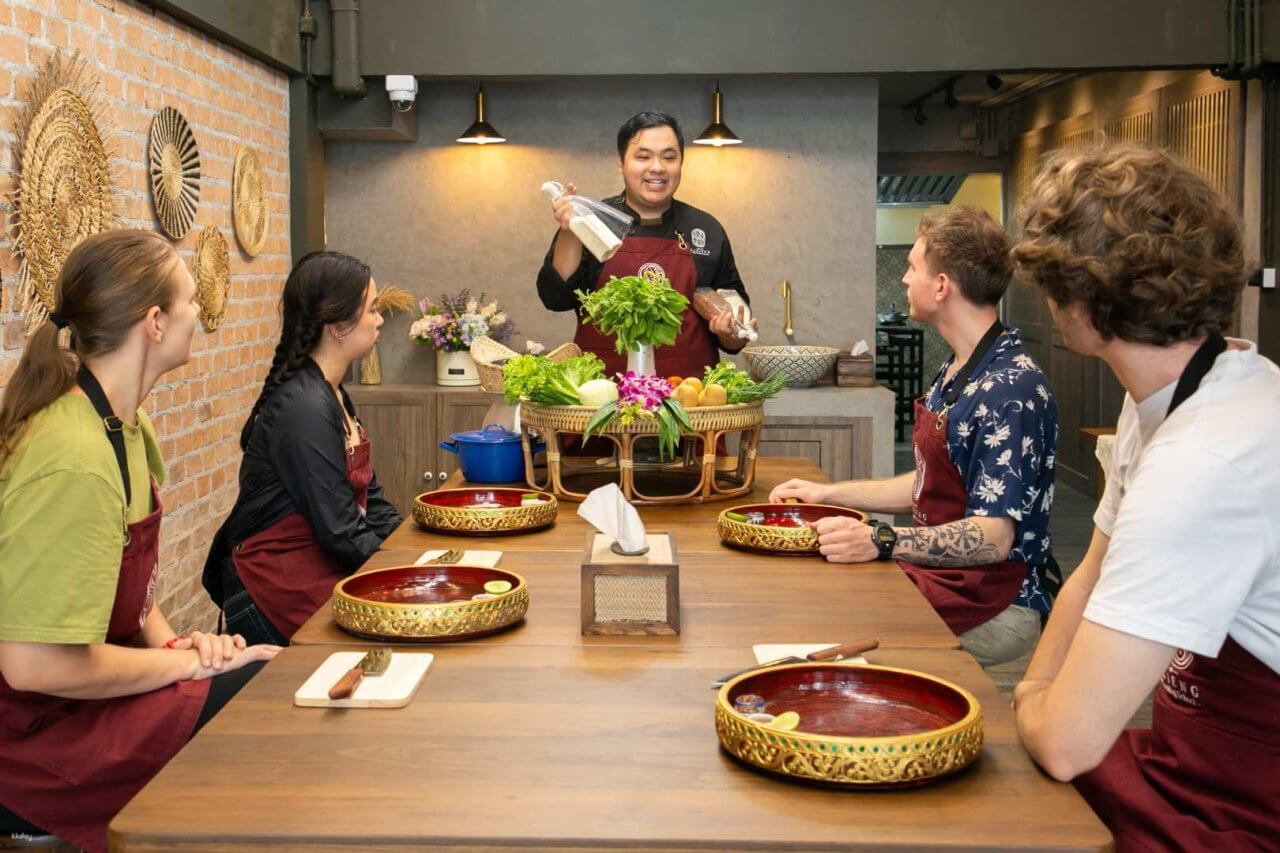
A Thai cooking class in Bangkok is one of the best-value experiences in the city — you leave with practical skills and specific recipes, not just a memory of eating.
Most full-day classes include a morning market visit to source ingredients, followed by hands-on cooking of three to five dishes.
Classes run half-day (3–4 hours) or full-day (6–8 hours), priced at approximately 1,500 to 2,500 baht for a half-day session at a reputable school, with premium schools like Blue Elephant sitting considerably higher.
Best Culinary Experiences in Bangkok
Bangkok’s Old Town area (Rattanakosin) and the Silom district have a strong concentration of cooking schools.
Most classes cover Thai fundamentals: tom yum soup, pad thai, green curry, and a dessert like mango sticky rice.
Full-day courses occasionally include massaman curry or larb.
Classes are suitable for complete beginners.
No prior cooking experience is required.
Learn to Prepare Tom Yum and Pad Thai with Local Chefs
- Tom yum soup: Learn the key balance of lime, galangal, lemongrass, and fish sauce in a dish that defines Thai cooking
- Pad thai noodles: Master the technique for a dish that most visitors have eaten but few have made correctly
- Ingredient sourcing: The market visit teaches what fresh Thai ingredients look like and how to select them
Most schools provide printed recipe cards to take home.
Lumpinee Stadium: Watch a Muay Thai Match
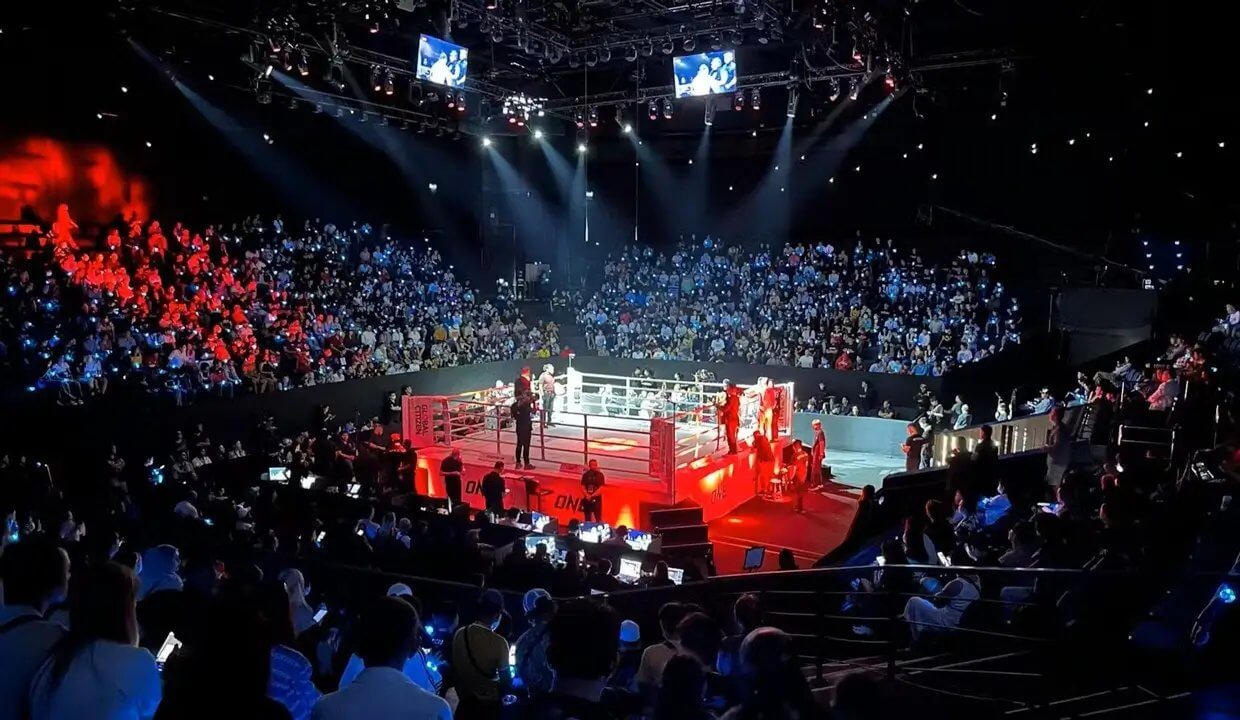
Lumpinee Stadium is Bangkok’s most prestigious Muay Thai venue, hosting fights on Friday and Saturday evenings.
It relocated to Ram Intra Road in 2014, which is further from the city center than the original stadium, but the fights remain among the best in Thailand.
Tickets are available at the stadium on fight nights or online in advance.
Ringside seats cost approximately 2,000 to 4,500 baht depending on the event, with premium ringside options running up to 10,000 baht for flagship ONE Fight Night cards.
General grandstand seating starts from around 1,000 baht.
Bangkok Activities for Adrenaline Fans
A Muay Thai match at Lumpinee is a multi-sensory experience.
The traditional sarama music — played by a small ensemble using oboe, drums, and cymbals — intensifies as each round builds.
Stadium gamblers signal bets through hand gestures across the crowd, creating a ritualistic backdrop to the fights.
Fighters perform the wai kru ritual before each match, a dance-like ceremony honoring their trainers and ancestors.
The ritual alone is worth arriving early to witness.
Cheer Fighters in Thailand’s National Sport
- Ringside seats: Best view of the technical footwork and clinch work; intense crowd energy throughout each bout
- Wai kru ceremony: Pre-fight ritual performed by both fighters — culturally specific to Thai martial arts
- Stadium betting: Spectators wager vocally through hand signals — an experience in itself, even for observers
The current fight schedule is published on the stadium’s official website at lumpineestadium.com.
Food and drinks are sold throughout the night.
The Bangkok Art and Culture Centre
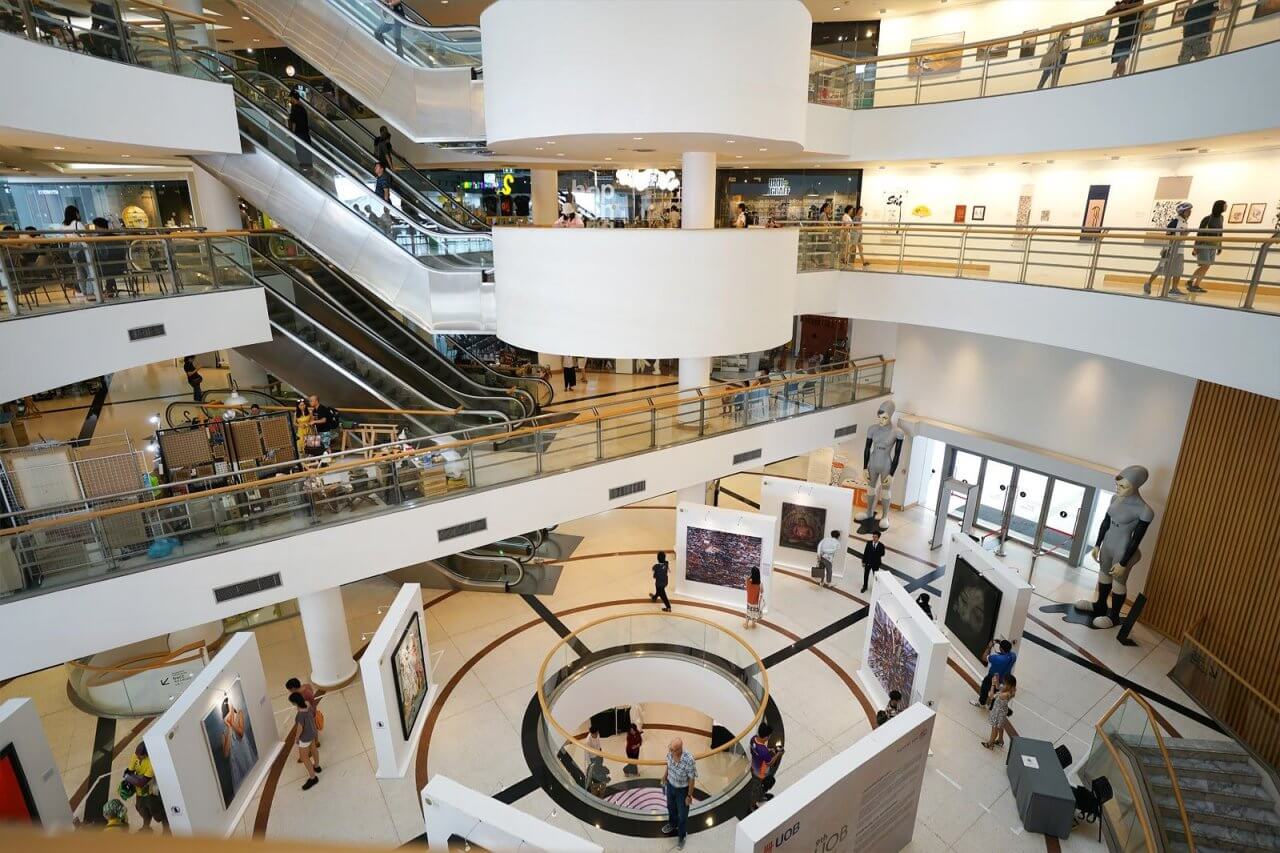
The Bangkok Art and Culture Centre (BACC) is a nine-story public arts building at the Pathumwan intersection on Rama I Road, one BTS stop from the National Stadium.
It houses rotating contemporary exhibitions across multiple gallery floors, plus a ground floor of independent creative shops and cafes.
Entry to the main galleries is free.
Things to Do in Bangkok for Art Lovers
The BACC showcases contemporary Thai artists alongside international exhibitions that cycle through on a quarterly basis.
The building’s open atrium structure allows exhibitions to spill across multiple levels, creating a walkable loop through different artistic disciplines.
This is not a traditional museum.
There are no permanent collections of historical artifacts.
The focus is entirely on contemporary and experimental work.
Explore Modern Galleries and Cultural Exhibitions
- Rotating exhibitions: Contemporary Thai paintings, digital installations, and multimedia art across six gallery floors
- Live performance spaces: Schedule includes avant-garde theater, classical concerts, and community cultural events
- Independent shops: Ground floor hosts galleries, bookshops, and design studios featuring emerging Thai artists
The BACC is particularly active in September, when the Bangkok Art Biennale draws international contributions to the building and the surrounding area.
Jim Thompson House Museum
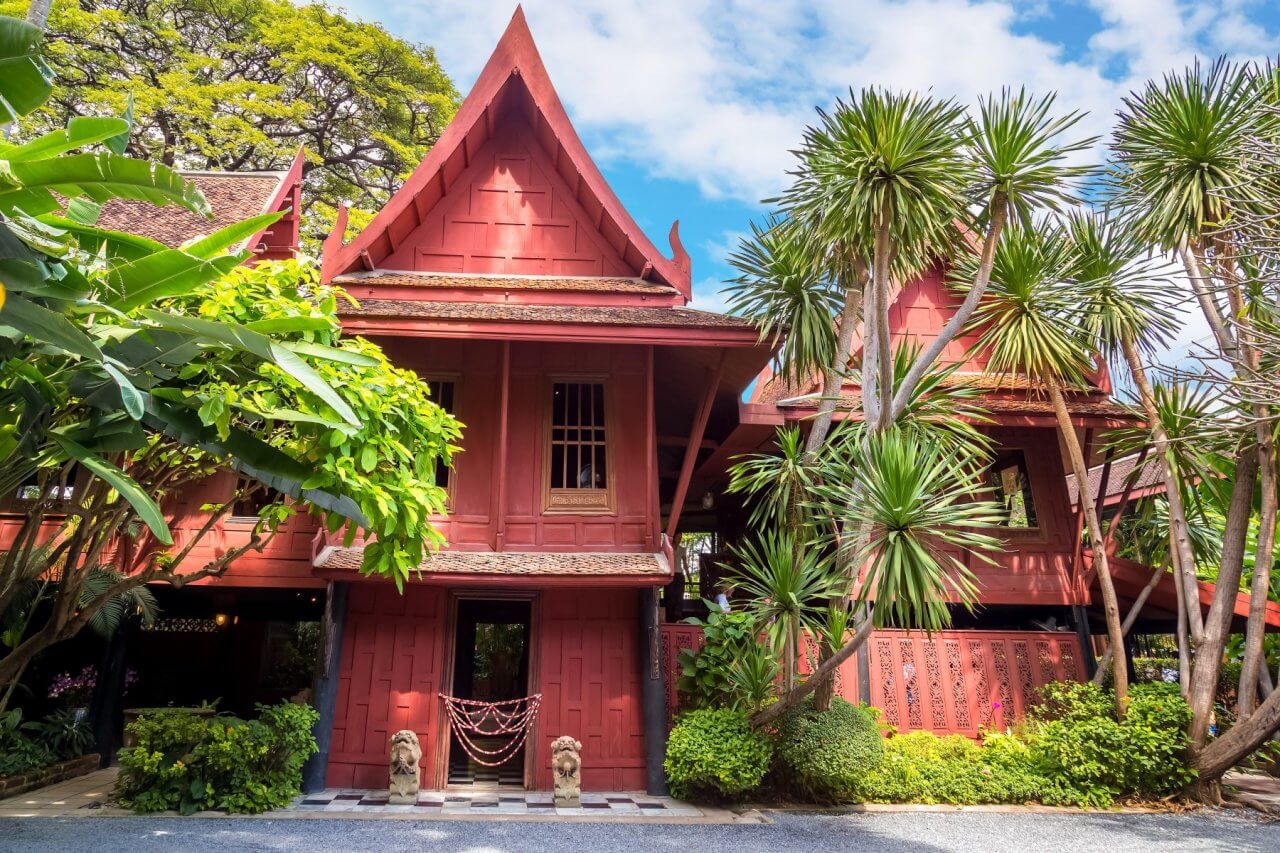
Jim Thompson was an American businessman who settled in Bangkok after World War II and played a significant role in reviving Thailand’s silk weaving industry during the 1950s and 1960s.
In 1967, he disappeared during a walk in the Cameron Highlands of Malaysia, and the mystery has never been resolved.
His home — a complex of six traditional Thai teakwood houses assembled on the bank of a canal in the Silom district — is now open as a museum.
Things to See in Bangkok Beyond Temples
The Jim Thompson House is one of Bangkok’s few examples of traditional Thai domestic architecture preserved in its original context.
The buildings were relocated from different sites and reassembled here by Thompson in the 1950s.
One house was deliberately built backwards, reversing standard orientation as a design choice.
Admission is 250 baht per adult, which includes a guided tour in your choice of five languages.
The house is open daily from 10:00 AM to 5:00 PM (last guided tour at 5:00 PM).
Tour the Historic Teakwood Home of the Silk Merchant
- Asian art collection: Antique porcelain, Burmese wood carvings, and early Bangkok-period paintings acquired by Thompson over two decades
- Traditional Thai architecture: Teak panels, high ceilings, and the canal-facing orientation typical of old Bangkok homes
- Thompson’s story: The guided tour covers both the silk revival project and the unsolved disappearance
Allow 1.5–2 hours for the house and the surrounding neighborhood, which includes a covered silk market and several restaurants.
Lumphini Park: Bangkok’s Urban Oasis
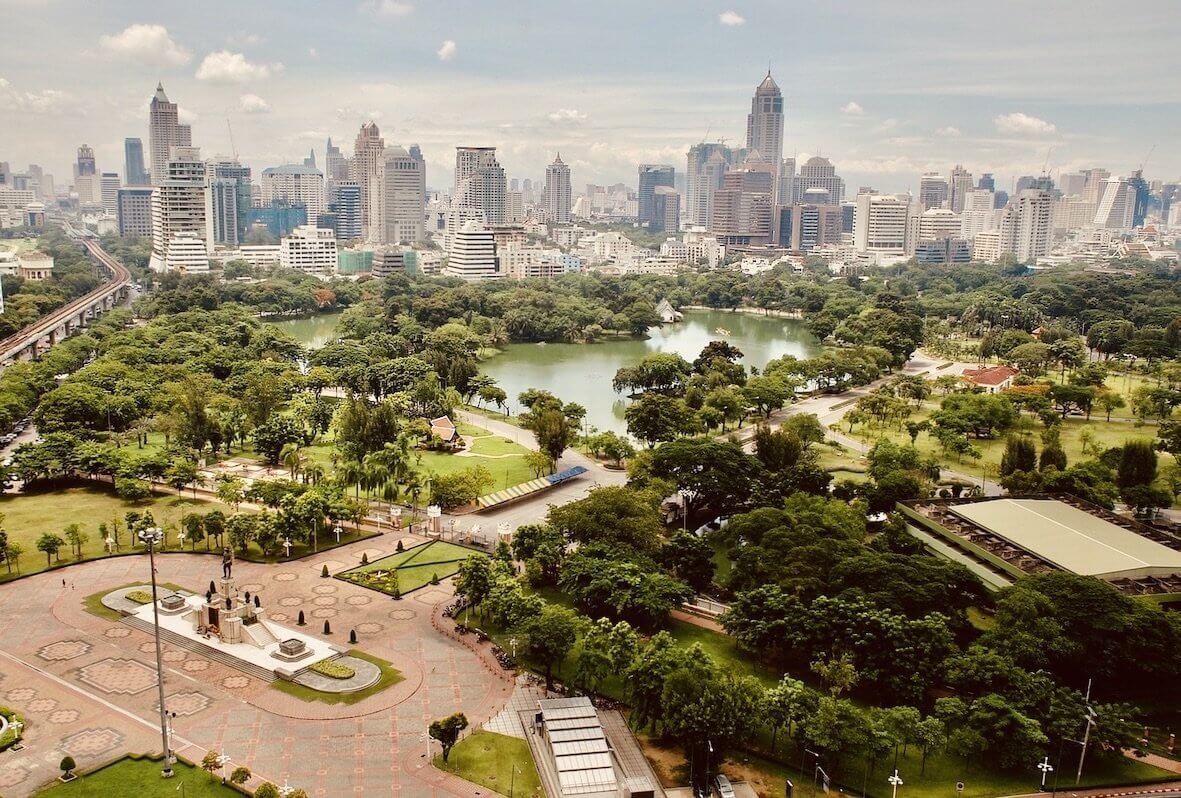
Lumphini Park is Bangkok’s largest inner-city green space, covering 57 hectares in the Lumphini district between Silom and Sukhumvit.
It is accessible from Lumphini or Si Lom MRT stations, or from Sala Daeng BTS station.
The park is open daily from 4:30 AM to 10:00 PM and is free to enter.
Nature Escapes in Bangkok
Lumphini’s main lake offers paddle boat rentals and a calm circuit for morning walkers and joggers.
The park’s most unexpected residents are its water monitor lizards — large reptiles that can reach two meters in length and are completely unintimidated by the park’s regular visitors.
The park is most active in the early morning (5-8 AM), when locals gather for tai chi, group exercise, and the kind of quiet daily routine that exists well outside the tourist circuit.
Spot Monitor Lizards and Local Joggers by the Lake
- Monitor lizards: Up to two meters long, fully habituated to humans, regularly seen at the water’s edge sunbathing
- Morning exercise culture: Tai chi groups, aerobics classes, and badminton games concentrated near the lake shore
- Paddle boats: Available free of charge at the central lake, open daily from 9:00 AM to 6:00 PM in 40-minute sessions — life jackets are provided and required
Lumphini is one of Bangkok’s genuinely free experiences.
For a longer list of no-cost activities across the city, see free things to do in Bangkok.
Is Ayutthaya Worth a Day Trip from Bangkok?
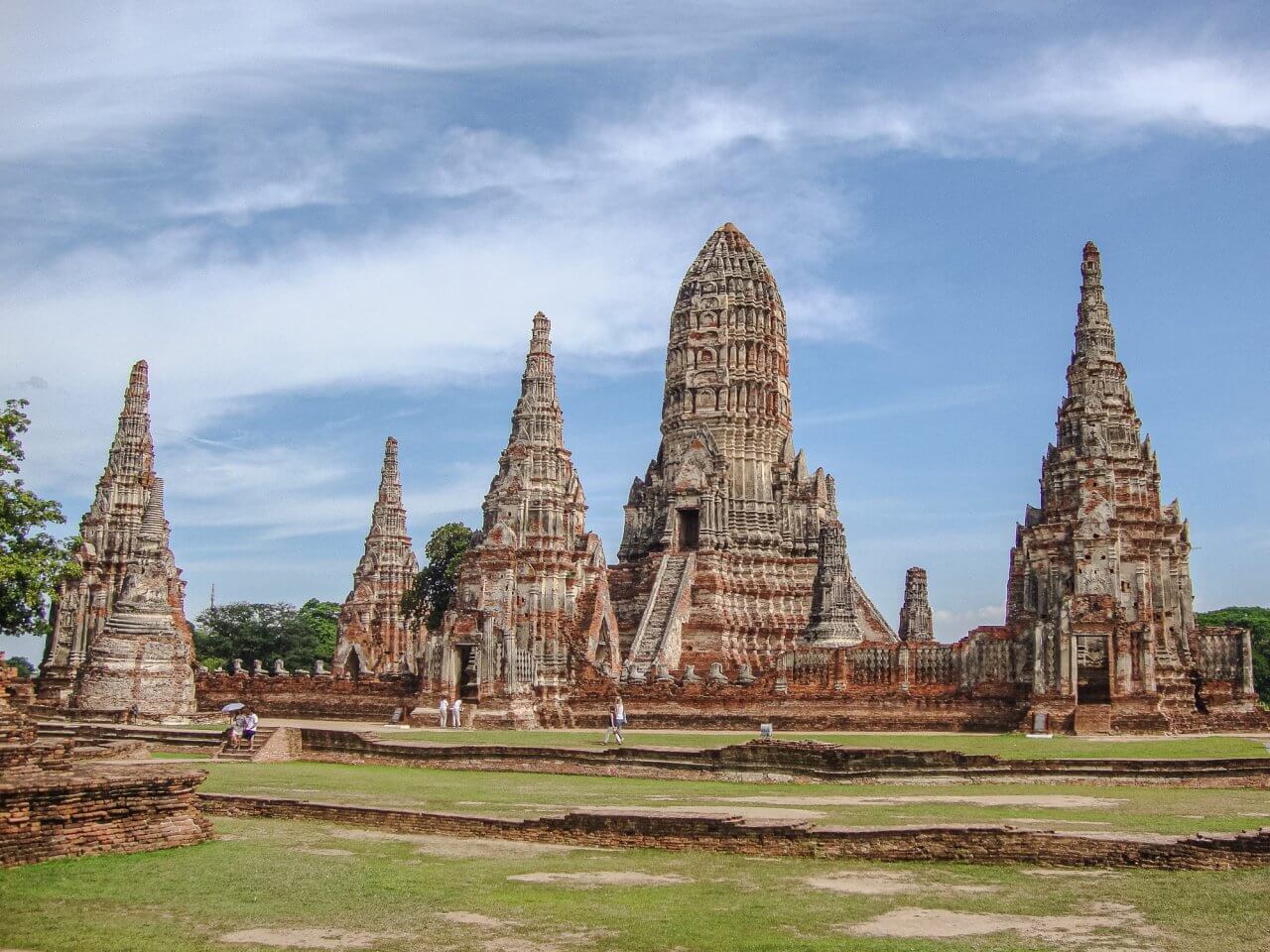
Ayutthaya is worth a day trip from Bangkok — it is one of Southeast Asia’s most accessible UNESCO World Heritage Sites, reachable in under two hours by train, and the scale of the ancient capital’s ruins is genuinely impressive.
Ayutthaya served as the capital of the Kingdom of Siam from 1351 to 1767, when it was sacked and largely destroyed by Burmese forces.
What remains are dozens of temple ruins spread across a flat island between converging rivers.
Top Things to Do Near Bangkok
The Ayutthaya Historical Park covers the central island and is best explored by bicycle, hireable near the train station for approximately 60 to 100 baht per day.
Tuk-tuks are also available for a guided circuit of the main temple sites.
Key sites include Wat Mahathat (famous for the sandstone Buddha head entwined in tree roots), Wat Phra Si Sanphet, and the riverside Wat Chaiwatthanaram.
Most trains depart from Bangkok’s Krung Thep Aphiwat (Bang Sue Grand) station, with a handful of ordinary trains still running from Hua Lamphong; fares start at around 20 baht for third-class and 240 baht for second-class air-conditioned seats.
For more options beyond Ayutthaya — including floating market tours, canal village trips, and the Bridge over the River Kwai — the best day trips from Bangkok guide covers the full range of destinations reachable in a single day.
Explore UNESCO-Listed Temple Ruins of the Ancient Capital
- Wat Mahathat: The tree-root Buddha head is the most photographed image in the park and one of the most recognizable in Thailand
- Wat Phra Si Sanphet: Three restored chedis (stupas) that served as the royal chapel of the ancient Siamese court
- Wat Chaiwatthanaram: Dramatic riverside location, particularly atmospheric at sunset
Allow a full day and bring a hat, sunscreen, and water.
The ruins offer minimal shade.
Is the Damnoen Saduak Floating Market Worth Visiting?
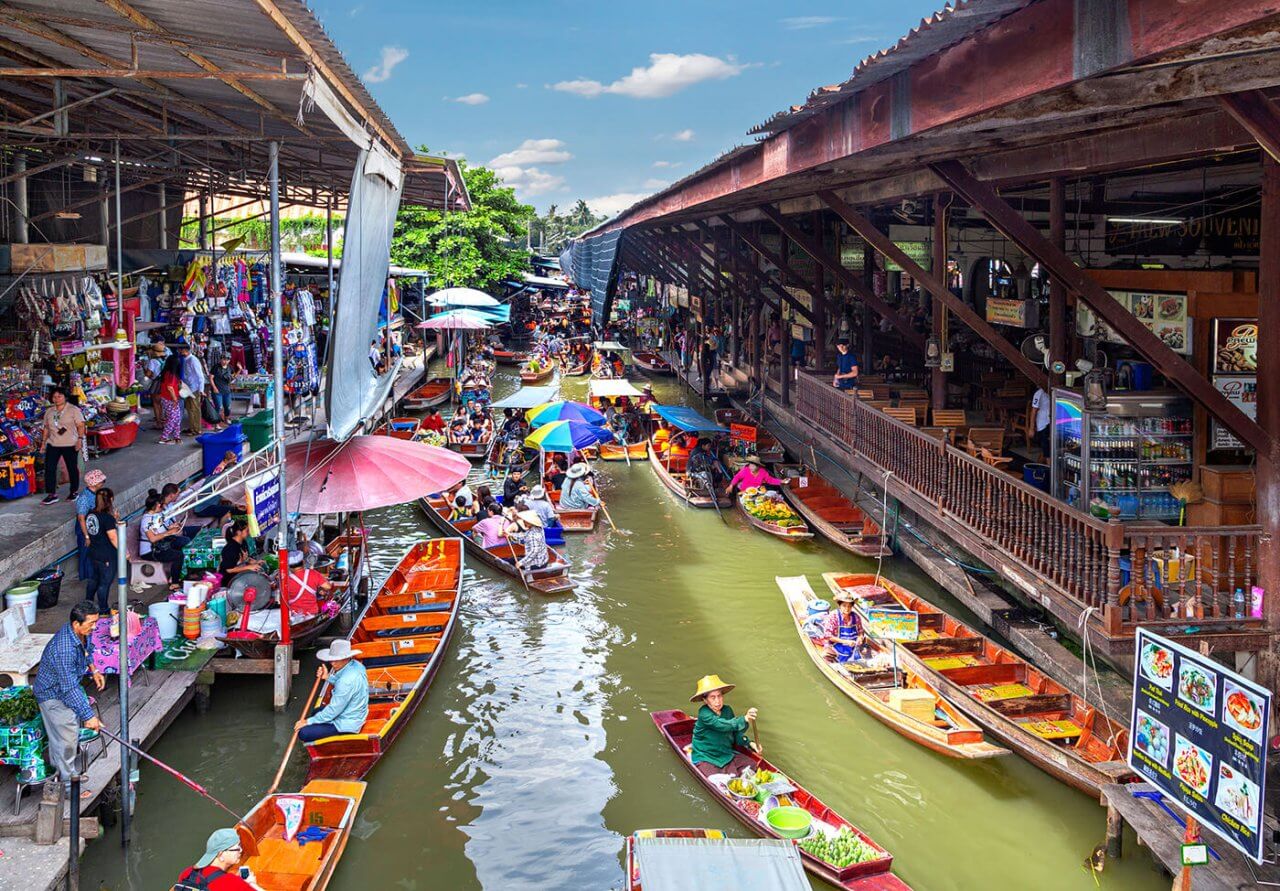
Damnoen Saduak is worth visiting if you go early.
Arrive by 8 AM and you will see the market at its most genuine, with vendors in traditional wide-brimmed hats paddling wooden boats stacked with tropical fruit, flower garlands, and cooked food.
By 10 AM, organized tour groups dominate and the atmosphere shifts significantly toward performance rather than commerce.
Best Day Trip from Bangkok by Train
Damnoen Saduak is located approximately 100 kilometers southwest of Bangkok, in Ratchaburi Province.
It is most commonly reached by minivan from Victory Monument or by organized tour.
There is no direct rail connection.
The market runs daily from approximately 7:00 AM to 4:00 PM, with the busiest and most photogenic activity concentrated between 7:00 AM and 10:00 AM before tour groups thin out.
The surrounding canals can be explored by hired longtail boat for approximately 800 to 1,500 baht per boat (up to 5–6 passengers) for a one-hour circuit — book directly at the main pier jetty rather than through street agents to avoid inflated rates.
Shop from Boats Laden with Fresh Produce and Treats
- Fresh tropical fruit: Mango, rambutan, durian, and dragon fruit sold directly from wooden boats on the canal
- Cooked food on water: Noodle soups, grilled seafood, and papaya salad prepared on floating kitchen boats
- Handmade crafts: Woven baskets, silk scarves, and ceramics from canal-side stalls
The floating market pairs well as a half-day trip with the nearby Maeklong Railway Market, where a train bisects an active produce market four times daily.
Roam the Neon Nightlife of Khao San Road
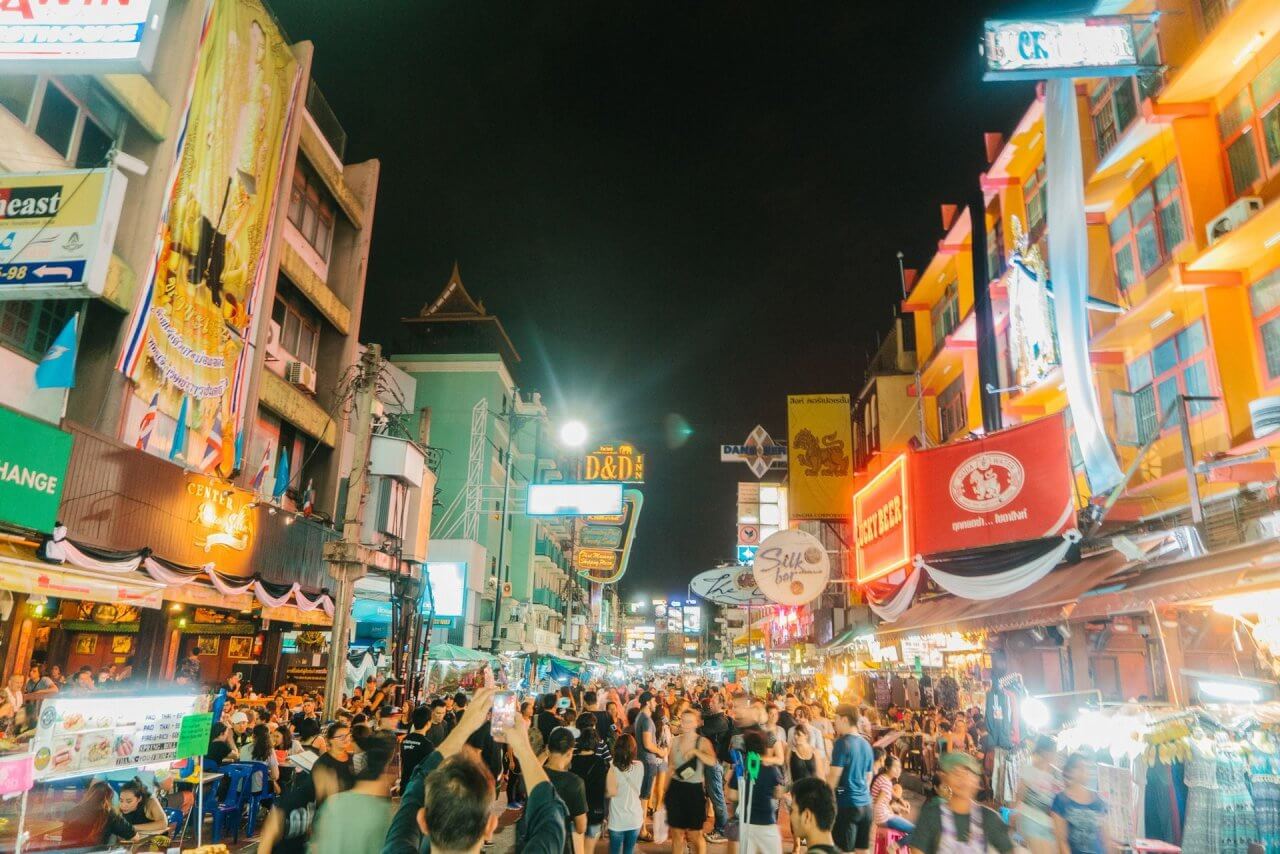
Khao San Road is Bangkok’s original backpacker strip — a dense concentration of hostels, travel agencies, bars, and street food vendors in the Banglamphu district.
It has operated as a traveler hub since the 1980s and remains the main entry point for budget travelers visiting the city.
After dark, the street becomes a pedestrian zone of competing sound systems, street bars, and live music venues that stay open until the early hours.
What to Do in Bangkok at Night
The most enjoyable way to experience Khao San is to explore the surrounding side streets rather than the main strip.
Soi Rambuttri, one block parallel, has a quieter, more local character with open-air restaurants and bars that lack the aggressive touts of the main drag.
Street food stalls operate from roughly 6 PM until 2-3 AM, serving pad thai, grilled corn, mango sticky rice, and — for the adventurous — fried insects.
Enjoy Street Bars, Live Bands, and Late-Night Snacks
- Street bars: Cheap draft beer and mixed buckets — affordable even by Southeast Asian standards
- Live music venues: Local cover bands and occasional original acts in the bars off the main road
- Late-night food: Full street food service available until closing, concentrated at both ends of the strip
Khao San is walking distance from the Grand Palace, Wat Pho, and Wat Saket, making it a natural end to a day on the temple circuit.
The Erawan Shrine
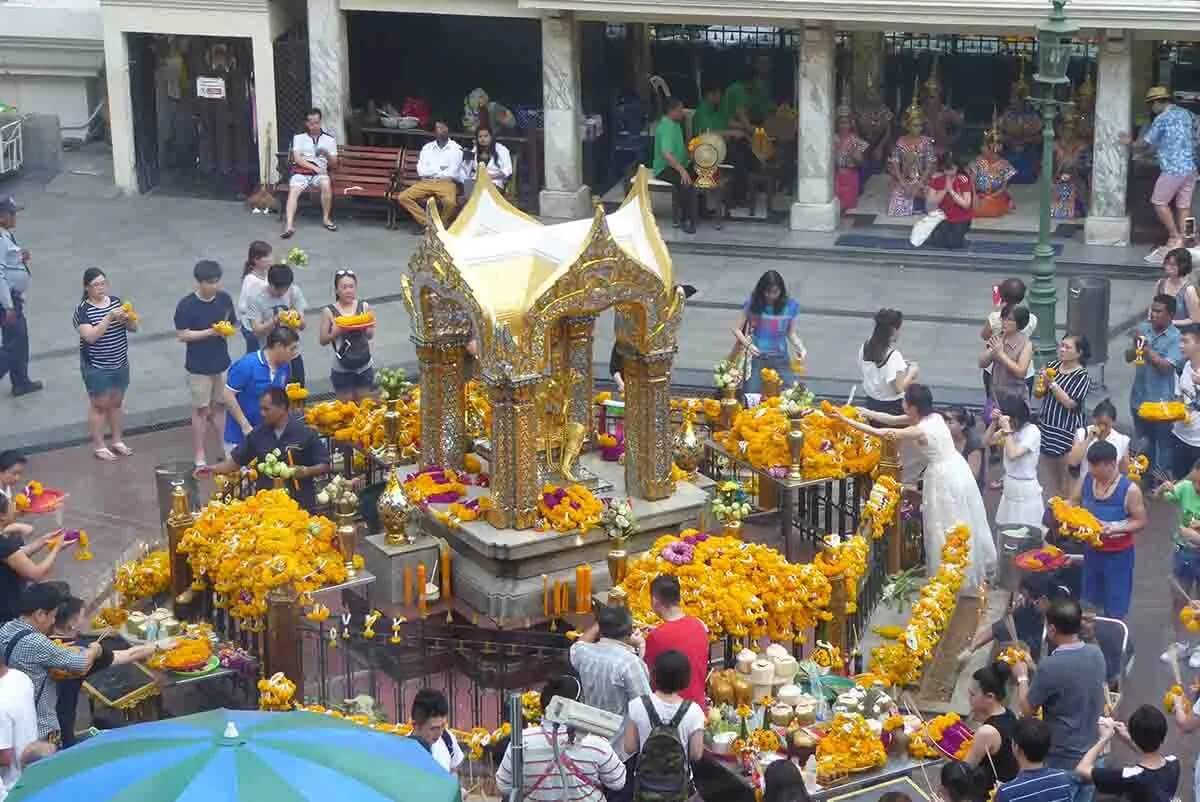
The Erawan Shrine stands at the corner of Ratchadamri Road and Ploenchit Road in the Ratchaprasong intersection — one of Bangkok’s busiest commercial hubs, surrounded by the Grand Hyatt Erawan hotel, the Central World shopping complex, and a BTS station overhead.
The shrine houses a golden four-faced statue of Brahma and is one of Bangkok’s most actively used religious sites.
Office workers, shoppers, and tourists stop throughout the day to make offerings and pray.
Unique Things to Do in Bangkok for Culture Buffs
The contrast between the shrine’s devotional atmosphere and its commercial surroundings is one of Bangkok’s most distinctly urban experiences.
Unlike the Grand Palace, which requires a planned visit, the Erawan Shrine exists in the middle of daily life — you can stop here between shopping malls or after a BTS journey with no special preparation.
Traditional Thai classical dancers perform at the shrine when hired by devotees to fulfill a vow — a common practice in Thai Buddhism where dance is offered in gratitude for prayers answered.
Witness Traditional Thai Dance Offerings to the Deity
- Classical dance performances: Hired by devotees; performances happen throughout the day when sufficient donations are made
- Offering rituals: Incense, marigold garlands, and carved wooden elephants are the standard items placed at the statue
- Sacred music: Ancient Thai instruments accompany the dancers during performances at the base of the shrine
The shrine is free to visit and takes 15-20 minutes.
It is an easy addition to any itinerary built around the Siam or Chit Lom BTS stops.
Talad Rod Fai Night Market
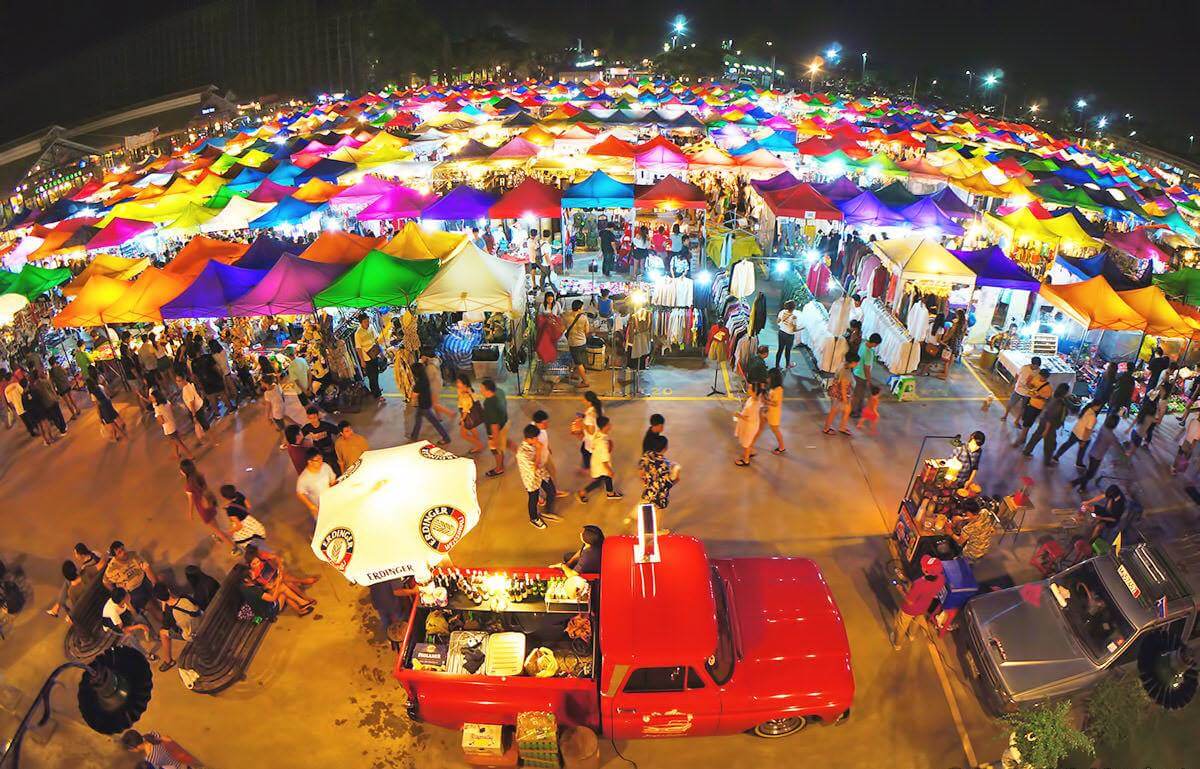
Talad Rod Fai (Railway Night Market) is a large vintage and antique market in Bangkok, with two main locations: the Srinakarin Road site in the east and the Ratchada location near Thailand Cultural Center MRT station, which reopened at its original site behind Esplanade Mall in March 2026.
The Srinakarin location operates Thursday to Sunday from 5:00 PM to 1:00 AM, while the Ratchada branch now runs daily from 5:00 PM to 1:00 AM.
The Srinakarin location, established at its current site in 2013, is considered the original and more spacious of the two, with a stronger emphasis on genuine vintage goods, antiques, and retro collectibles compared to the more centrally located Ratchada branch.
Things to Do in Bangkok for Vintage Finds
The market divides into sections: one focused on antiques and vintage collectibles, another on secondhand clothing and accessories, and a third on food and street drinks.
The antiques section leans heavily toward items from the 1960s-1980s, including cameras, vinyl records, military memorabilia, and Thai advertising posters.
Bargaining is expected and practiced by local shoppers and visitors alike.
Shop Retro Collectibles, Antiques, and Quirky Fashion
- Vintage collectibles: Soviet-era cameras, old clocks, Thai tin signs, and mid-century furniture at negotiable prices
- Secondhand fashion: Denim jackets, vintage band t-shirts, and retro accessories
- Antique home décor: Ceramics, lacquerware, and Thai craft items from the mid-twentieth century
The food section offers full sit-down meals and street snacks.
Arrive after 7 PM when all sections are fully operational.
Sky Bar at Lebua: Bangkok’s Best Rooftop View
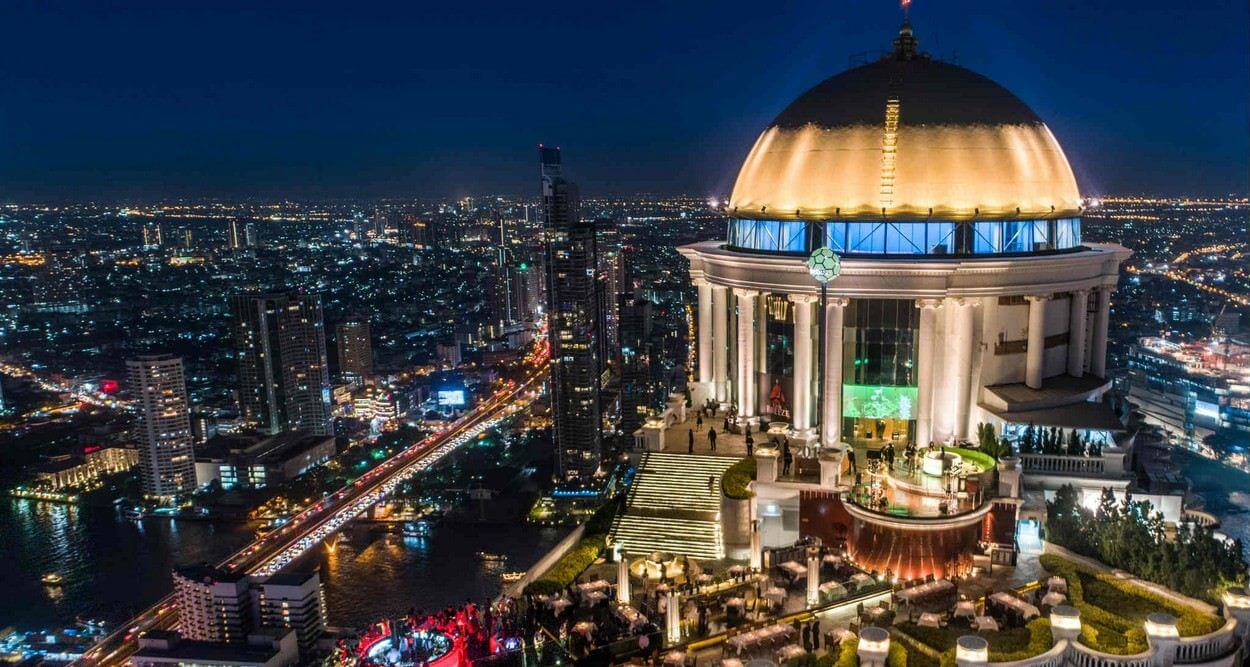
Sky Bar at Lebua is on the 63rd floor of the State Tower in Silom, at approximately 250 meters (820 feet) above street level.
It gained international recognition after appearing in The Hangover Part II and remains one of Bangkok’s most famous rooftop venues.
The open-air bar has an unobstructed view of the Chao Phraya River and the Bangkok skyline in both directions.
Best Way to See Bangkok at Dusk
The bar operates without a cover charge, but signature cocktails start at approximately 600 to 900 baht.
There is a dress code: long trousers and closed-toe shoes are required.
Shorts and sandals will be turned away at the entrance — this is enforced consistently.
Arriving 30–45 minutes before sunset gives you daylight views of the river before the city lights come up, and avoids the longest queue period.
Sip Cocktails Overlooking the Glittering Skyline
- Dress code: Strictly enforced — long trousers and closed shoes required for all guests regardless of the heat
- Best timing: Arrive 30–45 minutes before sunset for the transition from daylight to city-light views
- Signature cocktail: The Hangovertini is the most ordered drink; standard cocktails start from around 600 baht, with the premium Hangovertini Reserve priced at 9,100 baht
The Lebua hotel’s lower-floor restaurant, Breeze, offers a dinner option that combines well with the bar.
Several other Bangkok rooftop bars in the same area operate with more relaxed dress codes for those who prefer a lower-key elevated view.
SEA LIFE Bangkok Ocean World
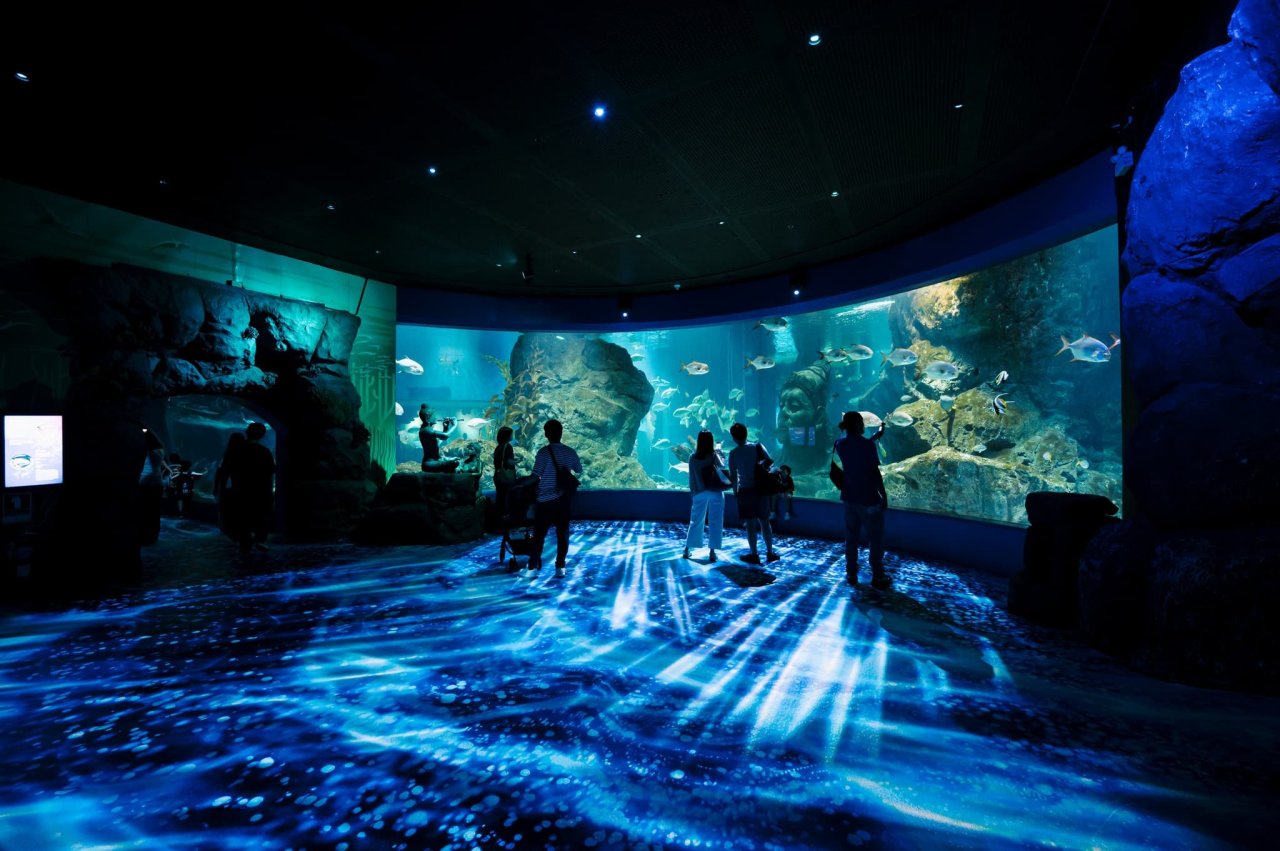
SEA LIFE Bangkok Ocean World is a large aquarium located on the basement floors of the Siam Paragon shopping center in the Siam district.
It houses approximately 30,000 marine animals across multiple themed zones.
Admission is 1,199 baht per adult at the door, with online bookings available from 990 baht — booking ahead is worth it given the consistent discount and the ability to skip ticket queues.
Fun Things to Do in Bangkok with Family
The aquarium’s main draw is its glass tunnel: a curved walkway through a tank containing sharks, rays, and large tropical fish.
The ceiling and walls are glass on three sides, creating a fully immersive viewing experience.
Other sections include a seahorse habitat, a touch pool, an electric eel tank, and a penguin zone.
The aquarium is located next to the Siam BTS station, making it straightforward to reach from anywhere in the city.
If you are traveling with children, combining SEA LIFE with KidZania Bangkok or the LEGOLAND Discovery Center makes for a full family day without leaving the Siam area.
For a complete guide to Bangkok with young travelers — covering accommodation, transport, and age-appropriate activities — the visiting Bangkok with kids and family guide covers everything in detail.
Walk Beneath a Glass Tunnel Surrounded by Marine Life
- Glass tunnel: Sharks, rays, and sea turtles viewable from three sides simultaneously as you walk through
- Interactive feeding sessions: Scheduled throughout the day; check the program board at the entrance on arrival
- Themed zones: Tropical rainforest, rocky shore, deep ocean, and a separate penguin exhibit
SEA LIFE is busiest on weekends and Thai public holidays.
Weekday mornings offer the quietest conditions.
Can You Learn Muay Thai in Bangkok in a Single Day?
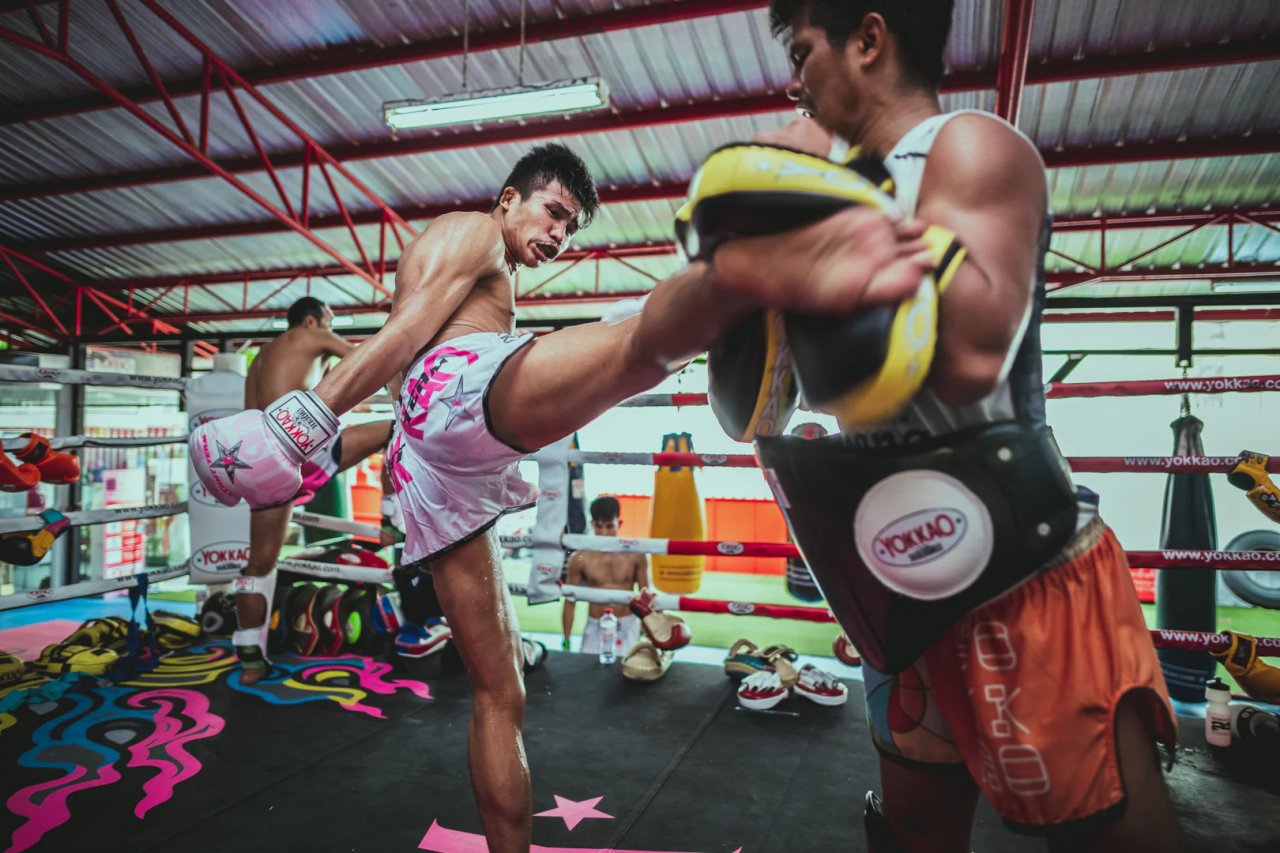
You can learn the foundational techniques of Muay Thai in Bangkok in a single day.
Most reputable gyms offer beginner sessions of 1.5–3 hours that cover stance, footwork, and basic strikes.
You will not become proficient in one session, but you will develop a genuine understanding of the discipline that changes how you watch a live fight.
A typical drop-in beginner session costs approximately 400 to 600 baht at a standard Bangkok gym, with tourist-oriented beginner experience packages at larger training camps running 800 to 1,200 baht and including equipment, wraps, and a trainer dedicated to first-timers.
Bangkok Activities for Fitness Enthusiasts
The best gyms for visitor training sessions are concentrated in neighborhoods with large expat communities: Silom, Sukhumvit, and Ekkamai.
Most offer morning and afternoon classes and provide gloves and hand wraps, though bringing your own is hygienically preferable.
Training alongside local fighters rather than in a tourists-only class gives a more accurate sense of what the sport actually demands technically.
Learn Basic Techniques from Professional Trainers
- Stance and footwork: The foundation that all techniques build on — this takes up the first portion of every beginner session
- Basic strikes: Jab, cross, teep (front kick), and roundhouse kick are the standard first-session curriculum
- Wai kru ritual: Some gyms incorporate the traditional pre-training ceremony into visitor sessions as a cultural element
For those who want to watch before committing to training, a fight night at Lumpinee Stadium offers the best context for understanding the sport at a competitive level.
Pak Khlong Talat: Bangkok’s Flower Market
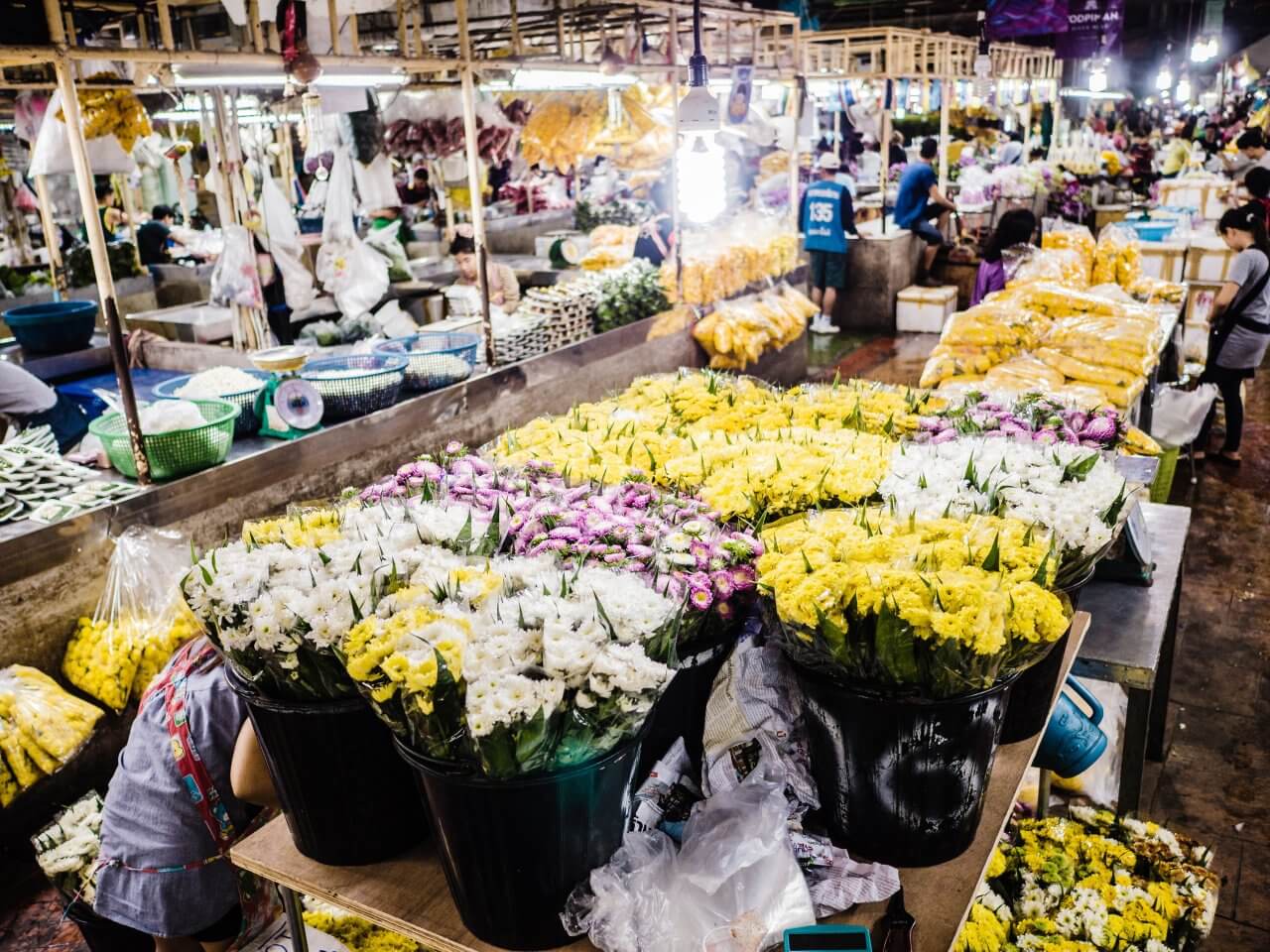
Pak Khlong Talat is Bangkok’s largest wholesale flower market, located near Memorial Bridge on the Chao Phraya riverbank in the Yodpiman area.
The market operates around the clock, with peak wholesale activity between 2 AM and 6 AM when suppliers from upcountry deliver fresh flowers for distribution to shops and hotels across the city.
Visitors can go at any hour, but the pre-dawn hours offer the most volume and the most genuine behind-the-scenes activity.
Things to Do in Bangkok for the Senses
The main stock includes cut orchids, jasmine garlands (malai), marigolds commonly used for temple offerings, lotus blossoms, and roses.
The orchid section is particularly concentrated, with hundreds of varieties sold by the bundle.
Flower arrangements are made to order at most stalls, and prices for individual bunches are low enough to justify buying fresh flowers for your hotel room.
Marvel at Endless Blooms in Thailand’s Largest Flower Market
- Peak hours: 2-6 AM for wholesale action and maximum stock variety from upcountry suppliers
- Best buys: Fresh orchid bundles, jasmine garlands, and lotus flowers at retail-accessible prices
- Early morning photography: River light at dawn creates good conditions for shots of the flower stalls and the Chao Phraya
The surrounding area includes the Pak Khlong Talat fresh food market, operating on a similar overnight schedule.
Where Can You Find Bangkok’s Best Street Art?
Bangkok’s most concentrated street art is in the Charoen Krung district, specifically the stretch between the Oriental Hotel and Warehouse 30.
This area, once a trading port neighborhood, has been redeveloped as a creative district housing galleries, design studios, and independent cafes.
The murals rotate regularly, with new works appearing on building facades along Charoen Krung Road and its side streets.
Non-Touristy Things to Do in Bangkok
The creative district extends to include the TCDC (Thailand Creative and Design Center), the Jam Factory complex, and several gallery-cafe hybrids that open in the evenings.
Unlike more tourism-oriented art installations at Asiatique, the Charoen Krung scene caters primarily to Bangkok’s local creative community.
Most of the murals are accessible on foot and free to view.
The area is best explored on a weekday afternoon when foot traffic is lighter.
Admire Colorful Murals and Pop-Up Art Installations
- Warehouse 30: A converted mid-century warehouse complex hosting rotating art exhibitions and pop-up creative events
- Charoen Krung side streets: The sois off the main road contain the highest concentration of wall murals and gallery spaces
- TCDC: Thailand’s Creative and Design Center, with a public design library and free rotating exhibitions
Combine the street art walk with dinner in the Charoen Krung restaurant strip for a full evening in the district.
Does Bangkok Have a Good Craft Beer Scene?
Bangkok has a genuinely good craft beer scene for a city where home brewing is technically illegal — the legal environment pushes enthusiasts toward importing and innovative bar formats rather than domestic microbreweries, though a grey market of locally produced craft beers does exist.
The most established craft beer bars operate in Silom, Thonglor, and Ari neighborhoods.
Bangkok Nightlife for Beer Lovers
Thai brewers working within legal constraints produce craft-style beers through licensed arrangements or import innovative beers from Southeast Asian neighbors.
Bars like Mikkeller Bangkok — a collaboration between the Danish craft brewery and a local partner — and Tapping Tapas stock rotating selections of Thai and international craft beers.
Typical craft pints start at approximately 250 to 500 baht, with specialty imports, barrel-aged stouts, and double IPAs pushing beyond that, reflecting the premium on quality brewing in a country where industrial lager dominates commercially.
Sample Innovative Thai Ales and IPAs
- Tropical fruit IPAs: Dragon fruit, lychee, and tamarind-infused ales from regional craft producers
- Thai-inspired lagers: Jasmine rice lagers and galangal-spiced pale ales made with locally sourced ingredients
- Imported craft selection: Bars like Mikkeller Bangkok rotate international craft beers alongside their own collaborative brews
The craft beer scene pairs naturally with Bangkok’s growing independent food market culture.
Rooftop bar-restaurant hybrids in Thonglor are the most common venue format.
Day Trip to Kanchanaburi and the River Kwai
Kanchanaburi is a town approximately 130 kilometers northwest of Bangkok, most commonly associated with the Death Railway — a World War II-era rail line constructed through forced labor by Allied prisoners of war.
The Bridge over the River Kwai spans the Mae Klong River and is the main landmark of the area.
The journey from Bangkok takes approximately 2-3 hours by road or 3 hours by train from Thonburi station.
Top Excursion from Bangkok by Road
Kanchanaburi town contains two major Allied war cemeteries (Kanchanaburi and Chungkai), the JEATH War Museum, and the Thailand-Burma Railway Centre — a well-produced history museum covering the construction of the railway and the conditions faced by prisoners.
The bridge itself can be walked across when trains are not scheduled.
Outside town, Erawan National Park contains a seven-tier waterfall with natural swimming pools at multiple levels.
The drive from Kanchanaburi town takes approximately one hour.
Visit WWII Bridges and Serene Waterfalls
- Bridge over the River Kwai: Walk across the original steel spans; a train crosses on a published daily schedule
- Erawan Falls: Seven-tiered waterfall with turquoise swimming pools, best visited in the dry season (November–May)
- War cemeteries and museums: The Kanchanaburi Allied War Cemetery holds over 6,900 graves of Commonwealth forces
A guided day tour from Bangkok typically runs 1,800 to 2,800 baht per person including transport, an English-speaking guide, and entrance fees to the main sites.
Frequently Asked Questions (FAQs)
Bangkok is generally safe for solo travelers in 2026.
The main risks are opportunistic petty theft in crowded areas, transport scams (particularly involving tuk-tuks steered toward overpriced gem shops), and drink spiking in certain nightlife venues.
Violent crime against tourists is rare.
Using Grab for transport rather than negotiating with unmetered taxis removes the most common transport scam scenarios.
A comfortable day in Bangkok costs approximately $30 to $50 USD for a budget traveler — covering a guesthouse or hostel, three street food meals, public transport, and one or two paid attractions.
Mid-range travelers spending on a hotel, restaurant meals, and entrance fees should expect to spend significantly more.
Bangkok is among Southeast Asia’s more affordable major cities, but costs rise quickly once you move beyond street-level food and local public transport.
Bangkok’s major temples require covered shoulders and knees for entry.
Long trousers or a skirt below the knee, combined with a top that covers the shoulders, meets the standard at the Grand Palace and Wat Pho.
Many visitors carry a light shawl or change of trousers specifically for temple visits.
Sarongs are available to hire at the main entrances to the Grand Palace compound for a small deposit.
Thailand’s visa policy depends on your nationality.
Most Western passport holders currently receive a 30-day visa-free stay at Suvarnabhumi and Don Mueang airports — Thailand reduced its visa exemption period from 60 days back to 30 days in May 2026, citing concerns over illegal employment and unauthorized business activity.
Citizens of the US, UK, Australia, Canada, and most EU nations are among the 93 eligible nationalities, and a 30-day extension remains available at a local immigration office for 1,900 baht.
Thailand has updated its visa exemption periods multiple times in recent years, so check the official Royal Thai Embassy website for your specific passport before booking.
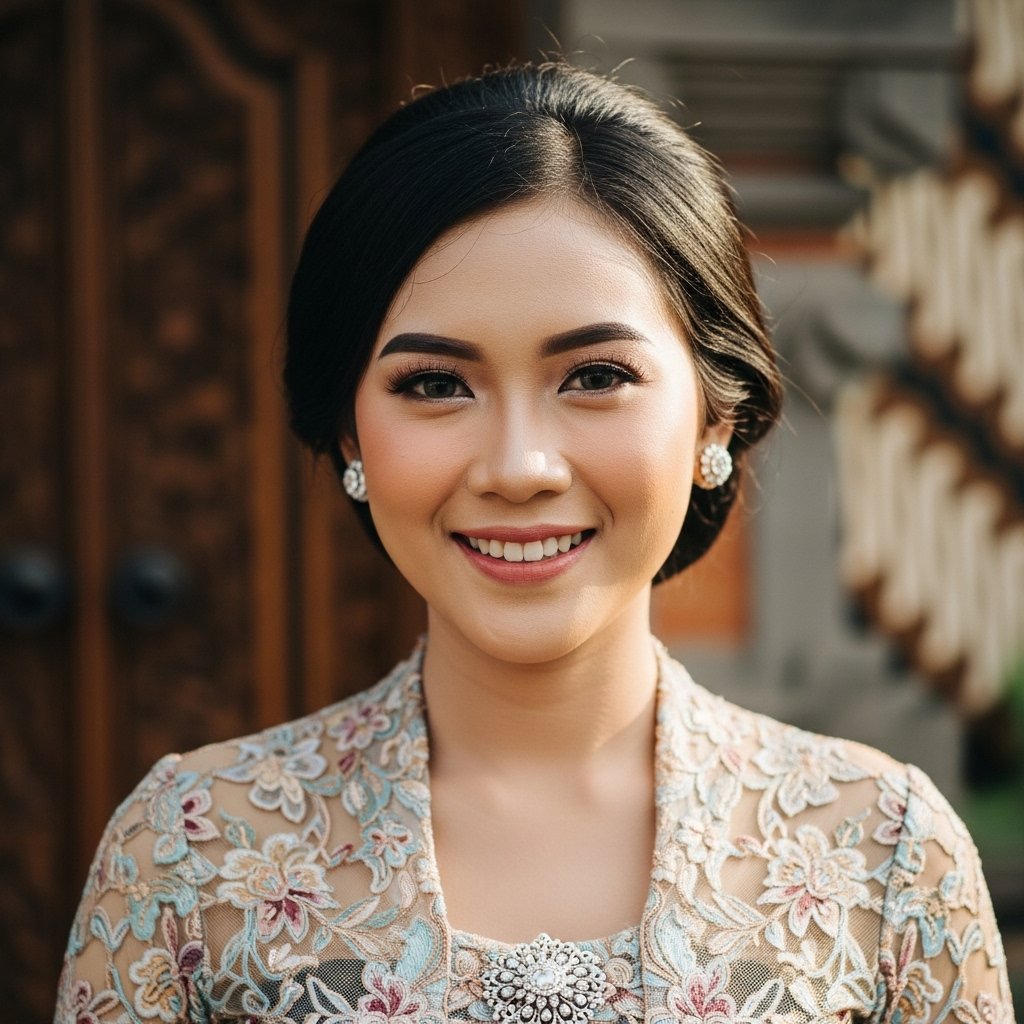
A lifestyle and OOTD blogger, Kannaya Nareswari enjoys the small pleasures of cooking, traveling, and documenting ordinary events. She uses genuine storytelling to communicate her love of fashion, culinary explorations, and wanderlust. She is based between Bali and Bandung. She enjoys enjoying coffee at a secret café or experimenting with recipes in the kitchen when she's not traveling to new places or styling her most recent ensemble.