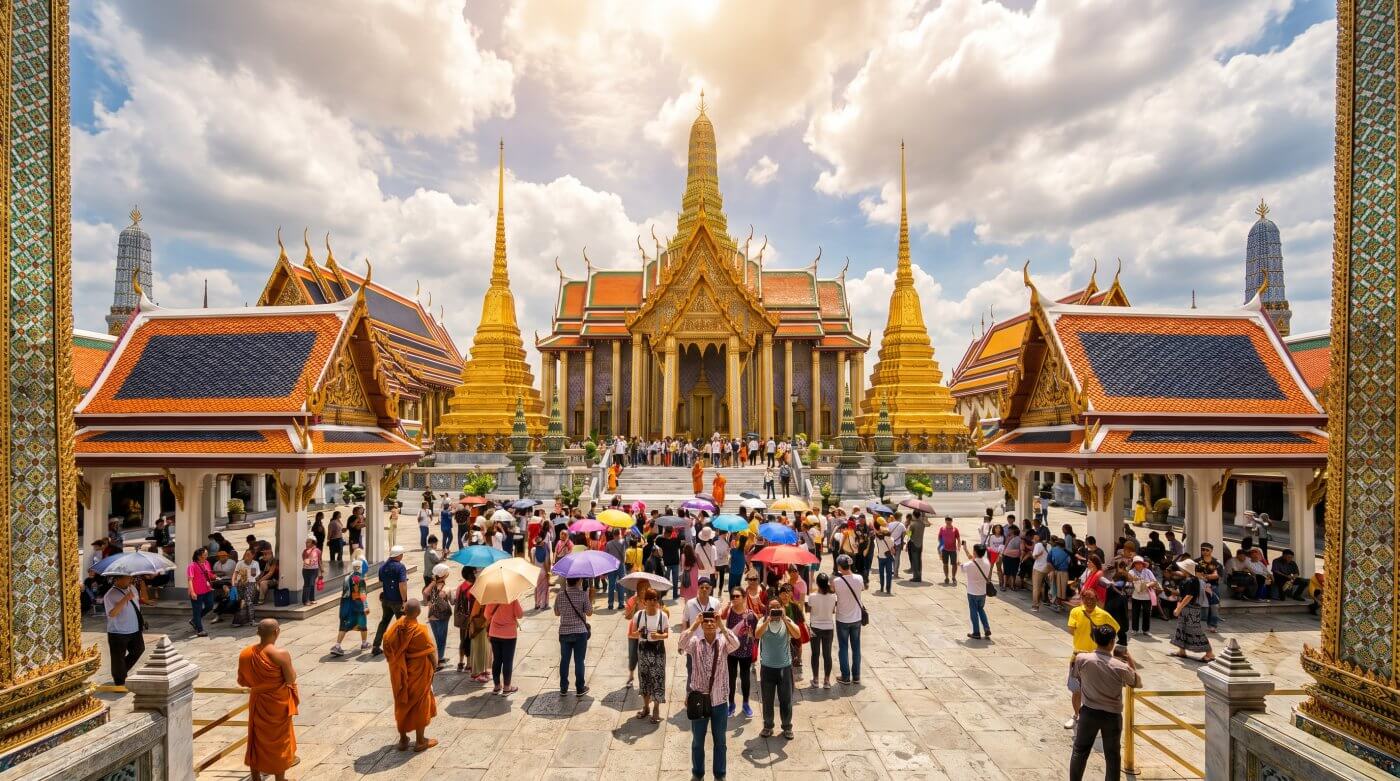



Things To Know Before Visiting Bangkok, Thailand – A few specific things to know before visiting Bangkok — temple dress codes, transport options, visa rules, and the rainy season pattern — make the difference between a prepared trip and a frustrating one.
Bangkok is an easy city to visit, but not an especially forgiving one for travelers who show up without basic preparation.
The city is affordable, safe, and full of things worth doing.
The friction usually comes from avoidable surprises: arriving at a temple in shorts, paying three times the going rate for a tuk-tuk, or discovering your bank froze your card the moment you landed.
This guide covers the practical details you need before you go.
Once you’ve sorted the logistics, the best things to do in Bangkok guide walks you through what’s actually worth your time.
Bangkok at a Glance
- Plan at least 3–4 days for a first visit to cover the major temples, at least one market, and a river trip; 5–7 days allows for a day excursion and more relaxed exploration.
- November to February offers the most comfortable weather for outdoor sightseeing; the rainy season (May–October) brings lower hotel rates and thinner crowds at major attractions.
- The BTS Skytrain and MRT cover most of what visitors want to do in the city; budget travelers can manage on approximately 1,000–1,500 baht daily including accommodation and meals.
- Temple visits require covered shoulders, covered knees, and closed-toe shoes or socks — bring a modest outfit or use the sarongs provided at temple entrances.
- Carry your passport, download offline maps, pack lightweight clothing, and notify your bank about international travel before departure.
Planning Your Bangkok Trip: How Long to Stay and Where
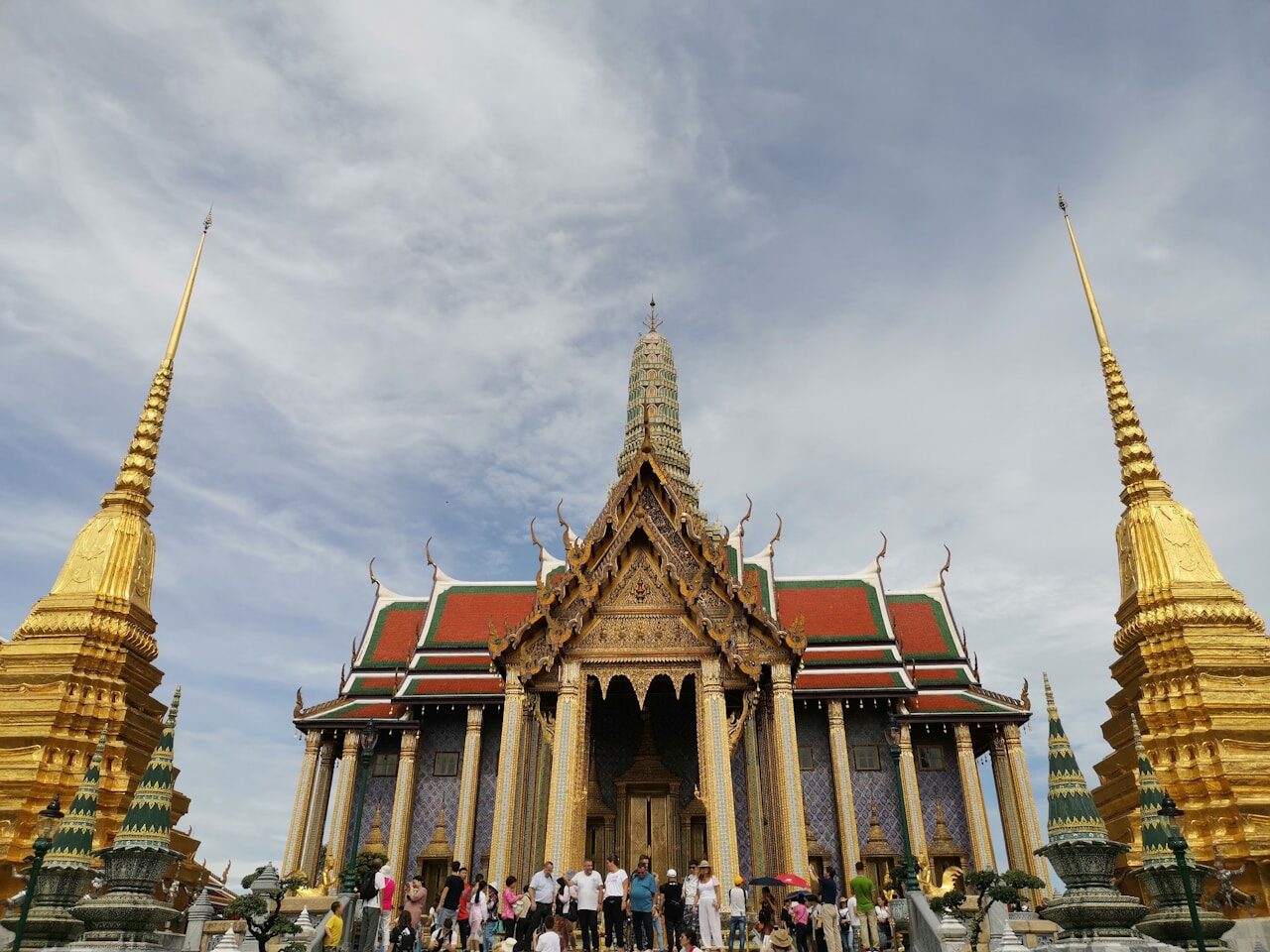
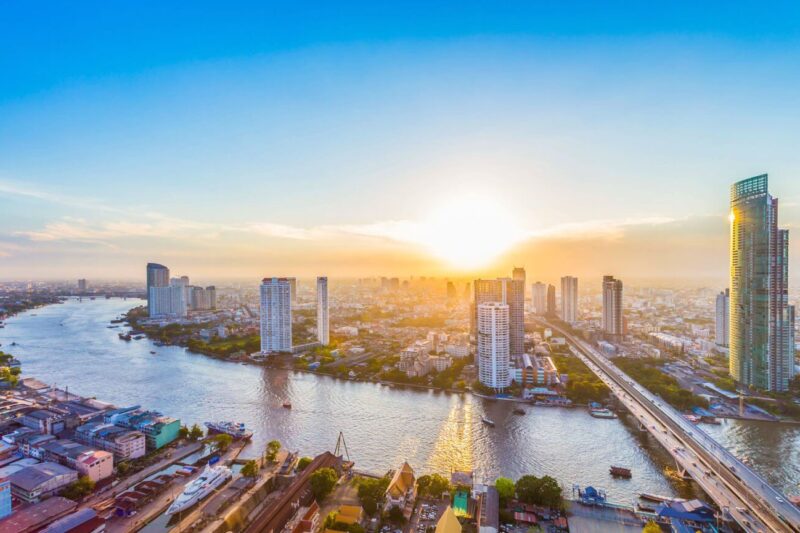
Bangkok is large — approximately 1,568.7 sq km — but most visitor-relevant neighborhoods sit along a compact central corridor that the BTS Skytrain serves reasonably well.
Choosing where to stay shapes your daily experience more than almost any other decision.
The right area depends on what matters most: proximity to historic sites, nightlife access, or getting the most out of a tight budget.
Choosing Where to Base Yourself in Bangkok
Four areas cover most visitor stays:
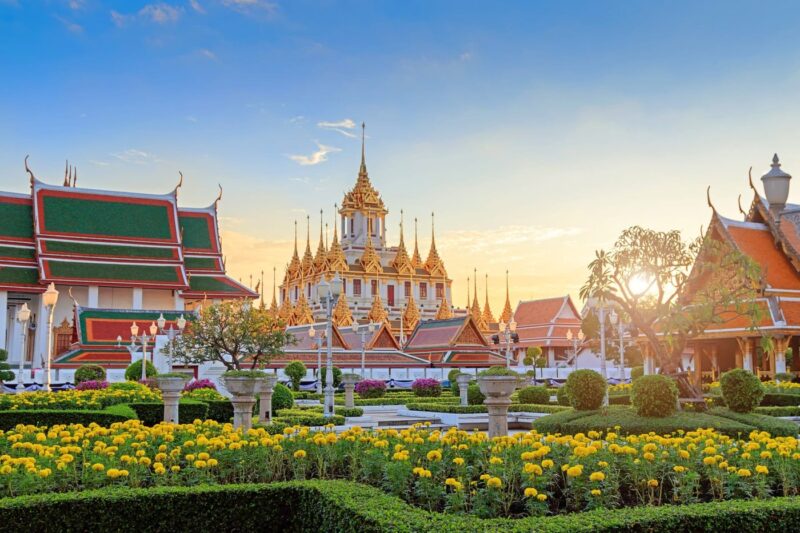
Rattanakosin (Old City) is Bangkok’s historic core — the Grand Palace, Wat Pho, and Wat Arun are all within walking distance of each other here.
Accommodation tends to be cheaper than in Sukhumvit, but the BTS doesn’t reach this area directly.
Getting elsewhere requires taxis, Grab, river ferries, or the occasional tuk-tuk.
Sukhumvit is Bangkok’s main commercial and entertainment strip, with dense BTS coverage, a wide range of hotels across every price point, and the highest concentration of international restaurants.
The most practical base for first-time visitors who want easy transit everywhere.
Silom is Bangkok’s financial district and a solid mid-city base — well-served by both BTS and MRT, close to the Chao Phraya River, and a reasonable commute to the Old City.
Banglamphu (Khao San Road area) has been the budget traveler hub for decades.
Cheap guesthouses, lively street food at night, and an easy walk to most Old City temples.
Not the right area if you prioritize quiet evenings or quick access to Sukhumvit.
For a deeper comparison of these areas — including accommodation pricing, BTS/MRT access, and what each neighborhood is actually like to stay in — the best neighborhoods in Bangkok guide covers each one in detail.
How Long Should You Stay in Bangkok?
Three to four days covers the main landmarks at a comfortable pace: the Grand Palace complex, Wat Pho, Wat Arun, a Chao Phraya River boat trip, Chatuchak Weekend Market (Saturdays and Sundays only), and at least one evening food market.
Five to seven days allows for a day excursion — Ayutthaya by train or a floating market tour — plus a cooking class and genuine time to settle into a neighborhood.
The most common regret among first-time Bangkok visitors: booking one day fewer than they needed.
First-Time Visit: 3-4 Days Minimum
The main risk with three days is over-scheduling.
The Grand Palace complex alone takes 3-4 hours at a comfortable pace — and that’s just the palace grounds, not including Wat Pho next door.
Trying to stack both temples plus Wat Arun into a single day works if you start before 9 AM, but leaves almost no room for the riverside neighborhood itself.
A three-day itinerary works fine if you pick three or four anchoring experiences per day rather than trying to check off ten items.
Seasonal Timing Affects How Much Ground You Can Cover
Bangkok’s hottest months — March through May — meaningfully shorten outdoor sightseeing windows.
Practical outdoor time in April is roughly before 10 AM and after 4 PM; midday at an outdoor temple in 38°C heat is not comfortable regardless of preparation.
The cool season (November-February) gives you full-day outdoor flexibility.
The rainy season (May-October) keeps outdoor plans intact for mornings, but afternoon downpours — typically arriving between 2 PM and 5 PM — require indoor fallback plans.
How Much Does a Trip to Bangkok Cost?
Bangkok is one of Southeast Asia’s most affordable capitals for international visitors.
Budget travelers typically spend 1,000–1,500 baht daily covering basic accommodation, street food, and public transport.
Mid-range travelers eating at sit-down restaurants and staying in proper hotels should plan for 2,500–4,000 baht per day.
Getting Around Bangkok: Your Main Transport Options
Bangkok has five practical transport options, each suited to different situations:
- BTS Skytrain: Fares run 17–65 baht per trip depending on distance, following a fare restructure in late 2025 on the extended Green Line sections. Covers Sukhumvit, Silom, and most major shopping and entertainment areas. A Rabbit Card (reloadable stored-value card) eliminates the hassle of buying single-use tickets each trip and is available at any BTS station.
- MRT (Subway): Covers neighborhoods the BTS doesn’t reach, including Chinatown (Wat Mangkon station) and Chatuchak. Fares are comparable to the BTS.
- Chao Phraya River ferries: The Orange Flag boats run a fixed river route at low fares — a practical and cheap way to reach the Old City temples from Saphan Taksin BTS station. Slower than Grab but considerably cheaper and visually worthwhile.
- Grab: Ride-hailing equivalent of Uber. Shows the fare upfront, works reliably across the city, and eliminates negotiation entirely. The default choice for longer trips outside BTS/MRT coverage.
- Tuk-tuks: Fine for short daytime rides if you negotiate the fare before you get in. Any tuk-tuk offering a cheap ride to a “free” attraction is running a commission scam — the route involves stops at gem shops or tailors. This is not a rare exception; it’s a standard operation near the Grand Palace and other major temples.
For full route maps, costs, and practical guidance on each transport option, the getting around Bangkok guide covers everything in detail.
Daily Budget Breakdown
| Item | Budget Range | Mid-Range |
|---|---|---|
| Hostel / guesthouse | 300–600 baht | 1,200–2,500 baht |
| Street food meal | 30–60 baht | — |
| Sit-down restaurant meal | 100–200 baht | 250–500 baht |
| BTS / MRT per ride | 17–65 baht | 17–65 baht |
| Temple entrance fees | 0–500 baht | 0–500 baht |
Grand Palace entry costs 500 baht per person.
Wat Pho is 300 baht (raised from 200 baht in January 2024).
Most other temples are free or have optional donation boxes.
The two major entry fees are unavoidable but reasonable; skip any “guide” who approaches you outside the gate offering to help bypass the ticket queue.
Tipping in Bangkok: What’s Expected
Tipping is not a traditional part of Thai culture, but tourism has created clear expectations in tourist-facing contexts:
- Sit-down restaurants: Round up the bill or leave 20-50 baht; upscale restaurants often add a 10% service charge automatically — check the bill before adding more
- Taxis and Grab: Round up to the nearest 10-20 baht; not expected but appreciated
- Hotel staff: 20-50 baht per bag for bellhops; 20-40 baht daily for housekeeping if you want to leave something
- Street food stalls and market vendors: No tipping expected or required
Is Bangkok Safe for Tourists?
Bangkok is generally safe for tourists.
Violent crime targeting visitors is rare.
The main concerns are petty theft in crowded areas and a handful of well-documented tourist scams.
Standard urban awareness is all that’s required — not heightened vigilance.
Safety Basics and Common Scams
Police presence is visible in tourist areas, and the BTS Skytrain, shopping centers, and major temple complexes have their own security.
The Grand Palace district is particularly well-monitored given visitor volume.
The situations tourists most commonly encounter:
Gem scam: A friendly stranger near a major temple mentions that the site is “closed today for a special ceremony” and offers to take you somewhere else — usually ending at a gem shop with fixed inflated prices.
The Grand Palace closes for a handful of specific royal events per year, and guards post signs when it does.
Walk past anyone who approaches you unsolicited near major attractions to redirect your plans.
Tuk-tuk commission scam: A tuk-tuk driver offers a multi-temple tour at a suspiciously low price.
The route includes extended stops at tailors or gem shops where the driver earns a commission for bringing you inside.
If a tuk-tuk ride is priced far below what you’d expect, the driver is making money another way.
Taxi meter refusal: Some taxis — particularly near Suvarnabhumi Airport arrivals and tourist areas — refuse to use the meter and quote a flat rate instead.
Insist on the meter; the law requires it.
If the driver refuses, take a different taxi or use Grab.
The official airport taxi queue on the first floor uses metered taxis and is the standard option.
In crowded areas — Chatuchak Market, Khao San Road, the floating markets — keep your wallet in a front pocket or secure inner bag.
Bag snatching happens, though it’s not common.
Temple Etiquette and Dress Code
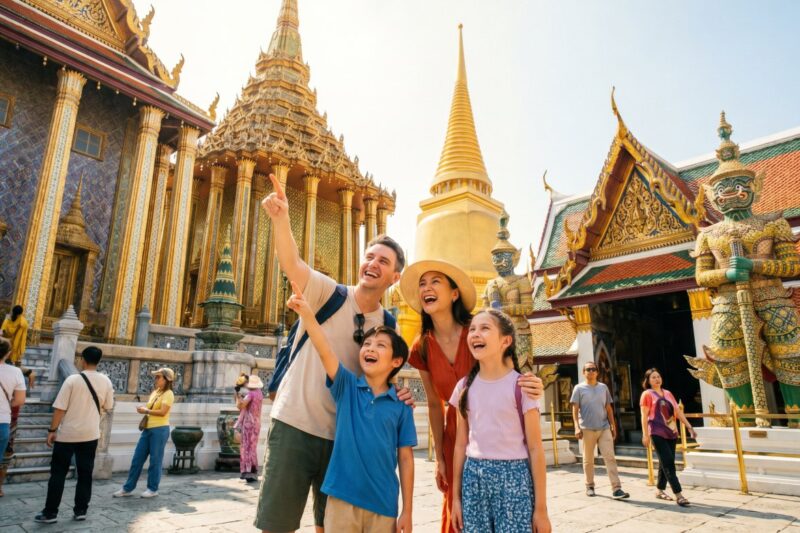
Bangkok’s temples are active religious sites, not historical monuments preserved for tourism.
Specific rules apply at every major temple, and they’re consistently enforced at the well-visited ones.
Dress code: Covered shoulders (no sleeveless tops or tank tops), covered knees (no shorts or short skirts), and closed-toe shoes.
Inside temple buildings, shoes come off entirely — you’ll be in socks or bare feet on cool tile.
Most major temples provide sarongs at the entrance for visitors who arrive in shorts; this is usually free or requires a small deposit.
Behavior inside temples: Keep voices low.
Don’t point your feet toward Buddha images — in Thai culture, feet are considered the spiritually lowest part of the body.
Don’t turn your back to a Buddha image for a photo.
If monks are present, give them space; women must not touch monks or hand items directly to them.
Photography: Usually permitted in courtyards and temple grounds; often restricted inside the main sanctuary.
Follow posted signs rather than guessing.
How to Behave at Markets
Bangkok’s markets — Chatuchak, Or Tor Kor, Pak Khlong Talat flower market — are working commercial spaces with their own social norms:
Ask before handling merchandise.
Vendors arrange their displays deliberately and don’t appreciate items being picked up, inspected, and put back carelessly.
Bargaining is standard at tourist-oriented stalls and expected at Chatuchak.
At fresh-produce markets and street food stalls, prices are fixed and bargaining is not appropriate.
Use an open palm to gesture at items rather than pointing with a single finger — pointing at people or objects is considered impolite.
Bangkok’s Climate and Seasonal Planning
Bangkok has three seasons: cool and dry (November-February), hot (March-June), and rainy (May-October).
For a full seasonal breakdown with month-by-month detail on weather, festivals, and accommodation pricing, the best time to visit Bangkok guide covers every season in depth.
The packing constants regardless of season: SPF 50+ sunscreen, lightweight breathable fabrics, and at least one temple-appropriate outfit with covered shoulders and knees.
The Rainy Season: What Visiting Bangkok in August Actually Looks Like
August is among Bangkok’s wettest months, but the reality of the rainy season is different from what “rainy season” suggests to most travelers.
The pattern is consistent: clear or overcast mornings, building heat and humidity through midday, heavy afternoon downpour lasting 1-3 hours, then clearing.
Most days, mornings are fully workable for outdoor sightseeing.
Temperatures during these months sit around 28-30°C (82-86°F) with high humidity.
The afternoons outdoors are genuinely unpleasant regardless of rain.
The practical adjustment: schedule temples and outdoor markets before noon, use afternoons for cooking classes, covered markets, museums, or air-conditioned attractions.
Rainy season packing additions: A compact travel umbrella or packable rain jacket, quick-dry clothing, and offline maps downloaded in advance — useful when ducking into shelter during a downpour without a data connection.
March vs. April in Bangkok: Heat, Festivals, and Trade-offs
| Factor | March | April |
|---|---|---|
| Temperature | 32-35°C (89-95°F) | 34-37°C (93-99°F) |
| Crowd Levels | Moderate | Heavy (Songkran) |
| Hotel Prices | Rising | Peak rates |
| Best Activities | Outdoor markets, rooftop bars | Water festivals, indoor attractions |
March is hot but more manageable than April — outdoor market sessions before noon and rooftop evenings after sunset are comfortable enough.
April cranks up the temperature further and brings Songkran (Thai New Year water festival, typically April 13-15).
Bangkok’s Silom Road and Khao San Road become the main water-fight zones, and hotel prices peak.
Worth experiencing at least once; go in with realistic expectations about the heat and plan air-conditioned refuges for the hottest midday hours.
Bangkok Throughout the Year: Festivals, Peak Seasons, and Quiet Periods
Bangkok is worth visiting in any season, but different months offer noticeably different experiences.
Visiting Bangkok During Festival Periods
- Songkran (mid-April): Thailand’s traditional New Year, celebrated with city-wide water fights over three days. The main zones in Bangkok are Silom Road and Khao San Road. Anything electronic needs waterproof protection. Flights and hotels book up well in advance.
- Loy Krathong (November full moon): An evening ceremony of floating banana-leaf lanterns on the Chao Phraya River and in parks like Lumphini. Lower-key than Songkran — more atmospheric than hectic. It coincides with the beginning of the comfortable cool season, making it one of the better festival windows to plan around.
- Chinese New Year (January-February): Bangkok’s Chinatown (Yaowarat Road) holds one of Southeast Asia’s most lively Chinese New Year celebrations — dragon dances, fireworks, and streets dense with food stalls. Chinatown itself largely closes for several days, but the lead-up and celebrations are worth seeing.
If you’re planning to extend the trip beyond Bangkok — Ayutthaya, Kanchanaburi, a floating market, or a beach at the end — the best day trips from Bangkok guide covers what’s practically reachable from a Bangkok base, with transport times and costs.
Peak vs. Quiet Months: What to Expect
| Aspect | Peak Months (Dec–Jan, Songkran) | Quiet Months (Jun–Sep) |
|---|---|---|
| Crowds | Maximum at major attractions | Noticeably reduced |
| Hotel Prices | 30–50% higher than low season | Budget-friendly rates |
| Atmosphere | High energy, festival-ready | More local, less touristic |
| Booking | Reserve months ahead | Last-minute flexibility |
Quiet months in Bangkok are not quiet in any real sense — the city operates at full pace; there are simply fewer international visitors.
Temple courtyards, outdoor markets, and evening street food strips feel more relaxed and less staged than during peak season.
Final Checklist Before Your Bangkok Trip
Sorting these out before departure prevents the predictable first-day problems.
Essential Preparation
- Offline maps: Download your Bangkok area maps in Google Maps before departure. GPS works without a data connection; searching and routing do not. Useful when you’re walking between temples or ducking into covered areas to get out of the rain.
- Translation app: Google Translate with Thai downloaded offline. The camera translation function — pointing your phone at a menu or sign to translate it in real time — is genuinely practical in markets and local restaurants.
- Clothing: Lightweight fabrics only — cotton, linen, or moisture-wicking synthetics. Pack at least one full-coverage outfit for temples. Everything else can be loose and light; heavy fabrics become genuinely unpleasant in Bangkok’s humidity.
- Medications: Bring any prescription medication in original labeled bottles. Bangkok’s pharmacies are well-stocked for standard over-the-counter items, but specific prescription brands may not be available.
For a full breakdown of accommodation costs by area, street food pricing, and where costs tend to add up faster than budget travelers expect, the Bangkok on a budget guide has specific figures across all spending levels.
We’ve also prepared AI Travel Checklist Before Departure tool to help you dig what additional checklist when preparing your visit to Bangkok, 100% free.
Packing and Documentation
To make it even easier for you, we’ve prepared AI Travel Visa Requirements Checker tool to help you what are the requirements to apply travel visa before visiting Bangkok.
- Passport: Needs at least 6 months validity beyond your planned arrival date. Carry it with you in Bangkok — some attractions require it, and police ID checks in tourist areas, while rare, are legal.
- Visa: Most Western nationals currently receive a 30-day visa exemption on arrival without applying in advance — Thailand reduced this from 60 days in May 2026. Rules have changed multiple times in recent years, so always check the Royal Thai Embassy website for your specific nationality before booking. A longer-stay tourist visa is available from Thai embassies abroad for those needing more time.
- Travel insurance: Standard recommendation. Medical care at Bangkok’s private hospitals is high quality, but the bills without insurance coverage are substantial.
- Bank notification: Notify your bank about international travel to Thailand before departure. International transactions are a common trigger for automatic card freezes.
- Document backup: Save a photo of your passport data page to your phone and email it to yourself. Useful if the physical document is lost or stolen.
Frequently Asked Questions (FAQs)
Most Western nationals currently receive a 30-day visa exemption on arrival in Thailand without applying in advance — Thailand reduced this from 60 days in May 2026, citing concerns over illegal employment and unauthorized business activity.
Some nationalities receive 15 days; others require a tourist visa obtained from a Thai embassy before travel.
Rules have changed several times in recent years, so always confirm the current policy on the Royal Thai Embassy website for your specific passport before booking.
A 60-day tourist visa is available from Thai embassies abroad if you need more time.
No. Bangkok’s tap water is not safe to drink.
Bottled water costs 5-15 baht at convenience stores — 7-Elevens and Family Marts are on virtually every block — and most hotels provide complimentary bottles.
Use bottled water for brushing teeth if your stomach is sensitive; many long-term residents use tap water for this without issue, but the standard recommendation for first-time visitors is bottled water for everything.
Ice served at restaurants and street food stalls is generally made from purified water and is safe.
A few things cause specific problems:
- Don’t touch monks or hand them anything directly — women especially must not make physical contact with monks; pass items via a surface or have a man hand it over
- Don’t point your feet toward Buddha images or toward people — feet are considered spiritually unclean in Thai culture
- Don’t say anything critical of the Thai royal family — Thailand’s lèse-majesté laws are enforced, and criticism of the monarchy is a criminal offense with real consequences for tourists
- Don’t get into a tuk-tuk offering a free or very cheap tour — it ends at a gem shop; this is not an occasional scam but a systematic operation near major tourist sites
- Don’t follow strangers who tell you a temple or attraction is “closed today” — the Grand Palace is rarely actually closed; this is the opening line of the gem scam
A lifestyle and OOTD blogger, Kannaya Nareswari enjoys the small pleasures of cooking, traveling, and documenting ordinary events. She uses genuine storytelling to communicate her love of fashion, culinary explorations, and wanderlust. She is based between Bali and Bandung. She enjoys enjoying coffee at a secret café or experimenting with recipes in the kitchen when she's not traveling to new places or styling her most recent ensemble.